- Admissions
- Academics
- Research Office
- Student Life
- News & Events
- Outreach
- About

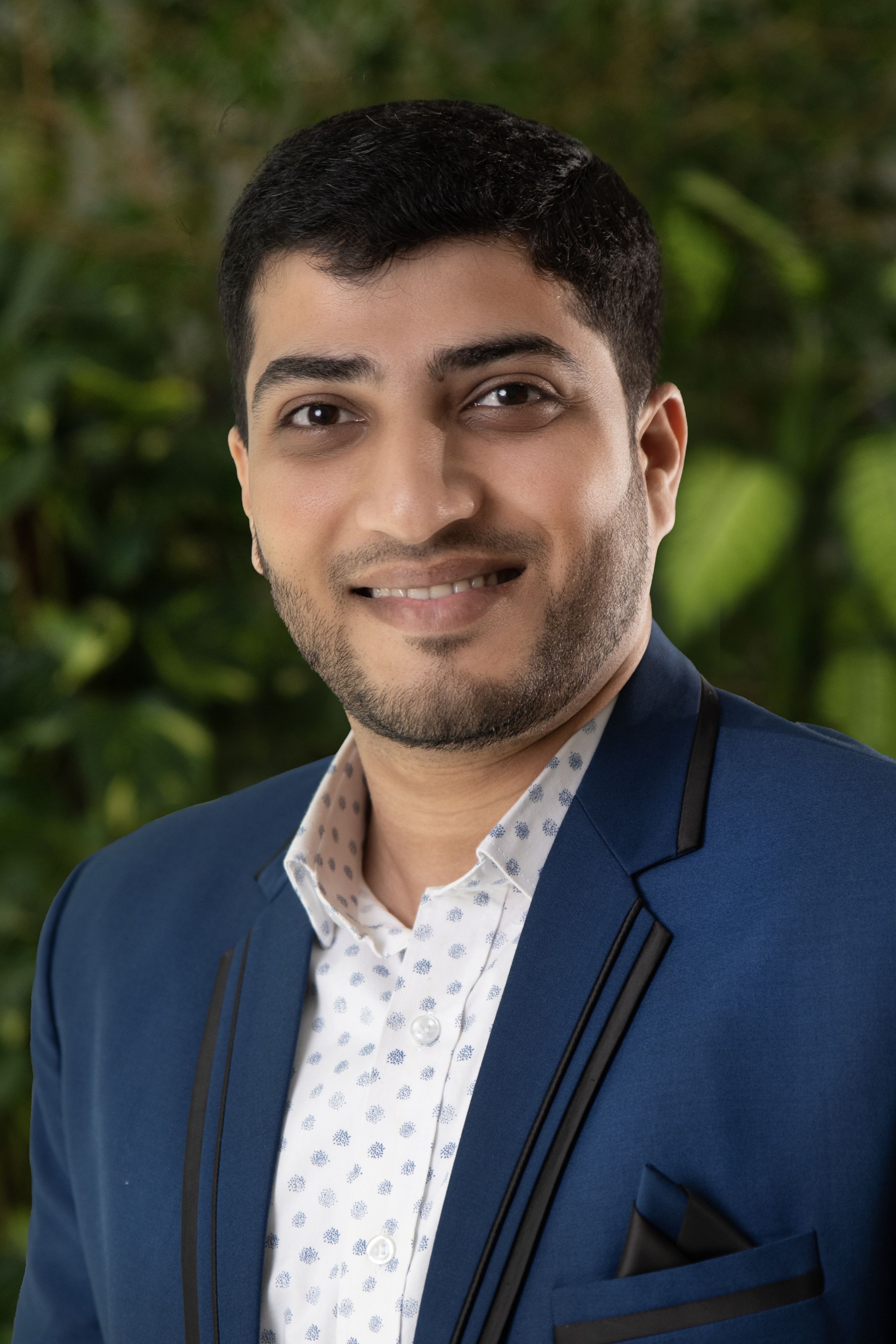
Dr. Mohammed Ayaz Uddin is currently a Postdoctoral Fellow in the Mechanical and Nuclear Engineering department at Khalifa University (KU), Abu Dhabi, UAE. He earned his bachelor’s degree in Mechanical engineering from Osmania University (India) in 2016, followed by a Master’s degree in Thermal Engineering from Jawaharlal Nehru Technological University (India) in 2018, and a second Master’s in Mechanical Engineering from King Fahd University of Petroleum and Minerals (Saudi Arabia) in 2020. He completed his PhD in Mechanical Engineering at Khalifa University (United Arab Emirates) in 2024.
Dr. Ayaz’s research focuses on the design optimization and geometric tailoring of multifunctional composites and architected material systems, with a strong emphasis on translating advanced structural concepts into practical applications through additive manufacturing. His work addresses challenges across aerospace, automotive, civil infrastructure industries. These investigations leverage multiple additive manufacturing platforms, complemented by finite element simulations and mechanical testing under both impact and quasi-static loading conditions.
His contributions have resulted in publications in reputable international journals and conference proceedings. Dr. Ayaz has been recognized with notable awards, including Graduate Research Scholarships from his affiliated institutions. He received the Elite Young Researcher Award in 2023 for publishing in top 5% journals, and the Young Innovator Award in 2024 for a U.S. patent application both prestigious distinctions granted by Khalifa University.