
Khalifa University Research Scientist Receives Innovation in Education Award at World Education Summit 2026

Dr. Rohan Balasaheb Ambade Honored with Prestigious ‘Innovation in Education Award’ in Early Career Researcher Category 


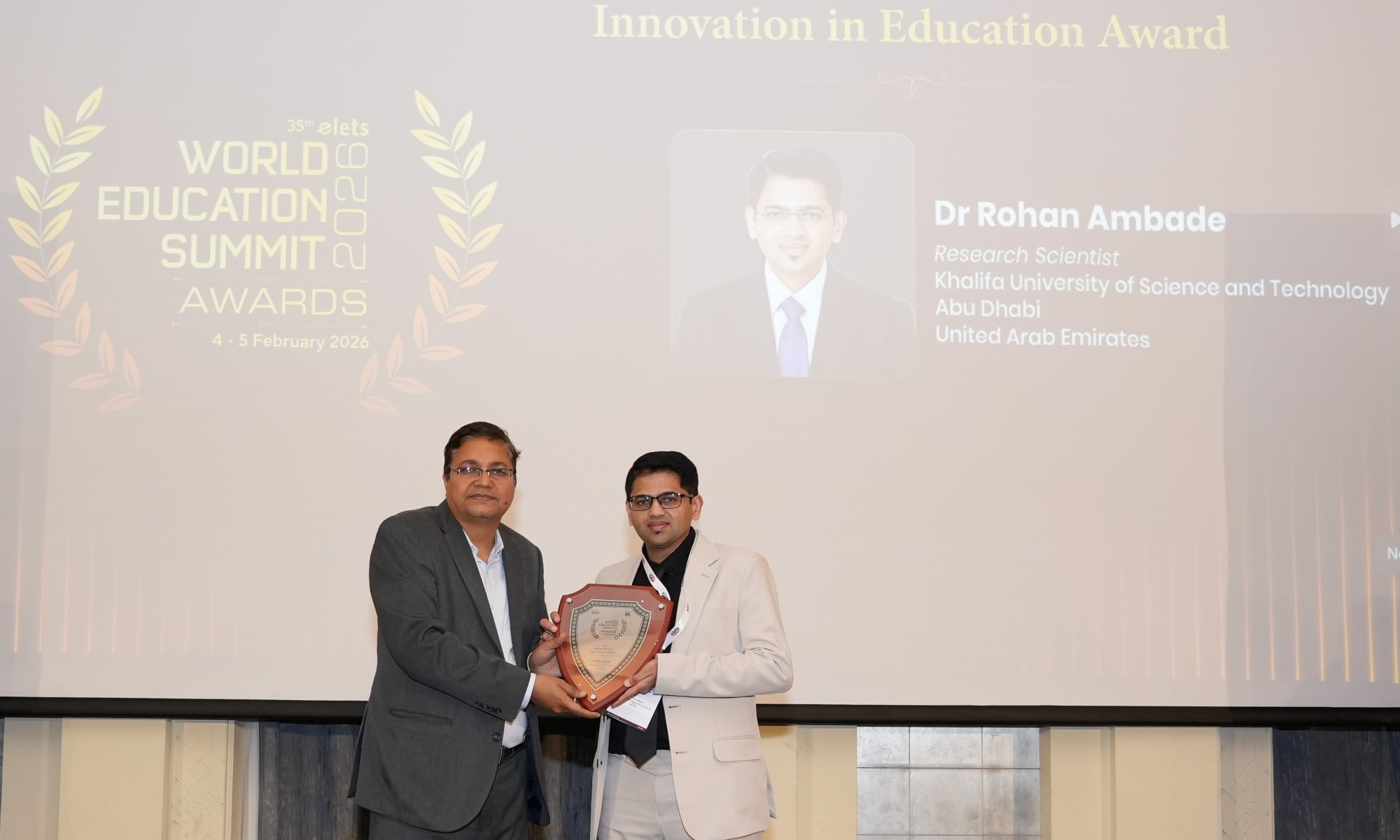
Khalifa University Center for Membrane and Advanced Technology (CMAT) Research Scientist Dr. Rohan Balasaheb Ambade received the Innovation in Education Award in the Early Career Researcher category at the World Education Summit 2026 in Dubai for his contribution to integrating advanced nanomaterials research into engineering education within Chemical and Petroleum Engineering, focusing on water and environmental applications.


The award-winning initiative promotes sustainable water technologies, emphasizing nanoscale materials for water purification, desalination, wastewater treatment, and environmental remediation. The recognition includes a commemorative memento and a Certificate of Appreciation presented at the 2026 Summit under the theme “Reimagining Education for a Tech-Enabled, Inclusive, and Sustainable Future.”


At CMAT – led by Professor Shadi Hasan, Center Director – Dr. Rohan Ambade directs an interdisciplinary effort to develop scalable membrane and adsorption technologies, while fostering experiential, industry-relevant training. His research focuses on advanced nanostructured materials, 2D materials including MXenes and graphene for global water, energy, and environmental applications. His work focuses on water purification, desalination, wastewater treatment, and heavy metal removal, contributing to sustainable water resource management and environmental protection.


Dr. Ambade has authored several book chapters and numerous peer-reviewed research articles in international journals, including Nature Communications, Advanced Functional Materials, Nano Energy, Chemical Communications, Accounts of Materials Research, Chemical Engineering Journal, Small, Journal of Materials Chemistry A, Carbon, Materials Horizons, ACS Applied Materials & Interfaces, and Nanoscale.


Several industry leaders have supported his research, including the National Research Foundation of Korea, Korea Research Institute of Chemical Technology, Brain Korea 21, Ministry of Science ICT and Future Planning Korea, BM Holding USA, US Army DEVCOM Army Research Laboratory, and Sandooq Al Watan.


Professor Shadi Hasan said: “Dr. Rohan Ambade’s recognition reflects Khalifa University’s commitment to integrating advanced materials research into structured engineering education. At CMAT, we focus on translating laboratory innovation into measurable academic and research outcomes that strengthen the Khalifa University’s role in water treatment and sustainability technologies.”


Dr. Rohan Ambade said: “I am honored to be part of CMAT and Khalifa University and to receive the Innovation in Education Award in the Early Career Researcher category at the World Education Summit 2026. This recognition highlights Khalifa University’s research-driven education model, where cutting-edge scientific research at CMAT and the Advanced Research and Innovation Center (ARIC) is systematically integrated into engineering education to prepare future engineers for real-world technological and sustainability challenges.”


Alisha Roy
Science Writer

Faculty Appointed to Editorial Board of Top-Ranked Aerospace Journal

Dr. Elena Fantino Joins Editorial Board of Progress in Aerospace Sciences, Invitation-Only Journal Ranked Among Top 1% Globally


Khalifa University’s Dr. Elena Fantino, Associate Professor, Aerospace Engineering, has been appointed to the Editorial Board of Progress in Aerospace Sciences (PAS), an invitation-only international review journal published by Elsevier.


Ranked among the top 1% of journals indexed by Scopus, PAS serves the global aerospace research community by publishing authoritative review articles on advanced topics in aerospace science and engineering. Dr. Fantino’s name is now formally listed among the journal’s editorial board members, and her service has officially commenced.


In her new role, Dr. Fantino will invite leading international scientists to contribute high-impact review articles, while further developing her own scholarly work in the field of Astrodynamics and Celestial Mechanics.


Dr. Fantino was unanimously elected Vice-Chair of the Astrodynamics Technical Committee of the International Astronautical Federation (IAF) in 2024. She currently serves in that role and is also a corresponding member of the International Academy of Astronautics and a permanent member of the American Institute of Aeronautics and Astronautics (AIAA). In addition, she maintains affiliation with the Space Dynamics Group at the Technical University of Madrid.


At Khalifa University, Dr. Fantino founded the ASTRO research team, which includes a senior research scientist, a postdoctoral fellow and three PhD students. The team conducts research in astrodynamics, celestial mechanics, space geodesy and space situational awareness, while maintaining active collaborations with leading international researchers.


Dr. Elena Fantino said: “It is an honor to join the Editorial Board of Progress in Aerospace Sciences and contribute to advancing high-quality review research in our field. I am grateful for the continued support that Khalifa University has provided, which remains instrumental in achieving this milestone. Through our ASTRO research team and international collaborations, we remain committed to advancing astrodynamics and contributing to the global aerospace research community.”


Alisha Roy
Science Writer

Khalifa University Digital Future Institute Researchers Develop World’s First-of-its-kind Breakthrough Radio-Frequency AI Language Model ‘RF-GPT’

RF-GPT Introduces a New Type of AI System That Can Analyze Radio Signals and Explain What it Sees Using Plain Language


Khalifa University of Science and Technology’s Digital Future Institute today announced the launch of ‘RF-GPT’ a first-of-its-kind radio-frequency AI language model capable of interpreting wireless signals, overcoming a major limitation in telecom AI where language models typically operate only on text and structured network data.


RF-GPT showed consistent performance improvements in radio frequency spectrogram tasks, outperforming existing baseline models by up to 75.4%, demonstrating strong radio frequency understanding. RF-GPT also correctly counted the number of signals in a spectrogram ~98% of the time, which general-purpose AI models almost never achieve.


RF-GPT works by turning radio signals into visual patterns that artificial intelligence can understand. Once converted, AI systems can analyze those patterns and answer questions about what is happening in the wireless spectrum using plain language. The foundation model directly contributes to the UAE National Artificial Intelligence Strategy, laying the groundwork for more autonomous and intelligent wireless networks.


The project was developed by Khalifa University researchers led by Professor Merouane Debbah, Senior Director, Digital Future Institute, and includes Post Doctoral Fellows Hang Zou, Yu Tian, Research Scientists Dr. Lina Bariah, Khalifa University, Dr. Samson Lasaulce, Universit´ e de Lorraine, and Dr. Chongwen Huang and PhD student Bohao Wang from Zhejiang University.


Professor Ahmed Al Durrah, Associate Provost for Research, Khalifa University, said: “The launch of ‘RF-GPT’ reflects Khalifa University’s long-term focus on innovation in digital infrastructure to advance AI integration across strategic sectors, and next-generation connectivity research, aligned with national priorities. Initiatives such as this model contribute to UAE’s fast growing human capital and research capabilities necessary to support the UAE’s evolving digital ecosystem.”


Professor Merouane Debbah said: “RF-GPT represents a turning point for spectrum intelligence, moving from isolated, task-specific radio frequency pipelines toward a unified RF-language interface. We gave a language model its first glimpse of the electromagnetic spectrum and the view is already remarkable. Imagine what it will see next. By making the physical layer quarriable in natural language, we open the door to AI-native radio systems where RF perception can directly support network optimization and policy decisions, a crucial step toward future AI-native 6G networks.”


RF-GPT was trained using approximately 625,000 computer-generated radio signal examples, and is designed for telecom operators, network engineering teams, and spectrum authorities, supporting increasingly complex wireless environments. The model performed strongly across tasks such as identifying signal types, detecting overlapping transmissions, recognizing wireless standards, estimating device usage in Wi-Fi networks, and extracting data from 5G signals.


Alisha Roy
Science Writer

Khalifa University honours graduates of Young Future Energy Leaders programme

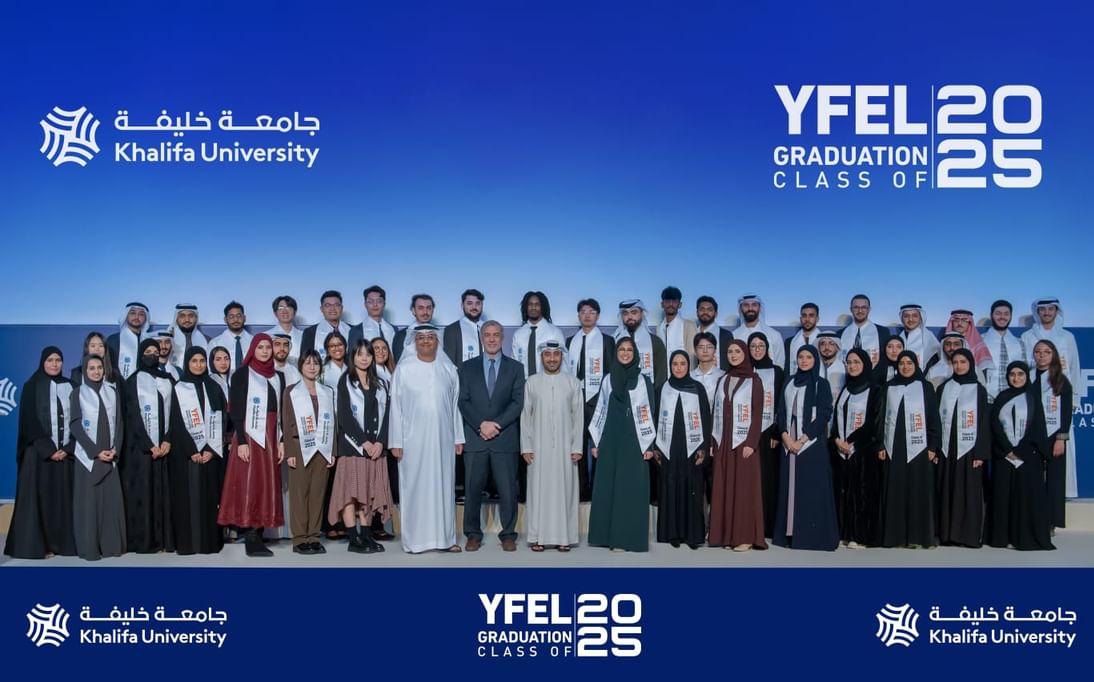
ABU DHABI, 15th January, 2026 (WAM) — Khalifa University of Science and Technology on Thursday honoured 50 members of its Young Future Energy Leaders (YFEL) outreach programme at its 16th annual graduation ceremony, marking the completion of year-long commitments aimed at building youth leadership in sustainability.

Founded in 2010, YFEL has become a nationally and internationally recognised platform for sustainability and energy leadership. Its alumni network now totals 680 members working across academia, industry, entrepreneurship and public service, the university said.

“The graduation of the 2025 YFEL cohort is especially meaningful as sustainability has moved from long-term aspiration to immediate responsibility,” said Dr. Waleed Alameri, Associate Provost for Student Affairs and Associate Professor of Chemical & Petroleum Engineering, Khalifa University.

He said the university aims to equip young people to understand global challenges and take part in addressing them, highlighting the importance of collaboration among universities, industry, government and international partners.

The 2025 edition of the YFEL programme introduced a refined three-phase framework, guiding participants from foundational understanding to real-world application. Phase I built strong fundamentals in energy systems, sustainability, and climate science, equipping participants to approach complex challenges with clarity and critical thinking.

Phase II advanced hands-on exploration through projects in renewable energy, climate solutions, and emerging technologies. Phase III focused on leadership and application, empowering members to lead multidisciplinary teams and deliver tangible outcomes.

A defining milestone of the 2025 YFEL journey was the 5th Edition of the German-Emirati Sustainability Days, which showcased collaboration between academia, industry, and international institutions. The platform demonstrated how German engineering expertise, Emirati ambition, and youth-driven innovation can converge to deliver practical, applied solutions to global sustainability challenges.

Across various platforms, the 2025 YFEL cohort presented projects tackling some of the region’s most pressing sustainability and energy challenges.

Khalifa University showcases artificial intelligence, sustainability solutions at WFES

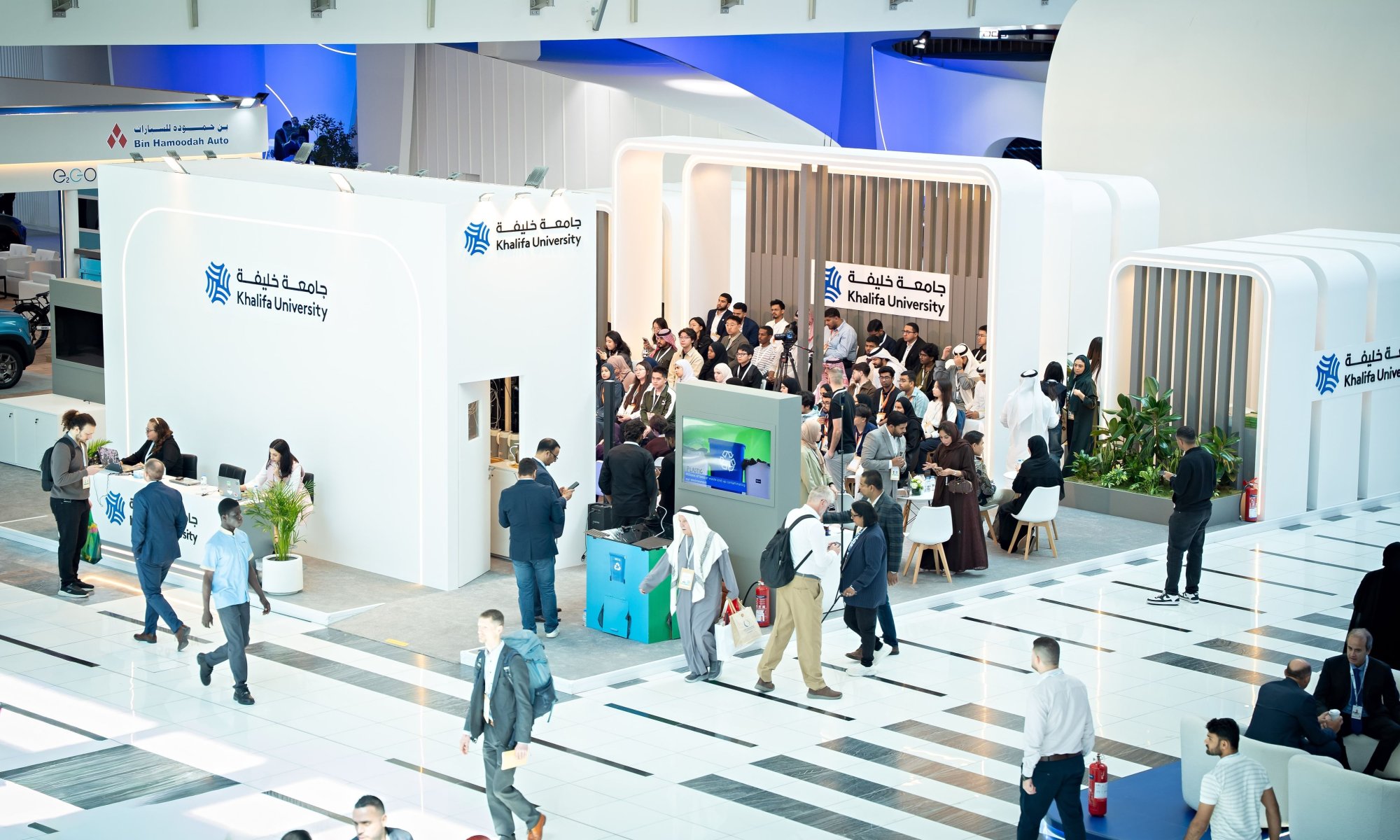
ABU DHABI, 13th January, 2026 (WAM) — Khalifa University of Science and Technology is showcasing cutting-edge solutions in artificial intelligence and sustainability covering intelligent waste sorting to advanced water treatment and desert greening technologies, at the World Future Energy Summit (WFES) 2026, part of Abu Dhabi Sustainability Week.

Professor Bayan Sharif, Provost of Khalifa University, said, “The Khalifa University projects being showcased at the World Future Energy Summit illustrate some of the most transformative technologies in artificial intelligence and sustainability, emanating from our core research centres. From intelligent waste sorting to advanced water treatment and desert greening technologies, our research is shaping a sustainable and resilient world.”

The Khalifa University projects being showcased include an artificial intelligence-based autonomous material sorter and 2D-enabled functional membranes for water treatment and desalination.

In addition, members of Khalifa University’s flagship outreach programme, the Young Future Energy Leaders (YFEL), will present their project proposals, participate in debates and interact with business leaders while attending various sessions.

Khalifa University’s commercial arm, Khalifa University Enterprises Company (KUEC), is presenting two high-potential technologies with clear commercialisation pathways, sustainable soil enhancement solutions derived from plant-based waste fibres for arid agriculture, and a solvent-based high-temperature delamination process enabling the efficient recycling of photovoltaic modules.

How the ADNOC Accelerator Program – RO’YA inspired UAE explorers for lift off

Salama Albahrani, Mohamed Al Naqbi, Mansour Al Kaabi and Fakhra Al Hammadi spent one week at NASA Space Camp and earned first place in the rocket launch challenge

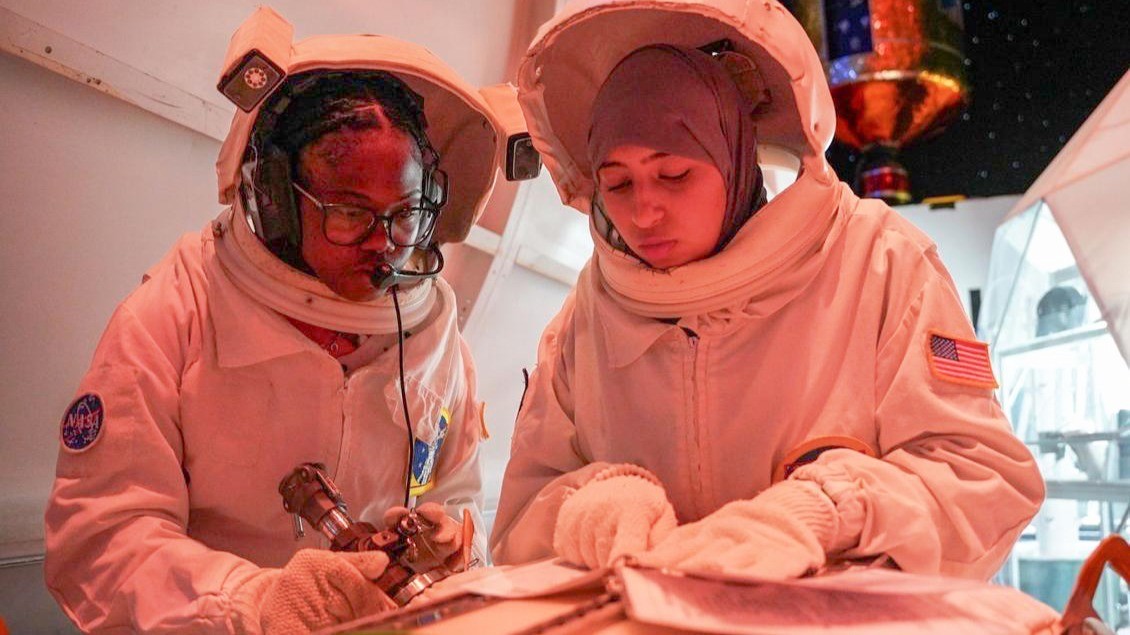
The setting is the NASA Space Camp at the US Space and Rocket Center in Huntsville, Alabama. The mission for the budding UAE astronauts is to build a rocket and successfully launch it into orbit. The catch?

An egg needs be placed inside the rocket and returned to earth in pristine condition.

“It all revolved around quote, unquote ‘keeping our eggs-tronaut safe’,” smiles 16-year-old Salama Albahrani, who along with Mohamed Al Naqbi, Mansour Al Kaabi and Fakhra Al Hammadi, all aged 17, made up the UAE team sent to the NASA Space Camp.

“We managed to do that,” adds Mansour. “It was scored out of 950 – with keeping the egg safe worth 500 of that – and we scored 950. First place.”

Indeed, not only did the UAE team get first place, but they also made history at the US Space and Rocket Center.

“Our rocket launched really far, and the instructor said we hit a new space camp record for our height – we were Space Camp Hall of Fame for that,” says Salama.

For each of Salama, Mohamed, Mansour and Fakhra, the opportunity of a lifetime through NASA on the Endeavour Scholarship came courtesy of the ADNOC Accelerator Program – RO’YA. Since 2021, the two-year professional development program in partnership with Khalifa University – which was designed for Grade 10 UAE students who show real potential – has become central to ADNOC’s commitment to nurturing national talent.

The NASA Space Camp is one example of the many opportunities available through RO’YA’s STEM/AI-based curriculum, which is fitting as ADNOC aims to become the world’s most AI-enabled energy company. The program – RO’YA means vision in Arabic – for UAE Nationals is about collective impact, not just personal growth, and helps prepare students for admission to top-tier universities around the globe.

To earn their place on the one-week NASA trip in July, Salama, Mohamed, Mansour and Fakhra were whittled down from 1,000 RO’YA candidates following a series of evaluations, including maths tests, critical thinking and an interview. “I couldn’t believe I was chosen; it felt like a miracle,” says Mohamed, with Salama adding it was “absolutely surreal”.

All of them have an interest in pursuing a career in space following the RO’YA initiative. “I came away from the camp knowing exactly what I want to do with my life,” says Mohamed, with Mansour commenting: “I want to follow in the footsteps of Hazza Al Mansouri, the first UAE astronaut in space.”

At Space Camp, following in the footsteps of Hazza took one step closer, with classes including “many practical assessments on how astronauts actually survive in space,” says Fakhra. In addition, the teenagers, who were joined by eight other teams from across the world, learned about space evolution, the history of spacesuits, creating heat shields, and leading practice missions as astronauts, pilots and engineers.

Other key learnings included teamwork, communication and discipline. “At Space Camp, you sleep there, eat there, and everything is about time; we’d a schedule for everything,” says Mohamed.

Everything the ADNOC Accelerator Program – RO’YA graduates, who recently graduated along with this year’s cohort at a ceremony at the Abu Dhabi Energy Center, learned at Space Camp was put to good use. But before entering the Hall of Fame through their history-making rocket launch, one final piece of detail was required. On one side of the rocket the team placed the UAE flag, and on the other wrote ‘United Arab Emirates’.

“We passed with flying colors,” says Salama, “and it was exhilarating seeing our hard work pay off in such an amazing way.”

She adds: “The RO’YA program is really helping students excel and I felt so empowered by the environment I was in. We wouldn’t have accomplished this if it wasn’t for ADNOC and Khalifa University making this amazing program. I’d very, very much recommend that other students apply because it genuinely is life changing.

“At NASA Space Camp, they talked to us a lot about their upcoming Artemis program to go to Mars and the moon. They showed us the first few countries that signed in partnership with the US, and the UAE was one of the first. It was such a proud moment to see my country genuinely advancing space exploration in such a big way.

“We have the Mohammed Bin Rashid Space Center sending Emirati astronauts to space. And it’s so inspiring to me because, since I was little, I’ve been seeing astronauts that look like me, that talk like me – and it makes me feel like anything is possible.”

Khalifa University Alumna and SDG Ambassador Wins ‘Y4S Champions 2025’ Future Sustainability Leader Award

2024 Graduate Maria Latifa Benkhelifa Co-Developed Three AI Projects Aligned with UN-SDGs Integrating Technology, Innovation, and Real-World Impact


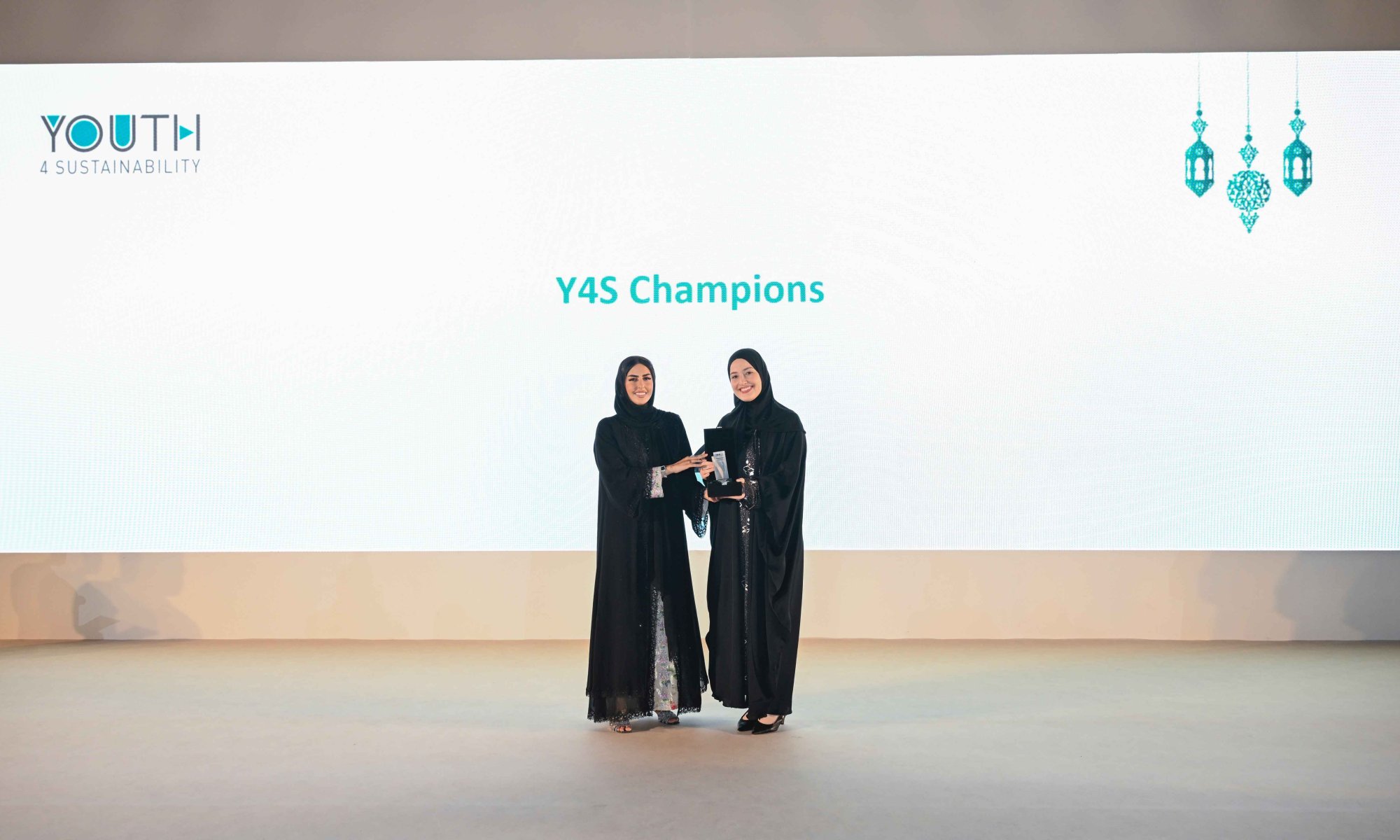
Khalifa University alumna Maria Latifa Benkhelifa, a 2024 Applied Mathematics and Statistics graduate, has won the ‘Y4S Champions 2025’ Award under the Future Sustainability Leader category from Masdar’s Youth 4 Sustainability (Y4S) program for her outstanding commitment to advancing sustainability, youth empowerment, and community engagement across the UAE.


Benkhelifa, an SDG Ambassador during her studies at Khalifa University, was part of the 2025 cohort of the Youth4Sustainability program and received the Y4S Champions Award 2025 at the Ramadan Gathering 2026. As an SDG Ambassador, she has also co-developed three AI projects, aligned with the UN-SDGs, integrating technology, innovation, and real-world impact. Y4S participants engage in mentorship programs, volunteer projects, expert-led sessions, and global exposure experiences, enabling them to contribute meaningfully to the UAE’s sustainability transition.


The co-curricular Khalifa University-SDG Ambassador Program helps to build upon the University’s membership into the UN Sustainable Development Solutions Network and introduce the UN-SDGs to students, equipping them with the knowledge to contribute towards giving back to the community.


Dr. Waleed Alameri, Associate Provost, Student Affairs, and Associate Professor, Chemical & Petroleum Engineering, Khalifa University, said: “Congratulations to Benkhelifa for her achievement, which stands as a testament to her year-long dedication to promoting sustainability awareness and leading impactful initiatives across the country. Khalifa University remains committed to nurturing leaders who will drive the UAE’s environmental and technological transformation. Through programs such as the SDG Ambassadors, community initiatives, and world-class academic support, Khalifa University plays a central role in equipping students and alumni with the tools needed to tackle global challenges. Her recognition places her among a distinguished cohort of young innovators and changemakers committed to shaping a more resilient, inclusive, and sustainable world.”


At Khalifa University, Benkhelifa gained her first exposure to meaningful community-led sustainability initiatives as an SDG Ambassador. She won first place under the Young Entrepreneurs’ Award category at the Congress of Arabic and Creative Industries’ Innovation Awards for BookBuddy AI, an intelligent AI-powered Arabic-book reading assistant that she co-created to make educational content more accessible and interactive, particularly for young learners. The project contributes directly to ‘SDG 4: Quality Education’ by enhancing learning accessibility and inclusivity.


Benkhelifa also contributed to developing Nabra, an AI-driven initiative focused on supporting children with speech and articulation difficulties. to help identify patterns in speech, provide corrective feedback, and support more effective communication development. This project aligns closely with ‘SDG 3: Good Health and Well-being’ by promoting cognitive and developmental support, as well as SDG 4. She has also founded maKina AI, an AI-powered predictive maintenance platform aimed at improving industrial efficiency and sustainability, thus supporting ‘SDG 9: Industry, Innovation, and Infrastructure’ and ‘SDG 13: Climate Action’. The maKina AI platform was showcased at Abu Dhabi Sustainability Week 2026.


Heading a Khalifa University student-led SDG initiative in Dubai, she also moderated a panel discussion alongside three inspiring panelists, exploring key topics related to the SDGs and their practical implementation within the university ecosystem, including student engagement, infrastructure, education, and community-driven initiatives.


Benkhelifa said: “Winning the Y4S Champions 2025 Award reflects my journey in sustainability which truly began at Khalifa University. The encouragement, academic environment, and mentorship I received at Khalifa University played a foundational role in shaping my passion for sustainability. The experiences and opportunities I received as an SDG Ambassador also empowered me to pursue this path with purpose. I am deeply grateful for the support Khalifa University continues to provide to its youth and alumni.”


Clarence Michael 
English Editor Specialist 

Khalifa University’s IEEE EMBS Student Chapter Receives Recognition as UAE’s Most Active Technical Chapter for 2025   

Award Recognizes Structured, High-Impact Initiatives that Help Advance Technical Excellence, Professional Development, Community Engagement, and Digital Outreach


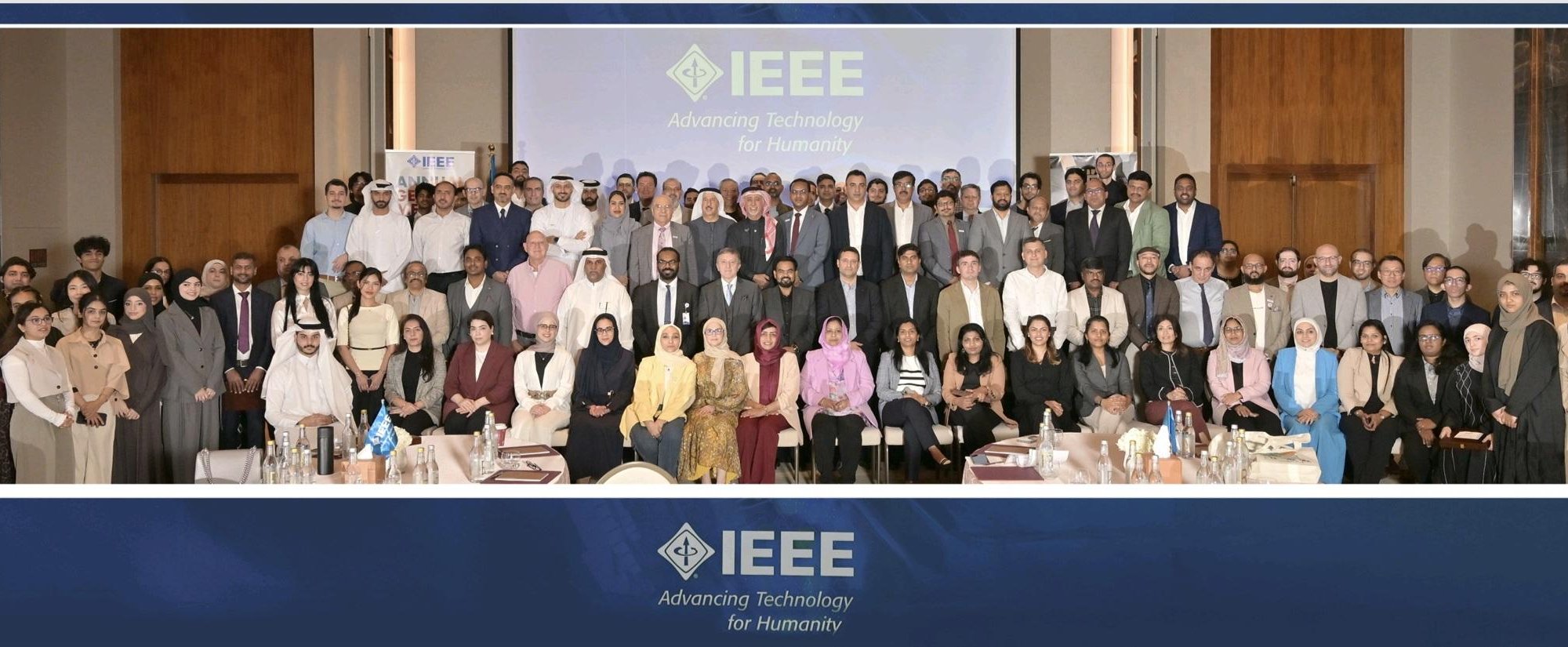
Khalifa University’s IEEE Engineering in Medicine and Biology Society (EMBS) Student Chapter has been awarded the Most Active Student Branch Technical Chapter (2025) by the IEEE UAE Section during its annual general meeting for demonstrating exceptional performance for its structured, high-impact initiatives that has helped advance technical excellence, professional development, community engagement, and digital outreach.


Robust collaboration and student engagement, high-quality technical and research-focused programming, successful membership development and retention, consistent digital presence and institutional visibility, impactful STEM outreach and community-driven initiatives, and active contribution to IEEE EMBS regional objectives were some of the reasons for the national recognition for EMBS Khalifa University Student Chapter.


During the year, the EMBS Student Chapter organized a comprehensive portfolio of events and activities that strengthened student capability and elevated the visibility of biomedical engineering within the UAE. These events helped to enrich technical competency, foster leadership development, and expand interdisciplinary collaboration while creating meaningful community impact. These include Healthcare Innovation Hackathon 2025, IEEE HealthCom 2025 – International Conference on E-health Networking, Applications & Services, a panel discussion on Women in Emerging Technology, Research seminars and distinguished lectures, high school outreach visits, as well as Job shadowing programs and student engagement events.


The chapter’s data-driven digital strategy has also demonstrated measurable success, while facilitating its online presence that significantly boosted collaborations, and professional visibility across platforms.


Dr. Maria de Fatima Fonseca Domingues, Assistant Professor, Biomedical Engineering and Biotechnology, Khalifa University, said: “This recognition for Khalifa University IEEE Engineering in Medicine and Biology Society (EMBS) Student Chapter reinforces the University’s leadership in biomedical engineering and healthcare innovation within the UAE. The award is also the outcome of contributions from all those dedicated members who invested their time, creativity, and passion, supported by strong faculty mentorship and institutional encouragement.  It reflects collective leadership, teamwork, and sustained commitment, while demonstrating how student-led innovation and structured programming can achieve national recognition.”


Clarence Michael
English Editor – Specialist

Khalifa University ranks 6th for Petroleum Engineering in QS World University Rankings by Subject 2026

Khalifa University of Science and Technology today announced it has ranked 6th in the world for Petroleum Engineering in the QS World University Rankings by Subject 2026, climbing from 7th place in 2025. The University has also made gains across other engineering disciplines, with the broader subject area of Engineering and Technology scoring 131, Electrical & Electronic Engineering rising to 92nd, and Chemical Engineering making the biggest leap into the global Top 100 at 94, up from the 151–200 range in 2025.


With three subjects placed in the global Top 100, and three within the Top 150 worldwide, Khalifa University has secured positions for a total of 15 subjects under different categories in the 2026 QS Rankings by Subject.


Additionally, Mathematics remained in the Top 150 at 130, Mechanical Engineering achieved 133rd place, and Computer Science and Information rose to 137th. This year also marks a historic milestone with Khalifa University receiving its first-ever published broad subject ranking in Natural Sciences, placed 220th globally.


His Excellency Professor Ebrahim Al Hajri, President, Khalifa University, said: “Progress in globally competitive disciplines reflects a clear focus on research that delivers impact, particularly in areas critical to the UAE’s strategic priorities and the future of energy. Our 6th place ranking in Petroleum Engineering and consistent rise in several disciplines in the QS World University Rankings by Subject 2026 demonstrates our research, academic, and infrastructure excellence. These results reflect the strength of our faculty and research community in advancing innovation that supports economic diversification and develops the scientific and engineering talent the country and the region require.”


The QS World University Rankings by Subject 2026 analysed the reputation and research output of 6,277 institutions globally, of which 1,912 were ranked across 55 subjects and 5 broad subject areas, creating over 21,000 entries.

Khalifa University FALCON Prototypes Win Two Awards at UAE GCAA-Organized Bader Initiative

Prototypes H-EPIC and ANN-2 Receive ‘Best Innovative Real-World Project’ Awards


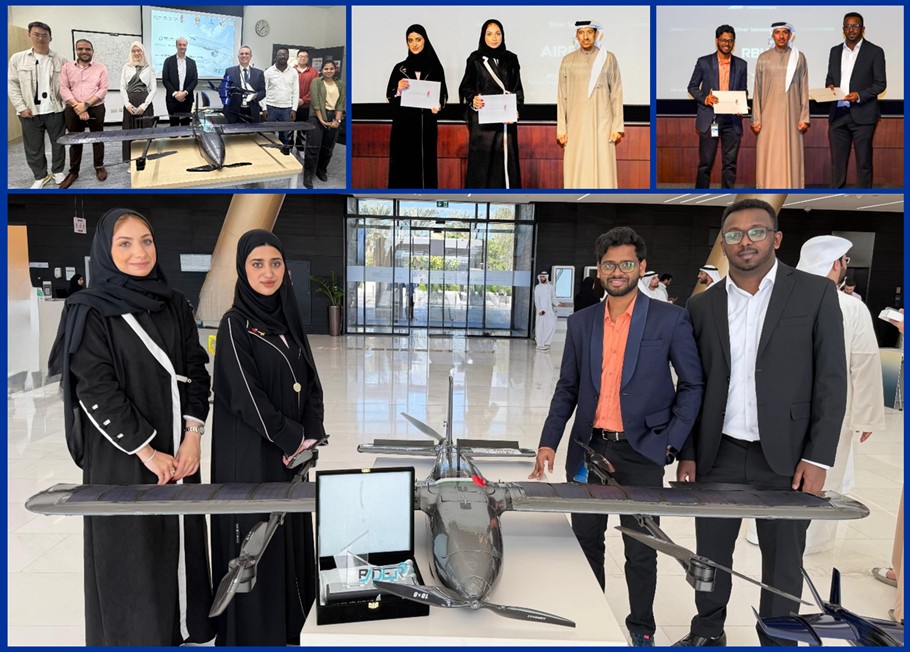
Khalifa University’s Future Aviation Leadership Center and Outreach Network (FALCON) program has won two awards at the Bader initiative – Innovate in the Aviation Sector – part of UAE’s General Civil Aviation Authority (GCAA) Promising Futures Career Fair in Civil Aviation at the Etihad Museum in Dubai for groundbreaking contributions to the air transportation industry.


The competition brought together key players from industry, government, and academia to showcase the most promising technologies for future aviation and Advanced Air Mobility (AAM).


The FALCON Program’s H-EPIC (Hybrid-Electric Prototype Integration Concept) drone and ANN-2 subscale prototype each received the ‘Best Innovative Real-World Project’ awards. 


H-EPIC, a hybrid-electric drone incorporating both Vertical Take-Off and Landing and fixed-wing flight technologies, tackles sustainability challenges by minimizing emissions and noise, while enhancing operational range and efficiency. It also functions as a platform for Artificial Intelligence based Mission Management Systems and hybrid-electric propulsion technologies critical to advancing Urban Air Mobility. 


The ANN-2 prototype, developed in collaboration with Manta International, emphasizes scalability and adaptability in AAM operations. It supports piloted, semi-autonomous, and fully autonomous missions, featuring state-of-the-art systems such as Guidance, Navigation, and Control, Sense-and-Avoid, and Human-Machine Interface.


The Bader initiative recognizes advanced projects with real-world applications, inspiring students and professionals to shape the future of aviation.


Khalifa University’s FALCON has established itself as a trailblazer in the realm of flight systems research and innovation. Partnering with both national and international stakeholders, FALCON has excelled in transforming research into impactful, real-world solutions. 


Professor Roberto Sabatini, Director of the FALCON Program, said: “The awards at the prestigious BADER Competition are a testament to the innovation and excellence demonstrated by our extraordinary team of students, researchers, and collaborators. The recognition of FALCON’s prototypes highlights their technological sophistication and alignment with national and global sustainability goals. The groundbreaking H-EPIC and ANN-2 prototypes address some of the most critical global challenges in advanced air mobility and intelligent flight systems, exemplifying Khalifa University’s pursuit of cutting-edge research and industry-focused engineering solutions. These pioneering efforts align seamlessly with the UAE’s ambitious goals to lead the way in net-zero aviation and intelligent mobility, fostering a thriving, knowledge-based economy.”


Alisha Roy
Science Writer

Khalifa University and MIT Host Joint Healthcare Innovation Program with 32 UAE and US Students

Undergraduate Students Participate in Industry-Relevant Healthcare Innovation Across Abu Dhabi


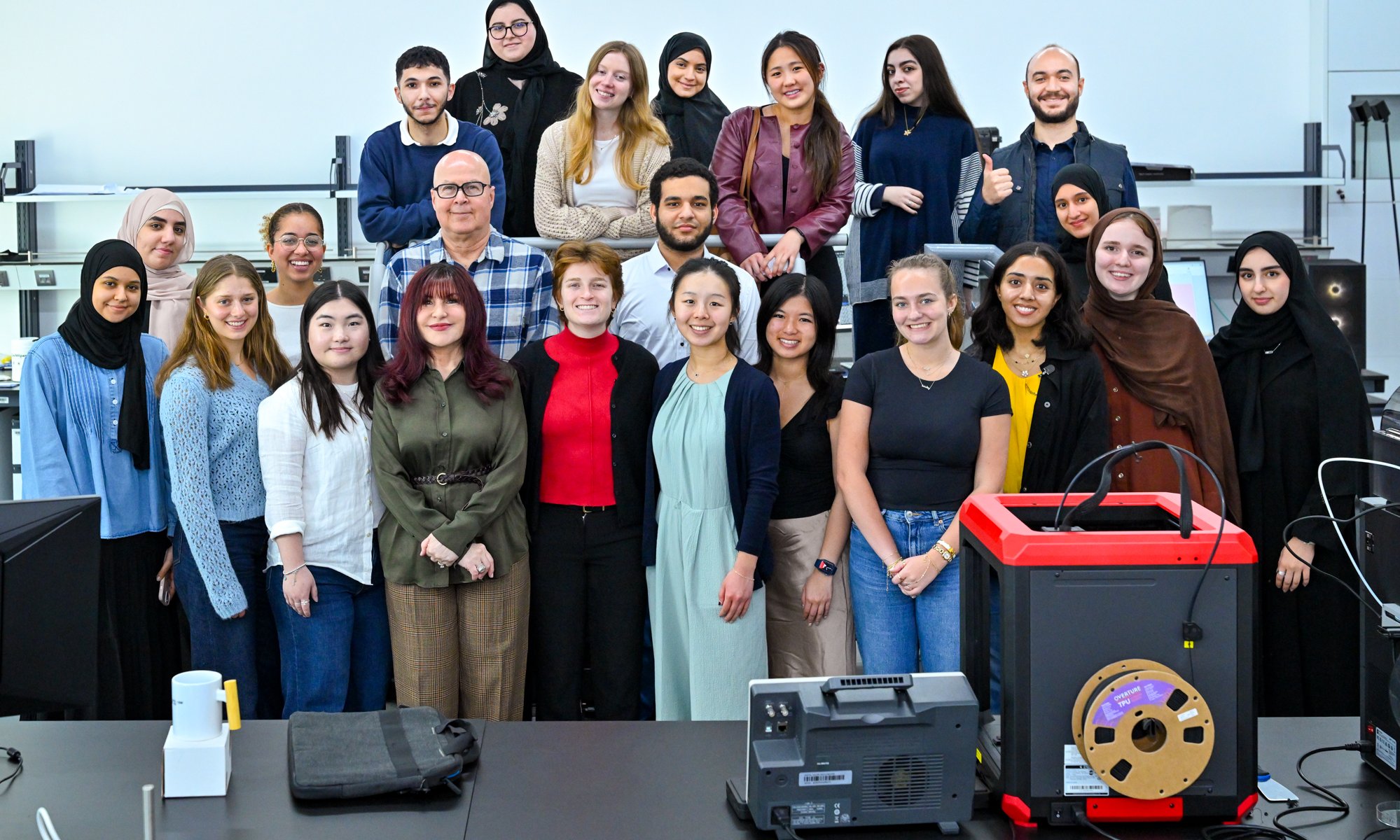
A total of 32 undergraduate students from Khalifa University and the Massachusetts Institute of Technology (MIT) participated in a two-week Healthcare Innovation Program organized by both institutions to develop solutions to real-world clinical challenges at the intersection of engineering, medicine, and entrepreneurship.


The program brought together 12 MIT students and 20 Khalifa University undergraduates, who worked in multidisciplinary teams on industry-relevant healthcare challenges. Activities were hosted across the Khalifa University campuses, its 14 research laboratories, as well as leading healthcare institutions in Abu Dhabi, including Cleveland Clinic Abu Dhabi (CCAD), Specialized Rehabilitation Hospital (SRH), and Sheikh Shakhboot Medical City (SSMC).


The initiative was led by Dr. Kinda Khalaf, Associate Dean, Undergraduate Studies, College of Medicine and Health Sciences (CMHS), Khalifa University, and Dr. Hermano Krebs, Director, The 77 Robotics Laboratory, MIT, providing interdisciplinary and cross-cultural learning experience. 

Clinically driven project themes were developed in close collaboration with physicians from CCAD, SRH, and SSMC, representing specialties such as Neurology, Vascular Surgery, Cardiology, Pediatrics, and Women’s Health. Students participated in clinical immersion experiences, hands-on design and rapid prototyping, and received mentorship from faculty members and practicing clinicians.


Beyond technical training, the program emphasized cultural exchange and experiential learning. Students took part in cultural and social activities across Abu Dhabi and the UAE, strengthening global networks and fostering mutual understanding between participants from both institutions.


Dr. Hermano Krebs said: “What made this program special was the opportunity for students to step outside the classroom and engage directly with real clinical environments. Working alongside peers from Khalifa University and interacting with clinicians across Abu Dhabi helped them see how engineering, medicine, and design come together in practice. These experiences are important because they show students how ideas evolve into solutions that can genuinely improve patient care, while also building mutual understanding across cultures and healthcare systems.”


Dr. Kinda Khalaf said: “The Khalifa University–MIT Healthcare Innovation Program supports Khalifa University’s strategic objectives by strengthening global academic partnerships, building undergraduate capacity in healthcare technology innovation, and reinforcing Abu Dhabi’s position as a regional hub for innovative biomedical research and health technology development. By hosting this collaborative initiative, Khalifa University continues to advance its vision for interdisciplinary, experiential, and globally connected education, while equipping students with research and employability skills and preparing the next generation of innovators to address complex healthcare challenges at local, regional, and global levels.”


Alisha Roy
Science Writer