
Holey Graphene: The Emerging Versatile Material Investigated at Khalifa University

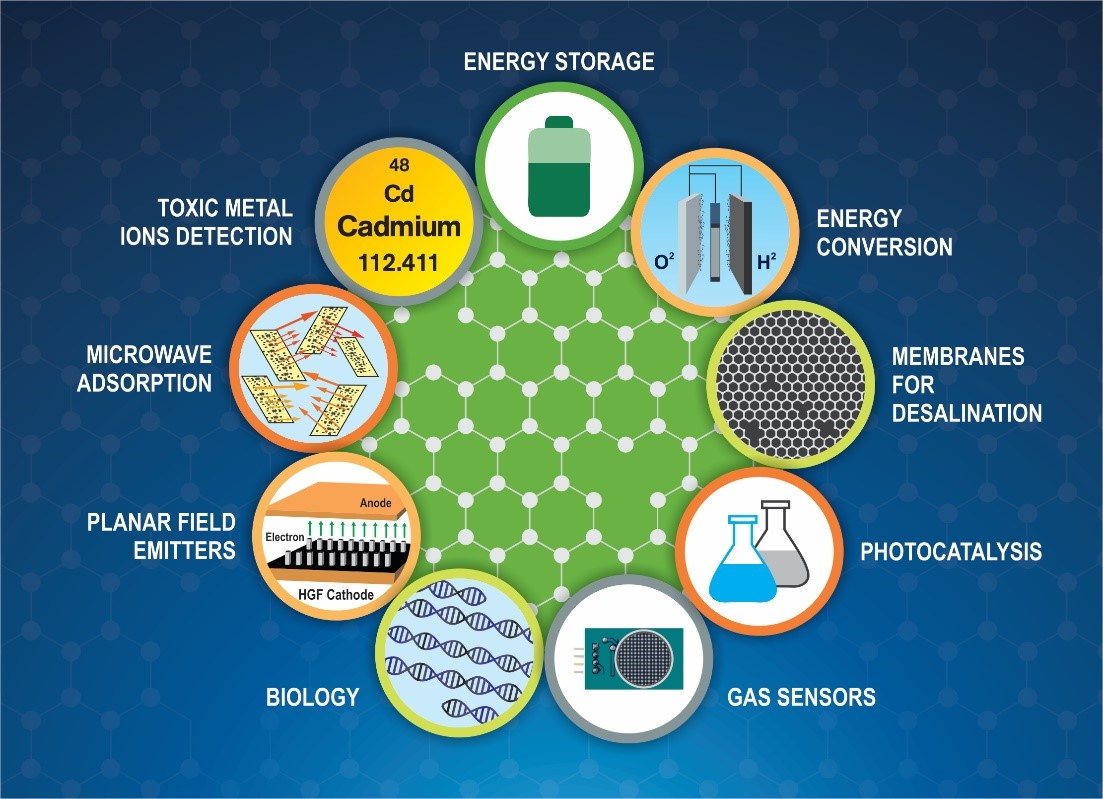
  • Photo caption: The multifunctional applications of holey graphene

A review paper by Khalifa University researchers Dr. Abhishek Lokhande, Postdoctoral researcher, Dr. Issam Qattan, Associate Professor of Physics, and Dr. Shashikant Patole, Assistant Professor of Physics, has been published in the Journal of Materials Chemistry A, covering everything to do with porous graphene. Their review discusses the state-of-the-art pore generation techniques, underlying mechanisms of action, advantages, disadvantages and applications of ‘holey’ graphene.

Graphene is a unique material comprising densely packed carbon atoms arranged in a hexagonal honeycomb lattice—known mostly to the public as the layers of material that make up pencil lead. It is extremely versatile and has potential applications in various fields, particularly thanks to its superior optical, electrical, thermal and mechanical properties.

In its purest form, graphene offers myriad applications. However, in recent years, nanoscale perforation of 2D materials has emerged as an effective strategy to enhance and widen the applications of a material beyond its pristine form.

“With the possible exception of cheese, it is well known that materials have modified properties when their structure is perforated,” said Dr. Patole. “Porous graphene, or holey graphene, is a form of graphene with nanopores in its plane. This unique porous structure enables easy interaction with inorganic or organic species, which has broad applications in water desalination, water treatment, environmental protection, and energy storage systems.”

The performance of the material is affected by the pore size, density, shape, and volume, and usually, uniform pore shape and size distribution is optimal as it leads to enhanced thermal, mechanical and electrical properties.

Graphene-based porous materials are classified into three categories based on the assembled architecture, namely holey graphene, 2D laminar porous graphene, and 3D conjugated interconnected porous structures, with holey graphene showing abundant in-plane pores generated at the basal plane using various perforation techniques. Nanochannels are formed due to the regular and periodic stacking of graphene nanosheets over each other, making interlayer pores through which liquid ions can easily pass.

“By exploiting the combined advantages of holes and graphene, holey graphene-based materials have attracted significant interest,” said Dr. Patole. “They have exceptional properties such as high electrical conductivity and high surface area, which allows holey graphene extremely versatile and able to outperform its pristine form for many applications.”

Porous graphene exhibits distinct properties from its pristine form. Compared to other graphene-based porous materials, holey graphene has an increased surface area, reduced nanosheet stacking, enhanced chemical reactivity and a stronger hydrophilic nature, which means it maximizes contact with water. Additionally, it offers high mechanical strength for superior structural stability, high chemical inertness to avoid contamination issues, high thermal stability for use in rigorous environments, high electrical conductivity for rapid electron transport, and high ion diffusion due to the interlayer channels. By fine tuning the parameters of the pores, porous graphene can be optimised for various applications.

“Holey graphene-based materials can be applied in diverse fields, including electrical energy storage, energy conversion, water desalination, bioseparation, fuel cells, gas sensors, and hydrogen storage and dye degradation systems,” added Dr. Patole. “For further research and development, we need to uncover the prime properties and related potential industrial implications of these materials, as well as suitable generation methods.”

The research team identified the pores as the basis for realizing holey graphene’s potential. However, synthesizing even pristine graphene is complicated. The most scalable methods suffer from the drawbacks of producing materials with inconsistent properties and low purity. Methods that produce high-quality graphene are much more expensive and involve the use of highly sophisticated operational setups and accessories.

“This is why it’s important to develop methods that are easy, cost-effective, efficient and scalable for graphene synthesis,” explained Dr. Patole.

When pristine graphene has been produced, it can be made porous by chemical and physical methods, but hole generation is tricky and its parameters depend on the methods adopted for its intended purpose.

“Generally, the expected pore size should be smaller than the conventional pore size of the naturally available materials,” said Dr. Patole. “However, fabricating porous graphene with well-defined pores is still a challenge as it is quite complex and restricted by our current technological limits.”

Synthesizing holey graphene is also associated with the use of toxic chemicals and the high cost of the starting materials, so novel strategies will be required for its synthesis. The researchers investigated the use of biomass as a starting material, including Bougainvillea flowers and Plumeria rubra leaves, among other approaches.

Besides the major reported applications in supercapacitors, lithium ion batteries, electro-water splitting, and water desalination systems, holey graphene-based materials are also applied in various other applications. Some of these applications include hydrogen storage, dye degradation, organic pollutant separation, and gas sensing. Holey graphene has even been investigated for biological applications, with the researchers highlighting effective performance in non-enzymatic glucose detection in human blood samples and selective bacterial detection.

“Holey graphene-based materials have emerged as versatile materials and have demonstrated superior performance in many applications,” explained Dr. Patole. “With continuous efforts and developments, the commercial application of holey graphene-based materials will surely revolutionize all sorts of applications.”

Jade Sterling
News and Features Writer
27 April 2020
Khalifa University Researchers Develop Mathematical Model to Help Policymakers and Non-Experts Tackle Covid-19 Challenges

Infectious diseases, especially when new and highly contagious, have the potential to be devastating. Predicting how the disease will spread and how many fatalities it will cause is crucial for societal and healthcare planning and forecasting of resource needs, and for evaluating the impact any intervention would have.


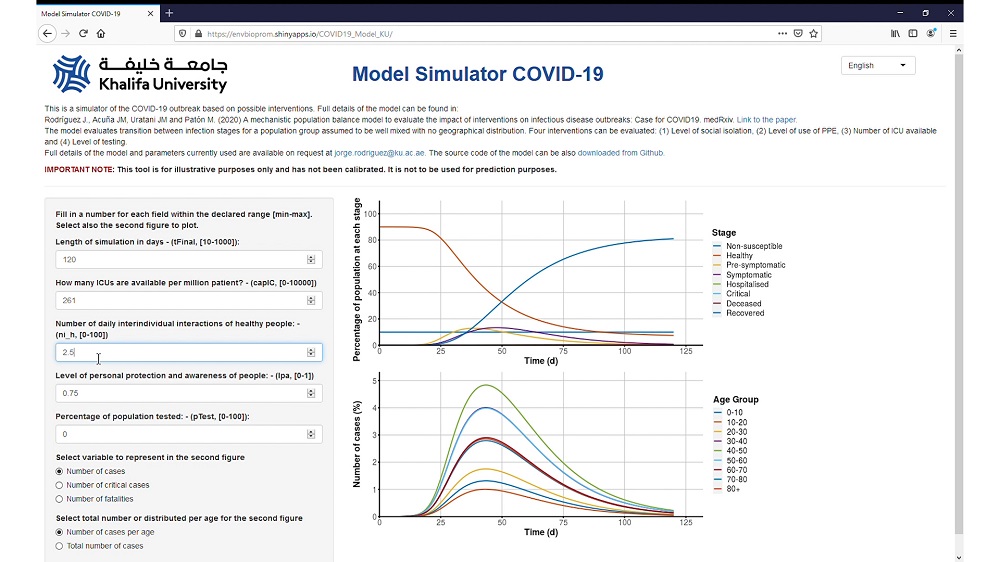
A team of researchers from Khalifa University, led by Dr. Jorge Rodríguez, Associate Professor of Chemical Engineering, has developed a model of the Covid-19 disease impact on a population to provide a stepping stone for non-experts and policymakers to understand what to expect as the disease spreads. An article with the model and results has already been published in preprint form in MedRxiv.  They designed the model to be open source, making it available to anyone who wants to plug in the parameters. The model is available here: https://envbioprom.shinyapps.io/COVID19_Model_KU/


“We aimed to develop a model that was meaningful but not complex, that could be updated as more data becomes available, and used as a potential tool to inform public health policy and impact mitigation strategies,” said Dr. Rodríguez.


Nations around the world are responding to the Covid-19 pandemic with varying intensity. While some enforce universal social isolation, such as Italy, others, such as the United Kingdom, are selectively isolating the elderly.


The interdisciplinary KU team, comprising Dr. Rodríguez, Dr. Juan Acuña, Chair of the Department of Epidemiology and Public Health, and, Dr. Mauricio Paton from the Department of Chemical Engineering and Dr. Joao Uratnai , applied these interventions to their model to determine the most effective way to slow the spread of the disease. They also evaluated the use of personal protective equipment, including face masks, and the increase in availability of critical care beds.


“We used data available from the Covid-19 outbreak as of early 2020,” explained Dr. Rodríguez. “Our results are intended to be interpreted qualitatively and serve as a demonstration of the model’s potential if applied with higher confidence parameter values.


“Our preliminary results indicate that universal social isolation measures may be effective in reducing total fatalities, but only if they are strict and the average number of daily social interactions is reduced to very low numbers. Interestingly, selective isolation of only the age groups most vulnerable to the disease appears almost as effective in reducing total fatalities but at a much lower economic impact. Most importantly, our results indicate that ending isolation measures too soon appears to render the previous isolation measures useless as the fatality rate eventually reaches nearly the same result as when nothing is done.”


Using mathematical modelling to understand the potential spread of disease has a long history. With an increasing amount of available data, epidemiological models have improved drastically over the years, providing a more comprehensive understanding of recent outbreaks of diseases, such as Ebola and Zika.


However, epidemiological models have serious limitations in their predictive capabilities.


“The Covid-19 pandemic has brought unprecedented attention to the limitations of traditional modelling approaches,” explained Dr. Rodriguez. “Modelling uses a combination of the best available data from historical events and datasets, various estimations, and assumptions. Then, data about these parameters is computed with statistical tools to develop an epidemic model.”


Dr. Rodríguez brings a unique chemical engineering perspective to overcome some of the limitations faced by traditional epidemiological-based models.


“Population balance models are widely used in chemical engineering to describe the evolution of a population of particles, as they change from one chemical state to another. We realized that these models can describe a process in a way that could be used to predict and hypothesise when data deviates from model predictions.”


The KU researchers developed a model that describes individuals in a population by infection stage and age group. The population is defined as a close, well-mixed community with no migrations, as any country with closed borders would be.


The KU model is based on individuals transitioning between infection stages and segregated by age group. Each individual belongs, in addition to their age group (which they never leave), to only one of the possible states corresponding to the stages of infection, be that healthy, asymptomatic, symptomatic, hospitalised or recovered, among others. The individuals form a close community without any kind of migration. The researchers consider that the model best described a big city with ample use of public transportation. They then applied a number of static and dynamic interventions to the model’s parameters to simulate what would happen to the number of people in each disease stage.


“A static intervention is a sustained action over a parameter, such as asking people to stay home to reduce contact between individuals,” explained Dr. Rodríguez. “In outbreaks, aside from the immediate management of needs and resources, how long we have to wait before we can return to normal becomes of great concern. We also evaluated dynamic interventions, specifically in terms of the ending of social isolation measures once different threshold values of the fatality rate are reached. Doing this allows us to see how long an intervention needs to last, which is of great interest to governments and local authorities who need to decide when to relax an intervention.”


Given the complexity and the expected short and long-term impacts that such public health interventions should have when dealing with disease outbreaks and pandemics, sufficiently complex but user-friendly modelling tools need to be developed. The KU research team has played their part in creating a model that can provide researchers, public health authorities, and the general public with useful information to act in moments of widespread uncertainty. They stress the importance of access to up-to-date data and the need to continually develop the model with more accurate data to offer meaningful solutions to the pandemic.


A key outcome of the model is to improve synergies between academia, policy makers, and the public, as Dr. Rodríguez explained: “Effective communication between healthcare and public health systems and science hubs is considered one of the bigger challenges in both health sciences and public health. We need to not only take effective measures, but do so in a timely manner. This requires strategies for data sharing, generation of information and knowledge, and the timely dissemination of such knowledge for effective implementation.”


Jade Sterling
News and Features Writer
20 April 2020


AI Applications in Rain Enhancement and Meteorology

Weather significantly impacts society for better and for worse, and improving our ability to forecast and predict weather events is crucial for myriad reasons. An increased notice period for a hurricane could improve safety measures for people at risk, while improved solar predictions can help optimize renewable power production.

Applying artificial intelligence (AI) techniques in conjunction with our physical understanding of the environment can substantially improve prediction of extreme weather events, like hurricanes, and unlock important insights from the climate data that is collected.

“Artificial intelligence and related data science methods have been developed to work with big data across a variety of disciplines,” explained Dr. Ernesto Damiani, Senior Director of the Artificial Intelligence and Intelligent Systems Institute at Khalifa University.

AI techniques can handle large numbers of predictor variables, integrate physical understanding into models efficiently, and discover new knowledge from data, contributing to improved weather predictions and a better understanding of many weather-related phenomena.

“Weather forecasting is the task of predicting the state of the atmosphere at a future time and a specified location,” explained Dr. Damiani. “Traditionally, this is done through physical simulations where the atmosphere is modelled as a fluid. The present state of the atmosphere is sampled and the future state is computed by numerically solving the equations of fluid dynamics at different resolutions: micro-, meso-, and macro-scale.”

In addition to using such physics-based model, in recent years forecasters and researchers have begun to adopt AI techniques much more widely, as they demonstrate their power in a wide variety of applications, including post-model bias correction, processing large datasets, reducing cognitive overload, and unlocking new insights in large datasets.

“The system of ordinary differential equations that govern physics-based models can be unstable under perturbations, and uncertainty in the initial measurements of the atmospheric conditions limit accuracy,” explained Dr. Damiani. “Machine learning is relatively robust to perturbations and does not require a complete understanding of the underlying physical processes that govern the atmosphere. Therefore, machine learning may represent a viable alternative to physical models in weather forecasting.”

While many research groups worldwide have focused on deep learning models, researchers at Khalifa University have been focusing on a multi-view approach, where related groups of sensor data sources provide different views on the phenomenon, to be later compiled into a final classification or prediction stage.

Accurate forecasting is particularly crucial for the UAE’s cloud seeding operations.

Initiated in the late 1990s in the UAE, cloud seeding has become a regular occurrence in recent years, with an average of between 160 and 200 flights per year. The UAE has an arid climate with less than 100mm per year of rainfall, a high evaporation rate of surface water, and a low groundwater recharge rate. Although rainfall in the UAE has been fluctuating over the last few decades in the winter season, most occurs between December and March annually.

The UAE has embraced rain enhancement as an important tool in its arsenal to support the country’s water security efforts. Among the country’s key goals are advancing the science, technology and implementation of rain enhancement, encouraging additional investments in research funding, increasing rainfall, and ensuring water security. Forecasters and scientists have estimated that cloud seeding operations can enhance rainfall by as much as 35 percent in a clear atmosphere, and by up to 15 percent in a turbid atmosphere.

The UAE’s National Center for Meteorology commences cloud seeding drills as soon as meteorologists forecast cloudy weather. To optimize the deployment of the limited budget of the seeding material, these forecasts need to be as accurate as possible, which is where AI can step in.

Many techniques can be applied to improve their forecasting ability, including artificial neural networks (ANNs) – interconnected networks of weighted nonlinear functions that can be connected and trained in multiple layers. ANNs provide the foundation for deep learning methods and have been used in a wide variety of meteorology applications since the late 1980s, including cloud classification and precipitation classification.

Applying modern AI techniques to weather forecasting is improving our ability to sift through the deluge of big data to extract insights and accurate, timely guidance for human weather forecasters and decision-makers, and is playing an indispensable role in the UAE’s efforts to achieve greater water security.

Jade Sterling
News and Features Writer
12 April 2020

Khalifa University Wins Senior Design Competition Organized by IEOM Society International

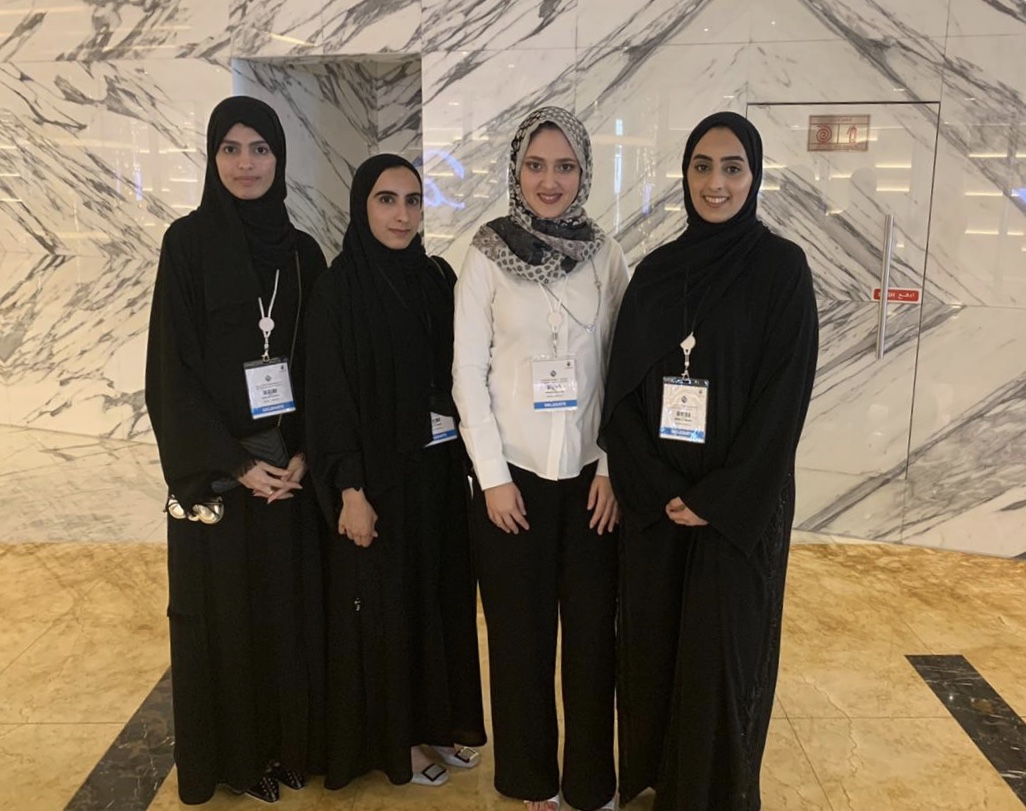
A paper by senior students from the Industrial and Systems Engineering Department at Khalifa University has won first place in the IEOM Capstone Student Design Project Competition that was part of the 2020 International Conference on Industrial Engineering and Operations Management (IEOM).

The team was represented by Maha Al Dhaheri, Mariam Ramadan, Afra Al Mheiri, and Maryam Al Shehhi, and was supervised by Dr. Mecit Can Emre Simsekler, Assistant Professor of Industrial and Systems Engineering, and Dr. Saed Amer, Assistant Professor of Industrial and Systems Engineering.

Their paper, titled “Improving Patient Discharge Process,” showcases their design project, which aims to improve the patient discharge process for an inpatient clinic of a local hospital in Abu Dhabi. Leveraging industrial and systems engineering principles, the students proposed a simulation-based approach to streamline the patient discharge process and consequently improve the patients’ experience.

The IEOM Society International is a non-profit organization that provides academics, researchers, scientists, and practitioners a platform and forum to exchange ideas and provide insights on the latest developments and advancements in the fields of Industrial Engineering and Operations Management.

Ara Cruz
News Writer
9 April 2020

Combating Covid-19: Khalifa University in UAE develops emergency ventilators

As the pandemic continues, thousands of ventilators are needed around the world.

Researchers at Khalifa University’s Healthcare Engineering Innovation Centre, HEIC, are stepping up to serve the UAE’s project to develop emergency ventilators. The researchers have developed a working prototype and are now engineering the production plant to be able to produce the ventilators at scale to meet rising local and global demands, said a press release issued by Khalifa University on Monday.

Read full story here: https://www.khaleejtimes.com/coronavirus-pandemic/combating-covid-19-khalifa-university-in-uae-develops-emergency-ventilators-

Distance learning is an education imperative

To truly grasp the UAE’s ability to adapt with circumstances that may leave students with only the option of virtual study, it is crucial to realise that this ability is a consequence of years and years of preparation. Had it not been for that preparation, we would not be able to successfully mitigate the challenges imposed by the current health situation. In a time where mass gatherings should be avoided and remote working encouraged, possessing the infrastructure to maintain education continuity is a blessing.

Ankabut, the UAE’s advanced national research and education network that is run in full by Khalifa University of Science and Technology, announced that it is fully-prepared to support in ensuring that it is successfully adopted and maintained nationwide.

Read full story here: https://gulfnews.com/opinion/op-eds/distance-learning-is-an-education-imperative-1.70660373

3D Printing a Ceramic Resin to Remove Impurities from Nuclear Reactor Coolants More Efficiently

A research team from the KU-KAIST research collaboration between Khalifa University and Korea Advanced Institute of Science and Technology has fabricated a new ceramic material using 3D printing that can remove impurities from nuclear reactor coolants more efficiently than the traditionally used polystyrene-based resins.

The researchers found that the new ceramic material successfully adsorbs the impurities in the reactor coolant, which involves attaching the impurities to the pores in the material, and removes them from the coolant. They described their results of a simulation which validates the new material in a recently published paper in the journal Nuclear Engineering and Technology. The paper was co-authored by Dr. Ho Joon Yoon, Assistant Professor of Nuclear Engineering at KU, Omar Al-Yahia, Postdoctoral Fellow at KU, and Ho Jin Ryu, Associate Professor of Nuclear and Quantum Engineering at KAIST.

“During the normal operation of a nuclear reactor, several corrosion elements can be produced as the reactor’s structural materials begin to degrade,” explained Dr. Yoon. “These impurities must be removed from the reactor coolant cycle to preserve the coolant.”

The reactor coolant system is used to remove energy from the reactor core in the form of heat, and transfer that energy either directly or indirectly to a steam turbine to produce power.

In pressurized water reactor plants – the most common type of nuclear reactor in the world – relatively large amounts of chemicals are added to both the primary and secondary coolants. Accordingly, this affects the service life of the system, since the added chemicals compete for the exchange sites and cause trace nuclides to appear in the coolant. This reduces the efficiency of the power plant, while also causing radioactive waste to appear in the coolant.

“These radioactive impurities have a significant effect on the coolant performance, the thermal-hydraulic properties of the coolant, and the material integrity of the cladding,” explained Dr. Yoon. “Heat transfer of the heat exchanger can also be reduced by the impurities’ fouling effect. It’s crucial to maintain coolant quality and performance for nuclear reactor safety.”

Various techniques have been used to reduce the radioactive nucleides that are released into the coolant, including the ion exchange technique, which involves injecting ion exchange resins into the coolant that allows for ion exchange, a process where dissolved ions are removed from the coolant and replaced with other, non-radioactive ions of the same or similar electrical charge.

“In order to remove these radioactive impurities, a continuous chemical treatment using ion exchangers is required for the coolant system,” explained Dr. Yoon. “Ion exchange resins are the most used option in nuclear reactors for the purification and treatment of the fluidic systems.”

Conventional ion exchange resins are polystyrene composite packed beads with a diameter of 0.3 to 0.7mm. However, using ion exchange resins has several disadvantages. Because the resins become contaminated with radioactive materials, they constitute a large volume of radioactive waste at the end of their life and require delicate handling for final disposal.

Additionally, using these resins creates a large drop in pressure and requires a low operating temperature, which means the coolant needs to be cooled down for the purification treatment.

Dr. Yoon’s team used computational fluid dynamics (CFD) analysis to investigate the effect of flow velocity and pressure drop distribution on the pore structure through the ion exchange resins. The pore structure determines the efficiency during normal operation, with the team’s results aiming to improve the design of new ceramic filters.

With their findings, they developed a new porous ceramic filter to replace the polystyrene composite resins for the adsorption of the corrosion elements in reactor coolant. Ceramics are naturally hierarchical porous materials with various pore sizes. However, their efficiency as filters is limited by the manufacturing process for their multiscale texture. With modern additive manufacturing techniques, however, the KU team has created a prototype to be tested against the simulation results discussed in their most recent paper.

“A large surface area is important for the adsorption process, while the flow channels through the pores should be large enough to avoid a large pressure drop and to reduce the stresses on the material structure,” explained Dr. Yoon.

The team’s simulations found that liquid flow through their ion exchanger is streamlined, enhancing the turbulence through the flow path and increasing the liquid-surface contact time, which increases adsorption efficiency by increasing the adsorption rate.

“We compared the hydrodynamic properties between the conventional type of resins and our new ceramic filter, which has a honeycomb twisted structure,” said Dr. Yoon. “We found that when the particle size reduces, the pressure drops much more significantly. However, the twisted honeycomb structure shows a much lower pressure drop, which is very important for efficient ion exchange immobilization and degradation. We found that large beads decrease the pressure drop but the adsorption rate is also reduced. More studies are needed to find the optimal ion exchange configuration to enhance the functionality of these filters, where better flow velocity distribution and less pressure drop are achieved.”

Based on this analysis, the KU-KAIST team will now manufacture a prototype using 3D ceramic printing and conduct experiments to evaluate the mechanical and chemical properties of their ceramic filter. They will then be able to compare the CFD analysis to the experimental data.

Jade Sterling
News and Features Writer
7 April 2020


Khalifa University Responding to Covid-19 with Emergency Ventilators

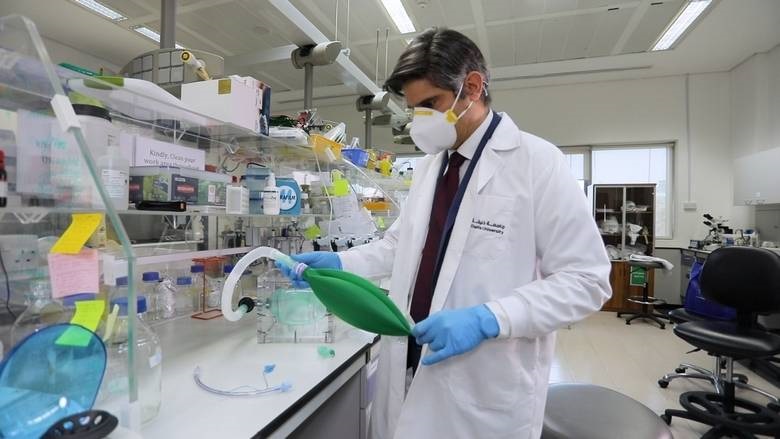
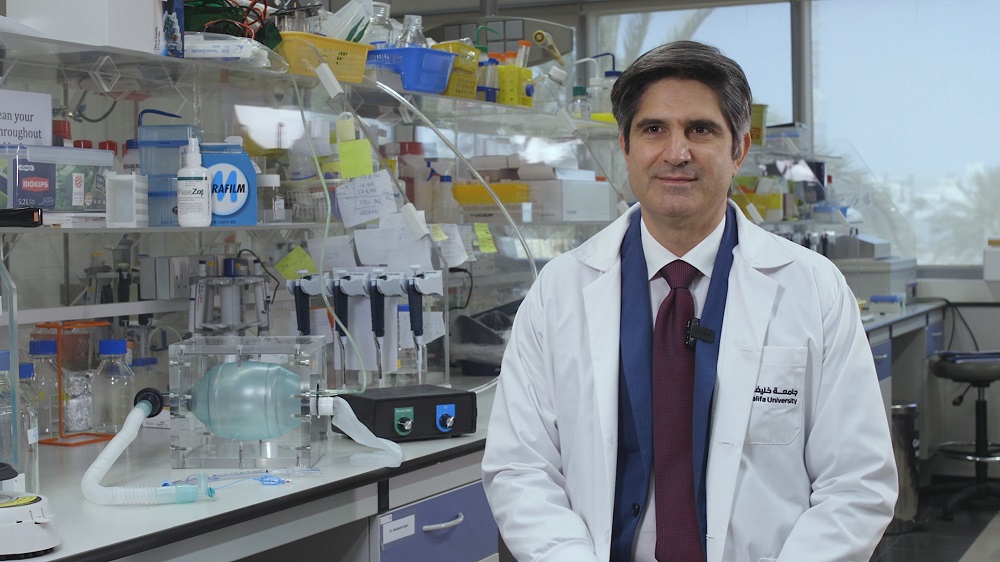
A multi-disciplinary team in the UAE has developed an affordable, simple, and easy-to-manufacture ventilator prototype. The prototype ventilators could serve as a stop-gap measure, giving doctors precious time until an advanced ventilator becomes available.


Researchers at Khalifa University’s Healthcare Engineering Innovation Group (HEIG) are stepping up to serve in the UAE’s project to develop emergency ventilators. The researchers have developed a working prototype and are now engineering the production plant to be able to produce the ventilators at scale to meet rising local and global demands.


The team, led by Dr. Cesare Stefanini, Professor of Biomedical Engineering and Director of HEIG, is working in response to the global need for increased ventilator manufacturing capacity due to Covid-19. Though Covid-19, the disease caused by the novel coronavirus, often begins as an upper respiratory tract infection with a cough and sore throat, it can enter the lower respiratory tract, where it damages the lung’s alveoli, flooding them with inflammatory cells and fluid. This makes it harder for oxygen to travel from the lungs to the bloodstream, reducing the oxygen available to the organs that depend on it.


Acute respiratory distress syndrome is the term for the rapid and extensive lung damage that occurs from a severe case of pneumonia. If a patient’s lungs are so compromised that they can’t get enough oxygen, a ventilator is used to provide more oxygen to the body.


According to the World Health Organization (WHO), around 80 percent of people with Covid-19 recover without needing hospital treatment, but one person in six becomes seriously ill and can develop pneumonia, which may require ventilator treatment. As the pandemic continues, thousands of ventilators are needed around the world, and developing them quickly has the potential to save lives.


“One of the consequences for the healthcare system is the potential shortage of ventilators,” explained Dr. Stefanini. “The number of intensive care beds and mechanical ventilators in hospitals is a fraction of what may be needed in the coming weeks as the situation develops worldwide.”


“Our plan needs to be very aggressive,” said Dr. Stefanini. “We aim to develop a working prototype in less than two weeks, alongside designing a mass production unit. We have all the theoretical and design expertise in our team especially in the prototyping phase.”


KU’s interdisciplinary team of engineers and experts are now working to establish the requirements for a production facility in Abu Dhabi. Thanks to the timely measures undertaken by the UAE government, a theoretical worse-case scenario is unlikely, but the establishment of a domestic production ability for emergency ventilators is a reasonable and well-motivated safety measure.


“Procuring new ventilators at the required scale represents quite the challenge,” explained Dr. Stefanini. “This is due not only to the required expenditure, but also due to massive demand on a global scale in a pandemic situation.”


Innovative designs and technologies are undergoing intense research to quickly produce ventilator parts, as well as masks and other essential equipment. The KU team is focusing on low-cost, rapid production using 3D printing and easily accessed materials. Within the next two weeks, the team aims to have the plan for the production plant finalized and the first units ready to go to support the UAE’s fight against Covid-19.


“Khalifa University is leading this project but it’s a collaborative effort from health services,” explained Dr. Stefanini. “We’re coordinating an effort with many governmental bodies and the country is pulling together to optimize efforts and save lives. We’re all reacting very quickly and tackling this crisis as one UAE team.”


This project is a manifestation of the UAE government’s clear and undeterred commitment to conservatively prepare for all possible scenarios to ensure healthcare for all its residents and citizens, says Professor Ashraf Alzaabi, Professor Ashraf Alzaabi, Head of the Respiratory Division at Zayed Military Hospital in Abu Dhabi, who tested the prototype.


“It would be great to see this multi-disciplinary effort between the healthcare, engineering, and manufacturing sectors become a seed for future biomedical enterprises in the UAE. This crisis has highlighted the critical importance of maintaining a high-degree of self-reliance for essential needs. It has also highlighted the capacity of our talented citizens and expatriate residents.”


Jade Sterling
News and Features Writer
6 April 2020

Pioneering UAE research monitors vital signs by radar

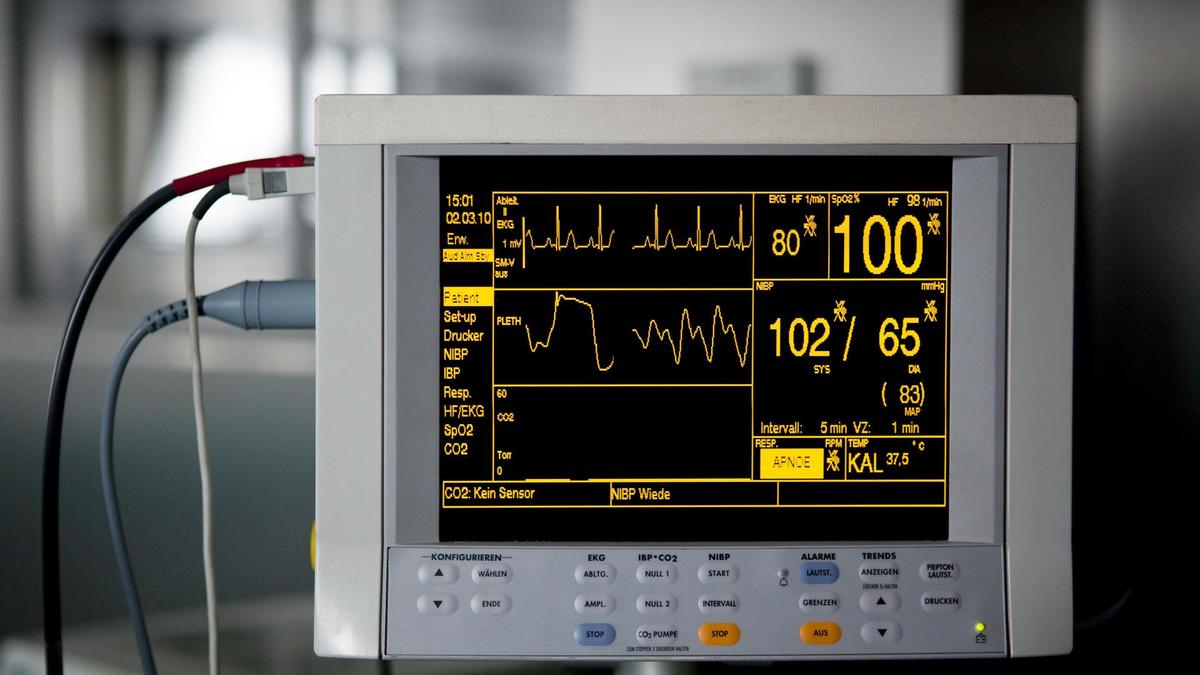
Vital signs such as blood pressure and heart rate could soon be monitored wirelessly via radar following pioneering work by UAE researchers.

A team at Khalifa University believe the technology could be used in hospitals and from homes, reducing the need for doctors’ house visits and avoiding the need for patients to be physically hooked up to machines.

Read full story at The National here:  https://www.thenational.ae/uae/health/pioneering-uae-research-monitors-vital-signs-by-radar-1.1002005

Khalifa University Awarded AED7 Million Ministry of Education Research Grant

A Khalifa University research proposal has been selected to be awarded the 2019 UAE Ministry of Education Collaborative Research Program Grant (CRPG2019) program.


The proposal, titled “Evaluation of Using Accident Tolerant Fuel Concepts in APR1400,” was one of four proposals selected from a total of 238 proposals submitted to the grant program. The KU researchers will receive approximately AED7 million across three years to pursue research aimed at demonstrating the superior performance of new advanced nuclear fuel in commercial nuclear power plants. Such advanced nuclear fuels that can help get more power out of nuclear power plants safely and reliably, could be a significant boost to the UAE’s goal of meeting growing energy demand sustainably.


A team of six faculty members from KU will carry out the research. The team includes Dr. Saeed Al Ameri, Assistant Professor of Nuclear Engineering, Dr. Ahmed Al Kaabi, Assistant Professor of Nuclear Engineering, Dr. Yongsun Yi, Assistant Professor of Nuclear Engineering, Dr. Daniel Choi, Associate Professor of Mechanical Engineering, Dr. Imran Afgan, Associate Professor of Mechanical Engineering, and Dr. Andreas Schiffer, Assistant Professor of Mechanical Engineering.


The team will also include 11 PhD students; all of the nuclear engineers will be UAE Nationals. The collaborative team will include external members from Massachusetts Institute of Technology (MIT), Korea Advanced Institute of Science and Technology (KAIST) and The University of Manchester.


The aim of the CRPG grant is to build research teams of scale, focusing on an integrated research program capable of applying scientific excellence to the advancement of knowledge for the benefit of the UAE. The grant encourages researchers to pursue original and ambitious research questions.


Research projects considered for the CRPG must prove to have relevance to at least one of the UAE Science, Technology, and Innovation Policy focus areas. The KU project falls under the focus area of Solar and Alternative Energy Technology Systems.


The other three 2019 grant winners were Dr. Ioannis Manikas from the University of Wollongong in Dubai for a project in the category of Food Security; Dr. Bassam Ali from UAE University for a project in Health Information Technology and Bioinformatics; and Dr. Mohamed Ahmed M. Salim Alhammadi, also from UAE University, for a project under Education Innovation and Technology.


Erica Solomon
Senior Editor
8 April 2020

Optimizing a Country’s Natural Gas Supply Chain from Wells to Consumers

Khalifa University researchers developed a model to overcome the challenges natural gas plants face due to fluctuations in processed natural gas quality and quantities demanded by markets. 

Researchers at Khalifa University have used artificial intelligence to investigate the optimal allocation of natural gas for maximum operating efficiency.

Satyadileep Dara, MSc in Chemical Engineering, and Dr. Yasser Al Wahedi, Assistant Professor of Chemical Engineering, along with Haytham Abdulqader from the Department of Petroleum Engineering and Dr. Abdallah Berrouk, Associate Professor of Mechanical Engineering, detailed their model using an evolutionary algorithm in a paper published this month in the journal Energy.

Natural gas is one of the most commonly used fuels and the fastest growing component of worldwide primary energy consumption.

“A key challenge faced by many governments lies in the optimal allocation of resources,” explained Dr. Al Wahedi. “The market is experiencing dynamic changes that have to be taken into account.”

“Natural gas has always been a focal point due to its pivotal impact on the world economy,” added Dr. Berrouk. “The economies of many countries across the globe rely on gas because of its versatility across sectors.”

Gas plants are often challenged by fluctuations in processed natural gas quality and quantities demanded by markets. Even more challenging is the rapid variation in the demand for natural gas products across the gas supply chain. To adapt a product portfolio to the changes in the market, a supply chain needs high operational flexibility.

The KU researchers developed a unified optimization model that envelops all supply chain components starting from reservoirs to the various downstream industries. The model aims to maximize the net profit of the gas network through optimum allocation of gas across the supply chain, which is defined as the network of suppliers, producers and consumers.

By taking into account the technical, contractual and economic aspects of a gas supply chain, the optimization exercise resulted in a large-scale model comprising 446 decision variables and 190 constraints. The researchers employed an evolutionary algorithm to solve the model and determine the optimum gas allocation matrix for a country’s gas network in any particular operating scenario.

“We focused on a large-scale gas value chain typical to the Middle East given that gas is a primary catalyst for economic growth and diversification across the region,” explained Dr. Al Wahedi.

“A system is grouped into three blocks: two onshore gas development blocks and one offshore. Each of these blocks comprises a number of gas reservoirs, stabilization trains and processing plants. Their key products include sales gas, ethane, propane, butane, sulphur, naphtha and condensate. These products are then routed to various consumer industries that include cement, power, polymers, steel, fertilizers and aluminium. Gas used for reservoir pressure maintenance is also considered.”

The natural gas supply chain network contains several combinations of gas pathways because there are many destinations for the products developed at each gas complex. Therefore, there are multiple possibilities of allocating the gas from the wells to the stabilization facilities, and then from these facilities to NGL units. The simplest and most convenient way to allocate the gas is to base it on previous experience, informal obligations, or constraints evolved over years of operation.

“Such practices can only offer a sub-optimum allocation of gas since they do not pay any attention to overall supply chain benefits or account for the gas consumers,” said Dr. Berrouk. “At a country level, the scope for optimization extends to identifying the most efficient gas allocation network in terms of energy consumption across the supply chain ranging from reservoirs to consumers.”

“We validated our model using real operating data from 2015, with results showing that our model predictions lie within 3 percent of the real data,” said Dr Al Wahedi. “Not only that, but we used our model to investigate the optimum allocation of gas across the supply chain for sixteen operating scenarios.”

The results found that a minimum 3 percent increase in aggregate supply chain net profit can be obtained using the optimized allocation matrix.

“It’s clear that a comprehensive optimization model can benefit the government for overall gas allocation and value generation.” said Dr. Berrouk.

Jade Sterling
News and Features Writer
5 April 2020

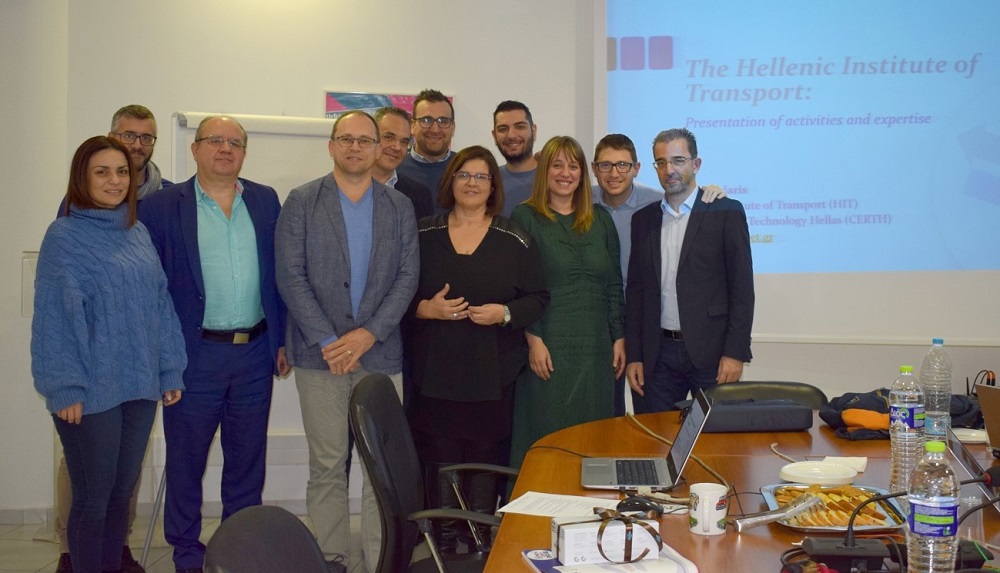
DSO Center Faculty Visits Greece to Foster Ties with Key Transport Research Center

In early February, Dr. Maher Maalouf, Dr. Andrei Sleptchenko, and Dr. Andreas Henschel of Khalifa University’s Digital Supply Chain and Operations Management (DSO) Center visited the Hellenic Institute of Transport (HIT) in Greece. The HIT is part of the Center for Research and Technology Hellas (CERTH), a non-profit organization and one of the leading research centers in Greece. CERTH reports directly to the General Secretariat for Research and Technology of the Greek Ministry of Development and Investments and is also listed among the top 20 EU research institutions that have the highest participation in competitive research grants.


The KU delegation was welcomed by HIT Director Dr. Evangelos Bekiaris and HIT Deputy Director and Research Director for Infrastructure, Networks, Mobility, and Logistics Dr. Georgia Aifadopoulou. They also met with Aristos Halatsis (Project Manager), Josep Maria Salanova Grau (Researcher), Elpida Xenou (Logistics Expert/ Project Manager), Ioanis Malidis (Researcher), and Pavlos Spanidis (Software Engineer).


HIT’s key research areas focus on clean vehicle technologies, road safety, and employability of transport sector professionals. During the visit, the KU delegation toured the facilities and discussed potential collaborations between KU and HIT such as joint project proposals, research visits, and exchange of data and technologies. The collaborations are expected to be mutually beneficial and will strengthen DSOs breadth and depth of expertise.


Ara Cruz
News Writer
2 April 2020