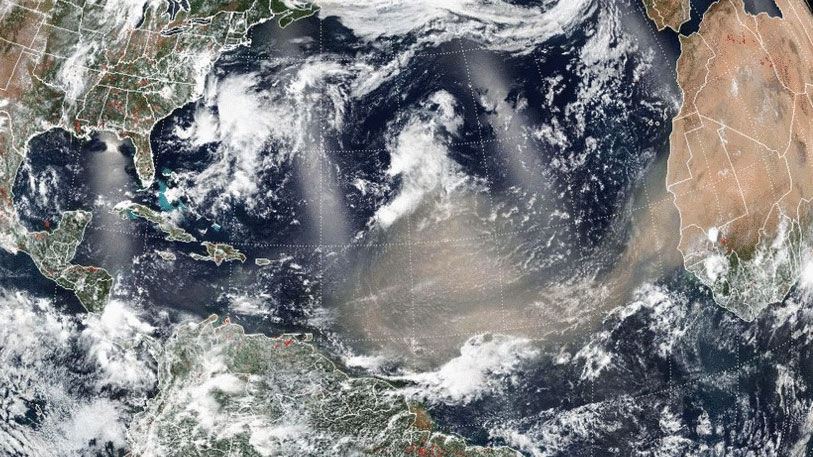
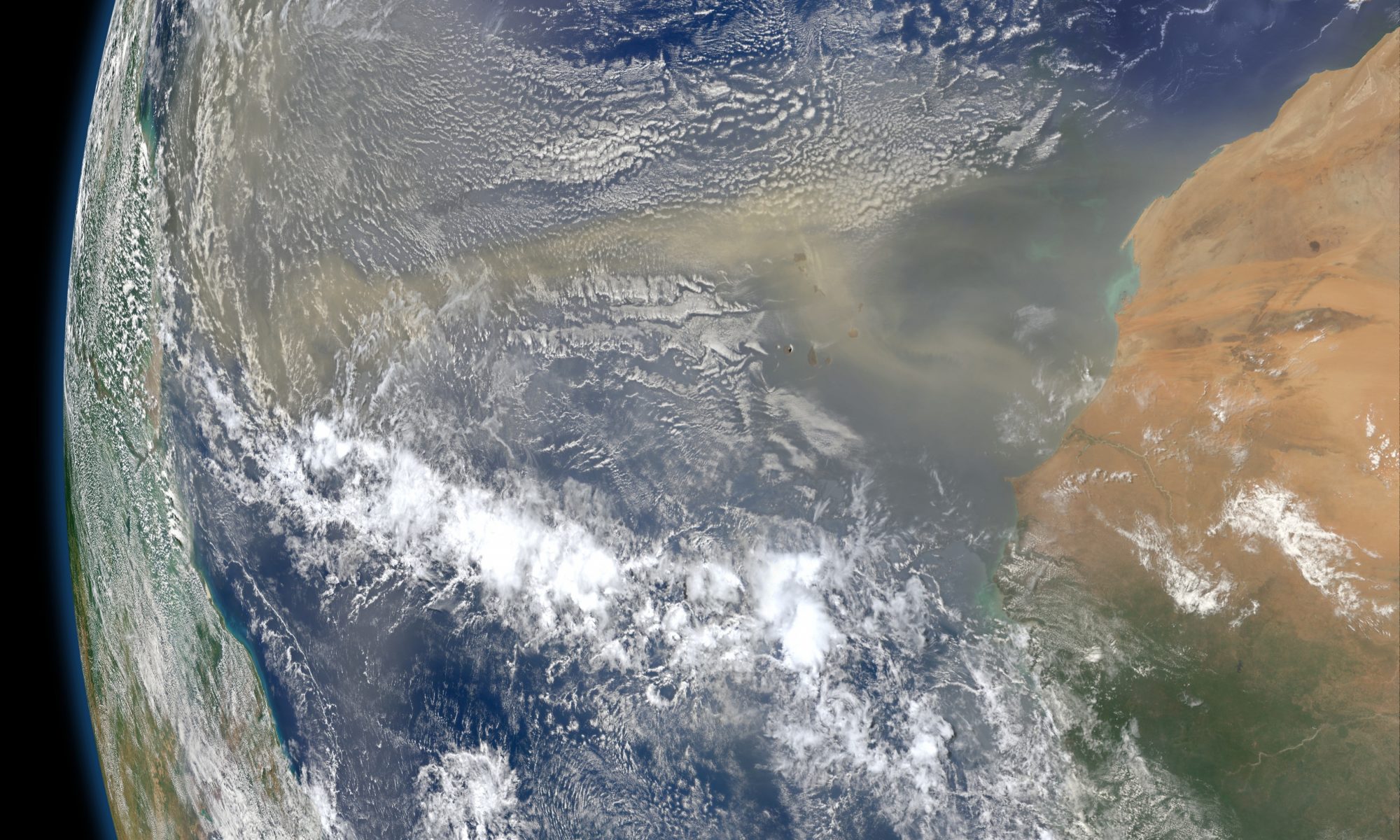
In June, residents of Puerto Rico woke to a Sun shrouded in a thick haze, and everything outside seemingly coated in reddish dust. Little did they know the phenomenon was connected to winds swept up by the largest African dust storm on record—an event so massive, scientists have dubbed it Godzilla. These winds, researchers now report, were in turn triggered by a meandering jet stream that circles the planet farther north.
But what happened this year was a surprise, both in its size and how it formed, says study leader Diana Francis, an atmospheric scientist at Khalifa University, Abu Dhabi. Typically, the dust storms are driven by warm, moist air from monsoons on the southern edge of the Sahara that blows to the north. Based on data from satellites and weather stations, Francis and her colleagues found a different trigger for the 2020 storm: a large patch of high-pressure air parked over the northwestern edge of Africa starting on 14 June, she and colleagues report this month in Geophysical Research Letters. That triggered 4 days of record-strong winds that blew from the northeast, sweeping up vast amounts of dust and lifting it up to 6 kilometers into the air. There it encountered the westbound African jet stream, which was also strengthened by the high-pressure system. By 20 June, the first traces of the cloud reached the Caribbean.
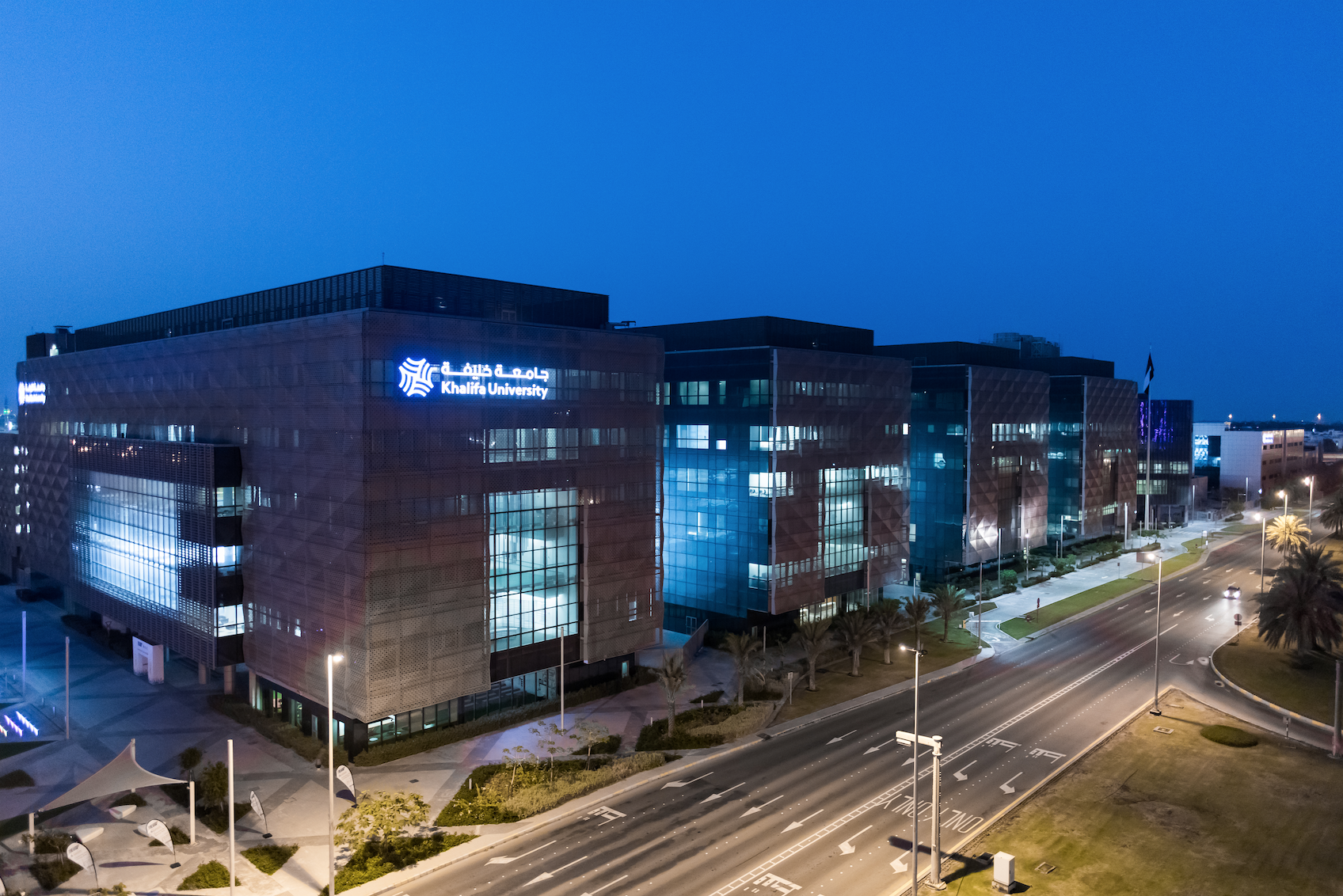
Khalifa University tops UAE universities with a quarter of all UAE faculty in the prestigious list hailing from KU
A total of 45 Khalifa University faculty were recognized in the prestigious listing of the world’s top two percent of scientists produced by Stanford University for the year 2019, making KU the top university in the UAE holding the highest number of faculty on the list.
KU faculty represent 25 percent of the total 178 UAE faculty who appeared in the list of the top two percent of scientists who had the greatest citation impact in the single year of 2019.
The 45 KU faculty in the single year 2019 ranking include:
Dr. Eiyad Abu-Nada
Dr. S.N. Ehrenberg
Dr. Lakmal Seneviratne
Dr. Vinod Khadkikar
Dr. Fawzi Banat
Dr. Shadi Hasan
Dr. Wesley Cantwell
Dr. Ehab El-Saadany
Dr. Ahmed Al-Durra
Dr. Vikas Mittal
Dr. A. Alfantazi
Dr. Dimitris Goussis
Dr. Khaled Salah
Dr. Adewale Giwa
Dr. Mahmoud Meribout
Dr. Rashid Abu Al-Rub
Dr. V.C. Kelessidis
Dr. Peng Yong Kong
Dr. Murray Gray
Dr. Jamal Sheikh-Ahmad
Dr. Abhishek Lokhande
Dr. Hassan Arafat
Dr. Maaike Kroon
Dr. W. Zaki
Dr. Linda Zou
Dr. Hemant Mittal
Dr. Abdul Beig
Dr. Sadoon Morad
Dr. Abhijeet Raj
Dr. Georg Petroianu
Dr. Leontios Hadjileontiadis
Dr. Lourdes Vega
Dr. Thanh Hai Nguyen
Dr. Mohammad Al-Shudeifat
Dr. Inas Alnashef
Dr. Reyad El-Khazali
Dr. Kin Liao
Dr. Igor Boiko
Dr. Michael Perrott
Dr. Mohamed Shawky El Moursi
Dr. TieJun Zhang
Dr. Amarendra Edpuganti
Dr. Matteo Chiesa
Dr. Ernesto Damiani
Dr. Baker Mohammad
Six of these KU faculty members have since left the University. They include Dr. Maaike Kroon, Dr. Thanh Hai Nguyen, Dr. Michael Perrott, Dr. S.N. Ehrenberg, Dr. V.C. Kelessidis, and Dr. Murray Gray.
Additionally, KU postdoctoral fellow Dr. Ibrar Yaqoob was also included in the ranking. The full league table for top 2% of scientists in single year 2019 can be found here.
A second ranking of the top two percent of career-long scientists with the greatest citation impact up until the end of 2019 was also published by Stanford University. In this ranking, 39 KU faculty were recognized.
Thirty of the researchers included in the ranking are affiliated with KU, however five have since left KU.
The 25 current KU faculty members included in the list are:
Dr. Westley Cantwell
Dr. Kin Liao
Dr. Hassan Arafat
Dr. Eiyad Abu-Nada
Dr. Simon Phoenix
Dr. Dimitris Goussis
Dr. Vikas Mittal
Dr. Ernesto Damiani
Dr. Georg Petroianu
Dr. Vinod Khadkikar
Dr. Fawzi Banat
Dr. Mohamed El Moursi
Dr. Leontios Hadjileontiadis
Dr. Linda Zou
Dr. Jamal Sheikh-Ahmad
Dr. Rashid Abu Al-Rub
Dr. Lourdes Vega
Dr. Akram Alfantazi
Dr. Sadoon Morad
Dr. Khaled Salah
Dr. Abdul Beig
Dr. Ehab El-Saadany
Dr. Igor Boiko
Dr. Reyad El-Khazali
Dr. Mahmoud Meribout
The five former KU faculty members include: Dr. Murray Gray, Dr. Derek Woollins, Dr. S. N. Ehrenberg, Dr. Michael Perrott, and Dr. V. C. Kelessidis.
Additionally, another nine faculty members who were affiliated with other universities in the Stanford ranking, but are now with KU, were listed. These include:
Dr. David Sheehan
Dr. John Rock
Dr. Mauro Pereira
Dr. Mohamed Amine Khamsi
Dr. Gareth Price
Dr. F.V. Kusmartsev
Dr. Ahsanulhaq Qurashi
Dr. Andreas Kappos
Dr. Marcus Bursik (joining as Chair of Earth Sciences in January 2021)
KU faculty in the top two percent of the career-long scientists list represent more than 31 percent of the total 114 faculty members from the UAE referenced in this listing.
The full league table for top 2% of career-long scientists until the year 2019 can be found here.
The inclusion of several KU faculty members in the notable Stanford Rankings marks the latest milestone for KU and is a testament to the University’s commitment to attracting and retaining high-caliber researchers, who in turn help the University achieve its goal of fueling the UAE’s knowledge economy transformation.
About the Stanford Ranking
The exhaustive Stanford University lists include over 158 thousand scientists out of eight million, and ranks the world’s most-cited scientists in their field of research across 22 different disciplines.
There is no other large-scale database that systematically ranks all the most-cited scientists in each and every field to a sufficient ranking depth. This large database created by experts at Stanford University, led by Dr. John Ioannidis, is also based on data from Scopus that ranks journals and gives a citation index.
The Stanford database includes the top two percent of scientists of the world from different fields on the basis of standardized citation indications. These include information on the number of citations, H-Index, co-authorship and a composite indicator. The results were recently published in PloS Biology and they have been classified into 22 scientific fields and 176 sub-fields in the report.
Erica Solomon Senior Publication Specialist 8 December 2020
Intense Dust EmissionsCarried Plumes 8,000 km from Sahara Desert and Across Atlantic Ocean to the Caribbean and Southern United States
Researchers from Khalifa University’s Environmental and Geophysical Sciences (ENGEOS) Laboratory have discovered that the gigantic dust storm in June 2020 was the result of a ‘subtropical high’ off the western coast of the Saharan desert.
The ‘subtropical high’ is an area of high pressure, which suppresses precipitation and cloud formation, and has variable winds mixed with calm winds. Subtropical highs, otherwise known as ‘horse latitudes’ or ‘subtropical ridges’, are the latitudes between 30 and 35 degrees both north and south, where earth’s atmosphere is dominated by the high pressure area.
During the second-half of June 2020, this high pressure increased the north-south pressure gradient over the Saharan region, which resulted in the intensification of the northeasterly winds, producing highly intense dust emissions. In fact, the emissions were so intense that they were able to carry the Saharan dust plumes for approximately 8,000 km across the Atlantic Ocean to the Caribbean and the southern United States from 14 to 25 June 2020. Generally, on an average, a dust storm lasts only for two to three days.
The June 2020 phenomenon was made possible because the ‘subtropical high’ enhanced the north-easterlies that are responsible for dust emissions, and the anti-cyclonic circulation associated with the African Easterly Jet (AEJ), a jet stream around 5-km in altitude above the Saharan desert, moving from east to west. The intensification of the AEJ favored a rapid westward transport of the emitted dust, before the dust particles were able to settle, according to a paper by Dr. Diana Francis, Senior Scientist, Head of ENGEOS Lab, Khalifa University. The paper was published today in the journal Geophysical Research Letters GRL.
Previous studies on large dust storms over the Sahara and the Middle East have linked the occurrence of highs and lows in the mid-latitudes and subtropics to the reduced sea ice cover in the Arctic and the Arctic warming. By losing sea ice, the temperature gradient between high-latitudes and the subtropics/tropics is less steep, thus making the polar jet slower. When the polar jet is slow, it meanders, creating persistent highs and lows in the subtropics and mid-latitudes.
The study by Dr. Francis has found that dust emissions continued as long as the (subtropical) ‘high’ remained stationary and ceased only when the ‘high’ merged with the general circulation again by 25 June. The paper explains the causes of the ‘Godzilla’ dust storm and links it to the global circulation and possible changes in the Arctic.
Highlighting the storm’s significance to the GCC region, Dr. Francis said: “The most intense dust storm to date in the Arabian Gulf region occurred in September 2015 and caused disruption to normal life, impacting some of the strategic installations. This event was actually caused by disturbances in the polar jet as well, which led to the formation of a dry cyclone and emitted a large amount of dust, according to our previous studies in 2019. It is important to shed light on the causes and the state of variability of dust storms, both the frequency and the intensity, over the major dust sources around the globe.”
The Saharan desert is the major dust source followed by the Arabian Peninsula, which comes second in terms of the total amount of dust aerosols emitted annually.
Since desertification is expected to increase in the Arabian Gulf region due to climate change and rising temperatures, the study suggests initiatives are necessary to mitigate this environmental and economic threat, perhaps by increasing the vegetated areas by planting trees and other type of flora.
Dr. Francis added: “Studies on the dust storms will help understand their long-term variability and identify the main drivers from regional to global scale, in order to improve our capabilities in predicting them and predict their impacts on the daily life and activities.”
As for forecast, based on the results of the published study, for instance, the researchers have found that the development of a ‘wave-train’ in the northern hemisphere with alternated highs and lows would be an indicator of the potential occurrence of extreme weather events over the subtropics and tropics. The ‘subtropical high’ was part of a wave-train in the northern hemisphere.
“The importance of identifying the causes of such extreme events and their link to the global circulation resides in the fact that this will help to predict them at least a few days in advance,” concluded Dr. Francis.
Clarence Michael English Editor Specialist 1 December 2020
The implications of Covid-19 for energy and climate policy must not be overlooked
By Dr. Steve Griffiths
The global Covid-19 pandemic has rapidly overwhelmed our societies, shocked the global economy and overburdened struggling healthcare systems and other social institutions around the world. While such impacts of Covid-19 are critical matters, the implications of the disease for energy and climate policy also must not be overlooked.
Ina Special Section for Elsevier’s international journal Energy Research & Social Science, Dr. Benjamin Sovacool, University of Sussex, Dylan Furszyfer Del Rio, Queen’s University Belfast and Khalifa University, and I offer insights on the emerging connections between Covid-19 and energy supply and demand, energy governance, future low-carbon transitions and social justice through own perspectives complimented by assessment and summarization of key findings from papers solicited for the Special Section.
Although ostensibly never intended as measures to reduce energy consumption, air pollution, or climate change directly, responses to the virus have had substantial connections with energy demand and greenhouse gas emissions. The most prominent drivers of these have been mandatory lockdowns or quarantines for households and the related severe restrictions on travel.
By late April 2020, more than half of the global population was under some form of coronavirus lockdown, with their movement actively restricted and controlled by their respective governments. One article we assessed calculated that more people were in lockdown due to Covid-19 than were alive during World War II, with the largest lockdowns in India, China and the United States. More than 100 countries had travel restrictions in place in March 2020 and the number of commercial flights had plummeted dramatically. As people were forced to stay at home, road transport and traffic dropped significantly as would be expected. Although road transport has begun to rebound as lockdown measures eased during the summer, public transportation and international passenger air travel continue to be significantly reduced relative to pre-pandemic levels.
Covid-19 has not only affected travel and the energy involved in providing it, but also global energy supply chains and the viability of energy firms. The reasons for this are understandable as governments distributed public funding to combatting the disease, leaving funding for clean energy and other climate measures to economic recovery packages to be deployed at a later time. While the European Union in particular is indeed delivering on “green stimulus”, many countries and regions around the world continue to focus efforts on battling Covid-19 and have yet to deliver on meaningful stimulus for protecting the environment. .
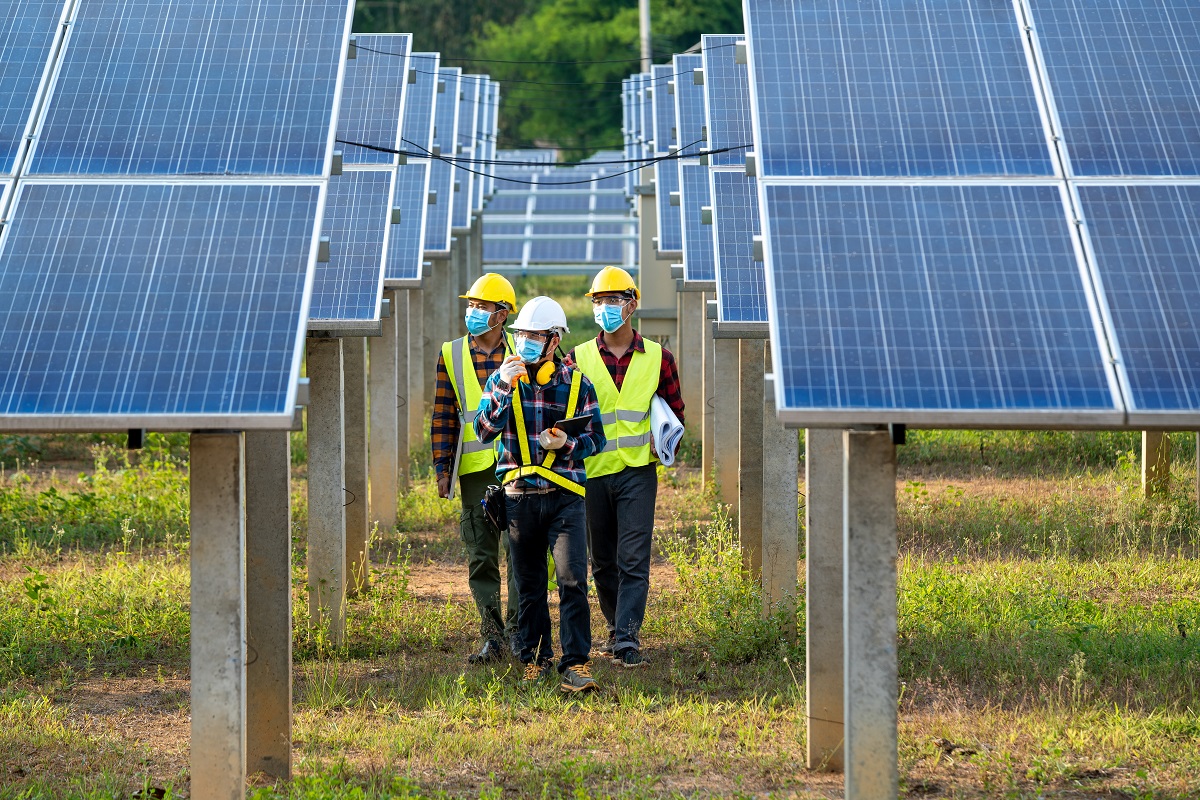
At the time of the paper release, projected installations for residential solar panels had fallen significantly, with IRENA predicting that total new solar capacity additions in 2020 would be roughly on par with 2019, which is as much as 20 percent below earlier expectations. Due to a strong dependence on imported solar panel technology from China, where manufacturing has declined due to the pandemic, dramatic reductions on future solar capacity were also projected for countries such as India. Fortunately, more recent data from IEA has shown great resilience for renewable energy during the pandemic and this leaves us with great optimism for the continued success of renewable energy in global power systems.
Perhaps most salient among the energy impacts of Covid-19, the global fossil fuel markets have been significantly affected and this was highlighted by many contributors to the Special Issue. The coronavirus has disrupted global oil markets far more than any geopolitical event ever has, weakening the ability of oil suppliers to control markets and driving natural gas prices down. Oil and gas markets have somewhat recovered in recent months but both the near and long-term outlooks for these markets remain uncertain. Many now question whether the pandemic has set off a chain of events that will make 2019 the year we witnessed peak oil demand globally.
The ramifications of Covid-19 extend beyond the avoided energy consumption and emissions associated with travel and household lockdowns; they are also drastically shaping energy institutions and policy frameworks. The pandemic has significantly disrupted lives, businesses and economies with potentially lasting effects on social norms and practices. As economies recover from the economic impacts of Covid-19, governments will need to make decision on how economic stimulus is directed and, as already noted, it is yet to be seen whether investments to mitigate climate change will be made on a large scale globally. Policy frameworks that positively support potentially beneficial norms and practices that have arisen from the pandemic also we become apparent only in time. For instance, online meetings in lieu of international business travel can have a very positive long-term climate impact but the dealing with the second-order impacts that would result from the financial harm this could do to the airline, travel and leisure industries would need to be considered in policy frameworks.
In the context of sustainability transitions, this pandemic is causing disruptive change by not only potentially accelerating transformations in incumbent socio-technical systems, but also by affecting emergent innovations and niches. It is altering the scope and pace of energy systems change with new dynamics of electricity demand and pricing, disruption of energy technology supply chains, and unknown outcomes from stimulus packages, which themselves are still be defined. By calling into question longstanding conventions about globalization and interconnectivity, as well as freedom of movement, the pandemic is changing multi-scalar policy and politics. Importantly, when people do travel now, they prefer individual modes of travel, given the focus on social distancing. This raises the critical question of whether there will be an acceleration of pre-pandemic drivers for sustainability or whether momentum for sustainability will be lost pandemic recovery unfolds and previously promoted measure for sustainability, like public transportation, are shunned by the public.
In sum, Covid-19 is shaping global patterns of energy consumption, policymaking and governance, heightening concerns over energy vulnerabilities and injustices, and challenging how future energy and climate researchers go about their work. For every noted positive intersection with some aspect of sustainability, there is an almost equally negative intersection. Beyond the noted issue with public transportation, will falling demand for fossil fuels drive a long-term move away from carbon-intensive fuels, or will associated falling prices cement them as cheap and abundant sources of energy for years to come? This health crisis presents a strategic opportunity to work on advancing the global climate agenda towards a just transition and a sustainable future. Although the impacts from the pandemic have so far been far from equitable or welcomed, we can foresee a future in which the tragic and challenging events surrounding COVID-19 may ultimately lead to a brighter future if we are able to capitalize on climate-beneficial policies, norms and practices that emerge.
Dr. Steve Griffiths is Senior Vice President for Research and Development at Khalifa University.
Cities become ‘smart’ only when they offer services that properly take into account the needs of their population and of visitors. City services have to be context-dependent and support the achievement of city-specific goals.
During the third session of the INNOV-Italy UAE Webinar Series, I participated in a webinar that highlighted multi-disciplinary smart city solutions that blend together the socio-cultural and technical aspects of iconic cities like Rome, Milan, Dubai and Abu Dhabi. I was joined by Italian and UAE academia, industries and public institutions to discuss new collaborations as well as novel ideas for new projects.
In one of the sessions, Dr. Steve Griffiths, Senior Vice President for Research and Development at KU, and I covered our perspectives on research and innovation that can support the development and evolution of smart cities and sustainable mobility.
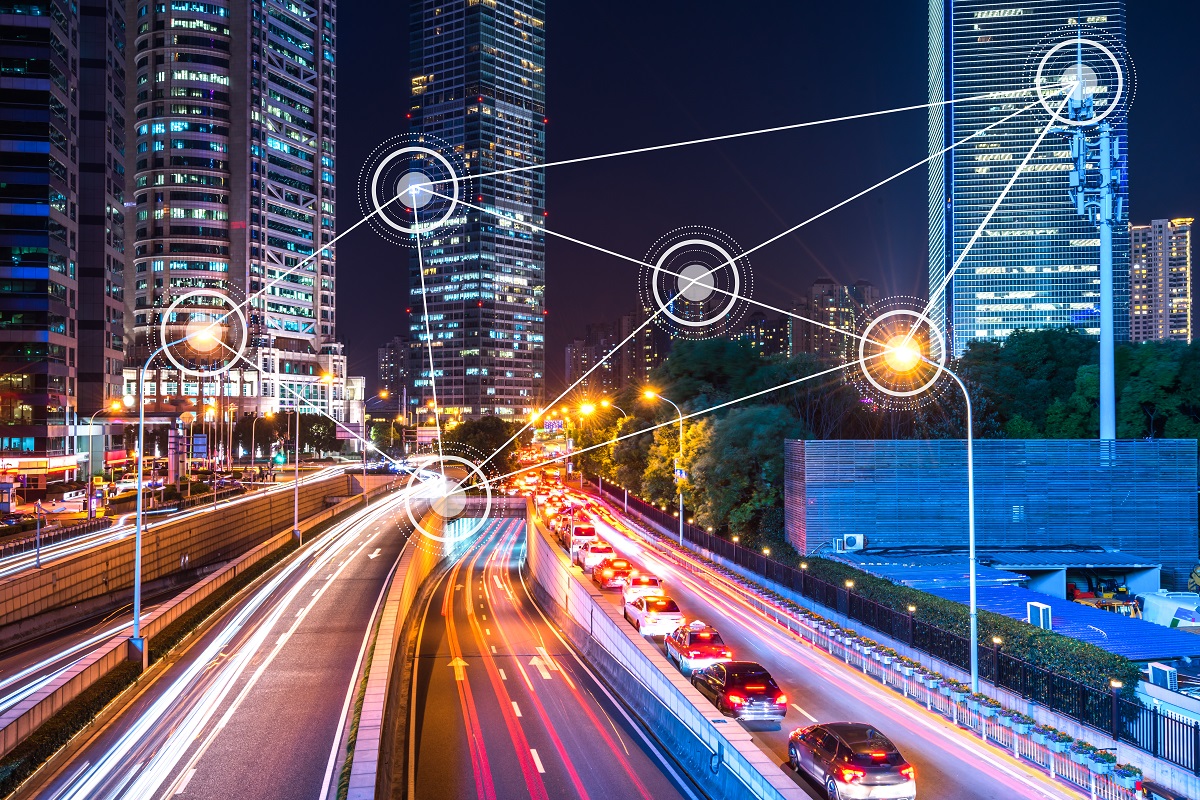
New technologies are enabling cities to become ‘smart.’ ‘Smart cities’ is a concept that has evolved very quickly thanks to the recent advancements in sensors and artificial intelligence technologies that enable analysis of massive data sets. There is no shortage of start-up companies trying to address every sector of smart cities. As Dr. Steve said, on the technology side, clearly there’s a good opportunity for the Internet of Things, high speed communications networks, low-earth orbit satellites providing data and lots of other ways of bringing data to intelligent systems. But a smart city is not just a collection of technologies.
Dr. Nawaf Almoosa
In fact, the notion of a city itself is not always so clear. City definitions differ: in Japan, a city needs 50,000 inhabitants; in Norway, just 200. But cities are very important, no matter how they are defined. 55 percent of the world’s population lives in cities—4.2 billion people—and 80 percent of global GDP is generated in cities. They account for three-quarters of human-caused global carbon dioxide emissions and an estimated two-thirds of global final energy use.
In the UAE’s definition of the smart city, we include the notion of sustainability, which is perhaps the most critical aspect of intelligence. We look at the environment, we look at the economy, and we look at social welfare, bringing numerous opportunities to have impact across a lot of different areas. Healthcare, safety, convenience, environmental quality and social connectedness all factor into the UAE’s vision for smart and sustainable cities.
Additionally, the Khalifa University R&D strategy focuses on all the tenets of the 4th Industrial Revolution, including information and communication technologies, robotics, artificial intelligence and data science, and advanced materials and manufacturing. Like a city, our strategy involves integrating all the different sectors aligned with UAE priorities. The Emirates ICT Innovation Center (EBTIC), of which I am the Acting Director, is one of the key collaborators along with Khalifa University’s other research centers focused on smart and sustainable cities in the UAE.
EBTIC is built on open innovation and collaboration between academia, industry and government. We function like any academic research center in terms of our research and putting out scientific publications, but we also work closely with government and industry stakeholders in applied research, where we produce different concepts and other value-driven research.
Smart societies, infrastructure and enterprise form the backbone of EBTIC’s research and innovation architecture. Our research teams aim to apply tools from ICT, operations research, data science and artificial intelligence to solve problems in telecommunications infrastructure and to optimize operational efficiency for enterprises. We also use these tools to solve problems in society in general, specifically in areas of sustainability, education, healthcare and social networking.
Academia is crucial in developing a smart city—another aspect of a smart city is having a strong educational system. We have outreach programs to educate professionals in data science and the impact of the technology at a high level and how it can be used in organizations and society in general. Since 2015, we have trained more than 250 professionals in the UAE, with Prof. Ernesto Damiani, Senior Director of the Khalifa University Robotics and Intelligent Systems Institute, leading that effort.
The UAE is at the forefront of important work in smart cities, with the smart and sustainable cities of the future the path forwards for smart and sustainable growth.
Innov-Italy UAE aims at improving the opportunities for bilateral cooperation between the UAE and Italy in six high-innovation sectors, including cybersecurity, space, smart cities and sustainable mobility, life sciences, food technologies, and renewable energy.
Dr. Nawaf I. Almoosa is Acting Director of the Emirates ICT Innovation Center (EBTIC) at Khalifa University.
The UAE and Italian scientific communities have both experienced unprecedented success in space exploration and earth observation in recent years, systematically promoting space technology through incremental research and development and radical innovation.
The second in a series of webinars aiming to strengthen the opportunities for bilateral cooperation between Italy and the United Arab Emirates saw speakers discuss novel ideas and collaboration topics in technology development to support international space missions in different domains. Khalifa University recently launched the KU Space Technology and Innovation Lab (KUSTIL), in June 2020, of which I am the Director.
I joined this webinar to discuss the areas of research KUSTIL is focusing on.
Dr. Sean Swei
One such area is space robotics, investigated by Prof. Lakmal Seneviratne and Prof. Jorge Dias from the KU Center for Autonomous Robotics Systems (KUCARS). The recent growth in low cost unmanned systems provides opportunities for new and cost-effective unmanned rovers for space exploration and space observations. This allows the continuous monitoring of assets deployed in space and to other planets via autonomous vehicles operating cooperatively to provide flexible and persistent surveillance solutions. Researchers in this area are looking at dealing with communications delays for remotely controlled rovers. Robots in space are a long way from teams on Earth, resulting in a delay in communications between them and so solutions that balance autonomy with long-distance command and control are required to conduct scouting missions on distant planets.
Another area is Next Generation Antenna (NGA) systems, investigated by Dr. Mohammed Abou-Khousa, Dr. Prashanth Marpu, and Dr. Khaled Al-Wahedi at KU. With the advent of small and nano satellites, deep space vehicles, and high speed networks, there is an increasing demand for low-volume and lightweight antennas that can function optimally under harsh space conditions, wherever the mission may take them. In this project, new antenna systems founded on novel design concepts will be developed to address these needs. Specifically, 3D metal printing and machine learning algorithms will be used to realize new optimized antennas.
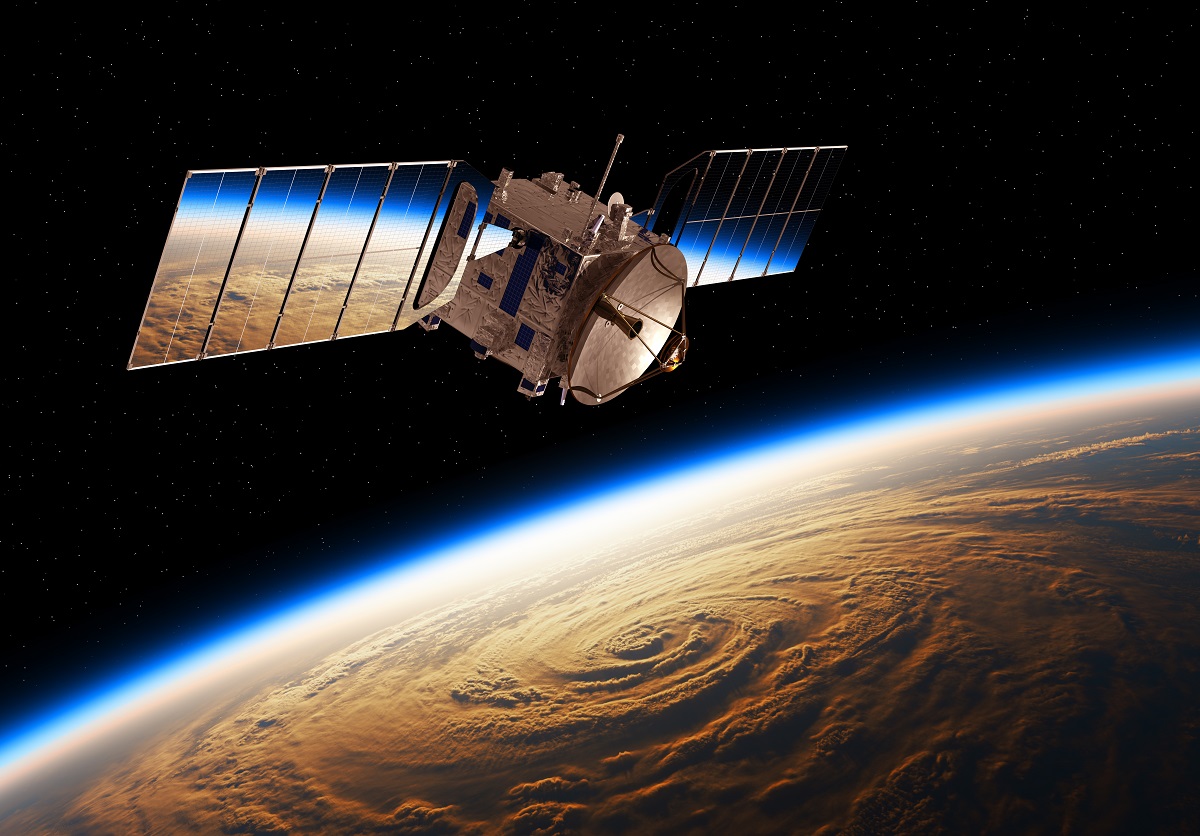
We are also considering sustainable astronomy in the era of large satellite constellations. Low-orbit broadband satellite constellations are growing dramatically, and due to their relative proximity to Earth, they appear extremely bright, posing a serious threat to observational astronomy. Dr. Elena Fantino is leading a team of researchers to develop an automated system to accurately predict satellite transits across the field of view from Earth and then developed scheduling solutions that mitigate the negative impact on observations. Astronomers foresee a swarm of 40,000 low-Earth orbit satellites in the near future, and unless successful mitigation actions are adopted, the scientific capabilities of current and future observatories will be severely compromised.
Finally, Dr. Yahya Zweiri and Dr. Jorge Dias join me in proposing work on robotic in-space assembly of large space structures. In order to support long-term human presence in the solar system, large flexible space infrastructure needs to provide basic operational and functional needs in space, such as communication antennas, observatories, and solar power stations. Materials made of a large number of physical components but with a small number of distinctive part types can offer highly repetitive patterns in size, dimension, and shape that make them viable solutions for autonomous robotic in-space assembly. Our project will demonstrate the feasibility and effectiveness of building an ultra-large space infrastructure through collaborative robotic in-space assembly techniques. This research will have significant impact on future human expansion on the Moon, Mars and beyond.
At Khalifa University, we’re proud to showcase our faculty expertise, especially in space exploration and Earth observation.
Innov-Italy UAE aims at improving the opportunities for bilateral cooperation between the UAE and Italy in six high-innovation sectors, including cybersecurity, space, smart cities and sustainable mobility, life sciences, food technologies, and renewable energy.
Dr. Sean Swei is a Professor of Practice in Aerospace Engineering and Director of the KU Space Technology and Innovation Lab at Khalifa University.
The area of cybersecurity has expanded in scope, relevance and impact in our increasingly ICT-based society. In the first of six webinars aiming to strengthen the opportunities for bilateral cooperation between Italy and the United Arab Emirates, I was joined by experts to identify Cybersecurity gaps and opportunities that emerge with the continuing progress of IT developments like Artificial Intelligence.
As Noah Radford, Chief of Global Affairs for the Dubai Future Foundation, explained, it’s no secret that the UAE has experienced meteoric growth over the last 20 years, as the country has become a world leader in a variety of sectors, and as any complex system grows, so too does the number of challenges it must overcome. As we look towards the next 20 years, we must ask ourselves how we will tackle the questions that arise in a way which helps to benefit not just the UAE, but the region, and the world.
The future is certain to bring about a new paradigm in cybersecurity, driven by the fear of the damages that cybersecurity attacks can cause. Cyberattacks are estimated to cost the world USD$ 6 trillion this year, and a key figure in that calculation is the unprecedented rise of connected devices. The Internet of Things is the new era, with devices connected to the Internet enabling a more customized user experience. This does, however, also increase the number of devices at risk of cyberattacks, making cybersecurity a concern not just for businesses and industries, but also the average smartphone user.
While numerous protection schemes have proved to be useful and effective in certain situations against known attack threats, one of the biggest challenges is coping with the unknowns. Automation is already being explored as a tool to combat cyberattacks. Salvatore Fiorillo, Senior Consultant at Dubai Electronic Security Center (DESC), explained that 69 percent of business CEOs believe AI will be required to respond to cyberattacks, while 80 percent of executives in telecommunications believe they will be depending on AI in cybersecurity. Artificial Intelligence is one of the technologies that can be used to close the gap between knowledge-based threat detection and unknown or rapidly changing threats. AI could even foresee potential maliciousness in actors before they are known, offering great capabilities to overcome and help solve numerous challenges.
Dr. Ernesto Damiani
As cyberattacks start to target nation-states, countries around the world are instituting cybersecurity departments, with the UAE appointing its first Minister for Artificial Intelligence in October 2017 in its defense against cyber warfare. Fiorillo highlighted the impact a cyber attack can have on a country and how much a government relies on networked systems, citing the 2007 cyber attacks on Estonia as an example. Dr. Roberto Baldoni, Deputy Director General of the Department of Information for Security for Italy, agreed, explaining that the essential functions and services of a nation are digital, with energy, finance, welfare, defense and transport all at risk from cyberattacks. Creating a cyber-resilient nation is of paramount importance.
Dr. Mohamed Al-Kuwaiti, Head of Cyber Security for the UAE Government, Supreme Council for National Security, and Khalifa University alum, compared cybersecurity to the Covid-19 pandemic currently facing the world. People and organizations have suffered greatly from the coronavirus pandemic, with many critical lessons learned that can be applied to a potential global cyber pandemic. The start of the biological pandemic showed how unpreparedness around public health can have devastating effects, and this can be analogous to cybersecurity, with attention turning to protecting home users and remote workers.
“We hope to continue and move that hygiene that we adopted from the biological pandemic to the cyberspace,” Dr. Al-Kuwaiti explained. “Today, we can’t leave our homes without a mask or a sanitizer as a prevention measure. We make sure we don’t come into contact with anyone who could pose a risk. Cybersecurity is similar. We can quarantine an area of a network should a virus intrude. We can isolate such attacks and reduce the ‘infection’ rate between systems. The culture of building a very resilient network relies on all sectors from academia to industry.”
Following Dr. Al-Kuwaiti’s assertion that digital transformation is at the heart of the UAE’s national strategy, I wanted to share what we at Khalifa University are doing to research cybersecurity, particularly in the Robotics and Intelligent Systems Institute. In the last decade, the UAE has been investing heavily in transitioning from an oil-dependent economy to a Knowledge Economy. At the RISI, we’re aiming to coordinate the work done at KU in all ICT-related areas and boost its value for applications. Interestingly, we’re seeing that while AI can be extremely useful when dealing with cybersecurity solutions, it can be a double-edged sword. AI algorithms can be targeted too. To understand new threats, we as users need a clearer understanding of the lifecycle behind machine learning-based decision making and how systems are trained in the first place. Additionally, you can’t mention AI and not discuss blockchain these days. We are working on the idea of mapping threats to features of Distributed Ledger Technology, like blockchain. We can then use this technology as a security control framework to guarantee security to our machine learning data assets.
At Khalifa University, we’re proud to showcase our faculty expertise, especially in cybersecurity and its related fields as we continue to seek to expand the scope of our technology research, resulting in patents and technology transfer to start-ups.
Innov-Italy UAE aims at improving the opportunities for bilateral cooperation between the UAE and Italy in six high-innovation sectors, including cybersecurity, space, smart cities and sustainable mobility, life sciences, food technologies, and renewable energy.
Dr. Ernesto Damiani is Professor of Electrical Engineering and Computer Science, Senior Director of the Robotics and Intelligent Systems Institute & Director of the Center for Cyber Physical Systems (C2PS) at Khalifa University.
Latest research from Khalifa University, however, appears to upend conventional wisdom when it comes to whom vaccination programmes should focus on.
Computer modelling suggests priority should be given to people who have most interactions with others, typically younger individuals, even if they themselves are unlikely to fall seriously ill should they contract the coronavirus.
Researchers from Khalifa University’s Systems-on-Chip Lab have had three papers accepted into the IEEE International Symposium on Circuits and Systems (ISCAS). ISCAS is the flagship conference of the IEEE Circuits and Systems Society and the world’s premier networking forum for researchers in the fields of theory, design, and implementation of circuits and systems.
The 2020 conference was held as a virtual event, with all papers available in Open Preview and video presentations hosted to inform participants of the papers’ contents. The conference is designed to emphasize the potential of circuits and systems to find multidisciplinary solutions for the societal and engineering challenges of our times.
The first paper, authored by Dr. Dima Kilani, Post-Doctoral Fellow, Dr. Baker Mohammad, and Dr. Mihai Sanduleanu, both Associate Professors of Electrical Engineering and Computer Science, described a new design for a low-dropout voltage regulator, which is an important part of power management systems. They developed an ultra-fast and efficient low-dropout regulator that uses a clock-less ratioed logic comparator (RLC) to maintain constant and stable voltage output in a battery-operated power management system.
A linear low-dropout regulator regulates the voltage generated by a DC power supply, so that the same steady voltage output level is continuously controlled, despite any changes in the input voltage. While the RLC compares between the reference and the load voltage and generates a single bit which turns on or off power switches. The clock-less design continuously responds to the voltage difference making it more efficient and faster than a conventional comparator.
The second paper, authored by Dr. Nourhan Elsayed, Graduate Research and Teaching Assistant, Dr. Hani Saleh, Associate Professor of Electrical Engineering and Computer Science, Dr. Baker Mohammad, and Dr. Mihai Sanduleanu, investigates a modified Doherty power amplifier – an amplifier which is used in many areas where high efficiency is needed for high peak to average power ratio uses.
The power amplifier is often the most power-hungry component of a circuit, which is why designing a more efficient version is crucial. To make the amplifier more energy efficient, the KU team’s Doherty power amplifier uses two amplifier circuits within the one overall amplifier to accommodate different signal levels. Their paper focuses on the modified Doherty power amplifier for use in 5G technology.
The third paper, authored by Huruy Tesfai, PhD student, Dr. Saleh, Dr. Temesghen Tekeste, Post-Doctoral Fellow, Dr. Mahmoud Al Qutayri, Professor and Associate Dean of Graduate Studies, and Dr. Mohammad, describes a pre-trained neural network for monitoring the electrocardiogram signal, the electrical activity of the heart. Wearable devices with readout sensors and circuits can be used to record and process weak ECG signals, with the neural network integrated to a device, achieving an accuracy of 96.55%.
Through its pioneering research, Khalifa University is contributing valuable insights into the field of system on chip technologies, which are critically needed to support the development of faster, smaller and more powerful computing devices.
For the seventh consecutive year, L’Oréal-UNESCO For Women in Science Middle East Regional Young Talents Program, in partnership with Khalifa University of Science and Technology, continues to recognize Arab female scientists from the GCC for their revolutionary researches in the fields of Life sciences, Physical sciences, Mathematics and Computer science.
The regional program is part of L’Oréal-UNESCO’s global initiative that has recognized over 3,400 phenomenal researchers since its inception 22 years ago.
This year, the program awarded six winners in the Post-doctorate Researchers and PhD Students categories where Dr. Maryam Tariq Khaleel Alhashmi (Khalifa University, UAE), Dr. Lama AlAbdi (KSA), and Dr. Isra Marei (Qatar), each received EUR 20,000 in the Post-doctorate Researchers category. Asrar Damdam (KSA), Dana Zaher (UAE), and Mina Al Ani (UAE) each received EUR 8,000 in the PhD Students category.
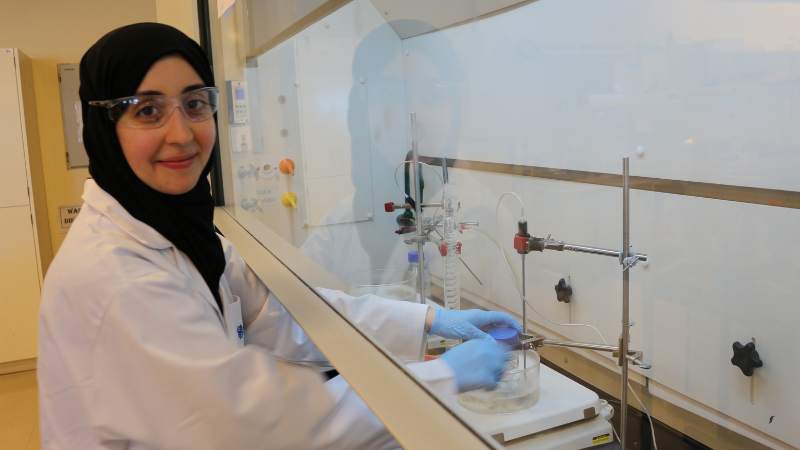
Dr. Maryam Tariq Khaleel Alhashmi, Assistant Professor of Chemical Engineering at KU and member of the Research and Innovation Center on CO2 and Hydrogen (RICH), has been recognized for her valuable contributions in the field of catalysis, specifically her research into the development of catalytic materials for sustainable production of chemicals.
Dr. Arif Sultan Al Hammadi, Executive Vice-President, Khalifa Universityof Science and Technology, added: “Spearheading towards Vision 2021 and Agenda 2030, the UAE has progressed immensely by creating an array of opportunities to support women empowerment, and Khalifa University continues to play a key role through its contribution in this area.
“With the recent pandemic worldwide, it is more important than ever that educational institutions especially universities, the scientific community and society at large encourage more women to bring their unique perspectives to the field. We are honoured to partner with L’Oréal-UNESCO For Women in Science Middle East Regional Young Talents Program for the second consecutive year and would like to congratulate the 2020 winners for their outstanding achievements and look forward to their future achievements.”
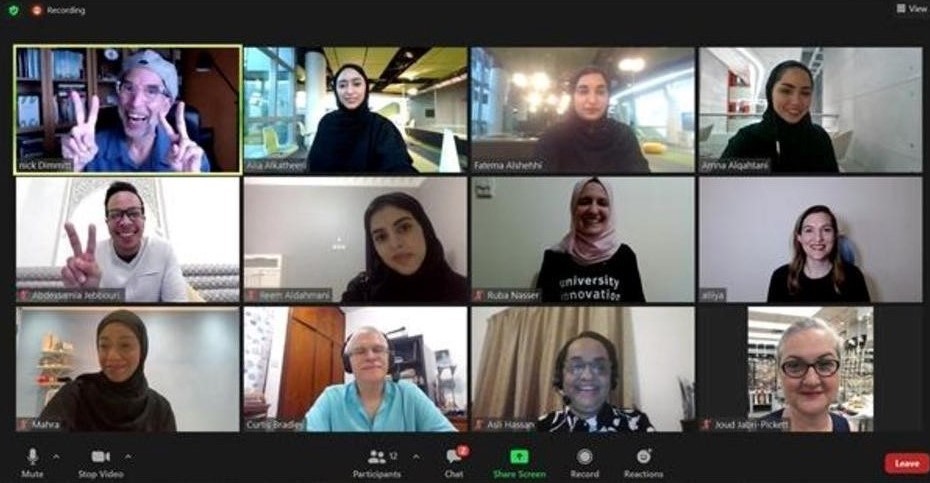
Petroleum Engineering students Amna Omar Hassan Shuhail Alqahtani, Fatema Ahmed Abdulla Qadah Al Shehhi, and Alia Fauzi Abubaker Abdulla Alkatheeri, and Chemical Engineering student Reem Aldahmani, have been chosen to participate in the 2020 University Innovation Fellows (UIF) training program.
The University Innovation Fellows is a program of Stanford University’s Hasso Plattner Institute of Design (d.school). It was created as part of the National Center for Engineering Pathways to Innovation (Epicenter), a five-year National Science Foundation grant.
The program builds a global community of higher education student leaders to become agents of change in their schools and their communities. Almost 200 students from 45 higher education institutions in 14 countries have been named University Innovation Fellows this year. The Fellows who are part of the program are trained to ensure that they gain the knowledge, skills, and attributes they need to be able to thrive and compete in our complex and ever-changing world.
At the end of the training program, University Innovation Fellows are expected to work with their peers, faculty, and administrators to unlock new learning opportunities for students at their campuses to encourage innovation, entrepreneurship, design thinking, and creativity. They will serve as advocates for lasting institutional change with academic leaders, lending the much-needed student voice to the conversations about the future of higher education.
Dr. Ahmed Al Shoaibi, Senior Vice President of Academic and Student Services, said: “We are keen to have our students participate in international programs. The engagement of our students in international learning and research is critical to KU’s vision as a research-intensive university with a transformative student learning experience. The students’ participation in international programs is a testament of going beyond the comfort zone and aiming to achieve global recognition.”
During the 6-week online training, the Fellows learned how to analyze their campus ecosystems, identify opportunities for change, and understand the needs of their peers across disciplines, as well as the perspectives of faculty and administrators. On 10 October 2020, the KU UIF Fellows presented their project ideas to faculty members and stakeholders of Khalifa University. There were three ideas the students came up with—the Help App, Virtual Labs Program, and the Digital Maker Space.
Help App
This project is an easy way for students to access the contact information of departments and services at KU. The aim is to ensure that students can easily reach anyone from the University when they need help, whether this be their instructors or services for students.
Virtual Labs Program
The Virtual Labs Program is an innovative approach to learning, especially during the COVID-19 pandemic as some students may find it challenging to have access and use traditional labs. The idea is to provide general technology skills training to students who have virtual labs that require software installation, providing them with all the information they need to download and utilize the software to their advantage for their online labs tasks.
Digital Maker Space
One of the resources that KU students have on campus is the Maker Space, a place where students can meet to share knowledge and resources, work on projects, and network with other students. The group came up with the idea of creating a “Digital Maker Space,” which is an online version of the Maker Space on campus. This project intends to help KU students continue learning, discovering, and trying new things albeit virtually.
The UIF training program was an enlightening learning experience for the group. The students would like to thank Khalifa University, especially Dr. Nicholas Dimmitt, Associate Professor of English, who nominated them to the program; as well as Dr. Waleed Alameri, Assistant Professor of Petroleum Engineering and Eng. Abdessamia Jebbouri of the Petroleum Engineering Department for the support they showed from the application process and throughout the duration of the program.
Alia Alkatheeri: “The bright side of this experience is that I am able to improve my thinking and problem solving skills. I’m so thankful for having this opportunity.”
Reem Aldahmani: “What I learned from this experience is that group work is very important in order to come up with different ideas and see problems from different perspectives. This program gave me an opportunity to help my creative potential and develop the design-centered mindset required to overcome today’s complex challenges.”
Fatima Alshehhi: “Joining this program was the best investment I’ve ever made for myself, as well as the start of a life-changing journey because it helped me expand my knowledge in innovation and entrepreneurship.”
Amna Alqahtani: “The program was a great and interesting experience to me. It taught me the process of problem-solving known as design thinking and what I learned from this program is to try to come up with different ways to solve a problem and then filter those ideas in order to offer suitable solutions for a person’s needs.”
A team from Khalifa University has developed a new nanocomposite membrane using graphene oxide to desalinate water and tackle the region’s water shortages.
Fresh water is in short supply in many parts of the world, and as the population continues to grow, shortages of fresh water will occur more often. Desalination can help provide enough fresh water, and the process can be as simple as using thermal energy to evaporate seawater, capture the produced water vapor, and condense it back into clean water.
The most popular method globally for large-scale desalination, however, is a process called reverse osmosis, which requires pressure to push large quantities of water through a semipermeable membrane, removing the salts in the water. While this is an effective means to desalinate saline water, it is driven by very high hydraulic pressure and requires robust pumping and expensive pretreatment. Even though the cost of desalination from reverse osmosis has fallen dramatically in recent years, the rapid increase in global water demand warrants new and innovative technologies that are both low energy and effective for purifying water of all types.
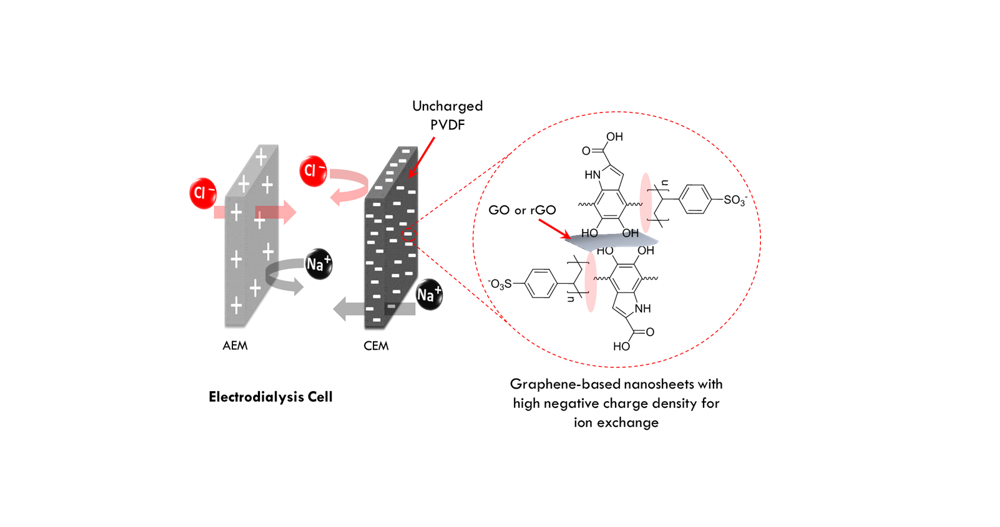
A team from Khalifa University has developed a new nanocomposite membrane for use in processes such as electrodialysis and capacitive deionization, which involve the removal of ions from ionic solutions – including salt water – with electrically charged membranes. The membranes used in these technologies are known as ion exchange membranes (IEMs) and those developed by the research team use graphene oxide-based ionic conducting nanomaterials to provide the ion exchange groups in the membrane.
Dr. Linda Zou, Professor of Civil Infrastructure and Environmental Engineering, Dr. Adetunji Alabi, a recent KU PhD graduate, and Dr. Ahmed Al Hajaj, Assistant Professor of Chemical Engineering, are working collaboratively with researchers from The University of Manchester on graphene and ion exchange membranes. Their latest work has been published inEnvironmental Science Nano, with previous publications in the Journal of Membrane Science and the Journal of Materials Chemistry A.
“Electromembrane desalination processes use the electric potential difference as the driving force for ionic transport through ion exchange membranes,” explained Dr. Zou. “IEMs allow the flow of oppositely charged ions through them, while preventing the passage of similarly charged ions.”
Opposites attract, with an electric field pulling the salt ions through the filtration membrane, thereby desalinating the water.
Conventional IEMs are produced from polymeric (plastic) materials, with these polymers providing the ion exchange capabilities. The membrane developed by the KU research team, however, uses electrostatically-coupled graphene oxide nanocomposite as ion exchange materials. The ion exchange capabilities are provided by ionic conducting nanomaterials attached on the graphene nanosheets, with the 2-dimensional sheet structure allowing good integration with the polymer matrix at high loading. The uniformly distributed nanocomposites create numerous ion conducting pathways, allowing them to transport clusters of ions effectively.
Due to its dispersible nature in most solvents, graphene oxide is widely used in research on improving the membrane performance for desalination and water purification.
“Graphene-based nanosheets are suitable for these types of membranes for many reasons,” explained Dr. Zou. “They co-adsorbed both 3,4-dihydroxy-L-phenylalanine (L-DOPA) and poly(sodium 4-styrenesulfonate) (PSS), to offer not only ion exchange capabilities by PSS but also stability with polymer matrix through the strong attachment via catechol groups of L-DOPA. This is a novel way to prepare IEMs assisted by nanomaterials such as graphene oxide. Such membranes also have high mechanical and thermal stability and less swelling in water applications.”
To test their membrane, the team conducted electrodialysis tests to assess its salt removal rate, efficiency and energy consumption, and successfully confirmed the feasibility of fabricating nanocomposite IEMs for electrodialysis applications where the ion exchange capacity solely relied on the graphene oxide nanocomposites. The fabricated membrane achieved a substantial salt removal rate over 80 percent, although its energy efficient needs to be further improved as compared to a conventional polymeric IEM.
As the Middle East combats aridity with up to 70 percent of the world’s produced desalinated water, finding new ways to fabricate membranes to produce clean water remains a crucial research objective. Nanomaterials incorporated in IEMs could be beneficial candidates for enhancing electromembrane desalination, with the novel way of fabricating them using nanocomposites as ion exchange materials a huge step forward.