

KU Students Win Future Makers Award


Undergraduate Students Abdulaziz AlZurahi and Reem Al Hashemi Won AED10,000 Each and Recognition of their Outstanding Performance


The prodigious achievements of two KU undergraduate students were recognized earlier this month during the virtual closing ceremony of the Future Makers Award – 2nd Cycle 2020. 


The Future Makers Award is organized by the UAE University. Its aim is to support educational excellence and nurture a creative and innovative environment in the UAE. The award is also concerned with enabling students to set a vision for their future and work diligently to achieve it by consolidating the values and skills required by the work environment and future professions to be a well-established behavior before entering the labor market. 


Now in its second cycle, the award was launched earlier this year in January, and accepted applications from students attending either Khalifa University, Higher Colleges of Technology or UAE University. 


There were seven award categories: Honor Roll Students, Inspiring Students (People of Determination), Leading Students, Outstanding Freshmen, Innovative Students, Innovative Student Athletes, and Persevering Students. A total of 14 KU students registered for the award across the different categories.


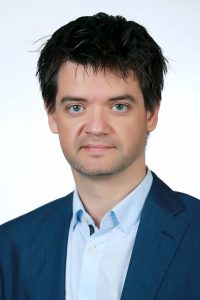
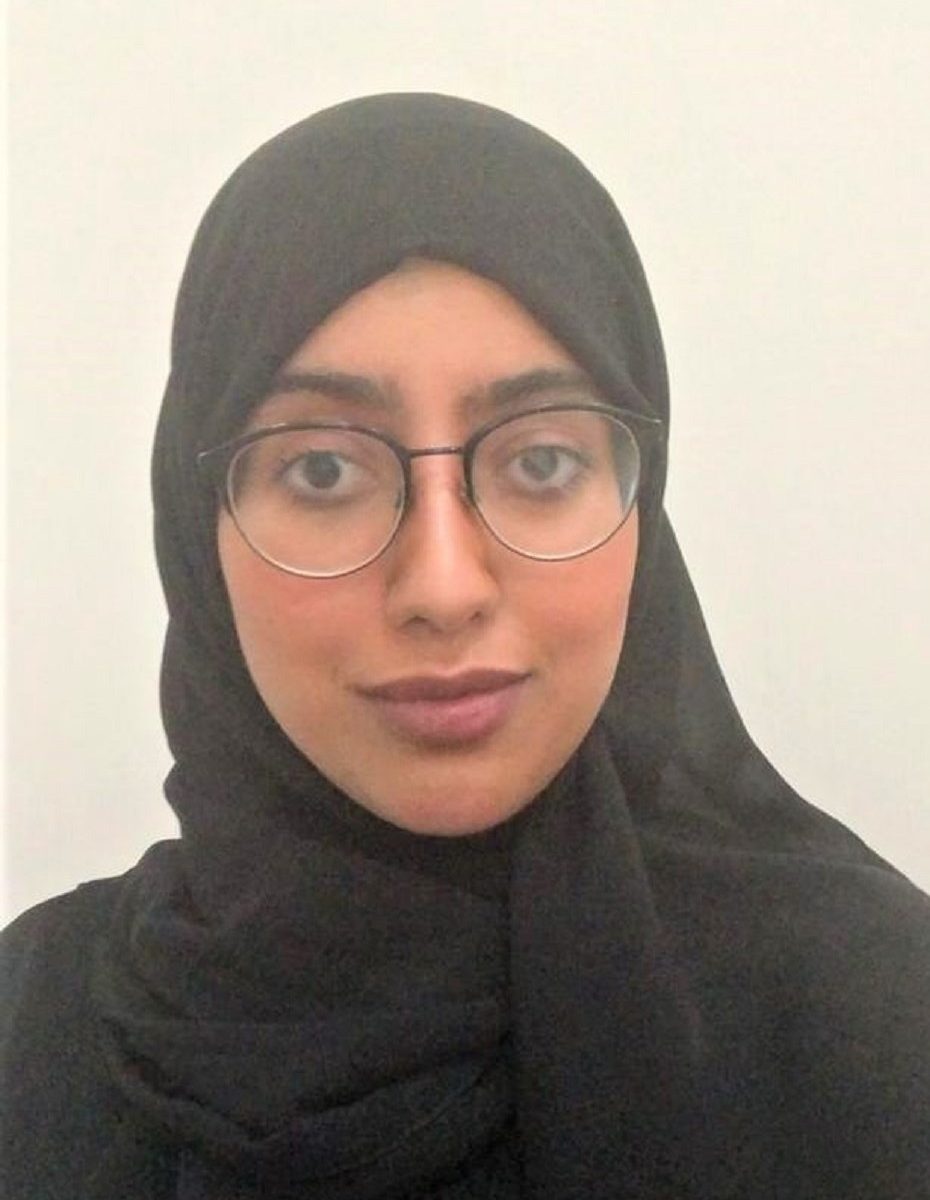
Abdulaziz AlZurahi, BSc in Mechanical Engineering student, won the ‘Honor Roll Student’ category, while Reem Al Hashemi, BSc in Aerospace Engineering student, won the ‘Innovative Student Athletes’ category. As winners, they each were awarded AED10,000 along with opportunities to enroll in educational programs and specialized workshops inside and outside UAE University.


“It has been a great honor for me to compete in this award with the country’s top performing students from across the best universities,” Abdulaziz remarked. “I am extremely grateful for the relentless support of my mother, and for the support from my country, the UAE, and my University, which gave me the tools, resources and guidance I need to excel as a scientist. That is why I am proud to represent Khalifa University in this competition, and at the same time, I am proud to elevate KU’s position as a university that attracts and retains hard working and high achieving students.”


Abdulaziz spent a semester studying abroad in Italy collaborating on international research projects that involved developing medical robotics at Scuola Superiore Sant’Anna. He also became a certified lab safety researcher at the same institute. Additionally, he performed clinical research studies at Fondazione Don Carlo Gnocchi Onlus in Florence. He also served as the Ministry of Higher Education’s ambassador to Dalhousie University in Canada. While there, he worked with an Associate Professor on a graduate level research project performing mathematical modeling studies for thermal-fluid projects. Back in the UAE, Abdulaziz successfully manufactured a lower limb for disabled people and presented his invention at the Science Festival in Abu Dhabi 2020.


Abdulaziz has a number of accolades under his belt already: He is a member of the Golden Key Honor Society; he won the ADNOC High Achievers Award, the H.E. Sheikh Mansour Bin Zayed’s Award for High Achievers, the H.E. Khalid Bin Tannaf Almenhali’s Award for High Achievers, and the Obaid Alhelo’s Award for High Achievers. He also scored second place in the BP Young Adventures Competitions and has been placed on the KU President’s List each year during his undergraduate degree journey.


Reem, who won the Innovative Student Athlete award, has performed outstanding work in both academia and in sports. She became the first female Emirati to win the Jiu Jitsu World Pro, and the first Jiu Jitsu athlete to study aerospace engineering. She won the Mohammed bin Rashid Space Center – Zero Gravity competition, and traveled to Florida, USA to conduct research with professionals from NASA.


Reem is grateful for the support of her family and everyone that has helped and supported her in her sports and academic life. 


“The main reason that I work hard is to make my country proud, and to make Sheikh Mohammed bin Zayed proud, as I have promised him to keep working and achieving new things always,” Reem shared.


Erica Solomon
Senior Publication Specialist
19 November 2020

KU Researchers Find Climate Change Could Mean Fewer Sunny Days for Regions Relying on Solar Power

The success of solar power in arid regions is bound to the future reliability of solar resources. But arid regions could be among the most affected by solar intermittency under future climate.


Photovoltaic power is rapidly growing worldwide, becoming at the same time a more economically viable source of energy. This trend is particularly evident in arid and cloud-free regions like the UAE, which are seeing an even faster growth of solar power deployment and pursuing ambitious plans for the future.


The success of solar power in arid regions is bound to the future reliability of solar resources – which is traditionally ‘measured’ in terms of mean solar radiation trends. However, metrics based on mean solar radiation are not capable of providing a full picture of the problem. In particular, they are not able to capture the inherent spatial and temporal variability of solar resources. This is commonly known as solar intermittency.


A team of researchers from Nanjing University, Khalifa University and Princeton University has recently shown that arid regions could be among the most affected by solar intermittency under future climate. Their results were published in October 2020 in Nature Communications. In January, their paper was highlighted by the editors at Nature for its contribution to the field of Applied Physics and Mathematics. 


“Arid, cloud-free regions of the World have a massive potential for solar energy production,” said Dr. Annalisa Molini, Associate Professor in Civil Infrastructure and Environmental Engineering at Khalifa University, and co-author of the study. “At the same time, we found that they are also the most susceptible to the fine-scale variability of solar resources – something that we call ‘solar intermittency. Solar intermittency is a measure of the variability of the radiation reaching the surface of our planet and which sustains solar power production.


“In our study, it is assessed through both remote sensing products and climate models. To map it, we used probabilistic methods similar to the ones that hydrologists use to evaluate the risk of floods or droughts.


“While investigating global intermittency patterns across different datasets and models, we found something quite interesting: the relation between solar intermittency and reliability varies across the different climatic zones of our planet and is strongly non-linear. This means that relatively small changes in the radiation that reaches the surface of our planet can produce significant changes in power reliability in some climatic regions.


“Among these, arid regions seem the most affected. Here, a small change in the input can produce large impacts on solar power reliability.”


One may wonder why.


“Climate models predict that arid regions such as the Middle East will have to rely on less solar radiation in the future, probably due to the increased load of atmospheric aerosols and to changes in the large-scale circulation,” continued Dr Molini. “Higher temperatures, increasing aridity, and land degradation all play an essential role in this context since dryer degraded soils are more prone to become dust and aerosol sources.”


“According to our results, the decrease in solar radiation is also accompanied by increased intermittency, which should not be overlooked. As temperatures and atmospheric turbulence increase in arid regions such as the Middle East, dry soils potentially lead to greater amounts of dust and atmospheric aerosols that would diminish solar radiation. These trends are already detectable in data from climate-observational networks.”


“Intermittency is one of the biggest concerns for the large-scale penetration of solar power,” concluded Dr Molini. “A variety of technology (e.g. power storage) and operational power policy (e.g. load shaping) already constitute promising solutions to this problem. However, they need to be designed in an ‘informed’ way. To understand future solar intermittency is a powerful tool to act in advance and support the growth of solar power worldwide.”


The paper is titled “Impacts of solar intermittency on future photovoltaic reliability” and authored by Jun Yin (Nanjing University), Annalisa Molini (Khalifa University) and Amilcare Porporato (Princeton University). It appears in the September issue of Nature Communications (DOI: 10.1038/s41467-020-18602-6). The research was supported by the Khalifa University Competitive Internal Research Award (grant no. CIRA-2018-102); the USDA Agricultural Research Service (grant no. 58-6408-3-027); the National Science Foundation (grant nos. EAR-1331846, EAR-1316258 and FESD EAR-1338694); the PEI Carbon Mitigation Initiative; the National Natural Science Foundation of China (grant nos. 41877158 and 51739009); Nanjing University of Information Science and Technology (grant no. 1441052001003); and the Jiangsu distinguished faculty program.

Read more on Princeton News: https://www.princeton.edu/news/2020/10/07/climate-change-could-mean-fewer-sunny-days-hot-regions-banking-solar-power

and Scientific American Middle East (in Arabic): https://www.scientificamerican.com/arabic/articles/news/climate-change-threatens-ability-of-middle-eastern-countries-to-generate-solar-energy/


News Report
23 November 2020

Methane Leak Detection Using Satellite Imagery

Read Arabic story here: http://researchku.com/news-extended/52


Greenhouse gas emissions from oil and gas operations pose a critical challenge for the industry, especially methane. Methane is responsible for 25 percent of global warming, with over a third of its emissions from the oil and gas industry.


Detecting methane emissions and leaks has historically been difficult due to technical, logistical, and cost limitations. However, methane emission-tracking satellites offer an opportunity to achieve precise, timely, and affordable detection of methane on a large scale, particularly if machine learning models can be applied to the remote sensing data they capture.


In the Microsoft Energy Core AI Academy Hackathon, Hydrocarbon Release and Its Environmental Impact, a team from Khalifa University, placed third, finding new ways to harness machine learning techniques to identify methane emissions and leaks from satellite remote sensing data.


A hackathon is an event typically lasting several days, in which a large number of people meet to engage in solving a targeted challenge. Aysha Alharam, Ahmed Bushlaibi and Hamzeh Issa, mentored by Dr. Prashanth Marpu, Associate Professor in the Department of Electrical Engineering and Computer Science, developed an application that placed third in the event, with the team invited to present their solution to the Energy Core industry board executive members following the Hackathon. First and second place were awarded to Shell and Repsol, both companies with significant research and development departments.


The team built an application to find the sources of a methane leak, classify each detected reading as either a source or a consequence of another source, and to separate these detections from others in order to make locating and fixing the leak much easier and cheaper. The team used the data from the Sentinel 5P, a satellite measuring the atmosphere above the Permian basin and Saudi Arabia, over a 10-day period.


Their method involved satellite data pre-processing to eliminate all data points that did not meet the requirements, tracking the source of the leakage by tracing points and clusters, and then using visualization techniques to indicate the source of the methane leak. They built a timeline to identify each cluster of data points that indicated methane and link these clusters with their corresponding possible sources from past data. Using this approach, they could pinpoint the correct methane source using multiple parameters, like the concentration, distance and density of the gas.


This solution could be further improved with more data to verify the methods and by applying more parameters such as wind direction to make the results more precise.


As fossil fuels will remain an essential part of the energy mix for the foreseeable future, the industry needs proper detection, reporting and analysis mechanisms to manage production safety and its ecological impact. 


Jade Sterling
Science Writer
23 November 2020

Analyzing Unexpected Summertime Rains in the Desert

Modelling these rare events can significantly boost the country’s rain enhancement efforts


Read Arabic story here


The UAE is hot and dry, characterized by a landscape of sand and a lack of vegetation. The rains are infrequent and irregular, sometimes with no rain for long periods, making it a hyperarid region.


And yet, despite these factors, the UAE also possesses unique weather systems that can occasionally provide life-giving moisture to rain-starved areas and relief from the excessive heat. These systems are known as mesoscale convective systems (MCSs) and they develop occasionally during summer over the UAE.


Dr. Diana Francis, Senior Research Scientist and Head of the KU Environmental and Geophysical Sciences (ENGEOS) Laboratory, investigated the processes, from local to regional scale, that are responsible for the development of summertime MCSs and associated rains over the UAE. She was joined in this research with ENGEOS team members Dr. Ricardo Fonseca, Postdoctoral Fellow, Dr. Narendra Nelli, Postdoctoral Fellow, Dr. Rachid Abida, Research Scientist, and Michael Weston, Research Engineer, all from Khalifa University, Youssef Wehbe from the UAE National Center of Meteorology, and Dr. Marouane Temimi from the Stevens Institute of Technology. Their findings were published in the Journal of the Royal Meteorological Society.


“For an MCS to develop in a hyperarid environment like the UAE, a combination of factors ranging from local to regional scale is needed,” explained Dr. Francis. “This includes a convergence over the UAE between the northerly wind and the southerly winds in the lower level of the atmosphere, the presence of an upper-level trough in altitude and a steep temperature gradient at the surface between land and surrounding seas”.


“Total annual precipitation in the UAE ranges from 30mm over the southern desert to 120mm over the Al Hajar mountains in the northeastern part of the country,” explained Dr. Francis. “This usually occurs during the cold season from December to March, but every so often, rain accumulations during the summer season are recorded. These are mainly associated with short-lived mesoscale convective systems—a collection of thunderstorms that last for several hours.”


A mesoscale convective system (MCS) is a cluster of storms that moves as a single system. The storms are driven by upper-atmosphere wind patterns and fuelled by daytime heating and an abundance of moisture, typically gaining strength during the day to reach maximum intensity and the greatest potential to produce rainfall in late afternoon. They occur in the tropics around the world and form especially during the hot season. As they weaken and eventually end, they can leave behind a mesoscale convective vortex, which is a system that pulls winds into a counter-clockwise circulation and can become the catalyst for even more storms.


“Despite their minimal contribution to the country’s annual average rainfall, an understanding of the processes that cause MCSs to develop and the capability of numerical models to represent them is crucial for planning cloud-seeding activities,” explained Dr. Francis. “Additionally, summer rain associated with MCSs helps to recharge the underground aquifers, an important water resource for agricultural activity here.”


A better understanding of what causes MCSs in a region known for its aridity and summer heat is an important step towards accurately predicting them and their associated rainfall, especially as recent studies have shown that MCSs are expected to become more frequent as the global climate changes.


On the 5th of September 2017, regional winds converged, bringing warm, moisture-rich air to the Hajar mountains and resulting into the development of a MCS and subsequent rain at Hatta, Masafi and Fujairah airport.


Dr. Francis and her team used the Weather Research and Forecasting (WRF) numerical weather modelling framework to investigate warm season convective events in the UAE. The WRF model was validated using the September 2017 data with the results showing that the model predicted widespread clouds over the Hajar mountains in all simulations, but was not able to reproduce the MCS. The researchers noted the need to properly represent the soil properties for accurate simulations.


“In areas with drier soil, the land is warmer during the daytime,” explained Dr. Francis. “This will naturally lead to a more vigorous sea-breeze circulation, which makes rainfall more likely over most of the UAE.”


The team also found that the WRF model tended to underestimate the observed cloud cover. Consistent with the lack of clouds, the air temperature in the model at night was is lower than the observed temperature, likely arising from enhanced radiative cooling.


“The fact that the MCS, and its impacts on the atmospheric state, are not accounted for in simulations has important implications for the use of the current state-of-the-art models for climate projections in arid regions,” explained Dr. Francis. “Our findings help to better clarify the mechanisms behind the convective events, and understand the signatures of MCSs in a hyperarid environment.”


Jade Sterling
Science Writer
19 November 2020

Launch of Association of Spanish Scientists and Researchers in the UAE with the presence of HE the UAE Minister of State for Advanced Technology and HE the Spanish Ambassador in the UAE

The Association of Spanish Scientists and Researchers in the United Arab Emirates (Asociación de Científicos e Investigadores Españoles en Emiratos Árabes Unidos, ACIEAU in Spanish) was officially launched yesterday with the presence of HE Sarah Al Amiri, HE Rafael Rodrigo, HE Antonio Álvarez Barthe, Mr. Guillermo Cobelo and Dr. Alicia Pérez-Porro and Dr. Lourdes Vega.


The ACIEAU is a professional networking platform of Spanish scientists and researchers working in UAE. It has over 60 members, including prominent scientists, researchers and experts in a broad range of knowledge areas: from Engineering, Environment, Health, Veterinary and Biology, to Social Science and Artificial Intelligence. Its purpose is to disseminate the science and technology achievements by Spanish researchers in the UAE, to facilitate the creation of R&D consortia between academia and industry, to assist in the
integration of newly arrived Spanish scientists in the UAE, as well as in the return of researchers from the UAE to Spain. Building up on the expertise of its members, ACIEAU aims to play a key informative and consultative role on scientific aspects for different organizations in Spain and the UAE.


Her Excellency Sarah Al Amiri, Minister of State of Advanced Technology and Chair of the Emirates Scientist Council (ESC) celebrated the creation of ACIEAU and stated that “Science and research are the key pillars of UAE Vision to move towards a knowledge-based economy. The recent announcement by HH Sheikh Mohammed Bin Rashid Al Maktoum, Vice-President and Prime Minister of the UAE and Ruler of Dubai, extending the 10-year golden visa to include a wide variety of scientists and researchers highlights UAE’s aim to attract talented people and great minds in the UAE, and continue the successful collaboration between all nationalities to become a regional and global hub of advanced science and technology.”


HE Rafael Rodrigo, General Secretary of Research of the Ministry of Science and Innovation of Spain highlighted the perfect timing of the launch of ACIEUA. He mentioned that: “Spain and UAE share common interests in science and technology, as was recently expressed in a high-level meeting between Ministers of both countries. The official launching of ACIEAU showcases the great talent of Spanish scientists and researchers, while also emphasizing the knowledge transfer from academia to the society.”


The Chairman of the Spanish Business Council (SBC) in UAE, Mr. Guillermo Cobelo, and the President of RAICEX, Dr. Alicia Pérez-Porro also attended the launching. Mr. Cobelo expressed the full support of the SBC stressing the importance of the combination of science and research for the growth of companies: “We have great challenges and great opportunities, by combining the efforts of the industry with the ones of science; we will meet them and with our achievements create a prosperous future”. Dr. Alicia Pérez- Porro, welcomed ACIEAU to the Network of Spanish Researchers Abroad (in Spanish: Red de Asociaciones de Investigadores y Científicos Españoles en el Exterior, RAICEX). On July 2020, ACIEAU joined RAICEX becoming a network of 18 associations representing more than 4,000 Spanish researchers abroad.


Prof. Lourdes Vega, President of the Association and Director of the Research and Innovation Center on CO2 and hydrogen, at Khalifa University in the UAE, expressed that “We are delighted to launch the ACIEAU today with the support of the UAE and Spanish authorities, the private sector, and RAICEX. ACIEAU and its members are engaged and willing to build the UAE knowledge-based economy according to the UAE Vision 2021 through a series of scientific and dissemination activities, while fostering collaboration between Spain and the UAE”.


HE Antonio Álvarez Barthe, Spanish Ambassador in UAE, closed the official launching congratulating the more than 60 associates and wishing ACIEAU a successful journey to promote science and research in UAE, a country that has always embraced excellence and innovation. HE Antonio Álvarez stressed the importance of science diplomacy to facilitate international cooperation for the benefit of the society and extended the embassy continuous support to ACIEAU and to all the outstanding Spanish scientific community in the UAE.


More information is available on the ACIEAU website www.acieau.es 


-END-

About Asociación de Científicos e Investigadores Españoles en Emiratos Árabes Unidos (ACIEAU):

Established in 2020, the Asociación de Científicos e Investigadores Españoles en Emiratos Árabes Unidos (ACIEAU) is a Spanish non-profit association committed to serve as a networking platform of the Spanish scientists and researchers working in the United Arab Emirates.

Khalifa University’s College of Medicine and Health Sciences Organizes White Coat Ceremony for Second Cohort of 34 Students

College of Medicine and Health Sciences Registers Remarkable First Year, Publishing 31 PubMed-Listed Research Papers  


Khalifa University of Science and Technology organized a White Coat Ceremony, marking the start of Fall 2020 classes for the newly enrolled second cohort of 34 students at the College of Medicine and Health Sciences.


Dr. Arif Sultan Al Hammadi, Executive Vice-President, Khalifa University of Science and Technology delivered a welcome note, and Dr. John Rock, Dean, Khalifa University College of Medicine and Health Sciences, also welcomed the students and led the recitation of the students’ customary oath. The ceremony was virtually attended by the students’ parents, families and friends.


Dr. Arif Sultan Al Hammadi said: “The College of Medicine and Health Sciences has made remarkable progress in the academic, medical and healthcare research areas since its launch, having successfully published the 31st scientific paper recently. These research papers cover a wide array of biomedical topics of great relevance not only to the UAE, and the region but also the entire global community. Led by a renowned team of experts as faculty members and researchers in the medical field, the College of Medicine and Health Sciences has also made significant contributions to fighting and mitigating the spread of the COVID-19 pandemic. We sincerely welcome the second cohort of students and we firmly believe that each one of the students will bring honor and glory to our university and the UAE.”


Dr. John Rock said: “Particularly now, during a global pandemic, donning the medical white coat symbolizes a tremendous commitment to serving others and improving health outcomes for patients and communities. We are proud to welcome another outstanding cohort of students who have the desire and passion to pursue careers in the noble profession of medicine.”


In the very first year itself, the Khalifa University College of Medicine and Health Sciences has registered remarkable achievements, including publishing 31 research papers in respected international scientific and medical journals. The Khalifa University CMHS’ PubMed-listed research papers, published so far, have covered a wide array of biomedical topics of relevance to the UAE and beyond ranging from the Arab genome to diabetes, nanoparticles to cardiovascular and medical education.


The Khalifa University College of Medicine and Health Sciences has also developed an OSCE (Objective Structured Clinical Examination) and Simulation Center, which is designed to test clinical skill performance. The program provides a hands-on real-world approach to learning and assessment, and serves hospital residency programs, military training units, and other medical schools in the UAE.


Additionally, the College of Medicine and Health Sciences has developed a ‘state-of-the-art testing center’, which is created with Prometric and Pearson VUE standards that allow on-site testing for Graduate Record Examinations (GRE), National Board of Medical Examiners (NBME), United States Medical Licensing Examination (USMLE) and Medical College Admission Test (MCAT).


Located at the New Extension of the Main Campus of Khalifa University in Abu Dhabi, the College of Medicine and Health Sciences is offering the post-graduate MD program in five strands – Biomedical Science, Clinical Medicine, Medicine and Society, Physicianship, as well as Research, Technology and Innovation.


Clarence Michael
English Editor Specialist
10 November 2020

Diving into the Emirati Genome to Determine the Genes Associated with Metabolic Syndrome

Researchers from Khalifa University have been investigating the specific genome variants that may point to risk factors for certain diseases and seeking to understand how these genetic variations can help develop more personalized treatment plans.


Read Arabic story here: http://researchku.com/news-extended/53


Researchers from Khalifa University have recently published a number of articles investigating the nuances of the Emirati genome, following their research published last year describing the sequence of the first complete Emirati genome. They have since been investigating the specific genome variants that may point to risk factors for certain diseases and seeking to understand how these genetic variations can help develop more personalized treatment plans.


Much of the team’s attention has been focused on the genetic risk factors for metabolic syndrome, in particular type 2 diabetes. The discovery and mapping of the complete human genome in 2003 introduced the possibility of individualizing medicine to a person’s physical and genetic makeup, with plans for more population-specific genomic analyses to gain context-specific insights. Evidence is now increasingly suggesting that a patient’s unique genetic profile can be used to detect the onset of a disease and possibly even prevent it.


Dr. Habiba Alsafar, Director of KU’s Biotechnology Center and Associate Professor of Genetics and Molecular Biology, has been studying the unique genomic variants in the UAE population that are associated with diabetes, hypertension, increased cholesterol levels and obesity. Metabolic syndrome is a cluster of conditions occurring together, increasing risk of heart disease, stroke and type 2 diabetes.


The UAE has a high prevalence of metabolic syndrome, which may be linked to genetic risk factors in the local population. However, the association between metabolic syndrome as a phenotype and key genetic variants in the UAE has not been investigated in depth until now.


Dr. Alsafar and her team found clear links between metabolic syndrome and specific genetic and metabolic risk factors, providing an insight into possible causes of disease development. Several gene variants were found to be associated with a predisposition to developing metabolic syndrome, providing clues for disease mechanisms.


“In one study, we found that patients with metabolic syndrome had higher rates of type 2 diabetes, hypertension and dyslipidaemia, a medical condition that refers to abnormal levels of lipids in the blood,” explained Dr. Alsafar. “We noticed that waist circumference and type 2 diabetes were key risk factors for metabolic syndrome and that individuals who developed metabolic syndrome had a higher rate of clinical complications.”


Diabetes mellitus is a group of metabolic diseases, all of which are characterized by high blood glucose levels. It is a major public health problem, particularly type 2 diabetes, which is commonly associated with obesity. Diabetes tends to run in families with genetic factors contributing to its development.


The UAE has a high prevalence of diabetes, consistently ranking among the top five most affected countries in the world. Recent genome-wide association studies have identified more than 400 locations on particular chromosomes that are associated with susceptibility to type 2 diabetes disease. In-depth examination of the Emirati genome in particular could help pinpoint the exact genes that could be contributing to this prevalence.


In another study, the team found that genetic variants of one particular gene, known as TCF7L2, were associated with an increased susceptibility to type 2 diabetes, especially in Emirati males.


“Knowledge of specific risk markers in a population, including at risk genotypes, will help identify individuals who are more likely to develop metabolic syndrome. The ability to do so early, even prior  to development of symptoms, could mean we can delay or even prevent its onset,” explained Dr. Alsafar.


The population in the UAE is also particularly prone to coronary artery disease.  Previous studies having shown strong genetic associations between heart disease and type 2 diabetes. A further study by the team examined the genomes of a cohort from the Arab population of the UAE to replicate previously reported significant genetic associations. The study aimed to investigate how these genes are associated with twelve cardio-metabolic traits that may influence the development of the two diseases. The team did replicate these results, adding significant credence to the research, and also noted that some genes are associated with these diseases regardless of ethnic background. They also detected new links between the diseases with height and with blood type.


Knowledge of an individual’s susceptibility to a disease improves diagnosis and means more informed decisions can be made for a patient’s treatment, potentially helping them avoid metabolic syndrome altogether.  


Through these projects, Dr. Alsafar and her team are contributing to the global body of information and research on how to use context-specific genomic information to advance the understanding of medical conditions, improve treatment and promote healthy lifestyle habits. 


Jade Sterling
Science Writer
18 November 2020

Should Millennials and Gen Z Get the Vaccine First?

If the Pfizer-BioNTech vaccine gains regulatory approval by Christmas, we can cheer the scientists for heroic work. But it will be the distribution decisions made by governments that will determine how quickly we can all exit Covid confinement. The U.K. has put itself in a strong position to access early vaccines, but its approach to prioritization and distribution needs careful thought.


What if vaccinating the elderly first isn’t the best way to minimize fatalities? A recently published (but not yet peer-reviewed) model from three academics at Khalifa University suggests priority should be accorded to groups with the highest number of daily in-person interactions, since that amplifies the vaccine’s effectiveness by reducing infections (and mortality) both among the vaccinated group and those they come into contact with. According to their model, proper prioritization can reduce total fatalities by up to 70%.


Read full story here: https://www.bloomberg.com/opinion/articles/2020-11-11/pfizer-covid-vaccine-who-should-get-vaccinated-first-don-t-discount-the-young

UAE researchers unlock mystery of dangerous Antarctic ice holes

Rivers of vapour in the sky caused an enormous hole to form in the Antarctic sea ice three years ago, according to a new study led by researchers at Khalifa University.


Published in the journal Science yesterday, the study shows how atmospheric rivers created a hole four times the size of Dubai, and explores what this could mean for rising sea levels.


Read full story here: https://www.thenationalnews.com/uae/uae-researchers-unlock-mystery-of-dangerous-antarctic-ice-holes-1.1109677

Khalifa University Scientists Unravel 40-Year Long Mystery of Large Sea in the Middle of Antarctic Ice Cover

Large-Scale Poleward Transport of Heat and Moisture by Atmospheric Rivers Causes A Stretch of Open Water in Antarctica


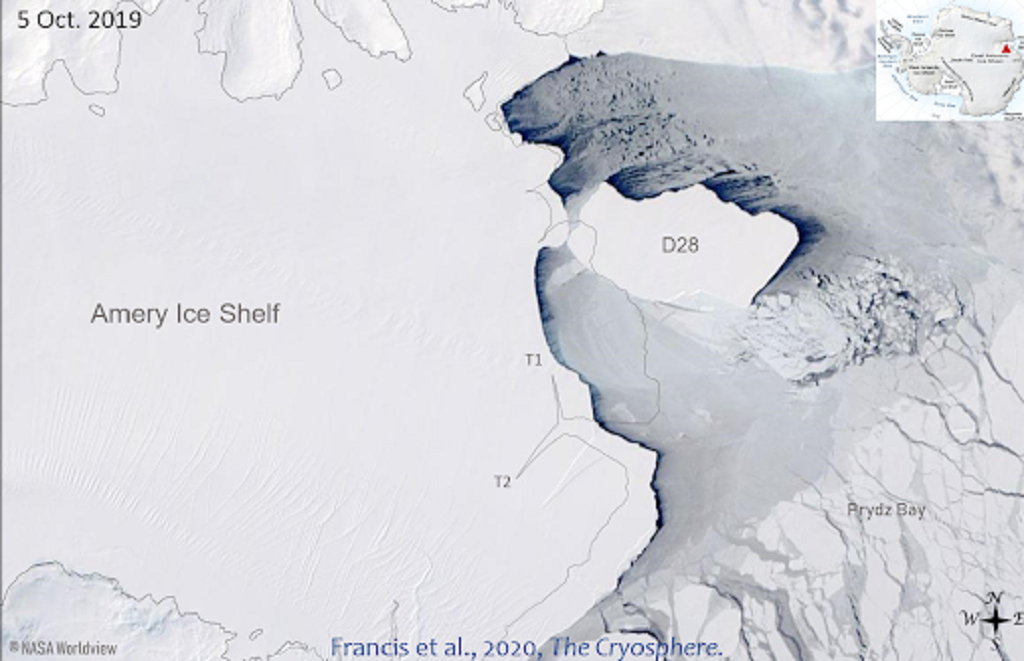
Researchers from Khalifa University’s Environmental and Geophysical Sciences (ENGEOS) Laboratory have unraveled a more than 40-year scientific mystery when they identified the reason for the occurrence of a body of unfrozen ocean that appeared within a thick body of ice during Antarctica’s winter, known as a Polynya event. Two major Polynya events were recorded in the Weddell Sea in Antarctica in 1973 and 2017.


In fact, Khalifa University researchers have discovered that synoptic-scale atmospheric rivers (AR) emerging from the tropics and spreading poleward into the Antarctic Ice Sheet are actually initiating this phenomenon. Anomalous increase in surface temperature was induced by the atmospheric rivers over the ice pack and caused melting and thinning of ice which led to the opening of what is known as the ‘Polynya’ event.


The Khalifa University study also connects this phenomenon, for the first time, to the larger-scale poleward movement of heat and moisture transported by atmospheric rivers, demonstrating their role in Antarctic sea ice melt during the winter and early spring seasons.


The research led by Dr. Diana Francis, Senior Scientist and Head of ENGEOS lab, was recently published in the journal of Science Advances. Co-authors of the study are Dr. Kyle Mattingly from Rutgers University (USA), Dr. Marouane Temimi from Stevens Institute of Technology (USA) and Dr. Rob Massom and Dr. Petra Heil from the Australian Antarctic Division.


Khalifa University is the lead institution for this research project, which is funded by Abu Dhabi Future Energy Company Masdar.


According to Dr. Francis, the study demonstrates that changes in the climate occurring at one place on the planet, say for example in the tropics, can have worldwide impact and affect as far as the South Pole.


She added: “Our analysis shows that the atmospheric rivers that initiated the polynya event in September 2017 were the most intense on record. The poleward transport of moisture and warmth by the atmospheric rivers was also the highest on record. Surprisingly, these atmospheric rivers resulted in the highest amount of snowfall on record over the study area, but because of the warm temperatures, it was warm snow that enhanced the ice melt and inhibited refreezing.”


“Previous studies have shown that under a warmer climate, atmospheric river activity in the Southern Ocean will intensify considerably. Given the role of atmospheric rivers in melting sea ice, as demonstrated in this study, it is becoming a pressing concern to assess the impact of atmospheric rivers on the Antarctic-wide sea-ice cover,” she concluded.


Dr. Francis’ previous research in 2019 into this phenomenon had found the important role of storms in triggering the opening of the polynya. However, her current research has found that if atmospheric rivers had not melted the ice before the storms, (a ubiquitous feature around Antarctica, which is not the case of the ARs that are of large scale spanning from the tropics to Antarctica), they would have not been able to trigger the opening of the large area of water.


Building on such research expertise and previous achievements, Khalifa University aims to further broaden the scope of its polar research, attracting young scientists and students to the next phase of this project for addressing the associated environmental challenges.


Earlier in 2019, Khalifa University Material Science and Engineering Graduate Tawaddod Alkindi had the opportunity to participate in the installation of 105 solar panels and three inverters that provide 30 KiloWatts to Casey research station’s grid, the first solar power array at an Australian Antarctic research station. Alkindi was the first student to complete her internship at the Casey research station, located on Vincennes Bay in the Windmill Islands, just outside the Antarctic Circle.


Clarence Michael
English Editor Specialist
12 November 2020

Khalifa University Launches New Alumni Association

New council members to focus on creating a platform where KU alumni can stay connected with their alma mater


Khalifa University has established the KU Alumni Association, which is being led by a council of five highly accomplished KU alumni.


The alumni leaders represent all Khalifa University legacy institutes (KUSTAR, MI and PI), and a range of undergraduate and graduate degree programs.


The council hopes to nurture a platform where KU alumni are supported, given growth and networking opportunities, and importantly, stay connected to one another. 


Here we introduce the new Council Members with some Q&As that reveal who they are, why they joined the council, and what their plans are for the KU Alumni Association.


Meera Al Mehairi, President, KU Alumni Association

Class of 2015, BSc in Mechanical Engineering

  • What is your current position? 

I work as a Senior Inspection Engineer in the Federal Authority for Nuclear Regulation, where my main task is to inspect nuclear power plants. In addition, I was recently given a more strategic role by being appointed as a board member for the Supreme Council for Motherhood and Childhood. KU taught me how to manage time, work under pressure, and get things done no matter what, which are skills that have been essential to my professional development and growth.  

  • Why is a KU Alumni Association important? 

It will help facilitate and sustain a mutually advantageous network for KU Alumni and KU community as a whole.

  • Why did you want to be a member in the KU Alumni Association Council? 

To give back and enable Alumni to benefit from and contribute to the University community. 

  • How will you help and encourage KU alumni to stay connected with their alma mater?

By creating specific initiatives for them, consulting them in our upcoming projects, and engaging them more in the KU community.


Hamad Alaydaroos, Vice President, KU Alumni Association

Class of 2016, BSc in Mechanical Engineering

  • What is your profession?

Reactor Operator – Not Licensed / Barakah Youth Council Member in Nawah Energy Company. My job will enable me to be part of achieving the UAE 2021 Vision, Abu Dhabi 2030 Vision. 

  • How did KU help you be prepared for this position?

Through taking a minor in Nuclear Engineering, it was a great foundation to prepare me to start my career in the nuclear industry. 

  • How will you help and encourage KU alumni to stay connected with their alma mater?

Through developing online and on-campus services that meet the alumni needs. 


Shefaa Mansour, Secretary/Treasurer, KU Alumni Association

Class of 2016, MSc in Water and Environmental

  • What do you do for a living?

​I am currently working as a climate change & sustainability consultant at Ernst & Young (EY). Being a consultant is very exciting. My day at the office is never standard. I am constantly working on sustainability projects across different fields and sectors. This includes but is not limited to strategy planning and support, due diligence and scoring of prestigious UAE Awards, sustainability reporting and assurance, and social and environmental impact assessments. 

  • Why did you want to be a member of the KU Alumni Association Council? ​

To give back to KU as an institute, demonstrate change and support the students & Alumni by creating a safe space that they can always come back to and guarantee they will be supported. 

  • Why is a KU Alumni Association important? 

​It’s important to establish a designated committee that will carry on the legacy of our three institutes, maintaining continuity and building a strong global network. 

  • What kind of social events or activities do you have planned for KU Alumni? ​

My focus will be on the social impact of KU, Alumni trainings, networking events, and connecting minds so as to build a global network with all our Alumni everywhere. 


Amna AlHosani, Special Interest Chair, KU Alumni Association

Class of 2014, BSc in Electrical Engineering

  • What is your occupation?

I work in ADNOC Onshore as a Reservoir Engineer. It is a branch of petroleum engineering. Basically what I do is to monitor the fluid flow of the hydrocarbon (Oil/ Gas) in our reservoirs during the development and production, in order to obtain the highest economic recovery. 

  • Why did you want to be a member in the KU Alumni Association Council?

I consider this as an opportunity to create a platform that rejoins our big family. I wanted to be part of that. As a member of the council, I would like to make that platform reachable for our fellow alumni to seek any help or service, or just to make it simple to rejoin them with their fellow alumni.   

  • How will you help and encourage KU alumni to stay connected with their alma mater?

Being in a big family, the alumni association is here to make sure that our fellow alumni who seek help, get the right help and support. We are here to increase their sense of belonging and to provide a digital platform where they can check all our services (technical support, professional support, mentoring support, etc.), social events and annual gatherings. 

  • What kind of events or activities do you have planned for KU Alumni?

As we are here to reconnect our fellow alumni, the KU Alumni Association Council has considered options which are applicable with the current situation of Covid-19. We are pleased to work on a couple of initiatives that place KU alumni at the forefront of the local and global community focusing on facilitating a robust and collaborative network. 


Mohamed Al Ghalani, Special Interest Chair, KU Alumni Association

Class of 2017, MSc in Chemical Engineering

  • What is your current position at your company and how would you describe what you do?

I currently work as a Sustainability Strategy Specialist for Boeing. My work focuses on achieving the long term goals set by the aviation industry to make aviation more sustainable. This includes sustainable aviation fuels, carbon offsets, operational efficiency and improvise the fuel efficiency of the aircraft through design.  

  • How did KU help you be prepared for this position?

My master’s thesis in KU focused on sustainable aviation fuels produced in the UAE from salt tolerant plants that grow in non-arable land. This paved the way for me to make connections with Boeing and eventually land my dream job. 

  • Why did you want to be a member in the KU Alumni Association Council?

This is a great opportunity for me to give back my alma mater. KU has provided me with so many opportunities as a student and also as a graduate and I am thankful for that. During my time as a student I also served on the student council as president. 

  • Why is a KU Alumni Association important and what are your plans for the Association?

It’s crucial for alumni to stay connected with their colleagues and university after graduation. The alumni association aims to make the voice of alumni heard and to keep them engaged. We have already come up with many plans on what we would like to achieve during our time as council members. Personally I’m looking forward to organizing an alumni dinner event in the near future once circumstances allow. 


Khalifa University Wins the ASQ EMEA Students Competition 2020

A paper by senior undergraduate students from the Industrial and Systems Engineering Department at Khalifa University has won first place in the American Society for Quality (ASQ) Europe, Middle East, And Africa Region (EMEA) Students Competition 2020! 


The ASQ EMEA Students Competition highlights the region’s undergraduate and graduate students’ efforts and contribution to improve local service quality, which in return improves quality of life for all.


A total of five teams made it to the final rounds. The KU team was represented by Maha Al Dhaheri, Mariam Ramadan, Afra Al Mheiri, and Maryam Al Shehhi, and was supervised by Dr. Mecit Can Emre Simsekler, Assistant Professor of Industrial and Systems Engineering, and Dr. Saed Amer, Assistant Professor of Industrial and Systems Engineering.

Their paper, titled “Reducing Patient Discharge Time using Applied Statistical Techniques,” summarized their senior design project, which leveraged quality tools and methods to improve the patient discharge process for an inpatient clinic of a local hospital in Abu Dhabi.


“We leveraged each team member’s unique and diverse strengths, knowledge and skills to develop our project,” explained team member Mariam Ramadan. “Winning this competition has blessed us with an opportunity to raise Khalifa University’s name on an international level. We were also able to showcase the ISYE department’s talents and capabilities. This achievement fueled us to keep moving forward and achieve more. Moreover, witnessing our diligence and hard work’s recognition on a global scale is truly rewarding and heart-warming.”


The competition is meant to highlight the region’s undergraduate and graduate students’ efforts and contributions to improve local service quality. The final round of Jury presentations of the ASQ EMEA student competition took place virtually on Thursday, 15 October 2020. Finalist teams showcased well-planned and executed projects in different fields, including healthcare, education, transport and utilities among others. 


The ASQ is a global organization with members in more than 130 countries. The ASQ brings together the people, ideas and tools that make the world work better. The ASQ EMEA Region Center represents the Europe, Middle East and Africa to empower people, communities, and organizations of the region to achieve excellence through quality.


On the importance of participating in international competitions like this one, Mariam said: “The competition was a great experience. We had the privilege of sharing our project with people from different countries and acquiring different expertise. The competition opened our eyes to the importance of quality in a wide range of sectors. It taught us to believe in our ourselves and our work’s worth.”


Erica Solomon
Senior Publication Specialist
3 November 2020