
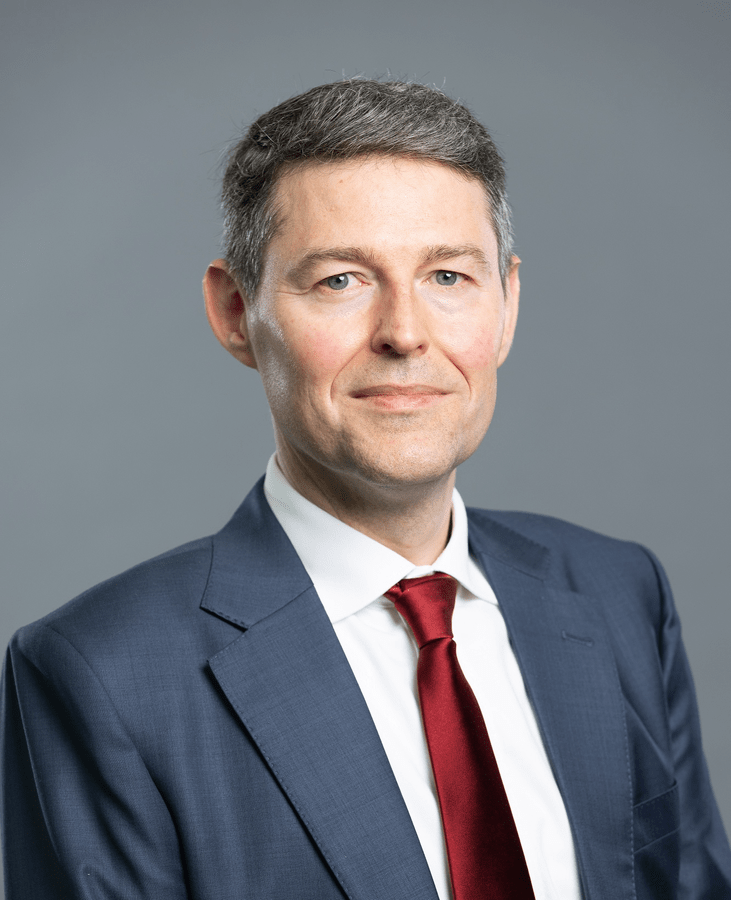
Khalifa University Faculty and ADIA Lab Scientist Receives 25th Bernstein Fabozzi/Jacobs Levy ‘Outstanding Article’ Award

Professor Marcos Lopez de Prado’s Article Emphasizes Use of Causal Graphs for More Robust Foundation for Analysis and Decision-Making in Factor Investing


Khalifa University’s Professor of Practice from the Mathematics department, and ADIA Lab scientist and Advisory Board member has been honored with the 25th Bernstein Fabozzi/Jacobs Levy ‘Outstanding Article’ Award, for his groundbreaking research work on the critical examination of the econometric approaches used in factor investing studies. 


The article titled, Where are the Factors in Factor Investing?, published in The Journal of Portfolio Management, was authored by Dr. Marcos Lopez de Prado. The Bernstein Fabozzi/Jacobs Levy Award, now in its 25th year, is determined by the readership of The Journal of Portfolio Management and recognizes the most innovative and impactful research of the year. Previous recipients of this prestigious award include multiple Nobel Prize laureates and prominent figures from both industry and academia. 


Dr. Jorge P. Zubelli, Department Chair, Mathematics, Khalifa University, said: “Further fostering Khalifa University’s commitment to scientific exploration, especially in computational data and analysis, the 25th Bernstein Fabozzi/Jacobs Levy Award recognizes the significant contributions made by Professor Marcos Lopez de Prado in advancing our understanding of factor investing. Drawing upon his extensive research and findings, his conclusions that the field of factor investing must break free from its reliance on associational models challenges us to rethink our approach and encourages more robust methodologies in factor investing.”


Frank Fabozzi, Editor of the Journal of Portfolio Management, said: “Dr. Marcos’s work brings to light the overlooked importance of causal reasoning in factor investing. His innovative analysis and recommendations could significantly strengthen the scientific basis of factor investing. Our readers believe that this is an exciting line of research, and the Journal looks forward to further discoveries in this direction.”


Dr. Lopez de Prado was earlier named ‘Quants of the Year’ at Risk Awards 2021 by Risk Net jointly with Dr. Alex Lipton, also a Faculty member in the Mathematics Department. 


In the award-winning article, Dr. Lopez de Prado critically examines the current econometric approaches used in factor investing studies, advocating for the use of causal graphs to modernize the field of factor investing and improve the accuracy and reliability of factor models. He emphasizes the importance of understanding causality, using causal graphs and probabilistic graphical models to better visualize and understand the causal relationships between different factors. Through practical applications, Professor Lopez de Prado also shows how causal graphs provide a way to make sense of data and uncover meaningful insights when traditional experiments are not feasible. He writes that these graphs help understand the relationships between different factors and shed light on the effects they might have. 


Through computational algorithms in Monte Carlo experiments, Dr. Lopez de Prado further illustrates the practicality and effectiveness of causal graphs in real-world scenarios, showcasing the benefits that can be gained from embracing causal reasoning in factor investing. In this segment, he discusses three examples where standard econometric methods can lead to mistakes and false claims about factors and their effects, drawing attention to incorrect conclusions based on associations between variables without solid evidence of causation. 


Focusing on separating ‘association’ from ‘causation’ through the use of causal graphs, as he explains, offers a deeper understanding of the ceteris paribus (all other things being equal) assumption frequently employed by economists. This assumption, often taken for granted, gains new significance when viewed through a causal lens.


Alisha Roy 
Science Writer
27 March 2024
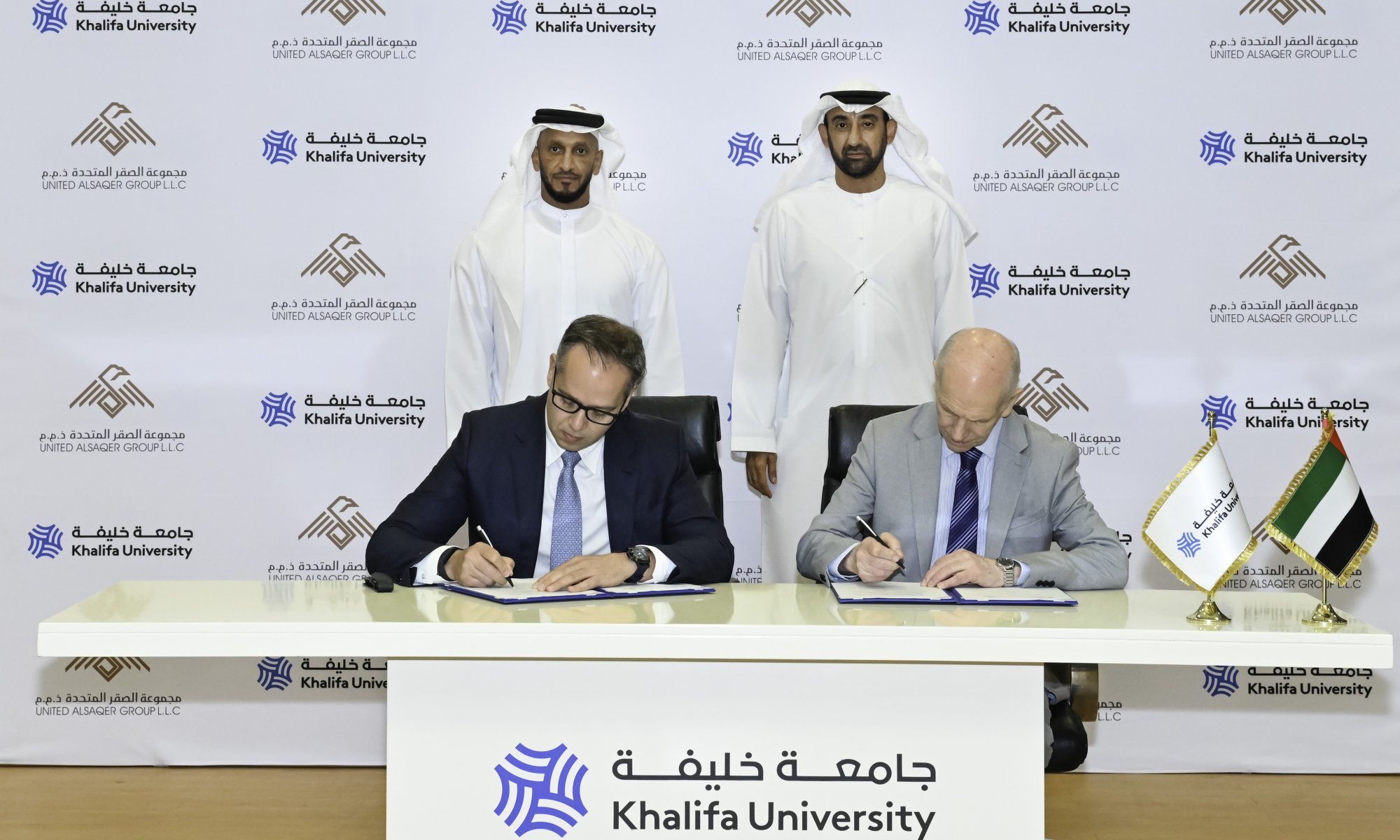
Khalifa University and UAE’s United Al Saqer Group Sign MoU to Collaborate in Water and Environment and Healthcare Research

Partnership Will Contribute to Developing Cutting-Edge Solutions Focusing on Sustainability and Innovations


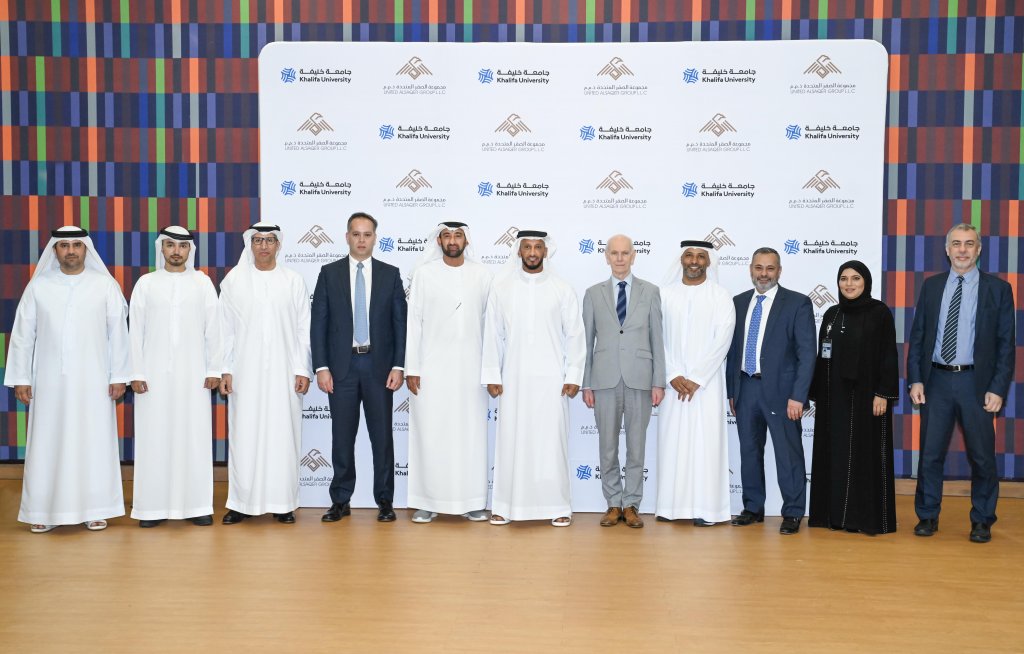
Khalifa University of Science and Technology and the United Al Saqer Group, a leading UAE-based conglomerate today announced that they have signed a Memorandum of Understanding (MoU) to provide funding and collaborate on research activities, and fostering the development of industry-focused projects in the fields of healthcare, life science, and water and environment.

The signing of the MoU was witnessed by His Excellency Sheikh Abdulla Mohammed bin Butti AlHamed, Member of United Al Saqer Group’s Board of Directors, and His Excellency Homaid Al Shimmari, Vice-Chairman of the Board of Trustees of Khalifa University. The partnership was signed by Professor Sir John O’Reilly, President, Khalifa University, and Nabil Kobeissi, CEO of United Al Saqer Group. 


Professor Sir John O’Reilly, President, Khalifa University, said: “The partnership with United Al Saqer Group underscores our commitment as a responsible research-driven academic institution to engage with leading organizations, driving real-world advancements in research, innovation, and sustainable solutions in water, environment, and healthcare domains. Leveraging Khalifa University’s academic and research expertise alongside the industry-wide reach and resources of United Al Saqer will enable us to further enhance our research and talent development actions in these key areas in line with our steadfast commitment to work to safeguard the environment, preserve natural resources, and enhance public health.”


Nabil Kobeissi, CEO, United Al Saqer Group said: “United Al Saqer group remains committed to translating our wise leadership’s vision of creating a thriving and globally competitive knowledge-based economy. As one of the leading entities to invest in Healthcare, Life Science and future-orientated solutions, supporting universities in their research and talent development efforts will be a key mandate for us for the foreseeable future. With this partnership and many others by us and other private sector players, a momentum is being created by Abu Dhabi actions and growing confidence to take our rightful place globally as a hub for solutions generation to the most challenging problems facing the world. Over the next 10 years, United Al Saqer group will go above and beyond to support the ‘We the UAE 2031’ vision. This will be mainly through continuing to invest in world class solutions and businesses; partnering with academic institutions and many other players locally and globally, to support researchers, visionaries and entrepreneurs to realize their passion; and through supporting incubators and hubs to attract promising talent and ideas.”


The partnership will allow United Al Saqer Group to provide recurrent funding for research and solutions creation by the teams in Khalifa University. In addition, it will be leveraging the established and growing expertise and various industry networks that United Al Saqer Group has, through its local and international strategic investments across various sectors investments cultivated over the last five decades. This collaboration will extend to furthering the healthcare and life sciences domain, encompassing a diverse range of research projects and initiatives from Khalifa University’s College of Medicine and Health Sciences (CMHS), which has already developed cutting-edge innovations and achieved scientific milestones. These include the design and production of a novel bio-printer capable of fabricating artificial tissues and organoids for research purposes, the establishment of the first Emirati Reference Human Genome, novel drug discovery and delivery technologies, identification of new therapeutic targets for major diseases affecting Emiratis, new sensors and intelligent systems-based approaches to optimize the diagnosis of cardiovascular and neurological diseases.


In the area of water and environment, Khalifa University has already paved the way with several sustainable-focused projects, showcased recently at the global climate summit, COP28 UAE. These include a 3D-printed membranes for water treatment, the creation of a 3U CubeSat for climate change assessment, a water-from-air system powered solely by solar energy, and the establishment of the Seawater Energy and Agriculture System (SEAS) — the world’s first research facility that minimizes waste, cultivates food and fuel using desert land irrigated by seawater, and produces sustainable biofuels for aviation.


The Environmental and Water Resources Engineering program at Khalifa University focuses on advancements in wastewater treatment, environmental fluid dynamics, hydraulics, hydrology, water resources engineering, desalination, air quality monitoring, and pollution control. Not ending with research projects, two Khalifa University faculty were recently honored with the first and second place at the Sheikh Hamdan bin Zayed Environmental Award – First Cycle for their commitment to protecting the environment and their innovative environmental solutions.


Alisha Roy 
Science Writer
25 March 2024

New Model Analyzes Walking Style to Accurately Identify Individuals

Gait analysis could be the future of forensic identification as Khalifa University team develops model to recognize individuals by the way they walk


Gait biometrics, or gait recognition, is a sophisticated process that discerns individuals by analyzing their walking style. It is part of a burgeoning domain known as behavioral biometrics, which leverages the unique behavioral characteristics inherent to each individual, such as their distinctive gait, to identify and verify personal identity.


A team of researchers from Khalifa University has developed a model that recognizes the biological and physical characteristics of individuals through their gait. Dr. Chan Yeob Yeun, Dr. Kamal Taha, Dr. Yousof Al-Hammadi and Prof. Sami Muhaidat, with Paul Yoo, University of London, published their work in Computers and Security, a top 1% journal.


The research team’s study builds on numerous studies that have explored the potential gait recognition could have in identification tasks, including gender classification and age estimation. Previous studies have predominantly relied on 2D/3D images captured by surveillance cameras, but this reliance on image-based data presents challenges, as the quality of identification models can be compromised by factors such as image resolution and variations in an individual’s appearance due to clothing or environmental conditions.


Recent advancements in the Internet of Things (IoT) and wearable technology offer a promising alternative to image-based data, according to the research team.


“The proliferation of IoT devices enables the non-intrusive collection of gait data, providing a new avenue for gait-based applications,” Dr. Yeun says. “In light of this, our study introduces a novel gait-based identification model that harnesses inertial locomotion information, sidestepping the pitfalls associated with image-based approaches.”


“Our approach involves collecting gait data through wearable technology in the shoes while users walk on a treadmill,” Dr. Yeun says. “This data is then processed using a deep neural network of stacked sparse auto-encoders to extract high-level features, ensuring the model’s resilience to variations in gait. By combining original attributes with these advanced features, we employ a clustering-based learning model that can accurately identify individuals based on their gait information.”


Gait biometrics, while less explored than traditional biometrics such as fingerprints or iris scans, presents a unique opportunity for identification in both security and forensic contexts. The use of deep neural networks, as proposed in this study, leverages the inherent ability of these models to generate invariant representations of gait patterns. This is critical for ensuring reliable identification across varying conditions, such as changes in walking speed or posture.


“Despite its promising research background, gait biometrics has seen limited commercial application, primarily restricted to niche markets like wearable and floor sensor industries,” Dr. Yeun says. “Using sensors in mobile devices introduces a new dimension to gait analysis, offering a non-intrusive and continuous monitoring solution. This is particularly advantageous for applications requiring minimal user intervention, such as health-care monitoring and passive security systems. However, challenges related to data variability, sensor accuracy, and environmental factors must be addressed to enhance reliability.


The research team developed a new gait dataset using cutting-edge wearable technology in shoes and constructed a machine-learning model that melds high-level data representations with a randomized multi-layered clustering approach. Their model outperforms traditional learning models in identifying individual characteristics and showcases the potential of machine learning techniques for gait analysis. The model accurately recognized gender of the walker in 75.55 percent of cases and the age of the walker in 76.66 percent of cases. The team also highlighted the promising avenues for further research in this field, including expanding the dataset to encompass a broader demographic and investigating the long-term stability of gait as a biometric modality. The team plans to explore real-time implementation and deployment of the model in practical scenarios, such as health-care monitoring or security systems, to provide valuable insights into its feasibility and effectiveness in real-world applications.


Jade Sterling
Science Writer
25 March 2024

His Highness Sheikh Hamed Honors Khalifa University Faculty for Asteroid Naming Achievement

Dr. Mohamed Ramy El-Maarry, Recognized by IAU and has an Asteroid Named After Him, is Featured on KUST Review’s Cover


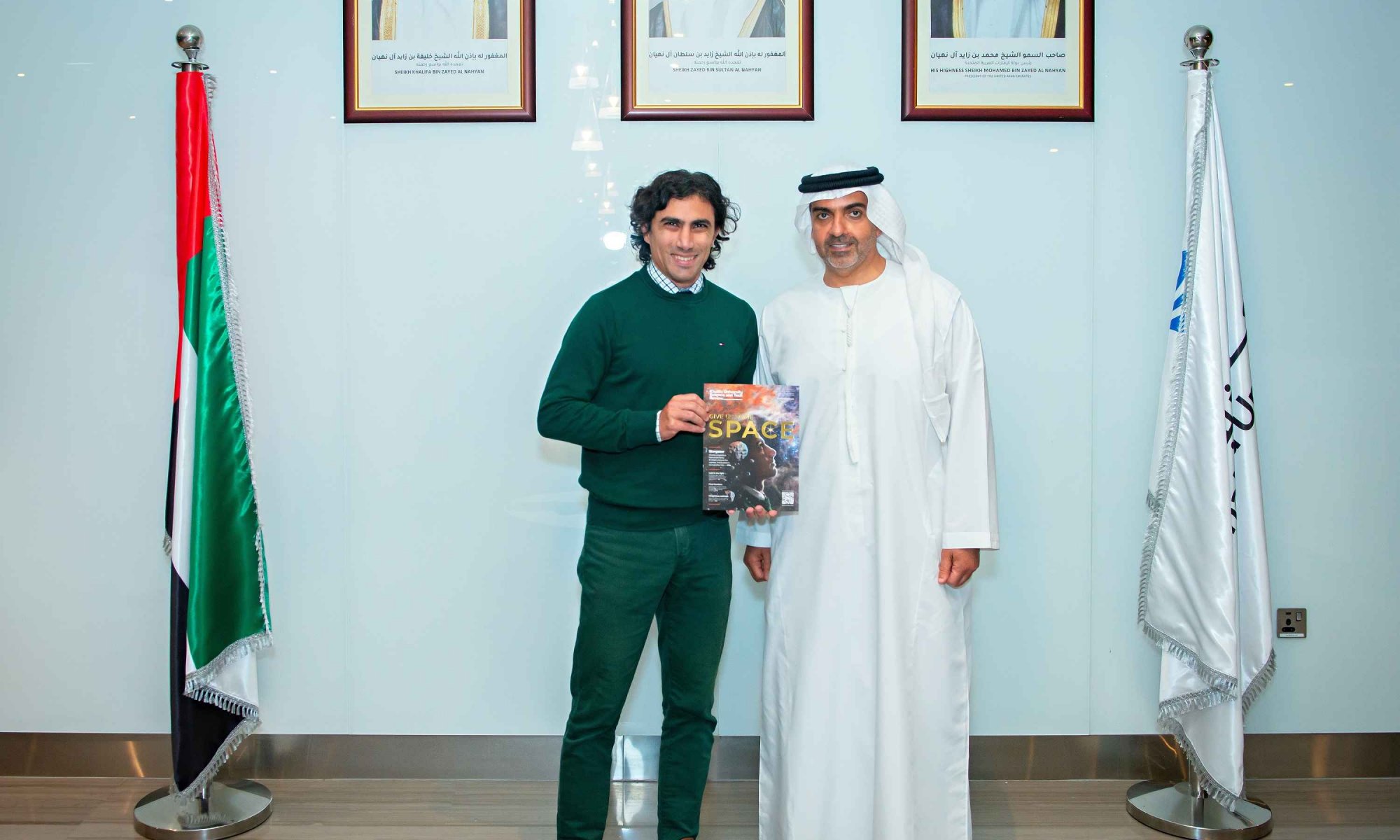
His Highness Sheikh Hamed bin Zayed Al Nahyan, Chairman of the Khalifa University Board of Trustees, has acknowledged the remarkable contributions of Dr. Mohamed Ramy El-Maarry, for having an asteroid named after him and his contributions to the field of astronomy. Dr. El-Maarry, Director of the Space and Planetary Science Group and Associate Professor of Earth Sciences, was recognized by the International Astronomical Union (IAU), which renamed the ‘2002 CZ’ asteroid to (357148) El-Maarry – marking a historic moment for Khalifa University and for the UAE space sector.  


In recognition of this outstanding achievement, His Highness Sheikh Hamed bin Zayed Al Nahyan directed that Dr. El-Maarry’s accomplishments be featured as the cover story of the third issue of the scientific journal, Khalifa University of Science and Technology (KUST) Review. The cover feature, titled Technological Innovations in Space, presents Dr. El-Maarry’s fascinating account of the formation of the solar system and its planets, highlighting his work.


KUST Review is a magazine about global trends, innovations, and news in the scientific and technological domains. The publication seeks to inspire and raise awareness about the transformative scientific and technological developments shaping our world today.


The latest edition of KUST Review delves into the challenges and advancements in space exploration, spotlighting the technology, materials, and research propelling progress. It explores the significance of graphene and other 2D materials in overcoming space-related obstacles, sheds light on space laws and the problem of space debris. Additionally, it emphasizes the vital role that universities play in commercializing research and safeguarding space systems from cyber threats. The edition also covers fresh perspectives on the Voyager’s Golden Records, which were sent into space in 1977 with the hopes of communicating with extraterrestrial life.

To view the Space edition of KUST Review, click here: kustreview.com/published-issues


Alisha Roy
Science Writer
20 March 2024

Khalifa University Receives ISO 20400:2017 Certification for Sustainable Procurement

KU Assessed and Certified in Planning, Control and Implementation of Sustainable Procurement Activities for the Supply of Goods and Services


The Khalifa University Procurement and Contracts Department has received the ISO 20400:2017 certification from Bureau Veritas, an accredited certification body, for the integration of sustainability principles into procurement processes, with a focus on promoting responsible practices, and reducing environmental impacts.


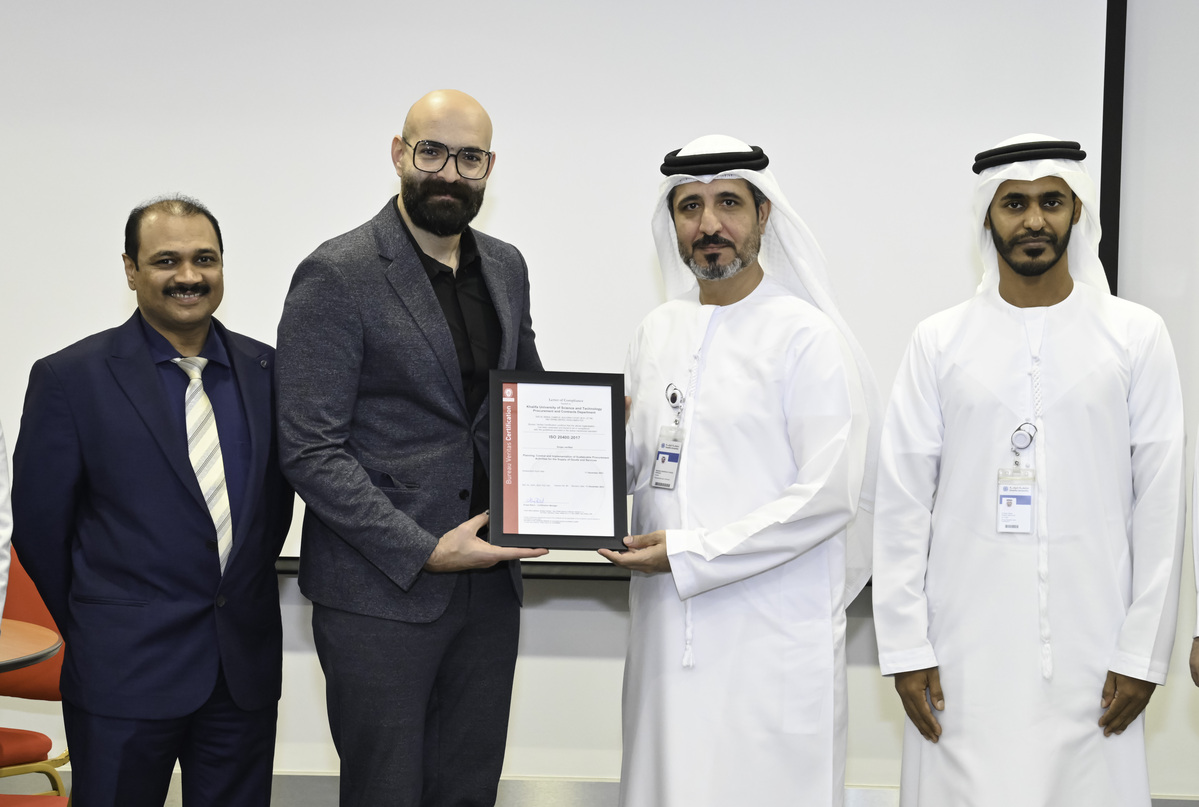
Esmaeel Al Ahmed, Vice-President, Procurement and Contracts, Khalifa University, received the letter of compliance from Krupa Rahul, Head of Certification, Bureau Veritas, and other officials, during a ceremony at the Sas Al Nakhl (SAN) Campus marking the conclusion of the inspection and assessment. The certification was awarded for planning, control, and implementation of sustainable procurement activities in the supply of goods and services.


Krupa Rahul said: “Khalifa University’s achievement of ISO 20400 certification demonstrates their commitment to implementing a robust sustainable procurement framework. Their focus on integrating environmental, social, and ethical considerations throughout their supply chain aligns perfectly with the core principles of the standard. By prioritizing sustainable practices, Khalifa University is setting a commendable example for other organizations in the region and contributing significantly to broader efforts towards a more sustainable future.”


By implementing ISO 20400:2017 standard, institutions can improve productivity, evaluate the value and performance of their procurement processes, facilitate effective communication between purchasers, suppliers and other stakeholders, and drive more innovation within their procurement practices. More importantly it contributes to achieving several UN Sustainable Development Goals (SDGs) including UN SDG 1 (No Poverty), SDG 2 (Zero Hunger), SDG 5 (Gender Equality), SDG 8 (Decent Work and Economic Growth), SDG 10 (Reduced Inequalities), SDG 11 (Sustainable Cities and Communities), SDG 12 (Responsible Consumption and Production), SDG 16 (Peace, Justice, and Strong Institutions), and SDG 13 (Climate Action).


Khalifa University’s comprehensive range of certifications meet the requirements of several other standards such as the ISO 9001:2015 that demonstrates the implementation and maintenance of an effective quality management system. Other certifications include the ISO 45001, an international standard for Occupational Health and Safety (OHS) at work, the ISO 10004:2018 in quality management and customer satisfaction, 14001 in environmental management as well as 50001 in energy management, which is awarded for increasing energy efficiency, promoting best energy practices and improving energy performance.


Additionally, the Khalifa University Center for Biotechnology (KU-BTC) remains the first research center in the UAE to receive accreditation from the Emirates International Accreditation Centre (EIAC) for ‘‘Next Generation Sequencing (NGS)’, following its compliance with the ISO 15189:2012 requirements on quality and competence.


Alisha Roy
Science Writer
19 March 2024

Advancements in Imaging for Unmanned Underwater Vehicles

Khalifa University researchers develop algorithm to help underwater robots see more clearly 


Unmanned underwater vehicles (UUVs) are at the forefront of underwater research and exploration. They rely heavily on visual sensors for navigation, monitoring, and security purposes. However, the underwater environment presents significant challenges for imaging, such as poor visibility and the scattering of light, which degrade image quality and impede vision-based tasks.


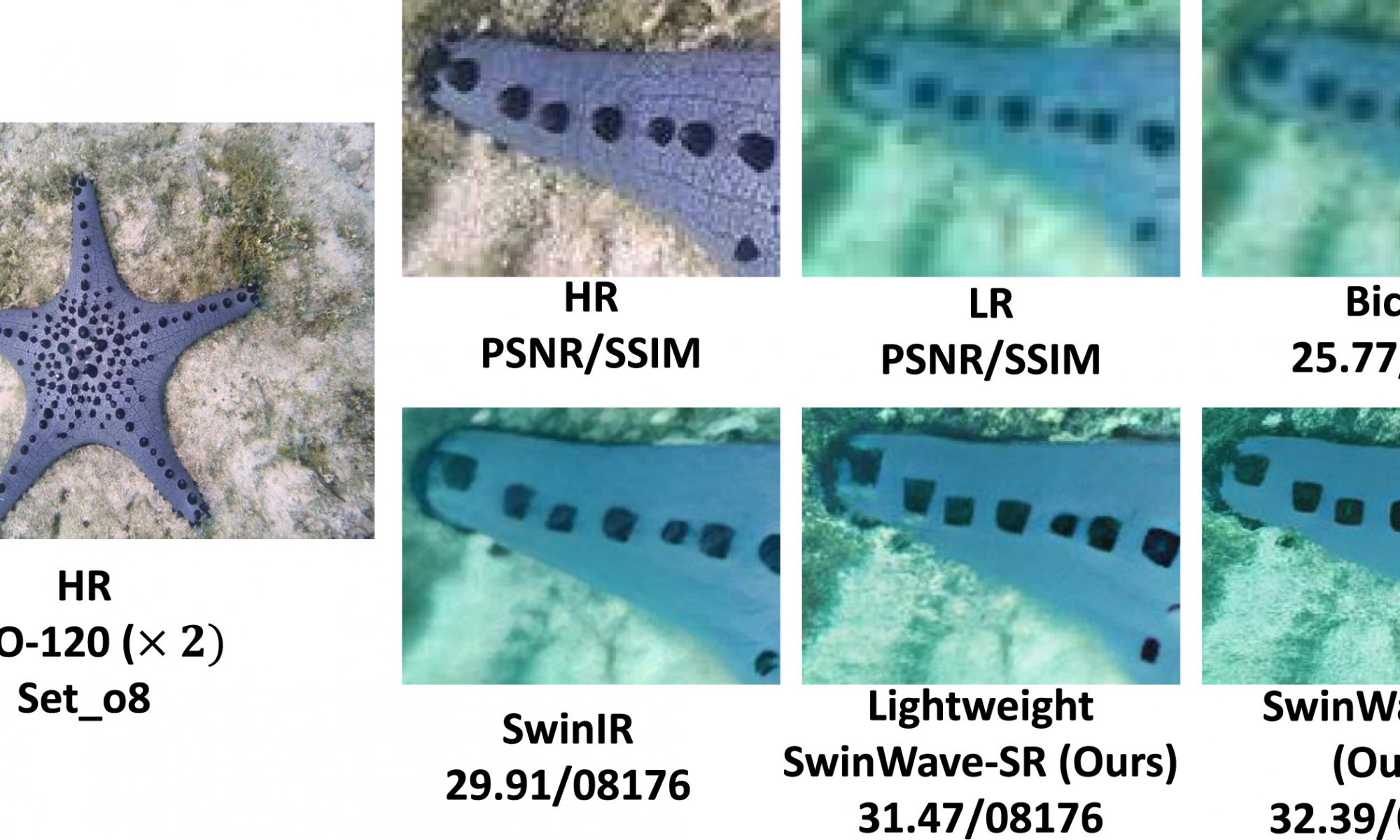
A team of researchers from Khalifa University has developed a new computer vision algorithm for efficient and accurate underwater image enhancement to combat the challenge of severe and unpredictable degradation in underwater imaging. Called SwinWave-SR, the algorithm restores the corresponding low-resolution image to a high-quality counterpart with real-world applications, including medical imaging, surveillance, and face recognition, as well as underwater imaging.


Dr. Sajid Javed, Dr. Naoufel Werghi, Dr. Fayaz Ali Dharejo, Dr. Iyyakutti Iyappan Ganapathi, and Basit Alawode, all from the Department of Electrical Engineering and Computer Science at Khalifa University, collaborated with researchers from Waterford Institute of Technology, Ireland, and King Saud University, Saudi Arabia. Their results were published in Information Fusion, a top 1% journal.


“A single low-resolution image can correspond to multiple high-resolution interpretations,” Dr. Sajid says. “For images obtained by underwater robots, this problem is aggravated by adverse environmental conditions. Due to their size, high-definition cameras can’t be used on robots, and as a result, underwater robots are only capable of surveying objects from a large distance, which reduces the quality of underwater images and leads to impeded vision-based tasks. Computer vision techniques offer a solution to this problem.”


The team’s algorithm preserves image details across various resolution scales without information loss. This approach is particularly beneficial for underwater imaging, where detail preservation is crucial and computational resources are often limited.


“SwinWave-SR refines texture details while preserving detailed features,” Dr. Sajid says. “Time efficiency is an essential consideration for practical application, and our proposed method is remarkably quick and accurate, achieving high-quality, super-resolution results with significantly reduced computational time, making it a promising advancement in image enhancement.”


Jade Sterling
Science Writer
13 March 2024

Khalifa University Research Achieves Invisibility with New Approach

Research team makes objects invisible with metamaterial coatings that offer zero reflection with potential across a range of industries


We are one step closer to invisibility thanks to research conducted at Khalifa University that produced a new metamaterial that absorbs all light without any reflection. Beyond childhood dreams of invisibility cloaks and superpowers, objects offering zero reflection have a wide range of applications from enhancing solar cell efficiency to advancing optical sensing and quantum technologies. 


Advancements in nanoscience have propelled the pursuit of materials with exceptional optical properties. Optical coatings employing multilayer dielectric films — where each layer passes a different wavelength of light and reflects all others — have made substantial strides in reducing light reflection to remarkably low levels. Now, a team of researchers including Khalifa University’s Prof. Fedor Kusmartsev has achieved perfectly dark metasurfaces by fine-tuning these multilayer structures using Rashba metamaterials. 


Prof. Kusmartsev collaborated with researchers from Loughborough University, United Kingdom; Princess Nourah Bint Abdulrahman University, Saudi Arabia; and the Microsystem and Terahertz Research Center, China. Their results were published in Applied Materials and Interfaces.  


To see the world around us, we see light reflect off objects. If no light reflected, we wouldn’t be able to see them. There are plenty of methods to fabricate antireflective coatings, but even the most advanced encounter limitations in their performance over a wide spectrum of wavelengths. 


For example, combining thin dielectric films with metallic substrates can yield surfaces with low reflectivity, resilient to changes in the light’s angle of incidence. Integrating materials like graphene into optical structures can also significantly influence their reflective properties, but achieving zero reflection across a wide range of wavelengths remains challenging. 


The research team focused on eliminating the reflection of an object using Rashba metamaterials: a type of composite material with unusual electromagnetic properties that are highly tunable and offer potential across a range of industries. 


The research team produced trilayer structures of a substrate, a Rashba metamaterial insulating oxide layer and an ultrathin metallic nanofilm to achieve a perfectly dark metasurface. Their structures eliminate reflectivity by adjusting the metal nanofilm thickness with the effect observed across a range of metals. 


The team believes this antireflective effect comes from the presence of surface states on the metal nanofilms, which become increasingly influential as the film’s thickness diminishes. Under specific conditions, these states can induce a transition from metallic to insulating behavior, fundamentally altering the nanofilm’s electronic properties. 


“When the metal layer reaches a critical thickness, it effectively splits into two layers of conducting surface states with an insulating core in between,” Prof. Kusmartsev says. “This creates areas with a negative refractive index at the points where the metal and oxide layers meet, transforming the entire structure into a series of alternating nanoscale metal and insulating layers with strong local Rashba interactions.”

By fine-tuning the metal layer’s thickness, the research team achieved the effective refractive index of air, creating materials with zero reflectivity. This breakthrough has the potential to transform the field of antireflective materials and could improve solar cell efficiency or advance optical sensing and quantum technologies, for example. 

“Our approach opens up avenues to achieve surfaces with zero reflectivity practically for any desired frequency range and any angle,” Prof. Kusmartsev says. “Our findings should facilitate new developments and advances in multiple sectors and industries working to minimize light reflection.”


Jade Sterling
Science Writer
11 March 2024

Navigating the Challenges of Renewable Energy Integration

New model from Khalifa University researchers addresses instability concerns in renewable energy source-based power grids


 As energy systems globally switch to renewable energy sources, there’s a growing need to integrate renewable energy systems to the traditional power grid. This necessitates the radical transformation of how power systems operate, particularly since managing the impact of energy sources that are intermittent, or not always available, is a delicate task.


The energy available from sun, wind, waves, and tides varies in ways which may not match variations in consumer energy demand. Dealing with such intermittency can affect the operation and economics of electricity networks and markets. Much like the weather, electricity consumption can be reasonably well predicted, but not controlled.


A team of researchers from Khalifa University has developed an integrated tool to predict and enhance the frequency stability of power systems by dynamically adjusting the operations of a photovoltaic power plant in real time. Faisal Sattar (graduated MSc student), Dr. Sudipta Ghosh, Dr. Younes Isbeih, Prof. Mohamed El Moursi, Prof. Ahmed Al Durra and Dr. Tarek El Fouly, all from the Khalifa University Advanced Power and Energy Center, designed a tool that provides an accurate prediction of the power system inertia in a real-time environment with minimum data requirements.


Frequency stability refers to the ability of a power system to maintain steady frequency following significant imbalance between generation and load. It is a crucial aspect in maintaining the overall reliability of the power system, ensuring that electricity is produced at a frequency and volume within specified limits, preventing blackouts or damage to equipment. Stability problems often arise from sudden changes in load demand, the intermittent renewable power generation and severe system disturbances.


Inertia is familiar to anyone who has driven a car or ridden a bicycle: It is the tendency of an object in motion to remain in motion. Stop pedaling and the wheels continue to spin. In the power grid, inertia refers to the kinetic energy stored in spinning generators. In inverter-based renewable power generation systems, these spinning generators are not used, which could lead to power system instability in the absence of appropriate control strategies.


A power system with low inertia may be susceptible to instability in response to system disturbances and even complete blackouts. The energy contained in generators at power stations provides inertia as they rotate at the same frequency as the electricity grid. This acts as a buffer against rapid change: If demand for power spikes, the frequency of the grid tends to decrease.


The KU research team developed an online tool to predict and enhance frequency stability. The tool leverages real-time data, including system inertia and frequency response, to provide system operators with the necessary insights to manage stability effectively. Key features of the tool include the ability to estimate the system’s inertia in real time, predict the frequency nadir (the lowest point the system’s frequency might reach following a disturbance), and dynamically adjust the operation of photovoltaic systems and battery energy storage systems to maintain frequency with safe limits. This is achieved through optimal allocation and using additional power reserves, as well as load-shedding strategies where necessary.


“The introduction of such tools is crucial for ensuring the stability of power grids in the era of renewable energy,” Prof. El Moursi says. “As the energy sector continues to evolve, innovations like ours play a vital role in enabling the integration of renewable energy sources without compromising the stability and efficiency of power systems.”


Jade Sterling
Science Writer
5 March 2024

The Role of the Metaverse in Transforming Healthcare

Khalifa University research paper investigates the applications, challenges and future directions for the metaverse in healthcare, wins IEEE best paper award


The post-pandemic era has seen a surge in the use of virtual healthcare services, leveraging emerging technologies to enhance patient care. A team of researchers from Khalifa University says the metaverse stands at the forefront of this digital transformation. It offers an immersive platform that can significantly enhance virtual healthcare delivery by providing more interactive and personalized patient care experiences.


Dr. Ahmad Musamih, Ibrar Yaqoob, Prof. Khaled Salah, Dr. Raja Jayaraman, Dr. Yousof Al-Hammadi, and Prof. Mohammed Omar collaborated with Cleveland Clinic’s Samer Ellahham to consider the applications, challenges, and future directions for the metaverse in healthcare.


The research team developed a novel metaverse framework to address existing challenges in healthcare. In their IEEE Consumer Electronics Magazine paper, they explored the potential applications of the metaverse in healthcare and discussed how different metaverse-enabling technologies can be integrated. The team also provided a system architecture for how such applications could be structured and organized.


Their paper was awarded best paper for 2023 by the IEEE Consumer Electronics Magazine.

“The healthcare industry is witness

ing a digital revolution propelled by Industry 4.0, where technology-driven innovation is adopted to replace legacy healthcare services,” Prof. Omar says. “The use of virtual healthcare services, such as telemedicine and telehealth, has become prevalent in the wake of the Covid-19 pandemic, which also accelerated the harnessing of disruptive technologies, such as the metaverse.”


While telemedicine and telehealth have become essential components of the healthcare landscape, they lack the depth of physical examinations and their effectiveness often depends on the patients’ ability to communicate their symptoms.. Concerns regarding data privacy and security also persist, making some patients hesitant to embrace these digital health solutions.


The research team believes the metaverse presents a unique opportunity to address these challenges. By integrating AI, blockchain, and distributed computing, the metaverse could improve diagnostic accuracy, enhance patient privacy, and offer a more engaging healthcare experience.


“The metaverse is an emerging concept that is constantly evolving, and its definition can vary based on the involved participants and the application it is intended for,” Prof. Salah says. “In general, the metaverse can be defined as a computer simulation that allows digital avatars of participants to interact among each other in a realistic, shared, and immersive life-like environment.”


For patients, home healthcare services within the metaverse could connect patients with Internet of Medical Things devices for real-time monitoring, while remote consultations could be facilitated through virtual environments. However, metaverse applications are not limited to the patient experience.


The research team highlight how the metaverse could revolutionize medical education by virtually placing students and trainers in simulated environments. Emergency departments at healthcare facilities would be able to virtually triage patients, potentially reducing unnecessary visits and improving resource allocation. For supply chain management, the metaverse could improve transparency, efficiency, and resilience by utilizing digital twins, AI and blockchain technology.


While the metaverse presents a revolutionary platform for healthcare, the research team recognize it is not without its technical challenges.

“The metaverse is still in its early stages of development, and like any other emerging technology, it is expected to face numerous technical hurdles,” Prof. Salah says. “First, the metaverse is not a standalone system and deploying and maintaining the infrastructure is expected to be very costly. The enabling technologies of the metaverse are also considered very complicated for average users, and in their current state, they’re complicated for professionals too. Finally, there are no standard for interfacing with metaverse applications now. Integrating them with legacy systems is expected to be burdensome.”

Still, the integration of the metaverse into healthcare signifies a paradigm shift toward a more interconnected, efficient, and patient-centric digital health ecosystem.

“As we delve deeper into the potential of the metaverse in transforming healthcare, it is imperative to address the technological, privacy, socio-ethical, and regulatory challenges that accompany its adoption,” Prof. Omar says. “Balancing innovation with these considerations is crucial to unlocking the metaverse’s full potential in enhancing healthcare.”


Jade Sterling
Science Writer
5 March 2024

His Highness Sheikh Hamed bin Zayed Chairs Khalifa University Board of Trustees Meeting

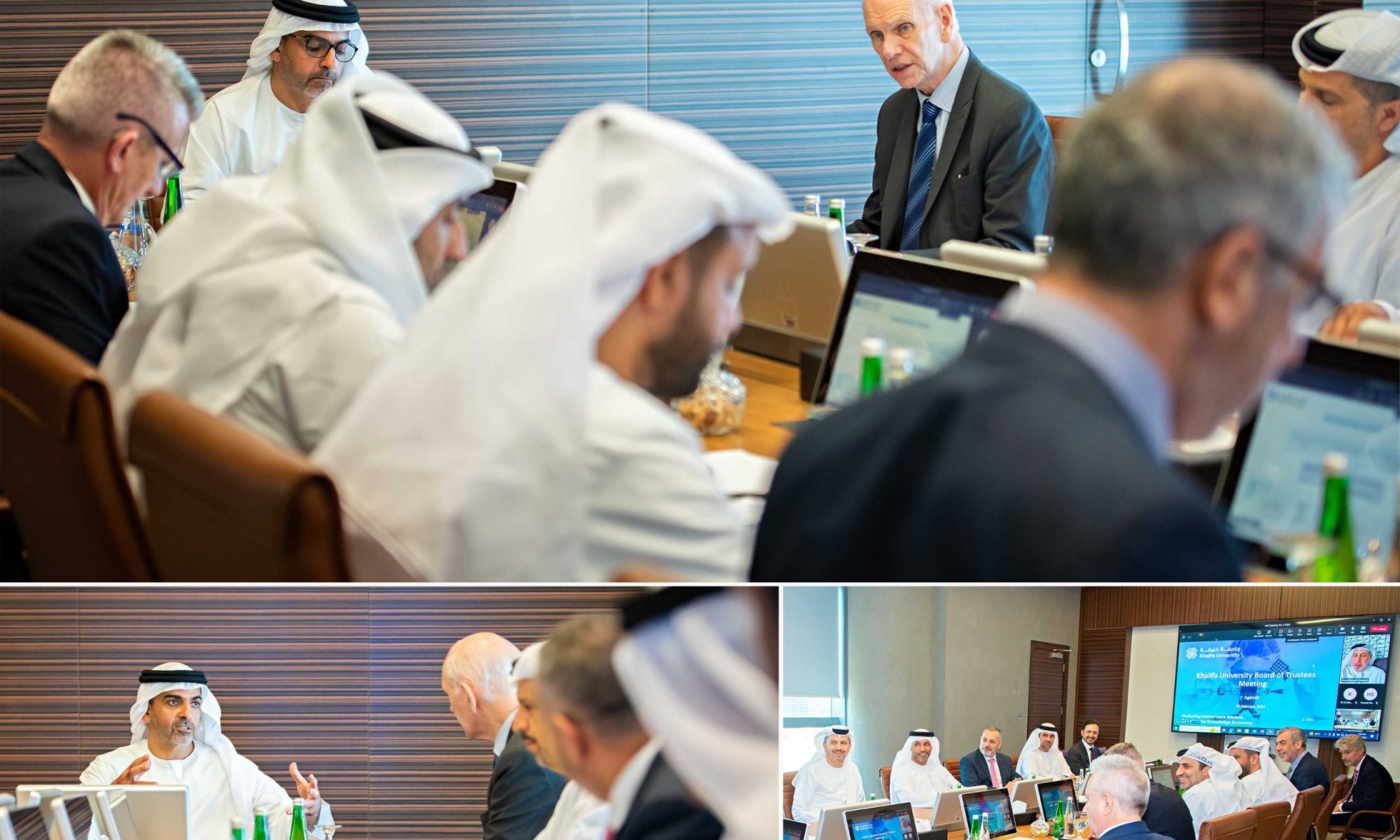
His Highness Sheikh Hamed bin Zayed Al Nahyan, Chairman of the Board of Trustees of Khalifa University of Science and Technology, chaired a meeting that was attended by board members and members of Khalifa University leadership.


His Excellency Homaid Al Shimmari, Vice-Chairman, and other members including His Excellency Salem Butti Salem Al Qubaisi, Director-General of the UAE Space Agency, His Excellency Dr. Saleh Al Hashmi, Director, Group Commercial and In-Country Value Directorate, ADNOC, Anas Jawdat Al Barguthi, Chief Operating Officer of ADQ, Dr. Horst Simon, Director of ADIA Lab, and John W. Nicholson Jr., Chief Executive, Lockheed Martin Middle East, attended the meeting.


Coinciding with the Khalifa University Research and Innovation Day 2024, the meeting reviewed the University’s progress in academic, research, innovation and entrepreneurship during the year and discussed future plans and strategic initiatives. 


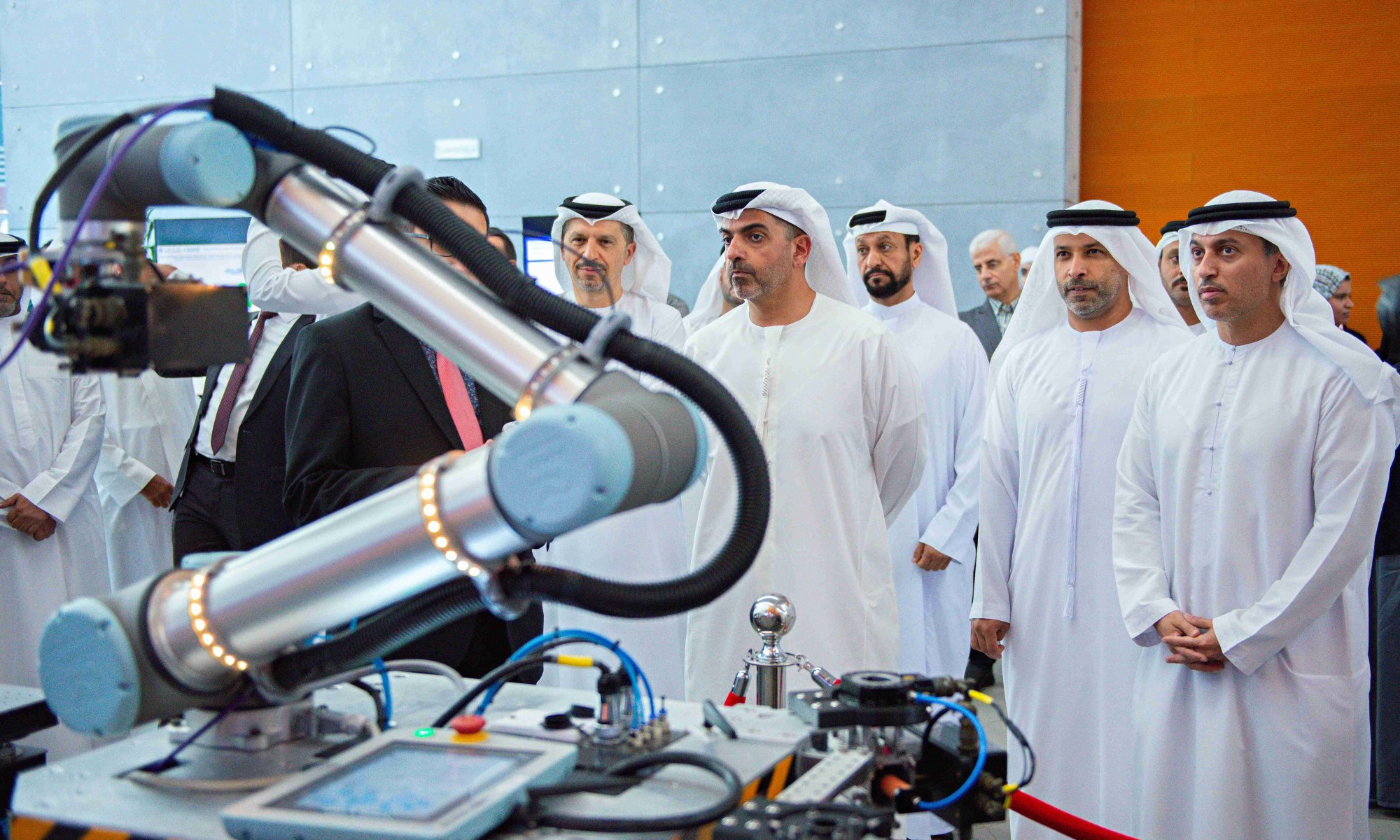
As part of the Research and Innovation Day 2024, His Highness Sheikh Hamed viewed the 100-plus innovative projects. His Highness Sheikh Hamed also attended the technology startup pitches that represent the commercialization process of the innovations emanating from Khalifa University laboratories.


Participating in KU Innovation Talks as part of the Research and Innovation Day 2024, Dr. Saleh Al Hashmi shared his perspectives on Energy Transition, which was also attended by His Excellency Dr. Ahmed Belhoul Al Falasi, UAE Minister of Education, His Excellency Dr. Mohamed Al Kuwaiti, Head of UAE Cybersecurity Council, Professor Sir John O’ Reilly, President, Dr. Arif Sultan Al Hammadi, Executive Vice-President, and Dr. Ebrahim Al Hajri, Senior Vice-President, Support Services. Dr. Saleh also took part in a panel discussion  later that included Dr. Ray O. Johnson, Chief Executive Officer, Technology Innovation Institute (TII) and was moderated by Professor Sir John O’ Reilly.


Clarence Michael
Science Writer
29 February 2024

His Highness Sheikh Hamed bin Zayed Views Over 100 Research Projects and Attends Startup Pitches at Khalifa University Research and Innovation Day 2024

 His Highness Sheikh Hamed bin Zayed Al Nahyan, Chairman of the Board of Trustees of Khalifa University of Science and Technology, today viewed the 100-plus innovative projects and attended startup pitches on Khalifa University Research and Innovation Day 2024, as part of the UAE’s innovation month activities. 


His Highness Sheikh Hamed was accompanied by His Excellency Dr. Ahmed Belhoul Al Falasi, UAE Minister of Education, Professor Sir John O’ Reilly, President, Dr. Arif Sultan Al Hammadi, Executive Vice-President, and Dr. Ebrahim Al Hajri, Senior Vice-President, Support Services, His Highness Sheikh Hamed was briefed about the 60 innovative projects, and 36 PhD research posters. The showcase also included 10 technology startups.


Khalifa University Research and Innovation Day 2024 included two keynote addresses on ‘intelligent systems’ and ‘energy transition’ by Dr. Saleh Al Hashmi, Member of the Board of Trustees, Khalifa University, and Director, Group Commercial & In-Country Value Directorate, Abu Dhabi National Oil Company (ADNOC); and Dr. Ray O. Johnson, Chief Executive Officer, Technology Innovation Institute (TII) Abu Dhabi. Professor Sir John moderated a panel discussion on ‘Transition for Sustainability’, which included the two keynote speakers.


Stakeholders from government, private sector, academic, industry, and international partners interacted with Khalifa University researchers at the five themed display and demonstration zones, reflecting projects in ‘Managed Energy Transition’, ‘Sustainable and Secure Society’, ‘Health Longevity’, ‘Advanced Materials and Manufacturing’, and ‘Pervasive Digitalization’.


Alisha Roy
Science Writer
27 February 2024