YFEL German-Emirati Sustainability Days Conference 2024 at Khalifa University Commences, Advancing Net-Zero Solutions

Conference Initiates Technical Sessions and Workshops to Achieve Global Sustainability with Support from German Industries


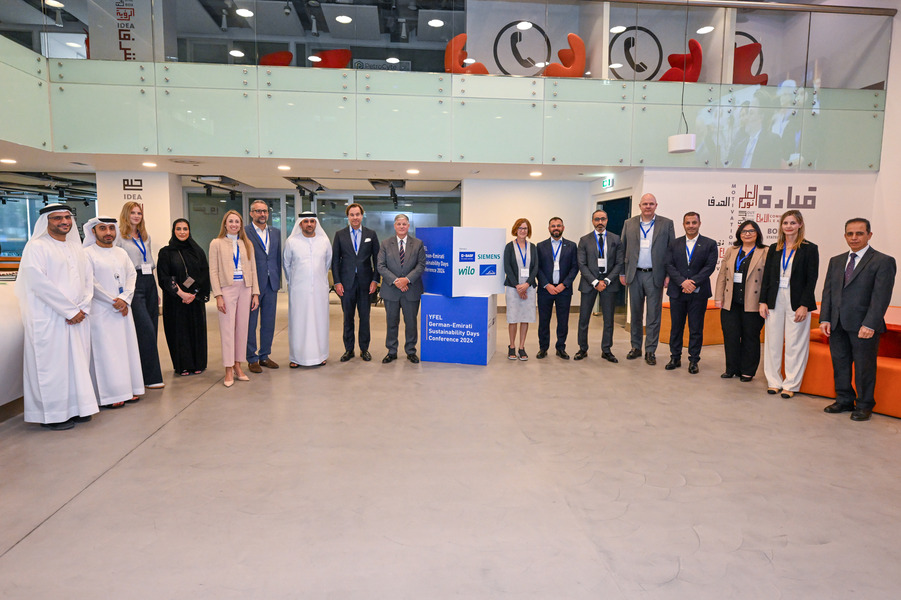
A two-week initiative towards driving sustainability solutions has now begun with the opening ceremony of the Young Future Energy Leaders (YFEL) German-Emirati Sustainability Days Conference 2024 at Khalifa University. The fourth edition of the conference, organized by the German Emirati Joint Council for Industry and Commerce (AHK), is supported by German firms including BASF, Linde, Siemens AG, and Wilo. 


Over the next two weeks, the conference partners will organize a series of technical sessions, panel discussions, and intensive workshops that will delve deeper into the conference theme of empowering the youth to combat climate change, facilitating discussions and hands-on learning opportunities for the YFEL members, alumni, and the broader Khalifa University community.


The opening ceremony was attended by various local, regional and international stakeholders including His Excellency Alexander Schönfelder, Ambassador of the Federal Republic of Germany to the UAE, who delivered the welcome message. A keynote address on ‘COP28 and Tripling Renewables’ was presented by Dr. Ute Collier, Deputy Director, Knowledge Policy and Finance Centre, International Renewable Energy Agency (IRENA). A panel discussion titled ‘Advancing Green Technologies for a Decarbonized Future’, moderated by Karin Zangerl, Director of the AHK, Abu Dhabi Office, featured representatives from the supporting German firms.


In his welcome note, Oliver Oehms, CEO, AHK, emphasized the importance of the conference shedding light on achieving sustainable development with support from industries. Yousof Alhammadi, Senior Vice-President, Academic Affairs and Student Services, Khalifa University delivered a speech, highlighting the collective goals of the German industry and the YFEL members to achieve a net-zero future.


The day’s events concluded with closing remarks by Karin Zangerl followed by a networking session, where 2024 YFEL members shared their ideas and insights that covered key sustainability topics including ways to solve an environmental problem, their vision for a country’s energy industry, and incentives to significantly accelerate sustainable practices.


The conference will culminate in a closing ceremony moderated by YFEL alumni, providing attendees with the chance to consolidate their learnings and discuss ways to translate the conference’s insights into tangible sustainability initiatives.


The 44 members strong 2024 YFEL cohort has eight UAE Nationals and 30 international members from the US, India, China, and Saudi Arabia, from different educational backgrounds, who are, at present, enrolled in some of the well-known universities across the world. They have remained active throughout the COP28 UAE climate conference and the World Future Energy Summit 2024, showcasing several innovative projects including a case study on the Charging Infrastructure for Electric Trucks.


Alisha Roy
Science Writer
27 May 2024

Newly Appointed Co-Chairs to Take UAE’s Universities Climate Network to Next Stage of Region-Wide Action  

Dr. Samuel Mao of Khalifa University and Dr. Rasha Bayoumi of the University of Birmingham Dubai to Spearhead Climate Action and Sustainability Agendas


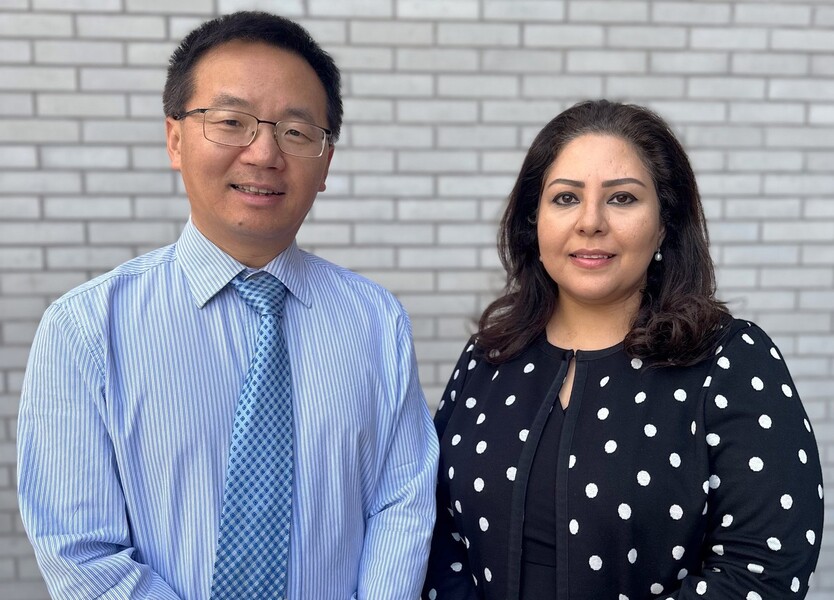
The UAE’s Universities Climate Network (UCN), a 33-member group, has announced the appointment of Khalifa University’s Dr. Samuel Mao and Dr. Rasha Bayoumi of the University of Birmingham Dubai as Co-Chairs, taking the UCN to the next stage of advancing climate action regionally and internationally, and promoting sustainability across the UAE’s academic sector. 


An official handover ceremony organized at New York University Abu Dhabi (NYUAD) was attended by His Excellency Edward Hobart, the UK Ambassador to the UAE, His Excellency Ambassador Majid Al-Suwaidi, Director-General, COP28 UAE Presidency, Professor Sir John O’Reilly, President, Khalifa University, and other key stakeholders. Dr. Maya Haddad from Ajman University will be Head of Operations, UCN.


Her Excellency Razan Al Mubarak, UN Climate Change High Level Champion for COP28, said: “Universities play an integral role in supporting climate action. They provide the research, education and expertise to respond to the climate challenge, developing the solutions and capacity to reduce emissions and address the adaptation gap. With the appointments of Dr. Samuel Mao and Dr. Rasha Bayoumi in the UAE, I am delighted that UCN are building on their success at COP28 to take forward this agenda across the MENA region.”


His Excellency Edward Hobart, UK Ambassador to the UAE, said: “On behalf of the British Embassy, we congratulate and welcome Dr. Samuel Mao and Dr. Rasha Bayoumi on their co-chair appointment to the UAE’s Universities Climate Network. Together with the UK Universities Climate Network launched at COP26, the importance of our academic networks in advancing climate action is clear, whether it be youth engagement, research, innovation, collaboration, or education.”


Professor Sir John O’Reilly, President, Khalifa University, said: “We are delighted to take over the leadership of the Universities Climate Network (UCN), in partnership with Birmingham University Dubai, and take this initiative forward in the coming months. All sustainability-related activities have received significant momentum following the hosting of COP28 Summit in the UAE and the UCN will continue to pioneer local and regional initiatives that will benefit all key stakeholders, ensuring heightened awareness about the need to create a cleaner environment.”


To advance the climate change and sustainability agenda for 2024, the UCN aims to bring together universities in the UAE within their network by assessing their research capabilities and forming collaborative teams to address climate research challenges across various fields. As co-chair, Dr. Samuel Mao, Director, ASPIRE Virtual Research Institute for Sustainability and Professor of Practice, Mechanical and Nuclear Engineering, Khalifa University, in collaboration with the Higher Education Lead of the UNFCCC’s Climate Champions Team, is actively involved in planning an international event centered on climate action of the MENA region, scheduled for October 2024 in Abu Dhabi with Khalifa University as the local host. The planned event is expected to further expose Khalifa University’s cutting-edge climate change research and consistent commitment to sustainability, with the report to be presented at COP29 Baku, Azerbaijan, in November 2024. 


Additionally, the UCN will promote sustainability practices on campuses across the UAE and foster youth participation through collaboration with organizations such as the UAE’s ‘Youth 4 Sustainability (Y4S)’ initiative, a Masdar outreach platform, strategically aligned with the UN Sustainable Development Goals (SDGs), the Abu Dhabi Vision 2030, and the UAE Centennial 2071 plan. With the support of the Higher Education Lead of the UN’s Climate Champions Team, the UCN will engage with global climate networks, promoting the achievements of the UAE and the wider MENA region in tackling climate change.


Dr. Samuel Mao and Dr. Rasha Bayoumi pointed out that a climate change event highlighting achievements of the MENA region, and a comprehensive survey of climate research capabilities of academic institutions in the UAE, would enable closer collaboration among universities by leveraging expertise in conducting and disseminating climate change research, and substantial engagement with stakeholders in the wider MENA region. They added that as co-chairs of the UCN, they will aim to collaborate with members in advancing climate research, driving policy innovation, and fostering sustainable development in the UAE and beyond.


The landmark appointment of Dr. Mao, as the UCN’s Co-Chair, was preceded by his role as Principal Investigator and Director of ASPIRE Virtual Research Institute for Sustainability (VRI-Sustainability), and Chair of the COP28 UAE Research Symposium titled ‘Innovations of Renewable Power Generation, Storage, and Utilization.’ In this symposium, five Khalifa University faculty members of the VRI-Sustainability presented research achievements of the institute. The audience included Dr. Mark Levine, leading author of the United Nations Intergovernmental Panel on Climate Change (IPCC) Report that received a Nobel Peace Prize, and Dr. Rodrigo Martins, President of the European Academy of Sciences, and Dr. Neil Wilmshurst, Senior Vice President of Electric Power Research Institute (EPRI).


The Higher Education Lead of UN’s Climate Champions Team is actively engaged in advising the UCN activities to support the Implementation Roadmap of the 2023 Climate Solutions, assists in planning of the 2024 climate change events in the UAE, and connects UCN to the global network of climate networks (NoN).


Alisha Roy
Science Writer
24 May 2024

ADCEB Honours Al Nukhba Members for Enhancing Business Events Sector

The Abu Dhabi Convention and Exhibition Bureau (ADCEB), part of the Department of Culture and Tourism – Abu Dhabi (DCT Abu Dhabi), hosted the Al Nukhba Awards, to honour members of its Al Nukhba programme and recognising their contributions to advancing Abu Dhabi as a premier destination for international business events.


Launched in 2017 by ADCEB, the Al Nukhba Business Elite Programme leverages the vast intellectual capital available in the emirate to strategically boost Abu Dhabi’s convention sector and create opportunities for growth.


Esteemed members from a wide array of backgrounds serve as ambassadors for the emirate, collaborating with local MICE professionals to attract and secure international conventions. Their efforts are crucial in fostering partnerships and developing bid strategies that enhance the visibility and appeal of Abu Dhabi on the global stage.


Mubarak Al Shamsi, Director of Abu Dhabi Convention and Exhibition Bureau at DCT Abu Dhabi, said: “Today’s awards allow us to acknowledge and share our appreciation for the valuable efforts of our Al Nukhba ambassadors. Harnessing their expertise and connections has enabled us to elevate our business prospects and inspire even greater participation in the programme. Together, we are ensuring continued prosperity and innovation in Abu Dhabi’s dynamic MICE sector, as we establish the emirate as a top-of-mind destination for regional and global business events.”


The hosting of the Al Nukhba Awards underscores Abu Dhabi’s position as a leader in the business events field, as evidenced by the International Congress and Convention Association (ICCA) ranking the emirate as the number one destination in the Middle East for association meetings. Last year, the UAE capital hosted 2,477 MICE events, attracting 960,000 delegates and leading to a 44% surge in hotel visits.


Al Nukhba Business Elite Programme is aligned with the recently refreshed Abu Dhabi Tourism Strategy 2030, which seeks to elevate the tourism and travel sector’s contribution to the UAE’s GDP from approximately AED 49 billion in 2023 to AED 90 billion annually, increase total visitor numbers to 39.9 million, and generate an estimated 178,000 new jobs by 2030, as the entire tourism infrastructure develops to meet this demand.


UAE Adapting to Changing Climate: Dr. Diana Francis, Assistant Professor & Engeos Lab Head, Discusses Future-Proofing Solutions

A briefing document from Oxford Analytica, an analysis and advisory company, warned the region “has not fully adapted” to the challenges posed by climate change and faces high costs, with each flooding event costing as much as $4.7 billion.


The report follows severe flooding last month, when some areas in Dubai received more than 250mm of rain in 24 hours – the highest figure in at least 75 years and about double the amount that typically falls in a year.


“Several previous scientific studies have come to the same conclusion, which is that extreme rainfall events, especially during spring, are becoming more frequent and more intense and this tendency is set to continue in the coming decades,” said Dr. Diana Francis, an assistant professor who heads the Environmental and Geophysical Sciences (Engeos) Lab at Khalifa University in Abu Dhabi.


Dr. Diana Francis said the reasons for this trend include a combination of high temperature and high humidity, which contributes to the formation of “powerful convective clouds”, which are formed by convection, the process by which warm air rises. “Changes in the atmospheric circulation in the upper levels of the atmosphere associated with the jet [streams] are providing the trigger for these events,” she added.


In a recent paper in Nature Scientific Reports, Dr Francis and her colleague Dr Ricardo Fonseca found that the tropics would expand towards the poles, with the UAE and Oman seeing their climate change from subtropical to tropical.


Read the full article here

Khalifa University Scientist Appointed Fellow of the Learned Society of Wales

Appointment Recognizes Dr. Michael Hughes’ Academic Achievements and Exceptional Contributions to Biomedical Engineering


Khalifa University’s Dr. Michael Pycraft Hughes, Professor, Biomedical Engineering and Biotechnology has been honored as a Fellow of the Learned Society of Wales (FLSW) April 2024, granting him the opportunity to join a select group of individuals who actively contribute to the Society’s work in advancing academic, cultural, and civic life in Wales and across the region, in several scientific fields.


In a letter confirming the appointment, Professor Hywel Thomas, President of the Learned Society of Wales, commended Dr. Hughes for his outstanding accomplishments and acknowledged him as a leading figure in the field of biomedical engineering and his impact in advancing knowledge and understanding in this critical area of research. 


With extensive publications including two books, around 100 journal papers, five patents, and nearly 90 refereed conference papers, which have been cited over 6,700 times – Dr. Hughes remains one of the world’s leading experts on Dielectrophoresis (DEP) which focuses on how particles move in an electric field, and the development of new technology to use DEP to analyze and separate cells, and other applications. The interplay between cells and electric fields, is also a part of his research focus where he contributes to the investigation of how cells interact with their environment, diagnosing diseases such as cancer, and exploring the role of cellular electrical properties in cell-to-cell interactions.


Dr. Hughes said: “I am deeply honored to be one of the 43 who have been awarded the Fellowship of the Learned Society of Wales for 2024. Election to Fellowship is a public recognition of academic excellence not only in Wales but also at Khalifa University. As an Honorary Fellow, and a member of this distinguished group of individuals who embody high standards of academic excellence, the Society’s recognition further highlights the contributions to academic, cultural, and civic life and the impactful research taking place in Wales, the UAE and across the globe.”


Having served as Editor-in-Chief of IEEE Transactions on Nanobioscience, Dr. Hughes was also on the Administrative Committees of the American Electrophoresis Society, the Engineering in Medicine and Biology Society, and the IEEE Nanotechnology Council as well as the IEEE Technical Committee on Bionanotechnology and BioMEMS.  His research group has produced several papers on dielectrophoresis, and has led to the founding of two startup companies (DEPtech and Deparator) to commercialize bioelectronic technology.


Alisha Roy
Science Writer
21 May 2024

Khalifa University Students Showcase Nearly 50 Senior Design Projects Across Several Engineering Disciplines on Innovation Exhibition 2024

Scale of Innovation and Creativity Demonstrate Scientific Discovery and Learning at Khalifa University


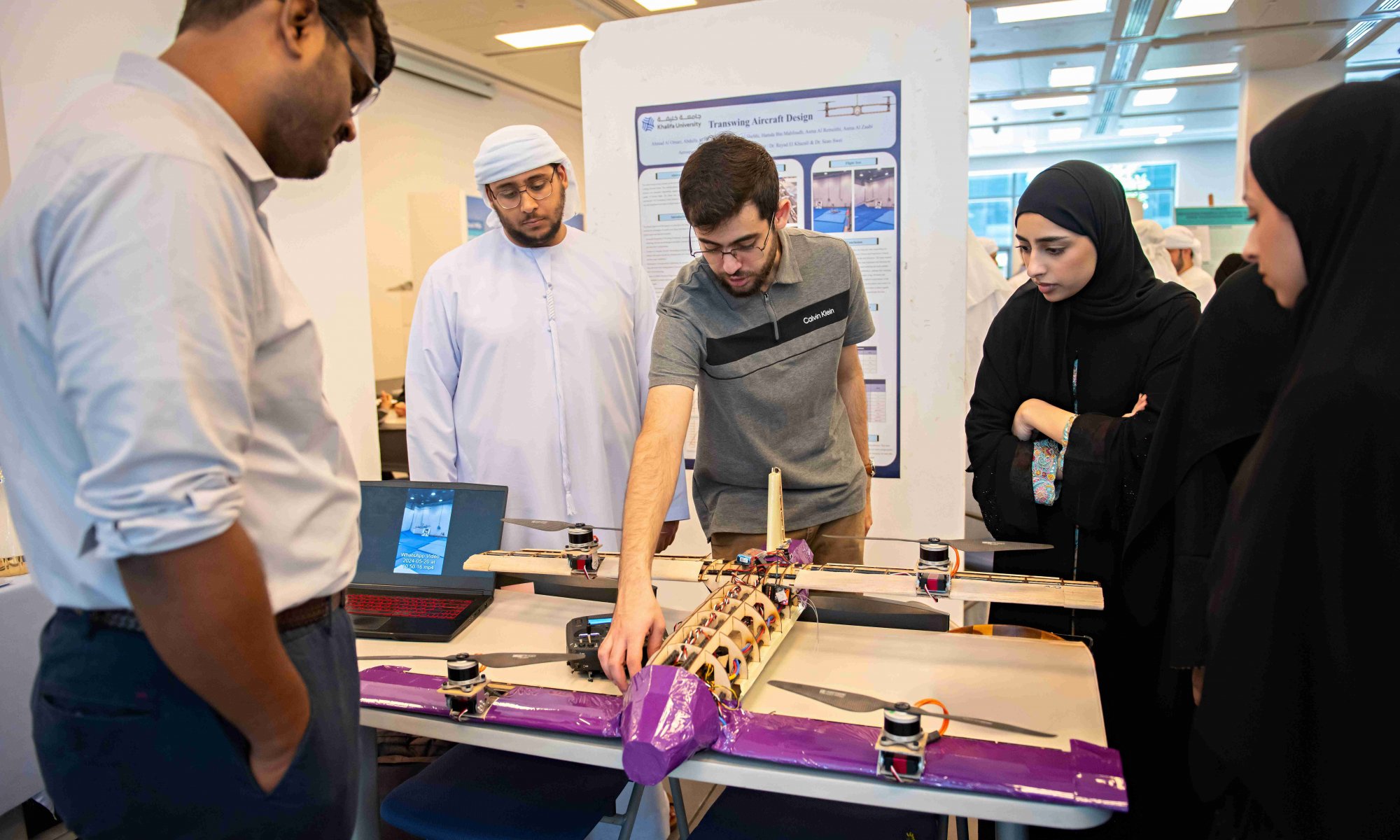
Khalifa University of Science and Technology today announced a total of 50 innovative senior design projects from several disciplines were showcased to various stakeholders on Khalifa University Innovation Exhibition 2024, an annual exhibition that acknowledges the creative excellence of senior graduating students.


The wide array of senior design concepts displayed at the Khalifa University Main Campus included areas of engineering and sciences such as electrical engineering and computer science,  biomedical engineering, management science and engineering, mechanical and nuclear engineering, and civil and environmental engineering and aerospace engineering. 


Professor Sir John O’Reilly, President, Khalifa University said: “The sheer scale of innovation and creativity of nearly 50 senior design projects displayed on Innovation Exhibition 2024 validate the status of Khalifa University as a compelling choice for scientific discovery and learning. The projects also demonstrate the research and analytical skills of our engineering faculty and students to find alternative methods for addressing pressing societal challenges, by designing and refining existing devices or methods, and constructing working prototypes to effectively frame problems and resolve them through meaningful solutions.”  


Biomedical engineering projects included cognitive training games with wearable tremor monitoring devices for Parkinson’s patients; smart home monitoring; integrated multi-omics analyses of autoimmune disorders in Emirati population; wearable photonic based sensors for upper limbs rehabilitation monitoring and intelligent systems assisted physical therapy and rehabilitation systems. 


Some of the Electrical Engineering and Computer Science projects included a Vision system targeting autonomous cars for real-time object detection; Improving the efficiency and drive range of existing electric bicycles; Building a forensic investigation system; Smart eco-friendly chamber for sustainable plant growth and water harvesting; Augmented Reality game for teaching UN sustainability goals to young school kids.


In addition to Mechanical and nuclear Engineering projects, Management Science and Engineering projects, included Blockchain applications for improving healthcare supply chain and logistics; Application of Lean Six Sigma in inventory optimization at Abu Dhabi Distribution Company (ADDC); Simulation and design of electrical bus system at Khalifa University; and Simulation design and analysis of metro station. Some of the Civil and Environmental Engineering projects included Design of an origami-inspired civil structure; and Sustainable asphalt pavements, while the Aerospace Engineering projects like the Design of a Radio Controlled (RC) aircraft, Robotic sorting of airplane engine blades, Remote sensing CubeSat for climate change impact assessment, electric Vertical Take-Off and Landing (e-VTOL) last mile delivery system, and an experimental rig for aerodynamic testing were also on display.


Clarence Michael
English Editor – Specialist
20 May 2024

‘We are helpless’: Asia struggles to cope with punishing heatwave

From Sri Lanka to Thailand, a spring surge in temperatures has made life intolerable for hundreds of millions


“It feels like you’re at the wrong end of an air conditioner,” said Franco Malcampo, from Davao City in the Philippines, which is in the grip of a punishing heatwave.


His daughter, who is asthmatic, takes a desk fan to study in a sweltering classroom at school, but it merely blows hot air in her face.


Franco’s family have air conditioning at home, which has to be cranked up full from lunchtime. “Our electric bill has gone up,” he says, which squeezes his sales executive salary.


Manila, the sprawling capital of 15 million, hit a record 38.8ºC on April 27. And it was so hot last week that big cats in the zoo were given “bloodsicles” to suck on to avert heat stroke.


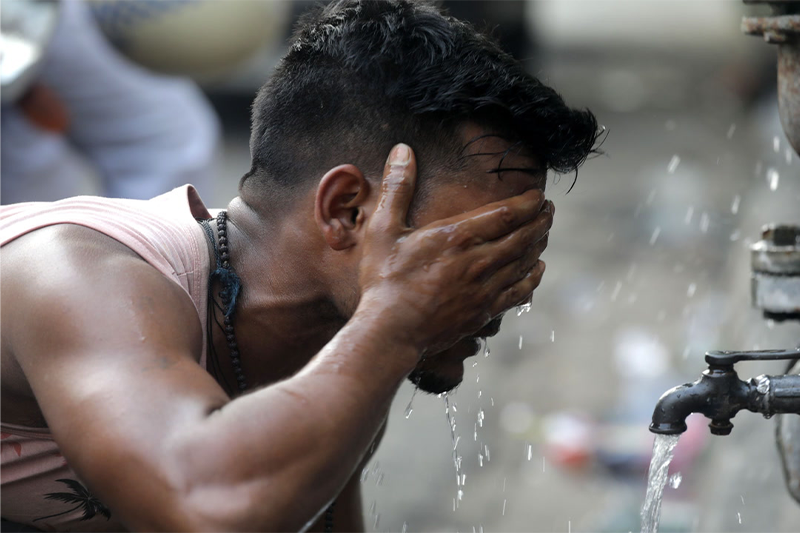
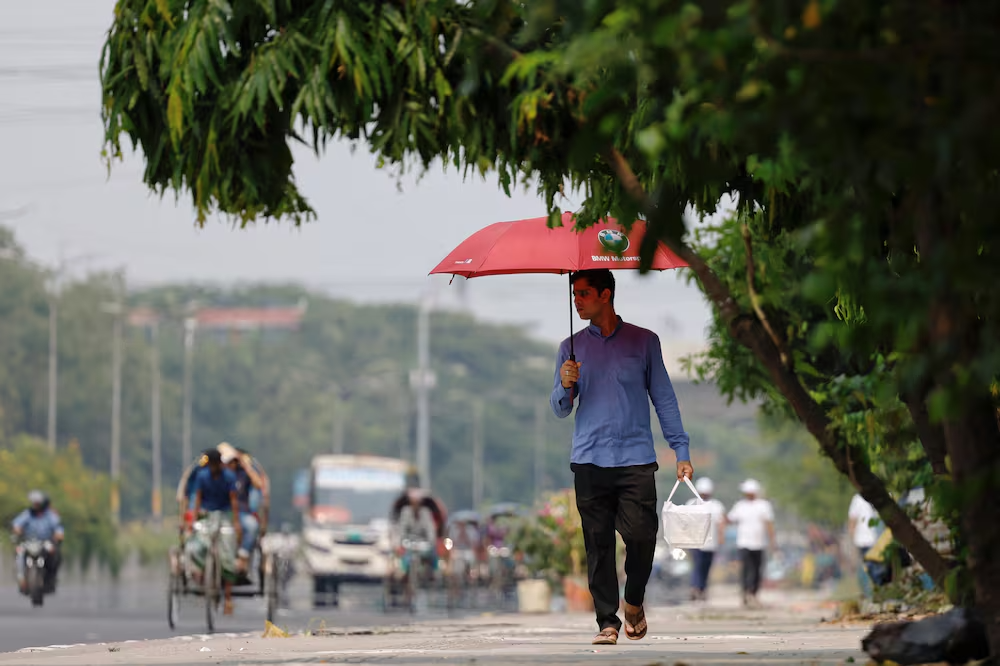
From Sri Lanka in the west to Thailand and the Philippines in the east, Asia has been subject to a merciless heatwave that has outdoor workers collapsing and residents flocking to malls for relief.


April and May are the hottest months for much of the continent – but this year many countries are breaking records.


“It is extremely hot. I am sweating profusely but I am helpless,” Mahesh Solanki, who sells tea at a stall in Gujarat – where it was 41ºC on Thursday – told The National.


“I have to work to make ends meet.”


In Bangkok, the world’s most visited city, the mercury was in the mid-30s, with 70 per cent humidity and daily thunderstorms this week.


Even for Thais used to equatorial conditions, it was “absurdly hot”, one resident told The National.


“Families have flocked to shopping malls to take advantage of their air conditioning,” he said.


“Most people spend very little time outdoors.”


Solutions big and small


Scientists warn these super hot spring and summer temperatures are here to stay – and all of the evidence points to climate change as the cause.


Ramit Debnath, an assistant professor at the University of Cambridge, who studies the climate in the subcontinent, said there was now a consensus that measures needed to be taken to adapt to a warming climate.


“We’re now at the stage where a lot of things have to be viewed from the lens of climate adaptation, especially at the urban and city level,” Prof Debnath said.


At a local level, shelters to offer shade from the sun, reflective building surfaces and increases in urban tree cover can reduce the impact of extreme temperatures.


And at the top level, governments must do far more to meet targets on emissions.


“The stress is on trying to build shading infrastructure and getting the message out that heatwaves are getting real, so prepare yourself,” he said.


As another example of how people can cope with or adapt to heatwaves, he said that some schoolchildren in India were being reminded to drink water every 30 minutes.


“And usual government guidelines are don’t leave the house unless it’s extremely important,” he said.


Other measures, he said, included adding more trees or water features to urban areas, as these can reduce temperatures.


Bob Ward, policy and communications director at the Grantham Research Institute on Climate Change and the Environment, part of the London School of Economics, said painting buildings white to reflect the heat was recommended.


“Heatwaves are growing in intensity and frequency around the world,” Mr Ward said. “They’re particularly dangerous in those regions already prone to extreme heat. Even healthy people are in danger from the temperatures we see.”


India, except in the Himalayan states in the north, has recently witnessed temperatures between 38ºC and 40ºC. The capital, Delhi, sizzled at 42ºC – the hottest day this season – on Tuesday.


The national weather agency warned of intense heatwaves in the state of Rajasthan, Gujarat and Madhya Pradesh this week.


According to a study in The Lancet, the annual number of heat-related deaths among over-65s in India between 2017 and 2021, an average of 31,000, was 55 per cent higher than it was between 2000 and 2004, when the annual figure was 20,000.


At least eight people were killed in April due to heatwaves in the country, according to media reports.



Millions of voters have been casting their ballots in peak temperatures as India holds a seven-phase election for its lower house of parliament.


Last month, Transport Minister Nitin Gadkari fainted while campaigning in western state of Maharashtra.


The Election Commission of India issued an advisory asking voters not to go out during the hottest part of the day, and has made arrangements for drinking water and fans at polling booths.


Bangladesh, which typically receives around 130mm of rain in April, had almost none this year as the heatwave broke the record of 76 years.


At least 10 deaths were reported across the country last month due to heatstroke.


The temperatures last week were hovering at 43ºC, with authorities advising people to not venture out in the sun.


High temperatures have been baking parts of Sri Lanka, with the mercury on the island nation rising to 39ºC, causing the national meteorological department to issue an “extreme caution” heat advisory.


“There have been a few hospital admissions, mainly due to fainting, headaches and dehydration,” Kasun Nupearachchi, a Colombo-based software engineer, told The National.


“I am trying to keep cool by using air conditioning or a fan, staying hydrated with water and planning ahead by cancelling or rescheduling activities for the coolest part of the day.”


El Nino effect looms


Dr Diana Francis, head of the Environmental and Geophysical Sciences Lab at Khalifa University in Abu Dhabi, said the world’s climate is currently being influenced by the El Nino weather system.


During an El Nino phase, warmer surface temperatures in the Pacific Ocean cause the climate to be warmer, while in the opposite La Nina system, they tend to be cooler.


She said that climate change was also partly responsible, as Asia has experienced a trend in which heatwaves are becoming more common and lasting longer.


“Attribution studies have found that this is linked to global warming and, more specifically, to the formation of stagnant heat domes over the continent,” Dr Francis said.


She said many big cities were facing combinations of high temperatures and humidity, exacerbated by the urban heat island effect, making them “uncomfortable to live in without cooling systems”.


Mr Ward warned that there was no respite in sight, with continued increases in temperature inevitable over the coming years.


“Unfortunately it’s locked in for the next two decades, at least. We’re going to see things get worse,” he said.


 

UAE temperatures rising faster at night than during the day, researchers find

Increased atmospheric moisture levels are partly responsible for the trend, a new study indicates


Climate change is causing temperatures in the UAE to increase more during the night than during the day, a new study has found.


The scientists behind the research have also warned that extreme rainfall events in the country are going to become more common.


Published in Nature Scientific Reports, the findings are the latest to highlight how global warming is likely to make the region’s climate more extreme.


“Higher night-time temperatures will likely further exacerbate the mugginess in a region where the combination of heat and humidity at times exceeds the threshold for human habitability,” the paper states.


Night-time temperatures are going to increase faster than those during the day because, with global warming, low-level cloud cover is increasing, said Dr Diana Francis, an assistant professor at Khalifa University in Abu Dhabi and the first author of the study.


Average monthly surface air temperature and rainfall in UAE (1991-2020)


‘Ultra-extreme heatwaves’


As temperatures increase, evaporation becomes stronger, which results in greater moisture content in the atmosphere.


The paper warned that this will “promote more extreme precipitation events”, raising the prospect that heavy rains of the kind that caused severe flooding in the UAE will happen more often.


rlier this month there was severe flooding after some parts of the UAE received more than 250mm of rain in a 24-hour period, the most in the country’s history.


Extreme rainfall events in countries located in the current subtropics are expected to be on the rise, both in frequency and intensity, due to global warming,” Dr Francis said.


The paper also indicates that the size of arid areas in the Mena region are set to continue increasing, in part because of climate change.


“The arid and semi-arid regions over northern Africa and south-west Asia have been expanding in the last several decades with their impacts aggravated by the rapid population growth and they are likely to become even more extreme in a warming climate,” the paper said.


Numerous researchers have analysed climate change trends in the Middle East and they have identified a number of trends.


Overall in the Middle East, temperatures are on average rising faster than they are in the rest of the world, according to Prof Jos Lelieveld, a climate researcher at the Max Planck Institute for Chemistry in Germany and The Cyprus Institute.


Prof Lelieveld, who was not part of the latest study, said a key factor for this is that, with much of the region being desert, there is little moisture in the soils.


Other regions typically have higher levels of soil moisture, and this absorbs solar energy when it changes from liquid to gas during evaporation, which limits temperature increases.


Another trend, evident in the region as a whole, he said, is that temperatures are rising more in summer than they are in winter.


“The temperature trend is really fast in the summer,” Prof Lelieveld said. “Overall the temperature trends are much faster than in most other parts of the world.”


Prof Walter Leal, a climate change researcher at Hamburg University of Applied Sciences in Germany and Manchester Metropolitan University in the UK, described desertification, which is partly driven by climate change, as “a significant environmental concern with far-reaching impacts”.


These impacts include the loss of arable land, which reduces food production and can lead to food insecurity, he said, especially in regions that are already vulnerable.


“Also, as fertile land turns into desert, the availability of freshwater resources diminishes,” Prof Leal said. “This can exacerbate water scarcity, affecting not only human populations but also the flora and fauna that depend on these water sources.


“Moreover, desertification can lead to the loss of habitats for many species, reducing biodiversity.”


Desertification can also force people to leave their homes, Prof Leal said, potentially causing overcrowding in urban areas and increasing the risk of conflict over resources.


“It is important that carbon emissions peak and then significantly decline in the coming decades to mitigate the worst impacts of climate change,” Prof Leal added.


Khalifa University Ranks 27th Worldwide and Top in MENA in THE Young University Rankings 2024

Khalifa University of Science and Technology today announced it is ranked 27th worldwide and top in the MENA region in the Times Higher Education (THE) Young University Rankings 2024, moving 22 slots higher from the 49th place in last year’s ranking.


In the 2024 ranking, there has been an increase in the number of universities listed from 605 in 2023 to 673. Additionally, there are 499 institutions with ‘reporter’ status, indicating that they provided data but did not meet the THE eligibility criteria to receive a rank. 


The THE Young University Rankings lists the world’s best universities that are 50 years and younger and utilize the same 13 performance indicators as the flagship THE World University Rankings. Cementing its position as a leading educational institution on a global scale, Khalifa University also remains top in the UAE and 40th in Asia in the THE Asia University Rankings 2024. The universities are judged across all their core missions – teaching, research, knowledge transfer and international outlook – to provide the most comprehensive and balanced comparisons available.


Alisha Roy
Science Writer
15 May 2024

Khalifa University to Organize 2024 Graduation Ceremony on 29 May 

Under the Patronage of His Highness Sheikh Hamed bin Zayed Al Nahyan


Under the patronage of His Highness Sheikh Hamed bin Zayed Al Nahyan, Chairman of the Board of Trustees of Khalifa University of Science and Technology, the 2024 graduation ceremony will be organized on 29 May at the Abu Dhabi National Exhibition Center (ADNEC).


The event happening in the extended Year of Sustainability 2024 will honor the success of the University’s 826 students from various undergraduate, graduate, and PhD programs, including the second cohort from the College of Medicine and Health Sciences (CMHS). 


In all, 61 students will receive their PhD degrees, while 244 will receive their Master’s at the graduation ceremony. A total of 498 students will be receiving their bachelor’s degrees, making the overall total numbers to 826 including the 23 medical graduates. Out of this, 403 are male students and 423 females (approximately 51%). Marking the extended Year of Sustainability, Khalifa University has the distinction of graduating two Master of Science students from the Water and Environmental Engineering program and three students from the Sustainable Critical Infrastructure program.


Professor Sir John O’Reilly, President, Khalifa University said: “Khalifa University is delighted to announce our graduation ceremony scheduled for May 2024, a momentous occasion marking another significant milestone in our steadfast commitment to fostering the next generation of science, engineering, and technology leaders addressing global environmental challenges and sustainable practices. This celebration of our students’ achievements also reflects the deep commitment of our expert faculty, researchers, and students and their relentless pursuits of academic excellence. It is a testimony to Khalifa University’s drive for talent development to fuel innovation toward shaping the future knowledge economy of the UAE.”

Alisha Roy
Science Writer
13 May 2024


Khalifa University Researchers Win Top International Award at Prestigious Nuclear Thermal Hydraulics CFD Competition in US

High-Performance Computing Enables Khalifa University Team to Successfully Run Complex Simulations


Khalifa University’s powerful high-performance computing (HPC) infrastructure enabled researchers Prof. Abdallah Sofiane Berrouk, Professor, Mechanical and Nuclear Engineering,  Theme Leader, Research Center for Catalysis and Separation (CeCaS), and Ahmed Mongy Alatyar, PhD Researcher, to win the First Annual American Society of Thermal and Fluid Engineering (ASTFE) Nuclear Thermal Hydraulics CFD Competition in the US.


Organized by the ASTFE and Framatome, an international leader in nuclear energy, the competition involved a complex challenge for developing the most accurate Computational Fluid Dynamics (CFD) model for the multi-jet Gas-mixture Dome (MiGaDome) facility installed at the University of Michigan. The CFD competition was part of ASTFE 2024 organized earlier at Oregon State University, with 12 CFD research groups participating. Out of these, five groups were shortlisted to present their work at the 9th Thermal and Fluids Engineering Conference, 2024 (TFEC-ASTFE 24), and the Khalifa University team won the award.


A panel of judges conducted a comprehensive comparison of the CFD models and the experimental data from the MiGaDome. According to the judges, the Khalifa University team’s CFD model exhibited the best correlations on almost all the studied parameters and the energy consumption, earning them the top spot in the competition.


HPC was crucial in allowing the team to successfully run their complex CFD simulations, handle the large data volumes, and quickly debug their models, enabling them to obtain the required results within the competition’s tight timeframe. The CFD model got the best correlations with the experimental data while consuming the minimum computational energy, demonstrating the best effective model fitness.


The MiGaDome facility at the University of Michigan is designed to study the fluids-mix inside large enclosed spaces, an important factor for nuclear reactor designs. The data from experiments conducted at this facility was used to test the accuracy of the CFD models submitted by the competition participants, without the participants knowing the experimental results ahead of time.


Moreover, the teams built the CFD models without the ability to simply guess or trial-and-error their way to a solution. All participants only discovered how well their results matched the experimental data when the models were presented at the conference, making the competition even more rigorous, as the teams had to rely solely on their modeling expertise to try to predict the outcomes.


The achievement is expected to have a significant impact on the future of nuclear thermal hydraulics research in the UAE as advanced 3D CFD simulations have proven to be indispensable for making reliable predictions across a wide range of operating conditions and safety scenarios in the nuclear energy field. These powerful 3D models can provide much more cost-effective solutions for tackling the complex thermal-hydraulic analysis challenges that the traditional one-dimensional computer models struggle with as they often lack the necessary detail and accuracy to fully capture important thermal-hydraulic phenomena in nuclear reactors.


Prof. Abdallah Sofiane Berrouk said: “The success from this prestigious competition underscores Khalifa University’s commitment to advancing nuclear engineering research and its potential to contribute to the future of the peaceful nuclear energy industry in the UAE. This achievement demonstrates the University’s cutting-edge research infrastructure capabilities in helping establish the UAE’s knowledge base for thermal-hydraulic multiscale simulations with the dual purposes of enhancing the current reactors’ safety and operations reliability, and accelerating the deployment of future advanced nuclear reactors. I am hopeful this success will encourage more support for Mechanical and Nuclear Engineering projects from across the academic and research spectrum.”


The Energy-Water Nexus and a New Paradigm for Integrated Resource Management

Incorporating demand response programs could provide a solution for effective energy management


As the world’s energy system switches from more than 200 years of fossil fuel dominance to renewable energy sources, there’s a growing need to integrate renewable energy systems to the traditional power grid and the way we consume energy. Over the past decade, as technology has advanced, the prices for wind and solar generation have plunged with solar now the cheapest form of electricity generation in history. For the Gulf, a region bestowed with plenty of sunlight, renewables are a sensible way forward.


But the proliferation of distributed energy resources necessitates the radical transformation of how power systems operate, particularly since managing the impact of integrating renewable energy sources is a tricky task. 


The energy available from sun, wind, waves, and tides varies in ways which may not match variations in consumer energy demand. Assimilating these fluctuations can affect the operation and economics of electricity networks and markets. Much like the weather, electricity consumption can be reasonably well predicted, but not controlled. Reacting to demand in traditional fossil fuel power stations is as easy as adjusting supply: burning more fuel to produce steam to spin a turbine to run a generator. Making more electricity from non-renewable resources can happen at the relative push of a button.


Demand response applications can step up here, playing a critical role in shaping the day-ahead scheduling of electricity markets.


A team of researchers led by Dr. Ameena Saad Al-Sumaiti, Associate Professor, from Khalifa University’s Advanced Power and Energy Center (APEC) has developed a model that coordinates the operation of grid-connected water desalination plants and the operation of renewable-rich power systems with demand response options. The team includes Mohamed Elsir, Graduate Research and Teaching Assistant; and Prof. Mohamed Shawky El Moursi,  Director of APEC . Also participating: Ali Taleb Al-Awami from Saudi Arabia’s Interdisciplinary Research Center for Smart Mobility and Logistics. Their simulation results show that their system’s efficiency is enhanced by employing energy flexibility of water desalination, minimizing cost, facilitating the integration of renewable energy sources and smoothing the fluctuation in hourly electricity prices.


Their results were published in Applied Energy, a top 1% journal in the fields of engineering and environmental science.


This innovative approach, featuring hybridized operations of energy storage systems, enhances power system operation and avoids the need for additional peak-load power plants. When everyday consumers need power, it is supplied by renewable sources; but when it isn’t. the energy can still be generated and supplied to desalination plants instead. The goal is to meet water demand and power loads: Desalinated drinking water can be stored much more easily than electricity and it is cost effectively.


The research team also notes that significant attention has been focused on the energy-water nexus and the inter-dependencies between power and water systems. The power and water systems can mutually benefit each other: There’s the potential for water facilities’ responsive electrical loads to offer much-needed flexibility to power system operations. The potential is vast when water systems consume significant portions of a nation’s total electricity consumption.


Models already exist to reduce the curtailment of renewable energy sources during periods of oversupply by co-optimizing the scheduling of both systems in a centralized entity. However, these models can be enhanced with considering the role of demand response.


“Demand response indicates that end-use consumers can be motivated to positively change their electricity consumption based on a coordination program or tariff,” Dr. Al-Sumaiti said. “This tariff is influenced by the conditions of the electricity market. Demand response applications could reduce the demand peak and price volatility of the market.”


Demand response involves shifting or shedding electricity demand to provide flexibility in power markets, helping to balance the grid. In a smart grid, demand response programs can manage desalination plants’ energy consumption. Given the energy-intensive nature of desalination (and reverse osmosis is one of the least energy-consuming methods), running these facilities during times of low demand and therefore lower energy prices, can make this process more cost-effective and less taxing on the overall power grid.


Sounds simple, but implementing demand response and day-ahead scheduling in a smart grid is a complex task that requires advanced forecasting techniques and optimization algorithms. For everything to work, accurate forecasting of the next day’s energy demand, energy prices, and renewable energy-generation potential are essential. The next step is to plan the desalination plants’ operation accordingly, scheduling high-energy processes for the most advantageous times.


The KU research team took a novel approach, coordinating the day-ahead operation of desalination plants within the operation of power systems, incorporating a demand-response bidding framework. The teams’ model includes a centralized scheduling entity to organize the operation of both power and water system based on the received demand-response offers and the operational constraints of desalination plants. In addition, the proposed structure considers the energy flexibility of these plants and their associated components, such as water storage tanks, to influence system flexibility without compromising the reliable supply of water services.


In this context, the “offers” or “bids” refer to proposals made by demand-response aggregators to the centralized entity representing the willingness and capacity of their customers to reduce their load in a variety of ways. These offers are characterized by specific parameters related to each demand-response option and can include things like the amount of power that can be reduced, the price required for that reduction, and certain constraints or limitations. Each aggregator represents a group of customers that can contribute to demand response.


Customers could reduce their energy usage overall, without shifting this reduction to other times or shift their energy usage from peak hours to off-peak hours. Those with their own power generation sources (such as solar panels) can reduce the need for grid power, while those with energy storage can charge their batteries during off-peak hours and then discharge during peak hours. For water desalination plants, operation can be adjusted to reduce and shift power consumption in response to electricity prices.


Once all the bids are in, the information is used to clear the day-ahead electricity market. This involves scheduling the generation and consumption of electricity for the next day, aiming to balance supply and demand in the most cost-effective way.


The research team’s framework, formulated as a mixed-integer linear programming problem, offers a functional solution to demand response due to its high solution efficiency and significant computational time savings. The simulation results demonstrate that more flexible options can be made available and available energy resources can be scheduled to minimize system operation costs, maximize the harvesting of renewable energy sources generation, and reduce peak demand in the day-ahead energy market. Plus, the model substantially reduced electricity price volatility and increased revenues for aggregators.


“We recognize, however, that the scheduled operation of water desalination plants may not necessarily be the optimal solution here,” Dr. Al-Sumaiti said. “Future research could expand the operation model to handle more dynamic characteristics, such as varying hydraulic and osmotic pressures applied on the reverse osmosis membrane, as well as incorporate models for water and hydrogen networks. This would further enhance the adaptability and effectiveness of our proposed coordinated operation model, potentially providing even greater benefits for power systems and sustainability initiatives.”


The work has the potential to support the UAE’s strategic economic goals by enhancing the overall effectiveness of managing energy and water resources within a smart grid framework focused on demand-side management.


Jade Sterling
Science Writer
8 May 2024