

Breakthroughs in New Materials and Techniques to Harness the Power of the Sun

Dr. Ammar Nayfeh describes the innovative research taking place at Khalifa University to drive down costs and increase efficiency of solar cells

By Dr. Ammar Nayfeh

While harnessing the power of the sun is nothing new – Alexandre Edmond Becquerel discovered the photovoltaic effect in 1839 whereby electricity is generated from sunlight – finding increasingly better ways to convert an ever larger share of sunlight into electricity has become arguably one of the most important research challenges of our time.

When first discovered, photovoltaic power was very inefficient. Even when the first commercial solar photovoltaic panel was unveiled in 1954, it converted just 6 percent of the energy from sunlight to electricity. The first solar panels used selenium, but researchers in the 1950s realized that semiconducting materials like silicon were more efficient. The only problem? Silicon solar cells were expensive to produce—and the 6 percent efficiency rate was achieved with a silicon solar cell.

We have made significant progress over the past 50 years. Today, the most efficient solar panel on the market has an efficiency rating of 22.2 percent. But as solar power becomes responsible for delivering a large and exponentially growing fraction of the world’s energy needs, improving efficiency even further is critical.

Solar power presents a problem of two halves: getting high-efficiency cells but at a low cost. Khalifa University, through its flagship research institute Masdar Institute, has long been at the forefront of research into solar technology and its projects have been solving this problem.

As Associate Professor of Electrical Engineering and Computer Science at Khalifa University, I lead on a number of projects aimed at advancing new materials and devices to improve solar cell efficiencies.

One such project was the result of a collaboration between Khalifa University and the Massachusetts Institute of Technology (MIT). We developed an innovative multi-junction solar cell that leverages a unique ‘step-cell’ design approach and low-cost silicon using gallium arsenide phosphide-based materials. The new step-cell combines two different layers of sunlight-absorbing material to harvest a broader range of the sun’s energy and benefits from a novel, low-cost manufacturing process.

Former Khalifa University PhD Student and now professor at University of Dubai, Dr. Sabina Abdul Hadi, provided the foundational research for this step-cell as part of her doctoral thesis. She realized that when the top gallium arsenide phosphide layer completely covered the bottom silicon layer, the lower energy photos were absorbed by the silicon germanium—the substrate on which the gallium arsenide phosphide is grown—thus limiting solar cell efficiency. By etching away the top layer and exposing some of the silicon layer, she was able to increase the efficiency and add a new degree of freedom in the design.

The step cell design allows for cheaper fabrication and, while there is still a lot of research and development that needs to be undertaken prior to commercialization, innovations like this are an exciting part of a rapidly growing research area and industry.

In traditional silicon-based PV cells, only some of the sun’s wavelengths from the visible light spectrum are absorbed and converted into electricity. Much of the research being done by me and my research group is focused on exploring how to use advanced materials to access the full spectrum of solar energy.

For example, the use of silicon and gold nanomaterials on solar cells was investigated with two KU MSc graduates, Kazi Islam and Farsad Chowdhury. We demonstrated that by using nanomaterials on the surface of solar cells, we can enhance the solar cells’ light trapping properties. The nanoparticles increase a solar cell’s ability to absorb sunlight by increasing the amount of surface scattering or by having the ability to absorb photons and re-emit them at a lower energy the solar cell can use.

In another project with Dr. Nazek El Etab, PhD graduate from KU and current Postdoc at KAUST in Saudi Arabia, we used atomic layer deposition (ALD) – an advanced method of coating a material by depositing it in thin films, one atomic layer at a time – to grow zirconium dioxide and zinc oxide nanomaterials. We layered the nanomaterials on a solar cell to enhance efficiency.

With former Khalifa University PhD student Dr. Aaesha Alnuaimi, currently Head of Solar Research at Dubai Electricity and Water Authority (DEWA), we fabricated graphene-silicon solar cells by introducing a thin layer of a high dielectric constant material, which is an insulator that becomes polarized when an electric field is applied, also using the ALD method. The efficiency of the graphene-silicon solar cells quadrupled with the interlayer relative to the same cells without the interlayer.

Developing new methods to make high-efficient solar cells affordable is a major focus of my research. I worked with Dr. Ghada Dushaq, PhD graduate from KU and current Postdoc at New York University Abu Dhabi, to develop a low temperature germanium growth method for gallium arsenide using plasma-enhanced chemical vapor deposition (PECVD). Germanium provides a crystal lattice compatible with that of gallium arsenide and so the germanium layer can be used as the bottom cell in a multi junction solar cell, or as a virtual substrate on which to grow gallium arsenide. Gallium arsenide is a semiconductor material that allows more efficient photon absorption and high output power density than most materials. In a current collaboration with Stanford University, we recently demonstrated an important breakthrough in the growth of gallium arsenide directly on a low-temperature germanium layer.

More recently, Khadija Jumaa, a 2019 KU MSc graduate, presented a paper at the IEEE Photovoltaic Specialist Conference (PVSC) conference in Chicago in June 2019 on the most efficient way to grow amorphous silicon, which are used in thin-film silicon solar cells, using a PECVD growth method. In this work, she studied how different temperatures affect the growth of amorphous silicon using PECVD, and determined the optimal temperature required to grow amorphous silicon, which will contribute towards finding even cheaper and more sustainable ways to develop amorphous silicon for lower-cost solar cells.

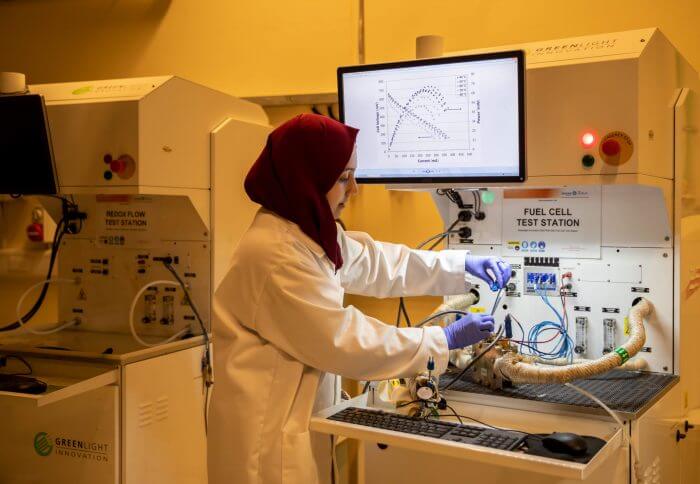
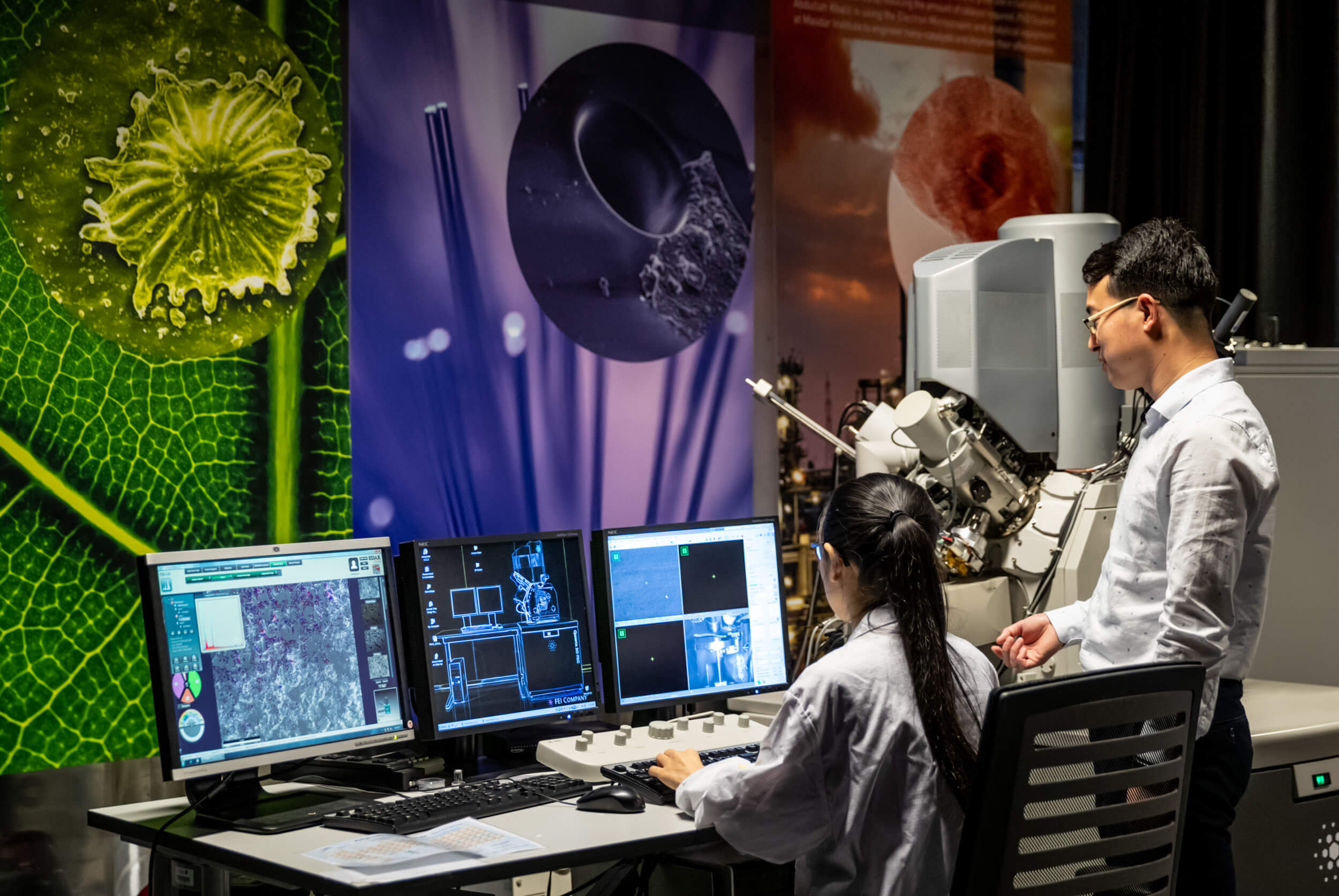
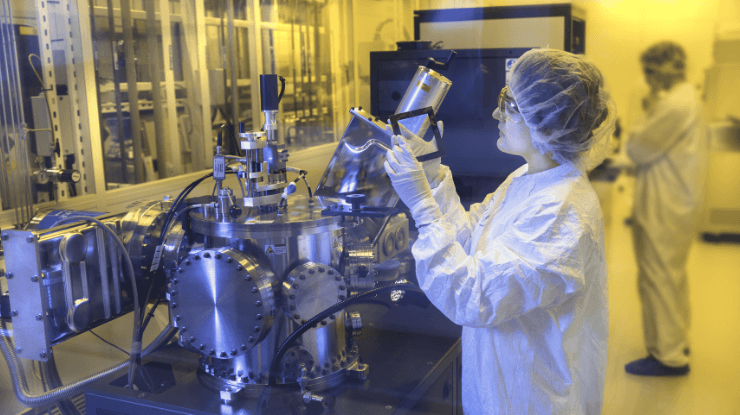
All this advanced material based solar research work leverages the outstanding clean room and testing facility we have in the UAE at the Khalifa University Masdar Institute campus.

As the team from Khalifa University works towards developing new materials and devices for high-efficiency solar panels to global energy production, it is inspiring and encouraging to know that research like this in the UAE can lead to an avalanche of improvements down the line, creating potential for a technological leap in the industry, at a time when the world is looking to renewable energy to power an increasingly energy-hungry planet.

Dr. Ammar Nayfeh is Associate Professor of Electrical Engineering and Computer Science at Khalifa University of Science and Technology
New Low-Cost Catalysts for Cleaner Energy

First PhD student from KU’s Center for Catalysis and Separation (CeCaS) delivers two talks at International Conference in Spain on her pioneering catalysis research


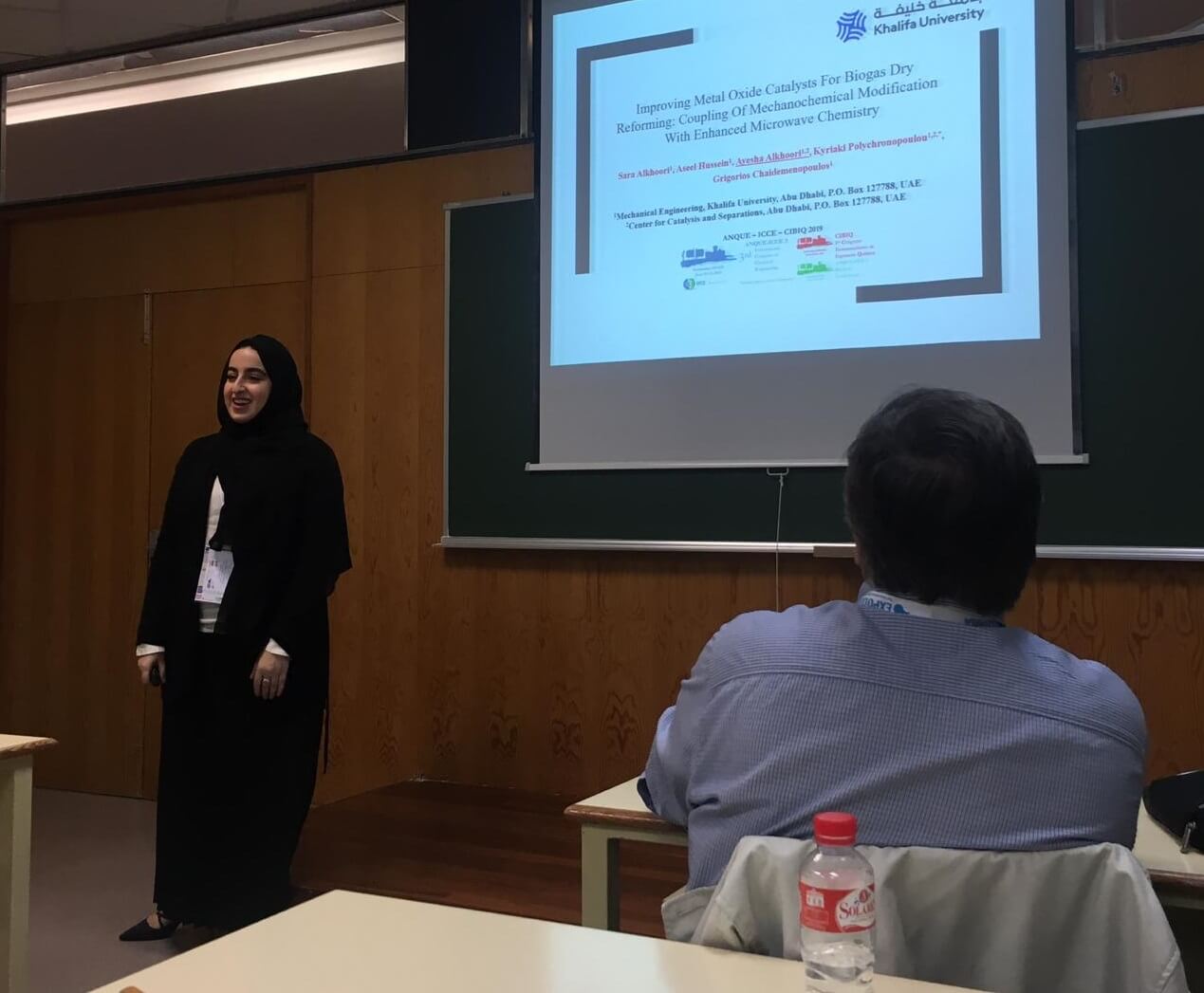
KU PhD student Ayesha AlKhoori delivered two talks on her pioneering research in the field of catalysis and separation at the 3rd ANQUE-ICCE International Congress of Chemical Engineering, held in June in Santander, Spain. Alkhoori is the first PhD student to study under the Petroleum Institute’s Center for Catalysis and Separation (CeCaS) at Khalifa University. Working under Dr. Kyriaki Polychronopoulou, Associate Professor of Mechanical Engineering and Director of CeCaS, Alkhoori is helping to advance catalysis as a means to produce cleaner, more efficient, and economically viable fuels and chemicals.


In her first presentation, titled “Improving Metal Oxide Catalysts for Biogas Dry Reforming: Coupling of Mechanochemical Modification with Enhanced Microwave Chemistry,” AlKhoori described a research project aimed at developing catalysts that can convert carbon dioxide and methane into syngas – a process known as ‘dry reforming of methane.’ Syngas is a mixture of hydrogen gas and carbon monoxide that can be used as a starting material for producing valuable chemicals under the proper catalytic reaction conditions.


While the environmental and economic benefits of dry reforming of methane reactions are very high, Alkhoori explains that the main problem hindering the commercialization of this technology is the issue of carbon formation and sintering on the catalysts, which causes deterioration of the catalyst’s activity.


In this project, Alkhoori and Dr. Polychronopoulou are working with PhD student Aseel Hussein and MSc student Sara AlKhoori to synthesize a catalyst made from copper and the rare earth metal cerium, using a very fast synthesis method that uses microwave energy rather than typical heating.


“One of the main obstacles of the dry reforming of methane reaction is the coke deposition on the catalyst, which causes deterioration of the catalytic activity,” AlKhoori explained. She believes that one way to tackle the coke depositions, which is the formation carbonaceous deposit on the catalyst’s surface, is to control the particle size of active material on the catalyst.


To do this, the researchers prepared the copper and ceria-based catalysts, and then modified them using different treatments.


“Traditionally, noble metal catalysts (based on platinum and gold) boost the reaction in terms of activity and stability. However, their high cost excludes them from applications of dry methane reforming. That is why we are developing catalysts with copper, a transition metal, which has high catalytic activity and selectivity at a lower cost, which makes them good candidates for the reforming reaction,” AlKhoori said.


The project is ongoing, Alkhoori explained, as her team continues to work on optimizing the catalytic system to further reduce the negative coking effect.


In her second presentation, titled “Copper-Ceria Nanomaterials as Catalysts for Low Temperature H2 Purification and CO Capturing in PEMFCs,” AlKhoori discussed a project she has been working on for over three years with Dr. Polychronopoulou. The project aims to overcome the challenge of carbon monoxide poisoning in catalysts used in proton exchange membrane fuel cells (PEMFC), a type of low-temperature hydrogen fuel cell. In a typical hydrogen fuel cell, catalysts (usually made from platinum) split hydrogen gas into positively charged protons and negatively charged electrons. The electrons are used to generate electricity while the protons pass through a membrane to combine with oxygen gas at the opposite end of the fuel cell to create water.


A major challenge faced by hydrogen fuel cells today is carbon monoxide “poisoning” in catalysts. Carbon monoxide is found in commercial hydrogen gas – the fuel needed to make hydrogen fuel cells. When too much carbon monoxide collects on the catalyst, the catalyst is unable to carry out the reactions needed to split the hydrogen gas.


Alkhoori and Dr. Polychronopoulou have discovered a low-cost method to purify the hydrogen gas by developing a catalyst that oxidizes the carbon monoxide and converts it into carbon dioxide – a gas that does not interfere with the fuel cell. They developed a nanocrystalline catalyst made from copper and cerium oxide (an oxide of the rare earth metal cerium) using a microwave synthesis approach, which successfully converted carbon monoxide into carbon dioxide at low temperatures. Their catalyst is significantly cheaper to develop than traditional catalysts made of noble metals, such as platinum, ruthenium, rhodium, and gold, which means it is a commercially viable alternative to be used in real-world applications to eliminate catalyst poisoning and increase fuel cell efficiency.


The researchers have published five papers on this work, with a sixth currently under review. The papers have been published in Surface and Coatings Technology, Materials Research Bulletin, the Journal of Environmental Chemical Engineering, Molecular Catalysis, and Applied Catalysis A: General.


The ANQUE-ICCE International Congress of Chemical Engineering is organized by ANQUE, the National Association of Chemists and Chemical Engineers of Spain, in collaboration with AQUIQÁN, the Association of Chemistry and Chemical Engineering of Cantabria. The international congress is a reference for researchers in the field of chemical engineering and chemistry applied to the industry. Alkhoori had the opportunity to exchange up-to-date information and connect with researchers and experts from different universities and countries.


Erica Solomon
Senior Editor
5 August 2019

China’s Tsinghua University to Collaborate with KU on Interdisciplinary Research and Innovation

Joint Program to Focus on Clean Energy, Advanced Manufacturing, and Associated Interdisciplinary Research in Materials and Automation

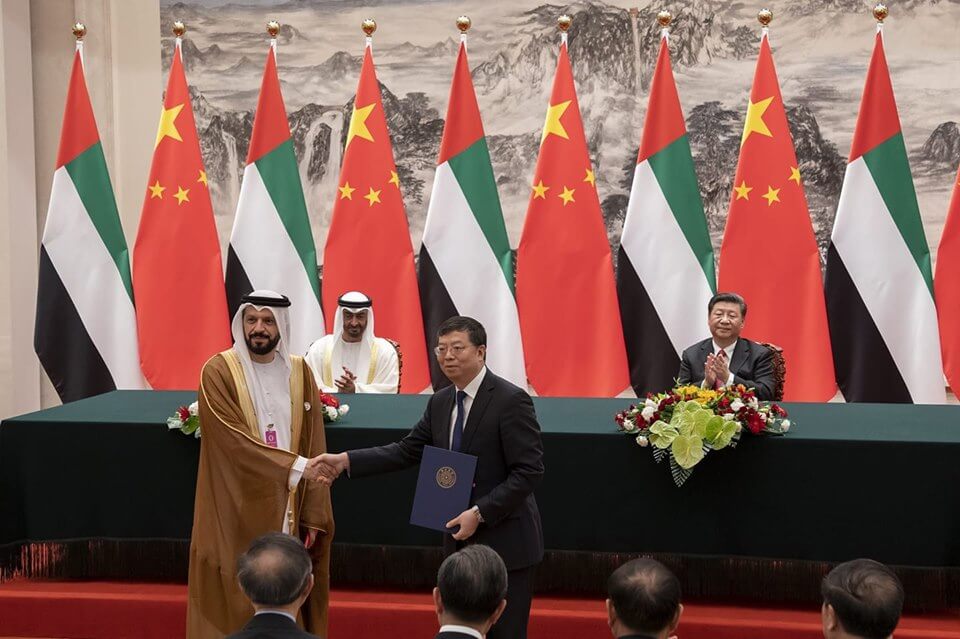
In the presence of His Highness Sheikh Mohamed bin Zayed Al Nahyan, Crown Prince of Abu Dhabi and Deputy Supreme Commander of the UAE Armed Forces, and His Excellency Xi Jinping, President of the People’s Republic of China, Dr. Arif Sultan Al Hammadi, Executive Vice-President of Khalifa University of Science and Technology, and Qiu Yong, President of Tsinghua University, signed a joint research cooperation agreement in China.

The agreement on joint research and innovation program aims to establish a research partnership and develop effective and long-term collaboration through interdisciplinary research and innovation.

The Khalifa University – Tsinghua University joint research and innovation program will have thrust areas in clean energy, including both low-carbon and renewable energy, and advanced manufacturing, including both additive and smart manufacturing. It will also focus on associated interdisciplinary research, particularly on materials and automation. The program is expected to enhance the ongoing industrial capacity cooperation between the UAE and China, while fostering the high-caliber human capital development in the UAE and the Arab region.

The research agreement aims to bring together multidisciplinary scientists, experienced engineers, talented students, industrial partners, and stakeholders to boost the knowledge-based economy and economic diversification of the two countries.

Earlier in December 2017, Khalifa University signed an MoU that covered research in broad engineering fields, with the initial focus on solar and nuclear energy, energy materials and storage, carbon capture, utilization and sequestration (CCUS), and water and environment. It also covered exchange of materials in education, and research, publications, academic information, visitation and exchange of faculty members, researchers and students.

Other interactions continue, reflecting the close ties between the two academic institutions. In September 2018, KU’s Dr. Steve Griffiths, Senior Vice President of Research and Development, held discussions with Dr Bin Yang, Vice President and Provost of Tsinghua University, at the Tsinghua Campus in Beijing. A joint workshop on clean energy witnessed faculty from both universities presenting their research works during the same month.

During October-December 2018, a PhD student from Tsinghua University spent a semester at KU’s Masdar City Campus. While more recently in May 2019, Dr. Bin Yang held talks with Dr. Arif during his visit to Khalifa University.

Clarence Michael
News Writer
1 August 2019

Shanghai-based Academic Ranking of World Universities 2019 Places Khalifa University Top in UAE

Ranking for Several Subjects Reflects Khalifa University’s Strength of Research and Innovation in Science, Technology and Engineering

Khalifa University of Science and Technology has become the top and only university from the UAE to find a berth in the recently announced Shanghai-based Academic Ranking of World Universities (ARWU) listing that includes the 1,000 best universities in the world. In addition, the university has also fared well in some of the ‘Subject Rankings’.
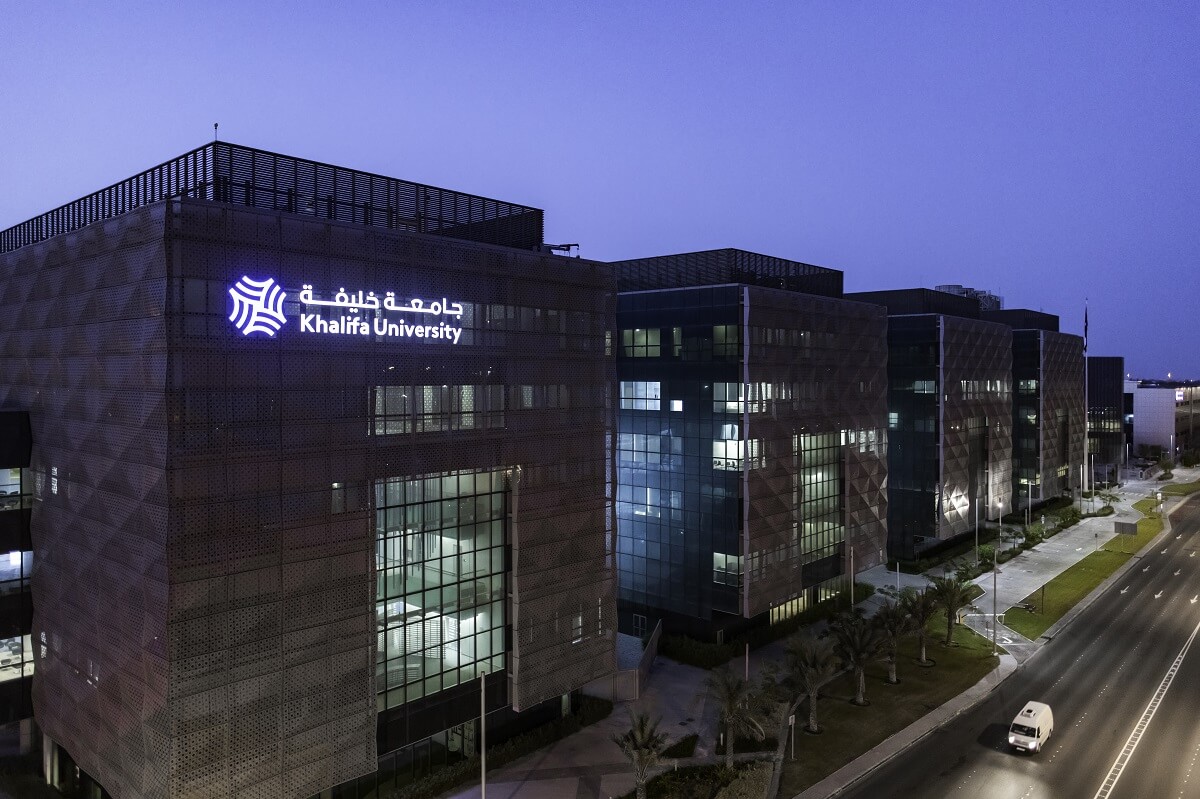
Khalifa University’s ‘Chemical Engineering’ is placed in the 76-100 band, while ‘Mechanical Engineering’ comes in the 101-150 band. The university’s ‘Water Resources’ is ranked within the 151-200 band, whereas both ‘Electrical and Electronic Engineering’ and the ‘Energy Science & Engineering’ are ranked within the 201-300 band.

At the same time, Khalifa University’s ‘Computer Science & Engineering’ and ‘Atmospheric Science’ come within the 301-400 band. The ‘Materials Science & Engineering’, and the ‘Earth Sciences’ are placed in the 401-500 band.

Overall, Khalifa University has been placed in the 701-800 bracket following its exemplary standings in developing and creating intellectual capital through research and innovation in science, technology and engineering areas. So far, the university has more than 70 issued patents and more than 350 invention disclosures. Its research publications include more than 5,250 articles, over 3,780 conference papers, 252 book chapters and 39 books.

Published and copyrighted by ShanghaiRanking Consultancy, the ARWU uses six objective indicators to rank world universities, including the number of alumni and staff winning Nobel Prizes and Fields Medals, number of highly cited researchers selected by Clarivate Analytics, number of articles published in journals of Nature and Science, number of articles indexed in Science Citation Index – Expanded and Social Sciences Citation Index, and per capita performance of a university. More than 1,800 universities are actually ranked by ARWU every year and the best 1,000 are published.

The ARWU International Advisory Board includes world renowned scholars, top policy researchers and higher education leaders from the US, UK, Europe, Canada and Asia, as well as the United Nationals Educational, Scientific and Cultural Organization (UNESCO).

Khalifa University is currently ranked 38th in the Times Higher Education (THE) 2019 Young University Rankings, ranked 11th in the ‘THE Young Universities: millennial universities’, and ranked 28th in the 2019 THE Asia University Rankings. In June 2019, the QS (Quacquarelli Symonds) World University Rankings 2020 placed Khalifa University 268th overall globally the QS (Quacquarelli Symonds) World University Rankings 2020.

Clarence Michael
News Writer
20 August 2019

Media

Welcome to Masdar Institute’s Media Center

In these pages you can view our latest news and press releases, some useful publications, images and videos relating to the work we do here.

If you have any queries for our Communications department, please send an email to: communications@masdar.ac.ae
 

Masdar Institute ‘Open Day 2014’ to Target Enthusiastic Undergraduates and Graduates with Passion for Innovation

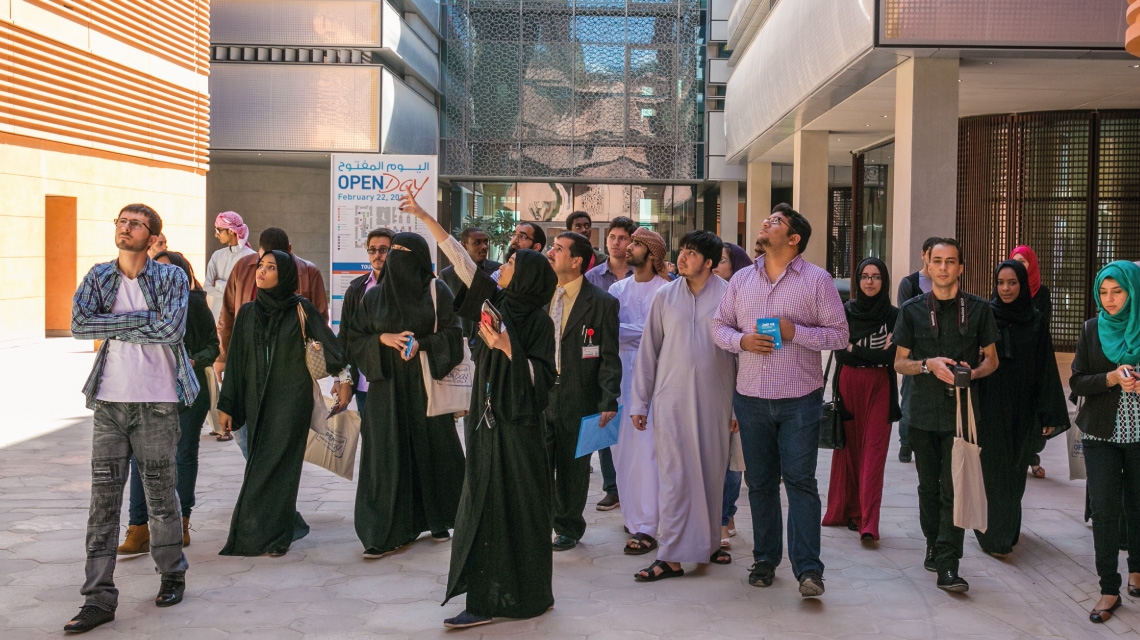
Abu Dhabi-UAE: 19 November, 2014 – Masdar Institute of Science and Technology, an independent, research-driven graduate-level university focused on advanced energy and sustainable technologies, today announced it will be welcoming enthusiastic undergraduate and graduate students keen on becoming the scientists, engineers and innovators contributing to the UAE’s aspirations to be an innovation leader, at its annual Open Day, on Saturday, 22 November, 2014.

Taking place at the Masdar Institute campus in Masdar City, the Open Day provides an opportunity for prospective students to learn more about Masdar Institute’s degree programs and research focus, and how to be a part of this. Masdar Institute offers nine Master’s degrees and an interdisciplinary Doctorate, all in engineering disciplines, with research and focused in important areas that include – renewable energy, transport, education, health, technology, water and space.

The day-long event will inform attendees of Masdar Institute’s holistic academic, research and outreach offerings, scholarship opportunities as well as ‘on and off campus’ student facilities. Presentations will be made by heads of Masdar Institute’s academic departments and research centers, which drive the innovation mandate of the Institute. Additional presentations will be made by faculty members and current students, while a number of events and informative activities for general visitors will also take place during the Open Day.

Dr. Fred Moavenzadeh, President, Masdar Institute, said: “The Open Day provides visiting university students and graduates an ideal opportunity to learn about the academic and research capabilities, student facilities and the sustainable environment at Masdar Institute. With the support of the UAE leadership, Masdar Institute has gradually evolved into a world ranking academic institution renowned for clean energy and advanced technologies. We hope the Open Day will guide the visiting students in selecting the appropriate Master’s program of their choice for higher learning.” 

The Open Day will showcase the Institute’s five Research Centers (iCenters) and the four academic departments under which its nine Master’s programs and Doctorate program are grouped. Further information will be provided to prospective students on individual programs including course details, research activities, career options and the benefits of studying and researching at Masdar Institute.

Dr. Lamya N. Fawwaz, Executive Director, Public Affairs, Masdar Institute, said: “Masdar Institute Open Day provides the opportunity for us to showcase what Masdar Institute has to offer to students and young professionals. This year in particular, we are highlighting Masdar Institute’s focus on innovation and how we enable our students to become innovators of sustainable solutions that will benefit not only Abu Dhabi and the UAE, but also the wider global community. The importance we give research with a real-world application and local relevance has ensured the creation of an innovative and entrepreneurial culture at Masdar Institute, bringing about technological advancements in the areas of advanced energy and sustainability. The UAE has already cemented its position as the most innovative Arab nation, in which Masdar Institute has assumed a leading role. By showcasing the innovative projects and research that our current students are conducting, we hope to further encourage students that are enthusiastic about innovation and sustainability to join Masdar Institute.”
 
The Admissions Department will also be on hand to answer any queries prospective students may have. Information relating to Masdar Institute’s Outreach Programs including the Young Future Energy Leaders (YFEL) Program, Ektashif and Summer Research Internships, will be available from a dedicated stand with representatives from the Outreach Department.

Prospective students with queries in relation to on-campus facilities and student clubs will be able to direct these to Student Affairs Representatives on the day. Hourly tours of the campus will be conducted during the Open Day, giving students the opportunity to visit the research centers (iCenters) and to view Masdar Institute’s the state-of-the-art laboratories and facilities.

Masdar Institute of Science and Technology serves as a key pillar of innovation and human capital by providing real-world solutions to issues of sustainability through its focus on innovation, advanced energy and sustainable technologies. The Institute was established in collaboration with Massachusetts Institute of Technology (MIT) to incubate a culture of innovation and entrepreneurship, working to develop the critical thinkers and leaders of tomorrow.

The Masdar Institute Open Day takes place between 10am and 5pm this Saturday, 22 November 2014 at the Masdar Institute campus, Masdar City. For more information visit http://www.masdar.ac.ae/openday/

Khalifa University-KAIST Joint Research Center Launches Comprehensive Projects under ‘Smart Transportation and Healthcare’

Projects Linked to Development of Wireless Autonomous Electric Vehicles and Smart Healthcare

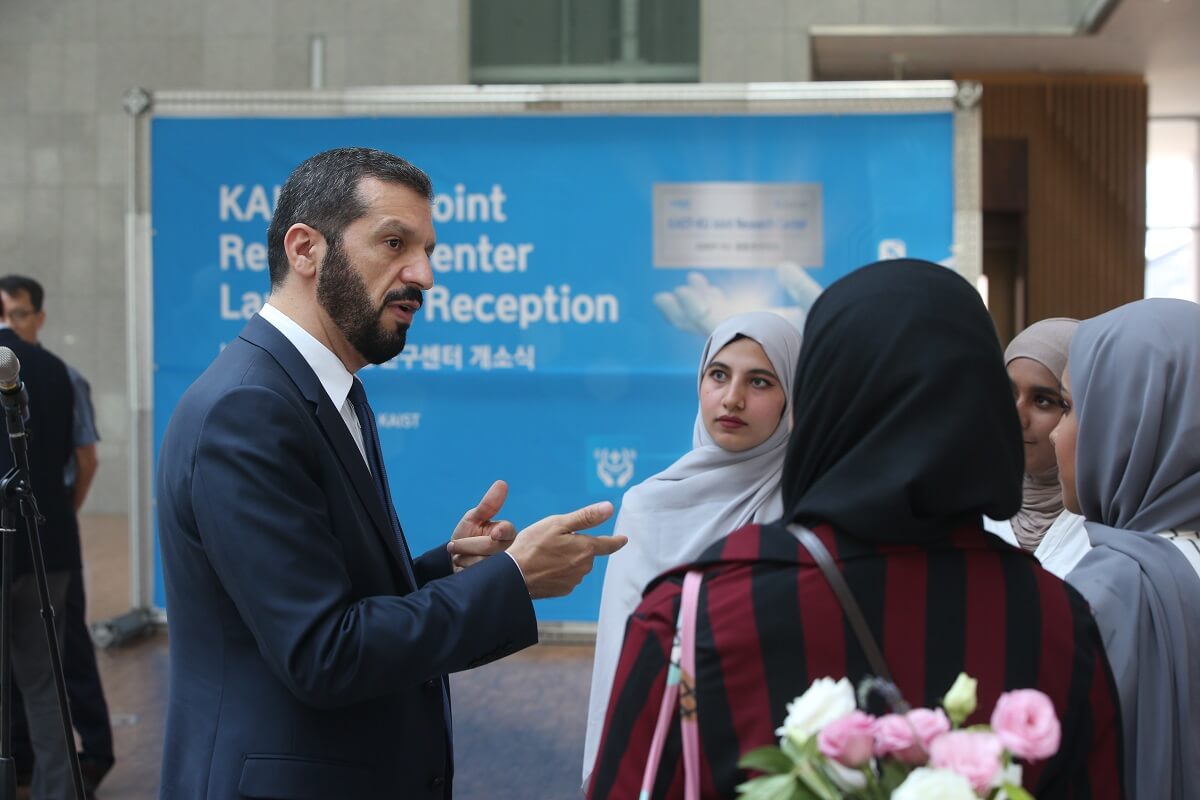
Khalifa University of Science and Technology (KU) and the Korea Advanced Institute of Science and Technology (KAIST) have launched two projects each on smart transportation and smart healthcare under the joint research center.

The smart transportation projects focus on autonomous electric vehicles that can wirelessly charge, while the smart healthcare projects focus on the development of sensors and wearable devices for personal healthcare as well as healthcare robotics and devices.

Dr. Sung-Chul Shin, President of KAIST, said: “The opening of this joint research center is another crowning achievement in KAIST’s long-standing mutual collaboration with KU. We stand firmly with KU to support the UAE’s brilliant vision for science and technology development and human capacity building. As the center’s primary focus is developing the emerging 4th industrial revolution technologies, we look forward to impactful research breakthroughs that will ultimately change our lives for the better.”

The two projects on smart transportation are led by two KU Principal Investigators, Dr. Khalifa Al Hosani (Associate Professor of Electrical Engineering and Computer Science) and Dr. Majid Khonji (Assistant Professor of Electrical Engineering and Computer Science), respectively. Two projects on smart healthcare are led by two KU Principal Investigators, Dr. Ahsan Khandoker (Associate Professor of Biomedical Engineering) and Dr. Haider Butt (Associate Professor of Mechanical Engineering), respectively.

According to a report titled Dubai Self-Driving Transport Strategy, the benefits of self-driving transport (SDT) could be huge ranging from highway safety benefits to reduced parking costs, reduced mobility costs, environmental benefits, improved productivity, and improved quality of life and citizen happiness. In Dubai alone, it is estimated that these benefits of SDT would be valued at more than AED22 billion per year.

The smart healthcare projects are well aligned with Abu Dhabi 2030 healthcare plan initiatives led by Department of Health (DoH) and key UAE organizations such as Mubadala. Both projects will provide the basis for significant opportunities to demonstrate the use of intelligent medical devices and software for personalized healthcare.

Launched in April 2019, the Khalifa University-KAIST Joint Research Center focuses on key areas of the fourth industrial revolution including smart transportation and smart healthcare.

Clarence Michael
News Writer
19 September 2019

MBZIRC Challenge 1: Capture Intruder Drones

Although the most sophisticated military and commercial drones cost millions of dollars, small drones for hobbyists are now very inexpensive and widely available. Most people purchasing a drone have no nefarious masterplan in mind: they’re enchanted by the use of a drone for a unique photographic perspective, smooth video footage, or even racing. Essentially, they’re a fun toy in many cases.

Beyond entertainment purposes, however, this technology has a big future. While the market for consumer drones may still be in its infancy (despite a lowered price point), drones can be used by farmers to save time scouting their crops to maximize their yield; for unmanned delivery; to enhance sports TV coverage; and aid in military surveillance and civil security.
But as useful and entertaining as drones may be, these flying gadgets can also be put to less friendly purposes. After all, the machine abides by the will of the person controlling it. Hence, drones are being used to smuggle contraband into prisons, evaluate security measures and operations of potential targets for robbery or terrorism, and just cause disruptions in busy places.

Gatwick Airport near London, England, hit the headlines in December 2018, when hundreds of flights were cancelled following reports of drone sightings close to the runway. The reports caused major disruption, affecting approximately 140,000 passengers and 1,000 flights during the Christmas period. During the incident, the Ministry of Defense deployed the Royal Air Force (RAF) Regiment to counter the drone as it disturbed the airspace around the airport for almost 36 hours, disappearing and reappearing to prevent any airplanes from landing or taking off right in the heart of a busy travel period.

Although it is illegal to fly a drone within one kilometer of an airport in the United Kingdom, it’s hardly difficult for a drone pilot to flout those rules — a one kilometer search radius affords plenty of opportunity to evade detection — evidenced by the frequency of drone infringements on airspace.

For this reason, there have been several near misses with drones coming within a few feet of commercial aircraft — the British Airline Pilots Association reported there were over 100 near misses in 2018 in the UK alone. After the incidents at Gatwick Airport in December 2018, the industry isn’t taking any chances. While this wasn’t the first time an airport has been closed due to illegal drone activity, it may well be the most infamous and most expensive with airlines losing revenue of USD64.5 million and incurring the costs of providing passenger accommodations due to missed and delayed flights.

The United Kingdom isn’t the only country suffering drone misuse—Dubai airport was among the first in the world to experience drone activity closing runways when in 2015, the flights were halted for 55 minutes. In 2016, three more incidents occurred and then February 2019 saw a further 30-minute closure as another drone strayed into the airport’s airspace. According to the Dubai Civil Aviation Authority, the cost of closing an airport can be AED3.6 million—per minute. Strict drone licensing, registration, training and stiff penalties have been introduced, with airport authorities in the UK approaching Dubai for advice on how to deal with drone incursions in the future.

Gatwick airport faced heavy criticism for its failure to capture or disable the drone and the RAF suffered similar backlash for its use of an alternative system to the Drone Dome, a counter unmanned air system (C-UAS) used by the British and US special forces in counter terrorism missions. Companies and militaries are investigating technologies that can apprehend drones or render them incapable of causing damage, but the fact remains, there is no completely reliable method of taking down an intruder drone.

The first challenge of the Mohamed Bin Zayed International Robotics Challenge (MBZIRC) in 2020 deals precisely with this issue as a team of UAVs must autonomously track and interact with intruder UAVs, to ultimately capture and neutralize the intruders.

All the MBZIRC 2020 challenges were developed to push the technological and application boundaries in robotics, focusing on fast, autonomous navigation in complex environments to complete a task. Challenge 1 puts this speed and autonomy to the test, with the UAVs needing to use robust perception to track dynamic objects and then capture the intruders.

While traditional piloted UAVs would face enough challenge in this arena, the most important part of MBZIRC is the autonomous completion of tasks. The team of UAVs must avoid accidental collisions, remain in the challenge arena and maintain contact between themselves, while identifying, tracking, and devising a plan to apprehend the intruder drone. They will need target detection algorithms for both long-range and short-range identification, depth sensing systems and tracking technology, along with a gripper to grab the intruder when they get close enough.

A large ask, but as the 25 teams selected for MBZIRC 2020 Challenge 1 hail from some of the world’s top robotics labs, expectations are high for success.

The results of this challenge will go a long way in developing systems that can be utilized by airports around the world to intercept intruder drones and avoid a repeat of the incident at Gatwick Airport.

Jade Sterling
News and Feature Writer
16 September 2019

EBTIC takes 3rd in GECCO 2019 Competition

Khalifa University’s EBTIC Developed Hybrid Algorithms Capable of Solving Complex Computer Science Optimization Problems at Genetic and Evolutionary Computations Conference 2019

An algorithm developed by Khalifa University’s Emirates ICT Innovation Center (EBTIC), which is a key part of Khalifa University’s new Artificial Intelligence Institute, together with Spain’s University of Basque Country recently finished 3rd in a prestigious competition at the Genetic and Evolutionary Computations Conference (GECCO) 2019, held in Prague in July 2019.

The developed algorithm was designed to solve a complex multi-objective optimization problem known as Travelling Thief Problem (TTP) – a combination of the “Travelling Salesman Problem” and the “Knapsack Problem” – two classic algorithmic problems in the field of computer science and operations research. Dr. Sid Shakya, EBTIC Chief Researcher, and Dr. Roberto Santana, researcher from the University of Basque Country and an EBTIC fellow, proposed a robust multi-objective method to solve the problem.

The pair’s solution was based on a combination of two artificial intelligence (AI) methods, known as dynamic programming and evolutionary multi-objective optimization, which maximize the coverage of possible solutions for meeting two conflicting objectives related to the Travelling Salesman Problem and the Knapsack Problem.

The Traveling Salesman Problem involves finding the shortest possible route between a set of cities, where every city is visited exactly once before returning to the starting point. The Knapsack Problem involves determining the number of items to include in a collection (given a set of items, each with a weight and a value) so that the total weight is less than or equal to a given limit and the total value is as large as possible. Both are problems in combinatorial optimization – where you must find the “optimal” solution from a finite but very large set of possible solutions.

Problems like these arise frequently in real world settings. The number of possible solutions grows rapidly with the size of the input to the problem, making it impractical to apply an exhaustive search of potential solutions. The aim of combinatorial optimization is to develop hybrid algorithms capable of exploring numerous potential solutions.

“We designed specific variation operators, which were applied as part of a hybrid multi-objective evolutionary search. The high computational cost of the optimization problem was addressed using an efficient evaluation scheme that reuses partial evaluations of the solution,” Dr. Shakya explained.

“This resulted in a competitive solution of high-dimensional TTP instances that was able to outperform some of the latest known solutions. One of the key motivations for this work was to address other real-word multi-component optimization problems, such as enterprise planning, scheduling and allocation problems, which are part of some of the core research focus areas at EBTIC and its partner organizations,” he added.

GECCO is a premier AI conference for optimization, with a key focus on evolutionary algorithms. It attracts high quality research from top AI institutions working in the area of search heuristics and computational optimization.

Erica Solomon
Senior Editor
15 August 2019

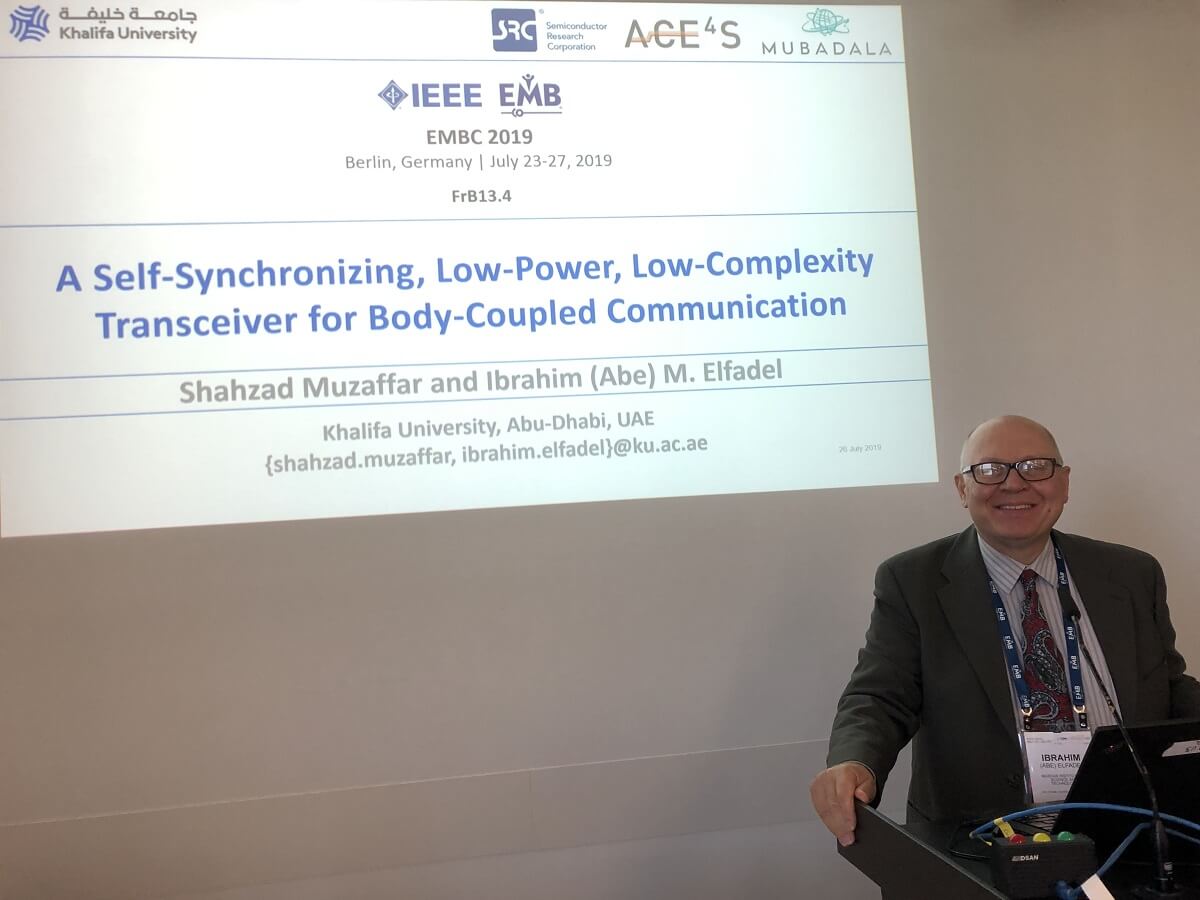
Skin-Deep Communication: Using the Human Body to Transmit Biodata amongst Wearable Medical Devices

Dr. Ibrahim Elfadel showcases the first ever successful body-coupled communication transmission at the 41st Engineering in Medicine and Biology Conference in Berlin, Germany

It’s been ten years since FitBit released its first health wearable, and now, roughly one in four adults uses some kind of fitness tracking device. While most people use them to gain some insight to their sleeping patterns and daily exercise, for some, wearable data-collection tools are medically necessary. In the world of healthcare, there is huge demand for remote and continuous patient monitoring.

A research project led by Dr. Ibrahim Elfadel, Professor of Electrical Engineering and Computer Science at Khalifa University, with Dr. Shahzad Muzaffar, Postdoctoral Researcher, Dr. Jerald Yoo, former KU Associate Professor of Electrical and Computer Engineering, now with the National University of Singapore, Dr. Ayman Shabra, former KU Assistant Professor of Electrical and Computer Engineering, now with MediaTek, MA, USA, and Dr. Mihai Sanduleanu, Associate Professor of Electrical Engineering and Computer Science, has resulted in the development of a working prototype of a body-coupled communication transceiver that transmits and receives information using human skin as a communication medium. The project began in 2014, and since then, a full hardware platform showcasing the body-coupled communication link has been demonstrated. Funded in part by a grant from Al Jalila Foundation, a UAE medical foundation supporting biomedical research, the signal encoding part of the research has been published in journal articles, conference papers and book chapters. Additionally, several US patents have been filed for the technology.

“Our research aims to provide secure, ultra-low-power communication between wearable medical devices such as hearing aids, vital sign monitors, and personal safety trackers,” said Dr. Elfadel. “This research also has relevance to the healthcare component of the UAE Innovation Strategy and its 2030 vision. In particular, this research enables the development of novel secure, reliable, predictive health monitoring platforms that may be used to diagnose, monitor, and treat diseases with high UAE incidence, such as obesity and diabetes.”

Individuals with high blood pressure, for example, have always been tasked with taking at-home readings to discuss with their healthcare providers. Replacing the standard blood pressure measuring device with a simple wearable tracker makes things easier.

“Wearable devices have always been the focus of active research, and technology advances have made it possible to develop sophisticated wearable electronic devices such as smart watches, smart eyeglasses, and fitness and lifestyle monitors,” explained Dr. Elfadel. “Reliable real-time communication amongst these body-worn devices plays a key role in the synchronous collection of information about the human body and its environmental conditions, and therefore, in the enablement of a new era of portable diagnosis and personalized care.”

Beyond medical necessity, there’s commercial opportunity here too: people worldwide are used to measuring their health using tools like body mass index (BMI) and resting heart rate. Advances in wearable technology have made trackers more accessible and appealing to consumers interested in measuring more variables. Industry analyst CCS Insight says worldwide wearables sales will grow by an average of 20 percent each year over the next four years, becoming a US$29 billion market by 2022.

However, these devices are limited by their power-hungry nature. To enrich data collection, wearables—particularly fitness trackers worn on the wrist—contain multiple sensors to supply large volumes of data about location, motion, physiological condition and other metrics useful to the person wearing the device. The more sensors, the greater the power consumption.
“Existing wireless standards are power-hungry and are known to drain the batteries quickly while wired communication is in conflict with the stringent wearablility requirement,” said Dr. Elfadel. “The ability to transmit and receive data at a very low energy-per-bit is an essential characteristic of wearable devices as they need to remain operational during days, and even weeks, of continuous usage. An alternative to wired or wireless communication is body-coupled communication (BCC) which uses the human skin as a communication medium.”

Human body communication involves the body acting as the communication channel for an electrical signal, with the signal transmitted primarily through the skin. Normally, devices on the body communicate wirelessly through radio frequency technology, but BCC provides a more power efficient and secure means of communication. A transmitter injects an alternating current into the skin, which acts like a wire to carry the signal throughout the body. This signal causes a voltage to appear across two receiving electrodes elsewhere on the body.

“Using human skin as a communication medium has been attempted before but prior work has used traditional signal encoding, leading to the design of complex communication circuits. So while the medium is totally secure, such complex circuits have a high power consumption and their testing has been restricted to predictable, well-controlled signals, such as clock signals,” added Dr. Elfadel. “What makes this project unique is the use of a new signal encoding technique that facilitates the design of simple communication circuits with minimal power requirements. The medium also lends itself to tight integration with electrode-based medical monitoring devices for the brain and heart and also smart band aids.”

Because the signal is completely contained within the human body, the performance is not affected by the surrounding environment. However, the body is not a perfect wire and affects the signal in non-ideal ways, one of which is adding a delay and necessitating a transmission power limit. The injected current must be low enough as to not damage any nerves or tissue, especially when applied over a long time. Concurrently, the current also needs to be strong enough to withstand the effects of the electrical properties of the human body. The relative permittivity (how well an electromagnetic wave can pass through a material) of skin, fat, muscle, and bone affects the signal. Signal attenuation, where the signal strength weakens, increases exponentially with distance when transmitting over the arms and legs, with joints also increasing the attenuation.

Dr. Elfadel and his team used Pulse-Index Communication (PIC)-based BCC transceivers to facilitate successful bi-directional communication through the body by transmitting arbitrary 16-bit data words over a distance of 150cm and receiving them flawlessly in a round-trip configuration.

“To the best of our knowledge, this is the very first time such BCC transmission has been achieved,” said Dr. Elfadel. “Future work will tackle an integrated very-large-scale integration (VLSI) implementation of the PIC-based BCC transceiver along with the validation of such transceiver in the presence of link non-idealities such as multipath fading, variable-ground effect, and variable skin-electrode impedance.

“Our next step is the miniaturization of the BCC circuits to reduce their form factors and improve their flexibility for seamless integration with wearable medical devices. The main challenge we are currently facing in this research is the development of reliable and flexible electrodes that can be comfortably integrated with wearable healthcare monitors so that a robust body-area network can be established among them.

“We hope to demonstrate to the UAE medical and healthcare professionals the significant potential of home-grown biomedical engineering research at Khalifa University. Our research may trigger further fundamental research into the electrophysiological properties of human skin on which physiologists, dermatologists, and biomedical engineers may be able to collaborate across the boundaries of their disciplines.”

Jade Sterling
News and Features Writer
14 August 2019