
KU Professor Among Top 1% of Cited Researchers in Engineering Worldwide

Dr. Eiyad Abu-Nada has published more than 80 journal papers and averaged 47.71 citations per publication according to Clarivate Analytics – a leading online resource for scientific publications

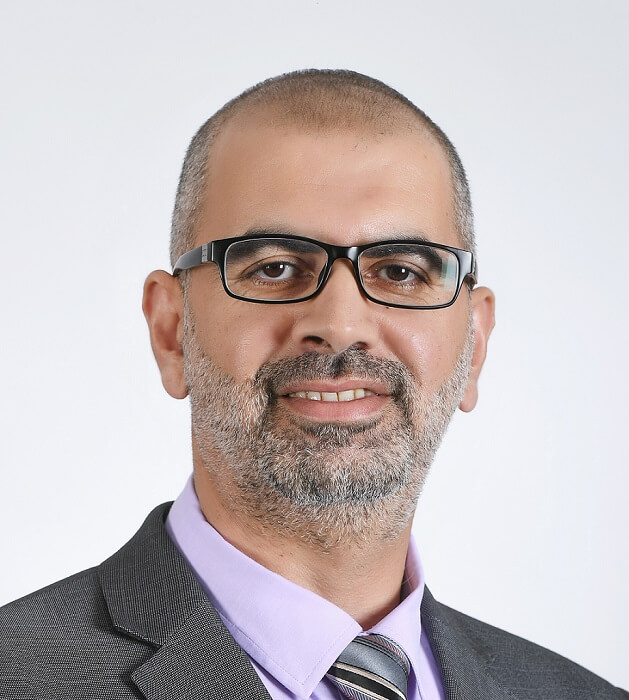
Khalifa University Professor of Mechanical Engineering, Dr. Eiyad Abu-Nada, is rated among the top 1% of researchers worldwide for citations of published research in the field of Engineering between 2006 and 2016 – a great achievement in the scientific community. During his academic career, Dr. Abu-Nada has published more than 80 journal papers and averaged 47.71 citations per publication as listed on Clarivate Analytics – a leading online resource for scientific publications. Most of his published journal papers appeared in the top prestigious Q1 journals in the Web of Science database. Dr. Abu-Nada has also published numerous conference papers in international conferences.

“I have always been driven by my work to discover something new, it excites me. Now I feel more enthusiastic to continue doing great work,” Dr. Abu-Nada remarked. “I remain humbled by how little we understand, and how much more there is to know. I try to impart that curiosity on my students each semester, hoping that they can one day contribute to science, and explore something new. That would make me proud.”

Besides quietly digging away at the complexity of nature in search of its secrets, Dr. Abu-Nada has also been teaching Mechanical Engineering at KU since 2013. Though primarily devoted to the study of heat transfer and fluid dynamics at the nanoscale – the investigation of the properties and interaction of fluids with particles – his published papers span various sciences, such as thermal sciences, energy, biophysics, and microfluidics.

After earning his BSc and MSc in Mechanical Engineering from Jordan, Dr. Abu-Nada moved to the states and completed his PhD in Mechanical Engineering from New Mexico State University in 2001. He began establishing the groundwork for his research which gained him momentum and valuable experience. In 2010, Dr. Abu-Nada received a fellowship at the prestigious Alexander von Humboldt Foundation. Also, he received other significant awards at the regional level such as the Abdul-Hameed Shoman Award in Jordan and the Arab Fund award from Kuwait.

“I was able to work with great researchers and very professional people. I learned from, and was motivated by their fundamental understanding of the underlying physics of engineering problems and inspired by their scientific ethics. Collaboration is key to expanding one’s understanding and learning new things,” said Dr. Abu-Nada as he reflected on his early career. “I was put onto a narrow research track that remains a focal point of my research. More importantly, I was exposed to rigorous scientific exploration and science for the sake of science: not chasing dreams, but rather, chasing the truth.”

Dr. Abu-Nada’s specialized research focus has won him over 4,000 citations on Web of Science – an online resource for scientific publications – and an h-index of 27. A researcher’s h-index is a measurement of the productivity and impact of their research.

Dr. Abu-Nada’s research has steadily pushed the limits of our collective knowledge on topics like heat transfer enhancement using nanofluids, dissipative particle dynamics and convective heat transfer, carving out a niche for himself. Among his most cited published papers is the “Numerical study of natural convection in partially heated rectangular enclosures filled with nanofluids.” In it, Dr. Abu-Nada describes the factors that impact heat transfer in base fluids through using different fluids and nanoparticles. Besides cataloguing results from different variables, the study is considered unique because he and his team laid the groundwork for mathematical modeling of heat transfer at the nanoscale.

Dr. Abu-Nada spent considerable efforts in pushing the limits of dissipative particle dynamics (DPD), a technique used for simulating the interactions of fluids and particles in order to better understand and improve energy transfer in thermal fluid systems. DPD has potential applications in emerging energy technologies, such as solar energy and steam power plants, where efficiencies and improvements are key elements in enhancing performance.

“DPD is my passion. I am keen to get back into the type of work I was doing early in my career with the experience and understanding I now have,” Dr. Abu-Nada commented about his future plans. “I began my career with biofluids and its study has always held a special place in my heart. I want to apply the tools I have acquired throughout my career to the study of blood flow, its physical properties, and red blood cell aggregation. I’m also interested in collaborating on research that examines renewable energies more closely.”

Dr. Abu-Nada advises students and aspiring researchers: “Participate in conferences where you can interact with experts, visit big labs, and be inspired. Aim high, have high standards, have a plan to only target the big journals for your publications. If you get turned down, take their feedback, revise, and resubmit. Collaborate and interact with peers and colleagues, give and take input and criticism. Learn from others’ experiences and work.”

“I am very grateful for the support I have received from family, friends, and my teachers, those who inspired me and those who mentored me. Khalifa University has been instrumental in my research, providing me access to the cutting edge tools I need, helping me to attend conferences, and supporting the researchers with funding and initiatives. I also want to say thank you to my peers, Professors, the Department Chair, Deans, Provost, and University Leadership for their support.”

Zaman Khan
News and Features Writer
24 July 2019
Simulated Aircraft Impact Analysis on Nuclear Power Plants to Global Body of Research

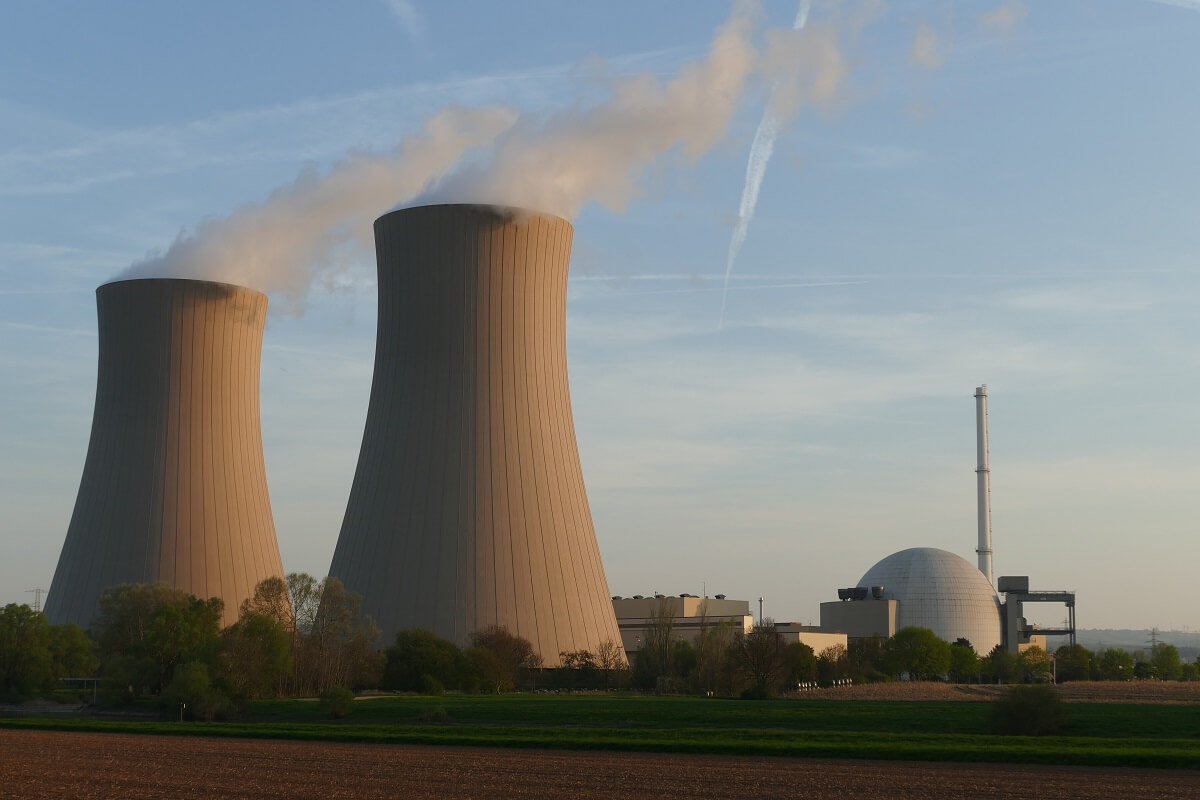
Fatema Almuhairi, Msc in Mechanical Engineering, dispels fear of radioactive material release in the event of an airplane crash at a nuclear power plant with simulated impact analysis of APR1400 reactor containment building.

The nuclear power industry has been developing and improving reactor technology for more than five decades and from day one, there has been a serious focus on the potential hazards of operating nuclear reactors. As with all other industries, the design and operation of nuclear power plants aims to minimize the likelihood of accidents, and avoid major human consequences should they occur. Evidence shows that nuclear power is a safe means of generating electricity with the risk of accidents in the plants themselves low and declining. The Federal Authority for Nuclear Regulation (FANR) plays an essential role in ensuring that the UAE’s nuclear reactors are safe, secure and reliable. And now, so too will research from KU postgraduate student Fatema Obaid Ali Almuhairi, whose thesis focuses on impact analyses on nuclear buildings from aircraft.

Almuhairi’s research, titled Aircraft Impact Analysis for APR1400 Reactor Containment Building, will complement the safety design features of the APR1400 nuclear reactor, a design developed by the Korean nuclear industry under the Korea Electric Power Corporation (KEPCO). The Barakah Nuclear Energy Plant in the UAE will comprise four APR1400 nuclear reactors with the first scheduled to become operational by 2020.

Attacks on nuclear power plants have been feared since the first nuclear power plant went live in 1954 in Obninsk, Russia. The lack of such attacks is largely due to the fact that many government agencies have developed standards for impeccably tough nuclear reactor walls to keep radiation in and terrorists out.

“Aircraft impact on nuclear power plant structures is an issue of global concern, since the consequences of such an impact can be severe and may lead to the release of radioactive material into the environment,” explained Almuhairi. “The reactor containment buildings (RCBs) are the last barrier of protection in a nuclear power plant, where it protects the plant from external incidents, prevents the release of radioactive materials during normal operation or accidents, and provides a radiation shield.”

A containment building is a reinforced structure enclosing a nuclear reactor, designed to contain the escape of radioactivity. As the fourth and final barrier to radioactive release, the containment plays a critical role in the most severe nuclear reactor accidents. RCBs in the United States are subjected to mandatory testing for a nuclear plant to earn its operating license. In Europe, the European Nuclear Safety Regulators Group ensures plants in the EU conform to standards. While in the UAE, FANR provide regulation to ensure that RCBs are built to withstand extreme conditions.

The stringent requirements imposed on a nuclear plant consider the effect of impact from a large commercial aircraft. The external walls of the RCBs, which house critical safety-related equipment and fuels, must stand up to impact without perforating or rupturing.

The APR1400 RCB is a pre-stressed concrete containment vessel (PCCV) surrounded by an auxiliary building, which houses additional safety-related equipment and other systems. The RCBs’ characteristic dome shape and unique material properties make them robust structures. RCBs comprise pre-stressed tendons, reinforced steel, and liner plates alongside the concrete outer shell.

Testing containment buildings is nothing new. In 1988, Sandia National Laboratories conducted a strength test on a large concrete block by slamming a fully loaded F-4 Phantom jet directly at it to investigate the survivability of a nuclear power plant in the event of an attack. The jet disintegrated upon impact while the concrete block remained relatively unscathed. The 482mph impact left only a 64mm deep gouge in the 3.66m wide block from an impact force of over 700 G. Subsequent studies concluded that commercial airliners did not pose a danger.

“Compared to previous studies in this field, this work goes a step further by analyzing the effect of aging on the impact response of an APR1400 RCB,” said Almuhairi. “With aging, the RCB’s materials degrade, and as a result, the load-bearing capacity could be compromised. In the event of an aircraft impact on an aged RCB, the structural integrity might be lost.”

Three degradation mechanisms were considered in modeling the aging of the containment: liner corrosion, rebar corrosion, and pre-stress loss of tendons.

“The impact an Airbus A320 would have on the RCB for the APR1400 was investigated using finite element analysis,” said Almuhairi. “A new modeling approach was developed to determine the impact pressure of the aircraft, taking into account the change of the aircraft’s cross section during crushing and dividing the impact into three stages.

“We found that the unaged RCB is able to withstand the impact load of an Airbus A320 aircraft without liner or rebar failure for impact velocities as great as 300 m/s,” explained Almuhairi. “While aging the RCB caused the plastic liner and rebar strains to increase, the structural integrity of the RCB was maintained for most cases. Full penetration of the RCB was reported only for the unlikely event of an A320 impacting a highly degraded RCB (where all degradation mechanisms were applied simultaneously) at a velocity of 300m/s, a scenario that is judged very unlikely to occur during the design life of 60 years.”

Results from studies by the Electric Power Research Institute support Almuhairi’s findings: penetrating even weak reinforced concrete requires multiple hits by high speed artillery shells or specially-designed ‘bunker busting’ artillery—both of which are well beyond what intentional human damage methods are likely to cause. Nuclear reactors are more resistant to attacks from large aircraft than virtually any other civil installations, according to the World Nuclear Association, and Almuhairi’s research contributes to this growing body of evidence while providing peace of mind in case of nefarious intent.

Jade Sterling
News and Feature Writer
16 September 2019

Faisal Al Madani Tutors Khalifa University Alumni on Emotional Intelligence

Khalifa University’s alumni relations office welcomed Faisal Al Madani for the latest talk in the Alumni Speakers Series. 

Mr. Al Madani who heads up Etisalat’s Customer Service Division for the Abu Dhabi region spoke eloquently about the importance of emotional intelligence in the modern workplace. 

Mr. Al Madani studied his Bachelor’s degree at Khalifa University and also holds a Masters in Quality Management from the University of Wollongong Dubai. He is a certified Internal /External Quality Auditor a certified “Train The Trainer” and has attended more than 50 Management courses as well as being certified in “Mind Mapping” by Tony Bozan. 

His talk focused on emotional intelligence which refers to a person’s ability to monitor their own and other’s emotions as well as the ways in which they can use emotional information to guide thinking and behavior.  The interactive lecture highlighted the importance of EQ or a person’s Emotional Quotient in being successful. “More and more companies are realizing that EQ is more important than IQ ” he said. “Our ability to get along well with our co-workers is the most important thing.”

Khalifa University’s Alumni Speakers Series aims to help existing students benefit from the experience and knowledge of Khalifa University alumni inspiring them to get ahead in their chosen fields and enabling them to receive a more multidisciplinary education. The speeches/presentations cover areas such as technology management leadership and other topics. Keep an eye on our events page for information about our upcoming speaker’s events. 


Khalifa University Hosts 4th KAIST-KU Research Symposium

Symposium explored research connected with nuclear energy industry as well as other areas of interest to the UAE

Khalifa University announced today that it recently held the 4th KAIST-KU Research Symposium at its Abu Dhabi campus on December 8th-9th 2013. The Symposium is the result of Khalifa University’s and the Korea Advanced Institute for Science and Technology’s (KAIST) desire to foster research collaboration between the two institutions.The Symposium was opened by Dr. Tod Laursen Khalifa University President and Dean Soon Chang Professor of Nuclear Engineering in the Department of Nuclear and Quantum Engineering (NQe) at KAIST and Dean of the KAIST-Khalifa Institute (KKI). It was attended by over 40 faculty and graduate students from both Khalifa University and KAIST.

The symposium discussed areas of interest to the UAE such as novel drug targets and drug delivery systems for diabetes intelligent multi-sensor surveillance systems for care of the elderly and persistent surveillance of critical infrastructure using multiple unmanned aerial vehicles. Issues related to the nuclear energy industry were also addressed including research being done on safety issues health and safety monitoring and improving the quality of data collected.

Khalifa University Faculty Publish Paper in Advanced Materials

Two members of Khalifa University’s (KU) faculty recently published an article in the journal Advanced Materials which focuses on topics in chemistry physics nanotechnology ceramics metallurgy and biomaterials.

Their research focuses on making new synthetic materials by mimicking materials found in nature.

Professor Kin Liao who published the paper with his colleague Dr. Yuanqing Li said “We thought that perhaps new ideas for making materials could be borrowed from the ingenuity of nature.   In nature there are smart ways to create materials with exceptional properties to serve the survival of their host organisms.  Materials such as teeth bone and nacre (a composite material that makes up the outer coating of pearls) are composed of complex materials made of very tiny components only nanometers in size.

Khalifa University Wraps Up Their Summer School for Grade 9 to 12 Students.

Activities included lectures given by Khalifa University faculty members as well as informal discussions on research activities by students and their mentors and interesting scientific experiments in Physics and Chemistry plus educational documentaries   guided tours of the Discovery Center and an introduction to computer programs such as (Adobe Flash Adobe Photoshop and Weebly).


Biotechnology Center Interns Analyze Thyroid Disease in Emiratis

Dozens of students, professors and guests attended the “End of Summer Internship Program 2019” at Khalifa University’s Main Campus on Thursday, 1 August, 2019, to celebrate the culmination of eight weeks of hard work. The event was a fitting end to KU’s Center for Biotechnology (BTC) Summer Internship Program, which included eleven undergraduate student interns from Khalifa University, the University of Sharjah, New York University, American University of Ras Al-Khaimah, Monash University in Malaysia, and the School of Industrial Biology in France.

Now in its fourth year, the BTC Summer Internship Program offers undergraduate students interested in biotechnology a hands-on learning experience to develop high-quality skills and knowledge needed for working in a molecular genetic laboratory.

Directed by Dr. Habiba Alsafar, Associate Professor of Genetics and Molecular Biology, the BTC undertakes research that increases the understanding of the risk factors that affect major chronic diseases of the UAE population, in particular diabetes, cardiovascular disease and cancer. The focus of this year’s internship was a project titled “Genotype and allele frequencies at two variants in two genes (VAV3 and BRAF) associated with Thyroid cancer among UAE population.”

A first-of-its-kind study conducted in an Arab ethnic group, the main objective was to evaluate the genes VAV3 and BRAF in an Emirati population to determine the frequencies of different VAV3 and BRAF genes – which are highly associated with Thyroid cancer in different ethnic groups –  and their relevant genotypes.

“I really enjoyed this experience because, as an international student, I had the opportunity to meet and interact with students and professors from different backgrounds and cultures,” shared Fahad Abbasse, a graduate student pursuing a degree in industrial biology from the Ecole de Biologie Industrielle in France. “Everyone was really friendly and they gave me a warm welcome to the center. Working with state-of-the-art technology in the lab was really rewarding, and made our lab work more enjoyable.”

The BTC interns isolated genomic DNA from saliva samples of 1,000 healthy Emiratis, representing different geographical regions. They then used a sophisticated genotyping process known as “RT-qPCR TaqMan assay” to analyze the allele frequency of two variants in the two different genes VAV3 and BRAF.

The students found that the two variants showed some similarities with the Caucasian population but were different when compared to African and Asian populations.

KU biomedical engineering undergraduate student Dana AlTamimi also enjoyed the experience. She said: “The Biotechnology center internship was one of the best things I ever did. We were exposed to different procedures in the field of research. The internship was very interesting and helpful for my future studies and career.”

Thyroid cancer is a cancer of the gland in front of the neck that normally produces the thyroid hormone, which is important to the normal regulation of the metabolism of the body. Thyroid cancer is the second most common cancer among women in the UAE, accounting for approximately ten percent of all cancers among females. Regionally, thyroid cancer is also the fifth most common cancer in Gulf Cooperation Council (GCC) countries.

A better understanding of genetic polymorphisms, which is when multiple forms of a single gene exists in an individual or group, may contribute to a more accurate identification of avoidable risks associated with thyroid cancer, and to developing tailor-made preventative measures.

Throughout the eight-week internship, students conducted literature reviews using scientific public domain search engine for articles such as, PubMEd, Web of Science, and Scopus; attended a workshop on reference style using Endnote software; analyzed data using a specialized software program called “R Software;” and finally, presented their scientific findings as an oral presentation and a poster at the “End of Summer Internship Program 2019” event, which was held at KU’s Main Campus on Thursday, 1 August.

Erica Solomon
Senior Editor
15 August 2019

Khalifa University Signs Agreement with Circuits Multi Projects CMP

The agreement will serve UAE institutions in order to prototype their semiconductor designs Khalifa University announced today at the Design Automation Conference (DAC) Austin USA that it has signed an agreement with Circuits Multi Projects (CMP) a French based Service Unit that supplies integrated circuits and micro-electromechanical systems for use in various electronics.

According to the agreement Khalifa University will be the focal point to collect projects from universities research laboratories and companies based in the UAE and send them to CMP for manufacturing.  These projects will include prototypes for new integrated circuits and micro-electromechanical systems.  Khalifa University will also be able to submit designs by its students and faculty for manufacturing.

The agreement follows the launch of the new ATIC-SRC Center of Excellence for Energy Efficient Electronic Systems (ACE4S) which is funded by the Advanced Technology Investment Company (ATIC) and the Semiconductor Research Corporation (SRC) and jointly hosted by Khalifa University and the Masdar Institute of Science and Technology. The center will focus on energy efficient devices with research in energy harvesting power management sensor technologies and wireless communications networks.

“We are pleased to be working with CMP to develop new technology ” said Dr Mohammed Al-Mualla Khalifa University’s Senior Vice President for Research & Development. “This agreement will help drive innovation in next-generation electronic systems ranging in applications from smart phones to medical devices. We look forward to working with CMP towards creating a world class technology hub in semiconductor research here in the UAE.  This agreement demonstrates Khalifa University’s dedication to promoting research and innovation in areas of strategic importance for Abu Dhabi 2030 plan.”

Jean-Christophe Crebier Director of CMP and Bernard Courtois Advisor at CMP said “CMP is proud to have reached an agreement with Khalifa University to serve UAE based institutions. Abu Dhabi and the other Emirates are a fast growing area for electronics in general. It is hoped that the number of projects in this area will be boosted by this agreement especially on very promising processes for nanoscale digital analog and radio frequency systems on chip.”

Khalifa University Wraps Up GNEII Course

Gulf Nuclear Energy Infrastructure Institute Trained Professional Fellows in Nuclear Energy Infrastructure Safety Security and Safeguards

Khalifa University announced today that it has wrapped up its second Gulf Nuclear Energy Infrastructure Institute (GNEII) fundamentals course.   

This year saw over 22 fellows from a total of four GCC countries and Jordan complete the instructional aspect of the course which focused on nuclear safety security safeguards and the connections between them.