
Masdar Institute Students Gain Expertise in Fabricating Advanced Thin-Film Solar Cells

Two Students Attend Training Session on Fabrication at UNAM in Turkey as Global Thin-Film Market Projected to Reach US$44 billion by 2017

Abu Dhabi-UAE: 06 February, 2013 – Masdar Institute of Science and Technology, an independent, research-driven graduate-level university focused on advanced energy and sustainable technologies, today announced it has taken another step forward in bringing the technical expertise for fabricating advanced thin-film solar cells to the UAE.

Accompanied by Dr. Ammar Nayfeh, Assistant Professor, Microsystems Engineering, two students – Aaesha Alnuami and Kazi Mohitul Islam – travelled to National Nanotechnology Research Center (UNAM) at Bilkent University in Ankara, Turkey, to gain expertise in fabricating thin film solar cells. The two are trained to use the advanced equipment at The Nano Electronic and Photonics Research Group (NEP) laboratory in Masdar Institute.

The research collaboration with UNAM in Turkey concurs with the mission of Masdar Institute and is expected to contribute to the socio-economic objectives articulated in Abu Dhabi’s Vision 2030 plan.

In addition, the knowledge the students have gained through UNAM will play a key role in ramping up the nano-fabrication facility at Masdar institute, which is the first in the UAE and second in the GCC. In fact, Masdar Institute can be instrumental in unifying all research in the nano-fabrication facilities in the Middle East to create a world-renowned knowledge bank. Additionally, the Class ‘100’ and Class ‘1000’ cleanrooms at Masdar Institute are now operational, thus paving the way for researchers to build nano-components that can be assembled to make new and useful devices.

Dr Fred Moavenzadeh, president, Masdar Institute said: “The training received by the two Masdar Institute students at UNAM will help establish and evolve interdisciplinary and collaborative research that will develop capability in advanced energy and sustainability. The novelty of the research will inspire students to be innovators and lead technology and enterprise in the region and globally. Research into clean energy sources is of vital interest to the Masdar Initiative and Abu Dhabi at large, and with the support of the UAE’s leadership we will continue to lead innovations in future energy areas.”

On completion of the training at UNAM, Alnuami fabricated thin film crystalline Si-solar cells and studied the effect of ‘annealing’ – a process whereby a device is treated with a specific ratio of Hydrogen and Nitrogen on a specific temperature and then allowed to cool down slowly, thus improving the interfacial properties between different layers. At the same time, Kazi Islam fabricated a nanoparticle-enhanced amorphous Si-based solar cell. In this work, we place tiny gold dots as small at 10 nano meters (10-8 meter) on top of the solar cell. When sunlight hits the gold dot, surface plasmons are created, enabling a self-sustaining, propagating electromagnetic wave that enhances the amount of energy the solar cell can provide. The solar cell fabrication process developed in the UNAM cleanroom will be transferred shortly to Masdar Institute's state-of-the-art nano-fabrication facility.

The main advantages of thin-film solar cells are their light weight and resistance to heat. Unlike other technologies, thin-film solar panels do not decrease in output when temperatures rise. Consequently, the actual output of thin-film solar panels is usually close to what they are rated for, making planning a solar-power system much easier.

Dr. Ammar Nayfeh said: “The fabrication knowledge and training the students have gained is an invaluable asset and will assist greatly in the ramping up of Masdar Institute's nano-fabrication facility. The fabricated thin film solar cells are currently being characterized in our solar cell lab at Masdar Institute. The results will be submitted to the 39th IEEE Photovoltaic Specialists Conference 2013 at the Tampa Convention Center in Tampa Bay, Florida.”

The training and fabrication work were part of the on-going research collaboration between Dr Ammar Nayfeh's NEP and Dr Ali Okyay's research group at Bilkent University.

In a recent report titled ‘Thin-Film Solar Technology Market Shares, Strategies, and Forecasts, Worldwide, 2011 to 2017' by US company Wintergreen Research, the global thin-film market is projected to reach US$44 billion by 2017. With building-integrated photovoltaics systems (BIPV), electric cars and ever-increasing applications, the thin-film industry is expected to grow in the next few years.

Aaesha Alnuaimi is currently conducting research on ‘The effect of interface states on a-Si/c-Si thin film hetero-junction solar cells’, while Kazi Islam’s research focuses on ‘Novel Methods to Increase the Efficiency of Thin Film Solar cells’.

Aaesha Alnuami said: “The training at UNAM in Turkey was crucial for obtaining key insights into operating and understanding micro/nano-fabrication processes. With this expertise, we have developed the thin-film solar cells. I thank Masdar Institute and my academic advisor Dr Ammar Nayfeh for making this possible and I am confident the training will prove beneficial to my research work here in Abu Dhabi.”

Kazi Islam said: “At UNAM I learnt how to fabricate a nanoparticle-enhanced amorphous Si-based solar cell. The training facilities and the program have adequately enriched me in this area. I thank my academic advisor Dr Ammar Nayfeh and Masdar Institute for this training opportunity and I hope to contribute to obtaining sustainable clean energy solutions for the future.”

UNAM hosts a 400-square meter word-class cleanroom laboratory including class ‘100’ and class ‘1000’ lab spaces for micro/nano-fabrication processes. UNAM cleanroom consists of four parts – Epitaxial material growth division; lithography (yellow) room; thin-film deposition and etching division; and device characterization (dark) room. The cleanroom is designed suitably for a researcher to grow, fabricate, and test his/her samples in the same laboratory.

Serving as a key pillar of innovation and human capital, Masdar Institute remains fundamental to Masdar’s core objectives of developing Abu Dhabi’s knowledge economy and finding solutions to humanity’s toughest challenges such as climate change.

Established as an on-going collaboration with the Massachusetts Institute of Technology (MIT), Masdar Institute integrates theory and practice to incubate a culture of innovation and entrepreneurship, working to develop the critical thinkers and leaders of tomorrow.  With its world-class faculty and top-tier students, the Institute is committed to finding solutions to the challenges of clean energy and climate change through education and research.

 

Masdar Institute to Showcase Academic and Research Offerings to Students in Turkey

Event on 23 February to Highlight Advantages of Pursuing Graduate Studies in Abu Dhabi’s Research-Based Institution

Istanbul/Abu Dhabi: 20 February, 2013 – A team of faculty and students from Masdar Institute of Science and Technology, an independent, research-driven graduate-level university focused on advanced energy and sustainable technologies, will be will be participating in the Spring 2013 QS World Grad School Tour Fair & Seminars on 23 February in Istanbul to highlight the advantages of pursuing graduate studies at the Abu Dhabi-based institution.

A large number of students from across universities in Turkey are expected to gather for the event from 2.00pm-5.00pm at Grand Hyatt Istanbul, Taskisla Caddesi, Taksim, in Istanbul. Pre-fair presentations and panels are scheduled from 1.00pm-2.00pm. Dr. Marcus Dahlem, Assistant Professor – Microsystems Engineering, with student Abdulla Kaya and other Masdar Institute representatives, will showcase a research project on ‘Design of novel photonic crystal structures for solar PV applications’. The research project focuses on understanding and designing novel photonic crystal structures that can be used for increasing the performance of existing solar photovoltaic cells. Dr. Dahlem will additionally present details of the state-of-the-art micro-fabrication cleanroom and microscopy facilities at Masdar Institute.

Developed in cooperation with Massachusetts Institute of Technology (MIT), Masdar Institute’s graduate programs integrate education, research and scholarly activities. With admission criteria similar to MIT, Masdar Institute helps students to be innovators, creative scientists, researchers and critical thinkers in technology development, systems integration and policy.

At present, Masdar Institute has research collaboration with National Nanotechnology Research Center (UNAM) at Bilkent University in Ankara for knowledge exchange.

Dr. Fred Moavenzadeh, President, Masdar Institute, said: “Since inception, we have achieved breakthroughs in research and innovation, contributing to developing the region’s human capital and R&D infrastructure. Our patents, research accomplishments and academic success serve as an inspiration for graduate students seeking to enroll and acquire clean energy knowledge. This roadshow offers us an opportunity to interact with students across Europe and apprise them of the learning options at the sustainable campus. We welcome them to take advantage of our educational and research offerings.”

Masdar Institute’s research themes include ‘water, environment and health’, ‘energy systems’, and ‘microsystem and advanced technology’. The niche research project options provide potential students opportunities to participate in the creation of intellectual property rights and patents.

Masdar Institute has one patent already issued and 16 active patent applications pending at present. With publications of papers in 311 peer-reviewed journals, 330 conference papers, two full books and 38 invention disclosures, it has already notched up success in academic and research fields.

In addition to providing full scholarship to qualified applicants, Masdar Institute has collaboration agreements with several organizations including the International Renewable Energy Agency (IRENA) for up to 20 scholarships, and Toyota Motor Corporation for one student every year to work in sustainable transportation.

For the September 2012 intake, the total number of enrolled students across the eight academic programs reached 336. The student body is expected to grow to 600-800 over the next few years. Two batches of Master’s students have already graduated from Masdar Institute – the first in June 2011 and the second in May 2012.

Masdar Institute currently has 73 faculty members from 32 countries, enabling students to benefit from a unique range of insights and experiences.

Admissions for Fall 2013 are now open. Application forms can be accessed from www.masdar.ac.ae/Admission.html. A minimum CGPA of 3.0 on a scale of 4.0 and a minimum GRE Quantitative scope of 700 (or 155 on the new scale) are mandatory for applicants. Talented applicants, who may not meet the GRE and TOEFL/IELTS requirements but are otherwise qualified to enroll, may be admitted. They will, however, be required to pass two placement exams or complete additional technical and math coursework.

Dr. Marcus Dahlem received his Licenciatura degree (BS + Masters) in Applied Physics (Optoelectronics and Lasers) from the University of Porto, Portugal, in 2000. He earned his MS and PhD degrees in Electrical Engineering and Computer Science (EECS) from Massachusetts Institute of Technology (MIT) in 2005 and 2011 respectively.

From 1999 to 2002, he worked as a laboratory instructor in the Physics Department at the University of Porto, and at the Institute for Systems and Computer Engineering of Porto (INESC Porto). In 2003 and 2005 he served as a teaching assistant in EECS at MIT, and between 2003 and 2011 he worked as a research assistant at the MIT RLE. During the summer and fall of 2008, he worked at the IBM Zurich Research Laboratory, in the Exploratory Photonics group.

Serving as a key pillar of innovation and human capital, Masdar Institute remains fundamental to Masdar’s core objectives of developing Abu Dhabi’s knowledge economy and finding solutions to humanity’s toughest challenges such as climate change.

Established as an on-going collaboration with the Massachusetts Institute of Technology (MIT), Masdar Institute integrates theory and practice to incubate a culture of innovation and entrepreneurship, working to develop the critical thinkers and leaders of tomorrow.  With its world-class faculty and top-tier students, the Institute is committed to finding solutions to the challenges of clean energy and climate change through education and research.

 

Algorithms might drum up a better way to save energy in Abu Dhabi

Imagine you are at a ski resort, but don’t have any skiing gear. You can rent or buy it, but which should you do?

The answer hinges on how much you’re likely to ski in the future. But you don’t yet know that, so how do you decide?

This is not just an innocuous problem. We face many similar decisions that depend on unknowable information about the future.

How much stock should I buy to satisfy future demand? How much should I save to support my retirement?
Computer systems are teeming with similar so-called “online problems”, such as deciding which data to store in a form that can be quickly accessed, and when to send data into a network.

They do it using “algorithms” – sets of rules and instructions that break down how a computer is going to set about a particular task. And some of these algorithms are inspired by studying puzzles such as the ski-rental problem.

Algorithms can also cope with increasing complexity. Do you like solving puzzles such as Sudoku or the Rubik’s cube, but are getting tired of the typical 9×9 Sudoku and 3x3x3 Rubik’s cube? How about a super-sized 16×16 Sudoku or a 6x6x6 Rubik’s cube? While puzzles of such sizes stretch human capabilities, computers can breeze through them with just a bit more computing power.

The amount of extra processing power required isn’t necessarily linear, though – doubling the size of a puzzle can require a million times more computational grunt.

Indeed, there are tons of problems, from puzzles to practical applications, which steadfastly resist computer scientists’ attempts to find an efficient algorithm.

Some of these are problems that on the face of it don’t seem that hard at all – how to optimally pack a knapsack with any set of different-sized objects, for example, or how to find the shortest cycle route on a map – can actually be extremely tricky, to the extent that finding the best solution requires an absurd or impractical amount of computing power.

In these cases, the answer is sometimes to look for a solution that is “good enough”, rather than necessarily the best. It can be the case that an algorithm produces outcomes approximately close to the best, while using far less computing power than the dead-accurate alternative.

All these algorithms underpin the information economy on which we all depend, making information processing faster and more cost-effective.

They power our gadgets, which use ingenious algorithms that continuously optimise the quality of their graphics and speed up processing time.

And they can help us with the new challenges of sustainability. How do we balance energy supplies and demands for an uncertain future? How do we allocate scarce resources effectively, despite the growing complexity?

One such problem we are working on at the Masdar Institute is how to efficiently regulate power generation in the presence of an unsteady renewable energy supply, such as wind or solar.

We are designing algorithms that can determine when the backup power supply – a traditional power plant – should be turned on to meet a shortage of energy from a renewable source, in real-time.

The result, we hope, will be a more efficient and reliable renewable energy-powered electricity grid – essential if Abu Dhabi is to meet its target of 7 per cent of its power from renewables by 2030.

Dr. Sid Chi-Kin Chau is an assistant professor of computing and information science at the Masdar Institute.


Masdar Institute to Showcase Academic and Research Offerings to Students in Russia

Event on 27 February to Highlight Advantages of Pursuing Graduate Studies in Abu Dhabi’s Research-Based Institution

Moscow/Abu Dhabi: 26 February, 2013 – A team of faculty and students from Masdar Institute of Science and Technology, an independent, research-driven graduate-level university focused on advanced energy and sustainable technologies, will be will be participating in the Spring 2013 QS World Grad School Tour Fair & Seminars on 27 February in Moscow to highlight the advantages of pursuing graduate studies at the Abu Dhabi-based institution.

A large number of students from across universities in Russia are expected to gather for the event from 5.00-8.00pm at Radisson Slavyanskaya Hotel & Business Center, Europe Square, Moscow. Pre-fair presentations and panels are scheduled from 4.00pm-5.00pm. Dr. Marcus Dahlem, Assistant Professor – Microsystems Engineering, and student Olga Tsvethova with other representatives from Masdar Institute, will showcase a research project on ‘Electronic-photonic integrated circuits’. The research project looks at how photonics can be incorporated into existing electronic chip design to improve their performance. Dr. Dahlem will additionally present details of the state-of-the-art micro-fabrication cleanroom and microscopy facilities at Masdar Institute.

Developed in cooperation with Massachusetts Institute of Technology (MIT), Masdar Institute’s graduate programs integrate education, research and scholarly activities. With admission criteria similar to MIT, Masdar Institute helps students to be innovators, creative scientists, researchers and critical thinkers in technology development, systems integration and policy. Masdar Institute aims to produce cutting-edge technology, which can potentially be commercialized by other Masdar units.

Dr. Fred Moavenzadeh, President, Masdar Institute, said: “Since inception, we have achieved breakthroughs in research and innovation, contributing to developing the region’s human capital and R&D infrastructure. Our patents, research accomplishments and academic success serve as an inspiration for graduate students seeking to enroll and acquire clean energy knowledge. This roadshow offers us an opportunity to interact with students across Europe and apprise them of the learning options at the sustainable campus. We welcome them to take advantage of our educational and research offerings.”

The niche research project options provide potential students opportunities to participate in the creation of intellectual property rights and patents as well as job placements in local and internationally-recognized organizations.

Masdar Institute has one patent already issued and 16 active patent applications pending at present. With publications of papers in 311 peer-reviewed journals, 330 conference papers, two full books and 38 invention disclosures, it has already notched up success in academic and research fields.

In addition to providing full scholarship to qualified applicants, Masdar Institute has collaboration agreements with several organizations including the International Renewable Energy Agency (IRENA) for up to 20 scholarships, and Toyota Motor Corporation for one student every year to work in sustainable transportation.

For the September 2012 intake, the total number of enrolled students across the eight academic programs reached 336. The student body is expected to grow to 600-800 over the next few years. Two batches of Master’s students have already graduated from Masdar Institute – the first in June 2011 and the second in May 2012.

Masdar Institute currently has 73 faculty members from 32 countries, enabling students to benefit from a unique range of insights and experiences. The faculty are alumni from leading international institutions including MIT, Stanford University, University of California – Berkeley, University of Michigan, Korea Advanced Institute of Science and Technology, University of Waterloo, Oxford University, Cambridge University and Harvard University.

Admissions for Fall 2013 are now open. Application forms can be downloaded from www.masdar.ac.ae/Admission.html. A minimum CGPA of 3.0 on a scale of 4.0 and a minimum GRE Quantitative scope of 700 (or 155 on the new scale) are mandatory for applicants. Talented applicants, who may not meet the GRE and TOEFL/IELTS requirements but are otherwise qualified to enroll, may be admitted. They will be, however, required to pass two placement exams or complete additional technical and math coursework.

Dr. Marcus Dahlem received his Licenciatura degree (BS + Masters) in Applied Physics (Optoelectronics and Lasers) from the University of Porto, Portugal, in 2000. He earned his MS and PhD degrees in Electrical Engineering and Computer Science (EECS) from Massachusetts Institute of Technology (MIT) in 2005 and 2011 respectively.

From 1999 to 2002, he worked as a laboratory instructor in the Physics Department at the University of Porto, and at the Institute for Systems and Computer Engineering of Porto (INESC Porto). In 2003 and 2005 he served as a teaching assistant in EECS at MIT, and between 2003 and 2011 he worked as a research assistant at the MIT RLE. During the summer and fall of 2008, he worked at the IBM Zurich Research Laboratory, in the Exploratory Photonics group.

Serving as a key pillar of innovation and human capital, Masdar Institute remains fundamental to Masdar’s core objectives of developing Abu Dhabi’s knowledge economy and finding solutions to humanity’s toughest challenges such as climate change.

Established as an on-going collaboration with the Massachusetts Institute of Technology (MIT), Masdar Institute integrates theory and practice to incubate a culture of innovation and entrepreneurship, working to develop the critical thinkers and leaders of tomorrow.  With its world-class faculty and top-tier students, the Institute is committed to finding solutions to the challenges of clean energy and climate change through education and research.
UAE should exploit its major advantages in ecosystems

Three complex engines propel the world toward a knowledge-based economy, in which skills and technology are the raw materials for competitive success.
 
Two of these – education and technological innovation – rightfully receive close attention and immense resources.
 
But a third, which we might call ecosystem innovation, is largely ignored. What is this other engine of long-term prosperity, and why does it matter?
 
An economic ecosystem is the web of resources and rules that helps an invention – the “eureka!” moment – become a useful product, service or process.
 
It includes human capital, entrepreneurs, technology managers and trained technicians; technology, such as patents, research and production know-how; institutions, such as universities, suppliers, investors and regulators; and, importantly, all the rules that affect the new invention, from laws and regulations to industry standards and customer specifications.
 
Consider the car. Adapting the car to society, creating an “invention-society interface”, required a host of ecosystem innovations – the production assembly line, highways, petrol stations, car parks, insurance, drivers’ education, and vehicle safety inspections. New laws and regulations had to be created and enforced.
 
Without these, the car might never have emerged as man’s next-best friend. Tons of steel and glass, often piloted by teenagers and the infirm, hurtling along at speeds above 120km/h and fuelled by toxic, carcinogenic, global-warming hydrocarbons? Nowadays such an invention wouldn’t be allowed out of the garage.
 
And that’s the point. Today the interconnected rules and institutions of a modern economy need a thorough re-examination if we wish to accelerate innovation.
 
All too often rules designed to achieve other goals, even to support past inventions, have the unintended consequence of stifling innovation.
 
For example, agricultural innovation, particularly in small companies, has been all but halted worldwide by European laws banning crops developed with modern biotechnology.
 
Financial rules meant to protect investors in large public companies also make it harder for small technology companies to raise funds.
 
And patent systems created to promote innovation have allowed the emergence of patent “trolls” who make life difficult for technology start-ups.
 
Meanwhile companies in relatively unregulated industries with strong institutional support, such as web-based services or national security, can innovate at breathtaking rates.
 
In other industries, countries will need to spend the next decade overhauling their ecosystems to support innovation. Every law, regulation, tax, policy, standard and guideline, every new patent issued, every proposed schedule for government action, must answer the question: “Does this accelerate innovation?”
 
Countries that do this quickly will win enduring competitive advantages that laggards may never overcome.
 
At the start of this new global race, the UAE has four formidable advantages. First, it is amazingly receptive to change. 
 
In less than 42 years it has created a modern nation from desert sands, with a bewildering array of new facilities, institutions and faces.
 
Second, it has a strong executive arm of the government compared with countries where a different balance of the executive, legislative and judicial branches give the executive less room for manoeuvre.
During the last five years in the US, for example, economic policy has been paralysed by discord between the President and Congress.
 
The UAE, by contrast, gives its executive branch strong economic policy authority – a tremendous advantage in making the necessary changes to its ecosystem.
 
Third, the UAE is small, and its institutions are young. Lacking the inertia of size and the inflexibility of age, it can move quickly to experiment with changes to its ecosystem.
 
And last but not least, as the corporate strategist Robert Ayan has pointed out, the UAE doesn’t need to raise taxes to pay for important changes such as new types of venture capital funds. The UAE’s sovereign wealth funds already have these resources on hand.
 
Global co-ordination of ecosystem rules and institutions is often desirable, but substantial differences in national ecosystems already exist.
Increasingly such differences will determine a country’s rate of technological innovation and future economic success.
The UAE should therefore seize the initiative and proceed boldly to exploit its competitive advantages in the emerging global arena of ecosystem innovation.
 
Dr. Bruce Ferguson is professor of practice in engineering systems and management at the Masdar Institute of Science and Technology.

Portable ultrasound machine with so many potential uses

Imagine you’re working in a remote Antarctic research centre and you feel a lump that could be cancer. How do you check when the nearest hospital is days if not weeks away, and you can’t travel?
 
This was exactly the situation in which Dr Jerri Lin Nielsen found herself while working at the South Pole in 1999. She discovered a suspicious lump in her breast, and ended up having to perform a biopsy on herself to find out if she had cancer.
 
Now imagine if all Dr Nielsen had to do was to hold a smartphone over her skin to take a 3D ultrasound image that the phone would send to her doctor for diagnosis. It could provide an image so clear and so exact that it could save the time and pain of biopsy and ensure that crucial treatment was given right away.
 
Dr Nielsen had to manage without that. But a team of researchers at the Masdar Institute and Massachusetts Institute of Technology are working to make it a reality in the near future.
 
Current ultrasound devices are somewhat bulky, and mostly used to give doctors an idea about the health of a patient’s organs, muscles and other soft tissues – and, of course, the progress of pregnancy.
 
While some portable ultrasound technologies exist, they come with their own trade-offs, in cost, efficacy and even safety. Our research is focused on designing a portable ultrasound device that can be run anywhere, easily, quickly and safely, to help save lives.
 
One important challenge is increasing the image resolution. The sharper the image, the more useful it is.
For instance, an ultrasound that can resolve objects a millimetre or less across could help spot cancer in its early stages, when it is easier to treat.
 
Additionally, the ultrasound of the future needs to provide more than just a flat image. Three-dimensional information has far more applications – and while 3D ultrasound does exist, it uses a lot of energy and can only be used under certain circumstances.
 
To achieve this, we are currently exploring the use of a material plate on which ultrasound reverberations accumulate and can be “read back” to produce 2D images. Known as a piezoelectric microarray, this technology would allow much quicker and deeper penetrating scans for 3D imaging.
 
By avoiding the high voltage demands of the capacitive transducers that are usually used to turn ultrasound waves into an electrical charge, the 3D ultrasound we aim to design will be lower energy, allowing it to be built into smaller, more portable devices.
 
Our research thus far has yielded positive results, and already two patents have been filed based on our findings. It is our hope that through this research we will take a step closer to the type of portable 3D ultrasound technology that can be used to make medical diagnostics far easier, quicker and more convenient.
 
Equally importantly, this technology can be put to use in many new areas.
 
One very promising application is in cars that drive themselves. Real-time 3D ultrasound in a car could be used to measure and locate all the obstacles around the vehicle at any time, preventing accidents and improving navigation.
 
It could also be used to map areas and track objects, in applications such as remote sensing in the oil and gas industry, or security.
 
It could even be used for gaming, improving on current motion-sensing input devices, such as the X-Box Kinect.
 
With this innovation we hope to contribute to the UAE economy by providing valuable intellectual property that will help the country become a leader in health care technology.
 
We are also producing a new generation of Emirati engineers and technicians to take their place in the future knowledge economy.
 
Dr. Firas Sammoura is assistant professor of microsystems engineering at the Masdar Institute of Science and Technology.

Silicon photonics could see speed-of-light downloading

As our computers have become faster, so has the speed with which data can be transmitted. Internet bandwidth in particular has been growing at a staggering 40 to 50 per cent a year.
 
But still we want more. Streaming videos over the internet, and accessing huge files in the »cloud« demands ever faster computers, and ever faster networks. So far we´ve more or less managed it – but those rates of improvement can´t go on for ever.
 
Copper wire and fiber optics, the past and present technological innovations that allowed for rapid data transfer, are reaching their physical limits. So the search is on for a new way to meet the challenges of 21st century information technology and transfer.
 
One possible solution we have hit upon is the emerging field of silicon photonics – where data is transferred between and within devices by optical rays. Photonics is the science of generating, transmitting, controlling and detecting light. In photonic chips, nano devices use light signals and lasers to transmit and receive data.
 
In silicon photonic chips, laser light and silicon technology are combined on the same chip, allowing fast transfer – at the speed of light – and incredible bandwidth. Using silicon for the photonics elements allows them to be easily integrated with existing electronics, while also being more affordable.
 
Our research aims to use silicon photonics to reduce the power needed to send and receive data.  By making the system more energy efficient, we hope to be able to increase the reach of network, so we can transmit data over greater distances without data amplifiers. That would save energy and make the process easier and cheaper. 
 
The overall goal is to build optical links that support data rates exceeding 100 gigabits per second (Gbit/sec) transmission per channel, compared with the 10Gbit/sec available today. These optical links can be integrated on a device level – allowing the various parts of a device to exchange information more rapidly – or at a network level, allowing faster data transfer between ports and computers. 
 
There are a number of challenges, though. It is very difficult to make a laser source in silicon. Currently there is no silicon laser light source good enough for efficient data transfer. Integrating photonics and electronics on the same material is made difficult by incompatibilities between photonics and electronics processing steps.
 
Current fabrication processes are optimized for making pure electronics devices. Introducing photonic components on the same chip would require additional fabrication steps that may disrupt the standard process and affect the performance of the electronic components.
 
Furthermore, much of the light is scattered within the electrical circuitry, and lost. Light is transmitted within channels, with mirror-like surfaces bouncing it back and forth, confining it within guiding regions. If these surfaces are even slightly imperfect, the light is scattered – not only losing it to the circuit it´s intended for, but possibly interfering with other circuits. To make our circuits as efficient as promised, we need to significantly reduce this scattering. And any solution we find must also be compatible with the industry´s existing fabrication facilities, as changing those processes and equipment would be unfeasibly expensive.
 
To address these challenges, my team is working to simplify the silicon photonics integration process. We are doing this by introducing a novel infrastructure to enable the fabrication of photonics in state-of-the-art electronic foundries without changing the process of making electronic circuitry. We are also looking to develop new component designs and add more functionality to photonics chips, using the high-level integration enabled by silicon photonics. Silicon photonics allows for light to be confined in a very compact manner, meaning more optical functions like modulators, detectors, and switches can be packed together on the same chip.
 
With this research, we hope to contribute to Abu Dhabi´s target of developing and advancing globally competitive sectors of information and communication technology and semiconductors. Establishing a new data transfer network built on silicon photonics would secure a competitive advantage for the UAE´s economic activity overall by facilitating business at the speed of light. 
 
Additionally, the global photonic integrated circuit market is expected to reach US$1.5 billion (Dh5.5bn) in value by 2022, making it a lucrative market to get in to. This sort of interdisciplinary, collaborative research will also help develop the UAE´s human capital by nurturing and training the next generation of technical experts and innovators.
 
Dr. Mahmoud Rasras is associate professor of microsystems engineering at the Masdar Institute of Science and Technology.

Gel may solve irrigation issues

Fresh water is scarce in the UAE. We can’t rely on rainfall to water our crops, so instead we turn to irrigation.

That creates its own problems, though. The fresh water used for irrigation has to come from somewhere – either from the Arabian Gulf via a desalination plant, or from treatment plants that recycle water that has already been desalinated and used for other purposes. In either case, it is expensive and in limited supply, so there is pressure to keep the amount used to a minimum.

A number of irrigation systems have been studied, including sprinkler systems and drip irrigation, but they each have drawbacks.

Researchers at the Masdar Institute are investigating an innovative technique for irrigation: the use of super-absorbent polymers to retain water in the soil. The research is being carried out in collaboration with the International Centre for Biosaline Agriculture (ICBA) in Dubai.

Super-absorbent polymers, which can hold and store several times their weight in water, are already being used in a number of fields.

Surgeons use them as super-efficient swabs. Firefighters use polymers pre-loaded with water to create a huge mass of steam that puts out a fire more effectively than water alone.

Our focus is on using them in agriculture to ensure a constant supply of water to the plant while minimising water loss by evaporation and infiltration, which is when irrigation water misses the root system altogether and is drained away by gravity.

To use the polymer, a worker adds water to it, turning it into a gel. It is then placed in the soil near the root of the plant.

With the polymer holding water at its base, the amount of watering a plant needs can be cut by more than half. When it is irrigated, the polymer ensures most of that water goes to the plant and not deep into the soil. And unlike standard irrigation, where the water supply tends to be sporadic, constant access to water removes the risk of water stress.

Initial studies abroad have indicated that the hydrogels and polymers do not get absorbed by the plants; they are used only as water-retention materials.

This point is important and needs to be verified to ensure the polymers do not end up in the plant and pose a risk to human health.

Research has begun at the Masdar Institute to see how such super-absorbent material can be used in the UAE.

First, we select a material based on its water retention, its useful life and its composition – whether it is petroleum-based or organic.

Then, we test a number of crop samples with different amounts of the gel, and varyingly saline water, to see how well it works. We focus on how much water is needed with each gel to produce plants of a particular size, looking at the crop yield, leaf size and root size. We compare this with a controlled irrigation-system plant grown with similarly saline water, to quantify the savings in each case.

Cost is important, too. So as well as the cost of the gel itself, we will look at the differences in the cost of water, labour, electricity, and so on.

We also intend to evaluate the reduction of stress on the plants due to the constant availability of water, and the risk of the gel being absorbed by the plant and any potential health consequences.

The UAE has the opportunity to take a leading role in this field, adapting the technology to desert environments. Through this we hope to increase agricultural production while using less water – helping the UAE secure its own food supply while minimising its effect on the environment.

Abdalla Al Serkal is a master’s student in water and environmental engineering at the Masdar Institute of Science and Technology, where Dr. Taha Ouarda is professor of water and environmental engineering.

Desert dirt gets reimagined

The ground under your feet is more important than you think.  It retains moisture and nutrients for vegetation, helping grow the food you eat.  Scientists at the Masdar Institute are working on a way to help ensure UAE’s soil stays in healthy for years to come.

The term “worth dirt” says a lot about the value we place on soil. After all, the land is abundantly covered in soil and we ascribe it little worth and pay it even less attention.

But in reality, soil is a precious resource produced from rock over millennia, and can therefore be considered a non-renewable resource. When the quality of that soil suffers, so too does society.

But how do we even assess “soil quality” – a concept some may consider to be a paradox?

One measure is its capacity to function within an ecosystem – to sustain plant and animal life, maintain or enhance water and air quality, and support human health.

There are many indicators, including the soil’s structure, its water-holding capacity, the amount of organic matter it includes, how porous it is and how many microorganisms it hosts. The most important, though, is the amount of organic carbon.

Soil organic carbon – the dark brown or black content of soil – improves its physical and chemical properties, allowing soil to hold more water, preventing nutrients from leaching and maintain its chemical balance.

It is also the main source of energy for microorganisms, which play an important role in soil fertility, organic matter composition and disease resistance of plants.

And it is the glue that holds soil particles together into stable aggregates that are resistant to soil erosion.

My research team at Masdar Institute is trying to increase the organic carbon content of the UAE’s soils, which are intrinsically poor in organic carbon.

Improving them would allow for more productive and wider agricultural activity, allowing us to grow more of our own food while removing carbon from the air.

It would also help reduce the problem of desertification – the degradation of land, particularly in dry climates.

In desertification, land loses fertility and vegetation. Eventually, without the cover of plant life, topsoil that took aeons to produce could be picked up by the wind and cause sandstorms, landslides, and even respiratory infections in people.

These can all be a major drain on national revenue in lost productivity, healthcare costs and even air travel interruptions.

Equally important is that increasing soil organic carbon can reduce the water loss caused by evaporation and runoff, by allowing the UAE’s landscapes to better absorb rain and irrigation water.

Agricultural irrigation accounts for some 60 per cent of desalinated water use – a large drain on national resources. Making it more efficient could not only save precious water, but also the money and fossil fuels that are used for desalination.

The soil carbon solution we are researching will also help contribute to the UAE’s sustainability, waste and land management practices.

Using the process of pyrolysis – decomposition brought about by high temperatures – we intend to turn readily available green farm waste into an inert form of carbon known as “biochar”, whichcan then be mixed back into the soil. Such material is otherwise wasted in landfills or burned – neither of which is environmentally ideal.

Land application of biochar also contributes to the fight against global warming by permanently sequestering atmospheric carbon into the earth as soil carbon. In effect, this makes it a low-cost way of helping the UAE meet its goal of reducing carbon emissions.

With this research, we hope to turn waste into a tool that can be used to improve soil quality and therefore the quality of life, food security, and health in the UAE and contribute to the country’s vibrant future.

Dr. Lina Yousef is an assistant professor of water and environmental engineering at the Masdar Institute of Science and Technology.

The future of CSP is looking sunny

The history of concentrated solar power (CSP) has seen a number of turning points. In the early 20th century it was proposed as a source of energy for sunny countries, with pilot plants looking very similar to a modern parabolic trough system.

But that was not to be, as the easy availability of fossil fuels took away the incentive to develop this form of renewable energy.

The oil crisis of the 1970s revived interest, but by the time the technology had been developed to the point of deployment, the high price of oil had also pushed further exploration. The new wave of large oilfields, such as those in Alaska, the North Sea and Nigeria that went into production as a result again stymied CSP.

Fast forward to 2008, where the triple whammy of a new oil price shock, increasing fossil fuel production costs and fossil fuel-linked climate impact came together to position CSP for its second renaissance.

CSP installations were record-breaking in terms of size and output the 527MW of capacity installed in 2010 alone was more than double the amount installed up to the start of that year.

But its success was overshadowed by the extremely steep cost reductions and corresponding explosive growth of another renewable energy technology solar photovoltaic (PV). By the end of this year, more than 100GW of PV capacity will have been installed worldwide.

The growth of low-cost PV has seen the cancellation of many planned CSP installations, or their conversion to PV. These factors combined to bring into question CSP¹s viability, leading at least one of the big players, Siemens, to sell off its CSP acquisitions, while Spain slashed the feed-in tariff system that had allowed it to become a leader in CSP deployment.

None of this, though, means CSP is not viable. There is no silver bullet in renewable energy all the main technologies have advantages and disadvantages that vary in different regions of the world.

CSP¹s overwhelming advantage is its ability to offer low-cost thermal energy storage, which makes it after hydro the cheapest form renewable energy that can be generated according to consumer demand.

Secondly, it can integrate with existing natural gas power plants, complementing the solar power.

Third, it can be used for direct thermal applications, such as industrial thermal processes, cooling using absorption chillers, or in some cases desalination.

Its main disadvantage is that while solar PV can use diffuse light, CSP cannot it is entirely dependent on direct sunlight. Even a moderate amount of cloud cover or haze dramatically cuts its power output.

Nevertheless, as Masdar Institute¹s UAE solar atlas project has shown, there are plenty of locations in the UAE and the wider Middle East where CSP is an appropriate option.

We have found that combined with thermal energy storage, CSP can complement PV in meeting the typical post-sunset demand peak, and can do so economically when combined with measures to reduce electricity demand, such as better building insulation, more efficient and well- maintained air conditioning equipment, and low-power lighting and appliances.

Further studies at the Masdar Institute aim to make CSP even more useful by designing receivers better adapted to the prevailing atmospheric conditions of the UAE, as well as investigating its cooling applications and testing alternative storage mechanisms.

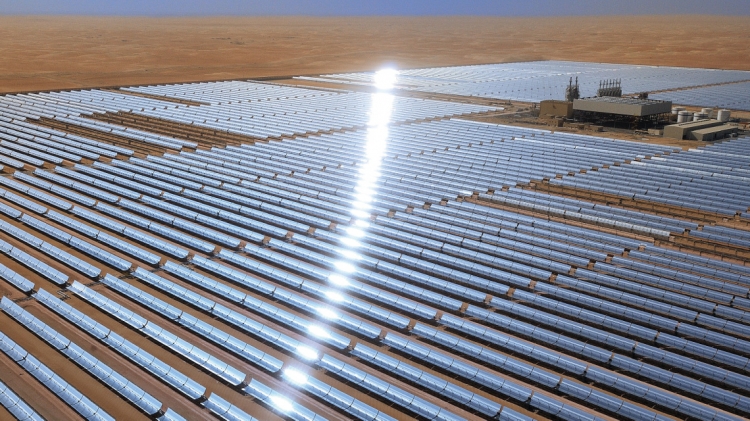
Opened last month, Shams 1 is the first operating CSP plant in the Middle East and, currently, the biggest in the world, until larger plants in the US come on line in 2014. It is already testing and demonstrating the technology¹s potential.

And the insights it is offering will support the development of larger and more cost-effective CSP plants. The 1.7 GW of worldwide CSP capacity planned for completion in 2013 may still pale relative to PV deployment, but it is a step towards pushing the technology learning curve and further establishing a valuable sustainable energy option.

Dr. Sgouris Sgouridis is associate professor of engineering systems and management at the Masdar Institute of Science and Technology.

Masdar Institute Scores Again at Semiconductor Olympics in San Francisco

UAE Presents Two Papers Signifying New Dimension in ‘Continuous Health Monitoring’ of People with Chronic Conditions     Abu Dhabi-UAE: 27 February, 2013 – Masdar Institute of Science and Technology, an independent, research-driven graduate-level university focused on advanced energy and sustainable technologies, today announced that students associated with two of their faculty members presented scientific papers at the IEEE International Solid-State Circuits Conference (ISSCC) 2013 in San Francisco.   The three papers – two solely led by Masdar Institute faculty and one in collaboration with a faculty from the Massachusetts Institute of Technology (MIT) – signify a new dimension in continuous health monitoring of people with chronic medical conditions. They also place the UAE in the forefront of a league of advanced countries in the West such as the UK, Germany, France, Sweden, Austria, Canada and Finland, from where two papers each were presented at ISSCC 2013.   The paper titled ‘A 1.83μJ/Classification Nonlinear Support-Vector Machine-Based Patient-Specific Seizure Classification SoC’, authored by Dr. Jerald Yoo, Professor, Microsystems Engineering and his three graduate students was presented on 18 February by Muhammad Awais Bin Altaf, a Ph.D. student in Dr. Yoo’s research group. A paper titled ‘A 0.5V <4μW CMOS Photoplethysmographic Heart-Rate Sensor IC Based on a Non-Uniform Quantizer’ authored by Dr. Michael Perrott, Professor, Microsystems Engineering and two of his former graduate students was presented on 20 February by Mohammad Alhawari, who was an MS student in Dr. Perrott’s research group.  This paper is also co-authored by a UAE national student, Nadya Albelooshi. In addition, Ms. Wala Saadeh, a PhD student at Masdar Institute, participated in the Student Research Preview.   The flagship conference of the Solid-State Circuits Society, themed ‘60 Years of (Em)Powering the Future’, was held from 17-21 February, 2013 at the San Francisco Marriott. Also known as the ‘Semiconductor Olympics’, the premier forum witnessed the presentation of several papers on advances in solid-state circuits and systems-on-a-chip. Masdar Institute’s success at the premier conference follows the presentation of two papers at ISSCC 2012 last year, the first time in history for a Middle East-based paper to show up at the conference.   Dr. Fred Moavenzadeh, President, Masdar Institute, said: “The scientific papers by our faculty will bring about innovative and wearable medical equipment that will be a boon to millions with chronic conditions. Additionally, these papers have successfully placed the UAE ahead of the technologically advanced Western countries, bringing honor to the region in terms of technology and special expertise. With the support of the UAE’s leadership, we continue to make headway in innovation as well as research and development, while obtaining clean energy solutions. We commend our faculty members and look forward to fruitful results of their research in the near future.”   Dr. Jerald Yoo said: “The seizure detection System-on-Chip (SoC) is the first work in literature to integrate multi-channel amplifiers, feature extraction, non-linear classification processor and memory, all on a single chip. A Band-Aid type seizure monitoring sensor is under development, which will enable epilepsy care, especially for babies and children. Also, the Photoplethysmographic heart-rate monitor IC is capable of being powered up by a solar cell.”   Dr. Michael Perrott said: “These ISSCC papers demonstrate the excellent work being performed by the students at Masdar Institute, and further our mission to build a high-tech workforce in the GCC region. In addition, the research presented in the papers will enable new, low-cost devices for continuous monitoring in healthcare applications, which is of increasing importance in this region.”   Both papers target healthcare applications, especially for those in chronic disease management. Circulatory diseases account for 27% of deaths in Abu Dhabi, while nearly 50 million people across the world are suffering from seizure. The works in these papers can be expanded to be a larger healthcare system by providing new dimension to ‘continuous health monitoring’ of those who suffer from such conditions or life-threatening situations, bringing down healthcare costs. This is also in line with some of the objectives of Abu Dhabi’s Vision 2030, which gives special focus on life sciences, healthcare equipment and services.   The innovations mentioned in the research papers come at the most opportune time for Abu Dhabi. According to estimates by Health Authority Abu Dhabi (HAAD), nearly AED10 billion was invested in 2012 alone to enhance healthcare in the emirate. A study by leading investment bank Alpen Capital has pointed out that the GCC healthcare market is projected to grow at an annual rate of 11% to US$43.9 billion (AED161 billion) by 2015 from an estimated US$25.6 billion in 2010, with Saudi Arabia and the UAE rated as the fastest growing markets.   Dr. Jerald Yoo also co-authored a collaborative work with Dr Anantha Chandrakasan, Professor and EECS Department Head, MIT. The paper was titled ‘A Scalable 2.9mW 1Mb/s eTextiles Body Area Network Transceiver with Remotely Powered Sensors and Bi-Directional Data Communication’. The paper is related to wearable body area network transceiver that will potentially be adopted by healthcare applications. Sensor nodes are wirelessly powered by radio frequency (RF). This system is capable of delivering power to sensor nodes while communicating bidirectional – between sensor nodes and a base station – a novel feature.   Earlier, on 17 February, Dr. Jerald Yoo also offered a presentation titled ‘Ultra-Low-Power Design: Towards True Energy Autonomy’ at the invited evening session. In the talk, he emphasized that system-circuit level co-optimization is essential to achieve an energy autonomous system.   Serving as a key pillar of innovation and human capital, Masdar Institute remains fundamental to Masdar’s core objectives of developing Abu Dhabi’s knowledge economy and finding solutions to humanity’s toughest challenges such as climate change.   Established as an on-going collaboration with the Massachusetts Institute of Technology (MIT), Masdar Institute integrates theory and practice to incubate a culture of innovation and entrepreneurship, working to develop the critical thinkers and leaders of tomorrow.  With its world-class faculty and top-tier students, the Institute is committed to finding solutions to the challenges of clean energy and climate change through education and research.
 

Tiny technology set to make a big difference in our buildings


2 June 2013

Concrete is everywhere. For every person, around two tons of concrete are produced every year, for buildings, roads, dams, bridges, walkways, parkways – all the infrastructure around us.

But while concrete is flexible in its applications, the material itself is very brittle. It can withstand amazing amounts of pressure, but when stretched or bent, it cracks and breaks. That rigidity makes it costly to use and maintain.

Reinforced steel bars (rebar) help, but at a high cost – and even then there is significant and costly wear and tear. Even in the UAE, where most of the buildings are relatively new, the concrete repair market is already worth around $50 million a year. As our roads, bridges and buildings age, that number is expected to balloon as weathering, foundation shifts and other phenomena take their toll.

If concrete could be made both more flexible and stronger, the savings could therefore be huge. A good deal of research is already focused on achieving that. But one area that has so far garnered little attention but has already shown significant promise is the combining of nanotechnology with materials science to create carbon nanotube-strengthened concrete.

Carbon nanotubes are carbon atoms arranged in the shape of tubes so small they are a one ten-thousandth of the diameter of a human hair. In this form, they are 100 times stronger than steel, lightweight, and able to transmit electricity and heat. Instead of running them through the concrete every few centimeters, as with rebar, the concrete can be made so it is chock-full of millions of these tiny stronger-than-steel rods.

My project at Masdar Institute, sponsored by the Qatar National Research Foundation, is investigating the properties of this nanotube-strengthened concrete. Our preliminary research has found that it can be not only stronger and more flexible, but also better able to withstand stretching and bending without cracking or breaking. Also, the nanotube’s thermal and electrical properties make it possible to construct smart concrete structures that can sense any damage or failure.

Our team is digging deep to design the ideal nanotube-strengthened concrete. To be able to model the behavior of millions of nanotubes packed into a section of concrete, we have created a specialized computational tool that can virtually generate random dispersals of the nanotubes.

We are also looking to include two other materials – carbon nanofibers and polymer microfibers, which are respectively each a scale of magnitude larger than carbon nanotubes, adding further dimensions of strength and flexibility to the material.

Preliminary studies have found that this can produce concrete that is five times as strong and durable as normal. Additionally, to reduce the its environmental footprint, our material will use industrial waste  – such as fly ash produced from coal burning and “slug” powder from steel factories – in place of energy-intensive cement powder. Globally, reducing cement production even by just 1% would be equivalent to taking millions of cars off the road in carbon output.

One challenge is make concrete in which the carbon nanotubes are evenly dispersed, and properly bound in. If the nanotubes clump together in one area, it could lead to weaknesses in other parts, while if the carbon additives fail to properly bond with the rest of the concrete ingredients, it could result in structural weakness.

In order to mitigate these issues we are collaborating with American industrial giant Lockheed Martin to “grow” the nanotubes directly on the cement particles and the micro-fibers, thus ensuring a strong bond and even spread.

It is our hope that with this research, we can help make the UAE’s ongoing structural projects stronger, longer lasting and more sustainable.

This will not only help save massively on material and repair costs, but also make buildings better able to withstand earthquakes and other potential structural impacts. With this research, we can help make crack-free, steel-free concrete part of our near future.

Dr. Rashid Abu Al-Rub is associate professor of mechanical engineering at the Masdar Institute of Science and Technology.