
Masdar Institute Wins Two Awards for Presentations on Space Technology at 2nd EMM Science Workshop

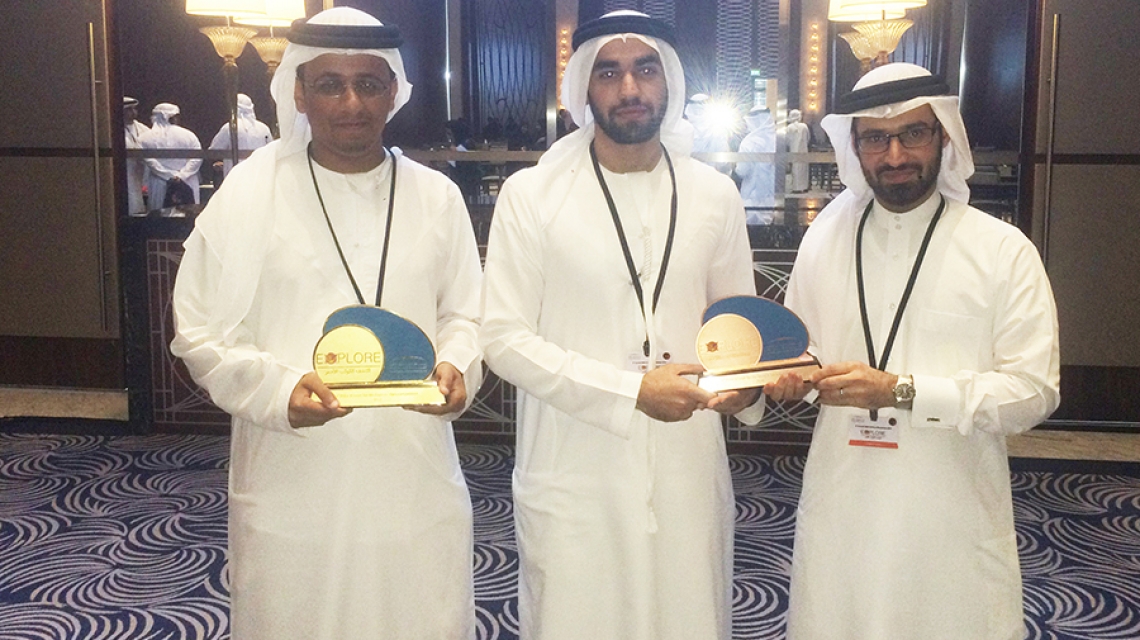
Students and faculty won two of the three awards – the first and the third – for their presentations on space systems and technology at the second annual Emirates Mars Mission (EMM) Science Workshop.

The awards reflect Masdar Institute’s crucial role in developing the human capital through its Master’s Concentration in Space Systems and Technology. Established in collaboration with Al Yahya Satellite Communications Company (YahSat) and Orbital ATK, the program fosters the advanced research areas in space science and technology needed to support the UAE’s national space program and space-related industries with human resources, technical advancements and infrastructure.

Congratulating the role of faculty and students for winning the award and their continuing contributions to the UAE’s space ambitions, Dr. Behjat Al Yousuf, Interim Provost, Masdar Institute, said: “These two awards and Masdar Institute’s intense involvement in the Emirates Mars Mission Science Workshop reflects our commitment to the UAE’s space goals. We are keen to continue to play our role in developing the intellectual and human capital needed to achieve the UAE’s scientific and technological goals, particularly in space systems.”  

Organized by the Mohammed bin Rashid Space Centre (MBRSC), the event aimed to address the science challenges posed by the Martian atmosphere. The UAE has a goal of sending an unmanned probe to Mars by 2021. The EMM Science Workshop covered various topics about the Red Planet, its history and evolution over millions of years, with the participation and presence of professors from UAE universities, the international scientific community, and students from the Research Experience for Undergraduates (REU) programs. Former NASA Astronaut Marsha Ivins was the chief guest at the event.

The first prize was awarded to a poster titled ‘Novel UAE Native Microalgae Species to Support Martian Human Habitable Environments’, presented by Masdar Institute’s Ahmed Al Harethi, a Chemical Engineering PhD student. Dr. Ayesha Al Marzouqi Assistant Professor, and Dr. Hector Hernandez, Assistant Professor, Department of Chemical and Environmental Engineering, were co-authors of the winning poster. The aim of this research is to develop biological and sustainable processes to support human living conditions on Mars. This research could provide oxygen for life, support food production for human consumption, transform organic waste into bio-fertilizers and recycling water for reuse on Mars. This is the first type of research at Masdar Institute that addresses the production of a habitable atmosphere on Mars.

The third prize was awarded to Engineering Systems and Management student Abdullah Essa Sharif, along with Mechanical Engineering students Adham Mohammad Aqil Hadi Alkhaja and Manar Almazrouei, who presented a poster titled ‘H2OBOT – A Robotic Mission to Explore Martian Liquid Salty Water and its Possible Use for Future Human Exploration’ for the ‘Explore Mars Poster Competition’ at the event. The three students belong to the Space Systems and Technology Concentration program that is sponsored by YahSat and were mentored by Dr. Prashanth Marpu, Assistant Professor of Water and Environmental Engineering, and Dr. Saif Al Mheiri, Assistant Professor of Mechanical and Materials Engineering.

Dr. Daniel Choi, Associate Professor, Department of Mechanical and Materials Engineering (MME) and Materials Science and Engineering, also presented a talk at the event titled ‘The Red Planet’. The presentation covered the planet’s temperature, size, atmosphere, and geologic processes while examining the Mars Environmental Compatibility Assessment (MECA) recently conducted by NASA’s Jet Propulsion Laboratory.  

The workshop offered a unique opportunity for those interested in space travel to hear expert insights from renowned space and science professionals including Marsha Ivins, a former NASA Astronaut.


Clarence Michael
News Writer 
16 October 2016
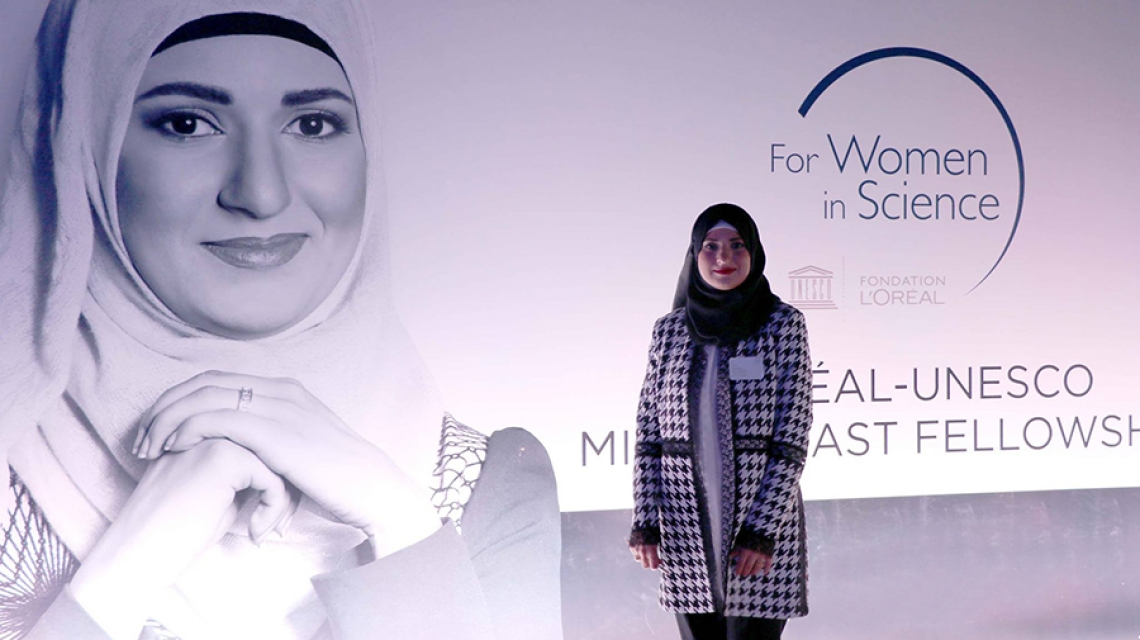
Masdar Institute Faculty Wins 2016 L’Oreal-UNESCO For Women in Science Middle East Fellowship Award

Her Excellency Sheikha Lubna Bint Khalid Al Qasimi, Minister of State for Tolerance, and President of Zayed University, presented the L’Oréal-UNESCO For Women in Science Middle East Fellowship 2016 award to Dr. Hanifa Taher Al Blooshi, Assistant Professor, Chemical and Environmental Engineering Department, Masdar Institute of Science and Technology.
 
Dr. Hanifa Easa Taher Al Blooshi won the award for her research in designing a new novel system for enzymatic biodiesel production. Chosen from a pool of 55 scientists from the six Gulf Cooperation Council (GCC) countries, Dr. Hanifa Al Blooshi has become one of the four recipients of the Fellowship that carries a cash prize of €20,000 (over AED80,500).
 
This is the second year that Masdar Institute is honored with the L’Oreal-UNESCO FWIS Middle East Fellowship. The program recognizes, honors and empowers Arab female scientists from the GCC countries whose findings have contributed to the advancement of scientific knowledge and helped change the world for the better.
 
Dr Behjat Al Yousuf, Interim Provost, Masdar Institute, said, “Congratulations to our faculty member Dr Hanifa Al Blooshi for winning the L’Oréal-UNESCO For Women in Science Middle East Fellowship 2016 award. This is the second time Masdar Institute has won this prominent recognition. This acknowledgement further illustrates Masdar Institute’s renowned faculty experts and we believe Dr Hanifa’s students and others will feel even more motivated to intensify their efforts in achieving sustainable technology innovations.”
 
Dr. Hanifa Easa Taher Al Blooshi said: “Being selected among a pool of 55 qualified applicants is a great achievement for me. I am sure that wouldn’t happen without the support I always receive from my lovely parents, as well as from both Masdar Institute and UAE University teams. The L’Oreal-UNESCO FWIS has also honored three additional distinguished researchers; from Qatar, Kuwait and Saudi Arabia, aiming to empower Arab women in science. The symbolic fund I received today will be mainly utilized in developing new green, sustainable and cost-effective biodiesel production. The Emirati Faculty Research Mobility Award, received in 2015 helped me to start working in biodiesel project at Masdar Institute. This additional award will give m e the chance to present my research finding in one of the well-known conferences in the field. In addition, this will motivate our graduate students to persist in their research.”
 
The L’Oréal-UNESCO For Women in Science Middle East Fellowships has recognized and honored over 2,170 women scientists in 112 countries in the past 18 years. The program is offered to promising young women researchers at crucial junctures in their careers when stereotypes and preconceived notions could be most detrimental.
 
This program rewards talented young female scientists in the field of Life Sciences including biology, biochemistry, biophysics, genetics, physiology, neurosciences, biotechnologies, ecology and ethology, as well as Physical Sciences such as physics, chemistry, petroleum engineering, mathematics, engineering sciences, information sciences, earth and universe sciences.
 
The pan-Arab jury panel of eminent scientists for the 2016 awards was chaired by Professor Mouin Hamzé, Secretary General, National Council for Scientific Research (CNRS) – Lebanon. The L’Oréal-UNESCO For Women in Science Middle East Fellowship was launched in 2014 in partnership with Zayed University under the Patronage of Her Excellency Sheikha Lubna Bint Khalid Al Qasimi.


Clarence Michael
News Writer 
22 October 2016

Lebanese President and Prime Minister Honor Award-Winning PhD Student Nazek El-Atab

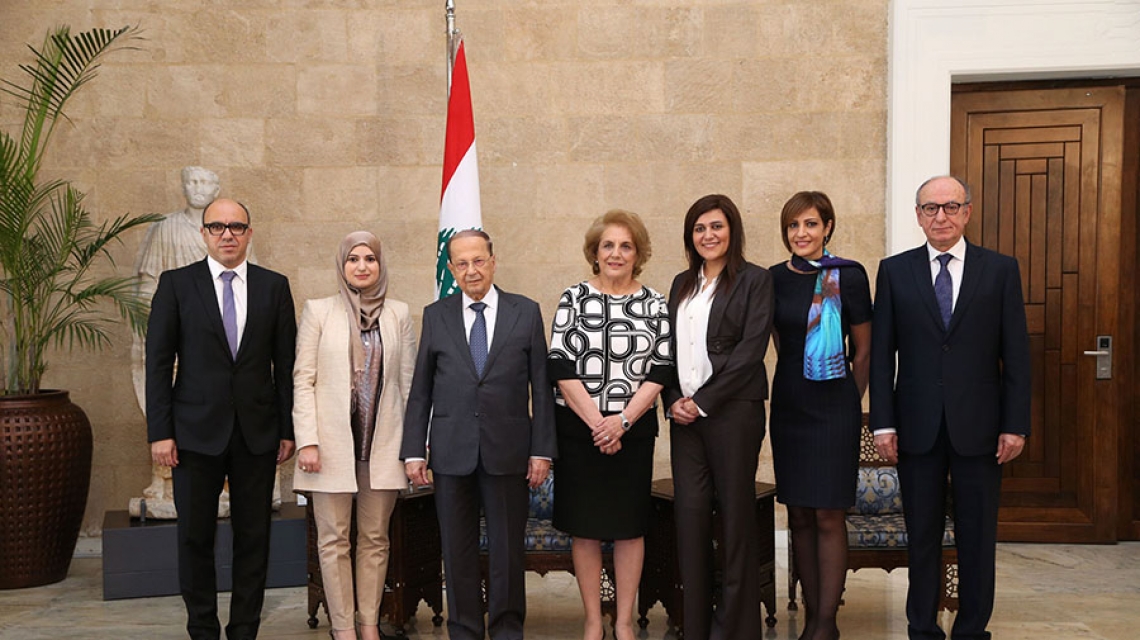
His Excellency Michel Aoun, President of Lebanon, and His Excellency Saad Hariri, Prime Minister of Lebanon, have honored Masdar Institute PhD student Nazek El-Atab, winner of the 2017 L’Oréal-UNESCO For Women in Science (FWIS) Rising Talent Award for the African and Arab region.

At a ceremony organized by L’Oreal Levant at the Presidential Palace in Baabda, overlooking the Lebanese capital Beirut, El-Atab was honored along with two other Lebanese winners of the L’Oréal-UNESCO For Women in Science (FWIS) awards – Prof. Nivine Khashab and Dr. Tamara Elzein. Others present on the occasion included Philippe Patsalides, Director, L’Oreal Levant, and Dr. Mouin Hamze, Secretary-General at National Council for Scientific Research, Lebanon. Previous winners of the same award from Lebanon and other L’Oreal Levant officials were also present.

Separately, El-Atab met with His Excellency Saad Hariri, Prime Minister of Lebanon, at the prime minister’s headquarters in the Grand Serail, Beirut. His Excellency Hariri expressed his pride and continuous support for the ‘women in science’ cause.

El-Atab said: “It was an extreme honor to meet the Lebanese President, and the occasion was especially special for me because it was organized to honor us – the Lebanese women in science.”

“His Excellency Aoun enquired about our research projects and said that he was very proud of our achievements. He hoped that I remain a role model and encourage other women to contribute to society through science and technology. He also expressed his continuous support and willingness to provide us with funds, if needed, to continue working on our research and registering more achievements beneficial to the global community.”

A PhD student at Masdar Institute, part of the newly established Khalifa University of Science and Technology, El-Atab recently received her award at the International Rising Talent Gala, during the 19th edition of the L’Oréal-UNESCO For Women in Science awards, held in Paris. She was awarded for her research in miniaturizing electronics without losing memory. El-Atab is also one of the four recipients of the 2015 L’Oreal-UNESCO FWIS Middle East Fellowships award.

Professor Niveen Khashab was chosen as one of the five laureates and was honored at the 2017 Edition of the L’Oréal-UNESCO For Women in Science Awards gala event in Paris. She was recognized for designing novel nanoparticles that could improve early detection of disease. Dr. Tamara Elzein, was honored for her work in trapping radioactivity in the Material Sciences area.

The L’Oréal-UNESCO FWIS International Rising Talents are chosen by an international selection committee formed of renowned scientists.

Clarence Michael
News Writer
4 April 2017

\\\’Dumbphones\\\’ offer smart solutions

By Dr Ayman Shabra

Mobile phones have changed all our lives – but one of the areas where they have had the biggest impact was both unexpected and unintended.

In many developing countries, they have been a boon to small business owners, allowing some of them to run their businesses from bicycles for example.

And there is a direct relationship between phones and a country’s wealth. Economic studies have found that for every 10 per cent increase in mobile phone penetration, gross domestic product rises by 1 per cent.

On its own this is no panacea. But it does earn mobile phones a place in the development equation. Now scientists at the Masdar Institute are working to make the most of these unintended consequences, as part of its effort to contribute to global development.

Programs like the Laboratory for Energy and Poverty Solutions (Leaps) at the Masdar Institute and the Centre for Technology and Economic Development (CTED) at New York University Abu Dhabi look beyond borders and bottom lines in pursuit of creative solutions relevant to a large part of the world’s populations.

For example, a team at Leaps is studying ways of making cooking in rural India cleaner. There, a woman cooking using a traditional biomass fire inhales the equivalent of two to five packs of cigarettes every day from the resulting smoke. It is estimated that biomass smoke contributes to over 1.45 million deaths every year.

The Leaps investigation has not only provided insights into fuel options that are much cleaner than gasified char briquettes and on par with liquid petroleum gas, it has identified options that are viable within the local context.

The Leaps lab is also exploring how small hydro-powered microgrids can address the energy problem of poor remote communities in eastern Malaysia.

Something as simple as developing a mobile phone that charges through a microgrid or solar power can make mobile technology possible for many millions of people without access to grid electricity.

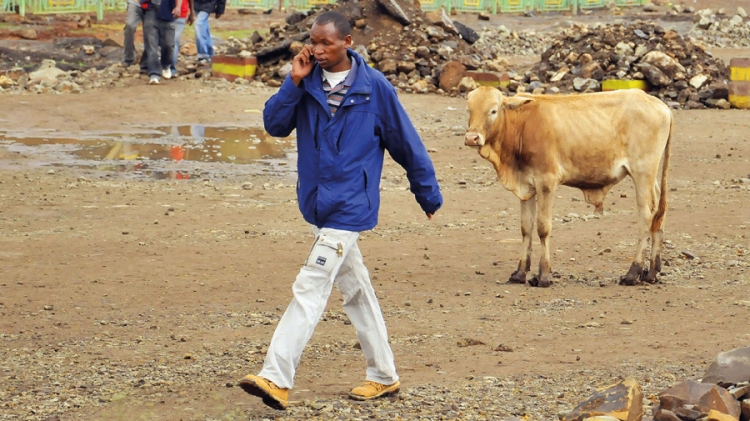
More than 300 million low-end mobile phones are sold each year. But as voice-only “dumbphones”, they deny their users the wealth of information on the internet.

This prompted researchers at NYU’s CTED to design and implement an SMS-based search system that gives users short but relevant responses to a wide range of internet searches.

They are currently testing the system on a Kenyan pilot group of 40 people, from slum residents to college students.

Similar efforts to spread the benefits of technology to the world’s poorest nations are going on in many places.

The MIT-led One Laptop Per Child project, for example, has reached millions of children worldwide.

These efforts help, but the needs are so great that we need many more projects to chip away at every level.

If we look at these efforts collectively, sustainability might just be found at the crossroad of intellect and compassion. What we need to do next is to create many more points of intersection.

Dr Ayman Shabra is an assistant professor of microsystems engineering at Masdar Institute of Science and Technology.
http://www.thenational.ae/news/uae-news/technology/how-dumbphones-offer-smart-solutions


ATIC Cleanroom at Masdar Institute Fully Operational

Facility enhances Abu Dhabi’s competitive technology research capability

Abu Dhabi, November 13th, 2013: The ‘ATIC Cleanroom at Masdar Institute’ became fully operational this week, significantly enhancing  Abu Dhabi’s competitive semiconductor research capability. Built as a part of a broader research and academic collaboration between the Advanced Technology Investment Company (ATIC) and the Masdar Institute of Science and Technology, the facility provides the ultra-clean environment and photolithography tools needed for advanced microelectronics research and small-scale production.

“This facility is a strong asset to research in advanced technology, and the only such cleanroom in the GCC, ” said Sami Issa, Executive Director at ATIC. “The research taking place in this cleanroom is guided by targeted industry and academic collaboration, playing a key  role driving technology development while laying the foundations for a thriving research hub in the region. This facility is also an excellent example of what can be accomplished from the focused collaboration of organizations committed to our Emirate’s development.”

Dr Fred Moavenzadeh, President, Masdar Institute, said: “The cleanroom facility reiterates our ongoing research collaboration with ATIC, one of our key stakeholders. With the support of the UAE’s leadership, Masdar Institute continues to offer new avenues for fostering specific skills of students in the semiconductor industry. We believe the facility will contribute further to strengthening Abu Dhabi’s knowledge capital in the high-technology sector.”

Up to 10,000 times cleaner than a medical operating theater, cleanrooms are critical to maintaining the sterile environment needed for semiconductor manufacturing. Research in the facility can occur on parameters over 1,000 times smaller than the width of a human hair, requiring advanced techniques to keep microscopic particles out of sensitive equipment. 

The cleanroom facility supports ATIC and Masdar Institute’s larger research initiatives, including Twin Labs, the ATIC-SRC Center of Excellence for Energy Efficient Electronic Systems (ACE4S) and broader research towards Minimum Energy Electronic Systems (MEES).

Backed by ATIC and the State of Saxony, Germany,  and hosted jointly by Masdar Institute and Technische Universität Dresden, Twin Labs has already achieved marked progress towards researching three-dimensional chip stacking, a potentially faster and more energy efficient semiconductor technology. According to some analysts, 3D architecture has the potential to reduce semiconductor power consumption by upwards of 60% when compared to today’s 2D layouts.

Launched in April this year and hosted jointly at Masdar Institute and Khalifa University, ACE4S focuses on energy efficient devices with research in energy harvesting, power management, sensor technologies and wireless communications networks. Within the first three years, ACE4S will seek to produce integrated prototypes with healthcare applications as well as knowledge and research relevant to safety and security, aerospace, water quality and the environment. These innovations will contribute towards what Global Information Inc predicts to be an AED 24 billion bio-MEMS market by 2018.  
Supporting many of the cleanroom’s research streams, GLOBALFOUNDRIES supports design enablement, deploying design-for-manufacture tools for leading-edge research on 28nm. GLOBALFOUNDRIES also supports larger scale tape-outs to their Fab 1 facility in Dresden, Germany.  

YFEL Members Collect Real-life Data for Projects in Sustainability near Ladakh

Members Visit Saspol Village, Hydroelectric Plant, 1,000-year Old Caves and Trek on Mountain near SECMOL in Leh, Northern India

Abu Dhabi-UAE: 14 November, 2013 – Masdar Institute of Science of Technology, an independent, research-driven graduate-level university focused on advanced energy and sustainable technology, today announced members of the Young Future Energy Leaders (YFEL) outreach program interacted with villagers in the Ladakh region, visiting their homes and collecting real-life data for their projects in sustainability.


The YFEL members were in India as part of a 10-day workshop on ‘Energy Access, Ethics and Development’ jointly being organized by YFEL with the Dalai Lama Center for Ethics and Transformative Values at MIT and the Jamyang School in Leh in northern India at the Himalayan foothills. They are joined by 25 Ladakhi students representing various organizations such as Students’ Educational and Cultural Movement of Ladakh (SECMOL), Leh Nutrition Project (LNP), Groupe Energies Renouvelables, Environnement Et Solidarités (GERES) India and The Ladakh Ecological and Development Group (LEDeG).

The week’s events included a visit by Helena Norburg Hodge, Director, International Society for Ecology and Culture (ISEC), and theory and hands-on sessions by Dr Scott Kennedy, Dean of Research, with Assistant Professors Dr Vinod Khadkikar and Dr. Weidong Xiao, and Tenzin Priyadarshi, Director of The Dalai Lama Center for Ethics and Transformative Values, MIT.  YFEL members with Dr Ken Volk, Head of Outreach, Masdar Institute, visited nearby areas of interest including Saspol village, caves with 1,000-year old Buddhist temples, a recently-opened hydroelectric plant and trekking near SECMOL.

Since 1975, Helena Norburg Hodge’s ISEC has been providing Ladakhis with information about the impact of conventional development in other parts of the world, while exploring more sustainable patterns of development in Ladakh itself, based on the use of local knowledge and resources.

Dr Scott Kennedy said: “Helena Norburg Hodge offered an inspiring speech on ISEC’s activities in Ladakh. Visits to a hydro-electric plant and nearby places of cultural interest expanded the vistas of the YFEL members. Inspecting the system at SECMOL was a real learning experience. We hope the course will enrich YFEL members and motivate them to build expertise in sustainable technologies that benefit remote communities.”

Dr Ken Volk said: “The YFEL members were remarkable in their interaction with the villagers, both in terms of cultural exchange and collecting real-life data for their projects. They showed true professionalism in their approach, demonstrating their capabilities as future energy leaders. They have lived up to their names as students of Masdar Institute and residents of the UAE.”

Dr Vinod Khadkikar conducted a theory session on photovoltaics (PV), diesel and batteries used for powering a house or small place such as SECMOL. Dr Scott Kennedy introduced the HOMER software to students to plan a power system for SECMOL. Students had to first determine the electrical load for SECMOL and then design the PV, batteries, wind, and diesel requirement with information provided through the database.

Student teams later used the software designed by Ayu Abdulla, Program Teaching Assistant, who was supported by YFEL member Denes Csala. The software ‘game’ helps people see the electrical use in a model home, based on appliances and other devices connected. This was the first time the ‘game’ was done with a group, all connected together to see how a ‘village’ uses electricity.  The following session was conducted by Dr. Weidong Xiao on electrical codes for PV systems after which students inspected the system at SECMOL. The YFEL course was completed on 24 August.

Part of the Masdar Institute’s Outreach program, YFEL offers young professionals and students from the UAE and abroad an opportunity to become more engaged in finding solutions to the world’s biggest challenges – achieving energy efficiency and tackling climate change. It also aims to bring young professionals closer to government representatives, business leaders and other organizations active in the area of alternative energy and sustainability.

Supportive policy frameworks are critical to deployment of next generation sustainable infrastructure, says Senior GE Executive


Ambassador Karan Bhatia Offers Perspectives on Sustainable Infrastructure Policy and Insights into Company’s Key Initiatives at GE-Masdar Institute Seminar in Abu Dhabi

Abu Dhabi-UAE: 19 November, 2013: At an event hosted by Masdar Institute, Ambassador Karan Bhatia, Vice President for Global Government Affairs & Policy at GE (NYSE:GE) addressed students, faculty and staff of the Masdar Institute of Science and Technology as well as other key stakeholders in the UAE on ‘Policy Frameworks for Clean Energy Infrastructure.’

The session was moderated by Dr. Sgouris Sgouridis, Associate Professor – Engineering Systems and Management.

Ambassador Bhatia highlighted in his remarks: “The development of sustainable, next-generation infrastructure in the Middle East to drive the region’s growth can be accelerated through supportive policy frameworks, speedy regulations, transparent procurement processes, advanced technology sharing, and strong public private partnerships. Ambassador Bhatia added that the resulting infrastructure investment will also boost job creation and promote local talent.

“GE is a leader in developing advanced, efficient technologies – both traditional and renewable, and has had a strong presence in the Middle East for over eight decades. We are now focused on developing the Industrial Internet, which, combined with our high technology products, has great potential to make technology more energy efficient, supporting the region’s energy sector strategies,” said Ambassador Bhatia.

“With growing constraints on public funding of infrastructure and energy projects, private sector investment can play a key role in developing renewable and energy efficiency projects, as well as in providing necessary expertise and technology. There is tremendous potential for partnership between Masdar and GE in these areas where the technology is well-tested, the business cases are strong and the benefit to the Emirate substantial.”

Turning to the importance of new investment in critical infrastructure, he said: “A country can sustain long-term development by investing in infrastructure because there is a clear correlation between infrastructure and economic growth and well-being. Economically and politically, the demands for infrastructure mean that we are entering a new ‘age of infrastructure.’ In this, the private sector will play a bigger role than ever before. Governments can attract more private sector investment through a clear commitment, speedy regulations, transparent procurement processes and through a talented workforce.”

Quoting statistics from the World Bank and global consultancy firm McKinsey, Ambassador Bhatia reiterated that even a minor increase in infrastructure investment could bring immense benefits to the community at large. He cited a recent World Bank report that estimates every additional 1% of world GDP spent on infrastructure would increase global GDP by 2% and the GDP in developing countries by almost 7%. He also mentioned a McKinsey study which has concluded that an additional 1% in GDP spent on infrastructure would translate into an additional 3.4 million jobs in India, 1.5 million in the US, and 700,000 in Indonesia.

Citing estimates by the International Energy Agency that 1.3 billion people around the world – including seven out of 10 people in Sub-Saharan Africa – lack access to electricity, Ambassador Bhatia said: “In terms of businesses never built, investments never made, children who die because clinics lack the power to refrigerate medicines, sterilize instruments or run basic tests, the economic costs are almost beyond calculation.”

With infrastructure becoming much more global, a paradigm shift is emerging in how infrastructure is built and financed. Ambassador Bhatia predicted that over the next 18 years, emerging and developing economies are likely to account for 40-50% of all infrastructure spending as against the advanced economies that accounted for more than 70% of global infrastructure investment in the past 18 years.

Ambassador Bhatia said that the ‘Industrial Internet’ approach rolled out two years ago by GE will bring far-reaching benefits to the global economy. A GE Whitepaper titled ‘The Industrial Internet@Work’ predicts that the new wave of innovation could boost global GDP by as much as US$10-15 trillion over the next 20 years, through accelerated productivity growth. In October 2013, GE reported that it has booked US$290 million in revenues so far this year from products developed using this philosophy.

Commending Masdar Institute researchers, Ambassador Bhatia observed: “The global community requires clean energy and advanced technology solutions to tackle current challenges, which makes Masdar Institute’s research contribution highly relevant. On our part, GE has pledged to adopt sustainable techniques in several areas including cutting down on greenhouse gas emissions and energy use. We have already made much headway and are on track to achieve our targets.”

According to the ‘2012 GE Citizenship Report,’ by the year 2015, GE aims to reduce its absolute GHG emissions by 25%, improve the energy intensity of its operations by 50% against its 2004 baseline year and reduce freshwater use by 25% against its 2006 baseline year.

The report further states that GE’s sustainability strategy, goals and reporting framework cover material issues such as implementation of supply chain standards, energy efficiency and use, greenhouse gas emissions and water impacts, and upholding high ethical standards. In general, the approach is one of incremental change, improving the social and environmental performance of existing business models year on year, adds the report.

From making batteries for the next-generation electric vehicle (EV) and reengineering wind blades that are low-noise and more prolific power-producers, to building devices that can offer on-demand medical diagnosis in less than an hour, GE continues to develop technologies that make a positive change on the global community across key sectors.

In the last year alone, GE invested nearly US$2 billion in clean technology research and development efforts under its ‘ecomagination’ initiative, which puts into practice the company’s belief that financial and environmental performance can be integrated to accelerate growth. The acceptance and impact of this strategy is underlined by ecomagination products and services generating about US$25 billion in revenue.

Serving as a key pillar of innovation and human capital, Masdar Institute remains fundamental to Masdar’s core objectives of developing Abu Dhabi’s knowledge economy and finding solutions to humanity’s toughest challenges such as climate change.

Established as an on-going collaboration with the Massachusetts Institute of Technology (MIT), Masdar Institute integrates theory and practice to incubate a culture of innovation and entrepreneurship, working to develop the critical thinkers and leaders of tomorrow. With its world-class faculty and top-tier students, the Institute is committed to finding solutions to the challenges of clean energy and climate change through education and research.

A*STAR Institute Of Microelectronics, GLOBALFOUNDRIE Singapore & Masdar Institute Of Science And Technology To Establish R&D Twin Lab To Advance Mems Technologies For Key Industries

The MoU was signed at the 5th Abu Dhabi-Singapore Joint Forum 2013 in Singapore

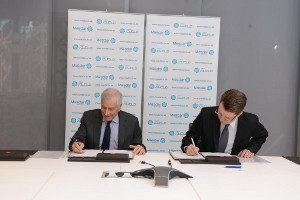
Singapore, 26 Nov 2013 – A*STAR Institute of Microelectronics (IME), GLOBALFOUNDRIES Singapore Pte. Ltd., and Masdar Institute of Science and Technology (MI) have entered into a collaboration to develop and advance micro-electro-mechanical systems (MEMS) technologies for automotive, aerospace, consumer, healthcare, industrial, and mobility applications. The joint research initiative, which builds on the Abu Dhabi-Singapore Joint Forum (ADSJF), is supported by the Advanced Technology Investment Company (ATIC), a Mubadala company focused on building leading technologies companies, and the Economic Development Board (EDB) of Singapore.
The Abu Dhabi-Singapore Twin Lab will focus on the development of MEMS technologies including inertial sensors, energy harvesters, nano-opto-mechanical sensors, and ultrasonic transducers. These platform technologies form the foundation of a wide spectrum of sensors that address high volume markets, including mobile platforms, distributed wireless sensor network, healthcare and environment monitoring.

GLOBALFOUNDRIES Singapore is a leading semiconductor foundry providing full-scale wafer manufacturing services to fabless and fablite semiconductor companies. The foundry will serve as the programme manager and manufacturing partner in this collaboration. The opportunity will also enable the foundry to expand its IP portfolio to address MEMS high-volume manufacturing at effective cost levels and capacity to serve the fast growing MEMS market.

“We are pleased to be in a strategic and mutually beneficial collaboration with the renowned research institutes from Singapore and Abu Dhabi,” said Mr K. C. Ang, Senior Vice President and General Manager of GLOBALFOUNDRIES Singapore. “This joint partnership will enable us to harness their R&D capabilities to create innovative technologies and products that will further solidify and strengthen our foundation in MEMS manufacturing.”

IME is a research leader in semiconductor research and development, under Singapore’s Agency of Science, Technology and Research (A*STAR), with an established track record in MEMS design and technologies. IME’s extensive experience in sensors and transducers technologies, MEMS process design and integration, as well as state-of-the-art research facilities will help to advance the joint research initiative and further develop innovative technologies for industry.

Professor Dim-Lee Kwong, Executive Director of IME, said: “This is a momentous milestone in the field of MEMS research and development for IME and for the parties involved in bringing this initiative to fruition. Each of us plays a key role in the semiconductor eco-system, namely government, industry, academia and research institute, with each bringing valuable opportunities and diverse knowledge. As such, we are confident that this partnership will enable us to successfully push our MEMS research capabilities to greater heights, and contribute to the advancement of the semiconductor industry in both Abu Dhabi and Singapore.”

MI is the world’s first graduate-level university, focusing on providing real-world solutions in advanced energy and sustainable technologies. The collaboration will open up opportunities for MI to leverage the industry intelligence of GLOBALFOUNDRIES Singapore and IME’s MEMS technology development capabilities to develop and grow MEMS scientific research programmes and initiatives.

Dr Fred Moavenzadeh, President of Masdar Institute, said: “The agreement with GLOBALFOUNDRIES Singapore and the Institute of Microelectronics illustrates our commitment to develop strong relationships with internationally renowned research-oriented institutions in advanced technology areas. With the support of the UAE’s leadership, we strive to develop expertise in leading edge areas recognized and pursued by other renowned institutions. We offer our expertise in fabless and fab-lite semiconductor technology and seek to achieve innovative solutions through our collaboration with the Singapore-based entities in MEMS-related research and development projects.”

The Memorandum of Understanding was signed today in conjunction with the Abu Dhabi-Singapore Joint Forum at Marina Bay Sands, and was attended by Mr Lee Yi Shyan, Senior Minister of State for Trade & Industry and National Development in Singapore, and His Excellency Khaldoon Al Mubarak, Chairman of the Executive Affairs Authority of the Emirate of Abu Dhabi (EAA).

Color and Pageantry Mark 42nd UAE National Day Activities at Masdar Institute

Emirati Culture Club and Masdar Institute Life Club Organize Numerous Activities Depicting UAE’s Culture and Tradition

– A plethora of activities filled with pageantry and color, powerfully depicting the UAE’s culture and tradition organized by the graduate students marked the 42nd UAE National Day celebrations at Masdar Institute of Science and Technology, an independent, research-driven graduate-level university focused on advanced energy and sustainable technologies.

The day’s activities began with the playing of the National Anthem by students, faculty and staff from Masdar Institute who were joined by 48 students from Ibn Sina School, Abu Dhabi, in singing the anthem and taking the ‘Pledge of Allegiance’ to UAE Flag. This was accompanied by releasing of balloons in UAE colors and the unfurling of the National Flag.

Dr Behjat Al Yousuf, Dean of Students, Masdar Institute, said: “Each year, we mark the UAE National Day with much fervor and enthusiasm. This year the Masdar Institute Life Club and Emirati Culture Club have organized the day’s events, showing their gratitude to the country’s leadership for their consistent support. On this memorable day, we offer our sincere wishes to the UAE’s leaders for ensuring the country’s steady economic progress over the years. At the same time, we offer our sincere congratulations to the UAE’s leaders for the winning bid for Expo 2020. The day is truly special with this additional achievement.”

Key features at the festivities included a ‘Gallery’ that displayed an image of the Founding Father of the UAE Late Sheikh Zayed bin Sultan Al Nahyan, painted by a student and video footages of the great leader who built the country into a modern progressive state. A ‘souq’ offered a glimpse into the market of a bygone era, while the features of ‘Old City’ were illustrated through huts with thatched roofs, a grocery and a traditional food section.

A total of 12 children role-played as students of the old Quranic School in reciting verses from the Holy Quran even as traditional and contemporary Emirati music continued to echo across the campus throughout the day.

Two integral aspects of desert life – the camel and falcon – were on display, reiterating the UAE’s link with traditional lifestyle. A vintage car showcased at the campus reflected the Emirati regard for antique design and fashion. Fisher-folk working on fishing gear near a 13mx3m sea vessel portrayed coastal life of a different era in the UAE.

Later in the day, guests were honored while three winners of the Floral Design and Flower Art Competition were presented with prizes. Participants in the two ‘Best Costume’ competitions – one for the visiting kids and the other for ‘International’ students – displayed their creativity to outrank others and take away the prizes.

Many UAE National students marked the day with their special messages. “Being an Emirati is a gift from the Almighty”, reflected Shaikha Omran Al Shamsi, a student at Masdar Institute, who greeted the country’s leaders for their support to youth.

Ahmed Simrin, a PhD student, said:  “I have lived in the UAE for more than two years now, and I can say that the UAE has become my second home. I am impressed by how fast this country is growing especially in this part of the world. As an Arab, I am proud of the UAE. On behalf of all Jordanians, I would like to congratulate the people and leaders of the UAE on the occasion of the 42nd national day.”

Serving as a key pillar of innovation and human capital, Masdar Institute remains fundamental to Masdar’s core objectives of developing Abu Dhabi’s knowledge economy and finding solutions to humanity’s toughest challenges such as climate change.

Established as an on-going collaboration with the Massachusetts Institute of Technology (MIT), Masdar Institute integrates theory and practice to incubate a culture of innovation and entrepreneurship, working to develop the critical thinkers and leaders of tomorrow.  With its world-class faculty and top-tier students, the Institute is committed to finding solutions to the challenges of clean energy and climate change through education and research.

IES Sign Statement of Cooperation with Masdar Institute of Science and Technology

IES and Masdar Institute will work together to promote mutual interest of creating a more sustainable built environment

Glasgow, Tuesday, 10 December 2013 – IES today announced they have signed an agreement with Masdar Institute of Science and Technology to form a working partnership that will promote the creation of a more sustainable built environment. The agreement includes the provision of free academic licenses of the IES Virtual Environment (IESVE) to students studying at the institute. IES will also provide six-week internships to the students.

IES has a vast range of building analysis software tools and will be extending its capability in a number of areas including masterplanning, Smart Cities and Smart Building Control. Masdar Institute has educational and research and development interests in all these areas and particularly as related to Abu Dhabi and Masdar City in the United Arab Emirates. This agreement will allow students to use IES software on research and development for the Masdar Institute. IES will benefit from the feedback from this work, incorporating it into its own R&D programme.

Dr Fred Moavenzadeh, President, Masdar Institute, said: “The agreement with International Environmental Solutions (IES), world leaders in precision and intelligent sustainability solutions, reflects our status as a front-runner in clean energy research, seeking collaboration with globally renowned institutions. We are privileged to enter into this partnership that will further facilitate our knowledge and human capital building efforts in the UAE and the GCC region, while helping to curb carbon emissions in built environment.”

”Masdar Institute has a strong track record in building and city energy modelling, as demonstrated by the number and variety of ongoing research projects sponsored by major Abu Dhabi energy players, such as Tabreed District Cooling Company and the Executive Affairs Authority.” says, Afshin Afshari, Professor of Practice, Engineering Systems and Management, Masdar Institute. “Applications range from demand-side management decision support to urban heat island assessment and fault detection and diagnosis of air-conditioning equipment. Our agreement with IES will enable us to further develop this expertise in the service of greater energy efficiency in the building sector of the Emirate of Abu Dhabi, through specialized training of our students and close interaction with the R&D team of IES.”

“IES has an extensive R&D programme with a large portfolio of European funded research projects in progress that are looking at the same areas of interest as Masdar Institute, and Masdar City is an ideal site to test much of this development work.” says, Don McLean, Founder and CEO, IES.  “This partnership is an excellent opportunity to make significant advancements in our joint vision for the creation of a more sustainable built environment.”


2013 Masdar Institute-Toyota Scholar Named by Three-Member Committee

Engineering Systems and Management Student Omar T. Mezher Selected from 25 Applicants

Abu Dhabi-UAE: 12 December 2013 – Masdar Institute of Science and Technology an independent, research-driven graduate-level university focused on advanced energy and sustainable technologies, and Toyota Motor Corporation, leaders in sustainable technologies and winner of the 2010 Zayed Future Energy Prize, today named Omar T. Mezher, an Engineering Systems and Management student, as the 2013 Masdar Institute-Toyota Scholar.

Mezher was selected by a three-member committee out of 25 eligible first-year MSc students who had participated in an essay competition to avail the two-year scholarship. Each year, the scholarship is awarded to a first year student in any one of Masdar Institute’s eight MSc programs. In addition to the usual Masdar Institute benefits, the scholarship recipient is provided with a special two-week ‘Japan Experience’ arranged by the Toyota Motor Corporation.

Toyota established the Masdar Institute-Toyota Scholarship as a generous response to winning the Zayed Future Energy Prize. The scholarship is designed to promote opportunities for students to work on projects in the area of technologies for sustainable development.

Nobuyuki Negishi, Chief Representative of Middle East & North Africa Representative Office, Toyota Motor Corporation, said: “We offer our congratulations to Omar T. Mezher, the third Toyota scholar at Masdar Institute. The naming of the scholar marks our continuous commitment to offer training and guidance to talented youth towards achieving green solutions. We are proud to be associated with leading academic institutions such as Masdar Institute and support the creation of suitable technologies for sustainable development through the scholarship program.”

Dr. Fred Moavenzadeh, President, Masdar Institute, said: “The announcement of the third Masdar Institute-Toyota Scholar further illustrates our collaboration in human capital development efforts. With the support of the UAE leadership, we continue to focus on developing and facilitating sustainable technologies through various partnerships. We congratulate Omar T. Mezher on his selection and hope, similar to the previous two Toyota scholars, his research too will help benefit sustainable development.”

Dr. Nawal Al-Hosany, Director of Sustainability, Masdar, and Director of Zayed Future Energy Prize, said: “The naming of the third Masdar Institute-Toyota Scholar signifies the role of Zayed Future Energy Prize in recognizing and nurturing talented youth capable to become future energy leaders. We hope the scholarship will additionally lead to the development of innovative solutions in renewable energy and sustainable advanced technology.  We congratulate Omar T. Mezher and wish him the best in his research work.”

Omar T. Mezher said: “Winning the scholarship offers me a great opportunity to strengthen my skills, both at Masdar Institute and through the ‘Japan Experience’. At Toyota, I hope to learn from the pace of work and the environment. By understanding their model adoptions and applications, I will be able to derive policies that push the UAE as well as Masdar Institute towards successful implementation of ongoing and future projects.”

In October 2012, Edgar E. Samano Baca from the Engineering Systems and Management program was named the second Toyota Scholar. Ayoola Brimmo, a Mechanical Engineering student who was the inaugural Masdar Institute-Toyota Scholar, successfully completed his two-year program in June 2013. Brimmo was similarly chosen through a competition held in October 2011.

Edgar Samano Baca said: “My research has benefitted as a result of the Toyota Scholarship. The learning opportunities exposed me to new tools and ways to go about solving problems in the transportation domain – my research focus. Also, two-week ‘Japan Experience’ provided me with a wealth of knowledge and experience. Many of the ideas and knowledge gained from this experience are scalable and translatable to other situations, while the Japanese way of thinking has broadened my perspective.”

Serving as a key pillar of innovation and human capital, Masdar Institute remains fundamental to Masdar’s core objectives of developing Abu Dhabi’s knowledge economy and finding solutions to humanity’s toughest challenges such as climate change.

Established as an on-going collaboration with the Massachusetts Institute of Technology (MIT), Masdar Institute integrates theory and practice to incubate a culture of innovation and entrepreneurship, working to develop the critical thinkers and leaders of tomorrow.  With its world-class faculty and top-tier students, the Institute is committed to finding solutions to the challenges of clean energy and climate change through education and research.

Masdar Institute At The Cutting Edge of Nano-Technology Research Following Partnership Agreement with Lockheed Martin

Organisers create waiting list to meet demand of young Emirati students wishing to join the STEM inspired education program

Masdar City, Abu Dhabi-UAE: 18 December 2013 – Emirati students and scientists in the UAE will become involved in cutting edge research into nano technologies and nano materials following a new partnership agreement between Abu Dhabi’s research-based Masdar Institute of Science and Technology and global aerospace and security leader Lockheed Martin.

The new relationship was formalized through the signing of a master research agreement by Dr. Fred Moavenzadeh, President, Masdar Institute, and Brad Pietras, vice-president, Corporate Engineering & Technology at Lockheed Martin.

“We recognize the need to empower Emirati youth through education, knowledge transfer and engagement,” says Brad Pietras. “Through giving local students and researchers direct involvement in hands-on, advanced scientific research we are actively supporting the UAE in the areas of skills and economic development as well as job creation which will deliver tangible, long-term benefits to the Emirates.”

Nano structures and materials have unique properties due to their strength, electrical conductivity and other factors which make them potentially suitable for use in aircraft fuselage design, plastics and water-desalination programs among others.

“Lockheed Martin is committed to supporting the development of a sustainable knowledge-based economy in the UAE and has decades of relevant experience to share with us while we have world class research infrastructure,” comments Dr. Fred Moavenzadeh. “It’s a privilege to partner with such a respected global corporation and to have its support for solving the challenges of tomorrow including  the development and introduction of effective aerospace and water desalination applications, among others, for Emirati business, industry and the wider Emirati community.”

The master research agreement will kick off with two projects that will be undertaken by Masdar Institute faculty. Dr Matteo Cheisa, Dr. Kumar Shanmugam and Dr. Amal Al Ghaferi undertake characterization and modeling of carbon nano-structured materials. Dr Raed Hashaikeh and Dr. Rashid Abu Al-Rub will be conducting research in carbon-nano structure (CNS) – coated membranes, building on a novel approach developed at the Institute that has already resulted in a patent filing.

With one granted US patent and 26 additional patent applications pending, Masdar Institute serves as a key pillar of innovation and human capital to Masdar’s core objectives of developing Abu Dhabi’s knowledge economy and finding solutions to humanity’s toughest challenges such as climate change.

Established as an on-going collaboration with the Massachusetts Institute of Technology (MIT), Masdar Institute integrates theory and practice to incubate a culture of innovation and entrepreneurship, working to develop the critical thinkers and leaders of tomorrow. With its world-class faculty and top-tier students, the Institute is committed to finding solutions to the challenges of clean energy and climate change through education and research.

From its headquarters in Abu Dhabi, Lockheed Martin Middle East, a wholly-owned subsidiary of Lockheed Martin Corporation, is working to develop business ventures, strategic initiatives and local partnerships which harness the innovation and energy of the Emirates and support the Economic Vision 2030 plan.

The new partnership with Masdar Institute builds on a research partnership with Khalifa University, launched at the Dubai Airshow, which aims to support the work of first responders, security and law enforcement agencies by improving situational awareness through the monitoring and analysis of open source data.

Lockheed Martin Middle East is a trusted partner for the UAE Armed Forces which uses latest-generation F-16 fighter jets to protect its airspace and national sovereignty and C-130 tactical transport aircraft to help meet its air transport needs.

AMMROC, a company operated in partnership with Mubadala Aerospace, provides world class military aviation Maintenance Repair and Overhaul (MRO) services for fixed and rotary wing platforms operated by the United Arab Emirates.

At last month’s Dubai Airshow, it was announced that Dubai International Airport had become the latest to install Lockheed Martin’s WindTracer, a system which detects and reports hazardous winds and aircraft wakes to improve the safety of aircraft operations.