KU Student Presents Pitch at the UN Youth Climate Summit in NYC

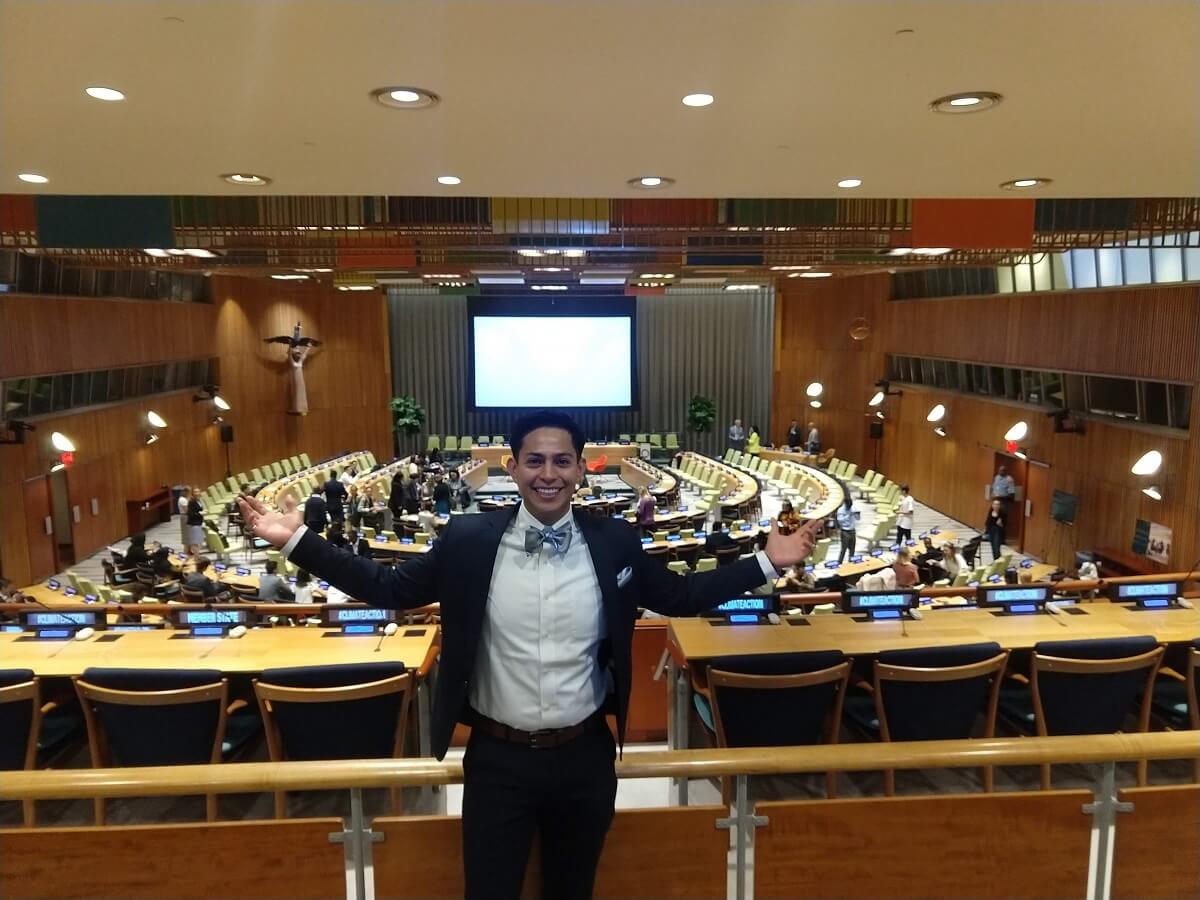
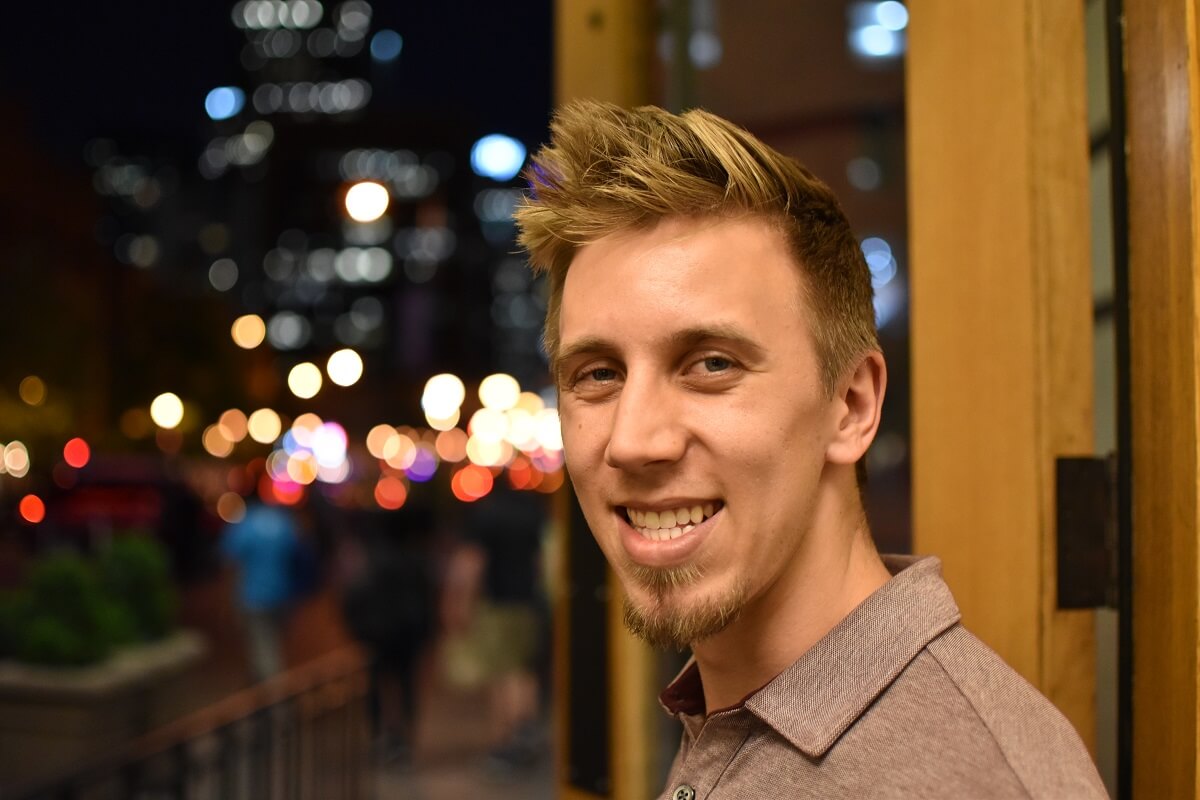
MSc in materials science and engineering student Edgar B. Mejia participated in the Summer of Solutions Young Entrepreneurs Pitch Competition, which was organized by the United Nations and held in New York as part of the Youth Climate Action Summit day on 21 September 2019.

Edgar was selected as one of five finalists from over 150 applicants from around the world to pitch at the Summit for his innovative, sustainability-focused Project 2 to 3 business idea. All projects aimed to provide a solution for one of three categories: Circular Economy, Climate Information, and Ethical Fashion.

Edgar’s solution addressed the challenge of the Circular Economy category. He proposed leveraging 3D printing to give a second life to single-use plastics. By converting the plastics into filaments, they could be fed into a 3D printer to make something new and useful.

“Presenting our project idea at the United Nations in front of hundreds of people was a life-changing experience. However, the most impactful part of this opportunity was meeting other young people who are determined to promote sustainable development. We need to become a generation that faces and fixes their own problems,” Edgar shared.

Edgar is a Fulbright Scholar and Co-Founder of IDEA 1.61, a startup in Mexico that aims to provide highly motivated students with access to design machines and training. The focus of his Fulbright is to research upcycling of high-density polyethylene plastic waste into 3D printing filament.

He received his BSc in Mechanical Engineering from the University of Illinois in 2018. While at Khalifa University, Edgar plans to continue doing research on novel plastics for additive manufacturing that can be easily recycled. Additionally, he is working on bringing IDEA 1.61 to the UAE, with the collaboration of national partners.

Erica Solomon
Senior Editor
9 October 2019

KU Algorithms are Making Self-Driving Cars Safer

 Three Innovative Autonomous Vehicle Research Projects Aimed at Making AVs Safer Were Featured at Dubai World Congress for Self-Driving Transport

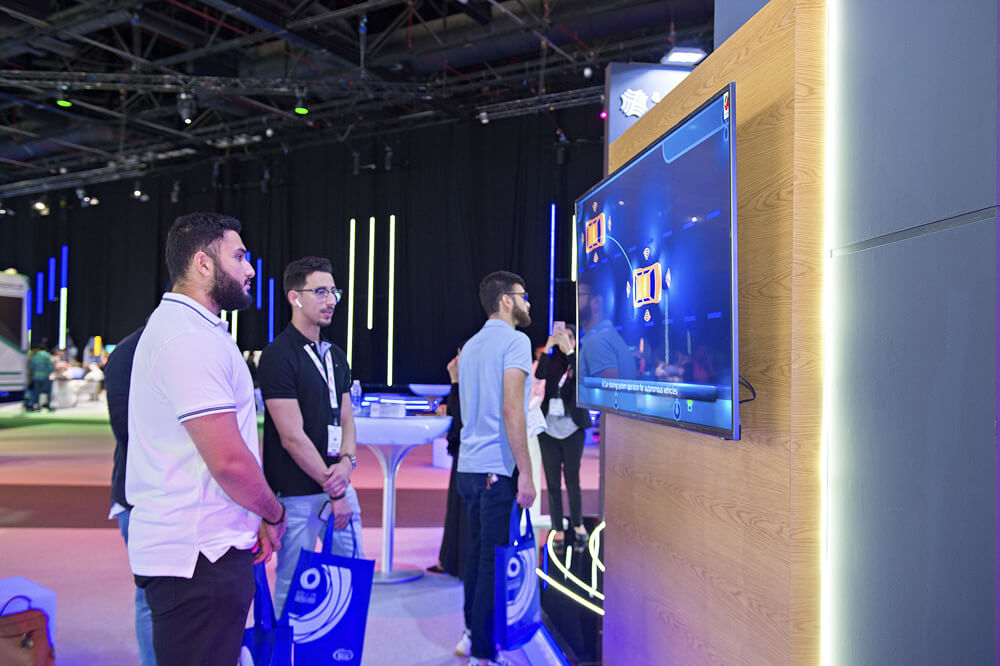
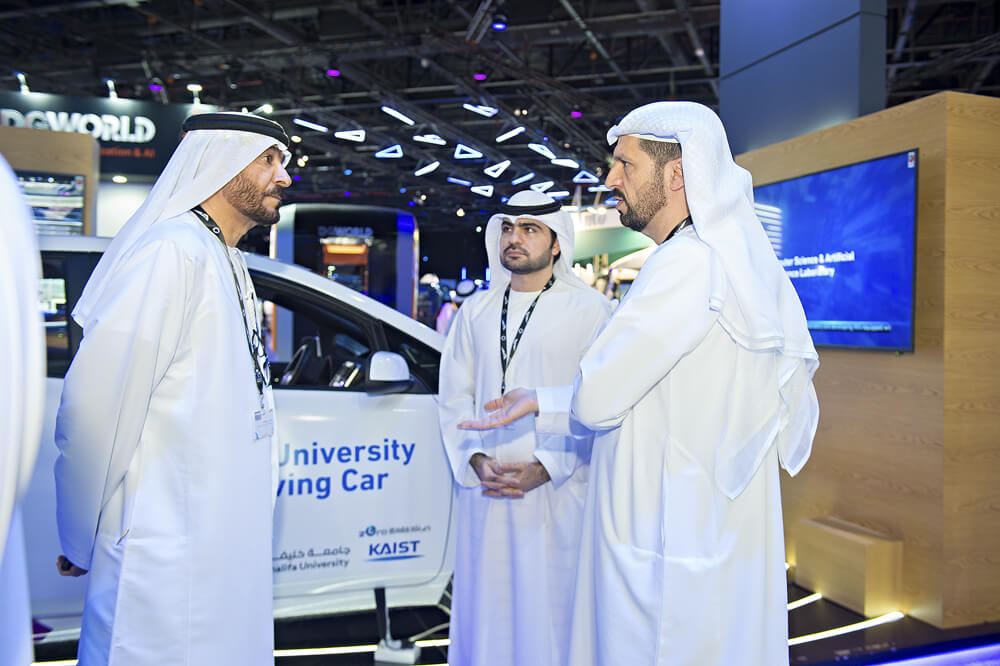
Khalifa University faculty and students showcased three cutting-edge projects that are advancing the state-of-the-art in autonomous vehicles and smart transportation during the Dubai World Congress for Self-Driving Transport, which took place from 15-16 October in Dubai.

The congress brought together top experts, policymakers, technology developers, researchers and academia to exchange ideas and proposals about connected autonomous vehicles.

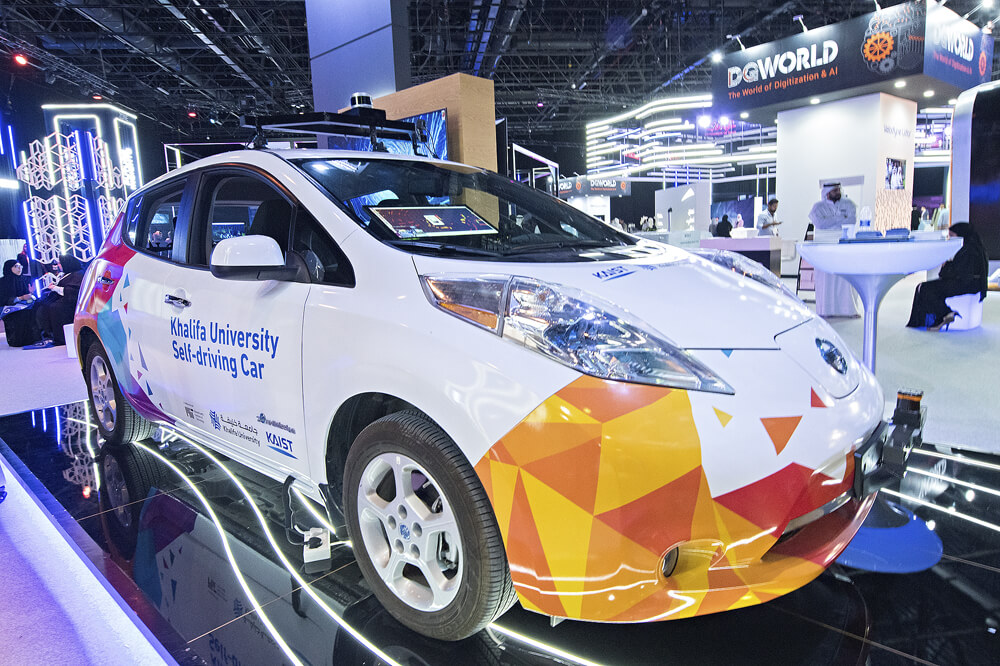
Dr. Majid Khonji, Assistant Professor of Electrical Engineering and Computer Science, and his students presented three projects, including a jointly developed KU-Korea Advanced Institute of Science and Technology (KAIST) self-driving car prototype, to hundreds of Congress visitors.

All three projects directly address the critical need to improve safety assurance of autonomous vehicles.

The first project is being developed by Dr. Khonji and a team of researchers at KU’s Center for Autonomous Robotic Systems (KUCARS) – one of the flagship research centers under the University’s newly launched Artificial Intelligence and Intelligent Systems Institute. The team is programming self-driving cars with robust algorithms designed to help an autonomous vehicle (AV) do route planning under uncertainty. Uncertain conditions and environments, like extreme weather and unknown roads, pose technical challenges to an AV’s perception algorithms – the algorithms that allow a car to understand what it “sees.”

The algorithms being developed at KUCARS aim to help AVs determine uncertainty from the environment through the three key subsystems of perception, prediction, and planning and control, while simultaneously helping to ensure safety.

The second project is being developed in collaboration with MIT’s Computer Science & Artificial Intelligence Laboratory (CSAIL). It aims to improve vehicle-to-vehicle communication between AVs. Improving an AVs ability to “talk” with other vehicles would significantly improve the safety and reliability of an autonomous vehicle.

The collaborative teams are developing connected AVs capable of planning trajectories while avoiding obstacles and meeting efficiency constraints while keeping collision risk below a given safety threshold that meets government regulations.

The third project on display at the Congress is the KU-KAIST self-driving vehicle prototype, which is being developed under the recently launched KU-KAIST Joint Research Center. The AV is being developed with enhanced vehicle-to-infrastructure communication capability that will allow the AV to receive critical information from a road network. It is also being developed with enhanced cyber-security systems, car-sharing systems, path following, and auto parking using magnetic field localization.

The Dubai World Congress for Self-Driving Transport featured more than 700 technology leaders and innovators and 3,000 visitors. The event aimed to highlight the leading role Dubai is playing in self-driving transport and to accelerate efforts to achieve the targets of Dubai Autonomous Transportation Strategy by attracting experts and technologies of self-driving transport to the UAE.

The event also honored the winners of the Dubai World Challenge for Self-Driving Transport (which carries a prize money of AED19 million). The challenge attracted 65 entities from 20 countries, 15 of whom qualified for the finals. The challenge focused on the first and last-mile challenge of mobility journeys.

Erica Solomon
Senior Editor
16 October 2019

From Northeastern to Khalifa: Fulbright Program Brings Bioengineering Experience to KUCARS for a Year of Research

  • Photo credit: Samuel Haas


Conor Messer, Visiting Research Intern from Northeastern University, proves students can combine their area of study and personal interests in exciting ways.

Conor Messer, recipient of one of the most prestigious and competitive fellowship programs in the world, has chosen the Center for Autonomous Robotic Systems (KUCARS) as his place of research for the next year.

“I was awarded the Fulbright through the US government in coordination with the UAE government,” explained Messer. “The fellowship exists to promote cultural exchange and provides me with support for academic research abroad for approximately one year. I am being hosted by KU, with Dr. Federico Renda in the Mechanical Engineering department as my advisor.”

The Fulbright Program is one of several United States Cultural Exchange Programs whose goal is to improve intercultural relations, cultural diplomacy, and intercultural competence between the people of the United States and other countries through the exchange of persons, knowledge and skills.

Founder of the program, US Senator J. William Fulbright, said the program “aims to bring a little more knowledge, a little more reason, and a little more compassion into world affairs and thereby increase the chance that nations will learn at last to live in peace and friendship.” Messer took inspiration from his experiences in Jordan, where he volunteered with refugees, during his time at Northeastern University in Boston. He took up Arabic language lessons and formed a student group aiming to break down misconceptions between Muslims and Christians and give followers of both faiths a space to learn more about each other.

Messer joins KU in the UAE’s Year of Tolerance, where tolerance is emphasized as a universal concept and sustainable institutional endeavor to bridge the people of the world and their various cultures in an environment of openness and coexistence. His work in Boston complements the values that are so important for the UAE, especially in The Year of Tolerance.

“As I prepared my application for the Fulbright, I knew I wanted to continue my studies in Arabic and be immersed in Arabic culture while also pursuing research in medical robotics,” said Messer. “As I explored the offerings of different universities in the region, it quickly became apparent that not only is Khalifa a top-notch university, but it also boasts one of the best robotics programs in the region. As a matter of fact, I had heard about the inaugural Mohamed Bin Zayed International Robotics Challenge (MBZIRC) through my research advisor back at Northeastern, so I knew there were a lot of new developments happening in the program. I was able to get in touch with Dr. Renda and together we came up with a proposal centered on the design and implementation of a soft robot for minimally-invasive surgery, furthering work already happening in his lab.”

Messer is currently a Visiting Research Intern in the Department of Mechanical Engineering, bringing his academic knowledge and degree in bioengineering from Northeastern University to KUCARS.

“With my background in biomechanical engineering and computer science, research on surgical robotics is a logical application of my skillset and passions,” explained Messer. “As a discipline, robotics is transforming many industries, with healthcare no exception. However, there are many concerns with safety when using robots in medical environments. Soft robots, with their inherent compliance and flexibility, are much safer to use in human interaction than their rigid counterparts and are currently being investigated for use in surgical intervention.”

Soft robots are a new trend in robotics research. Just as robots are asked to complete increasingly complex and intricate tasks, they are expected to do so in increasingly diverse environments. To achieve this, reconfigurable robots that are able to dynamically adapt their structures to accomplish their tasks are being developed. Dr. Renda, Assistant Professor of Mechanical Engineering, has been researching soft robots with a project on a flagellum-inspired soft underwater propulsor to achieve safe and reliable interaction with delicate environments such as oil pipelines.

“Soft robotics is a new branch of robotics that deals with highly deformable robots,” explained Dr. Renda. “The main driver is the search for advanced robots capable of intervention in unstructured environments, including human-robot physical interaction.”

“We are working specifically on a concentric tube robot that can be used in various minimally-invasive interventions from cardiac surgery to endonasal neurosurgery,” added Messer. “It can travel to hard-to-access locations while avoiding sensitive anatomies (unlike rigid robotic devices) and its complex geometry is controllable and allows for significant force application (unlike current surgical catheters). My research focuses on extending the design space of this robot to non-constant curvatures and developing an algorithm for its design and path planning, all of which should allow for better use of the robot in anatomies with tortuous geometries, such as the lungs, heart, and brain.”

KUCARS and the Healthcare Engineering Innovation Center are researching a new generation of continuum robots for force and stiffness control in endoluminal cardiac intervention. The goal is to create an automated robotic catheter that can safely navigate tis way through the heart, controlling contact force with tissue walls, and performing procedures such as angioplasties and valve repair.

“Conor has only been here a month so far, but we have already defined a nice research plan that can lead to non-negligible contribution in the field of continuum robotics for medical application,” said Dr. Renda of Messer. “I also involved him in other smaller research activities with other members of my team, including MSc students. It seems that they are doing well together and everything is going smooth so far.”

Messer clearly agrees.

“I have been enjoying my life here thus far, both the research as well as my social life,” he said. “In only a month and a half, I feel I have found some good friends and become accustomed to the university. Though I certainly have some hard days and do miss friends and family back home, I am enjoying life here in Abu Dhabi.”

Jade Sterling
News and Features Writer
3 November 2019

Khalifa University Community Marks UAE Flag Day

Campuses Decked in UAE National Colors as Entire Community Joins to Collectively Raise Flags

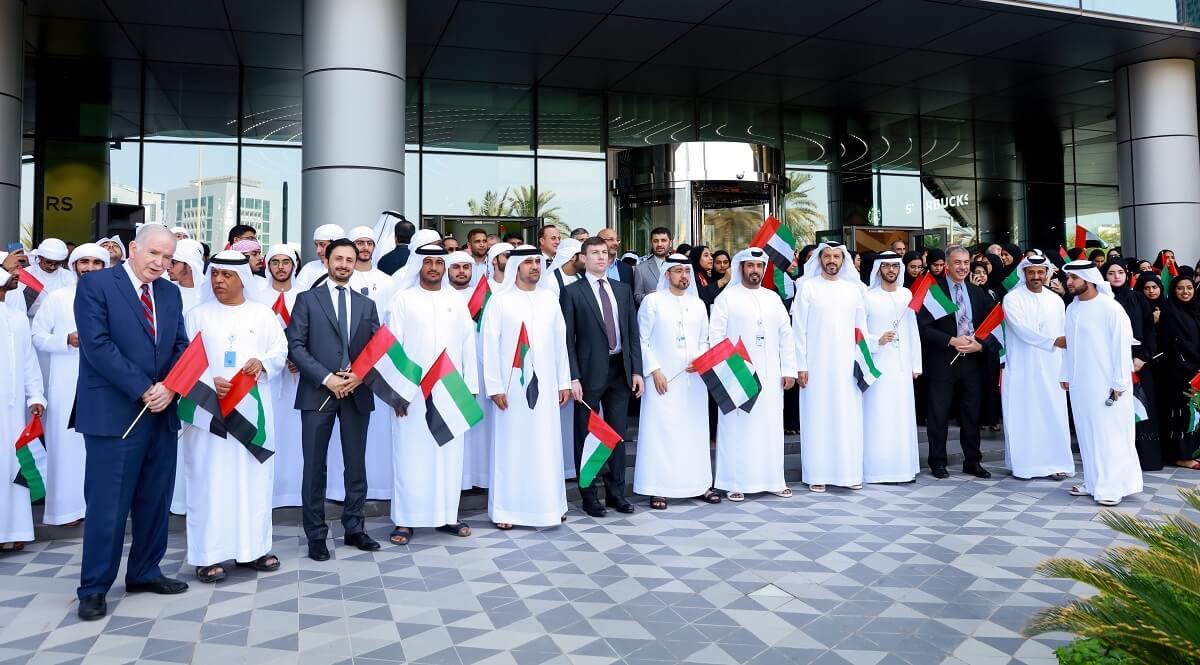
The entire community of students, staff and faculty members of Khalifa University of Science and Technology marked the UAE Flag Day with enthusiasm and traditional national fervor by raising the national flags during a ceremony organized at the Main and Sas Al Nakhl Campuses.

The UAE National flags – a symbol of pride, loyalty and belonging for both Emiratis and expats – fluttered across both campuses as patriotic cheers marked the event when those gathered raised the flags to the accompaniment of the UAE National Anthem. The national flag was hoisted by Dr. Arif Sultan Al Hammadi, Executive Vice-President, Khalifa University. Other senior members of the KU management were present on the occasion.

The Flag Day is celebrated on November 3 every year to mark the accession of President His Highness Sheikh Khalifa bin Zayed Al Nahyan. It is a national occasion where people of the UAE remember the efforts of the founders of the country, including the Late Sheikh Zayed bin Sultan Al Nahyan and Late Sheikh Rashid bin Saeed Al Maktoum, and other leaders for their sacrifice and contribution towards establishing the UAE.

This year, those who cannot raise a flag at home or workplace will have the opportunity to do so in the virtual world from anywhere on Earth, thanks to an initiative by the Ministry of Education. The ministry has created an online platform for UAE citizens and residents to proudly raise the national flag electronically.

The UAE National Flag, which represents UAE citizens and the values such as dignity, pride, achievement, safety, peace, and happiness, is used at all national events, as well as religious, social, sporting and other occasions, internally and externally.

Clarence Michael
News Writer
3 November 2019
EBTIC Team Scored First Place in Data Mining Challenge

Khalifa University’s Emirates ICT Innovation Center (EBTIC)has scored first place in the “Suspicious Network Event Recognition” – a data mining challenge organized in association with the IEEE BigData 2019 conference, beating out 2,400 solutions that were submitted and winning US$1,000.

Dr. Dymitr Ruta, Chief Researcher, and Dr. Cen Ling, Senior Researcher, from EBTIC teamed up with the former EBTIC colleague Dr. Quang Hieu Vu on a challenge to decide which internet security alerts should be regarded as suspicious based on information extracted from network traffic logs.

The team developed an efficient model to extract essential summarized content from billions of traffic event data and used it to efficiently train eXtreme Gradient Boosting (XGBoost) – a state of the art machine learning model – to make the most accurate predictions. Their model outperformed the 249 competing teams from around the world, who submitted over 2,400 solutions.

The IEEE International Conference on Big Data (IEEE BigData) provides a leading forum for disseminating the latest research in Big Data. IEEE Big Data brings together leading researchers and developers from academia, research and the industry from all over the world to facilitate innovation, knowledge transfer and technical progress in addressing the 5 V’s (Velocity, Volume, Variety, Value and Veracity) of Big Data. The purpose of the conference is to identify deep technical and scientific nature of big data problems, and share the future direction on the development of next-generation solutions for data-driven decision making.

IEEE BigData 2019 is taking place in Los Angeles, California, USA from 9-12 December.

Erica Solomon
Senior Editor
12 November 2019

L’Oréal-UNESCO for Women in Science Program 2019 recognizes outstanding female scientists in the Middle East

Six scientists win recognition for their pioneering research in scientific development in the region

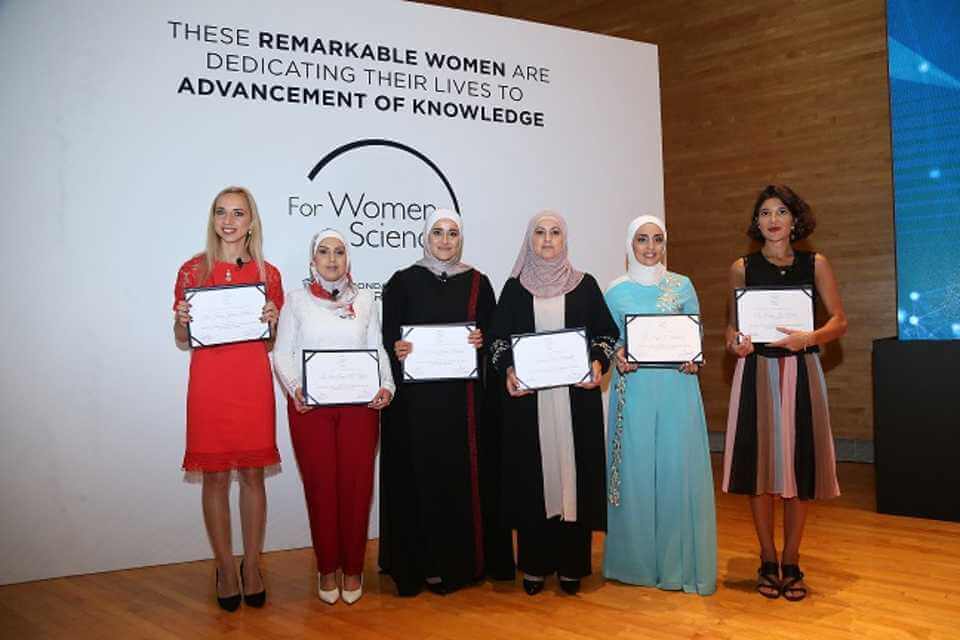
The 6th edition of the L’Oréal-UNESCO for Women in Science Middle East Fellowship has recognized six leading women scientists who have made extraordinary discoveries in their fields in 2019. This initiative is part of the global L’Oréal–UNESCO for Women in Science program that has recognized over 3,200 outstanding researchers in its 21-year history, three of whom have gone on to win the Nobel Prizes.

This year, the program has received the endorsement of H.E. Sarah bint Yousef Al Amiri, Minister of State of Advanced Sciences, and is being held in partnership with Khalifa University of Science and Technology. An awards ceremony to honour the recipients took place at W Hotel in Dubai on November 11th where Dr. Maryam AlYammahi (UAE), Dr. Fatma Al Ma’Mari (Oman), Dr. Wafa Audah Altalhi (Saudi Arabia) and Dr. Nour Alsabeeh (Kuwait) each received EUR 20,000 in the Post-doctorate Researchers category. Wafaa Ramadan (UAE) and Asma Al-Amoodi (Saudi Arabia) each received EUR 8,000 in the PHD Students category, in recognition of their contribution to science and their aspiring research work.

“L’Oréal-UNESCO for Women in Science Middle East Fellowship is an important recognition that values women’s success in different fields of science,” said H.E. Sarah bint Yousef Al Amiri. “Growth and development of all scientific fields should be an inclusive effort. Removing gender-biasness in research will ensure a higher impact of its outcomes. I wish the 2019 fellows all success as they continue on their journey of discovery – and hope their research will help overcome some of the biggest scientific challenges of today. “H.E. added.

Remi Chadapaux – L’Oréal Middle East Managing Director, said: “Now in our sixth year, we are honoured to recognize an outstanding group of women who have left no stone unturned in their quest for knowledge and scientific application. The L’Oréal-UNESCO For Women in Science Middle East program was established to recognize, promote and encourage exceptional women scientists, and today it has become one of the most highly regarded initiatives in the region. The scientific research and commitment of these women to improve the lives of people is unmatched and deserves the highest levels of support and acknowledgment within our communities.”

The L’Oréal-UNESCO For Women in Science Middle East Program is based on the belief that the world needs science, and science needs women, because women in science have the power to change the world.

The MENA region has witnessed a rapid growth of Arab women taking on roles in STEM fields, with a number of initiatives across schools, universities and communities. According to UNESCO, 34-57 percent of STEM grads in Arab countries are women, which is significantly higher than in universities in the US or Europe. L’Oréal has been one of the first companies to create a globally recognized initiative to support and encourage female STEM graduates on such a large scale.

This year, the L’Oréal-UNESCO For Women in Science Middle East program is held in partnership with Khalifa University of Science and Technology, with a shared vision to give talented women scientists a voice and platform to pursue research in STEM fields. The program is committed to improving the representation of women in science and particularly in top decision-making positions by breaking gender biases and obstacles.

Professor Mouïn Hamzé, President of L’OREAL Jury, said: “The active contribution of Arab women to the development of scientific research, innovation and sustainable development in our region should not be seen as an option or a luxury, but rather as a necessity and a shared responsibility of all components of our societies. Empowering Arab women to play a leading role in facing challenges in health, environment and societal problems, requires serious attention towards: dismantling stereotypes around the social roles of both sexes, bridging the gender gap, and mobilizing decision makers to end the political instability and armed conflicts that constitute a threat to human capital and its development in the Arab world.”

Dr Arif Sultan Al Hammadi, Executive Vice-President, Khalifa University of Science and Technology, added: “As a research-intensive academic institution that believes in the empowerment of women across all areas, Khalifa University is proud to support the L’Oréal-UNESCO For Women in Science Middle East program. We are also proud that the percentage of female students studying engineering and science at Khalifa University remains one of the highest in the world. This is in line with UAE leadership’s consistent support to women empowerment. We believe that science knows no gender – and there is an urgent need for institutions in the Middle East to recognize and support women across STEM fields by providing them with the necessary tools to complete their research. We would like to extend our congratulations to the six female scientists this year for their outstanding passion, skill and unwavering dedication to science and research.”

About the 2019 Fellows:
Postdoctorate Researchers category
• Dr. Maryam AlYammahi (UAE): For her research on developing a new method for efficient access and retrieval of information from Big Data systems
• Dr. Fatma Al Ma’Mari (Oman): For her research on creating new magnetic materials to replace rare earth materials as a major component in energy production
• Dr. Wafa Audah Altalhi (Saudi Arabia): For her research on improving patient health by moving away from the reliance on organ donors
• Dr. Nour Alsabeeh (Kuwait): For her research on investigating mechanisms underlying the development of type 2 diabetes

PHD Students category
• Asma Al-Amoodi (Saudi Arabia): For her research on enhancing the use of certain stem cells for the treatment of haematological diseases like leukaemia
• Wafaa Ramadan (UAE): For her research on improving the success rate of breast cancer diagnosis and treatment among women

News Writer
11 November 2019

Center for Teaching and Learning (CTL) Promotes “7 Habits” for Success among Students and Teachers

  •  Twelve faculty and staff members from the Preparatory Program became certified to teach the “7 Habits for Highly Effective College Students” course at KU

Khalifa University is first to run the one-credit hour course, “7 Habits for Highly Effective College Students,” and provide training to potential KU instructors.

Khalifa University’s Center for Teaching and Learning (CTL) launched a life-changing student success course this semester for STEM 2 students in the Preparatory Program, called Skills for Academic Success (SDAS 001).

Skills for Academic Success is focused on teaching students important study skills needed to progress in the university environment. The core text of the course is the “7 Habits for Highly Effective College Students”, a high-impact course built on the foundation of the global bestselling book The 7 Habits of Highly Effective People.

“This maiden semester saw almost 300 students putting the principles of the ‘7 Habits for Highly Effective College Students’ into practice through increased proactivity, goal setting, time management, study skills, life skills, and more,” said Joud Jabri-Pickett, English Instructor in the Prep Program.

Earlier this year, Jabri-Pickett and Dr. Abdus Sabur Muhammad, Head of Student Retention and Advising, became certified as facilitators for the “7 Habits for Highly Effective People”, a program developed by FranklinCovey, a global company specializing in performance improvement, to introduce foundational principles, paradigms and practices of the “7 Habits” to employees.

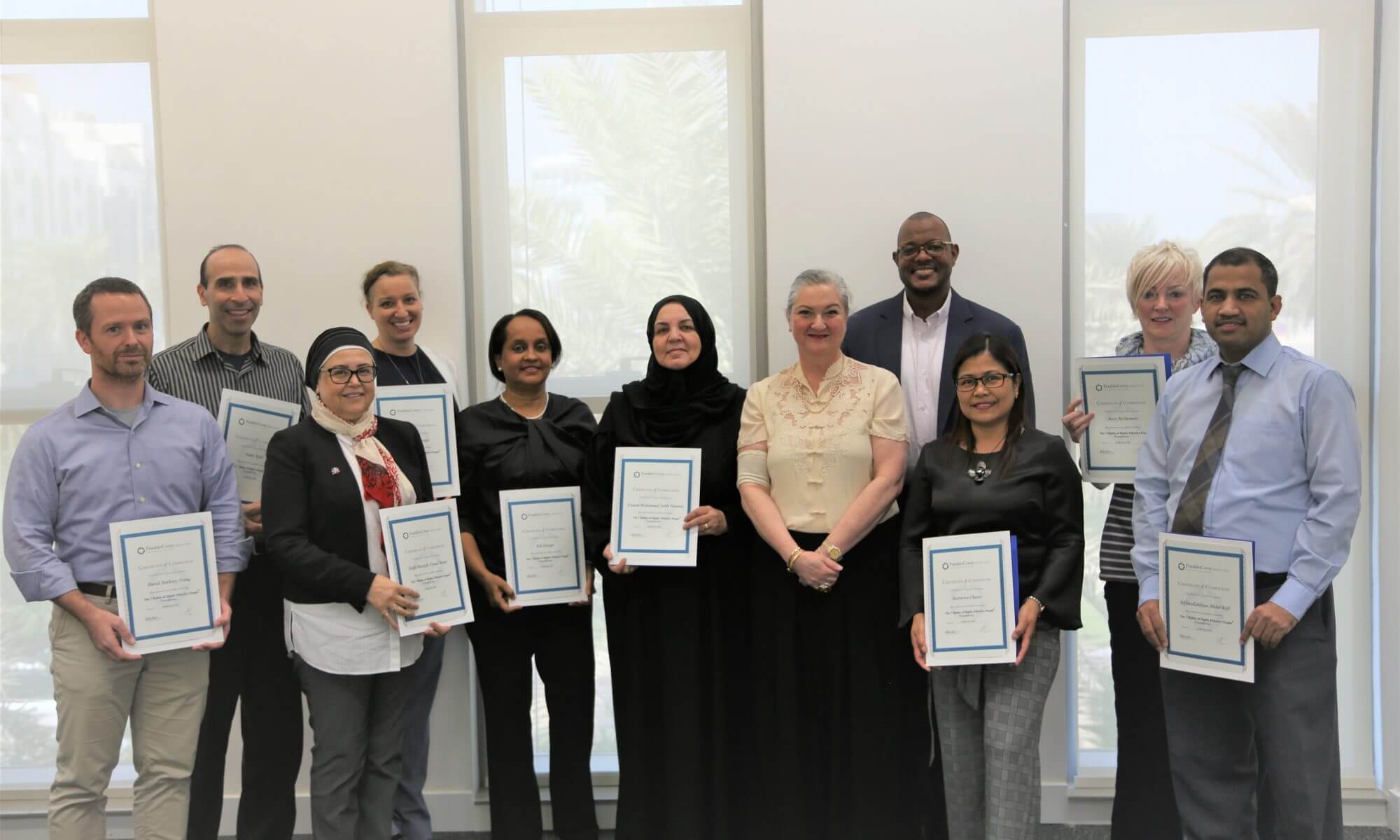
They recently facilitated a workshop for 12 administrative staff and faculty members of the Preparatory Department, called “7 Habits Foundations at KU,” to introduce the principles that support greater effectiveness within their departments. The faculty and staff are now certified to teach the “7 Habits for Highly Effective College Students” and help students learn the principles of university effectiveness, which will propel them toward greater academic maturity and performance.

The 7 Habits® is the world’s best-known personal-leadership framework, synthesizing key principles of personal and interpersonal effectiveness. A list of the 7 Habits® follows:

  • Habit 1: Be Proactive
  • Habit 2: Begin with the End in Mind
  • Habit 3: Put First Things First
  • Habit 4: Think Win-Win
  • Habit 5: Seek First to Understand, Then to Be Understood
  • Habit 6: Synergize
  • Habit 7: Sharpen the Saw


Jabri-Pickett hopes to continue providing the workshop to various departments across the university community, both academic and administrative, to promote positive, lifelong learning and success habits in all classrooms.

Erica Solomon
Senior Editor
14 November 2019

Student Wins CSAW Best Paper Award for Hardware Locking System to Protect ICs

PhD student Lilas Alrahis won Best Paper Award for her paper titled “ScanSAT: Unlocking Obfuscated Scan Chains,” at the Applied Research Competition – MENA Region, one of nine competitions held in association with the New York University’s Cyber Security Awareness Week (CSAW) 2019, which took place from 6-8 November 2019.

Her winning paper addresses a key security issue arising out of the shifting microelectronics supply chain landscape.

“The dramatic increase in fabrication costs of Integrated Circuits (ICs) has led to the globalization of the IC supply chain, raising concerns regarding IC piracy, reverse engineering, and hardware Trojan insertion. ICs are the heart of electronic systems that are embedded in a wide range of applications. Therefore, ensuring trust in the IC supply chain is vital in order to guarantee a reliable and trustworthy platform to build on,” Alrahis explained.

The IC supply chain is witnessing the outsourcing of key steps, such as testing, to Outsourced Semiconductor Assembly and Test (OSAT) companies, which may damage or compromise on-chip assets. To prevent piracy and inappropriate use of ICs, chip makers are incorporating hardware locking systems as an important aspect of chip design.

One technique, called “obfuscation of scan chains,” hides the functionality of the chip design from the untrusted testers via the insertion of additional logic elements. The method involves inserting a type of logic between the chip elements that shift chip test data in and out of the chip to make every point in the chip controllable and observable. The logic is driven by a secret key to hide the transformation functions between the inputs, outputs and captured test data responses.

Alrahis leverages this technique and proposes the use of ScanSAT, a type of attack that transforms a scan obfuscated circuit to its logic-locked version and applies the Boolean satisfiability (SAT) based attack, which allows the user to extract the secret key.

The research work was carried out under KU’s System-on-Chip Lab (SoCL) with supervisors Dr. Hani Saleh, Associate Professor of Electrical Engineering and Computer Science, Dr. Baker Mohammad, Associate Professor of Electrical Engineering and Computer Science, and Dr. Mahmoud Al Qutayri, Professor of Electrical Engineering and Computer Science, in collaboration with Dr. Ozgur Sinanoglu, Professor of Electrical and Computer Engineering from NYUAD.

CSAW is the most comprehensive student-run cyber security event in the world, featuring nine competitions across six global regions. In the Applied Research Competition, industry experts served as judges who evaluated the originality, relevance, and accuracy of the research.

The achievement is a testament to the research and development being carried out at KU that aims to address the rapidly emerging changes in the landscape for cybersecurity.

“Participating in CSAW’19 was a great opportunity to present my research work and utilize the skills I have gained during my PhD. The experienced judges gave critical and valuable feedback on my work. Also, winning the competition provides proof of our important research work and distinguishes our publication from the rest,” Alrahis shared.

Erica Solomon
Senior Editor
18 November 2019

Prof. Lourdes Vega Appointed as Editor-in-Chief of the Journal of Molecular Liquids

Prof. Lourdes F. Vega, Professor of Chemical Engineering and the Director of the Research and Innovation Center on CO2 and Hydrogen (RICH Center) at KU, has been appointed as Co-Editor-in-Chief of the Journal of Molecular Liquids (MOLLIQ).

“I was approached by the publisher in one of the conferences I attended,” said Prof. Vega. “He proposed the position to me and explained in detail what the role was and the responsibilities that came with it. After considering, I accepted.”

Prof. Vega is an internationally recognized and leading authority in the area of molecular thermodynamics, clean energy and sustainability, and has played pivotal roles on international advisory academic and industrial boards. In 2019, Prof. Vega was also granted a golden visa as the UAE recognized and celebrated its talented and influential scientists and intellectuals. She will now be contributing her significant expertise to the journal, alongside Dr. Wolffram Shroer of Bremen University, Dr. Toshio Yamaguchi of Fukuoka University, and Dr. Artur J. M. Valente of the University of Coimbra.

The Journal of Molecular Liquids is a leading journal in the field of condensed matter physics, materials chemistry, atomic and molecular physics and optics, and electronic, optical and magnetic materials, published by Elsevier.
Being invited to join an editorial board, particularly as Editor-in-Chief, is a compliment. While there is plenty of prestige associated with being an editor of a respected journal, most editors are fueled by the desire to serve their community and further their field’s impact within the scientific community.

“I feel both excited and honored,” said Prof. Vega. “I think this is a great opportunity to help the scientific community I belong to, to have an impact in this area of research, promote high quality publications, and increase the international visibility and reputation of Khalifa University and the UAE as well.”

In addition to her new appointment, Prof. Vega also serves on the editorial board of five ISI journals and five international conference organizing committees. She has more than 200 publications, five patents and has raised more than $50 million in grants as chief investigator. The impact of her research has been internationally recognized by the reception of several prestigious awards, and she has made significant contributions in the development of molecular-based equations of state, CO2 capture and utilization, and alternative solvents, among many other fields.

It is the editor’s role to publish the best research and Prof. Vega will be looking out for experimental studies, computer simulations, and analytical theory that will contribute to the understanding of the fundamentals of molecular and ionic liquids to advance the field.

“Given my area of expertise and personal interest, works with an emphasis on clean energy, green solvents and sustainable processes and products will be especially welcomed,” said Prof. Vega.

Taking on the duties of an editor is an enormous undertaking, with Prof. Vega accepting responsibilities towards the authors providing the content of the journal, the peer reviewers commenting on the manuscripts, the journal’s readers and the scientific community, the publishers of the journal, and the public as a whole. Prof. Vega will be balancing these activities with her continued teaching, research and dedication to Khalifa University.

Jade Sterling
News and Features Writer
18 November 2019

First National Outreach Seminar with IAEA Hosted

Khalifa University of Science and Technology a research university dedicated to producing world leaders and critical thinkers in applied science and engineering hosted the first National Outreach Seminar on Technical Cooperation with the International Atomic Energy Agency (IAEA) in late August.

The seminar was jointly organized at Khalifa University of Science and Technology Main Campus on 20-22 August 2017 with the UAE Permanent Mission to the IAEA the IAEA Technical Cooperation Department and the UAE Federal Authority for Nuclear Regulation (FANR). The UAE Permanent Mission to the IAEA is the main liaison office for the UAE’s collaboration with the international nuclear organization and is the facilitator of technical cooperation projects on national regional and international levels.

A key goal of the event was to enhance networking and communication among a wide range of the national nuclear energy stakeholders with the IAEA’s Technical Cooperation Program (TCP) – whose aim is to assist IAEA Member States in the peaceful application of nuclear science and technology. Through interactive sessions and roundtable discussions participants identified common needs collaboration opportunities and critical areas for support from the TCP that would strengthen the UAE’s position as an international leader in the nuclear energy sector. An action plan was developed to set clear goals and recommendations for the upcoming years to ensure stakeholder alignment TCP support and cooperation.

Over 13 sessions across three days the seminar brought together crucial national nuclear power stakeholders including government and semi-government officials from the Emirates Nuclear Energy Corporation Nawah Energy Company and FANR. Other national stakeholders in attendance included the Dubai Healthy Authority Dubai Police International Center for Biosaline Agriculture the Ministry of Climate Change and Environment the American University of Sharjah Abu Dhabi Polytechnic the Sheikh Hamdan Bin Rashid Al Maktoum Award for Medical Sciences and others.

HE Ambassador Hamad Alkaabi UAE Permanent Representative to the IAEA said: “The success of the UAE technical cooperation program with the IAEA is a product of forward-looking and strong cooperation with and among the national stakeholders. The extensive technical cooperation with the IAEA has contributed significantly in advancing UAE development goals as outlined in the UAE Vision 2021. We are thankful for the valuable technical support provided by the IAEA to more than 60 national stakeholders which have helped advance the safe uses of nuclear energy and nuclear applications in the country contributing to the advancement of important sectors including energy agriculture human health and environmental protection.

” The three-day event opened with a welcome address from Khalifa University of Science and Technology’s Interim President Dr. Tod Laursen.

Dr. Arif Sultan Al Hammadi Interim Executive Vice President Khalifa University of Science and Technology said: “Hosting the first National Outreach Seminar on Technical Cooperation with the IAEA at the Khalifa University of Science and Technology is a testament to our commitment and support of the UAE’s peaceful nuclear development goals. We are pleased to have organized such a successful and critical event which enabled nuclear energy stakeholders from across the country to come together to discover areas where further progress and collaboration can be made in order to achieve the UAE’s goal of developing an effective and sustainable nuclear energy program.

” Jane Gerardo Abaya Section Head Division for Asia & the Pacific Ocean IAEA Department of Technical Cooperation said: “Collaborative efforts in human resources development through the IAEA Technical Cooperation Program (TCP) enhance the effectiveness and efficiency of capacity building which benefits future generations. Greater understanding of the applications of nuclear technology in daily life enriches the participation in the program. We congratulate the UAE for their first national outreach seminar on the UAE’s technical cooperation with the IAEA which raises awareness on various opportunities of collaboration with the IAEA as well as the successful significant achievements of the UAE supported by the TCP.

“Khalifa University of Science and Technology is a key academic partner to the UAE’s nuclear energy development. Through its undergraduate graduate and doctoral programs and robust research labs the University conducts research and development of advanced and peaceful nuclear energy technologies and cultivates the highly-skilled nuclear engineering professionals needed to lead and operate the country’s nuclear energy power plants. The UAE has been a Member State of the IAEA since 1976. The office of the Permanent Mission of the UAE to the IAEA in Vienna Austria was established in July 2008 soon after the UAE decided to embark on nuclear power. Since then the UAE has been very active in the TCP which has been supporting essential development priorities such as food and agriculture health and nutrition water and the environment sustainable energy development and nuclear and radiation safety. In recent years the UAE has achieved some of the highest implementation rates of TCP among all countries in Asia and the Pacific.

SoCL Open House Highlights KU’s Pioneering Microsystems Research

Khalifa University’s System on Chip Lab (SoCL) held its first Open House on Wednesday, 20 November at the Main Campus.

The SoCL Open House provided a platform for SoCL faculty, researchers, and students to highlight how they are advancing microsystems research using SoCL’s advanced facilities. The SoCL is the only research lab in UAE with a comprehensive range of expertise in analog, digital, and RF that can deliver integrated system-on-chip and electronics circuits and system solutions for various applications targeting near-market research.

The lab Director Dr. Baker Mohammad, Associate Professor of Electrical and Computer Engineering, opened the event with an overview of lab activities and main projects.  Dr. Onur Mutlu, Professor of Electrical and Computer Engineering at ETH Zurich and Carnegie Mellon University, delivered the keynote address. Dr. Mutlu is a leading expert in computer architecture, computing systems, hardware security, and bioinformatics. Many of the techniques he and his group discovered and invented over the years have influenced industry and have been employed in commercial microprocessors and memory/storage systems, including systems designed by Apple, Intel, IBM, Samsung, and Sun Microsystems.

SoCL faculty presented research in ultra-low power digital design for security, AI application, radio frequency and millimeter-waves activities, photo sensors based on plasmonic nano-structures, and emerging RRAM technology for sensing and computing applications.

The Open House also included poster sessions for SoCL researchers and students to share their various electronics research.

Erica Solomon
Senior Editor
21 November 2019

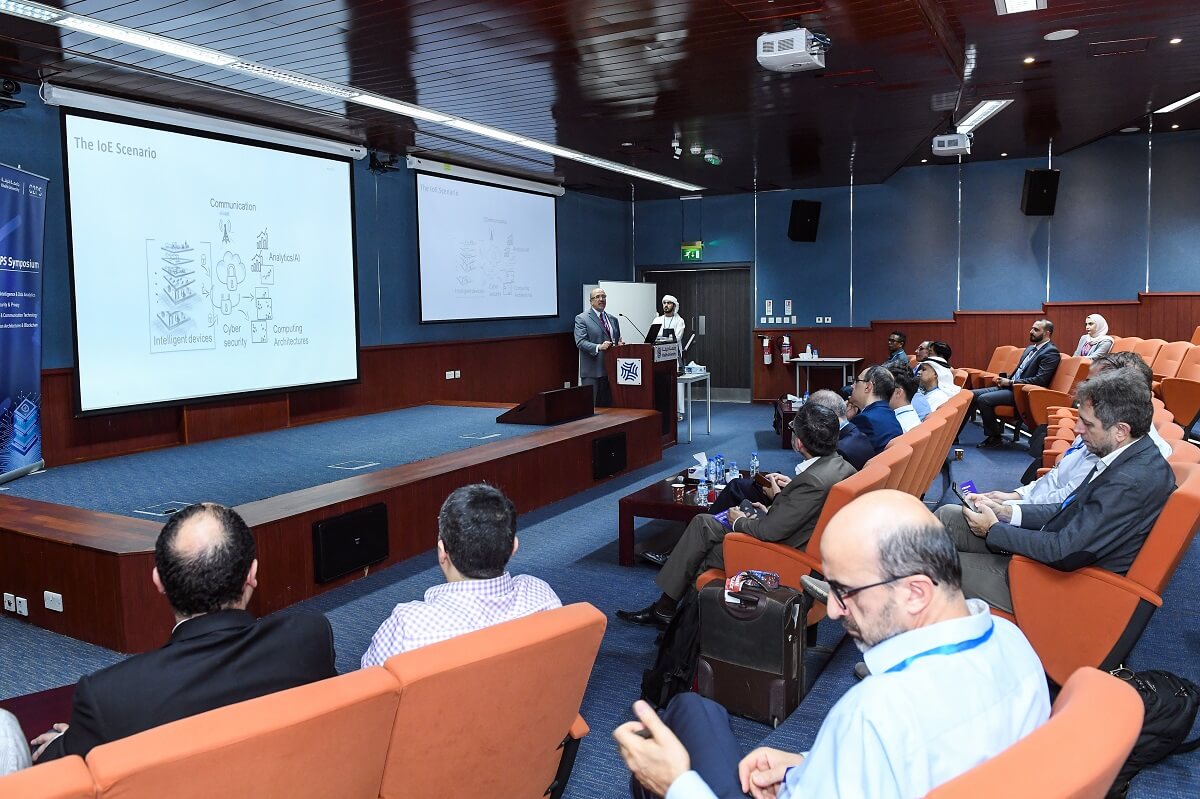
2nd C2PS Symposium Explores 5G and Emerging Distributed Architecture

The Cyber-Physical System Center (C2PS) hosted its second open symposium, to mark the one-year anniversary of the Center, on Thursday, 21 November at the Main Campus.

Held under the theme “5G and Emerging Distributed Architecture,” the symposium provided a forum for C2PS researchers and potential research partners to share knowledge and ideas about the future of computing and communications.

C2PS researchers presented projects related to two of its four themes, including Networks and Communication Technology, and Computation Architecture.

Dr. Sami Muhaidat, Associate Professor of Communication Engineering, and Dr. Arafat Al-Dweik, Associate Professor of Electrical Engineering and Computer Science spoke about the Networks and Communication Technology theme. They addressed several major challenges preventing the realization of next generation wireless networks, including the high energy and spectral efficiency, low latency, and massive connectivity.

Dr. Davor Svetinovic, Associate Professor of Electrical and Computer Engineering, and Eng. Ruba Alkadi, Research Associate of C2PS, presented on projects related to the Computation Architecture theme. They addressed the importance of selecting the proper platform, infrastructure, and technologies to facilitate and support, at any scale, the required computing, storage, and networking functionalities for CPS and IoT ecosystems.

International experts were invited to address important topics in blockchain, RF-powered radio networks and 6G challenges. International guest speakers included Dr. Mohamed-Slim Alouini, Associate Dean of King Abdullah University of Science and Technology, and Dr. Muhammad Ali Imran, Vice Dean at Galsgow College of UESTC, UK.

The Symposium closed with an engaging panel session moderated by Dr. Ernesto Damiani,  Senior Director of Artificial Intelligence and Intelligent Systems Institute, Director of C2PS Center, and Professor of Electrical and Computer Engineering.

Erica Solomon
Senior Editor
21 November 2019