

Using artificial intelligence to diagnose Alzheimer’s Disease

Using Machines to Learn the Causes of Alzheimer’s

Age-associated cognitive decline­—or normal (non-pathological) cognitive aging­—is an important human experience which differs in extent between individuals. While some mental capabilities are maintained into old age, from early adulthood some declines in processing speed, reasoning, memory and executive functions can be expected; some of these are underpinned by a decline in general cognitive function.

Cognitive impairment is becoming a major health and social issue across nations as the global population ages. An article in the December 2009 British Medical Bulletin named cognitive decline as the most feared aspect of growing old—and also the costliest, in terms of the financial, personal and societal burdens it brings. In the United Kingdom, cognitive failure is the cause for 40 percent of elderly admissions to institutional care.

“Alzheimer’s Disease is the most common form of dementia (a general term for memory loss and other cognitive issues serious enough to interfere with daily life) and while there is no specific cure for the disease, current treatment methods can help slow the progression of its symptoms. People in the final stages are bed-bound and require around-the-clock care, and the disease is ultimately fatal,” explained Dr. Hasan Al Marzouqi, Assistant Professor in the Department of Electrical and Computer Engineering. Memory loss, poor concentration and depression are common early signs and symptoms of dementia, which can be frightening and very isolating for those experiencing them.

Alzheimer’s is a progressive disease, where dementia symptoms gradually worsen over a number of years; in the early stages, memory loss is mild, but later, individuals lose the ability to converse or respond to their environment. On average, a person with Alzheimer’s lives four to eight years after diagnosis, but can live as long as 20 years, depending on other factors.

There are an estimated 46.8 million people worldwide living with dementia and this number has been predicted to double every 20 years, reaching 74.7 million in 2030 and 131.5 million in 2050. In the UAE, Alzheimer’s Disease currently affects around 4,300 residents, but there are fears that nearly 30,000 could be suffering from it by 2030.

“Early identification of Alzheimer’s Disease is essential since delayed treatment reduces treatment efficacy,” said Dr. Al Marzouqi. “Furthermore, discovering prognostic biomarkers that may identify future AD patients accelerates the testing of preventive measures and treatments. For example, there is a strong relationship between Alzheimer’s and metabolic diseases like diabetes and cardiovascular conditions. Diabetes already affects about 20 percent of the UAE’s adult population between 20 and 79 years of age, while cardiovascular diseases are the leading causes of mortality in the nation.”

The most common early symptom of Alzheimer’s is difficulty remembering newly learned information. As it advances through the brain, increasingly severe symptoms appear, including disorientation, mood and behavior changes, deepening confusion, unfounded suspicions, and difficulty speaking, swallowing and walking. These symptoms can be devastating.

Current diagnosis relies on documenting mental decline, at which point, Alzheimer’s has already caused severe damage. During the preclinical stage, people seem to be symptom-free, but abnormal deposits of proteins are forming amyloid plaques and tau tangles throughout the brain, leading to lost connections between neurons, starting in the hippocampus. As more neurons die, additional parts of the brain are affected, and they begin to shrink. By the final stages, when symptoms are obvious, the damage is widespread and brain tissue has shrunk significantly. At the forefront of biomedical research is identifying ways to diagnose Alzheimer’s before irreversible brain damage or mental decline has occurred. Biomarkers offer one of the most promising paths, including beta-amyloid and tau levels in cerebrospinal fluid and brain changes detectable by imaging.

“Currently, Alzheimer’s Disease is diagnosed using psychometric tests like Mini Mental Examination and Clinical Dementia Rating. These tests are supported by features from magnetic resonance imaging (MRI), positron emission tomography (PET) scans or cerebrospinal fluid markers,” said Dr. Al Marzouqi. “Early stages of AD are difficult to detect from cognitive tests because the subjects don’t have severe memory problems at this age. Statistical features extracted from MRI images are often used as measures of brain atrophy. These features indicate the loss of brain volume in certain identified regions of interest associated with Alzheimer’s Disease.”

The brain undergoes pronounced structural changes in old age, including a steady decrease in brain size. Brain atrophy accelerates in old age; however, studies suggest associations between normal structural brain differences and cognitive ability tend to be modest. It is important to note that Alzheimer’s Disease is not a normal part of aging.

The accurate diagnosis of Alzheimer’s Disease plays a significant role in patient care, especially in the early stages, because recognition of the severity and progression risks allows people to take prevention measures before the brain damage becomes irreversible.

“Early diagnosis of Alzheimer’s Disease can prevent costly and inappropriate procedures and allow for earlier treatment of symptoms,” added Dr. Al Marzouqi.

Dr. Al Marzouqi’s research is investigating recently proposed methods based on deep learning network architectures. A study published in Radiology by Dr. Jao Ho Sohn, University of California in San Francisco, combined neuroimaging with machine learning to try to predict whether or not a patient would develop Alzheimer’s Disease when they first presented with a memory impairment. PET scans measured the levels of glucose in the brain as glucose is the primary source of fuel for brain cells­—the more active a cell, the more glucose it uses. As brain cells become diseased and die, they use less, and eventually, no glucose. However, because Alzheimer’s Disease is a slow progressive disorder, the changes in glucose levels are very subtle and difficult to spot.

The researchers applied a machine learning algorithm to PET scans to help diagnose early-stage Alzheimer’s more reliably. The algorithm performed remarkably well, correctly identifying 92 percent of patients who developed Alzheimer’s Disease more than six years before the patient received their final diagnosis.

However, PET scans are not broadly available to most patients and are mainly limited to research studies and clinical trials. They’re a powerful tool, but expensive and require specialist facilities and expertise. Dr. Al Marzouqi is working on applying deep learning techniques similar to those in Dr. Sohn’s study to MRI scans instead, looking at brain texture markers rather than glucose levels or other biomarkers.

“MRI hippocampal texture properties were recently found to be correlated with cognitive impairments and conversions from mild dementia to Alzheimer’s Disease,” explained Dr. Al Marzouqi. “Our research is developing new texture markers based on state-of-the-art methods in texture classification and characterization. This approach will utilize 3D directional transforms such as Gabor wavelets, curvelets, and contourlets to develop quantized measures of textural properties in brain scans for use in the early diagnosis and assessment of neurological diseases.

“It is likely that an MRI marker based on texture will be able to detect earlier stages of Alzheimer’s Disease than markers that target larger scale changes in the brain, such as atrophy. Textural features can work as a complementary MRI biomarker.

“Deep learning techniques are state-of-the-art in numerous machine learning tasks. They achieved remarkable results across many fields including medical image analysis. Most notably, these models achieved performance levels at the level of expert dermatologists and radiologists in the task of melanoma and pneumonia detection.”

Deep learning algorithms show huge potential in identifying the early causes of concern for dementia patients and Dr. Al Marzouqi’s research adds to a body of work that is recruiting computers to help predict neurodegenerative diseases before major symptoms occur and become irreversible.

Jade Sterling
News and Features Writer
1 May 2019

Smart Phone App to Spot Depression

Novel Mobile Application Developed at Khalifa University Focuses on Keystroke Dynamics to Detect Depression, Could Help Raise Awareness for Medical Care

Mental illness is the single largest burden to global disabilities, with depression identified as the leading cause of disability worldwide. Early detection and intervention are crucial, but social stigma and fear prevent people from seeking the treatment they need. Researchers at Khalifa University have developed an unobtrusive way of monitoring mental health, using a smartphone application called TypeOfMood, to effectively spot the early onset of depression.

“Mental health is becoming a major plague in modern societies, but the lack of resources and the social stigma burden the diagnosis,” explained Dr. Leontios Hadjileontiadis, Professor of Electrical and Computer Engineering, and Acting Chair of the Department of Biomedical Engineering. Dr. Hadjileontiadis recently won the Healthcare Research Award in the Clinical Research Category at the Dubai Healthcare Excellence Awards, held on 1 May, 2019, for his research in detecting depression through a smart phone application.

“We recognized that psycho-motor retardation, which is a slowing down of thought and physical movements present in depression, influences the patient’s habitual activities and alters their daily interaction with smart devices. Remote unsupervised screening via mobile devices can raise awareness for medical care, with daily data assisting diagnosis.”

TypeOfMood is an application for the Android Operating System that records time-stamp sequences of keys being pressed and released, and the position of fingers on the smartphone touch screen, through a custom third-party keyboard.

“User interaction with smartphones can unveil dense and multi-modal data to reveal the patterns that can be connected with both motor and cognitive user actions,” explained Dr. Hadjileontiadis.

“In particular, Hold Time (the time interval between the press and release of a key), Flight Time (time delay between consecutive release and the press of the next key), Speed (the rate at which the finger moves across the screen), and Press-Flight-Rate (the ratio between Hold Time and Flight Time of a key) offer insights to the probability of a subject to be suffering from depression.”

Statistical features are extracted from keystroke dynamic sequences and induced in a machine learning model to classify a subject’s status—depressive or healthy—by aggregating prediction probabilities obtained per typing session. In Dr. Hadjileontiadis’ study, the vast majority of the typing data were collected while users typed messages in the Messenger application, with the rest derived from typing in Chrome, Instagram, and WhatsApp. In total, 34,581 sessions worth 234 hours of typing data were collected, or 66.46 sessions per day for healthy controls, and 55.14 for depressive patients. This level of data collection would be unattainable in a clinical setting.

The World Health Organization (WHO) revealed that globally, more than 300 million people of all ages are suffering from depression, and a majority of these are women. Depression is the second most common cause of death for people between the ages of 15 and 29 – close to 800,000 people die each year due to suicide.

Doctors in the UAE are raising concerns over the rise in the number of people suffering from clinical depression, defined as experiencing a depressed mood or a loss of interest or pleasure in daily activities consistently for at least a two-week period, mainly due to work overload, financial stress and relationship issues.

“According to the World Health Organization, the UAE has the highest regional level of depression, at 5.1% of the population,” said Dr. Hadjileontiadis. “The country also ranks highly for anxiety with 4.1% of people suffering. Approaching this problem with a novel approach, such as TypeOfMood, might relieve the economic and social burdens, and extend the way mental health is evaluated, by providing tools that support the current clinical standards of mental health evaluation.”

Currently there are no reliable diagnostic laboratory tests for depression. Scientists have noted that abnormalities in sleep electroencephalogram, or EEG – which measures activity in the brain while you are awake and then asleep – are evident in around 40 percent of patients. While some patients have hormonal disturbances, and others show increased blood flow to the limbic and paralimbic regions of the brain and decreased blood flow in the prefrontal cortex. However, none of these observations are diagnostic by themselves and clinicians are much more likely to assess mental health using the patient Health Questionnaire (PHQ-9) or the Beck Depression Inventory, among other questionnaires.

But this type of clinical diagnosis involves questions regarding the symptoms that patients face, exploiting various rating scales to quantify the severity of the disorder. The many questions and statements the patients must answer fall victim to the subjective factor, where users may over- or underestimate the severity of their symptoms.

“Honesty and anonymity can improve the validity of the answers,” said Dr. Hadjileontiadis. “Remote methods that use unobtrusively captured information towards unsupervised screening show promising results towards detecting depressive symptoms in young people.

“Depression can manifest with various symptoms affecting patients’ psychomotor behavior to differ from the healthy population with regards to objectively quantified gross motor activity, body movements and even speech. These are hard to monitor through everyday activity. TypeOfMood, for the first time, proposes remote screening for monitoring depression in everyday activities reflected in changes in the keystroke dynamics during typing on a smartphone screen,” said Dr. Hadjileontiadis.

The research focused on keystroke dynamics because of the recent studies examining the effects of Parkinson’s Disease psychomotor symptoms on typing activity. These studies investigate Hold Time, with the rate at which a person presses down and then releases a finger on a key indicating how quickly the brain can control the muscles. When the body needs to start moving, the brain’s motor cortex sends signals to the spinal neurons to activate the muscles. For Parkinson’s Disease patients, dopamine-producing cells in the brain become inactive. Depressed patients often exhibit reduced motivation and motor function decreases, leading Dr. Hadjileontiadis and the team to consider dopamine the link between keystroke analysis working for Parkinson’s detection and depression diagnosis.

Depression may begin at any age, with an average age at onset in the mid-20s. Some individuals have isolated episodes that are separated by many years without any depressive symptoms, whereas others have clusters of episodes, and still others have increasingly frequent episodes as they grow older. In two-thirds of cases, the major depressive episode ends with complete recovery, but after the first episode, having a recurrent one is 60 percent likely. An unobtrusive app running in the background of the ubiquitous smartphone could help keep an eye on a person’s mental health and aid in supporting their diagnosis and recovery.

Download TypeOfMood for Android here: https://play.google.com/store/apps/details?id=typeofmood.ime

Jade Sterling
News and Features Writer
19 May 2019

Making Abu Dhabi Happier with Every Tweet

In a world where over 600 million tweets are sent every day, making sense of it all requires specialized big data interpretation – especially when those tweets are in Arabic.

Every second, on average, around 7,800 tweets are sent. This equates to 473,000 tweets every minute, 681 million tweets per day, and around 248 billion tweets per year. Of these 500 million per day, Twitter users in the Arab region contribute 17.1 million.

While English is still by far the most prevalent language used on Twitter, Arabic is the fastest-growing language used to tweet and social media use has exploded in the Arab world.

“Social media has become not only a main way of communicating between individuals, entities and organizations, but also an instant way of spreading information and knowledge,” explained Dr. Nawaf I. Almoosa, Acting Director of Khalifa University’s Emirates ICT Innovation Center (EBTIC). “Social media provides richer information in all forms from text to images and networking interactions, and the way information flows through social networks is both dynamic and fascinating.”

EBTIC has developed a tool that measures sentiment across social media in the UAE, using Twitter to assess sentiment – or people’s attitudes and feelings – across the country and generating a detailed picture of happiness nationally.

“The aim of this project in the long term is to automatically integrate all available information we obtain from social media posts, user profiles, and networking to find out what is happening in the world and to predict what will happen next,” said Dr. Almoosa. “Posts range from text to images, videos and links and networking covers everything from interactions and conversations online to the way information emerges and flows through communities­—it’s very comprehensive.

“Extracting useful information and making use of it is the challenging part. The aim of this project is to make use of all this rich information to automate the online analysis of social media using machine learning and deep learning techniques, and the resulting analysis will be used across many application areas, including sentiment analysis.”

Sentiment analysis is the systematic study of opinions expressed in text, looking at the polarity (whether the speaker is positive or negative about the topic), the subject and the opinion holder, in this case, the tweeter.

“EBTIC has been working on social media analysis for years. Machine learning and deep learning techniques are applied and improved to be useful in understanding what people are talking about in short messages or texts and their feelings on what is happening,” said Dr. Almoosa.

With the help of sentiment analysis systems, the opinions found on social media can be automatically transformed into structured data on public opinions on topics including products, events, and city services. EBTIC’s system uses machine learning techniques to detect opinions and feelings in social media message which are traditionally short, informal, and often unstructured. Currently, EBTIC is working on automatically detecting the underlying reasons driving sentiment changes across time, topics and demography and providing summary reports of the findings. The sentiment tool with this new character provides a brief and direct guide for deeper understanding of sentiment changes and potentially suggests possible solutions to improve happiness in the UAE.

“One of the big challenges for social media is informal speech and incomplete information—or even lack of information—presented in social media and short texts,” said Dr. Almoosa. “EBTIC has invented and filed a patent for a technique to enrich the short text and then let machine learning methods usually used for long formal documents work for the short texts without compromising their accuracy.”

This technique could be applied beyond social media, as it is estimated that 80 percent of the world’s data is unstructured and not organized in any pre-determined manner. These texts are usually difficult, time-consuming and expensive to sort through, understand and then analyze. This becomes even more complicated when an opinion is tweeted in any language or combination of languages other than English.

“More work has been done for English and other languages with simple structures and grammars, but the complexity of the Arabic language means much more work is needed for Arab world social media analysis,” explained Dr. Almoosa. “In the Arab world, social media messages are naturally written in Arabic, using a mixture of Arabic script and Latin script to spell out Arabic words phonetically, and this is much more popular amongst the younger generations. Arabic social media analysis, therefore, is recent and still limited. We continue to work on developing the project to work more efficiently and comprehensively across Arabic language social media posts.”

Tools like EBTIC’s sentiment analysis solution can provide unbiased insight into the thoughts and feelings of the UAE’s citizens and help the UAE government put the country among the top five happiest countries in the world by 2021.

“Right now, happiness is one of the most important national goals in the UAE and Twitter offers first-hand insight into the thoughts, feelings, and concerns of the population,” added Dr. Almoosa. “This is why developing a tool that analyzes the large volume of social media content in real-time and providing it in a visual form that enables interpretation is important.”

“The results from this work have been applied to different applications and delivered to UAE government entities and EBTIC partners, including Etisalat, Abu Dhabi Police, Statistic Center Abu Dhabi and the Ministry of Education. Our ongoing work is attracting attention and more projects and deliveries are expected.”

Jade Sterling
News and Features Writer
25 June 2019

Portable Glucose Sensor Could Improve Diabetes Treatment

Researchers at Khalifa University’s System-on-Chip Center file patent for a novel low-cost glucose sensor that can measure glucose at neutral pH conditions, resulting in a lower-cost and more compact device

The World Health Organization estimates that over 382 million people worldwide have diabetes, a metabolic disorder affecting blood sugar levels. The underlying cause of diabetes varies by type but each type can lead to excess sugar in the blood, which could cause serious health problems. For all patients, blood sugar monitoring plays a role in treatment.

A research group led by Dr. Heba Abunahla, Postdoctoral Fellow of Electrical Computer Engineering at KU’s System on Chip Center (SoCC), has developed a novel low-cost non-enzymatic glucose sensor for adults. While glucose sensors are not revolutionary in themselves, the distinguishing property of this sensor is its ability to measure glucose at neutral pH conditions. The sensor is the result of a cooperative effort with faculty from the departments of Chemistry (Dr. Maguy Abi Jaoude), Mechanical Engineering (Dr. Anas Alazzam), and Electrical Engineering and Computer Science (Dr. Mahmoud Al-Qutayri and Dr. Baker Mohammad).

“Our solution is unique because it can work at pH 7. In all the previous literature on available copper oxide-based sensors, the human fluid that was tested needed to be diluted to pH 13 for the glucose sensing device to respond,” said Dr. Abunahla. “Showing that we can still sense the glucose and distinguish the added concentration at neutral pH means that we can directly measure the glucose concentration for human fluid without dilution.”

While human blood is usually slightly alkaline and varies between 7.35 and 7.45, achieving glucose sensing at a neutral pH is essential to improving the sensitivity of the detection unit, with accuracy improving especially at diabetic glucose levels. This also means the device can be more compact and cost-effective as any dilution step is eliminated.

Continuous monitoring of glucose levels in people with diabetes is essential to managing the disease and avoiding the complications that can be associated with poorly-managed treatment. Diabetes is predicted to become the seventh deadliest disease by 2030 and involves either a deficiency in the production of insulin or the body’s inability to use its available insulin to process glucose.

Long-term complications of diabetes develop gradually, and the less controlled a person’s blood sugar levels are, the higher the risk of complications. Eventually, diabetes complications may be disabling or even life-threatening, as excess sugar can—for example—injure the walls of the capillaries nourishing the nerves, damage the glomeruli blood vessel clusters in the kidneys, and affect the blood vessels of the retina, potentially leading to blindness.

Glucose measuring devices are therefore crucial for patients and clinicians.

Sensors available on the market can be divided into two main types: enzymatic and non-enzymatic. Enzyme-based sensors use glucose dehydrogenase (GDH) or glucose oxidase (GOx), which interact with glucose molecules, resulting in an electrical response that can be correlated to the concentration of glucose.

“Although enzymatic glucose sensors are widely used, their short-term stability is affected by operating temperature, pH level, and humidity. They are also expensive to manufacture,” explained Dr. Abunahla. “This is why non-enzymatic glucose (NEG) sensors are being developed.”

Unlike traditional enzyme-based sensors, NEG sensors allow glucose to be oxidized directly on the surface of the sensor, without the need of glucose dehydrogenase or glucose oxidase. Atoms at the surface act as electrocatalysts, resulting in high stability, repeatability, and cost-effective fabrication.

“Different materials have been used to develop NEG sensors, and although each material has its own advantages and limitations, metals and metal oxides have attracted the most attention,” said Dr. Abunahla. “This is because of our well-developed understanding of the electrocatalytic mechanism of glucose oxidation in such structures.”

Among the metal oxide materials used, copper oxide (CuO) is considered one of the best for NEG sensing due to its natural abundance, low production cost, high stability, and appropriate redox potential.

“Our glucose sensor structure is based on copper oxide and is capable of differentiating dissolved glucose levels in a liquid sample from as low as 2.2mM (millimolar) when the liquid sample is at neutral pH,” explained Dr. Abunahla.

Envisioned block diagram of the lab-on-chip system for glucose sensing


The ability to operate at neutral pH facilitates the device’s integration with other blood substance sensors and is advantageous for the development of future lab-on-chip structures for real-time health monitoring.

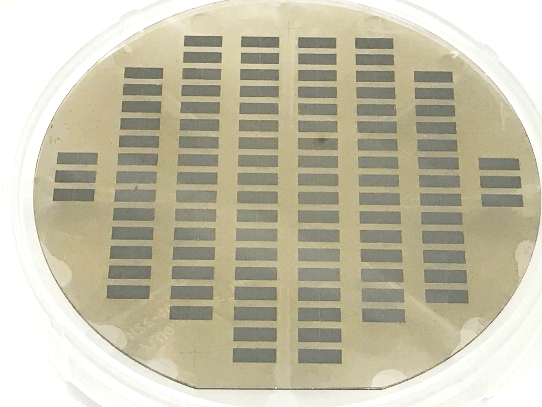
The glucose sensor structure developed by the Khalifa University team is known as MOMSense and can be integrated into a microfluidic platform—a micro-scale device that includes a system of micro-channels—that serves as a miniature lab-on-chip. It is also cheap to mass produce using a wafer-style fabrication process. Each device comprises a CuO layer sandwiched by a pair of first and second platinum (Pt) electrodes. The CuO surface extends around and below the metal electrodes and rests on a substrate layer, which can be any suitable inert structural layer, such as, but not limited to, glass. The sensor was fabricated in the cleanroom on the Main Campus, the room having been established by Dr Alazzam, one of the project’s collaborators.

“Our tests have demonstrated that the novel planar Pt/CuO/Pt structure enables the non-enzymatic sensing mechanism at neutral pH. The MOMSense device exhibits a synergistic role for the interfaces between the Pt electrodes and the CuO surface to both act as electrocatalysts and also facilitate the glucose oxidation needed for glucose detection in the absence of glucose dehydrogenase or glucose oxidase,” said Dr. Abunahla. “The Pt electrodes enable the glucose oxidation to take place in a neutral solution and the MOMSense device is in line with the requirements for a viable non-enzymatic glucose sensor in terms of sensitivity, stability, accuracy, ease of fabrication and ability to meet the International Organization for Standardization standards.

“The vision for this sensor is to be part of a wearable or handheld glucose system that can periodically test the concentration of glucose in a person’s blood. Its unique ability to measure glucose at neutral pH conditions makes it a low-cost and more compact device, for which we have filed a patent to bring smaller and cheaper medical devices to diabetes patients.”

Jade Sterling
News and Features Writer
10 July 2019

Wonders of 2D Materials & their 3D Nano-Architectures for Energy Storage

Over the past decade, the UAE has demonstrated a serious commitment to the development of renewable and alternative energy, which is one of the pillars of the country’s economic diversification strategy. The empowerment of renewable energy technology and the rapid advancements in energy storage technologies will lead to significant improvements in our daily life. Batteries play a key role as an energy storage device to overcome the operational challenges caused by the intermittent nature of renewable energy, while advanced flexible energy storage solutions will allow for further miniaturization of portable electronic devices, including wearables.

A major limitation to better electrochemical energy storage systems lies in the electrode. Electrodes are the places in every storage device i.e., battery or supercapacitor, where the chemical reactions occur and where the ions, or charged particles, are stored. Researchers around the world have been racing to develop high-performance electrode materials.

Considering the above mentioned research demands, a collaborative team of researchers at Khalifa University have developed excellent electrodes using ultrathin 2D materials and their 3D nano-architectures, for safer, more powerful and less expensive batteries and for flexible supercapacitor applications. The research is described in two papers published recently in the journals ACS Applied Materials & Interfaces and Advanced Materials Interfaces Wiley.

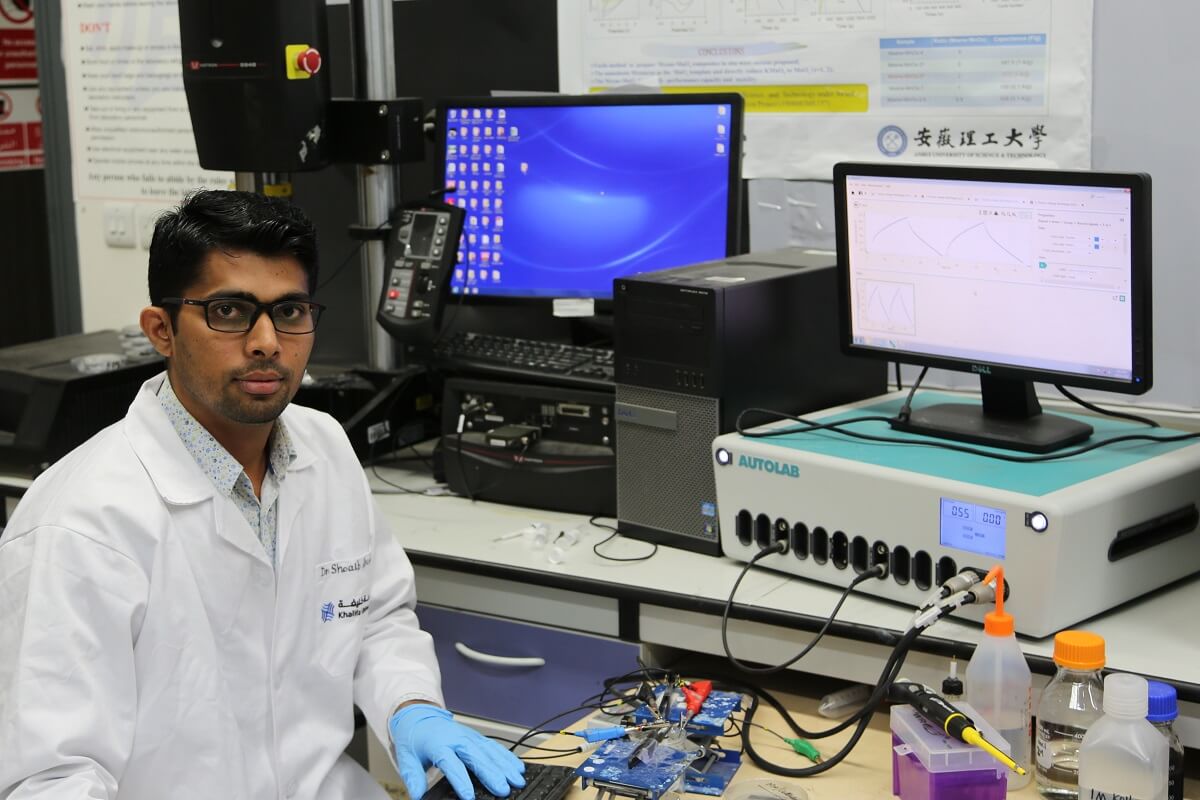
Dr. Shoaib Anwer, Postdoctoral Fellow (right) is lead author of both papers. He worked directly under Dr. Kin Liao, Professor of Aerospace Engineering.

The research is being led by Dr. Shoaib Anwer, a postdoctoral fellow working with Prof. Kin Liao in the Department of Aerospace Engineering, Professor Lianxi Zheng of Mechanical Engineering, Prof. Wesley Cantwell, Director of the Aerospace Research and Innovation Center (ARIC), and Dr. Shashikant Patole of the Department of Physics.

The Nature-Inspired Anode Material for Sodium-Ion Batteries

All batteries produce current in the same way – through an electrochemical reaction involving electrodes (an anode and a cathode) and electrolyte. In a rechargeable battery, the reaction is reversible. When electrical energy from an outside source is applied to a rechargeable battery, the negative-to-positive electron flow that occurs during discharge is reversed, and the cell’s charge is restored.

The most common and widely used rechargeable batteries are lithium-ion, where lithium is the charge carrier, moving from the negative electrode to the positive cathode. But since 2011, there has been a revival of research interest in sodium-ion batteries because of growing concerns about the availability of lithium and the increasing cost. In 2015, prices for lithium almost tripled to more than USD 20,000 a ton in just ten months.

“Sodium-ion batteries are an efficient, low-cost and sustainable alternative to the expensive lithium-ion batteries used today in most large-scale energy storage applications in renewable energy and smart grids owing to the abundance of sodium in nature compared to lithium,” said Dr. Anwer. “However, the practical applications of SIBs have been constrained­— sodium ions are nearly 25 percent larger than lithium ions, and the larger sodium ions do not fit into the crystal structure of the electrodes, where the chemical reactions take place.”

Ideally, the anode and cathode materials should be able to withstand repeated cycles of sodium storage without degradation. However, the typical anode material used in commercial lithium-ion batteries, graphite, cannot be used in SIBs as it cannot store the larger sodium ion in large quantities. The KU researchers investigated 2D nanostructured materials, such as transition-metal sulfides and hydroxides, and carbon-rich materials as possible electrode materials to overcome the limitations posed by graphite anodes and to improve the properties of rechargeable SIBs.

Molybdenum disulfide (MoS2) has been identified as a particularly attractive anode material for SIBs due to its layered structure. 2D materials, sometimes referred to as single layer materials, are crystalline materials comprising a single layer of atoms. Molybdenum disulfide monolayers comprise a unit of one layer of molybdenum atoms covalently bonded to two layers of sulfur atoms, forming a nanosheet.

“The large interlaying spacing and weak van der waal interaction among the molybdenum disulfide layers are beneficial for reversible sodium ion intercalation and extraction,” Dr. Anwer explained. “But poor electronic conductivity and slow sodium diffusion kinetics makes MoS2 as an anode material for SIBs limited.”

To overcome these key problems, and to improve molybdenum disulfide’s performance, Dr. Anwer scaled down the structure of MoS2 to ultra-thin nanosheets, and a two-dimensional crystalline form with a thickness of few atomic layers was achieved. Then they controlled the closely interconnected ultrathin molybdenum disulfide nanosheets synthesis to form a 3D marigold flower-like microstructure. Finally, they wrapped these microstructures in atomically thin sheets of graphene, forming MoS2-Graphene networks.

“Inspired by the marigold flower structures in nature, we developed a simple hydrothermal approach to synthesize the flowery 3D MoS2 ultrathin structures, followed by graphene wrapping to obtain the MoS2-G interconnected 3D conductive network,” said Dr. Anwer. “Such a unique MoS2-G 3D architecture influenced by the surface-to-surface intimate contact between MoS2 and graphene effectively improves the electron/ion transport kinetics of MoS2 and ensures structural integrity, resulting in superior electrochemical performance.”

“The prepared electrode exhibited an outstanding specific capacity, remarkable rate performance, and long cycle life, while our proposed synthesis strategy and 3D design offer a unique way to fabricate high-performing anode materials for low-cost and large-scale applications in SIBs,” elaborated Dr. Anwer.

The high energy density SIBs would be well suited for those applications currently dominated by lithium-ion batteries, including long-range electric vehicles and power-hungry consumer electronics, reducing energy storage costs across the board.

A Flexible Electrode for Supercapacitor Application

Dr. Anwer and his co-workers also leveraged advancements in nanotechnology and 2D materials to develop flexible electrode materials for supercapacitors application. Supercapacitors have emerged as the advanced energy storage system for portable and wearable electronics due to their excellent power density, charging time and cycling life.

The researchers prepared a freestanding flexible supercapacitor electrode, based on Ni(OH)2 nanosheets (NSs) grown on a carbon nanotube foam (CNTF) as core–shell 3D Nano-architectures.

“The new flexible electrode displayed outstanding electrochemical performance by retaining its shape and structure under bending or compression without any fracture,” Dr. Anwer said. “The highly conductive CNT foam, which comprised a 3D network of CNTs – which are tiny cylindrical tubes made of tightly bonded carbon atoms, measuring just one atom thick walls – and the unique nanostructure design of the nickel hydroxide nanosheets, facilitated rapid ion transport near the electrode surfaces, and improved charge storage activity.”

The proposed synthesis strategies developed by Dr. Anwer and his team, which leverage 2D materials with a 3D design, reveal a unique way to fabricate promising electrode materials for energy storage devices.

Jade Sterling, News and Features Writer, and Erica Solomon, Senior Editor
13 October 2019

Compliant Co-Work Robot for Safe Human-Robot Collaboration

The testbed of a new compliant joint made with springs to reduce impact in interaction

As we stand on the brink of the 4th Industrial Revolution, technological innovations such as the variable stiffness actuators developed by Dr. Dongming Gan bring us ever closer to safe human-robotic interaction.

A team of researchers at the KU Center for Autonomous Robotic Systems (KUCARS) are creating robots that can co-exist and co-operate with humans in a safe and efficient way. Their work has so far produced five papers and two patent applications for robots offering a wide range of applications in many different fields, including medicine and industry.

Although up to 90 percent of manufacturing tasks nowadays are yet to be fully automated, automated manufacturing is the undisputed future trend of modern industry. Flexible and intelligent manufacturing is the aim as conventional procedures of production are replaced and the separation of workspaces between robots and human workers is removed.

Human-robot collaboration (HRC) can contribute to the development of the factories of the 4th Industrial Revolution, where humans and robots will work and carry out tasks together. Having robots undertake repetitive or potentially risky tasks can free humans to focus on operations with added value or that demand higher levels of dexterity. A collaborative environment in which humans and robots can work side by side and share tasks in an open environment is thus a worthy goal.

“With rising labor costs and customer requirements changing frequently, robotics technology has been widely explored and is believed to be a promising solution to reducing costs and making the manufacturing system flexible enough to adapt to real-world variability,” said Dr. Dongming Gan, Assistant Professor in the Department of Mechanical Engineering.

However, this future involves breaking with established safety procedures as direct interaction with robots in industry bring the rise of new risks of accidents. To facilitate this vision of effective collaborative work between a human worker and an industrial robot, previously existing barriers need to be eliminated and new types of safety systems introduced.

Currently, to interact safely and productively with humans, robots must be flexible, robust, precise, adaptive and compliant. But our robot counterparts today lack the fine motor skills, unique flexibility and compliance to work efficiently—in other words, they are too rigid, too clumsy and struggle to adapt.

But robots can also be tough, fast and accurate—in their own space. They typically have powerful, heavyweight automated arms that perform tasks such as welding, painting or assembly within the confines of an enclosure.

Since their introduction, industrial robots have been designed to operate at a distance from workers, mostly due to the variety of hazards posed and their lack of the sensory capabilities necessary to detect nearby humans. Most of the regulations and safety strategies in place around the world depend on keeping workers at a distance during operation, either through physical barriers or sensors that shut machines down when people approach too closely.

While the safety of humans around the robot must be guaranteed during the execution of a task, physical safeguards may not always be practical. The alternatives include power or force limiting, robotic awareness of the humans around it, and effective bidirectional human-robot communication.

“Since humans are still the key members in the manufacturing process and environment, co-working scenarios are common with robots assisting, collaborating, and independently working with humans,” added Dr. Gan. “Our project aims to develop a new compliant robotic manipulator targeting safe human-robot collaboration in automated manufacturing.

“The possible advantages that can be obtained with compliant actuators are very well known, but most of the robots in industry still lack these features.”

In industrial robotics, the term ‘compliance’ refers to flexibility and suppleness. While a stiff actuator is able to move to a specific position or to track a predefined trajectory, a compliant actuator will allow deviations from its own equilibrium position, depending on the applied external force. The equilibrium position is defined as the position of the actuator where it generates zero force or torque.

Inspired by human motion and learning behavior, similarly versatile and constantly adaptive movements and skills endow robots with singularly human-like motor dynamics and learning. The challenge is to integrate novel biological notions, advanced learning algorithms, and cutting-edge compliant mechanics in the design of working robots with an unprecedented aptitude for integrating in our environments.

“Bio-inspired robotics design results in compliant robotic systems with improved natural dynamics and kinematics,” added Dr. Gan. “Intrinsic compliance is one of the possible solutions towards robust and safe HRI.”

The conventional rule of thumb in robotic design focuses on the interface between motor and loads, which is “as stiff as possible” because stiffness improves precision, stability, and bandwidth of position control. But precise tracking of trajectory isn’t always the optimal strategy for robots that need to interact with humans. Good shock tolerance, lower reflected inertia, more accurate and stable force control, less damage during inadvertent contact, and the potential for energy storage are all elements of compliant actuation.

“Our project focuses on safe human-robot interaction in manufacturing based on novel mechanical system design, advanced sensing technology, and intelligent control algorithms,” explained Dr. Gan. “We are currently designing a new compliant joint and this will be the key component in safe interaction by employing compliance of springs to reduce impact in interaction.”

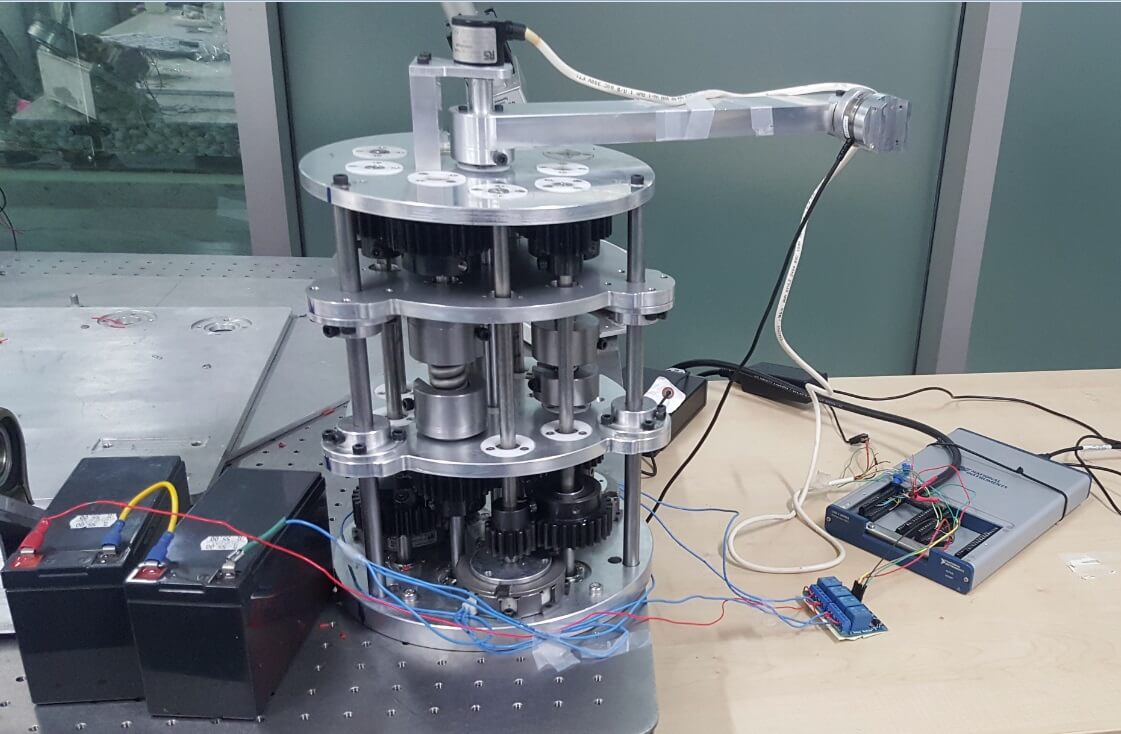
Characterization experiment of Passive Discrete Variable Stiffness Joint

The KUCARS team approach involved a lever mechanism and a new method of stiffness variation achieved through the addition and subtraction of elastic elements in the actuator mechanism. The elastic elements can be arranged in series or in parallel and this series-parallel arrangement is efficient in terms of both energy and peak torque.

“Based on the concept of series-parallel elastic actuators, we first proposed a passive version of the discrete variable stiffness actuator,” said Dr. Gan. “In our previous work, we mainly focused on the passive versions and in this regard, we proposed various design topologies and optimized their design specifications according to the intended applications. The key motivation behind our design topology is the need for instantaneous switching between stiffness levels for different applications.

“Now that passive actuators have been successfully demonstrated to change their stiffness using our proposed topologies, we are in the process of developing a compact and active version with a motor. The basic design principle is based on a stiffness varying mechanism comprising a motor, three inline clutches, and three torsional springs with stiffness values connected to the load shaft and the motor shaft through two planetary sun gear trains..”

“Theoretically, the softer the joint is, the safer the robot will be. However, compliant serial manipulators are difficult to control and there is a trade-off to optimize stiffness. Future work will take control analysis to reach the optimized compliant setting for real time applications.”

Jade Sterling
News and Features Writer
16 October 2019

Mathematical Model May Bring Scientists Closer to Unifying Theory

KU researchers test model on microscopic black holes and demonstrate that gravitational wave frequencies from black holes at all scales – from massive to quantum – are the same

A new application of the mathematical model used to predict the gravitational waves produced by two merging black holes at the microscopic level could play a key role in realizing the unifying theory of physics, says KU’s Dr. Davide Batic, Assistant Professor of Mathematics. Dr. Batic has recently published a second paper on his work in the European Journal of Physics C, which answers questions raised in his first paper on the same topic, which was published last year.

“In that paper, we discovered new oscillations for a certain class of black holes, and we noted that it would have been interesting to verify whether these theoretically predicted oscillations and associated frequencies could also be detected in larger classes of black holes,” said Dr. Batic. “This paper satisfactorily answers this question.”

These new wave oscillations are created when two black holes attract each other. As their event horizons—the point at which anything under the speed of light would be unable to escape the gravitational pull—get close enough to merge, the ringdown phenomenon occurs. This is the phase where the unified black hole system is still ringing and radiating, but progressively less so.

“In the ringdown phase, the black hole starts vibrating after interacting with matter. These vibrations get translated into gravitational waves, in the same way a guitar string being plucked translates into soundwaves,” explained Dr. Batic. “The frequencies of these waves are known as quasinormal modes and their oscillations become smaller as time passes.”

Dr. Batic added to this research by computing the theoretical oscillations in a different class of black holes: microscopic quantum black holes. This fundamental research helps to address the larger question of the unified field theory – the theory that would tie together all known phenomena to explain the nature and behavior of all matter and energy in existence.

The objective of particle physics is to understand the basic structure and laws of nature from the largest dimensions in the universe—the formation of stars and galaxies—to the smallest dimension in the microcosm. The Standard Model of particle physics is the theory describing the fundamental forces and classifying all known elementary particles. It was presumed complete with the discovery of the Higgs boson in 2012.

But questions remain.

Einstein’s General Theory of Relativity describes physics at a grand scale. However, this theory breaks down when applied to what happens inside the singularity at the center of a black hole.

“We already know that General Relativity is not able to reliably explain what happens inside the event horizon of a black hole,” said Dr. Batic. “This suggests we need a theory unifying General Relativity with quantum mechanics. Indeed, we have several candidate theories but each one with its own problems.”

Quantum mechanics is a fundamental theory in physics at the opposite end of the scale from general relativity: it describes nature at the smallest scales of atoms and subatomic particles. Dr. Batic’s work, if corroborated by experimental evidence, could advance scientific understanding of key elements needed to unify the two theories.

“Even though we don’t currently have a final theory able to offer a definite answer to the mechanisms underlying the final evolution of a black hole and the central singularity, there are existing theories including string theory and loop quantum gravity,” explained Dr. Batic.

His latest paper looks at a third contending theory: non-commutative geometry.

The physical world according to non-commutative geometry becomes extremely fuzzy at very small scales where coordinates starts to fluctuate according to an uncertainty relation reminiscent of the Heisenberg uncertainty relation for position and momentum of a particle in space.

By applying this assumption to the geometry of a black hole, Dr. Batic is able to demonstrate through mathematics that the same wave oscillations can be found in other classes of black holes, namely the non-commutative geometry inspired Schwarzschild black hole.

“Any unified theory will need to pass a fundamental test: it must be able to reproduce on a certain scale all predictions arising from quantum mechanics in curved space-times,” explained Dr. Batic.

The results from Dr. Batic’s research shows the mathematics does produce the same quasinormal modes in all classes of black holes. Should experimental data in the future discover the modes predicted by Dr. Batic, non-commutative geometry could be the unifier between the two major theories in physics.

Another important contribution made by Dr. Batic’s paper is the danger of using the Wentzel-Kramers-Brillouin (WKB) method – a method for finding approximate solutions to differential equations – to its full extent when unnecessary.

“WKB orders are like breaking a problem down into chunks: like trying to find 23 percent of a number,” explained Dr. Batic. “We can start by calculating 10 percent, that would be the first approximation. From there we can calculate 20 percent, and refine our approximation to get closer to the answer. Then, we can refine it even further to calculate 23 percent.”

The WKB method is used to find approximate solutions to linear differential equations with various orders of slowly changing approximation until an answer is found.

“The WKB method works up to a certain point, at which it fails,” said Dr. Batic. “By means of a sixth order WKB approximation, we show that this widely used method does not converge in the critical cases and instabilities show up at the third order.”

An instability is the point at which the method fails. Using black holes here shows the limitations of this mathematical method while simultaneously demonstrating that instabilities in black holes are an artifact of the WKB method.

“We addressed if these instabilities persist by increasing the order of the WKB or by employing different algorithmic methods,” said Dr. Batic. “Extending the WKB calculations up to the sixth order reveals that the method is not convergent exactly when the presumed instabilities occur. This forces us to turn to another reliable method to pin down the nature of these instabilities. We chose the inverted potential method by which we can assure that the instabilities are due to the inefficiency of the WKB in such cases. This teaches us an important lesson for the determination of quasinormal modes: a single algorithm is not always appropriate for uncovering them all.”

Jade Sterling
News and Features Writer
17 October 2019

The First Whole Genomes of Nationals from the United Arab Emirates Emerge from Khalifa University

Many populations in the Middle East are unified by common cultural practices, religion, and language. However, there are differences in the genome sequence within and between these groups.


In a research first, a team of investigators from Khalifa University led by Dr. Habiba AlSafar, Director of KU’s Center for Biotechnology and Associate Professor of Genetics and Molecular Biology, has published a study in Scientific Reports introducing the whole genome sequences of two UAE nationals. The study found that unique genome variants exist within the UAE population.


In 2003, the complete human genome was sequenced for the first time and with that breakthrough came an instrumental shift in our understanding of genomics and genetics. Decoding genetic information has led to a greater understanding of human biology, disease susceptibility and drug response to medication, among others. This research constitutes a significant landmark in local biomedical research.


The Human Genome Project originally aimed to map the nucleotides, the building blocks of DNA, contained in a single chromosome set of a human reference genome. Mapping the “human genome” involved sequencing a small number of individuals and then assembling these together for a complete sequence for each chromosome. The finished human genome sequence is therefore a mosaic of several individuals because each human genome is unique. It nonetheless offers a representative example of the human species’ DNA.


Whole genome sequencing (WGS), meanwhile, is the process of determining the complete DNA sequence of a single organism’s genome and provides information on genetic relationships, origin, and susceptibility to specific diseases. WGS has largely been used as a research tool so far but in the future, whole genome sequence data may be an important tool in personalizing therapeutic intervention. If clinicians have access to the information gleaned from sequencing an individual’s genome, they will be able to more accurately predict disease susceptibility and drug response, which will lead to improved health outcomes for individuals and populations.


“Whole Genome Sequencing provides an in-depth description of genome variation,” explained Dr. AlSafar. “In the era of large-scale population genome projects, the assembly of ethnic-specific genomes combined with mapping human reference genomes of underrepresented populations has improved the understanding of human diversity and disease associations.”


Dr. Habiba Alsafar lead the study of the first ever Whole Genome Sequencing of two UAE Nationals with a team of researchers from KU.


Research indicates that members of particular populations are more predisposed to certain hereditary diseases or conditions than others. Among Emiratis, common genetic and non-communicable diseases include obesity and diabetes, but until recently, Middle Eastern populations comprised just one percent of the genome data in the public domain.


“There is an intolerable gap in the human genome landscape,” said Dr. AlSafar. “Despite the best efforts of the Human Genome Organization and other international consortia, genome data from ethnic groups of the Arab-speaking world is substantially underrepresented.”


Since the completion of the first human genome, DNA sequencing technology has progressed substantially. This Next Generation Sequencing (NGS) technology is now faster and less costly. Using NGS technology, the team at Khalifa University took the first steps to rectifying this.


Of the approximately 10 million people living in the UAE, only about 10 percent are national citizens. Their genome has been greatly influenced by the transcontinental migration of myriad different ethnic groups and the nomadic lifestyles of the Arabian populations originating from the region, particularly the Bedouins.


“The Middle East sits at the crossroads of significant human migration between the African, European and Asian continents,” added Dr. AlSafar. “The eventual development of trade routes further increased bi-directional gene flow through the region, creating the contemporary diversity seen in modern Arabia.”


Interpreting ethnolinguistic differences, geopolitical relations and cultural diversity can only produce so much understanding of the origins of the Emirati population. The need for concrete genetic data motivated the sequencing of the WGS for two Emirati citizens. These sequences now contribute not only to the national understanding of local citizens, but also to the bank of data about middle-eastern populations, including the four WGS from the Kuwait genome project, and 104 WGS from Qatar.


The two citizens were both 87 years old, one male and one female. The male sample was analyzed using Principle Component Analysis (PCA) and supervised biogeographical ancestry analysis (or admixture analysis) in which all populations from the Human Genome Diversity Project Database were used as possible ancestral populations.


“The extent of variability in the two Emirati genomes was determined by comparison to genomes from different world populations,” explained Dr. AlSafar. “This adds credence to the likelihood that the various populations that now inhabit the southeastern tip of the Arabian Peninsula were created by the migration and population movement common throughout the region spanning from Southern Asia across the Levantine region and the Arabian Peninsula to North Africa.”


The sequencing may have been motivated by a desire to better understand population diversity and ancestral origins, but this data has wide-reaching health benefits as well.


Before their genomes were sequenced, the disease status of each participant was known. Both had hypertension among other complications.


“Variants that have previously been shown to be associated with diabetes, hypertension, increased cholesterol levels, and obesity were identified in the genomes of these individuals,” explained Dr. Alsafar. “Disease susceptibility and many inherited traits are affected by interactions between different variants located in multiple genes spread across the genome. It is important to note that these genetic variations alone do not provide definitive diagnosis of a specific disorder.”


Rather, the presence of a genetic variation offers insight to an individual’s likelihood of developing a condition. Knowledge of an individual’s susceptibility improves diagnosis and means more informed decisions can be made for a patient’s treatment. The patient’s genetic information can be used to determine optimal doses of treatment and the likely therapeutic response to certain medications which can help reduce or even eliminate any adverse side effects and contribute to reducing waste and the cost of healthcare in the UAE.


Plus, a more in-depth appreciation of how genes affect a person’s response to drugs among UAE and Arab patients can lead to new drug development, says Dr. AlSafar: “The information compiled will likely lead to the identification of target genes that could potentially lead to the development of novel therapeutic modalities.”


“More importantly, as healthcare moves from one that is based on treating the isease to one based on preventing its occurrence in the first place, genome data will become invaluable.”


In many parts of the world, the cost of treating disease is expected to become prohibitive as the population ages. A sensible means of managing the increasing cost of healthcare is through precise, preventative intervention using personalized genome information. Prevention has the added benefit of ensuring a better quality of life for the individual, a healthier society and a more productive local economy.


The study is also an example of cross-institutional cooperation between researchers and clinicians. Biomedical science is a fledgling discipline in the UAE. Nevertheless, as competencies in molecular research and bioinformatics in the country grows, a collaborative approach will only accelerate the process of future discoveries. It is therefore essential that the biomedical fraternity comes together for the sake of contributing towards a healthier nation.


Jade Sterling
News and Features Writer
31 October 2019

Streamlining Operations with EBTIC Forecasting Techniques

EBTIC is developing a smart surveillance system to help streamline operations at petrol stations

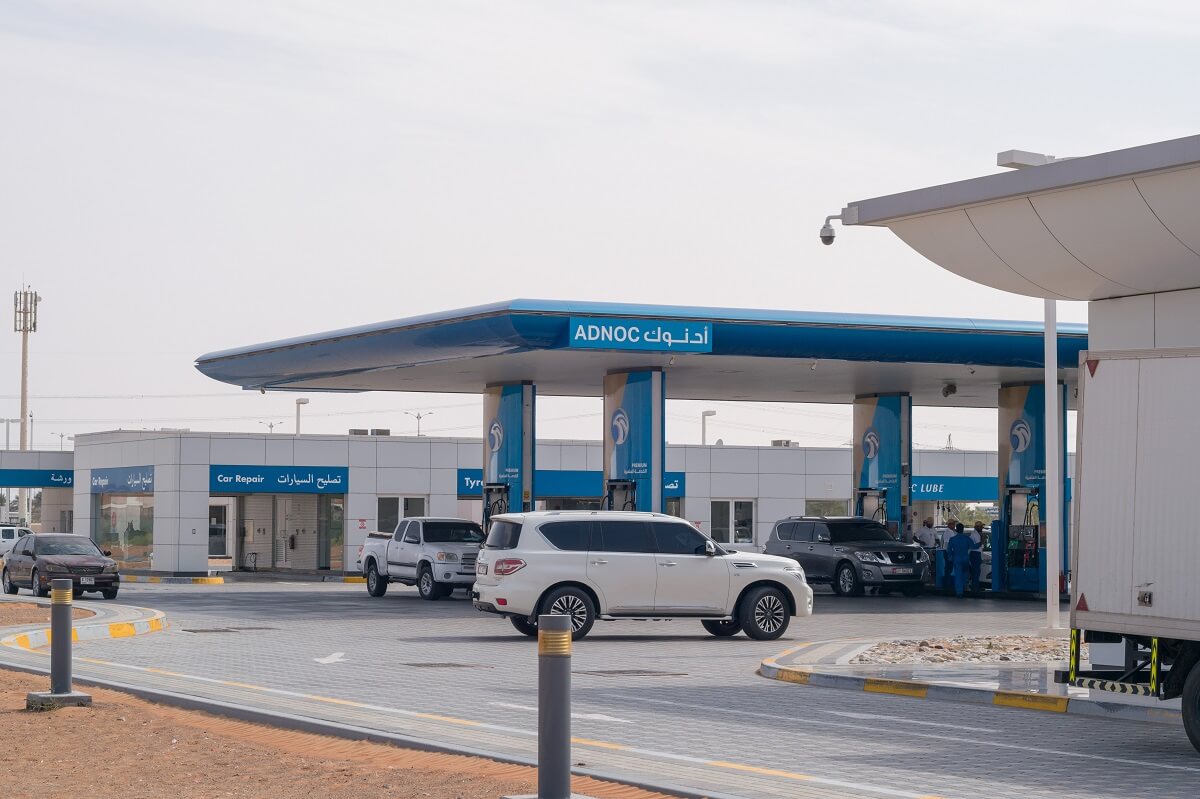
Each of the over 3 million registered vehicles in the UAE needs petrol and with only 170 ADNOC petrol stations distributed among Abu Dhabi city, Al Ain, the Western Region, and the northern emirates, it’s no wonder residents of the UAE are often left waiting to fill up.

To combat this, the Abu Dhabi National Oil Company (ADNOC) enlisted the help of telecoms company, Etisalat, to provide data analytics and forecasting tools. The Emirates ICT Innovation Center, known as EBTIC, established by Etisalat, British Telecom (BT) and Khalifa University, stepped up, with Dr. Siddhartha Shakya, Chief Researcher, Himadri Sikhar Khargharia, Researcher and Sara AlShizawi, Research Associate, designing an artificial intelligence (AI) system to increase operational efficiency at the pump.

“EBTIC works on a number of Etisalat projects every year and this project came about on my very first day in the job,” said Nathan Eden, Head of Innovation at EBTIC. “Etisalat were bidding for a service contract with ADNOC to run their service stations in lots of different ways, including providing a wireless network to them, but their main goal was to turn the images captured by their CCTV systems into useful data. At the time we met them, they had one service station using these cameras, but they were planning on implementing them across all stations in the UAE. They were looking to make predictions about usage: how long do users spend at petrol pumps or in the shop; how busy does the station get at a particular time; etc.

“Because it’s in the AI space, and AI at the time within Etisalat was quite a fresh new area, this gave EBTIC the opportunity to really shine. We iteratively produced prototypes taking in the data and applying some analytics. Etisalat then presented this to ADNOC and based on the customer feedback, was able to provide further beneficial features. As a result of this work, EBTIC did earn an excellent reputation within this area of Etisalat and the prototype is still running today in their IoT Operations Centre in Dubai. We’re working on phase three now, developing its capabilities and moving into the prediction stage to try and provide the mechanism to make business intelligent decisions.”

The petrol stations already had Internet of Things (IoT) infrastructure in place, in the form of CCTV cameras and sensors to capture the data required. The goal for this project was to build a demand prediction model for a service station where this IoT infrastructure is incorporated into a prediction framework together with an analytical dashboard to provide additional insight to the large volume of data being collected at the station.

The researchers built several prediction models and documented the results achieved by calculating the mean absolute percentage error (MAPE) of the prediction produced by each model.

“The system is up and running and the data is continuously coming in,” said Dr. Shakya. “Each station has various areas: the parking bays, the shop, the petrol islands, the car wash and oil change bays. These bays are numbered and each has a sensor to record when a vehicle comes in and when it leaves. There are also the CCTV cameras which read the number plates so we can see which Emirate the vehicle came from, for example. We get all this data in a huge table of numbers once per day which we then feed into our algorithms to understand what the data is showing us as to service station usage.”

Data collected on parking bay volume by station and date
Data collected on average time spent at petrol stations

The algorithms tested were the auto regressive integrated moving average model, K-nearest neighbors regression, support vector regression (SVR), elastic net regularization, and the development of a neural network. The researchers found that the neural network they developed had the highest accuracy with the lowest MAPE across the stations, making it the optimum model for their forecasting system.

This data is then analyzed according to the measures originally agreed with Etisalat and ADNOC. The researchers are interested in the number of unique visitors, their origin points (determined from their number plates), the time of day, petrol pump analytics, car wash frequency, and many more items. The dashboards and visual representations were designed in-house by EBTIC and show useful interpretations such as which station has the fastest average filling time, which station changes oil the fastest, and the average time spent at a pump or in a parking bay, for example.

All these insights are now being used to make better business decision for better customer service.

“This model has been incorporated in a prediction framework, together with analytical dashboards to provide additional insights from the large amount of data collected from the IoT infrastructure,” said Dr. Shakya.

“We started with analytics, taking the data and seeing if we could find any insights using our in-house developed interface and dashboards,” said Nathan.

“Now, with all the historical data, we’re looking into forecasting: for example, how many vehicles can we expect at a particular station between 10am and 12pm on a Thursday. Where we’d like to go is to begin making recommendations from the predictions. We want to be optimizing operations—if there’s more demand predicted in one station than in another but both stations have the same number of staff scheduled, we can then recommend staffing levels drop in the quieter station for that time period to provide more staff at the busier station.”

The neural network uses machine learning to continually improve on its accuracy rate. It is retrained every morning based on the new data arriving from the previous day.

Dashboard display of daily forecast of petrol pump occupancy predicted by EBTIC’s smart surveillance system

“This model uses data from 58 stations across the UAE, each station with multiple bays,” explained Dr. Shakya. “Of these bays, we’re mostly interested in petrol and parking, so in building our neural network, there are 100 models we have to train every day.”

“Every organization has to manage their resources and most of them are doing so without a full visibility of future demand,” added Dr. Shakya. “Our model can put real business intelligence behind this resource management and help optimize resources across all ADNOC forecourts.”

This project has had significant impact across many domains, including the provision of further projects building on this model, and leading to Sara Sharif’s success in her career at Etisalat post-graduation. Sharif worked on the project as a master’s student at Khalifa University and took the prize for Best AI/ML Solution from the Etisalat AI Symposium 2019.

“This work has created other opportunities in this area such as fleet management analytics, energy prediction in buildings, equipment failure predictions in buildings, lots of new projects that we’re working on for Etisalat,” said Nathan. “Whatever the use case is, we can provide a solution.”

Jade Sterling
News and Features Writer
19 November 2019

Masdar Institute Students Gain Exposure to Entrepreneurship in Study-Abroad Program at MIT

Tanmay Chaturvedi and Muhammad Awais Bin Altaf can summarize the primary benefit of studying entrepreneurship at MIT in just three words: real-life experience.

“Exposure to what’s happening in the world was my biggest takeaway from four months at MIT,” says Chaturvedi, a chemical engineer who is pursuing a PhD in interdisciplinary engineering at Masdar Institute, a research-focused technology university in Abu Dhabi, United Arab Emirates.

“It opened a window on the real world, and it helps in linking my research work with real work,” says Bin Altaf, who recently completed a PhD in interdisciplinary engineering at Masdar Institute and is now an assistant professor in the electrical engineering department at the Lahore University of Management Sciences in Pakistan.

Tanmay Chaturvedi (third from left) and Muhammad Awais Bin Altaf (fourth from right) with fellow Masdar Institute PhD students during their semester at MIT.

Masdar Institute was established with the assistance of MIT through the MIT/ Masdar Institute Cooperative Program (MIT&MICP), with graduate classes beginning in 2009. Since then, the two institutes have collaborated on strategic research projects and academic-exchange opportunities.

In one such program, Masdar Institute PhD students apply to spend a semester abroad taking classes and conducting research at MIT. The most recent group of students included Chaturvedi and Bin Altaf, who each enrolled in an intensive MIT “ventures” course, which included mentoring, interacting with researchers and visiting entrepreneurs, and creating business plans or prototypes for potential real-world ventures.

‘VIBRANT STARTUP ENVIRONMENT’

That combination appealed to Chaturvedi, a native of India whose family has lived in the UAE for many years. “I wanted an emphasis on development and entrepreneurship, and MIT has a very vibrant startup environment,” he says, adding that he especially enjoyed meeting entrepreneurs. “These were the people who had gone through the grind of selling their ideas, entering different competitions, and trying to raise money, or who are going through the process right now.” 

At MIT, Chaturvedi also met people conducting research similar to his own, which focuses on generating renewable energy from common biomass sources such as palm-tree leaves, seaweed, algae, and landscaping waste. “At MIT, there are so many people working on this topic,” Chaturvedi says. “You don’t realize that there are so many people out there following the same path that you are.”

While at MIT, Chaturvedi enrolled in Development Ventures, a one-semester course focused on founding, financing, and building entrepreneurial ventures that target developing, emerging, and underserved markets. Taught by MIT faculty members Alex “Sandy” Pentland and Joost Bonsen, the course particularly emphasizes “transformative innovations and exponentially scalable business models that can enable or accelerate major positive social change throughout the world.”

For Chaturvedi and his classmates, that meant developing and entering proposed ventures in MIT’s annual $100,000 Entrepreneurship Competition (widely known as “the MIT $100K”). “They wanted an actual business plan, not a class final project,” recalls Chaturvedi, whose four-person team designed a concept for a lightweight shipping container with embedded technology that people in remote areas could use, post-delivery, to convert agricultural and household waste to electricity or biogas.

The team’s plan didn’t win the MIT $100K, but Chaturvedi, who expects to complete his PhD at Masdar Institute in May 2017, called the experience “a great exercise in learning to submit a plan to a business competition.”

FROM PROTOTYPE TO PRODUCT

His Masdar Institute colleague, Bin Altaf, focuses on developing energy-efficient wearable electronic biomedical devices, specifically on designing sensors that detect and monitor epilepsy. Not surprisingly, Bin Altaf enrolled in Healthcare Ventures, another one-semester entrepreneurship seminar. Led by MIT Professor Martha Gray and Senior Lecturer Zen Chu, the class places special emphasis on startups combining digital health and high technology. “The course was directly aligned with my research,” Bin Altaf says, adding that he came away with a strong understanding about the steps involved in designing a prototype, marketing a concept, and launching a startup.

Working in groups, Healthcare Ventures students identified industry problems, then proposed solutions for them, addressing both business and technology issues. Bin Altaf, whose team explored options for addressing mental-health problems in academic institutions, focused on the project’s technical aspects, including developing a prototype for testing the group’s ideas.

The experience helped Bin Altaf—who hopes to take his epilepsy-related medical device to market—start thinking seriously about a business model for his research work. “It taught me a lot of lessons and strategies for moving forward,” he says.

Like Chaturvedi, Bin Altaf found interacting with entrepreneurs especially useful. “One of the main highlights of the course was the mentoring. A lot of the instructors own their own health-care startups, so that helped a lot in guiding us,” he says. The course also required students to make weekly progress presentations before the whole class—including entrepreneurs. He adds: “It was really nice to get direct feedback. You get a chance to align yourself on the right path.”

Bin Altaf, a native of Pakistan who was visiting MIT for the first time, calls the class’s diverse makeup an unexpected bonus. “It helped me to work with students from different backgrounds,” he says. “Different people use different technical language. It’s essential to explain your research or problem in a way that all can understand.”

Chaturvedi, who had visited MIT twice previously, was especially impressed this time by both the talent and the generosity he encountered on campus. “It seemed like everyone was involved in some groundbreaking work, and yet they were so humble,” he recalls. “They would share everything over dinner or over sandwiches in the park.”

Finally, he says, all the students in the most recent Masdar Institute delegation shared one takeaway. “As a researcher, you’re very focused on fact and scientific evidence. We all agreed when you experience that at MIT, it’s at a whole new level,” he says. “It’s a great opportunity if you want to see how many people like you are pursuing things that are going to have an impact on the most pressing problems of the world today.”

This article was originally published on the MIT Technology Review and was republished with the permission of the  MIT and Masdar Institute Cooperative Program.

Masdar Institute to Highlight Academic Offerings and Scholarship Opportunities at NAJAH 2016

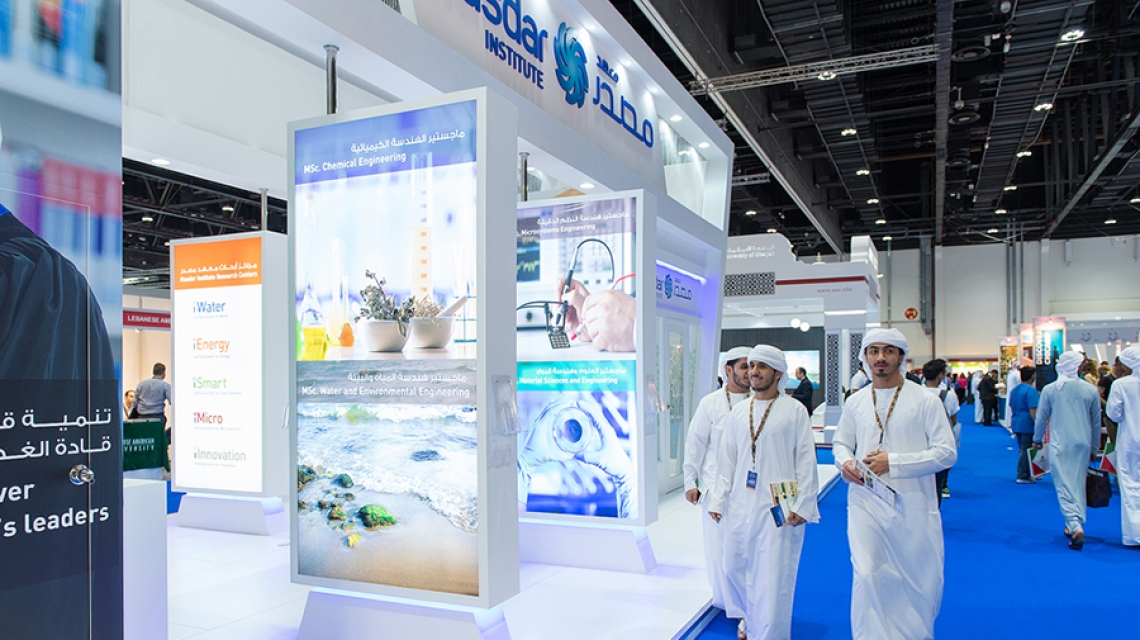
Innovative research projects and academic offerings of relevance to the UAE and region will be highlighted by Masdar Institute at the upcoming NAJAH Education and Career Fair 2016.  

Organized under the patronage of His Highness Sheikh Nahyan Bin Mubarak Al Nahyan, Minister of Culture & knowledge Development, the fair is supported by the Abu Dhabi Education Council and the UAE Ministry of Education. It will be held from 25-27 October 2016 at the Abu Dhabi National Exhibition Centre (ADNEC) and will gather stakeholders and key government organizations and educational institutions. The Masdar Institute stand (3F30) will showcase several key research projects in solar and water.  

Dr. Behjat Al Yousuf, Interim Provost, Masdar Institute, said: “Our participation in NAJAH 2016 will showcase the options for scientific research and learning as well as scholarship opportunities available at Masdar Institute students who would like to explore future energy and advanced technologies areas. For those interested in developing themselves into future leaders in science and technology, we offer the most appropriate platform for higher learning. We hope the event will offer visiting students an opportunity to explore our overall offerings for charting their future career.”  

Masdar Institute will be providing details about its world-class academic, research and outreach offerings at the fair, which holds its 10th edition this year. Students will also be on hand to share their on-campus experience with visitors, while faculty will give details about the Institute’s academic and research offerings.

A dedicated Outreach section at the stand will showcase the Young Future Energy Leaders (YFEL) program, an outreach initiative by Masdar Institute. The program focuses on raising the awareness of students and young professionals in the fields of renewable energy and sustainability. The YFEL serves as an avenue for youth to equip themselves to become future leaders. Details on the program’s various year-long activities, courses and competitions will be available at the stand with other outreach initiatives such as the Ektashif and summer research internship programs.

Masdar Institute currently offers one PhD program and nine Master’s programs in various engineering fields including Engineering Systems and Management, Computing and Information Science, Materials Science and Engineering, Mechanical Engineering, Water and Environmental Engineering, Microsystems Engineering, Electrical Power Engineering, Chemical Engineering and Sustainable Critical Infrastructure. The PhD program in Interdisciplinary Engineering targets those keen to pursue their interest further after Master’s degrees.  

Students eager to play a role in the UAE’s space ambitions can take advantage of the Master’s concentration in Advanced Space Systems and Technology that is being offered from September 2015. Students of this concentration can join one of Masdar Institute’s seven relevant Master of Science (MSc) programs. They also gain an opportunity to build small satellites (CubeSats), supported by collaboration Al Yah Satellite Communications Company (Yahsat) and Orbital ATK, a global aerospace manufacturer and defense industry leader.

At present, Masdar Institute has 456 UAE national and international students, of which approximately 50% are UAE Nationals. The Institute has been ranked first in the UAE and 20th among Western Asian academic institutions by the Springer Nature Index 2016 annual rankings, which is based on contributions to publications in leading scientific journals. The research-based institution also rose to 14th position overall in the 2016 US News and World Report Best Arab Region Universities Rankings.

Clarence Michael
News Writer
24 October, 2016

UAE Flag Waves Proudly over Masdar Institute Campus

Masdar Institute staff, faculty, students converged outside the iconic Knowledge Center to raise the UAE colors in response to the call of the country’s leadership to honor the symbol of pride and honor on UAE Flag Day.

A UAE large flag was unfurled by Hamza Kazim, Vice-President for Operations and Finance, and Dr. Abdullah Al Hefeiti, Acting Dean of Students and Dean of Library at 11.00 am, following which all assembled at the venue raised the UAE national flag while the national anthem played. The annual UAE Flag Day celebrations commemorates the accession of His Highness Sheikh Khalifa bin Zayed Al Nahyan to the UAE Presidency.

This year’s UAE Flag Day had special significance at Masdar Institute as UAE nationals currently constitute more than 52% of the student body while more than 20% of faculty members are Emiratis.

Clarence Michael
News Writer
3 November, 2016