

Towards a ‘Zero-Skin’ Well with New Drill-In Fluids and Non-Corrosive Cleanup Solution

A new approach to drilling oil wells that combines novel drill-in fluids with enzymatic wellbore cleanup fluids could lead to more productive oil and gas reservoirs.

Research led by Dr. Samuel Osisanya, Professor of Petroleum Engineering at Khalifa University, with Ismail AlCheikh, former KU Graduate Research and Teaching Assistant, Dr. Bisweswar Ghosh, Associate Professor of Petroleum Engineering, and Dr. Debayan Ghosh, President and Founder of Epygen Biotech, has led to the development of a new drill-in fluid and non-corrosive cleanup solution to maximize oil well productivity.

Drilling fluid is an essential component of any rotary drilling operation—no drilling can be performed without it. In geotechnical engineering, drilling fluid is used to aid the drilling of boreholes into the earth. Drilling fluid provides hydrostatic pressure to prevent formation fluids from entering the wellbore, keeps the drill bit cool and clean during the process, carries out drill cuttings, and suspends said cuttings while drilling is paused and the assembly is moved.

The drilling fluid for any job is selected to avoid formation damage – the general term to describe the reduction in permeability to the wellbore area – and limit corrosion. To a great extent, the successful completion of a borehole depends on the properties of the drilling fluid.

“Drilling fluids have undergone significant development since they were first used,” said Dr. Osisanya. “As drilling operations progressed, new conditions were encountered and new functions were required. Despite the usefulness of drilling fluids with regards to any rotary drilling operation, there are several aspects that require critical attention and control.”

Dr. Osisanya’s work focuses on minimizing formation damage to the wellbore. There are many ways this area can be damaged, including solid particles from the drilling fluid physically plugging pores in the formation and chemical reactions between the drilling fluid and the formation rock precipitating solids that line the borehole as a sludge.

“Drilling fluids with improper particle size distribution result in the plugging of the formation pores,” explained Dr. Osisanya. “This is due to the act of the invading filtrate into the pores, known as internal damage. Internal damage causes a decrease in the porosity or permeability of the formation and therefore lowers its productivity.”

One approach to minimizing formation damage is to use drill-in fluids specially formulated to avoid damage to the formation.

“For a drilling fluid to be used as a drill-in fluid, several modifications to the composition and properties must be made,” said Dr. Osisanya. “The addition of sized bridging particles such as calcium carbonate and sodium chloride is an example of such a modification.”

One of the critical factors in designing a drill-in fluid is to prevent the solids and filtrate present from the drilling process from invading the pores, effectively sealing the formation surface. What is known as Abram’s Rule can be used to formulate a drill-in fluid as it specifies a bridging agent to be equal to or slightly greater than one third of the medium pore size of the targeted formation. However, this rule only addresses the particle size that initiates a bridge and does not address the best packing sequence for minimizing fluid invasion and optimizing sealing.

Instead, Dr. Osisanya applied Ideal Packing Theory by determining the maximum, median and minimum pore sizes of a given core plug to provide the full particle size distribution required to quickly bridge all sizes of pore openings.

Because each reservoir is unique, each drill-in fluid must be tailor-made. Laboratory tests on core samples characterized the reservoir rock and then a polymer-based drill-in fluid was formulated using calcium carbonate bridging particles.

Results from core flood tests showed that effective filter cakes – impermeable layers of built-up solids used to prevent filtrate loss during the initial drilling – were deposited on the core face, reducing permeability by more than 99 percent.

While blocking the pores in a wellbore is necessary during the drilling process, once the well is complete, the reservoir rock needs to be returned to its original permeability so the sought-after hydrocarbons can flow to the surface during production. If sufficient permeability cannot be restored, it will not be economically viable to extract the hydrocarbons.

“Homogenous and effective cleanup operations must then be performed to remove any residual filter cake (known as external damage) and to restore the well’s original permeability,” said Dr. Osisanya. “The second objective of this work was to develop a non-corrosive wellbore cleanup fluid to remove the external filter cakes and bring the skin close to zero prior to well completion.”

A zero-skin well refers to a well in which the permeability around the wellbore is unaltered after drilling takes place.

To maximize the production rate and economic value of the well, the filter cake needs to be removed as uniformly as possible from the entire borehole. Historically, acid, particularly hydrochloric acid, has been used to remove calcium carbonate in filter cakes. While strong acids can give good results in wells with short production intervals, the very fast reaction rate results in the consumption of the acid before a homogenous cleanup is achieved. Plus, strong acids tend to also react with downhole equipment and tubulars causing severe corrosion. Conversely, weak acids have improved efficiency due to their slow reaction but are unable to dissolve a filter cake’s polymer content and are also corrosive to the downhole tools.

“Normally, wellbore cleanup fluids are highly acidic and need a corrosion inhibitor,” explained Dr. Osisanya. “But this new formulation is effective in minimizing corrosion of downhole tools without the use of corrosion inhibitors.”

Dr. Osisanya’s work combines acid precursors and enzymes into one cleanup solution. Organic acid precursors are esters which generate weak acids downhole at various rates, which minimizes corrosion as they are pumped downhole in a non-acidic phase. These clean the carbonate content of the filter cake. To tackle the polymer content, specific enzymes such as alpha-amylase are used. The combination leads to effective and uniform removal of the filter cake while also limiting corrosion of the tools and equipment.

“The corrosion rates were found to be significantly below the industry limits. Meaning, the use of acid corrosion inhibitor is not necessary,” said Dr. Osisanya. “The industry accepted corrosion limit is 4.6mm per year. The average corrosion rate from our solution was 0.327mm per year.

Corrosion inhibitors are usually inorganic salts of heavy metals and extensive use of these materials is restricted in many areas due to their impact on personnel and the surrounding area. Strong acids also pose significant health and safety risks as well as environmental concerns. A corrosion free breaker chemical is key to mitigating these issues.

Not only is Dr. Osisanya’s cleanup solution minimally corrosive, it is also very efficient. Return permeability for all tests was around 95 percent. As a common acceptable return permeability is around 60 percent, this is a remarkable improvement.

“The combination of our designed drill-in fluid and the cleanup solution saw us achieve a ‘near zero-skin,’ which was the objective of this research.”

Jade Sterling
News and Features Writer
18 November 2019

The Impact of PV Shades in Reducing Heat Stress in Oil and Gas Industry

Beyond just providing cover, PV panels can be part of a hybrid electrical generating system, with storage batteries and diesel generators. The PV panels reduce the need to operate the generators and reduce carbon dioxide emissions.

Heat stress is a common phenomenon in the UAE. During the harsh summer months, residents across the country suffer from the heat, but for outdoors workers, like those on oil rigs, summer can be a potentially dangerous time of year. To keep workers safe, a team of researchers from Khalifa University have investigated using a system of photovoltaic (PV) panels to provide shade for the workers, significantly reducing the temperatures in which the employees are working.

Dr. Clarence Rodrigues and Dr. Rodney Simmons, both Associate Professors of Industrial and Systems Engineering supported Abdul Hasib Siddique, graduate student from the M. Eng. in Health, Safety and Environmental Engineering (HSE) program, with his efforts conducted for the 1-credit research course requirement for the program.

“Excessive heat in an oil or natural gas drilling environment can have negative effects on workers, production levels and work efficiency,” explained Siddique. “The summer temperature in the UAE can reach as high as 51⁰ C, which is extremely high for continuous outside work, especially considering that a 12-hour work shift is normal on the rigs.”

Heat stress is a common, yet often ignored hazard in the workplace. Research shows that working in hot environments is linked with lower mental alertness and physical performance, and subsequently, more injuries. When elevated body temperature and physical discomfort are added to the mix, it’s understandable that workers may divert their attention from hazardous tasks and overlook common safety procedures.

“In occupational settings, heat stress is the thermal load to which a worker is exposed, and heat strain is the body’s physiological response to that stress,” explained Siddique. “The body has coping mechanisms that allow it to function in very hot environments, but in extreme conditions, these coping mechanisms can be overwhelmed. As the UAE has long hot summers, heat stress becomes an issue for every worker who is outside in the sun.”

“With the establishment of the new ADNOC campaign ‘100% HSE’, a stricter personal protective equipment (PPE) policy has been implemented,” explained Siddique. “Workers wear more protective gear, like helmets, masks, safety shoes, gloves and other job-specific PPE, and wear them more consistently than they once did. As a result, high workplace temperatures make the same task more stressful and exhausting.”

Siddique’s work proposes area cooling on drilling rigs by providing photovoltaic shades as a roof cover. His system covers the entire mud tank area with PV panels to reduce radiant load and provide shade, reducing direct radiation. Each panel is movable to prevent delaying operation during rig moves and has a minimum headroom of 10 feet to accommodate free movement beneath them.

“Out in the open sky, a person feels hotter because the sun’s rays landing on the skin adds energy to the body in the form of heat,” explained Siddique. “As the radiant heat load on the body is reduced or eliminated under the shade, it will always feel cooler in that shaded area. The body usually loses or gains 60 percent of heat exchange from radiant heat gain or loss, so it’s evident it will be much better for workers if a PV array is implemented as shade in the tank area.”

Shade generated from roofs covered by PV panels significantly reduces surface temperatures below the covered areas in both moderate and high temperature conditions and although a cooling effect may be relatively small, it can improve the thermal comfort of the affected humans significantly.

The Thermal Work Limit (TWL) is an indication of how long a person can do work in a certain environment—it predicts the maximum work that can be carried out without a worker’s body temperature exceeding 38.2⁰ C or a safe sweat rate. The TWL is assessed by measuring temperature, wind speed, radiation, and relative humidity, as human performance is directly impacted by these factors.

“Companies have been trying to come up with engineering and administrative controls to reduce the effect of summer heat in this region,” said Siddique. “We proposed photovoltaic array shades to improve conditions for the workers and help reduce thermal stress.

“Due to global warming, average ambient temperatures in the summer are now generally higher than experienced in the past,” said Siddique. “Although the differences are of only a few degrees, these small differences can make a big change in the work environment.”

Beyond just providing cover, PV panels can be part of a hybrid electrical generating system, with storage batteries and diesel generators. The PV panels reduce the need to operate the generators and reduce carbon dioxide emissions.

The UAE receives an average 9.7 hours of sunshine each day, with one of the highest solar exposure rates in the world, giving the country tremendous potential for renewable energy supply.

“According to the World Wildlife Fund (WWF) Living Planet Report 2010, the UAE is one of the leading countries contributing towards the per capita carbon footprint,” said Siddique. “A photovoltaic system will help reduce the country’s greenhouse gas emissions and we calculated a total reduction of about 135 kilotons per year. Installing solar panels will decrease the heat stress experienced by workers while also producing energy and contributing to a decrease in greenhouse gas emissions.”

Jade Sterling
News and Features Writer
19 November 2019

Keeping Oil and Gas Pipeline Inspection on Track

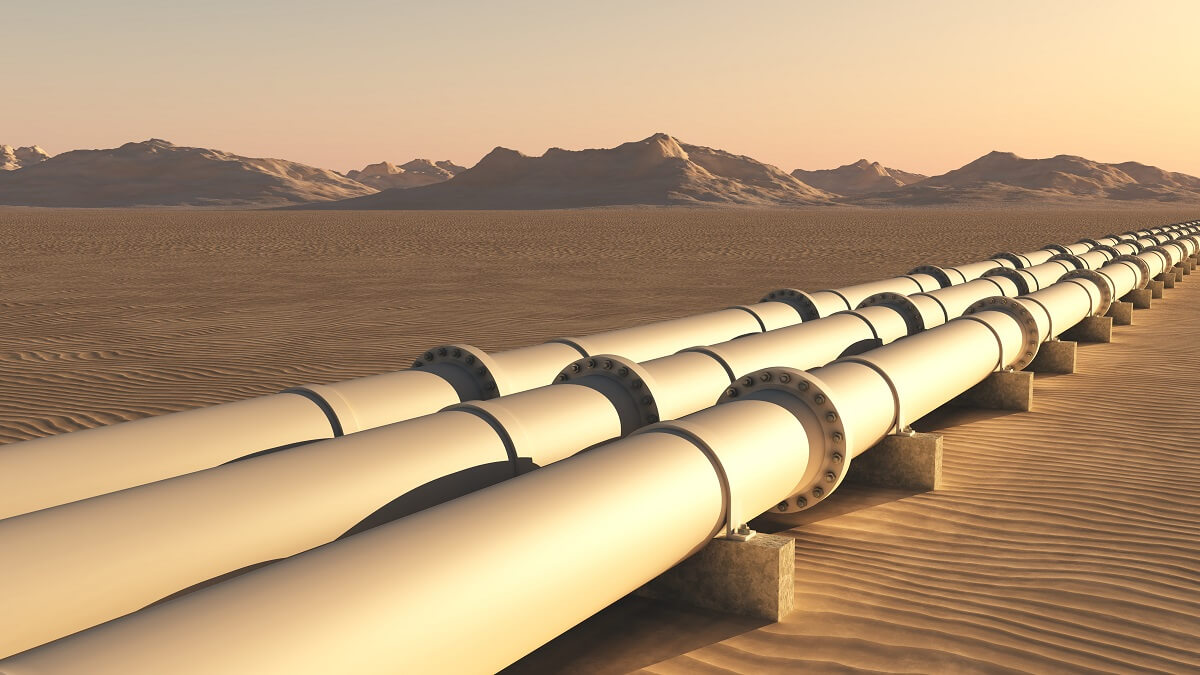
Global energy consumption is on the rise, driven by a robust global economy and higher heating and cooling needs in some parts of the world. This increase is led by the demand for natural gas, which accounts for nearly 45 percent of the increase in total energy demand. Transporting gas from the well to the consumer requires a journey of miles of pipelines that need to be maintained in excellent condition.

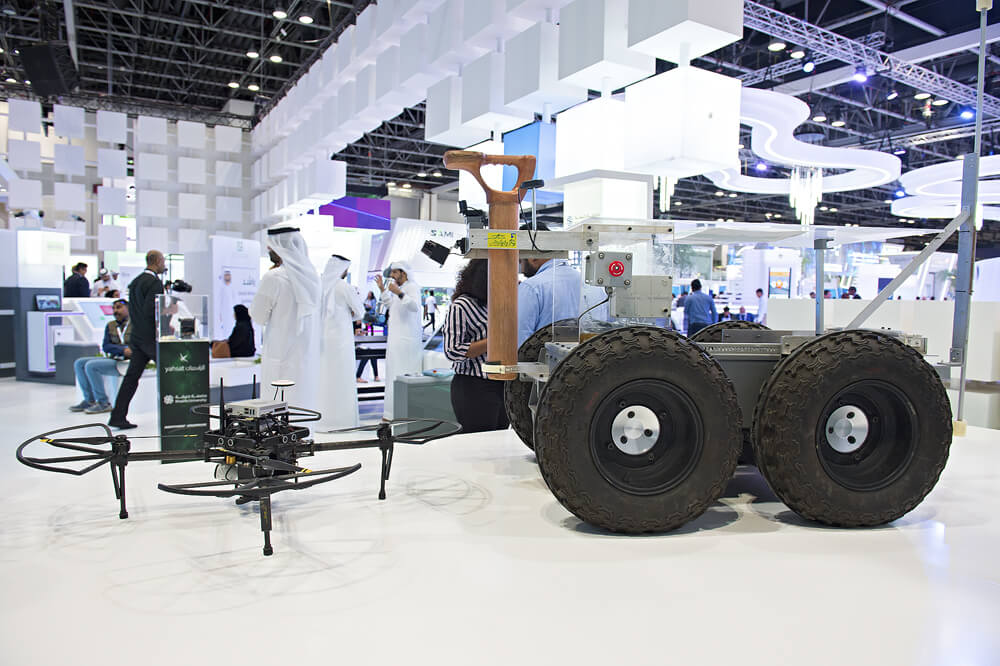
In a paper presented at the 2019 Abu Dhabi International Petroleum Exhibition and Conference, Vidya Sudevan, Research Assistant at Khalifa University, introduced an autonomous robotic inspection system (ARIS) as a solution to the currently expensive and time-consuming process of gas and oil pipeline inspection and maintenance. Sudevan collaborated with Dr. Hamad Karki, Arjun Sharma, and Vishnu Bhadran also from Khalifa University, and Amit Shukla from the Indian Institute of Technology in Mandi, for this work.

“Middle Eastern countries have the most complex and extensive oil and gas pipeline network in the world and are expected to have a total length of more than 24,000km of pipelines by 2022,” said Sudevan. “Routine inspection and active maintenance of these structures is therefore high priority in oil and gas operations.”

Since oil and gas pipelines are an important asset to the economy of almost any country, the safety of these pipelines, both intrinsically and to the surrounding population and environment, is of paramount concern. Various technologies and strategies are implemented to monitor pipelines, from physically walking the lines to satellite surveillance.

Pigging is the current internal inspection method, and uses devices known as pigs or scrapers to clean and inspect the pipeline without stopping the flow of the product. This is expensive and time-consuming and requires strict adherence to pre-installation procedures, while external inspections are conducted manually by a group of operators who traverse the buried pipeline structures. The data collected along the pipelines is then analyzed manually to identify and locate any possible anomalies, which leads to potential discrepancies in accuracy depending on the experience of the operators. This kind of inspection is a tedious task, compounded by extreme environmental conditions such as the high temperatures and uneven terrain across the region.

“In Abu Dhabi, many oil and gas facilities are still using infrastructure that is at least four decades old to carry expensive and sensitive fluids through metallic pipes,” explained Sudevan. “But unfortunately for such aging and vulnerable pipes, there is no way of externally inspecting them for various defects creeping in. These pipes are subjected to extreme weather conditions and may have not been inspected for a long time, which can lead to unexpected failures causing loss of revenue and environmental pollution.

“The current inspection procedures in use are expensive and somewhat inefficient. Buried oil and gas pipelines that are exposed to severe environmental conditions will be adversely affected by corrosion, erosion, cracks, joint-failures and shock loading, to name a few.”

In the UAE, oil and gas pipelines are mostly buried under a berm, a raised trapezoidal structure made up of sand over the buried pipeline structure. Pipelines are generally laid underground to avoid temperature fluctuations and reduce the expansion and shrinkage that can occur in the metal. They are also shielded from ultraviolet rays, photodegradation, airborne debris, electrical storms, natural disasters, the flora and fauna of their surroundings and accidental damage or intentional sabotage. However, their routine inspection is still vital to their operation.

“Among Middle Eastern countries, the UAE alone has roughly 9000km of pipelines,” explained Sudevan. “Out of these, almost 90 percent is buried under the berm, around 2 to 3 metres underground for safety, economic and environmental reasons.”

To obtain information about the integrity of the pipeline, the exact location of the buried pipeline needs to be known beforehand. A precise buried pipeline locating device is therefore a critical component of any ARIS. In the UAE, pipelines are buried under the berm as either a single pipeline in the middle of the berm or as two pipelines buried on the two edges.

“The challenges in the current manual inspection methods can be tackled by using a robotic platform equipped with various sensors that can detect, navigate, and tag the buried oil and gas pipelines,” explained Sudevan. “An autonomous robotic inspection system would offer the ability to locate, inspect and navigate the buried pipeline structure above the ground without any failure even in the most extreme situations.”

Inspection robots are used in the oil and gas industry already, and help reduce human intervention, increase operational efficiency and improve safety. However, autonomy would automate the process of externally inspecting and geo-tagging the buried pipelines as an autonomous mobile platform would have the ability to identify the target, navigate along the pipeline structure, inspect the structure and geotag it. Automation of this process would result in more comprehensive and efficient inspections, especially in potentially dangerous inspection sites, while also negating the need for breaks.

However, this autonomous robotic inspection system would need to detect and inspect pipeline structures from the surface irrespective of the terrain.

“The objective was to design a novel hierarchical controller that can track the buried pipeline and navigate along the berm without failure even in extreme conditions. The controller should track the pipeline when the pipeline is in the middle of the berm, and also when the pipeline is at the extreme edge of the berm. The ARIS should be able to identify the precise location of the pipeline and navigate exactly along the center of the berm.”

The robotic system used by Sudevan and team involved the Husky A200, a rugged, 4-wheel drive all-terrain unmanned ground vehicle, equipped with various non-contact sensors to perform the autonomous inspection and tagging operation. A target detection sensor determines the location of the pipeline while ultrasonic sensors continuously monitor the distance between the berm and the vehicle.

The team developed a hierarchical controller based on this data for the ARIS to autonomously detect and track the buried pipeline structure in any extreme condition without any fail or skid. The hierarchical controller generates required velocity commands which it feeds to the vehicle controller to navigate over the berm. When the pipeline is buried in the center of the berm, these commands suffice, but when the pipeline is buried on the extreme edge, and the vehicle is at risk of toppling over, a further Sliding Mode Controller (SMC) generates the required angular velocity to navigate the ARIS safely over the berm.

Based on its pipe locator-based tracking controller and its ultrasonic-based anti-topple controller, the hierarchical controller performed well under experimental conditions, showing the ability of ARIS to detect and track buried pipelines and navigate along the berm without failure. The advanced control algorithm is under development for even better tracking accuracy in extreme conditions and a real field test will be conducted to validate the results.

“This research will help the Abu Dhabi National Oil Company (ADNOC) develop its own reliable tool for the continuous inspection of its buried oil and gas pipelines,” said Sudevan. “Since complete development is done at the research facilities within Khalifa University, it will be very cost effective and any new inspection tool can be customized according to the needs of the various ADNOC operations.”

Jade Sterling
News and Features Writer
25 November 2019

Determining Where We Came from with Genes from the Immune System

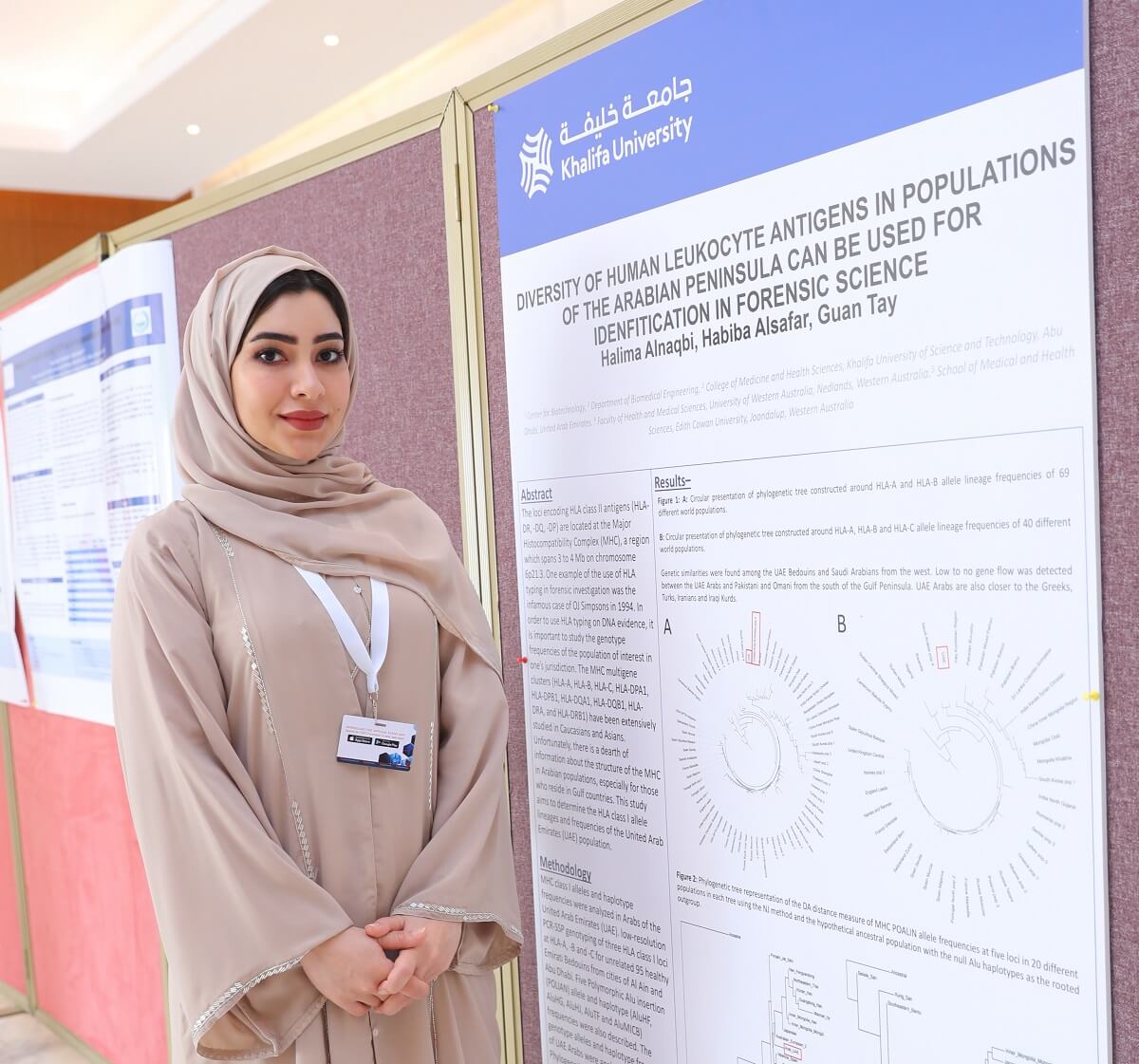
Halima Alnaqbi, PhD candidate in the Department of Biomedical Engineering, presented a poster at the 3rd GCC Forensic Conference and Exhibition entitled “The use of human leukocyte antigen diversity in the population of the Arabian Peninsula for anthropological studies.” Held in Bahrain for 2019, this event focused on the technological innovations in forensic science.

Among the basic medical sciences involved in anthropology, immunogenetics (genes of the immune system) can be used as molecular markers to distinguish between ethnic groups. Genes encoding the human leukocyte antigen (HLA) are located in a part of the human genome known as the Major Histocompatibility Complex (MHC). This set of genes codes for cell surface proteins used by the immune system to recognize foreign molecules. It is the same set of genes that are used to determine compatibility for organ and hematopoietic stem cell transplants, among many other applications. By nature, these genes are highly variable since they are responsible for differentiating self from non-self components.

“Knowledge gleaned through anthropological studies has led to a range of applications in medicine and forensics. Understanding the origin of populations and our genealogy improves our ability to detect or diagnose disease. As with all gene complexes, in order to use HLA typing on DNA samples, it is important to study the genotype and allele frequencies of the HLA genes in populations of interest,” explained Dr. Habiba Alsafar, Associate Professor of Genetics and Molecular Biology and Director of the KU Biotechnology Center. “This study is the first to define the frequencies of HLA class I alleles and HLA class I haplotypes of UAE Arabs and compare these to different world populations including those from Africa, Asia and other parts of the Middle East. These DNA markers are important for extending our knowledge of ancestry and allows for genetic profiling to narrow down the population from which a person originated.”

Since some alleles are only found in specific populations, they can be used as markers by anthropologists to determine the extent of intermixing between different populations over time. With more than 7,000 alleles, the HLA genes are arguably the most polymorphic in the human genome – meaning, multiple forms (i.e. thousands) of the HLA genes exist.

Studies have examined the HLA genes of many other populations for an array of medical purposes. For example, particular HLA types could be used to identify the susceptibility to severe disease, the occurrence and persistence of endemics, or the emergence of specific pathogens in populations. Therefore, an understanding of the population-specific HLA allele distribution can contribute to informed treatment and vaccination decisions.

“Unfortunately, there is a lack of information about the structure of the MHC in Middle Eastern populations, especially for those who reside in Gulf countries,” explained Alnaqbi.

Beyond medical and forensic applications, there is also the desire to understand where communities come from and the genetic origins of its people. The work of the team led by Dr. Alsafar has found that the Emirati genome has been influenced by the historical transcontinental migration of myriad different ethnic groups from surrounding regions and the nomadic lifestyles of the Arabian populations. Uncovering and characterizing the origins of the Emirati population has been made possible by the access to state of the art next generation sequencing technology at Khalifa University’s Biotechnology Center.

In her presentation, Alnaqbi emphasized the importance of further research in order to construct a full anthropology database for the Arabian region and to further utilize the DNA markers for anthropological studies.

Earlier research has shown that worldwide patterns of genetic diversity tend to exhibit a geographic-specific structures, indicating that natural selection was not the only mechanism that contributes to diversity. Rather, genetic diversity was also shaped by human migration, hence the interest in using immunogenetics as a tool to support anthropological investigation into human peopling history, i.e., migration to world regions where there was previously no human habitation.

To contribute to the available data on Arab populations, Alnaqbi analyzed MHC class I alleles and haplotype frequencies in consenting volunteers from the UAE. The distribution of alleles and haplotypes were identified and compared with different world populations, including those from Africa and Asia.

“These DNA markers are important for expanding our knowledge of ancestry and genetic profiling of specific ethnic groups,” explained Alnaqbi. “Their use in forensic science can potentially assist in identifying the ethnic background of individuals of interests.”

Using phylogenetic trees, Alnaqbi found genetic similarities among the UAE Bedouins and Saudi Arabians from the west. Also, little to no gene flow, was detected between UAE Arabs and Pakistanis or Omanis from the south of the Gulf Peninsula.

“Using the HLA markers available, the UAE population appears to be closer to those in Greece, Turkey, Iran and the Kurds of Iraq,” noted Alnaqbi.

Arabs form a major pan-ethnic group. The Arab League is a collective comprising 22-member states and 357 million people. Much of their history involves contact between different ethnic groups residing throughout a vast area stretching from Mauritania in West Africa to the western border of China in East Asia. Studies have shown that the current populations of Bahrain, UAE, and Oman share similarities, presumably due to their close geographical proximity. The location on the coast on the South Eastern tip of the Arabian Peninsula provided a strategic location for trade, presumably where other populations including merchants from Europe, Africa and Asia congregated.

“Further research continues and is expected to generate more data for a population database for the region and provide alternative markers as a tool to augment and validate our current understanding of the origins of the UAE genome,” said Alnaqbi.

Jade Sterling
News and Features Writer
5 December 2019

Separating Chemicals With Magnets

Researchers File Patent for Novel, Energy-Efficient Technique that Leverages Membranes and Magnets to Purify Chemical Compounds from Mixtures in Oil and Gas Processing

A team of researchers at the Gas Research Center (GRC) are working to reduce the high energy costs of industrial chemical separation processes with a breakthrough separation technique that leverages membranes and magnets to purify chemical mixtures.

Chemical separation is at the heart of many UAE industries – from oil refining and gas processing to chemicals manufacturing – and is responsible for a significant share of the country’s energy consumption and carbon dioxide emissions. Globally, chemical separation processes account for up to 15% of total annual energy consumption, underscoring the critical need for alternative chemical separation innovations that can replace the energy-intensive thermally-based processes most commonly used today.

“The novel technique we are developing could help reduce the energy footprint of industrial chemical separation technologies, enhance productivity and global competitiveness of key UAE industries, and contribute to the country’s energy-efficiency goals,” said Dr. Georgios Karanikolos, Assistant Professor of Chemical Engineering.

Dr. Karanikolos is leading a team of researchers from GRC, located in Khalifa University of Science and Technology’s Sas Al Nakhl Campus. The center was established by the Petroleum Institute, now part of Khalifa University of Science and Technology, with the support of GASCO, ADNOC, Shell Abu Dhabi B.V., Total S.A. and Partex Gas Corporation. A team from the Demokritos National Research Center of Greece is also engaged in the project as an external collaborator. The researchers are investigating the use of a magnetic field to draw out certain chemicals from gas mixtures in membrane- and adsorption-based separation systems.

Essentially, the magnet-based chemical separation technique capitalizes on the magnetic properties of the targeted chemicals to either attract or repel them while they pass through a membrane, in response to an external magnetic field. The magnetic field helps to hold certain molecules “in place”, while accelerating the transport of others in the path required to make it through the membrane’s pores. Dr. Karanikolos describes this effect as “tuning.”

“The forces induced by the magnetic field could act selectively on the constituents of gas mixtures that exhibit high attraction or repulsion, thus providing a significant mode of tuning the performance of these membrane-based separation systems,” he explained.

The team’s preliminary findings were extremely promising and as a result, they filed an international patent on the innovative separation process in July this year.

The sensitivity of certain gases to magnetic fields has been demonstrated long ago. Michael Faraday, a leading scientist of the 19th century whose works contributed greatly to the understanding of electromagnetism, demonstrated this sensitivity over a century ago, when he filled soap bubbles with oxygen and nitrogen, and floated them in a magnetic field. The oxygen bubbles moved one way in the field, while the nitrogen bubbles moved the other. Yet, Dr. Karanikolos explained that the application of this principle towards the performance enhancement of gas separation processes has not been investigated till now.

“The novel concept of applying a magnetic field to enhance the performance of membrane and adsorption systems, once systematically investigated and established, will lead to a major breakthrough in the field of mixture separation, both from a fundamental as well as industrial point of view,” Dr. Karanikolos commented.

The researchers have been investigating how the new magnetic separation approach can be used to separate oxygen from nitrogen in air mixtures, carbon dioxide from methane in natural gas, and carbon dioxide from nitrogen in post-combustion mixtures emitted, such as from fossil fuel-burning power plants, which could be an important boost towards the advancement of carbon capture and sequestration (CCS) – an emerging technology that aims to remove atmospheric greenhouse gases and curtail the negative impacts of climate change. The technology will also provide the oil industry with valuable carbon dioxide for enhanced oil recovery at a low cost.

Historically, alternatives to the energy-intensive separation process of distillation, which is the primary process used to separate chemicals from liquid or gas mixtures through heating or cooling, have been unable to achieve commercialization mainly because of scalability problems. Membrane technologies are being targeted for energy-efficient separation and purification processes, but technological limitations have prevented them from being applied at large scale, mostly due to the inability to produce membranes of uniform quality and performance at a scalable industrial level.

“Membranes and adsorbents are considered as the most promising alternative to energy-demanding traditional separation processes. But a major hurdle in membrane technology is the fabrication of defect-free membranes, so that flow is directed exclusively through the pores of the membrane and not through gaps that can sacrifice selectivity, a challenge that becomes even more dominant when scaling up is attempted towards fabrication of large membrane areas as required by industrial applications,” Dr. Karanikolos explained.

The researchers have been experimenting with how different magnets can enhance the performance of existing membrane separation systems, using both commercial membranes and membranes made in-house. The different types of membranes the team is using are ceramic, polymeric, or composite, mainly in the microporous range. They are currently in the process of testing different magnets at varying configurations around the membrane, as the geometric configuration of the magnets and the magnetic field properties influence the transport behavior of the targeted chemicals. Dr. Karanikolos reports that discussions will be carried out for large-scale testing and integration with support from GASCO.

Through this research project, Dr. Karanikolos and his team are contributing key scientific insights to the advancement of chemical separation methods that could drastically reduce the high energy cost of current thermally-driven separation processes. Such innovations could not only provide high-priority UAE industries with an important competitive advantage, but also help reduce the global carbon footprint.

Erica Solomon
News and Features Writer
30 October 2017

New BIOJET Abu Dhabi Imitative To Develop Comprehensive Framework For UAE Biofuel Supply Chain

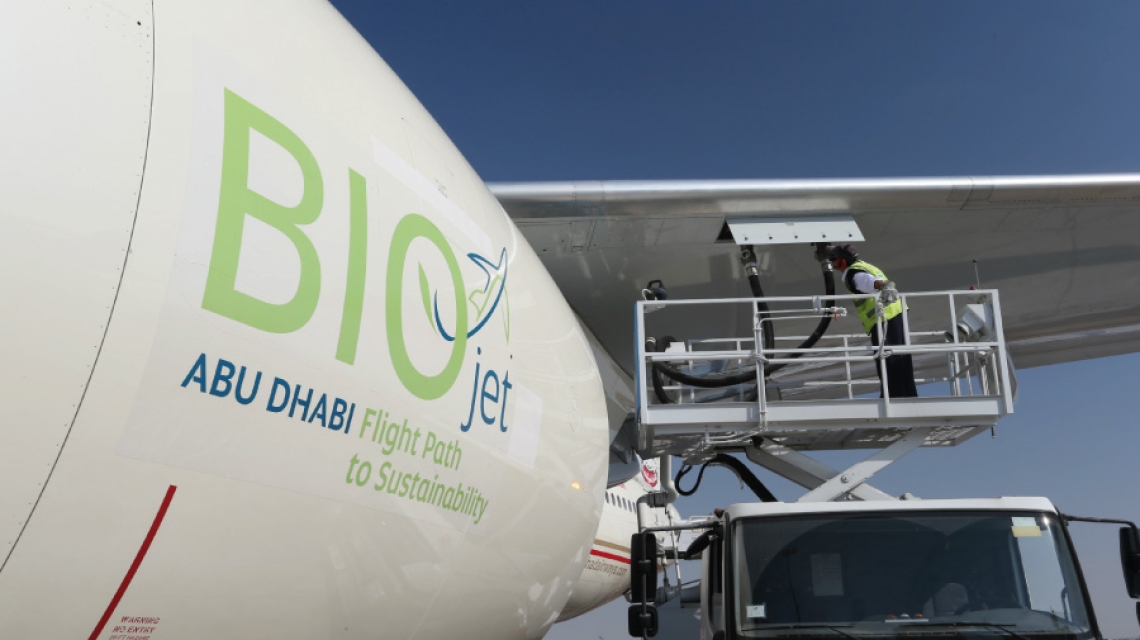
Etihad Airways, Boeing [NYSE:BA], Takreer, Total and the Masdar Institute of Science and Technology today announced they will collaborate on a new initiative – BIOjet Abu Dhabi: Flight Path to Sustainability – to support a sustainable aviation biofuel industry in the United Arab Emirates.

BIOjet Abu Dhabi will engage a broad range of stakeholders to develop a comprehensive framework for a UAE biofuel supply chain, including research and development and expanded investment in feedstock production and refining capability in the UAE and globally.

BIOjet Abu Dhabi was announced one day after Etihad Airways conducted a demonstration flight with a Boeing 777 powered in part by the first UAE-produced biokerosene from an innovative plant biomass-processing technology. The biofuel was partially converted from biomass by Total and its partner Amyris. Takreer, a wholly owned subsidiary of Abu Dhabi National Oil Co. (ADNOC), did the final aviation biofuel distillation, adding the UAE to a handful of countries that have produced and flown on their own biokerosene.

The Masdar Institute’s Sustainable Bioenergy Research Consortium, funded by Etihad Airways and Boeing, is currently researching and developing salt-tolerant plants that would be raw material for the same refining processes to produce renewable fuel.

James Hogan, President and Chief Executive Officer of Etihad Airways, said, “In collaboration with our key partners, our goal is to support and help drive the commercialisation of sustainable aviation fuel in Abu Dhabi, the region and also globally. We have made some important first steps in this process and our continued focus will be to develop further initiatives such as this which will facilitate the availability of sustainable aviation biofuels for Etihad Airways in the coming years.”

The Etihad Airways demonstration flight and announcement of BIOjet Abu Dhabi were held in the run-up to Abu Dhabi Sustainability Week and the World Future Energy Summit, hallmarks of UAE leaders’ commitment to sustainable energy development. BIOjet Abu Dhabi: Flight Path to Sustainability is aligned with the Abu Dhabi Economic Vision 2030, which seeks to develop sustainable energy sources to diversify the UAE economy and increase workforce opportunities for Emiratis.

Jeffrey Johnson, President of Boeing Middle East, said: “With further commitment and investment, the UAE, a global leader in commercial aviation, is well-positioned to lead efforts to make our industry more sustainable. Boeing, which works with partners around the world to advance sustainable biofuel development, sees great opportunity for BIOjet Abu Dhabi to have a positive impact in the UAE and globally.”

Jasem Ali Al Sayegh, Chief Executive Officer of Takreer, said: “Takreer is proud to have been involved in refining this product at its Abu Dhabi research centre. We support the concept of using biofuel as a sustainable aviation fuel for a cleaner future in line with ADNOC’s sustainability policy. We see this strategy as complementary to our future plans in meeting the rapid growth in demand for jet fuel in the country and the region in view of the expansion of the operations of airlines here.”

Bernard Clément, Senior Vice President of Total New Energies, added: “As a long-lasting partner of Abu Dhabi and responsible oil and gas producer, Total is proud to participate in the BIOjet Abu Dhabi initiative, and to assist the Emirate in the diversification of its energy mix. This demonstration flight – the first of its kind in the Middle East – illustrates the capacity of Total to integrate, as of today, aeronautical biofuels in a concrete and reliable way. Improving energy efficiency and leveraging the potential of renewables have become fully embedded in Total’s business model with concrete achievements in biofuels as well as in the solar sector.”

Dr Fred Moavenzadeh, President of Masdar Institute, said: “The collaboration for BIOjet Abu Dhabi reflects our partners’ commitment to sustainable biofuel, a concept that is currently being implemented from our side through the Sustainable Bioenergy Research Consortium. We remain focused on identifying commercially viable means for the production of sustainable aviation fuel and welcome the new initiative that will pave the way for faster adoption of such fuel by the industry. With our expertise, we will continue our contribution towards offering clean energy solutions for the benefit of all stakeholders.”

Etihad Airways is an airline industry leader in supporting the development of lower-carbon renewable fuels. A member of the Sustainable Aviation Fuel Users Group (SAFUG), the airline operated the Gulf region’s first biofuel flight in January 2011 with a Boeing 777 delivery from Seattle to Abu Dhabi powered by a blend of petroleum-based and certified plant oil-based jet fuel.

Masdar Institute and BP Sign Technology Innovation Collaboration Agreement

Abu Dhabi-UAE: 21 January, 2014 – Masdar Institute of Science and Technology, an independent, research-driven graduate-level university focused on advanced energy and sustainable technologies, and BP today jointly announced they have signed a multi-year Technology Innovation Collaboration Agreement in support of innovation and entrepreneurship in the UAE.

According to the agreement, Masdar Institute and BP will jointly contribute US$7 million over six years in Masdar Institute-based innovation and entrepreneurship programs.  The two partners will combine BP’s expertise and resources in developing innovation and entrepreneurship with Masdar Institute’s existing programmes to enhance the region’s technology commercialisation capabilities.

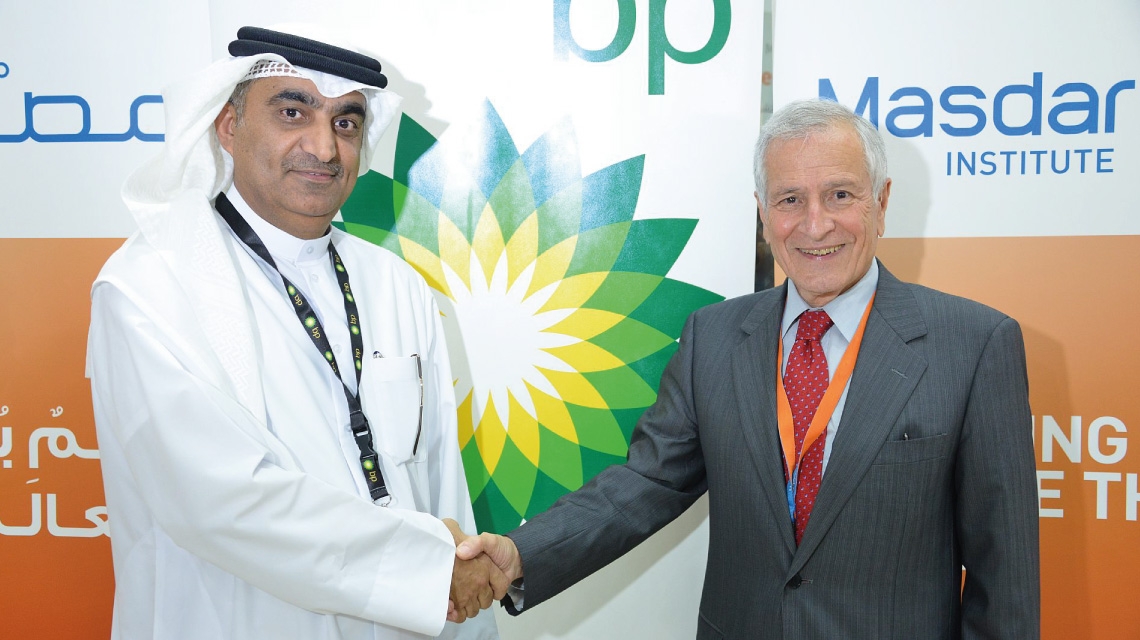
The agreement was signed by Mr AbdulKarim AlMazmi, BP General Manager and Chief Representative in the UAE and Dr. Fred Moavenzadeh, President of Masdar Institute in the presence of Mr Vince Cable, UK Secretary of State for Business and Innovation. The ceremony was held during World Future Energy Summit 2014, a global event hosted annually in Abu Dhabi.

The UK Business Secretary Vince Cable said: “This deal is an innovative partnership between the UK’s leading energy company BP and the Masdar Institute of Science and Technology to invest in entrepreneurs with promising technologies.
 
“I have been championing government and business in the UK to take a more long term, strategic approach to investment. This agreement shows how a major energy company can play a positive role in supporting wider economic development for Abu Dhabi and beyond. It also builds on the mutual interest of the UK and the UAE to generate growth through exports by promoting overseas trade, innovation and sustainable technologies.”

AbdulKarim AlMazmi, BP’s General Manager and Chief Representative in Abu Dhabi, comments: “BP’s contribution will help Masdar Institute to expand its work to identify and support the promising new technologies and entrepreneurs. BP will bring its own experience in finding and investing in technology innovators. We are also considering ways to boost seed grant funds for entrepreneurs as well as mentoring and training. BP is delighted to have this opportunity to collaborate with Masdar Institute in a long-term programme to enhance Abu Dhabi’s capability in nurturing important and exciting technologies – an important driver and enabler for building a diverse and stable economy aligned with the Abu Dhabi Environmental Vision 2030.”

Dr. Fred Moavenzadeh, President, Masdar Institute, said: “We are delighted to enter into this collaborative agreement with BP on technology innovation which remains one of the crucial drivers of the new age economy. The continuous support of the UAE leadership has helped us to establish new partnerships not only in research and human capital development, but also innovation and entrepreneurship. We expect the agreement will further support innovation in advanced and sustainable technologies.”

Currently, Masdar Institute is driving research and innovation along with entrepreneurship through the Institute Center for Innovation and Entrepreneurship (iInnovation), headed by Dr Bruce Walker Ferguson, Professor of Practice, Engineering Systems and Management at Masdar Institute and Vice-Chairman of the Carnegie Institution for Science.

Professor Ferguson said: “BP is a corporate leader in supporting early-stage sustainable technology companies in many different countries. Its resources and broad experience will greatly assist our Center’s efforts to adapt best practices from other innovation ecosystems to the needs of technology entrepreneurs in the UAE. The lessons we learn from this novel industry-university collaboration should speed up technology innovation in the UAE as well as in many other countries, thereby helping to create high-quality jobs and strengthen and diversify economic performance.”

iInnovation will also initiate a novel Masdar Institute-based ‘innovation zone’, adapted from free zone structure, to facilitate supportive environment and entrepreneur access to resources. Moreover, it will engage a broad range of stakeholders in periodic discussions on innovation and entrepreneurship in the UAE, while initiating industry-specific, industry-sponsored ecosystem policy councils to accelerate innovation in the country.

Serving as a key pillar of innovation and human capital, Masdar Institute remains fundamental to Masdar’s core objectives of developing Abu Dhabi’s knowledge economy and finding solutions to humanity’s toughest challenges such as climate change.

Established as an on-going collaboration with the Massachusetts Institute of Technology (MIT), Masdar Institute integrates theory and practice to incubate a culture of innovation and entrepreneurship, working to develop the critical thinkers and leaders of tomorrow.  With its world-class faculty and top-tier students, the Institute is committed to finding solutions to the challenges of clean energy and climate change through education and research.

Boeing, United Arab Emirates Partners Look to Harvest Biofuel from Desert Plants

ABU DHABI, Jan. 22, 2014 – Boeing [NYSE:BA] and research partners in the United Arab Emirates have made breakthroughs in sustainable aviation biofuel development, finding that desert plants fed by seawater will produce biofuel more efficiently than other well-known feedstocks. The Sustainable Bioenergy Research Consortium (SBRC), affiliated with the Masdar Institute of Science and Technology in Abu Dhabi, will test these findings in a project that could support biofuel crop production in arid countries, such as the U.A.E.

“Plants called halophytes show even more promise than we expected as a source of renewable fuel for jets and other vehicles,” said Dr. Alejandro Rios, Director of the SBRC. “The U.A.E. has become a leader in researching desert land and seawater to grow sustainable biofuel feedstocks, which has potential applications in other parts of the world.”

Funded by Boeing, Etihad Airways and Honeywell UOP, the SRBC is dedicated to the development and commercialization of sustainable aviation biofuel, which emits 50 to 80 percent less carbon through its lifecycle compared to fossil fuel.

“Etihad Airways is very pleased with the research results of these saltwater-tolerant plants,” said Etihad Airways’ President and Chief Executive Officer James Hogan. “This is real progress in developing a truly sustainable aviation biofuel from a renewable plant source, appropriate to our environment.”
Halophyte seeds contain oil suitable for biofuel production. SBRC research found that the entire shrublike plant can be turned into biofuel more effectively than many other feedstocks.

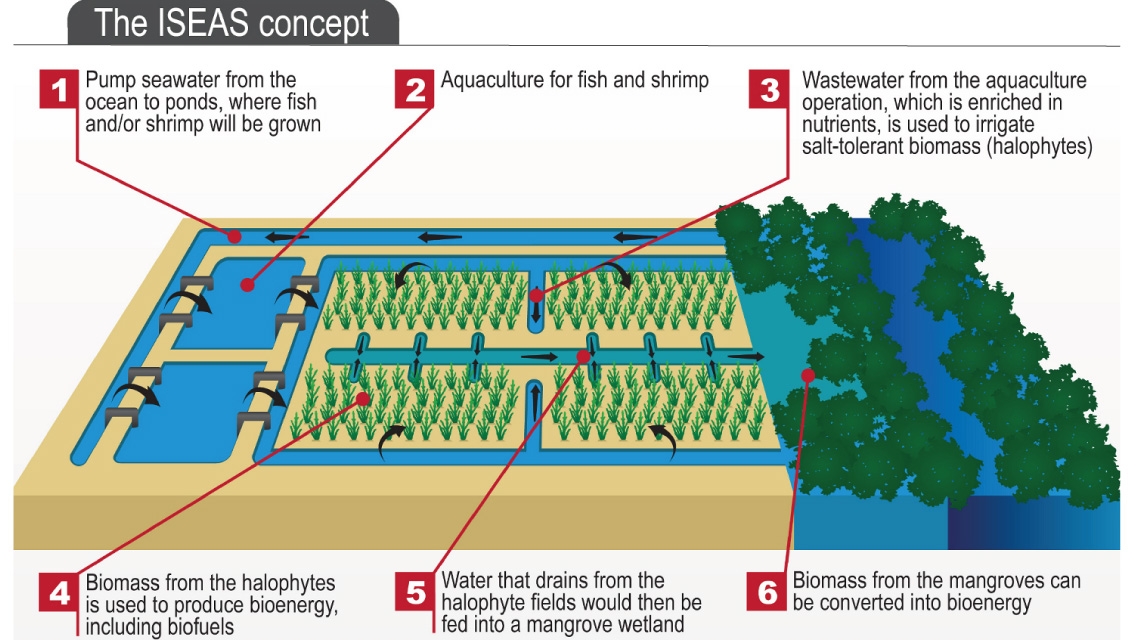
In the coming year, SBRC scientists will create a test ecosystem by planting two crops of halophytes in Abu Dhabi’s sandy soil. Waste seawater from a fish and shrimp farm will nourish halophytes that clean the water as they grow. The water will next flow into a field of mangroves before returning to the ocean. Both plants would be converted into aviation biofuel using SBRC research findings.

“This project can have a global impact, since 97 percent of the earth’s water is ocean and 20 percent of the earth’s land is desert,” Dr. Rios said.

“Boeing is committed to finding ways to reduce aviation’s carbon emissions, and sustainable aviation biofuels is a key component of our strategy,” said Jeffrey Johnson, president, Boeing Middle East. “Masdar Institute’s biofuel research is showing tremendous potential, and we applaud Abu Dhabi’s leadership and innovation in this critical area.”

SBRC’s research success, announced at the World Future Energy Summit, continues the momentum for a sustainable aviation biofuel industry in Abu Dhabi. On January 18, Etihad Airways conducted a demonstration flight with a 777-300ER (Extended Range) powered in part with biofuel refined in U.A.E. On January 19, Boeing, Etihad Airways, Masdar Institute and others launched BIOjet Abu Dhabi: Flight Path to Sustainability, an initiative to advance biofuel research, feedstock production and refining capability.

These activities are aligned with the Abu Dhabi Economic Vision 2030, which seeks to develop sustainable energy sources to diversify the U.A.E. economy and increase workforce opportunities for Emiratis.

UAE Enters New Era in Advanced Semiconductor Technology

Abu Dhabi-UAE: 20 February, 2014 – Masdar Institute of Science and Technology, an independent, research-driven graduate-level university focused on advanced energy and sustainable technologies, today announced that it has become one of only a few academic institutions worldwide providing cutting-edge semiconductor designs for manufacturing — what is known in the industry as a ‘tape-out.’

The ‘tape-out’ achievement was made possible through Masdar Institute’s design-enablement and fabrication collaboration with GLOBALFOUNDRIES, the world’s second largest semiconductor foundry company, wholly-owned by Mubadala’s Advanced Technology Investment Company (ATIC).

Produced on what is called ‘GLOBALFOUNDRIES 28nm SLP low-power, bulk CMOS technology,’ the semiconductor technology designed by Masdar Institute will allow researchers to collect measurements that will ultimately contribute to reduced semiconductor power consumption and increased speed. Masdar Institute is expected to take delivery of the fabricated chip by the end of March 2014.

Dr Fred Moavenzadeh, President, Masdar Institute, said: “The successful tape-out by our students has enabled the UAE to enter a new era in advanced semiconductor technology research and innovation. The consistent support of the UAE leadership has strengthened our capabilities to expand our innovative activities. We expect our students to achieve more milestones in the future.”

Geoffrey Akiki, General Manager, GLOBALFOUNDRIES Abu Dhabi said: “This tape-out shows the unique strength of our partnership with the U.A.E. In the short period since the start of our cooperation with Masdar Institute, we have achieved another joint success on our way to spur the continued development of Abu Dhabi as an innovation technology hub. Aggressive process scaling poses unique challenges in 28nm technology not found in larger technology nodes, and we are especially impressed by the work of the Masdar Institute researchers in reaching this point.”

Dr Ibrahim Elfadel, Head of Masdar Institute’s Center for Microelectronics (iMicro), explained: “The goal of the chip is to measure the statistical dependence of circuit performance on process variations. The collected measurements will be used to provide integrated-circuit designers and semi-conductor process engineers with guidelines for optimizing circuit design and process parameters to achieve specific targets in power consumption and circuit speed.

“Such guidelines will be very valuable in the manufacturing of ultra-lower power chips that can be used in a variety of applications, including mobile and implementable medical devices, continuous environmental monitoring and consumer electronics. We are grateful to the GLOBALFOUNDRIES team for providing the Masdar Institute students, staff and faculty with the design environment and technology access that have enabled us to reach this important milestone for the UAE.”

The chip design was the subject of a conference paper presented at the 20th IEEE Conference on Electronic Circuits and Systems, held in Abu Dhabi, from 8-11 December, 2013.

Temesghen Hebte and Yue Xu, both students from Masdar Institute’s Microsystems Engineering program, have been conducting design work at GLOBALFOUNDRIES’ Abu Dhabi offices for over a year, working closely with Dr. Elfadel and Dr. Ayman Shabra. More recently, a group of UAE national students from the Microsystems Engineering program visited the premises of GLOBALFOUNDRIES Abu Dhabi to learn about the extent of semiconductor activities currently underway in the UAE.

In June 2013, students from Masdar Institute completed a semiconductor chip design using GLOBALFOUNDRIES 65nm process, the first GLOBALFOUNDRIES tape-out from the Middle East and North Africa (MENA) region. Masdar Institute was the first academic institution within the MENA region to utilize the GLOBALFOUNDRIES PDK to design semiconductor circuits from scratch.

Serving as a key pillar of innovation and human capital, Masdar Institute remains fundamental to Masdar’s core objectives of developing Abu Dhabi’s knowledge economy and finding solutions to humanity’s toughest challenges such as climate change.

Established as an on-going collaboration with the Massachusetts Institute of Technology (MIT), Masdar Institute integrates theory and practice to incubate a culture of innovation and entrepreneurship, working to develop the critical thinkers and leaders of tomorrow.  With its world-class faculty and top-tier students, the Institute is committed to finding solutions to the challenges of clean energy and climate change through education and research.

Masdar Institute and WMS Metal Industries Announce Novel Product Development Project

Abu Dhabi-UAE: 02 April, 2014 — Masdar Institute of Science and Technology, an independent, research-driven graduate-level university focused on advanced energy and sustainable technologies, and WMS Metal Industries LLC., a local company that specializes in designing and manufacturing environmental products, today jointly announced a collaboration to develop an interactive recycling bin. 

The bin design seeks to encourage recycling by making it less of a chore, and more a form of entertainment.  The current development schedule calls for commercial introduction of the bin in the third quarter of 2014, initially targeting the educational and governmental sectors. Widespread use of the bin is planned in the UAE and other countries by the time Dubai Expo 2020 takes place in the UAE.

The innovative integration of the product design process with Masdar Institute’s engineering curriculum is a useful model for industry-university partnerships. Last fall, a group of graduate students in Masdar Institute’s Management of Entrepreneurship course conducted market research, identified desirable product features, and prepared a preliminary business plan for the recycling bin. Using that input, graduate students in a Product Design course are prototyping the new bin for commercial testing by WMS. WMS would then carry forward the product to commercialization.

This sequenced course structure allows Masdar Institute to offer its students a valuable hands-on learning experience working with industry to design a technology product with a potential near-term market. WMS will out-source product development at no charge. In turn, the commercial benefits arising from intellectual property developed as part of the collaboration would be shared.

Mohamed Nassar, Managing Partner of WMS Metal Industries, said: “This product will change the mindset of the general population towards recycling by ensuring they understand the impact recycling has towards the environment in an innovative and interactive way.” WMS is listed as one of the top 100 SMEs in Dubai by the Dubai Government, and is currently ranked Number 7 in innovation.

Professor Dr. Bruce Ferguson, Head of the Institute Center for Innovation and Entrepreneurship, said: “This innovative collaboration shows a way for industry to reduce the cost and risk of corporate R&D, while the university can increase the relevance and depth of learning by its students.”

Masdar Institute Collaborates with Norwegian Firm NEST AS for Energy Storage Technology

Abu Dhabi-UAE: 09 April, 2014 – Masdar Institute of Science and Technology, an independent, research-driven graduate-level university focused on advanced energy and sustainable technologies, and NEST AS, a Norwegian company developing large-scale thermal energy storage (TES) technology, today jointly announced they have signed an agreement to build a TES pilot at the ‘Beam Down’ facility in Masdar City.

Masdar Institute is one of the very few universities in the world to own a ‘Beam Down’ solar concentrator – a 100 kWth concentrated solar power (CSP) pilot plant. The specific lay-out of the ‘Beam-down’ concentrator allows researchers to investigate alternatives to employ solar energy in a more accessible way, either by placing the chemical reactor or solar thermal receiver at the base of the tower on the ground. Masdar Institute is transforming the ‘Beam Down’ facility into a platform for development of TES systems, concentrated solar power (CSP) components, and related activities.

The NEST energy storage pilot project, which will also serve as a platform for TES research at Masdar Institute, will be the first pilot to prove the feasibility and demonstrate the advantages of the new TES system in the Middle East and North Africa (MENA) region. Work is set to commence during the second quarter of 2014.

Through the partnership, both Masdar Institute and NEST, which has developed a modular, scalable system for high temperature thermal energy storage, aim to demonstrate cost-effective, flexible and scalable solutions for the global renewable energy sector. The project will be supervised by Associate Professors Dr. Matteo Chiesa and Dr. Peter Armstrong, and Assistant Professor Dr. Nicolas Calvet from Masdar Institute, in addition to Professor Pål G. Bergan, Dr. Christopher J. Greiner and Andreas Mørkved from NEST.

Dr. Fred Moavenzadeh, President, Masdar Institute, said: “The collaboration project will revitalize our Beam Down research facility and create a well-known Masdar Institute Solar Platform for the development of solutions for high temperature solar energy storage. With the support of the UAE’s leadership, we continue to seek partnerships with pioneering companies across the world that have expertise in energy storage technologies. We believe the agreement between Masdar Institute and NEST will create benefits for the entire global community.”

Øivind Resch, CEO of NEST, said: “In today’s renewable energy scenario, it is important for CSP plants to be combined with effective heat storage. The NEST storage technology offers significant potential for commercial use and we hope the TES pilot with Masdar Institute will bring about the necessary advancements in research.”

NEST has developed an innovative and smart solution for the energy storage challenge, and has devised a novel system for storage of thermal energy at high temperatures. Its proprietary technology is directed at power generation plants and energy storage projects for the electrical and district heating/cooling utilities market. It is particularly relevant for CSP plants and electricity energy storage for integration of fluctuating renewable energy sources.

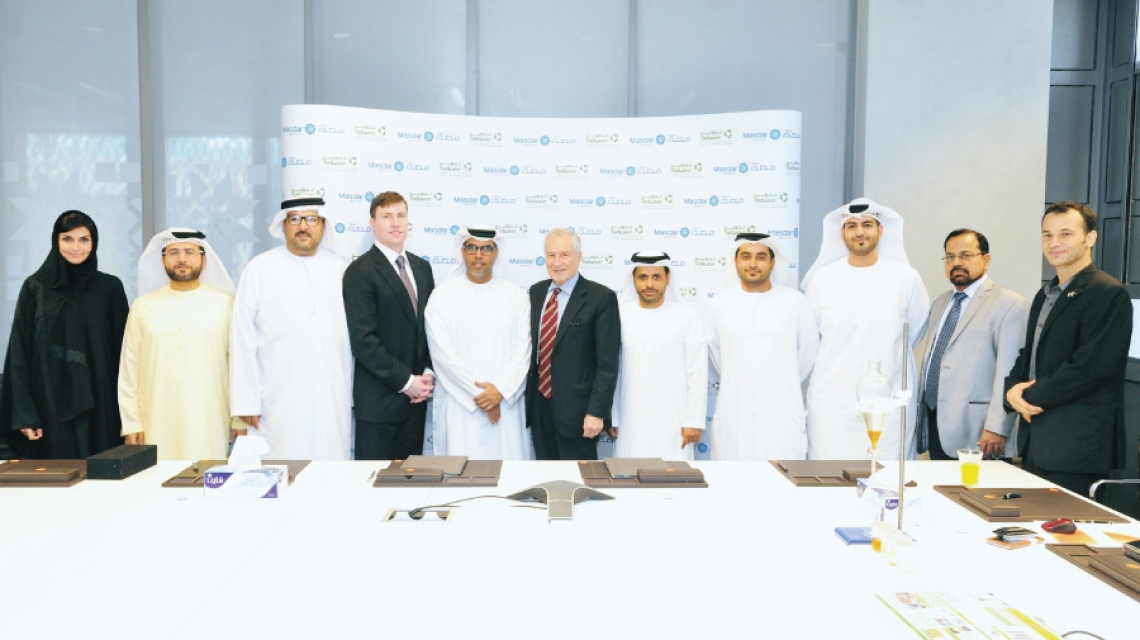
Masdar Institute and Tadweer Sign Research Agreement

Abu Dhabi-UAE: 31 August, 2014 – Masdar Institute of Science and Technology, an independent, research-driven graduate-level university focused on advanced energy and sustainable technologies, and Tadweer, the Center of Waste Management – Abu Dhabi, have signed a two-year research agreement focused on improving the process for the production of biodiesel from waste cooking oil.

The research agreement was signed by Dr. Fred Moavenzadeh, President, Masdar Institute, and His Excellency Eisa Saif Al Qubaisi, General Manager of the Tadweer (CWM) in the presence of officials from both the institutions.

The research will focus on achieving fundamental improvement of the process of converting waste cooking oil to biodiesel through further experimentation and sensitivity studies. Processing and reusing waste cooking oil as fuel is an environmentally friendly sustainable energy solution that can contribute to targets for renewable energy uptake within the UAE and abroad. Biodiesel is bio-renewable, carbon-neutral and rapidly biodegradable.
Dr. Isam Janajreh, Associate Professor of Mechanical Engineering and Head of the Waste to Energy (W2E) Laboratory at Masdar Institute, will be the principal investigator (PI) of the project, while Dr. Ahmed Aljabri will be the co-principal investigator. As per the research project agreement, the principal investigator and the co-principal investigator will design, plan, and formulate the modelling and experimental investigations with assistance from two Masdar Institute Master’s degree students.

Dr. Moavenzadeh said: “The research agreement with CWM illustrates the UAE’s commitment to facilitating the production of clean energy and minimization of waste. With the support of the country’s leadership, we will continue our contribution to the development of clean energy technologies and ensure faster adoption of sustainable measures. We are confident that the outcome of this collaboration will encourage the community to support such green technologies.

H.E Eisa Saif Al Qubaisi, General Manager of Tadweer (CWM), stated that Tadweer is mandated to provide, among other things, ‘state-of-the-art’ facilities to promote resource conservation, enhance carbon footprint reduction, and maximize net positive social and environmental benefits to the people. He added that the agreement with Masdar Institute will achieve this objective by tapping the research-based institution’s knowledge resources, and hoped that the combined initiative will lead to the development of new technologies that will help the UAE and the world meet clean energy goals and objectives.

Eng. Faris Fahed Al Munaiei, Projects & Facilities Department Director at Tadweer, said: “Abu Dhabi produces an estimated 20 kg per capita WCO annually. Processing and reusing WCO as fuel is an environmentally friendly and efficient energy solution that can contribute up to 5% of sustainable energy needs by 2020. With its ongoing sustainability initiatives and schemes, Tadweer seeks to deliver effective waste management solutions in Abu Dhabi through inculcating best-in-class waste recycling practices among the public such as waste reduction at source, reuse and recycling through intensive awareness initiatives and special schemes that help achieve a safer and cleaner environment

The two institutions will be assisted in this project by Australia’s Laboratory for Turbulence Research in Aerospace and Combustion, Department of Mechanical and Aerospace Engineering, University of Sydney. Dr. Assad Masri, Australian Research Council-Australian Professorial Fellow in the School of Aerospace, Mechanical and Mechatronic Engineering, Faculty of Engineering and Information Technologies, at the University of Sydney, and Chairman of the Australia and New Zealand section of the Combustion Institute, will lead the collaboration from the Australian side.

Dr. Isam Janajreh’s current research projects focus on waste-to-energy (W2E), biodiesel and wind energy. The research agreement is also in line with the aims of Dr. Isam’s W2E Laboratory, which was established in the fall of 2009 and provides local government and industry partners with a platform to explore recovery solutions to their waste products.