KU Wins Bid to Host IROS 2024 in Abu Dhabi

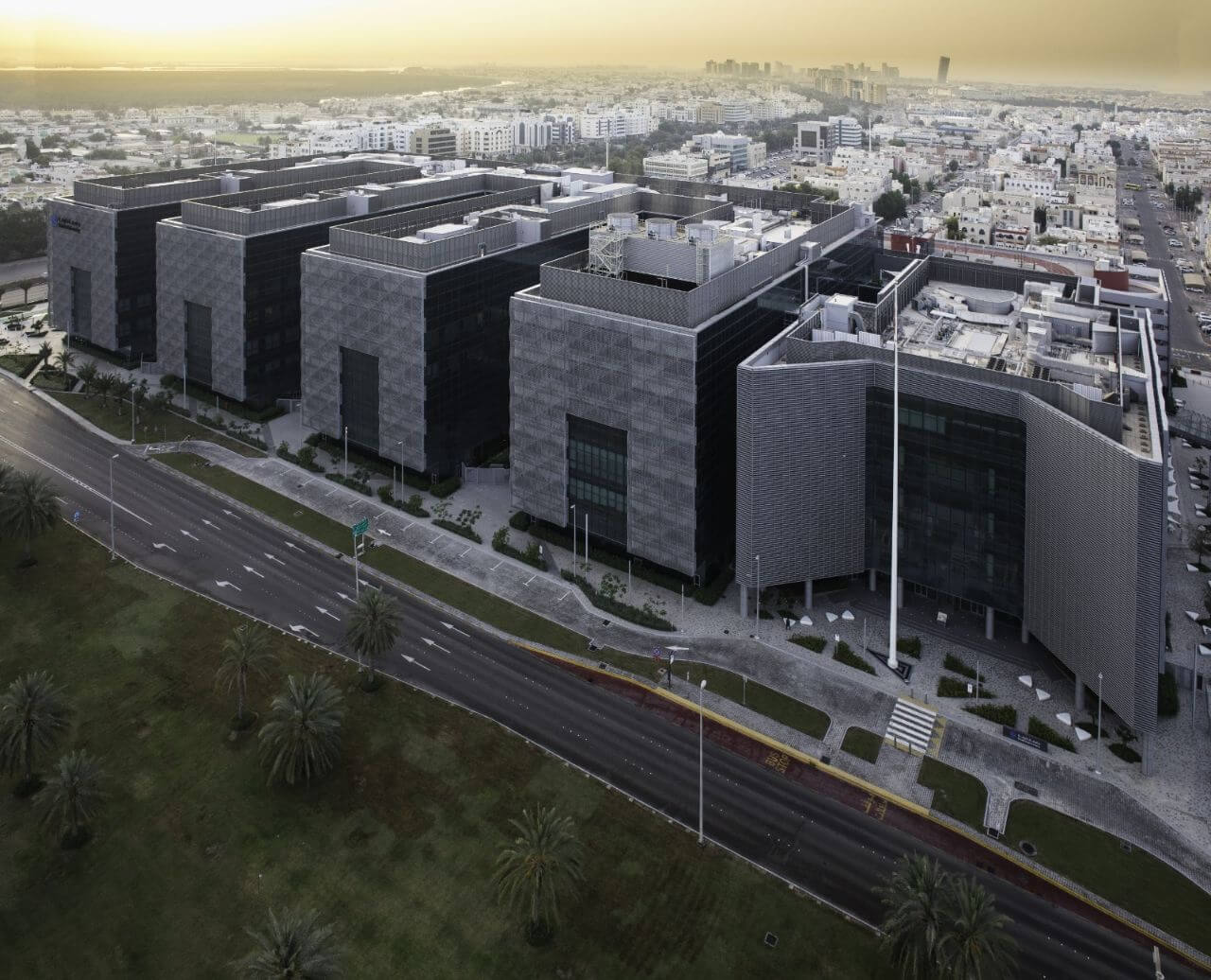
Abu Dhabi has won the bid led by Khalifa University to host the IEEE/RSJ International Conference on Intelligent Robots and Systems (IROS) in 2024. IROS is one of the world’s largest (attracting around 4000 attendees) and most prestigious robotics research conferences, and it will be the first time in the conference’s 30+ year history to be hosted outside North America, Europe and far east Asia.

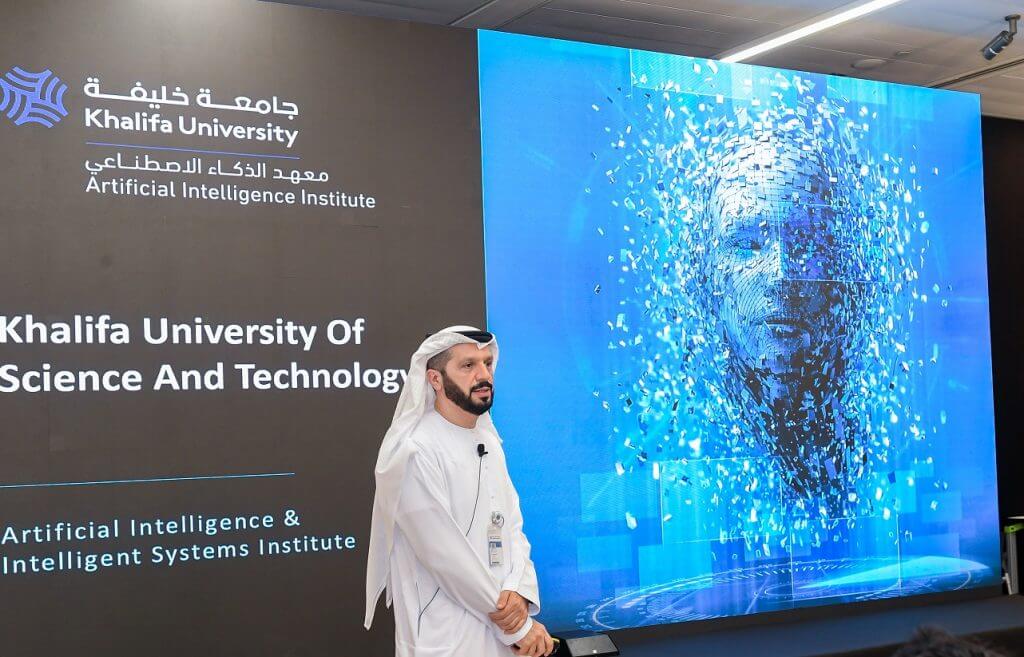
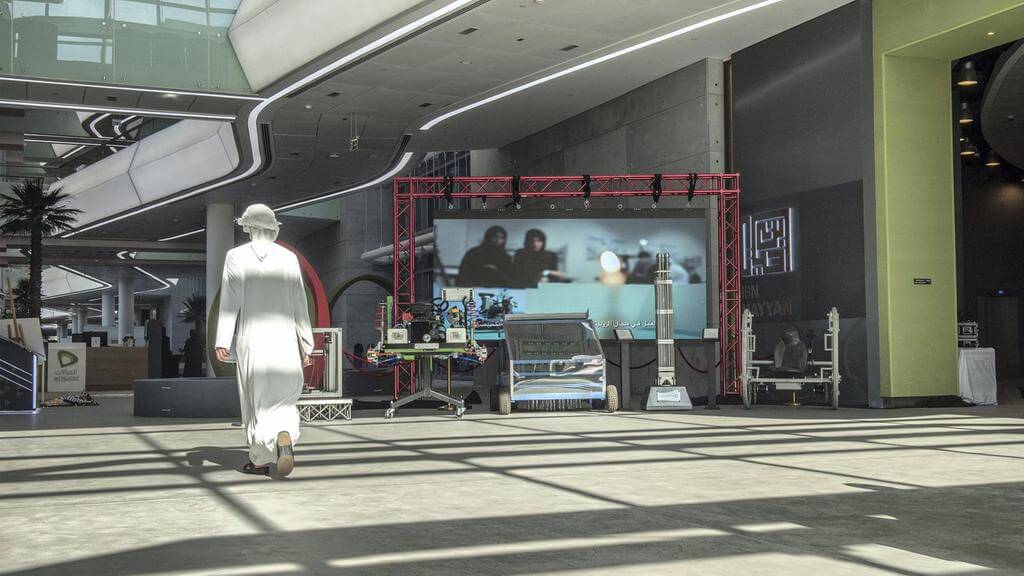
Winning the bid to host IROS 2024 demonstrates Khalifa University’s internationally-recognized expertise in the field of robotics and intelligent systems. KU’s Center for Autonomous Robotic Systems (KUCARS), directed by Professor Lakmal Seneviratne, is a flagship center of the University’s newly launched Artificial Intelligence and Intelligent Systems Institute. With over 50 faculty and staff working on several diverse projects, KUCARS researchers are conducting groundbreaking research to discover new ways to advance robotics for extreme environments, industrial applications, and infrastructure inspection.

In their bid to host IROS 2024, the KUCARS team led by Professor Jorge Dias, highlighted the importance of hosting the event in the Middle East, which has seen tremendous growth in Robotics and AI research in the last decade. The team highlighted the UAE’s growing focus on Robotics and AI, as evidenced by the UAE’s AI Strategy, which was unveiled in October 2017. The support received from the Abu Dhabi Tourism and Culture Authority was also crucial in winning the bid. The announcement came during IROS 2019, which was held from 4 – 8 November in Macau, China.

Established in 1988 and held annually, IROS provides a forum for the international robotics research community to explore the frontiers in intelligent robots. In addition to technical sessions and multimedia presentations, IROS conferences also hold panel discussions, forums, workshops, tutorials, exhibits, and technical tours to enrich fruitful discussions among conference attendees.

Erica Solomon
Senior Editor
14 November 2019


Constructing the Future at the Mohamed Bin Zayed International Robotics Challenge 2020

Drones are big business. Countries around the world are pouring investment into this relatively nascent technology, hoping for revolutionary change across industries, particularly in construction.

While dozens of industries use drones, the fastest growing commercial adopters come from the construction industry. This is a major economic sector, plagued with inefficiencies and low productivity; robotics and automated systems have the potential to address these shortcomings. Drone use on the job site has skyrocketed, surging 239 percent, but usage stems mainly from project managers and superintendents bringing drones on board to help track projects and collect real-time data about progress.

There’s more potential here. Drones do more than help keep projects on track. They can also increase safety, save time and resources, fast-track surveying, and deliver accurate measurements. What if they could do the actual constructing too?

The construction industry is evolving rapidly, and with all the innovations and changes to traditional building comes the need for greater efficiency; drones could be the solution if they could work autonomously.

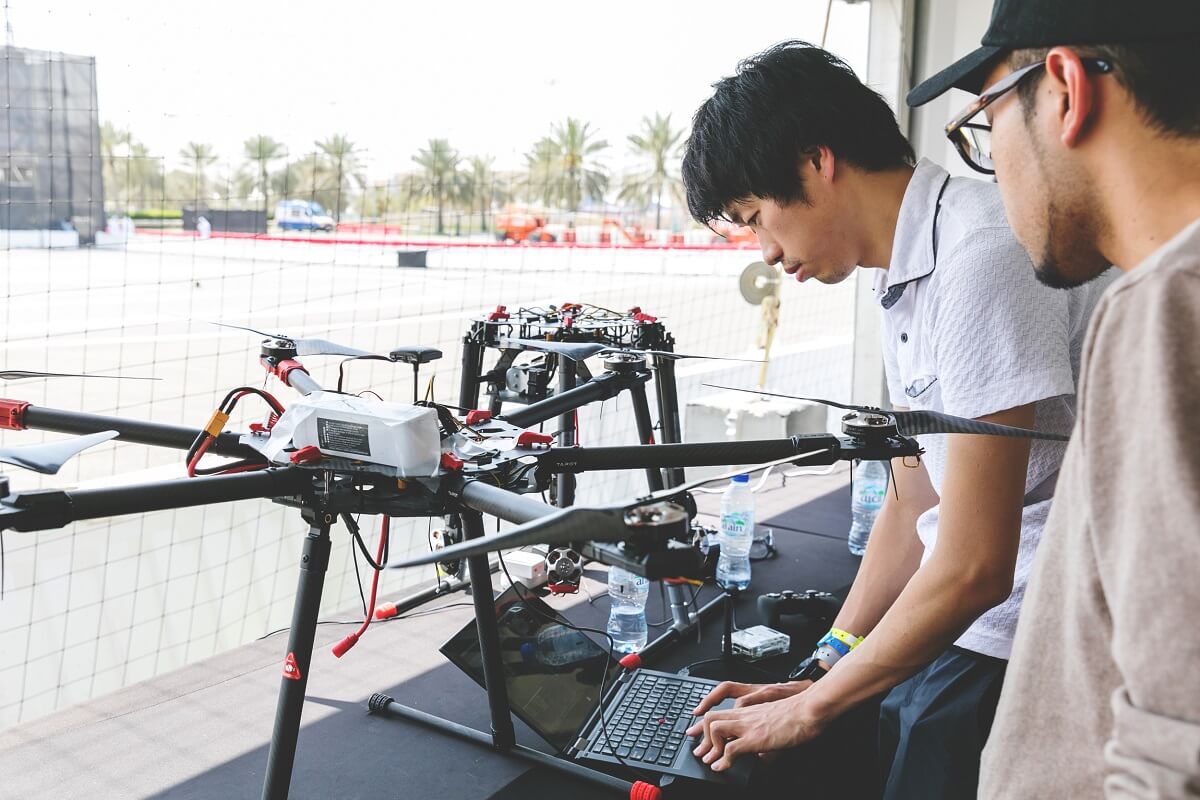
The second challenge of the Mohamed Bin Zayed International Robotics Challenge (MBZIRC) in 2020 will see a team of autonomous aerial and ground robots collaborate to locate, choose, transport, and assemble different objects to build pre-defined structures in an outdoor environment. This challenge is motivated by construction automation and autonomous robot-based 3D printing of large structures.

Robots have already found a spot in manufacturing, dealing with automated and cyclic tasks, and even 3D printed buildings are not new to Dubai. In 2016, Sheikh Mohammed bin Rashid, Vice President and Ruler of Dubai, opened a futuristic office with 3D printed elements. In 2019, the world’s largest 3D-printed two-story building opened in Dubai’s Warsan neighbourhood, its walls having been constructed in place using a massive 3D printer.

But success at this challenge requires more than programming the drone team with a building plan and letting them loose on a site. The teams, comprising unmanned aerial vehicles (UAVs) and a single unmanned ground vehicle (UGV) must locate the brick-shaped objects, determine the type they need from the selection, transport their chosen object to the job site, and then assemble the objects into a pre-defined patterned structure.

“We divide each challenge into a series of sub-problems,” explained the ETH Zurich team. “Challenge 2 presents four sub-problems: path planning and exploration; brick detection; building task coordination; and brick manipulation.”

The path planning and exploration elements should come fairly naturally to the drones employed in this challenge. Since drones are generally small with high levels of maneuverability, they are being used more and more as an alternative to traditional vehicles. Using drones to transport goods aerially saves money and time, especially since drones do not have to adhere to traffic laws, which allows them to make deliveries in a fraction of the time, using a fraction of the resources. The tricky part comes in programming autonomy.

“Challenge 2 is a good showcase for cooperative robotics for construction,” said the KAIST team.

The drones must find their own way around the arena and identify the required building components one by one. The team drones require breakthroughs in mobile manipulation, perception, mobility over rough terrain, navigation control, multi-robot collaboration and—in the future—human-robot interaction.

A large ask, but as the 25 teams selected for MBZIRC 2020 Challenge 2 hail from some of the world’s top robotics labs, expectations are high for success.

The results of this challenge will go a long way in revolutionizing the construction industry. As construction companies look to robots as having the potential to achieve improvements in construction quality, efficiency, and safety, autonomous building robots could be sent further afield, with space research agencies seeking to build infrastructure without human intervention.

Jade Sterling
News and Features Writer
18 November 2019

Khalifa University and Etihad Aviation Training Explore Game-Based Learning for ‘Nextgen’ Pilots

Collaboration Also Offers Opportunity of Industrial Partnership, and Development of Internship Programs for Talented Emirati Students

As commercial airliners become more technologically advanced, so too must the skills of the pilots who will fly them. But while aircraft continue to evolve, training methods have not only lagged – they have become increasingly irrelevant to today’s trainee pilots, who have grown up in the digital age.

Today, at the 2019 Dubai International Air Show, Etihad Aviation Training and Abu Dhabi’s Khalifa University of Science and Technology announced a three-year study to develop innovative and more engaging training procedures, drawing upon neuro-cognition, for the next generation of airline pilots.

Captain Fabrizio Interlandi, NEXTGEN Project Manager for Etihad Aviation Training, said: “The pilots of tomorrow are millennials, and increasingly post-millennials. They have grown up with apps, tablet devices, electronic games and virtual reality. Research already shows that they process information differently to previous generations and they have a different attitude to learning. The purpose of this study is to identify new ways to train young pilots, using technology with which they can easily engage, rather than textbooks and traditional classroom learning.”

The study will be conducted by Khalifa University’s College of Engineering (Aerospace Engineering, Industrial and Systems Engineering) and Emirates College for Advanced Education (ECAE) and its Cognitive-Neuro Imaging Unit, both based in Abu Dhabi. Etihad Aviation Training will provide trainees and instructors to participate in the study, access to data, and use of sophisticated full-motion flight training simulators.

The co-principal investigators, Dr. Nelson King, Associate Professor, Industrial and Systems Engineering, Khalifa University, and Dr. Claudine Habak, (ECAE), said current training programs for airline pilots often do not take into consideration the experience gaps between highly experienced pilots and cadets with minimal flying hours.

Dr King said: “Everyone is equal in a conventional training program. Our study will take into account the generational and brain development differences between younger and older pilots and compare the ways in which they learn. We want to identify the most effective ways not only to educate new pilots, but also to ensure that they retain vital information.”

Dr Habak said: “Our objective is to create an innovative training experience which matches the abilities and confidence of upcoming generations. That may include apps. It may include virtual reality. And it may include gamification and micro-learning techniques. We are about to find out.”

Etihad Aviation Training currently provides two initial training programs for the Airbus A320 aircraft – the Multi-Crew Pilot Licence – Evidence-Based training, and the A320 Standard Transition Course for trainees from external companies.

To be effective, these courses need a significant and often different number of sessions per trainee. The research will start with observation of and interviews with trainees to evaluate effectiveness of programs and identify gaps.

It will then move to game-based learning, development of device simulators and finally the introduction of appropriate software to deliver a ‘learning system’ for evaluation. The collaboration between Etihad Aviation Training and Khalifa University also offers the opportunity of an industrial partnership, and development of internship programs for talented Emirati students.

Captain Paolo La Cava, Vice President, Etihad Aviation Training, said: “This research is exciting and ground-breaking, and further evidence of the strong innovation credentials of Abu Dhabi. Our eventual objective is to ensure that future pilots are trained in the most relevant, effective and efficient way, not only for Etihad but potentially for many other operators who come to us for training.”

News Writer
19 November 2019

Khalifa University and Mubadala Formalize R&D Collaboration for Future

  • Aerospace Research and Innovation Center (ARIC) is expanding on its strong foundation to leverage the possibilities of Fourth Industrial Revolution (4IR)
  • ARIC to continue accelerating the development of the UAE’s aerospace industry

Khalifa University and Mubadala Investment Company, Abu Dhabi’s sovereign investor, have signed an agreement to expand their industry-leading aerospace R&D collaboration on the Aerospace Research and Innovation Center (ARIC). The collaboration aims to support the UAE’s ambitions for developing a global and competitive aerospace hub to address the implications of 4IR.

The agreement was signed by Badr Al-Olama, Head of Aerospace, Mubadala Investment Company, and Dr. Arif Sultan Al Hammadi, Executive Vice President of Khalifa University at the Dubai Airshow 2019, the premier global aviation event that is being held at the Dubai World Central (DWC).

The latest phase of ARIC will promote the adoption of advanced aerospace manufacturing applications such as 3D printing and industrial internet of things (IIoT), at Strata Manufacturing and Sanad Aerotech, both wholly-owned Mubadala companies. Strata Manufacturing is an advanced composite aircraft parts manufacturing company, whereas Sanad Aerotech is a leading maintenance, repair, and operations (MRO) company. As a leading research center focused on advanced manufacturing and robotics, ARIC helps to develop innovative techniques for manufacturing through automation.

Badr Al-Olama, Head of Aerospace, Mubadala commented, “In the five years since we began our collaboration with Khalifa University on ARIC, we have witnessed significant progress to transform and advance the UAE’s aerospace industry. The jointly funded program is the first of its kind for aerospace in the region and, enables research teams from academia and industry leaders to join forces for a shared goal – strengthening the UAE’s position on the global aerospace map. The program also provides an opportunity for Emirati students to solve challenges facing the aerospace industry using practical approaches and helps us build a pool of homegrown talent who are deeply focused in building future-centric solutions. We look forward to continuing our successful journey, by enhancing our capacity building ambitions and accelerating our focus on R&D to enable new paths for growth for the UAE.”

Dr. Al Hammadi said: “Building on our successful first phase, the new four-year agreement with Mubadala on ARIC’s second phase will enable us to further intensify cutting-edge research in aerospace manufacturing techniques and solutions. In the first phase, three joint patents related to composite processing technology have already been filed and more will be filed shortly. Our research expertise has resulted in creating not only intellectual capital but human capital as well by exposing undergraduate and graduate students to latest technologies in advanced manufacturing. We expect credible and productive outcome from this agreement that will additionally enhance the UAE’s pioneering status in aerospace research, while developing talented youth into full-fledged professionals in this strategic sector.”

The first phase incorporated ARIC’s world-class capabilities to execute projects within the areas of advanced composite manufacturing and automated assembly to support Strata, which recently celebrated its 10-year anniversary. Ismail Abdulla, CEO of Strata commented, “ARIC is a unique model for R&D collaboration between industry and academia in the region. It provides a key link in our innovation pipeline as an emerging industry that relies on latest technologies to stay competitive. It’s refreshing to see our engineers working closely with university researchers and students in integrated fashion to solve real problems”

Mansoor Janahi, CEO of Sanad Aerotech reaffirmed the role of ARIC, commenting, “ARIC has played a critical role in helping build talent to support the UAE’s aerospace industry and we are very proud of the progress achieved so far. This new phase of the partnership, builds on our relationship to date and is indicative of our commitment to ensure world-class R&D capabilities within the UAE. Along with Khalifa University, we are looking to harness our strong network of customers and partners in order to advance the ambitions of ARIC – ultimately, growing the capabilities of UAE nationals and unlock global economic impact for the UAE’s national MRO industry.”

Over the past five years, ARIC has completed nine main industry-focused projects, 28 student-led projects involving 65 UAE national students, the emergence of several patented innovations, and more than 30 academic publications in reputed research journals.

News Writer
20 November 2019

Khalifa University and Korea Basic Science Institute Launch Korea-UAE Joint R&D Technical Center in Abu Dhabi

First Seed Joint Project Also Launched as Agreement Signed to Promote Scientific Exchange between UAE and Korea

Khalifa University and Korea Basic Science Institute (KBSI), a government-funded research institute focused on research relevant to pure basic science, today jointly announced the launch of the Korea-UAE Joint R&D Technical Center (KUTC) to promote scientific exchange between the two countries.

The launch ceremony was attended by Dr. Arif Sultan Al Hammadi, Executive Vice-President, Khalifa University of Science and Technology, and Dr. Hyung-Shik Shin, President, KBSI, at the Main Campus in Abu Dhabi. Yeonjin Kim, Director, Europe & Africa Cooperation Division, Korea Ministry of Science and ICT, Eng. Mariam Abdulrahman Musallam, Innovation Committee, Abu Dhabi Department of Economic Development, representatives from the Korea Research Institute of Chemical Technology (KRICT), officials and faculty members were also present.

The launch also included the kick-off of KUTC’s first seed joint project titled “Development of solid electrolytes for harsh environment batteries”. The project will be led by Dr. Daniel Choi, Associate Professor, Mechanical Engineering, Khalifa University, and Dr. Hae Jin Kim, Principal Researcher, KBSI. A one-day ‘Joint Workshop 2019: Advanced Materials’ was organized to mark the occasion during which several researchers from both institutions presented papers.

The KUTC, also supported by the Korea Ministry of Science and ICT, will initially cover areas including advanced materials especially in energy, oil/gas, and catalysts, as well as characterization of semiconductor materials and devices, in addition to materials for bio-medical and energy applications. Research activities at KUTC will be led by a steering committee that includes Dr. Steve Griffiths, Senior Vice-President, Research and Development, Khalifa University, Dr. Jeremie Pelletier, Manager, KUTC, Dr. Shin, and Dr. Hae Jin Kim, Director, KUTC.

Dr. Arif Sultan Al Hammadi said: “We are delighted to partner with the Korean Government and other institutions to launch the joint R&D technical center to promote new technologies in various fields including advanced materials, biotechnology and oil and gas. The KUTC is a testimony to the scientific cooperation between not only Khalifa University and other Korean institutions but also the two countries to advance innovation in new areas. We believe the synergy resulting from this association will significantly benefit the relevant industries, regionally and globally.”

Dr. Hyung-Shik Shin said: “The KUTC is launched based on the both countries’ willingness to expand scientific exchanges that have focused on the nuclear energy sector into various fields of science and technology. I hope that the center will be an innovative R&D hub driving both nations not only to the scientific innovations but also to the economic growth.”

The KUTC will generate and transfer knowledge in order to create innovation that improves the competitiveness of R&D and to supply efficient and reliable research environment for joint R&D to researchers from both countries. Both institutions will continue and strengthen successful partnerships, developing the KUTC into a representative R&D hub for innovative technologies.

In addition, both institutions will operate a laboratory in the UAE for KBSI, in which Khalifa University researchers will undertake joint research, while working together to facilitate visits by KBSI experts.

Apart from the Korea Ministry of Science and ICT, the Korea Research Institute of Chemical Technology (KRICT), a national lab in Korea, will be participating in KUTC activities in biotechnology. The KRICT is already looking into developing a collaborative research program with the UAE Department of Health under KUTC.

Marking the occasion, a workshop and a steering committee meeting were also organized on campus. The guests at the launch event were welcomed by Dr. Arif Al Hammadi, with congratulatory messages from Dr. Hyung‐Shik Shin, President of KBSI, which was followed by the signing of the agreement. Others who spoke at the event included Eng. Mariam Abdulrahman Musallam, Innovation Committee, Abu Dhabi Department of Economic Development, and Ms. Yeonjin Kim, Director, Europe & Africa Cooperation Division, Korea Ministry of Science and ICT.

Clarence Michael
News Writer
26 November 2019

Nuclear Technology Center Supports International Effort to Develop Radiological Impact Models

  • Dr. Philip Beeley, Center Director of NTC, (second row, third from left) with members of the MODARIA II program at the Working Group 4 final meeting in Vienna in October


Over the past 15 months, Dr. Avin Pillay, Dr. Marouane Temimi, Dr. Yacine Addad, Dr. Sasi Stephen and Dr. Philip Beeley of KU’s Nuclear Technology Center (NTC) attended several working group meetings of the International Atomic Energy Agency’s (IAEA) Modelling and Data for Radiological Impact Assessment (MODARIA) II program, which ran from 2016-2019.

The MODARIA II program brought together 140 scientists, regulators, operators, and radiation protection experts from around the world to maintain and develop capabilities in radiological impact assessment through comparison and application of assessment models to real situations, and to compile, analyze and evaluate data. Models are essential tools for use in the regulatory control of nuclear facilities and activities in planned, existing and emergency exposure situations. Modelling the fate of radionuclides in the environment and assessing the resulting radiation doses to people and the environment is critically needed to support the implementation of the IAEA safety standards.

The work carried out during the MODARIA II program meetings is directly related to NTC Theme 3 — Radiation Safety in the Environment. One of the working groups specifically focused on gathering radiological data in arid regions, such as the UAE. While sufficient information about radionuclide behavior and interaction with environments in temperate regions has been published and is available, there is little information on radioecology in arid areas. In order to be prepared for the potentially damaging impact of radioactivity accidentally released into such regions, it is important to construct the radioecological knowledge about transfer and impacts of radionuclides in arid areas characterized by ecosystems and climatic conditions very specific. In addition, other working groups supported the modeling of atmospheric and aquatic dispersion of radioactive release.

Dr. Beeley, Chair and Professor of Nuclear Engineering, and Center Director of the NTC, attended the final technical meeting for the MODARIA II program in Vienna from 21-24 October 2019.

Erica Solomon
Senior Editor
20 November 2019

Khalifa University Partners with University of Milan and Scuola Superiore Sant’Anna to Host New Joint Lab for Embodied Artificial Intelligence in Abu Dhabi

  • Three Partners Sign Agreement to Locate Lab at Khalifa University’s AI Institute; MoU Also Signed on Exchange of Doctoral Students
  • A Similar Second Lab Facility Expected to Open in Future at University of Milan

Khalifa University of Science and Technology, the University of Milan and the Scuola Superiore Sant’Anna of Pisa have signed an agreement to set up a Joint Lab for Embodied Artificial Intelligence that will be physically located inside Khalifa University’s Artificial Intelligence and Intelligent System Institute (AI Institute) in Abu Dhabi.

The agreement was signed by Dr. Arif Sultan Al Hammadi, Executive Vice President, Khalifa University, and Professor Elio Franzini, Rector, University of Milan, in Milan. Officials from the two Italian universities including Prof. Antonella Baldi, Vice Rector for Internationalization of the University of Milan, attended the signing ceremony. Dr Ernesto Damiani, Senior Director, AI Institute, Khalifa University, was also present. Separately, a Memorandum of Understanding (MoU) was also signed for international mobility of doctoral students under the common supervision of two professors, one per university.

The Joint Lab for Embodied AI, which also involves the Scuola Superiore Sant’Anna of Pisa, will represent the first operational Unimi Laboratory outside Italy. The Lab stems from the long-lasting collaboration between Khalifa University and Scuola Superiore Sant’Anna, and will represent the physical hub of the cooperative relationship among the three Universities, each contributing their different but complementary expertise – Khalifa University in artificial Intelligence, Scuola Superiore Sant’Anna of Pisa in bio-robotics, and University of Milan in life sciences.

Dr. Arif Sultan Al Hammadi said: “Khalifa University is honoured to collaborate with two top institutions in Italy. This agreement is part of our internationalization strategy. We hope establishing this relation will result in exchanges of faculty, researchers and students between the three institutions. Khalifa University has just started its College of Medicine and Health Sciences and has a strong expertise in AI applications to medical research. The strength of Milan in life sciences and of SSSA in bio-robotics will ensure world-leading research.”

Embodied Artificial Intelligence is an interdisciplinary research area that deals with the application of artificial intelligence to highly complex biological and artificial systems, using computational learning to identify their structure and behaviour. These findings are used to forecast future system evolution and determine the actions required to meet therapeutic or optimization targets.

Khalifa University ranks first in the UAE and second in the Gulf region in leading international university rankings. The AI Institute established at Khalifa University brings together seven distinct research centres specialising in robotics, computational learning, high-performance computing architectures, cyber-physical systems, computer security and data analysis.

Dr. Damiani said: “The Lab at AI Institute at Khalifa University will focus on the integration of artificial intelligence models and bio-inspired computational paradigms to make decisions that can be understood and assessed by humans, especially when they concern human health and safety.”

The Lab will be aimed at developing computational models of human cognition and quantum computing, bio-robotic and bio-hybrid systems for neural bioengineering, with potential application to neuro-rehabilitation. Dr. Arianna Menciassi, Vice Rector, SSSA, and Professor of Biomedical Robotics at the BioRobotics Institute, said: “The proposed Joint Lab has a strong potential to perform world-class research in the area of embodied artificial intelligence and to attract resources and talents, facilitating scientific exchange between the UAE and Italy.”

The Joint Lab for Embodied Artificial Intelligence within at Khalifa University’s AI Institute is expected to be followed by a second facility at the University of Milan.

According to the agreement, the laboratories will host equipment and technology platforms of the three institutions, as well as visiting members of the University of Milan and Sant’Anna of Pisa. Khalifa University scientists will be provided with remote access as-a-service to the Italian partners’ facilities and technological platforms.

“The Joint Lab will enhance international competitiveness and encourage participation in research programs,” said Dr. Maria Pia Abbracchio, Unimi Deputy Rector and Vice Rector for Research. “Furthermore, it will provide high-level multidisciplinary technical assistance and services, accessible both from inside and outside the University, to stimulate innovation and cross-fertilization between diverse research fields.”

The Joint Lab for Embodied Artificial Intelligence will also provide international exchange opportunities for both researchers and trainees, particularly doctoral students, according to the MoU.

News Writer
29 November 2019

Masdar Institute and International Center for Biosaline Agriculture to Collaborate on Agricultural and Water Scarcity Solutions

Abu Dhabi-UAE: 20 January, 2014 –Masdar Institute of Science and Technology an independent, research-driven graduate-level university focused on advanced energy and sustainable technologies, and the International Center for Biosaline Agriculture (ICBA) today jointly announced that they will partner with each other to deliver agricultural and water scarcity solutions in marginal environments.

Masdar Institute and ICBA have agreed to lay the foundation for further cooperation on ways to develop greater understanding of the water, agricultural production and climates of the Gulf Cooperation Council (GCC) countries and the wider Middle East North Africa region, as well as conduct research and educate professionals in this field.

The announcement was made during the World Future Energy Summit 2014 that is being organized from 20-22 January in Abu Dhabi under the patronage of His Highness Sheikh Mohammed Bin Zayed Al Nahyan, Crown Prince of Abu Dhabi and Deputy Supreme Commander of the UAE Armed Forces.

Dr. Ismahane A. Elouafi, Director General, International Center for Biosaline Agriculture, and Dr. Fred Moavenzadeh, President, Masdar Institute, signed an agreement during the seventh edition of the World Future Energy Summit (WFES).

Dr. Fred Moavenzadeh said: “The agreement with the International Center for Biosaline Agriculture will help the UAE by creating a unique expertise in the fields of climate, water and agriculture in arid regions. Supported by the leadership, the UAE can then lead the region in the development of agricultural and water management techniques that are adapted to arid regions. The two research-based entities will also help Abu Dhabi to develop human capacity in this area through the training of students and researchers.”

Dr. Ismahane Elouafi said: “We are already collaborating with Masdar Institute on research projects and project ideas and the current agreement will further consolidate our technological cooperation. ICBA has strength in the biological sciences, which balances nicely with the research done by the Masdar Institute, making this a good partnership based on mutual complementarities. As a not-for-profit international center of excellence for research and development in marginal environments, we will continue to partner with key research-focused institutions. We look forward to this initiative helping us to contribute towards finding water-related solutions in arid regions.”

The current agreement will cover areas such as climate, water and agricultural modeling, monitoring and analysis. It will include developing research initiatives in key areas of common interest and seeking joint sources of funding in order to fund research activities. It will also include holding training and qualifying courses as well as workshops and regular meetings between technical and scientific experts from both parties in the areas of assessing, modeling and managing water, agriculture and climate; conduct joint experiments and research studies on water, agriculture and climate monitoring and modeling using the latest concepts and techniques. Additionally, the agreement will aim to explore and engage in events relevant to the joint research activities and efforts, and share expertise in monitoring and modeling water, agriculture and climate, as well as hold joint workshops and conferences.

The International Center for Biosaline Agriculture is already involved in research activities with Masdar Institute. As a specific example, Dr. Taha Ouarda, Head of Masdar Institute’s Center for Water and Environment and Professor of Water & Environmental Engineering, has been collaborating with researchers from ICBA for the past two years on research activities related to the use of gels and water retainers in the soil to reduce the amount of water used in agriculture and increase the yield by reducing the water stress on plants. Professor Ouarda has been using the facilities at the International Center for Biosaline Agriculture for joint research efforts in this field.

Serving as a key pillar of innovation and human capital, Masdar Institute remains fundamental to Masdar’s core objectives of developing Abu Dhabi’s knowledge economy and finding solutions to humanity’s toughest challenges such as climate change.

Established as an on-going collaboration with the Massachusetts Institute of Technology (MIT), Masdar Institute integrates theory and practice to incubate a culture of innovation and entrepreneurship, working to develop the critical thinkers and leaders of tomorrow.  With its world-class faculty and top-tier students, the Institute is committed to finding solutions to the challenges of clean energy and climate change through education and research.

Masdar Institute and Japan International Cooperation Center Set Collaboration Framework for Annual Internship in Japan


Abu Dhabi-UAE: 22 January, 2014
– Masdar Institute of Science and Technology an independent, research-driven graduate-level university focused on advanced energy and sustainable technologies, and the Japan International Cooperation Center (JICE) today signed an agreement, setting the collaborations for the annual internship program.

The agreement was signed by Ms. Masako Kishimoto, Vice-President of  JICE, and Dr Fred Moavenzadeh, President, Masdar Institute, at the World Future Energy Summit (WFES) 2014 that is organized in Abu Dhabi under the patronage of His Highness General Sheikh Mohammed bin Zayed Al Nahyan, Crown Prince of Abu Dhabi and Deputy Supreme Commander of the UAE Armed Forces.  H.E. Nasser Ahmed Alsowaidi, Chairman of Abu Dhabi Department of Economic Development, His Excellency Toshimitsu Motegi, Minister of Economic, Trade and Industry of Japan, and His Excellency Yoshihiko Kamo, Ambassador of Japan in the UAE, were present on the occasion.

The agreement further enhances the collaborative relationship between Masdar Institute and JICE to implement the annual internship program together. JICE will provide orientation in Japanese culture and language, while final presentations by students will be conducted in Abu Dhabi. Also from this year, academic faculty will be assigned to work with industries on the internship objectives for each student in each segment. This will enable students to work on those industries relevant to their research areas and the outcome will be directly beneficial to their research work at Masdar Institute.
 
Ms Masako Kimoto, Vice President  of  JICE said: “The agreement with Masdar Institute further strengthens our existing collaboration arrangements. We have already worked together to lead human resource development efforts through the internship program. We hope the agreement will make the program even more relevant to Masdar Institute’s  students and help them develop new capabilities.” 

Dr Fred Moavenzadeh said: “The agreement is an outcome of successful partnership with JICE on student internship for two years. By sending the students to Japan where the industry has more technology-intensive companies, we are offering the right exposure to our students. This will encourage them to learn from pioneering innovators and streamline their research thesis to make it more relevant to their focus areas.”

According to the agreement, Japanese industries will work with faculty and receive students’ applications for interview and final selection. The coming year is also expected to have more than one application for each internship position and the selection will be conducted by the industries/companies.

Masdar Institute and JICE have already been cooperating on summer-based internships for the past two years. The program is also supported by Japan’s Ministry of Economy, Trade  and Industry (METI). The first internship program stretched from 27 May-9 August in 2012, while the second annual program ran from 18 May-19 July 2013. A total of five UAE national graduates participated in the first year, while seven took part in the second year’s internship program.

There have already been other collaborations in human development. Toyota Motor Corporation, winner of the 2010 Zayed Future Energy Prize, established the Masdar Institute-Toyota Scholarship in 2011. The scholarship is designed to promote opportunities for students to work on projects in the area of technologies for sustainable development. Each year, the scholarship is awarded to a first year student in any one of Masdar Institute’s MSc programs. In addition to the usual Masdar Institute benefits, the scholarship recipient is provided with a special two-week ‘Japan Experience’ arranged by the Toyota Motor Corporation.

Serving as a key pillar of innovation and human capital, Masdar Institute remains fundamental to Masdar’s core objectives of developing Abu Dhabi’s knowledge economy and finding solutions to humanity’s toughest challenges such as climate change.

Established as an on-going collaboration with the Massachusetts Institute of Technology (MIT), Masdar Institute integrates theory and practice to incubate a culture of innovation and entrepreneurship, working to develop the critical thinkers and leaders of tomorrow.  With its world-class faculty and top-tier students, the Institute is committed to finding solutions to the challenges of clean energy and climate change through education and research.

Masdar Institute and The University of Tokyo Sign Academic Cooperation Agreement

Abu Dhabi-UAE: 23 January, 2014 – Masdar Institute of Science and Technology an independent, research-driven graduate-level university focused on advanced energy and sustainable technologies, and the University of Tokyo today jointly announced they have signed an agreement for academic and research collaboration, laying the foundation for many forms of partnerships.

The agreement was signed by Dr. Junichi Hamada, President, the University of Tokyo, and Dr. Fred Moavenzadeh, President, Masdar Institute. The collaboration was announced during the seventh edition of the World Future Energy Summit (WFES) 2014, organized in Abu Dhabi under the patronage of His Highness General Sheikh Mohammed bin Zayed Al Nahyan, Crown Prince of Abu Dhabi and Deputy Supreme Commander of the UAE Armed Forces. H.E. Nasser Ahmed Alsowaidi, Chairman of Abu Dhabi Department of Economic Development, Mr. Toshimitsu Motegi, Minister of Economy, Trade and Industry of Japan, and His Excellency Yoshihiko Kamo, Ambassador of Japan in the UAE were present on the occasion.

Some areas that the agreement will lead include ‘exchange of faculty research staff and graduate students’, ‘implementation of joint research and joint symposia’, ‘exchange of research materials, publications, and information’, as well as    ‘lectures and courses by research and academic staff’.

His Excellency Yoshihiko Kamo, Ambassador of Japan in the UAE, said: “Japan remains keen to cooperate with the UAE in the academic arena, especially through research-oriented institutions such as Masdar Institute. We welcome the agreement between the University of Tokyo and Masdar Institute and believe such partnerships will lead to knowledge creation in emerging sectors.”

Dr. Fred Moavenzadeh said: “We consider the cooperation agreement with the University of Tokyo as an essential tool for building Masdar Institute’s network of top international universities, especially those focused on research for knowledge sharing. The support of the UAE’s leadership continues to guide us in establishing effective collaborations that are designed to bring productive outcomes. We hope the agreement will help us to further enhance our contribution to the region’s human capital development.”

Dr. Junichi Hamada, President, the University of Tokyo, said: “Being one of the top research universities in Asia, we are keen to engage other renowned institutions that are dedicated to research in sustainability areas. This agreement will further entrench each other’s commitment to advanced research, especially in Engineering and Technology, Life Sciences and Physical Sciences. We hope the agreement will pave way for increased knowledge exchange between the two institutions.”

At present, Masdar Institute has three graduate students from the University of Tokyo. They are Atsuko Kamioka, Momoko Nakamura and Sonoko Ito.

The agreement with the University of Tokyo builds on a number of collaborations Masdar Institute has already established in Asia in general. Some of the significant partnerships include the deal on annual summer internship program with the Japan International Cooperation Center (JICE) and research collaborations with Mitsubishi Heavy Industries. Several leading Japanese corporate entities are already partnering with Masdar Institute on the summer internship program.

Serving as a key pillar of innovation and human capital, Masdar Institute remains fundamental to Masdar’s core objectives of developing Abu Dhabi’s knowledge economy and finding solutions to humanity’s toughest challenges such as climate change.

Established as an on-going collaboration with the Massachusetts Institute of Technology (MIT), Masdar Institute integrates theory and practice to incubate a culture of innovation and entrepreneurship, working to develop the critical thinkers and leaders of tomorrow.  With its world-class faculty and top-tier students, the Institute is committed to finding solutions to the challenges of clean energy and climate change through education and research.

Masdar Institute Sets Up iEnergy to Lead Research in Production, Storage and Efficient Use of Energy

Abu Dhabi-UAE: 04 March, 2014 – Masdar Institute of Science and Technology, an independent, research-driven graduate-level university focused on advanced energy and sustainable technologies, today announced the creation of Institute Center for Energy (iEnergy) to develop the sustainable energy enabling technologies that will contribute to Abu Dhabi reaching its goal of 7% of energy production capacity from renewable sources by 2020.

iEnergy will do this by  producing knowledge and technologies that would lead to the establishment of the UAE as a global leader in sustainable energy production for supply and distribution as well as efficient use and storage of energy. The collaborative research environment that iEnergy will create within Masdar Institute and the wider regional research ecosystem will also help position the UAE as a trailblazer in energy markets of the future.

The center is to be headed by Dr. Jens Ejbye Schmidt, an internationally well-known researcher in the field of bioenergy, and a Professor in Chemical and Environmental Engineering at Masdar Institute. It will focus on facilitating research in the areas of sustainable energy production, energy efficiency, advanced materials and biochemicals for energy applications, as well as thermal and electrical energy storage.

Dr. Fred Moavenzadeh, President, Masdar Institute, said: “The creation of iEnergy reflects our commitment to bring all energy-related research projects under a more focused group. The new center aims to generate knowledge and create technologies required to fulfill the regional and global need to tackle greenhouse gas emissions. With the support of the UAE leadership, we continue to evolve into an institution with the right infrastructure to offer solutions in clean energy. We believe iEnergy will facilitate innovations that will help Abu Dhabi become an energy hub of the future.”

As a focal point for energy-related projects, iEnergy will also work closely with the Research Center for Renewable Energy Mapping and Assessment (ReCREMA) and the Sustainable Bioenergy Research Consortium (SBRC). ReCREMA has contributed its resources and knowledge to developing a publicly-accessible atlas of solar and wind resources, particularly for developing countries. The SBRC is a non-profit consortium, with Boeing, Etihad and UOP Honeywell as founding members. It is focused on the joint research and advancement of sustainable aviation biofuels.

Dr. Schmidt said: “iEnergy aims to achieve research excellence recognized through application of research findings locally and internationally and publication of influential academic papers, while organizing and participating in high caliber international conferences. It will also identify research directions that leverage existing strengths, align with the Institute’s strategic vision and respond to opportunities within Abu Dhabi.”

iEnergy will also pool resources to support world-class research by coordinating funding opportunities and supporting strategic partnerships that catalyze external funding opportunities. Additionally, it will engage and inform domestic and international stakeholders about high-potential.

Abu Dhabi continues to achieve milestones in the energy sector, while additionally making headway in future energy with the launch of several major projects. Masdar has commissioned London Array – one of the biggest wind power projects in the UK – as well as several solar energy projects in Spain and Africa. In the UAE, Masdar’s Shams-1 solar power project remains one of the largest in the region. The creation of iEnergy builds on Masdar Institute’s efforts to pioneer renewable energy research in the UAE.

Masdar Institute Wins Three R&D Awards at ADRAC International Conference & Exhibition 2014

Abu Dhabi-UAE: 05 March, 2014 – Masdar Institute of Science and Technology an independent, research-driven graduate-level university focused on advanced energy and sustainable technologies, today announced  that it has won three awards for research and development at the ADRAC International Conference & Exhibition 2014.

The awards included the receipt of the R&D Shield by Masdar Institute for successfully securing funding from the ADNOC R&D, the R&D Research Top Ideas for the ‘Digital Rock Physics’ project and R&D Research Top Ideas for the research project called ‘Smart Mud’. Two awards were received by Dr. Mohamed Sassi, Interim Dean of Faculty, while the third one was received by Dr. Irfan Saadat, Professor – Microsystems Engineering.

At ADRAC 2014, the Masdar Institute faculty and students presented 11 scientific papers, focusing on future energy, including one co-authored with Massachusetts Institute of Technology and Abu Dhabi’s Petroleum Institute,

Supported by Abu Dhabi National Oil Company (ADNOC) Operating Companies, the event held from 24–26 February in Abu Dhabi, hosted over 60 academic and research institutions and more than 2,000 attendees, attracting scientists, researchers, experts and students. The ADNOC Research & Development Academic Conference (ADRAC) gave professors and students an opportunity to network with industry experts and collaborate to find new solutions through effective research.

Dr. Fred Moavenzadeh, President, Masdar Institute, said: “The awards and the number of scientific papers presented by Masdar Institute faculty and students reflect the magnitude of our research projects in advanced and sustainable technologies across the energy system, including the oil and gas sector. With the support of the UAE leadership, we have established an institution that productively contributes to driving region-specific solutions. We foresee more industry collaborations enabled through forums such as the ADRAC International Conference & Exhibition.”

Masdar Institute has a number of research partnerships with companies such as BP, Total, Abu Dhabi Company for Onshore Oil Operations (ADCO) and Takreer in the oil and gas sector. Each partnership enables Masdar Institute to contribute its research capabilities towards achieving sustainability in that particular sector. For instance, geomechanics is technical domain relevant to a challenge in the oil and gas sector in which tat Masdar Institute has the skills and knowledge.

Among the presented papers, the paper on technology for enhanced oil recovery and reservoir monitoring was authored by Dr Irfan Saadat, Dr. Mohamed Sassi, and Dr. Amal Al Ghaferi from Masdar Institute, Dr Abdellatif Bouchalkha and Dr Khalid Al Hammadi from Petroleum Institute, as well as Dr. Tomás Palacios, Dr. Anantha Chandrakasan and Dr. Jeffrey Lang from MIT.

Student authors of various papers include Ayah Alassali, Iwona Cybulska, Fabian Bonk, Juan-Rodrigo Bastidas-Oyanedel, Ahmed Sodiq, Akinola A. Olanrewaju, Elham A. Abdulkarem, Oghare Victor Ogidiama, Saad Asadullah Sharief, Grzegorz Brudecki, Reda Farzanah, Charles C. Okaeme, Saif Saeed Al Mheiri, Jong Eun Ryu, Jungrae Park and Eun Sung Kan, Humair Nadeem, Shahid Rabbani.

Other Masdar Institute faculty authors of papers include Dr. Mette Hedegaard Thomsen, Dr. Jens Ejbye Schmidt, Dr. Tariq Shamim, Dr. TieJun Zhang, Dr. Mohamed Sassi, Dr. Daniel Choi, and Dr. Jerald Yoo.

The subjects covered by the scientific papers included biofuel production from native halophytes, production of volatile fatty acids from Abu Dhabi’s organic waste, evaluation of using Hallawi Palm production of bioethanol and biogas, systems for controlling post-combustion nitrogen oxides (NOx), bioethanol and fertilizer produced from low quality date fruits, effect of different biomass on methane yield, expanding-solvent steam-assisted gravity drainage, pressure buildup due to fine deposition in trickle-bed reactor, smart on-chip wireless hydrogen sulfide sensor for oil exploration and biological removal of hydrogen sulfide in natural gas.