KU and Japan Institute of Energy Economics to Strengthen Industry-Academia Collaborations

Memorandum Paves Way to Facilitate Research Collaboration

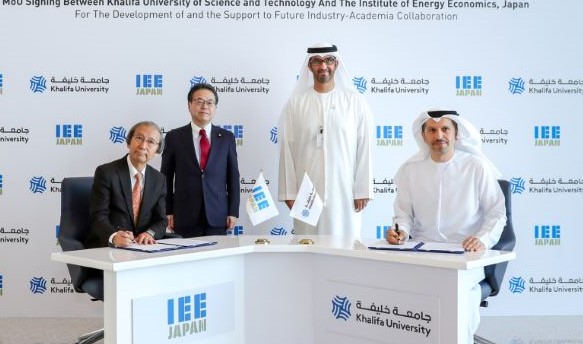
Khalifa University and the Institute of Energy Economics of Japan (IEEJ) have signed a memorandum of understanding (MoU) for the development of and the support to future industry-academia collaborations covering a wide range of activities, and further strengthening their previous relationship.

The MoU was signed by Dr. Arif Sultan Al Hammadi, Executive Vice-President, Khalifa University, and Prof. Dr. Masakazu Toyoda, Chairman and CEO of IEEJ in Abu Dhabi. The signing ceremony followed a bilateral meeting between H.E. Dr. Sultan Al-Jaber, Minister of State, Chief Executive Officer, Abu Dhabi National Oil Company (ADNOC), and Member of the Khalifa University Board of Trustees, and H. E. Hiroshige Seko, Minister of Economy, Trade and, Industry, from Japan.

Dr. Steve. Griffiths, Senior Vice-President, Research and Development, Khalifa University, and IEEJ’s Masakazu Toyoda, Chairman and CEO, will serve as a secretariat to facilitate collaboration among universities, organizations and industries to conduct research and potential business development in mutually beneficial areas.

Dr. Al Hammadi said: “The MoU paves way for facilitating research collaboration between universities and organizations in both countries and we are delighted to be part of this initiative. Japan is rated as one of the top economies in terms of science and technology innovations based on consistent decades-long research. And as a leading research-based academic institution driving innovation and technology solutions, we believe this MoU will help not only research but also facilitate business development in areas that will benefit the academia, industry and government sectors in both the countries.”

Prof. Toyoda said: “I sincerely hope this memorandum of understanding is only the beginning for the success of the industry-academia collaboration initiative between our two countries. It should contribute to further diversify the development of the UAE economy as well as strengthening the energy security of Japan. It is more than words, it is about people from our two countries meeting and collaborating to make the world a better place.”

The MoU will enable identifying of opportunities for both countries for fruitful exchanges and collaboration between industry and/or academia while assisting each other in the organization of seminars, conferences, and workshops. The two partners will also facilitate visits from each other in order to develop cooperative mechanisms and to expand areas of cooperation.

The UAE and Japan have been working together on miscellaneous projects not limited to energy projects for many years. Building upon such successful experiences and recognizing the importance of the Comprehensive Strategic Partnership Initiative (CSPI) between Japan and the UAE, Khalifa University of Science and Technology and the IEEJ felt the need to develop a program with a wider range of activities.

Clarence Michael

News Writer

29 January 2019

Learning from dust

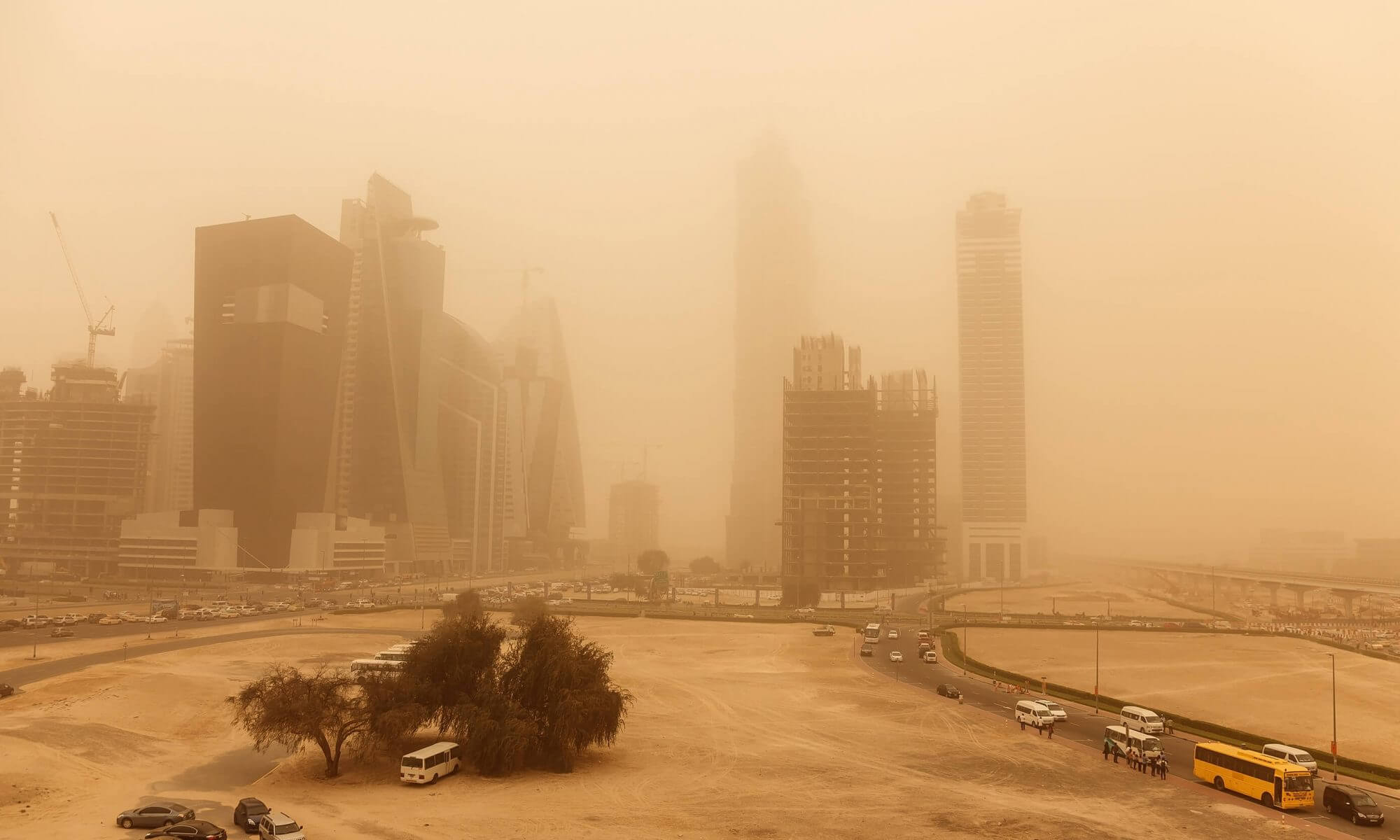
It is estimated that every year up to two billion tons of dust are carried into the atmosphere, mainly by dust storms. One dust storm alone can lift and deposit more than 200 tons of dust, with the Arabian Peninsula listed as one of the five major-dust producing regions in the world. As residents of the United Arab Emirates know well, dust storms can seem frequent in this area.

A dust storm, or sand storm, is a collection of particles of dust or sand, vigorously lifted to great heights by a strong and turbulent wind, reducing visibility and causing hazards and nuisance. Although little distinction is usually made between whether the cause of the poor visibility is dust or sand, there is a difference: the diameter of grains of desert sand usually varies from 0.15mm to 0.3mm, with the lower limit being 0.08mm. Anything below 0.08mm is defined as dust, which is more likely to be found in and around inhabited areas where human activity tends to break and crush sandy soil to produce finer sand or dust.

Observational records kept at Abu Dhabi International Airport from 1982 to 2001 show that while haze due to dust, commercial pollutants, or moisture is very common and occurs on average 242 days of the year, dust storms are far less prevalent—the average being three per year. Dust storms then are not as common as one would think, given the geographical location of the UAE and the tumultuous weather experienced by the country in the early months of 2019.

Dust events are most likely when the wind is off the desert to the south, and considerably less so when the wind is from the north-west with Shamal conditions and dust has to be transported across the Arabian Gulf. A Shamal wind is a northwesterly wind blowing over Iraq and the Persian Gulf states, which blows almost continuously in June and July. The problem with forecasting dust storms associated with Shamal winds is that the storms are not common, so the forecaster needs to be more vigilant when model data indicate strong winds from further afield. Poor visibility is most likely from after sunrise during the morning and the early afternoon during the time of surface heating, and when the regular morning land breeze reinforces any southerly flow off the desert.

When a severe dust storm hit the Middle East in April 2015, extremely low visibility resulted in hundreds of road accidents, dozens of flight delays, and school closures. The team of researchers at the Khalifa University’s Masdar Institute, however, were delighted as the dust storm validated the researchers’ dust model, which simulated the dust storm ahead of time, making it one of the most effective dust models to date for predicting dust storms in the region.

This year, researchers from the Masdar Institute published a paper in Air Quality, Atmosphere and Healthdetailing their findings and examining the impact of severe dust storms on air quality conditions using the sophisticated technology and methods available at the Institute. The authors explained airborne particles emitted and transported during dust storms affect climate and weather systems by changing cloud microphysical properties and atmospheric temperature profiles, while also deteriorating air quality conditions and impacting human health. They highlight that understanding the complex effects of such events is particularly important especially in the Arabian Peninsula.

The authors investigated one particular extreme dust event occurring between March 29 and April 3 in 2015; it was used as a test to assess the performance of the WRF-Chem model. The Advanced Weather Research and Forecasting (WRF-ARW v3.8.1) model with the chemistry/aerosol (WRF-Chem) is used to simulate emissions of aerosols and gases, their transport, and chemical and microphysical transformations.

Their study suggests that the dust event was trigged by Shamal wind—as the dense dust plume passed over the country, the temperature dropped by around 7°C and strong northeast winds reached speeds of 14m s-1. “Modeling of dust over desert areas is still challenging because of lack of information about dust sinks and correct linkage with meteorology,” said the researchers. “The use of ground observations from meterological stations and air quality stations may be used in the future to validate and correct modeled simulation of dust over the UAE as well as to understand caveats in the input data, such as emission inventory and land use data used in the WRF-Chem model.”

This research represents the first attempt to use WRF-Chem results to estimate the air quality index over the UAE as well as the possibility to use two satellite products (the Moderate Resolution Imaging Spectroradiometer with the Multi-Angle Implementation of Atmospheric Correction algorithm [MODIS-MAIAC] and the Meteosat Second Generation Spinning Enhanced Visible and Infrared Imager [MSG-SEVIRI]) to track dust over the UAE. “This work showed the added value of using high spatial resolution satellite data as future datasets that could be assimilated in air quality modeling to increase accuracy when forecasting air quality conditions,” concluded Dr. Morouane Temimi, Associate Professor of Civil Infrastructure and Environmental Engineering.

In 2016, the Masdar Institute of Science and Technology announced the launch of a real-time dust forecasting system that provides accurate, up-to-date information on storms for the Middle East region. This forecasting system is available as the Extreme Weather App for residents in the UAE, and is powered by a series of algorithms using real-time satellite data and weather forecasting models from the Masdar Institute.

“With access to accurate forecast of dust events and sandstorms, people can better prepare for them. This information will be extremely useful for the transportation sector, as it will help show motorists, pilots and air traffic controllers where the dust will be and for approximately how long,” said Dr. Hosni Ghedira, Director of the Research Center for Renewable Energy Mapping and Assessment (ReCREMA) and Professor of Practice at Masdar Institute in 2016.

By being better able to predict the UAE’s dust storms, the country can more effectively and efficiently manage its agricultural sector, renewable energy infrastructure, transportation, health, environment, and climate policy­—and provide advanced warning to reduce risk to human life. Researchers at Masdar Institute are responding to the country’s need with several dust-focused research projects, including a comprehensive characterization of the UAE’s dust.

Dust storms are expected to become more prevalent with global climate change, but the UAE government says it is on top of this problem and actively seeking ecologically sustainable solutions for everyday life and getting involved in climate change dialogues around the world. This expectation is backed up by research from Masdar Institute which found that severe dust storms are occurring more frequently in the UAE, accelerating the need for a reliable and accurate dust forecasting system for the region.

The Extreme Weather App pairs the regional expertise and practical knowledge developed at MI with sophisticated Earth-observation technologies and scientific modeling­—as the UAE invests more heavily in Earth-monitoring satellites and on-the-ground research, the dust forecasting system will be supported in helping the UAE be better equipped to tackle dust storms.

https://link.springer.com/article/10.1007%2Fs11869-019-00674-z

Jade Sterling
News and Features Writer
26 March 2019

Khalifa University and L’Oréal Middle East Sign MoU to Partner on L’Oréal-UNESCO For Women In Science Middle East Program

Partnership to Offer Three Post-doctoral Researchers and Three PhD Students Fellowships

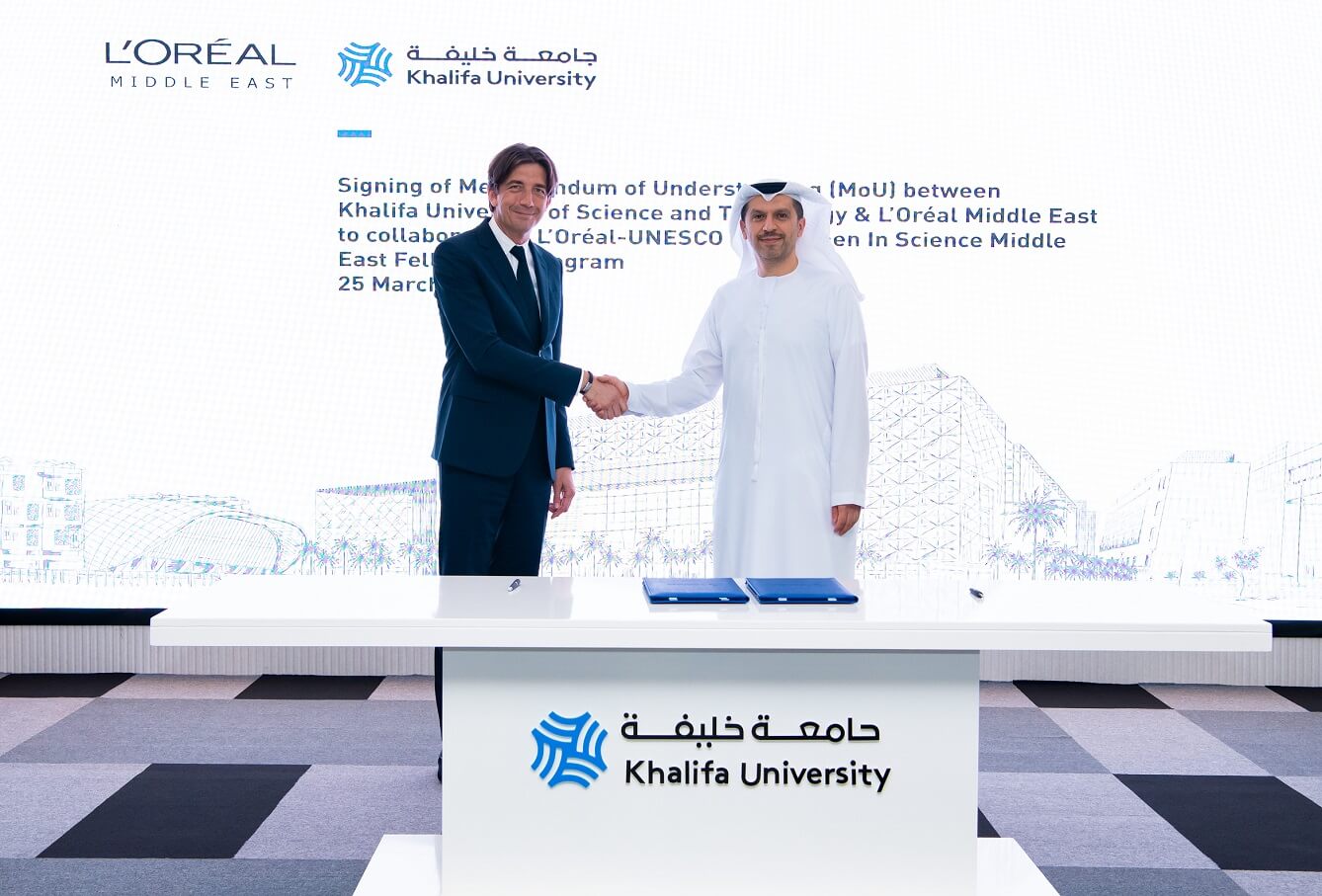
Khalifa University of Science and Technology and L’Oréal Middle East, the number one leader in the beauty industry, today announced the signing of a memorandum of understanding (MoU) to partner on the L’Oréal-UNESCO For Women In Science Middle East Program.

The aim of this partnership is to strengthen the program and reach new heights in promoting the outstanding research done by Arab women based in the region. As per this agreement, L’Oréal will offer three fellowships worth €20,000 each for Post-doctoral Researchers and three fellowships worth €8,000 each for PhD Students.

The MoU was signed by Dr Arif Sultan Al Hammadi, Executive Vice-President, Khalifa University, and Remi Chadapaux, Managing Director, L’Oréal Middle East, during a ceremony held at the Khalifa University Main Campus.
Dr Arif Sultan Al Hammadi said: “The MoU with L’Oréal Middle East for the L’Oréal-UNESCO For Women In Science Middle East Program illustrates our commitment to encouraging female participation in STEM areas as directed by the UAE leadership. The UAE already prides itself in offering equal opportunities to women while creating the right environment for their intellectual potential to be tapped in science, engineering, technology and math fields.

“Similarly, Khalifa University places huge importance to developing future women leaders as can be gauged by the current number of female students, which stands at over 58% of the total student body. We believe the MoU with L’Oréal Middle East will help us to further expand our role in developing female talent across the science and technology spectrum,” Dr Al Hammadi added.
“We are thrilled about partnering up with Khalifa University, as it is one of the most reputable universities in the region; with leadership in the advancement of learning and world-class recognition in research. Together we hope to achieve new levels of excellence and highlight the importance of gender diversity in research” said Remi Chadapaux, Managing Director, L’Oréal
Middle East. “Since the launch of the program in the GCC, we have empowered 23 outstanding Arab female scientists and recognized the importance of their research for the betterment of our local societies, and the global scientific communities at large,” added Chadapaux.

The L’Oréal-UNESCO For Women in Science Middle East program rewards talented young female scientists in Life Sciences including biology, biochemistry, biophysics, genetics,physiology, neurosciences, biotechnologies, ecology and ethology, as well as Physical Sciences
such as physics, chemistry, petroleum engineering, mathematics, engineering sciences,information sciences, earth and universe sciences.

The L’Oréal-UNESCO For Women in Science was launched 21 years ago by the L’Oréal Foundation. Since the launch of the program, it has recognized and honored over 3,100 women, including 107 laureates and granted 3000 doctoral and post-doctoral fellowships in 117 countries.

News Writer
16 April 2019

A step closer to genome editing with AI

The Next Generation of Genome Editing is on the Horizon

DNA editing at the cellular level is a reality. Technologies are editing out genes that might cause disease in mice or editing in genes that can create high-yield, drought-resistant crops. Genome editing is of great interest in the prevention and treatment of human diseases but scientists are still working to determine whether this approach is safe and effective for use in people. It is being explored in research on a wide variety of diseases and so far, scientists have used it to reduce the severity of genetic deafness in mice, created mushrooms that don’t brown as easily, and edited bone marrow cells in mice to treat sickle-cell anemia.

“Genomics is the study of the function and information encoded in DNA sequences of living cells. A detailed understanding of the relationship between genetic variations and cell function can facilitate the developments of new cures and treatments for various diseases,” said Dr. Hasan Al Marzouqi, Assistant Professor in the Department of Electrical and Computer Engineering.

Genome editing is technology that gives scientists the ability to change an organism’s DNA by adding, removing, or altering genetic material at particular locations in the genome. Several approaches to genome editing have been developed, with the most well-known being clustered regularly interspaced short palindromic repeats (CRISPR) and CRISPR-associated protein 9 (CRISPR-Cas9). This is a faster, cheaper, more accurate, and more efficient method than existing genome editing technology, and was adapted from a naturally occurring genome editing system in bacteria. The bacteria capture snippets of DNA from invading viruses and use them to create DNA segments known as CRISPR arrays; these arrays allow the bacteria to “remember” the viruses, so if they attack again, the bacteria produce RNA segments from the arrays to target the viruses’ DNA. The bacteria then use Cas9 or a similar enzyme to cut the DNA apart, disabling the virus.

In the lab, researchers create a small piece of RNA with a short “guide” sequence that attaches to a specific target sequence of DNA in a genome. The RNA also binds to the Cas9 enzyme; as in bacteria, the modified RNA is used to recognize the DNA sequence, and the Cas9 enzyme cuts the DNA at the targeted location. Once the DNA is cut, the researchers use the cell’s own DNA repair machinery to add or delete pieces of genetic material, or to make changes to the DNA by replacing an existing segment with a customized DNA sequence.

“Precise genome editing holds great potential for significantly improving the way we treat and understand diseases,” said Dr. Al Marzouqi. “Modern genome editing tools like CRISPR-based systems require the design of a guide RNA sequence (gRNA) that binds to an area of interest within the DNA. Guide sequences vary considerably in efficacy and can cause undesired outcomes. Reducing these negative effects paves the way for applying genome editing in humans.”

The reason we aren’t already using CRISPR-Cas9 in fixing all human diseases? While it’s relatively simple and powerful, this technique isn’t perfect. Recent studies have shown this approach to gene editing can inadvertently wipe out and rearrange large swaths of DNA or even trigger cancer. The risks and uncertainties around CRISPR modification are extremely high, meaning most of the scientific community believe experiments in humans are premature.

“The first step in a genome editing experiment is to choose a guide RNA based on on-target and off-target effect predictions,” explained Dr. Al Marzouqi. “Off-target score, an indicator of specificity, estimates the off-target effects which are the number of changes occurring at locations away from the desired target. On-target scores estimate on-target efficiency and are frequently measured using the percentage of indels (insertions or deletions) induced at target sequences. The unpredictable nature of these effects is a major obstacle that prevents the use of genome editing systems in humans.”

The human genome comprises 20,000 genes and more than 3 billion base pairs of the genetic building blocks: adenine, guanine, cytosine and thymine. Trawling through those 3 million base pairs to find repeating sections is time-consuming and meant progress was stalled by the complexity and enormity of the data that needed to be evaluated. With advances in artificial intelligence and machine learning applications, researchers are better able to interpret and act on genomic data.

Rational design rules and modern deep learning techniques­—like residual neural networks, LSTM and attention layers­—will be used to design new prediction systems with improved performance. In addition, machine interpretation models will be utilized to explain the performance of the developed models and provide insights that explain the performance of computational models.

Some of the latest research focuses on resolving the issue of off-target effects—when the tools mistakenly work on the wrong gene because it looks similar to the target gene. AI can help accelerate our understanding of how and why this happens­—and help prevent it.

Collating data points from CRISPR experiments and adding them to machine learning algorithms will further improve an AI system’s accuracy. Predicting the guide performance for different target sequences allows the adjustment of the total number of guides necessary, which maximizes results and lowers costs—and minimizes undesired side effects.

“Deep learning techniques are currently state of the art in numerous machine learning tasks. They achieve remarkable results across many fields including genetic data analysis,” said Dr. Al Marzouqi.

Machines help identify patterns within genetic data sets and then computer models can make predictions about an individual’s odds of developing a disease, responding to interventions, or where DNA might be altered to remove disease susceptibility. We can use AI to decode the genome and determine the best medication therapies for an individual or predict the impact of a gene mutation. We could develop CRISPR-Cas9 techniques to eradicate certain bacteria or viruses like HIV.

“In the future, we plan to extend our investigation to other problems involving the use of machine learning and genomics like protein structure determination and gene expression inference,” said Dr. Al Marzouqi.

Understanding and manipulating the human genome is a daunting task and thus far, breakthroughs have relied on human capabilities. Artificial intelligence is launching us into the future of genome editing.

Jade Sterling
News and Features Writer
1 May 2019

Khalifa University Ranked among Top 30 in Asia

First UAE Institution to be Placed among Top 30 in Asia

Abu Dhabi-UAE: 02 May, 2019 – Khalifa University of Science and Technology, a research university dedicated to the advancement of learning through the discovery and application of knowledge, has announced that it has further improved its rankings to be placed 28th in the prestigious Times Higher Education (THE) Asia University Rankings 2019 that was released in Abu Dhabi.

With the new ranking, Khalifa University has jumped another four slots to be placed in top 30 among 417 Asian universities in the latest 2019 THE Asia University Rankings, an improvement from last year’s ranking when it was placed 32nd in Asia. This also makes the University first in the UAE.
The rankings were released at the THE Asia Universities Summit 2019 that is being held from 30 April – 2 May in Abu Dhabi as a collaboration between Khalifa University and the Times Higher Education. This year rankings have been expanded to include 417 universities, up from 359 institutions the previous.

Dr Arif Sultan Al Hammadi, Executive Vice-President, Khalifa University of Science and Technology, said: “Khalifa University’s status in the THE Asia Universities Ranking 2019 further validates our research capabilities, faculty expertise and modern cutting-edge facilities that encourage innovation. Collaborations with industry leading brands in every major sector are the other factor that keeps us in the forefront of intellectual and human capital creation, thanks to the UAE’s wise leadership for their endless support for Khalifa University. We believe the new ranking will further encourage and motivate us to set new benchmarks of excellence in the academic and research arenas.”
In January 2019, Khalifa University became the only one in the Middle East and North Africa (MENA) region to be among the top 15 in the Times Higher Education (THE) Emerging Economies University Rankings 2019. The university was placed 13 th out of 442 universities from 43 countries, edging up slightly from 15 th position in the same listing the previous year.

In November 2018, Khalifa University was placed in the 176-200 band out of over 900 institutions assessed across more than 70 countries in the 2019 THE World University Subject Rankings for Engineering and Technology. In September 2018, Khalifa University was ranked 1st in the UAE and 2nd in the Arab region by the THE World University Rankings 2019. The university was also ranked top in the categories of Research and Industry Income.
The Asia University Rankings use the same 13 carefully calibrated performance indicators to provide the most comprehensive and balanced comparisons, trusted by students, academics,university leaders, industry and governments. However, the weightings are specially recalibrated to reflect the priorities of Asian institutions. The performance indicators are grouped into five areas – teaching, research, citations, international outlook and industry income.
ENDS

About Khalifa University of Science and Technology
The Khalifa University of Science and Technology merges the Masdar Institute of Science and Technology, Khalifa University of Science, Technology and Research and the Petroleum Institute into one world-class, research-intensive institution, producing world leaders and critical thinkers in applied science and engineering. The Khalifa University of Science and Technology endeavors to be a catalyst to the growth of Abu Dhabi and the UAE’s rapidly developing knowledge economy as an education destination of choice and a global leader among research intensive universities.

Exploring the Transformative Potential of Robotics

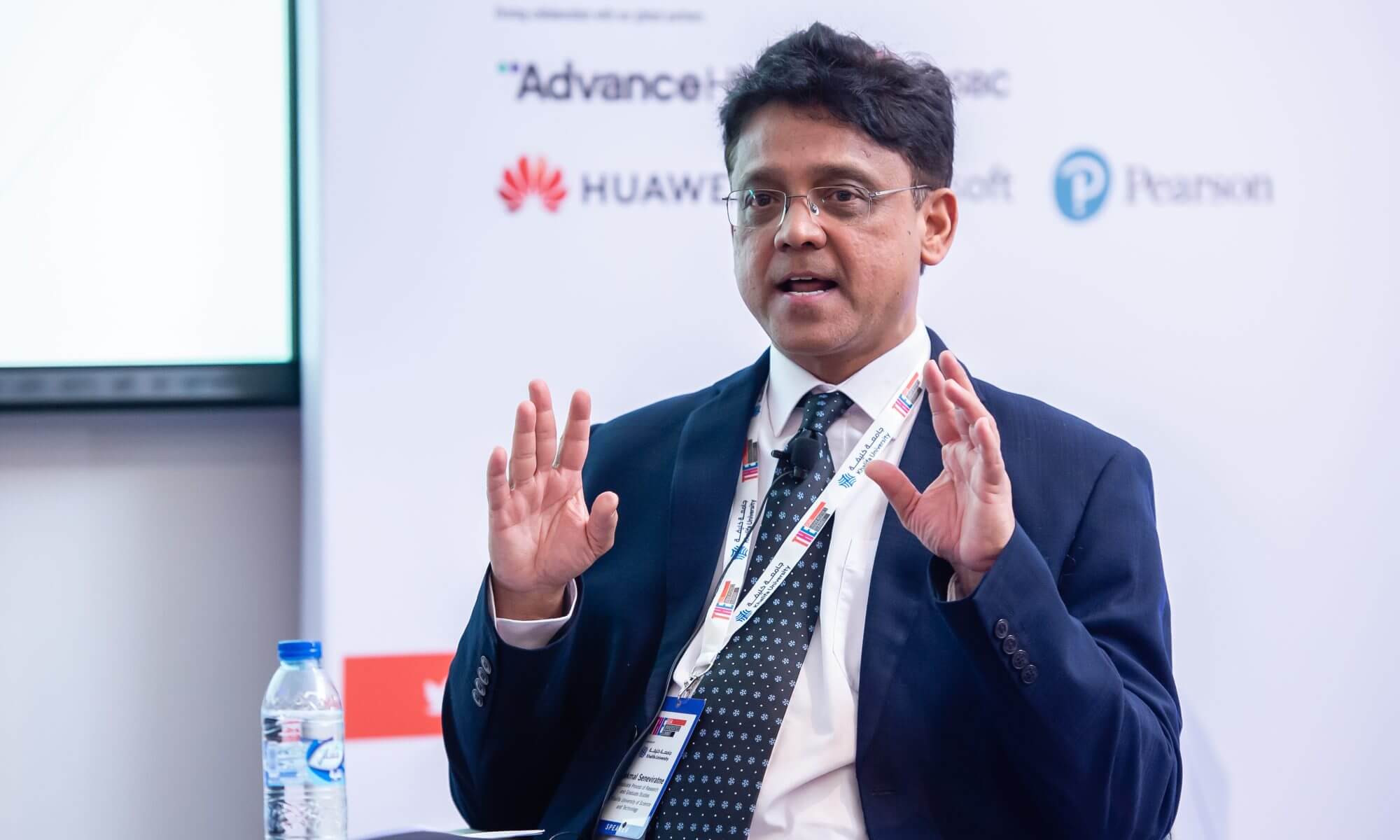
Khalifa University’s Dr. Lakmal Seneviratne leads panel on Real World Robotics to discuss current challenges to the mass deployment of robots across industries

The global economy is entering the Fourth Industrial Revolution. The physical and information worlds are converging, leading to rapid advancements in digitalization, automation, artificial intelligence (AI), and crucially, robotics. The robotic transformation now underway is unlocking substantial new economic growth opportunities, but the mass deployment of robots is still concentrated in niche areas, like the automotive industry, electronics, and machinery production.

“There are major technological and societal challenges that need to be addressed in order to unleash the full potential and immense benefits of robotics across organizations, industries and society as a whole,” said Khalifa University’s Dr. Lakmal Seneviratne, Associate VP for Research and Director of the Khalifa University Center for Autonomous Robotic Systems (KUCARS).

Dr. Seneviratne led a panel discussion on real world robotics during the Times Higher Education Asia Summit at Khalifa University on Monday, 1 April, 2019. Panelists included robotic experts Dr. Peter Corke, Professor of Robotic Vision from Queensland University of Technology; Dr. Paolo Dario, Professor of Biomedical Robotics, The BioRobotics Institute at Sant’Anna School of Advanced Studies; and Dr. Dinesh Manocha, Professor of Computer Science at the University of Maryland at College Park.

Khalifa University is addressing some of the critical R&D challenges in robotics through KUCARS and other research centers, which include research that focuses on advancing the state-of-the-art in unmanned aerial, ground and underwater systems, autonomous manipulation and computer vision. Such capabilities will accelerate development of key sectors during the Fourth Industrial Revolution in the years ahead.

“Robotics is a huge market worth billions of dollars and is arguably the most consequential area of Fourth Industrial Revolution-related technology in terms of its impact on the world,” shared Dr. Corke during the panel. “We’ve got robots in the home, in hospitals, and on the roads. We’ve got robots in food production and civil infrastructure inspection.”

Dr. Manocha agreed: “The market research company Frost & Sullivan think that by 2020 there will be at least one robot per house. This could range from a mobile robot cleaning your floors to a household butler managing all level of tasks.”

While the panelists agreed that the use of robots will continue to expand rapidly in areas like industrial manufacturing, they also noted that as robots are applied to more sophisticated tasks, the range of industries they operate in is likely to grow exponentially.

“Artificial intelligence, for example, is not as widely deployed in industry as we would expect, but it has all sorts of applications in transforming manufacturing,” said Dr. Corke. “We take AI for granted. Look at Siri: one narrow application of artificial intelligence, but well executed.”

Dr. Manocha added: “Now, we want to design common sense. We’re a long way from full autonomy, as it has a lot of promise but it’s very difficult to achieve. Autonomous vehicles have enormous potential, but we’re still a long way off. The success of AI is proportionate to the success of robotics.”

When asked which area would see the most impact from robotics in the future, all panelists agreed: healthcare is the next big thing.

“Before, patients wouldn’t dream of not being operated on by humans, but now?” said Dr. Dario. “Robotic medical assistants monitor patient vital statistics, automatically enter information into the electronic health record, carry supplies throughout the hospital, and now are even assisting in surgery.”

“It’s not just surgical,” added Dr. Corke. “Robotics is emerging in areas like physiotherapy and even counselling. Technology in healthcare is strongest where we don’t have the manpower to support the patients.”

AI is already being used to detect diseases more accurately and in their early stages, and one of its biggest benefits is helping people stay healthy to prevent these diseases in the first place. “Technology can encourage people to practice healthier behaviors and help manage a healthy and active lifestyle,” said Dr. Manocha. “The proliferation of consumer wearables combined with AI is helping patients understand what they need to do to prevent developing lifestyle diseases like diabetes.”

AI and robotic technologies are promising areas of healthcare as the explosion of data combined with the rise in demand from ageing populations around the world, rising costs, and shortage of supply have left a huge gap ready to be filled by technology.

The rapid progress seen over the past few years is just the beginning: research centers like Khalifa University’s Healthcare Engineering Innovation Center, the Center for Biotechnology, and the KUCARS are leading the way in developing the technologies that will save more lives, cure more diseases, and help us all live healthier.

Jade Sterling
News and Features Writer
9 June 2019

UAE General Civil Aviation Authority & Khalifa University Link Up for International Aviation Award

Partnership Covers Research and Information Exchange to Develop Best Practices in the UAE’s Developing Civil Aviation Sector

Khalifa University of Science and Technology and the UAE General Civil Aviation Authority have signed an agreement to strengthen cooperation and support between the two entities for the Sheikh Mohammed bin Rashid Global Aviation Award. The Award aims to recognize and honor the ICAO member states, organizations and individuals who contribute in the advancement of the aviation industry, overall excellence in air transport infrastructure, safety and security standards, personal contributions of individuals, and innovation.

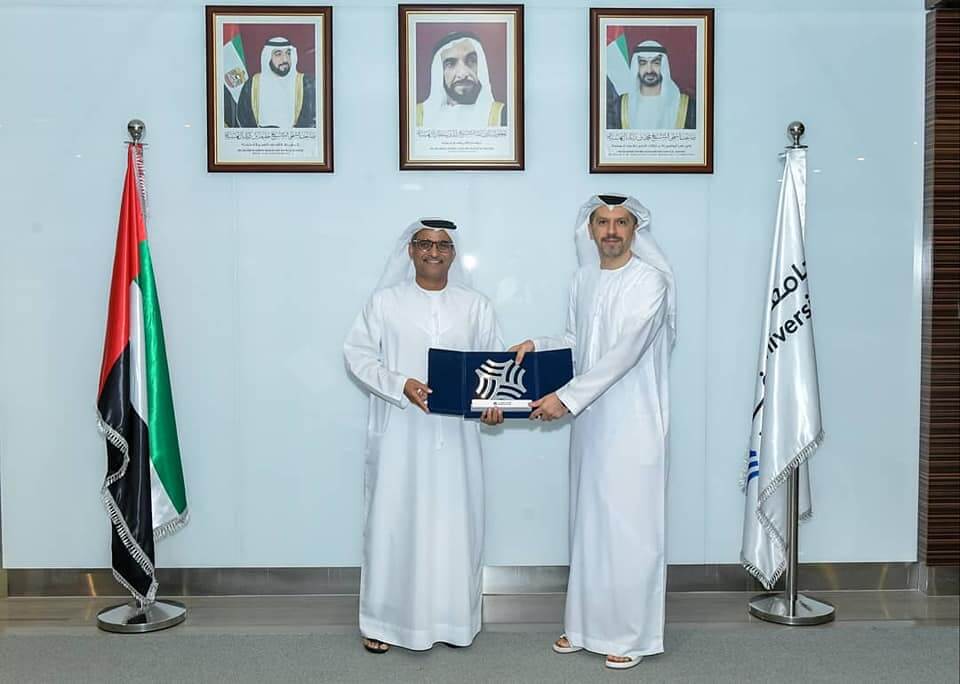
The memorandum of understanding was signed on 27 May 2019 at the Khalifa University Main Campus by His Excellency Saif Mohammed Al Suwaidi Director General of the UAE General Civil Aviation Authority and Dr. Arif Sultan Al Hammadi, Executive Vice President of Khalifa University,

His Excellency Saif Mohammed Al Suwaidi, Director General of the UAE General Civil Aviation Authority, said: “The award, which is under the name of His Highness Sheikh Mohammed bin Rashid Al Maktoum, Vice President and Prime Minister of the United Arab Emirates and Ruler of Dubai, is the richest award in the history aviation and seeks to support the global aviation plan for development. Furthermore, it stimulates research and innovation that will lead to sustainable development in the aviation industry. We are honored that Khalifa University, an internationally recognized institution for its pioneering and ground breaking work in science and technology is a strategic partner in the Sheikh Mohammed bin Rashid Global Aviation Award.”

Dr. Al Hammadi said: “We are pleased to partner with the General Civil Aviation Authority to leverage our engineering expertise in aerospace in the pursuit of a pioneering award that will further strengthen the United Arab Emirates’s aviation sector, which is a key pillar in the national economy. Khalifa University was founded to help transform United Arab Emirates into a knowledge-based economy by developing the country’s human capital, research capabilities, and high-tech industries. By entering into this strategic partnership, we are taking solid steps to ensure the continued development of a technologically-advanced aviation sector for the benefit of the United Arab Emirates and the wider world.”

As per the agreement, Khalifa University and the General Civil Aviation Authority will coordinate their resources and facilitate information exchange related to research and development in the field of aviation technology.

Aerospace is one of Khalifa University’s six key focus sectors. The University specializes in the research and development of advanced materials for aerospace applications and advanced assembly and manufacturing of aerospace structures. It also has a dedicated research center, the Aerospace Research and Innovation Center (ARIC), established in 2012 with Mubadala Aerospace.

The aviation sector, a vital contributor to the UAE’s GDP growth, is currently experiencing rapid growth worldwide. The Award will help increase investment opportunities in all areas of the aviation industry and support the development of best practices to ensure the industry will be ready to meet long-term demands.

News Writer
10 June 2019

KU Professor Awarded as ‘Mission Innovation Champion’

Faculty among 19 Honored with ‘Mission Innovation Champions’ Award at Fourth Annual Ministerial Meeting in Canada

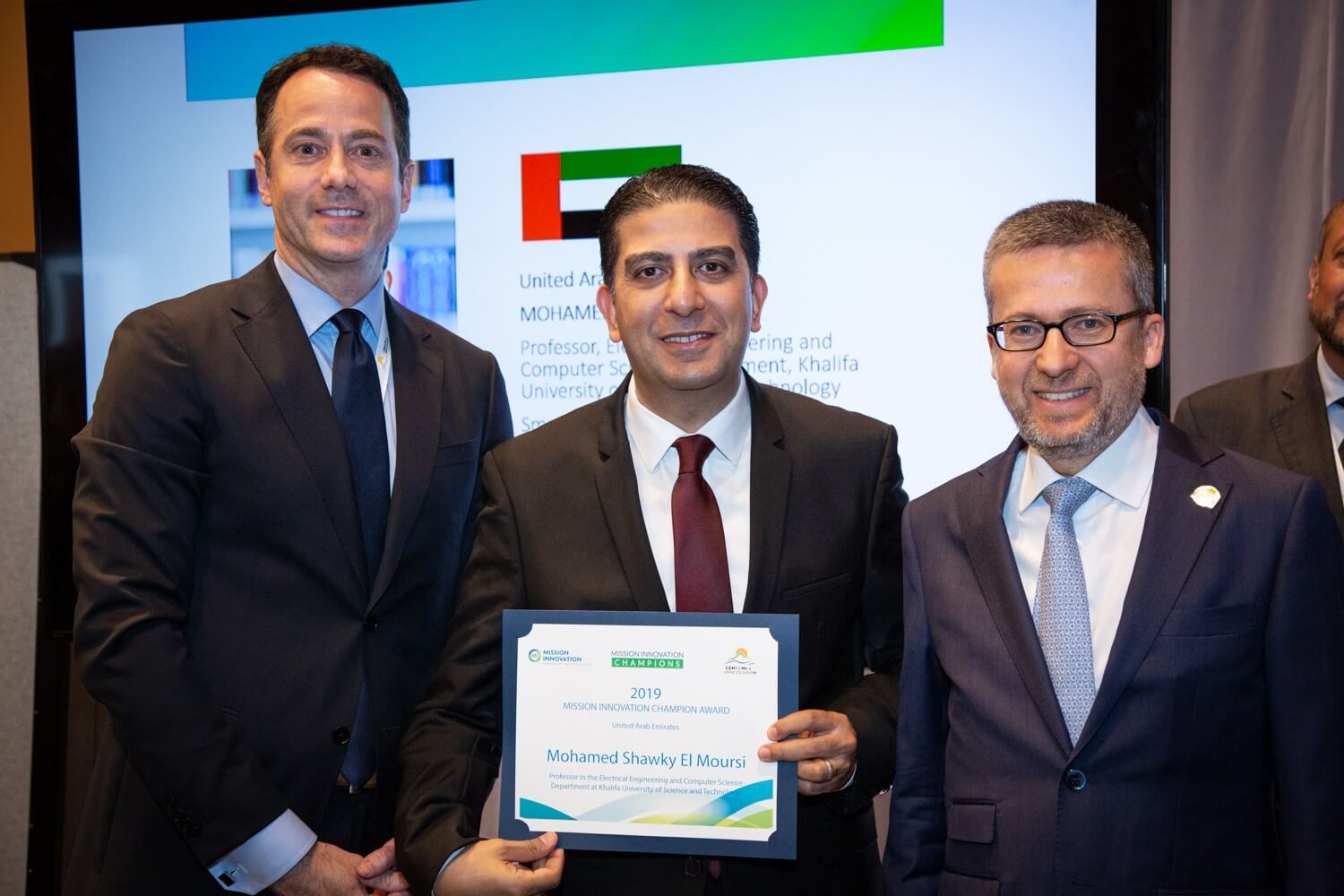
Dr. Mohamed El Moursi, Professor, Electrical and Computer Engineering, became one of 19 winners of ‘Mission Innovation Champions’ award at a ceremony held on the sidelines of Mission Innovation’s fourth annual Ministerial meeting in Vancouver, Canada. The Mission Innovation program recognizes the most exceptional researcher and innovator from each participating Mission Innovation member country who is developing novel ways of making energy cleaner, cheaper, and more reliable and using it more efficiently.

Dr. Arif Sultan Al Hammadi, Executive Vice-President, Khalifa University of Science and Technology, said: “International recognitions such as the ‘Mission Innovation Champions’ award strongly reflects our faculty’s research expertise and the ability to attract world class industry collaborations for grants. The scale and extent of the research also illustrate Khalifa University’s consistent contributions to the growth of the clean energy sector in general and the UAE’s smart grid area in particular. Congratulations to Dr. Mohamed El Moursi for this honor and I believe our accomplishments will gather even more momentum across all research areas as we continue to raise our benchmark for excellence in innovation.”

Dr. El Moursi’s research addresses challenges to increasing penetration of solar PV power generation and the resulting uncertainty, the integration of nuclear power generation, and changes in the power system’s stability profile due to interconnections within the GCC countries. He is also the recipient of the Faculty Research Excellence Award 2018 for the College of Engineering at Khalifa University. His research works have been published in top-tier (Q1) journals, and his research outcome have led to US patents.

Dr. El Moursi has also designed and developed several in-house experimental prototypes and tools, which are currently in the implementation phase. For example, Abu Dhabi Transmission & Despatch Company Transco and Manitoba Hydro International (Canada) has financially supported the implementation of the innovative Stability Assessment, Visualization and Enhancement (SAVE Tool) with renewable energy integration. Also, Elia Grid International (Belgium) has financially supported the implementation of the innovative Renewable Energy Management System (REMS Tool). Dr. El Moursi initially developed REMS concept along with his students for dispatching hybrid renewable energy systems with minimum utilization of energy storage systems.

Launched in 2015, Mission Innovation is a global initiative of 23 countries, including the UAE, working to reinvigorate and accelerate global clean energy innovation with the objective to make clean energy widely affordable.

The Mission Innovation Champions Program attracted wide interest from academia, business and research communities across the participating member countries. Following a rigorous competition, including peer-to-peer reviews and evaluations by a diverse panel of experts, the top-scoring candidates from each country were selected to travel to Vancouver to be recognized by their Ministers and the clean energy community as Mission Innovation Champions.

With 16 research centers that drive innovation in the UAE’s strategic sectors including clean energy, Khalifa University remains prominent among the academic institutions that contribute to creating intellectual and human capital driving the country’s knowledge economy transformation. These research centers focus on some of the high-technology areas including clean energy, energy storage, composites and advanced materials, artificial intelligence, robotics, aerospace, nuclear engineering, biomedical engineering, data science, information security, transport and logistics, water and environment, healthcare, civil security, nanotechnology and petroleum exploration technologies.

Clarence Michael
News Writer
12 June 2019

Khalifa University Names Eminent Scholar and Scientist Dr. John Derek Woollins as New Provost

New Provost to Place Special Emphasis on Strengthening Academic Activities and Faculty Affairs

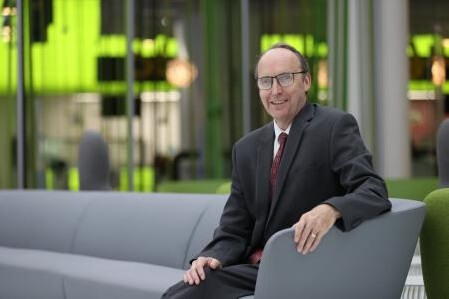
Khalifa University of Science and Technology today named renowned scholar and chemist Dr. John Derek Woollins as the Provost of the university. Dr. Woollins will assume his new role in Fall 2019 when the new academic year begins.

An eminent professor of chemistry, Dr. Woollins brings over 25 years of outstanding skills and experience in research, academia and leadership. He has spent a greater part of his career at The University of St Andrews in Scotland, where he served as Head of Chemistry, Vice Principal of Research and Innovation, Provost of St Leonard’s College, and Director of EaSTCHEM, the joint Research School of Edinburgh and St Andrews Chemistry Departments.

During this time, Dr. Woollins managed all research activities across the University, including developing and implementing the University’s research strategy, and proved himself to be a highly effective and progressive administrator.

Dr. Arif Sultan Al Hammadi, Executive Vice-President, Khalifa University of Science and Technology, said: “We welcome the new Provost Dr. Woollins, a prominent scholar in chemistry and a dedicated scientist, to Khalifa University. With his exemplary track record and special insights, we believe he will provide administrative leadership, direction, and evaluation for all academic activities and faculty affairs. In general, he will contribute to achieving the mission and vision of Khalifa University in the creation of human and intellectual capital, thus facilitating the UAE’s knowledge economy transformation drive.”

With over 600 research papers and three books to his credit, Dr. Woollins is also known for his work on the synthesis, determination of structure and applications of new molecules made with main group elements of the Periodic Table. The distinguished scholar and scientist’s work resulted in a reagent named after him – Woollins’ reagent – which has been manufactured on a commercial scale for use in organic synthesis.

Dr. Woollins said: “I am honored to be appointed the Provost for Khalifa University, a leading academic institution that is consistently ranked top locally and regionally. The university has adequate potential in providing a world-class education, advancing research and partnering with the community and industry. I am looking forward to working with faculty, staff and students and continue to build on its strengths and achieve more milestones.”

Dr. Woollins is a Fellow of the Royal Society of Chemistry and The Royal Society of Edinburgh, and a member of the European Academy of Sciences and the European Academy of Science and Arts. He was awarded an honorary PhD by the Russian Academy of Sciences in 2018 and served as Editor in Chief for the monthly chemistry news magazine, Chemistry in Britain, which he steered into its current expanded form as Chemistry World.

Dr. Woollins obtained his PhD from the University of East Anglia in 1979. He was a lecturer at Imperial College London before joining Loughborough University in 1994 as the University’s first Professor of Inorganic Chemistry.

Clarence Michael
News Writer
17 June 2019

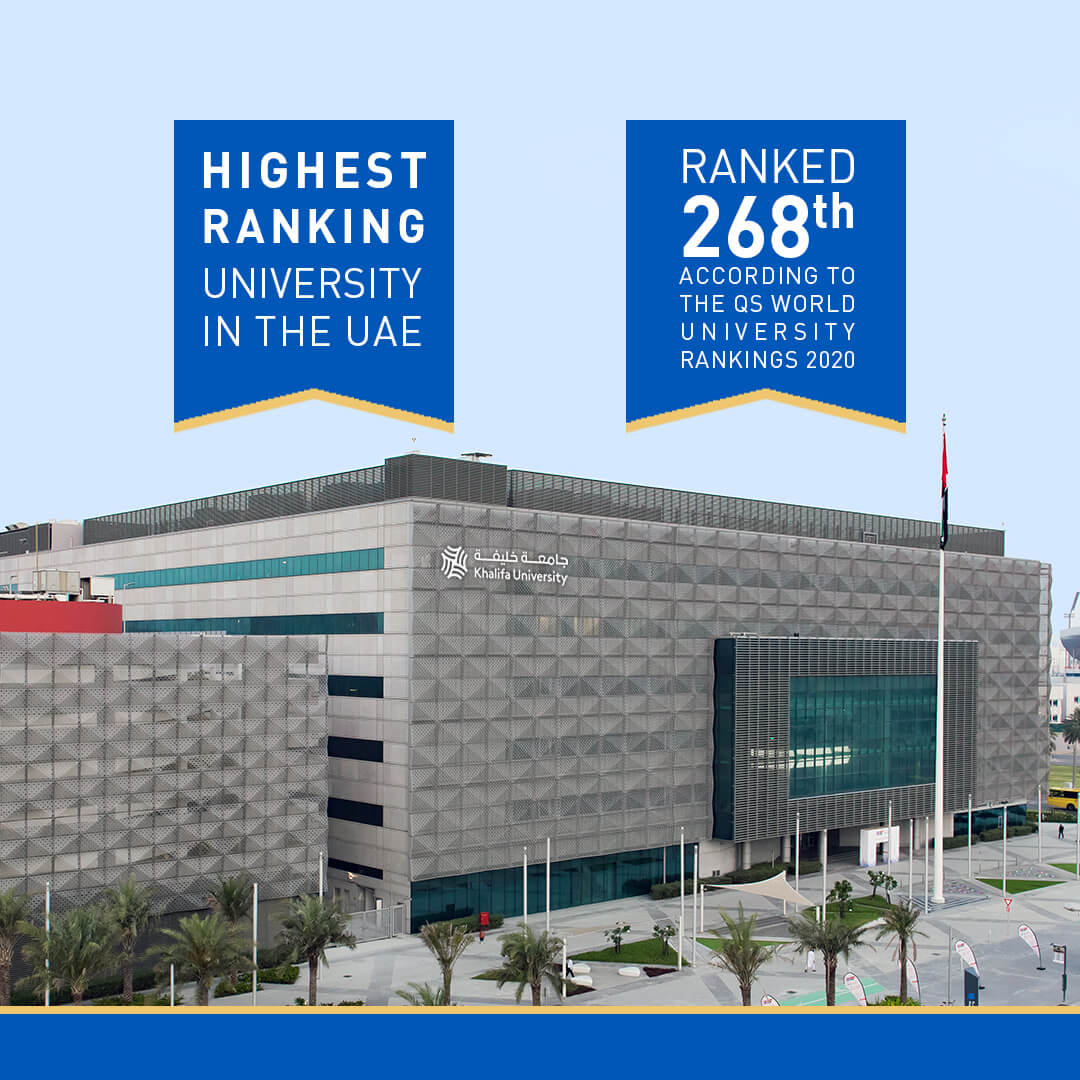
Khalifa University Becomes First-Ever UAE Institution to be Ranked among Top 300 Globally in QS World University 2020 Rankings

Jumps 47 Slots to Rank 268th Globally in Most Recent QS Ranking, Remaining Top in the Country

Khalifa University of Science and Technology has become the first-ever in the UAE to be placed among the top 300 academic institutions globally by the QS (Quacquarelli Symonds) World University Rankings 2020.

Ranked 268th overall with a jump of 47 slots, Khalifa University thus remains among the top 27% of the 1,000 universities assessed from 82 different locations across the world, as well as the top-rated institution in the UAE. Additionally, the QS World University Rankings 2020 has termed Khalifa University’s ‘Research Output’ as ‘Very High’.

In the Citations per Faculty category, Khalifa University has a score of 42.2 in the QS World University Rankings 2020. The University has also performed remarkably well with the Faculty Student Ratio, which is 1:8, earning a score of 77.3.

Dr Arif Sultan Al Hammadi, Executive Vice-President, Khalifa University of Science and Technology, said: “Our position as the first-ever institution from the UAE to be placed among the top 300 in the QS World University Rankings 2020 strongly illustrates not only our consistent success in the international academic arena, but also our commitment to impart world class knowledge to students. We believe such international accolades and recognitions reflect our wise leadership’s vision and continuous support to help the University compete on the international level. It also shows the sincere efforts by our faculty and staff to sustain the University’s mission as a major contributor to the UAE’s human and intellectual capital development.”

“The most recent ranking will further motivate us and strengthen our resolve to enhance the academic and research offerings that will further consolidate the position of Khalifa University regionally and globally,” added Dr. Al Hammadi.

The world’s 1,000 top universities are ranked by the QS according to six different criteria – academic reputation (40%), employer reputation (10%), faculty to student ratio (20%), citations per faculty (20%), ratio of international faculty members (5%) and ratio of international students (5%).

Khalifa University continues to be acknowledged globally for its world class academic and research areas. The university was the only one in the Middle East and North Africa (MENA) region to be among the top 15 in the Times Higher Education (THE) Emerging Economies University Rankings 2019 that assessed 442 universities from 43 countries.

Additionally, the 2019 THE World University Subject Rankings for ‘Engineering & Technology’ placed Khalifa University in the 176–200 band, thus keeping the university among the top 200 out of over 900 institutions assessed across more than 70 countries. This follows Khalifa University’s 12th place in the ‘THE Young University Rankings 2018: Millennial Universities Millennial Ranking’ and 49th in the Young University Ranking.

Clarence Michael
News Writer
19 June 2019

MYSAT-2 Progresses to Next Stage of Development

Once launched, MYSAT-2 will test student developed algorithms to determine the CubeSat’s orientation in space, estimated to be 15% to 20% more power-efficient

Khalifa University is a step closer to launching its second satellite, MYSAT-2, into space after meeting an important milestone – the Critical Design Review (CDR) on Sunday, 23 June 2019, which wraps up the satellite’s design phase and marks the start of full-scale production in preparation for launch in Q2 2020.

MYSAT-2 is the University’s second research satellite built by faculty and students in KU’s Space Systems and Technology program. Designed as a CubeSat, or a small satellite that measures 20 cm x 10 cm x 10 cm, MYSAT-2 will be built with custom software to stabilize the satellite’s ‘attitude’, or its orientation in space. A satellite’s attitude plays a critical role in determining the direction its cameras are facing.

The research team behind MYSAT-2 – which includes 10 graduate students, four undergraduate students, two faculty and two research engineers, along with engineers from industry partners Al Yah Satellite Communications Company (Yahsat) and Northrop Grumman – is implementing advanced attitude control algorithms to keep the satellite moving evenly through its orbit. The algorithms help determine and control the CubeSat’s orientation in space, and are estimated to be 15 to 20 percent more power-efficient, in comparison with traditional algorithms implemented on other spacecrafts.

MYSAT-1, the first CubeSat developed by Khalifa University at its Yahsat Space Lab that was launched into space on 17 November, 2018, and is expected to stay in orbit until 2021, has provided important learning opportunities to the team working on MYSAT-2.

“The successful completion of critical design review signifies another momentous occasion in the development of MYSAT-2 by our Space Systems and Technology Concentration students at the Yahsat Space Lab, with support from Northrop Grumman and Yahsat. We believe, like its predecessor, MYSAT-2 will represent our contribution to the UAE’s commitment to developing indigenous aerospace scientists, while establishing our students’ contributions to developing energy-efficient algorithms that determine the CubeSat’s orientation in space. This will help Khalifa University develop next generation satellites even more efficiently, and market the software systems to other satellite developers,” commented Dr. Arif Sultan Al Hammadi, Executive Vice President, Khalifa University.

The CDR review panel included experts from Yahsat, Khalifa University, and Northrop Grumman. The collaborative review panel assessed the programme’s readiness and confirmed that the technical efforts are on track to proceed into fabrication, demonstration, and testing, with performance requirements being met, on budget and on schedule. Full-scale fabrication of MYSAT-2 will now begin with several intermediate internal reviews, including a software demonstration, and the flight readiness review.

“MYSAT-2’s critical design review is a milestone for Yahsat Space Lab and the CubeSat programme. Working alongside Khalifa University and Northrop Grumman to support the programme, Yahsat aims to equip the rising generation with the skills they need to advance the UAE’s space agenda. Our focus now turns to the next stages of the programme and the launch of MYSAT-2, which promises to be another leap forward for the UAE’s space ambitions,” said Mona Al Muhairi, Chief Human Capital Officer at Yahsat.

“MYSAT-2, the second satellite from our joint collaboration with Khalifa University and Yahsat, promises to open up new research avenues in spacecraft attitude control,” said Frank DeMauro, Vice President and General Manager, Space Systems, Northrop Grumman. “We congratulate the Khalifa University students in reaching the important milestone of the Critical Design Review and look forward to working with them as they prepare the satellite for a launch on the Northrop Grumman Cygnus spacecraft in 2020.”

MYSAT-1 was built with two payloads, including a camera for Earth observation and an experimental lithium-ion coin cell battery developed by KU researchers. Primarily, the satellite served as an educational project for KU students. A number of pictures were taken using the onboard camera, and researchers are currently analyzing the data gathered on the battery’s performance. So far, the data has shown that the battery performed well in space.

“In MYSAT-1, we observed some issues in the software implementation that we missed during ground testing and are hoping to address them in MYSAT-2,” said Dr. Prashanth Marpu, Associate Professor of Electrical Engineering and Computer Science and Manager of YahSat Space Lab. “We are improving Fault detection, isolation, and recovery algorithms and are adding the capabilities to perform autonomous operations in the absence of communication from the ground station.”

Khalifa University is also supporting the development of a third CubeSat, called MeznSat, at its Yahsat Space Lab. The collaborative satellite project is being developed in partnership between the UAE Space Agency, Khalifa University and the American University of Ras Al Khaimah. MeznSat is a 3U CubeSat that will monitor and study the Earth’s atmosphere to monitor greenhouse gas emissions above the UAE region. MeznSat is scheduled to be launched in Q1 2020.

Khalifa University and UAE Space Agency have also partnered to develop the UAE Mini Satellite Challenge, which aims to provide students interested in the fields of engineering, material sciences, and physical sciences, the opportunity to develop technology and experiments for the space environment. In the first edition of the competition, 21 teams participated with over 150 students involved. The payload proposed by New York University Abu Dhabi (NYUAD) to detect terrestrial gamma ray flashes won the first prize. NYUAD and KU teams are now working together to realize the mission by developing the payload and the bus. The satellite is expected to be launched in Q2 2020.

“CubeSat programs like these provide hands on training for students and a unique opportunity to develop our own space components and gain flight heritage for our technologies,” Dr. Marpu shared. In the case of MYSAT-2, the team aims to get flight heritage for its attitude control software. Gaining flight heritage will help Khalifa University be able to develop next generation satellites even more efficiently, and provide the software to other satellite developers.

Through its space systems and technology concentration and dedicated space lab, Khalifa University is providing project-based learning for its students, enhancing human capital in the field of space and fostering future generations of Emirati engineers equipped with the skills and real-world experiences needed to develop the kind of breakthrough technologies required to ensure the UAE achieves its space exploration goals.

Erica Solomon
Senior Editor
26 June 2019

MBZIRC: The World’s Preeminent Robotics Competition

Khalifa University will host the Mohamed Bin Zayed International Robotics Challenge (MBZIRC), one of the world’s largest and most prestigious robotics competitions, set to begin February 2020. The MBZIRC is an international biennial competition that selects over 20 robotics teams from top universities around the world to compete in Abu Dhabi during a 3-day event, where they will compete for USD 5 Million worth of total prize and team sponsorship.

MBZIRC encourages innovation and demands technical expertise as teams align their project plan to stringent reporting protocols in advance of a bold and yet practical competition. Particularly relevant to metropolises like Abu Dhabi, the challenges presented aim to advance robotics to resolve the real problems faced in smart cities. The ambitious competition attracts the brightest and most competent teams from leading academic institutions across the globe in an effort to solve real problems and make a lasting impact on people’s lives. Among the teams competing are two top 20 universities globally, with 21 countries taking part. Khalifa University is sponsoring 21 teams for a total amount of USD 3.5 million, and offering a prize fund for each challenge of AED 1,000,000.

Teams selected for the competition are tested in three major areas of relevance with practical impact in the future of smart cities, helping authorities around the world to further develop and capitalize upon the opportunities that unmanned vehicles present while mitigating the risks they create.

Challenge 1:

Drones flying too close to airports and military installations pose a risk to safety and security, a scenario that authorities have to contend with as technology evolves rapidly. In the first round of challenges, team unmanned aerial vehicles (UAVs) will track and intercept targets autonomously, simulating innovative ways to track and detain rogue drones in sensitive areas.

Challenge 2:

In rescue situations, autonomous vehicles must be able to manipulate objects in order to remove debris or assemble components into useful tools. The second round of challenges requires the teams’ unmanned aerial and ground vehicles to coordinate as they locate, collect, transport, and assemble different pieces into a pre-defined shape in an environment that simulates a real world disaster.

Challenge 3:

High-rise fires are a disturbing and prevalent prospect that authorities must contend with in modern cities. In the third challenge, the competing team drones will fight simulated fires without human input. The unmanned vehicles, aerial and ground based, will have to collaborate to identify threats and eliminate them.

Grand Challenge:

The Grand Challenge is poised to test the teams’ dedication and ingenuity as the unmanned vehicles are put through the ringer while they compete in a triathlon that encompasses all of the challenges into one encompassing course. In successfully completing the challenges, the teams will have showcased their expertise in programming, machine learning, robotics, and overall engineering. The winners of the Grand Challenge will walk away with AED 2,000,000.

While solving real world problems, the competition encourages innovation in robotics, AI, and materials printing; all major components that must be addressed before drones can become more than recreational toys and actualized as potent tools to improve safety and security. Robotics has the potential to have an impact that is as transformative as the internet, and robotic competitions are the ultimate catalyst to accelerate its development. Pushing the boundaries in robotics, the MBZIRC 2020 competition is poised to be a thrilling and inspiring event for Abu Dhabi.

Jade Sterling
News and Features Writer
27 June 2019