
Under the Patronage of His Highness General Sheikh Mohamed bin Zayed Al Nahyan Masdar Institute Hosts 7th Commencement for Class of 2017

Under the patronage of His Highness General Sheikh Mohamed bin Zayed Al Nahyan, Crown Prince of Abu Dhabi and Deputy Supreme Commander of the UAE Armed Forces, His Highness Sheikh Hamed bin Zayed Al Nahyan, Chief of the Abu Dhabi Crown Prince’s Court, and His Highness Sheikh Nahyan bin Mubarak Al Nahyan, Minister of Culture and Knowledge Development, today attended the graduation ceremony of the Masdar Institute Class of 2017.

His Highness Sheikh Hamed congratulated the graduates and wished them success in the future and urged them to strive further to continue learning and developing their capabilities and skills, contributing to the development of their countries. He also urged them to promote renewable energy technology, as an enabler of future development and progress.

His Highness Sheikh Hamed presented the PhD and Master’s degrees to graduates. His Excellency Dr Thani bin Ahmed Al Zeyoudi, Minister of Climate Change and Environment, His Excellency Dr Sultan Al Jaber, Minister of State, His Excellency Dr. Ahmad Belhoul Al Falasi, Minister of State for Higher Education, Her Excellency Shamma bint Suhail bin Faris Al Mazrui, Minister of State for Youth Affairs, were also present at the ceremony. Former United States Secretary of Energy Dr. Ernest Moniz, Professor Emeritus and Special Advisor at the Massachusetts Institute of Technology (MIT), delivered the keynote address at the seventh Masdar Institute commencement. Masdar Institute is part of Khalifa University of Science and Technology.

Also present on the occasion were dignitaries, ministers, ambassadors, government officials, and CEOs of private and government sector organizations, members of the Khalifa University of Science and Technology Board of Trustees, and families and guests of graduating students.

Masdar Institute’s seventh commencement ceremony is significant not only because it marks the 10th year since the Institute’s inception, but also the first batch of students will be graduating from the Master’s Concentration in Space Systems and Technology. As of this year, Masdar Institute is now part of Khalifa University of Science and Technology, following a strategic merger that is expected to contribute to the advancement of the knowledge economy in the UAE.

In his keynote address, Dr. Ernest Moniz, commended the graduates, saying: “The science and technology skills you have learned at Masdar Institute will continue to be crucial for supporting society’s progress – not just through developing new technologies and discovering interesting facts, but also by driving economic growth, transforming communities and laying the foundation for sustainable progress. I encourage you to continue to think critically and use those skills in energy, advanced materials, water, and space systems, to lead society forward throughout your career, wherever it may take you. Congratulations to the Class of 2017 graduates and congratulations to Masdar Institute on your first decade of ‘Learning to Change the World.”

The Masdar Institute Class of 2017 Master’s and PhD graduates totaled more than 100, including 47 UAE nationals and 75 international graduates from 30 countries. The graduates received degrees in the specialized Master’s programs in Engineering Systems and Management, Computing and Information Science, Materials Science and Engineering, Mechanical Engineering, Water and Environmental Engineering, Microsystems Engineering, Electrical Power Engineering, Chemical Engineering, and Sustainable Critical Infrastructure. The Class of 2017 also included a large number of graduates from the PhD in Interdisciplinary Engineering program, as well as the first graduates from the concentration in Space Systems and Technology, which relates to seven of MI’s nine Master’s programs.

Dr. Behjat Al Yousuf, Interim Provost, Masdar Institute, said: “The 2017 Commencement is special as it marks the 10th anniversary of the inception of Masdar Institute. The first set of Master’s graduates from the Concentration in Space Systems and Technology makes this event even more significant this year, in which three academic institutions have come together under Khalifa University of Science and Technology. Congratulations to all the graduating students who we believe will make their mark in their professional lives, implementing the green and sustainable practices they have learnt at Masdar Institute.”

Masdar Institute currently has more than 580 alumni, over 90% of which are either employed or pursuing PhD programs locally and internationally. The total number of enrolled students in September 2016 at Masdar Institute was 456, with 52% of them UAE nationals. Female students represent 51% of the total student headcount, and 68% of all Emirati students. Currently a total of 149 PhD students are enrolled at Masdar Institute of which 26% are UAE nationals.

ACHIEVEMENTS:

As of January 2017 Masdar Institute had achieved 14 US patents, filed more than 100 US patent applications, and received over 140 invention disclosures from faculty and students, firmly establishing its status as a leading research-based academic institution in intellectual capital development in the UAE. It had also published more than 1,200 articles in peer-reviewed journals, 700-plus conference papers, and 27 book chapters.

Some of the other achievements and recognitions during the year include the Mohammed bin Rashid Global Water Award 2017 to Dr. Peter Armstrong, Associate Professor of Mechanical Engineering, for his inexpensive device for water desalination, and the 10th edition of the ‘Khalifa Award for Education’s (2017) ‘Distinguished University Professor in the Field of Scientific Research’ in the ‘Higher Education within the UAE and the Arab World’ category for Dr. Hassan Arafat, Professor of Chemical and Environmental Engineering.

Masdar Institute Research Scientist Dr. Imen Gherboudj was also recognized for her scientific excellence this year when she was awarded the Middle East Solar Industry Association’s (MESIA) Woman of the Year Award 2017, for her research on dust, soil moisture, and solar irradiance using satellite remote sensing.

The Class of 2017 includes a number of internationally-recognized future innovators, including PhD student Nazek El-Atab, who won the 2017 L’Oréal-UNESCO For Women in Science (FWIS) Rising Talent Award for the African and Arab region. Fellow Class of 2017 PhD student Ahmad Alozn recently achieved the distinction of being the only Masdar Institute PhD student to ever have taught a for-credit course at MIT. Alozn’s role in MIT reflects a key accomplishment of the Masdar Institute-MIT partnership, which aims to cultivate high-caliber human capital in both institutes through the sharing and exchange of research and ideas.

Another prominent Class of 2017 graduate is Fedeyya Al Mansoori, an MSc student in Computing and Information Sciences, with a concentration in Space Systems and Technology, who won the YahSat Innovation Award – Fekrati – for her project on a mission data platform that allows satellites and spacecraft to use previously-collected data along with new data collected during orbit to produce an accurate real-time simulation of the space environment.

These and other achievements in science and innovation helped place Masdar Institute at the top of the Nature Index 2016 rankings, where Masdar Institute was ranked the top academic institution in the UAE and 20th in the Middle East & West Asia region. The Institute also ranked 8th out of the top 25 institutions in the Middle East & West Asia in the Nature Index 2016 Rising Stars list, which includes institutions showing the most significant growth in high-quality research publications.

Other noteworthy research-related initiatives in 2017 include the launch of the Yahsat Space Laboratory at Masdar Institute, which aims to develop and advance technologies within the space sector and to make continuing strides toward the UAE’s advanced space ambitions. The lab is a collaboration with Al Yahsat Satellite Communications Company (Yahsat), and Orbital ATK.

This year Masdar Institute also signed a research collaboration agreement with Thales and MINES ParisTech to develop environmental and energy applications for an innovative new part satellite and part drone technology called Stratobus. It also partnered with leading global information and communications technology solutions provider Huawei to develop applications for increased health, productivity and sustainability in cities.

Masdar Institute entered into another research collaboration agreement with the Korea University aims to develop energy-efficient desalination technologies, with Masdar and the Korea Agency for Infrastructure Technology Advancement (KAIA) acting as co-signers. The Institute also embarked upon a collaboration with the UAE Ministry of Energy and SKM Air Conditioning to develop energy-efficient GCC-friendly chillers, while it also launched phase two of its air quality monitoring collaboration with the Ministry of Climate Change and Environment, which has a goal of establishing a UAE-wide standard for air quality model.

Masdar Institute secured US$80 million in industry and government sponsored research contracts with more than 50 organizations in the UAE and worldwide.

Clarence Michael
News Writer
17 May 2017


Khalifa University And Alibaba Cloud Launch Joint Innovation Laboratory To Focus On Artificial Intelligence For Clean Energy

Khalifa University of Science and Technology and Alibaba Cloud, the cloud computing arm of Alibaba Group, have launched the Joint Innovation Laboratory of Artificial Intelligence for Clean Energy (“The Lab”), strengthening scientific cooperation between the two companies in the fields of energy and computer science.

Both parties intend to leverage The Lab as their innovation hub for clean energy solutions, utilizing artificial intelligence (AI), cloud computing and big data technologies to develop future energy technologies and energy-saving materials.

The launch was announced during the opening ceremony of the Computing Conference 2018 hosted by Alibaba in Hangzhou, China, from 19-22 September. Jack Ma, Executive Chairman of Alibaba Group, Daniel Zhang, the Chief Executive Officer of Alibaba Group, Simon Hu, President of Alibaba Cloud and Senior Vice President of Alibaba Group, Dr. Steve Griffiths, Senior Vice-President for Research and Development, Khalifa University, Dr. Tiejun Zhang, Associate Professor, Khalifa University, and Ahmed Al Kuttab, Head of the Executive Office of Abu Dhabi National Oil Company (ADNOC), attended the ceremony.

The Lab will focus on three research themes – AI-enabled subsurface energy production and processing, machine learning-enabled clean energy materials development, and AI/cloud computing-powered smart renewable energy systems. Initial projects are expected to be rolled out from now until 2023. The projects will be sponsored by Alibaba Cloud and led by Dr. Zhang from Khalifa University as the principal scientist leading the research collaboration.

Dr. Arif Sultan Al Hammadi, Executive Vice-President, Khalifa University, said: “Our partnership with Alibaba Cloud to launch the Joint Innovation Laboratory of Artificial Intelligence for Clean Energy illustrates the role of Khalifa University in contributing to the overall advancement of science and technology in the UAE. Khalifa University prioritizes research and innovation in the UAE’s strategic areas such as energy and artificial intelligence. We firmly believe this joint lab will be an effective platform for our students and faculty, providing extra stimulus to developing novel technologies in these areas.”

“The Lab will be able to draw on the expertise and contributions from multidisciplinary scientists, professional engineers, talented students, industrial partners, and government stakeholders for research and innovation in the fields of artificial intelligence, energy science and engineering,” said, Simon Hu, President of Alibaba Cloud. “Alibaba Cloud has always been at the forefront of driving the future technology. We are excited to see how our cloud computing technology can advance research breakthroughs and empower science. For us, this is the true meaning of inclusive technology.”

Faculty and scientists from Khalifa University will provide their technical expertise to advance The Lab’s research effort while Alibaba Cloud will make available research scientists and specialists as well as advanced cloud computing resources to support The Lab’s development.

Academic, Research and Scholarship Offerings to be Showcased at NAJAH 2018

Focus on Newly Launched College of Medicine and Health Sciences, Pre-Medical Bridge Program and Bachelor’s Program in Chemistry

Khalifa University of Science and Technology will display its full range of academic programs, research activities and scholarship offerings at NAJAH 2018, the UAE’s leading higher education and training event that helps students identify the right education opportunities.

The University’s stand at NAJAH 2018, to be held from 31 October to 2 November at the Abu Dhabi National Convention Center (ADNEC), will showcase its newly launched College of Medicine and Health Sciences, Pre-Medical Bridge program and Bachelor’s in Chemistry, in addition to its existing academic programs. Khalifa University currently offers 12 Bachelor’s, 16 Master’s and two doctoral (PhD) level programs.

Dr. Arif Sultan Al Hammadi, Executive Vice-President, Khalifa University of Science and Technology, said: “Participation in NAJAH 2018 will give us an opportunity to highlight our global rankings, international collaborations, range of research activities, and faculty expertise that make Khalifa University one of the choicest institutions in the region for higher education. Our campuses offer students a perfect platform for developing their talents and enhancing their skill levels while contributing to the UAE through participating in the creation of intellectual and human capital. We believe that through this event more students will gain an insight into Khalifa University, an academic institution that gives students a range of options to chart their future.”

A prime example of the kind of support KU provides to the youth is Khalifa Innovation Center, which supports and sponsors technology startups. The University also plans to launch Master’s programs in Biomedical Engineering and Molecular Biology in the near future, and received Abu Dhabi’s Department of Education and Knowledge (ADEK) approval in September 2018 for its BSc in Physics degree program, for which it is now awaiting approval from the Commission for Academic Accreditation (CAA).

Khalifa University offers its graduate students comprehensive scholarships that cover all necessary educational expenses and in some cases offer recipients the potential to earn a monthly stipend. These include the Buhooth Scholarship Program, KU MED Scholarship program, Graduate Research / Teaching Assistant (GRTA) scholarships, Waived-Fees Scholarship that helps employed UAE Nationals undertake graduate studies on a part-time basis and scholarship providing full coverage of tuition fees, the Future Teacher program for Emiratis and expat undergraduate students, and the Research Center Sponsorship, which helps graduate students to conduct research within one of the research centers on campus.

The Buhooth Scholarship Program offers Master’s and Doctorate scholarships to UAE Nationals with the aim of promoting graduate studies and research, as well as developing specialized human capital in the areas of science and engineering for the benefit of national institutions.

The University’s faculty body represents 40 nationalities, while the student body for the 2018-2019 academic year represents 55 nationalities, which includes more than 2,700 UAE national students.

The university has been ranked 1st in the UAE by the Times Higher Education (THE) World University Rankings 2019, as well as being 1st in the Arab region in the categories of Research and Industry Income. The 2019 Quacquarelli Symonds (QS) ‘Top 50 Under 50’ rankings placed Khalifa University top not only in the UAE but also in the Middle East and North Africa (MENA) region.

Clarence Michael

News Writer
29 October 2018

KU Makes THE World University Engineering and Technology 2019 Top 200

Khalifa University Tops in ‘Industry Income’ and Ranked Higher in 176-200 Band for ‘Engineering & Technology’

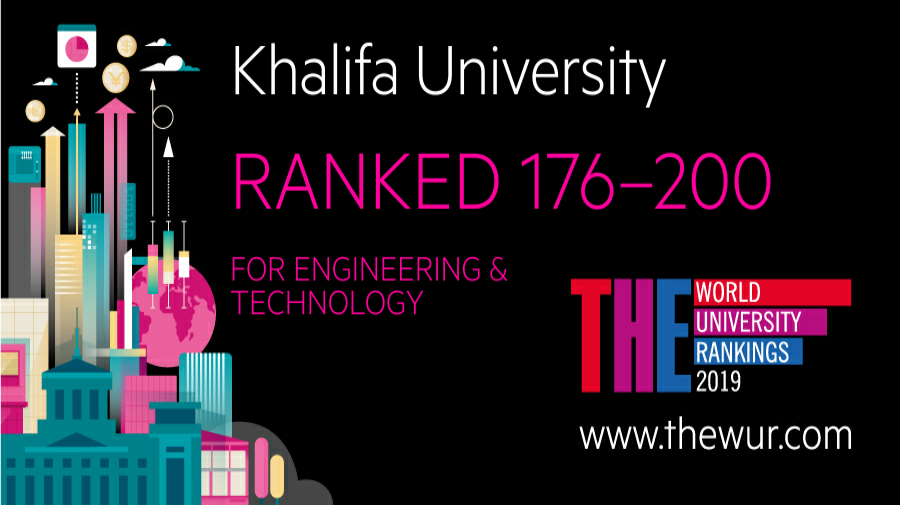
The 2019 Times Higher Education (THE) World University Subject Rankings for Engineering and Technology has placed Khalifa University in the 176-200 band out of over 900 institutions assessed across more than 70 countries. The rankings were announced on 29 November.

This is a significant improvement upon the previous status from the 2018 THE subject rankings for ‘Engineering and Technology’, when Khalifa University placed in the 201-250 band out of 500 international engineering and technology education institutions. This ranking highlights the
universities that are leading across electric al, mechanical, civil, chemical and general engineering subjects.

Khalifa University already shares the top spot with 11 other select international institutions in the ‘industry income’ pillar, which signifies knowledge transfer, according to the 2019 THE World University Rankings that was released in September 2018.

The ‘industry income’ pillar is one of the five criteria under which performance indicators are grouped. The ‘industry income’ or ‘knowledge transfer’ pillar measures institutions’ amount of research income from industry per academic staff – a proxy for their knowledge transfer.

Dr. Arif Sultan Al Hammadi, Executive Vice-President, Khalifa University of Science and Technology, said: “Our much improved status among the top 200 academic institutions in the 2019 THE World University Subject Rankings for Engineering and Technology strongly suggests our consistently impactful research outcome in this area. Steered by our faculty experts, we remain at the forefront in creating not only human capital but also in intellectual output, thereby contributing to the UAE’s ongoing knowledge economy transformation. We believe our latest rankings will further encourage us to expand our research scope and explore new areas for technology innovation, while raising our profile as an academic institution that plays a vital economical role.”

The performance indicators for assessing the universities are grouped into five areas – teaching, research, citations, international outlook and industry income.

Clarence Michael
News Writer
4 December 2018

UAE Space Agency and Khalifa University to train Bahrain Space Team

Agreement Signed at fifth Bahrain International Airshow

The UAE Space Agency has signed a Declaration of Principles with Bahrain’s National Space Science Agency (NSSA) and Khalifa University for the training of the Bahrain Space Team.

The signing took place on the sidelines of the fifth Bahrain International Airshow, held at the Sakhir Air Base in Bahrain on 14-16 November, under the patronage of His Majesty King Hamad bin Isa Al Khalifa, King of Bahrain.

The agreement was signed by His Excellency Dr. Ahmad Belhoul Al Falasi, Chairman of the UAE Space Agency and His Excellency Kamal Bin Ahmed Mohammed, Minister of Transportation and Telecommunications, who is also responsible for supervising Bahrain’s NSSA.

The parties will collaborate in training the Bahrain Space Team in satellite technology, design, construction, testing, launching, operations, and control, in addition to cooperating to build a CubeSat to be used for scientific research and carrying out a number of environmental studies.Students from the Kingdom of Bahrain will study in Khalifa University’s Master’s concentration in space systems and technology, where they will participate in a small satellite development project funded by the UAE Space Agency. The students will also work on their individual thesis topics related to space technology under the direct supervision of various expert faculty at KU.

Speaking about the agreement, Dr. Al Falasi said: “The signing of this declaration is a tangible result of the close relationship between the UAE and Bahrain in the arena of advanced sciences and will see us working together as strategic partners in the region’s nascent but rapidly developing space sector. The ties between our two nations already extend across the political, economic, social, and cultural domains and we have now added the exciting field of space to that inventory. Our growing collaboration in space science and exploration is a testament to our desire and commitment to bolster meaningful partnerships between our two great nations.

“The UAE space sector has reached an advanced stage that now sees it able to transfer knowledge to valued partners in the region. Our growing expertise in the field of space science, research, exploration and telecommunications is exemplified by the number of ambitious space programs and initiatives launched by the UAE. These include the UAE Astronaut Program, the Emirates Mars Mission’s Hope Probe project, Mars Scientific City and last month’s placing in orbit of KhalifaSat — an advanced piece of sophisticated technology that was designed and built entirely by Emirati engineers,” added Dr. Al Falasi.

“We are delighted to have signed this Declaration of Principles between the NSSA, the UAESA, and Khalifa University,” said H.E. Mohammed.

“First of all, I would like to thank the executive management of the UAE Space Agency for their efforts and constructive cooperation which has resulted in the signing of this declaration. This represents a significant step towards fulfilling the goals of the NSSA, in line with our strategic plans. We are looking forward to creating a skilled Bahraini team, familiar with the latest satellite technologies, and continuing to train them to expand their knowledge in this field. Such expertise will ensure the sustainability of NSSA projects and will provide a solid base of skilled technicians in this field.”

Dr. Mohamed Nasser Al Ahbabi, Director General of the UAE Space Agency added: “Cooperation between the UAE Space Agency and the Bahrain’s NSSA dates back several years, at a time when the space sector in both our countries witnessed unprecedented growth, prompted by significant government support. With the signing of this declaration, cooperation between our two countries will expand further. We will work to exchange expertise, experience, and information related to the space sector to realize our mutual objectives and interests.”

The strong UAE participation in the Airshow, alongside Saudi Arabia and Kuwait, is indicative of the long-standing relationships between the neighboring nations. Fourteen UAE companies specializing in aviation, space and defense are taking part in the Bahrain International Airshow.

Dr. Arif Sultan Al Hammadi, Executive Vice-President of Khalifa University, said: “The fact that the NSSA in Bahrain has selected the UAE and Khalifa University to embrace and prepare their students is a testament to the reputation that both the UAE and Khalifa University enjoy in the region and the world. This is due to what has been achieved in terms of space infrastructure and pioneering in government, academia and research. Khalifa University has a record of achievements as a pioneer in the field of space research in the UAE, especially since it offers academic programs such as bachelor’s and graduate programs related to space. We would like to thank both the Emirates Space Agency and the NSSA of Bahrain for having the confidence in us as a strategic partner and we look forward to what the students with come up with in terms of research and innovation that will contribute to the advancement of the space sectors in both the UAE and the Kingdom of Bahrain.”

18 November 2018

HE Hussain Al Hammadi Inaugurates MENA Region’s First IEEE Globecom 2018 in Abu Dhabi

Khalifa University Presents Eight ICT Research Innovations at 37th IEEE Global Communications Conference

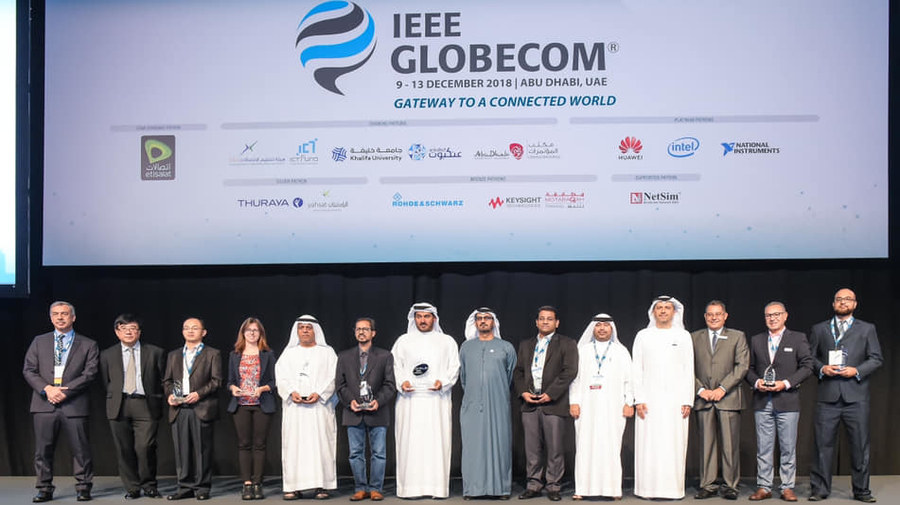
His Excellency Hussain bin Ibrahim Al Hammadi, UAE Minister of Education and Vice Chairman of the Board of Trustees of Khalifa University of Science and Technology, inaugurated the Middle East and North Africa (MENA) region’s first-ever IEEE Global Communications (Globecom) Conference in Abu Dhabi.

The 37th IEEE Global Communications Conference (Globecom 2018), one of the IEEE Communications Society’s two flagship conferences dedicated to driving innovation in nearly every aspect of communications, was held on 9-13 December at the Abu Dhabi National Exhibition Center (ADNEC). Themed ‘Gateway to a Connected World’, the conference offers five full days of original paper presentations, tutorials, workshops, keynotes, demonstrations, industry sessions and social events designed to further career opportunities and in-depth understanding of the latest communications advancements worldwide.

Khalifa University’s faculty and students presented eight research innovations in the ICT sector at this international telecommunications-focused conference, alongside nearly 1,000 technical and research papers. Experts from industry leaders including Intel Corporation, Nokia Bell Labs, Huawei Wireless, and Canadian telecommunications company TELUS, addressed the event.
The UAE’s telecom operator Etisalat is the ‘star diamond’ sponsor for Globecom 2018, while =Khalifa University is one of the ‘diamond’ sponsors.

Dr. Arif Sultan Al Hammadi, General Chair of Globecom 2018 Conference, and Executive Vice-President, Khalifa University of Science and Technology, said: “With our partners, we are delighted to bring this major global conference for the first time to the Middle East and North Africa region, gathering distinguished speakers from industry, academia and government sectors. These professionals will share their expertise and exchange novel ideas that will shape future generations of communication technologies. We believe the Globecom 2018 conference will showcase the innovation strength of the UAE and the region in various telecommunications
disciplines.”

Some of the innovations Khalifa University is presenting include the development of key enabling techniques for the next generation wireless networks, mobile agents integrated with web services for use in personalized healthcare, smart homes, big data analytics and e-commerce, and a novel approach to trace unknown tweets to their actual authors.

This five-day event included six keynote speakers highlighting the state-of-the art advancements in wireless communications, 5G, and the Internet-of-Things, among other emerging topics in telecommunications systems. In addition to the main symposia, IEEE Globecom 2018 featured workshops on emerging and important topics in the field, which will be held on the first and last day of the conference.

Keynote speakers included Bell Labs President and Nokia Corporate Chief Technology Officer, Marcus Weldon; Huawei Fellow and Huawei Wireless Chief Technology Officer Dr. Wen Tong; Vodafone Chair and Technical University Dresden Professor Gerhard P. Fettweis; and Intel Fellow in Network Platforms Group and Chief Technologist for Network Infrastructure at Intel Corporation Udayan Mukherjee.
The conference received a total of 2,562 paper submissions from 76 countries, out of which 999 papers have been accepted – corresponding to an acceptance rate of 38.9%.

Clarence Michael
News Writer
12 December 2018

KU Closes Out 2018 with Diverse Achievements

Milestones Include New Technology Initiatives, Collaborations, Scientific Advancements, Creation of Intellectual and Human Capital

For Khalifa University, 2018 proved to be another outstanding year, with global rankings, research milestones, academic achievements, special honors and external collaborations.

The university closed the year a win in the Pride of Zayed Award 2018, where it was recognized with the UAE Pioneers Award for being the national hub for scientific research and introducing meticulously planned programs that meet the employment market requirements in Abu Dhabi and the UAE.

In terms of global rankings, Khalifa University ranked among the top 200 academic institutions worldwide according to the Times Higher Education (THE) 2019 World University Subject Rankings placed it in the 176-200 band for ‘Engineering & Technology’. The university already tops the categories of ‘Research’ (score at 29.1) and ‘Industry Income’ (perfect score of 100). At the same time, the 2019 Quacquarelli Symonds (QS) ‘Top 50 Under 50’ rankings placed Khalifa University top not only in the UAE but also in the Middle East and North Africa (MENA) region. In addition, it is ranked 33rd in the listing of the world’s top young universities.

Dr. Arif Sultan Al Hammadi, Executive Vice-President, Khalifa University of Science and Technology, said: “Over the year, our faculty and students have contributed significantly through publishing technical research papers at various conferences, paving the way for the university’s rising status in global academic rankings. By continuously driving research and innovation in all economic fields, especially in the UAE’s strategic sectors, Khalifa University remains a key contributor to not only scientific development but also in the creation of intellectual and human capital for the country and the region. In the coming years, we aim to further intensify our efforts and achieve milestones that will contribute to the UAE’s drive towards transforming itself into a knowledge-based economy.”

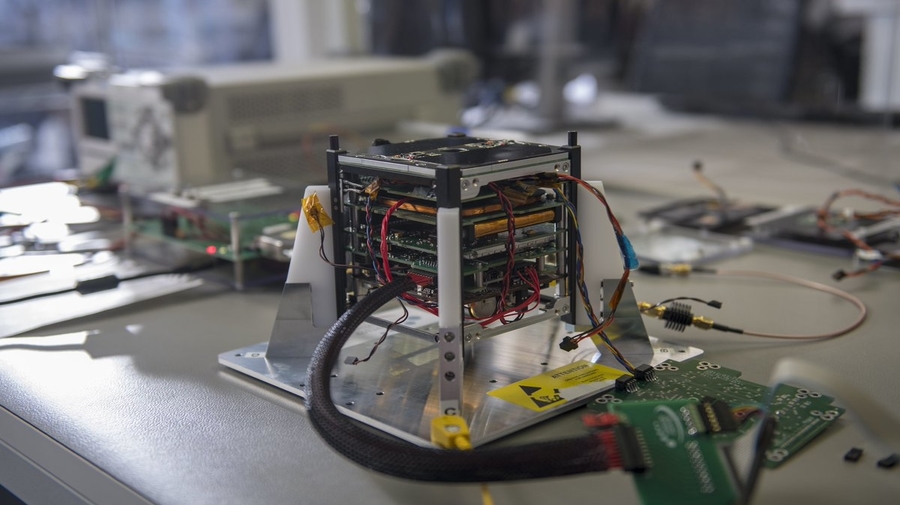
Khalifa University also launched its first CubeSat designed, developed,and built by its students, the MYSAT-1,to the International Space Station (ISS), from where it will be released into its orbit soon.

The university also announced the launch of the second edition of the Mohamed Bin Zayed International Robotics Challenge (MBZIRC), which contributes towards KU’s commitment to promoting and rewarding new concepts, particularly in robotics and artificial intelligence as smart city solutions.

The KU College of Medicine and Health Sciences was also announced in 2018, which will begin functioning from Fall 2019,marking the next stage for Khalifa University’s expanded academic offerings. A Pre-Medical Bridge program has already started preparing students for the medical degree as of Fall 2018, which is also when KU launched its new BSc in Chemistry.

The 2018 year also saw the roll-out of the new branding for Khalifa University of Science and Technology to represent its new augmented mission and vision, incorporating the UAE’s three major science and technology universities, which were merged in February 2017.

The university’s major output for 2018 was more than 1,000 graduates, who received their degrees in a two-phased graduation that covered students all three campuses.

KU also debuted first sports bicycle manufactured in the UAE with 3D printing and composite materials, through a joint funding from Khalifa University, Abu Dhabi Sports Council and Mubadala’s Strata Manufacturing, and developed at the Aerospace Innovation Research Center (ARIC) was another key highlight of the year.

The 3D manufactured bicycle was just one of many novel IP achievements from KU in 2018. At present, the university has more than 70 patents and 219 invention disclosures and was the single biggest contributor to the UAE’s total number of patents in 2017, having registered approximately 30.3% of the total registered for the UAE that year.

Besides the academic and research endeavors, Khalifa University also puts emphasis on nurturing talented youth and supporting them in their higher studies through various scholarship programs. One such program is the Buhooth Scholarship Program that offers Master’s and Doctorate scholarships to UAE Nationals with the aim of promoting graduate studies and research, as well as developing specialized human capital. Vindicating the beneficial nature of the Buhooth scholarship program, students have proved their determination in bringing more laurels to the university.

During the year, students have brought honor to Khalifa University through their outstanding performance in various areas. Two Computer Engineering undergraduate students successfully developed prototype apps for patient care as part of their internship program at Sheikh Zayed Institute for Pediatric Surgical Innovation at Children’s National Medical Center in Washington DC. Khalifa University also works collaboratively with a number of organizations in different countries including Germany, the United States, Italy, France, Japan, Ireland and Korea, to secure internship placements, sending around 30 students overseas every year.

Within the UAE, more than 400 students interned with various government and private sector organizations for a minimum of eight weeks during the summer in 2018.

KU also led many international exhibitions and conferences like the 37th IEEE Global Communications Conference (Globecom), which was held in the Middle East and North Africa region for the first time and saw renowned global ICT sector leaders present novel innovations in the ICT sector.A memorandum of understanding (MoU) was also signed with the IEA Greenhouse Gas R&D Program to host the 15th International Greenhouse Gas Control Technologies Conference (GHGT-15) in Abu Dhabi in 2020.

Key external collaborations achieved by KU in 2018 included the Joint Innovation Laboratory of Artificial Intelligence for Clean Energy (“The Lab”) with Alibaba Cloud, the inauguration of the Secondary Standards Dosimetry Laboratory (SSDL) of the Federal Authority for Nuclear Regulation (FANR) at the Main Campus premises, an MoU with National Research Council of Science and Technology (NST) of Korea to further expand a Korea-UAE science and technology collaboration, and another MoU with the Korea Advanced Institute of Science and Technology (KAIST) to establish a research collaboration program and help build skilled human capacity.

Clarence Michaels

News Writer

2 January 2019

KU, Transco and Manitoba Hydro International to Develop Software to Monitor Clean Energy Integration

Collaboration to Include Industrial-Level ‘Stability Assessment, Visualization and Enhancement’ Software Tool


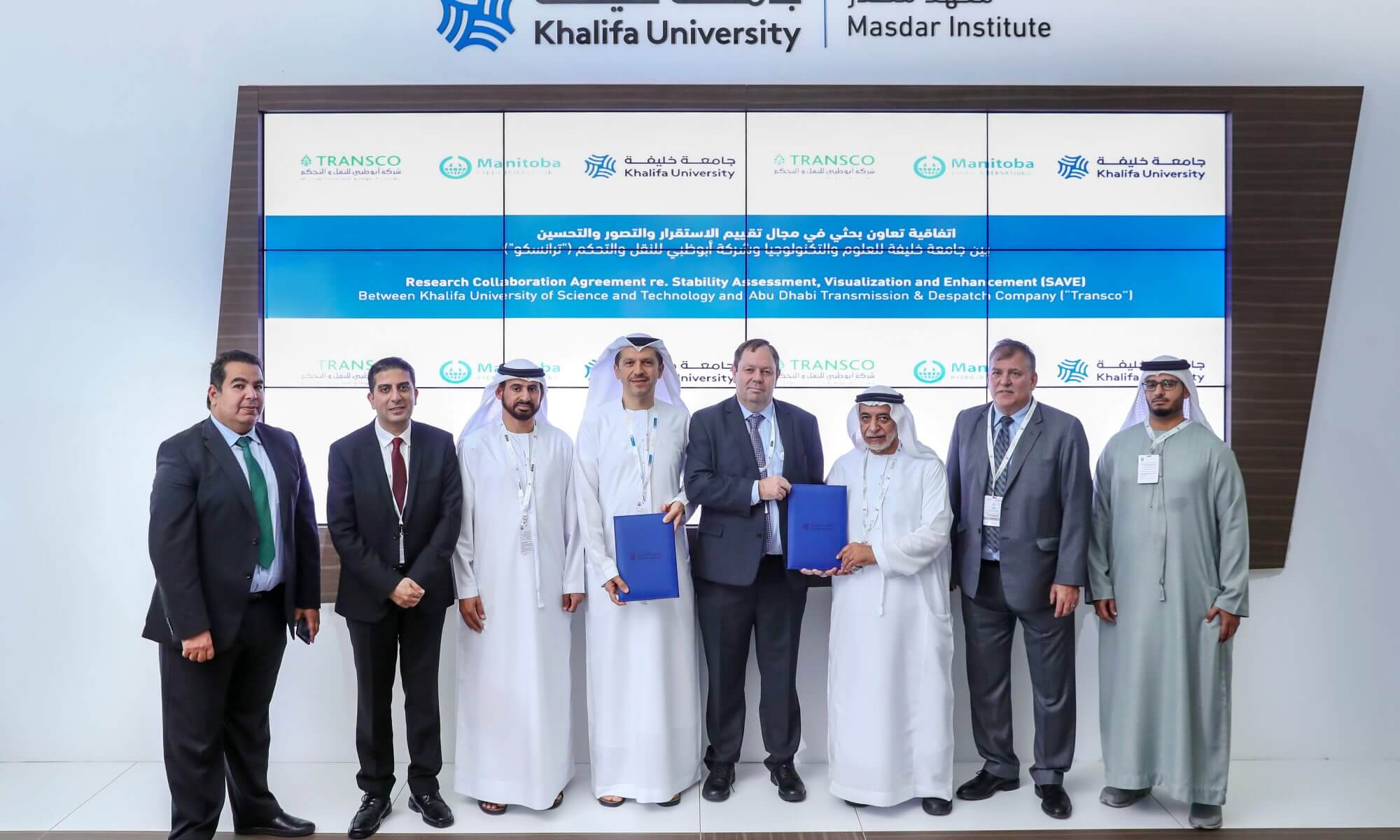
Khalifa University, the Abu Dhabi Transmission and Dispatch company (TRANSCO), a subsidiary of Abu Dhabi Water and Electricity Authority (ADWEA), and the Manitoba Hydro International Ltd (MHI) of Canada, have signed a collaboration agreement today for building an industrial-level software to monitor, predict, and interact with network operators in real time and enable renewable energy integration with the UAE power system.

The collaboration was announced during the World Future Energy Summit (WFES) 2019 that is being held as part of the Abu Dhabi Sustainability Week (ADSW) 2019 at the Abu Dhabi National Exhibition Center (ADNEC) from 12-19 January. The agreement signing ceremony was attended by KU Executive Vice-President Dr. Arif Sultan Al Hammadi, Dr Bruce Stedall, Acting Managing Director, TRANSCO, Leo St. Hilaire Senior Manager, and Jamal Al Dharif, Senior Executive, from MHI’s UAE Office, officials, faculty members and students.

The industrial level software – ‘Stability Assessment, Visualization and Enhancement’ (SAVE) tool – will utilize real-time measurements to evaluate the transmission network stability through the development of state-of-the-art mathematical methods combined with a data analytics based classification engine to precisely estimate the domain of stability and to predict the transient margins.

Furthermore, a visualization system will be developed by a team of scientific researchers to support human-in-the-loop classification, diagnosis of the transmission system events, and the visualization of system stability. The integrating modules of SAVE tool that current researchers have already been investigating, have accumulated comprehensive expertise, enabling them to reach industrial level platforms.

Dr. Arif Sultan Al Hammadi, said: “This industry-academia collaboration led by Khalifa University with TRANSCO and Manitoba Hydro International reflects the partners’ commitment to develop innovative technologies that can integrate renewable energy with the existing systems. Power system stability is particularly relevant given the objective of Abu Dhabi and the UAE to significantly increase the penetration of renewable energy. The recent completion of GCC power interconnections between the UAE, Oman and Saudi Arabia has significantly highlighted the need for inter-area oscillations (IAOs) for greater stability. We believe this collaboration that lays emphasis on innovations such as the SAVE tool, will tackle the complexity of the challenges in integrating renewable energy with the existing power system.”

Dr. Stedall said: “We are very pleased and excited to be working with Khalifa University and Manitoba Hydro International on this project. The generation portfolio is going to change considerably in the coming years to include substantial volumes of renewable energy sources as Abu Dhabi and the wider UAE migrate to a low carbon economy. The project will support TRANSCO by ensuring that certain technical challenges resulting from the changes in the generation portfolio associated with security and stability of the system can be managed.  As part of the project, we will also be developing the knowledge and capability of our future engineers to cope with systems employing large penetration of renewable technology.”

Dr. Dharshana Muthumuni, Managing Director, Power Systems Technology Center at MHI, said, “MHI is proud to partner with Khalifa University and TRANSCO on this significant initiative that will undoubtedly help the integration and reliable operation of power systems with large scale renewable energy sources. We are particularly pleased to collaborate with Khalifa University’s highly-skilled team, with whom we have had a long and thriving association.”

Dr. Mohamed El Moursi, Professor, Electrical and Computer Engineering Department at Khalifa University, is the Principal Investigator and the Project Manager, He is a specialist in renewable energy systems (photovoltaic and wind) and smart grid innovations. He will be joined by Dr. Surour Mohamed Alaraifi, main researcher from TRANSCO, who, during his PhD studies at Khalifa University under Dr. El Moursi, developed novel techniques to study and predict the dynamics in large-scale networks that will serve as one of the key elements in this research project. Others include Dr. Ahmed Atiah, Power Network Planning & Studies Section Manager, TRANSCO, as well as Dr. Dharshana Muthumuni, Managing Director, Manitoba High Voltage Direct Current (HVDC) Research Center, and Dr. Farid Mosallat.

The research team working in this project includes Dr. Mohamed  El Moursi, Dr. Ehab El-Saadany, Dr. Khalifa Al Hosani, Dr. Bashar Zahawi, Dr. Khaled Elbassioni, Dr. Wei Lee Woon and Dr. Davor Svetinovic, from Khalifa University.

The project requires complex multi-disciplinary integration of power system stability, power electronics, renewable energy systems, system control, data mining/ analytics, algorithms/ optimization and artificial intelligence.


Clarence Michael

News Writer

15 January 2019


World’s First Commercial Flight Fueled from Saltwater Plants

Khalifa University, Etihad Airways, Boeing, ADNOC, Safran, GE and BAUER Resources celebrate a major milestone in developing a comprehensive sustainable aviation fuel value chain

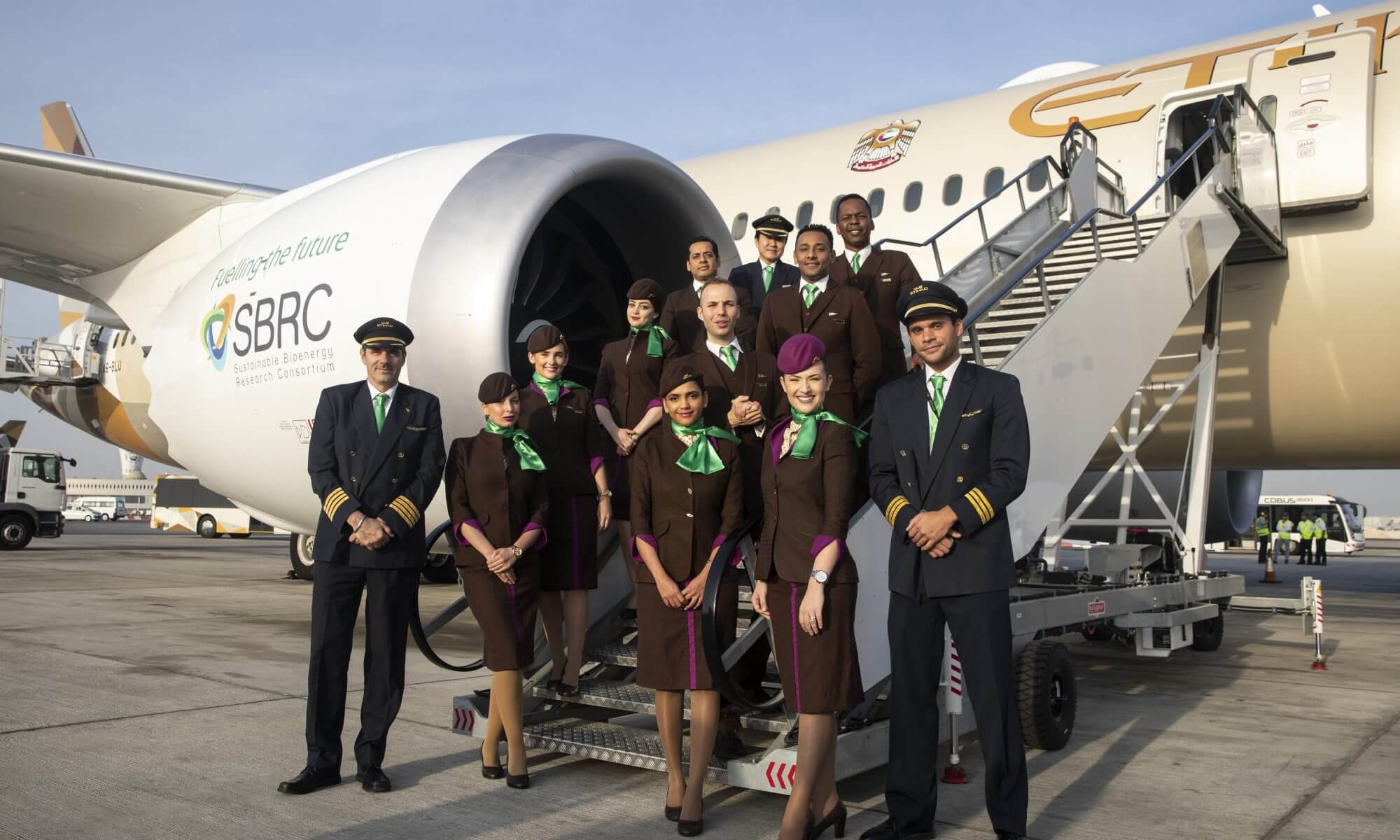
The Sustainable Bioenergy Research Consortium (SBRC), a non-profit entity established by Masdar Institute that is part of Khalifa University of Science and Technology and supported by Etihad Airways, The Boeing Co, ADNOC Refining, Safran, General Electric and BAUER Resources, announced the world’s first successful commercial flight on an Etihad Airways Boeing 787 using locally produced sustainable fuel.

The flight from Abu Dhabi to Amsterdam marked a major milestone in the development of a clean, alternative aviation fuel to reduce carbon emissions. The initiative also addresses food security in the United Arab Emirates through the farming of seafood as a core element in the process.

The SBRC partners have been working together to prove the concept of a comprehensive value chain that is centered around the Seawater Energy and Agriculture System (SEAS). This is a synergistic industrial platform that supports the aviation sector, the oil and gas industry, food production and the creation of a new agricultural alternative in the UAE.

His Excellency Dr Thani bin Ahmed Al Zeyoudi, Minister of Climate Change and Environment, said: “The UAE’s visionary leadership is strongly committed to positioning the country as a global hub for innovation and sustainability. In this context, productive cross-disciplinary public-private partnerships are crucial to fueling research and development efforts and creating game-changing innovations that enable a more sustainable future.

“Deep decarbonization of energy-intensive industries has a ripple effect on food security and climate action. Clean, alternative aviation fuels are an innovative and sustainable solution to significantly reducing harmful carbon emissions. The UAE is proud to be a pioneer in this domain.”

Her Excellency Mariam bint Mohammed Saeed Hareb Al Mehairi, Minister of Food Security in the UAE, said: “This proof of concept is a ground-breaking development that confronts local, regional and global challenges of energy, water and food security. The system’s production of seafood offers a sustainable source of nutrition for the UAE into the future.”

Etihad Airways has been at the forefront of aviation biofuel research in the region and this marks the first time that a flight has been operated on fuel derived from plants grown in saltwater.

Tony Douglas, Group Chief Executive Officer Etihad Aviation Group, said: “This is a significant milestone for the UAE and its key industries. Etihad is fully committed to this project which demonstrates a successful proof of concept that is local, viable, cost-effective and sustainable.

“Decarbonisation is important across the aviation industry and, together with our partners, Etihad is proud to be at the forefront of this pioneering new research.”

Sustainable fuel for the flight was derived from oil in Salicornia plants, which were grown on the two-hectare SEAS farm in Masdar City. The SEAS is the world’s first desert ecosystem designed to produce fuel and food in saltwater. Fish and shrimp raised at the facility provide nutrients for the plants as well as contribute to the UAE’s food production.

Dr Arif Sultan Al Hammadi, Executive Vice-President, Khalifa University of Science and Technology, said: ““The landmark achievement by the Sustainable Bioenergy Research Consortium, part of Masdar Institute at Khalifa University, and partners marks a new beginning for the use of clean fuel for air travel. Khalifa University is proud to be part of the consortium, driving research and innovation, while contributing to creating a sustainable biofuel value chain, supporting the UAE’s strategic objectives in energy and food sectors. The collaboration partners and Masdar Institute researchers have contributed significantly to achieve this success and we believe the use of biofuel for this commercial flight will make a compelling statement that impacts stakeholders in the aviation, energy and transportation sectors.”

Dr Al Hammadi added: “As a leading research institution in the region focused on providing cutting edge technologies in clean energy, Masdar Institute at Khalifa University remains committed to continue with its mandate to produce biofuel, clean energy, and sustainable technologies for reducing carbon emissions, as well as water and environment-related research.”

Using sustainable feedstock to produce the fuel significantly reduces life-cycle carbon dioxide emissions compared to fossil fuel. The biofuel is blended directly with jet fuel and does not require any modifications to aircraft, engines or airport fuelling delivery systems. The unique initiative also bolsters the oil and gas industry by using existing refining infrastructure, with the potential to become an important new option for sustainable aviation fuel in the future.

ADNOC Refining has played a fundamental role, providing the expertise and infrastructure to ensure the effective refining of the seed oil to meet stringent jet fuel standards. ADNOC Distribution has also provided an essential element of the project through the blending and delivery of the biofuel to the aircraft.

UOP-Honeywell’s (a founding member of the SBRC) Ecofining technology was used in the refining process of the oil and recognition is also given to Abu Dhabi Vegetable Oil Company (ADVOC) for essential assistance in the pre-treatment phases.

Jasem Al Sayegh, Chief Executive Officer ADNOC Refining, said: “We are proud of the role that ADNOC Refining is playing in carrying out this research for the SBRC pilot project. Today represents a significant step forward on the journey towards finding a final solution for commercial-scale aviation biofuel.”

Approximately 160,000 passenger flights have flown on a blend of sustainable and traditional jet fuel since the first biofuels were certified for commercial use in 2011. Sustainable aviation fuel represents a significant opportunity to help aviation meet its goals to cap the growth of carbon emissions by 2020 and cut levels to half of what they were in 2005 by 2050.

Sean Schwinn, Vice President of Strategy and Market Development for Boeing International, said:“Etihad’s flight proves SEAS is a game-changer that can substantially benefit air transport and the world. The research and technology being developed shows significant promise to transform coastal deserts into productive farmland supporting food security and cleaner skies.”

Operated by the SBRC, the SEAS pilot facility became operational in March 2016. Salt-tolerant halophyte plants that thrive in desert conditions and do not require fresh water or arable land to grow are nurtured there. After wastewater from the fish fertilizes the plants, it is diverted into a cultivated mangrove forest. This further removes nutrients and provides valuable carbon storage before the naturally filtered and treated effluent is discharged back into the sea.

16 January 2019

KU, Air Liquide, and Al-Futtaim Motors Release Study on Hydrogen Mobility in UAE


Study Outlines Favorable Prospects for Hydrogen Mobility in UAE

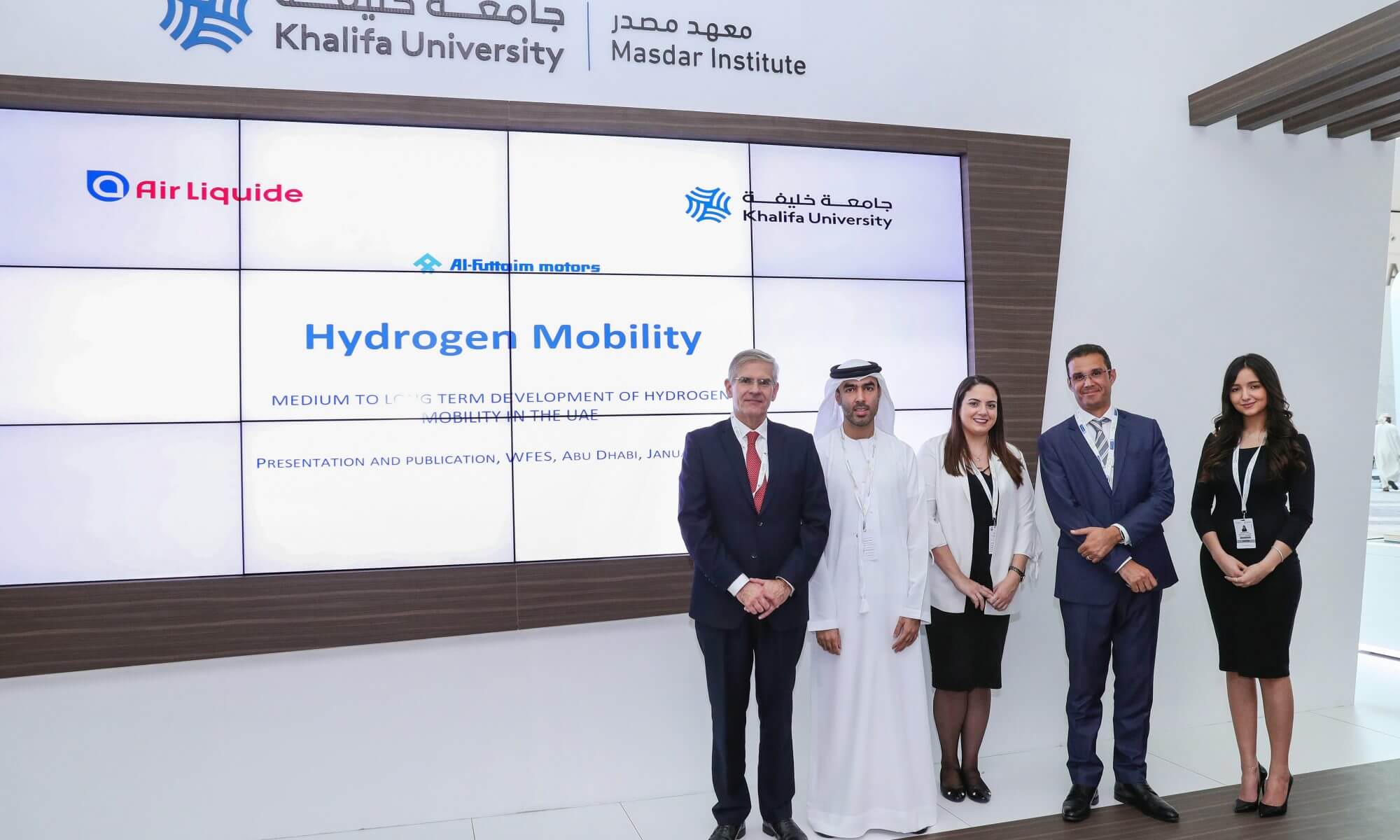
Air Liquide, Khalifa University of Science and Technology and Al-Futtaim Motors released a joint study during Abu Dhabi Sustainability Week 2019, on the ‘Medium to Long Term development of Hydrogen Mobility in the UAE’. This collaborative study outlines the contribution of hydrogen to the energy transition and demonstrates the favorable prospects for hydrogen mobility in the UAE.

The study demonstrates that hydrogen mobility in the UAE has a substantial potential to develop into a major economy for the country, and can contribute to the achievement of its clean energy goals, in line with the UAE’s Vision 2021. The study was conducted by Maram Awad, a Khalifa University graduate student during her summer internship with Air Liquid. Awad was guided by Olivier Boucat of Air Liquide, and Dr Ahmed Al Hajaj, Assistant Professor, Chemical and Environmental Engineering, Khalifa University.

The study reiterates the UAE’s commitment to diversifying the energy sources, and calls for the pivotal collaboration of the various public and private players for a successful deployment of hydrogen mobility. It also demonstrates the requirement for an initial focus on fleet vehicles, such as buses, trucks and taxis, which would generate enough hydrogen need for an optimized production scale. The use of local sources of hydrogen in addition to excess hydrogen produced in various industries, such as refining, can also contribute to very competitive costs of hydrogen for commercialization.

Air Liquide is leading the hydrogen supply for the Hydrogen Mobility market in the UAE, with ongoing projects to develop the hydrogen infrastructure, connecting hydrogen production sources and utilization routes.

Hydrogen is an alternative to fossil fuels in addressing the clean transportation challenge while improving air quality. Used within a fuel cell, hydrogen combines with oxygen from the air, to produce electricity, with water as the only byproduct. The fuel cell is used to convert hydrogen into energy to run an electric motor in vehicles known as Fuel Cell Electric Vehicles (FCEV). FCEVs are considered complementary to Battery Electric Vehicles (BEV), especially in large fleets of vehicles, in heavy duty vehicles and in providing greater autonomy in extreme climates, where BEVs are less efficient. A FCEV can be refuelled as quickly as an internal gas or diesel combustion engine vehicle, hence allowing for optimum flexibility of use.

Hydrogen as a transportation fuel has gained momentum globally for its emission-free property and its ease of use. The deployment of hydrogen powered vehicles is already in progress and expanding in the United States, Europe, Japan and Korea, and is now being introduced in the UAE.

As a leading research-based institution in the region focused on providing cutting edge technologies in clean energy and sustainability, Khalifa University, through Masdar Institute, remains committed to obtaining solutions for carbon mitigation and climate change especially through innovations in CO2 capture, biofuel, waste-to-energy, energy storage, desalination and solar power.

Air Liquide and Al-Futtaim Motors inaugurated the Middle East’s first hydrogen station in Dubai, in October 2017, to support the deployment of the FCEVs in the UAE. Once deployed on a larger scale, the Fuel Cell Electric technology has the potential to significantly reduce the UAE’s dependence on oil and lower car-generated pollution levels.


Abu Dhabi

15 January 2019

KU and Wahaj Solar Sign Agreement to Test Innovative Prototype at Masdar Institute Solar Platform


10-meter Diameter Prototype to Help in Energy Storage, High-Efficient Power Generation, Desalination and Other Applications

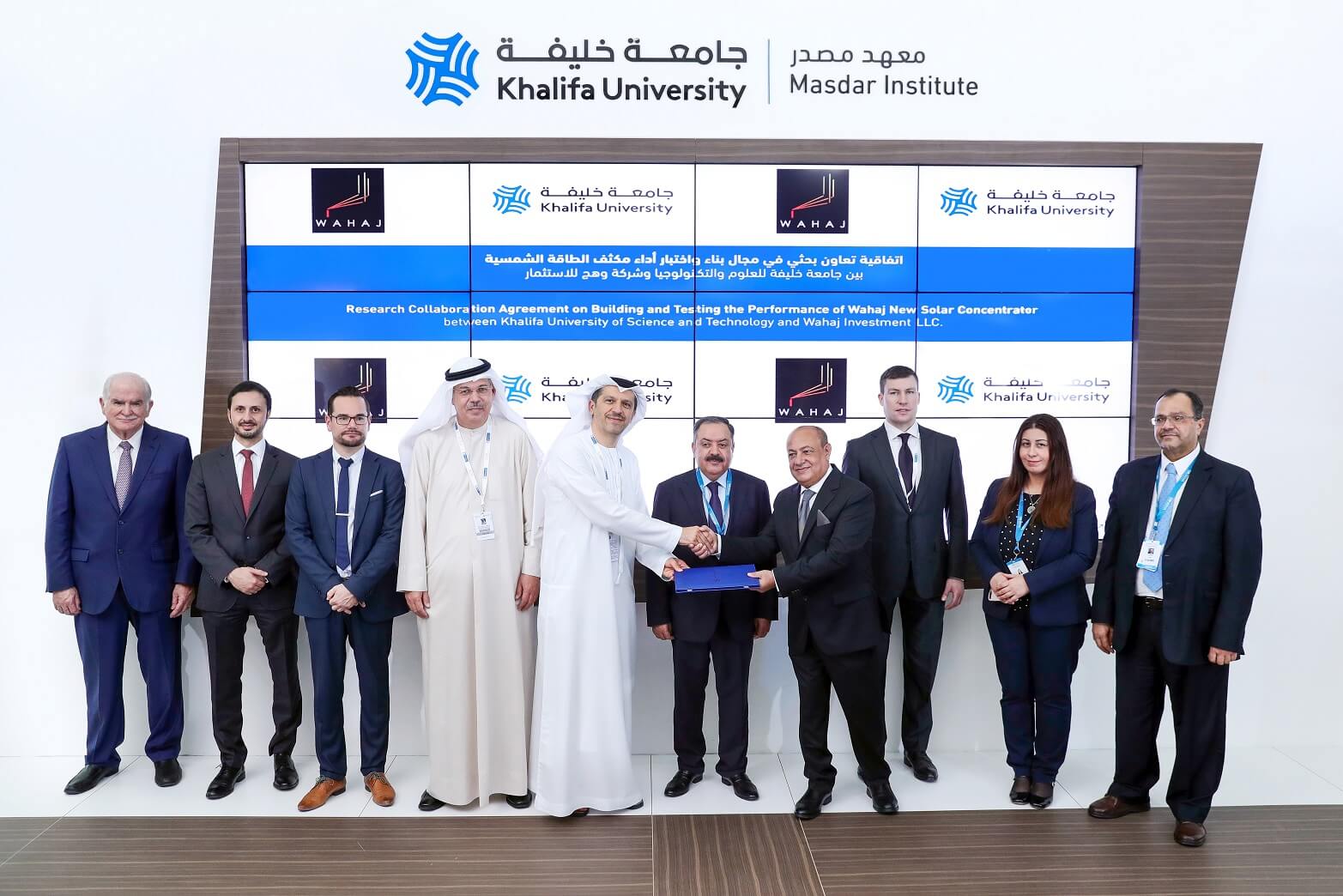
Khalifa University and Wahaj Solar (Wahaj Investment L.L.C) have signed an agreement to test and verify a patented prototype in the Concentrated Solar Power (CSP) industry at the Masdar Institute Solar Platform (MISP).

The 10-meter diameter high-flux solar furnace – the first medium-scale point solar concentrator –can focus solar energy efficiently to a lower point fixed on the ground generating a very high temperature which is easily accessible. This system is unique since the focal point is fixed on the ground while the solar disk turns around it throughout the day. This would result in many applications including low cost solar energy storage allowing for 24/7 electricity production, high efficiency in electricity production, hydrogen generation from water, desalination, as well as melting metals or sand to produce glass.

The project period is one year during which the performance of the concentrator will be tested analyzed, and certain applications demonstrated by a team led by Dr. Nicolas Calvet, Assistant Professor, College of Engineering, and Chair of the Masdar Institute Solar Platform – Khalifa University. The invention has already received favorable reviews from experts in reputable international research institutes worldwide.

Dr Arif Sultan Al Hammadi, Executive Vice-President, Khalifa University of Science and Technology, said: “The MISP is a unique world-class research facility, pushing the boundaries by being multipurpose, modular and the first-of-its-kind, bringing niche capabilities to the UAE. We welcome collaborations with industry partners that will result in cutting-edge solutions in solar power, thereby facilitating faster adoption of sustainable energy technologies. We believe testing of this innovative prototype from Wahaj Solar will further demonstrate MISP’s capabilities and help in the development of CSP components, and high-temperature thermal energy storage (TES) solutions.”

Motasim Al Daour, the majority shareholder at Wahaj Solar said: “We are working with the Masdar Institute Solar Platform at Khalifa University because we would like to take advantage of the available expertise and resources at this world class facility. In collaboration with Khalifa University, we are keen launch this potentially breakthrough invention from the UAE to the entire world in the hope of considerably contributing to the progress of the CSP technology as an alternative clean source of energy.”

The technology is already patented by Wahaj’s Dr Ayman Al-Maaitah in the US, European Union, GCC and at the World Intellectual Property Organization (WIPO) with priority protection in 150 countries worldwide.

The MISP is a unique tool for developing large scale TES systems for on-demand and ‘dispatchable’ electricity production. Initially built as a demonstration plant in 2009, the facility has been significantly modified and extended by Masdar Institute in 2014 to become a user research facility also valued by industry, capable of testing large scale TES units up to 500 kWh storage capacity. This innovative and educative research facility has already attracted several international collaborations.

Clarence Michael

News Writer

20 January 2019

KU Ranks 13th out of 442 in THE Emerging Economies University Rankings 2019

Only University from Middle East and North Africa Region to be Among Top 15

Khalifa University has become the only university in the Middle East and North Africa (MENA) region to be ranked in the top 15 in the Times Higher Education (THE) Emerging Economies University Rankings 2019, which placed the university 13th out of 442 universities from 43 countries. The university has edged up slightly from 15th position in the same listing last year.

Dr. Arif Sultan Al Hammadi, Executive Vice-President, Khalifa University of Science and Technology, said: “The latest THE Emerging Economies University Rankings 2019 once again reiterate our status as the premier institution for not only higher learning, but for cutting-edge research and innovation. Our university has been consistently rising in global rakings, exceeding other local, regional and international institutions, on the basis of research excellence and faculty expertise. We believe this new ranking will motivate us to further move up the notches and reinforce our role as a leading research-oriented academic institution with diverse specializations.”

Khalifa University currently is top-ranked in ‘Industry Income’ in the Arab world, while remaining among the top 200 for Engineering & Technology subjects. It also placed in the 301-350 berth overall by the THE rankings.

With a total of 16 specialized research centers focused on advanced technology solutions across various industry sectors, Khalifa University remains in the lead in volume and quality of cutting-edge innovation. Its two research institutes – Masdar Institute and Petroleum Institute – oversee research in two main areas – sustainable technologies, and hydrocarbons. Such range and diversity in research provides Khalifa University a special status to generate valuable human and intellectual capital.

A growing number of industry leaders in the corporate and government sectors find Khalifa University a more suitable institution to partner with and produce opportunities for innovation. This has helped the university to obtain research contracts worth over US$50 million with more than 50 organizations in the UAE, regionally and globally.

The current THE rankings further strengthen the already robust profile of Khalifa University. The recent 2019 THE World University Subject Rankings for Engineering & Technology placed Khalifa University in the 176-200 band, placing the university among the top 200 out of over 900 institutions assessed across more than 70 countries. This follows Khalifa University’s 12th placement in the THE Young University Rankings 2018: Millennial Universities Millennial Ranking and 49th in the Young University Ranking.

Clarence Michael

News Writer

27 January 2019