
Array of Renowned Speakers to Address Members of Masdar Institute’s YFEL Program at WFES 2014

Abu Dhabi-UAE: 16 January, 2014 – Masdar Institute of Science of Technology, an independent, research-driven graduate-level university focused on advanced energy and sustainable technology, today announced an array of globally renowned government and non-government officials, as well as top industry professionals will address members of the Young Future Energy Leaders (YFEL) program, a Masdar Institute outreach initiative, during the World Future Energy Summit (WFES) 2014.

The YFEL program has unveiled a packed schedule of events for the seventh edition of WFES that will be held under the patronage of His Highness Sheikh Mohammed Bin Zayed Al Nahyan, Crown Prince of Abu Dhabi and Deputy Supreme Commander of the UAE Armed Forces. The world’s foremost event dedicated to renewable energies, energy efficiency and clean technologies will be held from 20-22 January at the Abu Dhabi National Exhibition Centre.

Dedicated to encouraging and inspiring young professionals and future leaders, YFEL will host several events at its pavilion where prominent speakers from government and industry will share their experience and knowledge. Throughout the Summit, the YFEL pavilion will feature presentations on clean energy, host debates and showcase sustainability projects. In addition, various industry leaders and experts from non-government organizations (NGOs) will address and interact with the YFEL members.

The YFEL program is being sponsored by Abu Dhabi National Oil Company (ADNOC) for the fourth consecutive year. His Excellency Sultan bin Rashed Dhaheri, Member of the Federal National Council and the Chairman of the Committee on Finance and Economic Council, reiterated his support to the YFEL program for two consecutive years with a contribution of US$1 million each year. In 2011, Mohammed Bin Kardous Al Ameri, Emirati philanthropist was the first enthusiastic private sponsor of this outreach initiative with a contribution of AED1 million. Other sponsors have also contributed to the YFEL program over the years.

Dr Lamya Fawwaz, Executive Director, Public Affairs, Masdar Institute, said: “The World Future Energy Summit offers YFEL members the right platform to network with global energy industry professionals and government leaders. YFEL’s agenda during WFES 2014 will be rich in content with diverse activities including keynote speeches and discussions on clean energy and sustainability by industry experts. The continuous support of the UAE leadership has ensured that programs such as YFEL remain beneficial to the evolution of youth and young professionals.”

Dr. Erik Brynjolfsson, Professor – Sloan School of Management, MIT, and Michael Liebreich, CEO of Bloomberg New Energy Finance (BNEF) will be the keynote speakers on the first and second days at the YFEL pavilion.

On the first day, Dr. Steve Griffiths, Executive Director, Institute Initiatives and Professor of Practice at Masdar Institute, will moderate a debate on the timeframe for placing legally binding limits on some countries to curb greenhouse gas emissions. The first day’s agenda for YFEL members will include attending a WFES plenary session about clean energy business that will be moderated by Dr. David Sandalow, Center on Global Energy Policy, Columbia University, USA. The speakers will include Christof Ruehl, Group Chief Economist, BP Global, Maria van de Hoeven, Executive Director, IEA, Jean-Pascal Tricoire, CEO of Schneider Electric, France, and Marie-Jose Nadeau, President of World Energy Council.

For the YFEL members, the second day’s activities will include attending a WFES plenary session titled ‘The Global Energy Context’ that will be moderated by Paolo Frankl, Head of Unit, Renewable Energy Division, International Energy Agency, France. Experts who will share their experience at the session will include Deb Frodl, Global Executive Director, Ecomaginaton, GE, USA, Hiroshi Kuniyoshi, Executive Director, New Energy and Industrial Technology Development Organization (NEDO), Japan, Santiago Seage, Chairman & CEO, Abengoa Solar, Spain, and Arthuros Zervos, Chairman & CEO, Public Power Corporation S.A., Greece, and Chairman REN21.

Other events of the day will include a debate on whether countries with huge populations should implement measures against issues that impact worldwide sustainability. It will be moderated by Dr. Ken Volk, Head of Outreach, Masdar Institute.

The day’s activities for the YFEL members will include attending two parallel sessions organized as part of WFES 2014. The session on ‘Energy and Society – Transforming Cities’ will be moderated by Rend Stephan, Partner and Managing Director, Boston Consulting Group, Middle East, UAE. Speakers will include Anthony Mallows, Director, Masdar City, UAE, Maryke van Staden, Senior Manager, Low Carbon City Agenda ICLEI, Germany, and Jos Verbeek, Lead Economist, Development Prospects Group, World Bank.

YFEL members will also attend the WFES session about solar projects in the MENA region will be moderated by Tarek El Sayed, Vice-President, Booz & Company, Lebanon. Speakers will include Yousif Al Ali, Director, SHAMS, UAE, Christopher Burghardt, Vice-President, Business Development, Europe, Middle East and Africa, First Solar GmbH, Germany, Indraj Mangat, Partner Financial Institutions Group, Eversheds, UK, Daniel Zywietz, Managing Director, Ambata Capital Middle East, UAE, and Rajit Nanda, Chief Investment Officer, ACWA Power, Saudi Arabia. The YFEL graduation ceremony is scheduled for the second day of the event.

The concluding day’s WFES plenary session for YFEL members will focus on inspiring the future generation. To be moderated by James Cameron, Founder & Executive Chairman, Climate Change Capital, UK, the speakers will include Dr Nawal Al-Hosany, Director of Zayed Future Energy Prize and Director Sustainability, Masdar, UAE, Kate Hampton, Executive Director for Climate Change, Children’s Investment Fund Foundation, UK, Peter Goldmark, Former President of the Rockefeller Foundation and CEO of the International Herald Tribune, USA, Martin Hiller, Director-General, Renewable Energy and Energy Efficiency Partnership, and Steve Sawyer, Secretary-General, Global Wind Energy Council.

Part of the Masdar Institute’s Outreach program, YFEL offers young professionals and students from the UAE and abroad an opportunity to become more engaged in finding solutions to the world’s biggest challenges – achieving energy efficiency and tackling climate change. It also aims to bring young professionals closer to government representatives, business leaders and other organizations active in the area of alternative energy and sustainability.
iCenters to Help Lead Innovation and Knowledge Development in Key Sectors of Abu Dhabi’s Vision 2030

Abu Dhabi-UAE: 19 January, 2014 – Masdar Institute of Science and Technology, an independent, research-driven graduate-level university focused on advanced energy and sustainable technologies, today announced the launch of five Institute Research Centers (iCenters), consolidating research activities to support its next phase of growth as a research intensive university.

The five iCenters – Institute Center for Innovation and Entrepreneurship (iInnovation), Institute Center for Energy (iEnergy), Institute Center for Water and Environment (iWater), Institute Center for Microsystems (iMicro) and Institute Center for Smart and Sustainable Systems (iSmart) – will collectively support Masdar Institute’s continued evolution into a regionally-focused but globally-recognized university that produces knowledge and technologies across the sustainability spectrum. Moreover, the iCenters will help drive Masdar Institute’s contribution to developing new technologies and building human capital for the direct benefit of the UAE and the region.

Each iCenter focuses on a specific research area. iInnovation focuses on accelerating the pace of innovation and entrepreneurship throughout the UAE, while iEnergy works towards sustainable production, transport, use and storage of energy. iWater addresses clean water production and management, and water resource challenges faced by the UAE and the region. iMicro serves as a research and development hub for the UAE’s emerging semiconductor ecosystem with research activities in semiconductor device design and fabrication, circuit and system design, photonics and microelectromechanical systems (MEMS). Finally, iSmart addresses the development of smart and sustainable engineering systems through work on policy and system design and analysis using novel modeling and computational tools.

The five iCenters reflect the outcome of more than 40 successful research collaborations Masdar Institute currently has with government and private sector organizations over the last few years. These centers focus on early-stage research and serve as bridges between industry and academia, and are expected to bring new research collaborations. The iCenters will attract research projects and funds, while interfacing with donors, industry and the government. In short, they will initiate the work that will lead to research and innovation in their specific fields.

Dr. Bruce Ferguson, Professor, Engineering Systems & Management, will head iInnovation and Dr. Taha Ouarda, Professor, Water & Environmental Engineering, will head iWater. Dr. Jens Ejbye Schmidt, Professor in Biofuels, Chemical Engineering, will head iEnergy. Dr. Sgouris Sgouridis, Associate Professor, Engineering Systems and Management, will head iSmart and Dr. Dr. Ibrahim M. Elfadel, will head iMicro.

Dr Fred Moavenzadeh, President, Masdar Institute, said: “The iCenters will aim to provide strategic and operational direction for Masdar Institute’s basic and applied energy research in order to achieve research excellence. In addition, they will serve Masdar Institute faculty, students, and stakeholders by supporting a collaborative environment. With the support of the UAE leadership, Masdar Institute is progressing towards a second phase of growth in which the consolidation of research activities will help us lead in research and innovation.”

Each iCenter has its own set of objectives and thematic areas, while additionally being complemented by the sponsored research centers already operating. Masdar Institute’s established sponsored research centers, which include the Research Center for Renewable Energy Mapping and Assessment (ReCREMA, sponsored by the UAE Ministry of Foreign Affairs, the Environment Agency Abu Dhabi, Dubai Supreme Council of Energy and the International Renewable Energy Agency – IRENA), and the Sustainable Bioenergy Research Consortium (SBRC, sponsored by founding members The Boeing Company, Etihad Airways, and UOP Honeywell as well as Safran, the more recent member), TwinLab 3-Dimensional Stacked Chips Research Center (TL-3DSC, sponsored on the UAE side by the Advanced Technology Investment Company), and the ATIC-SRC Center of Excellence for Energy-Efficient Electronic Systems (ACE4S, sponsored by the Semiconductor Research Corporation and the Advanced Technology Investment Company).

The launch of the iCenters is designed to drive research innovation while developing human capital that support Abu Dhabi’s vision for economic development.

Serving as a key pillar of innovation and human capital, Masdar Institute remains fundamental to Masdar’s core objectives of developing Abu Dhabi’s knowledge economy and finding solutions to humanity’s toughest challenges such as climate change.

Established as an on-going collaboration with the Massachusetts Institute of Technology (MIT), Masdar Institute integrates theory and practice to incubate a culture of innovation and entrepreneurship, working to develop the critical thinkers and leaders of tomorrow.  With its world-class faculty and top-tier students, the Institute is committed to finding solutions to the challenges of clean energy and climate change through education and research.

Members of Masdar Institute’s Young Future Energy Leaders 2013 Program Honored

Abu Dhabi-UAE: 22 January, 2014 – Masdar Institute of Science and Technology, an independent, research-driven graduate-level university focused on advanced energy and sustainable technologies, honored members of the Young Future Energy Leaders 2013 program for successfully concluding their year-long learning experience.

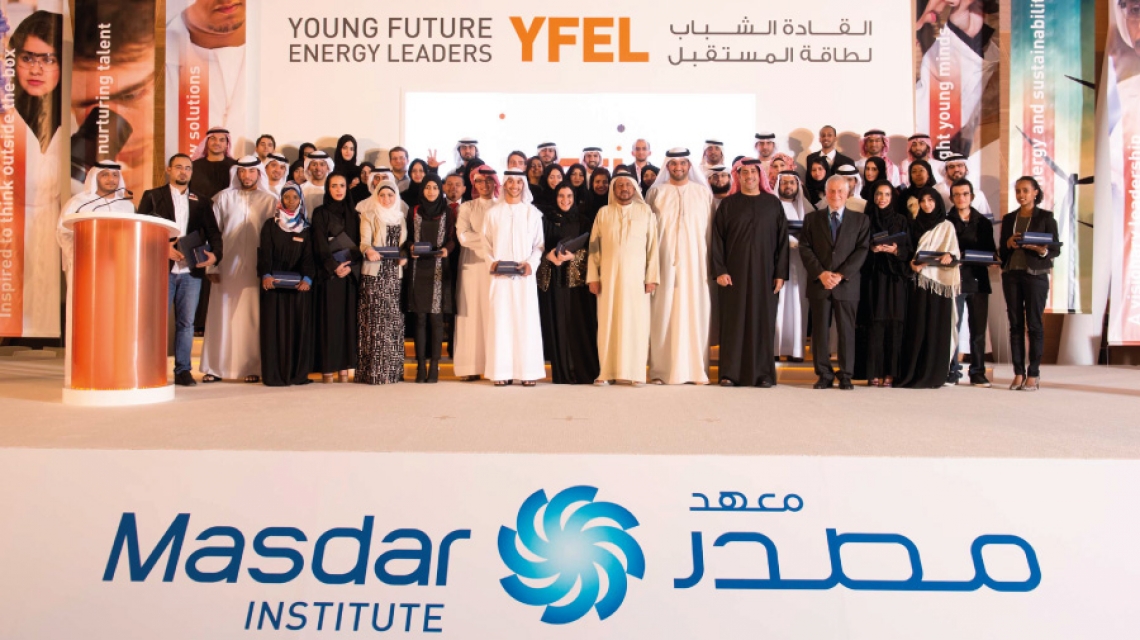
More than 50 YFEL members, who actively spearheaded individual projects and brought concepts of sustainability to far-flung regions, were presented with certificates during the on-campus award ceremony on 21 January. YFEL 2014 has more than 100 members.

His Excellency Sultan bin Rashed Dhaheri, Member of the Federal National Council and the Chairman of the Committee on Finance and Economic Council, who reiterated his support to the YFEL program for two consecutive years with a contribution of US$1 million each year, and Mohammed S. Al Qubaisi, Human Resources Director from Abu Dhabi National Oil Company (ADNOC) that is sponsoring the YFEL program for the fourth successive year were present at the ceremony. Others including  H. E. Dr Sultan Al Jaber, CEO of Masdar and Chairman of the Executive Committee of the Board of Trustees of Masdar Institute,  and Dr Fred Moavenzadeh, President, Masdar Institute, attended the ceremony. Previous sponsors of the YFEL program include Emirates Nuclear Energy Corporation (ENEC) and Dolphin Energy.

Dr Fred Moavenzadeh, President, Masdar Institute, said: “The award ceremony acknowledges the success of the YFEL members’ individual and collective initiatives in future energy and sustainability. The support of the UAE leadership for human capital development and outreach programs such as YFEL has helped us to continue our contribution to youth development. We hope these youth will deliver on the promises and help transform the world into a more sustainable model in the future.”

A video presentation highlighted key features of the YFEL 2013 annual program, after which members were presented with certificates. The gathering served as the platform for new YFEL members to learn about the scope of the program as the YFEL 2013 members retraced their journey. The ceremony also set the course for the beginning of the annual YFEL 2014 program.

Some of the educational programs that YFEL members participated during the year included two-day workshops covering technical, policy and leadership fields. The events focused on ‘Waste Management and Waste-to-Energy’, ‘Water Science and Technology’, ‘Role of Policy in the Renewable Energy Industry’ and ‘Being A Future Leader’.

Also during the year, a group of YFEL participants floated an interesting social enterprise to transform construction waste into ‘portacabins’ (portable cabins) for use on building sites and by NGOs such as the Red Crescent. YFEL members also traveled to the Himalayan region of India for an eight-day workshop with six Indian students on “Energy Access, Ethics and Development” and learned how to design energy-efficient systems and formulate socio-development measures.

Winners of the case study competition titled ‘Xylem: Let’s Solve Water’ were offered the opportunity to participate in the 22nd World Energy Congress in South Korea and interact with global energy industry leaders – one of the main focus areas for YFEL. In one of the most exciting community engagement activities, three YFEL members helped the Taaleem Science Fair 2013 judge the projects presented by Taaleem schools across Dubai.

Mashael Al Ansari, a young professional with Shell in Abu Dhabi, volunteered to help Shell’s set up the Shell Eco-Marathon (SEM) challenge in the Middle East and Africa, while Fatima Al Marzooqi, a graduate student at Masdar Institute, volunteered as part of the Blue Carbon Assessment Project in Abu Dhabi, an endeavor that is looking to see how Abu Dhabi’s coastal and marine ecosystems – mangrove forests, saltwater marshlands and sea grass meadows – can play a role in reducing climate change effects by pulling CO2 out of the air.

Mohammed Al Sharhan, a Master’s degree candidate and research assistant in Engineering Systems and Management at Masdar Institute, was one of nearly 140 international students who joined 140 Japanese students aboard the annual month-long “Ship for World Youth” program run by the Japanese Government.

Iman Ibrahim Ustadi, a Master’s degree candidate and research assistant in Engineering Systems and Management at Masdar Institute, was a speaker at the Future Talent Day, a full-day opportunity for UAE-based university students interested in a career in the oil, gas and petrochemical sector to network and learn about the industry. Through their participation in various forums, the YFEL members showcased the effectiveness of the program that helped them in individual professional development.

An outreach program by Masdar Institute, YFEL aims to develop tomorrow’s leaders in the fields of advanced energy and sustainability with various initiatives that educate, inspire and empower students and young professionals to become future leaders capable of tackling the world’s most pressing challenges.

Strata CEO Says Quality Products and Gaining Customers’ Trust Remain Crucial to Success

Abu Dhabi-UAE: 12 February, 2014 – Instilling pride by educating employees on quality, changing traditional mindsets and gaining the confidence of customers with world-class products are some of the measures that have brought immense benefits, said  Badr Al-Olama, Chief Executive, Strata Manufacturing, an advanced composite aerostructures manufacturing facility , fully owned by Mubadala Development Company.

Al-Olama was speaking at a seminar titled ‘Diversification…it’s not only GDP’, organized by Masdar Institute of Science and Technology as part of the Lecture Series Program. He was later presented with a memento by Hamza Kazim, Vice-President for Operations and Finance, Masdar Institute of Science and Technology, and Dr Mohamed Sassi, Interim Dean of Faculty. A large number of faculty and staff members as well as students attended the event that was held at Masdar Institute auditorium. Later on, Al-Olama was taken on a tour and was briefed on the various sustainable features of the campus.

Within a short span since it began operations, Strata has tripled the value of its contracts to US$7.5 billion in 2013. With its 21,600-square meter facility in Al Ain, Strata has earned revenues exceeding AED220 million in 2013 with investments of around US$320 million. Currently, the company manufactures A330/340 Flap Track Fairings, A330/340 Aileron Panels with assemblies, A330/340 Spoilers, A380 Flap Track Fairings, B777 Ribs, B787 Ribs and the ATR Vertical Fin.

Al-Olama said: “We make these components under stringent guidelines and supervision from specific aircraft manufacturers. Strata is also one of the very few companies worldwide to have built such a facility, started manufacturing customized products and managed to obtain approvals within the first year of operation. We consider this as one of our major achievements and we believe we have the capability to further build on our success with our employees’ commitment and with support from Mubadala.”

“Strata implements various incentives to retain and additionally train staff,” Al-Olama said, “such measures are necessary to continue the operational success of the company. At present, the company has more than 650 employees from over 30 nationalities with 40% UAE national staff, among whom 85% are women”, he added. The UAE is the third largest market for new aircraft and is the base for airlines such as Emirates, Etihad, FlyDubai and Airarabia.

Commending the leadership for their visionary plans to diversify UAE’s economy away from oil and gas, Al-Olama said these efforts are in the right direction and will prove beneficial to the future generation.

Praising Masdar Institute for its advanced research in composite materials, Al-Olama urged faculty and students to continue with their search for innovative solutions in composite materials that will help not only companies that manufacture aerospace components, but other sectors as well. He also pointed out the need for trained aerospace and mechanical engineers who can contribute to Strata’s future success. Currently, Masdar Institute offers eight Master’s programs in various engineering fields.

An independent, research-driven graduate-level university focused on advanced energy and sustainable technologies, Masdar Institute currently leads in innovation with one issued patent and more than 25 patent applications pending. Serving as a key pillar of innovation and human capital, it also remains fundamental to Masdar’s core objectives of developing Abu Dhabi’s knowledge economy and finding solutions to humanity’s toughest challenges such as climate change.

Established as an on-going collaboration with the Massachusetts Institute of Technology (MIT), Masdar Institute integrates theory and practice to incubate a culture of innovation and entrepreneurship, working to develop the critical thinkers and leaders of tomorrow.  With its world-class faculty and top-tier students, the Institute is committed to finding solutions to the challenges of clean energy and climate change through education and research.

UAE’s home-grown biofuel is important milestone in aviation

By Dr. Alejandro Ríos
February 15, 2014
 

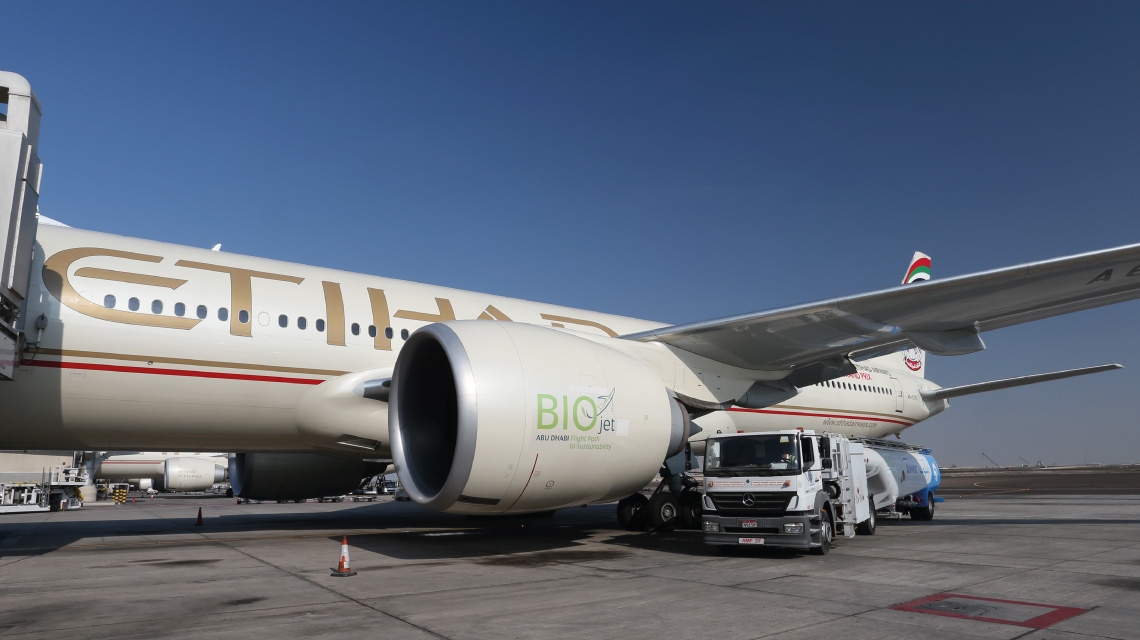
With last month’s flight of an Etihad Airways commercial aircraft powered by fuel produced from plant matter, the UAE has now firmly demonstrated the viability and importance of biofuel development and investment.

More than almost any other industry, aviation needs a renewable fuel replacement. While other sectors – energy supply, carmakers, and manufacturing – are being pushed towards renewable energy for more long-term environmental concerns, aviation is already suffering due to its dependence on fossil fuels.

When the price of oil rises – as it has massively in the past decade – so too does the price of jet fuel, which has more than tripled since 2000 and can now account for 40 per cent of an airline’s operating costs. And not only is it expensive, jet fuel contributes around 2 per cent of global manmade carbon emissions.

Developing an entirely new way of powering flight is not feasible in the medium term, requiring as it would require the replacement of billions of dollars of infrastructure and technology.

For the next 30-50 years, aviation will remain dependent on the basic liquid fuel combustion engines that have powered modern flight since its invention.

We can make the planes more efficient – each generation of aircraft uses around a fifth less fuel than the last – but to achieve true carbon neutrality, we will need to replace the current fossil fuels with a sustainable alternative.

That is why this flight, powered by a plant-based jet fuel refined here in the UAE, is such an important milestone.

The fuel used in that flight is what is known as a “drop-in biofuel” – a hydrocarbon fuel similar to diesel or jet fuel that in this case, was produced from biomass feedstock.

Drop-in fuels are meant to meet fuel quality specifications and be ready to be “dropped-in” to existing infrastructure, reducing the (costly) need to replace infrastructure.

For this fuel to be used in a commercial flight, it has to meet global quality specifications – in this case the D7566-13 standard specification for aviation turbine fuel containing synthesised hydrocarbons set by the American Society for Testing and Materials. Having met this standard, this renewable fuel should soon be ready for commercial production.

The next step now is to make sure all the hard work in developing, testing and certifying this sustainable jet fuel alternative is not wasted.

In order for biojet fuel to become an economic reality, the wider infrastructure and investment for the industry has to be developed.

To facilitate this, as the director of the Sustainable Bioenergy Research Consortium (SBRC) in Abu Dhabi, I am working with others to implement BIOjet Abu Dhabi: Flight Path to Sustainability, a project being led by Etihad Airways that aims to ensure its long term sustainability.

This project brings together the sectors crucial to biojet fuel development, including agriculture, government, water, energy, private sector, aviation, refining, environmentalists, financial/investors, and legal. The result, we hope, will be a national or regional strategy to bring biofuels to market in as short a time as possible.

With the launch of BIOjet Abu Dhabi, the research being undertaken at the Masdar Institute of Science and Technology through the SBRC, the investment provided by its industrial partners Etihad Airways, Boeing, Honeywell UOP and Safran, and the support of the UAE’s government and others, we hope to pave the way for aviation carbon-neutrality in the UAE.

Investing in the UAE’s own biofuel research and production capacity could also provide it lucrative export products, as annual revenue from biofuels production is expected to reach US$7.6billion by 2023, with $69bn invested in new production capacity worldwide over the next 10 years.

Dr Alejandro Ríos G is the director of the Sustainable Bioenergy Research Consortium and a professor of practice at the Masdar Institute.


Getting a better idea of the UAE’s rainfall

By Dr. Taha B.M.J. Ouarda
February 15, 2014
 

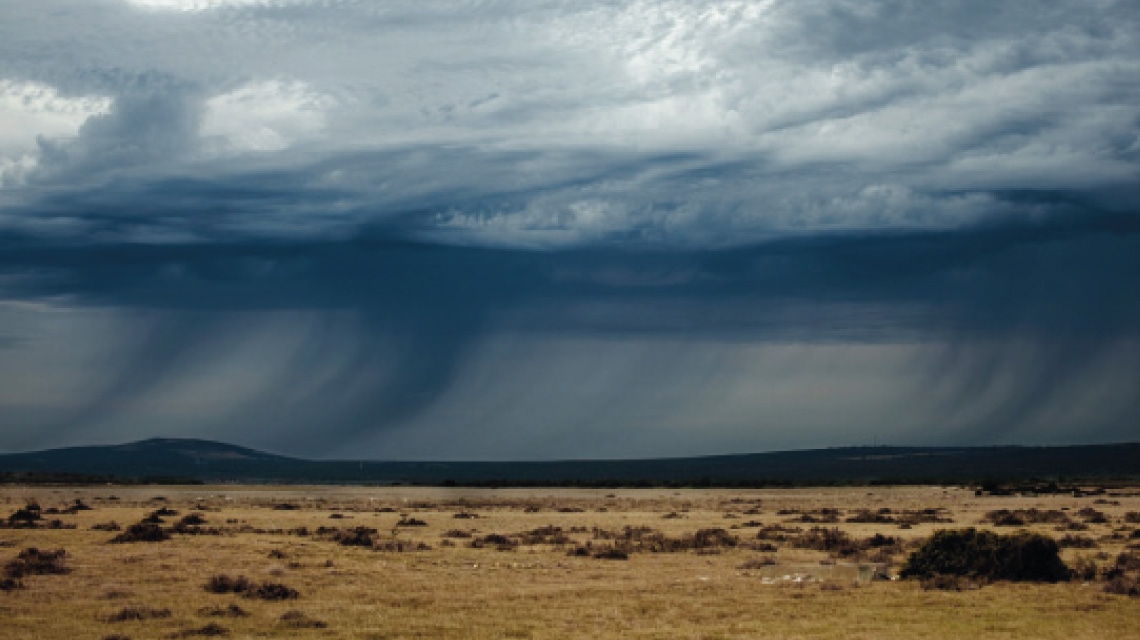
Desalination may be the major source of the water we use in our daily lives, but rainfall still plays an important role in the UAE. It is critical for replenishing natural water supplies, refilling dams, wells and reservoirs. It also helps keep the air clean and provides the moisture that keeps our desert ecosystems thriving.

But how much rain can we expect in the future? Previous studies have indicated that the whole region faces a general decline in its overall rainfall, but we need to know more – and so a team of Masdar Institute researchers, working with researchers from the Massachusetts Institute of Technology, is studying climate variability and change in the region, and the impact they have on water resources.

We have analyzed the rainfall over time at stations across the UAE, to try to spot trends and predict potential change. We looked into the total annual, seasonal and monthly rainfall; annual, seasonal and monthly maximum rainfall; and the number of rainy days per year, season and month.

And we have found that while some data does give evidence of a decrease in rainfall, the data is not always statistically significant. There does seem to be less rain in February and March – the two rainiest months of the year.

But there is more to the data than this. More sophisticated analysis found that, for all of our rain measurement stations, the general trend is actually for an increase in the amount of rainfall, although the year 1999 corresponds to a drop in rainfall amounts.

We have also been trying to understand the underlying climate mechanisms, in order to better model the long-term variability in rainfall in the UAE and the Arabian Peninsula. In this research, we found a strong correlation between rainfall in the UAE and climate oscillations such as the El Niño-Southern Oscillation (ENSO).

It also seems that, over the past 15 years, rain has been falling on the UAE earlier in the winter, with most important rains falling between December and February, rather than in February and March.

While this research has allayed some concerns that the UAE and the region overall are becoming more dry, more work is needed to fully understand the dynamics of climate variability in the UAE and to detect any long-term changes.

The better we understand the UAE’s precipitation trends, the better we can manage agriculture, flood protection, drought emergency response, water resources planning and management, and urban planning.

Good planning in these areas will provide the UAE with reduced losses from extreme events, and safeguard a brighter future for the country.
 
Dr Taha B.M.J. Ouarda is a professor at Masdar Institute of Science and Technology and head of the Institute Centre for Water and Environment (iWater).


Masdar Institute Faculty Member to Be Honored with US DOE’s Highest Award for Nuclear Treatment Technology

Abu Dhabi-UAE: 09 March, 2014 – Masdar Institute of Science and Technology an independent, research-driven graduate-level university focused on advanced energy and sustainable technologies, today announced that one of its faculty members has been awarded the 2013 Secretarial Honor Award by the United States Department of Energy (DOE).

This prize is the DOE’s highest form of non-monetary employee recognition and is being awarded to Dr. Hassan A. Arafat, Associate Professor, Institute Center for Water and Environment (iWater) and Department of Chemical and Environmental Engineering, Masdar Institute, for research he performed during his time at Argonne National Lab (ANL) in the United States.

The winning team, comprising Dr. Arafat’s former colleagues at ANL, a few collaborators at Oak Ridge National Lab (ORNL) and several other DOE-affiliated individuals, was selected for this award after being nominated for their work on ‘caustic side solvent extraction technology’, which was developed for the treatment of nuclear waste at DOE sites.

The technology developed by the team successfully made it through the R&D stage, then to pilot testing and finally to full implementation at the DOE sites. Using this technology, four out of 34 million gallons of high-level radioactive waste have been treated at the DOE’s Savannah River Site since its implementation in 2004 till date.

Dr. Fred Moavenzadeh, President, Masdar Institute, said: “The DOE’s highest form of non-monetary employee recognition for Dr. Arafat through the DoE award reflects the world-class expertise of our faculty body. With the guidance of the UAE’s leadership, Masdar Institute has assembled a team of qualified and respected scientists and researchers who focus on developing human capital in renewable energy. We congratulate our faculty member and hope to see more such honors in future.”

The award citation says: “This remarkable collaboration between DOE laboratories, industry, and academia has moved fundamental DOE research in the chemical sciences to full process implementation. This promises to save billions of dollars in clean-up costs and will accelerate the disposition of millions of gallons of the nation’s most dangerous legacy wastes. It will also accelerate the completion of one of DOE’s highest-priority environmental missions.”

Dr. Arafat said: “This is one of those very rare cases where researchers see their developed processes make it through R&D to full implementation. I was fortunate to have had a chance to work with a team of brilliant scientists from two US national labs and the US Department of Energy to develop a successful innovation. Seeing this process finally put into action to clean hazardous radioactive waste was a dream come true. The Secretarial Honor Award was the bonus. With time and with the support of Masdar Institute, I hope I can utilize my skills to serve the UAE and this region too.”

In 2010, Dr. Arafat joined Massachusetts Institute of Technology (MIT) as a visiting scholar for six months, after which he moved to Abu Dhabi where he is now employed as an Associate Professor in the Water and Environmental Engineering Program at Masdar Institute. He has co-authored more than 110 peer-reviewed journal publications, conference papers, and official technical reports (published by the US DOE). He delivered 23 invited presentations/lectures at international events and institutes throughout the world.

At present, the focus of Dr. Arafat’s research is on sustainable desalination processes and innovative membrane technologies. During his career so far, he has received 15 research grants, totaling US$8.40Million. He is also a recipient of several prestigious awards. Most notable among these are the Mondialogo Award by Daimler Co. and UNESCO in 2005 and the University of Cincinnati Distinguished Dissertation Fellowship in 1999 – one of only two fellowships awarded in open competition among PhD candidates from all University of Cincinnati colleges.

Dr. Arafat has also received three international research fellowships; two German DAAD Fellowships in 1995 and 2007 and the Open Society institute/Soros Foundation Fellowship (NY, USA) in 2009. He has a BSc in Chemical Engineering from the University of Jordan, Amman, and a PhD in Chemical Engineering from the University of Cincinnati, Cincinnati, in Ohio, US.

Masdar Institute Establishes iMicro to Serve Abu Dhabi’s Emerging Semiconductor Ecosystem

Abu Dhabi-UAE: 10 March, 2014 – Masdar Institute of Science and Technology, an independent, research-driven graduate-level university focused on advanced energy and sustainable technologies, today announced the creation of its Institute Center for Microsystems (iMicro) that will serve as a research and development hub for Abu Dhabi’s emerging semiconductor ecosystem.

The center has been established to provide strategic and operational direction to basic and applied microsystems research to achieve excellence and generate knowledge and technologies that will help establish the UAE as a global leader in microsystem devices and materials research, process technology, circuit and system design, and photonics. iMicro will serve Masdar Institute’s faculty, students and stakeholders by supporting a collaborative environment for cutting edge microsystems research aligned with Abu Dhabi’s economic diversification plans into the semiconductor industry.

Most of the iMicro research projects are currently sponsored by the Advanced Technology Investment Company (ATIC) and are guided by the Semiconductor Research Corporation (SRC) – the world’s leading university-research consortium for semiconductors and related technologies. Its scope will cover nano-scale device design and fabrication, circuit and system design, integrated photonics, micro-electro mechanical systems (MEMS), energy storage microsystems, high-efficiency photovoltaics, and advanced materials for energy-efficient microsystems.

Dr. Fred Moavenzadeh, President, Masdar Institute, said: “The Institute Center for Microsystems will play a crucial role in advancing research in cutting edge technology industries. Supported by the UAE leadership, Masdar Institute continues to move ahead, further consolidating its pioneering status in knowledge development and charting the course for innovations in new areas. Our aim is to enable iMicro contribute to placing Masdar Institute among leading innovators in fast-emerging advanced technology sectors.”

Headed by Dr. Ibrahim Elfadel, Masdar Institute Professor of Microsystems Engineering, iMicro will pool resources to support world-class research and strategic partnerships. It will also align closely with existing and projected sponsored research centers such as the TwinLab 3-Dimensional Stacked Chips Research Center (TL-3DSC) jointly led by Masdar Institute and the Technical University of Dresden, the ATIC-SRC Center of Excellence for Energy-Efficient Electronic Systems (ACE4S) jointly led by Masdar Institute and the Khalifa University of Science, Technology and Research, and the MEMS TwinLab jointly led by Masdar Institute and the Institute of Microelectronics (IME) Singapore.

Dr. Elfadel said: “The overarching research theme of iMicro is microsystem energy-efficiency in sensing, computing, data storage, and communication. The center’s goal is to innovate in all areas of low-power and energy-efficient microsystems design. The research portfolio of the center includes projects on low-power digital, mixed-signal and analog CMOS design of circuits and systems, energy-efficient photonic integrated circuits for communication and sensing, low-power non-volatile memories, advanced nano-materials for energy storage, interconnect, and heat transfer, and novel material systems for MEMS, photovoltaics, and photonics. iMicro is expanding its research to include a focused effort on novel MEMS devices for energy harvesting, ultrasound transducers, and motion sensing using both micro-mechanical and opto-mechanical modalities.”

The establishment of iMicro along with the recent launch of the ATIC Cleanroom is a clear indicator of the ongoing growth and increasing relevance of the semiconductor industry to the UAE and the wider region. According to the latest data from the International Data Corporation’s (IDC), worldwide semiconductor revenues are expected to reach more than US$320 billion by the end of 2014.

Abu Dhabi has already taken several measures towards its goal of establishing its own semiconductor sector, including setting up Masdar Institute’s Microsystems Master’s program, and support for ongoing collaboration between Masdar Institute and GLOBALFOUNDRIES, which is owned by the Advanced Technology Investment Company (ATIC), a wholly-owned subsidiary of Mubadala Development Company. Three Masdar Institute students have successfully completed a chip design using 65nm process, the first GLOBALFOUNDRIES tape-out from the Middle East and North Africa (Mena) region.

Masdar Institute Receives UAE Government Accreditation for MSc in ‘Sustainable Critical Infrastructure’ Program

Abu Dhabi-UAE: 24 March, 2014 – Masdar Institute of Science and Technology an independent, research-driven graduate-level university focused on advanced energy and sustainable technologies, today announced that the Commission for Academic Accreditation of the Ministry of Higher Education and Scientific Research has granted approval for its Master’s in ‘Sustainable Critical Infrastructure’.

The new MSc program will function under the Department of Engineering Systems and Management (ESM). It aims to offer learning in integrated sustainable infrastructure planning and development, with initial focus on urban operations planning and transportation systems. The ‘Sustainable Critical Infrastructure’ program will be launched in Fall 2014.

The ‘Sustainable Critical Infrastructure’ program takes the total number of Master’s programs offered by Masdar Institute to nine. The ESM department currently has 17 faculty members and administers the MSc Engineering Systems and Management program.

The accreditation announcement was made during the Masdar Institute- Massachusetts Institute of Technology 2014 Symposium ‘Perspectives on Sustainable Critical Infrastructure’ that was held on 24 March at the Yas Marina Circuit in Abu Dhabi. The event was attended by a large number of high-ranking officials and professionals from government, academia and industry. The symposium included three sessions with short presentations from academia, government and industry, followed by moderated discussions on topics related to infrastructure development from a sustainability perspective.

Dr. Fred Moavenzadeh, President, Masdar Institute, said: “Worldwide, governments battered by the financial crisis seek to prune allocations towards infrastructure despite the growing need for ongoing infrastructure developments. At this crucial juncture, the strain on financial and physical resources may be well-managed if the sustainability concept could be incorporated into the infrastructure ecosystem. With the support of the UAE’s leadership, we are launching the new program on ‘Sustainable Critical Infrastructure’ and we hope this will develop knowledge and skillsets urgently required for the future.”

The launch of the program is apt at a time when Abu Dhabi has announced US$100 billion investment in various infrastructure projects over the next five years. Some of the investments will go into projects such as the Khalifa Port, Khalifa Industrial Zone-Abu Dhabi (Kizad), metro and light rail public transit, and Etihad Rail. Infrastructure projects like these will require qualified and trained professionals with the right expertise for their implementation, which the ‘Sustainable Critical Infrastructure’ program can provide.

Masdar Institute’s ‘Sustainable Critical Infrastructure’ program requires a total of 48 credits – 24 each from coursework and the Master’s thesis. It will be based on a basic theory of urban infrastructure systems and have two self-contained tracks – ‘Sustainable urban planning and design’ and ‘Transport planning and systems’. Additional tracks in ’Building Technologies’ will be developed in the future. The program consists of eight courses with one required university core course (UCC501),     three infrastructure planning and engineering core courses (SCI501, SCI502, SCI503 and SCI504), and four electives from within the program’s two concentration areas.

The ‘Sustainable Critical Infrastructure’ program is expected to attract students with previous degrees in architecture, urban planning, building science, civil engineering and other engineering disciplines related to infrastructure systems.

Masdar Institute’s iWater to Lead Research in Water and Environmental Technologies

Abu Dhabi-UAE: 25 March, 2014 – Masdar Institute of Science and Technology, an independent, research-driven graduate-level university focused on advanced energy and sustainable technologies, today announced the launch of its Institute Center for Water and Environment (iWater) to consolidate and drive research projects in this key strategic area.

iWater will produce knowledge and technologies that address the clean water production, climate change, and water resource management challenges faced by Abu Dhabi and the region.

Some of the research areas iWater will cover include water and environmental technologies, (including desalination, water and wastewater treatment), water re-use and recycling, and advanced materials for water applications. Additionally, it will cover water resource management and engineering, environmental sensing and monitoring, and climate change and adaption.

Water and environmental research is a key theme of the research-based Masdar Institute.

Dr. Fred Moavenzadeh, President, Masdar Institute, said: “The creation of iWater further illustrates our earnest drive towards more dedicated multidisciplinary research that encompasses all aspects of sustainable energy. Such centers will provide us with a means to achieve inventions and innovations of direct benefit to the UAE. With the support of the UAE leadership, Masdar Institute continues to develop into a hub for leading-edge research, and we hope the new center will achieve results that will benefit the wider global community.”

Dr. Taha B.M.J. Ouarda, Head of iWater, and Professor of Water & Environmental Engineering, said: “The launch of iWater signifies the consolidation of our research projects for better impact and visibility locally, regionally, and internationally. In addition to facilitating resource sharing, the center will lead to enhanced funding opportunities while offering flexibility and maintaining a nimble research task force. It will also provide the critical mass and a better platform for faculty recruitment. We believe iWater will bring about innovations that will further the adoption of clean technology.”

iWater will be associated with sponsored research centers such as the Sustainable Bioenergy Research Consortium (SBRC), which is primarily linked to the Institute Center for (iEnergy) but will also be associated with iWater. It will also be associated with a sponsored research center in water technologies that will be launched later this year.

iWater will engage and inform domestic and international stakeholders of Masdar Institute’s research activities and capitalize on the Institute’s existing capabilities to facilitate future research development in core water and environment domains. It will focus on application of research findings locally and internationally, publication of influential academic papers, and organization of and participation in high caliber international conferences.

In addition, iWater will offer resources to support world-class research through the coordination of funding opportunities and by supporting strategic partnerships that catalyze external funding opportunities.

The creation of iWater is part of Masdar Institute’s strategy to consolidate its research efforts and provide the right channel to achieve innovations in areas that are of strategic importance to Abu Dhabi and the UAE.

Masdar Institute’s YFEL Members Gain Insights into Advancements in Desalination Technology

Abu Dhabi-UAE: 26 March, 2014 – More than 25 members of the Young Future Energy Leaders (YFEL) program, an outreach initiative by Masdar Institute of Science of Technology, gained insights into new advancements in water resources and desalination, one of the strategic sectors for the UAE, during a specially organized two-day course led by faculty and staff members.

Held at the Masdar Institute campus, the Water Science and Technology Course was led by two Masdar Institute faculty members – Dr. Taha Ouarda, Head of Institute Center for Water and Environment (iWater), and Professor – Water & Environmental Engineering, and Dr. Shadi Wajih Hasan, Assistant Professor, Chemical and Environmental Engineering. The three-module course offered insights into areas including ‘Water Science’, ‘Membrane and Thermal Desalination Processes in Water Treatment’, and ‘Physical, Chemical and Biological Characterization of Wastewater’. It also included a lab safety introduction by Ahmed Basheer, Lab Health and Safety Specialist, a laboratory tour led by PhD student Faisal Al Marzooqi, and a site visit to Masdar City wastewater treatment plant . PhD students Shaik Basha, Celia Lopez and Faisal Al Marzooqi spoke about their water-related research works.

The first module conducted by Dr. Ouarda offered YFEL members an overview of the water situation in the UAE and technical issues associated with water resources estimation, analysis, planning and management. This module prepared participants for more advanced activities related to specific issues such as statistical hydrology, deterministic hydrology, or risk analysis in water resources.

During the second module Dr. Hasan introduced desalination technologies and its integration with energy resources. The last module offered participants a hands-on experimental experience on wastewater characterization, as well as an introduction on wastewater lab and facility.

The theoretical and hands-on aspects of the Water Science and Technology Course offered participants complete understanding of the emerging industry trends and the widely used technologies in desalination. The course was part of YFEL’s year-long activities that build capabilities and contribute to overall professional development.

According to market research firm Visiongain, the global desalination market is expected to be worth US$3.9 billion by the end of this 2014. The UAE has already announced it would establish the world’s largest solar-powered desalination plant that will process more than 22 million gallons of potable water per day. It will also generate 20 MW of electricity.

YFEL member Fatima Al Hameli, a professional from Borouge, said: “Attending the ‘Water Science and Technology’ course was an eye opener. I was amazed to learn that the UAE is one of the countries with highest consumption of water per person in the world, yet it does not have easily accessible sources of water such as rivers and lakes and is highly dependent on thermal desalination. This means that we do not just need technological solutions, but we need to raise the awareness in the society on the importance of conserving water.”

Ibrahim Salim Bin Madhi, student from Abu Dhabi University and YFEL member, said: “Through the course, we learnt about the types of water available on our planet, and how we can tackle the world’s water problems and reduce water consumption. Moreover, we covered the methodologies of desalinization and recycling of water, and the widely used methods.


Masdar Institute’s iInnovation to Strengthen Technology-Based Innovation and Entrepreneurship in UAE

Abu Dhabi-UAE: 07 April, 2014 – Masdar Institute of Science and Technology, an independent, research-driven graduate-level university focused on advanced energy and sustainable technologies, today announced that its Institute Center for Innovation and Entrepreneurship (iInnovation) will contribute to developing and maintaining a leadership role for the UAE in technology-based innovation and entrepreneurship.

iInnovation is mandated to initiate measures to adapt best practices from world-class innovation hubs to the UAE, while working with UAE stakeholders to improve the local innovation ecosystem. In addition, it will support the translation of technology research into innovative commercial products, services and processes. As part of its mission, iInnovation will be hosting the ‘UAE Forum on Innovation and Entrepreneurship 2014’ on 28 April in Abu Dhabi, co-sponsored with the Massachusetts Institute of Technology (MIT) and BP.

Dr. Fred Moavenzadeh, President, Masdar Institute, said: “The launch of iInnovation forms part of our mission towards creating and developing human capital, especially in clean energy innovation and entrepreneurship. With the support of the UAE leadership, Masdar Institute continues to implement initiatives and host international forums to raise awareness of the importance of technology start-ups. We hope iInnovation will develop capabilities, encourage youth to launch start-up companies and facilitate government support for young entrepreneurs.”

Headed by Dr. Bruce W. Ferguson, Professor in Engineering Systems and Management, iInnovation will operate in three thematic areas – establishing the commercial viability of research, further advancing technology entrepreneurship among the youth in the UAE and strengthening the innovation policy framework in the UAE.

iInnovation will design and implement new programs in collaboration with other UAE stakeholders across a broad range of industries. In this area, it will initiate an open technology entrepreneurship lecture series to be hosted at Masdar Institute and create a funding program for late-stage faculty research that shows commercialization potential. In January 2014, iInnovation announced a US$7 million, multi-year Technology Innovation Collaboration Agreement with BP to develop novel ways to speed development and adoption of new sustainable technologies. More recently, a two-year, fully-funded merit-based BP Innovation Scholarship Program was launched to help students develop the business potential of  their own sustainable technology ideas or ideas they adopt at Masdar Institute.

The UAE is currently ranked 25th in the world on the ‘Innovation and Sophistication’ scale by the World Economic Forum’s Global Competitiveness Index (GCI). According to the Emirates Competitiveness Council (ECC), the UAE is continuously upgrading its capabilities, research institutions, as well as its human resources, in order to foster the innovation that competitive SMEs and large businesses across the UAE require for success.

Dr. Ferguson will work with various stakeholders to further drive technology-based innovation and entrepreneurship in Abu Dhabi and the UAE. Masdar Institute already leads in several areas including knowledge generation through research and development (R&D), and collaboration with major industries and government particularly in energy sustainability, water and nanotechnology, according to the ECC.

Dr. Ferguson is a co-founder and former Chief Operating Officer of Orbital Sciences Corporation, a space technology company listed on the New York Stock Exchange, and a co-founder and former Chief Executive Officer of Edenspace Systems Corporation, a plant biotechnology company developing new renewable energy and environmental products.  He is also a Trustee of the Carnegie Institution for Science.