11 Select Members of Masdar Institute’s YFEL Program to Attend 22nd World Energy Congress in South Korea

Specially Selected YFEL Members to Interact with Global Leaders and Attend Sessions Addressed by UAE Minister and Senior Officials

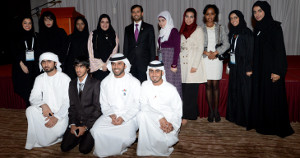
Abu Dhabi-UAE: 10 October, 2013 – Masdar Institute of Science of Technology, an independent, research-driven graduate-level university focused on advanced energy and sustainable technologies, today announced 11 select members of the Young Future Energy Leaders (YFEL) program will participate in the World Energy Congress in South Korea.

The 22nd World Energy Congress will be held from 13 – 17 October 2013 in Daegu, under the theme ‘Securing Tomorrow’s Energy Today’. More than 250 speakers, including over 50 ministers from nearly 70 countries will be participating in this premier global energy forum. The event is hosted by the World Energy Council (WEC) and the WEC Korean Member Committee. The YFEL members, chosen through a competition titled ‘Xylem: Let’s Solve Water’, will engage and interact with government ministers, chief executives and experts from around the world during the event in South Korea.

The 11 specially chosen YFEL members – seven UAE nationals and four international members – were chosen by a panel of judges that included YFEL officials, Masdar Institute faculty and senior management team from Masdar. The YFEL members focused their case study presentation on ‘links between water and energy’, ‘impact of climate change on water’, ‘supply and demand challenges in the UAE’ and ‘water policy and investments’. They were assessed on their general understanding of the subject, the current scenario in the UAE and recommendations for tackling the challenges.

Dr Fred Moavenzadeh, President, Masdar Institute, said: “The World Energy Congress in Daegu offers a unique opportunity for participants to better understand energy issues and find solutions from a global perspective. With the support of the UAE leadership, the YFEL members continue to participate in global forums, learning about key issues, especially in finding solutions to support secure, affordable, and environmentally sensitive energy. We hope the Daegu event will help widen their knowledge in identifying current challenges and ways to tackle them for a better future.”

At the World Energy Congress in Daegu, the select YFEL members will be attending the opening ceremony, keynote addresses and relevant sessions. More specifically, they will attend sessions that will be addressed by His Excellency Suhail Al Mazrouei, UAE Minister of Energy; His Excellency Dr. Matar Al Neyadi, Undersecretary, UAE Ministry of Energy; Dr. Saif Al Sayari, Vice-President for Operations, Technology and Innovations, Abu Dhabi National Energy Company (Taqa); Mohamed Al Hammadi, CEO of Emirates Nuclear Energy Company (ENEC); and Dr. Thani Al Zeyoudi, Director, Directorate of Energy and Climate Change at UAE Ministry of Foreign Affairs.

Additionally, the YFEL members will be present at the UAE pavilion that will have booths set up by Mubadala Development Company and Masdar. They will also attend the welcome reception to network with leading figures in the global energy sector, including representatives from WEC member states, energy executives, as well as officials from government, international organizations and NGOs. Overall, the event sets the stage for YFEL members to expand their scope of knowledge about the energy industry.

Part of the Masdar Institute’s Outreach program, YFEL offers young professionals and students from the UAE and abroad an opportunity to become more engaged in finding solutions to the world’s biggest challenges – achieving energy efficiency and tackling climate change. It also aims to bring young professionals closer to government representatives, business leaders and other organizations active in the area of alternative energy and sustainability.

Over 30 Librarians from GCC and Turkey Convene for ‘UAE eFada’ Summit in Abu Dhabi

Discussions Focus on Global Best Practices Relevant for Regional Adoption at Event Hosted by Masdar Institute and Springer Science

Abu Dhabi-UAE: 01 October, 2013 – More than 30 library directors from across the UAE, other GCC countries and Turkey convened for a one-day summit in Abu Dhabi to discuss ways to adopt global best practices in the print and e-resources sector relevant to the region.

Organized jointly by Masdar Institute of Science and Technology, an independent, research-driven graduate-level university focused on advanced energy and sustainable technologies, and Springer Science + Business Media, the summit was themed ‘UAE eFada’. Held at the Masdar Institute campus, the summit aimed to build and start a library consortium in the UAE.

Officials from leading libraries across the GCC and Turkey focused on issues including sharing of electronic information resources, library services marketing, and challenges faced by academic libraries. Keynote speakers included Dr. Bandar Al Mubarak, Saudi Digital Library (SDL), and Dr. Ertugrul Cimen, Anatolian University Libraries Consortium (ANKOS).

ANKOS has 170 member universities and research institutes and a team of 50 volunteer librarians, while SDL has 24 partner institutions. With a rich library tradition going back several centuries, Turkey that established the first printing house in the year 1729 has a wealth of manuscripts and scrolls. Library services are also being provided by 59 mobile libraries to 763 areas in 81 provinces across Turkey.

One of the largest in the Arab world, the SDL that was launched in November 2010 holds more than 114,000 e-Books and reference works, spanning various academic disciplines. All 114,000 volumes are available in both full text and multimedia formats.

Dr. Abdulla Al Hefeiti, Library Director, Masdar Institute, said: “With their emphasis on education, the UAE’s leadership continues to provide resources required for knowledge and human capital development. The hosting of ‘UAE eFada’ in collaboration with Springer in Abu Dhabi was an example of this commitment. The meeting of librarians from the GCC and Turkey proved to be a productive forum for discussing challenges faced by today’s digital-era libraries. We hope the sharing of experience helped librarians to learn from each other.”

During the summit, Dr. Abdulla highlighted the library services offered at Masdar Institute and the ties with other academic libraries in the UAE. The services and collections aim to support the Masdar Institute community of faculty, researchers, students, and administrates. Requests for accessing the e-resources are also accepted from external researchers and postgraduates students.

A UAE-led project, ‘eFada’ is a consortium of libraries under the umbrella of Ankabut, the UAE’s Advanced Network for Research and Education. It is expected to offer all students and faculty in the country access to large electronic resources collection through a single platform.

Springer Science + Business Media is a leading global scientific, technical and medical publisher, providing researchers in academia, scientific institutions and corporate R & D departments with quality content via innovative information products and services. It also hosts a number of scientific databases, including SpringerLink, SpringerProtocols and SpringerImages. Book publications include major reference works, textbooks, monographs and book series, as well as more than 37,000 titles as e-books in 13 subject collections.

Serving as a key pillar of innovation and human capital, Masdar Institute remains fundamental to Masdar’s core objectives of developing Abu Dhabi’s knowledge economy and finding solutions to humanity’s toughest challenges such as climate change.

Established as an on-going collaboration with the Massachusetts Institute of Technology (MIT), Masdar Institute integrates theory and practice to incubate a culture of innovation and entrepreneurship, working to develop the critical thinkers and leaders of tomorrow.  With its world-class faculty and top-tier students, the Institute is committed to finding solutions to the challenges of clean energy and climate change through education and research.


UAE Energy Minister Commends YFEL Members for Projecting Country’s Capabilities to Global Energy Leaders in Daegu

Members of Masdar Institute’s YFEL Program Visit Environmental, Technology, Cultural and Historical Sites in South Korea

Abu Dhabi-UAE: 21 October, 2013 – His Excellency Suhail Al Mazrouei, UAE Minister of Energy, commended members of the Young Future Energy Leaders (YFEL) program for projecting the UAE’s capabilities to the global energy industry leaders in Daegu in South Korea.

A team of 11 members of the Young Future Energy Leaders (YFEL) program, an outreach initiative of Masdar Institute of Science of Technology, were participating in the 22nd World Energy Congress that was held from 13 – 17 October 2013 in Daegu. His Excellency Suhail Al Mazrouei met the YFEL members during his visit to the UAE pavilion that had booths set up by Mubadala Development Company and Masdar.

During the World Energy Congress in Daegu, YFEL members also visited various places of environmental, technology, cultural and historical interests in South Korea.

The YFEL members visited some of the landmark destinations including the 9.5-meter tall and 580-meter long cruise ship-shaped Dalseong Weir, the research-oriented university Daegu-Gyeongbuk Institute of Science and Technology (DGIST), the Daegu National Industrial Park project that is coming up in 8.5-million square meter area, and the historic Dodong Seowon Confucian Academy.

Similar to Masdar Institute, the DGIST aims to foster high-quality manpower in science and technology while promoting cutting-edge scientific research and studies supported by the government. The YFEL members learnt about Dalseong Weir’s environment-friendly features including the special paths created for the dyke and the eco-district and how DGIST is leading innovation in new science in South Korea.

The YFEL members’ visits were part of their annual activities that include gaining exposure to researchers at renowned institutions that drive innovation. The visits also offered YFEL members an opportunity to share their ideas in advanced energy and sustainability with their peers as well as with industry, government and academic leaders.

Part of the Masdar Institute’s Outreach program, YFEL offers young professionals and students from the UAE and abroad an opportunity to become more engaged in finding solutions to the world’s biggest challenges – achieving energy efficiency and tackling climate change. It also aims to bring young professionals closer to government representatives, business leaders and other organizations active in the area of alternative energy and sustainability.

Masdar and Masdar Institute join ‘UAE Flag Day’ campaign

Abu Dhabi, UAE 6 November 2013: HE Dr. Sultan Ahmed Al Jaber, CEO of Masdar, and Dr. Fred Moavenzadeh, President of Masdar Institute, joined the staff of Masdar, as well as the faculty, staff and students of Masdar Institute for the ‘UAE Flag Day’ campaign that coincided with the anniversary of the accession of His Highness Sheikh Khalifa bin Zayed Al Nahyan as President of the UAE.

At noon, a massive UAE National flag was unfurled by students near the Knowledge Center while another flag was hoisted on the Wind Tower. Others joined in, holding their flags aloft, and expressing their pride in the spirit of national unity. Participants also expressed gratitude to the UAE leadership’s vision that has ensured economic prosperity.

The Flag Day campaign, celebrated by citizens and expats at various places across the UAE, is a reflection of patriotism and loyalty to the country and the leadership.

Board of Trustees Annual Meeting Reviews Masdar Institute’s Next Phase Growth Plan

 New Academic Departments, Fresh Collaborations, Higher Number of Graduates and Increase in Enrollments Mark 2013

Abu Dhabi-UAE: 12 November, 2013 – The Board of Trustees of Masdar Institute of Science and Technology, an independent, research-driven graduate-level university focused on advanced energy and sustainable technologies, reviewed the progress of the research-based institution during an annual meeting and approved its next phase growth strategy for the coming years.


His Highness General Sheikh Mohammed Bin Zayed Al Nahyan, Crown Prince of Abu Dhabi and Deputy Supreme Commander of the UAE Armed Forces, is the Chairman of the Board of Trustees of Masdar Institute.

The members of the Board of Trustees include His Highness Sheikh Diab bin Zayed Al Nahyan; His Highness Sheikh Abdullah bin Zayed Al Nahyan, Minister of Foreign Affairs; His Excellency Sheikh Nahyan bin Mubarak Al Nahyan, Minister of Culture, Youth and Community Development; His Excellency Mohammed Ahmed Al Bawardi, Member of the Abu Dhabi Executive Council and Chairman of the Executive Committee; His Excellency Khaldoon Khalifa Al Mubarak, Chairman of the Executive Affairs Authority and CEO of the Mubadala Development Company; His Excellency Ahmed Al Sayegh, Chairman of Masdar; His Excellency Abdulla Nasser Al Suwaidi, Director-General of Abu Dhabi National Oil Company (ADNOC); His Excellency Dr. Adnan Badran, President of Petra University and Deputy Director-General of UNESCO; Dr Rafael Reif, President, Massachusetts Institute of Technology (MIT); His Excellency Dr. Sultan Ahmed Al Jaber, CEO of Masdar and Chairman of the Executive Committee of the Board of Trustees of Masdar Institute;  and Dr. Fred Moavenzadeh, President of Masdar Institute.

Dr. Sultan Ahmed Al Jaber said: “Masdar Institute has grown tremendously over the past year and has achieved several milestones, including the establishment of various research partnerships with the public and private sector. The research-based institution’s contribution remains consistent with its mission and in line with the directives of our wise leadership’s economic ambitions. With the support of the Board of Trustees, we are confident Masdar Institute will further support the UAE’s capacity building efforts and help position Abu Dhabi as a global clean-energy technology leader.”

The graduation of nearly 90 Master’s students of Class 2013 marked one of the most significant moments during the year. The group was also the largest in a single year from Masdar Institute so far. At the same time, the Fall 2013 new student enrollments increased to 203, taking the current total number of students to 417, representing 58 countries. The number of UAE nationals has increased by more than 15% compared to last year. However, the most important strategic development came during the new academic year that witnessed the regrouping of the eight academic programs under four departments. The new initiative aims to lay the ground for the institution’s transition to the next stage of growth in the coming years.

In his annual report to the Board of Trustees, Dr. Fred Moavenzadeh said: “The year marked a strong impetus towards our transition to the next stage. Every academic institution reaches a threshold from where it has to elevate its projections, raise excellence standards and widen its academic offerings. During 2013 we have begun the process and as guided and supported by the UAE’s leadership and the Board of Trustees we are firmly progressing on our way forward. We hope to achieve more milestones in the coming years.”

One of the most important innovations was announced in February 2013 when two faculty members achieved a pioneering breakthrough in developing a novel membrane that can operate in an ‘in-situ’ cleaning system for desalination purposes. A patent application was then filed for the new system that is considered superior to other existing techniques. Masdar Institute currently has one approved patent with 20 patent applications pending. These are in addition to papers in 375 peer-reviewed journals, 196 conference proceedings, 19 book chapters, two full books and one trade publication.

In technology-related achievements, three students successfully completed a semiconductor chip design using GLOBALFOUNDRIES 65nm process, the first GLOBALFOUNDRIES tape-out from the Middle East and North Africa (MENA) region. Owned by the Advanced Technology Investment Company (ATIC), GLOBALFOUNDRIES is collaborating with Masdar Institute, having granted access to leading-edge technology platform for researchers and students. Moreover, researchers have also placed the UAE on the global map of printed organic optoelectronics, by commencing projects in organic photodetectors including solar cells and photodiodes.

Locally and regionally, Masdar Institute hosted several events and announced various partnerships. A collaboration project with Bayanat for Mapping and Surveying Services, a Mubadala company, focused on developing water quality monitoring tools in the Arabian Gulf, using the satellite receiving station at the research-based institution. At the same time, Masdar Institute entered into a collaborative research project with Tawazun Economic Council, which is mandated to oversee implementation of the UAE Tawazun Economic Program, to focus on land systems and advanced materials. A scholarship agreement with the Abu Dhabi Water and Electricity Authority (ADWEA) ensures sharing of knowledge, expertise and technology as well as capacity building in the UAE.

Globally, the year also witnessed fresh partnerships in addition to productive yields from existing research collaborations. Masdar Institute became an affiliate of the US-based Joint Institute for Strategic Energy Analysis (JISEA) to collaborate in three areas – water-energy nexus, clean energy policy with focus on the Middle East/North Africa region, and energy access in developing countries.

An academic collaboration with University of Southern California’s Viterbi School of Engineering in the US resulted in 18 UAE national students participating in a two-week summer continuing education program. The focus areas included experiential engineering in renewable energy, sustainable infrastructure systems, and innovation and entrepreneurship.

Among global-level conferences, Masdar Institute and the United Nations Economic and Social Commission for Western Asia (UN-ESCWA) jointly organized a two-day expert group meeting (EGM) on carbon capture and storage (CCS). More than 50 international experts gathered at the campus for the event that was titled ‘Carbon Capture, Utilization and Storage in ESCWA Member States: Enhancing the Sustainability of the Energy System in a Carbon Constrained Development Context’.

Also, more than 200 distinguished speakers, panelists, and invited guests, whose diversity mirrors the complex ecosystem for innovation, participated in the ‘UAE Innovation and Entrepreneurship Forum 2013’ that was held in Abu Dhabi. The event was jointly organized by Masdar Institute and the Massachusetts Institute of Technology (MIT) under the patronage of His Excellency Sheikh Nahayan Mabarak Al Nahayan, UAE Minister of Culture, Youth and Community Development.

During the year, Masdar Institute further intensified engagement with its stakeholders. High-ranking officials from Mubadala entities including Suhail Mahmood Al Ansari, Executive Director, Mubadala Healthcare, Maurizio La Noce, Chief Executive Officer, Mubadala Petroleum, and Ahmed Yahia Al Idrissi, Executive Director, Mubadala Industry, shared their expertise with students and faculty. Several experts including Tariq Al Gurg, Chief Executive Officer of Dubai Cares, a philanthropic organization, Dr. Sandro Tedde, Senior Key Expert Research Scientist, Siemens AG, and Dr. Tomas Svitek, CEO of Stellar Exploration, also shared their experiences with the Masdar Institute community. The Masdar Institute-Toyota Scholarship program and the IRENA Scholarship programs continue to benefit students.

Also, Masdar Institute received accreditation for its Ph.D. program from UAE Ministry of Higher Education and Scientific Research. The total number of faculty rose to 82, representing more than 30 countries. The number of accomplishments registered by the research-based institution’s faculty continued to show an uptrend during the year.

The annual accomplishments were acknowledged by the members of the Board of Trustees who urged Masdar Institute to further intensify research in areas that are strategically relevant to the UAE and the region. They also complemented the Masdar Institute community for consistently contributing to knowledge and human capital development in the fields of clean energy and advanced technology research.

Among the outreach initiatives, members of the 2012 Young Future Energy Leaders (YFEL) program successfully completed their annual program and received their certificates during a ceremony in January 2013. Some YFEL members, who are also students of Masdar Institute, took up new projects and initiatives during their year-long activities. A 10-day intensive field-based course for YFEL members in India’s far-northern Ladakh region earlier this year proved extremely effective in designing and implementing energy projects that can make remote rural areas self-sufficient. YFEL members also projected the capabilities of the UAE at the World Energy Congress 2013 in Daegu in South Korea, making the country a strong contender to be named the venue for the next congress.

While UAE national graduate students enthusiastically participated in the research-based summer internship program, seven students spent their summer in Japan under an eight-week internship program organized by the Japan International Co-operation Center (JICE). Ektashif, a residential program targeting UAE students, received an enthusiastic response with the participation of 22 Emirati undergraduate students.

Dr. Moavenzadeh concluded: “The increasing contribution to knowledge development, higher number of invention disclosures and widening engagement with stakeholders on strengthening innovation and entrepreneurship will continue in the coming year. As our involvement in more knowledge-intensive sectors intensifies, our collaborations and partnerships will similarly expand, contributing further to making Abu Dhabi a clean energy hub.”

Serving as a key pillar of innovation and human capital, Masdar Institute remains fundamental to Masdar’s core objectives of developing Abu Dhabi’s knowledge economy and finding solutions to humanity’s toughest challenges such as climate change.

Established as an ongoing collaboration with the Massachusetts Institute of Technology (MIT), Masdar Institute integrates theory and practice to incubate a culture of innovation and entrepreneurship, working to develop the critical thinkers and leaders of tomorrow.  With its world-class faculty and top-tier students, the Institute is committed to finding solutions to the challenges of clean energy and climate change through education and research.

Masdar Institute Receives MESA 2013 ‘Technology’ Award for UAE Solar Atla

Industry Recognition Acknowledges Contributions by IRENA, Masdar Institute’s ReCREMA and Other Stakeholders

Abu Dhabi-UAE:  21 November, 2013 – The ‘UAE Solar Atlas’ developed by the Research Center for Renewable Energy Mapping and Assessment (ReCREMA) at Masdar Institute of Science and Technology in collaboration with the International Renewable Energy Agency (IRENA), has received the “Technology of The Year” award from the Middle East Solar Industry Association (MESIA).

The UAE Solar Atlas project was declared winner in the ‘Technology’ category from among three shortlisted finalists at the second annual Middle East Solar Awards (MESA). The award was presented to Dr. Hosni Ghedira, Director, ReCREMA at a gala ceremony that was held at the Intercontinental Hotel, Abu Dhabi. The Middle East Solar Awards acknowledge and celebrate exceptional talent and achievements in the solar sector in the MENA region.

Dr Fred Moavenzadeh, President, Masdar Institute, said: “The MESA 2013 Technology Award for the UAE Solar Atlas strongly indicates the extent of advanced technology tools and the special expertise available at Masdar Institute for a project of this magnitude. With the help of the country’s leadership, we have created resources that will continue to benefit the global community in identifying clean energy project sites for dynamic investments. All stakeholders including our faculty and staff deserve to be commended for this industry recognition.”

Dr Steve Griffiths, member of the MESIA Board of Directors, said: “The UAE Solar Atlas project was selected as the winner for its technological contributions to advancing the state of solar power in the region and the technical expertise provided from ReCREMA at Masdar Institute. As an industry organization that represents our stakeholders in the region, MESIA aims to acknowledge and reward the most remarkable technology developments in the solar arena. We congratulate Masdar Institute and the professionals behind the UAE Solar Atlas project for winning this award.”

A robust satellite-based solar mapping tool developed and validated by Masdar Institute scientists at ReCREMA was utilized for producing hourly/daily/yearly of three solar irradiance maps for the UAE Solar Atlas that is part of IRENA’s Global Atlas.

Dr. Hosni Ghedira said: “An accurate assessment of the spatial distribution of solar resources, with detailed and bankable data for specific potential sites, is designed to help attract investments for creating new solar energy capacity. The entire team at Masdar Institute’s ReCREMA deserves to be honored for this industry recognition. We are also grateful to all the stakeholders for their support in making the UAE Solar Atlas project a remarkable technological feat.”

Commissioned officially during the Rio+20 Summit in June 2012, the UAE Solar Atlas, was made publicly available to the international community through the Global Atlas online portal that was developed by IRENA. Masdar Institute was mandated to develop the UAE solar and wind energy resource maps, in addition to developing regional knowledge and leadership in renewable energy assessment and mapping for the Arabian Peninsula and countries with similar climate, mainly in Africa.

Officially launched in April 2012, ReCREMA at Masdar Institute was mandated by the UAE Government to develop national-level solar and wind resource mapping tools. It is actively engaged in research in solar resource assessment in desert and arid environments, solar technologies, climate modeling and remote sensing fields.

The UAE Ministry of Foreign Affairs played a prominent role in initiating the national contribution to the IRENA Global Atlas project. Other local stakeholders in the project include the Dubai Supreme Council of Energy, the Environment Agency-Abu Dhabi (EAD), UAE National Center of Meteorology and Seismology (NCMS) and Masdar Clean Energy.

Serving as a key pillar of innovation and human capital, Masdar Institute remains fundamental to Masdar’s core objectives of developing Abu Dhabi’s knowledge economy and finding solutions to humanity’s toughest challenges such as climate change.

Established as an on-going collaboration with the Massachusetts Institute of Technology (MIT), Masdar Institute integrates theory and practice to incubate a culture of innovation and entrepreneurship, working to develop the critical thinkers and leaders of tomorrow.  With its world-class faculty and top-tier students, the Institute is committed to finding solutions to the challenges of clean energy and climate change through education and research.

Workshop at Masdar Institute Highlights GCC’s Uptake of Clean Energy Solutions

Over 35 Experts Attend EU-GCC Event Organized by Masdar Institute, GRC and Greece’s National Technical University of Athens (ICCS-NTUA)

Abu Dhabi-UAE: 05 December, 2013 – More than 35 high-ranking delegates from the European Union (EU) and members of the Gulf Cooperation Council (GCC) countries analyzed the multiple initiatives launched by the GCC countries for improving the uptake of clean energy solutions and the EU’s ambitious targets and actions for reduction of emissions by 2050, at a workshop’ in the UAE.

Hosted by Masdar Institute of Science and Technology in Abu Dhabi, the ‘EU-GCC Renewable Energy Policy Experts’ Workshop was organized by the Decision Support Systems Lab at the National Technical University of Athens (EPU-NTUA, of ICCS), in cooperation with the Gulf Research Center (GRC) and Masdar Institute. The workshop was part of the EU-funded public diplomacy project on “Promoting Deeper EU-GCC Relations” and was actively endorsed by the “EU-GCC Clean Energy Network”, an initiative created jointly by the EU and the GCC to catalyze cooperation among the two regions on clean energy topics of common interest.

Each of the five sessions was introduced with a background paper followed by moderated discussion among the participants. Select experts who contributed to the high-level discussions included academics and specialists, members of various research institutes and policy officials from both the EU and the GCC regions. A publication presenting the session papers and policy recommendations for EU-GCC renewable energy policy cooperation will be produced at the end of 2013.

Mr. Hamza Kazim, Vice-President, Finance & Operations, Masdar Institute, welcomed the gathering while Dr Mihai Stuparu, Ambassador, Head of EU Delegation in the UAE, offered a high-level address on promoting ‘EU-GCC Energy Relations’. Prof. John Psarras, Institute of Computers Communications Systems (ICCS-NTUA), EU-GCC Clean Energy Network, addressed the gathering on ‘existing co-operation synergies and initiatives’.

Mr. Hamza Kazim said: “The discussions at the workshop reflect the GCC region’s strong expertise in clean energy with suitably trained professionals to implement current projects and take the industry forward. The Masdar initiative and locating IRENA in Abu Dhabi strongly reflect the region’s edge in the special skill base and we believe the industry will gain additional strength in the coming years. We hope the workshop helped to facilitate further cooperation between the EU and GCC regions.”

Delegates at the event discussed the potential for cooperation in the promotion of clean energy at high policy level. The talks encompassed both opportunities for bilateral agreements in various areas as well as exploration of common positions with respect to negotiations in multilateral forums. The Abu Dhabi workshop also comes on the heels of a report by the Middle East Economic Digest (MEED) that has indicated 75GW of renewable energy projects worth US$200 billion are already in the pipeline, making the region a global power player in the sector.

The workshop was divided into five sessions. The session on ‘EU-GCC energy policy co-operation in the field of Renewables: Status and Prospects’ was chaired by Dr. Toufic Mezher, Professor – Engineering Systems and Management, Masdar Institute. The keynote/paper presentation titled ‘EU-GCC renewable energy policy co-operation: Exploring opportunities’ during this session was analyzed by Dr Rabia Ferroukhi, International Renewable Energy Agency (IRENA), Dr Haris Doukas, NTUA, Greece, Dr Andrea Masini,  HEC Paris, France.

The session on ‘Promoting co-operation on Energy Efficiency & Demand Side Management’ was chaired by Dr Hanan Al-Buflasa, Asst. Professor, University of Bahrain, and included a keynote/paper presentation on ‘Investigating DSM solutions’ applicability in the GCC environment’ by Dr Afshin Afshari, Professor of Practice – Engineering Systems & Management, Masdar Institute, Prof. John Psarras, NTUA, Greece, and Dr George Anastassopoulos, Greek Energy Services Company (GRESCO).

The session on ‘EU-GCC co-operation for integration of Renewables in the Grid’ was chaired by Dr Kostas Perrakis, Electricity Networks Coordinator, Regulatory Authority for Energy, Greece.  The keynote/paper presentation for this session titled ‘Challenges Facing Grid Integration of Renewable Energies for the GCC Region’ was offered by Prof. Adel Gastli, Kahramaa-Siemens Chair in Energy Efficiency, Qatar University, and Javier San Miguel Armendariz, from CENER (Spain).

Dr Panagiotis Chaviaropoulos, Centre for Renewable Energy Sources (CRES), Greece, chaired the second day’s session on ‘EU-GCC co-operation potential in the field of Renewables: Technology and Research perspective’. Dr. Matteo Chiesa, Associate Professor – Mechanical Engineering / Materials Science and Engineering, Masdar Institute, and Juergen Kern, Institute of Technical Thermodynamics (DLR), Germany, delivered the keynote/paper presentation titled ‘Renewable Energy Sources Research & Development prospects and opportunities for EU-GCC cooperation’.

The concluding session on ‘Promoting EU GCC co-operation on Water and Power generation’
was chaired by Prof. Andreas Poullikkas, American University of Sharjah and the key note/paper presentation titled ‘Opportunities for Operations Management & Planning of the Energy-Water NEXUS’ was offered by  Dr.  Amro Farid, Assistant Professor – Engineering Systems and Management. Masdar Institute.

Serving as a key pillar of innovation and human capital, Masdar Institute remains fundamental to Masdar’s core objectives of developing Abu Dhabi’s knowledge economy and finding solutions to humanity’s toughest challenges such as climate change.

Established as an on-going collaboration with the Massachusetts Institute of Technology (MIT), Masdar Institute integrates theory and practice to incubate a culture of innovation and entrepreneurship, working to develop the critical thinkers and leaders of tomorrow.  With its world-class faculty and top-tier students, the Institute is committed to finding solutions to the challenges of clean energy and climate change through education and research.

Europe’s Royal Society of Chemistry to Host Symposium at Masdar Institute

Nearly 150 Delegates Expected to Attend One-Day Event Focusing on ‘New Energy Technologies’


Abu Dhabi-UAE: 09 December, 2013
– Masdar Institute of Science and Technology an independent, research-driven graduate-level university focused on advanced energy and sustainable technologies, today announced Royal Society of Chemistry (RSC), the largest organization in Europe for advancing the chemical sciences, will gather nearly 150 delegates for a symposium in Abu Dhabi.

Titled ‘Materials and Chemistry for New Energy Technologies’, the one-day symposium will be held on 11 December at Masdar Institute campus. Six academic presentations and a round table discussion are scheduled for the symposium that will see three international speakers and an equal number from Masdar Institute addressing the gathering. The topics will range from ‘Photochemistry of Solar Energy Conversion and Electron Transfer’ to ‘Energy Storage and Conversion Materials’ and ‘Future Technologies, Industrial CCS and An Assessment of CO2 Utilization and Mineralization’.

The delegates will include students, post-docs and professors from Masdar Institute as well as from other academic institutions, industrial collaborators and companies in the UAE.

Dr Fred Moavenzadeh, President, Masdar Institute, said: “The hosting of the symposium by Royal Society of Chemistry reflects the stature of Masdar Institute among professional international organizations academic institutions. With the support of the UAE leadership, we have steadily gained reputation as a leading research-based institution offering tangible results. We hope presentations and roundtable at the symposium will prove beneficial to delegates and participants.”

Professor James Durrant, Faculty of Natural Sciences, Department of Chemistry, Imperial College London, will focus on ‘Photochemistry of Solar Energy Conversion and Electron Transfer’, while Professor Duncan Gregory, School of Chemistry, University of Glasgow, will speak about ‘Energy Storage and Conversion Materials’. Dr Paul Fennell, Senior Lecturer in Clean Energy, Department of Chemical Engineering, Imperial College, London, will highlight ‘The Future of Carbon Capture and Storage: Future Technologies, Industrial CCS and An Assessment of CO2 Utilization and Mineralization’.

From Masdar Institute, Dr Simo Pehkonen, Professor of Chemical Engineering, and Dr Marco Stefancich, Assistant Professor – Materials Science and Engineering will be speaking at the event. Dr Mohammad Abu Zahra, Assistant Professor of Chemical Engineering, will share his expertise in ‘CO2 Capture Technologies: Overview of Current and Future Technologies’.

Serving as a key pillar of innovation and human capital, Masdar Institute remains fundamental to Masdar’s core objectives of developing Abu Dhabi’s knowledge economy and finding solutions to humanity’s toughest challenges such as climate change.

Established as an on-going collaboration with the Massachusetts Institute of Technology (MIT), Masdar Institute integrates theory and practice to incubate a culture of innovation and entrepreneurship, working to develop the critical thinkers and leaders of tomorrow.  With its world-class faculty and top-tier students, the Institute is committed to finding solutions to the challenges of clean energy and climate change through education and research.

Masdar Institute Becomes Region’s First Corporate Partner for Royal Society of Chemistry

Submissions to RSC Journals from Saudi Arabia, the UAE and Qatar Grow at 70% CAGR on Average in Last Three Years

Abu Dhabi-UAE: 16 December, 2013 – Masdar Institute of Science and Technology an independent, research-driven graduate-level university focused on advanced energy and sustainable technologies, today announced it has become the first institution in the region to join the Royal Society of Chemistry (RSC) as a Corporate Partner.

The RSC Corporate Partnership is expected to bring Masdar Institute and its work to the attention of chemists worldwide and provide a profile alongside major organizations – both academic and industrial.

The announcement was made during the one-day symposium titled ‘Materials and Chemistry for New Energy Technologies’ that was held at the Masdar Institute campus in Abu Dhabi. Nearly 50 delegates including students, post-docs and professors from Masdar Institute as well as other academic institutions, industrial collaborators and companies in the UAE gathered for the event.

Dr Fred Moavenzadeh, President, Masdar Institute, said: “For a research-based graduate-level institution, membership in reputed global organization brings special value in terms of exposure to new technologies. With the guidance of the country’s leadership, we continue to expand our activities and consolidate our strengths. We hope our association with Royal Society of Chemistry will help us further develop chemical sciences regionally and internationally.”

Stuart Govan, International Development Manager for Middle East and Russia, RSC, said: “The number of papers submitted to and published in RSC journals from Middle East region as a whole has grown faster than any other part of the world. More specifically, submissions to RSC journals from Saudi Arabia, the UAE and Qatar over the last three years have grown at an average compound annual growth rate (CAGR) of 70%, while published articles grew at an average CAGR of 66.6%. Masdar Institute is our first corporate partner in this region and we look forward to mutually benefit from the relationship.”

Dr Simo Pehkonen, Professor, Chemical Engineering, Masdar Institute, said: “The Royal Society of Chemistry admits leading organizations and academic institutions involved in the chemical sciences. As a graduate-level research-oriented institution Masdar Institute will have the privilege of working together with the RSC for the advancement of chemical sciences. This association with RSC will bring additional learning and research opportunities in chemical sciences for students at Masdar Institute and the region as a whole.”

The Corporate Partner Program builds strong links between institutions, their members and the RSC. It offers organisations the opportunity to partner with the RSC and benefit from clear association with the largest chemical society in Europe. As the region’s first partner, Masdar Institute will have the advantage of spearheading various initiatives in the field of chemical sciences.

Masdar Institute currently offers MSc in ‘Chemical Engineering’ and ‘Water & Environmental Engineering’. Both programs are grouped under the Department of Chemical and Environmental Engineering (CEE). The department contributes to building capacity in developing cutting-edge biofuels and production technologies, carbon capture and storage systems, and engineered biological systems for waste management and energy production. These technologies remain crucial to the UAE for sustainable energy development and related environmental impact.

The Chemical Engineering discipline impacts numerous areas of technology and chemical engineers create and design processes for the production, transformation and delivery of materials. It plays key role in new developments in medicine, biotechnology, microelectronics, advanced materials, energy, consumer products, manufacturing, and environmental solutions.

Serving as a key pillar of innovation and human capital, Masdar Institute remains fundamental to Masdar’s core objectives of developing Abu Dhabi’s knowledge economy and finding solutions to humanity’s toughest challenges such as climate change.

Established as an on-going collaboration with the Massachusetts Institute of Technology (MIT), Masdar Institute integrates theory and practice to incubate a culture of innovation and entrepreneurship, working to develop the critical thinkers and leaders of tomorrow.  With its world-class faculty and top-tier students, the Institute is committed to finding solutions to the challenges of clean energy and climate change through education and research.

Ambassador Highlights Colombia’s Large Untapped Hydro and Wind Power Potential at Masdar Institute Seminar

Colombia’s Total Hydropower Potential Estimated at 93GW, Enough to Meet National Demand Seven Times Over

Abu Dhabi-UAE: 24 December, 2013 – Colombia has large untapped hydro and wind power potential that can not only meet its entire energy requirements but also supply sustainable energy to many of its neighbors in South and Central America, according to His Excellency Roberto Vélez, Ambassador of Colombia to the UAE.

His Excellency Roberto Vélez’s remarks came during a lecture titled ‘Colombia – a growing country and committed to sustainability’ that was held at Masdar Institute campus. The event was part of the Masdar Institute Lecture Series that specifically focuses on widening the knowledge horizons of the students who are set to become future leaders in clean energy and advanced technologies. Several students, faculty and staff as well as other senior officials attended the lecture. Later, the Colombian envoy was presented with a Masdar Institute memento.

According to a World Bank study, 70% of Colombia’s power generation is achieved through hydropower. Even though hydropower is the most popular power source in the country, it remains largely untapped. The total hydropower potential within Colombia is estimated at 93GW, enough to generate sufficient power to meet the national demand seven times over. The current hydropower usage totals only 9GW. Colombia’s other power sources include natural gas which provides 26%, coal at 3%, and other/wind power at 1%.

His Excellency Roberto Vélez said: “Colombia is in a privileged situation with its clean energy grid, in which more than 75% of electricity is hydro-generated. At the same time, our wind energy potential also remains largely untapped. We are ranked 1st in protecting investors in Latin America and 4th in the ease of doing business in the region. Additionally, in terms of globalization, Colombia is ranked 4th among Latin Americas countries, surpassing world economies such as Brazil, Turkey and Indonesia. All these factors make the country an ideal destination for investors who seek steady long-term returns.”

Colombia’s wind energy potential could be gauged by the fact that it has coastlines on both the Pacific and Atlantic oceans. The Guajira Peninsula on the north-eastern tip of the country alone has the potential to generate 21GW, enough power to provide for the country two times over. However, even with this rare wind potential Colombia currently has an installed capacity of only 19.5MW, a meager 0.4% of Guajira’s potential.

The global affairs magazine ‘Diplomatic Courier’ points out that of all South America, Colombia has the best geological conditions to provide stable wind power. Offshore regions of northern Colombia have been classified with class seven winds (winds over nine meters per second).
At the same time, hydropower sector has attracted the interest of major international players. Spain’s Endesa, which operates locally via its Colombian subsidiary Emgesa, has a 51% stake in the 1213-MW Guavio plant, the country’s largest hydroelectric facility. The US-based AES owns the 1000-MW Chivor hydel station in Bogotá.

His Excellency Roberto Vélez commended Masdar Institute for its cutting-edge research in sustainable clean energy and advanced technology areas. He urged the students and faculty to continue their work and contribute to finding solutions to humanity’s toughest challenges such as climate change and energy security.

Masdar Institute of Science and Technology is an independent, research-driven graduate-level university focused on advanced energy and sustainable technologies. Serving as a key pillar of innovation and human capital, Masdar Institute remains fundamental to Masdar’s core objectives of developing knowledge economy and diversifying Abu Dhabi’s revenue streams.

Established as an on-going collaboration with the Massachusetts Institute of Technology (MIT), Masdar Institute integrates theory and practice to incubate a culture of innovation and entrepreneurship, working to develop the critical thinkers and leaders of tomorrow. With its world-class faculty and top-tier students, the Institute is committed to finding solutions to the challenges of clean energy and climate change through education and research.

Applications for ATIC’s Tech Quest Program Reaches Record High

Organisers create waiting list to meet demand of young Emirati students wishing to join the STEM inspired education program

Abu Dhabi, December 17, 2013: More than 160 Emirati students have officially expressed their interest in joining the latest session of Tech Quest, a student outreach program organised by the Advanced Technology Investment Company (ATIC), taking place throughout the Emirates from December 15th – 26th. ATIC has received a record number of applications from students in grades 9-12 with a waiting list being created in response to the oversubscription. The latest Tech Quest program, which enters its thirteenth session, takes place in Abu Dhabi (Masdar Institute), in Al Ain (UAE University) and in the Western Region (in both the Madinat Zayed and Ruwais HCT Campuses).

“Since its inception in 2010, the Tech Quest program has always enjoyed strong interest from the nation’s youth and educational institutions. However, the interest surrounding this session has exceeded our expectations and is in short, quite remarkable,” said Hanan Harhara, Head of Human Capital, ATIC.

“Evidently momentum is building and the ultimate goal of generating awareness of STEM and the value of studying related subjects is gaining traction on the ground with UAE schools, parents and students. As organisers we are now in the difficult position of having limited spaces to meet increased demand and unfortunately some students will miss out. The fact that we have been forced to create a waiting list is promising and stands as testament to the success of Tech Quest program that has become synonymous with a first class educational experience,” she added.

To date the ATIC Tech Quest program has engaged more than 650 UAE National students in the field of science, technology, engineering and mathematics (STEM) through exciting hands-on workshops and engaging industry speakers.

This thirteenth session will see Masdar Institute; UAE University; The Higher Colleges of Technology; Western Region Development Council; Children’s National Health System and GLOBALFOUNDRIES participate as partners. The latest session will also see the introduction of new teaching modules that place a focus on the technology behind the semiconductor and healthcare industries.

Commenting on the involvement of the Masdar Institute, Dr Fred Moavenzadeh, President, Masdar Institute, said:
“Tech Quest is a youth engagement initiative that continues to generate interest in STEM subjects, moulding young creative minds to explore and innovate.

This initiative concurs with Masdar Institute’s research-intensive academic and outreach programs that are supported by the country’s leadership for the benefit of the youth. As a front-runner in capacity building and clean energy research, Masdar Institute is privileged to partner with ATIC and nurture talented students towards innovation.”

Dr Ken Volk, Outreach Manager, Masdar Institute, added:
“The research-based institution is the ideal venue for high school students to explore areas for discovery in science and engineering subjects through the Tech Quest program. With the cutting edge laboratory facilities, Masdar Institute also offers the right learning environment and we hope most of the students would return to our sustainable campus as researchers and contribute to innovations in future energy.”

After each Tech Quest program, a group of the top performing students are officially recognized and invited to participate in an additional, unconventional and unique educational experience. The Tech Quest Leadership Program aims to mentally and physically urge students to step out of their personal comfort zones and hopes to provide them with the confidence, strength and key skills required to become future leaders. The 2014 leadership program will take place in Ras Al Khaimah in January 2014.

For more information about the Leadership Program or next Tech Quest program, please contact ATIC at +971 2 413 3431 or visit the website at www.techquest.ae.

For updates about the workshop and photos from the event, please visit www.techquest.ae, www.facebook.com/uaetechquest, www.twitter.com/uaetechquestand www.instagram.com/uaetechquest.

Photonics’ role in advancing UAE’s human and technological capabilities

Being able to monitor what is happening in a given place at a given moment – be it in a heart, an oil well or a mine shaft – can make all the difference between business as usual and a catastrophe.

But the places that are often most in need of monitoring are the hardest to access. Simple video cameras, microphones, or basic electronic testing methods are not always an option.

There is good reason, then, to build systems that incorporate smart sensors that can recognise and diagnose day-to-day and perhaps minute-to-minute changes – contamination in a water network, for example – and act to counter such changes when necessary.

Integrated optical devices offer an enormous potential for miniaturised sensing. That is where the cutting edge of photonics is most promising.

Photonics is the science of generating, transmitting, controlling and detecting light.

There has been great interest in photonics sensor applications for water, biological and environmental sensing, chemical agent and biological threat detection.

Optical sensing tools for chemical and molecular detection are used extensively for drug development, in many areas of biochemistry research, and in food safety and chemical sensing.

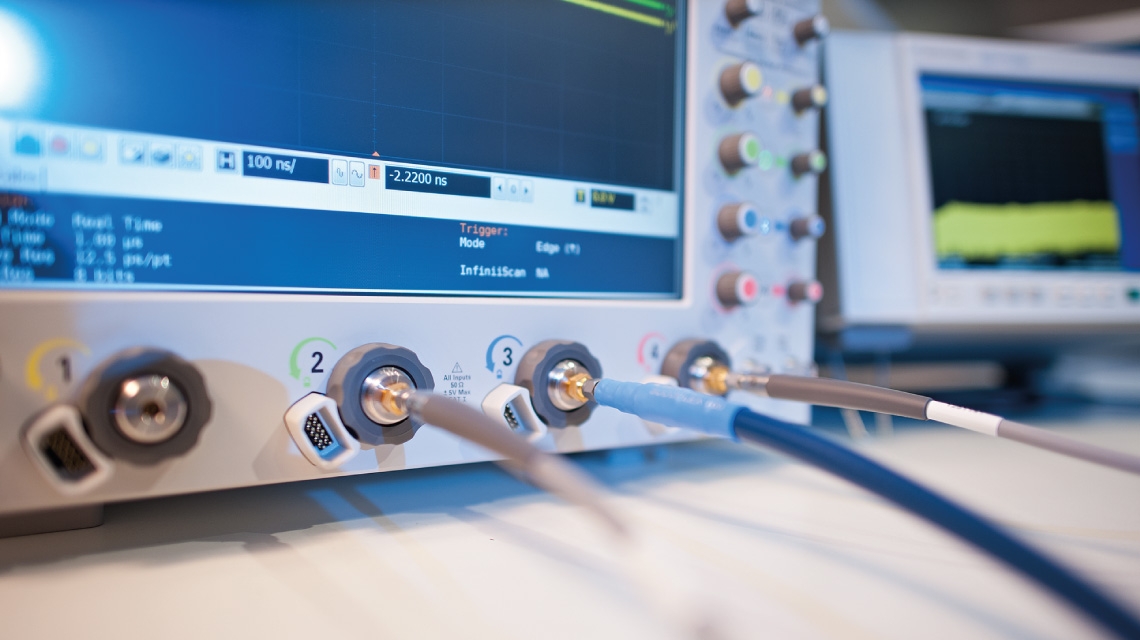
In tiny silicon photonic chips, nano-scale devices many times smaller than a human hair use light signals and lasers to monitor variables such as chemicals, heat, radiation and pressure, as well as transmit and receive data.

Researchers at the Masdar Institute are working to develop a cost-effective, ultra-compact and sensitive sensing structure that integrates electronics and photonics in a single, tiny silicon chip that is orders of magnitude smaller than the chips now available.

With this research, we hope to contribute to the ongoing development of the UAE’s growing semiconductor sector.

The interdisciplinary and collaborative nature of the research will also help to develop the UAE’s human capital by nurturing and training the next generation of technical experts and innovators.

Dr Mahmoud Rasras is an associate professor of microsystems engineering at the Masdar Institute of Science and Technology.