
Masdar Institute’s UAE National Students Find Projects at ‘Taaleem Science Fair’ Highly ‘Innovative’

Young Students’ Projects on Designing Smaller-Scale Wind Turbines and Greenhouse Gas Impact Reflect Awareness on Sustainability
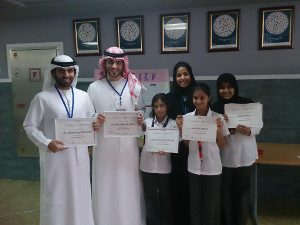
Abu Dhabi-UAE: 12 May, 2013 – Masdar Institute of Science and Technology, an independent, research-driven graduate-level university focused on advanced energy and sustainable technologies, today announced its three student judges found the participating projects at the first-ever Taaleem Science Fair highly creative and innovative in sustainability and green energy.

The three are additionally members of the Young Future Energy Leaders (YFEL) program, a Masdar Institute outreach initiative.

The first Taaleem Science Fair held on 1 May at the American Academy in Al-Mizhar, Dubai, attracted 43 participants. Students spanning ages 11-15 years in elementary and middle school were grouped by grades from Grade 6 to and Grade 9. The high school students in Grade 10 and above competed in either the ‘High School Life Science’ or ‘High School Physical Science’ categories.

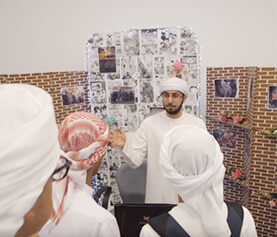
YFEL members Mohammed Al Sharhan, Sultan Al Awadhi and Reem Al Junaibi – Master’s students and research assistants in Engineering Systems and Management at Masdar Institute, were the three judges. They used a rubric to assess the projects in areas such as the quality of a testable scientific question, choosing measurable ways to test their question, and their ability to evaluate their data accurately and appropriately.

Each was assessed for the strength of creativity and younger students were enquired the about the concept behind their presentation. Most of the projects focused on clean energy and sustainability, offering the Masdar Institute students a glimpse into the minds of the children and their awareness about energy conservation and preservation of natural resources. They spent five-to-10 minutes meeting with each student individually about their projects. Each YFEL participant reviewed approximately five projects alongside a partner judge

Dr Fred Moavenzadeh, President, Masdar Institute, said: “The special expertise our students gain from Masdar Institute’s world-class faculty is truly exemplary as could be gauged from the way they judged entries at the Taaleem Science Fair. With the support of the country’s leadership, we continue to develop talented students with the capability to guide today’s children in sustainable ways as well as lead future energy industry. Our students will continue their close involvement in such activities to widen the awareness about clean and green energy in the community.”

Dr. Samia Al Farrar, Chief Education Officer, Taaleem, said: “The Taaleem Science Fair could not have become so successful without the dedication and support of the Masdar Institute graduate students. They were the key in assessing our winners and encouraging young students to study science and pursue it as a career. It was encouraging to see UAE nationals encouraging younger participants, who looked up to the Masdar Institute students for guidance. We thank Masdar Institute for sending these students to judge the entries at the Science Fair.”

Sultan Al Awadhi, an Engineering System Management student at Masdar Institute was one of the judges, found the projects displayed at Taaleem Science Fair truly inspiring.

Al Awadhi said: “Although I was judging projects of students from Grade 6, some of them related to impacts of greenhouse gases and designing of wind turbines on smaller scale. The level of creativity of those students was really inspiring. I found the competing young minds conducting scientific experiments that are bigger than their age. I believe such science fairs will help young students increase their self-confidence and their abilities to think differently, which is a key to innovation.”

Reem Al Junaibi said: “Because they were so young, most of the research questions formulated in the projects showed curiosity, which is the first step to learning. It gladdens me to think that a lot of these questions were focused on figuring out ways to mitigate global warming. These children do understand the vital issues and they do care for Mother Earth, which to me is the most important thing. It was really tough judging them and I believe they all deserve to win. The level of creativity exceeded my expectations.”

Mohamed Al Sharhan said: “Judging the projects from Grade-7 students, I could see that the renewable and sustainability trends are evolving. Out of a couple of projects related to these topics, one was to build a solar oven and the other one was to test the effect of desalinated water on human hair. I was really impressed by the level of awareness the students have about sustainability and their passion about science. Compared to their level of education, these projects were truly amazing.”

Serving as a key pillar of innovation and human capital, Masdar Institute remains fundamental to Masdar’s core objectives of developing Abu Dhabi’s knowledge economy and finding solutions to humanity’s toughest challenges such as climate change.

Established as an on-going collaboration with the Massachusetts Institute of Technology (MIT), Masdar Institute integrates theory and practice to incubate a culture of innovation and entrepreneurship, working to develop the critical thinkers and leaders of tomorrow.  With its world-class faculty and top-tier students, the Institute is committed to finding solutions to the challenges of clean energy and climate change through education and research.

Mangroves Integral to UAE’s Sustainable Ecosystem, Says Masdar Institute

Masdar Institute Students Actively Participate in Green Abu Dhabi 2013 Events to Support Preservation of Environment and Natural Resources

Something you dont see in the brochures, Abu Dhabi has hundreds of islands and inlets . A huge area of the emirate is unspoilt as you can see from the photo, taken within 5 minutes flight from the City Airport.

Abu Dhabi-UAE: 19 May, 2013 – Masdar Institute of Science and Technology, an independent research-driven graduate-level university focused on advanced energy and sustainable technologies, has announced that the mangroves of Abu Dhabi are crucial to the very concept of sustainable development and commended the efforts of various organizations towards  preserving one of the rare natural resources of the UAE.

As part of its contribution to preserving the mangroves, students of Masdar Institute are actively participating in Green Abu Dhabi 2013 to ensure the success of the month-long exhibition of art that opened on 2 May.

Organized under the patronage of His Excellency Sheikh Nahyan bin Mubarak Al Nahyan, Minister of Culture, Youth and Community Development, the exhibition is created by Suhail Jashanmal, founder of Green Abu Dhabi, and supported by Masdar Institute. The show at the Eastern Mangroves Hotel & Spa by Anantara aims to support the ‘mangroves project’ that seeks to preserve the UAE’s natural resources.

George Lewis, an emerging artist who earlier exhibited at Green Art Abu Dhabi 2010, is showcasing his selection of works, underscoring the importance of integrating the environment into our daily life. The artworks also aim to drive home the ‘green message’ of the on-going environmental efforts and sustainable development in Abu Dhabi.

Partial proceeds from the auction of artworks and other items at the event will go towards helping partners including the Emirates Wildlife Society-World Worldwide Fund (EWS-WWF), Future Center for Special Needs (FCSN) in Abu Dhabi, and 21’st Century Leaders Foundation.

Additionally, Green Abu Dhabi 2013 will organize events throughout May, including the YAS Waterworld Sculpture Weekend, the first cleanup of the Landmark Mangrove Project, and the Community Celebrity Auction. The month-long show will conclude with an art auction at Eastern Mangroves Hotel & Spa by Anantara on 8 June.

Dr Fred Moavenzadeh, President, Masdar Institute of Science and Technology, said: “As a graduate-level institution that drives research to obtain clean and green energy solutions while propagating preservation of natural resources, we are privileged to join our partners and support Green Abu Dhabi 2013 program. The Mangroves of Abu Dhabi are integral to the UAE’s coastal ecosystem and Masdar Institute researchers play a major role in the preservation and up-keep of this natural habitat to continue their research activities for the benefit of the global community.

“At the same time our students’ active involvement in the art exhibition and the initiative to clean up the mangrove further demonstrate Masdar Institute’s commitment to the preservation of this natural marine system. With the guidance of the country’s leadership, we will continue to support such projects that remain a symbol of community activism and effective outreach, enabling the society to learn more about our environment.”

Except for the summer months of June, July, and August, the following months will see around 50-60 people from different walks of life volunteer for the mangroves clean-up campaign. Students from Masdar Institute will also be participating in the clean-up program, which the organizers plan to hold as part of Green Abu Dhabi every year.

Suhail Jashanmal Jhangiani, Founder/Artist of Green Abu Dhabi, said: “This year’s art exhibition celebrates diversity and sustainability, and the UAE is a great example of how these two principles can generate growth and prosperity. Emiratis have always found a way of living with their harsh environment. And it was this adaptability and ability to integrate various ideas that have led to their success. Today, very few people actually realize how crucial the mangroves are to a healthy fish stock or to many other environmental issues.

“Abu Dhabi’s mangroves are rare to find in such an arid environment and remain instrumental in protecting the fish-stock. They also help reduce global warming and protect our coastline from storms and beach erosion. Therefore, it is the responsibility of everyone in the UAE to support the project.”

Noura Al Dhaheri said: “As a student at Masdar Institute, I firmly believe in sustainability and preservation of natural resources. That is why I feel proud to be part of the Green Abu Dhabi initiative, which aims to protect the mangroves and the marine ecosystem. I sincerely hope this initiative will help raise awareness about preserving the environment among the wider community in the UAE.”

Serving as a key pillar of innovation and human capital, Masdar Institute remains fundamental to Masdar’s core objectives of developing Abu Dhabi’s knowledge economy and finding solutions to humanity’s toughest challenges such as climate change.

Established as an on-going collaboration with the Massachusetts Institute of Technology (MIT), Masdar Institute integrates theory and practice to incubate a culture of innovation and entrepreneurship, working to develop the critical thinkers and leaders of tomorrow.  With its world-class faculty and top-tier students, the Institute is committed to finding solutions to the challenges of clean energy and climate change through education and research.
Five Japanese Corporations Offer Internships to Masdar Institute’s UAE National Students

Seven Select Students Leave for Japan for Eight-Week Internship Coordinated by Japan International Cooperation Center

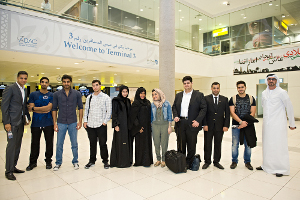
Abu Dhabi-UAE: 21 May, 2013 – Masdar Institute of Science and Technology, an independent, research-driven graduate-level university focused on advanced energy and sustainable technologies, today announced five major Japanese corporations are offering eight-week summer internships to UAE national students in Japan for the second successive year.

Seven UAE national students selected from four Master’s programs – Engineering System and Management, Mechanical Engineering, Electrical Power Engineering and Microsystems Engineering – are participating in this internship that runs until July 19. The internships are being coordinated by the Japan International Cooperation Center (JICE), and supported by Japan’s Ministry of Economy, Trade and Industry (METI).

The first two ‘Foundation’ weeks will include intensive classes for the Japanese language, culture, and basic information. They will then go to their respective companies for five weeks with a final week reserved for meetings that will include a JICE review of the internship process and companies. JICE is also expected to take the students on a number of cultural and work-related field-trips throughout Japan.

Ms. Sachiko Yamano, President of JICE, said: “The second annual internships offered at five Japanese corporations will enable the students to understand the latest technologies in their respective fields. We hope the students will find the language classes, business etiquette, practices and cultural field-trips encouraging for better interaction with company officials during the internship. We welcome the UAE national students from Masdar Institute to Japan and hope they will have a productive learning experience throughout their eight-week stay.”

Dr Fred Moavenzadeh, President, Masdar Institute, said: “The students will intern with the major Japanese companies to learn the latest technology in their areas of study, acting as instruments of knowledge transfer. With the support of the UAE’s leadership, Masdar Institute continues to create additional learning opportunities overseas for the students through the JICE internship. We hope the students will gain fresh insights during their stay in Japan and bring back clean technology expertise that will further contribute to the country’s economic growth.”

Two UAE national students Mohamed Al Musharrekh and Iman Ustadi will intern with Mitsubishi Heavy Industries, LTD, (MHI), while Abdulla Al Shammari will do his internship at Chiyoda Corporation. JGC Corporation will host Jasem Al Hammadi and Majed Al Marzouqi as interns, while Hitachi, Ltd., Infrastructure Systems Company will have Hasan Alhashmi for the internship program. Ahmed Mukhayer will spend the summer interning with Mitsubishi Electric Corporation.

Iman Ustadi said: “As a research assistant at Masdar Institute, I believe that the value of my research will not be sharpened without the collaboration of an industry major. Therefore, I believe that being an intern at one of these big companies such as Mitsubishi will definitely add value to my current research. I have always been fascinated about the unique lifestyle of the Japanese people and I will try to position myself as an ambassador for my country, my academic institution and personally, for myself.”

Mohamed Al Musharrekh said: “The Japan internship is a unique opportunity that gives me the chance to learn more about the latest technologies in desalination and waste recycling and work towards transferring the knowhow at a later stage to the UAE. Another objective is to learn about the culture and to represent the Masdar Institute students in Japan.”

Jasem Al Hammadi, a student of Engineering System and Management, aims to focus more on the development and management of technologies in building smart and green communities, as well as a strong and sustainable infrastructure that are essential in these fields.

He said: “I am keen to experience the productive and unique Japanese ‘working style’, learn about the Japanese business and management model, and how different it is compared to the UAE. Also, I expect to learn more about the Japanese’s popular culture and the tradition, education, manners, etiquette, food, and modern urban life. Moreover, I am looking forward to learn the Japanese language and interact with new people and my peers in Japan.”

During the internship, Mohamed Al Musharrekh and Iman Ustadi will learn the concept of integrated waste treatment systems in Japan and run the ‘Model & Simulation’ to find out the best solution of waste treatment in the region. This program is offered at Mitsubishi Heavy Industries Environmental & Chemical Engineering Co.,Ltd., a subsidiary of MHI.

Abdulla Al Shammari, who interns with Chiyoda Corporation’s Green Infrastructure Project Unit, will learn the technology and the policy in the fields of solar energy such as PV and CSP projects. The Unit is in charge of social infrastructure and industrial facility projects. Jasem Al Hammadi and Majed Al Marzouqi will learn the technology at JGC Corporation’s department that is in charge of development and promotion of business and technology in the fields of CO2 capture, renewable energy, biomass, coal, environmental protection, energy saving and smart community.

At Hitachi, Ltd., Infrastructure Systems Company, Hasan Alhashmi will learn about bio plastics polymerization process design, experiments for process development by using pilot facility, plant design, and mass and heat balance calculation, as well as cell culture tank design. He will aim to gain an understanding of the operations of a pharmaceutical plant, the scaling up technique of culture tank by using CFD, and possibly the trial run of real plant.

Ahmed Mukhayer who will intern with Mitsubishi Electric Corporation will seek to understand the development of water quality management using ozone in order to apply in water heaters, refrigerators and at water purification plants.

Serving as a key pillar of innovation and human capital, Masdar Institute remains fundamental to Masdar’s core objectives of developing Abu Dhabi’s knowledge economy and finding solutions to humanity’s toughest challenges such as climate change.

Established as an on-going collaboration with the Massachusetts Institute of Technology (MIT), Masdar Institute integrates theory and practice to incubate a culture of innovation and entrepreneurship, working to develop the critical thinkers and leaders of tomorrow.  With its world-class faculty and top-tier students, the Institute is committed to finding solutions to the challenges of clean energy and climate change through education and research.

Mubadala Healthcare Shares Insights at Masdar Institute’s Knowledge-Sharing Platform

Mubadala Healthcare Contributes to Achieving Abu Dhabi’s Vision 2030 Objectives

Abu Dhabi-UAE: 23 May, 2013 – The Emirate of Abu Dhabi continues to invest in healthcare facilities as part of its Vision 2030 plan to develop a robust, world class healthcare system and Mubadala Healthcare plays an instrumental role in the implementation of this plan, according to Suhail Mahmood Al Ansari, Executive Director, Mubadala Healthcare.

Al Ansari was speaking during a lecture at a knowledge-sharing platform organized by Masdar Institute of Science and Technology. The lecture was attended by top officials from the government and private sector in the UAE, international healthcare industry leaders, as well as faculty and students from Masdar Institute.

Dr Fred Moavenzadeh, President, Masdar Institute, said: “The lecture follows a successful knowledge-sharing initiative that was organized earlier this month under the framework of developing Abu Dhabi’s human capital. We thank the country’s leadership for supporting us to play an important role in strengthening the knowledge development in the UAE and we believe the knowledge exchange will benefit all stakeholders.”

l Ansari said: “Mubadala Healthcare’s network of facilities and services are helping to address the region’s most pressing healthcare needs. These facilities, coupled with the clinical expertise of our globally renowned medical partners, help to enable the delivery of the highest standards of care, safety and patient experience.”
According market research firm Frost and Sullivan, the global medical tourism industry is worth US$100 billion with a fifth of healthcare seekers worldwide originating from the Arab world. A research report by Euromonitor International indicates that the UAE’s medical tourism market, worth US$1.58 billion (AED5.8 billion) in 2012, is expected to grow a further 6.5 per cent to US$1.69 billion in 2013.

Such signs reflect the presence of a growing number of globally-renowned healthcare providers in the GCC region, especially the UAE. Mubadala Healthcare alone has eight facilities offering healthcare in a range of primary and specialty care areas, through collaborations with medical organizations like Imperial College London and Cleveland Clinic.  

Al Ansari added: “The UAE’s healthcare needs continue to grow and Mubadala Healthcare continues to place great importance on the development of healthcare professionals. Their commitment to providing world class care will play a critical and long term role in sustaining the Emirate’s healthcare system and will help to keep citizens and residents from having to travel overseas for medical care.”

Serving as a key pillar of innovation and human capital, Masdar Institute remains fundamental to Masdar’s core objectives of developing Abu Dhabi’s knowledge economy and finding solutions to humanity’s toughest challenges such as climate change.

Established as an on-going collaboration with the Massachusetts Institute of Technology (MIT), Masdar Institute integrates theory and practice to incubate a culture of innovation and entrepreneurship, working to develop the critical thinkers and leaders of tomorrow.  With its world-class faculty and top-tier students, the Institute is committed to finding solutions to the challenges of clean energy and climate change through education and research.

UAE’s Solar Power Capacity to Reach 20GW by 2030, Predicts Masdar Institute Faculty

MENA Region May Require 120GW in New Generation Capacity with US$250 billion Investments by 2017

Abu Dhabi-UAE: 28 May, 2013 – The UAE could economically deploy solar power generation capacity of more than 20GW by 2030 if avoided and opportunity costs of new fossil power generation are fully considered and transparent, stable, predictable and enforceable regulatory and policy frameworks are implemented, according to Dr. Steve Griffiths, Executive Director, Institute Initiatives, Masdar Institute of Science and Technology and Board Member, Emirates Solar Industry Association (ESIA).

Dr. Griffiths was speaking during the 5th Middle East & North Africa Solar Conference & Expo (MENASOL 2013) held from 14-15 May in Dubai. A plenary panel of experts analyzed the prospects of concentrated solar power (CSP), photovoltaics (PV), and concentrated photovoltaics (CPV) in the UAE and the broader Middle East and North Africa region. Nearly 300 delegates attended the event that was organized by CSP Today, part of FC Business Intelligence. ESIA was one of the sponsors.

Offering details, Dr. Griffiths indicated that by 2017, the MENA region may require more than 120GW in new generation capacity at a total cost of over US$250 billion in order to meet the rapid growth in regional electricity demand. He added that sustainable energy is economically viable but can only be implemented if robust supply-side and demand-side policies are implemented to stimulate deployment.

Dr. Griffiths said: “A sustainable energy strategy considering both demand and supply side considerations will be required for the MENA region. Clean energy including natural gas, nuclear and renewables will play an important role in sustainable supply. However, there is significant but unrealized opportunity for solar. The UAE and other Gulf countries have solar insolation levels that far exceed levels found in European countries, such as Germany, that already have achieved substantial solar deployment.

“However, there is a strong need to translate technical potentials to economic benefits to guide solar energy policy development that will stimulate solar energy technology deployment. This may call for site-specific, long-term data with high spatial resolution, adjusted for local climate conditions. The UAE Research Center for Renewable Energy Mapping and Assessment (ReCREMA) at Masdar Institute can offer guidance in this area.”

The conference generated a great deal of interest in the work being done at ReCREMA, which is Directed by Dr Hosni Ghedra, because the bankability of solar projects in the region critically depends on accurate solar resource data. The Center has played a critical role in the development of the Global Solar Atlas, which is led by the International Renewable Energy Agency (IRENA) and involves other global stakeholders. The hourly/daily/yearly solar irradiance maps provided by the Atlas are produced by a robust satellite-based mapping tool developed and validated at ReCREMA. The Masdar Institute research center officially launched the UAE solar atlas during RIO+20 UN Conference held in Rio de Janeiro in June 2012.

Both photovoltaics (PV) and concentrated solar power (CSP) offer advantages but a mix of both technologies that accounts for their different attributes can bring maximum benefits, according to industry experts.

Dr. Griffiths added: “CSP offers the value of ‘dispatchable’ electricity when coupled with thermal storage and can also be coupled with combined cycle fossil power generation for a cleaner form of fossil power. PV, however, is much cheaper today than CSP in most geographic locations. Therefore, both CSP and PV make sense when used in a complimentary way with consideration of their optimal roles in the overall energy system. PV can be utilized particularly well in the Gulf to meet the peak mid-day demand from cooling loads. CSP can be utilized for supplying late day or early evening demand, which is particularly relevant in countries where peak demand does not always correspond with good solar resource conditions in the mid-day.”

Prior to his role at Masdar Institute, Dr. Griffiths was the Executive Director of the MIT Technology and Development Program’s MIT/Abu Dhabi Program and the founding Executive Vice President of Light Pharma Inc. In these roles, he worked in the US, India and the Middle East, leading the development and implementation of technical and strategic relationships. His interests and expertise are process design, technology strategy and financial analysis in the areas of information technology, biotechnology, and advanced energy technologies.

Dr. Griffiths’ notable current positions include the Emirates Solar Industry Association (ESIA) Board of Directors, Abu Dhabi Science, Technology and Innovation R&D Taskforce, and the Zayed Future Energy Prize Selection Committee. Dr. Griffiths is Associate Editor and member of the Editorial Board of Elsevier’s international journal Energy Strategy Reviews.

Serving as a key pillar of innovation and human capital, Masdar Institute remains fundamental to Masdar’s core objectives of developing Abu Dhabi’s knowledge economy and finding solutions to humanity’s toughest challenges such as climate change.

Established as an on-going collaboration with the Massachusetts Institute of Technology (MIT), Masdar Institute integrates theory and practice to incubate a culture of innovation and entrepreneurship, working to develop the critical thinkers and leaders of tomorrow.  With its world-class faculty and top-tier students, the Institute is committed to finding solutions to the challenges of clean energy and climate change through education and research.

‘Ecosystem’ and Technology Innovations Needed for Sustainable Growth, Says Masdar Institute Faculty

Dr Bruce Ferguson Addresses Middle East’s First-Ever TEDxWWF Conference in Abu Dhabi

Abu Dhabi-UAE: 30 May, 2013 – Success in meeting the challenges of economic development and environmental protection is greatly dependent on innovation, ‘ecosystem’ innovation as well as technological innovation, according to Dr Bruce Ferguson, a Professor in Engineering Systems and Management program and Director of the Center for Innovation Systems and Entrepreneurship (CISE) at Masdar Institute of Science and Technology.

Dr Ferguson addressed more than 250 participants, as well as a large on-line audience, at the Middle East’s first-ever TEDxWWF conference that was organized on 21 May by the World Wildlife Fund (WWF) and Emirates Wildlife Society (EWS-WWF) in Abu Dhabi. Several students from Masdar Institute and youth from the wider community attended the non-profit event, themed ‘One Planet Living.’ This was the third annual conference in the TEDxWWF series, which is designed to encourage the exchange of innovative and sustainable ideas in the global community.

Dr Ferguson said: “Unless we innovate, in the long run everything we care about will disappear, even the modern world around us. To protect the environment for the future, we must innovate today.  But, innovation is messy, inefficient and unpredictable. So, we need to be careful about imposing constraints on innovation because good ideas need shelter in their early stages.

“In addition, more than technological innovation is needed. One billion people need to be supplied electricity, and the solutions primarily require political and social innovation. We need to find new ways to secure food, water and energy for people around the world, while protecting other living things as much as possible.”

Dr. Ferguson pointed out that the laws and regulations, guidelines and permits, review boards and best practices that make the world cleaner, safer and more predictable, often have the unintended consequence of slowing down necessary change. He emphasized that the ‘innovation ecosystem’ of rules and stakeholders needs to be adjusted to help speed innovation in government and all sectors of the economy. Citing the example of the US, where many laws are waived for small companies, he called for the creation of new “innovation safe harbors” around the world in which many laws and regulations would be waived for innovative enterprises.

Dr. Ferguson noted that the need for innovation is urgent and added: “There is a balance to be struck between preserving what we have today and ensuring a better tomorrow. Let’s improve our innovation ecosystem in order to innovate faster and increase the sustainability of all the things we care about. Let us innovate in a respectful manner, with careful attention to preserving that which makes life worth living, but let us innovate, and quickly. For, if we don’t build a better future, then we may regret the past.”

At Masdar Institute, Dr Ferguson dedicates his research and teaching in the fields of entrepreneurship, technology management and the ‘innovation ecosystem’.

Dr Ferguson is the co-founder and former COO of Orbital Sciences Corporation, an industry leader in small- and medium-class space and rocket systems, and a co-founder and former CEO of Edenspace Systems Corporation, a crop technology company. He was an attorney in the corporate and securities department of the Chicago law firm of Kirkland & Ellis.

In addition, Dr. Ferguson is a Trustee of the Carnegie Institution of Washington and a former Fellow at the George Washington University Center for International Science and Technology Policy. He received his Juris Doctor, Master of Business Administration, Master of Education, and Bachelor of Arts degrees from Harvard University.

Serving as a key pillar of innovation and human capital, Masdar Institute remains fundamental to Masdar’s core objectives of developing Abu Dhabi’s knowledge economy and finding solutions to humanity’s toughest challenges such as climate change.

Established as an on-going collaboration with the Massachusetts Institute of Technology (MIT), Masdar Institute integrates theory and practice to incubate a culture of innovation and entrepreneurship, working to develop the critical thinkers and leaders of tomorrow.  With its world-class faculty and top-tier students, the Institute is committed to finding solutions to the challenges of clean energy and climate change through education and research.

Masdar Institute’s Academic Experience Highly Enriching, Say International Students

Instills Confidence, Builds Expertise and Remains A Source of Inspiration, Say Students Waiting for Graduation in June 2013

Abu Dhabi-UAE: 03 June, 2013 – A Chinese graduation application forum on the web, a global news television channel based in the West and volunteer teaching in an African country – these are some of the assorted sources from where international students came to know about Masdar Institute of Science and Technology.

But for Enas Alkawasmi, Computing and Information Systems student, who resides in the UAE, it happened to be a local newspaper report on Masdar Institute’s ‘Open Day’. 

As Fazil Abdul Rahiman, Wen Shen, Kyle Weber, Ayoola Brimmo, Khalid Rashid and Enas Alkawasmi are looking forward to receiving their Master’s degrees on 12 June, it was time for them to go down memory lane.

Alkawasami’s says: “The time I spent at Masdar Institute was a seven-year dream that eventually materialized. This is special from all perspectives – academic, personal and professional.”

Alkawasami’s research focuses on using smart metering techniques to get the carbon emissions reduction and make them available for trading via a distributed and private trading platform that supports user anonymity. She adds: “User privacy protection will ensure more personal engagement in reducing carbon emissions globally. The platform model, if implemented locally here in the Middle East, will increase this region’s contribution to such efforts.”

Fazil Abdul Rahiman, an Electrical Power Engineering student, is also a UAE resident. His thesis illustrates the potential problems while utilizing Demand Response (DR) in distributing grid operations and thereby the grid’s impact in reducing the effectiveness of the DR implementation. The research also seeks to mitigate these identified problems during large scale DR integration with the grid.

As the President of Student Government Association and guided by the spirit of sustainability Rahiman has organized and become part of campaigns such as ‘Clean the Desert’, and ‘Clean the Beach’. He has also participated in several competitions.

Rahiman says: “My advisors and the faculty members have been instrumental in molding a student like me to become suitable for research-oriented course at Masdar Institute. To be with a group of fellow mates from around 52 countries of the world, be like a family and then working together for a single cause – have given me a special feeling at Masdar Institute.”

Wen Shen is a Computing and Information System student, trying to regulate self-adaptive multi-agent systems such as transportation systems, building management systems, water distribution systems, and smart girds by using real-time interventions.

Wen thanks the Masdar Institute community and says: “The experience of receiving education and undertaking research at Masdar Institute has become an exciting and precious part of my lifelong pursuit for personal fulfillment.”

Kyle Weber, an Engineering Systems & Management student, was volunteer teaching in Somaliland and was in charge of erecting a wind turbine at the school to power the off-grid system with his wife. His research turned up the name of Dr. Scott Kennedy, Dean of Research, Masdar Institute, who helped him with the project. And the result – the two became students with Dr. Kennedy as the advisor.

Weber says: “Everything I do in my personal life has to meet a certain sustainability requirement I have set for myself, due to Masdar Institute. In my academic life, the ideals of sustainability have influenced my research that focuses on evaluating case-finding approaches in a tuberculosis control program in Bihar, India. The target is to make healthcare more sustainable.”

He fondly remembers his first year when their son was born during finals week in the first semester. He adds: “The entire community which has helped us raise him and nurture him and this support has really changed the experience from just another highly ranked advanced degree to a thoroughly vital part of my life.”

Ayoola Brimmo, a Mechanical Engineering student is also the inaugural Masdar Institute-Toyota Scholar. Toyota established the scholarship for Masdar Institute students as a generous response to winning the Zayed Future Energy Prize in 2010. The scholarship provides a special two-week “Japan Experience” arranged by the Toyota Motor Corporation to work on projects in technologies for sustainable development. Brimmo’s research in Japan focused on conversion of biomass products into hydrogen through the gasification reaction as a replacement for hydrocarbon-based fuels. 

In fact, Ayoola also joined two faculty members for The Minerals, Metals and Materials Society (TMS) 2013 Annual Meeting & Exhibition conference in San Antonio, Texas. He presented a paper titled, ‘Effect of Watering and Non-Watering Cooling Rates on the Mechanical Properties of an Aluminum Smelter’s Potshell’. And he acknowledges the ‘effective’ nature of his academic advisor and other faculty members.

Khalid Rashid, student in Chemical Engineering, chose Masdar Institute because it is ranked among the top universities in renewable energy and sustainability. His research focuses on ‘biofuels from microalgae’. Khalid says: “As fossil fuel is fast depleting, the need for research on green and biofuels has increased. Many countries including the UAE and my home country Bangladesh are looking at sustainable, green and renewable fuels such as biofuels from microalgae.”

Grateful to his faculty for the guidance, Khalid believes Masdar Institute is a venue of promising people. He says: “I am very lucky to have such a motivating environment. It is the people who have made Masdar Institute so special.”

Such remarkable experience these graduates will taking with them after graduation.

Serving as a key pillar of innovation and human capital, Masdar Institute remains fundamental to Masdar’s core objectives of developing Abu Dhabi’s knowledge economy and finding solutions to humanity’s toughest challenges such as climate change.

Established as an on-going collaboration with the Massachusetts Institute of Technology (MIT), Masdar Institute integrates theory and practice to incubate a culture of innovation and entrepreneurship, working to develop the critical thinkers and leaders of tomorrow.  With its world-class faculty and top-tier students, the Institute is committed to finding solutions to the challenges of clean energy and climate change through education and research.

Masdar Institute’s UAE National Students Seek to Create Sustainability-Oriented Future

Over 90 Students to Receive Master’s Degrees in Masdar Institute’s Third Commencement Ceremony for 2013 Class on Wednesday

Abu Dhabi-UAE: 11 June, 2013 – From tackling challenges to the country’s most strategic areas to increasing the sustainable development benefits acquired from clean development mechanism (CDM) projects and developing additional sources for electricity – the UAE national students at Masdar Institute of Science and Technology continue to plan for a future world in which sustainability will be the watchword.

Over the past two years, these Emirati students were getting adequately equipped to face a world plagued with climate change and energy-related challenges. These graduating students totalling more than 90 will receive their Master’s degrees at the commencement ceremony on Wednesday 12 June. The students form the building blocks of a future community that Masdar Institute is developing as part of its mandate to position Abu Dhabi as a knowledge hub and engine for socioeconomic growth.

Aaesha Alnuaimi, a Microsystems Engineering student, focused her research on improving the efficiency of crystalline silicon hetero-junction thin film solar cells. Her research outcome has relevance to Abu Dhabi while contributing to Masdar’s mission. She has realized the need for developing additional sources of electricity that meet the future demand projections and ensure the continued rapid development of the UAE economy.

Alnuaimi says: “From my research, I have gained key insights into understanding solar cells fabrication processes where I have developed and fabricated thin film crystalline silicon solar cells.” The outcome of her research is published through several papers in academic journals and conferences such as Journal of Applied Physics, IEEE PVSC conference and IEEE PV journal.

She adds: “Recycling and turning off lights when they are not needed, conserving water, and using stairs instead of elevators are a few things that I have learned from living in Masdar Institute. They have now become part of my daily life.”

Acknowledging the contribution of her academic advisor Dr. Ammar Nayfeh, she says: “I have become more motivated to contribute to the field of photovoltaic and gain knowledge that will allow me to address challenges and find the best solutions in solar energy.”

Sultan Al Awadhi, a student in Engineering System Management, aims to create a database with 600 registered CDM projects and score those projects in terms of their sustainable development contribution. He believes the outcome of his research will give recommendation to developing countries to attract more CDM projects. Al Awadhi’s research is relevant because it covers Abu Dhabi’s three registered CDM projects.

A flexibility mechanism under the Kyoto protocol, CDM allows emission-reduction projects in developing countries to earn certified emission reduction (CER) credits, each equivalent to one tonne of CO2. These CERs can be traded and sold, and used by industrialized countries to a meet a part of their emission reduction targets under the Kyoto protocol.

According to Al Awadhi, sustainability is not only a science but a way of living. He says: “I have changed into a ‘sustainability ambassador’ within my family and friends after joining Masdar Institute. It has taught me ways to influence my community and to spread the “green knowledge” and I am glad now my influence has reached many people trough social networking platforms such as Twitter and Facebook.”

Another student’s research outcome is expected to help decision-makers in Abu Dhabi choose the best expansion plans to secure water supply in emergencies.

Wael Al Maeeni, is an Engineering Systems and Management student, whose research focuses on the Strategic Water Reserve in Abu Dhabi.

Al Maeeni says: “I did an economic analysis on the optimal development plan. The Strategic Water Reserve will secure water supply for the whole population of Abu Dhabi in case there was an emergency, such as a major breakdown in desalination plants. The study will determine the lifespan of the current capacity of the strategic reserve, in proportion to the current population growth and economic development for formulating the optimal capacity build-up plan.”

That Masdar Institute has inculcated the spirit of ‘sustainable development’ among the students can be apparent through Al Maeeni. He adds: “The way the Institute was engineered and the transportation used in Masdar City taught me that sustainable development depends on my own decisions. Now I would like to own an electric vehicle that will have zero carbon emission, but can be charged using rooftop solar panels installed on my house. I have already started using recycling bins instead of trash cans.”

Al Maeeni participated in the 22nd international INCOSE symposium held from in July 2012 in Rome, to facilitate the opening of the UAE Chapter of International Council on Systems Engineering (INCOSE) and eventually establish its student’s division at Masdar Institute.

He concludes: “Masdar Institute is a highly advanced learning environment with people working around the clock on their research for that rewarding moment.”

Sultan Al Kaabi, a student in Electrical Power Engineering, feels inspired by the research environment at the campus. He says: “This experience motivates me to do further research on renewable energy and contribute to the sustainable development of my country. Of course, the unique and sustainable building architecture of the campus, new labs, PRT system and other special features have provided me with many life-time experiences.”

Al Kaabi’s thesis titled “Distributed Generation Planning and Optimization for Active Distribution Networks” aims to contribute to sustainable development and renewable energy deployment in the UAE. One of his research papers on an effective technique developed in this thesis for the planning and optimization of distributed generation (DG) has been submitted to the IEEE Transaction in Power Systems, one of the top journals in the electrical engineering field, under the area of planning active distribution networks. Another paper targeting the planning of Photovoltaic (PV) power system with smart inverter control will be submitted shortly, he adds.

He is grateful to his academic advisors, the instructors of the Sustainable Energy course and members of the RDS group for his achievements in his thesis. He says: “The project’s outcomes were helpful in establishing my basic understanding of power system planning besides enriching my thesis with useful input on tackling technical challenges of renewable energy integration.”

“Memorable,” says Marwan R. Al Nuaimi, also from the Engineering System Management program about his two years at the campus. His research focused on desalination.

Al Nuaimi adds: “Based on my analysis, the best strategy to satisfy the expected water shortfall is to add six nuclear Sea Water Reserve Osmosis (SWRO) desalination plants, each with 100 MGD capacity. Each will be added as the following schedule – January 2017, January 2019, January 2021, January 2024, January 2026 and January 2028. From my calculations, the net present value cost over the analysis life span is US$2.12 billion.”

Academically, he feels the knowledge gained at Masdar institute will give him the privilege to offer a great value to the society. He adds: “I have become more familiar with the sustainable development knowledge and this enables me to address the sustainable issues from the engineering point of view, rather than a normal person.”

Serving as a key pillar of innovation and human capital, Masdar Institute remains fundamental to Masdar’s core objectives of developing Abu Dhabi’s knowledge economy and finding solutions to humanity’s toughest challenges such as climate change.

Established as an on-going collaboration with the Massachusetts Institute of Technology (MIT), Masdar Institute integrates theory and practice to incubate a culture of innovation and entrepreneurship, working to develop the critical thinkers and leaders of tomorrow. With its world-class faculty and top-tier students, the Institute is committed to finding solutions to the challenges of clean energy and climate change through education and research.

USC Viterbi Offers Summer Program to Masdar Institute’s Emirati Students

Lectures and Field-trips to Focus on Renewable Energy, Sustainable Infrastructure Systems, and Innovation & Entrepreneurship

Abu Dhabi-UAE: 23 June, 2013 – Masdar Institute of Science and Technology, an independent, research-driven graduate-level university focused on advanced energy and sustainable technologies, today announced 18 UAE national students will be participating in a two-week summer continuing education program at the University of Southern California’s Viterbi School of Engineering in the US.

The program that started from 17 June introduces Masdar Institute’s Emirati students to experiential engineering in renewable energy, sustainable infrastructure systems, and innovation and entrepreneurship. The curriculum is based on the Master’s degree programs and unique centers specializing in these areas. The group of students left for the US on 16 June.

The continuing education program will include lectures and field-trips to gain exposure to large-scale water and waste management facilities in Southern California, supervised laboratory sessions for learning to use systems dynamics tools to model the carbon footprint of a city such as Abu Dhabi and the region, and a set of lectures and discussion sessions on sustainable infrastructure development and relevant societal considerations.

Exposure to on-going energy and water-related research at USC, workshops on innovation development and small-business opportunities in green technologies, lectures on innovation and entrepreneurship, and shadowing start-ups at the Viterbi Startup Garage in Marina Del Rey, California, are some of the other features of the program.

Yannis C. Yortsos, Dean of the USC Viterbi School of Engineering, said: “As one of the world’s leading private research universities, USC Viterbi is delighted to collaborate with Masdar Institute, another research-oriented graduate-level university. The summer continuing education program will offer participants sufficient information on green technologies, innovation and entrepreneurship-building. We hope the students will benefit from our faculty experts, fields trips to technology start-ups and other facilities that incorporate renewable energy technologies.”

Dr. Behjat Al Yousuf, Dean of Students, Masdar Institute, said: “The collaboration with University of Southern California for the continuing education program reflects another aspect of our commitment to offer diversified training opportunities to our UAE national students. This initiative also bears testimony to the UAE leadership’s keenness to build knowledge capital and expand the entrepreneurial talent base to tackle clean energy challenges. We hope these Emirati students will gain fresh expertise and utilize the newly acquired skills in entrepreneurship and research, and contribute to the community.”

Under experiential training, students will spend a full day shadowing 20 entrepreneurs and their start-ups through the Viterbi Startup Garage, an early-stage technology accelerator. Located in Marina Del Rey in California and part of what is known as the ‘Silicon Beach’, the students will experience first-hand the challenges and opportunities faced by engineering entrepreneurs.

Prior to the departure, selected students attended orientation sessions that offered an overview of the academic program as well as additional information on various features.

Following completion of the program at USC Viterbi, the UAE student group will travel to Golden Colorado to visit the National Renewable Energy Laboratory (NREL).

Engineering Studies began at the University of Southern California in 1905. Nearly a century later, the Viterbi School of Engineering received a naming gift in 2004 from alumnus Andrew J. Viterbi, inventor of the Viterbi algorithm now key to cell phone technology and numerous data applications. Consistently ranked among the top graduate programs in the world, the school enrolls more than 5,000 undergraduate and graduate students, taught by 177 tenured and tenure-track faculty, with 60 endowed chairs and professorships.

Serving as a key pillar of innovation and human capital, Masdar Institute remains fundamental to Masdar’s core objectives of developing Abu Dhabi’s knowledge economy and finding solutions to humanity’s toughest challenges such as climate change.

Established as an on-going collaboration with the Massachusetts Institute of Technology (MIT), Masdar Institute integrates theory and practice to incubate a culture of innovation and entrepreneurship, working to develop the critical thinkers and leaders of tomorrow.  With its world-class faculty and top-tier students, the Institute is committed to finding solutions to the challenges of clean energy and climate change through education and research.

Week-Long ‘Ektashif’ Outreach Program at Masdar Institute Concludes

22 Emirati Undergraduates Enthusiastically Participate in Action Labs, Organized Tours, Lectures, Presentations and Team-Building Activities

Abu Dhabi-UAE: 09 July, 2013 – Masdar Institute of Science and Technology, an independent, research-driven graduate-level university focused on advanced energy and sustainable technologies, today announced that 22 UAE national undergraduates have successfully concluded their week-long hands-on lab experience under the second annual ‘Ektashif’ outreach program.

In the presence of the Mr. Hamza Kazim, Vice President, Operations & Finance, Dr Kenneth Volk, Outreach Manager, awarded certificates of participation to students during a special ceremony held at the Masdar Institute campus. The residential program brought together talented UAE undergraduate engineering and science students to discover and learn about renewable energy, sustainability and the environment in the research-oriented atmosphere of Masdar Institute.

Dr Fred Moavenzadeh, President, Masdar Institute, said: “The second annual ‘Ektashif’ outreach program proved to be a rich and rewarding experience for the UAE national undergraduates. Participants were enthusiastically involved in the action labs, organized tours, lectures, presentations and team-building activities. The support from the country’s leadership has enabled us to offer students a wide spectrum of programs and helped them enhance their innovative skills. We hope they will apply their new skills towards better academic performance as well as for adopting the sustainability concept in future.”

A wide spectrum of workshops were offered to the participants. An eight-member team of research engineers, post-doctoral researchers and PhD students headed by Dr. Imen Gherboudj, Research Associate, coordinated a workshop on the Earth Observation Lab and its activities. Nafeez Bin Taher, Lab Instructor, offered an ‘Introduction to Digital Electronics’ at a workshop on the basics of combinatorial logic circuits, while Dr Iyad Rahwan, Professor of Computing & Information Science, and Aamena Al Shamsi, PhD student, led a workshop on Data Mining.

Dr Isam Janajreh, Professor of Mechanical Engineering, conducted two lab activities and discussed pathways for converting waste into an added value product, while Dr I-Tsung Tsai, Professor of Engineering Systems & Management, led a workshop on the design of sustainable energy policy for complex energy economic systems and the financial strategies to promote clean tech investment.

Participants monitored the deformation of a model structure using optical fibers under the guidance of Dr Marcus Dahlem, Professor of Microsystems Engineering, and Dr Jaime Viegas, Professor of Microsystems Engineering, while Mike Tiner, Manager of the Fabrication and Microscopy Facilities, joined Dr Mustapha Jouiad, Analytical Instructor, Laboratories, to introduce participants to the optical microscope station and the electron microscopes.

‘Implementation of Buck and Boost DC-DC converters’, one of the applications of ‘power electronics’, was introduced by Professor Dr Vinod Khadkikar, Electrical Power Engineering program, and Parag Kanjiya, Research Engineer. At the Microbial Environmental and Chemical Engineering Laboratory (MECEL), Dr Hector Hernandez, Professor of Chemical Engineering, elaborated on applying biotechnology tools and engineering principles to address challenges facing society in the areas of energy, climate change, as well as the effects of environmental change and invasive species on ecosystem health.

Among the presentations, Dr Viegas highlighted ‘Lasers, How They Work and What We Can Do With Them and Their Role in the 21st Century’. Ahmed Al Harethi, a Chemical Engineering graduate, and Sultan Al Awadhi, an Engineering Systems and Management graduate and a Young Future Energy Leaders (YFEL) member, discussed their MSc research, as well as their experiences at Masdar Institute.

Kevin Garvey, Lecturer, presented ways to define and describe key principles required to establish and support an effective research argument, while Lecturers Bridie Farah and Glenda El Gamal guided the students on writing effective literature reviews and offered tips on avoiding the pitfalls of plagiarism through the proper use of citations, paraphrasing, and organization in their research communication.

The program also included a site tour of Emirates Aluminum Company (EMAL) facilities at Taweelah.

Lecturer Farah found the students ‘bright and highly motivated’, while Dr Tsai termed them ‘energetic and enthusiastic in finding solutions to sustainable development’. Dr Viegas observed that the students had ‘curious minds and strong interest in engaging on advanced technological topics that are part of Masdar Institute research foci’.

Garvey, who held the lector titled ‘Academic Communication, Critical Thinking and Research Methodology’, said: “The aptitude and enthusiasm demonstrated by the Ektashif group during my workshop on The Development of Academic Argument was highly encouraging. I would be delighted to welcome these young students to Masdar Institute as pioneers in a field they clearly are well suited to.”

Mariam Ahmed Al Dhaheri, Mechanical Engineering student at UAEU, said, “This was my first time at Masdar Institute and I am pleased to be part of this amazing program,asit left a deep and positive impact on me. The hands-on lab sessions were remarkable, and seeing some of the unique devices that we don’t usually see in our universities gave me a much broader view on what people are capable of when they go for research in my own country and that made me proud and motivated to be part of it. What I find very impressive about the faculty at Masdar Institute is that each one of them is so enthusiastic and passionate about what they are doing. That gave me positive energy throughout the whole day and showed me the right attitude one must have toward work, colleagues and students. The encouraging environment and faculty made me consider Masdar Institute for my master’s studies. And most importantly I want to make my country and leaders proud, as they have provided us with facilities to be productive and serve this beloved country.”

Ohoud S. ALZahmi, Civil Engineering student at UAEU, said, “I am proud to be one of the members of the Ektashif Program. I’m proud to have these great technologies, machines, staff, instructors, and professors in my country. I was lucky to see and participate in the labs and lectures there. I enjoyed my journey of discovery there. I will share the experience with my family and friends. Hopefully I can shine in Masdar Institute’s sky after I graduate from UAEU.”

Maryam Rashed AlMazrouei, Chemical Engineering student at UAEU, said, “I always wondered what was happening up there in Masdar Institute and I really wanted to discover it. Ektashif program gave me that chance, and it was one of the best experiences I ever had. I learnt new things about lasers, electronics, biofuel and other technologies. Going deeply in the nano scale was amazing. The topics were important and the presented material was sufficient. Everyone has potential and can make it to the top by dedication and hard working.”

A residential program, Ektashif seeks to bring together talented UAE undergraduate engineering and science students to discover and learn about renewable energy, sustainability and the environment.    It also aims to encourage students to consider taking research and innovation in clean energy and sustainability beyond the campus into the wider community.

Serving as a key pillar of innovation and human capital, Masdar Institute remains fundamental to Masdar’s core objectives of developing Abu Dhabi’s knowledge economy and finding solutions to humanity’s toughest challenges such as climate change.

Established as an on-going collaboration with the Massachusetts Institute of Technology (MIT), Masdar Institute integrates theory and practice to incubate a culture of innovation and entrepreneurship, working to develop the critical thinkers and leaders of tomorrow.  With its world-class faculty and top-tier students, the Institute is committed to finding solutions to the challenges of clean energy and climate change through education and research.

Nobel Laureate Dalai Lama Commends Members of Masdar Institute’s YFEL Program

YFEL Members and 6 Ladakhi Students Gather in Leh for 8-Day Workshop on ‘Energy Access, Ethics and Development’ in India

Abu Dhabi-UAE: 10 September, 2013 – Nobel Laureate Dalai Lama has commended members of the Young Future Energy Leaders (YFEL), an outreach program by Masdar Institute of Science of Technology, for their global commitment to spreading awareness on sustainable technologies and living.

The 14th Dalai Lama met with the eight YFEL members who were in India as part of an eight-day workshop on ‘Energy Access, Ethics and Development’ jointly organized by YFEL, the Dalai Lama Center for Ethics and Transformative Values at MIT and the Students’ Educational and Cultural Movement of Ladakh (SECMOL) in Leh, India. The YFEL members gathered in Leh to learn about energy systems, micro-grid design with community participation, and social entrepreneurship as part of the course that aims to turn them into future leaders in expanding energy access. A total of six Ladakhi participants from various institutions and organizations were also part of the program that began on 18 August.

The Dalai Lama welcomed the YFEL members on the first day of their stay in India and appreciated their enthusiastic activities in the far northern Himalayan region. They were accompanied by Tenzin Priyadarshi, Director of The Dalai Lama Center for Ethics and Transformative Values, MIT. The Dalai Lama, who travels across the globe to propagate the ideals of sustainability, is outspoken in his concerns about environmental challenges and frequently focuses on themes related to the preservation of natural resources.

YFEL members, with Dr Ken Volk, Head of Outreach, Masdar Institute, visited nearby areas of interest including the Saspol village, some caves with 1,000-year old Buddhist temples, and a recently-opened hydroelectric plant. They also went trekking near the SECMOL building.

The Ladakhi participants were made up of young students and graduates from various organizations and academic institutions such as SECMOL, Jammu University, Industrial Training Institute in Leh, and Thapar University in Patiala. They joined the YFEL members in learning how to design energy-efficient systems and formulating socio-development measures with a particular focus on Ladakhi communities. Through a combination of lecture-based content and hands-on group projects, the course emphasized effective sustainable programs that help economic development in rural and remote communities.

Other Masdar Institute faculty and officials visiting India included Dr. Scott Kennedy, Dean of Research, Dr. Vinod Khadkikar, Assistant Professor in the Electrical Power Engineering program, and Ayu Abdullah, Program Teaching Assistant.

YFEL member Mohammad Abdulaziz Al Jasmi, an Electrical Engineer and UAE University Graduate, said: “The meeting with the Dalai Lama was truly remarkable as the Nobel Laureate welcomed us and answered our queries with interest. We were honored and felt grateful for the unique opportunity to meet the Tibetan leader. He also appreciated YFEL’s contribution to the local community’s development through our program.”

Part of the Masdar Institute’s Outreach program, YFEL offers young professionals and students from the UAE and abroad an opportunity to become more engaged in finding solutions to the world’s biggest challenges – achieving energy efficiency and tackling climate change. It also aims to bring young professionals closer to government representatives, business leaders and other organizations active in the area of alternative energy and sustainability.

Shrimp shells are the salvation for the UAE’s water sources

By Dr Simo Pehkonen, professor of chemical engineering

Our modern life has a detrimental effect on the environment, and subsequently our own health. Industrial production, mining and farming can all leave behind materials and substances that can come back to harm us.

One of the most toxic metals in the environment is cadmium, which can cause damage to human kidneys, lungs and bones and is the cause of conditions such as the painful itai-itai – Japanese for “it hurts, it hurts” – disease.

Though found in nature, cadmium is most commonly left behind in dangerous concentrations by certain industries and processes, including mining, production of batteries, fertilisers and pigments, foundry industries, municipal waste and sewage sludge.

The Arabian Gulf region is not a stranger to this toxin, with a number of fish species found to have dangerous levels in their systems.
Finding ways to remove cadmium from an environment is obviously of benefit and interest. It is for that reason that a team at the Masdar Institute is looking at a natural and sustainable material that has the potential to collect it for removal.

This material is chitosan, derived from the chitin, a protein found in the shells of crustacea such as shrimp and crabs.
By treating chitosan with molecular anchoring groups, in this instance carboxylate groups, we can change the surface of the chitosan to make it stick to loose cadmium molecules.

When polluted water is treated with this special chitosan, the loose cadmium binds to the chitosan and gets trapped. The chitosan can then be filtered out, taking the poison with it and leaving clean water behind.

The cadmium can later be washed out of the chitosan, leaving behind two separate materials that both have further uses. The chitosan can be reused to remove more cadmium, while the resulting cadmium can be sold on. Not only have we removed a dangerous pollutant that would otherwise end up in our groundwater, our soil and the Gulf, but in doing so we have produced a commercially valuable product.

The Gulf is particularly vulnerable because it is shallow – just 30 metres at its greatest depth – with a high rate of absorption of heavy metal ions, such as cadmium, into various fish species and other human food sources living in the sea.

We in the UAE rely on the Gulf to provide the water we desalinate and then use in our homes. It is also where some of the seafood we consume comes from.
Cadmium can build up and become concentrated in fish and shellfish, making it unhealthy to eat. By providing industries with ways of removing cadmium from their outflows, and providing another layer to sewage treatment, we can help ensure the Gulf and all of us who rely on its water and marine life are healthier.

The country’s aquaculture sector – artificial farms for shrimp and open-sea fishing – is a critical part of the economy, food security and future progress of the country. Using the waste from shrimp production to develop a much-needed source of pollution removal can turn a waste product into a wealth source. It is our hope that with this research project and others, we can help the UAE diversify its economy, safeguard the health of its public and improve the environment.

Dr. Simo Pehkonen is a professor of chemical engineering at the Masdar Institute of Science and Technology