
- Admissions
- Academics
- Research Office
- Student Life
- News & Events
- Outreach
- About

Dr. Alhussein received his Ph.D. in Electrical and Computer Engineering from the University of Waterloo, Canada, in 2020; his M.A.Sc. in Engineering Science from Simon Fraser University, Canada, in 2015; and his B.Sc. from Khalifa University, United Arab Emirates, in 2013.
He currently leads the NetAI research group and the quantum computing theme within the Research Center for Intelligent Computing, Networks and Sensing (ICONS). He also serves as an Associate Editor for IEEE Transactions on Network and Service Management and Springer Nature’s Peer-to-Peer Networking and Applications.
Prior to joining Khalifa University, Dr. Alhussein worked as a Senior Research Engineer with the Advanced Networking Team at Huawei Technologies Canada in Ottawa from 2020 to 2023. His work focused on developing machine learning solutions for networks. During this time, he filed six patent applications covering probabilistic and distributed AI for next-generation networks, as well as AI trustworthiness.
Dr. Alhussein’s contributions to networking and AI include high-impact publications and award-winning patents. During his time at Huawei Technologies, he received several awards, including an outstanding individual award and a quality research award. He has also received numerous academic fellowships and awards throughout his academic career.
His research interests include network intelligence and optimization, systems for AI, semantic task-oriented network systems, quantum machine learning, and quantum-assisted networked systems.
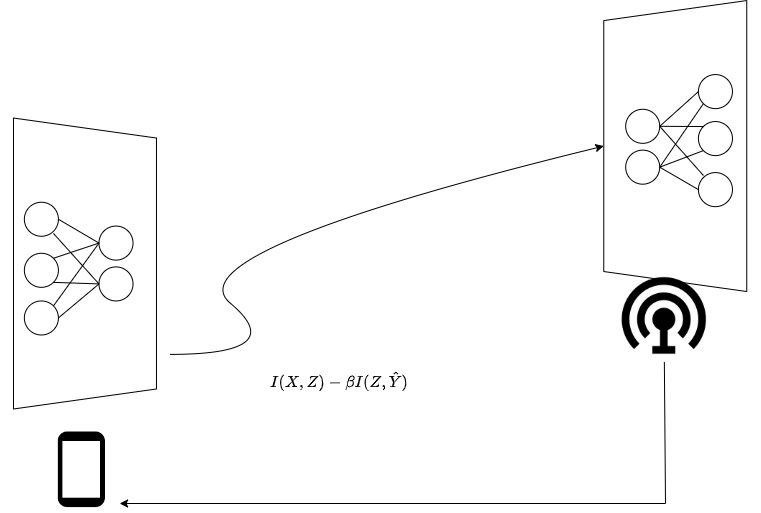
Semantic and Task-Oriented Networks:
In 1949, Shannon and Weaver categorized the problem of communications into three levels, namely (i) the technical: transmission of symbols; (ii) the semantic: transmission of meaning; and (iii) the effectiveness: effect of semantic information exchange. While Shannon’s communication model considers the technical aspect only. There is a growing interest in re-examining this fundamental consideration and incorporating semantics into the 6G fabric. In Shannon’s communications theory, a bit is the smallest unit of “information”. In this project, we are interested in exploring how theoretical and practical advances in machine learning can be used to redefine the atomic unit of a packet, moving beyond Shannon’s statistical bit of information to a contextual (or operational) iota of information. That is, by incorporating effective semantics, we can move to goal-oriented autonomic protocols that enable and improve the network. Central to the research is the exploration of machine learning advances, particularly the information-bottleneck (IB) theory and generative AI, to improve networking protocols. The project aims to integrate these paradigms into a new framework of semantic-based protocols, transcending the traditional bit-level communication model.
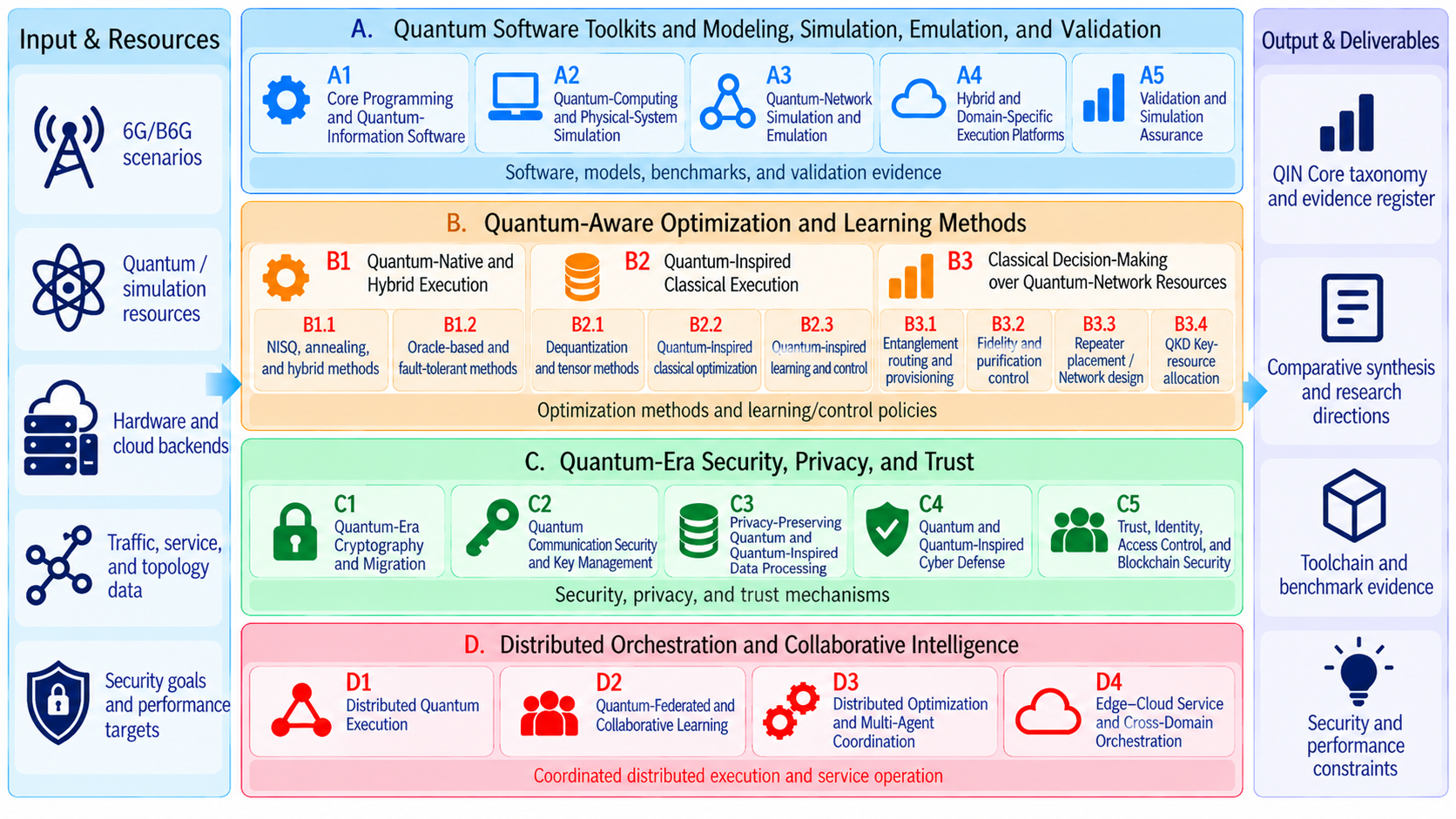
Quantum Methods and Architectures for Next-Generation Networks:
This project investigates two complementary paths toward quantum-enabled networking: (1) applying quantum and quantum-inspired methods to optimize complex, distributed communication networks, and (2) developing scalable quantum-network architectures and protocols. The goal is to enable efficient, privacy-preserving collaboration across multiple network domains, with solutions that is compatible with today’s classical systems while preparing for emerging quantum technologies.
Not accepting PhD applications (due to capacity). Available vacancies for postdoctoral researchers, with expertise in quantum computing and information.
