
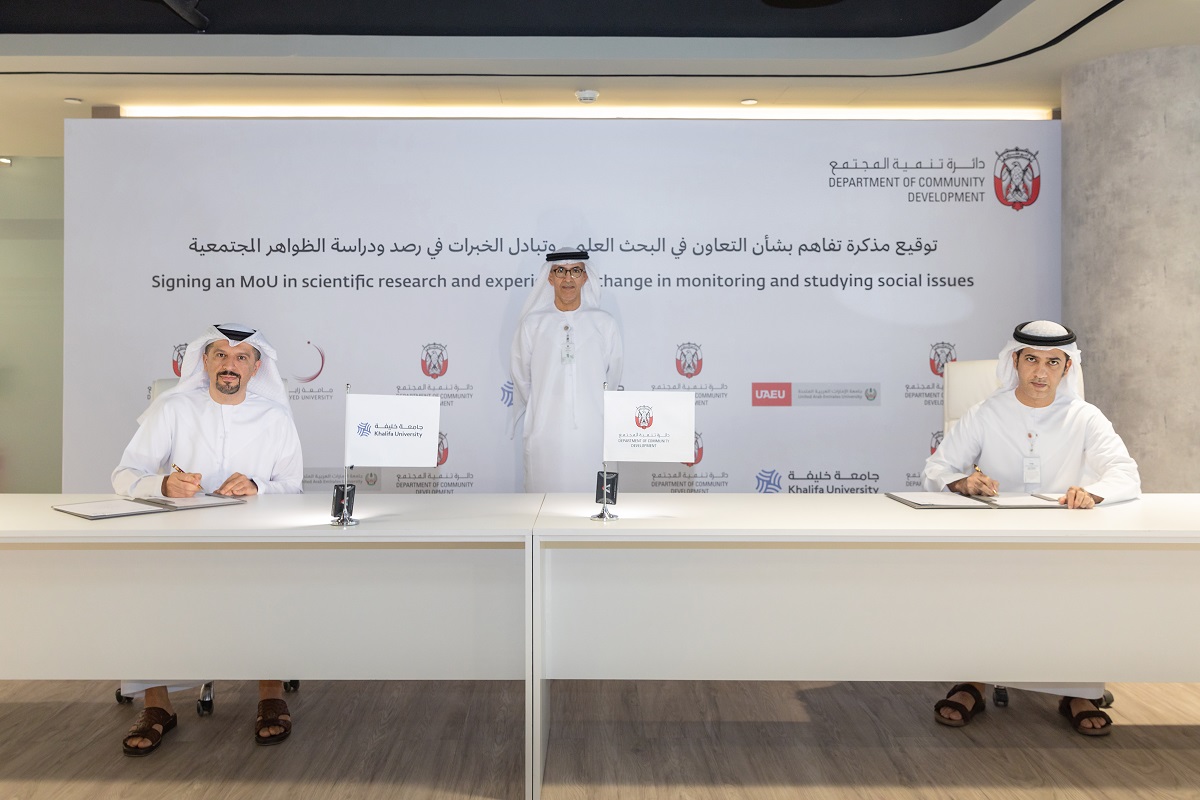
Department of Community Development and Universities MoU

  • Mugheer Al Khaili: An important step towards a sustainable community based on scientific approach
  • Arif AlHammadi: The University utilized its expertise and capabilities to serve the community and enhance the academic, health and security quality of individuals since its establishment.
  • Nora Al Kaabi: A Platform to exchange knowledge and research activities
  • Ghaleb Albreiki: UAEU focuses through its vision and strategy on providing the necessary support for community institutions in the country


The Department of Community Development in Abu Dhabi announced the signing of MoUs, experience exchange and social issues studies with three universities: United Arab Emirates University, Zayed University and Khalifa University. The signing ceremony was held at DCD’s headquarters, and the MoU aims to strengthen cooperation in the field of scientific research to monitor, study and analyze social issues in the emirates of Abu Dhabi.


The agreement with the universities will contribute to an exchange of experiences in the field of community service that will leave a positive impact on the community through social studies and the exchange of necessary data for the implementation process of those studies.


H.E Dr. Mugheer Khamis Al Khaili, Chairman of the Department of Community Development, said: “This is an important step for the department and Abu Dhabi government in acquiring data that helps decision-makers to set laws, policies and take future decisions to achieve a safe and dignified community, which is consistent with our vision in providing a dignified life for all, and making this an advanced community in sustainability and future foresight.”


Al Khaili added: “Community development is a shared responsibility, and today we are pleased to collaborate with academic universities by signing a memorandum of understanding  (MoU) and work side by side in creating innovative solutions for the challenges that the community faces in accordance with the best international standards and practices.”


Al Khaili added: “Monitoring contributes in strengthening the community’s family cohesion, and this is one of the main priorities of the department to ensure a community that is tolerant to all segments of society, and to activate the role of community members and provide them with a happy and active life, which in return be reflected in the community to peruse success and achievements.”


Dr. Arif Sultan Al Hammadi, Executive Vice-President, Khalifa University, said: “We are honored to collaborate with the Department of Community Development to exchange experience in the field of monitoring, studying and analyzing social behaviors in the Emirate of Abu Dhabi, which would help improve the quality of life for the community. Since inception, Khalifa University has been utilizing its capabilities and expertise to serve the community and work towards advancing the standard of life for individuals by finding innovative research solutions to challenges faced by the society, especially those related to healthcare, security and education. We thank the Department of Community Development for this important partnership and we look forward to more joint initiatives between the government and academia to further develop and sustain the UAE’s leading status in enhanced social standards.” 


Her Excellency Noura Bint Mohammed Al Kaabi, Minister of Culture and Youth, President of Zayed University, expressed her enthusiasm towards the partnership between Zayed University (ZU) and the Department of Community Development (DCD)- Abu Dhabi.


She appreciated the constructive efforts undertaken by the department with the aim of establishing an integrated system for the social sector in the emirate, and the drive towards encouraging a wider participation of social work, as well as promoting community service values, encouraging and enabling stakeholders of the sector to further accomplish their goals, and working to monitor and track and maintaining the positive address of societal challenges and behaviors.


Her Excellency noted that through the setting of incentives and initiatives, it directly efforts in raising awareness amongst the community on societal issues. She acknowledged that this partnership establishes a stronger relationship between the two parties and provides opportunities for the exchange of knowledge and the development of shared objectives.


Her Excellency reaffirmed that the MoU will bear many fruits, including strengthening cooperation in research activities that rely on field experience in extracting information from relevant sources.


“We are confident that this cooperation will serve as a platform for the exchange of knowledge between us, as it will provide the opportunity for researchers at ZU to work side by side with DCD’s experts and participate in what is necessary to support the tasks that the two sides carry out under this agreement”, she said.


She also highlighted the importance of maintaining a long term relationship and consolidating efforts between ZU and DCD that is rooted in a strategic vision that aims at exploring growing opportunities for joint initiatives by embracing methods that serve developmental goals and achieve mutual benefit.


Prof. Ghaleb Ali Albreiki, Acting Vice Chancellor of the UAE University, highlighted the importance of signing a memorandum of understanding with the Department of Community Development, which comes in line with the university’s vision and strategy.  It is intended to enhance cooperation with various national institutions and bodies, to provide services according to the highest standards of quality and efficiency and to create a link between the academics and the executive authorities as well.   


He added, “this memorandum is expected to have a positive impact on the level of monitoring and studying social phenomena by employing scientific expertise in the UAE University, University of the Future.  The University plays a pivotal role of leadership and scientific excellence in order to achieve the vision of the leadership in achieving sustainable development. It also contributes to achieving the requirements of the UAE for the progress and well-being of the society, strengthening the happiness system, and achieving the UAE’s vision in preparing for the next 50 years. He also indicated, “the UAEU focuses through its vision and strategy on providing the necessary support for community institutions in the country, through the university’s qualitative and distinguished production of academic research, knowledge development, measurement and evaluation. It is according to an advanced educational system that promotes building the tolerant UAE personality, and excellence, creativity and innovation opportunities for future generations.”


Staff Report
27 October 2020
New research project aims to advance UAE’s leadership in Artificial Intelligence

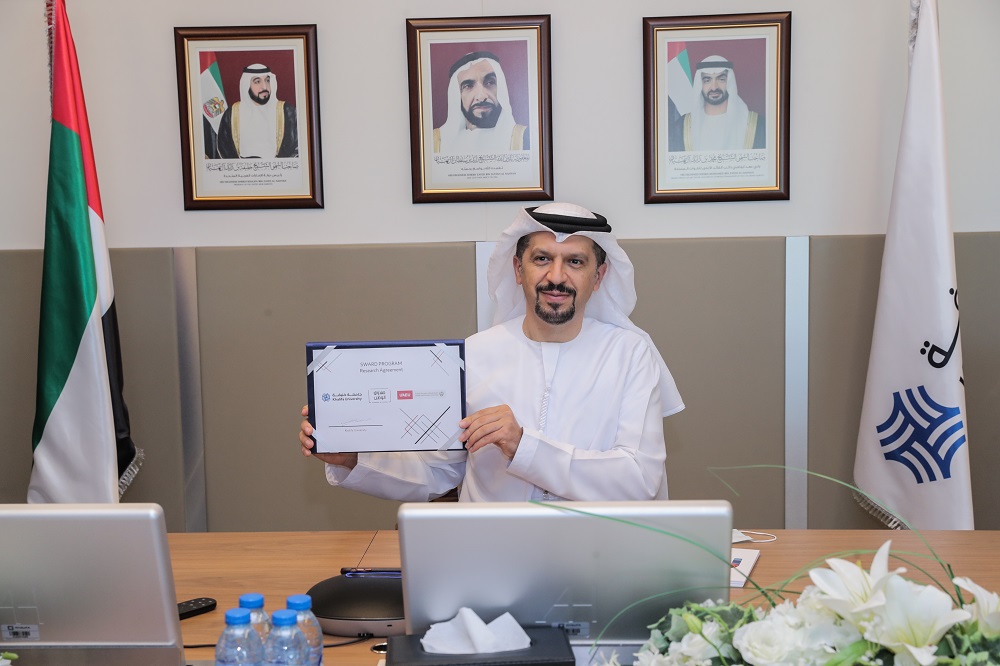
In support of the UAE taking the lead in the realm of Artificial Intelligence (AI), Khalifa University has signed a sponsored research agreement with Sandooq Al Watan and United Arab Emirates University with the goal of advancing cognitive computing using novel architecture and high-grade materials. The project was awarded under the SWARD program, which aims to create tangible social and economic outcomes in the country by bridging the gap between academia and industry.


Titled: ‘Doped Phase Change Material Nanowires for Memory Applications,’ the project, which has a budget of AED 1 million, will explore the potential of developing new materials to progress AI processing and in-memory applications in the area of ‘non-von Neumann architecture.’  


Discussing the nature of the project, His Excellency Ahmed Fikri, Acting Director General of Sandooq Al Watan said: “with researchers reporting the first ever in-memory computing , we see the future of cognitive computing in synchronised processing and memory functions. This in-memory computing relies on nano-resistive memory devices made from specific materials, with ‘Germanium Telluride’ (GeTe) being one of the most viable. This project has been established to explore the potential for scalability of this material into nanowires to create substantive leaps in AI capacity.”


He continued: “We are blessed with having some of the top minds working in the realm of AI, robotics, machine learning and indeed all areas of Fourth Industrial Revolution technology in our country. Researchers from United Arab Emirates University and Khalifa University are at the forefront of the field and we anticipate that this project will see major strides being made in harmonising processing and memory in AI, furthering the position of the UAE in this rapidly evolving sphere.”


Prof. Ahmed Murad, Associate Provost for Research from United Arab Emirates University – emphasized the leading role of the University in conducting high quality research to support the national agenda. He added that this project with Sandooq Al Watan and Khalifa University comes in line with UAEU’s plan to develop the collaboration with other organizations to carry out joint research, especially in the field of Artificial Intelligence, which represents a vibrant area of research at the university and a reliable fundamental pillar for the development of scientific research.“


Dr. Arif Sultan Al Hammadi, Executive Vice-President, Khalifa University of Science and Technology, said: “We are delighted to be part of this project that will fabricate devices using nanowires and investigate their electrical performance. Faculty experts at Khalifa University’s research centers have the capability and expertise to deliver not only integrated system-on-chip (SoC) solutions but also other advanced technology innovations in intelligent systems, robotics, and machine learning to drive innovation. We believe our support will remain integral to the success of this project and we foresee similar collaborations with more research organizations in the future.”


The project will be led by Principal Investigators Dr. Haila M. Aldosari, Assistant Professor, Physics, at UAE University and Dr. Baker Mohammad, Associate Professor, Electrical and Computer Engineering at Khalifa University. They will work together with a team of research associates and postdoctoral fellows, while the research project will present internship opportunities for UAE national students.


The aim of this latest SWARD project is the optimization of material, device, and architecture to enable in-memory computing for Internet of Things (IoT) devices and Artificial Intelligence (AI) applications. This project explores the development of the phase change material germanium telluride (GeTe) for resistive memory, enabling efficient in-memory computations with extremely low power and high-density memory. The project will also investigate the functionality of GeTe material using diameters of 10 nanometers or less – tolerances that have never been achieved before.


Staff Report
25 October 2020

Is Artificial Soil the Next Green Revolution in Farming?

Food security is one of the largest issues faced by many nations. That is why it is a central part of Sustainable Development Goal 2, Zero Hunger. Huge strides have been made through improved crops and farming techniques. Now, researchers in the Arabian Gulf are working toward another breakthrough that could have a major global impact. They are currently in the process of creating an artificial soil that would allow the desert to bloom.

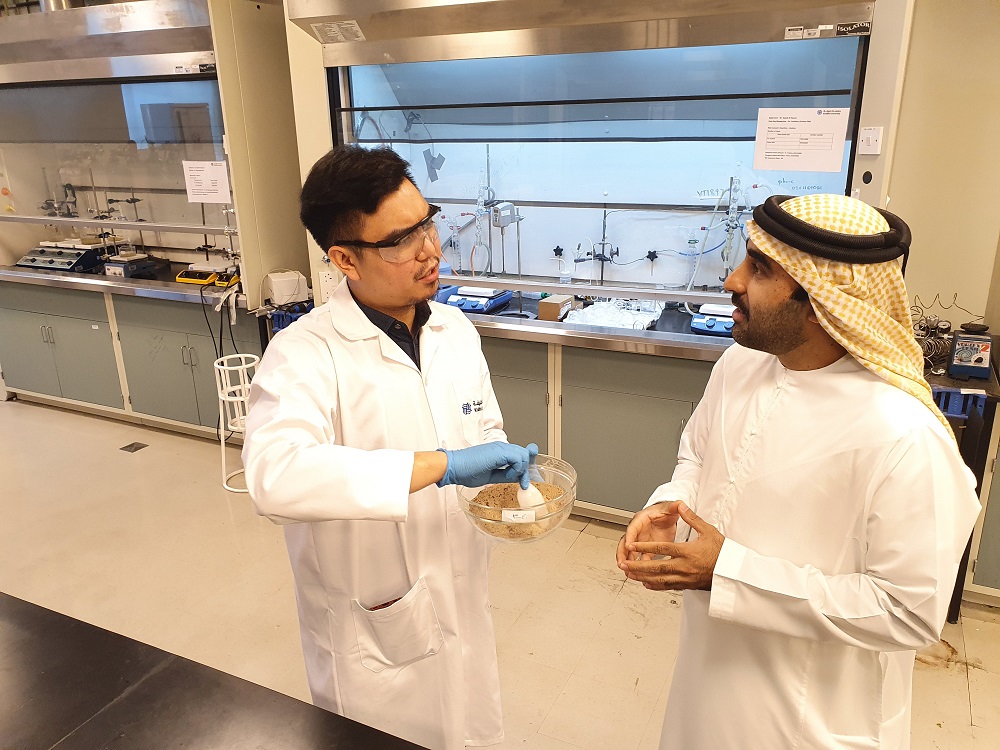
With this issue in mind, Dr. Saeed Alhassan Alkhazraji, an associate professor of Chemical Engineering at Abu Dhabi’s Khalifa University and Kevin Halique, a researcher from Dr. Alkhazraji’s team, are currently developing artificial soil that would support desert-based agriculture. 

Read full story here: https://globalgoalscast.org/is-artificial-soil-the-next-green-revolution-in-farming 

On the Edge of Smart and Secure Driverless Cars

As smart vehicles take to the streets, a new Internet-of-Things like architecture is needed to keep them safe and efficient. Enter the Internet-of-Vehicles, investigated by a team at Khalifa University to make more secure and intelligent. 


With companies around the world in the race to put the first truly driverless cars on the road, one of the first steps is empowering these vehicles with the ability to communicate and interact with each other. Much like the Internet-of-Things, where intelligent and connected devices exist on a network, the Internet-of-Vehicles allows vehicles to exchange information, efficiently and safely with each other, as well as with infrastructure in smart cities.


The Internet-of-Vehicles (IoV) is a network of cars communicating with each other and the systems in place around them, creating a network with intelligent devices as participants.


A multidisciplinary research team, including Dr. Hadi Otrok and Dr. Rabeb Mizouni, Associate Professors in the Department of Electrical Engineering and Computer Science, has investigated the use of machine learning and blockchain in IoV. However, such integration has its challenges, with the research team suggesting the use of a new Vehicular Edge Computing-based architecture to embed both technologies.


“The number of smart vehicles in IoV is going to increase drastically in the coming years,” said Dr. Otrok. “Therefore, careful consideration must be taken to manage the IoV infrastructure efficiently.”


This new generation of vehicles use complex applications that require intelligent decision making, which in turn require a lot of computing power. Vehicular Edge Computing (VEC) can meet this demand for computation, using computation devices on the roadside or in proximity to the vehicles.


The increase in Internet-of-Things devices at the edge of the network—physically distanced from the processing and computing data centers of the network—produces a massive amount of data to be computed at data centers, potentially pushing network bandwidth requirements to the limit. These data centers may not be able to guarantee the required transfer rates or response times that are critical in the real-time computing needed for smart vehicles to navigate, for example.


Additionally, devices at the edge constantly consume data coming from the cloud. Moving computation away from data centers towards the edge of the network, where the vehicles are, uses computation devices to perform tasks and provide services on behalf of the cloud.


This architecture facilitates communication, computation and data sharing among vehicles, which is more convenient for dynamic environments. Machine learning techniques can then be used to optimally decide and schedule tasks that need to be offloaded to the VEC infrastructure and thus support network management.


At the same time, more automated vehicles means more data that needs to be protected. This is where blockchain could help. Blockchain is a decentralized and distributed ledger of transactions: no single authority or company owns the data as all data is stored in a decentralized way. Because transactions are recorded in secure blocks on the blockchain, they can always be viewed, but it are nearly impossible to alter. This immutability eliminates the need for a central intermediary.


“Blockchain’s decentralized and security-enhancing architecture offers the trustworthiness needed to make this work,” said Dr. Mizouni. “But using both machine learning techniques and blockchain exhausts the infrastructure, consuming the computation resources needed for the smart vehicles to function. Using a multi-layered hybrid blockchain-based VEC architecture can overcome this issue.”


The architecture proposed by the research team supposes that vehicles on the road are always connected to the network edge. The data they generate from their sensors is sent to a road-side unit (RSU) where it is stored, filtered and transferred securely using a blockchain for anonymity and data protection. In this way, data generated by the cars is sent securely to powerful servers for processing, where the computation tasks are executed. 


“Vehicles are becoming smarter, but such intelligence comes at the cost of needing complex computation,” explained Dr. Otrok. “Even though smart vehicles nowadays are embedded with strong computation resources, these might not be enough to meet all the complex applications that are becoming necessary. This is where offloading the problems to the Vehicular Edge can help advance the field.”


Jade Sterling
Science Writer
22 October 2020

Drones as a Vital Asset amid Covid-19

By Dr. Athol Yates


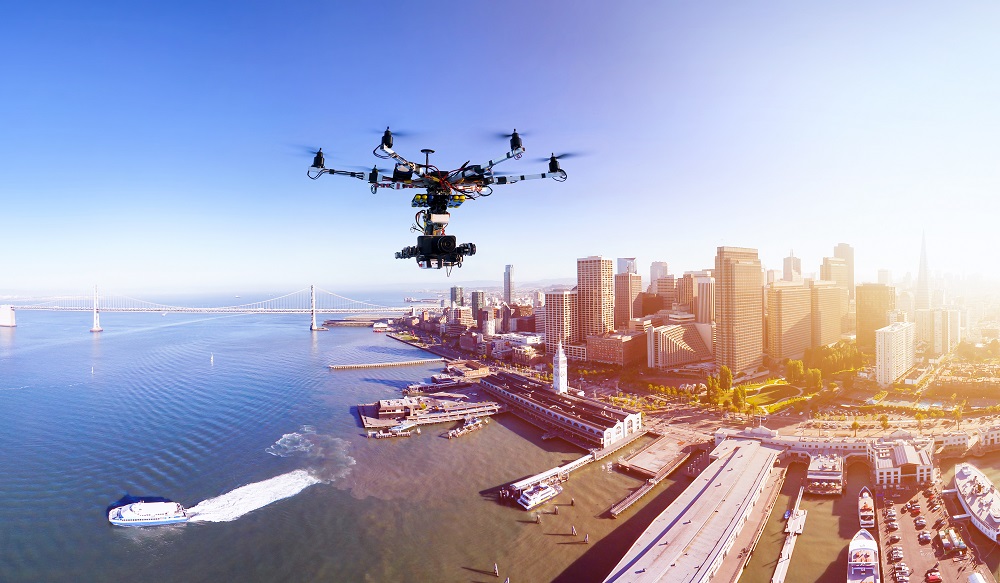
Covid-19 may be the tipping point for the drones, or unmanned aerial vehicle (UAV), industry. Drone technologies are being incorporated in every possible solution to help contain the spread of the virus, with governments across the globe engaging them to disinfect, sterilize, assess, and manage social distancing in public areas.


I recently chaired a webinar hosted by Messe Frankfurt Middle East’s Intersec, where Dubai Police and drone vendors discussed leveraging drones and smart technologies to combat the virus spread and make the city safer.


Covid-19 has accelerated many changes that were already underway in society. Think of remote working – six months ago it was limited to a very small percentage of the workforce. Today, it’s quite common.


Another is the use of drones. At the beginning of the year, while defence, border security, municipal and critical infrastructure agencies were doing multiple demonstration projects with drones, only a few actually deployed them.


Covid-19 has shown us the benefits of drones and now more agencies are experimenting with them, and a number have deployed them. A great example is the Dubai Police. I was joined by Lieutenant Engineer Saif Alhaj for an overview of how the Dubai Police have used drones during the pandemic.


They’ve been experimenting with them for a number of years and have been using them operationally more recently. During Covid-19 they continued to deploy them, undertaking tasks that they hadn’t used them for in the past, let alone thought about! In many ways, Dubai Police is a world leader in the application of drones for safety and security.


The UAE is also a leader in R&D on drones. We’ve seen this at KU where we have two research centers, which undertake significant drone research and development activities with both the UAE government and the private sector.


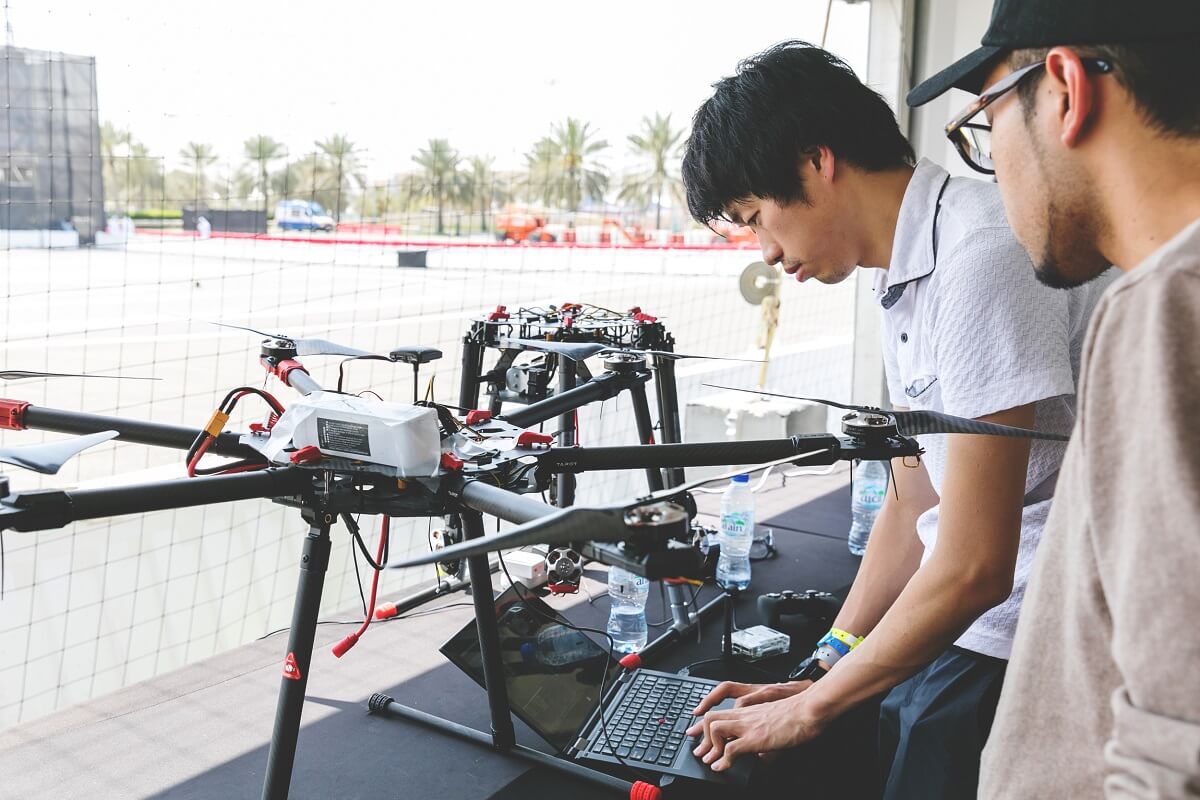
One of these centers is the Khalifa University Center for Cyber-Physical Systems (C2PS), and it has ongoing projects involving the secure operation of drones via location-based authorization of drone flights and the leveraging of internet-of-things data for application in the safe operation of drones. The Khalifa University Center for Autonomous Robotic Systems (KUCARS) has multiple research thrusts that involve drones. One such thrust is the use of drones in extreme environments, such as using them for fighting building fires. The center currently has a project supported by Emaar on this very topic. Another thrust includes the use of drones to inspect structures such as large aircrafts. The center also oversees the Mohamed Bin Zayed International Robotics Challenge, which poses multiple state-of-the-art challenges in drone operation.


The university is always interested in collaboration with other government agencies and the private sector.


The webinar that I moderated focused on two aspects of drones. First, how drones can be used in a pandemic to disinfect, sterilize, assess and patrol in an effort to control and prevent the virus spreading. Second, the benefits and limitations of drones during times of pandemics as a mechanism for protecting employees while continuing and more efficiently delivering business outputs.


For Dubai Police, drones are not seen as a toys— they’re used because there is a sound business case for employing them. The police have moved away from seeing drones as a technology in search for an application to seeing the benefits they can deliver for the police.


Comparing an agency’s use of drones is challenging as there aren’t benchmarks that are generally available. Agencies around the world are reluctant to share information on the operational use of drones, even to similar agencies, which makes benchmarking and best practice identification difficult. To overcome this, Dubai Police has been working with other countries directly to develop mechanisms for benchmarking against other leaders to improve drone usage and technology.


I was also joined by Zeting Wang from Dahua Technology from the People’s Republic of China to discuss how drones were used in China during the Covid-19 epidemic. During the initial lockdown of Wuhan, the city in China where Covid-19 was first identified, drones were used to broadcast messages to stay indoors and quarantine, and also to enable mass disinfection of public areas. Drones became effective in preventing disease and controlling the virus spread in the city. They were employed in aerial patrols, delivering hospital supplies, and even helping to build the Huoshenhan hospital by providing night lighting.  


I took three main points away from the webinar. First, when it comes to thinking about drone technology, it’s not about the drones themselves; it’s about how they can achieve business outputs, as measured in productivity, cost, and safety. From the discussion part of this event, we found that the issue of privacy is a key concern for users of drones, and I think we all need to remember that concerns about privacy are very much an issue that needs to be understood in the context of culture and local circumstances.


The final key element is the issue of risk. It was great to see the speakers talk about the use of risk management strategies and recognizing that managing risks is one of the key elements of any new technology. 


Dr. Athol Yates is Assistant Professor of Humanities and Social Sciences at Khalifa University.

Khalifa University’s Center for Biotechnology Receives DoH License for On-Campus COVID-19 Testing Facilities

Khalifa University Adds Routine COVID-19 Testing to Its List of Viral Tracking Capabilities to Assist in Mitigating the Spread of Disease  


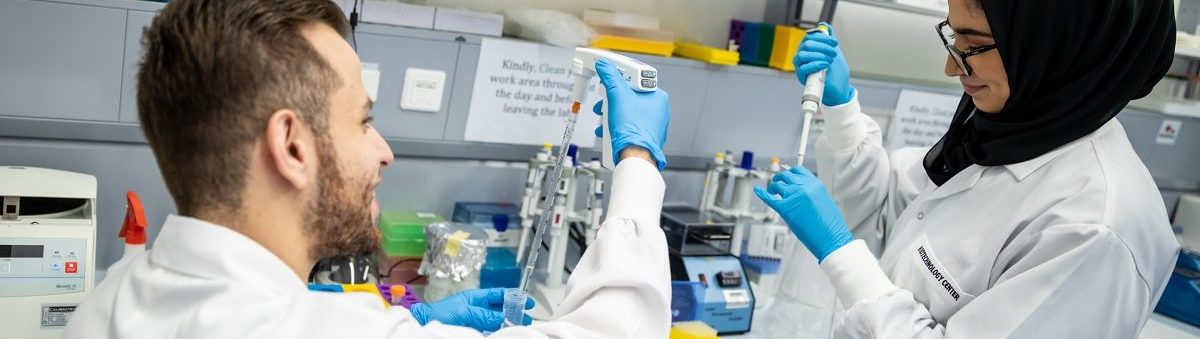
Khalifa University announced that its Center for Biotechnology (BTC) has been licensed by the Abu Dhabi Department of Health (DoH) to serve as an official COVID-19 test center.  The service is linked to Malaffi, a centralized database of real-time public health information, and to the Alhosn app, the official COVID-19 results and contact tracing app for the UAE.


Khalifa University has thus become the first university in the UAE to open an on-campus COVID-19 testing center for its students and employees, in line with its utmost priority on health and safety. Since the early stages of the COVID-19 outbreak, research teams at the university have been working on diverse ways to assist with tracking and mitigating the spread of the SARS-CoV-2 virus. Researchers at the BTC have developed a range of competencies including sewage testing to gauge the level of infection in community groups, validating viral testing kits and genome sequencing to track the source and spread of viral infections. 


For some time, the BTC has been conducting COVID-19 tests for research purposes and the license approved by DoH means that it can now offer a routine diagnostic service and another testing center is now available to assist health authorities manage the pandemic. The BTC testing center will routinely report to the DoH operations center. The BTC has now upgraded its laboratories to include a routine diagnostic arm, to further increase the nation’s testing capacity, if required. The BTC has already passed the proficiency test by the Abu Dhabi Quality and Conformity Council.


Dr. Ahmed Al Shoaibi, Senior Vice-President, Academic and Student Services, Khalifa University of Science and Technology, said: “We are proud to be the first university in the UAE to open an on-campus COVID-19 testing facility for our students and employees, which reflects our highest priority on health and safety. In addition to implementing the hybrid learning system and taking adequate measures to ensure the safety and health of students, without compromising the quality of education and research, Khalifa University also places significant emphasis on their overall academic and individual development, so that they evolve into full-fledged professionals in science, technology and engineering areas. At the same time, Khalifa University and its research centers, have remained at the forefront in tackling the challenges posed by the COVID-19 pandemic. This is also a key part of our strategy to move research projects to relevant services that aim to contribute to the joint efforts of government and private stakeholders towards restricting further spread of the virus. We hope, as the official testing center, the BTC will offer testing for the community and increase UAE’s testing capacity.” 


The BTC team which works with clinical scientists, medical technologists and pathologists, has quickly expanded the capabilities of its laboratories to accommodate a routine diagnostics service. In order to act as an official COVID-19 testing center, it had to fulfill the full requirements imposed by the Abu Dhabi DoH.


Dr. Habiba Alsafar, Director, BTC, said: “The center has a-state-of-the-art molecular genetic laboratory which spans every basic competency from DNA and RNA extraction to next generation sequencing. Since the COVID-19 outbreak, the BTC laboratory has had to pivot very quickly and add two arms to its research capability, namely diagnostics and manufacturing services. These capabilities give decision-makers a string of competencies that they can call on to manage the current and future disease outbreaks. There is definitely room to grow and include more and diverse testing capabilities in the future.  We hope this will allow us to respond quicker in the future and reduce the impact of new events.” 


Dr. Alsafar is already leading a multidisciplinary team from Khalifa University to work with universities across the globe and investigate how the COVID-19 virus, usually found in animals such as bats, has jumped to humans. Earlier, the BTC joined with its partners to successfully manufacture reagents for extraction of COVID-19 RNA, over the course of just two weeks, as part of its contribution to help the nation overcome the current impact of COVID-19.


Clarence Michael
English Editor Specialist
18 October 2020

MBZIRC inspiring solutions to important robotics challenges with special journal edition


The dust may have settled in the Mohamed Bin Zayed International Robotics Challenge (MBZIRC) arena but the ingenuity and ambition demonstrated by the teams competing continues. Efforts are now being directed towards further research and development discussions as insights related to the 2020 challenges are prepared for publication in an upcoming special edition of the Journal of Field Robotics.


The Journal of Field Robotics special issue MBZIRC 2020 – Challenges in Autonomous Field Robotics – will be published in early 2021 and researchers involved in MBZIRC 2020 are encouraged to submit their work. Topics of interest include robotics in unstructured, dynamic environments, sensing and perception, machine learning, mechanical design, computer architectures, communication, planning, learning, and control.


“Robotics has the potential to have an impact that is as transformative as the Internet, with robotics technology poised to fuel a broad range of next-generation products and applications in a diverse array of fields,” explained Dr. Lakmal Seneviratne, Director of the Khalifa University Center for Autonomous Robotic Systems (KUCARS). “These include robot applications in disaster response, manufacturing, construction, healthcare and household chores. In the past few decades, robotic competitions have been a catalyst for accelerating technological advancements in robotics and autonomous systems.”


MBZIRC is a biennial robotics competition motivated by the technological challenges facing the next generation of robotics. Similar to other major competitions, MBZIRC 2020 provided an environment to foster innovation and technical excellence, while encouraging entertaining performance.


Robots and drones indeed have a bright future across multiple fields. They may be useful and entertaining to the hobbyist, but the recent MBZIRC hosted in Abu Dhabi proved their incredible potential in a broad range of diverse applications. But for autonomous robots and drones to be useful in tasks such as disaster zones or as first responders, they need to be able to move fast, far and without human oversight, often in environments where they can’t rely on external guidance systems like GPS.


All the MBZIRC 2020 challenges were developed to push the technological and application boundaries in robotics, focusing on fast, autonomous navigation in complex environments to complete a task. While remote controlled robots and drones would face enough challenge in this arena, the most important part of MBZIRC is the autonomous completion of tasks. This autonomy is one of the biggest challenges facing robotics development.


“The enabling technologies for next generation robotic applications include robots working more autonomously in dynamic, unstructured environments, while collaborating and interacting with other robots and humans,” explained Dr. Seneviratne. “MBZIRC 2020 focused on some of these enabling technologies, by providing a demanding set of benchmark robotics challenges, and attracted some of the best international teams.”


While solving real world problems, MBZIRC encourages innovation in robotics, AI, and materials; all major components that must be addressed as robots and drones can become increasingly potent tools to improve safety and security. Robotics competitions are the ultimate catalyst to accelerating development as teams compete to push the boundaries.


The challenges and innovations required to compete have attracted the attention of the prestigious Journal of Field Robotics, highlighting the impact MBZIRC has on inspiring solutions to some of the most pressing challenges in robotics.


Jade Sterling
Science Writer
15 October 2020

KU Elects New Student Council

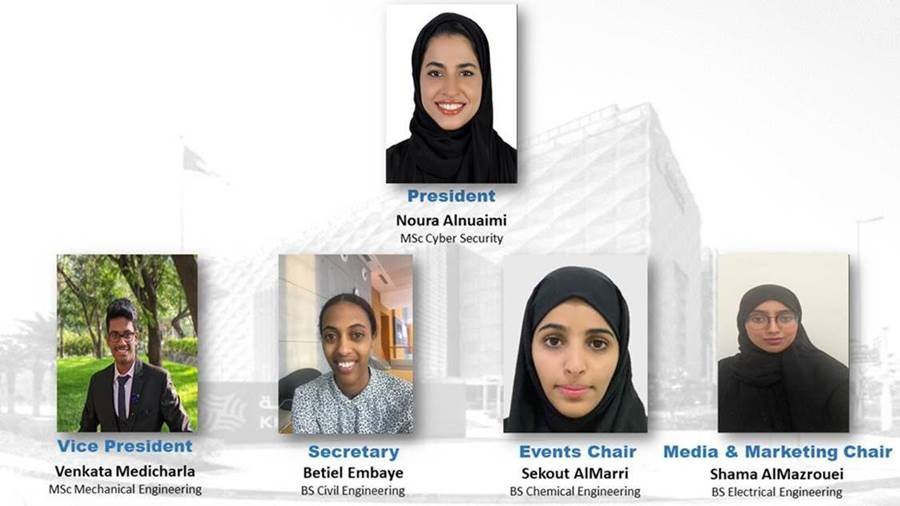
KU’s Student Council Elections were held on Thursday, 1 October 2020, and Noura Alnuaimi, MSc in Cyber Security, was elected as Student Council President. 


Other elected members include:

  • Vice President: Venkata Medicharla, Msc in Mechanical Engineering
  • Secretary: Betiel Embaye, BSc in Civil Engineering
  • Events Chair: Sekout Almarri, BSc in Chemical Engineering
  • Media & Marketing Chair: Shama AlMazrouei, BSc in Electrical Engineering


Congratulations to the new student council members!


The “Call for Candidates” was sent out by Student Services in early September, inviting the student body to participate in the Student Council Elections for the academic year 2020-2021. 


The annual Student Council Elections took a different form this year. A virtual “Meet the Candidates” assembly was organized on 30 September 2020, which was attended by over 80 students.


During the assembly, those running for Student Council President had the opportunity to introduce themselves and talk about their accomplishments, initiatives, and the reasons why they should be elected. The students interacted and engaged with the candidates to learn more about their platforms and to get to know them better. 

Khalifa University Summer Challenge 2020 Winners Blend Engineering and Humanitarian Perspectives to Develop ‘eDoctor’ App

With their ‘Global-Local’ Approach, Grade 11-12 Students Display Innovation and Technological Skills to Develop App for Smartphones and Desktops  


Khalifa University of Science and Technology today announced that the winners of its Summer Challenge 2020 have skillfully combined both engineering and humanitarian perspectives to design ‘eDoctor’, an online system to connect patients with available doctors for consultation, without physically visiting the doctor’s premises.


Forty teams with a total of almost 200 students registered for the Khalifa University Summer Challenge 2020, thus demonstrating an impressive interest in solving an emerging problem amid COVID-19. From the 40 teams, 11 made it to the final stage of the challenge that encouraged students in Grades 11-12 from across the UAE to design the app for smartphones and desktops. The panel of judges evaluated the submissions based on criteria such as the number of supported information sources, communication response delays, versatility of implementation, user-friendliness including handling of ethics issues, doctor’s selection mechanism, and design aesthetics.


The top place winner was Future Youth, a team of four from Applied Technology High School, while the second position was awarded to the three-member team from Greenwood International School. The third slot went to Future Doctors, a four-member team – three from Al Naeem School, and one member from Applied Technology High School.


The fourth position was won by eRescue, a team of five, out of which four were from Al Manhal International Private School with one member from Al Nahda International School, while the fifth place went to Almualej, a four-member team from Um Al Arab School.


Dr. Arif Sultan Al Hammadi, Executive Vice-President, Khalifa University of Science and Technology, said: “The Khalifa University Summer Challenge 2020 is one of the innovation-related initiatives, launched during the COVID-19 pandemic to encourage involvement of high school students in critical thinking and scientific development. The projects submitted by students displayed their knowledge in STEM fields as well as highly-tuned social awareness during these challenging times. As a result they were able to design an online consultation system that could be suitable to anyone, not only in this region, but anywhere across the world. We are delighted that Khalifa University’s summer challenge has produced interest in youth to design such impactful innovations to tackle real world challenges such as the healthcare emergencies.”


The judges commended the students for their willingness to deal with both from the engineering and humanitarian angles, and create a viable solution to help the UAE community with worldwide impact, placing their approach in more of a ‘global-local’ perspective.


The Khalifa University Summer Challenge 2020 called for students to design the eDoctor system to prove its usefulness to urgent cases that cannot reach hospital, emergency cases that do not have doctors in an area, late-night emergencies, and for preliminary examination of patients.


While there was no bar on use of software, judges also looked for information exchange such as photo/video capturing, chatting, emailing, audio recording, GPS tracking, and emergency calls. Teams were also urged to incorporate additional features such as a real-time communication protocol, along with emergency level settings and uploading capabilities for combined analyses, reports or prescriptions.


Clarence Michael
English Editor Specialist
14 October 2020

Khalifa University Researchers Develop ‘Biodegradable’ and ‘Biocompatible’ Environ-Friendly Anti-Viral Adaptive Face Mask


Researchers Filed For a Patent License For The Mask’s Bio-Material


View this post on Instagram

A post shared by جامعة خليفة (@khalifa_university) on

Khalifa University of Science and Technology today announced a team of researchers has successfully developed the first working prototypes of NavaMASK, a fully ‘biodegradable’, ‘biocompatible’, environment-friendly and novel anti-viral adaptive face mask with nanofibers that will have strong anti-microbial properties. The researchers have already filed for a patent license for the mask’s bio-material.


NavaMASK will offer excellent breathability with strong anti-microbial properties and can be washed and reused several times prior to eventual disposal. In addition, the mask is a great candidate for safe disposal to the environment because of its biodegradability and biocompatibility.


The project was the fruit of a collaboration between Khalifa University and University of Salerno, Italy.


Dr. Arif Sultan Al Hammadi, Executive Vice-President, Khalifa University of Science and Technology, said: “The innovation of biodegradable NavaMask reflects not only Khalifa University’s continuous commitment to finding solutions that directly contribute to serving the society, but also the result of the University’s funding of 14 research projects directly related to mitigating the pandemic. This innovation reaffirms our research efforts to develop areas that focus on issues related to the community in general, especially those that help find a solution to COVID-19. Research initiatives at Khalifa University are directed by prominent faculty experts, with the help of state-of-the-art labs and advanced on-campus facilities.”


Prof. Vincenzo Loia, Rector, University of Salerno, Italy, said: “The University of Salerno has a consolidated experience in interdisciplinary research at an international level. The quality of our international research and its ability to serve the real needs of the society, yearly reconfirm the accreditation of the University of Salerno in prestigious academic rankings. NavaMask is an additional effective example of a research idea that was born in a laboratory capable to support accurately and promptly the big challenge associate to the complex period we are experiencing, combining innovation and environmental sustainability.”


Dr. Vincenzo Naddeo, Director, Sanitary Environmental Engineering Division (SEED), University of Salerno, Italy, said: “From early stages of the COVID19 outbreak, the Sanitary Environmental Engineering Division (SEED) of the University of Salerno has promptly reconverted the laboratory activities to support national industries in the testing of respiratory devices according to international standards. Since March 2020, the SEED becomes one of the first official hub for face mask testing in Italy and in Europe. NavaMASK is an innovative and sustainable solution in response to the strong demand for protective face masks from society and governments. Our experience in the field has contributed to the optimization of a novel biodegradable filtration material which will be useful for the design of the next generation of face masks. Additionally, in this project we have developed a novel international protocol for rapid and cost-effective testing of face masks.”


The project at Khalifa University of Science and Technology is led by Dr. Shadi W. Hasan, Associate Professor and Theme Lead, Center for Membranes and Advanced Water Technology (CMAT), Dr. Faisal Al Marzooqi, Assistant Professor, Prof. Fawzi Banat, Professor and Chair of the Chemical Engineering Department, and Dr. Musthafa Mavukkandy, Post-Doctoral Researcher, Chemical Engineering.


Dr. Shadi W. Hasan said that the team envisioned the NavaMASK on the belief that there was a crucial need for an environmentally-friendly alternative to the currently available face masks, while maintaining the highest safety and breathability standards for humans. The complete biodegradable filtration materials were carefully selected to provide effective protection, avoid skin irritation, and most importantly be safe to our environment. The face mask will have perpendicularly arranged nanofibers with a diameter ranging between 100 and 600 nm to pass air through but reject particles, bacteria, and viruses. Its strong anti-microbial properties will ensure >99% removal efficiency of bacteria, thus NavaMASK is expected to compete and outperform many of the existing facemasks in the market.


Dr. Musthafa Mavukkandy said that numerous optimization experiments were carried out to capture the right recipe of all ingredients of the face mask filtration bio-material.


The Khalifa University researchers are currently planning to start Phase II, which will aim to introduce a new second-generation design for the NavaMASK and maintain high removal efficiency, high comfortability, easier breathing, and fewer layers. Most importantly, it will reflect the UAE’s efforts in advancing the field of innovation.


Clarence Michael
English Editor Specialist
12 October 2020

KU Prolific Scientists Awarded Golden Residency Visa

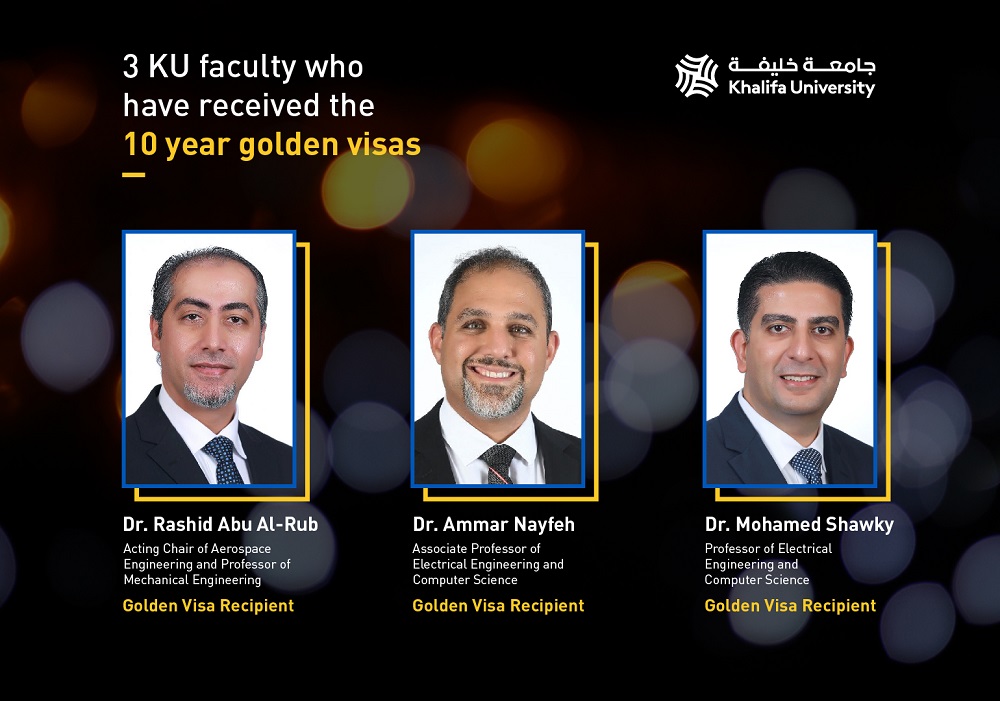
Three more Khalifa University faculty members have been awarded the 10-year golden residency visa by the UAE government.


Dr. Rashid Abu Al-Rub, Acting Chair of Aerospace Engineering and Professor of Mechanical Engineering; Dr. Mohamed Shawky El Moursi, Professor of Electrical Engineering and Computer Science; and Dr. Ammar Nayfeh, Associate Professor of Electrical Engineering and Computer Science, have been recognized for their work and contributions to the UAE. They join nine other Khalifa University faculty who were honored with the golden visa last year.

All three faculty are also members of the the Mohammed bin Rashid Academy of Scientists, the primary body representing the UAE’s science community composed of the UAE’s top researchers from several institutions in the country.


Pioneer of 3D Printing in the UAE


Dr. Rashid Abu Al-Rub is the first to work on advancing 3D printing in the Middle East as a technology at the forefront of the fourth industrial revolution. Currently, he is the Director of the Advanced Digital & Additive Manufacturing (ADAM) research center at Khalifa University. ADAM is the first 3D printing center in the Middle East that focuses on education and R&D in the area of additive manufacturing. 


Dr. Abu Al-Rub’s work is significantly contributing to the UAE strategic vision in making the country one the world’s 3D printing hubs. His research has accelerated the development of advanced 3D printing materials and technologies that has found many applications in different sectors such as aerospace, defense, automotive, healthcare, water, and energy. 


He has developed advanced multi-functional, ultra-lightweight, and ultra-strong 3D printable materials made of plastic, metals, ceramics, and composites called “multi-functional meta-materials” that are digitally designed using elegant mathematics and then 3D printed using plastic, metallic, or ceramic 3D printing technologies. These are very porous lightweight materials with novel properties and functionalities that are driven by the topology of the pores or voids rather than its chemical composition. 


These 3D printable materials have demonstrated superior physical (electrical, thermal, chemical, flow) and mechanical (stiffness, strength, damage-resistance) properties that have not been achieved before by other materials. They have been used, for example, in making lightweight sandwich panels for aircrafts, vibration absorbers for spacecrafts, catalytic support structures for the oil and gas industry, thermal management devices such as heat exchangers and heat sinks, membrane spacers for water technologies, three-dimensional energy storage devices, and scaffolder for bone growth and tissue engineering. In collaboration with the University of Manchester and Professor Kin Liao from the Aerospace Engineering Department, these porous materials have been 3D printed using the well-known wonder-material “graphene,” opening the doors for many technological applications.


Dr. Abu Al-Rub’s work on 3D printing caught the imagination of many UAE and international industries. His work has resulted in industry milestones such as 3D printing the first certified Etihad aircraft component and 3D printing desalination membrane spacers that were considered as one of the most disruptive water technology innovations in 2019 according to Lux Research.


Upon receiving the Golden Visa, Dr. Abu Al-Rub said: “I feel truly honored in receiving the UAE Golden Visa from the UAE government recognizing my contribution to the scientific research in the area of additive manufacturing here in UAE and internationally. This would not have been achieved without the significant support of Khalifa University. 3D printing is at the forefront of the fourth industrial revolution, and being recognized for my national and international efforts for advancing the state-of-the-art of 3D printing is a testimony of the serious commitment of the UAE in accelerating the adoption and use of this emerging technology in various sectors here in the UAE and abroad.” 


Champion of Renewable Energy and Smart Grids


Dr. Mohamed Shawky El Moursi specializes in renewable energy integration and smart grid development. He is also the theme lead of Renewable Energy Integration at the Advanced Power and Energy Center (APEC) at Khalifa University. 


His professional experience is based on a solid and profound expertise on practical system implementation as evidenced by his work with Siemens in PV systems, R&D technological development with leading wind turbine manufacturer Vestas Wind Systems in Denmark, and transmission system planning and operation with Abu Dhabi Transmission and Dispatch Company (TRANSCO). 


In 2012, Dr. El Moursi was a Visiting Professor in the EECS Department at the Massachusetts Institute of Technology (MIT).  He has received several international and national prestigious awards such as the UAE Mission Innovation Champion in 2019, Faculty Research Excellence Award in 2018, and Expert and Key Employee award in Denmark. Dr. El Moursi has been also conferred the Faculty Award for Excellence in Collaborative Research (Academic Year 2012-2013) and a medal of recognition from the Abu Dhabi Technology Development Committee for Innovation in 2015, among others. He was also selected to join the Engineering Advisory Board of the Mohammed Bin Rashid Scientists Council (UAE) in December 2018. 


In his vast and long experience in the industry, Dr. El Moursi was extensively involved in different industrial projects in North America, Europe, Australia, and the Middle East. These have enriched his profile with a solid track record and contributions in both industrial and academic sectors. His professional expertise has tailored his research interests such that innovative solutions and technologies are proposed and developed to address the practical needs and problems that arise in the industry of renewable energy integration and power grid operation and control. This has resulted in significant international funds for research on electrical power engineering in the UAE. He was able to successfully secure US$7,873,377 worth of internally- and externally-funded research grants from Europe, North America, GCC countries, and South Korea. These projects resulted in remarkable research outcomes and innovations that have been published in top-quality publications (161 papers), as well as two US patents. 


Dr. El Moursi is also an editor for several top-tier IEEE Transactions, a Regional Editor of IET RPG, and appointed as a Guest Editor-in-Chief for a special joint section between IEEE Transactions of Power Systems and IEEE Transactions on Power Delivery. He was elected in 2018 to chair the IEEE PES UAE chapter after serving more than two years as a Vice Chair (2015-2018). Dr. El Moursi has also been a mentor to his students and served as advisor to seven Ph.D. graduates and 22 M.Sc. graduates; many of whom achieved several best thesis and national awards. He has had a great opportunity to empower his students with the required knowledge, skills, and expertise, which enabled them to secure positions in international companies and tier I universities worldwide.


Dr. El Moursi, along with his research team at KU, has designed and developed several in-house experimental prototypes and tools. He and his team have developed a novel Renewable Energy Management System (REMS) Tool that has been financially supported by Elia Grid International in Belgium, which is currently in operation. At implementing a novel Stability Assessment, Visualization and Enhancement (SAVE) Tool for TRANSCO’s network based on novel AI techniques, data analytics, and deep machine learning. This project is financially supported by TRANSCO and Manitoba Hydro International, Canada. 


“I am truly honored and deeply thankful for this valuable recognition of being awarded the 10-year golden residency visa in the UAE. This wouldn’t happen without the great support from the UAE government and Khalifa University since 2011. I also would like to express my sincere thanks to my research team for their outstanding achievements and contributions that resulted in remarkable research outcomes and innovations that have been documented with record of publications in top quality journals and US patents. With Khalifa University’s great support, we have graduated high caliber Ph.D. and M.Sc. students, whereby they received several best thesis and national awards. We have applied the highest standards for developing our research based on well-defined R&D vision and a clear plan for technology development to pave the way for seamless integration of renewable energy systems into smart grids. With this valuable recognition of the 10-year golden residency visa, I’m looking forward to maximizing my efforts and contributions to effectively bridge academia to industry and to advance the UAE R&D agenda to another height of success with global recognition.”


Nanotechnology Expert


Dr. Ammar Nayfeh’s research in the UAE has focused on the development of new nanomaterials and structures for future semiconductor devices including memory, photovoltaics, photodetectors, and transistors. This includes several activities on the growth, modeling and application of these materials in devices. Dr. Nayfeh was instrumental in helping to establish the first state-of-the-art cleanroom laboratory in the UAE at Khalifa University. 


His research has also attracted a significant amount of funding. He has been awarded approximately US$1.2M dollars in external research grants. These grants are from the Office of Naval Research Global, Masdar PV, and Twin Labs. Dr. Nayfeh was also awarded approximately US$3M in internal funding including the Masdar-MIT flagship project on advanced solar and a project on nanomaterials and low temperature germanium growth. 


Dr. Nayfeh has authored and co-authored over 100 publications, many of which are in top-tier journals including, Nature, IOP Nanotechnology, IEEE Journal of Photovoltaics, Applied Physics Letters, and Elsevier Solar Energy to name a few. He has continued to publish his work in top conferences worldwide including IEEE nano, MRS, ECS, and PVSC. He has also contributed two book chapters and penned a book titled “Nanomaterials-based Charge Trapping Memory Devices” with former PhD student Dr. Nazek El-Atab. In addition to publications, he has filed three patents, including one from his research in the UAE. The patent is for a novel solar cell: “METHOD AND DEVICE FOR LOW COST, HIGH EFFICIENCY STEP PHOTOVOLTAIC CELLS PCT/US2017/056335. 


Dr. Nayfeh has also spent time visiting local schools in the UAE to help spark the next-generation of scientists in the country as part of the science in residence initiative of the Mohammed bin Rashid Academy of Scientists (MBRAS). 


More recently, Dr. Nayfeh has put his work in nanotechnology to good use in the fight against COVID-19. The novel study uses silicon nanoparticles to model how droplets that carry the virus spread, and how this spread impacts the effectiveness of masks. The study is in collaboration with Cleveland Clinic Abu Dhabi and will help healthcare professionals better understand how the virus spreads.  


“I am deeply honored and thankful for being awarded the 10-year golden residency visa in the UAE.   Due to the continued support from the government and Khalifa University in the 10 years since I arrived here, we were able to accomplish a plethora of great achievements, such as setting up the region’s first cleanroom facility and fabricating nanodevices, graduating PhD students, publishing in top-tier journals, writing books, and filing patents in the area of semiconductors, photovoltaics, nanomaterials, and nanodevices. The 10-year golden residency visa system for top scientists highlights the priority the UAE sees in the future of science, technology, research, and higher education. I am extremely humbled to be one of the selected few that are trusted to help reach these goals. I am looking forward to the next 10 years of scientific endeavors and accomplishments and in helping the UAE and Khalifa University rise up the research ranks.”   

Ara Cruz
Creative Writer
12 October 2020


Khalifa University Team Uses Intelligent Systems to Predict Power Grid Stability

As more intermittent renewable energy sources of electricity are fed into the grid, balancing the amount of electricity fed in against the amount of electricity consumed becomes more difficult. A team from Khalifa University has developed a software to accurately and quickly predict the stability of power grids.


The journey of electricity, from the power plant to our homes and businesses, is not always a smooth one. Grid operators are faced with the complex task of balancing the amount of electricity fed into the grid against the amount of electricity consumed, to keep the power system stable. But as more intermittent renewable energy sources of electricity, like solar and wind, are fed into the grid, this balancing act is becoming even more challenging.


To address this challenge, a KU team led by Dr. Mohamed El Moursi, Professor of Electrical Engineering and Computer Science, teamed up with the Abu Dhabi Transmission and Dispatch Company (TRANSCO) and Canadian company Manitoba Hydro International (MHI) to develop a software tool for fast and accurate online prediction of power system stability. The KU research team members were Syafiq Kamarul Azman, Research Engineer, Dr. Younes Isbeih, Postdoctoral Research Fellow, and Dr. Khaled Elbassioni, Professor of Computer Science.


Maintaining balance among power generation and consumption in an electrical network is extremely complex, especially when new intermittent sources of energy are installed as in the case of solar photovoltaic (PV) and wind power.  Small changes to power grids, caused by load fluctuations or intermittency of renewable energy resources can drive the power system out of its safe operating range toward a critical state. In addition, power grids are frequently subjected to faults and equipment failures, either temporary or permanent, that can further derive the system to instability if proper monitoring and control actions are not taken. As a result, it is crucial that grid operators are equipped with the tools needed to maintain a stable operation of the grid and to build resilience to faults and disturbances.


The KU research team built a unified prediction model using artificial intelligence techniques to provide fast and accurate prediction of transient stability when a power system is disturbed.


“The dynamic response of a power system is governed by a set of highly nonlinear differential and algebraic equations (DAE), which describe the behavior of the generators and the associated control systems, loads, renewable power generation and flexible AC transmission devices (FACTs),” explained Dr. El Moursi.


When the overall demand load in a power system is suddenly increased, power plant power generators that have spinning generators are suddenly slowed. Differential and algebraic mathematical equations must be solved to determine the amount of accelerating power required to bring a power plant’s power generator back to a stable condition.


“When the power system experiences small changes, the mathematical model can be linearized about an equilibrium point to study the stability of the system,” explained Dr. El Moursi. “After a severe disturbance, however, the power generators are changed beyond the ability of the linearized model to describe the nonlinear dynamics that ensue and hence thus the model must be numerically solved through simulations.”


Time domain simulations are used to help solve these more complex challenges. While they accurately describe power system transient behavior, they are associated with a considerable computational burden when applied to real systems where real-time frameworks are required for dynamic security assessment and control.


“Although time domain simulations result in an accurate transient stability assessment (TSA), they require considerable time and computational efforts, especially for large power systems with almost infinite number of contingencies and operating points,” said Dr. El Moursi.


This is where artificial neural networks and deep learning techniques are pivotal. Using deep learning techniques, the team from KU developed an approach for predicting both power system stability. The neural networks learn specific features of the power system dynamics and thus can provide fast and accurate online prediction of transient stability.


The model designed by the team provides a unified approach for prediction when the system is subjected to a disturbance. They trained a neural network using a set of transient responses seen across the entire power system and for a wide-range of operating conditions. The trained model provides a fast, yet accurate, prediction of the transient stability status when a power system is disturbed. If the system is unstable, the prediction model updates the power system operator with the necessary control actions.


“In a relatively short period of time, the KU project team successfully designed and built­—and is on the way to patenting—an artificial intelligence-based transient stability assessment tool with full functionality, flexibility, and high accuracy,” said Dr. Surour Mohamed Alaraifi, Senior Planning Engineer at TRANSCO and member in the project team. “We can now evaluate our system stability, including all interconnections, by simulations as short as 200 milliseconds, compared to the usual 30 to 35 seconds, allowing us to perform tasks like fast contingency screening, while covering generators, transmission lines, and transformer fault scenarios. We hope this tool becomes a central asset for our system operators.”


Jade Sterling
Science Writer
10 October 2020