

Khalifa University Researchers Develop Model to Determine Who to Vaccinate First against COVID-19 to Reduce Total Fatalities

By Dr. Jorge Rodríguez


The outcomes of the model suggest priority be given to those with the most contact with others.


Read Arabic story here


After months of unprecedented events and uncertainty due to COVID-19, there’s good news: vaccines are just around the corner. The next dilemma, however, involves distribution of the vaccine to the billions of people around the world. These days, it’s not only a question of manufacturing enough doses, or physically shipping the vials, but rather, who’s first in line? 


The rapid development of vaccines against the SARS-CoV-2 virus is an enormous achievement. Effective and safe vaccines that can be mass produced and distributed to almost the entire population could prevent deaths and boost economic recovery. 


But vaccinating the world population in a short period of time creates a new challenge for governments and health authorities: which population groups should be targeted first and what sequence must be followed to achieve the minimum number of fatalities?


To answer this question, I worked with a team of researchers from Khalifa University to create a mathematical model to simulate the impact of vaccination on fatalities and infection spread across different population groups by age and accounting for the different stages of the COVID-19 disease. The team included myself, Dr. Mauricio Patón, Postdoctoral Fellow, and Dr. Juan Acuña, Associate Professor and Chair of the Department of Epidemiology and Public Health. We evaluated and compared different strategies to determine the most effective possible vaccination priority sequence, with the objective to minimize the total fatalities at the end of the vaccination campaign. 
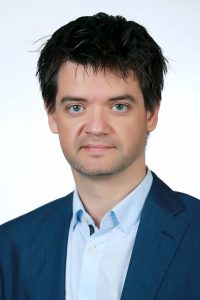
 

Dr. Jorge Rodríguez


The COVID-19 outbreak has brought unprecedented attention to mathematical modeling, with the development of several epidemic models trying to forecast the extent of the pandemic.


Our work builds on a previous model we developed back in March for predicting how different interventions impacted the spread of the COVID-19. We initially used epidemiological data from Spain due to their availability and level of detail. The previous model used population groups segregated by age and was designed to evaluate the impact of different types of interventions (such as isolation or use of masks) on the COVID-19 outbreak dynamics and outcome. Designed to be open source, the model provided a stepping stone for non-experts and policymakers to understand what to expect as the disease spread. After all, using mathematical modeling to understand the potential spread of a disease has a long history and epidemiological models have improved drastically over the years. 


Now, since a vaccine is available, attention is turning to evaluating vaccination strategies against the disease. The goal of the updated model was to elucidate which strategy might be best for vaccinating the population, with the objective of reducing the number of fatalities.


In this new model, individuals are also segregated by population groups, related to their age, but also to their activity and other epidemiological specifics. The model did not include groups such as healthcare workers or extremely vulnerable individuals (since those already take priority for other reasons) and assumes, at this stage, that the vaccines are effective against the transmission of the disease.


By applying the model first to the vaccination in countries with large numbers of elderly citizens, such as in Europe or the US, we obtained results that showed how organizing vaccination by priority groups can achieve dramatic reductions in total fatalities (more than 70% in some cases) compared to no prioritization. 


The results, evaluated for different vaccine efficacies (including against transmission) and coverage values, show also that, in order to have the largest impact in total fatalities, priority should not necessarily go first towards those groups with the highest mortality (such as senior citizens), but rather to those with the highest number of daily person-to-person interactions. 


Furthermore, if groups with higher mortalities but less social interactions are put first, the model predicts even more final total fatalities as if no priorities are followed. This is due to the delay (potentially by months) in vaccinating the highly interactive (and potentially highly spreading) groups that allow the exponential infection curve to continue growing.


These findings, which do not apply to special groups such as healthcare workers or to very vulnerable individuals, may run counter to the vaccination plans for the general population as announced in countries like the UK and the US as well as the EU. 


Other countries such as Indonesia, however, have decided to follow an order similar to that suggested by our results, starting with the most interactive, and not with the elderly, to achieve maximum impact on fatalities. 


We are also not the first study suggesting such a sequence of vaccination, giving priority to spreaders over vulnerable but more isolated groups. This was also found to be most effective for the influenza vaccine under a situation of vaccine dose limitation; the most vulnerable were better protected by indirectly blocking their infection through vaccination of the most interactive spreader groups first.


In the last few weeks, we have applied the model to the population demographics of Abu Dhabi, which are quite different to that of European countries and with a much younger population. For countries like the UAE, with its specific characteristics and young population, our results show that the vaccination of the elderly first, due to their low numbers, would not pose any negative impact as it does not delay the vaccination of the highly interactive spreaders by much. 


Our conclusions also suggest that following a specific prioritization by groups in the UAE does not seem to make a major difference as opposed to the case in countries with older population demographics, as long as a good vaccination coverage is reached. 


The organization of vaccination campaigns against COVID-19 is a very complex problem to which the expertise of different disciplines and perspectives can contribute. Its success, as our results clearly show, depends ultimately on reaching high vaccination coverage, and on all of us taking the vaccines without delay as soon as the health authorities recommend it.


Our work is currently under peer-review for publication in scientific journals, and a preprint version of it is fully available on medRxiv.


Dr. Jorge Rodríguez is an Associate Professor of Chemical Engineering at Khalifa University.
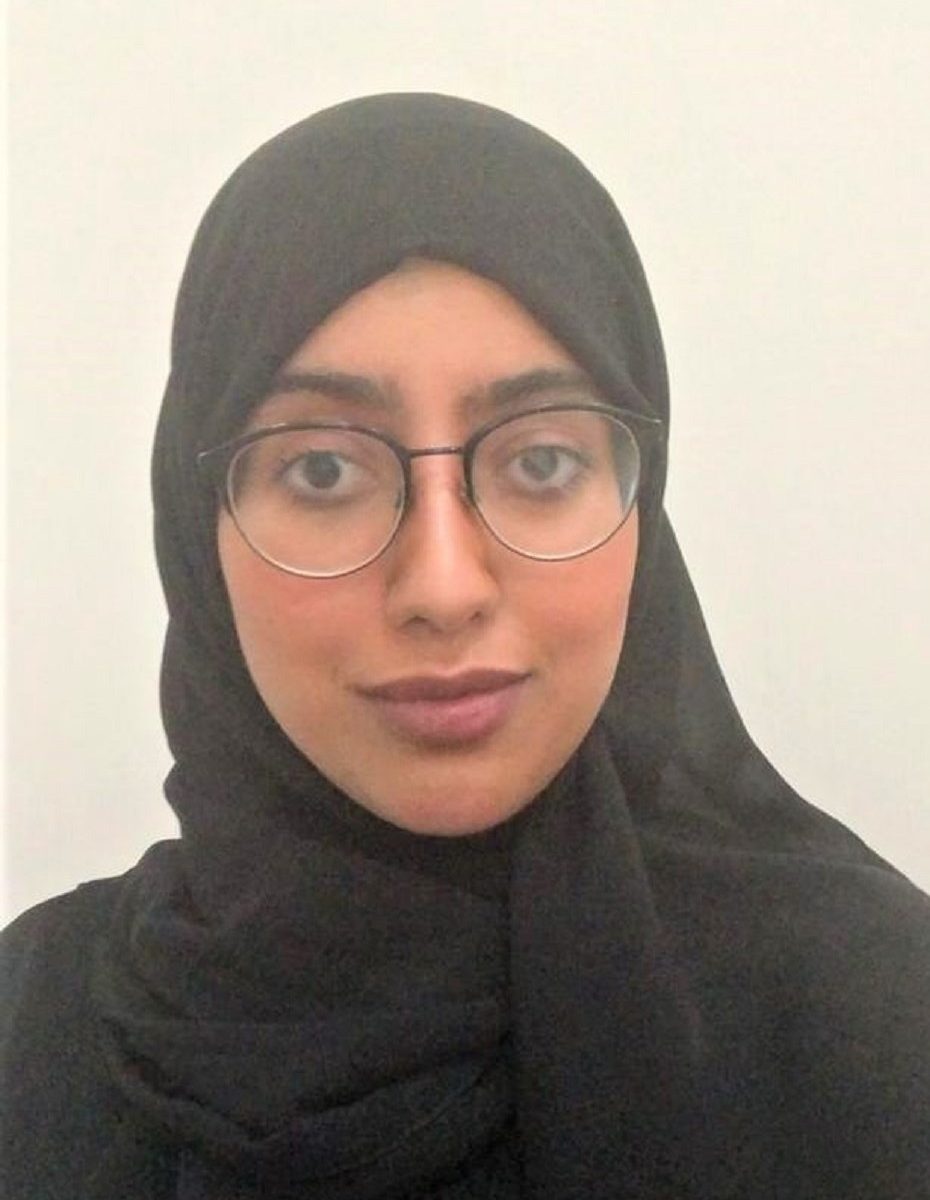
KU Student Chosen as CEOx1DAY Finalist

Shama Almazrouei will spend a day with an executive of an established company in the UAE and personally experience the company’s activities. 


Have you ever wondered what it would be like to be the CEO of an established company? KU’s Electrical Engineering undergraduate Shama Almazrouei was one of the few chosen to shadow a successful CEO in the UAE and experience first-hand what it could be like to lead a company. 


The CEOx1Day is a program of management and consultancy company Odgers Berndtson that matches 3rd- and 4th-year undergraduates with a regional Chief Executive Officer and their executive team and shadow them for one full day to see how they work and do business. Program finalists will be able to learn about possible career paths, how team members create value in their organization, and the details of how a company functions. 


The Career Services Office introduced and facilitated applications for this initiative to KU students, among others, as part of their career guidance program to prepare students for the job market.


The CEOx1DAY program was first launched in Odgers Berndtson’s office in Germany and has now grown to 12 other countries, including Brazil, Denmark, South Africa, Singapore, Canada, and the UK. To date, the program has received around 17,000 applications from all over the world, and over 400 CEOs from prominent companies such as Google, Twitter, Adidas, and Ikea have participated in the initiative. 


The program is designed to allow promising future leaders to experience and see first-hand what it is like to be a successful CEO. For the CEOs, the program gives them an opportunity to connect with the next generation of leaders, providing them a better understanding of today’s youth, what drives them, and their work ethics. 


Aside from the invaluable opportunity to work with top business leaders, students chosen to participate in the program also have a chance to meet with the Odgers Berndtson team and learn more about the recruitment process, providing them additional skills that they can use during their job search after they graduate. They’ll learn presentation skills and team building skills, as well as strengthen their interview techniques as they undergo one-on-one interview exercises. The student finalists will also receive a Hogan leadership assessment report that evaluates seven well-known characteristics that influence a person’s occupational success. 


Much like any job application, applying to be part of the CEOx1DAY was a process. 


“An email was sent by KU and I applied. I went through application and transcript screening, online leadership assessments, telephone interviews, and a half day of virtual group assessment with semi-finalists from other universities,” Shama explained. 


When asked why she applied to the program, Shama said she wanted to “gain leadership skills and communication skills, get insight on workplaces and how things work, and learn from a successful CEO.”


“KU has always encouraged me to always look for opportunities to gain more knowledge and more experience, and I try to always set myself apart from others by taking part in different competitions and programs,” she said. 


After the program, she explained that she “wants to have an insight on how things work in an actual workplace and learn more about the role of the CEO and what it takes to be a great leader, how they reached this position, and what skills are needed to be a good CEO.”  


Shama is partnered with Mr. Regis Schultz, President of Retail at Al-Futtaim Group, and is scheduled to spend the day in the company next year.  


Ara Maj Cruz
Creative Writer
14 December 2020

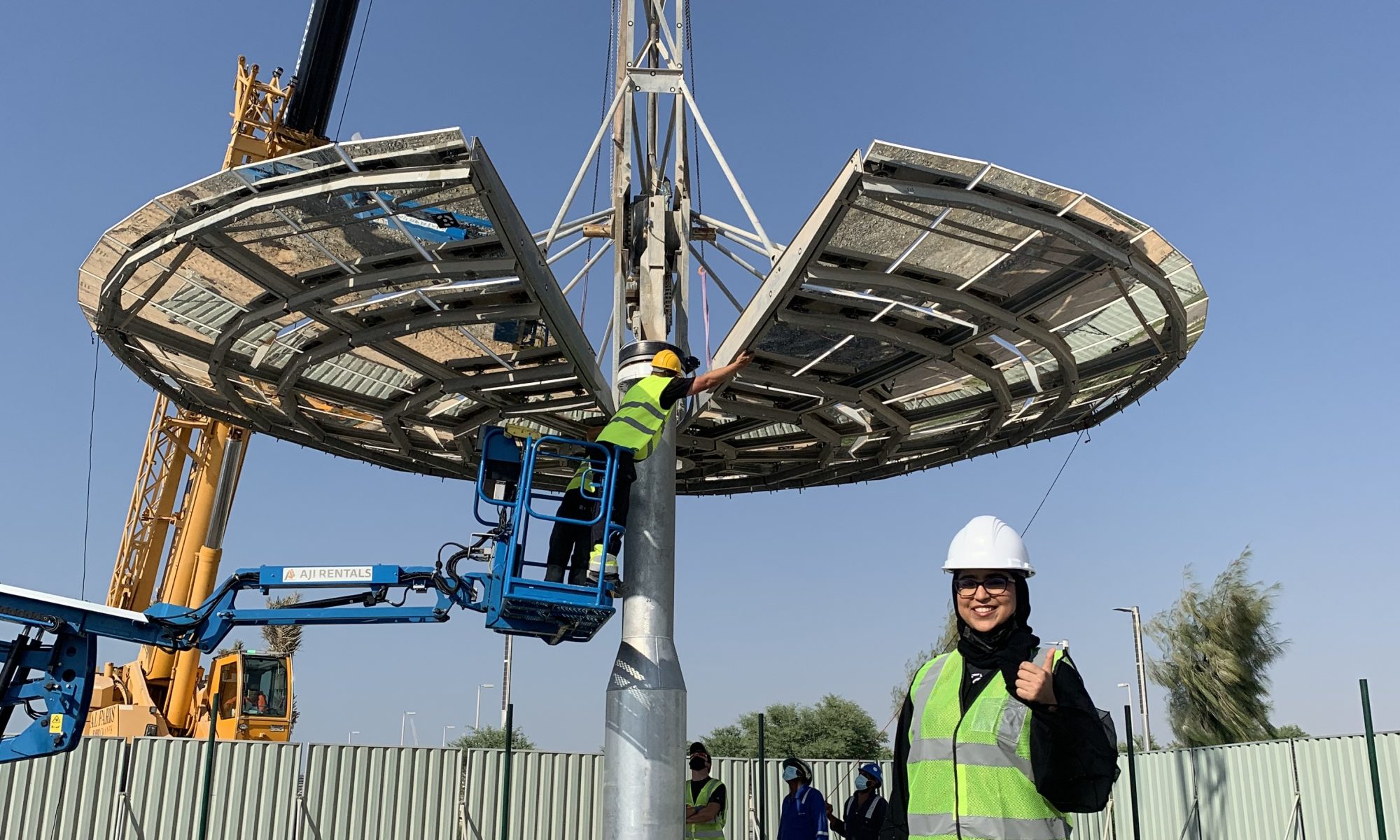
New Azelio Installation at Khalifa University’s Masdar Institute Solar Platform to Demonstrate Renewable Energy 24/7

Using a recycled aluminium alloy to store the heat from the day’s sunshine allows the MISP to produce electricity 24/7


Read Arabic story here


The world is moving continuously towards using sources of energy that are more sustainable than the fossil fuels on which we predominantly rely today. Solar power is one of the most promising renewable energy technologies, especially in the UAE, allowing the generation of electricity from free, inexhaustible sunlight. But even though the sun shines every day, this resource is subject to supply fluctuations. Further, every night when the sun sets, as it inevitably does, the supply of solar energy ceases until the next morning.


Conventional batteries based on electrochemical storage can charge from solar energy during the day and provide power for a few hours at night, but their economical discharge duration is limited and they are made of critical materials that are not available in infinite supply.


However, a team from Khalifa University, in collaboration with Swedish solar energy company Azelio, and Masdar (Abu Dhabi Future Energy Company), has drawn inspiration from this need for energy storage innovation and applied it to a natural process: the phase change of materials.


During the day when there is a lot of sun, solar energy is used to produce cheap electricity (photovoltaic panels) or provide some combination of heat and electricity (concentrated solar power (CSP). This sustainable energy can be used to melt a Phase Change Material or PCM. When temperatures drop off, those materials cool and re-solidify, releasing their latent heat in the process. A stirling engine can then convert this heat back to electricity on demand. The team aims to leverage this phase transition process using an alloy of aluminum to provide thermal powered electricity at night, after the sun goes down.


“This is the first demonstration of the Azelio technology and we’re looking at proving the long term viability of the system. We need to guarantee that it will last at least 25 years and that’s what we’re expecting. So we will evaluate the TESpod™ System during a full year of operation, collecting data and checking performances. We’re very excited about this installation as it uses recycled aluminium alloy and will be a game-changer in renewable energy,” said Dr. Nicolas Calvet, Assistant Professor of Mechanical Engineering at KU.


Dr. Calvet and his team have placed an aluminium alloy at the center of the Azelio’s energy storage system at the Masdar Institute Solar Platform (MISP), the UAE’s first solar platform dedicated to research and development of CSP and thermal energy storage (TES) technologies. 


This is how the Azelio TES technology works: Photovoltaic panels generate cheap electricity during the day. This electricity is used to melt the PCM using an electrical resistance heater. This same concept is possible using wind energy or excess grid electricity as well. Another configuration can use direct heat from CSP by leveraging generated heat to melt the aluminium alloy. When electricity is needed, the alloy is allowed to cool and resolidify, releasing heat that is then used to generate electricity.


“The Azelio Stirling engine is converting about 29 percent of the latent heat stored in aluminium alloy to make electricity, making Azelio’s TESPod™ system very cost competitive when charged with inexpensive solar energy,” explained Dr. Calvet. “This will allow us to produce 50 kW of electricity 24/7, meaning the MISP can generate its own energy during the day and during the night become energy independent.


The MISP was inaugurated in 2015 in recognition of the increasingly important role CSP and TES will play in achieving the UAE’s renewable energy target of generating 44 percent of its energy mix from renewable sources by 2050. With its one-of-a-kind 100kW beam-down solar concentrator facility among other, the MISP aims to provide local and international research institutes and solar and energy storage companies the opportunity to research, test and validate new CSP & TES components and systems, increasing efficiency, driving and driving down the costs of technologies that can withstand the UAE’s harsh desert climate.


Jade Sterling
Science Writer
7 December 2021

Electricity Water Usage for Sustainable Development on UAE Farms

Electricity and water consumption play a crucial role in the sustainable development of desert regions. In countries with arid climates like the United Arab Emirates, water-energy efficiency and conservation in agriculture are critical issues.


Read Arabic story here


The Middle East is one of the most water-scarce regions in the world, accounting for 6.3 percent of the world’s population with access to only 1.4 percent of the world’s renewable fresh water. Food, energy, and water supplies are essential to life in every community, particularly those that rely heavily upon electricity and water infrastructures. In arid MENA countries like the United Arab Emirates, economic development results in increasingly intensive demands on energy and water resources, especially in the context of climate change.


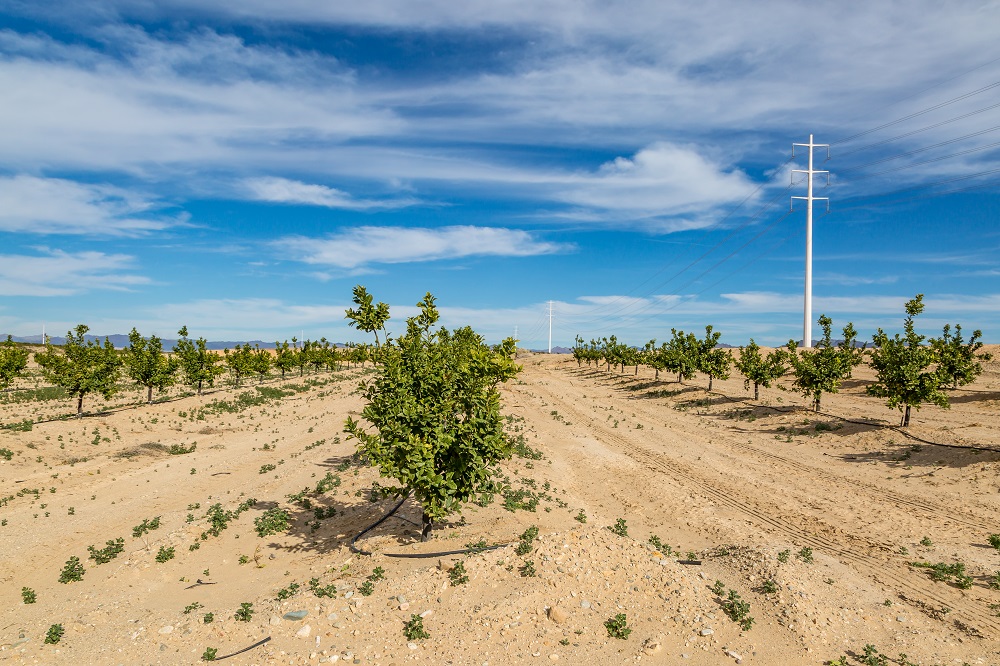
One activity in the UAE that requires significant amounts of both water and electricity: agriculture. The areas suited to agriculture in the UAE are determined by the availability of water and cultivable soil, with groundwater the main natural source of water. Due to increasing food demand and rapid population growth, and the goal to achieve food security, the UAE has invested in the agricultural sector, potentially resulting in more stress on water and electricity resources.


To suggest policies for water-energy efficiency and conservation in the UAE, a team from Khalifa University in collaboration with MIT investigated the links between electricity and water consumption on UAE farms. Abdullah Khamis Banhidarah, recent KU graduate, Dr. Ameena Saad Al-Sumaiti, Assistant Professor of Electrical Engineering and Computer Science; Dr. James Wescoat Jr., Professor of Landscape Architecture and Geography at MIT; and Dr. Hoach The Nguyen, Postdoctoral Fellow, published their findings in Energy Policy.


Their analysis showed that water use is more important than electricity use in rural areas, with the cost and reliability of water more important than the cost and reliability of electricity.


“In rapidly urbanizing countries like the UAE, heavy emphasis is given to municipal, industrial, and urban resource uses, but we wanted to draw attention to the importance and nature of agricultural water and electricity use in the UAE,” explained Dr. Al-Sumaiti. “Two-thirds of all Emirates’ water consumption is taken by agriculture and agricultural water conservation is a matter of high priority for the UAE’s sustainable development. Understanding water and electricity use in agriculture can help increase efficiency and develop coherent usage policies.”


The researchers surveyed farms in the five different regions of the UAE, focusing on the variables that could explain the different levels of water and electricity use. They found that variables such as farm owner characteristics and farm worker salaries are associated with the levels of resource use. Gender, education level, and family visits to the farms in the winter influenced electricity consumption, while worker salary, the total number of palm trees, and the number of animals influenced water consumption.


“Interestingly, none of the farm owners reported that they are employing any renewable energy or distributed generation technologies, but they accepted the possibility of connecting to common water-electricity networks with other farms,” explained Dr. Al-Sumaiti. “Importantly, we also found that worker salary has a strong influence on both water and electricity consumption, meaning policies on water-energy efficiency should take this into account.”


There have been many changes to the UAE’s agriculture sector over the past few decades as the sector modernizes. These changes include the development of modern irrigation systems, organic farming, and hydroponics for plant growth with minimum water. Additionally, major efforts have been made to preserve water resources and harvest renewable energy, with the government focusing on sustainable usage and management of water and energy resources, particularly as the number of farms continues to grow.


In 2011, there were 35,704 farms in the UAE. The farms surveyed by the research team used the electricity distribution networks as their electricity source, but received their water from two sources, the water distribution network or water tankers, especially in remote areas where the distribution network is unavailable.


“All farms use water tanks for storage with an average of two tanks per farm and an average capacity of 2,740 gallons per farm,” explained Dr. Al-Sumaiti. “All the farms are grid-connected and pay monthly electricity bills. From surveying the owners, we found that the farms prioritize water cost and reliability over electricity, with relatively equal importance given to water usage for households, animals, and irrigation. These results indicate a strong rural pattern of resource preferences, and a recognition of water supply as crucial for farming sustainability.”


The researchers found five common factors affecting the consumption of both electricity and water: the farmer owner’s age, workers’ salary, farm owner’s visits to the farm in the summer, the number of buildings, and the number of rooms.


“The last two items are not too surprising, but the significance of the owner’s age and workers’ wages deserve further inquiry,” added Dr. Al-Sumaiti. “Additionally, gender, education level, and visits of the family to the farm in the winter influenced the electricity consumption in ways that need to be studied in relation to attitudes towards resource consumption and conservation. Less surprising is that income, total numbers of palm trees, and total numbers of animals affect water consumption. Farm water and energy budgets are a logical extension of this research.”


The team suggests that a variety of policies should be considered to achieve a significant effect on water and electricity consumption. Policies could aim at increasing the efficiency of water and electricity consumption, as well as developing isolated networks, micro-grids, and distributed generation to emphasize the benefits of technologies connected to other farms. 


Jade Sterling
Science Writer
7 December 2021

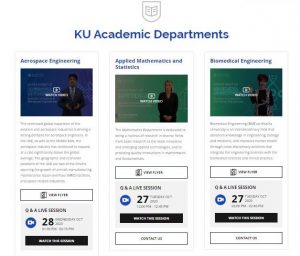
KU Holds Virtual Majors Day to Guide First-Year Students in Choosing Their Career Paths

Every year, Khalifa University holds a Majors Day event to provide freshman students an opportunity to know more about the different majors and programs offered at KU, guiding them on what majors they should choose based on their interests and career goals. Around 300 freshmen were expected to participate in the sessions.  


This year’s Majors Day event was different from previous years. For the first time, the annual event was held virtually through a dedicated website specifically developed for Majors Day.


The virtual event, organized by the Career and Alumni Services Office in collaboration with the different Academic Departments of the University, was hosted online from the 26th of October. Pre-recorded sessions of faculty from the different KU Academic Departments talked about the majors, academic requirements, and future career tracks for each of the various academic programs at KU.


After the presentations, dedicated Q&A sessions were scheduled on the 27th and 28th of October to give the students more detailed advice about the different programs and majors available to them. Choosing a major and future career paths can be daunting and KU is dedicated in providing the students with comprehensive guidance and support. KU alumni also participated in the Q&A sessions to support the students as well as share their KU experience and give insights on their professional life after graduation. The KU graduates answered the questions and concerns and gave advice to the students.  


Dr. Syed Salman Ashraf, Associate Dean for Postgraduate Studies, said:


“The event was done very professionally and it was obvious that the Career Services team had put in a lot of hard work! I was especially impressed with the excellent organization and the ease with which we were able to record our message for prospective students.”


Dr. Kinda Khalaf, Associate Chair, Biomedical Engineering, commented:


“Our first BME virtual Majors Day at KU was a huge success. While initially I was somewhat skeptical about being able to virtually connect with students in a meaningful manner, I was very happily surprised to see that the virtual mode added a new flavor and perhaps some advantages over the personal meeting. For example, the length of our BME event was double the one scheduled. Many students were engaged, especially because the platform allowed typing which some less verbal students prefer. The majority of the students opted to stay with us online after the event formally finished to chat and ask questions. Many reached out in the following weeks. The team at the Career Office did a wonderful job facilitating and allowing for our customized version of the event.”


Dr. Emad Walid Al Shalabi, Assistant Professor, Petroleum Engineering, said:


“The virtual Majors Day event at Khalifa University was a real success! Although it is the first time this event is conducted virtually, the collaborative efforts of KU’s Career Services Office and the Communications department members ensured a smooth flow of the event! For our Petroleum Engineering (PE) virtual booth, we shared different flyers, leaflets, and videos to familiarize undergraduate students with the department activities and the nature of PE major. Also, we successfully uploaded a virtual reality (VR) application on PE where students were engaged and the live Q& session was so interactive! I am glad to be part of this activity and we look forward to welcoming students to our beloved PE department!”


There have already been almost 2,500 visits on the Majors Day site since it was made available. Students continue to view the sessions to know as much as possible about the majors they plan to take. The students found the videos, brochures, and other collaterals very useful to help them make their decision. 


Shamma Kahoor, Interested in Biomedical Engineering:


“It was well organized. I learned a lot about my interests. It helped me set a path for what I would like to study.”


Yousef Mohammed Balbahaith, Interested in Biomedical Engineering:


“It was enlightening and I have made a clear decision about what major I want to pursue at KU, and I hope that everything goes well and special thanks go to all the team who worked on this event.”


Hamda Alhameli, Interested in Electrical Engineering:


“I really enjoyed this Majors Day because it was different from all previous Majors Day. Instead of students answering our questions it was professors and doctors. Also, all my questions were answered and everything was available and easy to access.”


Ara Cruz
Creative Writer
25 November 2020

Khalifa University’s Seawater Energy and Agriculture System (SEAS) Recognized by Global Water Awards

Khalifa University’s Seawater Energy and Agriculture System (SEAS) Recognized by Global Water Awards


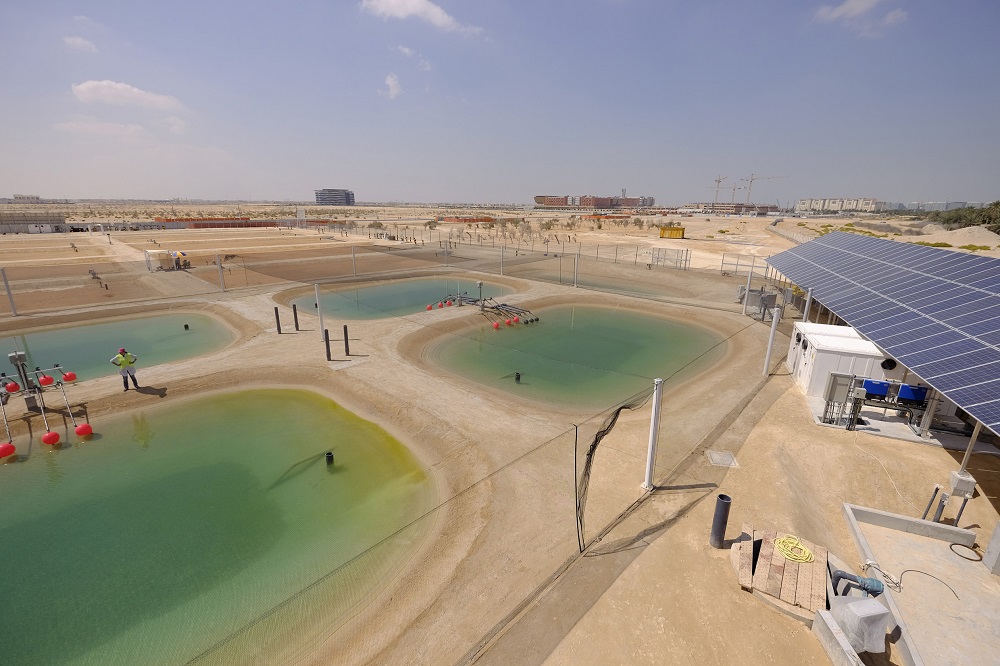
The integrated Seawater Energy and Agriculture System (SEAS), the flagship project of Khalifa University’s Sustainable Bioenergy Research Consortium and the world’s first bioenergy facility using saltwater to produce seafood and aviation biofuel in the desert environment of the UAE, has been recognized as “Industrial Project of the Year – Distinction” by the Global Water Awards.


This SEAS project was recognized by the Global Water Awards because it is a unique project characterized by cross-industry co-operation to implement sustainable biofuel production and create an agricultural alternative in the UAE. In January 2019, Etihad Airways operated the first commercial flight using biofuel produced by the project, successfully flying from Abu Dhabi to Amsterdam.


The Sustainable Bioenergy Research Consortium (SBRC) was established in Abu Dhabi in 2011 as a not-for-profit research consortium to advance the aviation industry’s commitment to sustainable business practices by developing technology with the promise of producing a clean, alternative fuel supply. Its flagship project, SEAS, is being carried out in collaboration with Boeing, Etihad Airways, ADNOC Refining, Safran, GE, and Bauer Resources.


Dr. Alejandro Rios Galvan, Director of SBRC, said: “It is a great honor to be recognized by the Global Water Awards. It highlights the importance of collaboration between the private sector and academia in creating solutions for the creative use of water, which is of utmost importance for arid and water-constrained regions of the world.”


The success of the SEAS system demonstrates the viability of using saltwater for halophyte agriculture in the desert environment of the UAE, avoiding the use of precious groundwater and arable land to produce biofuel. It also uses on-site solar panels to power the system’s pumps and valves, further extending its environmental impact. 


The next step for the SEAS system is to scale it up to a 200-hectare site, in a move towards full commercial implementation.


The Global Water Awards was established in 2006 by Global Water Intelligence. It recognizes the most important achievements in the international water industry within several categories, and rewards those initiatives in the water, wastewater and desalination sectors that are moving the industry forward through improved operating performance, innovative technology adoption and sustainable financial models.


Erica Solomon
Senior Publication Specialist
13 December 2020

Khalifa University and Cleveland Clinic Abu Dhabi Researchers Developing Model to Understand How Long and How Far COVID-19 Virus Remains Airborne

Study Using Colloids and Mannequins to Assess Safety Levels in Hospitals and Effectiveness of Masks and Other PPEs


Read Arabic story here: http://www.researchku.com/news-extended/61


To hear an interview with Dr. Ammar Nayfeh on Abu Dhabi Radio, click here and listen between 54:15 – 1:13:38.


Editor’s note: This story was updated on 24 November 2021.


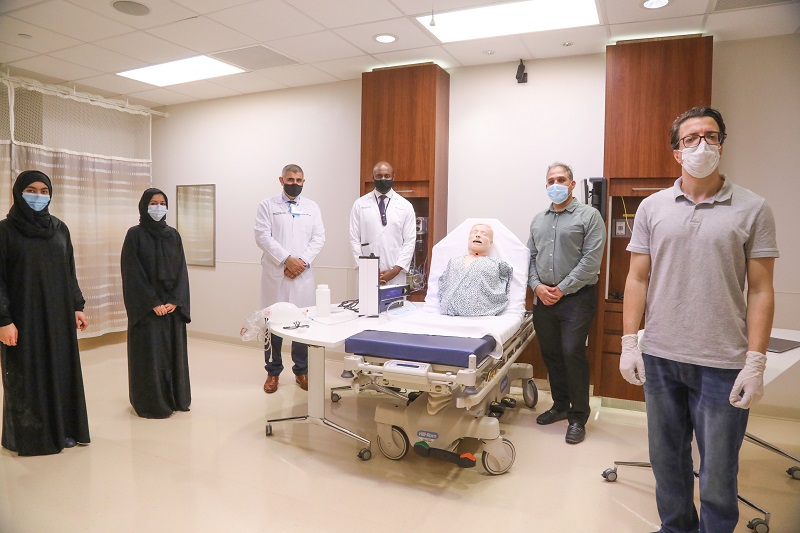
Khalifa University of Science and Technology, in collaboration with Cleveland Clinic Abu Dhabi, announced that a team of researchers is developing a model to understand precisely how the COVID-19 virus travels through the air and how long it can stay airborne, in order to ensure safer hospital environment and lower transmission rates, while assessing the effectiveness of masks and other personal protective equipment (PPEs).


Aerosol spread means that tiny droplets containing the SARS CoV-2 virus remain airborne for a long time and travel significantly farther than the six-foot separation recommended for social distancing. As some studies have suggested, the spread of COVID-19 by aerosols is both real and dangerous.


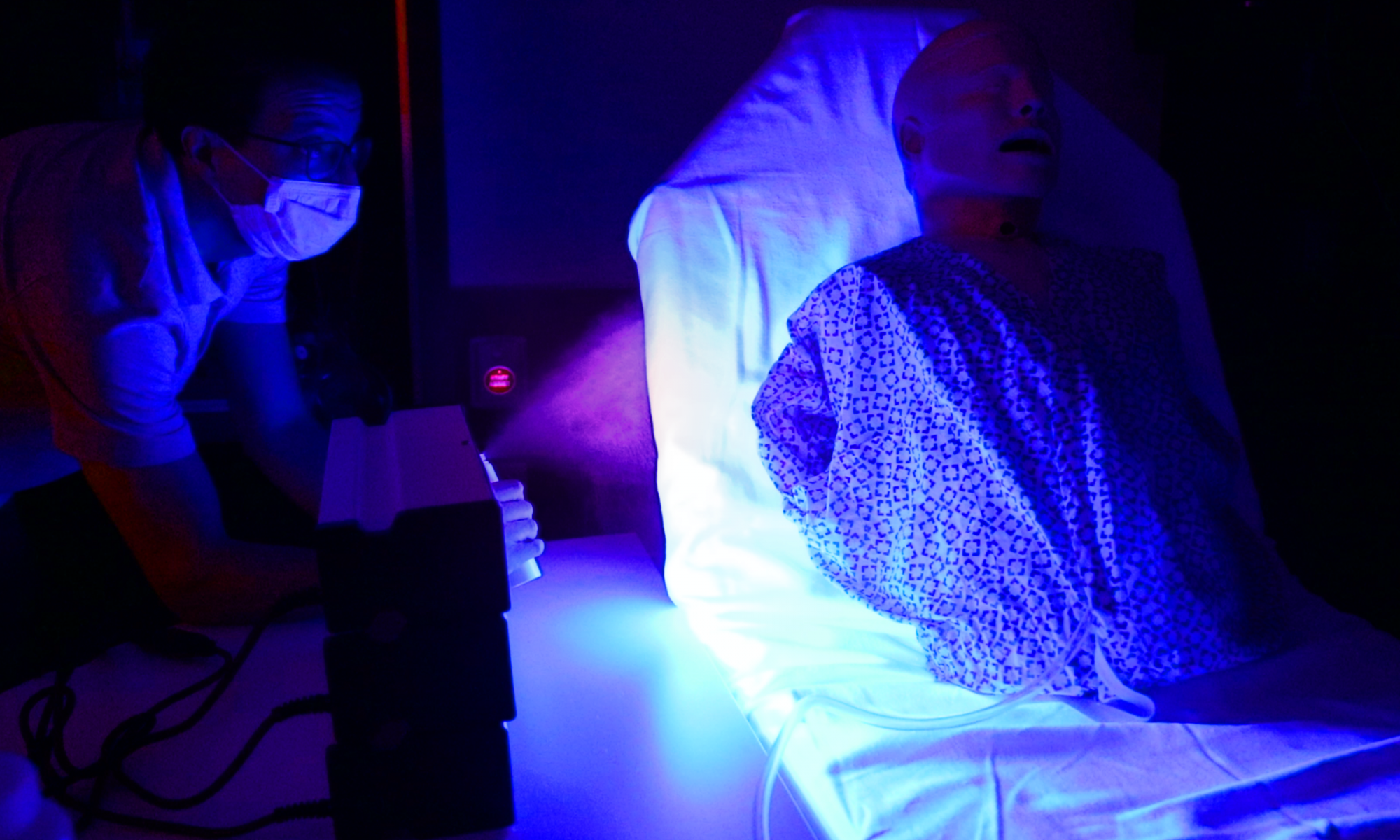
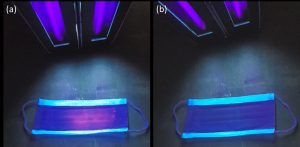
To create their model, the researchers spray a colloid made of silicon nanoparticles to simulate a patient’s cough and aerosol generation, making droplets of various sizes containing the nanoparticles. These nanoparticles glow red under UV light, allowing the researchers to see how the particles spread. The team will also be testing their model in a hospital environment with mannequins at Cleveland Clinic  Abu Dhabi.


Dr. Arif Sultan Al Hammadi, Executive Vice President, Khalifa University of Science and Technology, said: “Our researchers have been persistently engaged in scientific research that brings solutions through the use of advanced technology. The use of nanoparticles to ‘locate’ the SARS CoV-2 virus and find out how the airborne particles spread quickly is one model our research team is currently working on, as part of our efforts to contribute to mitigating the COVID-19 pandemic. We believe the outcome of this research will not only help identify how the airborne particles of the virus spread, but will also help ensure the care-providing environment such as hospitals and clinics are kept safer.”


Dr. Ahmad Rakad Nusair, MD, Cleveland Clinic Abu Dhabi, said: “Understanding the transmission of the virus is crucial in our fight against it. So far, the evidence for modes of transmission has been based on observations that have not been validated experimentally. As one would imagine, it would not be safe to experiment with the real virus, and hence, our decision to use nanoparticles to simulate the virus transmission in the healthcare environment. Globally, there are different recommendations to prevent the spread of the virus in the healthcare settings. While they all come from credible regulatory bodies, they are widely variant. The result of that is what we continue to see today, transmission of the virus in different healthcare settings and in different countries varies a great deal. There were hospitals in other countries that reported more than one third of their healthcare to have contracted the infection, while others reported minimal transmission. There are many factors that are responsible for the variation we see. The type of rooms that are used for patient care, the ventilation systems that are in place, the type of PPE that is being used. We are going to look into all those variables and understand each of those effects on the virus transmission. Our scientific experimental approach will enable us to give sound scientific recommendations for healthcare institutions to protect their staff against COVID-19. 

(a) A surgical mask under the UV lamp after spraying the Si NPs (b) A surgical mask under the UV lamp before spraying the Si NPs


The research team, led by Dr. Ammar Nayfeh, Associate Professor, Electrical Engineering and Computer Science, comprises Dr. Ayman Rezk, Postdoctoral Fellow, Juveiriah Mohammed Ashraf, Research Engineer, and MSc students Wafa Sulaiman Alnaqbi and Aisha Al Hammadi. Their research has been published in the journal Nature


In order from left to right: KU MSc student Wafa Sulaiman Alnaqbi, Juveiriah Mohammed Ashraf RE, Dr. Ahmad Nusair CCAD, Dr. Shadi Muhammad, Professor Ammar Nayfeh, Postdoc Dr. Ayman Rezk


The researchers will be using mannequins to simulate a breathing healthcare worker in a regular room and in a negative pressure isolation room. This is expected to improve the researchers’ understanding of the virus’ epidemiology, the effectiveness of masks and social distancing, and improve how we use our resources in hospitals.


Aerosols are tiny compared to droplets, which are larger in size and may be exhaled by people talking, coughing or sneezing. These droplets don’t travel far and quickly fall to the ground, but aerosols spread to far greater distances and can linger in the air for a longer time, making them more likely infecting others. What constitutes a safe distance from aerosols is much harder to define, especially in indoor spaces with poor ventilation.


At present, Cleveland Clinic Abu Dhabi is partnering with the research team to provide two patient care environments for testing. No patients are involved, and the team will use medical mannequins to simulate a breathing healthcare worker in a patient’s room.


In October 2021, a follow-up story to this research project was published in The National, which can be viewed here.


Clarence Michael
English Editor Specialist

Jade Sterling
Science Writer

10 December 2020

Khalifa University Researcher Bridges the Terahertz Gap to Create Powerful Sensing and Imaging Capabilities


The terahertz range offers opportunities for detecting all sorts of things but using this range has proved difficult until now


Read Arabic story here: http://www.researchku.com/news-extended/65 


Terahertz radiation – a band of the electromagnetic spectrum between microwaves and the infrared range – is useful for detecting toxic gases, explosives, and even diseases. But scientists have only been able to generate terahertz radiation at temperatures below 200 kelvins (-73 degrees Celsius) or lower, making it difficult to make use of this unique band in real-world applications, resulting in what’s known as the ‘terahertz gap.’


Now, researchers from Khalifa University are making progress towards a new way of generating terahertz radiation at room temperature by capitalizing on the unique electronic characteristics of a semiconducting superlattice material.


“This research has great potential in the UAE because the terahertz range of frequencies can be used to detect dangerous gases in the environment, explosives, and a number of gases in exhaled human and animal breath,” explained Dr. Mauro Pereira, Professor and Chair of the Khalifa University Department of Physics. “It could also be used to screen diseases in an early stage without invasive testing, and could therefore become a powerful tool in diagnosis for respiratory, gastrointestinal, and hepatic diseases.”


Dr. Pereira is lead author on a paper that was recently published in Scientific Reports describing the new technique to generate terahertz radiation. He was joined by Dr. Vladimir Anfertev and Dr. Vladimir Vaks, both from the Institute for Physics of Microstructures, Nizhny Novgorod, Russia, and Dr. Yuliia Shevchenko from the Czech Academy of Sciences Institute of Physics.


To reach the terahertz radiation frequency at room temperature, the researchers created a special kind of material, known as a semiconductor superlattice. Semiconductor superlattices are made by layering atomically thin sheets of different materials (such as silicon and graphene) on top of each other. The layering gives the material an important electronic property called “nonlinearity.”

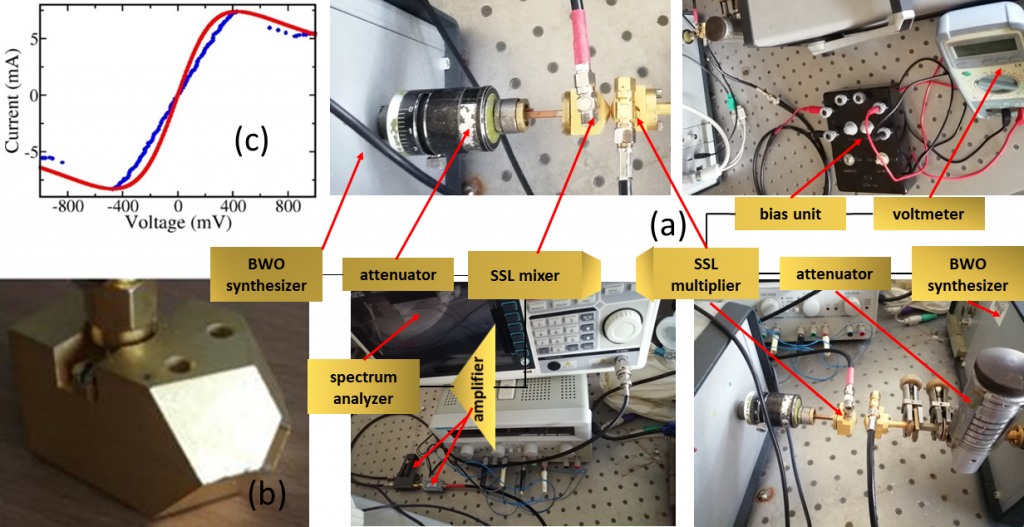
(a) Diagram of the experimental scheme, showing pictures of the main units used. (c) Close up of the waveguide housing both multiplier and mixer superlattices. (c) Current voltage used to extract input parameters for our modelling: the (blue) symbols are experimental data and the (red) solid curve is calculated.

A material that is nonlinear behaves in a peculiar way. When it is radiated with light (or any form of energy), the atomic crystals in the material will vibrate not only at its natural frequency, but also at its “harmonic frequencies.” The harmonic frequencies are the waveforms of the natural frequency multiplied by two, three, four, five and so on until the frequency becomes so faint that it is no longer observable.    


A nonlinear material with a natural frequency of 10 gigahertz, could have harmonic frequencies of 20 gigahertz, 30 gigahertz, 40 gigahertz and so on.  As the harmonic frequency increases, however, the vibrations become more faint.


“Nonlinear physics is playing a major role in bridging what was once called the ‘terahertz gap’ and its multitude of applications,” explained Dr. Pereira.


“We take a source at a frequency that is easy to generate and use that to create higher frequencies in harmonic generation. We take a source operating at around 120 Gigahertz and multiply it all the way to 720 Gigahertz and beyond, using semiconductor superlattices and controlling the nonlinearities of the material. We use similar superlattices to detect the high frequencies at room temperature in an efficient way.”


The ability to leverage semiconductor superlattices and their corresponding harmonics can get scientists closer towards creating efficient devices that can generate radiation at terahertz frequencies from gigahertz inputs.


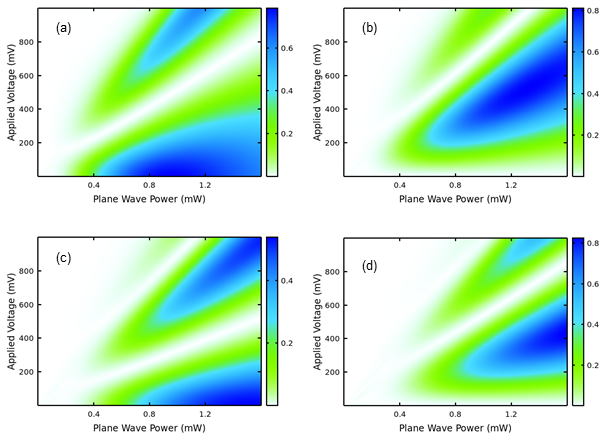
 “Semiconductor superlattice multipliers were only expected to deliver odd harmonics, but we have shown that they can also generate even harmonics. By actually controlling the even harmonics and increasing their output by several orders of magnitude with applied voltages, we open the possibility of exploiting a wide range of frequencies,” explained Dr. Pereira.


“The superlattices are already being used by our Russian colleagues for breath analysis and we are designing new samples and devices based on them here at Khalifa University.” 


Jade Sterling
Science Writer

Erica Solomon
Senior Publication Specialist

10 December 2020

Etihad Airways launches first aircraft carbon offset programme in Middle East

Etihad Airways, the national airline of the UAE, has committed to purchasing carbon offsets, to completely neutralize the CO2 emissions of its flagship “Greenliner” 787-10 aircraft for a full year of operations in 2021.

The initiative is the start of the airline’s journey to reduce CO2 emissions to 50 percent of 2019 levels by 2035, and to achieve full net zero emissions by 2050 – a first for any airline in the Gulf and one of the first to set a target of this scale in the industry. Separately the airline will implement an additional voluntary offset program for passengers via its website (etihad.com) in 2021.

Dr. Alejandro Rios-Galvan, Chairman of the Sustainable Bioenergy Research Consortium at Khalifa University of Science and Technology, who advises Etihad on a range of sustainability issues, said: “This is a great start for Etihad’s zero carbon journey using a well-respected offset standard that is fully compliant with the best sustainability practices out there. We look forward to continue supporting Etihad on their long-term sustainability strategy.”

Read full story here: https://globallytoday.com/etihad-airways-launches-first-aircraft-carbon-offset-programme-in-middle-east/

Atmospheric Extremes Triggered the Biggest Calving Event at an Antarctica Ice Shelf in More Than 50 Years, Reports Khalifa University Team

Read Arabic story here: http://www.researchku.com/news-extended/66


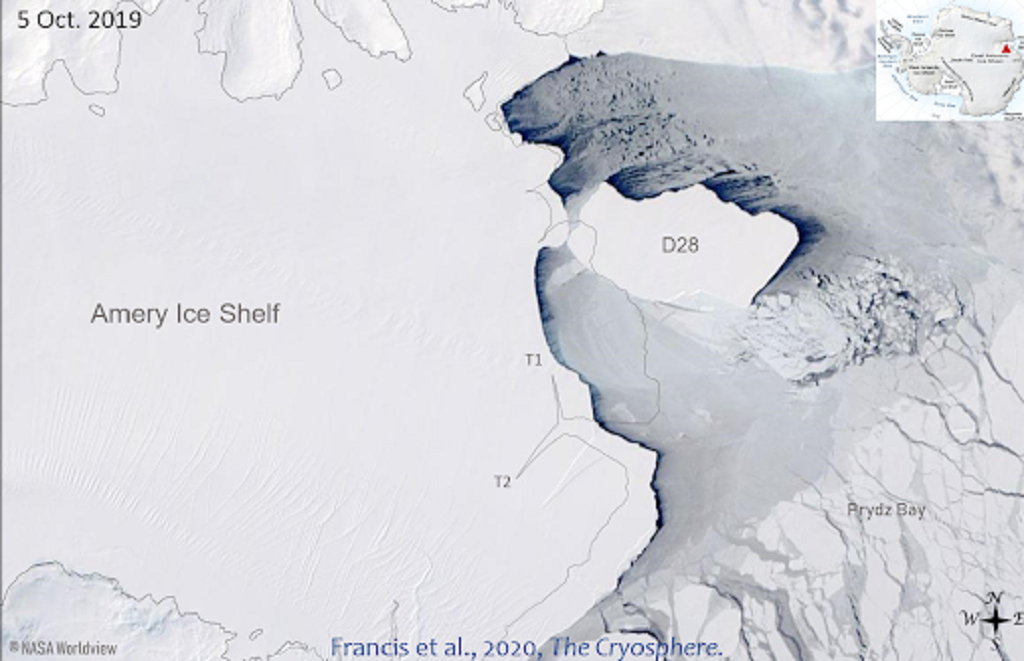
In the largest calving event from the Amery Ice Shelf since 1963, which occurred almost a decade earlier than expected, an iceberg 1,636 square kilometers in size with an estimated weight of 315 billion tons, broke away from its glacier in September 2019.


The iceberg continues to be monitored due to the threat that an iceberg this size could pose to shipping channels. However, attention is turning to the cause of this event as global warming and atmospheric changes could lead to more such calving events.


In a study recently published in The Cryosphere, Dr. Diana Francis, Senior Research Scientist and Head of the Environmental and Geophysical Sciences (ENGEOS) lab from Khalifa University, along with Dr. Kyle Mattingly, Post-doctoral Associate, Rutgers University, Dr. Stef Lhermitte, Assistant Professor, Delft University of Technology; Dr. Marouane Temimi, Associate Professor, Stevens Institute; and Dr. Petra Heil, Senior Research Scientist, Australian Antarctic Division, describes the cause of this calving event, identifying cyclogenesis—the formation of cyclones—as a major factor. The team reported for the first time the formation of polar twin cyclones near Antarctica immediately prior to the event.


“Ice shelf instability is one of the main sources of uncertainty in Antarctica’s contribution to future sea level rise,” explained Dr. Francis. “Calving events play a crucial role in ice shelf weakening but remain unpredictable, and their governing processes are still poorly understood.”


Ice shelves are platforms of floating ice that form where the Antarctic ice sheet meets the ocean. The Amery Ice Shelf, which is one of the largest glacier drainage basins in the world, is located on the Eastern coast of Antarctica.


In December 2006, Australian scientists investigated enormous cracks that had been forming for over a decade at a rate of three to five metres a day in the Amery Ice Shelf. These fractures were feared to cause a 900-square-kilometer piece of the ice shelf to break off. The cracking was particularly concerning since the last recorded activity in this part of eastern Antarctica occurred over 50 years ago.


Although early studies predicted that the Amery Ice Shelf would not experience a major calving event until at least 2025, on 25 September 2019, iceberg D28 was calved.


“The rapid collapse of several Antarctic ice shelves observed recently and the near-instantaneous acceleration of land-ice discharge into the ocean that followed the collapse, demonstrate the sensitivity of the Antarctic cryosphere to recent warming,” explained Dr. Francis. “Large uncertainty remains regarding the response of ice shelves to the global rising temperatures and the resulting changes in the atmospheric circulation. That this D28 calving took us by surprise highlights the need for an improved understanding of the underlying processes of calving events and the role of atmospheric forcing in ice shelf weakening.”


Around the world, rising seas threaten cities and infrastructure along the coast. Higher sea levels also mean that deadly and destructive storm surges push further inland than before, and high-tide flooding becomes more likely. Global mean sea level has risen about nine inches since 1880, mostly due to meltwater from glaciers and ice sheets as temperatures rise.


Although much attention focuses on the melting ice caps, calving is the fastest way by which ice contributes to sea level rise. While ice shelves themselves are floating ice and therefore already displacing water, they act as a brake on the flow of the ice further inland. As the ice shelves thin when pieces break off, this restrictive force decreases.


Despite the importance and the implications of ice shelf calving, this phenomenon remains unpredictable and poorly understood. The Khalifa University team focused on the impact of extreme cyclone activity during this largest calving event since 1963. They investigated the development of explosive cyclones and their impact on sea ice and land ice conditions in this area given that changes in cyclone tracks, numbers, and intensity may have significant impacts on Antarctic ice.


“Weather systems such as cyclones resulting from the larger-scale air and wind circulation are the main driver of the observed trends in sea ice variability,” explained Dr. Francis. “Furthermore, cyclones and their associated atmospheric rivers can induce sea ice melt, ice-shelf surface melt, and significant sea ice drift by virtue of their anomalous moisture and heat transport to high latitudes and the strong surface winds they carry. Severe storms can generate energetic waves in the Southern Ocean capable of penetrating hundreds of kilometers into the sea ice-covered ocean but this sea ice cover acts as a buffer, reducing the impact of storms on ice shelves.”


The number and intensity of cyclones around Antarctica over the last few decades have increased as the storm tracks shift towards the pole under enhanced greenhouse gas concentrations. As the climate continues to warm, the intensity of more frequent cyclones is projected to increase.


An extreme situation is the formation of explosive cyclones, which are deeper and longer-lasting compared to ordinary cyclones. Worse, they are found to be more intense in the Southern Hemisphere than in the Northern Hemisphere, with the Amery Basin, where the Amery Ice Shelf is located, standing out as one of the three main regions for explosive cyclogenesis around Antarctica.


As the cyclones are directed towards the south pole, they are blocked at the Antarctic coast by the ridges to the east. This results in stationary cyclones over the same region for longer, which has a pronounced impact on the sea ice and waves. As the extent to which the Antarctic sea ice extends reduces and the number and severity of atmospheric events increases, this may result in even more impact on ice shelves from extreme cyclones.


The KU research team also noted the formation of twin cyclones, where mutually-interacting cyclones have twice the impact as a single cyclone.


“To our knowledge, the formation of explosively developing twin cyclones has only been observed and studied in the tropics, the mid-latitudes, and in the Arctic,” explained Dr. Francis. “But we reported the formation of polar twin cyclones near Antarctica during two consecutive events just days apart in September 2019.”


The researchers found that an extended period of strong cyclonic activity in September 2019 resulted in an exceptional period of strong easterly/north-easterly winds over the western side of the Amery Ice Shelf. This exceptional wind stress on the ice shelf generated strong waves in the region in front of it, where warm and moist air masses at the ice shelf front may have contributed to a decrease in sea ice concentration. The team found that the winds during the first twin cyclone event were exceptionally unusual compared to the record, while the winds during the second were strong but not extreme. This suggests that the first event had an important role in preconditioning the ice shelf front for breakoff, while the offshore winds in the second event triggered the calving by pushing the section of ice out from the shelf.


“We found that the cyclones had a large impact on the ice conditions because they were stationary,” explained Dr. Francis. “They subjected the ice to sustained stress and strain, weakening and exposing the ice shelf before strong winds pushed part of the shelf out to sea.”


The team asserts that important changes in the atmospheric circulation in the Southern Hemisphere need to be further investigated, with an urgent need to assess the impact of cyclones on the area.


“If extreme polar cyclones are to form and more frequently reach ice shelves due to climate change, their destructive effect may have important consequences,” explained Dr. Francis. “This needs to be accounted for in models used for sea level projections.”


Jade Sterling
Science Writer
9 December 2020

Ankabut Integrates Educhain to Launch Digital Certificates Platform for the UAE

Ankabut Blockchain to Provide Applications to Manage, Issue, Attest, Share, and Verify Any Academic Record


Khalifa University of Science and Technology’s managed Ankabut, the Emirates Advanced National Research and Education Network, has launched ‘Ankabut Blockchain’, a digital certificate platform for the issuance, attestation, and exchange of digital certificates for all levels of education.


The integration of Educhain, a leader in UAE in education blockchain applications, by Ankabut, the UAE leader in education services and infrastructure, is significant.


Ankabut has 26 institutional members with connections to over 67 sites throughout the UAE, and offers UAE academic and research institutions connectivity to other education networks worldwide. Managed by Khalifa University of Science and Technology, Ankabut is jointly funded by the Telecom Regulatory Authority (TRA) through the ICT Fund.


The Educhain blockchain ecosystem includes several leading institutions in the UAE such as Khalifa University, UAE University, and Zayed University. The integration with Ankabut provides a secure, robust, scalable platform, accessible to all academic institutions across all Emirates in the UAE.


Ankabut Blockchain serves schools, institutions, universities, and regulators to digitize academic records and attestations. It provides applications to manage, issue, attest, share, and verify any academic record. Learners receive a digital wallet to manage their academic records from all schools, institutions, and universities in the network.


The ecosystem moves all certificates and records fully online, from the issuance, to attestation, sharing, and verifying. It integrates blockchain applications into their processes and workflow – moving from physical processes to digital – saving time and costs for all parties, collecting data and insights, and allowing recipients to verify all documents online.


Ankabut Blockchain is also developing new applications for digital badging, equivalencies, and credit transfers, among others, to serve both academia and government.


Fahem Al Nuaimi, Ankabut CEO, commented; “Academia must seriously consider the next step after e-learning. As restrictions on travel continue both locally and abroad, learners are no longer able to receive and share their degrees and other accomplishments. The UAE needs to be ready for the next stage, a “2.0” moment, to securely digitize academic records, attestations, equivalencies, and credit transfers, moving fully online.”


Mark Balovnev, CEO at Educhain, added; “We are very excited to work with Ankabut to be the partner of choice for every online certification. As the world shifts to digital, we are here to support institutions in these challenging times, to serve their learners and partners safely and effectively through digital channels.”


Ankabut Blockchain is also in line with the UAE’s Emirates Blockchain Strategy 2021, enabling all academic institutions to digitize their certificates and enabling government and regulators to play a role in the network. As the UAE looks to conduct 50% of government transactions on the federal level using blockchain technology by 2021, securely digitizing education records and attestations is a natural next step.


Through providing a unique digital wallet for each learner, the “Academic Passport”, Ankabut Blockchain aligns with the UAE 50-Year charter, a central education file for every citizen – “documenting all the academic degrees obtained, classes and training taken, and conferences attended”.


Clarence Michael
English Editor Specialist
8 December 2020

Abu Dhabi scientists find unexpected link between ‘Godzilla’ dust storm and Arctic ice

Scientists at Khalifa University found that the mammoth ‘Godzilla’ dust storm that blew to the US from the Sahara in June may have been caused by lower ice levels in the Arctic.

Their research indicates that climate change may be having unexpected consequences for global weather patterns that extend well beyond temperature increases.

Read full story here: https://www.thenationalnews.com/uae/environment/abu-dhabi-scientists-find-unexpected-link-between-godzilla-dust-storm-and-arctic-ice-1.1121282