His Excellency Dr Sultan Al Jaber Gets Cabinet Seat

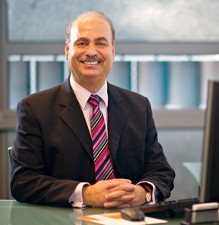
His Excellency Dr Sultan Bin Ahmed Sultan Al Jaber, CEO of Masdar and Chairman of the Executive Committee of the Board of Trustees of Masdar Institute, has been appointed Minister of State in the UAE Federal Cabinet.

His Excellency Dr. Al Jaber continues to be an active contributor to the Masdar initiative, and continues to manage strategic plans for a number of projects for the country.

Earlier, His Excellency Dr. Al Jaber was bestowed the UN’s “Champions of the Earth” award that recognizes outstanding visionaries and leaders. He was also on the United Nations Secretary General’s High Level Group on Sustainable Energy for All.

His Excellency Dr. Al Jaber is a Board member of Aldar properties and ZonesCorp, Director-General of Zayed Future Energy Prize (ZFEP), and First Advisor to Mubadala Development Company.

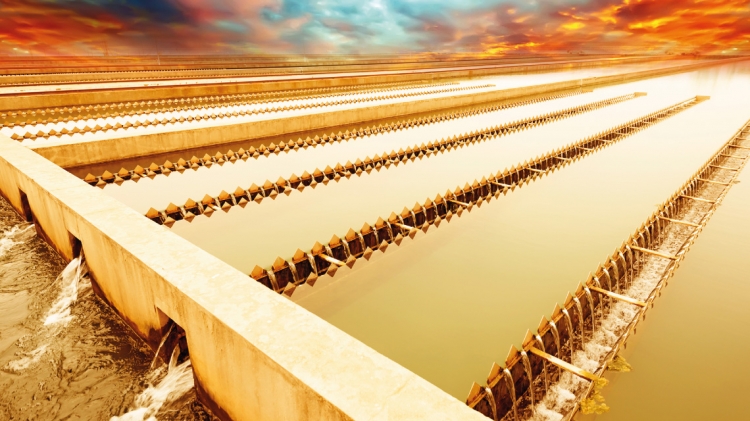
Answer to UAE’s water needs may lie in cleaning up waste water

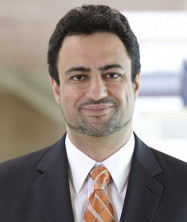
By Dr Farrukh Ahmad, Dr Jorge Rodriguez and Dr Andreas Henschel

With little or no freshwater, the UAE relies heavily on costly, energy- intensive desalination plants. Treating wastewater is much cheaper – if only we could make more use of it.

According to the Statistics Centre Abu Dhabi, in 2012 treated wastewater met less than 10% of Abu Dhabi city’s total water demand.

Desalinated water and groundwater met 79% and 12% of the total water demand, respectively.

Treated wastewater is currently used only for irrigation and landscaping. If we could put it to other uses, we could make a big dent in our carbon and energy expenditure.

But for applications beyond irrigation, science must first address important questions about water for treatment and reuse. What happens to micropollutants and pathogens in the wastewater treatment process?

What happens to any residual micropollutants and pathogens present in recycled water when it is reused? Or to put it more simply, do we remove the harmful stuff, and how harmful is the stuff we don’t remove?

Micropollutants consist of natural and synthetic chemicals, from hormones to pharmaceuticals and flame-retardants.

They are typically organic compounds, found at low concentrations in the municipal waste stream as a result of their large-scale production and widespread use in commercial and consumer products.

They affect both human and other living things, disrupting endocrine – hormonal – systems, killing cells, and causing increased antibiotic resistance.

One uncertainty is where the large number of micropollutants present in wastewater end up.

These compounds tend to persist in treated wastewater because conventional treatment processes, like activated sludge treatment and membrane bioreactors, do not target their removal.

In order to address these concerns, we at Masdar Institute are interested in using a comprehensive and multi-disciplinary computational, experimental, and field-scale approach at all points along the wastewater generation, treatment, and end-use process train to help allow more water to be reused safely.

Analysing micropollutants requires sophisticated instruments and techniques, such as gas and liquid chromatography coupled with mass spectrometry, which most water utilities are not equipped for.

Monitoring pathogens and other biological agents is tricky, too. All water, even tap water and bottled drinking water, contains complex microbial communities that are, for the most part harmless to humans.

Unlike chemical contaminants, microbes can multiply in the treatment system – so counting the microbes in one part of the system doesn’t necessarily tell you how many there are somewhere else.

And while some microbes are potentially pathogenic, many others are entirely benign. So simply counting them – as is the conventional practice – doesn’t tell you if there’s actually anything to worry about.

For these reasons, conventional microbiological methods are grossly inadequate for monitoring presence and levels of pathogens, especially in warm and hot climates.

Modern molecular biological techniques, such as polymerase chain reaction (PCR) and high-throughput or metagenomic DNA sequencing, can provide cost-effective, detailed analysis of the microbes present, including pathogens.

These techniques, coupled with quantitative chemical and microbial risk assessment, offer a scientifically robust way of assessing any health risk from disease vectors in treated wastewater.

This, in turn, would allow the UAE to use treated wastewater for a wider variety of applications – which would reduce the UAE’s carbon footprint and energy demand, while enhancing food and water security.

Dr Farrukh Ahmad is associate professor of water and environmental engineering, Dr Jorge Rodríguez is assistant professor of water and environmental engineering, and Dr Andreas Henschel is assistant professor of computing and information science, all at the Masdar Institute of Science and Technology.

Masdar Institute Students Organize Beach Clean-up Drive to Mark Earth Hour 2013

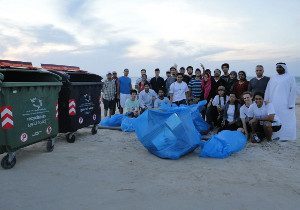
Abu Dhabi-UAE: 25 March, 2013 – Members of the Sustainability Club at Masdar Institute of Science and Technology marked Earth Hour 2013 on 23 March by organizing a beach clean-up drive on Yas Island, in collaboration with the Environment Agency Abu Dhabi (EAD) and Centre of Waste Management (CWM). The CWM provided equipment and support personnel to students, who were also assisted by Al Mahara Diving Center. The clean-up was led by Sanaa Iqbal Pirani, Graduate Student and President of Sustainability Club, Masdar Institute.

After completing the clean-up event that resulted in massive volume of unwanted items left over by beach-goers and strollers, members of the Sustainability Club concluded the activities with games including a quiz competition on climate change.

Only Right Combination of Key Factors Can Build Globally Competitive Business, says Maurizio La Noce

Mubadala Petroleum CEO Offers Special Insights into Building Successful Enterprise at Knowledge-Sharing Platform Organized by Masdar Institute

Abu Dhabi-UAE: 26 March, 2013 – The long-term fundamentals for the energy industry will continue to remain robust despite far-reaching changes, especially the advent of unconventional hydrocarbons, such as shale gas and shale oil that are projected to corner a major share of the market.

According to Maurizio La Noce, Chief Executive Officer of Mubadala Petroleum, the company’s continuing evolution into a globally competitive business hinges on three key factors – people, partnerships and performance. Only the right combination of these factors can bring about adequate growth and returns.

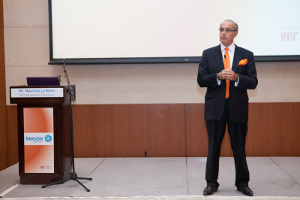
La Noce’s comments came during a lecture titled ‘Building a Globally Competitive Business: People, Partnerships and Performance’ at a knowledge-sharing platform organized by Masdar Institute of Science and Technology. The lecture was attended by top officials from the government and private sector in the UAE as well as international corporate leaders and faculty and students from Masdar Institute.

Dr Fred Moavenzadeh, President, Masdar Institute, said: “The lecture is organized as part of Masdar Institute’s knowledge sharing initiative under the framework of developing Abu Dhabi’s human capital. With the support of the country’s leadership we continue to provide the right forum for knowledge exchange and we hope this forum will benefit all the stakeholders.”

La Noce said: “Mubadala Petroleum is one of the strategic pillars within Mubadala and focuses on creating long-term value, developing a new generation of internationally capable leaders and contributing specifically to oil and gas projects of strategic interest to Abu Dhabi. We deliver on our promise through a clear vision and a shared purpose as well as with performance that excels.

“Our key priorities include accessing attractive opportunities, selecting the right partners and service providers, as well as mobilizing appropriate technology. Our greatest priority, however, is to attract and develop the right talent – people who are passionate about their work and willing to learn. We provide opportunities for local employees both at home and abroad, and manage relationships with key stakeholders and local communities.”

La Noce added that Mubadala Petroleum seeks to meet its strategic objectives through a three-pronged approach; delivering gas supplies to the UAE, creating long-term value growth through exploration-led businesses and generating near-term net income from its current producing and non-operated assets.

Currently, Mubadala Petroleum is focusing on three key regions – ‘Africa and Eastern Mediterranean’, ‘South-east Asia’, and ‘Middle East and Central Asia’. For each region, Mubadala Petroleum adopts a tailored approach. The company carries out high-impact exploration and frontier projects in the Africa and Eastern Mediterranean region, while targeting primarily lower risk, smaller scale-exploration and production in South-east Asia.

In the Middle East and Central Asia region, Mubadala Petroleum is concentrating on field redevelopment, some high impact exploration and gas supply in the UAE.

Serving as a key pillar of innovation and human capital, Masdar Institute remains fundamental to Masdar’s core objectives of developing Abu Dhabi’s knowledge economy and finding solutions to humanity’s toughest challenges such as climate change.

Established as an on-going collaboration with the Massachusetts Institute of Technology (MIT), Masdar Institute integrates theory and practice to incubate a culture of innovation and entrepreneurship, working to develop the critical thinkers and leaders of tomorrow. With its world-class faculty and top-tier students, the Institute is committed to finding solutions to the challenges of clean energy and climate change through education and research.

41-Member High-Level Delegation from Boston University Visits Masdar Institute

Delegation Members Learn about Masdar Institute’s Patent Filings and Progress in Clean Energy and Advanced Technology Research

Abu Dhabi-UAE: 27 March, 2013 – Masdar Institute of Science and Technology, an independent, research-driven graduate-level university focused on advanced energy and sustainable technologies, today announced a high-level delegation comprising the President, Provost and Board of Trustees of Boston University (BU) visited the sustainable campus.

Dr Fred Moavenzadeh, President, Masdar Institute, and other officials welcomed the 41-member delegation that was led by Mr. Rajen Kilachand, Chairman and President of the Dodsal Group, a trans-global multinational company with a persified portfolio of businesses operating across the world. Mr. Kilachand is a member of the Boston University Board of Trustees.

Robert A. Knox, Chairman of the board and Senior Managing Director, Cornerstone Equity Investors, L.L.C., Stamford, Connecticut, Robert A. Brown, President of Boston University, and Jean Morrison University Provost and Chief Academic Officer were received by Masdar Institute officials and faculty including Hamza Kazem, Vice-President, Operations & Finance, Dr. Lamya N. Fawwaz, Executive Director, Public Affairs, Dr. Steven Griffith, Executive Director, Institute Initiatives, Dr. Marwan Khraisheh, Dean of Engineering, Dr Youssef Shattila, Dean of Academic Programs, and Dr. Scott Kennedy, Dean of Research. The delegation also included Willis G. Wang, J.D., Vice-President and Associate Provost for Global Programs, and Deputy General Counsel at Boston University, and others.

In his presentation, Dr. Moavenzadeh briefed the visitors on various activities of Masdar Institute. He emphasized the research works of the Master’s students and world-renowned faculty in clean energy and sustainable advanced technology, and the patents applied so far. He also elaborated on the cutting edge laboratory amenities that facilitate research in these domains. He concluded his briefing by focusing on Masdar Institute’s contribution to developing human capital and intellectual property that aim to bring about a knowledge-based economy in the UAE. The delegation members later visited the Wind Tower, Podium and 10MW solar farm before heading towards the laboratory facilities.

The delegation visited the laboratory of Dr Raed Hashaikeh, Associate Professor – Materials Science and Engineering, where research is being done on advanced materials for electrochemical devices, polymer nano-composites, and advanced cellulosic materials. At the laboratory of Dr Farrukh Ahmad, Associate Professor – Water and Environmental Engineering, they learnt about research in novel microbial fuel cells and their applications, environmental impact of biofuels and bio-catalyzed mineralization of dolomite.
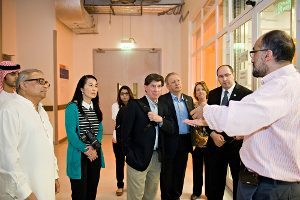
In the Undercroft area, they visited the Microbial Environmental and Chemical Engineering Lab of Dr. Hector Hernandez, Assistant Professor, Chemical Engineering, to gain insights into research on isolating and characterizing microalgae species, microbial composition of camel gut ecosystem, and investigating the effect on natural ecosystems by invasive microbiological species from shipping lanes. The delegation members were later briefed on biofuels and biochemicals using biorefinery concepts at the biofuels lab of Dr. Mette Hedegaard Thomsen, Chemical Engineering. After visiting the clean rooms to view the lithography tools and high temperature/cleaning stations, they boarded the PRT pods to exit.

Mr. Rajen Kilachand has a personal commitment of over US$50 million to core philanthropic initiatives spanning healthcare, vocational training and education, including building libraries and teachers’ training institutions. In September 2011, Mr. Kilachand made an endowment of US$25 million to the Arvind and Chandan Nandlal Kilachand Honors College at Boston University in the US. Unlike most institutions, Kilachand College’s liberal education acquaints students with the subject matter, approaches, and teaching methods of both the arts and sciences, and the professions. This was followed in June 2012 with another endowment of US $10 million to the Kilachand Honours College.

Mr. Kilachand’s endowment is driven by a common purpose to foster enterprise, research, discovery and creative activity across disciplines and schools. The objective is to arm students with the ability to go out into a complicated modern world with a well-rounded background.

Boston University is one of the largest private universities in the US with more than 4,000 faculty members and 31,000 students. With a research expenditure of US$407.8 million in 2009-2010, BU is categorized as an RU/VH research university (very high research activity) in the Carnegie Classification of Institutions of Higher Education. Its faculty and alumni include seven Nobel Prize winners such as Martin Luther King Junior, 22 Pulitzer Prize winners and numerous Guggenheim and MacArthur fellows.

Serving as a key pillar of innovation and human capital, Masdar Institute remains fundamental to Masdar’s core objectives of developing Abu Dhabi’s knowledge economy and finding solutions to humanity’s toughest challenges such as climate change.

Established as an on-going collaboration with the Massachusetts Institute of Technology (MIT), Masdar Institute integrates theory and practice to incubate a culture of innovation and entrepreneurship, working to develop the critical thinkers and leaders of tomorrow. With its world-class faculty and top-tier students, the Institute is committed to finding solutions to the challenges of clean energy and climate change through education and research.


Masdar Institute Faculty Leading Knowledge Exchange at Desalination Conference in Spain

Reverse Osmosis to Dominate US$40-billion Membrane Desalination Sector, Say Industry Estimates

Abu Dhabi-UAE: 08 April, 2013 – The reverse osmosis segment of membrane technology will dominate the desalination sector in the coming years with the global market expected to exceed US$50 billion by 2020, according to Professor Nidal Hilal, Acting Provost and Professor in Nano-membranology and Water Technologies, Masdar Institute of Science and Technology, and Editor-in-Chief of the International journal Desalination, an international expert in membrane technology and desalination.

The global desalination market is expected to reach US$52.4 billion by 2020, up over 320% from US$12.5 billion in 2010, according to a recent report from SBI Energy. The same report further predicts that the reverse osmosis segment of membrane technology will see the largest growth, reaching US$40 billion by 2020.

Professor Hilal is chairing the 1st International Conference on Desalination using Membrane Technology (MEMDES 2013) that is being held from 7-10 April 2013, at Sitges, 35km south of Barcelona in the Catalan region of Spain. Dr. Raed Hashaikeh, Associate Professor – Materials Science and Engineering, are set to deliver a keynote address on ‘Membrane Fabrication for Application in Desalination’. Dr. Hassan Arafat, Associate Professor – Water and Environmental Engineering, will sit on the Scientific Committee and share his insights as a panelist.

Other industry professionals and leading academicians are scheduled to be highlighting, analyzing and discussing global industry trends and other major scientific breakthroughs at the conference that is organized by leading publishers Elsevier. The event will also allow the dissemination and discussion of cutting edge research and will include theoretical and applied research, as well as technological and industrial development.

Dr Fred Moavenzadeh, President, Masdar Institute, said: “This is a major forum entirely dedicated to recent developments in membrane desalination and related technologies. Such promising technologies will hold sway in the coming generation. We are pleased to actively participate in this conference with the support of the country’s leadership and highlight our recent breakthroughs in this arena. We believe such thought-provoking forums will serve as the drivers of research and innovation.”

Professor Hilal said: “As finite and valuable resources, Energy and Water are closely inter-related. Seven per cent of all energy consumed globally is used to produce water while 50 per cent of the water supply is used to generate power, and both might increase in the future. As ‘desalinators’ and ‘membranologists’, we must keep on seeking new ways for the efficient and sustainable production of water, using less energy. We hope the conference will provide the necessary impetus by offering a platform to showcase new inventions and leading current technologies.”

Professor Hilal is an international expert in membrane technology and desalination. He is globally recognized as leading expert in Membrane technology and Desalination and a world-leader in developing and applying the force measurement capability of AFM to the study of membrane separation and engineering processes at the nano-scale level. Dr Hashaikeh is internationally recognized for his contributions in material engineering. He is also on the editorial board of the international journal Desalination. He was instrumental in leading a team of scientists that developed a new battery technology for which Masdar Institute has filed a patent application in the US.

Dr. Arafat and Dr Hashaikeh are currently conducting research on ‘Engineering eco-friendly membranes to treat seawater’. The project aims to make desalination more environmentally friendly by developing more eco-friendly membranes to treat and clean the seawater. Engineering purpose-specific biodegradable membranes can help reduce the need for treatment chemicals normally used in desalination.

The conference committee has scheduled a program that aims to address the cutting-edge in desalination and water treatment and related techniques. A series of state-of-the-art plenary presentations will also be presented by internationally-renowned experts. These will be accompanied by breakout sessions of oral presentations. Poster presentations will also be organized for easy viewing during sessions, coffee breaks and lunch. An associated exhibition will provide up-to-date information on commercially available support for the delegates’ line of work.

Serving as a key pillar of innovation and human capital, Masdar Institute remains fundamental to Masdar’s core objectives of developing Abu Dhabi’s knowledge economy and finding solutions to humanity’s toughest challenges such as climate change.

Established as an on-going collaboration with the Massachusetts Institute of Technology (MIT), Masdar Institute integrates theory and practice to incubate a culture of innovation and entrepreneurship, working to develop the critical thinkers and leaders of tomorrow. With its world-class faculty and top-tier students, the Institute is committed to finding solutions to the challenges of clean energy and climate change through education and research.

Masdar Institute Research Staff Etch Silicon Wafer for First Time in UAE

New Phase in Advanced Technology Learning and Innovation as Global ‘BioMEMS’ Market Set to Reach US$6.6 Billion by 2018

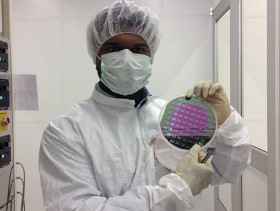
Abu Dhabi-UAE: 10 April, 2013 – Masdar Institute of Science and Technology, an independent, research-driven graduate-level university focused on advanced energy and sustainable technologies, today announced its research staff have etched a silicon wafer for the first time in the UAE, marking the beginning of a new phase in advanced technology learning and innovation.
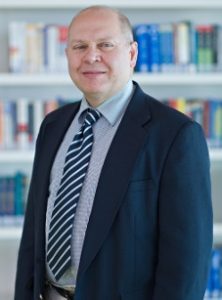
With the etching of silicon wafer, the Masdar Institute Fabrication Facility has entered the operational phase. Etching is used in micro-fabrication to chemically remove layers from the surface of a wafer during manufacturing. The Facility achieved Deep Reactive Ion Etching (DRIE) through the Bosch process, which also enables the use of silicon mechanical components in high-end wristwatches.

DRIE was developed for micro-electromechanical systems (MEMS), which is also used for high-density capacitors for direct random access memory (DRAM). More recently they are used for creating through silicon via’s (TSVs) in advanced 3D wafer level packaging technology. TSV interconnects are emerging to serve a wide range of 3D packaging applications.

MEMS devices can be made using silicon wafers and the manufacturing process can incorporate semiconductor manufacturing processes such as sputtering, deposition, etching and lithography. Some of the MEMS devices that can be mentioned include smartphones, tablets, game controllers, notebooks, digital cameras and health/fitness apps. The technology also enables functionalities such as augmented reality applications, indoor navigation, immersive video-gaming, heart rate/blood pressure monitoring, e-reader displays, and improved voice communications.

With such additional functionalities, the industry portends a promising future. According to market research firm Global Information Inc (GII), the ‘bioMEMS’ market alone is expected to grow from US$1.9 billion in 2012 to US$6.6 billion in 2018. The benefits of growing MEMS applications include innovations, revolution and growth in the personal healthcare market including wireless implants, as well as rising awareness and affordability of healthcare.

Dr Fred Moavenzadeh said: “The technology feat established by our Fabrication Facility reflects the cutting-edge facilities available with Masdar Institute to drive scientific innovation. This silicon etching means a world class research facility is now available in Abu Dhabi with some of the brightest faculty and researchers from around the world to work with Emirati and international students. The wise leadership of the UAE continues to support our research activities and we are confident Masdar Institute will achieve many more milestones in advanced and sustainable technology areas.”

Mike Tiner, Manager, Fabrication and Microscopy Facilities, said: “Masdar Institute, Abu Dhabi and the UAE are well on their way to participating in an exciting technological revolution. This simple wafer, etched in a lab in Masdar Institute, represents the day that we made a significant step for the UAE to take its rightful place among those countries producing innovation for the world to share. The Fabrication Facility at Masdar Institute is a place for Emirati researchers, in their own country, that will encourage and support their contribution to this new and important scientific endeavor.”
Dr. Ibrahim Elfadel, Professor – Microsystems Engineering, is leading a multi-program project on three-dimensional microelectronic circuit integration in collaboration with the Technical University of Dresden in Germany. 3D integration is an important research area at the Masdar Institute that will benefit from the deployment of DRIE technology.

Dr. Ibrahim Elfadel said: “This step taken by Masdar Institute’s Micro Fabrication staff in successfully commissioning and testing the DRIE tool, materials, and process in Masdar Institute’s own clean room is very significant. The hands-on learning will have direct bearing on several programs at the Institute, such as Microsystems Engineering, Mechanical Engineering, and Materials Science and Engineering programs. It will also provide students and faculty involved in semiconductor research and manufacturing first-hand knowledge of the etching process. Masdar Institute’s research projects which benefit from such first-hand knowledge include on-going work on advanced semiconductor devices, MEMS, 3D integration, and photonics.”

He added: “The Masdar Institute Micro Fabrication facility is the first of its kind in the UAE and the Institute is planning to make its micro fabrication facilities available to researchers across all UAE universities through collaboration and joint research projects with its researchers.”

Serving as a key pillar of innovation and human capital, Masdar Institute remains fundamental to Masdar’s core objectives of developing Abu Dhabi’s knowledge economy and finding solutions to humanity’s toughest challenges such as climate change.

Established as an on-going collaboration with the Massachusetts Institute of Technology (MIT), Masdar Institute integrates theory and practice to incubate a culture of innovation and entrepreneurship, working to develop the critical thinkers and leaders of tomorrow. With its world-class faculty and top-tier students, the Institute is committed to finding solutions to the challenges of clean energy and climate change through education and research.

Conference on Libraries to Discuss Ongoing Transition to Accessing e-Information

Masdar Institute to Host 19th Annual Special Libraries Association-AGC Conference 2013 in Abu Dhabi

Abu Dhabi-UAE: 16 April, 2013 – Adapting to the way the academia gains access to information in an increasingly digitalized world and the ongoing transformation of libraries from tangible hardback versions to e-waves in the virtual world will be some of the key areas that will come up for discussion at the 19th Annual Conference & Exhibition of the Special Libraries Association – Arabian Gulf Chapter (SLA-AGC) in Abu Dhabi.
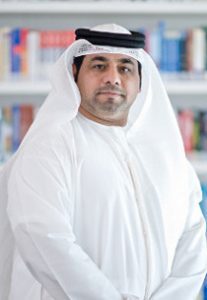
Titled ‘The Future of Profession: Break the no longer traditional profession and tune into the future of digital professional environment’, the annual conference is scheduled to be held from 24-25 April at the Abu Dhabi National Exhibition Center. Masdar Institute of Science and Technology, an independent, research-driven graduate-level university focused on advanced energy and sustainable technologies, will be hosting the event.

A key component of the conference will be Ankabut, which co-operates on a national, GCC, regional and international arena, representing the UAE in conferences, exhibitions and forums. Ankabut aims to offer QoS-based networks with IPv4/IPv6, multicast and introduce advanced services on a ‘Closed Group Network’ with ‘Public Interest Purposes’. Ankabut will also host the event with Masdar Institute.

Keynote speakers at the conference will include Ann Wolpert, Director of Libraries, Massachusetts Institute of Technology, and Sherif Kamel Mahmoud Shaheen, Ph.D. Professor and Head of Library, Archives & information technology Department Faculty of Arts-Cairo University. Wolpert will discuss ‘The Future of the Profession in the Digital Era: New Roles for Information Professionals’, while Shaheen will speak on ‘From traditional to Digital Information and Knowledge professions: What is missing in the Arab World?’

In addition, David Sommer, a professional with 15 years’ experience in the global publishing industry, and Simon Inger, who works with the journals industry for over 20 years, will also address the gathering. The event will include three panels including ‘Leadership and Best Practices in Development of Information Literacy Programs: Changing Roles and New Technologies’, ‘The Role of the Library and Information Science Departments in Preparing Professionals in the Digital Environment’, and ‘Professional Library Associations to foster library development’.

Dr Abdulla Alhefeiti, Chair, High Organizing Committee for SLA-AGC Conference 2013, and Director of Library, Masdar Institute, said: “The top priority given to education by the UAE leadership has enabled the country to achieve a coveted status in the regional academic sector. Libraries play a vital role in the creation of intellectual capital and the conference in Abu Dhabi represents the most important annual IT event in the GCC region for practitioners and academics in the information domain.

“As a research-based institution, we are privileged to host the conference. We hope the event will provide a great opportunity to discuss key issues and topics, facilitating communication and networking that will eventually result in string cooperation among the participants.”

The event targets the region’s information professionals, educators, decision-makers, information users, information content developers and digital information suppliers. Some of the topics that will be addressed at the conference will include ‘Information Literacy and the 21 century skills (Social networking, mobile technology, open access)’, ‘E-books and the future of library shelves and catalogues’, as well as ‘Metadata tool and the future of cataloging and catalogers’.

Fahem Al Nuaimi CEO of Ankabut said: “Ankabut provides a high speed network for the UAE education and library community. It enables the transfer of services in real-time, as well as anytime, anywhere services such as libraries linkage, high performance computing, off-site disaster recovery, unified single sign registration, and e-learning. In an increasingly digital scenario, libraries and other traditional avenues offering information will have to transform their role suitably to benefit modern users. We are convinced the 19th Annual Conference & Exhibition of the Special Libraries Association – Arabian Gulf Chapter (SLA-AGC) in Abu Dhabi will enable greater information exchange in the area of digitalization.”
 
The transforming role of librarians, publishers, professional associations and the library and information studies are the others topics to be taken up for panel discussions at the SLA-AGC Conference in Abu Dhabi. The event is expected to provide a great opportunity to discuss key issues and topics, facilitating communication and networking among practitioners and academics in the information domain.
 
Serving as a key pillar of innovation and human capital, Masdar Institute remains fundamental to Masdar’s core objectives of developing Abu Dhabi’s knowledge economy and finding solutions to humanity’s toughest challenges such as climate change.
 
Established as an on-going collaboration with the Massachusetts Institute of Technology (MIT), Masdar Institute integrates theory and practice to incubate a culture of innovation and entrepreneurship, working to develop the critical thinkers and leaders of tomorrow. With its world-class faculty and top-tier students, the Institute is committed to finding solutions to the challenges of clean energy and climate change through education and research.

Masdar Institute Offers UAE Undergraduates Four-Week Summer Research Internship

Research Projects Being Offered for Internship Program to Cover Renewable Energy and Sustainable Advanced Technology Domains

Abu Dhabi-UAE: 17 April, 2013 – Masdar Institute of Science and Technology, an independent, research-driven graduate-level university focused on advanced energy and sustainable technologies, today announced it will be offering a four-week research-based internship program for UAE national undergraduates this summer.

Senior undergraduate students will be eligible to apply for the program. A total of six research projects are on offer this summer for interested students. Multiple applications are required for those seeking to register for more than one research projects.

Research projects chosen for this year’s summer internship program focus on water, solar energy and fuel cell – areas that are identified as strategically important to the UAE. These projects will allow the interns to gain insights into advanced research and development while enriching their laboratory experience. The arid climate of the region underscored the importance of water, while abundant sunlight has encouraged governments to initiate solar energy projects. In addition, the UAE government aims to reduce greenhouse gas emissions for which fuel cell is one of the promising alternatives, especially for transportation sector.

On-campus housing and a stipend will be offered to students of the program that is scheduled to commence from 30 June. The last date for submitting applications will be 25 April.

Those UAE national undergraduates interested in applying for the research-based summer internship program must have science or engineering as ‘major’ subjects in their degree course and a GPA of at least 3.0 (on a 4.0 scale). An IELTS score of at least 6.0 (or equivalent) is mandatory along with a letter of recommendation.

Dr. Fred Moavenzadeh, President, Masdar Institute, said: “The four-week research-based summer internship program reflects Masdar Institute’s commitment to developing Abu Dhabi’s human capital in clean energy areas. With the support of the country’s leadership, we have acquired a talent base of renowned faculty who impart knowledge, offering rich insights in advanced technology domains. The cutting-edge laboratory facilities further reiterate our status as a knowledge pioneer in the region. We welcome qualified UAE national undergraduates to make use of this opportunity and enhance their research skills to empower themselves and lead in innovation.”

To be led by faculty with special expertise, students are bound to gain rich academic insights as well as research capabilities in these areas. Furthermore, they will also acquire the required skills and apply them to explore for breakthrough innovations in science and technology areas.

Dr Lamya N. Fawwaz, Executive Director, Public Affairs, Masdar Institute, said: “The summer research internship at Masdar Institute provides qualified and interested science and engineering students an opportunity to experience what a research environment entails and allows them to focus on areas of strategic importance to our country. This experience will enhance their skills and their understanding of the importance of R&D, while encouraging them to innovate and contribute part of the solutions for climate change.”

Masdar Institute’s programs aim to develop human capital and build a sound R&D infrastructure in the UAE that contributes to Abu Dhabi’s objective of developing a knowledge-based economy. At the same time, the summer research programs seek to build on the capabilities of undergraduate students who have the drive and intention to identify niche technology areas for further innovation.

Further information is available at http://www.masdar.ac.ae/SummerResearchInternships.html.

Serving as a key pillar of innovation and human capital, Masdar Institute remains fundamental to Masdar’s core objectives of developing Abu Dhabi’s knowledge economy and finding solutions to humanity’s toughest challenges such as climate change.

Established as an on-going collaboration with the Massachusetts Institute of Technology (MIT), Masdar Institute integrates theory and practice to incubate a culture of innovation and entrepreneurship, working to develop the critical thinkers and leaders of tomorrow. With its world-class faculty and top-tier students, the Institute is committed to finding solutions to the challenges of clean energy and climate change through education and research.

Masdar Institute Becomes Affiliate of Joint Institute for Strategic Energy Analysis in US

Initial Collaboration Includes Work on Energy Access and Energy-Water Nexus
Abu Dhabi-UAE: 22 April, 2013

–Masdar Institute of Science and Technology, an independent, research-driven graduate-level university focused on advanced energy and sustainable technologies, today announced it has entered into an agreement with the Joint Institute for Strategic Energy Analysis (JISEA) to become an affiliate of the U.S.-based institution.

Initially, Masdar and JISEA will collaborate in three areas: water-energy nexus, clean energy policy with focus on the Middle East/North Africa region, and energy access in developing countries. The agreement also offers options for expanding the scope of collaboration at a later stage.

A trans-disciplinary global research group focused on the nexus of energy, environment, finance, and society, JISEA is headquartered at the U.S. Department of Energy’s National Renewable Energy Laboratory (NREL). With five founding institutions rooted in research, JISEA provides capabilities in research and analysis that far outweigh those of a single organization.

“I am very excited about JISEA’s affiliation with Masdar Institute,” said Douglas Arent, JISEA executive director. “Masdar Institute offers excellent research capabilities and unique regional insights that complement the skills and knowledge of JISEA partners and allow us to offer increased value to our clients interested in energy access and sustainability, particularly in the Middle East/North Africa region.”

Dr Fred Moavenzadeh said: “The affiliation agreement with the Joint Institute for Strategic Energy Analysis will broaden our reach in international collaboration that will naturally further our capabilities in sustainable research projects. JISEA engages in leading-edge, objective, high-impact research and analysis to guide global energy investment and policy decisions. Its focus on the nexus of energy, finance, and society, are similar to the issues being addressed by us. With the guidance of the UAE’s leadership, we will continue to seek partnerships with global organizations to further our research in clean energy and sustainability.”

Research forms the core area for Masdar Institute which focuses on three themes for scientific innovation – water, energy and environment; energy systems; and advanced materials. The research-based institution ion Abu Dhabi continues to excel in research success. For 2012, total publications by Masdar Institute so far include papers in 311 peer reviewed journals, 330 conference proceedings, two full books and 37 invention disclosures. One patent is already issued, while 20 active patent applications are pending.

Serving as a key pillar of innovation and human capital, Masdar Institute remains fundamental to Masdar’s core objectives of developing Abu Dhabi’s knowledge economy and finding solutions to humanity’s toughest challenges such as climate change.

Established as an on-going collaboration with the Massachusetts Institute of Technology (MIT), Masdar Institute integrates theory and practice to incubate a culture of innovation and entrepreneurship, working to develop the critical thinkers and leaders of tomorrow. With its world-class faculty and top-tier students, the Institute is committed to finding solutions to the challenges of clean energy and climate change through education and research.

JISEA is operated by the Alliance for Sustainable Energy, LLC, on behalf of its founding partners. They include the U.S. Department of Energy’s National Renewable Energy Laboratory, University of ado-Boulder, ado School of Mines, ado State University, Massachusetts Institute of Technology, and Stanford University.

Masdar Encourages UAE Youth to Take up Technical Careers at Skills Competition

Contest highlights Masdar’s commitment to cultivating future energy technology leaders

Abu Dhabi-UAE: 23 April, 2013

– Masdar, Abu Dhabi’s renewable energy company, announced that it is participating in the EmiratesSkills National Competition 2013, which encourages young UAE nationals to take on vocational jobs that will bolster the workforce. The competition closely aligns with Masdar’s commitment to support the development of the UAE’s next generation of energy leaders. EmiratesSkills is the UAE’s premier event highlighting Emiratis who have outstanding technical and vocational skills.

Organized under the patronage of Her Highness Sheikha Fatima Bint Mubarak, chairwoman of the Family Development Foundation and Head of the General Women’s Union, the EmiratesSkills National Competition is taking place April 23-25 at the Abu Dhabi National Exhibition Centre. Skills that are being highlighted during the competition include web design, IT software solutions, automobile technology, electrical installations and robotics.

Masdar is participating in the event as an “Educational and Community Partner” along with the Masdar Institute of Science and Technology, an independent, research-driven, graduate-level university focused on advanced energy and sustainable technologies; and the Zayed Future Energy Prize, the world’s pre-eminent award for innovation in renewable energy and sustainability.

“As a key contributor to Abu Dhabi’s long-term social and human-resource development objectives, Masdar Institute plays an effective role in developing the individual talents of its Master’s students.” said Dr. Fred Moavenzadeh, president of Masdar Institute. “The support of the UAE’s leadership has consistently guided us in formulating suitable programs for empowering our students this way.”

Students from Masdar Institute are joining other young people in technical and vocational competitions at the event. A Masdar Institute team is displaying a project that has the potential to help the UAE increase its agricultural production while using less water. The project can also help secure the country’s internal food supply, while minimizing the environmental impact of agriculture.

The Zayed Future Energy Prize is raising awareness among youth about the Global High Schools category, which encourages students to incorporate renewable energy and sustainability into their schools. The Prize also highlights the sustainable development principles that the late Sheikh Zayed bin Sultan Al Nahyan, the Founding Father of the UAE, embraced.

Masdar Institute Student Highlights Research in Sustainability at Talent Management Oil & Gas Conference 2013

Emirati Member of YFEL Outreach Initiative Iman Ustadi Shares Her Experience at Feature-Filled Sustainable Campus

 – Masdar Institute of Science and Technology, an independent, research-driven graduate-level university focused on advanced energy and sustainable technologies, today announced one of its students highlighted her research and academic experience in the area of sustainability and renewable energy during the Talent Management Oil & Gas Conference 2013 in Abu Dhabi.

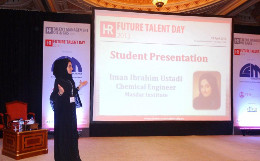
Iman Ibrahim Ustadi, a Master’s student in the Engineering Systems and Management program at Masdar Institute, shared her experience with delegates on Future Talent Day at the second annual Talent Management Oil & Gas Conference. Held on 22 April, the Future Talent Day offered an opportunity for UAE-based university students interested in a career in the oil, gas and petrochemical sectors to network with human resource professionals in the industry. In return, it was a chance for the HR professionals to identify the potential new talent entering the industry and learn about their career goals and expectations. The Future Talent Day was part of the Conference that ran from 22-25 April in Abu Dhabi. 

CCS can be used for enhanced oil recovery in Abu Dhabi, as well as for mitigating greenhouse gas emissions in the UAE. Iman’s research also focuses on exploring the natural gas (NG) market in the UAE comparing it with other international markets and evaluating the effect of the CCS deployment on the developments and demands of the natural gas market.

Iman Ustadi said: “Masdar Institute’s outreach initiatives such as the YFEL facilitate involvement of UAE’s young people with professionals at global forums such as this event, while promoting industry-academia collaboration. The Future Talent Day offered an opportunity for the youth to engage in discussions about the future of energy, find solutions for the challenges of climate change and become proud leaders, representatives and advocates in future energy.

“At Masdar Institute, my research helps identify the challenges associated with the integration process in CCS, with full analysis, quantification and suggestion of solutions. It also includes a techno-economic evaluation for the deployment of carbon capture technology on Natural Gas Combined Cycle (NGCC) power plants. I thank the UAE’s wise leadership for providing a platform for myself and other students to enhance our talents. I am sure my presentation adequately informed the conference delegates about the degree of advanced research that is undertaken at Masdar Institute and its contribution to clean energy, regionally and globally.”

Iman Ustadi hopes for better industry-academia collaboration that will ensure easier access to data and resources to students. The HR professionals attending the event were receptive to her suggestions and offered tips on ways to approach the industry positively.

Sam McManus, Conference Director, IIR Middle East, said: “The Future Talent Day was organized for the first time this year to run concurrently with the Talent Management Oil & Gas Conference in Abu Dhabi. A new platform, the event offered an ideal opportunity to showcase talents to oil and gas industry professionals and create partnerships for the future. We are delighted Masdar Institute participated in the event by sending a student and we believe Iman Ustadi’s presentation proved beneficial to participating companies to learn about the expectations of talented future professionals.”

Serving as a key pillar of innovation and human capital, Masdar Institute remains fundamental to Masdar’s core objectives of developing Abu Dhabi’s knowledge economy and finding solutions to humanity’s toughest challenges such as climate change.

Established as an on-going collaboration with the Massachusetts Institute of Technology (MIT), Masdar Institute integrates theory and practice to incubate a culture of innovation and entrepreneurship, working to develop the critical thinkers and leaders of tomorrow. With its world-class faculty and top-tier students, the Institute is committed to finding solutions to the challenges of clean energy and climate change through education and research.