
Renewable Energy to Account for 8% of Total Consumption by 2035, BP Reveals at Masdar Institute

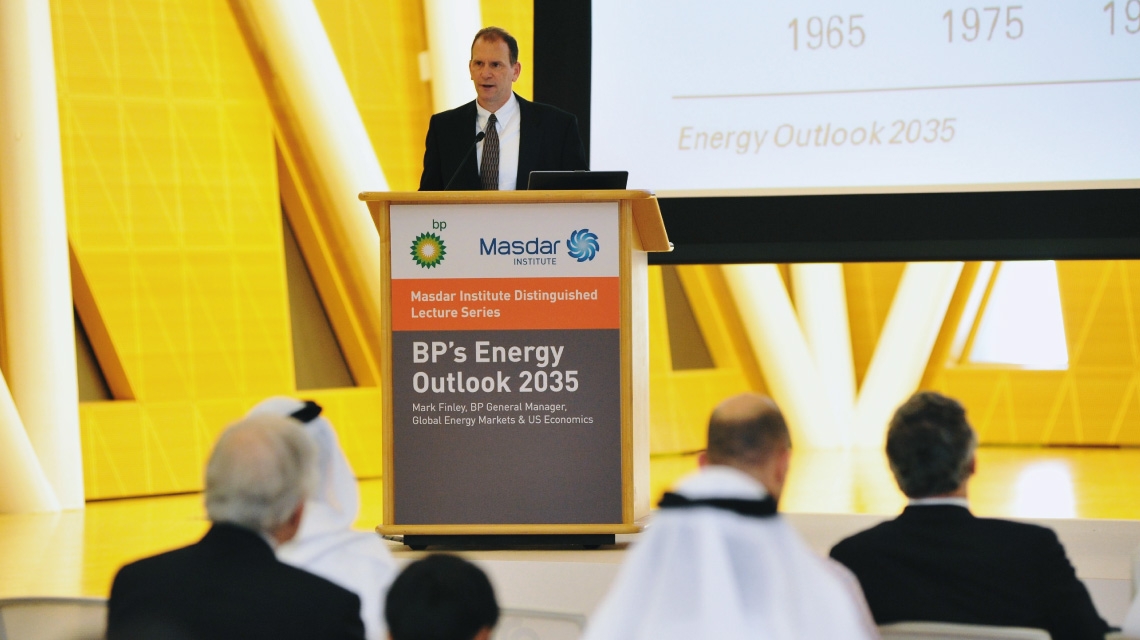
Abu Dhabi-UAE: 17 March, 2015 – Renewable energy will account for 8% of total energy consumption in 2035, compared to just 3% today, said Mark Finley, BP General Manager, Global Energy Markets and US Economics, revealing the importance of the renewable energy-focused research taking place at the Masdar Institute of Science and Technology.

Finley was speaking at the Masdar Institute campus in Abu Dhabi as part of the Distinguished Lecture series hosted by the independent, research-driven graduate-level university focused on advanced energy and sustainable technologies.

Finley said, “The Outlook’s projection of rising CO2 emissions will require additional significant steps by policy makers beyond the steps already assumed, and the Outlook provides comparative information for possible options and their relative impacts on emissions. However, as no one option is likely to be sufficient on its own, multiple options will need to be pursued. This underlines the importance of policymaking taking steps that lead to a meaningful global price for carbon which would provide incentives for everyone to play their role in meeting the world’s increasing energy needs in a sustainable manner.”

The BP Energy Outlook 2035 highlights the relevance and importance of research-based institutions such as Masdar Institute that operate in the sustainability arena. The forecast serves as a strong motivating factor for the students and faculty to consistently pursue with their efforts in bringing sustainable solutions to help tackle energy and climate-related challenges.

In his talk the BP official also highlighted the BP ‘Energy Outlook 2035’ finding that among non-fossil fuels, renewables are expectedly to rapidly gain shares in the coming years, from around 3% today to 8% by 2035, overtaking nuclear in the early 2020s and hydro in the early 2030s. The BP Outlook assesses the implications for global energy demand and supply of expected changes in global economic growth, population growth, technological change, and policy support for renewable energies, energy efficiency, and other sources of energy supply.

Finley said that the growth of renewable fuels in areas outside the Organization for Economic Co-operation and Development (non-OECD) region will be roughly the same in volume as in the OECD. But there will also be significant increases in non-OECD nuclear and hydro-power. Renewables will eventually account for 16% of the growth in power generation in the non-OECD areas, it adds.

He noted that among the exporting regions, the report states that the Middle East will remain the largest net energy exporter, but its share will fall from 46% in 2013 to 36% in 2035. Russia will remain the world’s largest energy exporting country, while Asia’s import dependency will rise from 23% in 2013 to 27%. Oil will account for 60% of that rise, with imports accounting for over 80% of Asian oil consumption by 2035. Asia’s oil imports in 2035 will be almost as large as OPEC’s current entire oil production, the report points out.
 
Citing the BP Energy Outlook 2035, Finley pointed out that nuclear energy at the rate of 1.8% per annum and hydro-electric power at 1.7% per annum will grow faster than the total energy sector. However, among fossil fuels, natural gas will grow the fastest at 1.9% per annum with oil at 0.8%, marginally ahead of coal, also 0.8%.

According to the report, over 70% of carbon emissions will be produced from non-OECD countries, although per capita emissions in the non-OECD will still be less than half the OECD level. Total carbon emissions however will increase by 25%, the report adds.
It also predicted that by 2035, all the fossil fuel shares will be clustered around 26-28% with no single dominant fuel – for the first time since the Industrial Revolution. Fossil fuels in aggregate will lose share but will remain the dominant form of energy in 2035 with a share of 81%, down from 86% in 2013.

On the emissions front, the report says the profile for emissions will be well above that recommended by the scientific community. Total carbon emissions from energy consumption are expected to increase by 25% between 2013 and 2035 at the rate of 1% per annum, with the rate of growth declining from 2.5% over the past decade to 0.7% in the final decade of the Outlook, says the report.

The report also predicts that the US, Russia and Saudi Arabia will supply over a third of global liquids fuel (crude oil) output by the year 2035, while the Organization of the Petroleum Exporting Countries’ (OPEC) share of the global liquids market by 2035 will be around 40% – the same as over the past 20 years.

The lecture, which was attended by faculty, students, staff and other guests, covered global market share of fuels, outlook for US tight oil and shale gas supply, the significance of US energy renaissance for global markets, the likely changes for China and the implications for CO2 emissions. Earlier, Finley was received by Masdar Institute officials, who took him around the campus on a tour of the research projects and the sustainable architectural elements.

In addition to analyzing the economics and politics of the world oil market, Finley has produced market assessments for natural gas and carbon. He manages the annual production of the BP Statistical Review of World Energy (now in its 63rd year), and he regularly presents BP’s views on global energy markets to external audiences.
First UAE National Recipient of Masdar Institute-Toyota Scholarship Announced, Reinforcing Commitment to Human Capital Development

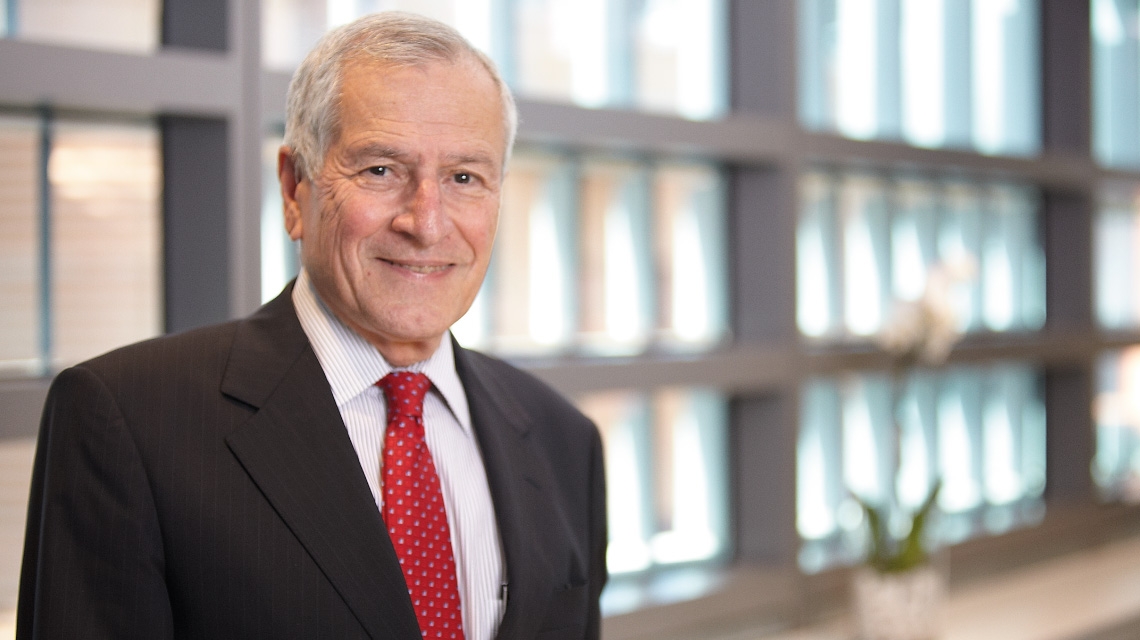
Abu Dhabi-UAE: 10 March 2015 – Masdar Institute of Science and Technology an independent, research-driven graduate-level university focused on advanced energy and sustainable technologies, and the Toyota Motor Corporation, leaders in sustainable technologies and winner of the 2010 Zayed Future Energy Prize (ZFEP), today named Fatma Al Showab as the first UAE national Masdar Institute-Toyota Scholarship recipient, reinforcing the institute’s continuing commitment to the country’s human capital development.

Engineering Systems and Management student Al Showab was selected out of 14 highly competitive applicants to become the fourth ever recipient of the prestigious two-year scholarship.

Takayuki Yoshitsugu, Chief Representative, Middle East and North Africa Representative Office, TOYOTA Motor Corporation, said: “We congratulate Fatma Al Showab for being awarded the Masdar Institute-Toyota Scholarship. This program reflects our continuous commitment to provide training and guidance to talented youth towards achieving sustainable solutions. We are proud to be associated with a research-based institution such as Masdar Institute and support the development of sustainable technologies through this scholarship program.”

Toyota established the Masdar Institute-Toyota Scholarship in response to winning the Zayed Future Energy Prize in 2010. The scholarship is designed to promote opportunities for students in all of Masdar Institute’s nine Master’s degree majors to work on projects in the area of technologies for sustainable development.

Dr. Fred Moavenzadeh, President, Masdar Institute, said: “The announcement of the fourth Masdar Institute-Toyota Scholar illustrates our continuing collaboration with global leaders in innovation, with a particular focus on local human capital development. With the support of the UAE leadership, we continue to seek partnerships that will bring benefit to the UAE and wider world. We congratulate Fatma Al Showab on her selection and believe she will emulate the previous Toyota scholars and help achieve sustainable technologies through her research.”

Each year, the scholarship is awarded to a first-year student in any one of Masdar Institute’s nine MSc programs. In addition to the usual Masdar Institute benefits, the scholarship recipient is provided with a special two-week ‘Japan Experience’ arranged by the Toyota Motor Corporation.

Al Showab was selected by a panel that included Dr. Nawal Al Hosany, Director, Zayed Future Energy Prize and Rabia M. Bekhazi Career Services and Alumni Affairs Manager and Acting Director of Student Affairs; Dr. Abdulla Galadari, Assistant Professor, Engineering Systems and Management, and Kevin Garvey, Lecturer and Bridie Farah, Lecturer, all from Masdar Institute.

Dr. Al-Hosany said: “The Zayed Future Energy Prize, an international prize aims at catalyzing impact, innovation, leadership and long term vision in renewable energy and sustainability sectors. We are proud to see our previous winners paying it forward to the next generation. That this new recipient is a UAE national is a great source of pride. The naming of the fourth Masdar Institute-Toyota Scholar emphasizes the role of Zayed Future Energy Prize in fostering talented youth capable of becoming future energy leaders. We hope the scholarship will additionally lead to the development of innovative solutions in renewable energy and sustainable advanced technologies. We congratulate Fatma Al Showab and wish her the best in her research.”

Al Showab’s research focuses on ‘Engineering Systems and Sustainable Management’, a field relevant to Toyota’s philosophy and the needs of global industry. She believes the opportunity will expand her professional goals and provide her with the chance to interact with renowned experts in the field.

Al Showab said: “Being selected to represent Masdar Institute as a Toyota scholar for this year is an exceptional opportunity, which I consider to be the highlight of my academic year thus far. I not only seek to benefit from what this scholarship has to offer but to contribute to its legacy of excellence by investing the skills I acquire in the progress of my country.”

Over the years, the Masdar Institute-Toyota Scholarship has served as a platform for promising students to seek sustainable solutions in their chosen area of research.

Three Masdar Institute students had received this scholarship prior to Al Showab. Ayoola Brimmo, chosen in October 2011 was the inaugural Masdar Institute-Toyota Scholar, while Edgar E. Samano Baca was the second scholar in 2012. Omar T. Mezher was the 2013 Masdar Institute-Toyota Scholar.

Young Future Energy Leaders Program 2014 Members Graduate to Next Challenge

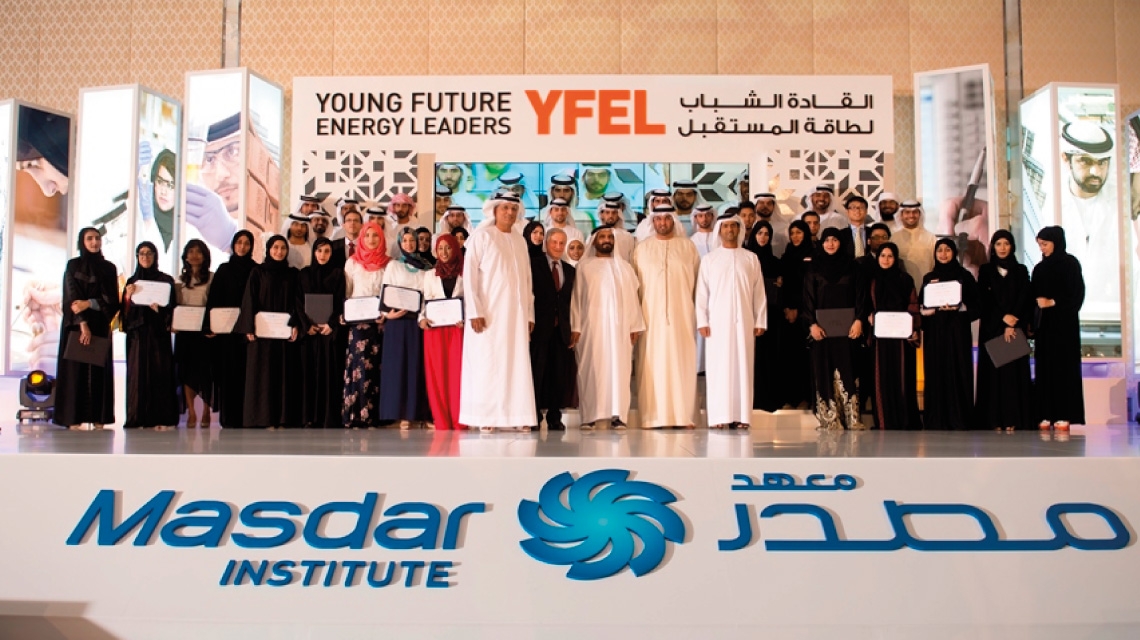
Abu Dhabi-UAE: 08 April, 2015 – Masdar Institute of Science and Technology, an independent, research-driven graduate-level university focused on advanced energy and sustainable technologies, has celebrated the graduation of its Young Future Energy Leaders (YFEL) 2014 program, which took place on 7 April.

More than 55 YFEL 2014 members who actively participated in the year-long schedule of events, which included various courses as well as overseas visits, were awarded certificates during the on-campus award ceremony. The current YFEL 2015 program has more than 100 members.

His Excellency Dr. Sultan bin Ahmed Sultan Al Jaber, UAE Minister of State, Chairman of Masdar and Chairman of the Executive Committee of the Board of Trustees of Masdar Institute,  Masdar Institute President Dr. Fred Moavenzadeh, UAE Federal National Council member His Excellency Sultan bin Rashid Al Dhaheri and renowned Emirati philanthropist Mohammed bin Kardous Al Ameri presented the certificates at the ceremony. His Excellency Al Dhaheri and Al Ameri are noted YFEL donors while Abu Dhabi National Oil Company (ADNOC) has been the committed sponsor of the YFEL program for the fifth consecutive year. Ateeq Al Suwaidi, Deputy Director – Administration, ADNOC, was present at the function.

Dr. Moavenzadeh said: “With this YFEL graduation ceremony, Masdar Institute is pleased to be contributing to the development and mentorship of the next generation of problem-solvers in the UAE. The YFEL 2014 members have shown great enthusiasm and commitment to tackling sustainability challenges in the region through innovative solutions and leadership. I am confident these talented young men and women from the UAE and around the world will apply the best of their YFEL lessons to the next challenge ahead.”

For the YFEL 2014 members, the graduation event served as a platform to retrace their year-long journey while setting the stage for members of the YFEL 2015 program. During the ceremony, a video was shown of the key highlights of the YFEL 2014 program. A Masdar Institute outreach initiative, the YFEL program falls under the purview of the Office of Public Affairs, headed by Dr. Lamya N. Fawwaz, Executive Director.

During the year, YFEL 2014 members visited Japan under the auspices of the YFEL-Japan Government Initiative organized in collaboration with Japan’s Ministry of Economy, Trade and Industry (METI) and the Japan International Cooperation Center (JICE). Led by Zainab Abdul Rahim Al Ali, Program Manager, YFEL, a total of 10 UAE national YFEL members had the opportunity to learn from Japan’s advancements in technology and sustainability. Their visits covered the Smart House at the Panasonic Center Tokyo, Toshiba Smart Community Center, University of Tokyo’s Graduate School of Frontier Science, and the Kyoto University’s Shinohara Laboratory, as well as the Hiroshima Peace Memorial Museum and the Edo-Tokyo Museum.

Another group of YFEL members led by Dr. Ken Volk, Outreach Manager, Masdar Institute, visited Leh in the Ladakh region of northern India for an overseas workshop on ‘Compassionate Young Leaders’ Energy Access, Ethics and Development 2014’. Co-organized by YFEL and The Dalai Lama Center for Ethics and Transformative Values at MIT, the visit offered the youth an insight into the effectiveness of off-grid energy systems at inaccessible mountainous terrains.

YFEL member Alawi Al Jafri said “The program is extremely well put together and is fun, challenging, and rewarding. The year went by surprisingly fast with unforgettable memories and experiences. Every activity focuses on application of what we are learning to real work scenarios, which is fantastic.”
The annual educational programs for YFEL members also included mandatory courses on technology, policy and leadership. During their year-long experience the YFEL members learned about future energy trends and the links between natural gas as the cleanest fossil fuel and sustainability at a one-day workshop organized by Shell. The event was led by Mounir Bouaziz, Shell Vice-President for Commercial/New Business Development – Middle East and North Africa (MENA) region, and Country Chairman of Dubai & Northern Emirates, and Dr. Steven Griffiths, Executive Director, Office of Institute Initiatives, Masdar Institute.

A satellite and earth observation course titled ‘Remote Sensing and Geographic Information System (GIS)’ was also part of the YFEL program. The course, led by Dr. Prashanth Marpu and Dr. Marouane Temimi, Associate Professors from Masdar Institute’s Water and Environmental Engineering Program, covered a range of tools and techniques used in addressing environmental issues at local, regional and global scales.

Additionally, a three-module course offered by Dr. Taha Ouarda, Head of Institute Center for Water and Environment (iWater) and Professor of Water and Environmental Engineering, and Dr. Shadi Wajih Hasan, Assistant Professor, Chemical and Environmental Engineering, provided YFEL members with insights into new advancements in managing water resources and desalination. A course on ‘Wind Energy Generation Technology’ by Dr. Isam Janajreh, Associate Professor, Mechanical Engineering, updated YFEL members on the special aspects of wind energy. These special courses were part of YFEL members’ year-long activities aimed at building capabilities and contributing to overall personal and professional development of the members.

YFEL 2014 member Jafri summed up his year-long experience, saying: “The YFEL program has helped me challenge the limits and allowed me to hone my skills. It has made a better person. I have ramped up my toolkit – technically, emotionally and professionally. Now I feel I am better equipped with theory and practice, better connected within the academia and most importantly, has become far more resilient and disciplined.”

Ethnic and Cultural Diversity Marks Masdar Institute International Day

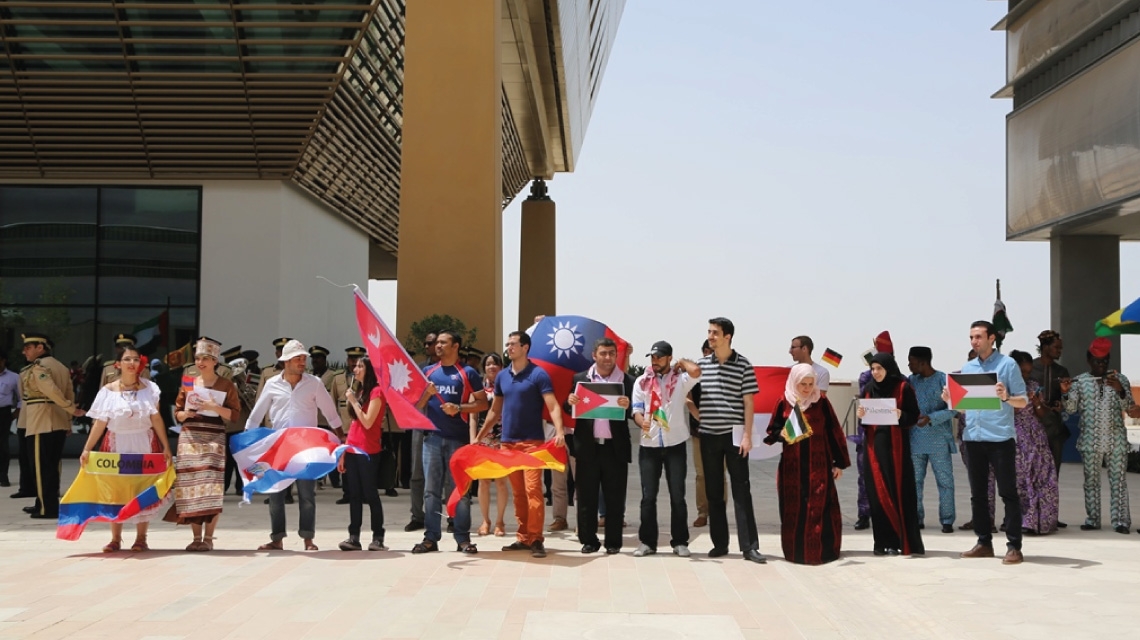
Abu Dhabi-UAE: 15 April, 2015 – Faculty, students and staff from diverse ethnic and cultural backgrounds celebrated their heritage to mark the fifth annual International Day at the Masdar Institute of Science and Technology, an independent, research-driven graduate-level university focused on advanced energy and sustainable technologies.

The Masdar Institute Multi-Use Hall was the scene of cultural milieu as people from 30 countries converged to share their distinctive customs, traditional attire and cuisine. Students set up special stalls featuring their homelands while traditional music and dance performances, including the Emirati Ayala dance, enlivened the day’s festivities. An exclusive UAE stall offered visitors a glimpse into the aspects of traditional Emirati way of life.

Dr. Behjat Al Yousuf, Dean of Students, Masdar Institute, said “The fifth International Day offers an ideal opportunity to showcase the cultural and ethnic identity of each individual at the Masdar Institute community. The remarkable enthusiasm displayed by students, in sharing and learning about each other’s cultures, reveals the spirit of collaboration and diversity of Masdar Institute.”

As part of the day-long program, students from countries including Egypt, Jordan, Columbia, Costa Rica, Nigeria, Spain, Armenia, Germany, India, Pakistan, Thailand and the UAE offered special presentations portraying the unique characteristics of their cultures.


Masdar Institute Wins Bid to Host International Remote Sensing Conference

Abu Dhabi-UAE: 21 April, 2015 – The Masdar Institute of Science and Technology, an independent, research-driven graduate-level university focused on advanced energy and sustainable technologies, today announced that the UAE Chapter of the Institute of Electrical and Electronics Engineers’ (IEEE) Geoscience and Remote Sensing Society (GRSS), hosted at the Institute, has won the bid to host the Joint Urban Remote Sensing Event (JURSE) in 2017 in Abu Dhabi.

Dr. Fred Moavenzadeh, President, Masdar Institute, said, “Winning the bid to host the JUSRE 2017 demonstrates Masdar Institute’s internationally-recognized expertise in the field of remote sensing, which is a credit to the vision and the support of the UAE leadership. With the recent opening of the UAE IEEE GRSS Chapter, the UAE’s research activities in geoscience and remote sensing will continue to advance and bring accolades to the country.”
 
The biannual international Joint Urban Remote Sensing Event (JURSE) is a forum where a select group of researchers, practitioners, and students discuss the latest findings and results in the urban remote sensing field. The event aims to introduce innovative methodologies and technological resources recently employed to investigate the urban environment through satellite and airborne remote sensing data.
 
Hosting of the prestigious international conference is awarded only to institutions that have active remote sensing research programs. Masdar Institute’s Earth-Observation and Hydro-Climatology Lab (EOHCL) and the UAE Research Center for Renewable Energy Mapping and Assessment (ReCREMA) have already published work on urban heat island studies using remote sensing. In addition, Masdar Institute is also involved in the development of advanced methods for remote sensing data analysis. These technically advanced studies have provide a foundation for Masdar Institute to bring the event to Abu Dhabi.
 
“In our bid we highlighted the importance of hosting the event in the Middle East, which has seen a tremendous urban growth in the last decade. We also highlighted the growing number of research groups working on remote sensing in the region. The support of Abu Dhabi Educational Council and the Abu Dhabi Tourism and Culture Authority proved crucial in winning the bid,” said Dr. Prashanth Marpu, Chair of the IEEE GRSS UAE Chapter, and Assistant Professor, Water and Environmental Engineering, Masdar Institute.

In the past, Masdar Institute had an active presence in annual IGARSS conference, the premier remote sensing event organized by the IEEE GRSS, which is also the co-sponsor of JURSE.

Masdar Institute faculty members who are pursuing relevant geoscience and remote sensing research at its EOHCL include Dr. Taha Ouarda, Professor and Head of the Institute Center for Water and Environment (iWater); Dr. Hosni Ghedira, Professor of Practice and Director of the UAE Research Center for Renewable Energy Mapping and Assessment (ReCREMA); Associate Professor Dr. Marouane Temimi; Assistant Professor Dr. Annalisa Molini and Assistant Professor Dr. Marpu.

21 IRENA Scholars at Masdar Institute to Graduate on 26 May

Abu Dhabi-UAE: 24 May, 2015 – The Masdar Institute of Science and Technology, an independent, research-driven graduate-level university focused on advanced energy and sustainable technologies, and the International Renewable Energy Agency (IRENA) today jointly announced that the third group of 21 IRENA-Masdar Institute scholars will be graduating on 26 May.

The IRENA scholars will be receiving their degrees at the fifth Masdar Institute commencement ceremony.

Dr. Fred Moavenzadeh, President, Masdar Institute, said, “We are proud of the 21 IRENA scholars who will be graduating with us at the fifth Masdar Institute commencement ceremony. We hope they take the education, research experience, and inspiration gained during their time at Masdar Institute out into the world to affect positive and sustainable change.”

Adnan Z. Amin, Director-General, IRENA, said, “Year after year, the high calibre of the Masdar Institute students makes us honoured to be associated with the IRENA scholars program. We congratulate the third group of IRENA scholars and hope that this unique opportunity has prepared them for a bright future taking on tomorrow’s greatest energy challenges.”

The graduating scholars praised IRENA for organizing its series of lectures that proved to be informative and highly relevant knowledge-exchange sessions.

IRENA scholar Isaac Kofi Otchere, an Electrical Power Engineering student, hails from Ghana and believes his country currently needs sustainable and reliable energy in order to tackle power deficiency. Building on his in-depth knowledge and skills on a wide range global renewable energy concerns, he completed his voluntary service for the implementation of a micro grid wind turbine power project in Abaarso School of Science and Technology, Somaliland.

Otchere said, “I am really proud to be an IRENA scholar. The special lectures organized by IRENA added a new dimension to my renewable energy outlook analysis of global challenges and the prospects in building a clean energy corridor in Africa. I have acquired technical knowledge through networking with IRENA energy experts on the awareness of rethinking renewable energy integration towards the holistic planning and design of a future power grid.”

Mechanical Engineering student Shahid Rabbani, another IRENA scholar, designed a cost-effective reverse osmosis (RO) desalination unit integrated with solar photovoltaic (PV) with a team of researchers at Masdar Institute. The proposed system does not rely on expensive batteries or extra land and drastically reduces the cost of subsidized water production. Rabbani said participation in IRENA’s various knowledge-sharing events enriched his experience and understanding.

Rabbani said, “Being an IRENA scholar, I was fortunate enough to listen to some of the best scholars, researchers and clean energy ambassador through several interactive sessions. The role of IRENA in preparing the students for future challenges through the scholarship program has really been phenomenal.”

Another IRENA scholar Desmond Okwabi Ampofo, also from the Electrical Power Engineering program, is a member of the project team of Engineers Without Borders (EWB). Ampofo explained that the specially-organized IRENA lectures helped him to realize that renewable energy is not only a source of clean energy, but can also provide a way of transforming communities on a sustainable path, especially in developing countries where access to energy is a challenging issue. Like Otchere, Desmond has also travelled to Somaliland with a team of students to install solar heater water pumps and LED lights in a school located at a remote area called Abaarso, which helped reduce energy consumption. He has also participated in the IRENA initiative ‘Rethinking Energy: Towards a new power system.’

Ampofo continued, “The special insights gained from the IRENA lectures has really changed my perception about renewable energy and boosted the confidence I have in my country, where renewable sources are abundant yet untapped. Renewables come with a lot of opportunities.”

Offered with the support of the UAE Government, the Masdar-Institute IRENA Scholarships provide enhanced opportunities to students in terms of research projects, external courses, internships, and shared use of research facilities. As part of the experience, select scholars attend exclusive high-level lecture programs aimed at presenting the latest developments in the field of renewable energies. The complimentary IRENA Lectures at Masdar Institute were designed to bring renowned academic professionals from prominent research institutions and laboratories to Masdar Institute and develop collaborative linkages.

12 UAE Nationals to Begin Summer Research Internship at Masdar Institute from 7 June

Abu Dhabi-UAE: 06 June, 2015 – The Masdar Institute of Science and Technology, an independent, research-driven graduate-level university focused on advanced energy and sustainable technologies, today announced that 12 UAE national undergraduate students have been accepted for a six-week summer research internship program that will commence from 7 June.
 
The annual internship program is being offered to talented UAE nationals who are undergraduate students majoring in engineering, science or computer science. Each year Masdar Institute professors propose research projects that can accommodate interns. Interested students are then invited to apply and once accepted, interns experience six weeks of life at Masdar Institute. The nominations for this year are already closed.
 
The range of internships being offered this summer are designed to appeal to students studying fields that include ‘Advance Imaging of Nanomaterials,’ ‘Development of a High-Performance Compact Thermoelectric Generator for Space Exploration,’ and ‘Genetic Big Data Mining.’ All projects reflect the research focus and expertise of Masdar Institute. A total of 10 Masdar Institute faculty members will work with the interns during the six-week long program.
 
Dr. Lamya N. Fawwaz, Executive Director, Office of Public Affairs, Masdar Institute, said “Supported by the UAE leadership, the summer internship program is designed to hone the skills and expand the knowledge horizons of the participants, guiding them towards professional careers. Research is a continuous and ongoing process that is collaborative in nature and these internships offer a perfect platform for students to collaborate and engage with experienced faculty members. We believe the internship program this summer will better equip these undergraduates, developing their ability to conduct research in intensive laboratory environments and seek fruitful outcomes.”
 
This year, the undergraduate students who chose Masdar Institute for their summer internship are provided with accommodation within Masdar Institute’s unique sustainable campus, enabling them to fully experience the features of the sustainable architecture.
 
Abdulla Al-fazari, a Chemical Engineering student from the Higher Colleges of Technology, Abu Dhabi, has chosen the topic ‘Developing an Efficient CO2 Capture Method by Using Chemical Looping Combustion.’ A member of the Young Future Energy Leaders (YFEL) program, which is a Masdar Institute outreach initiative, Al-fazari feels the internship will further strengthen his skills.
 
Al-fazari said, “Masdar Institute is one of the best universities focusing on sustainability and I am very happy to choose this research-based institution for my summer internship. Another factor for my choice is its collaboration with the Massachusetts Institute of Technology (MIT), which I believe will help me learn more about renewable energy without having to travel to the US.”
 
Manar Saeed Abdullah Almazrouei, a student from University of Sharjah, is eager to explore the area of ‘Coordinated Voltage Control for Large-Scale PV and Wind Power Nano-manufacturing.’ Almazrouei was encouraged to choose the internship program at Masdar Institute because of its achievements in renewable energy and sustainability.
 
Almazrouei said, “I hope this internship will have practical and theoretical application for the Sustainable and Renewable Energy Engineering that I am studying at my university. I also hope that the knowledge I gain in the renewables industry will further improve my skills, and will help me in achieving my goals. I am certain that participating in this internship would help me to evolve into an international leader in the energy sector.”
 
The summer research internship program are designed to Inspire UAE undergraduate students to pursue graduate studies at the Masdar Institute. In addition, the projects within the program aim to promote a culture of research and innovation among local undergraduate students and the UAE community as a whole.

Masdar Institute Organizes Workshop on Remote Sensing and GIS for YFEL

Abu Dhabi-UAE: 07 June, 2015 – Masdar Institute of Science of Technology, an independent, research-driven graduate-level university focused on advanced energy and sustainable technologies, today announced that members of its Young Future Energy Leaders (YFEL) outreach program for 2015 gained valuable insight into the fast-growing commercial satellite imaging industry.

The YFEL members participated in a ‘Workshop on Remote Sensing and GIS’ organized at the Masdar Institute campus. Titled ‘Remote Sensing and GIS,’ the event provided an understanding of the technology and applications of satellite remote sensing and geographic information system (GIS) in mapping and monitoring the environment.

Zainab Al Ali, Program Manager, YFEL, said, “With the UAE earnestly entering the modern space race with its Mars mission, such workshops on remote sensing and GIS have become significantly relevant for the YFEL members. Through the support of the country’s leadership, the YFEL program continues to offer various avenues for professional and academic development for youth. Judging by the depth of participation we witnessed at the event, we believe this workshop has resonated with our YFEL members.”

The workshop was led by Dr. Prashanth Marpu, Assistant Professor, Water and Environmental Engineering, and Head of the Earth-Observation and Hydro-Climatology Lab (EOHCL), and Dr. Marouane Temimi, Associate Professor, Water and Environmental Engineering, and Head of Coastal and Environmental Remote Sensing and Modeling Lab, Masdar Institute.

Covering a range of remote sensing and GIS tools and techniques to address environmental issues at the local, regional and global level, the workshop offered hands-on experience in satellite data analysis, digital image processing, the generation of maps and manipulation of layers of spatial information. Some of the technical topics covered during the workshop included multi-spectral and multi-temporal analysis, supervised and unsupervised classification, change detection and GIS.

The first module provided students with an understanding of remote sensing and applications for mapping and monitoring the natural environment, while the next module gave an introduction to GIS and its applications in spatial analysis of location-enabled data.

For YFEL member Hamda Abdulla Al Mazrouei, the workshop showed her the real-world application of GIS and remote-sensing research here in the UAE. Al Mazrouei said, “Working with Dr. Marpu and Dr. Temimi offered me insight into their current research in remote sensing. I am proud of the research work they are doing in the Arabian Gulf along the UAE’s coastal areas using just a small boat. I also learnt about the software and other materials they use for research following an activity we did around Masdar City.”

Remote sensing and GIS have wide applications in industries such as oil and gas pipeline security assessment, detecting oil spills for marine life and environmental preservation, forestry, agriculture, soil mapping, navigation of ships, weather forecasting and for estuarine ecosystem analysis.

According to a report from market consultancy firm Transparency Market Research, the global commercial satellite imaging market is estimated to expand from US$2 billion in 2012 to a market value of over US$5 billion by the end of 2019 – representing an impressive 13.9% compound annual growth rate (CAGR). Such growth prospects make the workshop more relevant to YFEL members, who are keen to explore this growing sector.

The ‘Workshop on Remote Sensing and GIS’ is part of the three intensive workshops organized every year by the YFEL program covering technology, policy and leadership. In addition, three lectures by renowned guest speakers are also organized during the year.

Using Plant Substance to Fight Bacteria

Sabeera Haris, a Masdar Institute MSc in Water and Environmental Engineering Class of 2015 graduate, has won the award for best poster presented at the ‘37th Symposium on Biotechnology for Fuels and Chemicals’ (SBFC) held in San Diego, California, USA in April.

Her poster beat out 296 others at one of the world’s largest and most prestigious conferences within the realm of biochemical production, biomass processing, and biotechnology.

Haris’ poster, which was based on her graduate thesis research being conducted under the Institute Center for Energy (iEnergy), described alternative methods for controlling lactic acid bacteria (LAB) contamination during fermentation through the use of antimicrobials found in various Abu Dhabi-based plants and plant waste.

Biofuels like ethanol are made as a result of fermentation – a process in which microorganisms such as yeast convert a plant’s naturally occurring sugars into biofuel in the absence of oxygen. Yeast is often used to ferment plant sugars, but can become contaminated by LAB, ruining the ethanol. LAB can withstand high temperatures, low pH levels and no oxygen and can grow rapidly, making them particularly troublesome to fermentation industries. Currently, fermentation industries use different antibiotics to control the contamination, but this has led to the emergence of antibiotic resistance strains of LAB.

Haris’ approach to combating LAB contamination by using native plant-based antimicrobials from the UAE’s mangroves and halophyte plants, as well as other plant waste, is environmentally friendly and commercially viable. Her poster attracted the attention of some major American industrial fermentation companies, such as DuPont and Novozymes.

Haris said, “Apart from biofuels and organic acids, my findings have also opened up a new product line from plants, such as mangroves and halophytes, and plant waste native to Abu Dhabi – pharmaceuticals.”

While 25% to 50% of current pharmaceuticals are derived from plants, none are used as antimicrobials. Instead, bacterial and fungal sources are used as antibiotics to fight infections caused by harmful bacteria. Haris’ research could lead to the development of superior plant-derived antimicrobials, which might help reduce the amount of antibiotic resistant strains of bacteria that infect at least 2 million people in the US each year.

Following her graduation this summer, Haris plans to pursue a PhD at Masdar Institute, so that she can continue her research on antimicrobials and their potential applications. “In further studies, I aim to identify the active compound responsible for the antimicrobial activity,” she explained.

Her thesis research was part of one of nine Masdar Institute-MIT active Flagship Research Projects, which are projects that bring together teams of faculty from both Masdar Institute and MIT to address key strategic research areas with the intent to build critical mass and make sizeable research impact for the UAE and the region. Haris’ advisor was Dr. Mette Thomsen, Assistant Professor, Chemical and Environmental Engineering.

Erica Solomon
3 July, 2015

Solar Energy and Dust Mapping Expertise Shared


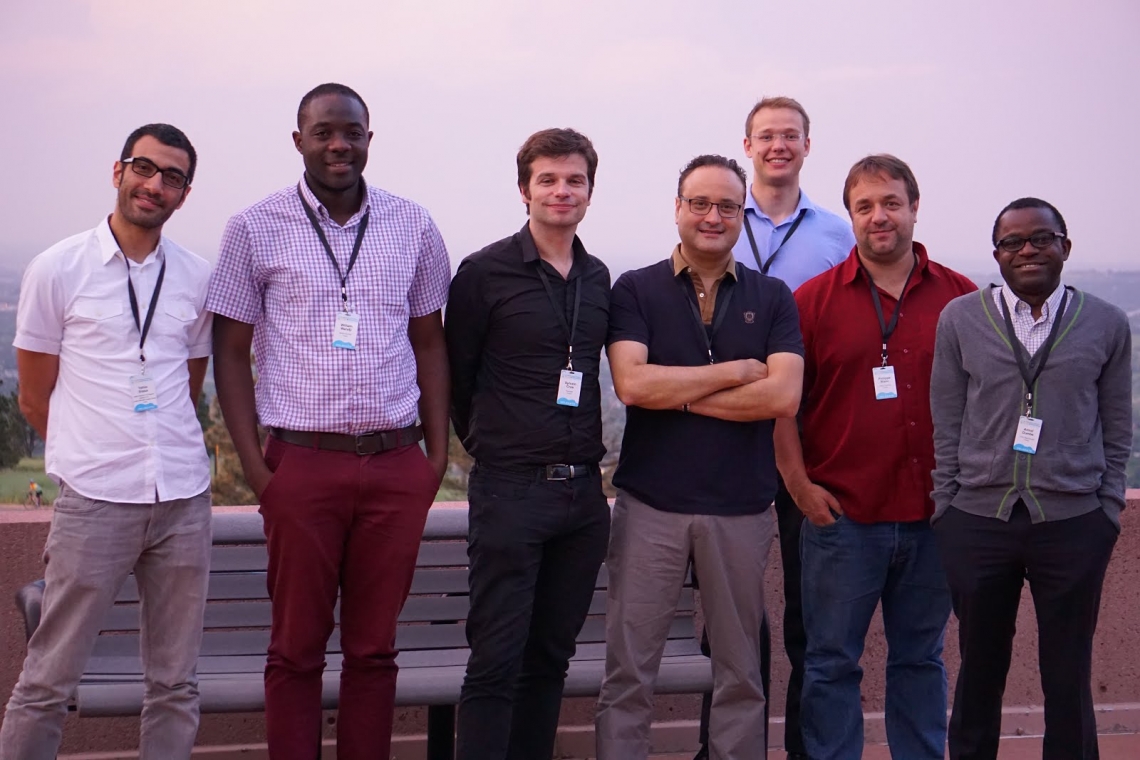
Seven researchers from Masdar Institute’s Research Center for Renewable Energy Mapping Assessment (ReCREMA) presented six papers and one poster at the 3rd International Conference of Energy and Meteorology (ICEM), held last week in Boulder, Colorado, USA. The conference brought together scientists and policy makers involved in research or implementation activities concerning the inter-connectivity of weather, climate and energy.

The team included ReCREMA Director Dr. Hosni Ghedira, Associate Professor of Chemical and Environmental Engineering Dr. Marouane Temimi, Post-Doctoral Researchers Dr. Imen Gherboudj, Dr. Naseema Beegum Shyju, and Dr. Naira Chaouch, and Research Engineers Dr. Yehia Eissa and Arttu Tuomiranta.

The papers presented by the ReCREMA team focus on getting the most accurate measurement of the solar energy that reaches the earth, known as solar irradiance. By having an accurate measure of solar irradiance over a given region, engineers and policymakers can better utilize the solar resource in order to maximize the annual yield of energy produced by photovoltaic (PV) or concentrated solar power (CSP) systems.

The generation of cost-effective solar power requires a deep understanding of the solar resources locally available. ReCREMA, which was launched in 2012, provides this deep knowledge of available solar and wind resources through the use of satellite data and related modeling. The papers presented by the team at ICEM represent ReCREMA’s advanced solar and dust mapping research and how they use those maps to support increased solar energy efficiency and utilization across the UAE.

In a paper co-authored by Dr. Shyju, Dr. Chaouch and Dr. Ghedira, titled “Atmospheric Composition Modeling over the Arabian Peninsula for Solar Photovoltaic Applications”, the researchers modeled the atmospheric dust cycle over the Middle East region in order to gain a better understanding of how dust emissions affect the forecasting of irradiance for solar PV applications.

Tuomiranta and Dr. Ghedira’s paper, “Evaluation of Decomposition and Transposition Models for Irradiance Data Conversion under Hot Desert Climates,” proposed simulation tools better suited to the UAE’s desert conditions in order to support PV deployment in the region.

Dr. Eissa co-authored two of the papers presented at ICEM. The first, “Comparison Between Estimates of the Surface Downwelling Solar Irradiances under Cloud-Free Skies Extracted from the McClear and HelioClim-3 Services over Egypt,” compared the validation results of the total solar irradiation extracted from two models – the McClear and HelioClim-3 – under cloud-free skies in Egypt.

In his second paper, “Preliminary Results on Modelling the Monochromatic Beam and Circumsolar Radiation under Cloud-Free Conditions in Desert Environment,” Dr. Eissa looked at an alternative tool to the one conventionally used to measure solar irradiance – the pyronameter, which measures the sun’s energy coming from all directions in the hemisphere above the plane of the tool. Dr. Eissa’s research proposes a method to accurately model solar irradiation from larger circumsolar regions – reaching regions of land that pyronameters cannot cover – in desert environments.

Dr. Chaouch, Dr. Temimi and Dr. Ghedira co-authored the paper “Evaluation of WRF Radiation and Planetary Boundary Layer Schemes for Solar Irradiance Forecasts in Arid Region.” The team deployed the Weather Research and Forecasting (WRF) model, which forecasts total solar radiation and other relevant meteorological parameters like temperature, wind speed and humidity across the country. The comprehensive model will help determine optimal solar energy power plant operations in the UAE.

Dr. Shyju, Dr. Ghedira and Dr. Priya Vijayan, a ReCREMA Research Engineer, co-authored a paper titled “Irradiance Modeling Using SBDART on Clear and Cloudy Conditions: Sensitivity to Cloud Microphysics.” They deployed a model that would successfully simulate solar irradiation over the UAE when dust emissions are high and cloud coverage is significant. Such a model will give more accurate predictions of solar resources available in the region during dust storms and cloudy conditions.

Dr. Gherboudj and Dr. Ghedira presented a poster titled “Spatiotemporal Assessment of Dust Risk Maps for Solar Energy Systems over the United Arab Emirates Using Remote Sensing and Weather Forecast Data”, which depicted the dust risk maps they developed. The maps combined the UAE’s annual solar irradiance with airborne dust measurements and other weather variables – including temperature, humidity and wind speed – to determine the risk of dust on the country’s solar energy systems.

The ReCREMA team’s climate-focused research resonates strongly with the UAE, as it deals with climate issues specific to the region, such as high dust levels, and how such issues affect the country’s renewable energy production capabilities.

Through its leading-edge research, ReCREMA has become a regional and international hub for advancing research and innovation in tackling the challenge of estimating solar resource potential and simulating solar technology performance in arid and dusty environments.

Erica Solomon
3 July, 2015

Learning the Japanese Art of Innovation

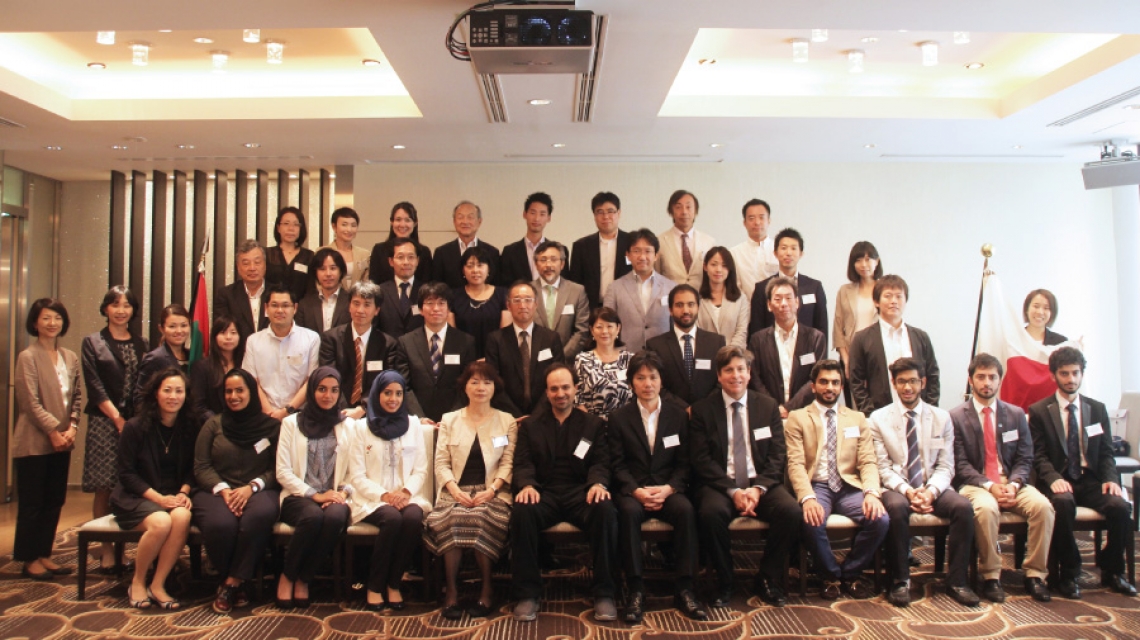
The first stage of the internship for Masdar Institute selected UAE national Master’s and Doctorate students began in Abu Dhabi on 12 April with an orientation lecture and Japanese language lessons. A pre-departure orientation held in Abu Dhabi on 23 April helped prepare the group for a meaningful cultural immersion during their field internship in Japan. The actual internship program took place in Japan from 17 May to 26 June.

Sponsored by the Ministry of Economy, Trade and Industry of Japan (METI) and organized by JICE, the internship program serves to provide students with advanced learning opportunities in the latest research and development in the field of clean technologies. This year, a total of five Japanese corporations – Chiyoda Corporation, JGC Corporation, Mitsubishi Heavy Industries, Mitsubishi Electric, and Yokogawa Electric Corporation – collaborated with JICE to offer the internship to the nine students.

Interns had varying cultural and on-site experiences in addition to interacting with corporate sector professionals. Chemical Engineering student Mohamed Al Ghailani interned with JGC Corporation along with Noora Abdulrahman, a student in the Engineering Systems and Management Program.

Two students from the Engineering Systems and Management Program – Mouza M. Al Kaabi and Hessa Ali Al-Ali – interned with the Yokogawa Electric Corporation, while Electrical Power and Engineering students Mohammed A. AlShehhi and Ammar Said Abdullah Al Raisi interned with Chiyoda Corporation.

At Yokogawa Electric, Al Kaabi learnt about the utilization of cutting edge automation technology used in manufacturing measurement devices. Her training covered the Japanese electrical engineering and software company’s own software and coding language such as Centum – an integrated production control system, and ADSuit. Both are used for distributed control systems.
 
Al Kaabi said “Being exposed to the advanced manufacturing methods at Yokogawa Electric Corporation factory taught me the true value of optimization. Additionally, the attention to detail which is a great asset of the Japanese way of work, inspired me to seek greater quality in my investigations and tests.”

Computing and Information Science student Aishah Al Yammahi and Mechanical Engineering student Abdulla AlShehhi interned with Mitsubishi Heavy, while Electrical Power Engineering student Ahmad Nasser interned with Mitsubishi Electric.
 
Alshehhi focused on photovoltaics (PV) plants design and layout during his internship with Chiyoda. In addition, the visit offered him an opportunity to learn about technologies such as liquefied natural gas (LNG), floating LNG (FLNG), superconductivity, concentrated solar power (CSP), and SPERA Hydrogen – a large-scale hydrogen storage and transportation system.
 
Alshehhi said, “Through the knowledge I have gained, I will increase my country’s reliance on renewable energy, especially CSP and PV systems, since the country has high Direct Normal Irradiance (DNI). Also, I will contribute to making decisions on the right type of PV systems suitable for the country and estimate the power generation for the next 10-20 years. But individually, I learnt a lot more about punctuality, being independent, need for adequate planning, team-work and communications skills during my visit to Japan.”

Al Raisi, who also interned at Chiyoda, said that the internship offered him a rich experience not only with regards to technologies but even culture. He added that the internship has expanded his knowledge and expertise especially in renewable energy fields, while helping him to stretch the options for pursuing new areas for his PhD.
 
Abdulrahman interned with JGC Corporation, where she learned more about the Concentrating Solar Power (CSP) technologies and energy saving techniques for more sustainable living.
 
Abdulrahman said “The most unforgettable day in Japan was the site visit to Kitakyushu Smart Community. This is a ‘Smart City’ project in Japan that targets four major cities with varying populations, geographical and industrial backgrounds to reduce their emissions through a number of policies and technologies. Despite the air pollution and water contamination created by the big industries, they were able to transform the city into a sustainable one. A most notable aspect of this city is ‘demand response,’ which estimates the next day’s power supply and demand.”

“Enlightening, motivating, inspiring and unforgettable,” was how Mohamed Rashid Al Ghailani described his internship experience.

“By conducting a short interview before the internship began, my mentors at JGC made sure that the internship content was suitable and would help me in conducting my research at Masdar Institute. Considering my background in oil and gas and the corporation’s activities in this sector in the UAE and the Middle East, there were several topics of interesting discussion. In addition to this, courses in environmental impact assessment and biofuel research were also conducted,” he added.

About the two cultures, he said “What I realized during my time in Japan was that the fundamental teachings of both the Arab and Japanese cultures are quite similar when it comes to dealing with people as we both understand the value of hospitality, generosity and kindness. This forms a very strong foundation for us to work together and exchange knowledge as we felt welcomed, respected and at ease in Japan.”

Clarence Michael
July 9, 2015

Conservation and Tradition Meet Water Savings in Mosques

Abu Dhabi-UAE: 14 July, 2015 – As mosques across the UAE experience their maximum water consumption during the heavily-attended Ramadan prayers, a novel device from a Masdar Institute and UAE national faculty and student is being eyed with the promise of water- and cost-savings.

Dr. Ahmed Al Jaberi, Assistant Professor of Mechanical and Materials Engineering at Masdar Institute, is working with PhD student Mohamed Al Musharrekh to develop a water-saving device for mosques that promises to save up to 95% of water during the pre-prayer ablution process known as wudu. They are currently in the final preparation stages of getting their wudu device installed at a number of mosques in the capital to test and demonstrate its ability to save precious water.

“With Ramadan greatly increasing attendance in mosques, the time is ripe for a new, affordable and easy-to-use device that can save water during wudu,” Dr. Al Jaberi explained.

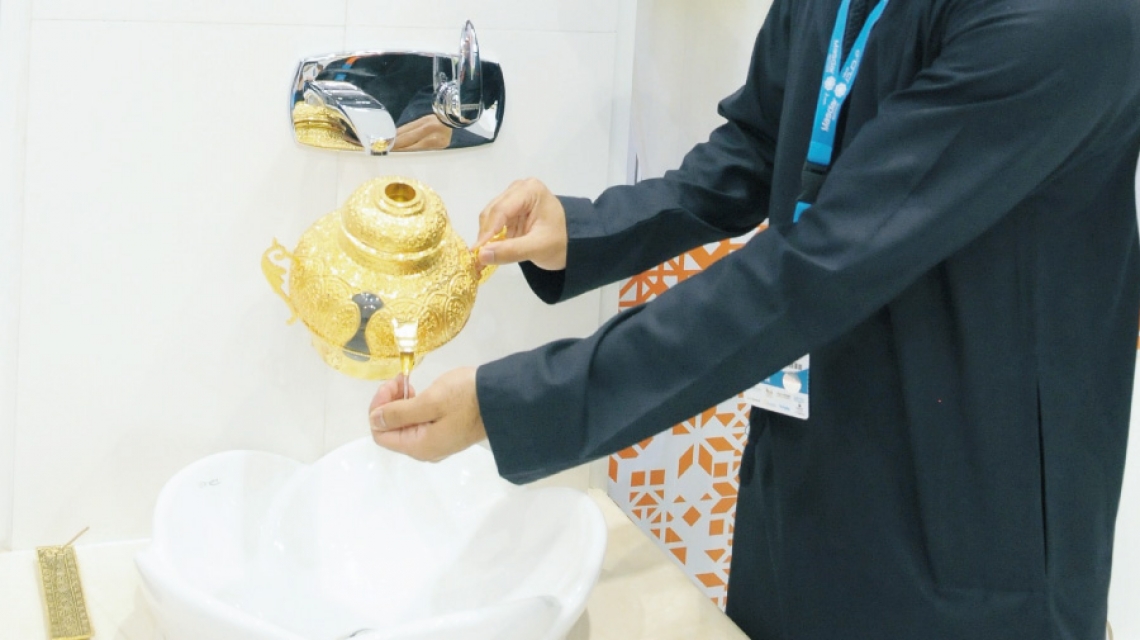
The sustainable and ornately-designed wudu device can help reduce water-wastage by informing users of how much water they have used while performing their wudu. The device displays levels for water usage and can easily be attached to mosques’ water faucets without any changes to existing infrastructure.

After the device is filled with water, the user will tip the device down to wash. The device automatically goes back to the upright position once it is released, limiting waste and restricting the user’s total water consumption to the amount held by the device, which is 1.2 liters. There is a line on the device at 600 milliliters, to encourage users to use this amount of water, as this was the amount used by the Prophet Muhammad and thus is a guideline for how much water should be used for making wudu.

“My traditional, easy-to-implement and easy-to-use device offers a solution to the national need to conserve water,” Dr. Al Jaberi said, adding: “The culture of innovation permeating Masdar Institute is what makes inventions like this wudu device possible.”

Wudu is the ceremonial washing of hands, face, arms, neck and feet before Islamic prayer. Though it traditionally is meant to use only half a liter of water, fast-flowing taps coupled with bad habits, such as letting the water run while rolling up sleeves or removing socks, often result in far higher consumption. The result is instead of using 600 milliliters of water to complete prayer, it has been estimated that the average Muslim uses roughly 24 liters of water. Over the course of the day (which includes five prayers), that can amount to 120 liters. Such unnecessary water for wudu is even more problematic in a country like the UAE, which is both predominantly Muslim and ‘highly water scarce,’ relying on treated seawater and limited groundwater for its freshwater needs.

In response to the UAE’s need to preserve water while honoring Islamic values, Dr. Al Jaberi’s device, which he has developed with the support of his student Al Musharrekh, will enable users to easily use the prescribed 600 milliliters of water for wudu while minimizing waste. 

Al Musharrekh said, “We plan to test the first model of our device during Ramadan by fixing it onto some of the faucets in one of Abu Dhabi’s mosques. We will fix flow meters onto all the pipes in order to measure the water consumption for the pipes that use the wudu device and for the pipes that don’t. Then we will determine the real savings from the device.”

UAE officials have been keen on reducing water consumption in mosques for years, taking concerted efforts to equip mosques with water-saving technologies. They believe such efforts could help lower the UAE’s high per capita water consumption – which is currently pegged at about 500 liters per person per day.

Last Ramadan, the Dubai Electricity and Water Authority (DEWA) retrofitted several mosques in Dubai with high-tech water reduction equipment in order to lower water consumption. Last Ramadan also saw the completion of the Khalifa Al Tajer Mosque in Dubai, dubbed the world’s first ‘green mosque.’ The mosque is replete with sensor-operated water conservation devices to moderate water flow while recycling water for irrigation purposes, reducing water consumption by 20%.

In 2012, a team of Abu Dhabi-based university students won a US$5,000 award to implement their ‘green wudu’ idea, which collects used ablution water for re-use as landscape irrigation around the mosques.

And in 2010, 20 self-stopping taps were installed in the Abu Hamed Al Gazali Mosque in Dubai, dropping consumption by over 15,000 gallons, or 30% of total consumption. The new taps reduced consumption from 45,509 gallons in one month to 30,205.

“These efforts reflect the UAE’s commitment to sustainability, while supporting the message of the Prophet Mohammad, who said, ‘Do not waste water, even if you perform your wudu on the banks of an abundantly-flowing river,’” said Al Musharrekh.