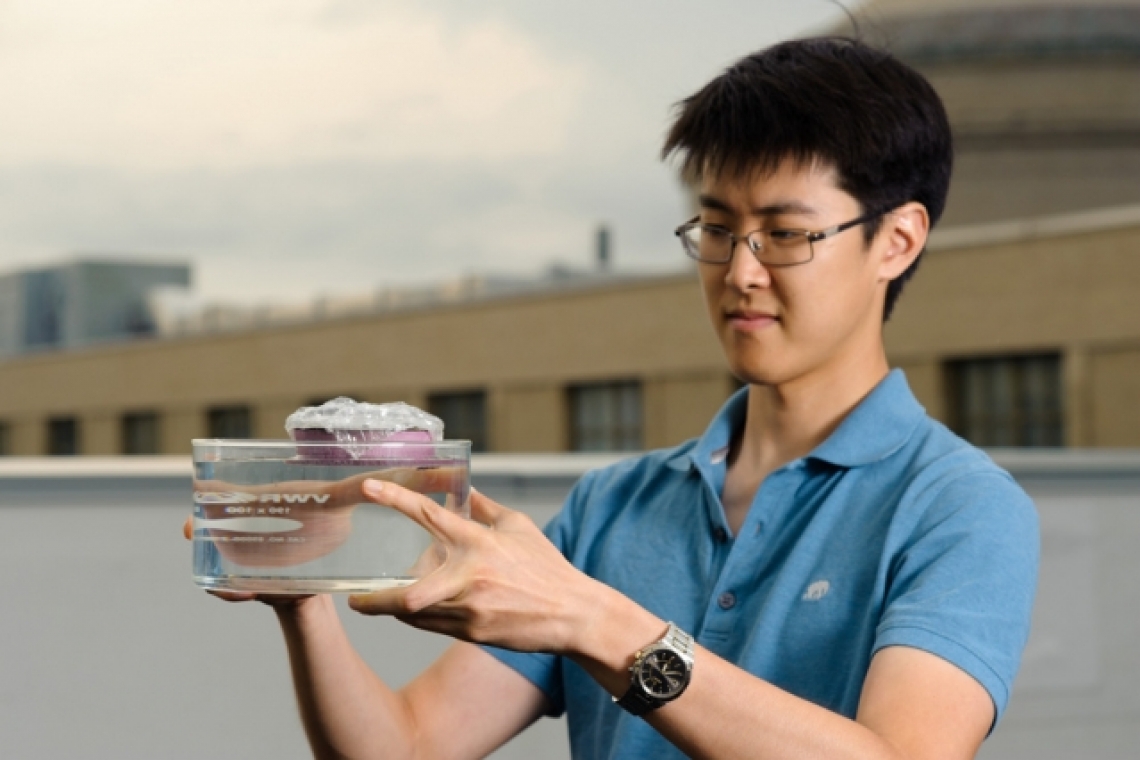
… Mechanical Engineering; in collaboration with TieJun Zhang and his group members Hongxia Li and Weilin Yang from the Department of Mechanical and Materials Engineering at the Masdar Institute of Science and Technology, in the United Arab Emirates.and more »
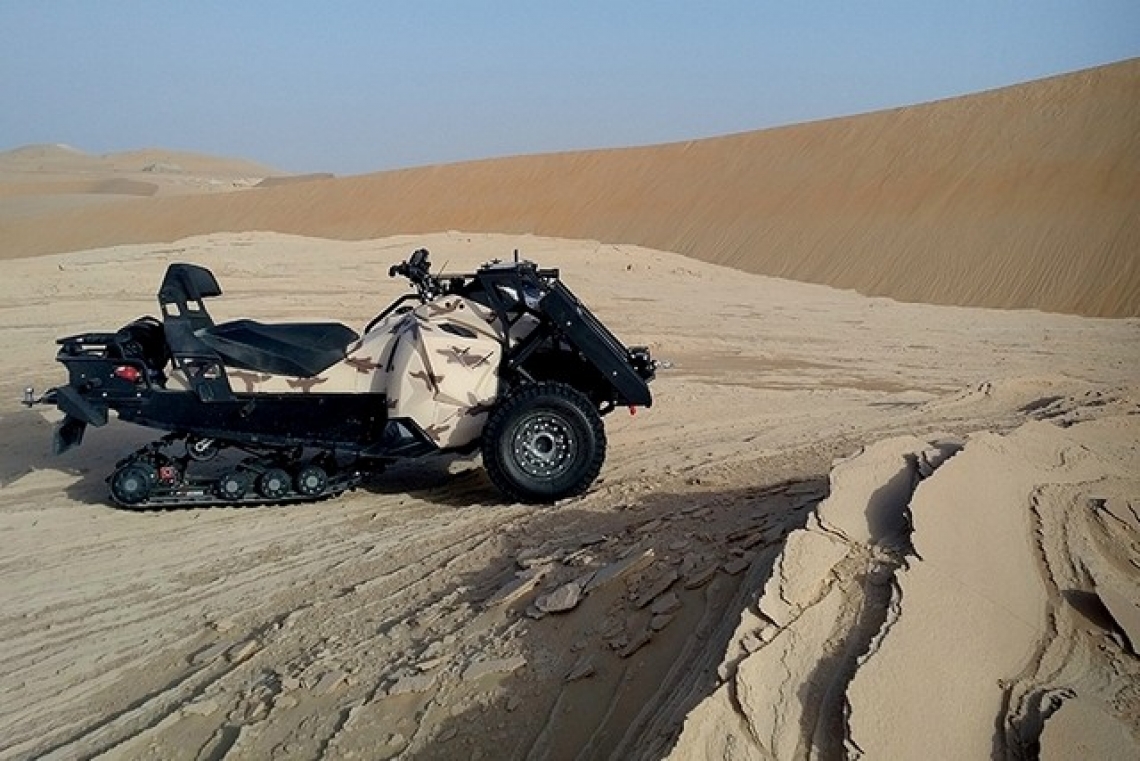
UAE off-road robot could deliver a Dh2 million windfall for Masdar Institute – The National
Masdar Institute researchers are hoping a new robot will deliver a cool Dh2 million to the science facility in a few months time. The institute is partnering the Swiss-based all-terrain vehicle (ATV) developer Sand-X Motors and the British technology …
Khalifa University Ranked No.1 in the UAE for Faculty-Student Ratio, Faculty Publications and Number of Faculty with PhD
University also ranked in the top 25 in the region for overall academic reputation according to QS Arab World Rankings for 2015
Khalifa University has been listed among the top 25 universities in the Middle East/North Africa Region by QS (Quacquarelli Symonds) a British company specializing in higher education and student mobility that releases annual rankings from around the world. In addition to the top 25 mention the university placed first in the UAE in three categories including faculty/student ratio publications per faculty researcher and percentage of faculty in possession of a PhD. Full information on these rankings is available on their website.
Currently Khalifa University boasts a faculty to student ratio of 9 students per faculty member in the undergraduate program which allows for greater hands on attention and guidance. All Khalifa University professors are required to possess a PhD and are actively engaged in both undergraduate and graduate education as well as publication of their research and other scholarly activity.
The QS World University Rankings are an annual publication regarded as one of the three most influential and widely observed university measures. QS has been producing global rankings since 2004 and continues to expand its activities in the ranking and evaluation of higher education institutions worldwide. The ranking of Khalifa University within the top 25 Arab Region universities this spring follows upon its ranking amongst the top 500 universities worldwide in the 2014 QS World Rankings released last fall.
“We are very pleased with our University’s performance in the latest QS rankings ” said Khalifa University President Dr. Tod Laursen. “As a relatively new University established in 2008 it is quite unusual to have this sort of impact so early and I am very proud of the work our faculty staff and students have done to bring this to this point. As nice as this recognition is however it is important for us all to know that our work is far from done. Our students are now regularly competing and performing admirably in international competitions and continually ranking in the top tiers in regional and local competitions. We pride ourselves in accepting only the best students and hiring only the best faculty and we can see the results of those high standards in these rankings. I look forward to seeing the fruits of these efforts as we keep working toward enhanced recognition both nationally and internationally.”
[mobile]
University also ranked in the top 25 in the region for overall academic reputation according to QS Arab World Rankings for 2015
Khalifa University has been listed among the top 25 universities in the Middle East/North Africa Region by QS (Quacquarelli Symonds) a British company specializing in higher education and student mobility that releases annual rankings from around the world. In addition to the top 25 mention the university placed first in the UAE in three categories including faculty/student ratio publications per faculty researcher and percentage of faculty in possession of a PhD. Full information on these rankings is available on their website.
Currently Khalifa University boasts a faculty to student ratio of 9 students per faculty member in the undergraduate program which allows for greater hands on attention and guidance. All Khalifa University professors are required to possess a PhD and are actively engaged in both undergraduate and graduate education as well as publication of their research and other scholarly activity.
The QS World University Rankings are an annual publication regarded as one of the three most influential and widely observed university measures. QS has been producing global rankings since 2004 and continues to expand its activities in the ranking and evaluation of higher education institutions worldwide. The ranking of Khalifa University within the top 25 Arab Region universities this spring follows upon its ranking amongst the top 500 universities worldwide in the 2014 QS World Rankings released last fall.
“We are very pleased with our University’s performance in the latest QS rankings ” said Khalifa University President Dr. Tod Laursen. “As a relatively new University established in 2008 it is quite unusual to have this sort of impact so early and I am very proud of the work our faculty staff and students have done to bring this to this point. As nice as this recognition is however it is important for us all to know that our work is far from done. Our students are now regularly competing and performing admirably in international competitions and continually ranking in the top tiers in regional and local competitions. We pride ourselves in accepting only the best students and hiring only the best faculty and we can see the results of those high standards in these rankings. I look forward to seeing the fruits of these efforts as we keep working toward enhanced recognition both nationally and internationally.”
[/mobile]
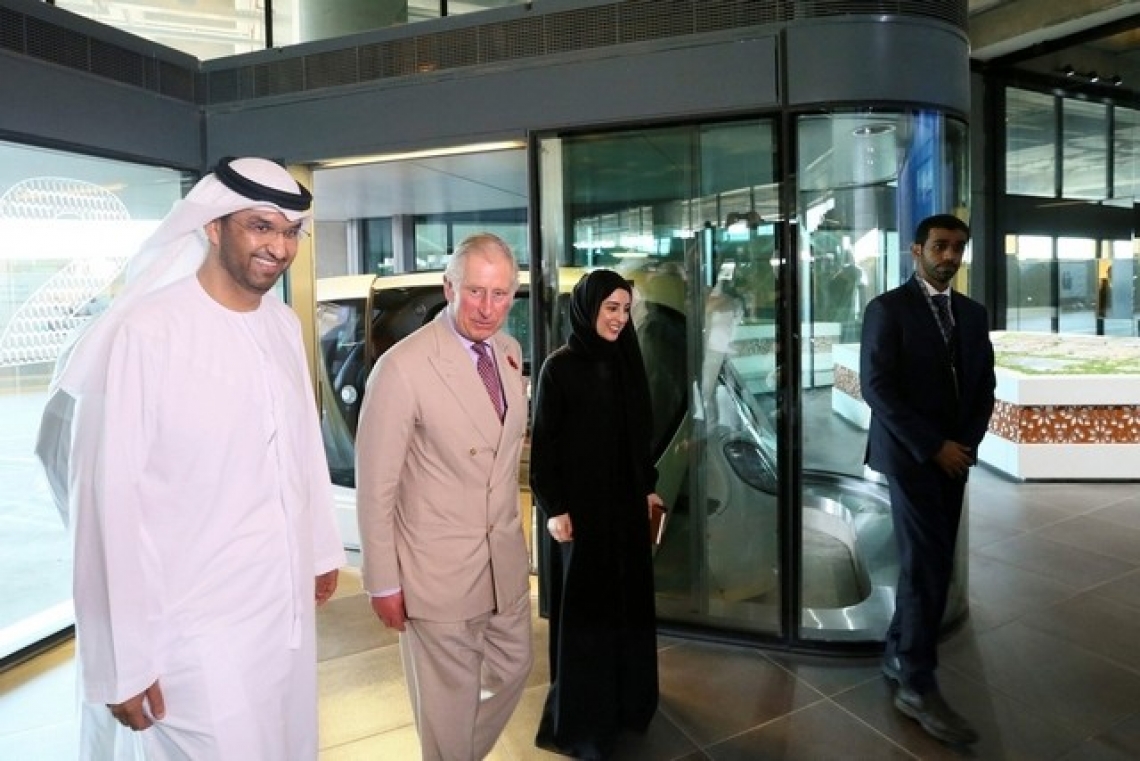
Prince Charles visits Masdar Institute to talk to students about sustainability – The National
ABU DHABI // Sustainability and the development of young people formed the foundation of the discussion between students at the Masdar Institute of Science and Technology and the UK’s Prince Charles on the second day of his state visit to the UAE.
Khalifa University Students Enjoy Successful Internship with Center for Forensic Science in Australia
Five students had the opportunity to study Physical Anthropology and work with international professionals in the field of forensic science.
Khalifa University Biomedical Engineering students Mariam Al Ali Halima Alnaqbi Anoud Almazam Noura Alameri and Salma Alblooshi recently returned from a successful six-week internship with the Center for Forensic Science and the University of Western Australia in Perth where they had the opportunity to study Physical Anthropology as part of a project they were tasked with. Physical Anthropology is a subfield of anthropology that provides a biological perspective to the systematic study of human beings more specifically the students focused on studying human skeletal remains with the aim of determining their biological profile such as gender age stature and ancestral groupings.

“This was a great opportunity for me ” said Mariam. “It gave me the opportunity to experience and learn new things and I was able to refine my soft and technical skills. Learning about Physical Anthropology was especially rewarding because it gave me ideas on how it can be used in my ongoing research titled ‘Arabic Trade Routes and Biological Admixing.’ Learning about the importance of history in science especially in anthropology by studying the history of specific population and their interaction with other populations and how that has led to physical variation and population diversity is very important and little is known about the Middle East in relation to physical anthropology as few studies have been done in this region.”
The group of students were the first students from Khalifa University to travel to Australia as part of their internship requirement. They were among a few students from around the world to be offered positions and were able to work with international team of professors and peers as part of their work.
“Being supervised by professionals in this field was a special experience and made me start to think about my next steps and the types of studies I want to work on in the future ” continued Mariam. “By the end of my internship I came to the conclusion that there is no limit to what humans can achieve and learn. Not giving up and trying once twice or multiple times is very important when working in scientific projects as nothing is ideal and big things can come after failure.”
Student Halima Alnaqbi said “Pushing my boundaries and the inspiring people I met on this short journey boosted my confidence level and made me more passionate about my major. I wish best of luck to everyone out there trying to find their true passion whether it is near or miles away. “
“I’m very pleased with the students’ performance in Australia especially with how much it inspired them to apply what they learned to their future research ” said Dr. Habiba Al Safar Assistant Professor in Biomedical Engineering at Khalifa University and the group supervisor. “It’s wonderful that they’ve come back with an interest in performing more in-depth Physical Anthropological studies into Arab populations and with an increased passion for their career choice as the results of their research could be of use to a number of different fields including the medical field. Internships are a valuable way to introduce students to what life might be like after graduation and what they may want to pursue as a career.”
[mobile]
Five students had the opportunity to study Physical Anthropology and work with international professionals in the field of forensic science.
Khalifa University Biomedical Engineering students Mariam Al Ali Halima Alnaqbi Anoud Almazam Noura Alameri and Salma Alblooshi recently returned from a successful six-week internship with the Center for Forensic Science and the University of Western Australia in Perth where they had the opportunity to study Physical Anthropology as part of a project they were tasked with. Physical Anthropology is a subfield of anthropology that provides a biological perspective to the systematic study of human beings more specifically the students focused on studying human skeletal remains with the aim of determining their biological profile such as gender age stature and ancestral groupings.

“This was a great opportunity for me ” said Mariam. “It gave me the opportunity to experience and learn new things and I was able to refine my soft and technical skills. Learning about Physical Anthropology was especially rewarding because it gave me ideas on how it can be used in my ongoing research titled ‘Arabic Trade Routes and Biological Admixing.’ Learning about the importance of history in science especially in anthropology by studying the history of specific population and their interaction with other populations and how that has led to physical variation and population diversity is very important and little is known about the Middle East in relation to physical anthropology as few studies have been done in this region.”
The group of students were the first students from Khalifa University to travel to Australia as part of their internship requirement. They were among a few students from around the world to be offered positions and were able to work with international team of professors and peers as part of their work.
“Being supervised by professionals in this field was a special experience and made me start to think about my next steps and the types of studies I want to work on in the future ” continued Mariam. “By the end of my internship I came to the conclusion that there is no limit to what humans can achieve and learn. Not giving up and trying once twice or multiple times is very important when working in scientific projects as nothing is ideal and big things can come after failure.”
Student Halima Alnaqbi said “Pushing my boundaries and the inspiring people I met on this short journey boosted my confidence level and made me more passionate about my major. I wish best of luck to everyone out there trying to find their true passion whether it is near or miles away. “
“I’m very pleased with the students’ performance in Australia especially with how much it inspired them to apply what they learned to their future research ” said Dr. Habiba Al Safar Assistant Professor in Biomedical Engineering at Khalifa University and the group supervisor. “It’s wonderful that they’ve come back with an interest in performing more in-depth Physical Anthropological studies into Arab populations and with an increased passion for their career choice as the results of their research could be of use to a number of different fields including the medical field. Internships are a valuable way to introduce students to what life might be like after graduation and what they may want to pursue as a career.”
[/mobile]
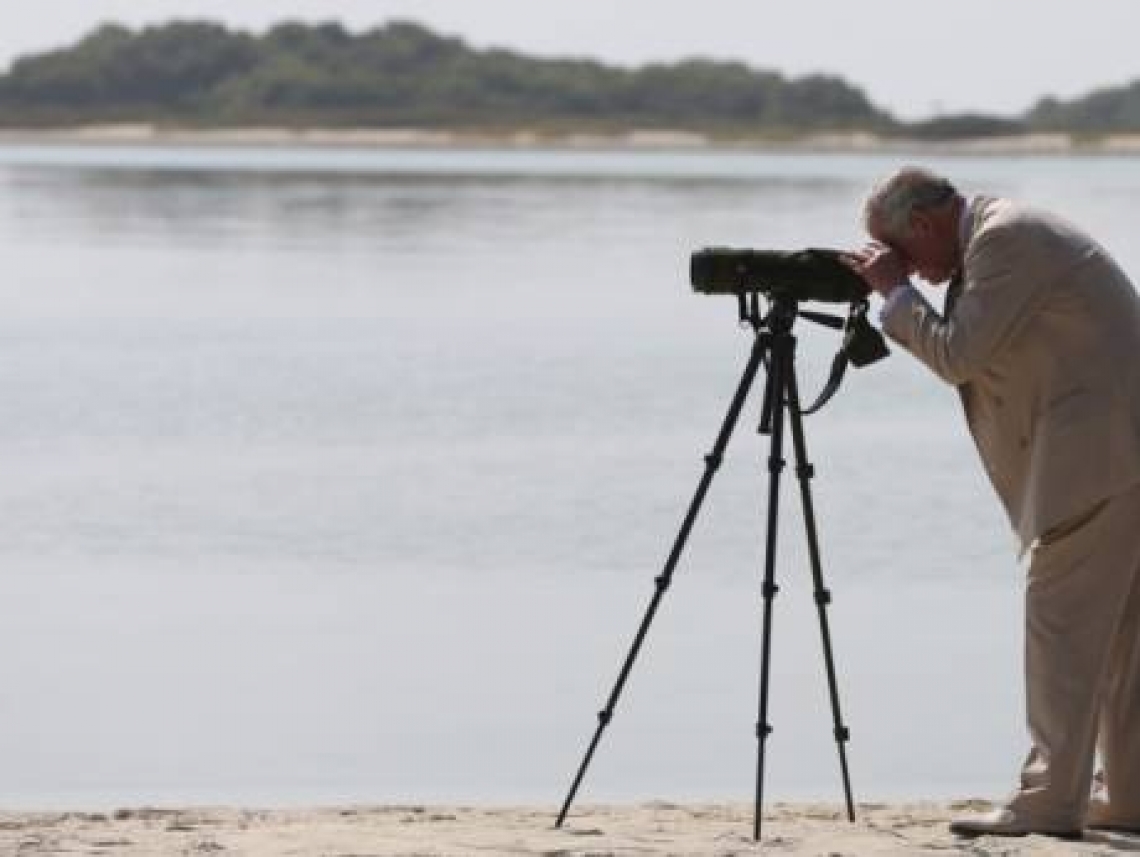
Charles says decarbonising economy is major challenge – gulfnews.com
The Prince of Wales said this while addressing the students at Youth Circle organised by the Emirates Youth Council at Masdar Institute of Science and Technology in Abu Dhabi on Monday, the second day of his three-day official visit to the UAE …
Khalifa University to Open Center of Excellence in Biotechnology
New research center will be headed by leading Emirati scientist Dr. Habiba Al Safar.
Khalifa University has announced its plans to open a new research center devoted to the study of biotechnology which will be headed by renowned Emirati scientist Dr. Habiba Al Safar. The Khalifa University Center for Biotechnology (KUCEB) will be a hub for research and development encouraging interdisciplinary translational research with industry in order to develop the nation’s pharmaceutical Healthcare biotechnology and life sciences sector.

KUCEB will specifically focus on exploring health issues in families of Arab descent and utilizing existing resources such DNA sequencing and bioinformatics that are already available. For example the center will use a DNA databank compiled by center head Dr. Al Safar which is linked to a family registry that houses important clinical data for the purpose of genetic association studies.
KUCEB will also work to improve the understanding of disease in order to enable clinicians to promote protect and preserve the wellbeing of families in the UAE. One of the missions of the center will be to conduct a longitudinal investigation into various health aspects of individuals of Arab descent. It will also focus on Cardio metabolic Syndromes and risk factors associated with Diabetes and Cardiovascular Disease. It will work in collaboration with Sheikh Khalifa Medical City Abu Dhabi’s National Rehabilitation Center and the Abu Dhabi Police.
In addition to research into Type II Diabetes the Center will also look at Cardio metabolic Disorders advanced disease diagnosis and drug delivery systems Cellular Mechnobiology and Immunotherapy Cardiovascular Regeneration Electrocardiographic Markers Associated with cardiovascular diseases and cardiac safety and Moto sensory issues. The Center will have access to the Khalifa University based state of the art human motion lab that explores the mechanisms involved in producing movement and maintaining balance.
“The establishment of the KUCEB is an exciting development for Khalifa University ” says Khalifa University Executive Vice President Dr. Arif Al Hammadi. “Encouraging innovation in the areas of health and life sciences is of vital importance to the future of the UAE and is one of its key focuses as it moves towards the creation of the knowledge economy. The information that this center will gather will hopefully help the UAE tackle several major health issues it’s facing such as obesity and the proclivity for Type II Diabetes amongst Arabs. These issues if left unchecked could cause major problems in the future so it’s our goal to provide information and guidance to doctors and medical practitioners to help them with their endeavors.”
“Khalifa University has a vested interest in supporting and incubating research and development in the UAE ” said Senior Vice President Research & Graduate Studies Dr. Mohammed Al Mualla. “As a research driven university we are keen to provide our students and faculty with the best opportunities to engage in new and innovative studies and explorations. Opening research centers is one way to directing funds and cutting edge technology to the right people so that they can focus on their projects. The field of health and biological sciences is one of the most important areas of research that the university is focusing on as part of its strategic plan which is in line with the Abu Dhabi 2030 Vision and the national strategy for innovation”
Dr. Al Safar is currently an Assistant Professor in Biomedical Engineering at Khalifa University and has recently been recognized as one of the most powerful women in the Arab world by ArabianBusiness.com. The Emirati researcher came in 52nd for her extensive work with Type II Diabetes specifically into identifying genetic and environmental risk factors associated with diabetes. She was also recently awarded the 2014 L’Oreal-UNESCO Fellowship Award for Women in Science as well as having received the first Emirates International Award for Genetic Diseases Prevention in the category of Best Scientific Researcher in the field of Genetic Diseases Prevention. She established the family registry as a means of identifying traits that lead to Type II Diabetes amongst local families.
[mobile]
New research center will be headed by leading Emirati scientist Dr. Habiba Al Safar.
Khalifa University has announced its plans to open a new research center devoted to the study of biotechnology which will be headed by renowned Emirati scientist Dr. Habiba Al Safar. The Khalifa University Center for Biotechnology (KUCEB) will be a hub for research and development encouraging interdisciplinary translational research with industry in order to develop the nation’s pharmaceutical Healthcare biotechnology and life sciences sector.
KUCEB will specifically focus on exploring health issues in families of Arab descent and utilizing existing resources such DNA sequencing and bioinformatics that are already available. For example the center will use a DNA databank compiled by center head Dr. Al Safar which is linked to a family registry that houses important clinical data for the purpose of genetic association studies.
KUCEB will also work to improve the understanding of disease in order to enable clinicians to promote protect and preserve the wellbeing of families in the UAE. One of the missions of the center will be to conduct a longitudinal investigation into various health aspects of individuals of Arab descent. It will also focus on Cardio metabolic Syndromes and risk factors associated with Diabetes and Cardiovascular Disease. It will work in collaboration with Sheikh Khalifa Medical City Abu Dhabi’s National Rehabilitation Center and the Abu Dhabi Police.
In addition to research into Type II Diabetes the Center will also look at Cardio metabolic Disorders advanced disease diagnosis and drug delivery systems Cellular Mechnobiology and Immunotherapy Cardiovascular Regeneration Electrocardiographic Markers Associated with cardiovascular diseases and cardiac safety and Moto sensory issues. The Center will have access to the Khalifa University based state of the art human motion lab that explores the mechanisms involved in producing movement and maintaining balance.
“The establishment of the KUCEB is an exciting development for Khalifa University ” says Khalifa University Executive Vice President Dr. Arif Al Hammadi. “Encouraging innovation in the areas of health and life sciences is of vital importance to the future of the UAE and is one of its key focuses as it moves towards the creation of the knowledge economy. The information that this center will gather will hopefully help the UAE tackle several major health issues it’s facing such as obesity and the proclivity for Type II Diabetes amongst Arabs. These issues if left unchecked could cause major problems in the future so it’s our goal to provide information and guidance to doctors and medical practitioners to help them with their endeavors.”
“Khalifa University has a vested interest in supporting and incubating research and development in the UAE ” said Senior Vice President Research & Graduate Studies Dr. Mohammed Al Mualla. “As a research driven university we are keen to provide our students and faculty with the best opportunities to engage in new and innovative studies and explorations. Opening research centers is one way to directing funds and cutting edge technology to the right people so that they can focus on their projects. The field of health and biological sciences is one of the most important areas of research that the university is focusing on as part of its strategic plan which is in line with the Abu Dhabi 2030 Vision and the national strategy for innovation”
Dr. Al Safar is currently an Assistant Professor in Biomedical Engineering at Khalifa University and has recently been recognized as one of the most powerful women in the Arab world by ArabianBusiness.com. The Emirati researcher came in 52nd for her extensive work with Type II Diabetes specifically into identifying genetic and environmental risk factors associated with diabetes. She was also recently awarded the 2014 L’Oreal-UNESCO Fellowship Award for Women in Science as well as having received the first Emirates International Award for Genetic Diseases Prevention in the category of Best Scientific Researcher in the field of Genetic Diseases Prevention. She established the family registry as a means of identifying traits that lead to Type II Diabetes amongst local families.
[/mobile]

Khalifa University Becomes the Worlds Youngest University to Make Top 100 Under 50
Eight year old university recognized in QS rankings of top 100 under 50 years old.
Khalifa University is the world’s youngest university to make it into the top 100 universities under the age of 50 in a ranking by internationally renowned university rankings guide QS (Quacquarelli Symonds). The University came in under the bracket 71-80 in the rankings.
The rankings are compiled by taking the top 100 universities from the QS World University Rankings that have been founded or established in the last fifty years. It is designed to highlight the accomplishments of universities whose performances in teaching and research are increasingly impressive given their age and resources. At only eight years of age Khalifa University is the youngest institution worldwide to be named to the list.
Khalifa University’s high rankings are in part due to its faculty to student ratio of 9 students per faculty member in the undergraduate program which allows for greater hands on attention and guidance. In addition all Khalifa University professors are required to possess a PhD and are actively engaged in both undergraduate and graduate education as well as publication of their research and other scholarly activity which ensures that students are receiving a quality education from active scientists and researchers.
“It’s an honor to be named to the top 100 under 50 ” said Dr. Tod Laursen President of Khalifa University. “It’s an even greater honor to be the youngest institution on this list. We have accomplished so much in eight years it’s exciting to imagine what we can achieve in the next eight. Right now our students are regularly making their mark in competitions and challenges as well as at conferences. We are now graduating students with PhD’s Masters and Bachelors across a wide spectrum of science engineering and technology disciplines and we boast award winning faculty who are recognized both regionally and internationally as leaders in their fields. Consistent with the UAE’s Innovation agenda we’ve just announced the launch of our new Khalifa Innovation Center (KIC) and are dedicated to translating the excellent research results we’ve produced into new products and businesses. Khalifa University is making an impact and will certainly continue to do so for years to come.”
[mobile]
Eight year old university recognized in QS rankings of top 100 under 50 years old.
Khalifa University is the world’s youngest university to make it into the top 100 universities under the age of 50 in a ranking by internationally renowned university rankings guide QS (Quacquarelli Symonds). The University came in under the bracket 71-80 in the rankings.
The rankings are compiled by taking the top 100 universities from the QS World University Rankings that have been founded or established in the last fifty years. It is designed to highlight the accomplishments of universities whose performances in teaching and research are increasingly impressive given their age and resources. At only eight years of age Khalifa University is the youngest institution worldwide to be named to the list.
Khalifa University’s high rankings are in part due to its faculty to student ratio of 9 students per faculty member in the undergraduate program which allows for greater hands on attention and guidance. In addition all Khalifa University professors are required to possess a PhD and are actively engaged in both undergraduate and graduate education as well as publication of their research and other scholarly activity which ensures that students are receiving a quality education from active scientists and researchers.
“It’s an honor to be named to the top 100 under 50 ” said Dr. Tod Laursen President of Khalifa University. “It’s an even greater honor to be the youngest institution on this list. We have accomplished so much in eight years it’s exciting to imagine what we can achieve in the next eight. Right now our students are regularly making their mark in competitions and challenges as well as at conferences. We are now graduating students with PhD’s Masters and Bachelors across a wide spectrum of science engineering and technology disciplines and we boast award winning faculty who are recognized both regionally and internationally as leaders in their fields. Consistent with the UAE’s Innovation agenda we’ve just announced the launch of our new Khalifa Innovation Center (KIC) and are dedicated to translating the excellent research results we’ve produced into new products and businesses. Khalifa University is making an impact and will certainly continue to do so for years to come.”
[/mobile]
Masdar Institute hosts International Desalination Workshop 2016 – Gulf Today
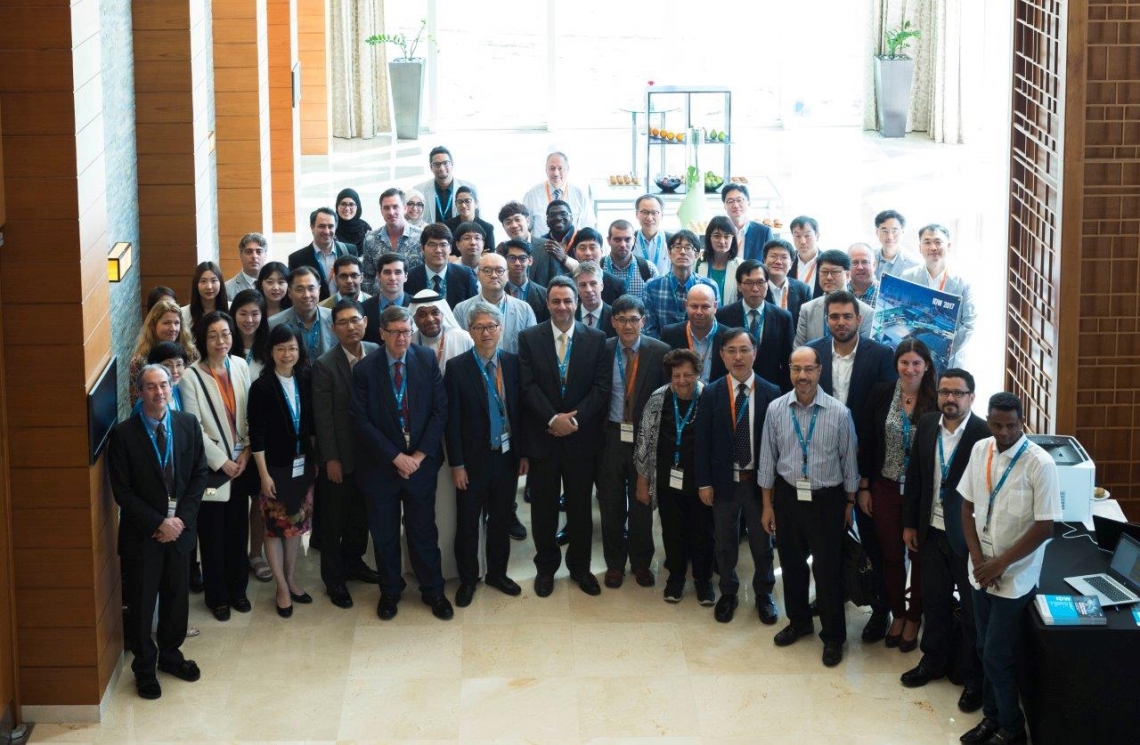
ABU DHABI: The ninth International Desalination Workshop, hosted by Masdar Institute of Science and Technology, started on Nov.14 at the Yas Rotana, Abu Dhabi. The two-day workshop featured six keynote talks by global leaders in desalination with 67 …
Khalifa University Faculty Win Qatars Challenge 22
Named as one of 6 teams to receive funding in order to bring research project to market.
Khalifa University faculty members Dr. Ahsan Khandoker and Dr. Hani Saleh were recently named as one of six teams to win Qatar’s Challenge 22 a legacy initiative for the 2022 World Cup. Their winning idea is a device that monitors safe exercise for athletes and non-athletes alike. They were chosen out of 330 applicants from around the GCC and were the only team from the UAE to win. The team received USD 20 000 as well as the opportunity to work with mentors in their field of interest develop their idea into a prototype and ultimately the chance to showcase their ideas on a global platform.
Their idea stems from the need to monitor peoples’ exercise habits as over exercise can lead to severe injuries that sometimes requires months to recover and may even cause sudden cardiac death. Currently there are no safe ways outside of a laboratory environment to monitor exercise intensity for high risk patients and athletes. They proposed a wearable wrist band that reads a person’s heart rate breathing rate body temperature blood oxygen level and physical activity level along with environment temperature humidity and personal physiological profile. This information is then fed into a unique predictive model that determines the safe exercise intensity limit and alerts the user when it’s been passed.
The proposed device can be used by people with sedentary lifestyle wanting to get back into a healthy lifestyle people with cardiovascular risk such as diabetes obesity hypertension and even elite athletes.
Another Khalifa University team consisting of Dr. Nelson King Dr. Raja Jayaraman Dr. Yousef Iraqi and Dr. Nawaf Almoosa were also named among the 18 semi-finalists invited to present their research titled: “Where is my guide? A system for providing real and virtual venue assistance” in Qatar.
“We are very pleased with our faculty’s win in Qatar ” said Dr. Tod Laursen Khalifa University’s President. “This is an excellent opportunity for them to develop and market new technology aimed at helping people lead healthier lives. We encourage our faculty to explore projects that can enhance the wellbeing of the UAE’s citizens and society as a whole and technology focused on encouraging physical fitness and providing people with information about healthy physical activity is very important in today’s society.”
Masdar Institute gets behind move for knowledge economy – gulfnews.com
Masdar Institute, an independent, research-driven graduate-level university focused on advanced energy and sustainable technologies, is strengthening its efforts to support the UAE’s economic diversification by generating human and intellectual capital …
UAE looks to secure water needs with advanced desalination technologies – gulfnews.com
The International Desalination Workshop (IDW), which was hosted by Masdar Institute in Abu Dhabi, was the ninth edition of the conference and brought together scientific experts from around the world to discuss the latest research and development in …