Ministry of Climate Change and Environment Launches Green Barjeel Project to Cultivate Indigenous Algae

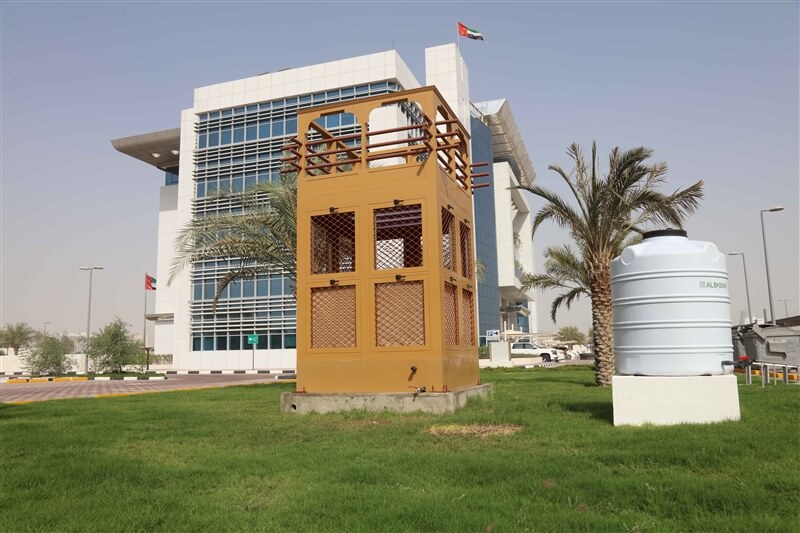
The Ministry of Climate Change and Environment (MOCCAE) today announced the launch of the Green Barjeel research project that aims to leverage innovative methods to grow microalgae biomass with a high lipid content in tower-shaped structures.
Run in cooperation with Khalifa University (KU) and the American University of Sharjah (AUS), the project involves collecting algae from the UAE’s desert ponds and cultivating them. The process offers a host of benefits, including sequestering CO2 and removing dust particles from the ambient air to reduce greenhouse gas emissions and other pollutants. In addition, the structures can serve as passive cooling systems for use in public spaces.

The research project also seeks to examine and classify the diverse indigenous algal strains and test the potential of using them to produce biofuel and biofertilizers. Furthermore, the scope includes an experimental study on the safe and sustainable removal of Nitrogen oxides (NOx) and Sulfur oxides (SOx) from the atmosphere.

His Excellency Dr Thani bin Ahmed Al Zeyoudi, Minister of Climate Change and Environment, said: “In line with the steadfast efforts of His Highness Sheikh Mohammed bin Rashid Al Maktoum, Vice President and Prime Minister of the UAE and Ruler of Dubai, to encourage disruptive innovation across all sectors as the means to ensure a better future for current and next generations, we support environmental R & D and integrate the latest innovations to help achieve ecological sustainability and boost climate action.”
He added: “The Green Barjeel project aims to explore the prospects for using algal strains that have adapted to the UAE’s climate to provide an alternative source of energy and nutrients that enhance agricultural production. The participating scientists will capture the outcomes of the project in scientific literature that can be incorporated into educational curricula or built on in developing further innovations.”

Abu Dhabi Digital Authority Forges New Partnership with Khalifa University

Newly-formed alliance to play a key role in unveiling potential opportunities in scientific research and reinforce Abu Dhabi’s academic sector

In line with its continuing commitment towards enhancing key collaborations with research and academic institutions, the Abu Dhabi Digital Authority (ADDA) has revealed the signing of a strategic Memorandum of Understanding (MoU) with one of the emirate’s leading universities, Khalifa University of Science and Technology.

The new partnership demonstrates a step forward to facilitate a smooth exchange of expertise and leverage knowledge to ensure the application of advance scientific research. Under the terms of the agreement, both parties will work together in prioritizing research topics and joint initiatives in the field of ICT.

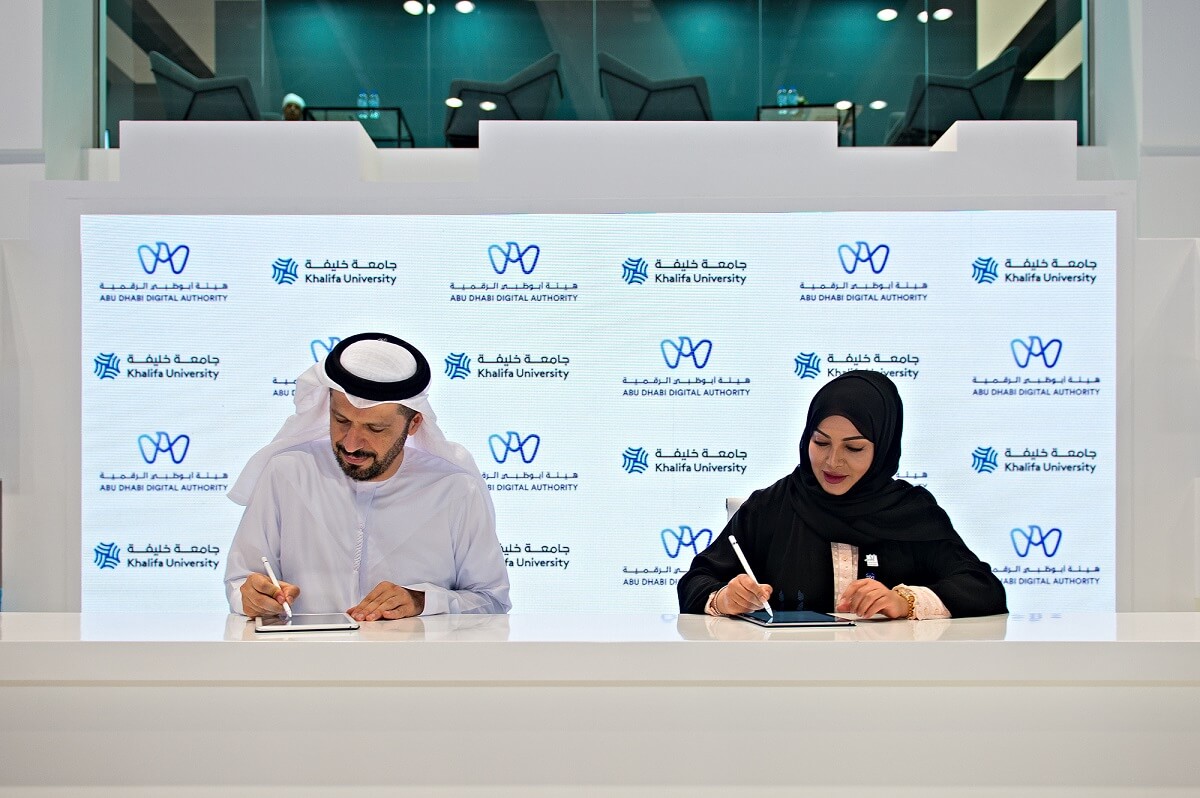
The MoU was signed by H.E. Dr. Rouda Al Saadi, Director General, ADDA, and H.E. Dr. Arif Sultan Al Hammadi, Executive Vice President, Khalifa University of Science and Technology, at the 39th edition of GITEX Technology Week, the biggest tech show in the Middle East, North Africa and South Asia (MENASA), which ran from October 6 to October 10, 2019 at the Dubai World Trade Centre (DWTC).

H.E. Al Saadi stressed on the importance of the newly-formed partnership, which will play a key role in the realization of Abu Dhabi Government’s digital transformation agenda, which includes the development of the emirate’s technological infrastructure and reinforcing its leading position as a global hub for technological innovation.

H.E. Al-Saadi further emphasized on ADDA’s commitment to promote the national capabilities across Abu Dhabi’s government entities in the field of digital transformation. Al Saadi explained that the move would only be made possible through the use of knowledge-based and scientific research & development programs. She added that the partnership complements the unified efforts to develop a generation of UAE Nationals who will be able to create the digital future of Abu Dhabi.

H.E. also took note of the essential role of the research & development departments of today’s leading universities, which are tasked with coming up with cutting-edge scientific research that will serve as a foundation in the development of the government services. Al Saadi reaffirmed ADDA’s keenness to support UAE research and academic institutions via the provision of digital solutions and reliable data that are expected to yield positive results for the community.

Meanwhile, Dr. Arif Sultan Al Hammadi, Executive Vice President, Khalifa University of Science and Technology, revealed that the university is making use of every effort to make positive impacts in the emirate’s digital transformation efforts. In fact, the university currently offers a series of courses and programs aimed at building a generation of UAE Nationals that will contribute to the country’s digitalization. Al Hammadi expressed full confidence in working in close cooperation with ADDA, which is widely regarded as the government entity leading Abu Dhabi’s digital agenda.

As part of the agreement, ADDA will support and encourage IT students via the creation of a conducive and highly motivational working environment, including the move to highlight the expertise and efficiency of students and recent graduates. It aims to provide new generation with actual experience to help them access competitive employment opportunities and guide them towards Job markets and most-wanted vital fields. ADDA will also provide essential digital and spatial data to help in the development of research, studies and scientific projects through the creation of an integrated system facilitating seamless access to reliable data sources, quickly and safely.

-Ends-
This story was originally published on 12 October 2019 on Zawya at the following link: https://www.zawya.com/mena/en/press-releases/story/Abu_Dhabi_Digital_Authority_forges_new_partnership_with_Khalifa_University-ZAWYA20191012062159/

KU student invents ‘cooling suit’ for outdoor workers

  • Photo credit: The National

When Aryam Ahmed, 21, saw a construction worker pass out from the heat in the street, she decided she wanted to solve the problem.

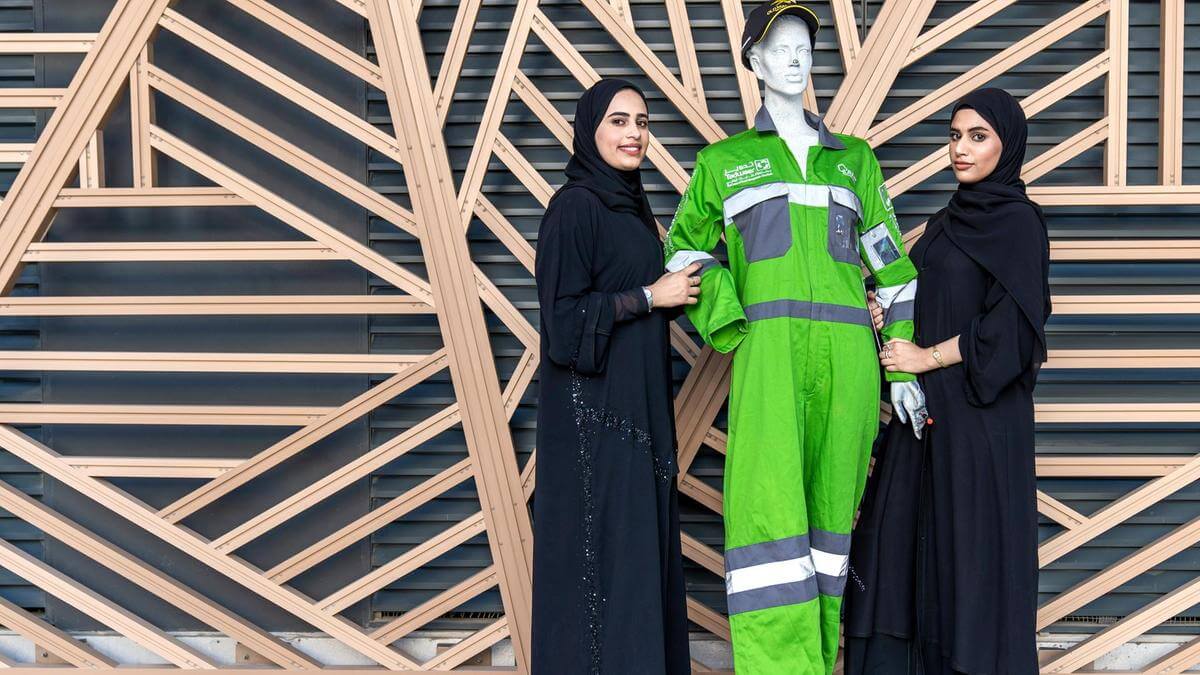
The Emirati engineering student spent the next two years developing a suit which would keep outdoor workers cool – and is now set to pitch her fledgling business idea to an audience of international business leaders and investors.
She was recently chosen as one of the winners of the Pitch@Palace initiative that seeks to encourage Emirati entrepreneurship and is backed by UK royal, Prince Andrew.

She now hopes her invention will help over one million outdoor workers in the UAE and at the same time increase productivity for businesses.

Ms Ahmed, a student at Khalifa University in Abu Dhabi, has already set her sights on taking her idea across the GCC.

“It started when we saw a worker faint on the street and we couldn’t do anything about it,” she said.

“As engineers, it is our responsibility to find solutions to problems to help our society.

“I do not just want to show it in the UAE, I want other countries in the world to know about it. It is not only the UAE that needs this solution, it is the whole of the GCC. We want to create something that everyone can have.

“Employers have a responsibility for the health of the workers, so will want to reduce the risks and number of cases. So I think they will be open to these solutions.”

The affordable cooling suit, made out of a special material she developed, is highly effective at maintaining body temperature for up to four hours, Ms Ahmed said.

She does not want to reveal precise details of how the material works, while its patent is pending. However, she said the suit has held up well in tests.

The suit has a smart system which monitors external heat and a worker’s body temperature, sending an alert to managers if the employee’s body temperature reaches 38 degrees.

It also includes a ‘panic button’ so a worker can summon help in an emergency.
Others have tried to invent cooling suits for outdoor workers but they have often featured complicated fans or water-based cooling systems.

Ms Ahmed, who developed the suit along with her project partner Latifa Al Seiari, believes the simplicity and safety of her design will mean it succeeds where others have failed.

UAE’s midday summer break for outdoor workers to start on Saturday
UAE doctors see increase in heat-related illnesses as temperatures soar
While current laws mean companies have to allow outdoor workers to take long breaks during the hottest hours of the day, Ms Ahmed said cases of heat-related illnesses remain a major problem.

Ms Ahmed will now go on to present her idea at a regional final next month in Bahrain.

The winners of that round will win a place at a global final in London in December.

The event is supported by the Khalifa Fund for Enterprise Development, which seeks to encourage entrepreneurship among Emiratis.

It also helps young business people to be mentored by successful industry leaders and helps connect them with potential investors.

Aryam Ahmed shows off the prototype suit during the recent Pitch@Palace final.

“It has been a great experience, we have talked with many advisers and investors,” Ms Ahmed said.

“They have also allowed me to connect with many people who I wouldn’t otherwise have been able to meet.”

The other winners at the Pitch@Palace event were the creators of a Arabic language learning platform for children, an online tool to connect patients with doctors and pharmacies, and a home design app.

“It is great to be able to showcase some of the great innovation that has been going on in the UAE,” Prince Andrew, who launched the initiative in the UK before expanding it across the world, said at the event.

“This project is about collaboration, everyone working together as a team to help these businesses grow.”

This article originally appeared in The National on 19 October 2019.

KU Scientists unveil genetic make-up of Emiratis for first time

  • Photo Credit: The National

The new research aims to help identify susceptibility to conditions such as diabetes and heart disease

Scientists have unravelled the genetic make-up of two Emiratis for the first time.

The groundbreaking work aims to help identify people most at risk from life-threatening conditions such as diabetes and heart disease.

The study, undertaken in the UAE, found that the pair’s genetic material showed strong similarities to people from Central or South Asia.

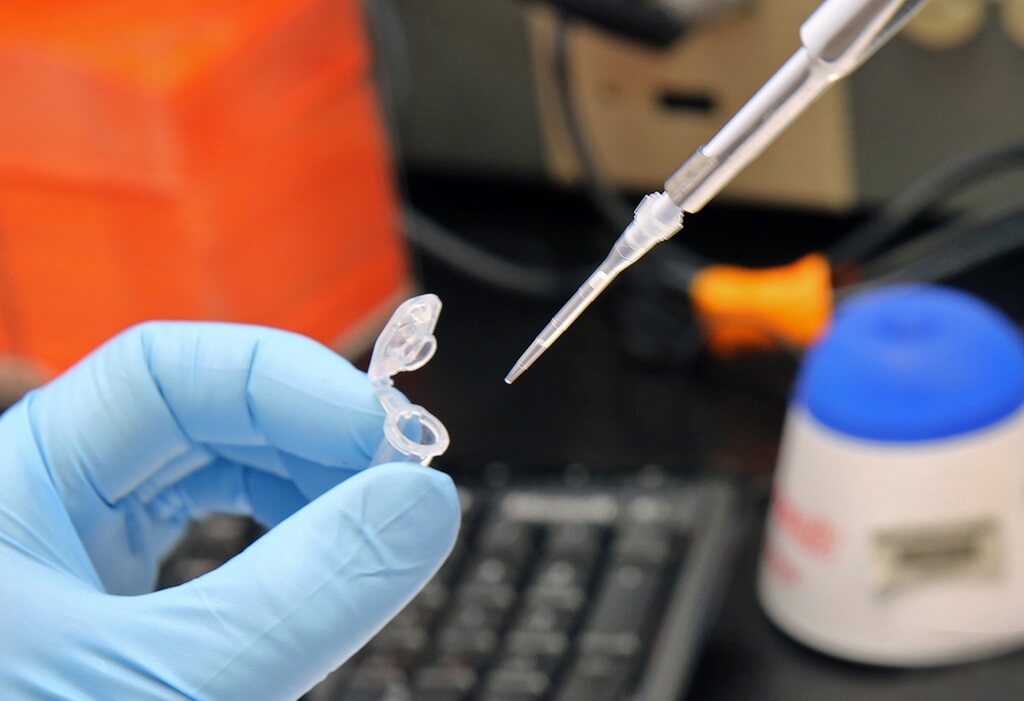
Researchers used a process known as Whole Genome Sequencing to carry out the analysis, which has never been used on Emirati citizens before.

“The information compiled will [probably] lead to the identification of target genes that could lead to the development of novel therapeutic [treatments],” the paper said.

“[It could lead to] improvements in the delivery of precision medicine, quality of life for affected individuals and a reduction in healthcare costs.”

The new research entitled “Introducing the first whole genomes of nationals from the United Arab Emirates” was published in the journal Scientific Reports this month.

It was co-authored by a team from UAE universities and health centres, including five scientists from Khalifa University in Abu Dhabi.

The two Emirati case studies, a man and a woman both aged 87, were chosen due to pre-existing medical conditions.

The male, codenamed UAE S001 by researchers, suffered from high blood pressure, diabetes and the skin condition psoriasis.

The woman, meanwhile, codenamed UAE S002, also suffered from high blood pressure.

Scientists behind the study now plan to carry out the WGS process on more Emiratis.

“This is an important first step – the first published Emirati genome,” said Dr Raghib Ali, a researcher doing related work at New York University Abu Dhabi’s Public Health Research Centre.

“It’s only by having data on tens of thousands we’ll be able to understand how genes interact with the environment.”

Other researchers also see the new work as a major step forward.

“Doing it on one or two [people] means you have the capability, the pipeline set up to do it,” said Professor Sarah Ennis, a professor of genomics at the University of Southampton in the United Kingdom.

“If you can do it on one or two, you could do it in 10 or 20 or 1,000 or 2,000.”

By highlighting the gene types of a particular individual, WGS offers geneticists an insight into what diseases the patient is most likely to be susceptible to.

For example, UAE S001 was found to have genes making him more likely to develop diabetes.

Using this information, doctors can then tailor specific drug treatments to the patient’s requirements, something known as “precision medicine”.

“Not all patients respond to drugs in the same way,” said Dr Ali. “Understanding how they will react with particular individuals based on genetic make-up will be helpful.

“For risk profiling and treatment, it’s important.”

Dr. Ali said he was helping to co-ordinate the UAE Healthy Future Study, which aims to analyse the genetic material of thousands of Emiratis.

The project has already recruited 7,000 of its projected total of 20,000 participants and hopes, over the long-term, to track their medical status and help to uncover factors causing illnesses.

Starting this year, the study will carry out more basic genetic tests on all participants, while WGS will be carried out on selected individuals from next year.

Dr Ali said this would provide data indicating how genes contribute to obesity, diabetes, heart disease and, eventually, cancer in the Emirati population.

Obesity – a risk factor for diabetes – is about as prevalent among Emiratis as it is among Americans, yet diabetes is twice as common among UAE nationals.

“It suggests the Emirati population is genetically more susceptible to diabetes,” said Dr Ali.

“Through genotyping [genetic analysis] and sequencing a large population within the Emirates, we’ll be able to understand how genetic susceptibility contributes to diabetes and other non-communicable diseases.”

He said that lifestyle factors were the most critical to preventing diabetes, but understanding its genetic basis would also help.

He also argued it was vital that more genetic analysis was carried out on people from the Gulf region as there was currently a lack of data for the Middle East on the links between genes and disease.

“Once people know they’re at increased risk [of diabetes], they’re more likely to change their behaviour,” he said.

What is Whole Genome Sequencing?

Whole Genome Sequencing is the sequencing of nearly all of an organism’s DNA, our inherited genetic material.

DNA consists of a double helix (paired strands in a spiral shape), with each strand made up of chemical groups called nucleotides.

Each nucleotide contains one of four bases, each made up of carbon and nitrogen atoms as well as other elements.

The four bases are known as adenine, cytosine, guanine and thymine – and their sequence determines which protein a gene produces. These proteins, in turn, control how organisms develop and how cells operate.

Only about one per cent of genetic material varies from person to person. WGS highlights these areas, even down to variations in individual bases.

This article originally appeared in The National on 22 October 2019.

Abu Dhabi project eyes breakthrough in energy-storage tech

  • Sweden’s Azelio has tied up with UAE’s Masdar and Khalifa University for Science and Technology
  • Tests to determine if Azelio’s storage solution can be included in renewable energy projects


ABU DHABI: One of the biggest challenges facing humanity as it grapples with global warming caused by greenhouse gas emissions is how to supply clean, renewable energy at a competitive cost where and when it is needed.

Fortunately, a renewable form of energy such as solar, which is generated only during the day, can now be converted into electricity non-stop. In theory, at least, this opens up the possibility of boundless energy for the 1.2 billion people living in societies along the Earth’s so-called sunshine belt.

Through efficient exploitation of renewable energy sources such as solar and wind, coupled with state-of-the-art energy storage systems, many countries can not only power their everyday lives in a way that was impossible before, but can also reduce their dependence on fossil fuels.

A small but significant step was taken recently in the Middle East when Azelio, a Swedish solar-energy company, entered into a partnership with the Abu Dhabi Future Energy Company (Masdar) and Khalifa University of Science and Technology to run a pilot project evaluating new technology in power storage.

“The technology is important in order to have access to energy, which builds growth and wealth,” Azelio’s CEO, Jonas Eklind, said.

Read the full story here.

This article was originally published on Arabnews.com

Khalifa University-University of Manchester Collaboration Tackles World Water Shortages

Third Research Paper on Use of Graphene in Desalination Published

A partnership between The University of Manchester and Khalifa University of Science and Technology in Abu Dhabi has developed graphene-based membranes to take salts out of water.

In recent years the depletion rate of fresh water resources, growing global population and climate change have seen a serious need to address not only our water demands for today but also for the future.

Recently published in the Journal of Membrane Science, the third paper to be published from the project, the team of researchers are working to tackle one of the world’s biggest challenges – water scarcity.

The most popular method for water desalination currently is a process called reverse osmosis, which requires large quantities of water to be forced through a membrane to remove the salts in the water.

This method is particularly useful when there is a high salt content. However more efficient methods are required for bodies of water that have a lower salt content, known as brackish water.

The team of researchers have developed new ion-selective membranes incorporating graphene oxide, for use in electromembrane desalination processes such as electrodialysis and membrane capacitive deionization.

Using a series of membranes, the ions in the saltwater can be driven out by an electric field, allowing clean water to be achieved.

Incorporating nanomaterials like graphene, the polymers that are used in the systems are significantly improved due to the mechanical strength of the 2D material.

Graphene is the world’s first two-dimensional material, it is more conductive than copper, one million times thinner than a human hair. It is even capable of forming the perfect barrier to liquids and gases including helium – the hardest gas to block.

Peter Budd, Professor of Polymer Chemistry at the University of Manchester, said “This collaboration is enabling us to develop both membranes that like positively charged ions and membranes that like negatively charged ions, and together they offer exciting possibilities for helping achieve the global goal of clean water for all”.

Professor Lina Zou from Khalifa University of Science and Technology said: “We prepared the electrostatically-coupled graphene oxide nanocomposite cation exchange membrane, where all the ion exchange groups are provided by ionic conducting nanomaterials. The collaboration between two teams provided great support to each other in complementary aspects of the research, and led to positive research outcomes, and more to come.”

Dr Gyorgy Szekely, from King Abdullah University of Science and Technology, said: “The application of graphene-based nanocomposites allowed us to control and improve the properties of ion-exchange membranes. The novel separation materials developed for desalination in this collaboration have the potential to increase the efficiency and therefore to cut the costs of the electromembrane processes producing clean water. Our previous joint publication under the flagship of the Graphene Engineering Innovation Centre was featured on the front cover of the Journal of Materials Chemistry A, which demonstrates the broad scientific interest in this topic.”

A portfolio of collaborative projects has been established between the two institutes including graphene based low-density foams for various applications in engineering, graphene-based membranes, and inkjet printed graphene sensors for multiple applications including for energy applications.

Opened in December 2018, the Graphene Engineering Innovation Centre specialises in the rapid development and scale up of graphene and 2D materials. Along with the National Graphene Institute the two world leading centres create an innovation ecosystem which will be capable of taking graphene applications from basic research to finished product.

Advanced materials is one of The University of Manchester’s research beacons – examples of pioneering discoveries, interdisciplinary collaboration and cross-sector partnerships that are tackling some of the biggest questions facing the planet. #ResearchBeacons

This article originally appeared on The University of Manchester’s news website on 1 October 2019.

Khalifa University Kicks off Eighth Annual Forum on ICT Research and Innovation

First day saw experts discuss issues surrounding “Big Data”

Under the patronage of His Highness Sheikh Hamed bin Zayed Al Nahyan Chairman of the Abu Dhabi Crown Prince Court and Vice Chairman of Khalifa University Board of Trustees Khalifa University opened the eighth annual ICT Research and Innovation Forum (ICTRF 2014) at the Dusit Thani Hotel Abu Dhabi.  The conference will run until the 13th of May with the remaining two days taking place at Khalifa University’s Abu Dhabi campus. 

The main theme of this year’s forum is “Big Data: Opportunities and Challenges” and the first day saw a welcome address by Dr. Mohammed Al Mualla Senior Vice President for Research and Development Khalifa University who spoke about the importance of the forum keynote presentation by H. E. Engineer Essa Al Haj Al Maidoor Director General of  the Dubai Health Authority who spoke on “Big Data towards Smart Health Services in the UAE.”  His talk addressed the usage benefits and challenges for healthcare providers and patients around Smart Health. 

Other presentations on the first day included: Dr. Glenn Ricart President US-Ignite USA who discussed “US Ignite: Big and Open Data in Smart Cities ” Dr. Masood Mortazavi Distinguished Engineer Huawei Innovation Center Huawei USA who discussed “Big Data and Social Life — Benefits Limitations and Harm ” Mr. Paul Hake Smarter Care Analytics Lead IBM Software Solutions Group USA whose talk title was: “Advanced Analytics for Targeted Care Management ” Dr. Hamid Pirahesh IBM Fellow and ACM Fellow IBM Almaden Research Center USA who spoke on “Emergence of Ultra-Scale Cognitive Systems Shaping the Future of Information Technology” Ms. Marcia Kean Chairman Strategic Initiatives Kean-Feinstein Healthcare USA who presented on “Big Data Big Bang and the New Equilibrium of Smart Healthcare ” and Prof. Albert Y. Zomaya Director Centre for Distributed & High Performance Computing School of Information Technologies University of Sydney Australia who discussed “Smart Grids in the Cloud and Big Data Era”

Dr. Arif Al Hammadi Khalifa University Executive Vice President and ICTRF Chair said “The importance of this forum lies in that it coincides with the government’s move towards smart services. The UAE is keen to utilize the latest smart technology and Big Data in order to strengthen its position as a technology world leader. Khalifa University is dedicated to helping the government of the UAE achieve its smart technology goals. I would also like to emphasize Khalifa University’s commitment towards the higher education sector in the UAE which has become a regional center for technological research and innovation. In addition we are dedicated to providing superior academic programs advanced technologies and resources to create a knowledgeable and well-rounded generation that contributes to the Abu Dhabi 2030 vision in building a knowledge-based economy.” 

The rest of the forum will include a workshop on Big Data Technologies and Healthcare hosted by the Etisalat BT Innovation Center (EBTIC) which will be held on May 12th 2014 at Khalifa University’s Abu Dhabi campus and a Graduate Engineering Research Symposium (GERS) which will take place on May 13th 2014 also at the Abu Dhabi campus. The symposium will present 60 graduate students research papers and posters in the area of ICT research.

ICTRF2014 is co-organized by EBTIC and the Emirates Advanced Network for Research and Education (ANKABUT). ICTRF2014 is sponsored by the TRA (Telecommunications Regulatory Authority) in partnership with Etisalat Abu Dhabi Education Council the Institute of Applied Technology (IAT) Abu Dhabi Centre for Technical and Vocational Education and Training (ACTVET) and the IEEE UAE Section.

[mobile]

Under the patronage of His Highness Sheikh Hamed bin Zayed Al Nahyan Chairman of the Abu Dhabi Crown Prince Court and Vice Chairman of Khalifa University Board of Trustees Khalifa University opened the eighth annual ICT Research and Innovation Forum (ICTRF 2014) at the Dusit Thani Hotel Abu Dhabi.  The conference will run until the 13th of May with the remaining two days taking place at Khalifa University’s Abu Dhabi campus. 

The main theme of this year’s forum is “Big Data: Opportunities and Challenges” and the first day saw a welcome address by Dr. Mohammed Al Mualla Senior Vice President for Research and Development Khalifa University who spoke about the importance of the forum keynote presentation by H. E. Engineer Essa Al Haj Al Maidoor Director General of  the Dubai Health Authority who spoke on “Big Data towards Smart Health Services in the UAE.”  His talk addressed the usage benefits and challenges for healthcare providers and patients around Smart Health. 

Other presentations on the first day included: Dr. Glenn Ricart President US-Ignite USA who discussed “US Ignite: Big and Open Data in Smart Cities ” Dr. Masood Mortazavi Distinguished Engineer Huawei Innovation Center Huawei USA who discussed “Big Data and Social Life — Benefits Limitations and Harm ” Mr. Paul Hake Smarter Care Analytics Lead IBM Software Solutions Group USA whose talk title was: “Advanced Analytics for Targeted Care Management ” Dr. Hamid Pirahesh IBM Fellow and ACM Fellow IBM Almaden Research Center USA who spoke on “Emergence of Ultra-Scale Cognitive Systems Shaping the Future of Information Technology” Ms. Marcia Kean Chairman Strategic Initiatives Kean-Feinstein Healthcare USA who presented on “Big Data Big Bang and the New Equilibrium of Smart Healthcare ” and Prof. Albert Y. Zomaya Director Centre for Distributed & High Performance Computing School of Information Technologies University of Sydney Australia who discussed “Smart Grids in the Cloud and Big Data Era”

Dr. Arif Al Hammadi Khalifa University Executive Vice President and ICTRF Chair said “The importance of this forum lies in that it coincides with the government’s move towards smart services. The UAE is keen to utilize the latest smart technology and Big Data in order to strengthen its position as a technology world leader. Khalifa University is dedicated to helping the government of the UAE achieve its smart technology goals. I would also like to emphasize Khalifa University’s commitment towards the higher education sector in the UAE which has become a regional center for technological research and innovation. In addition we are dedicated to providing superior academic programs advanced technologies and resources to create a knowledgeable and well-rounded generation that contributes to the Abu Dhabi 2030 vision in building a knowledge-based economy.” 

The rest of the forum will include a workshop on Big Data Technologies and Healthcare hosted by the Etisalat BT Innovation Center (EBTIC) which will be held on May 12th 2014 at Khalifa University’s Abu Dhabi campus and a Graduate Engineering Research Symposium (GERS) which will take place on May 13th 2014 also at the Abu Dhabi campus. The symposium will present 60 graduate students research papers and posters in the area of ICT research.

ICTRF2014 is co-organized by EBTIC and the Emirates Advanced Network for Research and Education (ANKABUT). ICTRF2014 is sponsored by the TRA (Telecommunications Regulatory Authority) in partnership with Etisalat Abu Dhabi Education Council the Institute of Applied Technology (IAT) Abu Dhabi Centre for Technical and Vocational Education and Training (ACTVET) and the IEEE UAE Section.

[/mobile]

Big Data and Healthcare the focus at Second Day of ICTRF2014

Discussion took place at EBTIC workshop held at Khalifa University

Under the patronage of His Highness Sheikh Hamed bin Zayed Al Nahyan Chairman of the Abu Dhabi Crown Prince Court and Vice Chairman of Khalifa University Board of Trustees the second day of the annual UAE Forum on Information and Communication Technology Research featured a workshop hosted by the Etisalat BT Innovation Center (EBTIC) on Big Data and Healthcare which was hosted at Khalifa University’s Abu Dhabi campus. 

Several speakers presented on the topic including Dr. Masood Mortazavi Distinguished Engineer Huawei Innovation Centre Huawei USA who presented on “Big Data – Origins Technologies and Challenges ” Dr. Osama Elhassan Head of  eHealth Section Health Data & Information Analysis Department Dubai Health Authority (DHA) UAE who talked about “How to Move Healthcare to the Next Level: The DHA Approach ” Mr. Atif Kureishy Technology & Analytics Principal Booz Allen Hamilton MENA Region who discussed : “Challenges and Opportunities in e-Health: Some Regional Case Studies ” Dr. Gregory Raglow Group Medical Informatics Director Abu Dhabi Health Services Company (SEHA) UAE who presented on : “Using Electronic Health Record Data to Improve Clinical and Operational Excellence ” andMr Paul Hake MSPA Client Solution Professional Smarter Care Analytics IBM Software Solutions Group US who discussed : “IBM Advanced Care Insights: Advanced Analytics to Deliver Impactful Care Management.” 

There were also several speakers from EBTIC such as Dr. Dymitr Ruta Chief Researcher EBTIC who held a session on “Predictive Analytics on Big Data” and Dr. Benjamin Hirsch Chief Researcher and Dr. Samer Al Samahi EBTIC Deputy Director who chaired the sessions. 

Dr. Samer Al Samahi Deputy Director of EBTIC said “This EBTIC workshop intends to contribute to the ongoing debate on how to handle and extract value from Big Data in general and particularly from its applications in the Healthcare. Through presenting the state-of-the-art research and innovation in Big Data and in handling processing and extracting value from Big Data we intend to formulate best practices in Big Data handling and exploitation for Smart Health in the local and global context. We hope to achieve this objective by bringing together technologists and industrial experts and to share and disseminate the forefront of the related research and innovation. We also hope to raise the awareness of the local sector capabilities and its positioning with respect to the global trends.” 

The final day of the conference May 13th will see a Graduate Engineering Research Symposium (GERS) take place at Khalifa University’s Abu Dhabi campus.  The symposium will present graduate students research papers and posters in the area of ICT research. 

ICTRF2014 is co-organized by EBTIC and the Emirates Advanced Network for Research and Education (ANKABUT). ICTRF2014 is sponsored by the TRA (Telecommunications Regulatory Authority) in partnership with Etisalat Abu Dhabi Education Council the Institute of Applied Technology (IAT) Abu Dhabi Centre for Technical and Vocational Education and Training (ACTVET) and the IEEE UAE Section.