Abu Dhabi pioneers world’s first desert ecosystem

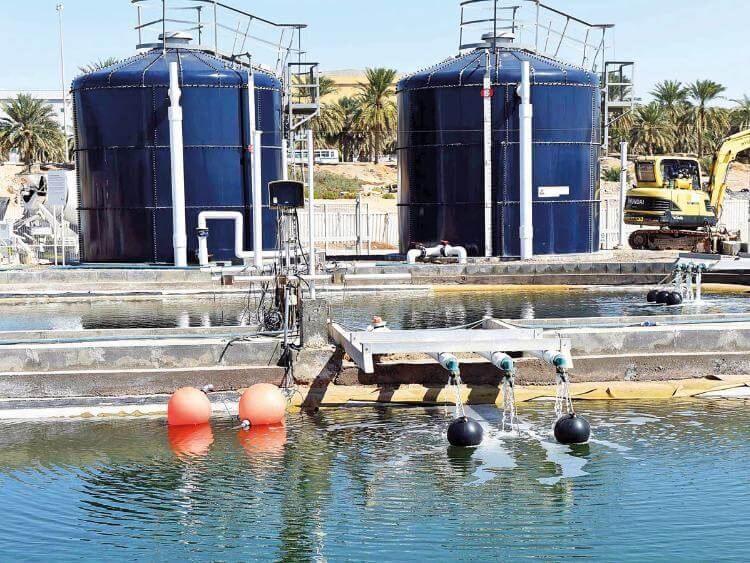
The biofuel facility at Masdar City in Abu Dhabi.

Abu Dhabi: Imagine this: you are relaxing on board a flight enjoying a delicious seafood meal when a member of the cabin crew informs you that the succulent fish you are savouring was produced along with the biofuel that fuels the flight. How often would you have come across this innovative breakthrough?
The concept of Sustainable Aviation Fuels (SAF), which help fight climate change by reducing carbon emissions from the aviation sector and boost food production, are no longer theoritical aspirations.

Etihad Airways successfully operated the first commercial flight on January 15 this year, partially fuelled by locally produced biofuel derived from plants grown in saltwater.

Although around 160,000 passenger flights arund the world have flown on a blend of sustainable and traditional jet fuel since the first biofuels were certified for commercial use in 2011, the Etihad’s flight distinguished itself in the fact that it was the first in the world to be powered by biofuel produced in the desert, using salt water.

Abu Dhabi’s ambitious Seawater Energy and Agriculture System (SEAS) project to produce alterative aviation biofuel along with seafood will bring overall benefit to economy, environment and food security.

A boost to the aviation sector will positively impact the UAE’s economy as aviation is one of the biggest drivers of the UAE economy and the added value to this sector will bring tangible growth.

WHAT IS THE SEAS PROJECT?

The Seawater Energy and Agriculture System (SEAS) is aimed at bolstering the economy by supporting the growth of multiple sectors in the UAE, such as aviation, oil refining, agriculture and aquaculture.

The initiative of the Sustainable Bioenergy Research Consortium (SBRC), it creates a new agriculture industry using salt water and desert land to grow salt-resistant cash crops producing biofuel in the UAE. It also supports the UAE’s growing aquaculture sector [producing seafood] that has an investment of more than Dh100 million.

SEAS creates a new agriculture industry using salt water and desert land to grow saltresistant cash crops producing biofuel in the UAE. It also supports the UAE’s growing aquaculture sector.

The project also bolsters the oil and gas industry by using existing refining infrastructure to generate biofuel [Synthetic Paraffinic Kerosene -SPK] from the oil extracted from the seeds of a plant called Salicornia.

The SPK does not immediately replace aviation fuel. Rather, it adds value to the oil and gas infrastructure and produce Sustainable Aviation Fuels (SAF) for the future.

HOW DOES IT WORK?

The SEAS involves two things: producing fish and shrimp through aquaculture and growing plants that contribute towards the seeds that in turn help in generate the bio-fuel.
The waste from fish and shrimp turns into fertiliser for the plants and this is the critical connect of the SEAS concept. The seafood production also contributes to UAE’s food security.
This innovative techno-economic model that helps generate revenue from the aquaculture farm makes the project commercially viable.
The facility is managed by the Sustainable Bioenergy Research Consortium (SBRC), a non-profit entity established by Masdar Institute that is part of Khalifa University of Science and Technology, and is expected to scale up to 200 hectares in the move towards full-scale commercial implementation in the next few years.
Abu Dhabi’s ambitious Seawater Energy and Agriculture System (SEAS) project to produce alternative aviation biofuel along with seafood will bring overall benefit to economy, environment and food security and provide a boost to the aviation sector.
When a Gulf News team visited the pilot facility recently, it looked a small patch of land in a calm and quiet environment. But when officials explained that the experiment could enable the UAE to meet a portion of global demand for biofuels, we realised that the small farm carries a big dream.
We were walked around the three components of the facility – the aquaculture ponds, the Salicornia fields and the mangrove wetlands – as a SBRC official explained to us how the fish, Salicornia plants and mangrove support each other.
The initial batch of Salicornia plants was planted in 2016 at the SEAS pilot site, and there have been two successful crops until now.

ENVIRONMENTAL BENEFITS OF UAE’S BIOFUEL

The biofuel significantly reduces carbon emissions from the aviation sector, compared to traditional jet fuel. Sustainable Aviation Fuels (SAF) will help the aviation industry meet its goals under the Carbon Offsetting and Reduction Scheme for International Aviation (CORSIA), being implemented by the International Civil Aviation Organisation (ICAO) and The International Air Transport Association (IATA). The sector aims to cap the growth of carbon emissions by 2020 and cut levels to half of what they were in 2005 by 2050.

FOOD SECURITY

The seafood produced by aquaculture subsystem in the project will also bring benefits to environment and food security, apart from the economy. As the UAE imports a large chunk of its food, an attempt to produce food here will minimise dependence on imports, boosting the food security.
The increased commercial production of seafood will reduce pressure on dwindling wild fish stocks. More domestic production means less seafood imports from abroad, which translates into reduced carbon footprints caused by the transportation. Carbon footprint is the amount of carbon dioxide released into the atmosphere as a result of the activities of a particular individual, organization, or community.

JOURNEY OF THE BIOFUEL

It begins on a two-hectare facility in Abu Dhabi, that is growing salt-tolerant plant called Salicornia and mangroves, the world’s first desert ecosystem designed to produce fuel and food in saltwater.
Salicornia plants and mangroves belong to the Halophytes group of plants; they have a genetic mechanism to tolerate high salinity, hence are suitable to grow in Abu Dhabi, that is irrigated by seawater. Salicornia can be grown as a cash crop to extract oil from its seeds producing biofuel from its seeds. The project facility has three subsystems – aquaculture ponds, halophyte agriculture (fields growing Salicornia plants) and halophyte agroforestry (mangrove wetlands), explained Dr Alejandro Rios, director of Sustainable Bioenergy Consortium (SBRC).

PHASE ONE

1. At the facility, aquaculture ponds grow fish and shrimps and the revenue generated from sale of the seafood makes the project commercially viable. Seawater is pumped into the aquaculture ponds and the same water then goes on to irrigates the other two components of the facility – Salicornia fields and mangroves.
2. The waste water from the acquaculture ponds, which contains the fish effluence, is then diverted to fertilise the Halophyte agriculture in fields growing the Salicornia plant. What are Halophyte plants? These are a type of plant that thrive in desert conditions and do not require fresh water or arable land to grow, making their cultivation viable in the UAE. They bear seeds which are harvested and processed to generate an oil that is further refined to make Synthetic Paraffinic Kerosene (SPK), biofuel that is blended with traditional jet fuel to power aircraft.

3. The mangrove wetlands too are irrigated by the same waste seawater from the aquaculture ponds that having fertilised the Salicornia fields which is then diverted to a cultivated mangrove forest. Mangroves perform two vital functions: they absorb the nutrients from the wastewater [original seawater] as well as carbon dioxide from the atmosphere, thus acting as a valuable carbon storage facility. The wastewater passes through the mangroves, and in the process is naturally filtered and treated before being discharged back into the sea.

Mangroves absorb carbon dioxide from atmosphere on a big scale helping with carbon offsetting, thus supporting the aviation industry’s initiatives to decarbonise the sector.
Moreover, every hectare of mangroves provides an ecosystem protection worth $13,353 per annum, including $8,966 for storm protection, $3,679 for erosion control and $708 for fisheries maintenance, according to experts.
RESULT: This entire process achieves the three-way purpose of growing seafood, fertilising the Halophytes and aiding carbon storage thorugh the mangroves while processing the seawater back into its source.

PHASE TWO

1. The SBRC pilot facility has about half a hectare of land dedicated to Salicornia plants. “You get about two tonnes of seed from the pants per hectare and between 600 and 700 litres of oil [extracted from seeds] per hectare from annual harvest. You can get half of amount of jet fuel after refining,” said Dr Rios.
2. Adnoc Refining (A subsidiary of Adnoc – Abu Dhabi National Oil Company Group) refines the oil at their Research Centre in Abu Dhabi, thus making it a completely home-grown fuel. As the process for refining this vegetable oil is very similar to that of traditional crude oil, the company is using its existing oil-refining infrastructure without any undergoing any major change to its processes.
3. After refining the Salicornia oil, what comes out is the final biofuel product called Synthetic Paraffinic Kerosene (SPK). The SPK is blended directly with traditional jet fuel up to 50 per cent and does not require any modifications to aircraft, engines or airport fuelling delivery systems.
4. UOP-Honeywell, a founding member of the Sustainable Bioenergy Research Consortium (SBRC), offered its Ecofining technology in the refining process of the oil. Abu Dhabi Vegetable Oil Company (ADVOC) has also given essential assistance in the pre-treatment phases.
5. Adnoc Refining’s expertise and infrastructure has helped to meet stringent jet fuel standards. Adnoc Distribution (another Adnoc subsidiary) has also made an essential contribution to the project through the blending and delivery of the biofuel to the aircraft.

Renewables are a better investment than carbon capture for tackling climate change

Artwork by Maritsa Kissamitaki 2019

Solar panels and wind turbines coupled with energy storage offer a better hope for tackling climate change than trying to capture carbon from fossil fuel power stations, according to new research published by Nature Energy.

Carbon capture technologies – that is new, or as yet undeveloped, technologies that capture CO2 emissions from coal and gas-fired power stations – play a fundamental part within the models that serve as the basis of international agreements to tackle climate change, such as at the Paris Climate Change Agreement of 2015.

However, new research shows that resources that would be spent on developing and installing carbon capture technologies would be better invested in creating more solar panels and wind turbines and focusing on developing energy storage options to support these instead.

An international team of researchers from Lancaster University, Khalifa University, Clemson University, UiT The Arctic University and the University of Florence, have calculated the energy output after taking into account the energy needed to create and operate the system, for carbon capture technologies across a range of fossil fuel power stations – including coal and natural gas.

They compared these results with the energy return on energy invested for renewable energy systems, such as wind farms and solar panels, combined with various kinds of energy storage systems, such as batteries, hydrogen or pumped hydro-power and discovered that worst cases of renewables, with storage, compare to the best examples of carbon capture.

The researchers calculate that this is, in part, due to net energy losses from implementing carbon capture – which includes penalties caused by the energy needed to build, and then operate, the carbon capture and storage processes. In addition, the equipment, such as pipes and compressors, needed to capture and store carbon also needs energy to produce – which is known as embodied energy.

All this results in a reduced net energy output from power stations with carbon capture.

The energy return on energy invested for wind turbines and solar panels depends on the energy costs to build the panels and turbines themselves, and also on how sunny or windy the place is where they are installed.

However, even moderately efficient renewable locations provide a better energy return than the majority of carbon capture technologies.

Dr Denes Csala, a Lecturer in Energy Storage and System Dynamics at Lancaster University and co-author of the research, said: “It is more valuable, energetically, to invest the available energy resources directly into building new renewable energy and storage capacity rather than building new fossil-fuel power stations with carbon capture.

“The better net energy return of investing in renewable energy makes it more likely to meet emission targets without risking a reduction in energy availability, due to dwindling fossil fuel supplies and a climate-constrained emissions budget.

“Given its net energy disadvantages, carbon capture and storage should be considered a niche and supplementary contributor to the energy system, rather than be seen as a critical technology option as current climate agreements view it.”

The research is a world-first to compare these technologies using net energy analysis and it is outlined in the paper ‘Comparative net energy analysis of renewable electricity and carbon capture and storage’, published by Nature Energy.

The paper’s authors are: Sgouris Sgouridis, of Masdar Institute, Khalifa University; Michael Carbajales-Dale, of Clemson University; Denes Csala, of Lancaster University; Matteo Chiesa of UiT The Arctic University of Norway; Ugo Bardi, of the University of Florence.

https://eurekalert.org/pub_releases/2019-04/lu-raa040519.php

Getting the oil out of water

New technique makes it possible to image the fouling of membranes in 3-D, could lead to better antifouling materials.

Oil and water are famously reluctant to mix fully together. But separating them completely — for example, when cleaning up an oil spill or purifying water contaminated through fracking — is a devilishly hard and inefficient process that frequently relies on membranes that tend to get clogged up, or “fouled.”

A new imaging technique developed at MIT could provide a tool for developing better membrane materials that can resist or prevent fouling. The new work is described in the journal Applied Materials and Interfaces, in a paper by MIT graduate students Yi-Min Lin and Chen Song and professor of chemical engineering Gregory Rutledge.

Cleaning up oily wastewater is necessary in many industries, including petroleum refining, food processing, and metal finishing, and the untreated waste can be damaging to aquatic ecosystems. Methods of removing oily contaminants vary, depending on the relative amounts of oil and water and the sizes of the oil droplets. When the oil is emulsified, the most efficient cleanup method is the use of membranes that filter out the tiny oil droplets, but these membranes quickly get fouled by the droplets and require time-consuming cleaning.

But the fouling process is very hard to observe, making it difficult to assess the relative advantages of different materials and architectures for the membranes themselves. The new technique developed by the MIT team could make such evaluations much easier to carry out, the researchers say.

These filtration membranes “tend to be very hard to look inside of,” Rutledge says. “There’s a lot of effort to develop new types of membranes, but when they get put in service, you want to see how they interact with the contaminated water, and they don’t lend themselves to easy examination. They are usually designed to pack in as much membrane area as possible, and being able to look inside is very hard.”

The solution they developed uses confocal laser scanning microscopy, a technique in which two lasers are scanned across the material, and at the point where the two beams cross, a material marked with a fluorescent dye will glow. In their approach, the team introduced two fluorescent dyes, one to mark the oily material in the fluid, the other to mark the fibers in the filtration membrane. The technique allows the material to be scanned not only across the area of the membrane, but also into the depth of the material, layer by layer, to build up a full 3-D image of the way the oil droplets are dispersed in the membrane, which in this case is composed of an array of microscopic fibers.

The basic method has been used in biological research, to observe cells and proteins within a sample, Rutledge explains, but it has not been applied much to studying membrane materials, and never with both the oil and the fibers labelled. In this case, the researchers are observing droplets that range in size from about 10 to 20 microns (millionths of a meter), down to a few hundred nanometers (billionths of a meter).

Until now, he says, “methods for imaging pore spaces in membranes were pretty crude.” For the most part, the pore characteristics were inferred by measuring flow rates and pressure changes through the material, giving no direct information about how the oily material actually builds up in the pores. With the new process, he says, “now you can actually measure the geometry, and build a three-dimensional model and characterize the material in some detail. So what’s new now is that we can really look at how separation takes place in these membranes.”

By doing so, and by testing the effects using different materials and different arrangements of the fibers, “this should give us a better understanding of what fouling really is,” Rutledge says.

The team has already demonstrated that the interaction between the oil and the membrane can be very different depending on the material used. In some cases the oil forms tiny droplets that gradually coalesce to form larger drops, while in other cases the oil spreads out in a layer along the fibers, a process called wetting. “The hope is that with a better understanding of the mechanism of fouling, people will be able to spend more time on the techniques that are more likely to succeed” in limiting that fouling, Rutledge says.

The new observational method has clear applications for engineers trying to design better filtration systems, he says, but it also can be used for research on the basic science of how mixed fluids interact. “Now we can begin to think about some fundamental science on the interaction between two-phase liquid flows and porous media,” he says. “Now, you can develop some detailed models” of the process.

And the detailed information about how different structures or chemistries perform could make it easier to engineer specific kinds of membranes for different applications, depending on the types of contaminants to be removed, the typical sizes of the droplets in these contaminants, and so on. “In designing membranes, it’s not a one-size-fits-all,” he says. “Potentially you can have different types of membranes for different effluents.”

The method could also be used to observe the separation of different kinds of mixtures, such as solid particles in a liquid, or a reverse situation where the oil is dominant and the membrane is used to filter out water droplets, such as in a fuel filtration system, Rutledge says.

“When I read his paper in depth, I was impressed by Greg’s way of using 3-D imaging to understand the complex fouling process in membranes used for oil-water emulsions,” says William J. Koros, the Roberto C. Goizueta Chair for Excellence in Chemical Engineering and GRA Eminent Scholar in Membranes at the Georgia Institute of Technology, who was not involved in this research.

The research was supported, in part, by the cooperative agreement between the Masdar Institute of Science and Technology in Abu Dhabi and MIT.

David L. Chandler | MIT News Office
June 9, 2019

http://news.mit.edu/2019/imaging-membranes-oil-out-water-0610

KAIST and UAE’s Khalifa University Open Joint Research Center

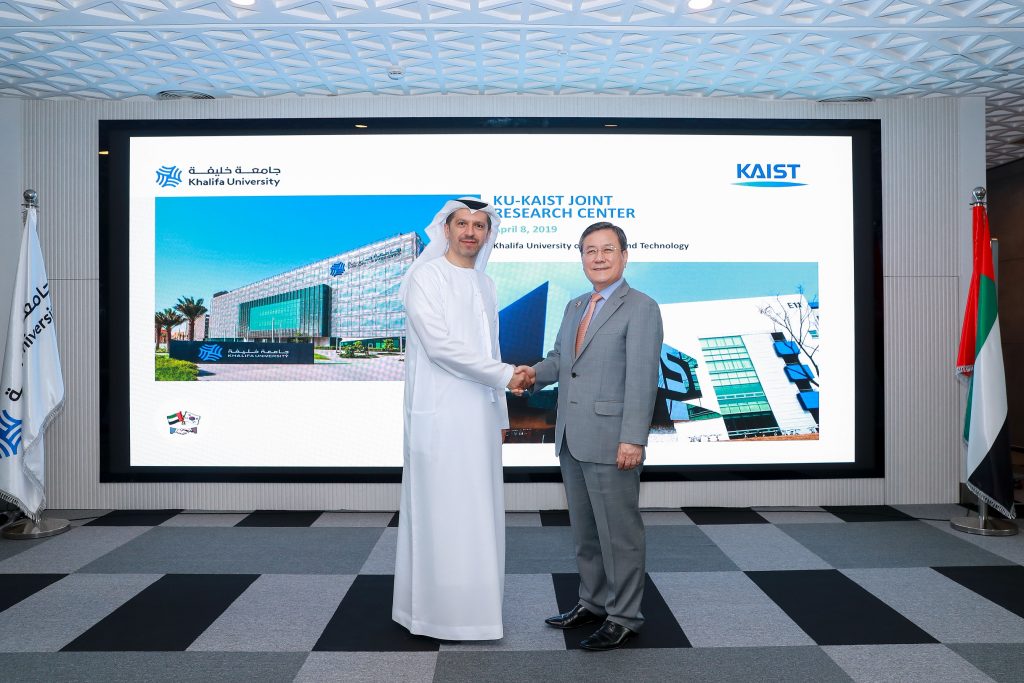
KAIST President Shin Sung-chul (right) and Arif Al Hammadi, executive vice president of Khalifa University (KU), take a picture after the opening ceremony for the KAIST-KU Joint Research Center on April 8.

Korea and the United Arab Emirates (UAE) are strengthening their cooperation in the fields of the Fourth Industrial Revolution.KAIST said on April 9 that it has opened the KAIST-KU Joint Research Center in the UAE on April 8 to carry out joint research on technologies that are shaping the Fourth Industrial Revolution.

KU is a national university established in Abu Dhabi in 2007 to train advanced research and development engineers that will lead the future development of the country. In 2017, three universities and graduate schools of science and technology, including Khalifa University, unified and changed the name to Khalifa University of Science and Technology (KU).

KU is a research-focused university with 3,500 undergraduates, 900 graduate students, and 500 faculty members as of April this year.

Cooperation between KAIST and KU started with KAIST providing support to Khalifa University for the establishment of a nuclear engineering department and curriculum development under the agreement concluded between the Korean and UAE governments for the UAE nuclear power plant project in December 2009. Since 2011, the two universities have carried out over 200 joint research projects in various fields, such as nuclear power, ICT, electricity, machinery, materials, biotech, and energy.

http://www.businesskorea.co.kr/news/articleView.html?idxno=30748

Start-Up VC Invests in Beam-Down Concentrator for Solar Fuel

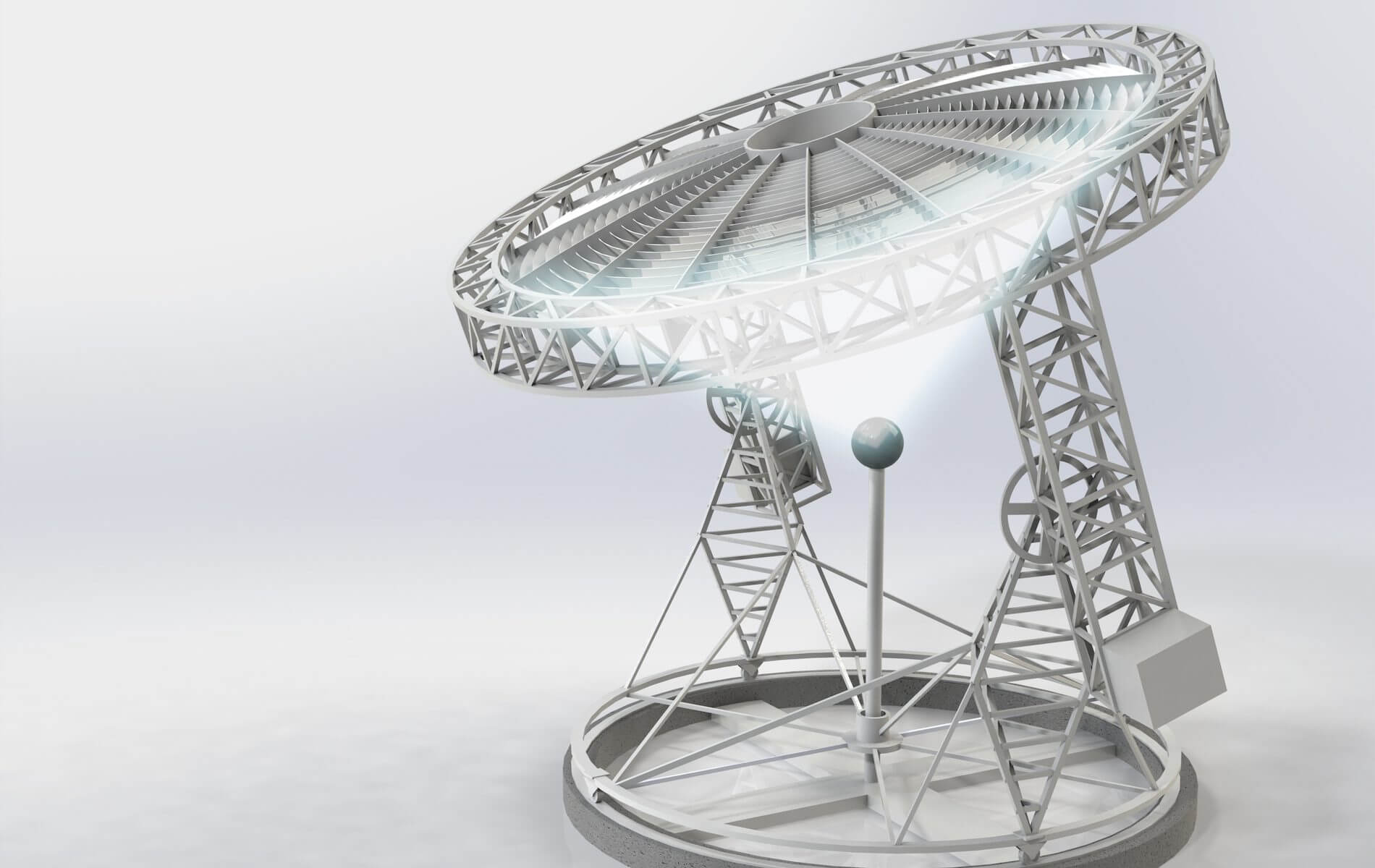
Model of how the beam-down concentrator would focuse the solar flux onto a fixed receiver underneath IMAGE @Wahaj Solar

Our “back of the envelop” communication with researchers is that the US $3 per gallon of gasoline equivalent (GGE) per kilogram of hydrogen could be obtainable,” said Al Maaitah, whose start-up VC invests in the beam-down solar concentrator to be tested in the UAE.

Of the four types of Concentrated Solar Power (CSP) technologies, dish has barely been commercialized for power, but its promise is that, with its highly concentrated focus, it can cost-effectively reach the extremely high temperatures needed in solar fuels production; above 800°C. But the solar receiver in a dish must be set in front of its surrounding reflectors, and so it moves in tandem with them as they track the sun, creating challenges.

“Dish has a very good optical efficiency, but its main issue has been that the focal point is moving as it tracks, so to connect the components of the system adjacent to the receiver, you need flexible hoses that can withstand high temperatures. But that’s difficult and very costly, and you can’t connect storage, so dish is almost dead commercially,” noted Mechanical Engineering Professor Ayman Al Maaitah at the American University of Madaba and Mu’tah University.

By turning the concentrator upside down, Al Maaitah has devised the solution to the moving receiver problem, leveraging his experience in the optical aspect of CSP. “My invention basically is that I can focus from up to down at a very high efficiency on a fixed focal area while tracking the sun. We can reach a very high temperature at this focal point,” he explained. “So with this change we can theoretically generate temperatures of around 1,000°C.”

Researcher turned spin-off startup investor

Now CEO of Wahaj Solar, Al Maaitah is a 20-year veteran of CSP research in parabolic trough and Fresnel CSP concentration. (How CSP works: Tower, Trough, Fresnel or Dish)  He has now patented the design of a metallic-reflector-based Fresnel lens beam-down concentrator and formed Wahaj Investment, LLC in partnership with a former colleague, to commercialize it.

They are now in the process of constructing a pre-commercial test at the Masdar Institute Solar Platform at Khalifa University of Science and Technology in the UAE. The Wahaj Solar team first built a small lab-bench model of 40 centimeters in diameter, attached to a small sterling engine, and even this size managed to melt lead, which has a melting point of 327°C. (Such lab-bench temperatures are not unusual in dish. Even a 2 meter dish achieves 950°C in this South African research into solar Manganese ore processing.)

It is not an easy thing to concentrate reflected sunlight down, but the payoff is it puts the most highly concentrated flux in a usable place at ground level where it can be used to supply heat at the high temperatures needed to melt metals or catalyze solar fuels.

Focusing down enables melting in a container

The international network of researchers designing reactors for solar fuels or furnaces for metal smelting have assumed that their receiver-reactor designs might be placed atop the already commercial CSP towers, which can also achieve the temperatures needed. However, a CSP tower has a large solar field which would comprise a relatively high percentage of the cost of simply providing the heat needed in a solar fuels reactor or for the other industrial processes needing high levels of heat.

There are also practical benefits to focusing the sunlight down onto a ground-based reactor rather than up onto one 200 feet up, explained Khalifa University of Science and Technology Professor Nicolas Calvet.

“When the flux comes up from the side then you usually need to have a quartz window on the side, and then melt inside the tank in the window. It is much more convenient to melt something that is in a container with the heat coming from the top, so when it melts you have the container to hold the liquid,” noted Calvet, who heads up the Masdar Institute Solar Platform where beam down tower is already researched, making it a natural contender for this real-world trial.

Calvet is very happy that Masdar Institute’s five-year-old research lab has already attracted industry interest from “a young startup like Wahaj Solar” and he attributes it to the growing CSP market in the MENA region and in the UAE, in particular. “To make solar fuels in the UAE
 makes perfect sense, because you move from an oil and gas country to a solar fuel country,” he said.

How Wahaj Solar beam down concentrator works

How the Wahaj Solar beam down concentrator works IMAGE @Wahaj Solar

How the Wahaj Solar beam down concentrator works

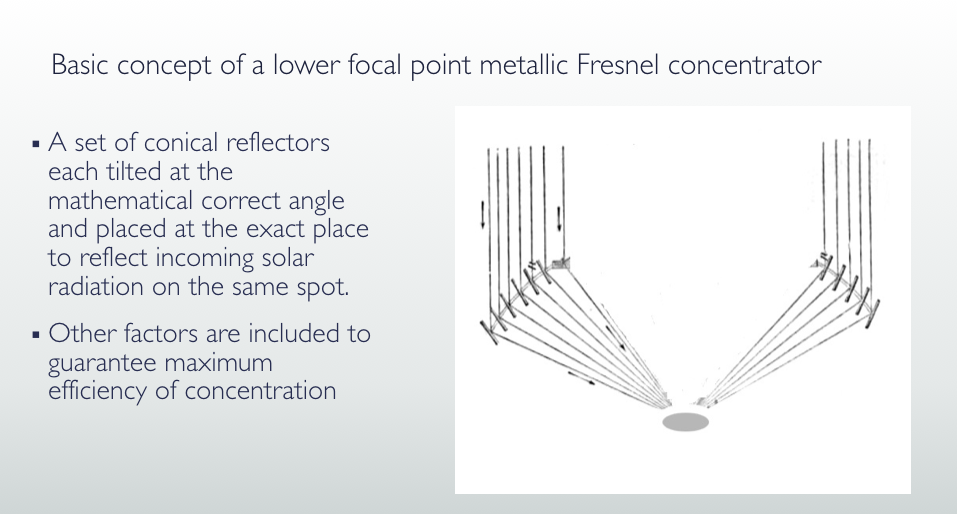
To reflect the sunlight down, multiple fins fan out between the long spokes of the circle. Each of these is an aluminum reflector that has been mathematically angled in such a way as to bounce the sunlight between adjacent fins so it converges at the focal point underneath onto the receiver.

Wheels rotate the concentrator to track the sun as it crosses the sky each day and a second rotation tracks the sun’s seasonal change in elevation. Concrete counterweights balance the weight as the dome rotates, and “just a few watts” are used of solar PV to power the tracking mechanics. Not illustrated here (because the demo is to test only the optics between the reflectors and the receiver) but the storage tank would be readily integrated underneath the receiver.

Calvet’s initial abstract, Design and Demonstration of a 10-meter Metallic Reflectors Based Fresnel Lens, with Lower Focal Point Fixed to the Ground that will be presented at the SolarPACES Conference 2019 in South Koreanotes that the solar flux at the surface of a flat receiver, 25 cm in diameter can reach more than 11,000 kW per sq. m at the center, with a total flux of 66 kW.

Wahaj Solar beam down solar heat concentrator under construction

Wahaj Solar beam-down solar heat concentrator under construction:  The Wahaj Solar pre-commercial pilot measures 10m across to provide heat around 1,000°C IMAGE @Nicolas Calvet

At this size, the power capacity would be about 50 kWth. Calvet explained the relationship between capacity and the concentration, comparing it to the existing high beam down tower research demo.

“Our beam down is 100 kW thermal, and only 100 suns. And this one at 50 kW will be half the power and 1,000 suns. So there’s 10 times more concentration. To reach the higher temperatures, you always have a higher surface of mirror relative to the receiver. The ratio between the total surface of your mirrors and the surface of your solar receiver is its concentration ratio.”

Al Maaitah envisions building larger units at 25 m or more to generate capacity of several megawatts for small scale off-grid power generation for underserved MENA regions, and proposes a larger receiver for the larger surface of mirror concentration to maintain the desired concentration ratio. He sees the advantage here as offering a self-contained system that is modular, so it can add units to generate more power as needs grow.

“For the same size of focal area, the concentration ration of a 25m in diameter concentrator would be 6.5 times that of the current 10m concentrator resulting in much higher temperatures,” he said. “But since we do not need ultra-high temperatures for current applications, we would instead increase the area of the receiver to reach the needed temperatures, while allowing for larger heat transfer area at the receiver.”

Solar fuel like hydrogen from even dirty water

Al Maaitah, who’s firm is self-funded as its own venture capital investment, is most excited by the commercial possibilities of solar industrial heat applications, such as for smelting metal and for making solar fuels such as hydrogen.

“Solar fuel production; this is the Holy Grail for us. Because the remarkable thing about dish is you can get the 1,000°C temperatures you need for producing solar fuels like hydrogen.” he said.

“When you can provide 700 or 800°C temperatures, existing thermochemical solar fuels technology is fantastic: It can even split brackish water or wastewater into hydrogen and oxygen! So the water does not need to be distilled water as it does with solar PV or wind to do hydrogen electrolysis, where the water must be pH balanced. Our “back of the envelop” communication with researchers is that the US $3 per gallon of gasoline equivalent (GGE) per kilogram of hydrogen could be obtainable.”

In addition to solar fuels like hydrogen, another commercial need Al Maaitah sees is to replace fossil fuels for high temperature metal smelting. He expects that his technology can be cheaper than heliostat and tower CSP for smelting metals like alumina.

Meanwhile, once the construction is complete this month, the test will begin. Calvet will publish the research results of the test once it is complete. “My point of view as a faculty member is more from the academic side. So I’m more focused on the science and the proof of concept than the commercial possibilities,” he said. “We need to make sure that the dome, which is the most important part, will not bend or become deformed and that it will have a good concentration where we want it. So I’m just the guy who says if it works or not.” But he added: “As for commercial solar fuels; in ten years, why not?”

Susan Kraemer
5 June 2019

https://www.solarpaces.org/start-up-vc-invests-in-beam-down-concentrator-for-solar-fuel/ 


UAE, Saudi Arabia sign MoU to develop digital education system

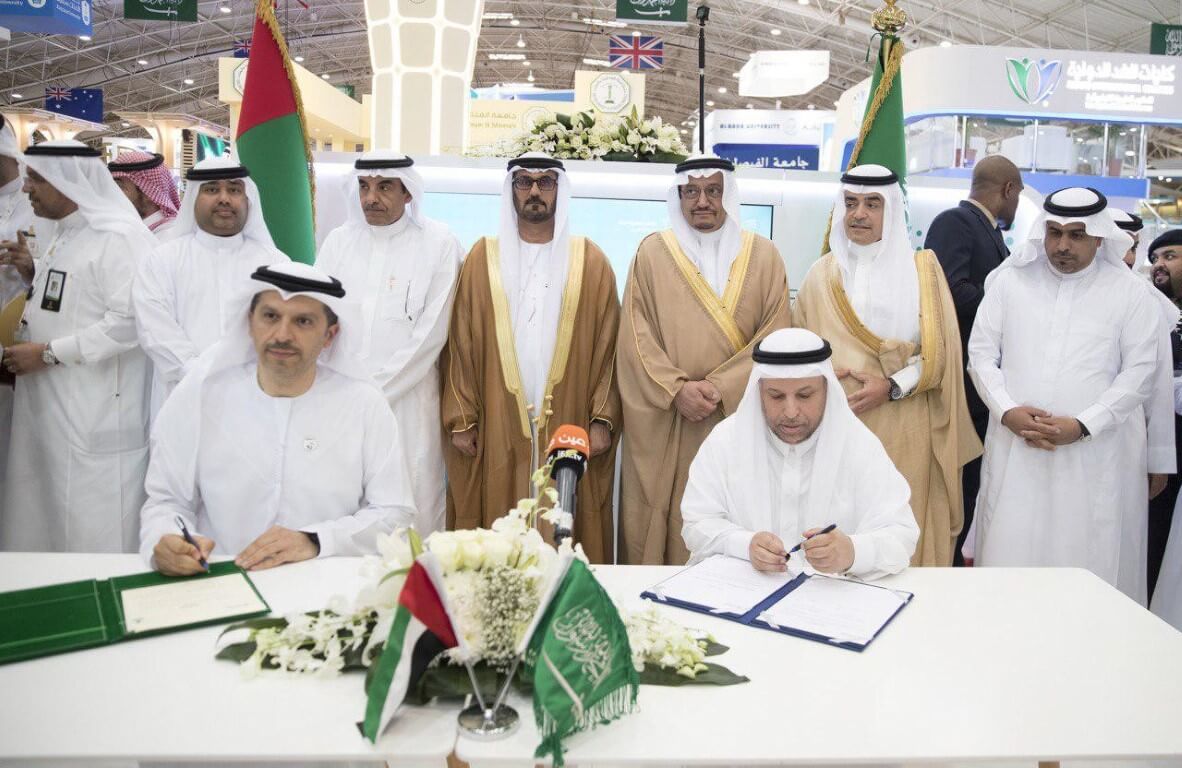
RIYADH, 10th April, 2019 (WAM) — The Ministry of Education signed a Memorandum of Understanding, MoU, with the Ministry of Education of Saudi Arabia, to develop the digital education system, and several Emirati universities signed twinning agreements with their Saudi counterparts.

The signing took place during the participation of an Emirati academic delegation in the 8th International Exhibition and Conference on Higher Education, IECHE, in the Saudi capital, Riyadh.

The signing of the MoU and the twinning agreements, which took place at the launch of the exhibition, was witnessed by Hussain bin Ibrahim Al Hammadi, UAE Minister of Education, Dr. Hamad bin Mohammed Al Sheikh, Minister of Education of Saudi Arabia, and several officials from both sides.

The MoU, which aims to develop the digital education system of the two countries was signed by Dr. Mohammed Ibrahim Al Mu’alla, Under-Secretary of Academic Affairs for Higher Education at the Ministry of Education, and Dr. Eid Al Hessouni, Under-Secretary for Educational Performance at the Ministry Education of Saudi Arabia.

The twinning agreements between the universities were signed by Dr. Ghaleb Al Hadrami, Deputy Vice Chancellor of UAE University for Academic Affairs, with Dr. Badran Al Omar, President of the King Saud University; Dr. Riad Al Muhaidib, Director of Zayed University, with Dr. Inas Al Issa, Director of the Princess Nourah University; and Dr. Abdullatif Al Shamsi, Director of the Higher Colleges of Technology Complex, with Dr. Abdulrahman Mohammed Al Asemi, Deputy Minister of Education, on behalf of the General Organisation for Technical Education and Vocational Training.

Dr. Arif Al Hammadi, Executive Vice President of the Khalifa University of Science Technology, signed two twinning agreements, the first with Dr. Abdulrahman Al Youbi, Director of the King Abdul Aziz University, and the other with Dr. Sahal Abduljawad, Acting Rector of the King Fahd University of Petroleum and Minerals.

Hussain Al Hammadi expressed his happiness at the advancing cooperation between the UAE and Saudi Arabia in the area of education, which he hopes will achieve their aspirations to create a modern education system that will serve their national development plans.

Dr. Hamad Al Sheikh highlighted the importance of the signing of the agreements, as well as the joint cooperation between the two countries in advancing their education sectors, including the digital education system, with the participation of Emirati higher education institutions, universities and colleges, as well as Saudi government and civil universities and colleges.

WAM/Hassan Bashir/Tariq alfaham

http://wam.ae/en/details/1395302754568

QS ranking results by region and key countries

The latest edition of the QS World University Rankings shows just how competitive global higher education has become, with increases in both the number of papers produced by universities in the ranking, and the number of citations received on those papers, according to QS.

There were more than 94,000 responses to the global survey of academics and nearly 45,000 responded to the separate survey of employers. Both were record figures.

Data from 1,210 institutions in 94 countries were analysed for the ranking, which took account of almost 13.5 million research papers and 97 million citations derived from them. The 1,000 ranked institutions serve 28 million students and employ two million staff.

Africa

Ben Sowter, director of research at QS, said that since 2005 there have been significant increases in the tertiary enrolment rate among those African Anglophone nations that feature in the QS World University Rankings. Growth in supply of tertiary education in Sub-Saharan Africa has increased at a remarkable pace but is still outstripped by growth in the demand for tertiary education in these countries.

“This is only the latest continuation of a longitudinal trend: between 1970 and 2013, the gross enrolment ratio in Sub-Saharan Africa increased at an annual average rate of 4.3%, which is significantly above the global annual average increase of 2.8%.”

“As such, it is unsurprising that faculty-student ratios at 11 of the 13 African universities that feature in our ranking are worsening. One of the major challenges faced by even the best universities in this region is meeting capacity demands, which will require a range of imaginative solutions, including online education, partnerships with institutions in other countries to facilitate transnational educational programmes, and, as far as is possible, increased investment.”

He said not all of these solutions will necessarily create or require ranking improvements, but they will play an invaluable role in ensuring that the tertiary education sector in Africa develops in a way that allows it to make the most of the potential that exists there.

South Africa

Three out of eight South African universities in the ranking improved their places, while three lost ground. The University of Cape Town is South Africa’s highest ranked university, up two places at =198 (joint 198th). It is followed in the top 500 by the University of the Witwatersrand at =400 and Stellenbosch University at =427.

Universities in South Africa perform best on ‘Citations Per Faculty’ in terms of average rank.

In terms of ‘Employer Reputation’, the University of Cape Town scored the highest marks. The university with the strongest ‘Faculty-Student Ratio’ is the University of Johannesburg. ‘International Student Ratio’ is highest at Rhodes University, while the University of the Witwatersrand has the largest ‘International Faculty Ratio’. Faculty are most productive, as measured by ‘Citations Per Faculty’, at Stellenbosch University.

Sowter said: “As far as regional dynamics go, the South African sector remains the hegemon, and while universities in Ghana and Kenya have become competitive at the subject level – especially in fields such as development studies – they do not yet enjoy strong enough reputational pull or the requisite research footprints required to feature more prominently in our overall exercise.”

Arab Region

The Arab Region, driven by Saudi Arabia, is home to two of the world’s top 200 universities for the first time.

Saudi Arabia’s King Abdulaziz University (KAU) has become the region’s top university. It rises from 231st to joint 186th, and overtakes King Fahd University of Petroleum and Minerals (KFUPM). It is the first time in six years that KFUPM has not been Saudi Arabia’s top institution. However. KAU’s rise means that Saudi Arabia’s unbroken hold over the regional top spot continues.

The rest of the top five are the American University of Beirut in Lebanon, Khalifa University in the United Arab Emirates and Qatar University.

The regional top performer for research impact is also Saudi Arabia, which possesses three of the top 10.

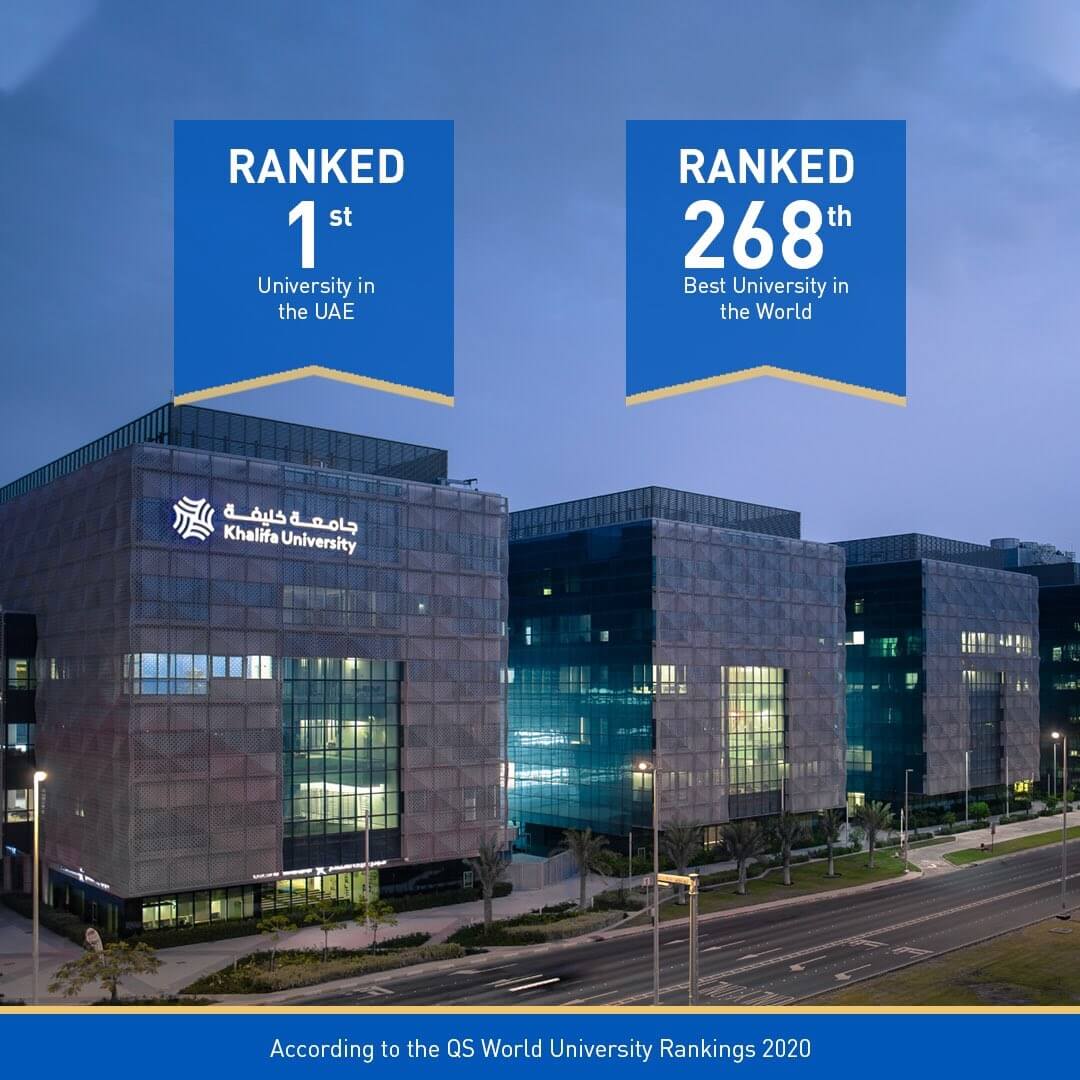
The United Arab Emirates (UAE) is the most represented location in the table, with eight of the region’s 37 universities. The UAE’s top university is Khalifa University, which enters the top 300 for the first time. It now ranks 268th. Emirian universities continue to progress, with five of their eight improving, and only one dropping.

Lebanon and Saudi Arabia both have seven ranked universities.

Qatar University enters the top 300 for the first time. It now ranks 276th.

Sowter said: “It is clear that the universities from the Arab Region are breaking new ground in the search for excellence, with institutions in Saudi Arabia, the United Arab Emirates and Oman all reaching record highs. This is reflected in the increasing research output from the region.”

He said this is in part a testament to clear-minded strategising on the part of government bodies like the UAE’s Ministry of Education, which established a National Commission for Scientific Research; and its conscious attempts to attract gifted foreign researchers.

“All of the top seven scores for our ‘International Faculty Ratio’ indicator are achieved by Emirian universities,” Sowter said.

Asia

China

This year’s rankings illuminate sustained improvement throughout the Chinese system, QS reports, with 25 of China’s 42 ranked universities improving their position and only nine dropping in rank.

Sowter said: “Though the overall narrative for Chinese higher education is a highly positive one, its leaders should not lose sight of the importance of producing highly employable graduates. It is crucial that Chinese universities continue to foster innovative teaching practices and soft skill development.”

The top performer is Tsinghua University (16th), followed in the top 100 by Peking University (=22nd), Fudan University (40th), Zhejiang University (54th), Shanghai Jiao Tong University (=60th) and the University of Science and Technology of China (89th).

China’s top 10 universities produced 428,191 research papers in the five-year period used by QS to assess research impact; the United States’ top 10 universities produced 443,996. The gap in output between the two major powers is closing, but US research enjoys almost twice the level of impact.

“Therefore, the next frontier for Chinese higher education is taking steps to ensure that research impact matches research productivity.”

Hong Kong

Six of Hong Kong’s seven universities have improved their position this year. Top place goes to the University of Hong Kong, unchanged at 25th and sixth best among Asian universities.

Hong Kong has five universities in the top 100, one up on last year, with the Hong Kong Polytechnic University rising 15 places to 91st.

Two of the world’s top 50 research universities, adjusted for faculty size, can be found in Hong Kong. The Hong Kong University of Science and Technology ranks 33rd for QS’s ‘Citations per Faculty’ metric, while City University of Hong Kong ranks 34th. Both have improved their research impact year-on-year.

But six of Hong Kong’s seven universities receive a lower rank this year for ‘International Student Ratio’.

Sowter described Hong Kong as a “higher education system in an upwards trajectory”, but warned of small signs that work needs to be done on employability, with three universities dropping in the employability indicator.

India

India’s leading university, Indian Institute of Technology Bombay, has risen 10 places to 152nd and is one of 23 ranked Indian institutions this year. But only four improved their position, and seven dropped in rank.

On average, Indian universities fell by 12 places, and they experienced particular problems in QS’s ‘Faculty-Student Ratio’ and ‘International Student Ratio’.

But significant progress is being made in research performance, with the average academic’s rate of citation in India rising from 28.54 citations per faculty member in a five-year period to 37.18, an increase of 30%. This compares with the global average increase of 10%, and is swift progress towards, although still far short of, the global average of 50.31 citations per five years per faculty member.

Notably, the Indian Institute of Science (184th globally) achieves the world’s second-best score for research impact adjusted for faculty size. It achieves a perfect score of 100/100 for QS’s ‘Citations per Faculty’ metric, and is the first Indian institution in history to see its research cited more than 100,000 times in a five-year period.

The average Indian Institute of Science (IISc) faculty member produces research that is cited 261 times in a five-year period: this is nearly five times greater than the global average, which is 50 citations per faculty member over a five-year period.

However, due to a weakening performance in QS’s ‘Academic Reputation’ indicator, IISc is now India’s third-best university. It has fallen behind the Indian Institute of Technology Delhi, which drops in rank, and now places 182nd.

Japan

Japan’s attempts to internationalise its higher education sector are not yet yielding ranking success, QS reports. This year’s QS ranking sees 24 of Japan’s 41 ranked universities drop down the table. For the first time, no Japanese university ranks among the world’s top 100 for research performance.

QS says that although Japan’s ‘300,000 Foreign Students Plan’ is likely to be successful, the country’s rate of internationalisation lags behind the global average. Of the 23.29 million students at the 1,002 universities ranked by QS, 2.86 million are international (1 in 8, or 12.27%). At Japan’s 41 ranked universities, only 7.79% of students are foreign students (1 in 13).

The plan aims to ensure that, by 2020, 300,000 foreign students are studying at Japan’s institutions of higher education, and currently the figure stands at 299,000.

Yet 32 of Japan’s 41 universities receive a lower rank for ‘International Student Ratio’, and 34 of 41 receive a lower score for ‘International Faculty Ratio’ than the previous year.

Nevertheless, the University of Tokyo has risen for the fourth consecutive year. In 2015, it ranked 31st, nine places below its new rank. It also remains one of the world’s most respected academic institutions. It is one of only eight universities in the world, and the only university in Asia, to receive a perfect score of 100/100 for QS’s ‘Academic Reputation’ indicator.

Kyoto University has also improved its rank for the fourth consecutive year. Since 2015 it has risen from 36th to 33rd.

Employers are less positive about Japanese university graduates overall. Of the 41 ranked Japanese universities, 35 receive a lower rank for QS’s ‘Employer Reputation’ indicator.

However, Japanese universities are also failing to improve research performance and internationalisation relative to global competitors. Thirty-three of Japan’s 41 universities receive a lower score for ‘Citations per Faculty’.

Sowter said that while Japan’s universities have managed to attract more international students over the past decade, numerous competitor nations have moved to internationalise their sector more quickly.

The same principle also applies to research funding. The Japanese higher education sector is still experiencing the effect of over a decade of stagnant research funding. While peers in China, South Korea and Singapore have benefited from intensive stimulus programmes, Japanese universities have not enjoyed the same research and development funding.

“It is therefore unsurprising that Japan has lost its final top-100 research university: this trend correlates with the country’s relative share of articles published in the Web of Science falling from 8.4% to 5.2% between 2005 and 2015.”

Malaysia

Universiti Malaya has reached its highest-ever position, having risen for the sixth consecutive year, making it into the top 100 for the second time, at 70th globally.

Twenty Malaysian institutions are ranked this year, of which 10 have improved their positions, two are stable, and seven are new entrants, with only one dropping.

Malaysia’s progressive performance is due to improving results in two key indicators. Thirteen of Malaysia’s 20 universities have increased their score for QS’s ‘Academic Reputation’, while the remainder are new entrants for whom no year-on-year comparison exists.

Eleven of Malaysia’s 20 universities improve their performance on the ‘Employer Reputation’ indicator, and only 2 of 20 decline. Universiti Malaya also benefits from strong teaching capacity. It ranks 78th globally for QS’s ‘Faculty-Student Ratio’ indicator.

Three of Asia’s 10 most international universities are Malaysian, according to QS’s ‘International Student Ratio’ indicator. They are Universiti Putra Malaysia (7th in Asia), UCSI University (8th in Asia), and Taylor’s University (10th in Asia).

Singapore

Nanyang Technological University has risen to joint 11th, alongside the National University of Singapore, raising the prospects of a Singaporean university entering the world’s top 10.

Singapore Management University continues its rise throughout the top 500. It has leapt from 500th to 477th.

All three Singaporean universities are highly international. All three achieve perfect scores (100/100) for QS’s ‘International Faculty Ratio’ metric. But they all also suffer small score decreases for ‘International Student Ratio’.

Sowter said: “Efforts must be made to ensure that the state’s universities do not suffer the same teaching capacity pressures as their European and Australian peers, and that they continue to strive to attract outstanding talent from abroad.”

South Korea

Korean universities must ensure that they focus on producing outstanding, employable graduates or face regressing, QS has warned, as 28 of South Korea’s 30 universities have received a worse score for QS’s measure of graduate employability this year.

On the positive side, two of the world’s top-most efficient research universities – adjusted for faculty size – are Korean, according to QS’s ‘Citations per Faculty’ indicator. They are Gwangju Institute of Science and Technology (GIST) and Pohang University of Science and Technology (POSTECH), whose research papers yield the highest number of citations per academic faculty member.

KAIST has lost its place among both the global top 40 and the Asian top 10. It ranks 41st globally, a drop of one position. It is therefore now Asia’s 11th-highest-ranked university, and is overtaken by Fudan University of China (now 40th).

Nevertheless, overall, among Korea’s 30 ranked universities, 10 improve their position, while 13 drop in rank.

In Asia, only Japan has more universities (8) in the top 150 than Korea’s seven.

South Korea has more of Asia’s most research-focused universities (3) than any other Asian location. India, Mainland China and Hong Kong have two each.

Among Asian universities, only IISc in India is more research-intensive than GIST and POSTECH. However, among Asian institutions, the highest volume of research and the highest number of citations are still produced by Chinese universities.

Sowter said only Israel can claim to spend a higher percentage of gross domestic product on fostering cutting-edge research than Korea.

But the employer reputation data suggest that employers worldwide are turning away from Korea’s graduates. “It is imperative that Korea’s universities seek to develop curricula that can nurture such soft skills if their graduates are to receive the successful careers that their endeavour undoubtedly deserves,” he said.

Australasia

Australia

Some 24 of Australia’s 35 ranked institutions have improved their rank. QS says the data suggest that Australian universities are proving the beneficiaries of the global international student community’s uncertainty about the higher education systems in the United States and United Kingdom.

Australian improvements are being driven by consistent improvements in three indicators: ‘Academic Reputation’, ‘Citations per Faculty’ and ‘International Student Ratio’.

In the ‘Academic Reputation’ indicator, 25 of Australia’s 35 ranked institutions improved their performance, while eight declined. In the ‘Citations per Faculty’ indicator, which measures research impact adjusted for institution size, 28 of Australia’s 35 universities improve their performance and seven decline. In the ‘International Student Ratio’ metric, 26 of Australia’s 35 universities have improved, while nine declined.

Australia’s most reputable university according to the global academic community is the University of Melbourne (38th overall), which ranks 15th for ‘Academic Reputation’. The 44,000 employers surveyed by QS also rate the University of Melbourne as the most desirable Australian hiring destination: it ranks first nationally and 21st globally for ‘Employer Reputation’.

Nevertheless, the collective dataset illuminates Australian drops in the ‘Employer Reputation’ and ‘Faculty-Student Ratio’ indicators, with 31 of Australia’s universities having a declining ‘Faculty-Student Ratio’, and 23 of 35 recording a worse year-on-year performance for ‘Employer Reputation’.

Sowter said the rate at which international student recruitment has occurred has been striking even in the context of the current global political climate, with recent Department of Home Affairs’ data indicating that well over 600,000 foreign students chose to forge their futures in Australia last year.

But the influx of international students has coincided with significant and near-uniform drops in performance on the ‘Faculty-Student Ratio’ indicator.

“It is imperative that Australia endeavours to continue expanding its teaching capacity to meet demand that is likely to continue increasing.”

He said teaching provision needs to be at the heart of Australia’s higher education strategy if it is to retain its current high reputation internationally.

New Zealand

Catalysed by increasingly positive recognition from academics and employers across the world, New Zealand’s universities have begun to improve their positions in the world’s most-consulted university ranking, QS reports.

Six of New Zealand’s eight ranked universities improved their position this year, primarily due to positive results in two key indicators: ‘Academic Reputation’ and ‘Employer Reputation’.

New Zealand’s top university remains the University of Auckland, which ranks 88th – a drop of three places year-on-year. However, it remains the nation’s most reputable university, ranking top nationally for both ‘Academic Reputation’ and ‘Employer Reputation’.

All of New Zealand’s eight ranked universities have improved their performance in the ‘Academic Reputation’ indicator and six of them have improved their performance in the ‘Employer Reputation’ indicator.

But six of the eight have seen their teaching capacity decline, relative to global peers; and five have declined in QS’s ‘Citations per Faculty’.

Sowter said the data suggest that New Zealand’s universities are “successfully upskilling their graduates in ways that prepare them for the uncertain, volatile, ambiguous future of work”.

He said the improving academic reputation will support the country’s attempts to attract more international talent.

Europe

Continental European universities have had a mixed year. Switzerland now has two universities in the top 20 and both Italian and Scandinavian institutions have generally done well. However, there is less to celebrate in France, Germany and the Netherlands, QS reports.

Belgium

Of eight Belgian universities ranked, two improved their rank but four declined. KU Leuven has risen to 80th in the world, up one place, and Ghent University has risen eight places to 130th.. Four remain among the top 200, with improvements in research and academic reputation, but further progress is undermined by large class sizes and declining employer recognition for Belgian graduates.

Sowter said the level of investment in education is above the OECD average at 5.3% against 4.5% and there have been significant efforts to increase R&D spending in the past decade, which is reflected in excellent results in research and reputation indicators.

But to improve further Belgian universities must improve grade mobility, which has declined this year, he said. Very poor faculty-student ratios and a below average share of graduates taking STEM subjects – science, technology, engineering and mathematics – need to be addressed.

Denmark

Three of Denmark’s five ranked universities improved, with the University of Copenhagen the top performer at 72nd, up five places, and Aalborg University the most improved, rising 19 places to =324. Universities in Denmark perform best on ‘International Student Ratio’ in terms of average rank.

France

For the first time in 16 years France does not have a university in the top 50, as Université PSL (Paris Sciences & Lettres) dropped from 50th to 53rd, one of 17 French universities to drop in rank, while only four improved.

The drops sustained by French universities are primarily – though not solely – attributable to their performance in QS’s reputational surveys. Twenty-five of France’s 31 ranked universities decline in QS’s ‘Employer Reputation’ indicator, while 26 of those 31 decline in QS’s ‘Academic Reputation’ indicator.

No French university places among the global top 100 for QS’s ‘Citations per Faculty’ indicator, which measures institutional research impact. However, Ecole Polytechnique has significantly improved its research performance this year, and now ranks 109th for ‘Citations per Faculty’.

Despite dropping out of the top 50, Université PSL, France’s top university, enjoys excellent brand recognition among employers. Its score of 98.6 for QS’s ‘Employer Reputation’ indicator is 98.6/100 – the world’s 21st-best score. Students at PSL benefit from small class sizes, a metric used by QS as a precondition of positive teaching outcomes. It achieves a perfect score (100/100) for QS’s ‘Faculty-Student Ratio’ indicator.

Number two in France is Ecole Polytechnique, up five to =60; and number three is Sorbonne University, which slipped two places to 77th.

According to QS, 20 French universities have seen their international faculty ratio drop and 21 have seen their international student ratio fall.

But Sowter said the ministry’s announcement that non-European Economic Area doctoral students will not be obliged to pay higher tuition fees is a welcome move to help improve France’s attractiveness to talented foreign PhD candidates.

“Additionally, the French government’s goal to triple the number of available scholarships is a positive strategic step.”

Germany

Germany secured three top 100 ranks this year, but out of 46 ranked institutions, only 12 improved and 29 declined in rank.

Germany’s flagship university, Technische Universität München or Technical University of Munich, rose six places. It now ranks 55th, its highest position since 2015.

Germany’s other top-100 entrants are Ludwig-Maximilians-Universität München, which ranks 63rd and performs most strongly for QS’s ‘Academic Reputation’ indicator, and Ruprecht-Karls-Universität Heidelberg, which ranks 66th and is best-rated for small class sizes, achieving the world’s 51st-best score for QS’s ‘Faculty-Student Ratio’ indicator.

All three rank among continental Europe’s 10 top universities.

In the ‘Employer Reputation’ indicator, 43 out of 46 ranked German universities dropped in rank, and only two improved.

The average change in German performance is a negative swing of 13.7 places; the average swing in German rank for the ‘Employer Reputation’ indicator is -56.6 places (negative 56.6).

Germany’s best-performing research university, adjusted for faculty size, is Friedrich-Alexander-Universität Erlangen-Nürnberg. Its citations impact per faculty member is the world’s 20th-best. Five of the world’s top 100 universities according to this indicator are German: the others are Justus-Liebig-Universität Gießen (66th), Universität Mannheim (69th), Technische Universität Darmstadt (81st), and KIT or Karlsruher Institut für Technologie (83rd).

Sowter said: “With three of continental Europe’s 10 best universities, relatively low tuition fees for international students, and five of the 10 most highly-regarded universities in the region by academics, German higher education is still a highly attractive proposition.”

He added: “German graduates also enjoy a high level of post-study employment – at 91%, graduate employment in Germany remains above the EU average, and second only to Malta in Europe, according to Eurostat’s most recent figures. With high levels of focus on technical and vocational education and strong reputation, German institutions might expect their graduates to be highly-coveted.”

Netherlands

Five of the Netherlands’s 13 universities improved their rank this year, but seven declined. The country has one top 50 and two top 100 universities – Delft University of Technology is 50th, up two places, and the University of Amsterdam is 64th, down seven places. Overall Dutch universities perform best on ‘Faculty-Student Ratio’.

Spain

More than half of Spain’s ranked universities – 14 out of 27 – lost places in this year’s ranking.

Only four of Spain’s 27 ranked universities improved their rank. Three of those four are based in Barcelona: Universitat Autònoma de Barcelona rises from 193rd to 188th, while Universitat Pompeu Fabra rises to 285th from 298th position. The leading institution, Universitat de Barcelona, rose to 165th globally.

Twenty-one of Spain’s 27 ranked universities receive a lower score for QS’s ‘Academic Reputation’ indicator. There is also evidence that Spanish universities are failing to attract foreign academics at the same rate as peer institutions across the world. Twenty-one of Spain’s 27 ranked universities receive a lower score for QS’s ‘International Faculty Ratio’ indicator.

Sixteen of Spain’s 27 ranked universities receive a lower score for QS’s ‘Citations per Faculty’ indicator, indicating declining research performance.

Sowter said: “The decline in citations performance is unsurprising when placed in context. Investment in research takes time to pay off – it is a lagging indicator – and Spanish universities saw six consecutive years of declining research and development funding between 2008 and 2014.”

United Kingdom

The United Kingdom is showing signs of suffering from increasing class sizes and declining employer confidence, with two-thirds of its institutions declining, according to the QS data.

Of the 84 UK universities ranked, 50 drop in published rank. Only 12 improve their performance.

The University of Cambridge has now dropped one place per year for the past five years: it ranked 2nd in 2015’s edition of the rankings but is seventh this year.

The UK’s two major issues are class sizes and employer recognition. The 84 featured British institutions have seen their position in QS’s ‘Employer Reputation’ indicator drop by an average of 41.1 ranks. This metric, measuring the insights of over 44,000 hiring managers worldwide, reflects the attractiveness of UK universities to employers.

The average swing experienced by UK universities in QS’s ‘Faculty-Student Ratio’ metric, which measures class sizes and teaching capacity, is a drop of 33.6 ranks.

There were smaller but conspicuous drops in the ‘International Student Ratio’ indicator, reflecting the concerns of the international student community about the UK as a study destination both during and post Brexit.

Though the UK still has 34 of the world’s 100 most international universities, 22 of those 34 have lost rank. The average drop experienced by UK universities in this metric is 11.5 ranks.

According to QS, Cambridge’s decline should be examined in the context of the steps it has taken to increase its teaching provision, which has had an impact on its citations impact adjusted for university size. It continues to have a perfect 100/100 score on reputational indicators.

Cambridge “is in the unusual position of having improved its teaching capacity: only 18 of the UK’s 84 universities have done so this year”, Sowter said, describing it as a “sensible strategic decision designed to ensure that Cambridge’s reputation for outstanding teaching and highly employable graduates continues into the future”.

Overall, he said, the UK performance should not be seen as anomalous. “All of the UK’s three worst years – in 15 years of rankings – have come since 2016. Conversely, all of the last three datasets for EU universities have constituted improvements on their results in the two pre-referendum editions.”

He said: “Numerous British universities are bracing themselves for faculty cuts due to financial uncertainty. The status of the UK’s participation in international research and student exchange frameworks such as Horizon 2020’s successor and Erasmus+ remain uncertain.

“Though it is true that EU student applications increased this year, it is by no means certain that those numbers will stay high once such applicants no longer have access to subsidised EU fees.”

He said if UK higher education is to continue to produce outstanding research and foster world-class teaching, “it is essential that those with the power to do so redouble their efforts to improve teaching capacity so as to reduce the burden on passionate but beleaguered academics, reach a clear conclusion about the fee status of EU students post-Brexit, and do their utmost to ensure that the UK remains a part of EU research collaboration frameworks into the future.”

Russia

Lomonosov Moscow State University has risen six places to its highest-ever position, 84th, which is helped by the fact that students at Lomonosov Moscow State University benefit from one of the lowest faculty-student ratios in the world, 99.7/100. In fact, seven of the world’s top 50 universities for ‘Faculty-Student Ratio’ are Russian.

The overall results for Russian higher education illuminate the introduction of system-wide improvements. Twenty-five Russian universities feature in the 2020 edition of the rankings: 15 (60%) improve their position, while only five (20%) drop. Furthermore, there is evidence that the Russian government’s attempts to internationalise its higher education system are proving successful, QS reports.

This year, 16.76% of students at Russia’s ranked universities are international. Last year, 15.02% of Russia’s students were international.

Russian graduates are struggling to receive domestic and international employer recognition. Only five of Russia’s 25 universities achieve a higher year-on-year rank for ‘Employer Reputation’; 20 receive a lower rank.

Research impact remains a weakness for the Russian higher education system. Eighteen of 25 universities receive a lower score for ‘Citations per Faculty’, and no Russian university achieves a top-600 score for this indicator.

Sowter said: “Russia has made – and is continuing to make – highly ambitious attempts to internationalise its universities, and the continued creation of a vibrant multinational community is an important factor underlining Russian improvements this year.”

North America

United States

In 2016, the United States was home to 38 of the world’s top 100 research universities; it now has 28. In 2016, it had 67 of the world’s top 200 research universities; it now has 48.

In only two of the past seven years has the US experienced a higher proportion of its universities rising than falling. This year, the proportion of US universities improving their rank is at its lowest point ever (22.9%).

Conversely, in 2016, China had 12 of the world’s top 200 research universities; it now has 19. Furthermore, China’s top two universities – Tsinghua University and Peking University – have reached record highs (16th and 22nd).

The vast majority, some 126, of the United States’ 157 universities, have recorded declines in performance for QS’s ‘International Student Ratio’ indicator, reflecting increasing international student ambivalence about the US system.

In four out of five key indicators US universities declined overall. On academic reputation the ratio of universities rising to declining was 26:116, on faculty-student ratio (class sizes) the ratio rising to declining was 44:105, on citations per faculty (research performance) 44:105 and on international faculty ratio 34:120.

The one indicator showing across the board improvement was employer reputation, with 101 improvements, 52 declines.

“Our dataset – which contains the insights of more than 44,000 hiring managers regarding the quality of graduates they receive from specific institutions – indicates that employers worldwide still find US graduates more attractive than those from China,” Sowter said.

“Thirteen of the world’s top 50 institutions for graduate employability are American, with the successful US economy also making employers more likely to look towards American graduates.”

Canada

Due to crowded classes and decreasing recognition among the global academic community, half of Canada’s universities have fallen in the latest edition of the world’s most-consulted global university rankings.

Thirteen of Canada’s 26 entrants drop in rank year-on-year, primarily due to slipping behind on QS’s ‘Faculty-Student Ratio’ indicator, in relation to which 22 of the cohort of 26 have fallen.

In addition, 18 Canadian universities decline in performance and only seven improve in QS’s ‘Academic Reputation’ indicator, which measures the opinions of over 94,000 academic faculty across the world regarding the performance of the globe’s universities.

All of Canada’s top four universities have experienced minor drops. McGill University drops from 33rd to joint 35th, due to a 42-rank drop for ‘Faculty-Student Ratio’. However, it is still ranked among the world’s top 50 universities according to academics and employers, and faculty-student ratio is the only indicator for which it has dropped.

The University of British Columbia has fallen out of the top 50, dropping from 47th to 51st. Its drop is primarily due to a drop in its ‘Citations per Faculty’ performance, which measures research impact.

Sowter said: “With three of the world’s top 40 universities according to the global academic community, and five of the world’s top 100 according to employers, there is still much that is positive about Canadian higher education.

“This is all the more so in the context of a year in which universities in the United States have fallen by an average of 16 places and 81% of US institutions have suffered drops in their ‘International Student Ratio’ performance.”

He said the evidence still suggests that Canada is likely to be an attractive alternative to international students disheartened by the discursive and political environments in both the US and the UK.

“However, this year’s QS World University Ranking results indicate that Canadian universities must ensure that any increase in student numbers is matched by an equal increase in teaching capacity, so that teaching quality does not suffer.”

Latin America

Argentina’s Universidad de Buenos Aires is Latin America’s best university for the fifth consecutive year, at 74th, one place down from last year. Overall, Latin American performance shows signs of increasing competitiveness, with nearly twice as many improvements as drops, QS reports.

The 88 Latin American universities ranked means that Latin America is less represented than in last year’s edition, when 93 of its universities were ranked.

The most-represented nation is Brazil, with 19 ranked universities. Though Brazil is also home to eight of Latin America’s 10 best research universities – according to QS’s ‘Citations per Faculty’ indicator – its performance is showing signs of declining. This is due to high faculty-student ratios, decreasing international popularity and decreasing graduate employability, QS reports.

Argentina and Mexico are both home to 13 ranked universities. Argentina’s performance is stable, though it is also seeing deteriorating performance in QS’s employability and research metrics.

Mexico is home to Latin America’s second-best university: Universidad Nacional Autónoma de México rises to 103rd, and its trajectory sees it entering the global top 100 in next year’s edition. Twelve of Mexico’s universities receive a decline in score for ‘International Student Ratio’, indicating lower appeal among the international student community.

Chile’s top two universities – of 11 ranked – reach record highs. Chile’s results for QS’s employability indicator is the second-best of any Latin American nation, with 8 of 11 improving performance.

Colombia’s top two universities – Universidad de Los Andes and Universidad Nacional de Colombia – reach their highest-ever position. Their improvements are driven by increases in the scores they receive for QS’s ‘Employer Reputation’ metric, with nine of Colombia’s 12 ranked institutions recording more positive feedback from employers.

All data and analysis for this article was provided by QS.

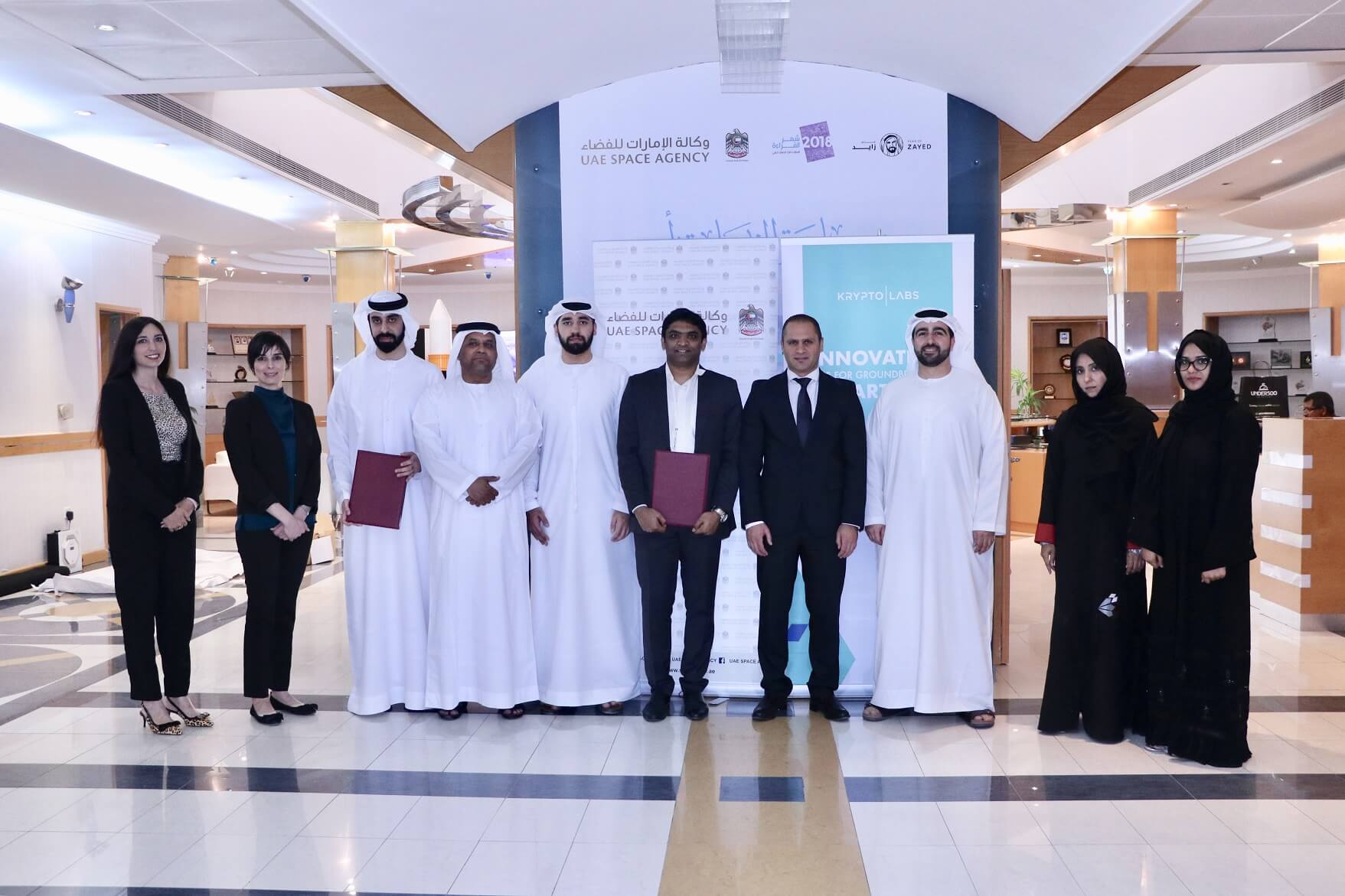
UAE Space Agency, Krypto Labs announce winners of GeoTech Innovation Programme

ABU DHABI, 10th April, 2019 (WAM) — The UAE Space Agency and Krypto Labs have announced today the two winning teams of the GeoTech Innovation Programme. The winners were awarded funding of AED100,000 in cash and AED500,000 in kind, as well as the opportunity to accelerate and transform their innovative ideas into commercially viable and scalable market-ready products and services.

Working collectively and actively on mapping land deformation patterns in the UAE, Dr. Prasanth Marpu, Adham Alkhaja, Dr. Nikolaos Lisosis, and Dr. Prajowal Manandhar gained recognition as one of the two winning teams for proposing a business idea under the title “Ayn Astra” which offers four products making use of satellite data. The proposition aims to use advanced processing algorithms for interferometric data processing. It also offers land use and land cover mapping, and it will be mapping the health of palm trees/vegetation and tracking dune motion.

“Utopia: Strategic Land Management Powered by AI” is the title of the business idea proposed by winners Ali Al Hammadi and Ziang Zhang. Their idea aims to offer a consulting agency based on an artificial intelligence system that generates assessments of existing land use, forecasts of future use and needs for a set of development assumptions, and strategies for urban and rural land management, and development using big data.

The programme received over 80 applications from university professors, students, entrepreneurs and engineers, from private and public companies, universities, and educational institutes in the UAE.

Director-General of the UAE Space Agency, Mohammed Nasser Al Ahbabi, said, “The UAE Space Agency’s support for this initiative is in line with its strategic goals of supporting the development of national capabilities and the growth of innovation-led entrepreneurial activity in the UAE space industry. With the space sector poised to contribute to more and more socio-economic development, the GeoTech Innovation Programme is already playing a significant role in identifying, facilitating and advancing local entrepreneurial efforts in a range of fields related to space.”

The initiative highlights the shared vision of both parties in providing a local platform that unveils Emirati talent and develops their skill-set in the field of space sciences and its applications in line with the sustainable development of the UAE.

WAM/Esraa Ismail/Nour Salman

http://wam.ae/en/details/1395302754399

KAIST-KU Joint Research Center Opens

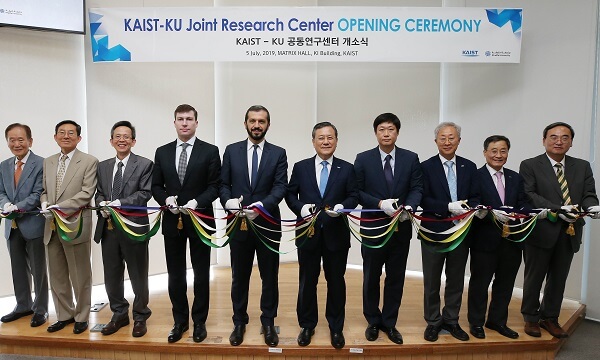
Photo Caption: President Shin (fifth from right) and Khalifa University Executive Vice President Arif Sultan Al Hammadi cut the tape during the opening ceremony of the joint research center at KAIST on July 5.

The Joint Research Center partnering KAIST and Khalifa University has been completed and the opening of the KAIST center was held on July 5, 2019, following the opening at Khalifa in April.

The joint research center will explore the most impactful technologies that will change people’s lives in the face of the new industrial environment brought about by the Fourth Industrial Revolution. The breakthroughs include smart transportation and smart healthcare such as wireless electric vehicles, unmanned vehicles, and wearable healthcare devices. The two institutions signed an MOU on the Joint Research Agreement on the Technology Development for the Fourth Industrial Revolution in 2018.

This is the second phase of collaboration following the partnership agreement that was signed in 2010 between the two institutions, which aimed to provide the best science and technology education as well as develop nuclear energy in the UAE.

The Khalifa University delegation, headed by Executive Vice President Arif Sultan Al Hammadi and Senior Vice President of Research and Development Steven Griffiths, flew in to attend the ceremony at KAIST. President Sung-Chul Shin, Vice President for Research Hyun Wook Park, Vice President for Planning and Budget Su-chan Chae, Associate Vice President of the International Office Man-Sung Yim joined and Co-Directors of the Joint Research Center Daniel Choi from Khalifa and Jong-Hyun Kim from KAIST also participated in the opening ceremony.

Full article appeared on the KAIST News website.

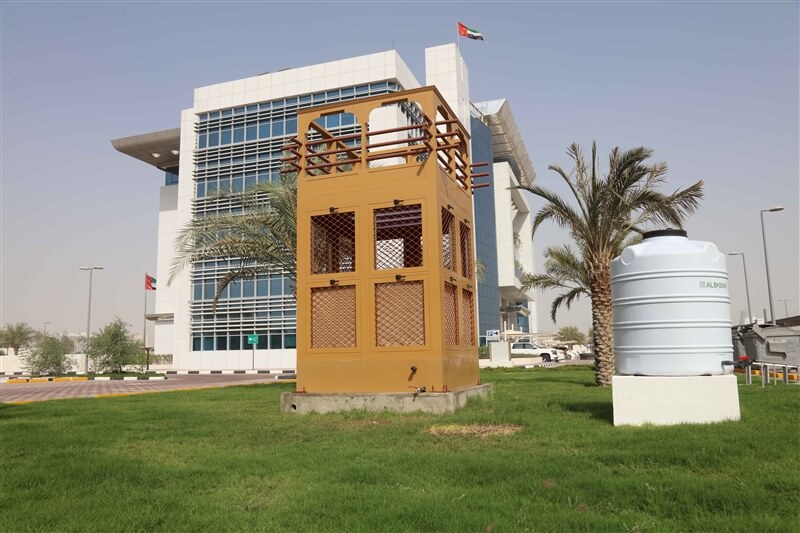
Ministry of Climate Change and Environment Launches Green Barjeel Project to Cultivate Indigenous Algae

The Ministry of Climate Change and Environment (MOCCAE) today announced the launch of the Green Barjeel research project that aims to leverage innovative methods to grow microalgae biomass with a high lipid content in tower-shaped structures.
Run in cooperation with Khalifa University (KU) and the American University of Sharjah (AUS), the project involves collecting algae from the UAE’s desert ponds and cultivating them. The process offers a host of benefits, including sequestering CO2 and removing dust particles from the ambient air to reduce greenhouse gas emissions and other pollutants. In addition, the structures can serve as passive cooling systems for use in public spaces.

The research project also seeks to examine and classify the diverse indigenous algal strains and test the potential of using them to produce biofuel and biofertilizers. Furthermore, the scope includes an experimental study on the safe and sustainable removal of Nitrogen oxides (NOx) and Sulfur oxides (SOx) from the atmosphere.

His Excellency Dr Thani bin Ahmed Al Zeyoudi, Minister of Climate Change and Environment, said: “In line with the steadfast efforts of His Highness Sheikh Mohammed bin Rashid Al Maktoum, Vice President and Prime Minister of the UAE and Ruler of Dubai, to encourage disruptive innovation across all sectors as the means to ensure a better future for current and next generations, we support environmental R & D and integrate the latest innovations to help achieve ecological sustainability and boost climate action.”
He added: “The Green Barjeel project aims to explore the prospects for using algal strains that have adapted to the UAE’s climate to provide an alternative source of energy and nutrients that enhance agricultural production. The participating scientists will capture the outcomes of the project in scientific literature that can be incorporated into educational curricula or built on in developing further innovations.”

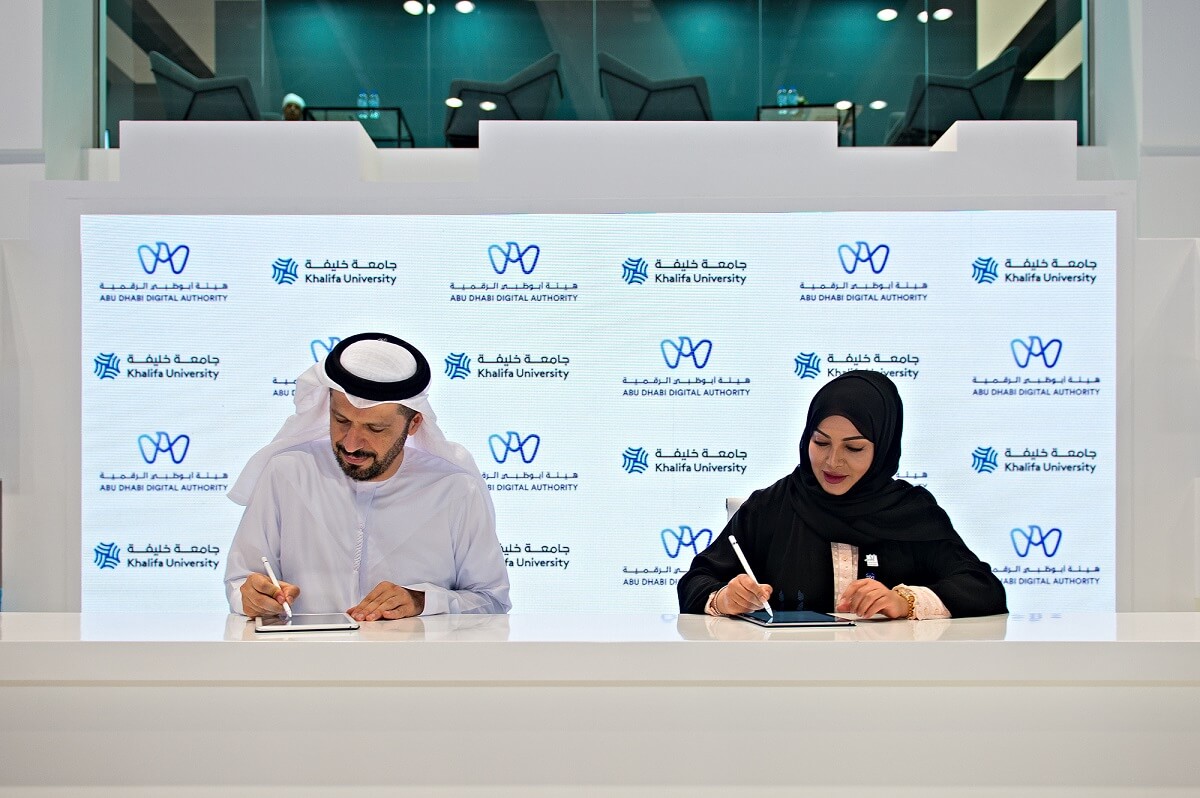
Abu Dhabi Digital Authority Forges New Partnership with Khalifa University

Newly-formed alliance to play a key role in unveiling potential opportunities in scientific research and reinforce Abu Dhabi’s academic sector

In line with its continuing commitment towards enhancing key collaborations with research and academic institutions, the Abu Dhabi Digital Authority (ADDA) has revealed the signing of a strategic Memorandum of Understanding (MoU) with one of the emirate’s leading universities, Khalifa University of Science and Technology.

The new partnership demonstrates a step forward to facilitate a smooth exchange of expertise and leverage knowledge to ensure the application of advance scientific research. Under the terms of the agreement, both parties will work together in prioritizing research topics and joint initiatives in the field of ICT.

The MoU was signed by H.E. Dr. Rouda Al Saadi, Director General, ADDA, and H.E. Dr. Arif Sultan Al Hammadi, Executive Vice President, Khalifa University of Science and Technology, at the 39th edition of GITEX Technology Week, the biggest tech show in the Middle East, North Africa and South Asia (MENASA), which ran from October 6 to October 10, 2019 at the Dubai World Trade Centre (DWTC).

H.E. Al Saadi stressed on the importance of the newly-formed partnership, which will play a key role in the realization of Abu Dhabi Government’s digital transformation agenda, which includes the development of the emirate’s technological infrastructure and reinforcing its leading position as a global hub for technological innovation.

H.E. Al-Saadi further emphasized on ADDA’s commitment to promote the national capabilities across Abu Dhabi’s government entities in the field of digital transformation. Al Saadi explained that the move would only be made possible through the use of knowledge-based and scientific research & development programs. She added that the partnership complements the unified efforts to develop a generation of UAE Nationals who will be able to create the digital future of Abu Dhabi.

H.E. also took note of the essential role of the research & development departments of today’s leading universities, which are tasked with coming up with cutting-edge scientific research that will serve as a foundation in the development of the government services. Al Saadi reaffirmed ADDA’s keenness to support UAE research and academic institutions via the provision of digital solutions and reliable data that are expected to yield positive results for the community.

Meanwhile, Dr. Arif Sultan Al Hammadi, Executive Vice President, Khalifa University of Science and Technology, revealed that the university is making use of every effort to make positive impacts in the emirate’s digital transformation efforts. In fact, the university currently offers a series of courses and programs aimed at building a generation of UAE Nationals that will contribute to the country’s digitalization. Al Hammadi expressed full confidence in working in close cooperation with ADDA, which is widely regarded as the government entity leading Abu Dhabi’s digital agenda.

As part of the agreement, ADDA will support and encourage IT students via the creation of a conducive and highly motivational working environment, including the move to highlight the expertise and efficiency of students and recent graduates. It aims to provide new generation with actual experience to help them access competitive employment opportunities and guide them towards Job markets and most-wanted vital fields. ADDA will also provide essential digital and spatial data to help in the development of research, studies and scientific projects through the creation of an integrated system facilitating seamless access to reliable data sources, quickly and safely.

-Ends-
This story was originally published on 12 October 2019 on Zawya at the following link: https://www.zawya.com/mena/en/press-releases/story/Abu_Dhabi_Digital_Authority_forges_new_partnership_with_Khalifa_University-ZAWYA20191012062159/

KU student invents ‘cooling suit’ for outdoor workers

  • Photo credit: The National

When Aryam Ahmed, 21, saw a construction worker pass out from the heat in the street, she decided she wanted to solve the problem.

The Emirati engineering student spent the next two years developing a suit which would keep outdoor workers cool – and is now set to pitch her fledgling business idea to an audience of international business leaders and investors.
She was recently chosen as one of the winners of the Pitch@Palace initiative that seeks to encourage Emirati entrepreneurship and is backed by UK royal, Prince Andrew.

She now hopes her invention will help over one million outdoor workers in the UAE and at the same time increase productivity for businesses.

Ms Ahmed, a student at Khalifa University in Abu Dhabi, has already set her sights on taking her idea across the GCC.

“It started when we saw a worker faint on the street and we couldn’t do anything about it,” she said.

“As engineers, it is our responsibility to find solutions to problems to help our society.

“I do not just want to show it in the UAE, I want other countries in the world to know about it. It is not only the UAE that needs this solution, it is the whole of the GCC. We want to create something that everyone can have.

“Employers have a responsibility for the health of the workers, so will want to reduce the risks and number of cases. So I think they will be open to these solutions.”

The affordable cooling suit, made out of a special material she developed, is highly effective at maintaining body temperature for up to four hours, Ms Ahmed said.

She does not want to reveal precise details of how the material works, while its patent is pending. However, she said the suit has held up well in tests.

The suit has a smart system which monitors external heat and a worker’s body temperature, sending an alert to managers if the employee’s body temperature reaches 38 degrees.

It also includes a ‘panic button’ so a worker can summon help in an emergency.
Others have tried to invent cooling suits for outdoor workers but they have often featured complicated fans or water-based cooling systems.

Ms Ahmed, who developed the suit along with her project partner Latifa Al Seiari, believes the simplicity and safety of her design will mean it succeeds where others have failed.

UAE’s midday summer break for outdoor workers to start on Saturday
UAE doctors see increase in heat-related illnesses as temperatures soar
While current laws mean companies have to allow outdoor workers to take long breaks during the hottest hours of the day, Ms Ahmed said cases of heat-related illnesses remain a major problem.

Ms Ahmed will now go on to present her idea at a regional final next month in Bahrain.

The winners of that round will win a place at a global final in London in December.

The event is supported by the Khalifa Fund for Enterprise Development, which seeks to encourage entrepreneurship among Emiratis.

It also helps young business people to be mentored by successful industry leaders and helps connect them with potential investors.

Aryam Ahmed shows off the prototype suit during the recent Pitch@Palace final.

“It has been a great experience, we have talked with many advisers and investors,” Ms Ahmed said.

“They have also allowed me to connect with many people who I wouldn’t otherwise have been able to meet.”

The other winners at the Pitch@Palace event were the creators of a Arabic language learning platform for children, an online tool to connect patients with doctors and pharmacies, and a home design app.

“It is great to be able to showcase some of the great innovation that has been going on in the UAE,” Prince Andrew, who launched the initiative in the UK before expanding it across the world, said at the event.

“This project is about collaboration, everyone working together as a team to help these businesses grow.”

This article originally appeared in The National on 19 October 2019.