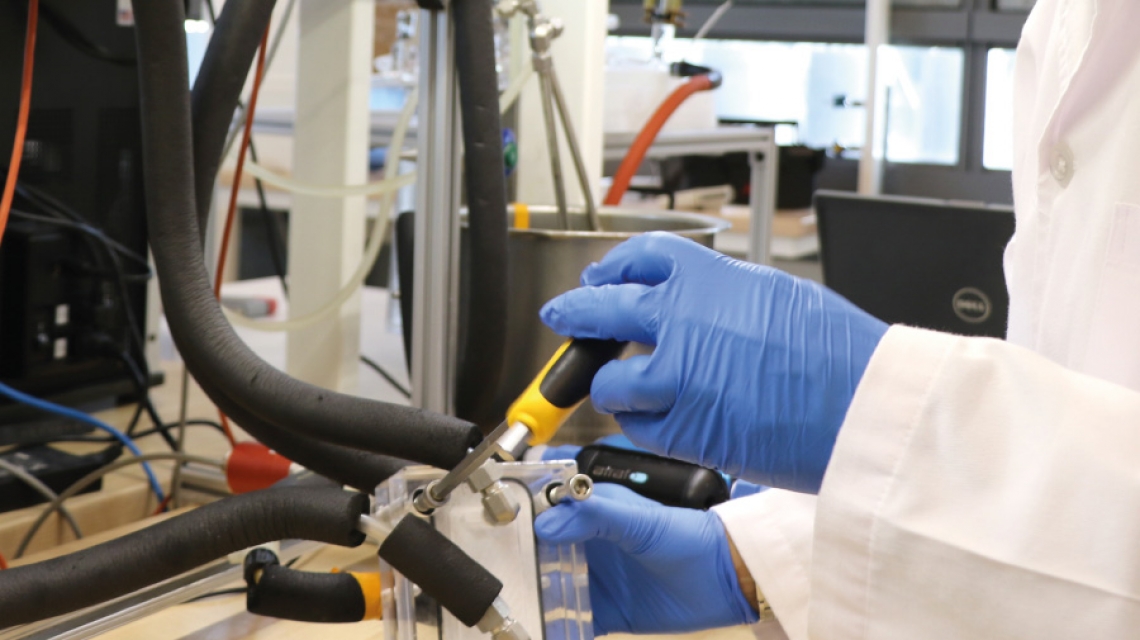

A New Tool to Boost Energy-Efficient Aluminum Production

By Dr. Rashid Abu Al-Rub, Dr. Tariq Shamim, Tapan Kumar Sahu and Dr. Mohamed Mahmoud

Once more precious than gold, aluminum has transformed from one of the world’s most precious metals into one of its most ubiquitous, thanks to innovative technological advances that have helped make its large-scale production possible.

This lightweight, flexible and highly conductive metal is now used to make our drink cans, cooking foil, electronics, airplanes, and power transmission lines – permeating nearly every industry. According to the Aluminum Manufacturers and Producers Association, global production and consumption of aluminum will double from 35 million tons in 2010 to 70 million tons by 2020.

Although technological advancements over the past 100 years have helped make aluminum extremely versatile in its applications, producing the metal is still quite energy-intensive, which comes at an economic and environmental cost. It is estimated that roughly 13,000 kilowatt hours (kWh) of electricity are required to produce just one ton of aluminum.

In an effort to make aluminum production more sustainable, the UAE’s Emirates Global Aluminum (EGA) – the jointly-owned aluminum conglomerate formed by Mubadala Development Corporation and Investment Corporation of Dubai – is seeking innovative solutions to reduce the energy, environmental and financial costs of producing the valuable metal.

EGA is the world’s fourth largest aluminum producer and has become instrumental in helping the UAE achieve its economic diversification goals. With sustainable development at its core, EGA strives to remain economically robust while protecting the environment and contributing to society. Thus, developing energy efficiency in its aluminum production processes is critical to its vision and mission.

In order to achieve energy efficiency in its aluminum production, EGA has partnered with Abu Dhabi’s Masdar Institute of Science and Technology – the world’s first research‐driven graduate‐level university focused on advanced energy and sustainable technologies – to develop a computational tool that will assist in reducing the cost of one of the most expensive and energy-intensive parts of the aluminum production process – the carbon anode baking furnace.

Carbon anodes are used to transform aluminum oxide into pure aluminum. It does this through a smelting process based on electrolysis, which uses electricity to break the bonds between aluminum and oxygen. The oxygen ions are pulled to the carbon anodes, allowing pure, liquid aluminum metal to form at the cathode.

This key process is occurring day and night at EGA’s two smelters, producing over 2.4 million tons of aluminum annually. The carbon anodes – which are baked at very high temperatures in massive furnaces (almost the size of a football field) for nearly 2 weeks – must be frequently replaced, as nearly one-half ton of carbon anode is consumed with each ton of aluminum produced, representing a major financial and environmental expense.

Improving the carbon anode baking process – a process that currently represents 15% to 25% of the total aluminum production cost – could significantly reduce the energy and financial cost of the entire aluminum production process. The improved baking process would not only reduce the time and energy required to bake the anode (and resulting emissions), but would also result in higher quality carbon anodes with superior electrical conductivity and sufficient mechanical strength.

To improve the baking process, we are developing a computational tool that will help identify the optimal baking conditions for the development of high quality carbon anodes. Carbon anode baking is a very complex process and a good computational tool is imperative for understanding the process and for developing better furnace control strategies.

Our collaborative research team includes Masdar Institute’s Dr. Rashid Abu Al-Rub, Associate Professor of Mechanical and Materials Engineering, and Dr. Tariq Shamim, Professor of Mechanical and Materials Engineering, as well as the carbon anode area operators and engineers at EGA, including Tapan Kumar Sahu. The project is managed by Dr. Mohamed Mahmoud, Manager of the EGA’s Center of Excellence. We are also supported by Masdar Institute PhD student Abdul Raouf Tajik and Post-Doctoral Researcher Dr. Mouna Zaidani.

Current anode baking practices often result in anodes that become cracked or defective due to non-optimal heating in the furnace. Thus, to avoid this wastage and improve production efficiency, EGA operators of the carbon anode furnace will use the computational tool developed through our research collaboration to help identify optimal parameters – such as temperature of the furnace and time spent baking – that will lead to high quality anodes.

The innovative software tool will help EGA optimize its entire anode baking operation process; maximizing production, improving anode furnace designs, increasing overall energy efficiency, lowering carbon emissions, improving quality and reducing costs.

Strong collaborations like these – between the UAE’s leading research university and its leading aluminum manufacturer – serve as a catalyst for achieving sustainability and energy-efficiency in a valuable but energy-intensive sector. This collaborative project is producing not only an innovative tool to increase aluminum production efficiency, but it is also contributing to the development of highly-skilled human capital with the skills needed to fuel sustainability and innovation across all of the UAE’s key industries.

Dr. Mohamed Mahmoud is Manager of the Center of Excellence at Emirates Global Aluminum; Tapan Kumar Sahu is Manager of Process Control in Carbon Plant at Emirates Global Aluminum; Dr. Rashid Abu Al-Rub is Associate Professor of Mechanical and Materials Engineering at Masdar Institute; and Dr. Tariq Shamim is Professor of Mechanical and Materials Engineering at Masdar Institute. 

14 July 2016

Solar Cells That Can Thrive in the Desert

By Dr. Michael F. Rubner, Dr. Robert E. Cohen and Dr. Khalid Askar

Efforts to harness the sun’s energy for electricity generation have led to the development of high-efficiency silicon solar cells, capable of converting over 25% of the sun’s energy into usable electricity without any additional concentration.

While these technological advances provide a critical boost towards increasing solar power’s share in the world’s energy supply, in desert regions like that of the UAE, there is still a need for solar panels consisting of cells that not only have high efficiencies, but are also able to withstand and thrive under the country’s harsh, dusty climatic conditions.

Dust and dirt are the proverbial kryptonite to a solar panel’s ability to convert sunlight into electricity, drastically reducing a solar cell’s conversion efficiencies. Just four grams of dust per one square meter of a solar cell’s surface can reduce its energy output by 40%.

In order to maintain their intended efficiencies, solar panels are cleaned on a regular basis. Cleaning systems are often installed on large solar fields to rinse solar panel surfaces, washing away the dirt or grime that may have accumulated.

In the UAE, the combination of very dusty conditions and scarce freshwater resources underscore the critical need for innovative solutions that keep solar panels clean without the use of water. Such solutions will contribute to both the UAE’s water security and renewable energy goals.

In an effort to create high-efficient solar cells that require minimal cleaning and maintenance, we are part of a team of researchers from the Masdar Institute and the Massachusetts Institute of Technology (MIT) developing a low-cost “super coating” that, when sprayed onto a solar panel’s surface, enhances the solar cells’ key properties of self-cleaning, abrasion-resistance, self-healing, anti-reflection, and anti-static.

A solar cell with these five properties will be super-hydrophobic, which means that water won’t stick to the surface and will easily roll off, carrying dust and dirt with it more effectively; it will be scratch-resistant, protecting it from scratches caused by rocks or dust; in the event that the surface is scratched, it will repair itself automatically; it will absorb higher levels of energy by reducing the amount sunlight that reflects off the solar cell and back into the atmosphere; and it will repel negatively charged dust particles – which represent the majority of UAE’s dust – preventing the solar cell from getting overly dusty.

While scientists have been developing anti-reflection, anti-abrasion and self-cleaning coatings for solar cells for over a decade, they have been unable to optimize all three properties in one coating. This is because when one property, such as anti-reflection or self-cleaning, is achieved, then the other property of anti-abrasion will be reduced, or vice-versa. It has been a challenge to fabricate a coating that doesn’t require the sacrifice of one property over the others.

With our “super coating,” not only are we achieving optimal anti-reflection, anti-abrasion and self-cleaning properties together, we are also incorporating self-healing and anti-static properties, which has never been done before.

Integral to the coating is its low-cost and scalability, which are critical requirements for the technology’s eventual commercialization. For example, to achieve optimal self-healing properties in the coating, we are using affordable and abundant polymer and clay materials that cost roughly US$2 per kilogram.

Our spray coating technique can coat large, curved surfaces much faster and cheaper than conventional coating techniques that require expensive equipment.

Though we are still in the experimental phase of our research, we have already successfully optimized the properties of anti-reflection, self-cleaning and abrasion-resistance. We are now in the process of perfecting the self-healing and anti-static properties and expect to have all properties optimized within a year.

Through this dynamic collaboration, we have been able to leverage the state-of-the-art research facilities at both Masdar Institute and MIT, including Masdar Institute’s solar field, which will be used to test the coating during the field testing phase of our research.

Capitalizing on our individual strengths and skills within our respective disciplines, this truly multidisciplinary collaboration ensures that every aspect required to fabricate an optimized “super coating” is achieved.

Dr. Michael F. Rubner is the TDK Professor of Polymer Materials Science and Engineering at MIT; Dr. Robert E. Cohen is the St. Laurent Professor of Chemical Engineering at MIT; and Dr. Khalid Askar is Assistant Professor of Chemical and Environmental Engineering at the Masdar Institute of Science and Technology.

Printed in The National on 26 June 2016

Alumni Spotlight: Conserving the World through Green Investments

John Sitler has helped to commercialize several clean technology innovations, grow companies and develop innovative projects that clean water, reduce pollution, and overall, improve the environment for future generations.

“In essence, rather than just being a part of green industry, I am helping to create it,” Sitler said. The Class of 2011 MSc in Engineering Systems and Management alumnus works as a  business development manager within the Clean Energy group at Masdar (Abu Dhabi Future Energy Company), where he helps secure the development of large-scale clean energy projects that will benefit the environment.

Sitler was raised with a deep appreciation for the natural world, spending family vacations cleaning up nature resorts to leave each place better-off for those to follow. So focusing on sustainability during his graduate studies at Masdar Institute, and staying on in the UAE to work in clean energy, seemed a natural progression for him.

He has carried forward his belief in conservation in his professional work, where he strives to leave the entire world in a better condition for the next generation.

Sitler had joined Masdar Institute with the express goal of pursuing a career in green investments. He believed turning to the newly opened Masdar Institute – the world’s first entirely sustainability-focused graduate-level university – to make that career a reality was a logical choice.

“I wanted to complement my strong background in finance and hedge-fund trading with a specialized degree in clean energy technologies, in order to develop a career in green investments, which would allow me to support the development of companies dedicated to sustainable technologies and clean energy,” he explained.

The young American, who holds a Bachelor’s degree in both Physics and Economics from Cornell University, first learned about Masdar Capital – the investment arm of Masdar – in his search for career opportunities in green investments, and soon learned about Masdar Institute and the wider Masdar Initiative.

Sitler joined Masdar Institute as a Research Assistant in 2008, where he became a member of a small group of roughly 25 individuals who become the inaugural class when the school officially opened in 2009.

“During this time, I worked on carbon trading policy research, which I continued into my Master’s degree in the Engineering Systems and Management Program,” he recalled. Sitler believed that carbon trading would allow him to leverage his finance experience within the context of the green economy.

In 2010, Masdar Institute helped secure Sitler a 10-week posting as a Summer Associate at Masdar Capital. Upon completion of his Master’s degree in 2011, he was hired full-time at Masdar Capital. For over three years, Sitler assisted the investment company – which managed over USD 500 million in capital through two funds dedicated to investment in innovative clean technology companies – in selecting and managing their green venture capital investments.

“Although my work covered a wide-spectrum of technologies, I primarily focused on green chemicals, storage, and waste-to-energy,” Sitler added.

Now, he continues to support Masdar and green investments in his current position within Masdar’s Clean Energy team, and is proud of his long tenure with the Masdar family.

“I’ve spent nearly 8 years at Masdar, covering the full range of clean technology innovation and commercialization – from graduate-level research, to growth-stage venture capital investment, to utility-scale deployment. I have the distinct pleasure of having the longest tenure at Masdar amongst MI alumni,” he shared. Sitler credits Masdar Institute for providing him with the foundation in clean technology that he needed to kick-start his career in green investment.

Going forward, the successful and self-described “intensely curious” Sitler aspires to start a clean technology/energy company of his own in the future, to continue his work of making this world cleaner and greener for the next-generation.

Erica Solomon
News and Features Writer
14 August 2016

Seizing Opportunities for Distributed Clean Energy in the UAE

Today we are observing rapid innovation within the energy sector. This innovation is being stimulated by several key trends that are reshaping the way we think about energy systems:

• Diversification of energy sources – prior to start of the 20th century, biomass, coal and lignite were the energy sources available. Now in the 21st century, energy supply is divided among biomass, coal and lignite, oil (conventional and unconventional), gas (conventional and unconventional), waste-to-energy, hydro, solar, wind, geothermal and nuclear. • Committed concern for the climate change and sustainability – 174 countries and the European Union have now signed the Paris Agreement within the framework of the United Nations Framework Convention on Climate Change (UNFCCC), signaling a commitment to address greenhouse gas emissions via policies and incentives for sustainability. This is a catalyst for the implementation of supply and demand energy technologies and processes that have the highest possible efficiencies. • Distribution of energy production – the model of centralized energy supply serving distributed demand is shifting toward a model whereby both supply and demand are distributed. This rise of simultaneous producers and consumers of energy is disrupting classical business models in the energy sector. • Progress in research, development and innovation within the information, material and biological sciences – rapid advances have been made in fundamental sciences that are redefining how energy systems can and will function. Particularly important are cheaper and better energy storage technologies that can support wider deployment of intermittent sources of energy, such as solar and wind. Big data analytics and the internet of things are driving disruption in energy efficiency by enabling smarter, shared economies that are more resource efficient.

Within the Gulf Region, the UAE is the country that perhaps has the greatest opportunity to seize these trends and engage the private sector in realizing the resulting innovation opportunities. As a clear example, the recently announced Dubai Clean Energy Strategy 2050 aims to provide 7% of Dubai’s energy from clean energy sources by 2020, 25% by 2030 and ultimately 75% by 2050. This drive toward clean energy is complimented by Dubai’s intent to become the world’s smartest city by 2017.

The convergence of clean energy and intelligent system demand will make Dubai an important global location for deploying a number of energy system innovations. Particularly interesting is the opportunity for distributed clean energy generation. In Dubai and throughout the UAE, electricity and water price reforms are underway that are supportive of distributed generation and Dubai Clean Energy Strategy has a target for all rooftops in the city to produce solar energy by 2030.

As most are aware, distributed clean energy generation encompasses a range of energy generation technologies beyond solar energy, including wind energy, fuel cells and novel energy harvesting technologies. Nuclear energy may also become relevant to distributed generation if small modular reactors (SMRs) gain traction.

However, opportunities for distributed energy innovation go far beyond energy generation technologies.  Integration technologies for improving how distributed generation interacts with building and the electrical grid present a host of innovation opportunities, including energy storage as well as building and grid integration hardware and software. While much has been said about electrochemical energy storage, particularly lithium ion batteries, relatively less attention has been given to the importance of power inverters, battery charge controllers, microgrid controllers and transformer technologies that are critical to distributed generation.

Likewise, software is a prime area for innovation regarding distributed energy resource management as well as cybersecurity for protecting distributed generation assets. Distributed generation applications that leverage software and hardware innovations are also gaining traction. Particularly relevant are customer service applications, such as electric vehicle charging and load shifting. The opportunity for distributed generation innovation is clearly demonstrated by analysis of the ten most recently named Bloomberg New Energy Finance New Energy Pioneers. Six of the ten winners are directly focused on innovation opportunities in distributed clean energy. These companies are SolarKiosk (Germany, off-grid solar), Mobisol (Germany, off-grid solar), FirstFuel (USA, data analytics for buildings), Emergya Wind Technologies (Netherlands, distributed wind), AutoGrid Systems (USA, energy supply and demand optimization) and 24M (USA, battery energy storage).

Unfortunately, none of these innovative companies is based in the UAE. However, this may change in the future given the excellent platform that particularly Dubai is offering for deployment of novel distributed energy technologies.

At the Masdar Institute of Science and Technology, our research strategy is targeted toward the key areas of innovation required for distributed generation to succeed in the UAE. We have positioned solar energy, electrical power transmission and distribution, energy storage and energy efficient cities and buildings as our core energy domains. Our energy research and development is complimented by platform capabilities in information science and materials science, each essential for developing next generation energy technologies and systems.

Although Masdar Institute is a university, our strategy will ultimately be measured not just by the highly quality graduates we produce and the knowledge we generate through research publications. Rather, as a university focused on maximizing economic value for the UAE, our success is additionally measured by our innovations derived from research that ultimately lead to technology licenses to existing companies as well as the formation of new startup companies that capitalize on the excellent opportunity the UAE is offering for distributed clean energy innovation.

Dr. Steve Griffiths is Vice President for Research at the Masdar Institute of Science and Technology

23 August 2016

This op-ed was first published in Issue 27 of Innovation and Tech on 8 August 2016 

Start-Up Spreads Clean Energy in Africa

A group of highly-skilled engineering alumni, Master’s and PhD students from Masdar Institute have formed a startup company called the Nigeria Future Energy Group (NiFEG), focused on clean energy development and deployment throughout Nigeria.

Fully incorporated in Nigeria, NiFEG is a non-profit organization with the ultimate goal of providing local energy solutions sustainably in Nigeria. The startup has successfully emerged out of the community of Masdar Institute’s innovative students, faculty and alumni.

“We believe the private sector has a huge role to play in solving Nigeria’s energy crisis,” said NiFEG member Adewale Giwa, a Masdar Institute PhD student. NiFEG wants to promote sustainability by accelerating the use of clean and renewable energy in Nigeria.

Nigeria’s solar resource is approximately 4.85 billion MWh/day and utilizing only a fraction of this resources would be sufficient to provide the entire country with clean electricity. However, currently there is limited exploitation of the country’s solar potential. This gap between Nigeria’s energy needs and its renewable energy potential inspired Giwa and his colleagues to develop NiFEG.

Since the non-profit’s official launch in January 2015, NiFEG has already contributed to the development of a photovoltaic solar system in Kaduna State University, which is a government-owned research university in the northern part of Nigeria. The solar energy system, which provides 2.25 kW of electricity and 19.2 kWh of energy storage, powers two of the university’s lecture theaters.

As native Nigerians with specialized engineering skills from Masdar Institute, NiFEG’s entrepreneurs are combining their expertise in renewable energy technologies and knowledge of the Nigerian economy to place NiFEG ahead of the curve of other renewable energy companies in Nigeria. All of its founding members have published articles in research journals or conference proceedings while at Masdar Institute, related to solar energy, biomass to energy conversion, and carbon dioxide capture and storage.

“A strategic leverage we have over our competitors is the education and experience we gained from Masdar Institute,” Giwa remarked.

The startup has partnered with several high-level organizations, including Nigeria’s Federal Ministry of Power, Kaduna State University, Ahmadu Bello University, the Global Alliance for Clean Cookstoves, Qantab, NordOest, Soraytec, and ar estudio – an industrial design company. The non-profit works with its partners, sponsors and member organizations to raise awareness and provide technical information on available renewable energy resources and technologies in Nigeria.

As a result of their proven analytical skills and expertise in Nigeria’s energy sector, five NiFEG members – Oghare Ogidiama, Adetunji Alabi, Jubilee Adeoye, Ahmed Sodiq and Ayoola Brimmo – have contributed to the drafting of Nigeria’s climate change bill, at the request of the Climate Change Committee of Nigeria’s National House of Representatives. This bill has also passed second reading on the floor of the Senate of Nigeria. The bill proposes the creation of a climate change agency and several policy initiatives to improve the country’s institutional capacity to deal with climate change.

One way NiFEG intends to raise awareness is through its Mentorship Program, which aims to create a competition for undergraduates where candidates will be mentored in executing feasible sustainable energy projects in Nigeria.

In another effort to provide pertinent technical data about deploying solar systems to tap into Nigeria’s solar resources, NiFEG has developed a solar system calculator that can be used to obtain size and cost estimates for solar systems in Nigeria. The solar calculator is available for public access on their website at www.nifeg.com/solarcalculator.html.

The company will generate revenue from subscription fees, philanthropic contributions and sales of expertise services, including consultation, strategy formulation and creation of market exposure. NiFEG is also gathering meteorological data for Nigeria, which may serve as an additional revenue stream.

Expanding beyond Abu Dhabi to address the challenges of global climate change, the creation of NiFEG reflects Masdar Institute’s role in bringing sustainability and clean energy to the world.

Erica Solomon
News and Features Writer
08 September 2016

A Faster, More Efficient Way to Condense Steam

By Dr. TieJun Zhang and Abulimiti Aili

Steam-driven power generation may seem straightforward – a liquid is heated, producing steam that turns a turbine, and power is generated. But what happens after that point – when that steam is condensed back into liquid by rejecting heat to the ambient – is difficult, particularly in hot and arid regions.

Condensers, which collect and condense the steam, help close the power cycle and in turn play an important role in a power plant’s overall efficiency. According to an MIT news story released last year, condenser improvements could increase power plant efficiency by 3%, which is considered enough to significantly reduce global carbon emissions given that most of the world’s power generation is thermally driven. Unfortunately, most condensers used today are not very efficient, which is why our team is exploring ways to improve condensation processes through the development of innovative technologies.

Filmwise condensation is the most common and least efficient type of condensation used in traditional condensers. In filmwise condensation, liquid film condensate builds up on the condenser, creating a barrier between the vapor and the cold condenser surface.

A more efficient condensation process is dropwise condensation on hydrophobic (water-repellent) surfaces, where the vapor is condensed into individual droplets which can be easily shed away by gravity.

An even more efficient dropwise condensation process is condensation on superhydrophobic (super-water-repellent) surfaces, where microscopic-sized water droplets coalesce together and jump away from the condenser surface without the need of gravity. This superhydrophobic surface is achieved by introducing nanostructures to a condenser’s surface and then coating it with hydrophobic materials.

In our work, which was recently published in the journal ACS Applied Materials & Interfaces, we have proposed an even more exciting approach to promote droplet jumping by adding micro-pores, or microscopic holes, onto the superhydrophobic surface of a condenser. The micro-pores, which are made by introducing a low-cost copper micro-mesh to the condenser’s surface, squeeze the condensing droplets, speeding up the droplets’ unidirectional growth, which then triggers the droplets to jump away from the surface.  This fast droplet growth and jumping away drastically reduces the condenser’s thermal resistance and further improves the heat transfer rate.

The nanostructured micro-mesh helps speed up the growth and jumping away of the water droplets, causing the drops to fall away before they become too large. This is important because the bigger the droplets become means there is a barrier for new droplets to form.  The nanostructured micro-mesh we developed causes the water droplets to jump away from the condenser surface while they are still small (ranging in size from 10 to 100 microns). This helps keep the rate of heat transfer high and significantly improves the condenser’s performance.

Another important advantage of the copper micro-mesh is that it is affordable and easy to fabricate, making this technology easily scalable for industrial applications. In addition to improving condenser efficiencies in steam-driven power plants, this novel condensation mechanism could also make other technologies that rely on condensation, including desalination, more affordable and efficient.

 We are excited by this new phenomenon and we plan to further investigate its underlying physics in order to understand it better and discover more ways in which this technology can contribute to greater sustainability in the UAE and around the world.

Dr. TieJun Zhang is Assistant Professor of Mechanical and Materials Engineering at Masdar Institute; and Abulimiti Aili is a Masdar Institute Class of 2016 MSc in Mechanical and Materials Engineering graduate and current Research Engineer.

Alumni Spotlight: Making Sense out of Science

Wan Abdul Matiin is leveraging his Master’s degree in Water and Environmental Engineering to bridge the gap between scientists and decision makers as a science writer at the Academy of Sciences Malaysia (ASM) – a think tank for scientific advocacy, policy, and strategy under the purview of the Malaysian Ministry of Science, Technology and Innovation.

His latest project at ASM is a futures study for Malaysia, which involves anticipating scenarios for the year 2050 and developing a strategic roadmap that leverages current trends in science, technology, and other aspects of development.

“I love distilling complex ideas in science and technology into strategic, compelling narratives that can reach a wider audience to elevate scientific literacy among the younger generations,” Matiin shared. In his current role, Matiin blends his investigative curiosity with his passion for high-impact scientific communication to help shape the future of Malaysia’s science and technology agenda.

Following his passion to elevate scientific literacy among the younger generation, Matiin also works as a STEM instructor at Axiom Learning – a unique center that offers one-on-one support to children of all ages and learning styles. As an instructor, Matiin helps to bridge students’ learning gaps, develop their confidence, and take progressive steps towards their independence.

In addition to raising scientific awareness among policy makers and children, Matiin works to raise knowledge about something else close to his heart – sustainable food systems.

“My key interest in sustainability is in the water-food-energy nexus of sustainable development, which is why I decided to get involved in projects dedicated to establishing sustainable food systems in Malaysia,” Matiin said.

After receiving a Permaculture Design certificate and becoming a LEED Green Associate, Matiin helped found Urban Hijau, a community farm initiative in his native Malaysia that produces organic fruits and vegetables for the wider community while educating them about the practices of permaculture. The grassroots startup is providing Malaysians and people all over the world with a positive example of how a closed-loop, independent, and synergistic agricultural system can produce food sustainably while supporting greater water, food and energy security.

Matiin credits Masdar Institute for his success as an entrepreneur, science writer and educator, and for rekindling in him a passion for sustainability.

“The high-caliber research we pursued at Masdar Institute and the rigorous discourse that took place at our seminars, meeting rooms, lunch tables and over coffee has been critical in helping me hone solid analytical skills and a worldly outlook, and synergize my technical fluency with eloquent communication,” Matiin shared.

The process of writing an op-ed on his thesis research, which was on the process of bio-mineralization carried out by soil bacteria inhabiting Abu Dhabi’s hypersaline sabkhas, or salt flats, gave him his first experience of science writing. A paper he co-authored on his thesis research was recently published in the journal Desalination & Water Treatment.

“In building my experience as a young scientist at MI, I learned that there is a pressing need for science to be communicated in more powerful ways to stakeholders. This is especially critical in light of contemporary issues revolving around climate change, sustainable development, and public health, where limited understanding and misinformation threaten our progress as a society. I am thankful for the diverse forms of support I gained from my peers, mentors and friends at MI and beyond towards pursuing my passion for science communication,” Matiin remarked.

After he graduated, Matiin stayed at Masdar Institute for two years as a Research Engineer and Lab Manager at the Institute’s Bio-Energy and Environmental Lab (BEEL). During that time, Matiin further developed his technical, organizational and scientific communication skills by coordinating day-to-day research activities and articulating these research activities to the public through the lab’s website and scientific op-eds.

During his time at Masdar Institute Matiin also contributed to the student community newsletter, called TaQa, where he wrote, edited and designed work related to research and the diverse MI student body. Matiin’s portfolio of written work published in TaQa, along with the op-ed he wrote for the local daily The National, helped him land his current science writing role.

The young science writer plans to continue working to improve public understanding of science and sustainable food systems in order to ensure that the innovative scientific research needed to change the world continues.

Erica Solomon
News and Features Writer
26 September 2016

Keeping Surfaces Clean, Anywhere, Anytime

By Dr. Giovanni Palmisano

Imagine being able to keep a surface clean, dry, and cool, without expending any energy or taking any particular action. That would mean you could deploy many different materials – like glass on solar panels – efficiently, easily and remotely, without worrying about the cleaning, maintenance, or degradation of their surfaces.

Scientists have discovered such self-cleaning capabilities in the common chemical of titanium dioxide. The mineral, when coated over the surface of say, a solar cell, gives the surface superhydrophilicity, or an extreme affinity to water. This means that when water comes into contact with the titanium dioxide-coated surface, the water spreads out, maximizing contact between the water and the surface, which ensures that the water glides evenly across the surface, taking any dirt with it.

The water-grabbing and water-spreading nature of a superhydrophilic surface helps it resist dirt and fog build-up, and if any dirt has accumulated, then simply flowing water over the surface easily cleans it. These characteristics have already been leveraged in a number of outdoor applications, like glass, concrete materials, road paving blocks, and ceramic tiles. However, achieving superhydrophilicity with titanium dioxide requires that thin layers of the chemical be irradiated, or exposed to light. But now, we are working towards achieving the same superhydrophilic capabilities without light, which would greatly expand its potential commercial use to numerous indoor materials.

I am part of a team of scientists with PhD student Corrado Garlisi exploring a new class of thin film materials that are able to impart superhydrophilic properties to a surface without light. This would allow the desirable superhydrophilic properties to be existent indoors and outdoors, even at night.

The film we have developed is so thin that it is transparent, which opens up the possibility for use on glass and other surfaces requiring transparency. We have filed a patent on this thin film with the US Patent and Trademark Office in recognition of its novelty and potential commercial scope.

Another benefit of the titanium dioxide thin film we developed is that we have made it using inorganic material that is inexpensive and very stable over many years. Our proprietary method of applying the thin film was developed in the clean rooms of Masdar Institute and has already been experimentally tested to produce a surface film with the desired structural characteristics, morphology and wettability properties.

A further attribute of these films is their ability to clean dirty surfaces by degrading adsorbed organic molecule by simple exposure to artificial or natural light. For example, volatile organic compounds (VOCs), responsible for air pollution, were shown to be oxidized, or destroyed, on these surfaces, contributing to a better quality of indoor air.  This latter feature is especially attractive for indoor surfaces that need to be transparent and are located near sources of VOCs.

Collaboration with local and international stakeholders is now being explored and the further development of such research activities will help UAE to foster opportunities for the manufacture of novel materials in the country.

Dr. Giovanni Palmisano is Assistant Professor of Chemical and Environmental Engineering at the Masdar Institute of Science and Technology.

18 October 2016

Alumni Spotlight: Sustainability at the Crossroads of Computer Science and Infrastructure

Masdar Institute’s interdisciplinary, sustainability-focused research programs taught Mohammad Alobaidi, a Class of 2013 MSc in Water and Environmental Engineering alumnus, that the key to solving today’s most pressing environmental challenges lies at the intersection of fields and disciplines. For Alobaidi, this intersection is computer science and critical infrastructure systems.

Alobaidi’s research studies at MI, which focused on developing novel machine learning frameworks for applications critical to energy and water infrastructures, helped him realize how data can be leveraged to achieve the kind of sustainable and resilient infrastructure systems needed to support sustainable development across the globe. Machine learning is a very important technique in computer science that identifies patterns in large sets of data from identifiable features and uses this pattern recognition capability to interpret and understand new data of the same type. The technique is being widely applied in fields such as entertainment, transportation, energy and healthcare.

“The open-minded, multi-disciplinary and novel research activities carried out at Masdar Institute helped me hone my research priorities and taught me how to take on challenges for a better world through sustainable engineering,” Alobaidi remarked.

Today, Alobaidi is building upon the knowledge and skills he gained at Masdar Institute with PhD studies in Civil Engineering at McGill University in Canada. As a Research Fellow there, he is developing innovative Machine Learning frameworks that will help decision makers and engineers develop more sustainable energy and water infrastructures.

“Although Machine Learning has been recently growing due to the fast growth in computational resource and power, not much has been done to utilize this field for infrastructure research,” Alobaidi explained.  

“I am working to ultimately formulate a uniform framework that can adequately integrate the use of these evolutionary data-driven techniques in Civil Engineering,” he added.

In recognition of his high-caliber research and performance, the PhD candidate is a recipient to the prestigious McGill Doctoral Award, along with the McConnel Memorial Fellowship and the John B. Porter Fellowship.

Alobaidi’s PhD research focuses on assessing the ability of critical infrastructures to endure extreme floods, earth submergence (when seawater seeps below the earth’s crust), severe winds and other extreme weather events. He then plans to design guidelines to detect and counteract the negative impacts of dangerous climate events on infrastructure. Additionally, he aims to map a country’s most energy-demanding neighborhoods in order to determine where future renewable energy projects are most needed.

Before initiating his PhD studies at McGill University, Alobaidi worked as a Research Engineer at Masdar Institute’s Center for Water and Environment (iWater). During his two-year posting, he worked closely with the International Renewable Energy Agency (IRENA) to outline new and innovative wind energy assessment guidelines for countries in Africa. The project contributed to the development of cheap and accurate wind potential assessment guidelines, which were used to motivate the countries to assess their national wind energy potential and make use of their precious resources. 

In an effort to improve the Machine Learning models that are often used to guide sustainable development, Alobaidi developed an Ensemble-based machine learning tool, which he named EMIRATES, during his studies at MI. Ensemble methods combine multiple learning models to produce improved results. Critical to an ensemble model’s success is its ability to combine diverse sets of data, which is what Alobaidi’s EMIRATES framework was able to successfully achieve.

Alobaidi received the distinction of having several papers based on research he conducted during his Master’s studies and as a Research Engineer published in prestigious journals, including the IEEE Journal of Selected Topics in Applied Earth Observations and Remote Sensing (J-STARS) in 2014 and Advances in Water Resources in 2015. He also had the honor of participating in the Masdar Institute-led Young Future Energy Leaders (YFEL) program in 2013.

Recently, Alobaidi was appointed to represent McGill University in an event held by the UAE Embassy in Washington DC to promote the McGill/UAE Science, Technology, Engineering and Math (STEM) Program for brilliant young UAE nationals, under the patronage of the Crown Price Court of Abu Dhabi.

After he finishes his PhD studies, the young Jordan-native, who was born and raised in the UAE, plans to return to his home country, where he hopes to conduct research, teach, and ultimately give back to his UAE community.

“I look forward to working alongside some of the brilliant minds I was fortunate to meet throughout my studies, all while teaching younger minds (and learning from them) to contribute back to my community and be part of the leap-forward to a better world.”

Erica Solomon
News and Features Writer
27 October 2016

Why spreading science literacy is crucial for us

By Dr. Lamya N. Fawwaz

Iqra, the order to read, has been treasured by the Arab world from the time it was commanded of the Prophet Mohammed (peace be upon him).

Since then our understanding of the value and importance of reading has only grown. Reading is an unparalleled source of knowledge that expands minds, feeds creativity, enriches culture and develops intellect.

The UAE leadership has continued to cherish and honour reading with its emphasis on literacy and education. The President, Sheikh Khalifa, has declared 2016 the Year of Reading, while Sheikh Mohammed bin Rashid, Vice President and Prime Minister and Ruler of Dubai, launched the Arab Reading Challenge last year, which has received international recognition. When announcing the Year of Reading, Sheikh Khalifa explained that reading is “the basic skill for a new generation of scientists, intellectuals, researchers and innovators”.

What these initiatives and Sheikh Khalifa’s message underscore is that reading, in particular the ability to read and understand scientific content known as science literacy, is critical for the country’s continued development and prosperity. Being able to understand the value of the sophisticated national strategies the UAE leadership has deployed to transform the country into a knowledge economy will help ensure that the citizenry supports this transformation.

Enhancing science literacy will also ensure greater public engagement in the knowledge sectors proposed for diversifying the economy. The sectors targeted through various national strategies, including renewable energy, transport, education, health, technology, water, space, petrochemicals, metals, defence and telecommunications, all require highly educated and trained professionals. By linking the Year of Reading to development of future scientists, researchers and innovators, our leaders have highlighted the fact that the more children engage in science through reading, the more young people will pursue science-related studies to go on to become high-tech professionals.

Increased science literacy will also increase the baseline knowledge and understanding of science in the population, so that families support the Stem-related activities of their young people, which research has shown is often a critical factor in determining educational and career paths.

As one of the country’s leading research institutions, Masdar Institute has been a strong supporter and pioneer in advancing science literacy. Since the start of classes in 2009, our faculty and researchers have shared their research explorations in the world’s leading science journals. Publishing research results is a key aspect of membership to the global scientific community, as it allows researchers to receive valuable critiques, inspire others and ensure the accuracy of research findings.

As such, our focus on high-value publications resulted in the institute being ranked the top Arab university for the effect of its research citations by the 2015 US News and World Report rankings, which measures the quality of publications in which its researchers publish their work. Since then, Masdar Institute has added to its tally of publications, exceeding 1,000 in peer-reviewed journals.

Furthermore, Masdar Institute recognises that real science literacy encompasses the entire community – men and women, young and old – which is why we focus our science literacy efforts beyond the academic community through a news website, newsletter and social media platforms. We have also put particular focus on providing scientific content in Arabic.

The MI News website is the first of its kind in the UAE, where the research activities and achievements of advanced academia are explained in simple language for the general public, while our Innovation Forward newsletter, to which anyone can subscribe, sends the month’s most interesting stories directly to subscribers’ inboxes for easy access.

And in recognition of the importance of speaking to people on their preferred platforms and in their preferred language, we share stories from local Arabic newspapers and popular social media platforms. This way we ensure there is no gap between the country’s Arabic and English speakers in developing their understanding and love of science.

With our leadership’s support to scientific innovation in universities such as Masdar Institute and public engagement through increased science literacy, we can be confident that the UAE will have all the elements to solve critical sustainability challenges in our region and the wider world.

I invite all of you to get involved in the country’s science literacy efforts by visiting Masdar Institute News, subscribing to Innovation Forward and sharing your favourite innovation stories with us on social media. Let us all work together to ensure the UAE’s Year of Reading has the most meaningful effect.

Dr. Lamya N. Fawwaz is the vice president for institutional advancement and public affairs at Masdar Institute of Science and Technology.

This op-ed originally appeared in print in The National on 07 November 2016.

The Convergence of Energy and Information Systems Globally and in the UAE

The global energy system is rapidly changing as energy supply diversification and distributed, localized energy production become increasingly prominent. The energy system is not changing in isolation, however. Rather, energy sector evolution is being substantially influenced by advances in connected and intelligent systems capable of shaping the way energy is produced, distributed and consumed.

Advancements in sensing technologies, communication networks and computational power are in fact creating a bridge between the world of physical objects and the world of information to drive innovation in the energy sector. This is remarkable given that the energy sector has historically been one of the least innovative sectors due to an emphasis on leveraging proven technologies to provide energy reliably and at least cost. Now, however, the convergence of energy systems with connected, intelligent information systems has opened opportunities for new energy sector business models and value propositions.

On the supply side, distributed and connected energy systems will increasingly drive renewable energy and energy storage adoption for energy self-generation and consumption as well as participation in virtualized energy production and supply networks. On the demand side, intelligent buildings and intelligent transportation systems are reshaping energy supply and demand while simultaneously providing increased levels of comfort, safety, productivity and health.

Intelligent buildings capable of sensing, analyzing and optimizing temperature, air quality, sound and ambient lighting can improve occupant health and productivity while at the same time reducing energy consumption. Intelligent transportation systems (ITS) utilize sensors and analytics to optimize transportation routes, minimize the friction between modes of transportation and support increasing levels of vehicle autonomy. These ITS impacts collectively improve transportation safety and productivity while at the same time provide the opportunity for reduced energy consumption in the transportation sector.

Autonomous vehicles are particularly interesting because of their alignment with vehicle electrification, which is a central topic for energy system innovation. As specific examples of reinforcing alignment, autonomy can provide electric vehicles with greater range while electrification will allow autonomous vehicles to recharge wirelessly using technology that relies on charging pads mounted on both the ground and the car. Wireless charging is already available for consumer electronics and is now emerging as a viable technology for vehicles. As a further link between energy and ITS, vehicles that are both autonomous and electric can directly benefit distributed renewables by playing a key role in intelligent energy storage. Intelligent energy storage, which in the case of electric vehicles is battery electricity storage, allows renewable energy, for instance rooftop solar photovoltaics, to power buildings and charge electric vehicle batteries when sunlight is available. When renewable energy is not available and electric vehicles are parked, vehicle batteries can supply power.

Dubai is a city extremely well positioned to achieve the described unification of energy and intelligent systems. Dubai’s ambition to become one of the world’s most connected and sustainable cities is exemplified by the Dubai Clean Energy Strategy 2050, which aims to achieve 25% of energy production from solar energy by 2030 and additionally calls for mandatory rooftop solar panels on city buildings in the same timeframe. Dubai’s energy strategy is complimented by a recently announced Autonomous Transportation Strategy that targets 25% of all personal trips in Dubai to be via autonomous vehicles by 2030 with particular emphasis on autonomous metro, autonomous buses, autonomous taxis and other autonomous transportation modes used in the first and final stages of trips. Hence, distributed clean energy and intelligent transportation are becoming inevitable for the UAE and Dubai is serving as a catalyst.

However, additional innovation for enabling technologies is required to realize this holistic smart city vision. In Gartner’s latest report on emerging technology trends, smart machine technologies connected by enabling platforms are projected to lead technological disruption in the next decade. The same report nevertheless suggests that the “plateau of productivity” for key technologies, such as Internet-of-Things (IoT) platforms and smart data discovery, is 5 to 10 years away and for transformational technologies, such as fully autonomous vehicles and general purpose machine intelligence, the plateau is projected to be more than 10 years away. Hence, application-inspired research and development (R&D) remains essential to bringing these disruptive technologies to the market.

At the Masdar Institute of Science and Technology, application-inspired R&D is our core philosophy and our research focus areas, which include energy, microelectronics and smart systems, are at the leading-edge of energy and information technology R&D. However, the research projects we undertake are aimed not just at furthering scientific understanding, but also gaining insights that can transform early-stage technologies into commercially viable innovations. For this reason, we now have R&D partnerships with more than 50 leading local and international organizations, many of which are focused on energy and intelligent systems. Such R&D efforts are targeted toward helping Dubai and the broader UAE achieve global leadership in the multitude of innovation pursuits the country is now undertaking.

Dr. Steve Griffiths is Vice President for Research at the Masdar Institute of Science and Technology

20 November 2016

This op-ed was first published in Issue 28 of Innovation and Tech 

ReCREMA Technology Driving Renewable Energy Production in Saudi Arabia

Latest tool from Center to help electric grid operators in Saudi Arabia integrate solar energy into the national grid smoothly and reliably

The world is moving continuously towards the use of more sustainable sources of energy than the fossil fuels on which we predominantly rely today. The International Renewable Energy Agency (IRENA) suggests in its 2019 GCC Renewable Energy Market Analysis report that stated plans and targets for renewable energy in the GCC put the region on track to see a major acceleration in renewable energy deployment in the coming years with the UAE and Saudi Arabia at the forefront.

“Saudi Arabia is planning to increase the share of renewable energy in the total energy mix, under its ambitious Vision 2030 plan, in order to ensure long term economic stability,” explained Dr. Imen Gherboudj, Senior Research Scientist at the Research Center for Renewable Energy Mapping and Assessment (ReCREMA) at Khalifa University. “The challenges are multiple, including the plan to integrate 27.3GW and 58.7GW of renewables by 2023 and 2030, respectively.”

To foster the integration of renewable energy sources, the King Abdullah City for Atomic and Renewable Energy (K.A. CARE) has initiated the development of the Renewable Management Center (RMC) in collaboration with Elia Grid International and Khalifa University.

Saudi Arabia is facing increasing demand for electricity and desalinated water as the country’s population and economy grows. According to government estimates, the demand for electricity may exceed 120GW by 2032. Unless alternative energy and energy conservation measures are implemented, the overall demand for fossil fuels to meet this demand will continue to grow along with the associated carbon emissions and opportunity costs of burning resources that could be exported or transformed into higher-value products.

KU’s ReCREMA was established in 2012 to support the UAE and IRENA in the advancement of a publicly-accessible database of solar and wind resources. The work done by the center has vastly improved understanding of the solar and wind resources of the Arabian Peninsula. Through its remote sensing, mapping and modeling expertise, ReCREMA has produced a number of tools to help the UAE improve air quality, preserve water resources, and increase the contribution of clean energy. Now, the center is leveraging its expertise in mapping and modeling renewable resources to aid Saudi Arabia in its efforts to bolster its clean energy capacity through its latest innovative tool, the RMC.

“The main function of the RMC is to provide key stakeholders in the electricity sector with information that will ensure a smooth integration of renewable energy sources, which has a direct impact on how the energy sector will manage generation, transmission and distribution,” said Dr. Gherboudj. “The RMC is equipped with a screen that displays the output of models developed by Khalifa University, including weather, dust and solar forecasts for the Arabian Peninsula. The system also displays renewable power predictions for solar photovoltaic and concentrated solar plants.”

The screen will provide information on the renewable energy production potential in an easy and understandable way for the system operators and experts. Solar and wind renewable resources are subject to fluctuations in supply and so predicting their availability will allow the system operator at the national grid to best utilize them. The screen will display the available renewable energy plants with their characteristics, individual and integrated generation profiles (from two days ago, actual, and for two days ahead) for each and all installed renewable energy plants, and past and forecasted weather conditions (irradiation, wind, dust, temperature) in the Kingdom. The screen will also provide information allowing the RMC staff to review historical generation.

“There is great potential to further improve the developed tool for the K.A. CARE-RMC by integrating more components—such as grid architecture, storage capability, etc.—and functionalities—scheduling of power generation, demand response, scheduling battery response—to help reduce the challenges associated with adherence to grid code requirements with intermittent renewable energy resources,” added Dr. Gherboudj.

Detailed research indicates the introduction of alternative sources of energy will ensure a marked reduction in the use of fossil fuels for power generation and water desalination, which means longer-term availability of hydrocarbons for export and national industry. By developing an intuitive system that accurately monitors and helps forecast the availability of renewable resources, ReCREMA is helping Saudi Arabia maximize the utilization of clean energy in its electric grid, supporting the country’s ambitious goal of generating nearly 60GW of renewable energy by 2030.

Jade Sterling
News and Features Writer
9 September 2019