
Even the oil-rich GCC states will have to switch to renewables

By Dr. Toufic Mezher
March 8, 2014
 

The Middle East region has historically relied on fossil fuels for electricity production, water desalination and transportation. We use petrol and diesel in our vehicles and natural gas to power our electricity and desalination plants.

But with fuel prices and demand ever-rising, there is an increasing need to find better ways to use available resources and develop new ones.

In order for the region’s governments to be able to have a proper understanding of the strategies they need to meet their energy needs in the future, we first have to understand the current energy consumption. To do this, scientists at the Masdar Institute have attempted for the first time to capture a complete look at the power consumption realities of the GCC countries, Iran, Iraq and Egypt (referred to as GCC+), in relation to energy transitions that will be needed to cope with changing economic and social realities.

We examined the market requirements and trends for various hydrocarbon fuels, including sweet gas, sour gas, tight gas, shale gas crude oil, heavy fuel oil and diesel oil, as well as alternative technologies such as nuclear and renewable energies.

We found that if current energy supply and demand trends continue, regional electricity production capacity growth will outpace GDP growth in the coming years.

This will result in the need for almost 140 gigawatts of new power generation capacity in the Middle East and North Africa by 2018, at a cost of as much as Dh1,028 billion.

And given the growing scarcity of cheaply extractable gas and petroleum, it will require us increasingly to get our energy from unconventional hydrocarbon, nuclear and renewable sources.

All GCC+ countries have some level of ambition for deployment of renewables but apart from Saudi Arabia current commitments are relatively modest.

Renewable energy is expected to act as both an alternative promising energy fuel and as a means to reduce carbon dioxide emissions. However, the planned levels of renewable energy deployment will not be nearly sufficient to meet the growing regional power demands.

Although an optimistic view is that renewables will play an increasing role in the energy mix and nuclear will be available in some countries (notably the UAE and Saudi), in general the GCC+ countries will need to evaluate the hydrocarbon reserves that they can extract.

Countries that do not already have plans for nuclear power may have to consider it – although it may not be easy given the associated capital expense, the need for trained human capital and of course concerns over security.

That leaves unconventional fossil fuels such as tight gas and shale oil and gas, have the advantage that they can be used in existing power infrastructure in place of conventional gas with little additional processing.

Exploration has already begun in Saudi Arabia and Oman, but before this work goes much further we will need to know more about how much there is likely to be, and how hard it will be to extract in each county. The economics and environmental implications of this method are much different in the GCC+ countries than in the US or Canada given large regional differences in water availability, geology, land rights, and other such factors.

We hope these findings will be helpful for planning future fuel strategies and investments by the UAE and other GCC+ governments, as well as private investors.

While it is understood that renewable fuels will have an important role to play in the region’s future, knowing in what capacity, and when, is crucial to ensure that Gulf governments are able to put the right policies and initiatives in place, in time.

Dr Toufic Mezher is a professor of engineering systems and management at the Masdar Institute of Science and Technology.

Integrated water recycling system will likely be clear winner in UAE

By Dr. Shadi Hasan
March 8, 2014

The UAE has long relied on desalination of seawater to meet its daily need for fresh water. Desalinated seawater, particularly by means of thermal desalination, provides the major proportion of the water needed for domestic purposes in the country. However, the country has another resource to meet its further domestic water needs – wastewater.

Much of the water used in our communities and businesses goes down the drains and pipes as wastewater, to be treated and returned to the environment. Of the 290 million cubic meters of wastewater produced every year in Abu Dhabi – the equivalent of 116,000 Olympic-sized swimming pools – approximately 60 per cent is treated and reused in a limited capacity, mostly for irrigation and cooling.

But the Government has decided this is no longer enough given the growing demand for fresh water, and has planned to recycle 100 per cent of wastewater in the coming years.

To make this a reality, we need to reduce the running costs of wastewater treatment plants. The process is currently lengthy, energy intensive, and costly – all of which makes it tempting not to bother, and just desalinate more seawater.

Current treatment facilities occupy a huge land area, because they need to include a separate unit to remove each pollutant.
They contain equipment to screen incoming sewage from collectors, numerous tanks for primary (physical-chemical) treatment, tanks for secondary (biological) treatment, sedimentation tanks after biological treatment, special facilities for nutrient removal and disinfection.

Each of these units produces waste, and another unit is then needed to deal with this waste. Managing that waste can account for up to 60 per cent of the total cost of running the entire plant. And the cleaner you want your treated wastewater, the more the plant costs to run.

It is for that reason that I am leading a research project at Masdar Institute that is developing the first UAE-specific all-in-one wastewater treatment system. This system aims to treat wastewater in a way that costs much less than the usual treatment methods.

It will do this by integrating a number of existing treatment technologies into a single complex but complementary system. It uses interacting biological processes, membrane filtration, and electrical treatment – meaning there is no need for multiple units and their operating costs.

Not only does it produce high-quality water, but it also provides biosolids that can be used as fertilizer. Preliminary lab-scale experiments have already been showing promising savings in running costs.

The challenge now is to see how such a plant will operate in the UAE. The unique temperature, salinity and pH of UAE wastewater will play a significant role in the functions of the microorganisms that are critical to the wastewater treatment process, and will have to be closely monitored to see how they impact on the treatment process.

We also need to ensure that the quality of treated water and biosolids that this system produces complies with the UAE’s regulations and standards.
It is our hope that this research will deliver outcomes of immediate use not only to Abu Dhabi and the UAE, but also worldwide. Through student participation, this research will also help train highly qualified and well-trained engineers who can contribute to the UAE’s critical water-treatment sector.

The success of this project will push further towards system development resulting in a sustainable, cost-effective, energy saving, efficient and environmentally friendly system treating all kinds of wastewaters.

Dr Shadi Hasan is an assistant professor of chemical and environmental engineering in the Masdar Institute of Science and Technology.
Protecting key infrastructure in the age of cyber attacks

Any country needs a stable power supply. But the interlinked and online nature of the systems that run the energy sector and the infrastructure it feeds means it and all it touches are vulnerable to operational failure and cyber attack – with obvious and serious consequences.

For that reason, researchers at the Masdar Institute are examining the vulnerabilities of the energy infrastructure and the wider critical infrastructure relating to its online systems, to try to limit the potential for such attacks and failures.

The biggest vulnerabilities are in the control processes; the hardware and software components that combine to regulate traffic, environment, processes and instrumentation.

That is because these control systems are the junction between the physical systems – a valve or a switch, for example – and the wired world that gives those systems their instructions. If the wrong instruction gets to the valve, the consequences can be disastrous.

In power plants in particular, there are three major areas of susceptibility: architecture, security policy, and software. When failures, malfunctions, hacks, or power cuts occur in any of these areas, they can have cascading effects across not only a national sector but also an entire region.

When the power sector is affected, so too are commercial and residential buildings, transport and industry. Recent history illustrates this only too well. In November 2006, a German electricity operator made a planned and routine disconnection. The results were catastrophic. Because the grid’s operator had failed to take countermeasures to reduce flow on the grid, the power cut spread across Europe.

About 15 million homes were in the dark for hours, more than 100 trains were disrupted, subways had to be evacuated and losses in sales and spoiled products in the dining industry were as high as US$139 million (Dh510.4m).

Sometimes the causes are less benign. In 2003, the safety monitoring system of the Davis-Besse nuclear power plant in Ohio, America, became disabled after a private computer network was infected with the Slammer internet worm, leaving the nuclear plant without a system to check if it was operating safely.

The plant’s operators were lucky – there was no environmental catastrophe. But the dangers of system failure in a nuclear plant are known all too well – with the irradiated Chernobyl disaster site serving to this day as an example of how badly things can go wrong when automated safety mechanisms are disabled by human error or otherwise.

A global response is needed. International and domestic cyber security policies and strategies need to include clear cyber terrorism legislations at national and international levels. States, companies, or individuals must be held accountable and liable for any sort of cyber attacks.

We need better crime-prevention strategies, a regional response to meet common needs and threats and greater collaboration with international organisations such as the United Nations, Interpol, and other regional security initiatives.

To grow as planned, the UAE is expanding critical infrastructure in its cities and, in some cases, it is developing new cities, such as Masdar, along with its associated infrastructure.

Moreover, the UAE is relying on the development of its information and communication technology potential to achieve a vision of “smart cities” in Abu Dhabi and Dubai.

These smart systems will be based on “e-governments”, where the data of government entities, operational networks and the country’s critical infrastructure are linked in real time.

To achieve all this, the UAE’s critical infrastructure will need to be safe from cyber attacks. The Government is well aware of this challenge and has initiated efforts in Abu Dhabi and Dubai to develop a strategy – and technical capacity – for cyber security.

We hope our research at the Masdar Institute will complement those of existing government entities, to help the UAE and other forward-thinking governments have a better understanding of the link between sustainable development and protecting critical infrastructure against system failure and cyber attacks.

It should eventually result in better system security, stronger fail-safe procedures, and new policy to tackle cyber security on a company, country and regional level.

That would contribute to enhanced security and prosperity for not just the UAE, but all people.

Dr Toufic Mezher is a professor of engineering systems and management at the Masdar Institute. Dr Sameh El Khatib is an assistant professor in the same department.

Layer technique may mean better power sources for electric vehicles

By Dr Firas Sammoura

Energy production and storage is at the core of all of our gadgets, devices, machines and motors. Batteries and capacitors give us access to energy on the go, when a large supply of fuel is not feasible.

But both batteries and capacitors have limits in how much energy and power density they can provide. Improving those limits has, until now, largely defied scientists’ and engineers’ efforts.

Now with the emerging field of nanotechnology and nanomaterials, there is an opportunity to move beyond the limits of the type of capacitor known as supercapacitors.

A supercapacitor is a device used to store an electric charge hundreds of times the amount of a normal capacitor. This allows them to overcome the limits of both batteries and common capacitors by offering high energy density and high power density. They can provide a quick surge of power without being depleted like a battery would.

But while supercapacitors have proven advantages over standard batteries and capacitors, they also have some limitations. They can store far less energy, barely five per cent as much as a comparable lithium-ion battery, while often costing more.

One major challenge has been how to improve supercapacitors’ capacitance – the amount of electrical charge they will hold given a particular voltage.

Capacitance in supercapacitors comes from the surface area of the two metal plates inside the cell – one positively charged, and one negatively.

Energy is stored electrochemically by making positive and negative ions temporarily attach to the plates from the conducting solution around them.

The higher the surface area of the plates, the more ions can attach – and so one way of increasing the amount of charge a supercapacitor can hold is to increase the surface area of those plates.

That is where nanotechnology and nanomaterials come in. Collaborating with researchers at the University of California at Berkeley in the US, scientists at the Masdar Institute have achieved a breakthrough in improving supercapacitor capacitance.

We did this by utilising ruthenium oxide RuO² – a pseudo-capacitive chemical compound that is able to quickly switch between its oxide and hydroxide states and can hold a large charge – and atomic layer deposition (ALD).

ALD is an advanced method of coating a material by depositing it in thin films, one atomic layer at a time, allowing for the utmost control and uniformity of the coating.

In our supercapacitor, the RuO² layering takes place on carbon nanotubes that form the surface of the plate where the ions gather. The carbon nanotubes are spread on the plate like a shag-pile carpet, with many miniscule filaments of carbon greatly increasing its surface area.

To achieve the desired capacitance of that carbon-nanotube plate, we then subject it to ALD of RuO². This evenly coats each of the tiny nanotubes in a perfect layer of RuO² – just enough to provide the necessary enhanced pseudo-capacitance, while not wasting expensive RuO².

The result is striking – a supercapacitor that can hold 50 times as much charge as the traditional technology. And it can provide that energy nearly without diminishing. We tested 10,000 cycles, with no loss of power or energy.

Because of its high electrical conductivity (comparable to that of metals), RuO²-coated carbon nanotube supercapacitors had extremely low resistive energy losses.

The technology is so promising that we have filed a patent based on this research and are now looking at how to take it further, by making it more consumer- and environmentally-friendly with a more benign solution for the electrolyte.

Dr Firas Sammoura is an assistant professor in microsystems engineering at the Masdar Institute

Innovation policy and strategies need to be industry specific

Perhaps you’ve heard that 90 per cent of all start-up companies fail in the first five years. Unfortunately, on average this is true. No matter the country, culture or industry, people who try to innovate face long odds.

There’s a dry joke in the aerospace industry, told by veterans such as Norm Augustine as well as by newcomers like Elon Musk, that the best way to make a small fortune in aerospace is to start with a large one. It turns out this applies to all industries, not just ­aerospace.

Innovators, though, whether in start-ups, large corporations or government agencies, offer tremendous educational and social value even when they fail to meet their financial goals. We all recognise the importance of innovation in creating jobs, diversifying the economy, and training our youth to think creatively and responsibly. Successful innovators transform the world. How can we increase the probability that inventors will also succeed financially and bring us useful innovations?

Last year in Abu Dhabi a group of 200 government officials, entrepreneurs, business executives and academicians gathered to consider this question. The UAE Forum on Innovation and Entrepreneurship, co-sponsored by the Masdar Institute and MIT, provided insight from key innovation stakeholders that are summarised in a recently-published report.

Among the key conclusions and recommendations are the following:

• Innovation is country-specific. Because every nation has a unique array of strengths and constraints, each country must tailor best practices from around the world in establishing an optimum innovation policy and innovation ecosystem.

• Build strength through diversity. Cultural diversity and the willingness to attract workers with necessary skills from abroad can assist many countries in strengthening their innovation ecosystem.

• Regulate just the right amount. Too little regulation threatens social and economic stability, while too much regulation stifles creativity and private initiative.

• Government-funded research is vital to technology innovation. Government is the only stakeholder with the resources to fund exploratory scientific and technology research, which usually has spin-off benefits to society that no private sector organisation can fully capture.

• Improving the UAE innovation ecosystem requires stakeholder coordination. To identify and eliminate weaknesses in the innovation ecosystem, the UAE government should continue to coordinate ecosystem initiatives.

One of the Forum’s most interesting conclusions was that innovation is industry-specific as well as country-specific. Patent policies that help pharmaceutical companies such as Hoffmann-La Roche, characterised by long product life cycles, may frustrate fast-moving IT-based businesses such as Microsoft. Subsidised electricity prices may help aluminium producers but hurt solar power companies. Differences among industries need to be reflected in innovation strategy and policy.

National innovation policy should, in fact, be structured from a coordinated collection of industry-based policies.

To further develop this insight, on April 28 the Forum will reconvene with an industry-based focus. Panels will assess opportunities to accelerate innovation in three industries: energy, aerospace, and higher education. Workshops will then explore cutting-edge innovations in these industries.

Is it better to be a leader, or a follower, when it comes to introducing new products? Leaders may gain an early lead in market share, but followers may learn from the leader’s mistakes and introduce a lower-cost, higher quality product. Is it better to offer incremental improvements, or disruptive change? Small improvements please existing customers, while big changes may draw in very different customers. Answering these questions demands that we understand the industry. Otherwise we run the risk of applying the wrong strategy.

The way we teach entrepreneurship similarly must acknowledge differences among industries. Too often entrepreneurial training and mentorship focus on developing standard skills rather than industry-customised skills.

Taking an industry-based approach to innovation policy, strategy, and education increases the chances of a successful journey.

Dr Bruce Walker Ferguson is the head of the Masdar Institute Center for Innovation and Entrepreneurship (iInnovation) and is Professor of Practice in Engineering Systems and Management

Anaerobic way to treat waste means energy from rubbish

Waste is a growing problem. Every day, we produce tons of various kinds of rubbish – food, industrial, agricultural, construction, electronics. Most of it ends up in landfills or dumped in the ocean, resulting in incalculable losses in resources and damage from air, soil and water pollution.

Presented with a future where we may be drowning in our own rubbish, science has turned its attention to utilizing waste as a resource. Some types of waste – plastic, glass, metal and paper – we already recycle. But many others still have potential. One obvious use for waste is to extract from it some of its latent energy in the form of biogas.

Biogas is the mixture of methane and carbon dioxide produced when biological material breaks down. It has properties similar to natural gas, and can be used for energy in the same way.

In nature, when something decomposes, the gas is slowly released into the atmosphere – so not only can it not be used, it contributes to global warming.
Anaerobic digestion is a well-known process that speeds up the waste decomposition process, enhances the biogas production, and captures the biogas to be used.

That is why we are working on ways to take nearly any kind of organic biodegradable waste, treat it and recover much of its energy in the form of usable biogas.

Waste varies, and some of it needs different conditions to decompose. But rather than a system where we separate out the waste into its component types, and treat each type differently, we are working on a system that uses mixed, blended waste to conduct anaerobic co-digestion – a process where multiple diverse waste mixtures enhance the overall process, thanks to synergies between properties that some wastes have and others lack.

We are looking at developing a framework to quickly assess the impact and potential of any waste and how to integrate it in the overall co-digestion process. With that we will achieve the maximum production and quality of biogas as well as other products such as biosolids for use as fertilizer.

For that, we need a good understanding of the diverse wastes produced in the UAE. We need to know how the waste breaks down, what quantity and quality of gas it produces or whether it could be later used as fertilizer. All that is captured by developing and using comprehensive mathematical models of the co-digestion process.

Based on these models, we aim to create a tool that will allow us to dynamically price the waste treatment by calculating the potential biogas and fertilizer returns from any given quantity of a specific waste against all the costs associated with its treatment.

This approach is intended to create a truly sustainable business model by making the waste treatment a value chain from low or negative value wastes to valuable products such as biogas and fertilizer.

With the proper tools in place, the anaerobic co-digestion plant operator will be able to assess the value (positive or negative) of a waste, be it from factories, farms, or municipalities. Then they will be able to either charge or pay for it depending on its properties and biogas potential.

Such a sustainable process could save many types of waste from polluting the atmosphere and taking up space in landfills, contributing to Abu Dhabi’s commitments to environmental protection.

Producing biogas to use in place of natural gas is aligned with Abu Dhabi’s desire to reduce its reliance on fossil fuels and help the emirate achieve its goals for carbon emission reduction.

Dr Jorge Rodriguez is assistant professor of chemical and environmental engineering at the Masdar Institute of Science and Technology

Masdar Institute tool to help temporary housing meet the needs of specific crises

There are nearly 44 million people in the world today who are either displaced or do not have a place to call home, and with each natural disaster and conflict, the number grows.

Quickly, sufficiently, and sustainably housing these distressed souls is a shared humanitarian responsibility, and one that needs some serious attention.

Currently, when a group of people is displaced, charitable governments like the UAE and non-governmental organizations like the United Nations mobilize whatever resources they have on hand to provide assistance.

But natural disasters are by their nature unexpected. Even in the case of conflict, where there may be some indication of an impending refugee crisis, often the extent of the catastrophe can overwhelm any advance preparations.

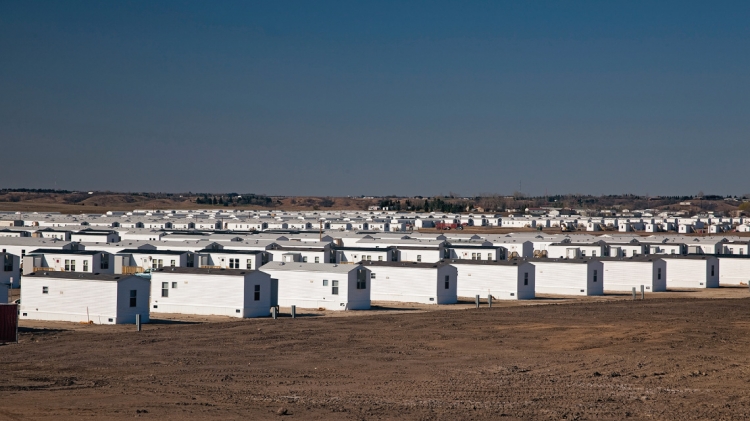
What ends up happening in the face of crisis is a reactive response where time is of the essence, so whatever temporary housing can be gathered is quickly dispatched, regardless of how suited it is to the need at hand.

The result has been played out all over the world – with thin fabric tents provided to refugees in cold climates, with shelter built to last only months given to refugees who will be homeless for years, with metal-roofed sheds given to refugees in desert climates where they store unbearable heat. These poorly planned and over general responses can create a whole new crisis of their own.

We need to make our responses more efficient, effective and sustainable. For that reason I am designing a unique tool that will give governments and NGOs the information they need to dispatch the most effective shelter solution to those in need.

I am using a modified version of a systematic design methodology known as axiomatic design. It breaks down the needs for temporary housing into functional requirements, design parameters, and process variables.

The tool will start by gathering the needs of everyone involved – users, providers and governments.

Through a “quality function deployment process”, the customers’ needs will then be converted into the functional requirements for a given situation. How many people will live there? What’s the weather like? How long will they need to stay?

The axiomatic design will then process those functional requirements to develop the components of the temporary house, while simultaneously setting development targets.

In addition, the tool will help select the best material for each part of the structure depending on the specific requirements for the specific situation.

The end result will be a recommended conceptual temporary house design that is uniquely engineered taking into consideration comfort, cost, safety, climate, duration of stay and needed functionalities.

And by using this tool, we can incorporate life cycle properties into the heart of temporary housing design to put sustainability at the core, so that this effort to help does not in the long term cause harm.

This tool can also be used for less dire situations. It can help design temporary housing for migrant workers on remote sites that are off-grid and thus would need to integrate solar energy technology.

It can even be used to help design temporary hotels for large events such as the World Cup and Dubai Expo 2020, where a city will experience a short-term but massive increase in visitors.

A tool like this can help Abu Dhabi make the most of its notable international humanitarian efforts to help displaced peoples, by designing the best possible temporary housing for them that is also good for the environment.

It can also help the emirate achieve its massive development targets by designing renewable-energy powered worker accommodation for off-grid projects.

Lindsey Gilbert is a master’s student in engineering systems and management at the Masdar Institute. Dr Mohamed Atif Omar is an associate professor of engineering systems

Better tools key to predicting increase in extreme rainfall

Though the most discussed effect of global climate change may be rising temperatures, the prospect of more frequent extreme rainfall is a more serious immediate concern.

Already some regions are dealing with increasing rainfall and serious storms – and according to the Intergovernmental Panel on Climate Change, intense rain events have become more common over the last 50 years.

As these events more common, our infrastructure must be able to handle them. Drain need to be up to the job, or the roads will flood. Dams need to protect from flash flooding, especially in dry river bed wadi areas. Airport runways need to slope, so the rain runs off into the drains (which must work).

But how much rain will these drains, dams, and runways need to cope with in the future?

Until now, that projection has been made using Intensity-Duration-Frequency (IDF) curves – a decades-old system that uses long-term rainfall records collected at monitoring stations.

For a more comprehensive picture of the possible extremes, more data should be taken into consideration.

Advances in climate research and hydrology recognize the existence of trends in rainfall records. If we’re trying to predict future rainfall, it’s only right to include these trends.

We have tried to do exactly that, developing our own IDF curves that additionally model for time and climate indices.

By factoring in these trends and oscillations in rainfall over time, we hoped to develop a non-stationary IDF curve methodology that more accurately predicts extreme rain events in a given area.

We tested our new methodology in various parts of the world; in Abu Dhabi, in Quebec and Ontario, and in Arizona, California, Nevada and New Mexico. Of the 31 stations that exhibited potential rain trends or cycles, 27 had rainfall intensity records that could be better modelled by accounting for time, climate indices or both.

Our curves have the potential to give urban planners, architects and engineers a better picture of what their structures will have to cope with.

We hope our research will be used to revise IDF relationships where ever trends and cycles are found in rainfall records.

Further advances in this area will help arid countries dealing with increased rainfall, like the UAE, to plan better for extreme rainfall events.

Being able to accurately predict uncommonly heavy rainfall events is important to protect people, property and investment from losses and harm.

Updated and enhanced IDF curve methodologies can also help us make better use of rainwater, by designing drainage systems that capture and channel it instead of allowing it to escape.

With this project and others, we believe the UAE can better prepare for the impacts of climate change and even increase its rainwater recovery.

Latifa Yousef is a Master’s student in the Masdar Institute of Science and Technology Water and Environmental Engineering Program, working with Dr. Taha B.M.J. Ouarda, Institute Center for Water and Environment Head.

Masdar Institute president to move on with fourth graduating class

It has been five years now since the Masdar Institute of Science and Technology began its classes aimed at providing Abu Dhabi with the human capital and intellectual property needed for the UAE’s intended knowledge-economy transformation.

In this half decade, we have seen Abu Dhabi Vision 2030 go from a plan on paper to a strategy in action with the development of new advanced industries, provision of government funding for research and development, creation of supportive policy for enhancing entrepreneurship and facilitation of startup companies.

Come June 4, the Masdar Institute will be hosting the commencement of its fourth group of graduates. Like previous classes, they will join the UAE economic market, where the ground has not only been laid for the knowledge economy, but the first green shoots are beginning to appear from the broader innovation ecosystem that the Masdar Institute is proud to be part of.

As the UAE draws closer to its goals for advanced high-tech industries and high-worth human capital, Masdar Institute is evolving to meet the country’s research and development needs.

To be able to develop the sectors targeted by Abu Dhabi Vision 2030 – including energy, micro-electronics, aerospace, biotechnology, health care and water – the emirate needs to produce novel technology and systems and a steady stream of high-quality technicians, engineers and scientists to produce them.

Last year we launched the new Masdar Institute Research Centres (iCentres). iWater, iSmart, iEnergy and iMicro each focus on an area of critical need to Abu Dhabi’s future progress, including research that relates to competitive hi-tech industry and will provide the emirate a scientific and technical foundation for emerging industry, to create an ecosystem conducive to innovation and entrepreneurship.

The Institute Centre for Innovation and Entrepreneurship (iInnovation) in particular is responsible for the difficult challenge of taking concepts out of the lab and into industry.

We also are looking into “disruptive” technologies that will shake up the way we do things and produce new industry pioneers. New manufacturing systems like the Internet of Things and 3D printing can bring about massive improvements in quality of life, efficiency, creativity, and customisation.

The Masdar Institute’s graduate engineering students already are showing entrepreneurial instincts. In the past 18 months alone, a Masdar Institute MSc student won the Khalifa Fund’s Technopreneur Competition for his technology-focused business concept; two others students formed start-up companies; five students won national or regional business-plan competitions; and two Masdar Institute students were selected to compete in the second round of the Khalifa Fund Ibtikari Competition.

Early stage research may seem wasteful to some, but remember electricity was little more than a scientific curio for a century or more. In the same way, the groundwork for the innovations that will shape our lives in the next century must be laid today with early stage research. We are proud to be among those explorers charting the path ahead.

And as the world’s population expands and lives longer than ever, we are turning our attention towards research that can improve longevity and healthcare.

There is a huge need for technology that can provide portable health diagnostics, drug delivery, and mobile monitoring, which our staff and students in our departments of electrical engineering, computer science and microsystems engineering are working to provide.

Ongoing work by our chemical engineering and engineering systems management researchers also aims to develop synthetic biology, big data and decision sciences that can increase, enhance and guide treatment options.

With this groundwork for Abu Dhabi’s advanced economy transformation now firmly laid by Masdar Institute, and the first saplings beginning to take root, I can leave Masdar Institute with pride and confidence.

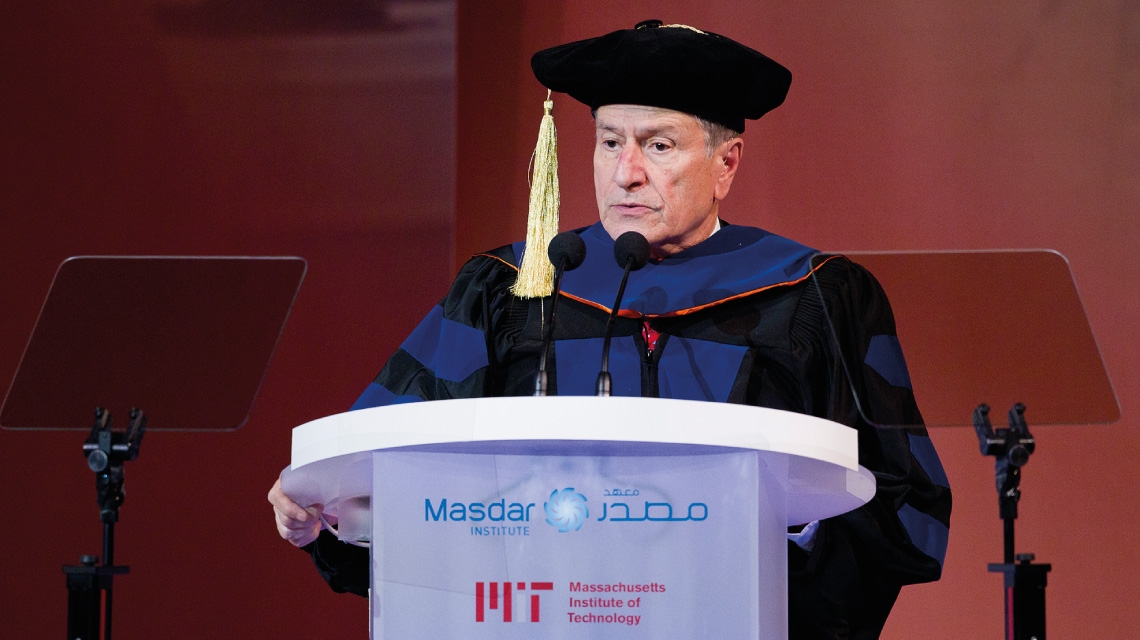
As this fourth batch of students graduate to their next challenge, I too graduate as president of the Masdar Institute and will remain as one of its loyal alumni. I will be supporting the Masdar Institute from afar, but with no less vigour or enthusiasm.

Dr Fred Moavenzadeh is president of the Masdar Institute of Science and Technology in Abu Dhabi.

The drive to cut energy costs in production of aluminum

With investment in aluminum in the Arabian Gulf expected to reach US$55 billion (Dh202bn) in 2020, competition between aluminum smelters is set to become fierce.

The difference between industry leader and industry laggard may be down to who can run the most efficient plant.

To help ensure it ends up in the former category, Emirates Aluminum Company (EMAL), the UAE’s state-owned aluminum smelter, has turned to the Masdar Institute’s researchers to help improve the efficiency and speed of aspects of the plant’s operation.

A typical aluminum plant comprises three areas: the aluminum smelter, the carbon anode, and the cast house.

In very simple terms, aluminum production involves dissolving naturally occurring alumina – aluminum oxide – at very high temperature, placing it in a steel-shelled vat lined with graphite, known as a reduction pot, that serves as a cathode and adding a carbon anode. An electrical current is then passed through the molten metal, causing aluminum metal to be deposited on the lining of the vat.

Three areas of this process are ripe for improvement.

The first is related to the energy efficiency and environmental impact of the gas-fired furnaces within the cast house.

Our research has found room for improvement, resulting in 22 per cent savings in gas consumption, depending on furnace design and operation.

The second area is related to the voltage drop in the aluminum smelter from contact resistance in the anode’s assembly parts – essentially, making sure that as much of the electricity generated is used for the separation process itself as possible, rather than being wasted in other parts of the system.

By saving a few millivolts in the cell-voltage drop, a significant amount of power can be saved.

The third area is in the reduction pot rebuild area. Because the process requires aluminum to be deposited on the lining of the vat, every so often it needs to be stopped so the metal can be removed. This requires the pot to be cooled, and then taken apart – to get the aluminum out – and rebuilt.

The quicker this can be done, the better. We proposed an efficient cooling technique to save about 36 percent of cooling time – which means we need about half the space for storing pots that are being cooled or rebuilt.

Collaborations like these are beneficial to both industry and academia. For those of us in academia, working with industry leaders like EMAL can provide the opportunity for our students to become familiar with the aluminum-smelting process in practice and apply thermal science to relevant industrial applications.

By working together to solve industry problems, we are helping to put both EMAL and the Masdar Institute on the sector map, adding to the body of knowledge about aluminum manufacturing through conference presentations and journal publications, and helping to train skilled and innovative engineers who can eventually play a key role in contributing to the economic growth of the UAE and the region.

For industry, this kind of collaboration, and others like it, can be seen as a long-term investment that increases the process efficiency, improves environment control and adds value to a business.

With this project, we hope to contribute to the ongoing development and advancement of the UAE’s ambitious and high-potential aluminum market.

And as aluminum smelting accounts for about a quarter of the power consumed in the UAE, research aimed at making it more efficient is essential for the UAE’s sustainable economic growth.

Dr. Mohammed Ibrahim Ali is assistant professor of mechanical and materials engineering at the Masdar Institute of Science and Technology


How satellites could help to contain oil spills in the Arabian Gulf

There’s a lot of oil in the Arabian Gulf. Not only is about a quarter of the world’s oil produced by countries surrounding our backyard body of water, it also has about 800 offshore oil and gas platforms and 25 major oil terminals that drill and gather oil.

All that oil is not without risk. Over the past few years, there have been up to eight major oil spills a year in the region.

Oil spills are dangerous, harmful and costly accidents. They can cause long-term damage to the marine ecosystem and force desalination plants to shut down, depriving the UAE of a critical source of clean water.

If they close the beaches and waterways they can cost the economy millions of dirhams in lost tourism revenue.

It is important then to detect spills when they happen and act promptly to limit their impact.

Satellites help greatly, allowing continuous monitoring of sea surface conditions. The Masdar Institute’s Coastal and Environmental Remote Sensing research group has already developed a satellite surveillance programme that focuses on the Arabian Gulf and the Sea of Oman, and issues early warnings when oil spills happen.

We are now working to develop a decision support system that will not only detect oil spills quickly, but also generate valuable information to help plan the response effectively.

We are working on a system to track oil slicks and predict their trajectories. It will integrate advanced satellite-based monitoring with cutting-edge observation and modelling techniques to thoroughly assess ocean currents and weather conditions in the Arabian Gulf, which are the two main drivers of oil slicks in the sea.

This integrated approach will help us determine the source of a spill, allowing us to make better decisions about how we should repond.

To achieve this, we first rely on a real-time satellite surveillance system that uses images obtained from the Masdar-based satellite receiving station to detect the oil spill and provide insight on the possible effects of the spill on coastal resources in the short term and the long term.

Once we have determined the extent of the oil pollution from the satellite images, we look at the data we have on sea currents to predict how they will affect the spill’s movement.

Third, we look at the weather in the spill area. Weather conditions are the primary drivers of sea circulation and therefore oil slick movement.

Our oil tracking system then merges all this information to predict the spill’s likely trajectory.

And lastly, we disseminate this information, issuing hazard forecasts to government and operators of critical coastal infrastructure in the UAE.

Our team recently published a peer-reviewed article, co-authored by Dr Jun Zhao and Dr Hosni Ghedira, on oil spill detection techniques in the Arabian Gulf region using satellite data.

The publication analysed the potential of using satellite sensors to detect oil pollution.

We hope this tool will help end-users to act quickly and efficiently when there is an oil spill, allowing them to determine its sources, track the spill and accurately predict where it might hit land.

It is worth noting that the satellite-based system can also be used to track spills onshore, which also present environmental and economic risks.

With this system in place, we can help the UAE to better look after the environmental health and well-being of the Arabian Gulf and the lives that depend on it.

It will help to protect the marine environment from oil spill pollution, reduce economic losses in tourism and fishing, and minimise obstruction to desalinated water production.

Dr Marouane Temimi is an associate professor of water and environmental engineering at the Masdar Institute of Science and Technology.
A cool new way to turn low levels of heat into electricity

As the world’s population grows and our natural resources diminish, it becomes ever more important to make the most of all potential sources of enerOne source that is currently largely untapped is the vast low-grade thermal energy generated by processes such as industrial processes and geothermal and solar energy.

Harvesting it seems fairly straightforward – we can, after all, turn temperatures of 150°C and lower into electricity – but exploiting it has so far proven not to be that easy.

What few technologies have been developed have been expensive – and other, more potent sources, such as gas, oil, solar and wind, give more bang for your buck.

But a developing technology now being explored at the Masdar Institute is making low-grade thermal-energy extraction a far more realistic and attractive option.

Organic Rankine cycle (Orc) technologies work by using available low-grade temperature to heat a liquid – typically an organic refrigerant – to produce pressurised vapour that is expanded to drive an electricity generator.

When the energy is extracted from the vapour, the vapour cools and condenses back to its liquid form, returning to the start of the cyclical process.

While Rankine cycle technologies are being used in a number of applications already – producing about 85 per cent of the world’s electricity – the technology has been limited to higher temperatures until now.

Our research has shown that this flexible energy-conversion tool, with only a few minor modifications in design and functionality, can be adapted to harness thermal energy from any number of heat sources, even low-temperature ones.

In fact, with the modified Orc we designed, built and tested in the Masdar Institute’s labs, temperature sources as low as 100°C can produce cost-effective electrical power at a meaningful efficiency.

Efficiency is key for any low-energy transfer device. If you only have a few dozen watts of energy to collect, a loss of even one or two is significant. The modified Orc we designed has enhanced energy-conversion efficiency in all its components to make the most of every potential watt.

We also designed our Orc to be able to handle the ups and downs of available energy without issue, as many sources of energy, such as solar, are transient in nature.

And because our modified Orc is expected to operate under these transient conditions, we built in safety and autonomy so that it can run easily, without risk of serious interruption or danger.

Systems such as ours have the potential to be widely integrated in many varied scenarios to provide electricity.

It can be built into nearly any kind of industrial machinery, transforming the heat energy that the operation produces into electricity – which can then be fed back into the plant, reducing its overall energy costs.

The small-scale nature of these systems will lead to distributed power generation, producing power where it is required and reducing the need for long-distance energy transport.

The modified Orc can even be used to make a simple generator in the boot of a car, transforming thermal energy from the exhaust gases into electricity for lighting or phone charging.

It can provide energy to a rural village or off-grid island, or be integrated with thermal-energy storage technologies to collect and store energy for the hours when the sun is down.

This technology could prove to be one of the many pieces in the sustainability puzzle being grappled with around the world.

It is our hope that it will help to reduce overall energy consumption and carbon emissions, and generate operational-cost savings for all types of users in the UAE.

This research is also contributing to the valuable hands-on mechanical-engineering skills of a new generation of UAE-trained technical experts.

It has been designed and constructed by mechanical engineering students at the Masdar Institute. Students working on this project will continue applying their knowledge and skills to the improvement of the UAE’s concentrating solar-energy production at Shams Power station.

Alexander Robert Higgo is a mechanical-engineering graduate from Masdar Institute who will work for the Shams Power Company. Dr TieJun Zhang is an assistant professor of mechanical and materials engineering at the Masdar Institute.