
Make it so! The Holodeck from Star Trek is closer than you think


18 August 2013

Readers who are Star Trek fans will be familiar with the Holodeck; a chamber that completely immerses the user in a virtual setting that is both visual and sensory.

Science fiction technologies have a long history of migration into the real world, and as a science fiction fan it is exciting that the Holodeck is now under research with primitive prototypes reported by industry and academia.

The underpinning technology covers computing, communications, displays and sensors, just to name a few. From a communications technology point of view this immersion video experience will lead to an explosions of data transmission.

Even today more than 70% of wireless bandwidth is used for bandwidth-intensive videos and that number is growing. Our gadgets and online infrastructure will have to keep pace with our increasing demand for high-quality, high-speed data transfer.

New communication links will have to be developed that can sustain data transfer rates of tens of gigabits per second to a portable device, compared to today’s rates of typically a few megabits and at best a few hundred megabits.

This will not be easy. Fortunately, the rapid gains made starting from the 1960s in shrinking the size of transistors, which today allow billions of transistors to be fitted on a single chip, have also tremendously improved the speed of those transistors.

The prospects of wireless links with tens of gigabit rates appear real, but require the most advanced nano-scale transistor technologies available today.

Academic research institutes that focus on furthering cutting-edge of science surprisingly do not often have access to this technology. Most researchers, for example, use transistors made that are 90 nanometres (millionths of a millimeter) across – the size that was at the cutting edge of computing technology around a decade ago. This type of research, however, will benefit from transistors less than a third that size – much closer to the scale now found in today’s fastest computers.

The necessary transistor technology can be found within the labs of only the world’s top industry leaders. The Masdar Institute has been fortunate to find a partner in the leading semiconductor foundry company Globalfoundries to work together to design the high-speed circuits tomorrow’s intensive data transfer reality requires.

Through this collaboration, Masdar Institute students and academics have use of Globalfoundries’ Abu Dhabi facilities and access to the most advanced transistor technology and design tools.

Masdar Institute students will also be able to produce their designs at Globalfoundries’ manufacturing facilities. We hope this will create a pool of young, creative and highly trained minds to not only conduct unique research but also contribute towards a knowledge-based economy in the UAE.

Skilled engineers, after all, are difficult to find in even the most well established innovation clusters. By working with future engineers during their studies, Globalfoundries, wholly owned by the Advanced Technology Investment Company (Atic), is contributing to the quality and availability of the UAE’s skilled professionals.

This kind of collaboration is essential for the UAE’s overall innovation ecosystem. Collaboration between industry and academia has long provided mutual benefit and synergy for not only the involved companies and universities, but also the wider industry and economy as a whole.

Through this partnership we hope not only to help provide promising research results to meet future high-speed data transfer demands, but also strengthen the UAE’s position as a regional hub for semiconductors. By working together, we can help achieve our shared goals and enjoy mutual success.
 
Dr. Ayman Shabra is an assistant professor of microsystems engineering at the Masdar Institute of Science and Technology.




Making the UAE a model for the efficient use of energy

UAE buildings have often been built more with aesthetics and cost in mind than anything else. The structure is meant to be functional, affordable and attractive. Energy efficiency has often not been an important consideration.

It should be. About 60 per cent of the energy used by the UAE goes on air conditioning. And because efficiency has often been overlooked, this figure – and the cost it represents – is much higher than it need be.

Recognising this problem, Abu Dhabi’s Executive Affairs Authority has teamed up with the Masdar Institute for a unique study of the energy efficiency of the emirate’s buildings.

It aims to characterise the buildings’ performance and to estimate how much difference planned future improvements (“retrofits”) will make.

In parallel to the traditional sampling approach – where a small number of statistically representative buildings are selected and monitored over a number of years – we are hoping to achieve faster, cheaper and possibly more accurate results using computer modelling. We have taken on the challenging and unprecedented task of building an energy demand model of the Emirate of Abu Dhabi.

Using government data on the Emirate’s overall energy-consumption behaviour, we can develop a predictive model based on certain structural parameters that represent buildings’ overall energy performance.

By tweaking those parameters we can predict the energy impact of planned retrofits, and ultimately select those that are most cost-effective.

Preliminary results have shown that simple retrofits to existing buildings can bring significant savings. Proper AC maintenance, for instance, is one of the most effective retrofits.

Structural retrofits can bring about further improvements, although they are typically more intrusive and costly.

Many buildings in the UAE are leaky and have little or no thermal insulation. Most windows are single-glazed and lack proper solar shading.

Adding insulation to the inner side of external walls, reducing air leakage and upgrading the windows can address this inefficiency.

And it’s well worth it. First, there is the obvious shared issue of global climate change exacerbated by power plants that run on fossil fuels. Second, electricity in the UAE is subsidised – and therefore so is our carefree use of it.

Additionally, the Emirate’s electricity generation plants rely almost exclusively on imported natural gas. Excessive reliance on imported fuel to meet energy demand is costly and reduces independence.

And lastly, the double-digit annual increase in energy demand. Unless that increase is checked, it may not be possible to generate enough extra electricity to meet it.

A systematic energy efficiency policy is required to keep demand in check.
This project and others will be able to show us how to reduce our buildings’ electricity consumption in a realistic and cost-effective way.
 

Dr. Afshin Afshari is professor of practice in engineering systems and management at the Masdar Institute of Science and Technology.
Economies we can learn from

By Ghita Wallin, Imran Syed and Mohamed Al Hadhrami 

If the UAE is to transform itself into one of the world’s leading economies by 2030, there is much to be gained by looking at the examples of a few other knowledge economies.

In particular, Finland, Singapore, China, Korea and Japan share histories of rapid economic growth largely based on technology, which we believe offer lessons for the UAE.

In Finland, successful information technology companies like Nokia, Angry Birds and Supercell are the result in part of a national innovation system, which emphasises interdependency and mutual interaction.

Knowledge clusters in different industries have ensured continuous generation and dissemination of knowledge and skills through networks of universities, research institutes, and companies.

Successful Finnish companies make use of this interconnected system and benefit from the educational system, skilled labour and state funding for research and development.

The UAE could greatly benefit from such a connection between its universities, research centres and companies.

Singapore, meanwhile, has experienced rapid growth thanks to massive inflows of foreign direct investment, a strong reliance on international markets, and a large degree of government involvement.

In the early 1990s Singapore identified a few sectors in which it wanted to grow and started to promote research in these areas – similar to the way the Abu Dhabi Economic Vision 2030 has identified sectors for the Emirate to focus on.

Today Abu Dhabi is where Singapore was in the early 1990s. To help Singapore grow and advance, venture capital financing schemes were set up to promote entrepreneurship and innovation development, mainly by the government.

This gave the government a say in the innovation processes and created connections to Silicon Valley in California, which helped in building innovation capabilities of the nation.

Singapore also had a separate five-year National Technology Plan, which set certain goals for research and development.

Similarly, outlining a detailed plan for the development of Abu Dhabi’s technology sector could also provide a helpful roadmap and direction for the economy.

South Korea, meanwhile, has grown rapidly since the early 1960s and is today a leading exporter of hi-tech goods.

In the 1960s the country had meagre natural resources, a low savings rate, and a tiny domestic market. It established a network of government and private technical support systems, and passed strong laws such as the Basic Research Promotion Law in 1989, which promoted basic research in universities.

It also took a very hands-on approach, choosing specific technologies such HDTV and vehicles in which it sought to excel.

Abu Dhabi could likewise do well by developing strong laws to promote technology and setting up centres that help develop specific technologies.

The most amazing success story of the 21st century is probably that of China, which has moved swiftly from a labour-intensive manufacturing-based economy to become a bastion of science and technology.

That success can be partially attributed to the fact almost 80% of China’s R&D expenditure comes from state-owned enterprises.

From our studies, we believe that the UAE could also benefit from such a move. Since its university system is still young, it would also make sense for state-owned enterprises within UAE to build up their research potential.

Lastly, there is Japan, known for its technology management and innovation. The Japanese approach of continuous improvement has helped to makes its manufacturing processes among the most efficient in the world, cutting costs and improving quality. The UAE would do well to incorporate such techniques into its own workforce.

After the Second World War, Japan created industries almost from nothing, setting up government-owned companies that were later privatised and developed into highly successful global conglomerates.

In Abu Dhabi, too, innovation through the private sector with government backing could be key. It, too, could set up companies in sectors it wished to promote and then hand them over to private players. In this way, government wealth can be used as a fertiliser to grow young start-ups until they are strong enough to be transplanted in the private sector.

Finland’s education system, Singapore’s technology plans, South Korea’s governmental policies, China’s state-run research centres and Japan’s privatization all helped these countries become hi-tech giants.

With continuing attention to policies that support technology and innovation, the UAE has the resources and the leadership to do even better.

Ghita Wallin, Imran Syed, and Mohamed Al Hadhrami are all students at the Masdar Institute.

Power grids so smart they can teach themselves

The future of electricity transmission depends on two things – renewable way to get energy and an efficient way to get it where it needs to go. The former is well under way, but the latter has a distance to go.

To make these adaptive and environmentally friendly distribution systems, or smart grids, we will need a number of significant advances in the supporting technologies and systems.

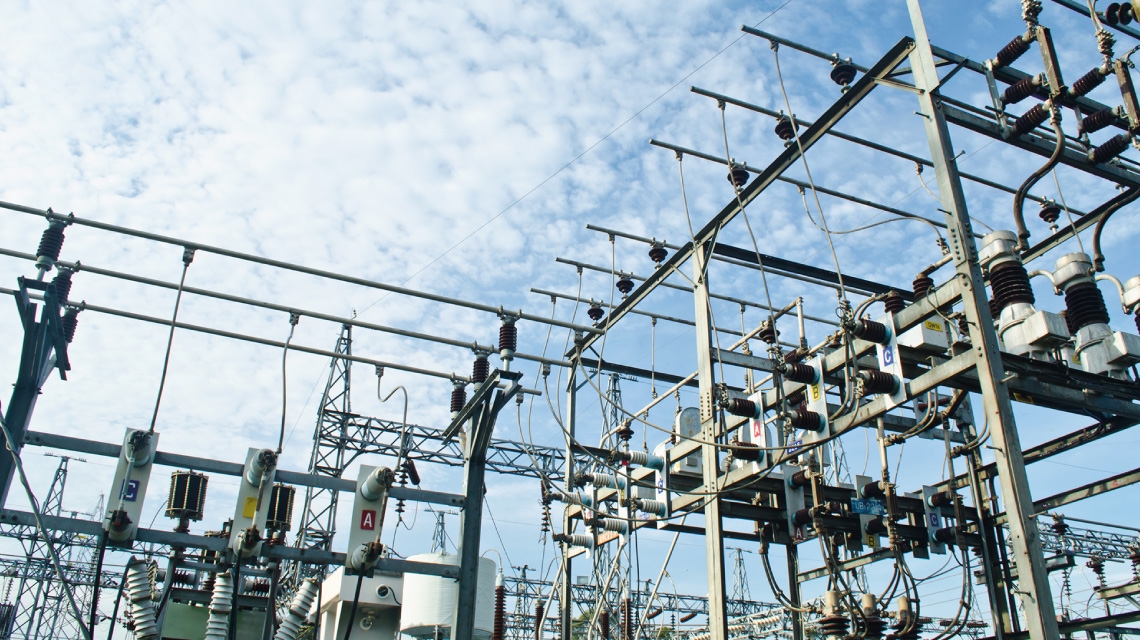
Today’s power grids are based on radial topologies – they are one-way streets coming from a single point. Electricity is generated at a central source, then transmitted and distributed to consumers in a one-way outflow. Easy to understand and easier to manage.

But soon this simplistic configuration will no longer suffice.

We expect in future that a large chunk of our energy will come from renewable sources, which are less predictable than current ones.
Sun and wind are the most obvious of these, but unfortunately neither sunlight nor wind speed is constant. It can be sunny, or windy, or both, or neither. The best science in the world cannot control the weather.
Nor, of course, is the demand for electricity constant. People will turn up their air conditioning in the heat of the day, but few people are up using their electronics and appliances in the middle of the night.
To make matters even more complicated, renewable sources of energy are quite often physically spread out, such as the case with solar roof panels. Instead of a single large source, such as a power plant, you have lots of small sources in many places.
Even power grids that include lots of alternative energy sources would still require conventional power plants to meet the peak demand for electricity.
As a result, we need grids in which power can flow in both directions – individual users can be either a net supplier or consumer at any given time, depending on the conditions. Think of a motorway system instead of one-way streets.

Consumers need to be able to tap the grid for electricity when their own renewable energy supply runs low, or supply it back to the same grid when their rooftop solar panel or backyard wind turbine provides an excess.

A complex problem calls for a complex solution, and among the most powerful computational tools available to scientists today are machine learning algorithms.

These are mathematical techniques that enable computers to adapt and “learn” to handle specific and complex tasks. They have been deployed in systems ranging from smart phones to advanced robotics.

In the context of an electricity grid, we are looking to design algorithms that can mitigate the conflicts and problems resulting from the complexities of a smart grid whose flow changes with the flick of every light switch.

In particular, our team of researchers at the Masdar Institute of Science and Technology has been tackling the problem of fault detection.
Faults are abnormal occurrences in a power grid that can choke or interrupt the supply of electricity. They can have extremely serious consequences – a sudden power spike can damage equipment, or injure or even kill the people near it.

Beyond simply detecting faults, these intelligent algorithms eventually promise more advanced capabilities such as finding the locations of faults, identifying their causes and even predicting them before they happen.

These machine learning techniques will be used to design relays that can help to protect a system and its users from these potential dangers.
And while these systems should work from the moment we switch them on, that is just the start. As they are used more, they will be able to adapt and learn, constantly getting better.

By providing some of the smarts in a smart grid, these systems will help keep future power grids online so people have all the energy they need without interruption.
The reliable and affordable supply of energy is critical not only to living comfortably, but also to economic strength and stability, which are essential for any competitive and ambitious country.

Dr. Wei Lee Woon is an associate professor of computing and information science at the Masdar Institute of Science and Technology and Dr Hatem Zeineldin is an associate professor of electrical power engineering at the Masdar Institute, and head of the department of electrical engineering and computer science.

Success of people means success of the nation

November 30, 2013

In nation building, one of the most important building blocks, perhaps even the cornerstone, is education

On the occasion of this 42nd UAE National Day, let us take a moment to look back at the hard work and forward thinking strategies that helped us reach this point today.

Since independence in 1971, the UAE leadership recognised the country’s amazing potential and set about laying the foundation for its progress and development. And critical to any success of a nation was first the success of its people, which founding father, Shaikh Zayed Bin Sultan Al Nahyan rightly recognised as stemming from education. “The real asset of any advanced nation is its people, especially the educated ones, and the prosperity and success of the people are measured by the standard of their education,” he declared.

That is because in nation building, one of the most important building blocks, perhaps even the cornerstone, is education. It is the key to many other important goals and achievements. Education leads to gainful employment of the people, giving the individual an opportunity to use his or her potential to serve him or herself, their family, their community, society, and ultimately to contribute to the country. A happy, productive, educated individual is a major, necessary element of a successful nation.

That is why creating jobs is such an important focus of the UAE government. And not just any jobs, but productive, rewarding and empowering jobs are of particular focus — jobs that create wealth not only for the employee but also, for the employer and the country overall. The most valuable jobs for the UAE today are the ones that help the country achieve economic diversification.

Advancing beyond our reliance on fossil fuels will help the UAE not only gain greater economic security, by positioning multiple sources of national revenue, but also allow us to tap into a much more valuable resource — the Emirati people. The UAE’s world class infrastructure, access to information, rapidly improving academic sector, and national ambition can be utilised to help the UAE’s citizens and residents alike develop into high-value human capital. As scientists, innovators, entrepreneurs, engineers and technicians, the UAE’s people will help generate wealth and pride for the UAE.

Additionally, the more educated we have become, the more we understand ourselves, the world around us, and our challenges and opportunities. That is why the UAE leadership has also added sustainability to its national priorities. While even decades ago Shaikh Zayed recognised the value of preserving the UAE’s environment and resources, today we know even more how important it is to live within our means. Using our water and energy judiciously will help guarantee that our children and grandchildren have enough to also live well, which is in keeping with the UAE’s values of generosity and family.

Furthermore, global climate change has become an issue that affects us all. The problems it creates like air pollution, cyclones, famine and floods do not recognise borders. In order to safeguard the health, environment, and prosperity of the UAE, our leadership today has carried forward the values of sustainability first espoused by the founding father by making carbon emission reduction and renewable energy important national goals. To help achieve those goals, Abu Dhabi has also established a number of entities that aim to develop and promote the solutions needed to tackle global climate change.

Research and innovation

The Masdar Institute of which I am the president is a major element of this, acting to educate the UAE’s talented youth to allow them to contribute to the quality of life in the UAE through research, development and innovation. We are working with other institutes and industrial giants, from within the UAE and abroad, to achieve our shared goals of establishing a high-tech research and innovation ecosystem. We are extremely happy that local giants like Advanced Technology Innovation Company, Mubadala Aerospace, EMAL, etc., have put their trust in Masdar Institute to help them develop the technologies that will maintain their global competitiveness. We are also very happy that major international organisations and multinational groups are working with Masdar Institute in contributing to the quality of life as well as economic development of the country and the region.

With the guiding hand of our leaders and these ongoing efforts I am confident that with each passing UAE National Day, the country will draw ever closer to its goals of prosperity, sustainability and fulfilment of its people. We hope Masdar Institute and its partners will help the country not only achieve those goals, but many more in its certain bright future.

Dr. Fred Moavenzadeh is President of the Masdar Institute of Science and Technology.
It may be wise to salt away our solar energy in the sand

By Dr. Nicolas Calvet 
December 15, 2013

Solar energy is everywhere. From dawn till dusk, the sun’s rays beat down on the earth, providing warmth and light. The solar energy hitting the earth each year exceeds the total energy consumed by humanity by a factor of over 20,000 times.

But once the sun sets, or clouds fill the sky, our supply of solar energy is cut off.

So how do we store solar energy to provide electricity at night?

The obvious solution of storing the energy in batteries is presently not economical at the massive solar power plant scale.
Other options, of compressing and uncompressing air, or pumping water up a slope to use the energy it generates when it flows downhill, are all energy intensive themselves and require large storage areas or riverbeds.

The best answer today lies in thermal energy storage (TES) and heat transfer – using the sun’s energy to heat a material up and then using that heat to create steam on demand that can power a turbine and so generate electricity.

In concentrated solar power (CSP) plants, molten salts have been the material of choice to store solar energy since the 1980’s.

The molten salt system uses concentrated solar energy to heat up nitrate salts and then, when solar energy is not available, using that heat to create steam to generate electricity from a turbine.

Our collaborating partner Masdar participated in the development of the Gemasolar plant in Spain, the world’s first CSP plant to produce electricity for 24 hours a day.

Scientists at Masdar Institute, however, think they may have an alternative to molten salts for the next generation of CSP plants.
It builds on a similar two-tank concept, but is cheaper, better for the environment and even more efficient because it operates at higher operating temperatures.

And the material they are looking at to store this thermal energy is one that is in plentiful supply in the UAE: sand.
Sand has many promising properties. It is cheap. And it can store thermal energy at higher temperature –1000°C, against molten salts’ 600°C. That means hotter steam for the turbine – and more efficient electricity production.

And the sand-based energy storage system the Masdar Institute is developing will do away with heat transfer fluids, pumps and pipes, resulting in a significant decrease in operation cost.
The technology Masdar Institute’s thermal energy storage research team is designing would use two tanks of sand, using gravity to transfer it from one tank to the other, as in an hourglass.

The upper tank will hold the “cold” (but still 250°C) sand, with the heated (800°C) sand in the lower tank.

This ‘cold tank’ will be in the shape of a hollow cylinder, with the beam of energy from the solar reflectors down the middle. When a valve is opened, the sand will flow into the path of this beam, and the concentrated solar energy will heat it up. Then the hot sand is recovered and stored in the lower tank until energy is needed.

To discharge the system, a heat exchanger is immersed in the heated moving sand, producing superheated steam that runs the turbine.

The cooled sand is then sent back to the top of the cold tank by a conveyer belt to close the loop of this continuous process.

This technology, once perfected, should provide the UAE’s solar ambitions with an efficient, cost-effective and environmentally friendly way to store energy for 24/7 CSP plants. It can also later be adapted to other industrial processes, such as steel making, that produce waste heat that could be used to heat the sand – and thus reduce the net energy use of these facilities.

With this research, we hope to help the UAE reach its targets for renewable energy integration and carbon footprint reduction while providing its economy with a lucrative and high-demand innovation.

 
Dr. Nicolas Calvet is an assistant professor of mechanical and materials engineering at the Masdar Institute and leads its thermal energy storage group.

Disaster prediction could help protect ocean industries

By Dr Marouane Temimi, Dr Hosni Ghedira and Dr Taha Ouarda
December 23, 2013

The UAE’s history is intertwined with that of the Arabian Gulf. It provides the country’s food, livelihood and access to trade.
In the modern age, the Gulf provides, through desalination, most of the UAE’s water while also being a source of seafood and recreation. Its importance can hardly be understated.

But the high marine traffic that comes with it exposes the UAE’s vulnerable coastal resources to a number of hazards. In 2008, for instance, a major red tide event significantly affected the region and disturbed the desalination upon which we all rely for our drinking water.

Red tides happen when colonies of algae grow out of control, producing toxins harmful to people, fish, shellfish, marine mammals, and birds. Fishing must be halted, as well as swimming and even desalination.

The Arabian Gulf also faces a high risk of oil spills from tankers, offshore platforms, or submerged pipelines. Leaks, too, hit desalination and fishing.
So it is important to monitor water quality in the Arabian Gulf, to quickly detect and even forecast red tide outbreaks and other hazards along the UAE’s coastline.

Local ship-based observations of water quality are not enough. The Masdar Institute is leading research that combines high-resolution satellite data with 3D models of ocean currents to monitor and ultimately forecast water quality in the Arabian Gulf, in real time.

This way, we aim to monitor and forecast coastal hazards with enough accuracy – and far enough ahead – to be able to give operators and managers of coastal facilities the advance warning they need to plan and face those potential threats.

Not only that, we aim to help develop emergency and contingency plans that allow such facilities to recover more quickly after disaster events.

The result, we hope, will be enormous savings from reduced loss of productivity in impacted sectors while also lowering any risk to human health.

Dr Marouane Temimi, Dr Hosni Ghedira and Dr Taha Ouarda are faculty members in the Institute Centre for Water and Environment (iWater) and chemical and environmental engineering department at the Masdar Institute of Science and Technology.

UAE seeks edge in aviation anti-corrosion project

By Dr Tariq Shamim
January 5, 2013

Airplanes are marvelous – and even better when they don’t rust to pieces in the air.

Ensuring that they don’t is quite a challenge. The air they fly through is moist – especially in coastal areas like the UAE – as well as being often either extremely hot or freezing cold, and of variable pressure depending how high up a plane is.

Not only that, there are some extremely nasty chemicals in the upper atmosphere that are prone to eating away components made of metal and plastic alike.

Which, needless to say, is not what you want when the lives of hundreds of passengers depend on each and every component staying sound.
To stand up to these exposures, many aircraft parts are plated with electrolytic hard chromium (EHC) – a thin layer of the metallic element chromium that helps surfaces resist corrosion, while hardening them and making them easier to clean.

But while chrome plating is the current benchmark for aircraft surface protection, it is far from green, releasing many toxic and dangerous materials into the atmosphere.

Researchers at the Masdar Institute are hoping to come up with something better. Mubadala Aerospace has funded a project – being carried out in collaboration with Abu Dhabi Aircraft Technologies (ADAT), a wholly-owned subsidiary of Mubadala – that looks to use cutting edge thermal spray techniques to coat aircraft landing gears to protect against corrosion and wear resistance.

The process uses heat to turn a material – metallic or non-metallic – into molten droplets. Those droplets are then propelled on to a surface, creating a protective layer.

It’s a less environmentally hazardous way of applying a coating, doing away with the carcinogenic hexavalent chromium needed in EHC plating baths.
It’s also more flexible. Thermal spray coating systems can be scaled down and made portable, allowing worn or damaged parts to be repaired on the spot rather than having to be dismantled and either replaced or sent to a distant machine shop.

The only question, then, is how best to apply thermal spray coating to get maximum advantage while keeping costs to a minimum. To this end, the Masdar Institute team is making a comprehensive study of the various parameters that affect the coating quality. They have identified ideal operating parameters to ensure the strongest and best quality protective coating for a plane. With this information, ADAT will be able to take the utmost advantage of the benefits of thermal spray coating.

In addition to being environmentally friendly, thermal spray coatings perform better, and are more reliable than other methods of surface protection.

The methodology and data this project generates could provide Abu Dhabi’s fledgling aerospace sector with an economic edge over competitors while meeting the highest health, safety and environmental impact standards.

The technology is also of interest to other industries, including car-making, oil and gas and even the defense industry. Developing Abu Dhabi’s knowhow in this area should provide the Emirate with a valuable product and service to tap into a global market that is expected to be worth almost $14 billion next year.

Dr Tariq Shamim is a professor of mechanical engineering at the Masdar Institute of Science and Technology.
Tapping viruses to lower desalination costs

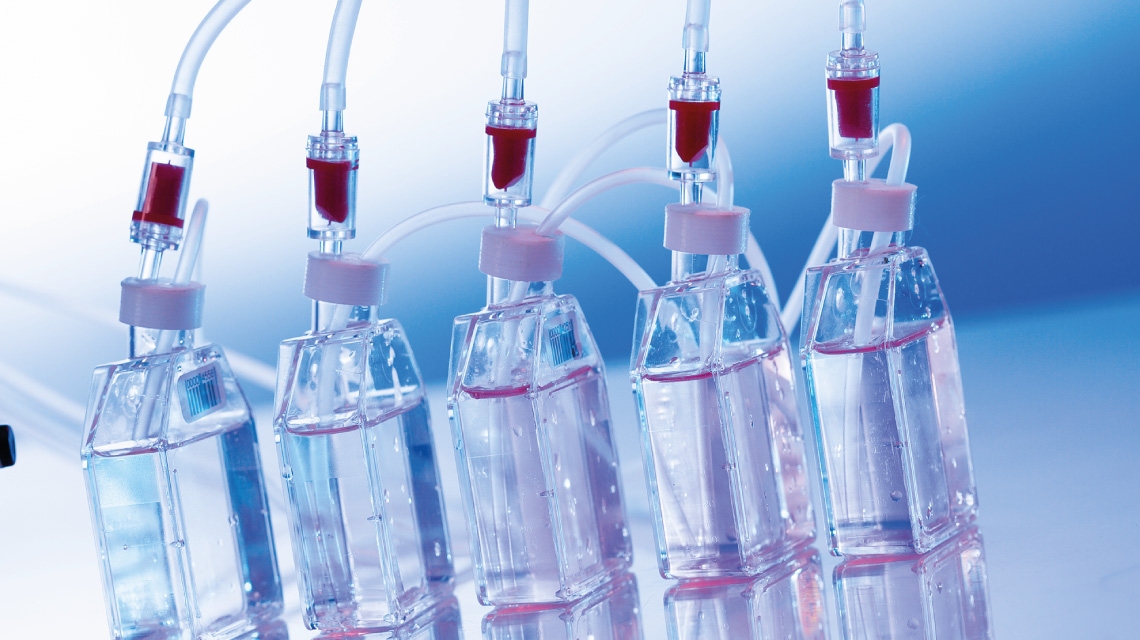
Nature is an amazing designer. It has, over many millennia, evolved systems that are more efficient, productive and capable than what even the cutting edge of modern technology has been able to mimic.  A good example of the result of this evolution is a virus. In its most basic form, a virus is simply a bit of genetic material (made up of either DNA or RNA) contained within a protective protein coat.  It exists to hijack an infected cell in order to make many copies of its genetic material (also called a genome), which is then stuffed into protective protein coats creating new virus particles.  Viruses accomplish this hijacking of a cell mainly by making proteins according to a template contained in their genome.

Their functional simplicity makes viruses appealing to scientists.  In a laboratory technique known as phage display, when a fragment of DNA is inserted into a virus that specifically targets bacteria – a type of virus called a bacteriophage, or phage for short – a new protein sequence representing that inserted DNA will appear on the virus’s surface.  The result is a virus that can express an artificially designed protein sequence on its surface. Phage display has gained popularity as a tool to identify novel interactions, either between proteins and other proteins, or between proteins and nucleic acids (the building blocks of DNA).  Being able to spot these interactions is useful in everything from pharmaceuticals to cutting edge bio-electronic hybrid technologies.

What Masdar Institute is now looking to do is to apply this technology to sustainability-focused nanoengineering.  We are trying to identify bacteriophages that are suited for the manufacture of biomaterials that can be used to create organized nano-structures, bio-filters and biosensors.  By inserting random DNA sequences into a phage known as M13, we will create a “library” of phages that will display a large number of novel and random proteins on their surface.  We hope this library will contain phages that can bind to particular organic and inorganic nanoparticles. We will then make many different types of phages, giving us something akin to a “phage Lego set”, a virus tool box. From there, we will mix and match various phages in the toolbox into combinations that between them can assemble desirable biomaterials.

To begin with, we will use this phage display technique to look for short proteins (also known as peptides) that can be used to make membranes for use in desalination and water treatment – an essential process in a country as dry as the UAE.  Membrane-based desalination – as opposed to the traditional vacuum distillation-based approach – is growing in popularity, but faces some challenges.  A particular difficulty known as biofouling arises due to the growth of unwanted microorganisms on the membranes.

When biofouling becomes too severe, the membrane must either be cleaned or replaced, increasing operational costs.  Our objective is to make a membrane that resists this fouling. To do that, we will screen a pool of viruses for peptides that stop the microbes growing and sticking to the membranes. Once we have found these peptides, we hope that other researchers at the Masdar Institute can help us make new membranes that have the peptides embedded in them.  These membranes will repel the microorganisms or inhibit their growth – meaning that the membranes last longer and end up costing less.  With this area of research, we hope to contribute to the UAE’s development of sustainable solutions that will not only improve the health of the environment, but also provide it with innovative intellectual property that will be in high demand around the world.

Dr. Ahmed F. Yousef is an assistant professor of chemical and environmental engineering at the Masdar Institute of Science and Technology.
UAE scientists look to grow biofuel even in seawater

There are many plants that could, in theory, be used as a source of biofuel – a natural renewable fuel with the potential to replace some of the fossil fuels we currently depend on.

But extracting this biofuel from plant matter can be difficult, expensive and inefficient – making the biofuel too expensive to be a realistic option.

What we need is enzymes to do the job for us, extracting and breaking down the plant cellulose into useful biofuel. And one good place to look might be the microorganisms and fungi that already do a similar job in nature.

If we can find and identify microorganisms that produce cellulose degrading enzymes as a normal part of their makeup, the process of turning plant matter into fuel may be simplified and made more affordable.

That is why Masdar Institute, through funding from the Sustainable Bioenergy Research Consortium, is working to identify novel biomass-deconstructing enzymes in microorganisms native to the UAE that are suitable for biofuel production from local species of salt-tolerant plants.

The UAE’s mangrove forests are a unique ecosystem that have evolved over millennia to deal with their own waste. The trees constantly produce cellulose waste, in the form of litter, that falls into the sediment below. There, it is decomposed by filamentous fungi and microbes.

These fungi in particular are known for their role in decomposing and recycling cellulose biomass – and that makes them a good place to look for enzymes called cellulases that help breakdown cellulose.

Mangroves host many types of fungi, but very little is known about cellulolytic fungi from mangroves in the Middle East.

The mangrove sediments of Abu Dhabi are particularly interesting because they are subjected to high temperatures (above 40C) and salt concentrations.

This means that whatever fungi live in the mangrove sediments are likely to have unique qualities and enzymes that enable them to tolerate the harsh conditions of their environment.

Salt-tolerance is of particular interest for cellulase screening, as they could help us extract biofuel from salt-water loving plants. Halophytes, as such plants are called, could easily be cultivated in the UAE using seawater instead of freshwater, making them a far more environmentally friendly option for clean fuel.

So far, we have isolated 15 morphologically different types of filamentous fungi – 10 of which were cultured to purity.

Most of those belong to a group that is known to tolerate up to four times the normal salt concentration of sea water. We are now working on characterizing and screening their secreted proteins for cellulase activity.

It is our hope that through this research we can identify fungi that have evolved in the UAE’s landscape to breakdown and feed off the high energy, salt-loving plants that we are researching for biofuel production.

These biofuels can be used in place of many forms of fossil fuels to help Abu Dhabi reach its goals for sustainability through the production of clean fuels.

With the global biofuel market expected to be worth more than $180 billion by 2021, this project could also provide Abu Dhabi with a valuable export product for its knowledge-economy.

Dr. Lina Yousef is an assistant professor of water and environmental engineering at the Masdar Institute of Science and Technology.

Camera under development at Masdar Institute could tell if your food is safe

By Dr. Prashanth Reddy Marpu
March 2, 2014


Imagine taking a picture that tells you not only what is in the picture, but what it was made out of, how hot or cold it is, or even what chemicals it gives off.

It could tell you almost anything you needed to know without having to physically be there to test anything.

It sound almost too good to be true, but in fact such a camera already exists, in the form of a ‘hyperspectral camera’. Hyperspectral cameras acquire images in hundreds of narrow spectral bands across the electromagnetic spectrum building the so-called image cube.

With its ability to distinguish between objects based on the observed spectra, hyperspectral imaging has a great potential to perform non-invasive monitoring.

But while this technology has existed for several years, it has until now been expensive and limited in its usage.

op-ed-inside

This is what researchers at the Masdar Institute are working to change, developing advanced algorithms to process data acquired using hyperspectral cameras for various applications.

But what exactly would such cameras be used for? That depends on the frequencies at which the images are acquired.

A camera focused on the short and midrange of infrared would be ideal to detect various gases, pollutants and minerals. That would make it useful for detecting gases and pollution, process control in chemical reactors, and advanced non-invasive healthcare diagnosis.

We are working, too, on a hyperspectral camera customised to assess food quality.

Traditional food quality assessment requires time-consuming lab tests. Samples of food have to be collected and sent to a lab to be broken down and processed.

We hope to replace that with a handheld hyperspectral camera that could be used on site, in supermarkets and restaurants, and give near-instant readings.

This would be a boon to the UAE’s municipal food authorities who have to dedicate so much time, money and energy to ensuring that the food and produce sold in the country are safe for consumption. It would make it much easier, and cheaper, to carry out far more inspections – which would make our food safer for all of us.

The team are also working on a hyperspectral total sky imager capable of monitoring aerosol and cloud characteristics – which would for example help us in assessing the availability of sunlight for solar power.

And there are plenty of possibilities that we have not even begun to investigate. Hyperspectral cameras could be put to use in mining, pollution monitoring, greenhouse monitoring and waste management, to name but a few.

This novel research will help safeguard the health of the UAE’s people and environment, and by making it easier to continuously monitor the environment will facilitate sustainable development.

The technology that will be developed within this project will be the first of its kind in the region and will help in establishing a centre for electro-optical instrumentation and corresponding applications (especially hyperspectral imaging) in several fields within Abu Dhabi.

By involving young engineering students in this research, this project will also help provide UAE with unique and competitive human capital by way of trained experts. With the growing number of applications of hyperspectral imaging every day, this project will open up a lot of opportunities for hyperspectral imaging applications in UAE.

Dr Prashanth Reddy Marpu is assistant professor of water and environmental engineering at the Masdar Institute of Science and Technology