
The Power and Potential of Education for Climate Change Awareness


Erica Solomon
News and Features Writer
12 December 2016

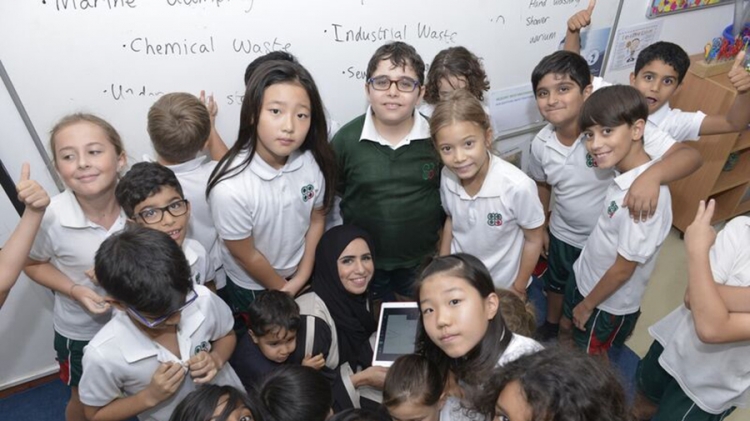
Haleimah AlZeyoudi, a Masdar Institute Class of 2013 MSc in Computer and Information Science graduate, began her studies at MI with a hunger to use digital technologies to make UAE’s cities smarter, healthier and more prosperous. When she decided that such technologies could be easily adapted to transform another key sector targeted for innovation by the UAE – education– she launched her own initiative to make learning fun and easy through virtual, individualized learning tools.
“The ultimate aim of my work is to make it easy for the next generation to learn with love,” AlZeyoudi explained. Advancing education in this way can help the UAE more effectively achieve its prosperity and human capital development goals, she shared.
“Education is a powerful tool that greatly influences all of humankind. If you invest in educating people, you will be investing in the future leaders who will determine the direction the country takes. That is why I want to influence the future of education in UAE and contribute to it with ideas and new techniques,” she said.
AlZeyoudi has titled her initiative TechNEdu (which stands for “technology in education”), under which she has been working to develop advanced modes of teaching and learning to decrease the workload of teachers while simultaneously improving student achievement and understanding. In support of this since 2013 she has been working to develop custom-tailored websites, mobile applications, computer games, and Xbox games that are designed to meet the exact needs of a teacher and his/her students for a particular purpose.
One of the products AlZeyoudi developed is an Xbox game for kindergarten classes at a private school in Abu Dhabi. “The teacher asked us for a way to motivate kids to do physical exercises to prepare their hand muscles for writing. In response, we developed a game that has funny sketches of the body and instructions for performing the exercises,” AlZeyoudi shared.
Another application developed through the TechNEdu initiative was for a fine arts classroom in a primary school. The app involves teaching a group of students how to work together to draw a picture virtually. AlZeyoudi credits the programming training she received – which included developing programs for mobile apps and for a hands-free motion control gaming system called Xbox Kinect during her thesis research, which was focused on developing human mobility detection systems to improve a building’s energy performance – with inspiring many of the programs she has developed through TechNEdu.
As a young mother of three, AlZeyoudi did not have to look far to see the need for transformative tools that would make learning fun and meaningful for the child and instruction easy and effective for the teacher.
“In my family, seven members are teachers and every day I would hear their stories of boring teaching methods and the amount of effort required to teach students. I would also hear stories of students who weren’t satisfied with their teachers’ instructional techniques. When my oldest son joined kindergarten, I started to look for some teaching applications but I couldn’t find many options available. That is why I decided to create my own,” she explained.
Equipped with advanced computer science and programming skills and an entrepreneurial spirit, AlZeyoudi launched the TechNEdu initiative with an unshakable determination that has kept her motivated even in the most challenging of times. For the first three years of operation, she was the soul developer of many of the 42 learning and educational apps and programs developed. While financing and operating her initiative was daunting at times, the challenge inspired AlZeyoudi to push through the difficulties and work even harder to achieve her goals.
“Being the only engineer to develop apps and program games requires lots of time and effort. Sometimes that delayed estimated delivery times of the product. But these challenges kept me going and strengthened my determination to finish each project,” AlZeyoudi shared.
“Each product has meant something special for me. Each visit and meeting with teachers, which involved gathering ideas and brainstorming the final design, was an incredible experience and opportunity, from which I grew professionally and personally. Working during my free time and overnights definitely paid off when I saw kids smiling during the apps’ demonstrations,” she added.
AlZeyoudi is driven by a keen desire to give back to her country. TechNEdu, she reasoned, is an ideal platform that leverages her skills in computer science, programming and smart systems to advance the UAE’s prosperity and growth.
The tech-savvy and ambitious UAE national plans to expand her initiative to the global market by incorporating more instructional best-practices into TechNEdu’s portfolio of games and programs, with the hopes that eventually the digital learning tools may influence global education reform efforts.
AlZeyoudi’s continuous aspirations for self-improvement have also culminated in the publication of two Arabic novels (Sa’aeesh and Bentezar Weladah, which are roughly translated as “I Will Live” and “Waiting for Birth”), with a third book of poems currently in progress. She is also pursuing a doctorate degree in computer science from New York University Abu Dhabi (NYUAD) so that she can continue pursuing her goal of unlocking the transformative potential of digital technologies to improve education, energy and other key economic sectors in the UAE.
AlZeyoudi’s dedication and highly driven personality demonstrates MI’s commitment to attracting and cultivating the very best and brightest innovators and instilling in them the passion, confidence and know-how to change the world.
Erica Solomon
News and Features Writer
04 June 2017

Dr. Lamya N. Fawwaz is Vice President of Institutional Advancement and Public Affairs at Masdar Institute of Science and Technology. She holds a PhD in Higher Education Administration from George Washington University and an MSc in Information System Technology.
Printed in The National on 10 April 2017.
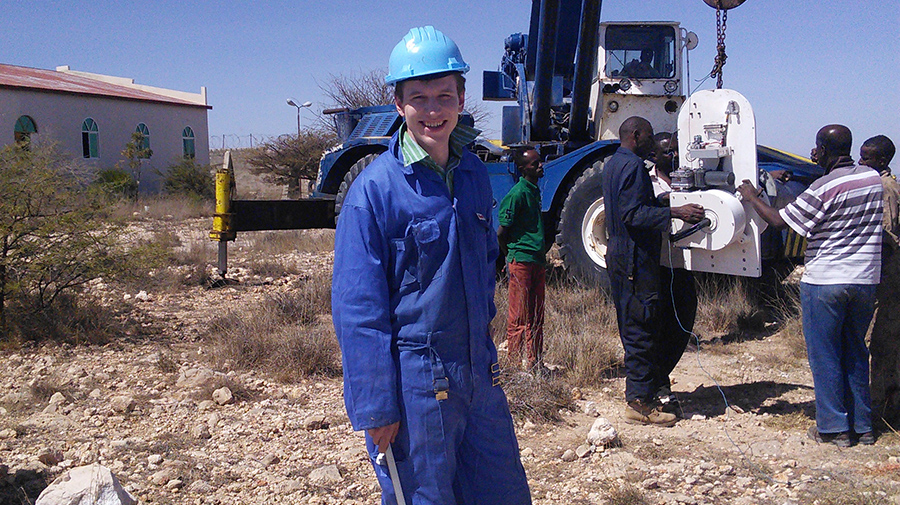

Dr. Steve Griffiths is Vice President of Research and Interim Associate Provost of Masdar Institute of Science and Technology.
This op-ed was first published in Issue 31 of Innovation and Tech in May 2017.
Senior Vice President of Research and Development Dr. Steve Griffiths shares insights from his recent EDA report and upcoming WFES panel on the value of bilateral diplomacy for oil exporters
Energy diplomacy – specifically bilateral diplomacy – is an invaluable tool for countries navigating the changing global energy landscape and their own energy transitions. The UAE, as country transitioning from a hydrocarbon-dependent economy, to a diversified knowledge economy, provides many lessons for other hydrocarbon economies, which also offer indications for where to further direct the country’s diplomatic efforts.
I recently published a report with the Emirates Diplomatic Academy Insighttitled ‘Bilateral Energy Diplomacy in a Time of Energy Transition’, in which I shared my overview and analysis of bilateral energy diplomacy as a foreign policy tool, analyzed the strategic objectives of bilateral energy diplomacy for the Gulf Cooperation Council countries, provided a case study on the UAE, and ended with foreign policy conclusions and recommendations for enhancing bilateral energy diplomacy for the UAE and all hydrocarbon-exporting countries.
The report findings, which I will be discussing at the upcoming World Future Energy Summit (WFES) Energy Transition Forum Program, in a panel on 15 January titled ‘In Conversation: The foreign relations of energy transition – positioning the Gulf’, explain how the UAE is uniquely positioned to take advantage of the current state of flux in the energy market through energy diplomacy.
The world is in the early stages of its energy transition away from dependence on hydrocarbons to renewable energy. This change presents many challenges for oil and gas exporting countries in terms of their economic and political relationships and calculus, particularly those, like the UAE, which are simultaneously developing clean energy technologies.
The UAE has already been developing strategic bilateral relationships regionally and globally in an effort to effectively position itself for the energy transition. In 2017 the UAE launched its Soft Power Strategy, which aims to increase the UAE’s global reputation abroad by highlighting to the world its identity, heritage, culture and global contributions. The pillars of this strategy are diplomacy in its many forms, including humanitarian, scientific and academic, cultural and economic.
The UAE’s core energy relationships are currently with China, India, Japan, South Korea, Singapore and Thailand, and each of these countries factors strongly into the UAE’s foreign policy not only as a market for oil exports, but also for broader energy and economic relations. Incidentally, each of the UAE’s key Asian trade partners is also classified as ‘special’, according to the bilateral diplomatic relations classifications of peripheral, normal, and special. This reveals the importance that the UAE gives to these relationships.
As bilateral energy diplomacy aims to ensure a country’s long-term energy security and economic well-being by fostering foreign relationships with energy suppliers and customers, I recommend the UAE continue to strengthen its relationships and efforts in bilateral energy diplomacy. The UAE’s dual energy diplomacy interests arising from the globalenergy transition include developing business opportunities to monetize the country’s hydrocarbon resources and ensuring economic diversification that lessens dependence on oil export revenues.
Based on these considerations, I make the following bilateral energy diplomacy recommendations:
Develop special bilateral relationships with countries that can provide strategic benefit during the energy transition: The UAE has already established special strategic bilateral relationships with a number of countries that are important partners for energy and economic reasons. Additional special relationships may be formed with countries that have strong capabilities in key growth areas such as petrochemicals.
Engage key national stakeholders beyond the ministry or department overseeing foreign affairs in the fostering of special bilateral relationships: Special bilateral relationships require regular consultations between partner countries and the UAE’s political leadership. These consultations will of course include the UAE Ministry of Foreign Affairs and International Cooperation but should extend to other UAE ministries dealing with energy, industry, environment and technology. Organizations such as ADNOC and Mubadala already play an important diplomatic role in bilateral energy diplomacy and their engagement is important.
Develop and leverage soft power in bilateral energy relationships: The UAE has effectively exercised soft power via multiple bilateral investment relationships established by Mubadala as well as other UAE government organizations. The establishment of UAE-China Week is a further effort toward soft power that could be replicated in other key bilateral relations.
Pursue bilateral collaborations to advance national science and technology capabilities:Digitalization, and particularly AI, is one of the most critical areas of advanced technology development across all industries. The UAE’s strong bilateral ties with countries at the forefront of AI, especially China, make AI collaboration an important opportunity that can have direct benefit for the country’s energy sector.
Engage in multilateral diplomacy to complement bilateral efforts: Multilateral diplomacy will continue to be important for the UAE to secure a voice in global energy governance. This means that the UAE’s current strong engagements with the IRENA, OPEC and other multilateral organizations that are shaping the global energy dialogue are essential.
While these recommendations are derived from analysis of the UAE’s context and initiatives, they are broadly applicable to the bilateral energy diplomacy of hydrocarbon-exporting countries.
Dr. Steve Griffiths is Senior Vice President of Research and Development at the Khalifa University of Science and Technology.
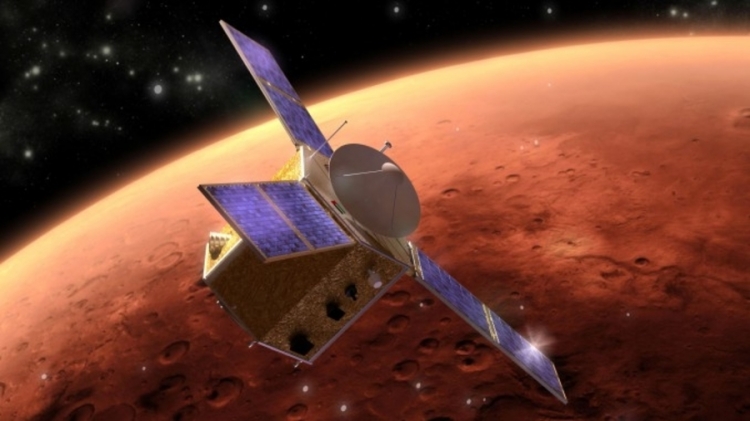
Earth and Mars have a lot more in common than you may realize. Both have polar ice caps, seasonable weather changes and observable weather patterns. The planets’ similarities and differences offer a unique research opportunity as they relate to climate change, and how each planet evolved given their unique circumstances.
The Martian atmosphere is of particular interest to the scientific community, as it relates to issues of meteorology, atmospheric origin and evolution, atmospheric dynamics, and chemical stability. The atmosphere on Mars is composed mostly of carbon dioxide and has far less pressure than that of earth – equivalent to only about 1% of Earth’s pressure at sea level. The pressure, temperature, vapour, and atmospheric composition result in a constantly dusty atmosphere.
Being able to gather and assess high quality and detailed data on critical parameters of the Martian atmosphere would allow scientists to compare Mars with Earth, which could help us understand the atmospheric evolution of not only Mars, also of Earth. That is why Mars is of particular interest to the international scientific community, and is a focus of the Emirates Mars Mission (EMM), which has a goal of sending an unmanned probe to Mars by 2020.
In response to the great scientific value of Mars and expected data produced from UAE’s successful probe, Khalifa University’s Research Center for Renewable Energy Mapping and Assessment (ReCREMA) is concentrating on the Martian lower atmosphere and meteorology as part of the center’s focus on planetary and interstellar research.
In particular, we are responding to the technical goals of the mission, which intends to use three imagers and spectrometers — Emirates eXploration imager (EXI), Emirates Mars Infrared Spectrometer (EMIRS) and Emirates Mars Ultraviolet Spectrometer (EMUS) — to characterize the state of the Martian lower atmosphere by measuring its key constituents. We are working to develop the skills and insights required to analyse the data obtained from EMM’s imagers/spectrometers. We hope to optimise the use and analysis of these data for the characterisation of the spatial structure and variability of the Martian atmospheric constituents.
The EMM instrumentation are scheduled to undertake extensive and continuous imaging of the Martian atmosphere, which would allow us to advance identification of the dust-loading mechanisms, quantification and characterisation of the mass of Martian airborne material. This would facilitate a better understanding of the color differences resulting from the solar phase angle when using reflectance spectroscopic from EMIRS and EMUS and multicolour imaging from EXI in applying corrections when inferring composition measurements.
The temperature profiles of Martian latitudes throughout its seasons will also be obtained, which, when analysed and integrated with analog, seasonal and spatial thermal tidal amplitudes, can be synthesized into Mars global climate and circulation models. Data that will be obtained over continuous and long periods of time would inform on the interannual climatic variability, quasi-periodic climate variations, and long-term climate change. This would result in an improved knowledge of the Martian climate, which is expected to significantly improve predictions of Mars’ atmospheric circulation and meteorology.
Our goal is to build local capacity in atmospheric modelling methodologies for the Martian lower atmosphere, to extend the satellite image processing knowledge developed at Khalifa University to the specific characteristics the Martian land cover and atmosphere. Given the in-house expertise developed at ReCREMA in dust mapping and modelling, special focus has also been given to broaden the acquired knowledge to the modelling of dust storms on planet Mars and relate them to the surface mineralogy and meteorology.
By developing these capabilities, the planetary and interstellar research at the ReCREMA is expected to contribute to the development of the science and technology sector in the UAE and enhance UAE’s contribution to the international and global space science community.