
Masdar Institute and Korea University Sign Agreement to Collaborate on Developing Energy-Efficient Desalination Technologies

The Masdar Institute and the Korea University today signed a research collaboration agreement to develop energy-efficient desalination technologies.

The research project aims to confirm the viability of large-scale production of desalinated water from a plant fully powered by renewable energy. It also aims to demonstrate the potential of using promising innovative desalination technologies to reduce the energy footprint of desalination in the UAE. A consortium of South Korean companies will build a pilot desalination plant in Abu Dhabi to facilitate the research to be conducted by both universities.

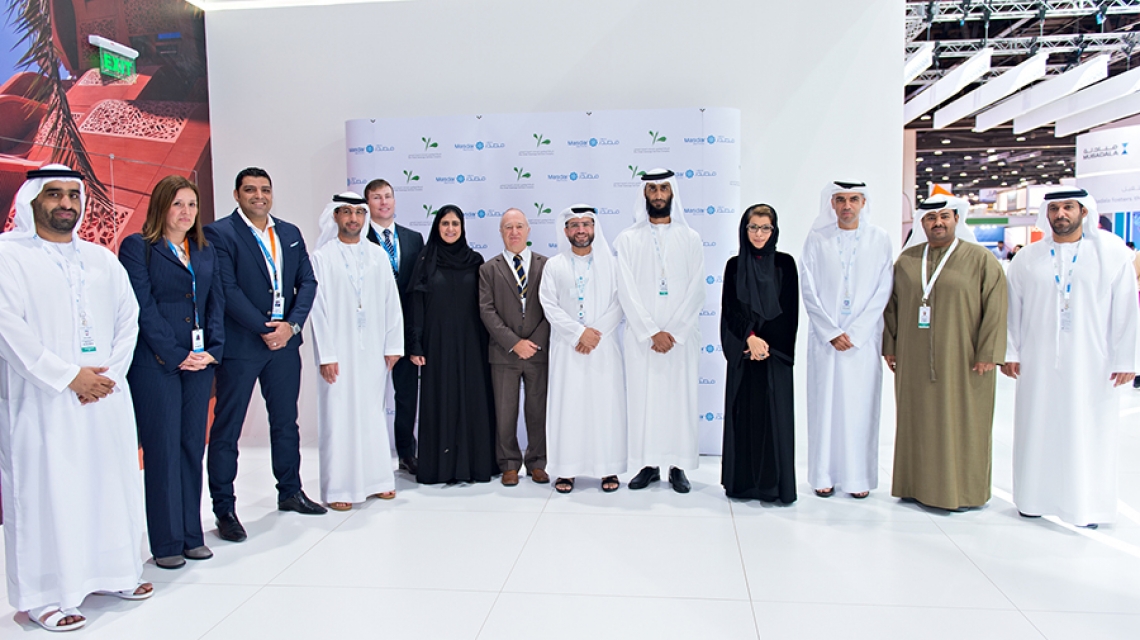
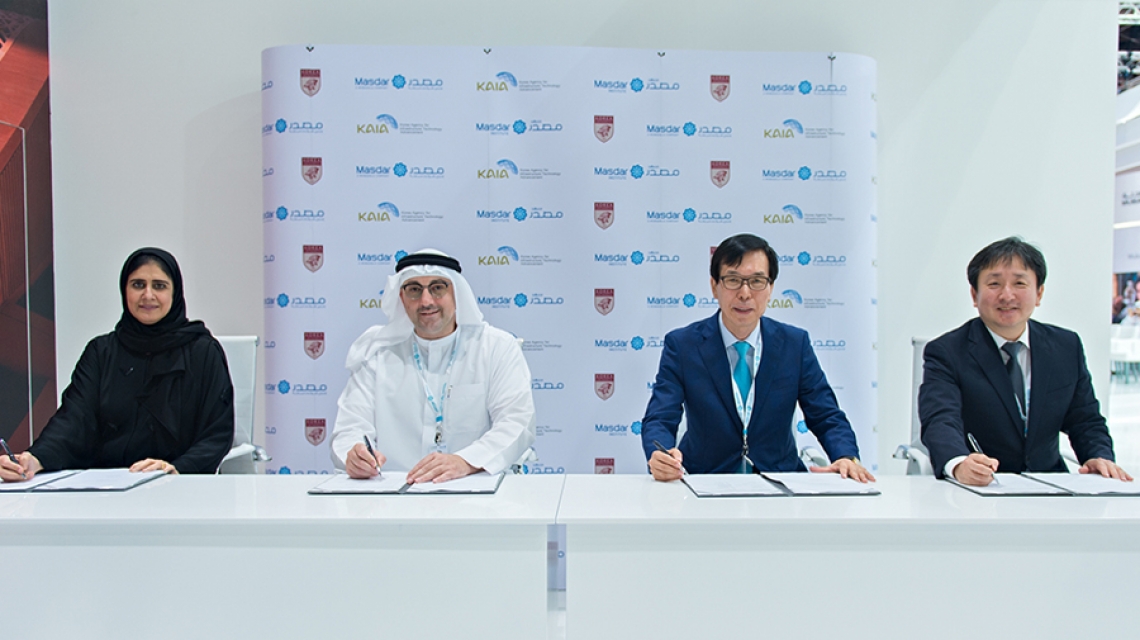
In the presence of Mr. Yoo Seung-young, Korean Deputy Director of Water Resources Policy Bureau, the agreement was signed by Prof. Seungkwan Hong, the Research Director of Korea University, President Kim Byung-Soo, of Korea Agency for Infrastructure Technology Advancement (KAIA), Mohammed Al Ramahi, CEO of Masdar, and Dr. Behjat Al Yousuf, Interim Provost, Masdar Institute.

The agreement was signed on the sidelines of the World Future Energy Summit (WFES), which is being organized as part of the Abu Dhabi Sustainability Week (ADSW) 2017 at the Abu Dhabi National Exhibition Center (ADNEC). Officials from both universities as well as government representatives were also present at the signing.

Dr. Behjat Al Yousuf of Masdar Institute, said: “For the past many decades desalination has been crucial for meeting the growing freshwater needs of the UAE. Going forward, however, we also recognize that it is also crucial for the UAE to reduce its energy consumption and carbon footprint to attain greater sustainability. Renewable energy-powered and energy-efficient desalination is a win-win that will enable us to do both, and we are hopeful that this collaborative research agreement with the Korea University and the KAIA will help validate the technologies needed to make low-carbon desalination a reality.”

President Kim Byung-Soo of KAIA said: “The Korean R&D project on SWRO desalination, in collaboration with UAE, is expected to strengthen our resilience to resolve global water shortage in response to climate change. We also hope that the innovative technologies obtained through this research will make Korea and UAE more competitive in the global desalination market.”

The research director, Prof. Hong Seungkwan of Korea University also said: “This research agreement provides a strong foundation not only for collaborative innovative research but also academic exchange and cooperation bwtween KU and MI to foster young future leaders in the water and enengy sectors.”

According to the agreement, a collaborative research program will evaluate the performance of the desalination pilot plant. Additionally, it will foster the collaboration with Korea University to develop, test and demonstrate novel pretreatment technologies with high potential for energy-efficient operation.

Dr. Hassan Arafat, Professor of Water and Environmental Engineering at Masdar Institute, will be the principal investigator of the research project, while the research team at Korea University will be led by Professor Seungkwan K. Hong. Dr Arafat has experience in developing desalination technologies and systems, with particular focus on sustainable, low-energy technologies.

The research program will comprise specific tasks for both Masdar Institute and Korea University. Masdar Institute will conduct chemical analysis of water streams to support the development of pre-treatment technology developed at Korea University. Masdar Institute will also support Korea University in their evaluation of the performance of the Korean pilot desalination plant installed in Abu Dhabi.

Moreover, Masdar Institute will support the research team at Korea University, led by Professor Hong, in developing novel low-energy pretreatment processes. At the same time, Masdar Institute will develop its own line of novel pretreatment technologies for evaluation.

Clarence Michael
News Writer
17 January 2017
Ministry of Energy, Masdar Institute and SKM Sign Agreement to Develop Energy-Efficient Chillers for Gulf Climate

The UAE Ministry of Energy, SKM Air-Conditioning and the Masdar Institute today signed an agreement to develop advanced energy-efficient building chillers specific to the Gulf Cooperation Council (GCC) region.

If adopted nation-wide, the new efficient chillers could provide the UAE with national energy savings of over 20% while lowering life-cycle cooling plant costs. Currently 50% of the UAE’s electricity consumption goes towards cooling energy requirements, which can rise to as high as 75% during peak-day electricity use in the summer. The new innovative technology could also be exported to other GCC countries with similar climate and energy consumption scenarios, enhancing the UAE’s diversified knowledge economy.

The collaboration agreement was signed in the presence of officials from the UAE Ministry of Energy, UAE-based SKM Air-Conditioning, and Masdar Institute on the sidelines of the World Future Energy Summit (WFES) 2017, which is being held from 16-19 January at the Abu Dhabi National Exhibition Center (ADNEC) as part of the Abu Dhabi Sustainability Week 2017.

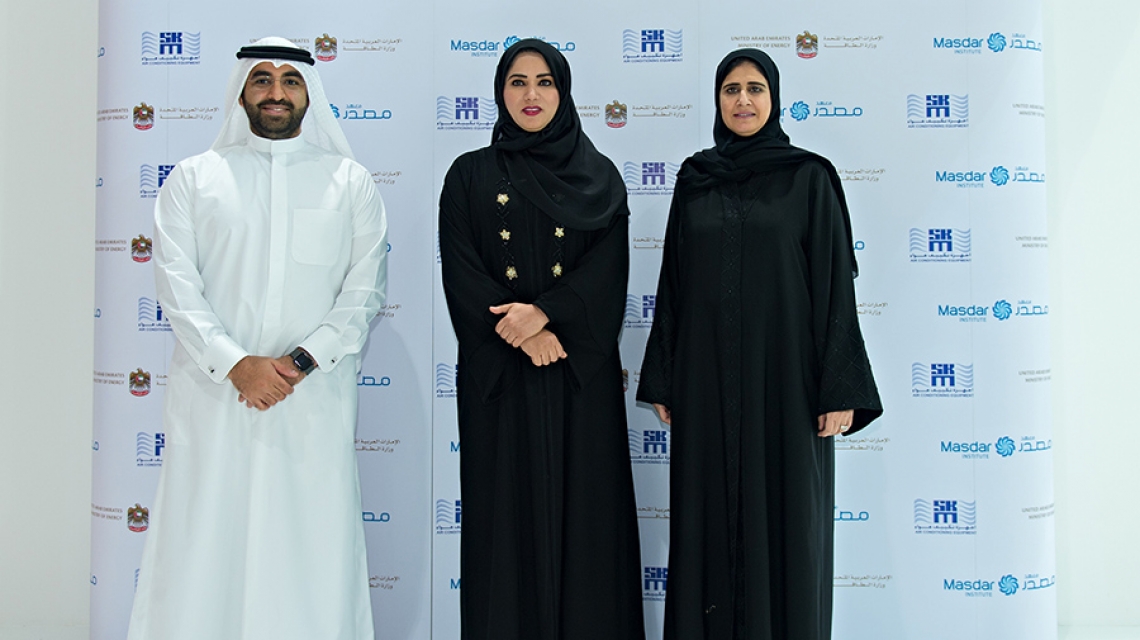
The agreement was signed by Her Excellency, Eng. Fatima Al Foora Al Shamsi, Assistant Undersecretary for Electricity, Clean Energy and Desalinated Water Affairs, UAE Ministry of Energy, Dr Behjat Al Yousuf, Interim Provost, Masdar Institute, and Mohammed Al Beshara, in his capacity as the representative of SKM Managing Director.

Her Excellency, Eng. Fatima al Foora said: “The Ministry of Energy seeks to incentivize and facilitate applied research in the energy sector in key areas such as air conditioning. We have found the Triple Helix to be an effective model for encouraging the collaboration between industries, academia and government on key projects. This is fundamental for development of a knowledge based economy as has been repeatedly seen in the most innovative economies of the world. In the future, we aim to develop more of such triple helix projects with participation of more industries and academic institutions in the UAE.”

Mohammed Al Beshara said: “In operational strategies, SKM Air-conditioning always believes in its principle to partner with international and local organizations and institutes to continuously develop its air-conditioning and air treatment products. At the same time, it is also developing other new products to achieve maximum energy efficiency, while taking environmental aspects into consideration. We have always believed that best results will be reached only through partnerships like the one we now have with the UAE Ministry of Energy and Masdar institute. We also believe that this should not be the only collaboration with these highly reputed partners but the first of many more to come.”

Dr. Behjat Al Yousuf, Interim Provost, Masdar Institute, said: “Our collaboration agreement with the Ministry of Energy and SKM Air Conditioning highlights Masdar Institute’s ongoing commitment to developing innovations of relevance to the needs of the UAE and wider region. We are confident this partnership will help the UAE reduce its energy consumption, which is critical to achieving its sustainability goals.”

Dr. Peter Armstrong, Associate Professor of Mechanical Engineering, Masdar Institute, leads the project team, which includes Dr. Afshin Afshari, Professor of Practice, Engineering Systems and Management, Masdar Institute, and Muhammad Tauha Ali, research engineer, Masdar Institute.

“Based on the current actual cost of electricity production in Abu Dhabi, the potential savings, at 100% market penetration of all optimized chiller and AC types, amounts to over AED5 billion per year,” said Dr. Armstrong.

In the previous two-year project, the team established minimum energy performance standards (MEPS), which are life-cycle cost effective for chillers in the UAE with performance levels 40% above the MEPS prevalent in temperate climates.

They found that an improved compressor, larger condenser and evaporator, sub-cooling control, variable speed condenser fans, and a high-efficiency compressor motor all contribute significantly to the energy improvements achieved by the chiller design with lowest amortized cost.

“This project will prove beyond any doubt in side-by-side testing that a GCC-specific high-performance chiller design pays for itself in energy savings,” Dr. Armstrong added.

SKM won the Sharjah Economic Excellence Award Gold Category in 2011, for quality and standard products. It also received ISO 14001 Certification for environmental management standards and the Technischer Überwachungsverein (TÜV – Technical Inspection Association) Certification for its Packaged Air Conditioners (PAC-L) Series and for its Hygienic Air Handling Units.


Clarence Michael
News Writer
18 January 2017

Masdar Institute Partners with Abu Dhabi Sewerage Services Company to Build Human Capital and Improve Strategic Tunnel Enhancement Program

The Masdar Institute and the Abu Dhabi Sewerage Services Company (ADSSC) have signed a Memorandum of Understanding (MoU) that will enable knowledge sharing and advanced research to ensure the sustainable and safe construction of underground tunnels in Abu Dhabi.

The MoU is directly related to ADSSC’s Strategic Tunnel Enhancement Program (STEP), which is the largest pipeline infrastructure project in the entire Gulf Cooperation Council (GCC) region. STEP has successfully laid down 41 kilometers of deep sewer tunnels in Abu Dhabi. The completed tunnels will have the capacity to accommodate a flow of 1.7 million cubic meters of wastewater per day by 2030.

The MoU was signed by HE Mubarak Obaid Khamis Al Dhaheri, Deputy Managing Director, ADSSC, and Dr. Behjat Al Yousuf, Interim Provost, Masdar Institute.

Dr. Al Yousuf of Masdar Institute said: “Rapid urbanization in the UAE demands the development of more underground infrastructure like pipelines. However, the environmental impact of underground construction, including tunnels, is substantial. That is why it is important to develop a robust knowledge base to ensure that underground infrastructure projects are developed in a way that balances between meeting growing infrastructure needs and preserving the environment.” to ADSSC’s Strategic Tunnel Enhancement Program

Al Dhaheri of ADSSC said: “This collaboration with Masdar Institute supports the ADSSC’s goal to proactively coordinate with relevant authorities in order to deliver infrastructure to the highest standards while enhancing sustainability.”

This collaboration will enable Masdar Institute students to receive hands-on training in the field, with access to ADSSC project sites like the STEP site, which will in turn support the development of a cadre of highly-skilled tunneling experts who will be critically needed as rapid urbanization will place greater demand on underground infrastructure.

Speaking about Masdar Institute’s relevant and practical research experience in the field of underground tunneling, Dr. Rita Sousa, Assistant Professor of Mechanical and Materials Engineering, said: “We have already developed a novel software program in collaboration with the Massachusetts Institute of Technology (MIT), which is composed of different tools that allows optimal planning, design and construction of tunnels while considering different sources of uncertainties that are inherent when dealing with the underground. The integrated set of tools allows one to simulate tunnel construction and determine cost and times of construction, including uncertainties associated with geology and construction, which helps optimize the 3D alignment of the infrastructures.”

Dr. Sousa, an expert in geotechnical engineering, is using ADSSC’s STEP as a case study for her work. The MoU signed between Masdar Institute and ADSSC directly supports collaborative information and knowledge sharing about the project.

Erica Solomon
News and Features Writer
22 January 2017

Masdar Institute signs MoU with Abu Dhabi Police for Joint Research and Internships

Masdar Institute and the Abu Dhabi Police have signed an agreement to collaborate in research and development to bring innovative systems and solutions to bear on police work in the emirate.

The three-year memorandum of understanding was signed by Ali Khalfan Al Dhaheri, Director-General of Central Operations at Abu Dhabi Police, and Dr. Behjat Al Yousuf Interim Provost at Masdar Institute.

Al Dhaheri said: “The signing of the Memorandum of Understanding with the Masdar Institute of Science and Technology reflects the commitment of both partners to strengthen cooperation in training and exploring the best ways to develop Abu Dhabi Police’s capabilities. In addition, it will sharpen our employees’ skills in research and development and help them adopt innovative solutions and systems, thus enabling Abu Dhabi Police to successfully carry out their duties and security mission in line with the best global standards.

Al Dhaheri added: “Our interest in smart systems and continuous research reflects the emphasis the Abu Dhabi Police General HQ places on prioritizing continuous improvement and development. This also demonstrates our keenness to learn about the latest developments in various sciences from the world of knowledge that may serve the employees of the police force and contribute to achieving the common goals in the Emirate of Abu Dhabi.”

Dr. Al Yousuf said: “Masdar Institute was established to support the needs of Abu Dhabi and the wider UAE, and as such we are pleased to partner with the Abu Dhabi Police to leverage our engineering expertise and facilities in the pursuit of our shared goals for the increased prosperity and welfare of the UAE. Our faculty and students look forward to learning from the Abu Dhabi Police as they share their own technical insights.”

As per the agreement, Masdar Institute and the Abu Dhabi Police will engage in joint research and development (R&D) in the pursuit of innovative solutions and systems of relevance to police work, participate in relevant conferences and exhibitions, organize courses and workshops on innovation and coordinate internships opportunities. The research undertaken through the agreement will also contribute to the traffic operations and safety in Abu Dhabi.

Clarence Michael
News Writer
23 January 2017

Masdar Institute and URS Laboratories Collaborative URS Guided Drone Transportation System Compete for UAE AI & Robotics for Good Award

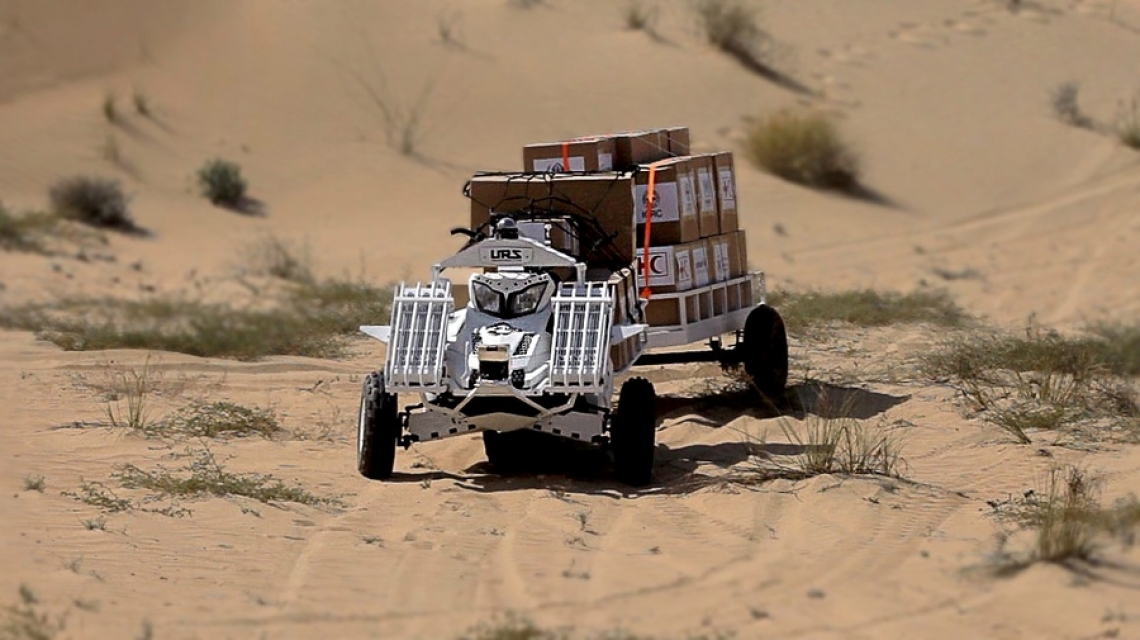
The collaboratively developed unmanned rover system (URS) GDTS-SXM1 created by Masdar Institute and URS Laboratories Ltd earned fourth place in the UAE Artificial Intelligence (AI) & Robotics Award for Good.

Winners of the award, which supports innovation in the AI and robotics sector with the aim of encouraging research and innovative solutions to solve existing challenges, were announced earlier this month in Dubai.

The Masdar Institute and URS Laboratories’ guided drone transportation system (GDTS) uses complex and innovative robotics and AI combined with custom made, revolutionary all-terrain delivery platforms to reach difficult terrains, which can assist in disaster relief and recovery.

“We expect that once complete, the URS robotic platforms will be more cost-effective in critical situations than traditional humanitarian relief aid options, such as truck convoys, air drops and expensive, dangerous, helicopter landings on the front lines of conflict zones. URS is ready to defeat human suffering today and can be implemented on a moment’s notice with no need to wait or train expensive crews that have to be alert 24/7. One of the important potential global applications for the URS would be to aid in the removal of landmines from old minefields,” explained Dr. Steve Griffiths, Vice President and Interim Associate Provost, Masdar Institute.

Some of the capabilities of the URS platforms will include remote control operation that will allow direct human input to drive the vehicle remotely; a “follow-me” system that enables the vehicle to follow the driver once he dismounts the vehicle; “return home” capabilities that enables the vehicle to return by fastest means to a fixed point without driver intervention; shuttle abilities that allow the vehicle to shuttle supplies between bases; and waypoint-follow that enables the driver to send the vehicle ahead to the waypoint and then return to a preselected destination.

“The UAE AI & Robotics Award for Good competition, along with the amazing support from Masdar Institute, has super-charged and accelerated our involvement in the UAE. URS Labs has worked to quickly identify Emirati companies we can partner with to maximize content from ‘made-in-the-UAE’ products and services to support the sustainable manufacturing center we are hoping to become for the UAE,” explained Matthew Cochran, CEO and Co-Founder of URS Laboratories.

“Winning the competition would mean that we can invest in R&D in the UAE for cutting-edge technologies like sensor development, avoidance software and hardware, and developing the local satellite communications required for our system’s expanded data link capabilities,” he added.

The URS development program was conceived in conjunction with the Partnering to Achieve Innovation in Defense & Aerospace (PAIDA) Working Group, which was established in 2015 by Masdar Institute and the marketing incubator organization Defense Services Marketing Council (DSMC) to stimulate R&D and innovation in military and defense applications. The two parties agreed that robotic systems applied to military applications would be an essential direction for innovation in the UAE, which later resulted in the launch of the URS program.

Since the URS program kick-off meeting last October, the URS platform development program has been incorporated into a company called URS Laboratories Limited, and it is currently in the process of establishing its head office in Masdar City. The company has now expanded its collaborations and technology development activities to include different tracks, enabling the development of several variants of the unmanned vehicle based on different technologies and inputs from different collaborating organizations to create more than one URS platform.

The Awards for Good, which includes both the UAE Drones for Good Award and the UAE AI & Robotics Award demonstrates the UAE government’s commitment to encouraging the development of technology to serve people. This year marks the second time a Masdar Institute supported project has been selected as a finalist.

Erica Solomon
News and Feature Writer
14 February 2017

Masdar Institute to Highlight Five Defense Related Research Innovations at IDEX 2017

Masdar Institute will be displaying five defense-related research innovations at the 13th edition of the International Defense Exhibition and Conference (IDEX) in Abu Dhabi.

IDEX will be held from 19-23 February 2017 at the Abu Dhabi National Exhibition Center (ADNEC) under the patronage of His Highness Sheikh Khalifa Bin Zayed Al Nahyan, President of the UAE and Supreme Commander of the UAE Armed Forces.

Dr. Behjat Al Yousuf, Provost, Masdar Institute, said: “The unique and dynamic Masdar Institute projects being featured at IDEX have the potential to serve many of the country’s strategic technology needs, including in the defense sector. We are confident that our talented faculty, students and researchers will continue to find innovative ways to advance our defense related technologies.”

The Masdar Institute projects being featured at IDEX 2017 are expected to exemplify the ways that technologies can reduce risk, improve intelligence gathering, or augment the abilities of human teams in defense applications. The UAE national students working on these projects include Yusra Abed Al Rahman, Fatima Al Obeideli, and Houda Al Zarkani.

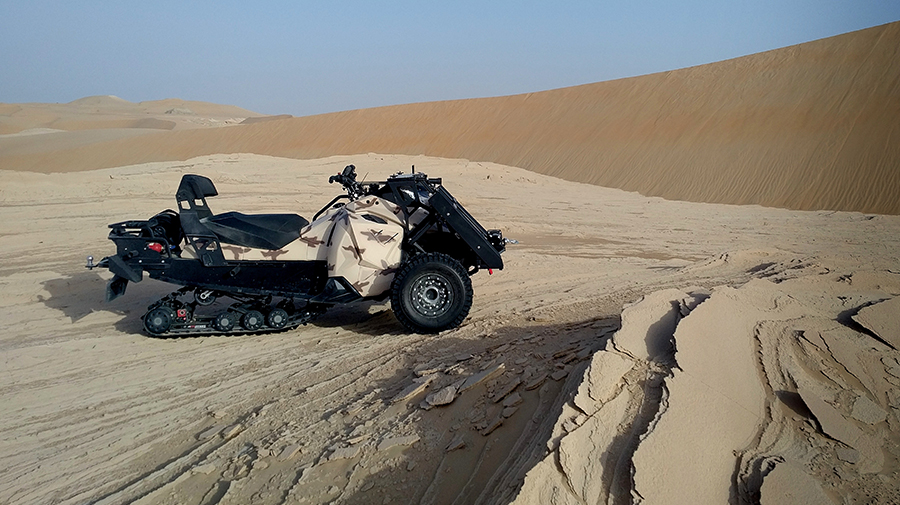
The projects to be featured will include two state-of-the-art platforms from URS Laboratories: The GDTS-SXM1 (Guided Drone Transportation System) and the GDMD-SXM1 (Guided Drone Mine Detection System). “For us at URS Labs, these two critical-supply-solutions projects greatly benefited from our collaboration with Masdar Institute. Over the past year we participated in the institute’s advanced ‘working group program’ and our projects clearly profited from not only Masdar’s Institutes advanced technical input but also from their practical, high level, even enthusiastic, challenges. This combination has allowed us at URS Labs to fine tune and quickly make adjustments. Thus thanks to this magnificent collaboration with the Masdar Institute URS Laboratories is proud to introduce at IDEX two of our advanced robotic and autonomous systems. The GDTS-SXM1 series represents the new future formula to deliver, without further loss of life, the most urgent and critical supplies to troops even in the most fluid and challenging environments, such as under battle conditions. While the UK ministry of Defense labels such supply conditions, most often over the most arduous terrain, the most difficult “last mile”, (and while that is true) , many of the special operators in our tests under real conditions expanded on the UK label and suitably dubbed these final-stage transportation challenges the ‘longest miles’.

The three core features ‘go-anywhere-fast’, ‘bringing substantial relief’ and ‘without-loss-of-life’ of our URS robotic and autonomous systems are ideally suited to also address the seemingly perpetual global threat of (both new and old) landmines and our GDMD-SXMI series is specifically developed for this application and become the new standard. Our series is expedient and easy to operate and promises to fast detect and destruct landmines without further loss of life,” explained Matthew Cochran, CEO & Co-Founder of URS Laboratories. URS Labs has worked to identify quickly local Emirati companies they can work with to maximize content from Made In UAE products and services into a sustainable manufacturing center they hope to establish in the UAE. URS Laboratories Limited, with offices in Switzerland, is currently in the process of establishing its head office in Masdar city. An additional URS development is through its UK-based partner QinetiQ, a leading technology development and engineering company operating primarily in the defense, security and aerospace markets. Both QinetiQ and Masdar Institute will have the URS platforms on display at their respective IDEX 2017 booths.

Another innovative project to be featured is the SaferTrident system, a multi-purpose hybrid diver propulsion vehicle (DPV). An autonomous underwater vehicle that can be used to assist divers to do underwater mapping and localization. This mapping technology is of particular use for the defense and security sectors. The system has been designed so that both the hardware and software is modular and can be adapted and customized for various uses. The SaferTrident system is being prototyped in the UAE at INNOVATOR Space TechShop Abu Dhabi and tested at Masdar Institute in collaboration with the world class facilities and research students within Masdar City.

Masdar Institute is also presenting ongoing work related to developing a real-time, automated and non-destructive materials testing tool with thermal imaging technologies. The tool can test the structural integrity of a range of materials, including aluminum, steel, carbon composites and plastics, at a low-cost. This can allow for the rapid testing of aircraft or vehicle parts..

Masdar Institute will be showcasing another inspection tool being developed by its scientists that leverages infrared light and advanced processing software to locate defects in structures. This tool could make detecting defects in critical materials, like aerospace components, easier, faster and more reliable, resulting in greater safety.

In addition, Masdar Institute will introduce IDEX attendees to a dual imaging system its researchers have developed that fuses infrared and visible light. This fusion produces real-time reconstruction of a scene in greater detail, which can make imaging, monitoring and navigation more efficient.

IDEX is hosted in association and with the full support of the UAE Armed Forces. As the only international defense exhibition and conference in the Middle East and North Africa (MENA) region, IDEX demonstrates the latest technology across land, sea and air sectors of defense. It is a unique platform to establish and strengthen relationships with government departments, businesses and armed forces throughout the region.

Clarence Michael
News Writer
15 February 2017

Masdar Institute and British Council to Host 2017 GCC-UK Science Collaboration Symposium on Smart Cities in Abu Dhabi

The Masdar Institute of Science and Technology and the British Council, the UK Science and Innovation Network (SIN) and the UK Department for Business, Energy and Industrial Strategy, today jointly announced scientists and innovators from research institutions and start-up companies in the Gulf Cooperation Council (GCC) countries and the UK will be gathering for the GCC-UK Science Collaboration Symposium 2017 in Abu Dhabi on 26-27 March.

The event, which will be held at the Masdar Institute Multi-Use Hall in Masdar City, aims to encourage scientific researchers to present their stimulating work and ideas for knowledge transfer related to smart cities. It will invite open discussions and potential investment to encourage the creation of UK-GCC collaboration linkages to access the deep pool of information and technology sharing.

The symposium will cover three key areas – sustainable infrastructure, smart city technologies, and social impact of such technologies. Scientists and innovators from research institutions and start-up companies from the six GCC countries – Bahrain, Kuwait, Oman, Qatar, Saudi Arabia, United Arab Emirates – and the UK are expected to attend the event.

Ambassador to UAE, Philip Parham, said: “I am really pleased that leading scientific researchers, innovators and business from the UAE, the wider GCC and the UK are meeting to discuss the challenges of smart cities for the future. This presents a unique opportunity to share our knowledge and expertise, and to create new partnerships and collaborations between Emirati, Gulf and UK universities. This also presents me with the opportunity to congratulate Masdar Institute and the University of Manchester, and Khalifia University and Bristol University, on their success in the recent research call led by the British Council. The UK Government is committed to forging and supporting these partnerships, including with financial research grants.”

Dr. Behjat Al Yousuf, Provost, Masdar Institute, said: “The GCC-UK Science Collaboration Symposium is a knowledge-exchange platform that we are proud to organize to bring together the British and Gulf-based research communities and industry stakeholders. The symposium’s three focus areas are integral to Masdar Institute’s emphasis on the development of a knowledge base in sustainability science. Open exchange of information is key to innovation and collaboration and I am confident this symposium on smart cities will benefit industry, academia, and government on both sides.”

Gavin Anderson, Director of the British Council in UAE, said: “International collaboration in science research will play a key role in supporting economic diversification in the Gulf, by driving innovation in areas like nanotechnology, smart cities and renewable energy. Collaboration lies at the heart of innovation, so we’re delighted to be able to bring together 40 UK and GCC scientists, businesspeople and policymakers to share knowledge and exchange ideas as part of our UK/UAE 2017 Year of Creative Collaboration.”

According to a UK Trade and Investment report, the smart cities market is forecast to be worth more than AED4 trillion (£900 billion) by 2020, equivalent to the 12th largest nation on earth, in terms of GDP. Further, it is estimated that the top 750 smart cities will generate two-thirds of the world’s GDP by 2030. Additionally, there’s an estimated global infrastructure investment of £25 trillion (AED112 trillion) required over the next 20 years to ensure sustainable urban futures. Such forecasts validate the need to develop liveable and resilient urban infrastructure.

Reflecting the industry trends and the impact on the community, the GCC-UK Science Collaboration Symposium will cover ‘opportunities and challenges for smart city urban infrastructure and accommodation of future smart city technologies’ as well as ‘city design, transportation planning, lighting, public spaces, irrigation and urban waste management’ under the topic ‘sustainable infrastructure’.

The session on ‘smart city technologies’ will focus on ‘technologies and systems that will serve as the foundations of smart buildings’; ‘sensing, communication and analytical platforms’; ‘heating and cooling systems, power, lighting, and distributed renewable energy’; ‘the foundations of smart urban transportation’; ‘electric and autonomous vehicles’; and ‘intelligent systems for shared and mass transportation’.

Under the social impact’ category, the symposium will cover ‘links between smart city technologies and safe, secure societies’; ‘integration of citizen happiness with resource efficiency’ as well as ‘citizen engagement and the evolution of government services’.

Clarence Michael
News Writer
22 March 2017

Celebrating First Chapter of Success and Looking to Next

The Masdar Institute Class of 2017 commencement has come at a time when we are celebrating many milestones in the journey of our pioneering university.

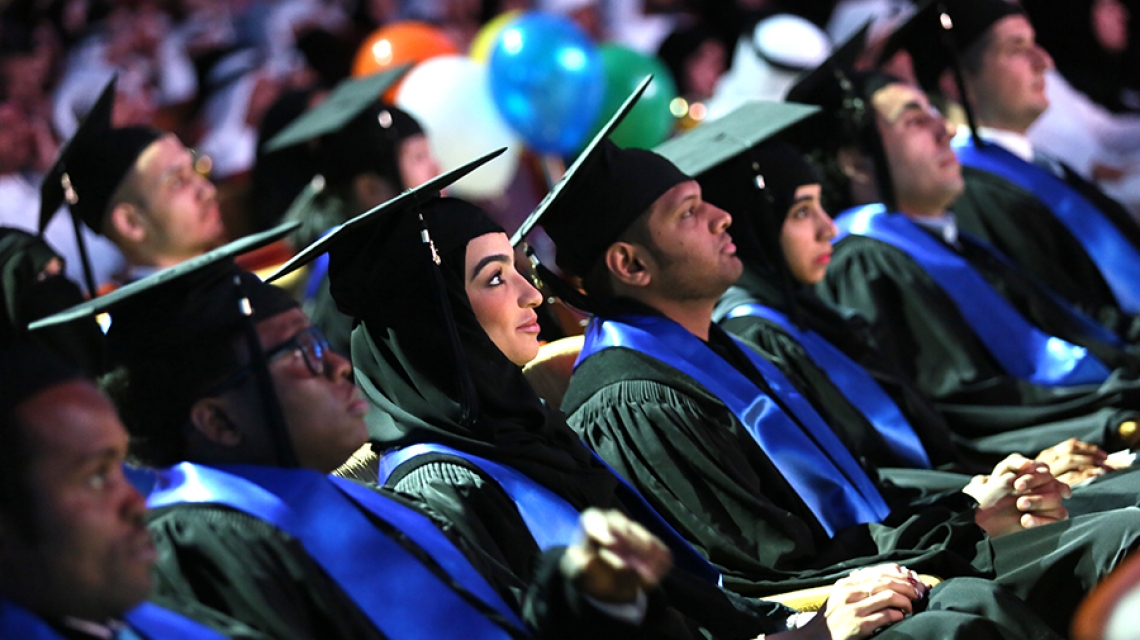
The May 17 graduation honored the completion of studies of our seventh batch of students in our Master’s programs and the third and largest batch from our Interdisciplinary doctorate program. We also welcomed our first graduates from the Masdar Institute Master’s concentration in space systems and technology, which we launched in 2015 in response to the country’s space exploration and space sector ambitions. The Class of 2017 graduation also coincides with the year we celebrate ten remarkable years since Masdar Institute was established by the UAE’s visionary leadership. And all of this is happening as we are looking forward to the beginning of a new chapter for Masdar Institute as part of the Khalifa University of Science and Technology. This new phase will allow us to continue the important legacy we have created into the next ten years and it brings with it a sense of excitement and anticipation for the great achievements and innovations the new university can accomplish.

These four milestones provide us with the perfect backdrop to reflect on the achievements of the past decade. This has been a decade in which our faculty and students have had significant research impact and made breakthrough discoveries. It has been a period marked by passionate and determined research, development and effective collaboration, which culminated in Masdar Institute becoming one of the region’s leading advanced energy and sustainable technologies innovators. It has been a decade of contribution to the UAE’s human capital development and enriching the confidence and ability of our students to change the world. As innovators and problem-solvers, we have tackled some of the UAE’s most pressing challenges with pioneering research.

With our talent and the leadership’s support, we have been able to achieve what would take other universities many decades to achieve. Masdar Institute has made great strides towards our founding mandate of supporting the UAE’s quest for sustainable development and an innovative knowledge economy transformation. We have made solar cell manufacturing more efficient and cost-effective through the development of a novel fabrication method for optoelectronics. We have advanced waste-to-energy by creating a novel chemical reactor that converts waste cooking oil to high-quality biodiesel in a low-cost, energy-efficient way. Our faculty and students’ innovative skill resulted in the use of carbon nanotubes to make materials stronger, energy storage cheaper and water purification more sustainable. They have also developed a number of innovative devices for energy efficient desalination to sustainably meet the country and wider world’s water challenges. We are mitigating faults in the electric power grid with a patented fault ride-through system that stabilizes the electric grid and responds to the need to maintain uninterrupted electrical power supply. We have improved water treatment by pioneering a self-cleaning advanced water treatment membrane that reduces fouling and thereby improves the filtering of impurities from water.

The success of these projects and others is reflective of our commitment to solving the UAE’s most critical challenges and advancing the UAE’s National Innovation Strategy. And it is because of achievements like these that Masdar Institute has been ranked as the top academic institution in the UAE in the Nature Index 2016 rankings. In addition to this, the Institute is also ranked 8th out of the top 25 institutions in the Middle East and West Asia in the Nature Index 2016 Rising Stars list, which includes institutions showing the most significant growth in high-quality research publications.

This year’s graduation has been a prime example of how Masdar Institute has cultivated and adapted its programs and concentrations in line with the changing needs of the UAE as we graduate our first batch of students from the Master’s concentration in space systems and technology.

This specialized concentration was developed in collaboration with Yahsat and Orbital ATK, and is a response to the leadership’s call to advance space-related innovation as part of the UAE’s National Innovation Strategy. The Class of 2017 graduates from this pioneering concentration are now prepared to advance the UAE’s national space exploration goals and space-related industries. Additionally, the Class of 2017 exemplify the Institute’s ongoing commitment to advancing women in engineering and the sciences. As an example of this, we are proud to be graduating 43 women from the Class of 2017, who have been prepared to be the next generation of great innovators in the UAE and worldwide.

All of these achievements would not have been possible without the guidance and support of the UAE leadership.From the very beginning, the leadership bestowed on Masdar Institute a very important purpose – to address the UAE’s call to provide human capital and R&D in sustainable energy and advanced technologies. We have also benefited from the expertise of our academic partner – the Massachusetts Institute of Technology. With MIT’s assistance, Masdar Institute has become one of the leading entities in education and research in the region. And of course, Masdar Institute would not be able to take advantage of the opportunities and expertise the UAE leadership and MIT have provided us if it was not for the many talented and dedicated faculty, staff and students who have continually joined in this visionary effort to be part of something great. Thank you for helping make Masdar Institute the success that it is today, and taking us through to the next chapter as a member of the Khalifa University of Science and Technology, where we will surely achieve even greater things for the UAE and the world.

Dr. Behjat Al Yousuf is interim Provost of the Masdar Institute of Science and Technology, part of the Khalifa University of Science and Technology.

Alumni Co-Founds Company to Serve All of UAE

An untimely electricity outage was the inspiration behind the innovative services company co-founded by Masdar Institute Class of 2013 MSc in Engineering Systems and Management graduate Mohamed Al Sharhan, called Servue.

“We had blackout at home and since it was Friday it took dozens of calls to find someone to fix the problem, and that too at double the usual rate. I realized this kind of situation often happens; where a service provider, be it a salon, a grocery store, a laundry service, etc., is not available or findable when you need it,” Al Sharhan shared

From that realization Al Sharhan and his friend Marzouq Al Zaabi established Servue in 2016 as a services provider that leverages Big Data analysis to provide all kinds of services at home, anywhere in the UAE, at any time. Servue is one of several companies established by alumni, faculty, and Young Future Energy Leaders program graduates, which are being highlighted as part of Masdar Institute’s ten year anniversary campaign to show the impact MI has had on the UAE and wider world since it was established in 2007.

“I wondered why customers have to suffer because a product or service is not easily available when and where they want it, when at the same time, there are lots of service providers and people who need customers and jobs? That is why I partnered with my friend Marzouq to set up Servue, which we hope will become the largest smart services provider in the UAE and one day, the world,” Al Sharhan said.

They launched Servue in 2016 and already its innovative novelty has been recognized with its selection for the Emirates Youth Award in the category of the Best Entrepreneurship Project in 2017.

Servue works through a mobile application, where buyers or sellers can review products and services in categories like baqala (grocery store), homemade products, cleaning, salons, maintenance, housemaid, laundry, carwash, and instructors.

Beyond providing a classic online shopping platform, Servue also enables workforce management, accounting, and even setting up one’s own business. Buyers and sellers can also communicate with each other through the app, send alerts, and rate service providers.

“The aim of Servue is to facilitate unemployment, better services providence, better quality of life, and happier and smarter communities,” the young Emirati said.

The app is already live, and the company is currently building up its registered service providers from the Abu Dhabi market to build a comprehensive platform to provide the best customer service to consumers in the UAE and beyond. The company currently is only servicing Abu Dhabi and is scheduled to expand outside of the emirate in the fourth quarter of 2017.

“In five years we see Servue as everyone’s personal assistant when it comes to requesting services, not only in UAE, but wherever there are people who need services,” Al Sharhan shared.

Al Sharhan credits the training he received at Masdar Institute for helping prepare him for the challenges of being an entrepreneur.

“MI equipped me with the necessary tools to be an innovative person. Studying at MI helped me develop my analytical and research skills, which now allows me to better assess situations, seek multiple perspectives, gather more information if necessary, and identify key issues to be addressed in my community. Moreover, I became a flexible team player who thrives in environments requiring the ability to effectively prioritize and juggle multiple concurrent projects. I also took a course in entrepreneurship during my time at MI, which helped to equip me with the necessary skills to start Servue, which also helped us win support from the Khalifa Fund,” he said.

Al Sharhan also advises his fellow aspiring entrepreneurs who are considering developing and launching their own start-ups to put as much time in selecting their business partners as they do in developing their ideas.

“Partnering with my friend Marzouq was one of the best decisions I’ve made to start-up Servue. It’s very important to be selective in choosing your partners. You have to ask yourself ‘would you trust this individual with your personal bank account?’ If the answer is no, then think twice. You should have aligned goals, values and responsibilities. Don’t assume just because you get along as friends that they are the right business partner,” he said.

Al Zaabi also has a bachelor’s in electrical and electronics engineering degree and a Master’s in innovation management, and specializes in Big Data, which he leveraged to develop the Servue concept further, making it smarter in terms of service provision and data analysis.

Al Sharhan is looking forward to further developing the Servue concept, and has other business ideas that he may be developing soon in between his full-time work at the UAE Ministry of Interior Smart Traffic Center, where he is the Innovation Unit Team Leader.

“We are fortunate to live during the information revolution, because of which the sort of problems aspiring business owners commonly face are of a technical or informational nature. This presents many opportunities for innovative solutions. And we in the UAE are even more fortunate to live in this country, which, as His Highness Sheikh Mohamed bin Rashid Al Maktoum has said: ‘…is a country of vast opportunity; we aim to provide a tolerant environment that can nurture potential and support outstanding talent’,” Al Sharhan shared.

Zarina Khan
Senior Editor
22 March 2017