
Regional Environmental Observatory Launched

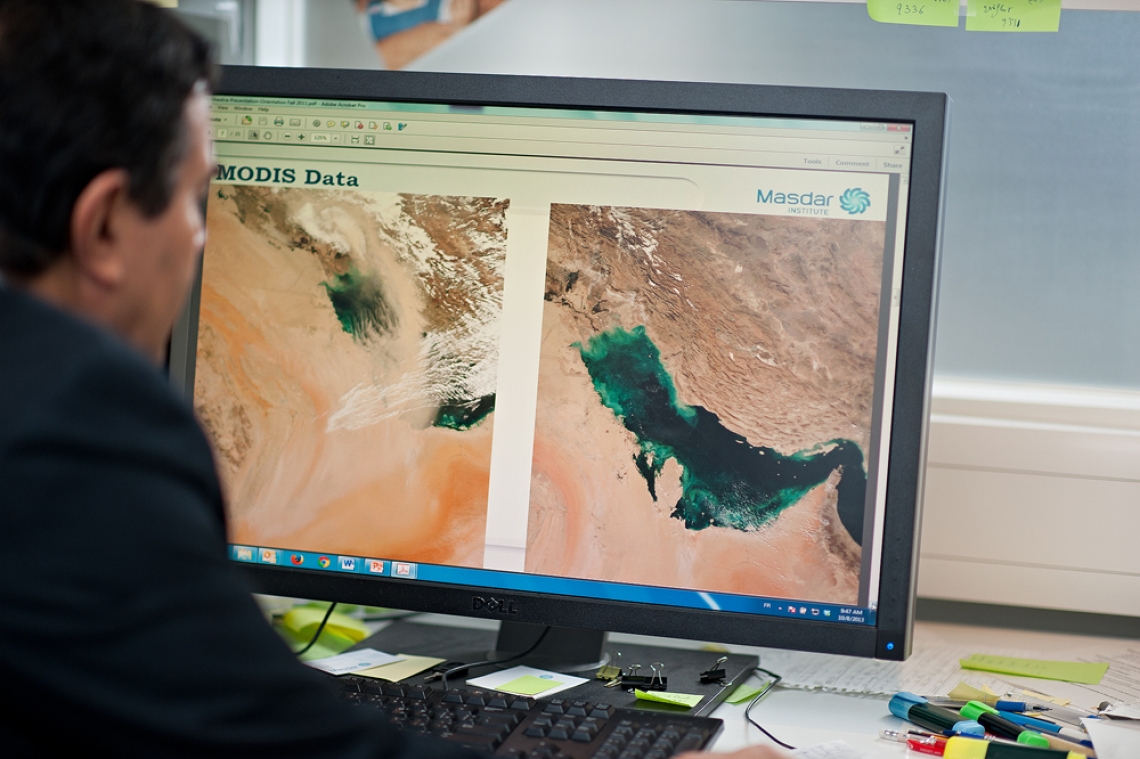
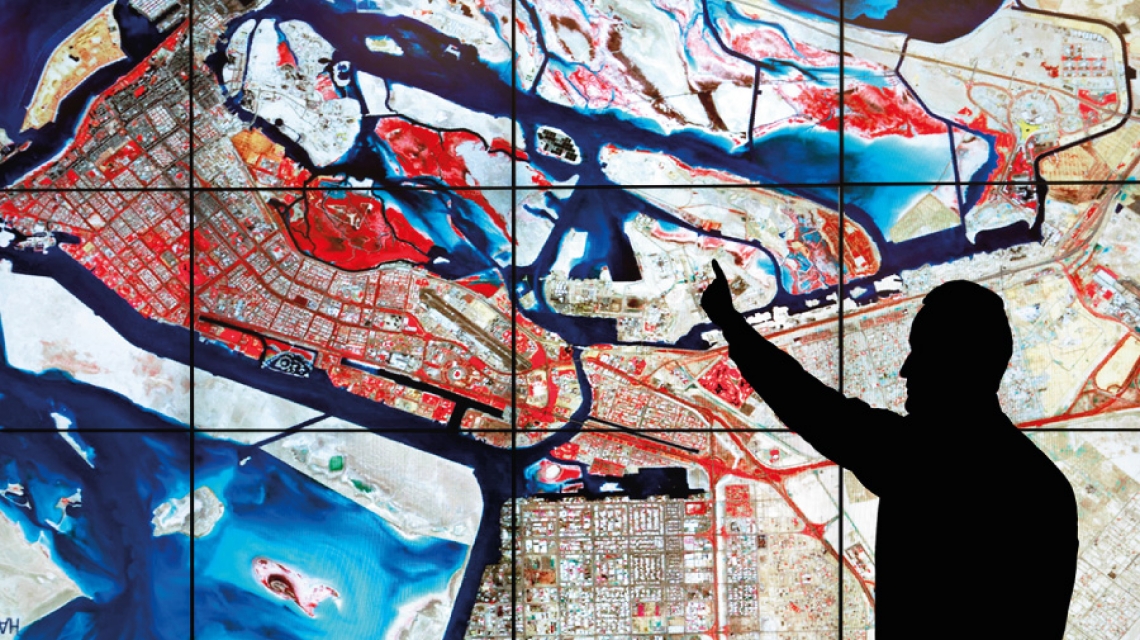
Comprehensive information on regional coastal processes is now available online following the launch of an environmental observatory by a Masdar Institute of Science and Technology team led by Dr. Marouane Temimi, Associate Professor, Water and Environmental Engineering program.

The portal offers valuable information on the state of the Arabian Gulf including sea currents, temperature, salinity, and other seawater quality parameters related to oil spills and toxic algae blooms that are useful for several applications.

Dr. Temimi said, “The environmental data portal provides information on oil spills, red tides, sea circulation, salinity, and temperature. We have included an example of an oil spill to showcase our capability to track and predict the trajectories of not only coastal hazards like oil spills, and red tides but also dust storms, and flooding, using satellite imagery and modeling. We believe this data portal is set to become the first destination of several end-users like government agencies, desalination plant operators, oil companies, ports, and others who are interested in monitoring environmental processes in the UAE and the region.”

Users of the website can obtain in-depth information including five-day forecasts for the Arabian Gulf with hourly updates. The portal is publicly accessible but registered users will have access to advanced functionalities. In addition, it includes some of the most recent satellite images of the region, and can provide information on  oil spills, red tide events, weather conditions from remote sensing images, ‘in situ’ observations, or advanced numerical models. The information will be immensely helpful to several stakeholders, who require such information on a regular basis in the government and private sector.

The use of remote sensing technologies and models, along with in situ observations, provides users with a comprehensive overview of the state of the Arabian Gulf and on potential hazards that could threaten coastal infrastructure and activities, like fishing, desalination and tourism.

“The role of remote sensing is crucial in the region as it gives us, with frequent refresh, a synoptic view of the conditions in the Arabian Gulf and complements information derived from models,” explained Dr. Jun Zhao, a research scientist and remote sensing expert involved in the portal.

Dr. Temimi and his team members in the Environmental Remote Sensing and Modeling Lab at Masdar Institute have several environmental monitoring collaborations. They received funding from United States Agency for International Development (USAID) through a joint project with the Middle East Desalination Research Center (MEDRC) and the US-based Woods Hole Oceanographic Institute (WHOI) to assist desalination plants operators in the region that face red tide events to enhance their operational planning.

The partnership covers monitoring of sea water conditions through the detection and tracking of red tides as well as the collection of sea water samples for comprehensive characterization. Through a series of field campaigns in the Arabian Gulf, the Masdar Institute’s team was able to build a unique library of marine species, which is are important for the study of the region’s marine ecosystem.

Masdar Institute class of 2015 graduate Sheikha Al Kitbi had made satellite-based detection of red tides in the Arabian Gulf a key focus of her thesis research and has co-authored a scientific publication on the project that is currently under review.

 Clarence Michael
News Writer
20 September 2015
Innovative Concentrating Solar Power Research Shared with Top Experts

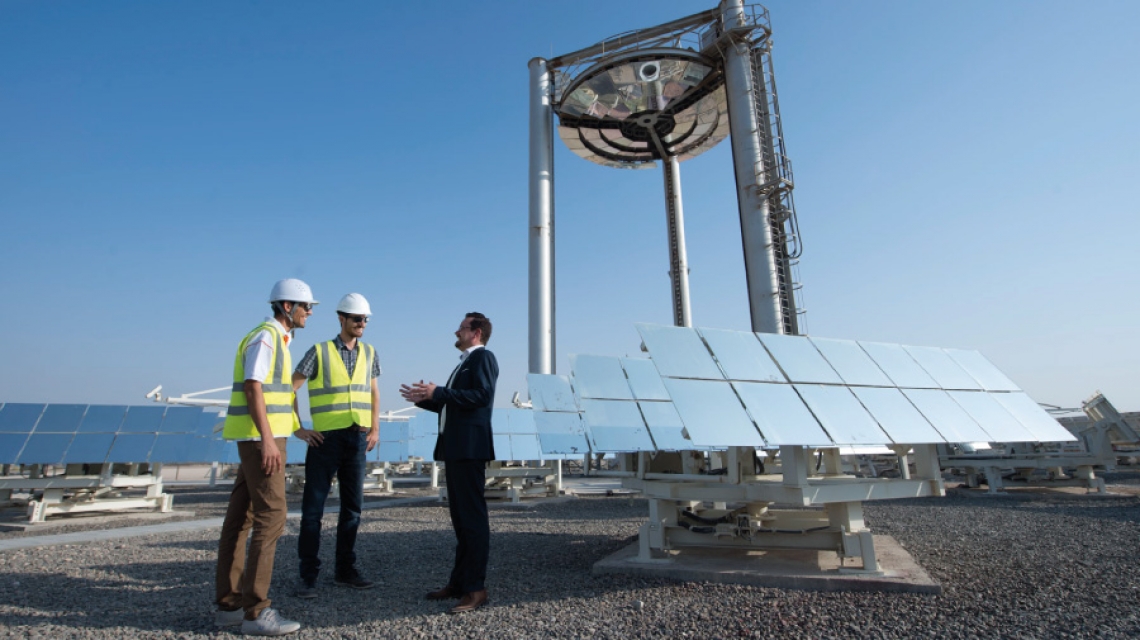
Masdar Institute’s faculty and students demonstrated their expertise in the area of concentrating solar power (CSP) and thermal energy storage (TES) technologies at one of the world’s largest conferences dedicated to CSP – the 21st Solar Power and Chemical Energy Systems (SolarPACES) Conference, held in South Africa. The researchers presented 14 abstracts at SolarPACES 2015 – a record amount for Masdar Institute at this conference – demonstrating the Institute’s robust CSP research activities.

Masdar Institute has also submitted a 15th abstract, in collaboration with Shams Power Company, at the event.

SolarPACES is the most important event in the CSP field. The conference was held from 13-16 October 2015 in Cape Town, and served as a forum for industry, researchers, politics and financing stakeholders within the framework of a scientific conference program with leading global experts. The conference later chose Abu Dhabi as the venue for next year’s event in October 2016.

One of the abstracts covers the concentrated solar power on demand (CSPonD) project in collaboration with the Massachusetts Institute of Technology (MIT). A flagship project of the two institutions, this is focused on developing a novel single-tank thermal energy storage and power production system.

Dr. Steve Griffiths, Vice President for Research, and Interim Associate Provost, Masdar Institute, said, “Such a high number of abstracts from Masdar Institute faculty members and students reflects the quality and international relevance of the CSP and TES research taking place at the institute. With our continuing commitment to supporting Abu Dhabi’s strategic goals relating to renewable energy uptake and the development of our future energy sector, I am confident Masdar Institute will continue to have a leading role in international research events like SolarPACES.”

Masdar Institute’s participation in SolarPACES 2015 was led by Dr. Nicolas Calvet, Assistant Professor, Thermal Energy Storage Research Group Leader and Chair of the Masdar Institute Solar Platform (MISP), representing the Institute Center for Energy (iEnergy).  Another faculty, Dr. TieJun Zhang, Assistant Professor, Mechanical Engineering program, collaborated with Shams Power Company, for the paper titled ‘Water Recovery in a Concentrated Solar Power Plant’, a joint work funded by the UAE National Research Foundation – University-Industry Research Collaboration Award.

The papers were presented by Dr. Benjamin Grange, a post-doctoral researcher, Research Engineer Djawed Belasri, and PhD student Miguel Diago. One abstract was also presented by the group of Dr. Hosni Ghedira, Director, Research Center for Renewable Energy Mapping and Assessment (RECREMA).

Dr. Calvet said, “Masdar Institute’s significant participation in SolarPACES shows our increasing activity in the research and development of CSP and the activity of the MISP.  With our planned stream of research and collaboration taking place at MISP and iEnergy, we hope to be presenting even more exciting research at next year’s event.”

MISP continues to get wider industry recognition and is engaged with several stakeholders through collaborations. Some of international partners of MISP include EnergyNest AS (formerly NEST AS), Heidelberg Cement, Siemens AG, Dow Chemical, SQM, National Instruments, Shams Power, and Ibiden Co. Ltd.. Dedicated to the development of CSP components, and high-temperature thermal energy storage (TES) solutions, the MISP at Masdar Institute is unique in its configuration as it is adapted to research, especially on storage. Earlier this year, MISP became one of the 3 finalists under the ‘CSP Technology Innovation for MENA 2015’ category for the MENASOL Awards 2015.

The Masdar Institute abstracts were titled: ‘Masdar Institute Solar Platform: a new research facility in the UAE for development of CSP components and thermal energy storage systems,’ ‘1 MWh-concrete based thermal energy storage system testing at the Masdar Institute Solar Platform,’ ‘Thermal and mechanical properties characterization of high temperature concrete for CSP applications,’ ‘Validation of an optical model applied to the Beam Down CSP facility at the Masdar Institute Solar Platform,’ ‘Concentrated solar power on demand demonstration: construction and operation of a 25 kW-prototype,’ ‘Optical model of a complex beam down concentrator system using TracePro™,’ ‘Effect of sand and moisture on molten salts properties for open direct absorption solar receiver/storage system’, ‘Thermal modeling of a secondary concentrator integrated to a direct-absorption molten salt volumetric receiver in a beam-down tower configuration,’ ‘Performance Measurement of New SiC Coated Reflectors for Concentrated Solar Applications,’ ‘Experimental investigation of a direct absorption gravity-fed solid particle receiver for beam down CSP applications,’ ‘Characterization of desert sand as sensible heat thermal energy storage media,’ ‘Evaluation of Sulfur as Thermal Energy Storage Medium,’ ‘Industrial waste materials and by-products as thermal energy storage (TES) materials: A review,’ and ‘Parabolic trough collector power plant performance simulation for an interactive solar energy atlas in Saudi Arabia,’ and ‘Water recovery in a concentrated solar power.’

SolarPACES is an international cooperative network bringing together teams of national experts from around the world to focus on the development and marketing of concentrating solar power systems.

Clarence Michael
News Writer
07 November 2015

Mix of Innovative Renewable Energy Technologies Suggested to Achieve Abu Dhabi Renewable Energy Goals

Abu Dhabi can make significant progress towards securing 7% of its power generation capacity from renewable sources by 2020 by leveraging the innovative wind, solar, and biomass technologies being developed at Masdar Institute. A team of researchers from the Institute recently highlighted these findings in a report called ‘The Greenwave Project’.

The Greenwave Project is a technology roadmap that outlines the most feasible way for the emirate to reach its 7% renewable energy target. Working with students and faculty from Columbia University in New York, USA, and experts from the Abu Dhabi Quality and Conformity Council (QCC), the Masdar Institute research team determined exactly the combination of solar photovoltaics, wind energy, concentrating solar power and biomass-to-energy technologies that would yield the greatest amount of power required to meet the 7% target at the lowest cost.

“We determined that Abu Dhabi will be able to achieve 7% of its power generation capacity from renewables, which by 2020 is estimated to be 1.4 GW of electricity, with 35% coming from solar photovoltaics, 30% from wind-onshore, 10% from wind-offshore, 5% from concentrated solar power with storage, and 20% from waste-to-energy,” said Dr. Jens Ejbye Schmidt, Head of the Masdar Institute Center for Energy (iEnergy) and Professor of Chemical and Environmental Engineering.

Dr. Schmidt led the team of Masdar Institute researchers, including PhD students Rashed Farzanah and Akinleye Sowunmi, Research Engineer Djawed Belasri, Post-Doctoral Researcher Dr. Juan-Rodrigo Bastidas-Oyanedel, and Assistant Professor of Chemical and Environmental Engineering Dr. Mette Hedegaard Thomsen, in their techno-economic analysis, which was presented earlier this month at the 10th Conference on Sustainable Development of Energy, Water and Environment Systems, held in Dubrovnik, Croatia.

The extensive undertaking involved thorough research of potential wind, solar photovoltaic, concentrating solar power (CSP), and biomass-to-energy technologies, which was done through a combination of literature reviews, official statistical data analysis and manufacturer recommendations.

Dr. Schmidt and his team focused on these renewable energy resources in particular because recent innovations in wind, solar photovoltaic, CSP and biomass have resulted in highly-efficient technologies with relatively low costs, positioning them to become commercially-viable technologies for widespread implementation across Abu Dhabi in the next four years.  

The team also leveraged Masdar Institute’s wind and solar atlases, which provide critical data on the amount of wind and solar energy resources available in the country, to determine how much wind and solar energy could feasibly be produced in the country within the next 10 years. The atlases, produced by the Institute’s Research Center for Renewable Energy Mapping and Assessment (ReCREMA), were instrumental in the team’s techno-economic analysis.

“The atlases helped us determine how much power we can realistically generate using commercially available technologies from the wind and the sun.

The atlases also show us where the best places are for the country to capitalize on this energy. For example, much of the wind we would like to capitalize on is offshore, which impacts the costs of electricity and was an important factor to consider in our recommendation,” Dr. Schmidt explained.

The team also analyzed the levelized cost of electricity (LCOE) – or cost of generating electricity over the full lifecycle of the generation technology – for each renewable energy technology, as well as the renewable energy’s energy return on investment (EROI), which is the amount of energy required to produce and maintain the energy source relative to the amount of usable energy, or electricity, the source generates.

The report revealed that, under the assumptions of the study, onshore wind energy has the lowest LCOE, while solar thermal energy with storage has the highest. Another finding revealed that biomass-to-energy has the lowest EROI, while wind power has the highest. This means that the amount of energy expended to acquire the energy source from biomass is very high compared to the amount of energy obtained from it.

Despite onshore wind having the highest EROI and lowest LCOE, Dr. Schmidt did not support the idea of pursuing wind energy alone as the UAE’s renewable energy source for its required 1.4 GW of electricity in 2020.
“We believe it is important to diversify the technologies, which is what we are recommending in our report,” said Dr. Schmidt.

The Greenwave Project provides invaluable information to help Abu Dhabi achieve its 7% renewable energy target by 2020. The information from the study will be provided to Abu Dhabi government officials.

Research projects like the Greenwave Project demonstrate how Masdar Institute works to ensure that the UAE can affordably and effectively achieve its strategic goals.

Erica Solomon
News and Features Writer
23 November 2015

A String of Research and Collaboration Launches Lined Up for UAE Innovation Week

A string of research and collaboration launches and initiatives are being lined up as Masdar Institute of Science and Technology is gearing up to mark the UAE Innovation Week from 22-28 November 2015.
 
Masdar Institute’s activities will highlight its dedication to furthering the goal of national innovation as directed by the UAE National Innovation Strategy, which is aimed at making the country one of the most innovative nations in the world within the next seven years. The week of events will seek to build awareness and engage the country’s youth in key innovative sectors.

Dr. Behjat Al Yousuf, Interim Provost, Masdar Institute, said: “We are keen to play our part in the UAE Innovation Week that aims to honor the achievements of the entire country. We believe events like this will further strengthen the resolve of our youth to identify and achieve sustainable solutions and we hope Masdar Institute’s Innovation Week activities serve to cement our status as one of the research institutions that is driving innovation in the country.”
 
As a leading research-oriented institution pursuing innovative solutions, Masdar Institute has lined up several activities to emphasize its commitment to advancing research and development focused on innovation for the UAE Innovation Week. These include a collaboration agreement with the national airline Etihad Airways, a new partnership with the Ministry of Environment and Water (MoEW), the launch of the Masdar Institute Solar Platform and the launch of the region’s first research facility dedicated to applied research in automation, manufacturing and materials. Masdar Institute will also be announcing the awarding of an international prize by one of its PhD students, and an Innovation Zone that will be set up on campus to highlight select ongoing research projects.

Some of the projects on display at the Innovation Zone were directly inspired by the Masdar Institute research centers (iCenters). Led by the Center for Innovation and Entrepreneurship (iInnovation), Masdar Institute’s four core research centers – the Institute Center for Energy (iCenter), the Institute Center for Water and Environment (iWater), the Institute Center for Microsystems (iMicro) and the Institute Center for Smart Sustainable Systems – serve to organize and focus Masdar Institute’s many research projects according to their relevance to the UAE’s strategic goals and interests. Masdar Institute also has four other sponsored research centers that have been established in collaboration with external stakeholders including leading government and private sector organizations.
 
The Masdar Institute Open Day 2015 will also be organized during the week to encourage the university students to be more involved in science and technology innovations. The event will help accelerate the UAE’s efforts to develop highly-skilled human capital, which is a critical component to the country’s knowledge economy transition and National Innovation Strategy.

Since inception, Masdar Institute has been pioneering innovation in renewable energy and advanced technologies in sustainability. Its students and faculty continue to develop advanced sustainable technology innovations that seek to address the region’s challenges. These innovations have resulted in a steady stream of achievements, patents, awards and collaborations.

Currently, the research-based institution has six issued US patents, 54 active pending patent applications and 112 invention disclosures. The 2015 US News and World Report rankings has placed Masdar Institute first in the ‘Field-Weighted Research Citation Impact’ category among 91 Arab region universities.

Clarence Michael
News Writer
18 November 2015

Agreement signed with Etihad Airways to Develop Fog Prediction System for Better Passenger Experience

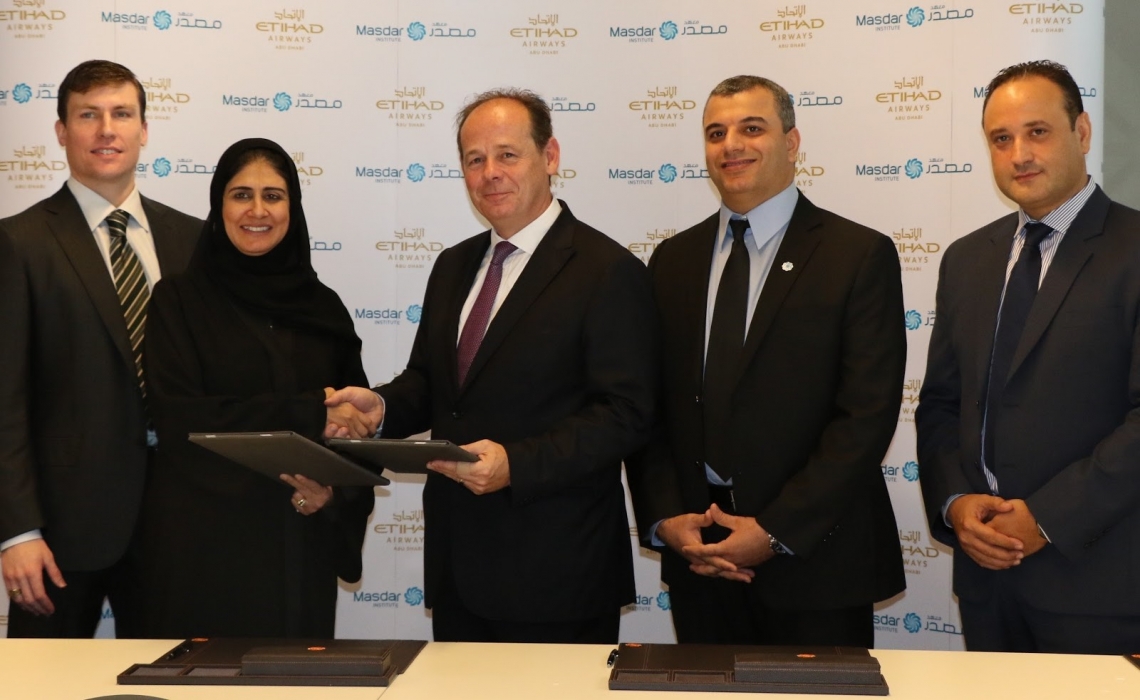
A research agreement to develop an operational fog prediction and monitoring system to serve the needs of the aviation sector in Abu Dhabi was signed by officials of Etihad Airways and Masdar Institute.
 
Signed on the first day of the UAE’s Innovation Week 2015, the system will provide Etihad Airways’ Operations with accurate fog formation and dispersion forecasts around Abu Dhabi International Airport, in addition to satellite-based tools for fog detection and tracking, contributing to the airline’s objective of enhancing its air traffic management system.The project will include satellite and ground-based monitoring and numerical modeling to issue fog forecasts.

The agreement was signed by Chris Youlten, Etihad Airways’ Senior Vice President, Network Operations, and Dr.Behjat Al Yousuf, Interim Provost, Masdar Institute, in the presence of officials from both the partners.
 
Mr Youlten said: “This is a very exciting partnership for a number of reasons. As Etihad Airways grows, so does the need for it to develop more sophisticated operational control practices to maintain its world-class reputation. The research and development work being done at the Masdar Institute offers Etihad Airways the unique opportunity to work closely with the scientific community in developing an innovative solution tailored to meet our operational needs.
 
“Following on from the very challenging fog season of winter 2014-15, we made a firm commitment to take our contingency planning to another level that supported the growth of our airline and the airport.  We pride ourselves on being one step ahead of the game, but we needed assistance in developing a more scientific approach to our readiness for fog. Meteorological forecasting allows for a proactive approach, but even when we are working to a time frame of fog, we can’t see it coming until it is in our midst.
 
“For this reason we engaged with the Masdar Institute scientists to collaborate with our Operations team to help us with fog detection and monitoring. Everyone will benefit from this innovative project including our guests, our principal partner, Abu Dhabi Airports Company, and the whole airport community,” he added.

Dr. Steve Griffiths, Vice President for Research said: “The Masdar Institute agreement with Etihad Airways demonstrates our region-relevant scientific research capabilities that can benefit various stakeholder organizations. This project aims to detect fog formation well in advance and help the aviation sector mitigate the adverse impacts of bad weather conditions. We believe the outcome of this research project will benefit not only the industry but the community as a whole.”

The research project will be led by Dr. Marouane Temimi, Associate Professor of Water and Environmental Engineering and Head of the Coastal and Environmental Remote Sensing and Modeling Lab. Titled “Towards achieving a fog-ready air traffic management system for Etihad Airways: Numerical forecast and satellite detection,” the project builds upon a strong knowledge in remote sensing and atmospheric modeling and will be conducted in collaboration with the Research Center for Renewable Energy Mapping (ReCREMA) led by Dr. Hosni Ghedira.
 
The project outcome will have far-reaching benefits for the aviation sector in Abu Dhabi that could be expanded to other airports in the country and the region. At present, inaccurate fog forecasting creates operational challenges such as flight delays, flight diversions, personnel disruptions, and traveller disturbance. These result in wasted resources and additional costs to the airlines and passengers, and puts strain on the airport infrastructure. Moreover, the contingency strategy of over-fuelling of aircraft so they can handle unforeseen fog issues reduces cargo capacity, generates additional financial losses for airlines and contribute to unnecessary carbon emissions.

Abu Dhabi experiences frequent outbreaks of dense fog, especially in the October-November and March-April periods, during which visibility drops significantly. During such outbreaks, operations at Abu Dhabi Airport may be significantly disrupted or even stopped completely. Such conditions make it critical for airlines to have an accurate fog management support system that provides operators with the efficient tools to plan properly and mitigate any adverse impact.
 
Masdar Institute’s recently launched environmental regional observatory (http://earth.masdar.ac.ae/) offers comprehensive information for monitoring coastal processes in the UAE and the region. It also provides in-depth information including forecasts for the Arabian Gulf for the next five days with hourly updates. Such facilities make Masdar Institute the prime location for external organizations to conduct region-relevant research in weather conditions.
 
Clarence Michael
News Writer
22 November 2015

Masdar Institute PhD Student Wins L’Oreal-UNESCO for Women in Science Middle East Fellowship

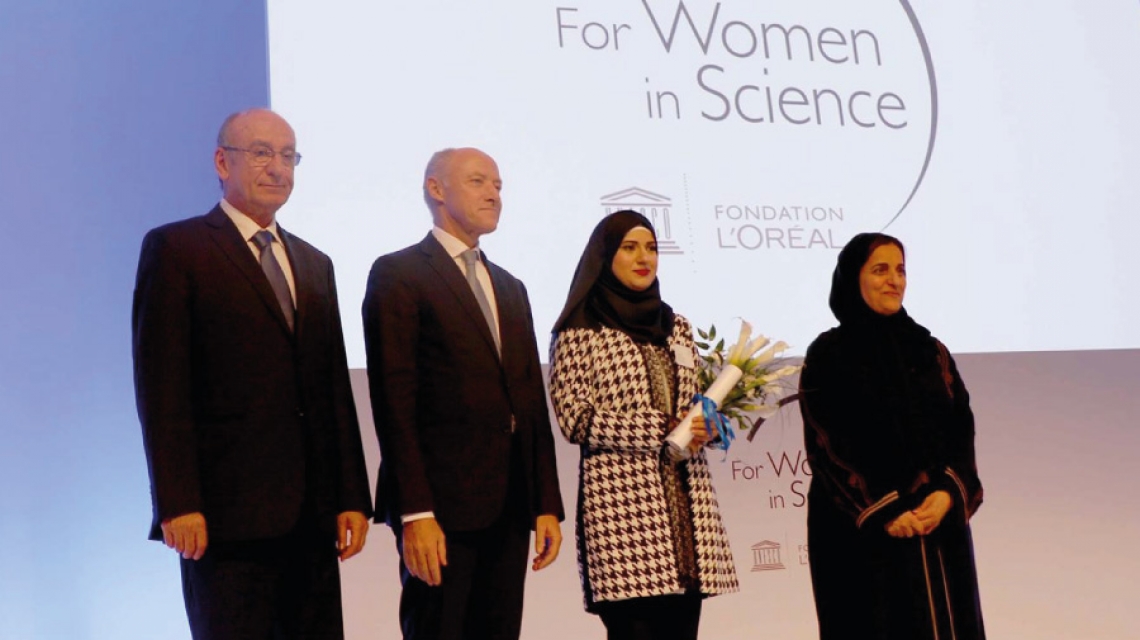
PhD student Nazek El-Atab today received the 2015 L’Oréal-United Nations Educational, Scientific and Cultural Organization (UNESCO) For Women in Science (FWIS) Middle East Fellowship award from Her Excellency Sheikha Lubna Bint Khaled Al Qasimi, Minister of Development and International Cooperation and President of Zayed University, during a gala ceremony that was held at the Zayed University campus in Dubai.

Nazek El-Atab, whose PhD thesis focuses on fabricating novel nano-memory devices with lower power consumption, has become one of the four recipients of the Fellowship that carries an award of €20,000 (AED78,500). She was chosen from a pool of 10 scientists from the six Gulf Cooperation Council (GCC) countries.

The L’Oréal-UNESCO FWIS Middle East Fellowship Program aims to recognize, honor and empower Arab female scientists whose findings have contributed to the advancement of scientific knowledge and helped change the world for the better.

Dr. Behjat AlYousuf, Interim Provost, Masdar Institute, said, “We are proud of Nazek El-Atab for becoming one of the four recipients of the prestigious L’Oréal-UNESCO FWIS Middle East Fellowship Program. Her selection shows Masdar Institute’s commitment to nurturing and educating the region’s most promising young men and women in the field of science and technology. We hope other aspiring students will look up to Nazek as their role model and follow her footsteps in pursuing scientific excellence in the field of sustainability.”

El-Atab was selected based on several criteria such as outstanding academic record, the scientific quality of the research project as well as the number, quality and impact of the publications, conference presentations, and patents. The jury also looked into the innovative nature and productivity of the research and its application in science and the ability of the candidate to communicate and promote the sciences to a younger audience and encourage young Arab female scientists.

El-Atab said: “The L’Oréal-UNESCO FWIS Middle East Fellowship will help me buy cleanroom supplies needed for the fabrication of novel low-power non-volatile memory devices using innovative nanomaterials. It will also enable me to attend international conferences and share my findings with peers in the nanotechnology and microsystems engineering fields.”

“Masdar Institute played an influential role in my winning of the award and I would like to express my profound gratitude to my advisor Dr. Ammar Nayfeh for his encouragement, guidance and support throughout the course of my research,” she added.

Within one year of receiving the L’Oréal-UNESCO FWIS Middle East Fellowship, the recipients are expected to submit a status report on the awarded research project and a final financial expenditure statement on the actual fellowship expenditure incurred through their research project.

El-Atab’s faculty advisor Dr. Ammar Nayfeh, Associate Professor in Masdar Institute’s Department of Electrical Engineering and Computer Science, said: “I am extremely proud of Nazek for winning the 2015 L’Oréal-UNESCO FWIS Middle East Fellowship. As her PhD advisor, I can say this award is well-deserved. Nazek exemplifies the ideal PhD student, who goes beyond what is originally required. She has published seminal papers in word class journals on low energy charge-trapping memory devices using nano-particles. I am certain she will be a tremendous ambassador for Masdar Institute and vital asset for the UAE in the future.”

The L’Oréal-UNESCO For Women in Science Fellowships has recognized and honored over 2,250 women scientists in 115 countries in the past 17 years. The program is offered to promising young women researchers at crucial junctures in their careers when stereotypes and preconceived notions could be most detrimental.

This program rewards talented young female scientists in the field of Life Sciences including biology, biochemistry, biophysics, genetics, physiology, neurosciences, biotechnologies, ecology and ethology, as well as Physical Sciences such as physics, chemistry, petroleum engineering, mathematics, engineering sciences, information sciences, Earth and Universe sciences.

The jury panel for the 2015 For Women in Science Middle East Fellowship included prominent scientists and was headed by Dr. Christian Amatore, Acting President, Chemistry Department, Ecole Normale Supérieure de Paris, France. The L’Oréal –Unesco for Women in Science Middle East Fellowship was launched in 2014 in partnership with Zayed University under the Patronage of Her Excellency Sheikha Lubna Bint Khalid Al Qasimi, Minister of International Cooperation and Development of the UAE & President of Zayed University.

Clarence Michael
News Writer
24 November 2015

Grants to Bring Research Closer to Market

Six promising research projects, conducted jointly between Masdar Institute and the Massachusetts Institute of Technology (MIT) faculty and students, are now one step closer to commercialization thanks to a research grant program established between the two universities to support translational research.

The Masdar Institute and MIT Innovation Program (MMIP) grants help faculty to assess the commercial prospects of promising technologies and to reduce the technical and market risks associated with their innovations through prototyping and other forms of translational research. The grants are also designed to assist researchers in raising third-party funding for follow-on development of commercial products, services and processes.

The MMIP grants are administered at Masdar Institute by the Institute Center for Innovation and Entrepreneurship (iInnovation), and at MIT by the Deshpande Center for Technological Innovation.  The one year grants range in size from US$50,000 to US$150,000 per team at each university.
 
Dr. Behjat Al Yousuf, Interim Provost, Masdar Institute, said, “The research concepts undertaken by the faculty of both institutions represent cutting-edge technology leads that seek to bring valuable innovations. The six MMIP grants are significant examples of the intensity of our commitment to developing sustainable new technologies that can be commercialized to benefit the wider community in energy conservation, solar power, and sustainable desalination in the UAE and globally. We believe the grants will not only encourage the current researchers but also inspire current and future faculty and students to initiate and participate in such transformational research projects.”

The 2015 projects include self-tracking solar concentrators, electrochromic windows that can change from transparent to dark based on voltage application, an optical sensor that can rapidly detect an electrical current overload, a wastewater treatment system combining nanowire filtration and bio-electrochemical treatment, energy-efficient water desalination through membrane distillation (MD), and a transmitter built from new materials that can help reduce the footprint and power consumption of wireless radios. Three of the projects represent continuation of grants awarded in 2014, and three are new projects.
 
MMIP grants aim to help MIT and Masdar Institute faculty and students bring their research concepts a step closer to commercialization by transforming them into innovative products and spinout companies. The grants are offered only to projects in which faculty from both institutions have principal investigator (PI) status, thus combining research strengths of the two universities and of their innovation ecosystems. The innovative program illustrates the strong overall collaboration between Masdar Institute and MIT and between their proof-of-concept centers, iInnovation and the Deshpande Center.

Clarence Michael
News Writer
15 November 2015

New Solar Platform to Make Solar Power Technologies More Efficient and Affordable

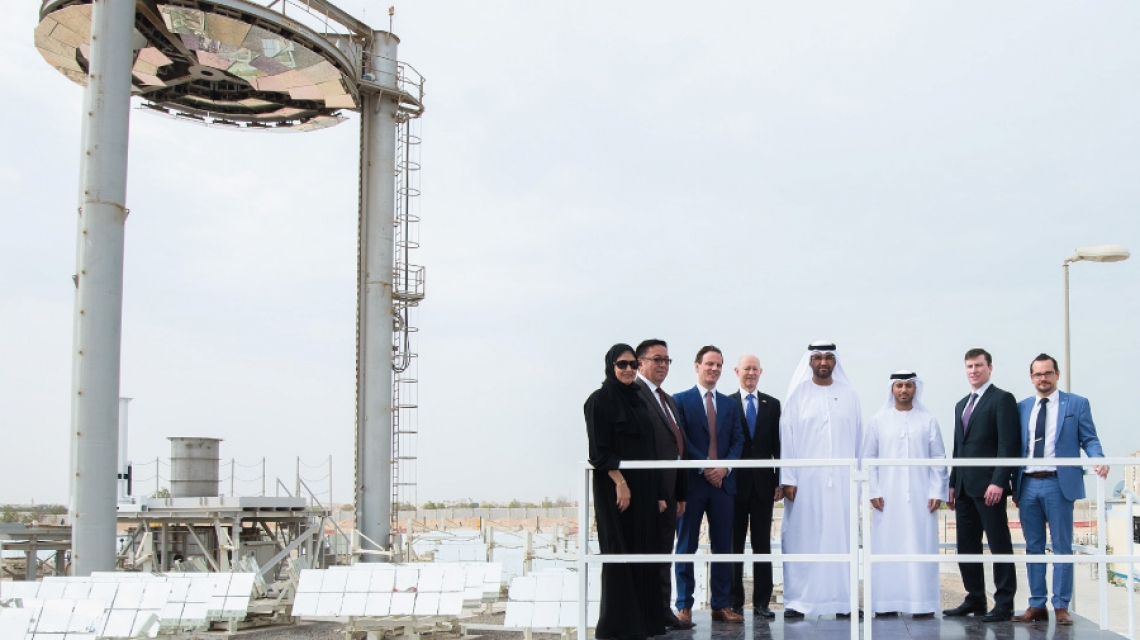
Masdar Institute has launched its new Masdar Institute Solar Platform (MISP) to spur the development of UAE-tailored concentrating solar power (CSP) and thermal energy storage (TES) technologies. The innovative CSP research conducted through the platform could lead to more affordable and efficient solar technologies, which could give a critical boost to the UAE’s solar power generation capacity.

The inauguration of the MISP was attended by His Excellency Dr. Sultan Al Jaber, UAE Minister of State, Chairman of Masdar, and Chairman of the Masdar Institute Board of Trustees Executive Committee. His Excellency Jens Eikaas, Norwegian Ambassador to the UAE, delivered opening remarks on the importance of UAE-Norwegian research and development collaborations.

In a keynote speech, Masdar Institute’s Dr. Steve Griffiths, Vice President for Research, highlighted the Institute’s efforts to establish partnerships in public and private sectors to enhance research and development of critical technology-based innovations in key UAE industries.

The launch of the facility featured an announcement by EnergyNest, a Norwegian thermal storage technology developer, that it has validated at the facility its thermal energy storage (TES) pilot that stores thermal energy up to 400°C, making it the first high-temperature thermal energy storage system in the Middle East. This innovative new technology, which uses a special concrete as storage media and a smart modular configuration, has the potential to drop the costs of TES systems in CSP facilities significantly.

The launch also featured an in-depth panel session, which explored the opportunities and potential of the MISP and the Masdar Solar Hub to accelerate the UAE’s growth in the solar energy markets.

Dr. Behjat AlYousuf, Interim Provost, Masdar Institute, said: “We are pleased to announce the official launch of the Masdar Institute Solar Platform, which will provide pioneering solar power companies, universities and our own faculty and students a place to research, develop and test concentrating solar and thermal energy technologies. The Masdar Institute Solar Platform will help to validate CSP and thermal energy technologies at the pre-commercial level by providing the tools and expertise required to test these systems at Masdar Institute’s unique solar beam-down tower, which is the critical link required to translate next-generation CSP systems into commercially viable products. The MISP will help to position the UAE as a global hub for CSP technologies and a leader in the evolving energy market.”
Guests at the MISP launch enjoyed tours of the the platform, where a wide range of innovations are currently being tested on-site, including new silicon mirrors that can better handle the UAE’s harsh desert conditions and the storage of thermal energy for the production of power  using a novel single-tank storage system.

Using Masdar Institute’s one-of-a-kind 100 kW beam-down CSP facility, the aim of the Solar Platform is to build a high-performance CSP research and demonstration infrastructure in the region. This will provide the foundation for new product development, cooperation with local and international companies and academic organizations, and the creation of human capital highly trained in CSP and thermal energy storage (TES) systems in Abu Dhabi — efforts which directly support Abu Dhabi’s initiative to provide 7% of its power generation capacity from renewable energy technologies by 2020.

Dr. Christian Thiel, CEO, EnergyNest, said: “The platform at Masdar Institute allows for a truly unique storage technology to be demonstrated and showcased to the world. We are extremely excited over the prospects of our new thermal storage technology for the region – and we look forward to continuing research efforts and expanding our collaboration activities with Masdar”

Dr. Nicolas Calvet, Chair of MISP and Assistant Professor of Mechanical and Materials Engineering at Masdar Institute said: “The MISP takes Masdar Institute’s novel beam-down CSP pilot plant and transforms it into a unique research tool for development of TES systems and CSP components.”

Another collaborator currently leveraging the platform’s CSP testing capabilities is Ibiden Co. Ltd., a Japanese electronics and ceramics company. Ibiden is using the MISP to test the ability of its new silicon-carbide mirrors to withstand extreme desert conditions. Testing and adapting CSP technologies and their components to handle the challenging weather of the UAE and wider region is an important focus of the MISP.

In October, Dr. Calvet installed the collaborative Masdar Institute-Massachusetts Institute of Technology (MIT) TES prototype system called the Concentrated Solar Power On Demand Demonstration (CSPonD Demo) at the platform. This prototype directly absorbs and stores thermal energy in the form of molten salts in a single-tank system, which is considerably more efficient  than the conventional two-tank system commonly used today.

The main purpose of the MISP is to develop and leverage both human capital and solar resources to increase the implementation and utilization of CSP in the UAE, which is considered a promising source of solar power for large scale power generation.

“Right now, there is a big focus on PV since costs have come down thanks to investment in research. CSP coupled with TES is an alternative to PV that is capable of producing constant power 24 hours a day, making it well suited for system integration and overcoming the storage challenges that PV currently faces,” said Dr. Calvet.

The innovative R&D outcomes produced by the MISP intend to lead to the creation of next-generation CSP and TES technologies that are more affordable and efficient, making thermal solar energy a more viable option for solar power generation in the UAE and around the world, helping the UAE reach its innovative renewable energy ambitions.

MISP joins the Masdar photovoltaic (PV) testing facility, which was launched in January 2015, as part of the Masdar Solar Hub — the first independent solar testing and R&D facility in the UAE, established through a collaboration between Masdar and Masdar Institute.

Erica Solomon
News and Features Writer
26 November 2015

Masdar Institute, Masdar, and BP Partner to Accelerate Entrepreneurial Innovation in UAE

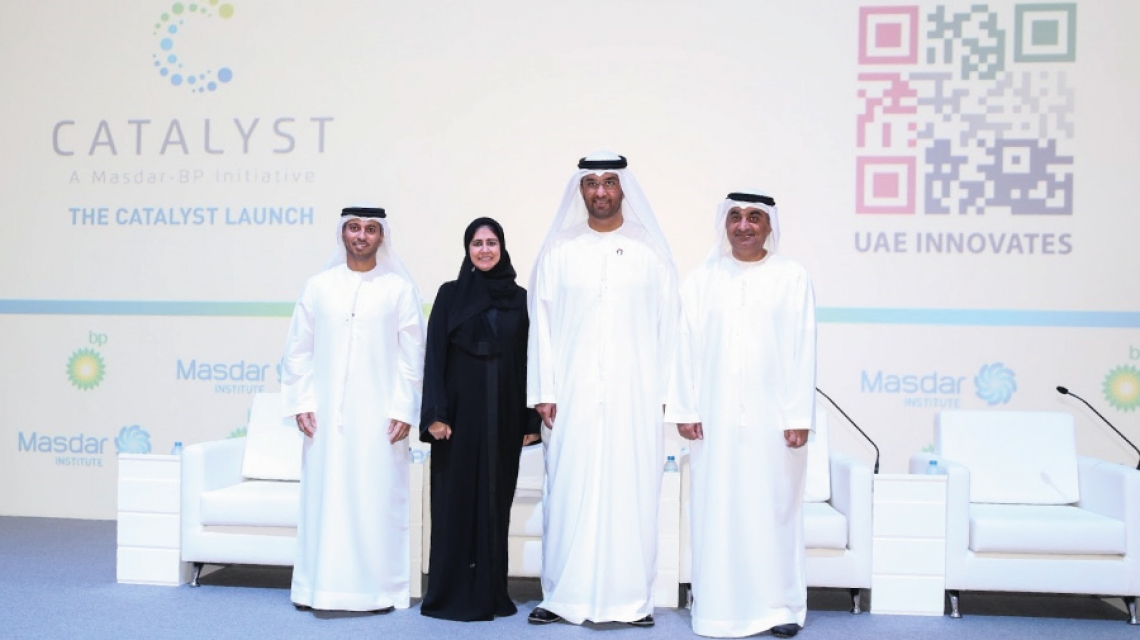
The Catalyst, the region’s first technology startup accelerator focused on sustainability and clean technology, was launched on the first day of the UAE Innovation Week by Masdar Institute of Science and Technology, BP and Masdar.

The fund was launched in the presence of Dr. Sultan bin Ahmed Sultan Al Jaber, Minister of State and Chairman of Masdar with a goal of helping entrepreneurs accelerate the development of a viable technology business through funding, training and mentorship.

Supported by US$5 million in funding from BP, The Catalyst will promote innovation, entrepreneurship and the development of a knowledge-based economy in Masdar City and Abu Dhabi, in line with the UAE’s National Innovation Strategy.

Dr. Ahmad Belhoul, CEO of Masdar, said: “In the nine years since inception, Masdar has transformed from a bold idea into a commercially-viable renewable energy company. We want to leverage our own experience – as well as our unique infrastructure and assets at Masdar City — to create a platform for startups with similarly bold visions for sustainable technologies and turn their ideas into commercial realities. We are pleased to partner with BP and Masdar Institute to catalyse innovation in line with the call to action by His Highness Sheikh Mohammed bin Rashid Al Maktoum, Vice-President and Prime Minister of the UAE and Ruler of Dubai, and the UAE leadership.”

The Catalyst will be differentiated from the other startup accelerators in the region by its unique focus on sustainable technologies and through its highly targeted recruitment process. The Catalyst will support fledgling innovators from the UAE and beyond in the fields of energy, water and clean technology with seed funding, training, mentoring, and work space. It will accept applications from startups that are 1-5 years from commercialization. Successful applicants will receive on average US$50,000 funding and up to six months of support, training and advice to help grow their business.

Dr. Behjat Al Yousuf, Interim Provost of Masdar Institute, said: “Masdar Institute work’s to enable technology transfer to startups and commercialization of the technologies developed through our research projects. We are pleased to be joined in this effort by The Catalyst, which will further strengthen our shared mission of supporting the development of the UAE’s innovation ecosystem.”

The goal of the accelerator is to turn a startup idea into a minimal viable product with commercialization potential. These new businesses will grow into a network of innovators in sustainability that will become the future driving force behind innovation in Abu Dhabi and across the region.

Mr. Abdulkarim Almazmi, President and General Manager for BP UAE, said: “BP is a corporation anchored in technological innovation. Our business relies on the ability of our brightest minds to innovate, so we are proud to support a programme that will develop innovative capacity in the UAE through training, mentorship and access to industry experts. BP is pleased to bring its proven capabilities in technology entrepreneurship to the region and help UAE developing a leading position in technology innovation.”

Interested entrepreneurs may apply to The Catalyst through its online application portal. Over the next few months, a series of hackathons and innovation boot camps will be held to determine the first cohort of participants in the program. Accepted applicants will partake in a program that includes education and training, investment pitch preparation, hands-on mentorship and a Demo Day. After the accelerator program, successful applicants will enjoy post-program support.

The Catalyst is now accepting applications for Spring 2016 through its online application portal.

Clarence Michael
News Writer
22 November 2015

Agreement Signed with World’s Top-Ranked Tsinghua University to Research Next-Generation Sustainability Solutions

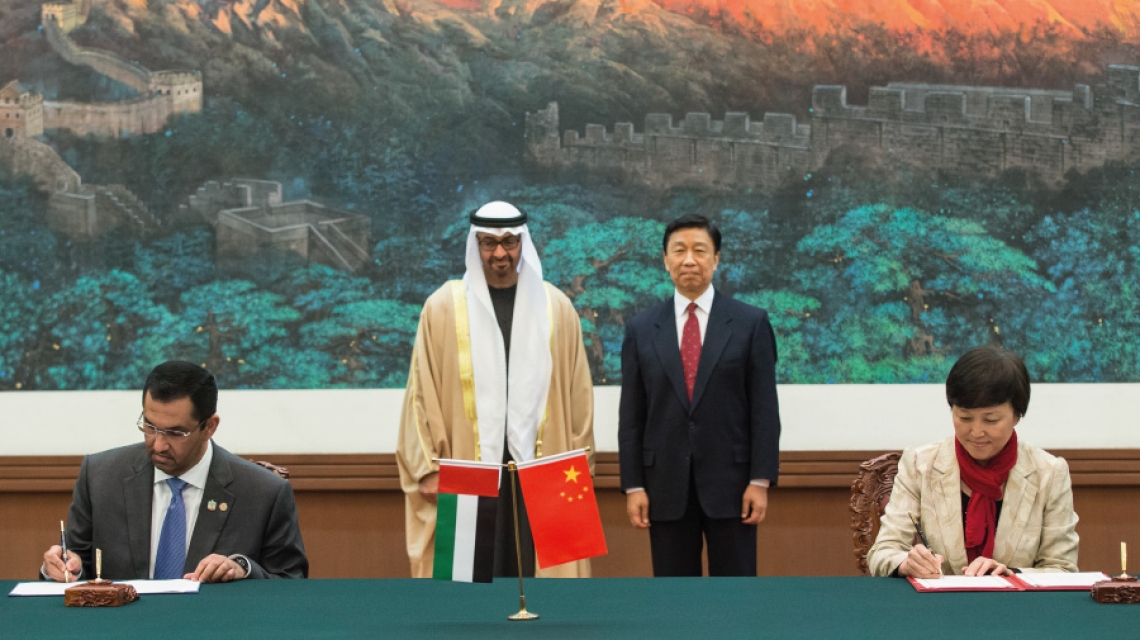
Masdar Institute and the world’s top ranked engineering university  Tsinghua University  today signed a collaboration agreement to embark on a faculty and student exchange program intended to support transformative sustainability research.

The agreement was signed in the presence of the leaders from both the UAE and China at the Great Hall of the People in Beijing. Professor Dr. Chen Xu, Chairperson of the University Council, signed the agreement on behalf of Tsinghua University, while His Excellency Dr. Sultan Al Jaber, Minister of State and Chairman of the Executive Committee of the Masdar Institute Board of Trustees, signed on behalf of Masdar Institute.

Tsinghua University was recently ranked by the US News and World Report as being the world’s top ranking engineering university, and is one of the nine members in the elite C9 League of universities in mainland China.

The two leading universities will embark on a faculty and student exchange program that includes research in the fields of renewable and clean energy. Areas of renewable and clean energy exploration include solar energy, biofuel, carbon utilization and sequestration. Additional areas to be explored are membrane and thermal desalination, water treatment, satellite technology, deep space exploration, smart cities, intelligent transportation, micro-electromechanical system (MEMS), 3D chips, nano-technology, 3D printing, and management, as well as health and life sciences.

The Masdar Institute-Tsinghua University research teams will include students from both universities. Faculty will guide the teams in accordance with the the visions of Masdar Institute and the UAE for the future of innovation, as well as those of the Chinese institution.

Other prominent Chinese and UAE government officials and representatives from both institutions including Dr. Yao Qiang, Dean, and YANG Bin, Vice President and Provost, Tsinghua University were present.

Dr. Chen Xu said: “Masdar Institute of Science and Technology is a new yet significant partner to Tsinghua University. The two institutions have established solid foundation for cooperation through faculty exchange and scholarly communication. We share a common goal of addressing the world’s most pressing challenges through innovation and education. Commercial development, urbanization, and a high standard of living have compounded to create problems that have not existed on this magnitude before. With the signing of this faculty and student exchange agreement, we look forward to working with Masdar Institute in a more intensive manner to resolve these ecological challenges that our world faces today.”

Dr. Sultan Al Jaber said: “The exchange agreement between Masdar Institute and Tsinghua University is sure to help bring dynamic advancements in water, energy, microsystems and advanced materials to the UAE, China, and the world at large. I also believe this partnership reveals the growing maturity and strength of the UAE’s innovation ecosystem and am confident it will help the country achieve its National Innovation Strategy goals.”

Through the agreement, faculty at both institutions will be eligible to participate in the Faculty Exchange Program and in the Student Exchange Program as co- supervisors. Only full-time doctoral students with good track record will be eligible for this program.

Co-developed and pre-approved research plans are expected to maximize the benefit for both institutions. Consequently, students from both universities, along with their own research advisors, will be performing cutting-edge research that could make an impact not only to both countries but recognized globally as being at the forefront in their receptive fields.

Dr. Youssef Shatilla, Dean of Academic Programs, Masdar Institute, said, “With this agreement we have secured a win-win situation where both partners involved in the collaboration will benefit by advancing their research agendas. Significant benefit will also be shared through the faculty exchange side of the agreement.”

At present, Masdar Institute has collaboration agreement with its founding partner the Massachusetts Institute of Technology (MIT). Other international collaboration partners include Tokyo University in Japan, Technical University of Dresden in Germany, the Korea Basic Science Institute (KBSI) and University of Manchester in the United Kingdom.

Clarence Michael
News Writer
14 December 2015


Leading the Region’s Dust Research to Create Smarter Climate Models

The UAE is no stranger to dust storms. While dense dust in the air can seem to be just a mere nuisance, the UAE’s dust storms can pose real health hazards. Reducing visibility for road and air traffic and producing spikes in asthma cases are just a few examples of dust’s potential to wreak havoc across the country.

This has prompted post-doctoral researchers Dr. Shaik Ghouse Basha and Dr. Phani Kumar Devulapalli, from Masdar Institute’s Water and Environmental Science Program, along with Dr. Taha B.M.J. Ouarda, Professor of Water and Environmental Engineering and Head of the Institute Center for Water and Environment (iWater), to undertake the region’s first comprehensive dust climatology study. The researcher aim to find critical answers to the UAE’s dust storms, including where they come from and how they affect the atmosphere.

Speaking about the importance of the study and its impact on the UAE, Masdar Institute’s Interim Provost Dr. Behjat AlYousuf said, “In-depth research of the country’s dust is critically important to the development of advanced climate models, which will help the country detect and mitigate the effects of dust storms on health, transportation, renewable energy and agriculture.”

The UAE is located in the Northern Hemisphere and sits on the global ‘dust belt,’ which wraps around North Africa, the Middle East, Central and South Asia, and China, and accounts for nearly 80% of the world’s dust. Yet, in a region so strongly affected by high levels of dust most of the year, dust is often not included in local climate modelling parameters. The dust climatology study is looking to change this by providing dust modelling data for more advanced climate models, which in turn can better predict dust storms and their impact on climate, health, energy and agriculture.

Their research so far tracks the origins of the UAE’s dust to two deserts – the Sahara and Rub’ al Khali, the world’s largest sand desert encompassing most of the southern third of the Arabian Peninsula.

“We used a combination of data collected from ground-based weather stations over the past 33 years and climate model datasets to determine various dynamics associated with dust storms and the storms’ effect on surface parameters, like precipitation, temperature, aerosol and optical properties. From surface observations, we learned when these dust storm hit and, using modeling data sets, we were able to pinpoint where the dust came from,” said Dr. Basha.

They found that on average, dust storms reduce the UAE’s atmospheric temperatures by 4.5 degrees Celsius. The dust storms begin in December, occur with the most frequency between February and March, and start decreasing until August. The average dust storm lasts 21 hours and occurs more frequently over Abu Dhabi.

“Another interesting feature is that dust events (when visibility is from 1-5 km) over the UAE region show a significant decreasing trend whereas dust storms (when visibility is only up to 1 km) show moderate increases over this region,” said Dr. Basha.

During a dust storm, there are huge increases in aerosols – tiny particles of soot and organic matter emitted by power plants, factories and volcanoes, as well as mineral dust wafted off from the Sahara and other large deserts. Dr. Basha and Dr. Devulapalli are working to determine which type of aerosols are present during the storms and their chemical compositions.

Dr. Devulapalli said, “These aerosols can affect climate in many ways. For example, the aerosols affect the sun radiation reaching the Earth’s surface, temperature and cloud formation. They also affect the earth’s atmospheric layers differently. One notable effect of dust storms is the heating of the atmosphere. And in some layers, the aerosols during dust storms cause more heating, whereas in other layers relatively less heating is observed. We are interested in finding out why we see the diverse dust effects across different atmospheric layers.”

The researchers believe their analysis and explorations will contribute to better climate models of the region that more accurately predict when dust storms will occur and how they will affect the atmosphere and relevant economic sectors in the short and long-term.

While the direct economic impact of dust storms may seem minimal compared to other major natural disasters (dust storms in China cost on average about US$6.5 billion per year), long-term consequences of dust storms may take a heavy health, agricultural and energy toll on the people who live in dust-affected areas. During dust storms, the poor air quality causes breathing difficulties, creating spikes in respiratory diseases and hospital visits.

The dust storms kick up the UAE’s fragile topsoil, causing further desertification – a degradation process by which land becomes progressively more arid – severely limiting soil productivity and damaging crops, resulting in decreased food production, which is a blow to the country’s agricultural industry.

The dust can also impact the solar energy sector, making it harder to achieve Abu Dhabi’s goal of attaining 7% of its electricity production capacity from renewable energy sources by 2020. Dust accumulates on solar photovoltaic panels, making them less effective. The suspended dust in the air also reduces the amount of sunlight that reaches the ground for solar energy capture technologies. Though researchers at Masdar Institute are investigating solar technologies that are dust-resistant and/or self-cleaning, atmospheric dust will continue to create challenges even as these technologies move toward commercialization.

Dust can also have severe impacts on land and air transportation. During a dust event, dust particles in the air reduce visibility to very low  levels, especially on roads in desert areas with no windbreaks, leading to serious accidents. Sand tends to accumulate on the highways, making it difficult for motorists driving at high speeds. Dust can also cause significant disturbances to aviation, including cancellation of flights, rerouting due to poor visibility and disturbances to airport operations.

Going forward, the researchers will investigate how dust from different regions contribute to the UAE’s dust  as well as the types of weather conditions that could trigger more severe dust storms.

Erica Solomon
News and Features Writer
15 December 2015


Collaborative Agreement Signed with UAE Ministry of Environment and Water on Pilot Food and Biomass Farm Project

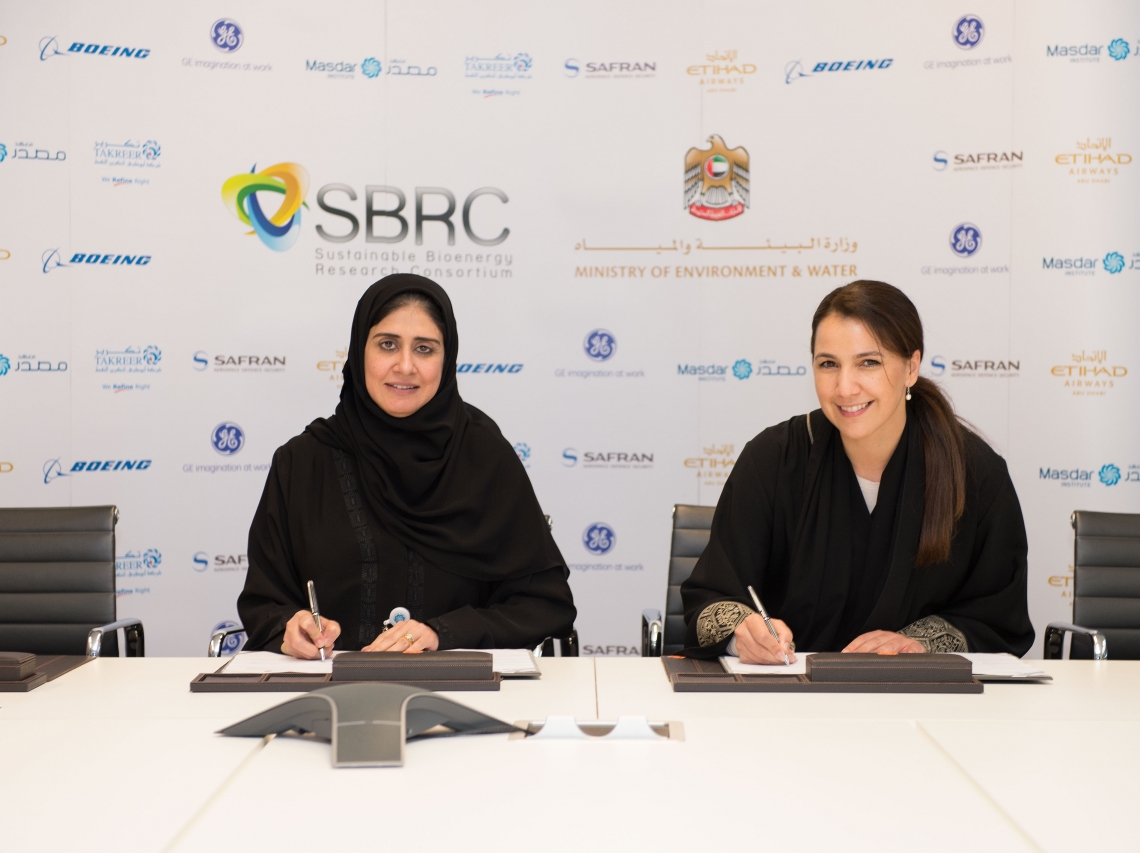
The UAE Ministry of Environment and Water and Masdar Institute today announced that they have signed an agreement to collaborate on conserving marine ecosystems and developing a healthy aquaculture industry in the UAE.   The research collaboration agreement will also cover developing UAE nationals in the use of modern technology for the Seawater Energy and Agriculture System’s (SEAS) pilot project established as part of the Sustainable Bioenergy Research Consortium (SBRC), a partnership of energy and technology leaders founded by Masdar Institute.

The agreement was signed by Dr. Behjat Al Yousuf, Interim Provost, Masdar Institute and H.E. Eng. Mariam Mohammed Saeed Hareb, Assistant Undersecretary of Water Resources and Nature Conservation Affairs, Ministry of Environment and Water.   The SEAS project uses desert land – irrigated by seawater – to produce both food and bioenergy. The project as a whole provides seafood, biomass for energy and enrich mangrove forests, without negatively impacting freshwater supplies or crossing over into existing farmland.   According to the agreement, the ministry will provide fish fingerlings and mangrove seedlings in addition to technical expertise. The ministry has also expressed its willingness to become a member of the SBRC, whose current partners are Etihad Airways, The Boeing Company, Takreer, GE and Safran.   H.E. Eng. Mariam Mohammed Saeed Hareb said that the Ministry of Environment and Water is keen to develop sustainable projects that promote environmental sustainability and conserve natural resources, which contributes in the development of various environmental sectors to achieve the objectives of the UAE Vision 2021.

H.E. Hareb added that the importance of cooperation with pioneer research institutes such as Masdar in various environmental fields will expedite learning processes about best practices and adoption of policies that will enhance environmental sustainability.  She also pointed out that the “Seawater Energy and Agriculture System” will generate useful products in a sustainable manner that is suitable for the UAE’s unique environment, which falls in line with the Ministry’s strategy to find alternatives and innovative solutions for sustainable development in all environmental sectors.

Dr. Al Yousuf said: “The UAE Ministry of Environment and Water’s commitment to the SBRC’s pilot farm project reflects their endorsement of this major initiative. With global leaders in energy and technology as its partners, the SBRC stands as a major testimony to Masdar Institute’s role in seeking sustainable solutions to global challenges. The project will provide seafood, biomass for energy, and enrich mangrove forests, without negatively impacting freshwater supplies. We believe the agreement with the ministry will ensure the protection of the UAE’s marine ecosystems in balance with the development of its aquaculture industry.”

James Hogan, Etihad Airways’ President and Chief Executive Officer, said: “We welcome the support of the Ministry of Environment and Water with the SEAS project. This is an important initiative for the airline’ which we hope will advance the development of sustainable alternative aviation fuel in Abu Dhabi.”

Jasem Ali Al Sayegh, TAKREER CEO said: “The Ministry of Environment and Water will definitely boost SBRC’s integrated seawater bioenergy pilot project. We welcome the Ministry on board and hope that together we will help the aviation industry in the UAE to meet the growing demand for jet fuel in an innovative and sustainable manner.”

Construction work began on the SEAS pilot facility earlier in June this year. The project is intended to run for three to five years, allowing researchers to learn more about the optimal operations and conditions to support the scalable production of bioenergy.   Headed by Dr. Alejandro Rios, Professor of Practice, Engineering Systems and Management, the SBRC is focused on the joint research and advancement of sustainable aviation biofuels. Its research areas covers the development and commercialization of sustainable biofuels and biomaterial derived from the conversion of plant oils and biomass. The technology uses coastal seawater to raise fish and shrimp for food, whose nutrient-rich wastewater then fertilizes plants rich in oils that can be harvested for aviation biofuel production.  

Clarence Michael
News Writer
22 December 2015