Masdar Institute Alumni Build on Masdar Institute’s Legacy to Change the World

Alumni from the Masdar Institute of Science and Technology, which is part of the Khalifa University of Science and Technology, are using their transformative educational experiences as a stepping stone to achieve their goals and fuel innovation and inspiration in the UAE and around the world.

Since MI hosted its first commencement in 2011, members of its 585-strong alumni community have been pursuing careers that leverage the enriching experiences and broad range of skills gained during their academic studies to advance sustainability in the UAE and abroad, proving the value of their engineering degrees while advancing the legacy of MI to change the world. Following is the journey of how six notable MI alumni are putting their degrees into practice post-graduation through activities centered on improving energy access in developing countries, enhancing sustainable technologies for clean energy solutions, and inspiring the next generation of innovators.

Ayu Abdullah and Kyle Weber, Class of 2014

Ayu Abdullah and Kyle Weber, both Class of 2014 MSc in Engineering Systems Management graduates, transferred the skills they gained from their studies at Masdar Institute into a new company that builds on the energy access-related research that was the focus of their thesis work to bring clean energy to developing countries.

Abdullah and Weber partnered with Dr. Scott Kennedy, formerly faculty member and dean of research at MI, to establish Energy Action Partners (ENACT) in 2015. ENACT provides community energy systems, short courses on energy and social enterprise, and consulting services to support clean electricity development in marginalized communities. The group has led initiatives in Somaliland, Indonesia, India, and Malaysia.

The team said that they are inspired to continue and advance their work when they can see the real impact of their projects and courses on the communities where they are delivered.

Abdullah and Weber are grateful for the network and experiences they gained at MI, which brought them together and gave them the fundamental skills to pursue their sustainable development ideas.

“MI was very helpful for developing my understanding of complex systems dynamics, which in a startup and development field is extremely important. Being able to understand the local context and plan how best to allocate limited resources to realize the maximum intended impact is a challenge that must be overcome in order for any success to be achieved,” said Weber, who is Technical Advisor at ENACT.

Aaesha Alnuaimi, Class of 2012 and 2017

Aaesha Alnuaimi is another one of MI’s highly accomplished alumni. She became the first UAE national to fabricate thin-film crystalline silicon solar cells in the MI cleanroom in 2012 and later received the Young Emirati Researchers Prize from the National Research Foundation for her Master’s thesis on improving the efficiency of crystalline silicon thin-film solar cells.

After receiving her MSc in Microsystems Engineering from MI in 2012, Alnuaimi continued her pursuit of advanced solar photovoltaics research through MI’s PhD in Interdisciplinary Engineering. Alnuaimi is expected to graduate during the seventh annual MI Commencement Ceremony this May.

“The experience and the skills that I gained helped me to become a self-motivated and independent researcher, and taught me how to apply critical research skills and work collaboratively with people from different disciplines and cultures. I believe that through these skills, MI has helped me establish a strong foundation toward a successful career,” Alnuaimi shared.

Meshayel Omran Lehssoni, Class of 2013

Meshayel Omran Lehssoni is a another trailblazing alumna who credits the support received during her research at MI with providing her with the knowledge, confidence and impetus to pursue her career goals in advanced energy, sustainability and carbon emissions reduction.

The young Emirati is currently serving as Director of Future Energy and Security of Supply and Chief Officer of Happiness and Positivity at the UAE’s Ministry of Energy.

“During my studies at Masdar Institute, I focused my thesis on carbon capture and storage (CCS) and when I joined the Ministry of Energy, I was able to work and contribute to climate change efforts. I feel I have been strengthened with the different tools and methodologies taught to me at Masdar Institute, and have added my own inputs to them to do exciting work for my country,” she shared.

Since joining the ministry in 2013, Lehssoni has made significant contributions to the UAE’s negotiations in the United Nations Framework Convention on Climate Change and is supporting the UAE in Mission Innovation, a global initiative of 22 countries and the European Union to dramatically accelerate global clean energy innovation. In addition to this, she is also representing the UAE in a number of international fora including the Clean Energy Ministerial.

Dr. Carlo Maragliano, Class of 2015

Another notable alumni who is also putting to use the skills and core principles he learned while pursuing an interdisciplinary engineering doctorate degree at MI is Class of 2015 PhD graduate Dr. Carlo Maragliano.

During Dr. Maragliano’s PhD studies, he helped develop a material that separates the various wavelengths of light and concentrates them for energy harvesting. His innovative research caught the attention of Solar Bankers, an Arizona-based solar energy generation company, which approached him for a job. Dr. Maragliano has been with Solar Bankers ever since and is currently serving as its chief technology officer.

Solar Bankers was recently selected for the 2017 cycle of the Dubai Future Accelerators (DFA) program and will work with the Dubai Electricity and Water Authority (DEWA) to help transform the utility provider’s traditional business model of generating, transmitting and distributing water and electricity.

Dr. Maragliano credits MI and its professors for inculcating in him the in-depth solar energy technology knowledge and presentation skills that have served him in his continuing progress as a technology innovator.

“During my studies at MI I was able to further expand on the skills I had developed during my Master’s studies, particularly in the area of solar energy. I also traveled the world presenting my research at many conferences and universities, which polished my communication and presentation skills,” Dr. Maragliano said.

Dr. Majid Khonji, Class of 2016

Another talented alumni to emerge from MI’s PhD in Interdisciplinary Engineering program and return as a faculty member is Class of 2016 PhD graduate Dr. Majid Khonji, who has become the Institute’s most recent faculty addition following his appointment as assistant professor of electrical engineering and computer science.

Speaking about his new designation, Dr. Khonji said, “I am thankful for what Masdar Institute has given me by way of the skills needed to tackle problems, realize solutions, and conduct research effectively, and now they have received me among their team of expert faculty. This is the beginning of a new phase, and I hope I can continue to contribute to the positive development of the UAE.”

As an assistant professor, Dr. Khonji will be able to expand on the research he conducted during his PhD studies, further extending Masdar Institute’s portfolio of advanced electrical power engineering technologies. He is now bringing his smart grid know-how and expertise to the classroom, where he will continue to contribute to the UAE’s efforts to increase its renewable energy supply and indigenous human and intellectual capital, and use his position to help cultivate the next generation of Emirati scientists.

MI HERALDING AN ERA OF INNOVATORS AND LEADERS

MI’s continuous support of frontline research, coupled with its talented faculty and evolving state-of-the-art research infrastructure, have been instrumental in transforming these alumni, and many others, into the innovative engineers and leaders needed to fuel innovation and inspiration in the UAE and beyond.

With the MI Class of 2017 set to graduate later this month, the world will see 108 more highly qualified graduates join MI’s growing alumni community, empowered with the skills needed to build on the achievements of previous alumni to continue the important work of making the world a better, more sustainable place.

Erica Solomon
News and Features Writer
14 May 2017

Masdar Institute’s Pioneering Space Graduates Ready to Launch

The UAE’s first group of locally trained space engineering students are ready to advance and enrich the country’s satellite, communications, defense, aerospace and educational sectors following their graduation from the Masdar Institute of Science and Technology, on 17 May 2017. Masdar Institute is a part of Khalifa University of Science and Technology.

Masdar Institute launched the region’s first Master’s concentration in space systems and technology in May 2015, in collaboration with Mubadala-owned satellite communications company Al Yah Satellite Communications Company (Yahsat) and Orbital ATK, a multinational aerospace manufacturing company. The concentration’s first group of graduates received their degrees this month, and most of them already have plans for how they will apply their specialized skills to the country’s space ambitions.

MSc in Engineering Systems and Management graduate Sumayya Al Mehairi was working for the Airbus Space and Defense Company when she first heard of the new space concentration offered at MI. The program’s central focus on the development of small satellites, called CubeSats, was what initially attracted her to enroll.

“When I first joined the space concentration, my goal was to gain the knowledge and experience to be able to plan and build small satellites and better understand satellite networks’ policies and regulations in the UAE,” she explained.

Two years later, she says she exceeded that goal, also gaining invaluable engineering and technical skills.

“Following my graduation, I am looking forward to getting back to my work at Airbus to implement what I have learned. I would also like to work with the Telecom Regulation Authority and UAE Space Agency to develop the country’s implemented satellites regulations, as that was the focus of my thesis research.”

The space concentration, which can supplement seven of Masdar Institute’s nine Master’s programs, was developed in response to the UAE’s goal of sending the Arab world’s first unmanned probe to Mars by 2021 and the country’s focus on developing its space, communications, defense and aviation sectors.

MSc in Engineering Systems and Management space concentration student Muhammad Al Awani was also drawn from his professional work to join MI’s pioneering space offering. As a lieutenant in the UAE Armed Forces, he recognized that the program offered the potential to build upon his Bachelor’s specialization in computer science to better serve his country in an exciting new field.

“As the UAE was embarking on a new era of space exploration, I felt Masdar Institute’s dual emphasis on innovation and sustainability would provide talented students with the critical ability to support the country’s space goals with sustainable and transformative technologies and systems,” the Fujairah native shared.

Following his graduation, he will return to the armed forces with new skills and insights that he is excited to apply.

“As an army officer, I am always looking forward to new challenges. I hope I can support the UAE’s space goals by contributing to the advancement of the UAE Armed Forces’ space development. Over time, it’s my goal to gain enough experience and expertise to be able to manage big satellite projects in the country,” Al Awani added.

Another space concentration graduate with an eye on the future is Mariam Mansouri. She was working with the Abu Dhabi Education Council (ADEC) as a school principal when news of the UAE’s first space concentration revived her childhood dream to be a space scientist.

“Ever since I was a child, I wanted to study space and learn how spacecraft move through it. Masdar Institute’s space concentration offered me a golden chance to realize those dreams,” she recalled.

During her MSc in Materials Science and Engineering studies, Mansouri learned about satellite systems and navigation, which she applied to MYSAT-1, a miniature satellite that is being developed at Masdar Institute.

With graduation over, she now aspires to bring together the UAE’s key players in its space initiatives with the country’s educational sector to develop a strong pipeline of talent from primary grades through to higher education.

“I am hoping to work with Masdar Institute, Yahsat, the UAE Space Agency and ADEC to prepare the UAE’s talented young people to be able to contribute to the country’s space goals and sectors,” Mansouri revealed.

The academic sector is also the desired destination of MSc in Engineering Systems and Management space concentration student Hanan Al-Messabi.

“When I decided to enroll, I had two main goals: to enrich and increase my knowledge of space and to compete against myself in an innovative sector. The past two years at MI have been challenging but today I am able to understand and work with other space experts,” she shared.

Al-Messabi considers herself a lifelong learner and says there’s no better teacher than space to help mankind unlock the mysteries of our universe.

“Space, which is infinite and timeless, is the best teacher that we humans still have so much to learn from. For the next stage, I am planning to develop my software skills to support increased understanding and discovery of new objects in space. To do this to the best of my ability, I plan to continue to learn and study more,” she said.

Fellow MSc in Engineering Systems and Management space concentration graduate Bushra Al Naqbi hopes to be among the 150 engineers required to achieve the Emirates Mars Mission.

“One of my plans is to be a space engineer in the UAE’s Space Agency, to help it become as successful as NASA,” she revealed.

Working for her home country’s space agency gives her the opportunity to continue to add to her knowledge and understanding.

“My curiosity was the main reason I joined the space concentration, as it’s my nature to seek out and learn new things. MI enriched me in this regard through workshops, events and training. It also helped me improve my communication and management skills by working with leading space entities such as YahSat, Orbital ATK and the UAE Space Agency,” Al Naqbi shared.

MSc in Microsystems Engineering and space concentration graduate Azza Al Bakr hopes after graduation to get a chance to further explore space through work in academia or industry. Earlier this year she had a taste of the zero-gravity experience of space on a parabolic flight that was part of her prize in the UAE Space Agency-Japan Aerospace Exploration Agency Ideathon Competition.

“Being part of the first graduating class from MI’s space concentration, and among those who have contributed to the UAE’s CubeSat with remote sensing and technology demonstration payload, has been a great experience. Working collaboratively with industry taught me how to work with and learn from others and how to articulate and action my ideas to succeed,” Al Bakr said.

She is now looking forward to applying that knowledge and is eager to be part of future developments in the UAE’s space technologies and satellite development.

With the UAE’s commitment to reaching Mars in 2021 and developing its space-related sectors these graduates are sure to be among the pioneering scientists and engineers whose achievements will inspire the next generation of Emirati youth to reach for the stars.

Zarina Khan, Senior Editor and Clarence Michael, News Writer
22 May 2017

Masdar Institute Student Wins Etihad Airways’ Fikra Competition

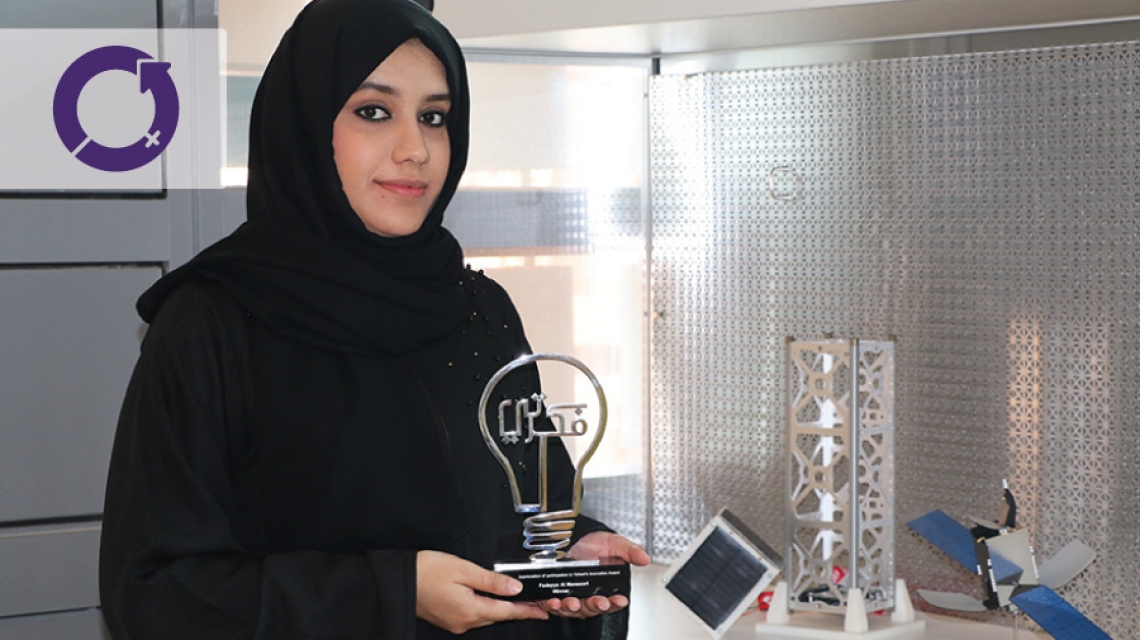
A Masdar Institute Master’s student has won the ‘Guest Experience’ challenge of the inaugural Fikra Competition for her innovative in-flight entertainment system that enables passengers to discover their destinations and plan their trips from the sky.

Lamis Abu Ashour, from MI’s Sustainable Critical Infrastructure Program, was awarded for her project, titled ‘Citywalk,’ during the Fikra Final Award Ceremony, which was held at the Etihad Airways Training Academy Auditorium on 23 May 2017.

Fikra is a UAE-based competition sponsored by Etihad Aviation Group aimed at fostering entrepreneurship and innovation across the country. The competition encouraged students to find solutions to some of the aviation industry’s major challenges, which it divided into ten categories.

Abu Ashour’s Citywalk was shortlisted from over 2600 ideas submitted in the first phase of the competition, becoming one of 20 applicants selected for the final round. After spending a month further developing her idea and preparing her final presentation during the mentoring phase, which was delivered to a jury that included Etihad senior management, Abu Ashour then beat out ten of the 20 shortlisted applicants, becoming the winner the ‘Guest Experience’ category of the challenge. As a winner, Abu Ashour has been offered a six-month internship with French-based Thales Group to have the opportunity to develop herself and her idea in a professional environment.

Dr. Abdulla Al Hefeiti, Interim Dean of Students and Dean of Library, Masdar Institute, said: “Congratulations to Lamis for her award-winning and insightful in-flight entertainment service idea. Lamis’ ingenuity and innovative thinking is a testament to Masdar Institute’s commitment to attracting and developing some of the world’s most promising problem-solvers. Lamis’ participation also reflects the Institute’s commitment to cultivating a research culture focused on fostering solutions for key UAE industries such as aviation. I am looking forward to seeing Lamis excel in her research and all of her future endeavors.”

Abu Ashour developed Citywalk as a way to enable airline passengers to plan their trip, essentially creating a personalized travel itinerary, while still in the air. The service will provide airlines with an additional revenue stream, by allowing companies to use the Citywalk space to place advertisements. Thus, the service would create more revenue streams for the airline while also enhancing the passenger’s in-flight experience, which will also help to create a more loyal community of airline passengers.

Etihad Airways’ recent revamp of its entire inflight entertainment system provided the perfect context for Abu Ashour’s Citywalk idea. The Abu Dhabi national carrier’s in-flight entertainment service now includes 120 movies, 280 TV shows, 16 radio channels, a 500-CD library and 30 to 60 games that are regularly revised to ensure passengers enjoy new and fresh content. Abu Ashour believes Citywalk would complement these existing entertainment features by providing passengers with an even broader range of value-added entertainment.

“While the original inspiration for Citywalk came from a personal experience, the idea evolved considerably during my mentoring phase. My mentor, Jamal Al-Awadhi of Etihad, was extremely helpful. I also had the chance to talk to specialized workers in the field and I was further enlightened about with insights into the exact field and working procedures,” Abu Ashour said.

Abu Ashour credits Masdar Institute in part for her success, citing Masdar Institute’s commitment to nurturing innovation and entrepreneurship among its students with the goal of supporting local industries and solving pressing challenges. She is especially grateful for the support she has received from her supervisor, Dr. Khaled Al Awadi, Assistant Professor of Engineering Systems Management at Masdar Institute.

Erica Solomon
News and Features Writer
28 May 2017

Replenishing Abu Dhabi’s Underground Water Storage with Wind Power

An alternative and slightly more efficient way to recharge the UAE’s natural water storage structures has been identified through a research project led by Masdar Institute faculty in collaboration with a research partner from the German-based Synlift Industrial Products.

With little to no natural fresh water in the UAE, the Abu Dhabi government started an initiative of filling an underground aquifer with fresh, potable desalinated water for emergency water reserves to increase water security.

The underground water storage facility in Liwa can store five billion gallons of desalinated water, which is enough to supply 190 liters of waterper person per day for 90 days in Abu Dhabi and its surrounding areas. A second underground water storage facility is also being constructed in Al Ain to further bolster the Emirate’s emergency water reserves.

However, the fresh water that is injected into these aquifers is produced through the same energy intensive and costly desalination process – known as thermal desalination – which produces most of the emirate’s drinking water today. The co-generation power and desalination plants that produce the bulk of the emirate’s electricity and water contribute to one-third of Abu Dhabi’s high carbon footprint.

The need to sustainably enhance the UAE’s water security is why the research team from Masdar Institute and their collaborator at Synlift Industrial Products chose to explore the viability of producing Liwa’s underground emergency freshwater reserves with desalinated water from a wind-powered reverse osmosis desalination plant. Their study reveals that such a system could produce one thousand liters of water at a cost of US$1.6 to US$2.1, which is slightly lower than the current cost of producing that amount of freshwater via conventional thermal-powered desalination, but significantly better for the environment.

“Being able to produce freshwater from a carbon-free power source such as wind, rather than from the greenhouse gas-emitting fossil fuels that currently produce the aquifer’s stored water, is a critical step towards eliminating the carbon footprint of seawater desalination plants in the UAE,” explained Dr. Hassan Arafat, Professor of Chemical and Environmental Engineering at Masdar Institute, and the project’s principal investigator.

Powering desalination plants with carbon-free sources like the wind could make it possible to gain the benefits of clean water without the climate impact. But wind is an intermittent renewable energy source that does not deliver power continuously. When wind speed decreases, power generation falls and as a result, desalination operations are reduced or disrupted.

However, Dr. Arafat’s team realized that such fluctuations in power supply would not adversely affect the production of water for Liwa’s underground water reserve, as it does not require a continuous daily supply of water. Instead, meeting an average annual or monthly target is enough, which is quite feasible even with variable wind energy.

“The requirements of producing water for underground storage aquifers are quite different from the requirements of producing water to meet the daily water needs of Abu Dhabi residents. While residents rely on a constant supply of freshwater each day, the underground storage facility requires a steady supply over the course of months. Changes in supply over the course of one day do not pose a threat to the stability of the storage aquifer,” explained Dr. Arafat.

The long-term supply needs of the aquifer storage system made the idea of coupling it to a wind-powered desalination plant much more feasible. The collaborative research team, which included Dr. Arafat along with MI Class of 2015 MSc student Savvina Loutatidou, former MI professor Dr. Taha Ouarda, and Synlift’s Robert Pohl, described their techno-economic assessment of a wind-powered desalination plant for water storage in a paper published earlier this year in the journal Desalination.

SELECTING THE DESALINATION PLANT

The first step towards successfully developing a techno-economic assessment of a wind-powered desalination plant involved selecting the type of desalination technologies best suited for the operation. The team designed and modeled a reverse osmosis (RO) plant equipped with a component called variable frequency drives, which allow the plant to operate with variable power input. This means that the RO plant is able to operate at a lower capacity in order to match its energy requirements to the available wind power, rather than just shutting down altogether when power supply decreases.

“Because you get variable amounts of water during the day from this kind of RO plant, it would not be suitable to use for domestic supply because for this you need to meet certain capacity on a daily basis. But it is fine if you want to couple it with aquifer storage, where you just need to meet the average annual capacity that the plant is designed for,” Dr. Arafat said.

PLACING THE WIND FARM

The next step involved identifying the most ideal spot to locate the wind farm that would be harnessing wind energy for the wind-powered RO plant.

A number of prime sites for the wind-powered RO plant were identified using the Geographical Information Systems (GIS) tool, based on a number of criteria, namely available wind speed power, land availability, road infrastructure, distance from the aquifer and distance from the pumping stations. The UAE wind atlas – which was established by MI’s Research Center for Renewable Energy Mapping and Assessment (ReCREMA) to accurately characterize the UAE’s wind resources – was instrumental in determining the ideal location of the wind farm.

The team ultimately identified three potential sites where the wind farm could be located, which coincided with areas where wind speed was on average as high as possible.

Because the UAE is known for having low-wind speed, Dr. Arafat explained that this is the reason MI partnered with Eng. Pohl from Synlift, as Synlift is a renewable energy-focused company that specializes in the development of wind turbines suitable for low-energy wind.

MODELING THE SYSTEM

The final step involved putting all the data together into a techno-economic model to model the performance and determine the total cost of the wind-powered RO plant for the Liwa aquifer storage system, taking the levelized water cost (cost of producing one thousand liters of water) as the main cost indicator.

To do this, the team worked backwards. First they determined the total amount of water that needed to be produced to recharge an assumed 20% of the Liwa aquifer; then they calculated the amount of power needed to produce that amount of water; and last they worked out the wind availability with the turbine performance specifications and the total amount of wind turbines needed to meet the power requirements.

The team then simulated the performance of the RO plant with the turbine models supplied by Synlift, performance models of the RO plant, and annual average wind speeds. To determine the cost, they utilized the wind turbine cost figures provided by Synlift, coupled with cost figures that the MI team had collected from previous RO studies. Using common protocols, they estimated the total cost of the project, including operational costs like labor, spare parts, insurance, etc.

Through their models and simulations, the team found that the cost of producing one thousand liters of water from a wind-powered RO plant would be between US$1.6 to US$2.1, which is slightly lower than the current cost of thermal-based desalination, but higher than the cost of standard RO-based desalination.

“These numbers don’t take the environmental benefits of our approach into account,” Dr. Arafat remarked. “If included, the wind-powered RO option would be even more appealing as it can actually achieve lower costs in terms of carbon emissions savings or carbon credits.”

COMMITED TO ‘GREEN’ DESALINATION

A problem as complex and dynamic as turning saltwater into freshwater with minimal impact to the environment requires many potential solutions. That is why Masdar Institute has been conducting a range of robust research and development projects focused on minimizing or eliminating the UAE’s desalination-related greenhouse gas emissions through the development of sustainable and affordable desalination technologies. In fact, Dr. Arafat has been investigating the potential pairing of other renewable energy sources, including solar and geothermal energy, to supply Abu Dhabi’s water needs.

“Wind may not be the most optimal way to power the UAE’s desalination plants since the country has considerably low wind speed, but nonetheless we felt it was a good idea to explore the potential of utilizing wind-powered desalination in order to gain a solid knowledge base of the local experience and be prepared in case new generations of wind turbines that are more efficient and cost-effective emerge in the future,” Dr. Arafat remarked. “We are here to help with these kinds of studies, and broaden everyone’s understanding of what’s possible in the UAE.”


Erica Solomon
News and Features Writer
04 June 2017

15th Annual Ankabut Users Meeting Highlights Role of Technology in Creating New Products and Services to Enrich Academic Sector

More than 300 Stakeholders from Industry and Government Focus on New Advancements during Event at Khalifa University Main Campus

The role of technology that is sweeping through classrooms as educators and developers create new products and services designed to enrich the academic sector was emphasized during a panel discussion by experts that was hosted as part of the 15thannual Emirates Advanced National Research and Education Network (Ankabut) meeting that was held at the Khalifa University of Science and Technology Main Campus.

The annual meeting themed ‘Inspire the Next’, was attended by nearly 300 stakeholders from the UAE higher education sector and representatives from over 100 organizations including 50 from different post-secondary institutions. In addition, officials from government entities and senior management from major corporate sector who are involved in higher education were also present at the event.

Dr Arif Sultan Al Hammadi, Executive Vice President, Khalifa University of Science and Technology, said: “We are delighted to host the Ankabut users meeting at our campus. As a higher education institution, Khalifa University remains vigilant about adopting and incorporating technology advancements. This is one of the main reasons why we have research centers that cover an entire gamut of technology sectors. We believe this could be one way to keep ourselves updated and be prepared in advance to tackle challenges in the academic arena.”

In his annual update, Fahem Al-Nuaimi, Chief Executive Officer, Ankabut, said: “The fruitful knowledge exchange by stakeholders during the Ankabut users meeting will surely help us in consistently elevating our services to match the industry expectations. The rapid technology changes call for swifter approach to creating new solutions, and we believe our expertise and resources will help us excel in our service offerings.”

The panel discussion on ‘What’s Next for Educational Technology?’ had participants from technology leaders such as VMWare, Schneider Electric, Huawei and Trend Micro. Panelists agreed that new technologies including AI, machine learning, and educational software are shaking up not only the students but also the role of educators, creating dynamic shifts in approaches to teaching, and remodeling the classroom. They also analyzed some of the technologies that could become trend setters in the coming years.

Other sessions at the event included a keynote by Harb Bou-Harb, Senior Director-Education, Microsoft Middle East, as well as a talk by Iqbal Ali Kham, Program Director, Blockchains and Innovation, IBM Middle East and Africa, and a speech by Don Ouyang, Managing Director, Huawei.

Other sessions covered cyber security, cloud computing, and digital transformation in public education. The day’s activities wound up with a tour of the Ankabut facilities.

Managed by Khalifa University, the Ankabut project is jointly funded by the TRA through the ICT Fund. It offers academic institutions connectivity to other education networks around the world. It also connects schools and public institutions together across the UAE. Ankabut cooperates on a national, GCC, regional and international arena, representing the UAE in conferences, exhibitions and forums.

Clarence Michael
News Writer
20 February 2019

Nano-memory technology for tomorrow’s smart devices

For the next generation of memory to be able to keep up with the inevitable demand of new devices like the iPad, a new marriage between nanotechnology and memory devices will be vital.

These super hand-held computing devices will require an inordinate amount of memory, which will need to be compact, energy efficient and fast. And so across industry and academia, the race is on to develop the next generation of device memory technology.

One area that has attracted a good amount of interest is nanomemory technology. Nanomemory devices use nanoparticles and nanowires to create dense memory that is comparable or better than current memory technology in terms of functionality, while also using less energy and being faster and more flexible.

Researchers at the Masdar Institute are looking at both nanowires and nanoparticles. The nanowire memory research is based on thin – about 10 nanometres, or one-hundred-thousandth of a millimetre – layers of silicon (Si). The Si nanowire memory can operate at very low voltages, while retaining its charge for a very long time.

With the proper engineering, charge carriers (electrons) can be stored in the nanowire as a “1” state and then be removed as a “0” state.

They can also be stacked closely together to create very dense memory.

This area of nanomemory research is especially attractive because it is compatible with the silicon-based chips used in today’s smart devices.

In addition, Masdar Institute, in collaboration with Turkey’s Bilkent University and UNAM nanotechnology facility, is currently researching a nanoparticle-based charge trapping memory device.

Nanoparticles around 5nm across and consisting of silicon, germanium, gold, hafnium and platinum are made and embedded into the memory layer.

These particles reduce the operating voltage of the memory and allow it to store more in a chip the same size.

The nanoparticles act as tiny storage bins in which electrons can be trapped (“1 state”) and then removed (“0 state).

Our team, along with our collaborators in Turkey, recently submitted a paper demonstrating the use of the nano-particles in a zinc oxide flexible memory device that can be used in low power electronics, based on what may be the first demonstration of its kind.

In order to better demonstrate the abilities, challenges and potential solutions to using these nano-structures in memory devices, we have also developed very advanced physics-based simulation software that can simulate the theories and concepts our research is developing.

This can help make our research more commercially useful by ensuring that all potential limitations are measured and accounted for.

With this project and others at Masdar Institute, we hope to be part of what is the early wave of global nanotechnology memory innovations.

This area of research will help Abu Dhabi develop intellectual property and human capital in a market that is known to be worth billions of dollars internationally – device memory – as well as the semiconductor industry in general.

Projects like these that result in unique devices and methods could also one day spin off into start-up companies like those that have made Silicon Valley what it is for the US economy.

Abu Dhabi currently has a good chance to position itself as a leader in memory in terms of research and development and projects like ours can help contribute to this potential local high-value industry.

Dr. Ammar Nayfeh is an assistant professor of microsystems at the Masdar Institute of Science and Technology.

Interns from Masdar Institute Learn Japanese’ Culture of Total Commitment to Excellence

Masdar Institute Students Successfully Complete Seven-Week Internship Program at Four Different Japanese Corporations

Abu Dhabi-UAE: 05 September, 2012 – When five students from Masdar Institute of Science and Technology completed their internships in Japan, it was a totally different experience. But each of them agreed on one common factor – the Japanese aim to excel in whatever they do.

Lack of internal barriers to facilitate easier communication within the office premises, the presence of several meeting rooms and discussion tables for increased interaction among employees and the focus on teamwork were some of the other factors that captivated the interns from Abu Dhabi.

The four major Japanese corporations proved to be the ideal training ground for the five interns from Masdar Institute. The Japan internship program has further honed the skills of the students and is expected to have considerable impact on the professional lives of the students when they enter the corporate world.

Sultan Al Kaabi, a Master’s student in Electrical Power Engineering, interned at Chiyoda Corporation on ‘Electrical engineering for renewable energy facilities and industrial plants’, while Abdulla AlShamsi worked with JGC Corporation (Nikki) on ‘Energy management systems for development and promotion of business and technology in the fields of CO2 capture, renewable energy and smart communities’. Mozah Al Zeyoudi’s internship at Toray Industries focused on water treatment techniques.

The three were part of the group of five students selected under an internship program that was supported by Japan’s Ministry of Economy, Technology and Industry (METI) and coordinated by the Japan International Cooperation Center (JICE). The program that commenced from 27 May concluded on 9 August. The two other students – Reem Al Junaibi and Mohamed Al Hadhrami – worked at Mitsubishi Heavy Industries (MHI).

The depth and diversity of the on-hand experience the interns received in Japan during the program was staggering. Sultan Al Kaabi, for example, was assigned four units during the seven-week internship including the Green Device Project (GDP) Unit, Green Material Project (GMP) Unit, Electrical System Smart Grid and Engineering (ESE) Unit, and Sustainable Business Development (SBD) Unit.

Al Kaabi said: “The internship training was so diversified in terms of the areas and training methods covered and the units assigned. I attended many meetings ranging from the scheduled ones to those planned for introducing certain topics on technical discussions, during which I had raised some questions.”

Some of the areas Sultan Al Kaabi covered include Photovoltaic (PV) power plants, Concentrated Solar Power (CSP) plant, electrical engineering for PV plants, and Low Heat Power Generation (LHPG). He participated in technical presentations, seminars, as well as discussions and meetings, while learning new software such as PVsys, System Advisor Model (SAM), ETAP and 3D-Modeling. The program was an opportunity for him to analyze various case studies, implement designs in a simulator, and finally present the report to Chiyoda staff.

Mozah Zeyoudi’s internship at Toray Industries focused on ‘Water Treatment Techniques’ which she found beneficial to her research work at Masdar Institute.

Zeyoudi said: “It was beneficial because I learned a lot about the Membrane Bioreactor (MBR), Reverse Osmosis, (RO) and Ultrafiltration (UF) membranes that are linked to my studies. This is also relevant to me in the UAE because the Al Ain sewage plant has adopted the MBR membranes technology, while the Fujairah desalination plant uses the RO membrane technology – both from Toray.”

Another intern Abdullah Al Shamsi visited the research and development centers at JGC Corporation’s (Nikki) three main sites. They included a field test site for smart communities, a demonstration plant built by another company with which Nikki is working to assess the heat conductor for developing a new beam down Concentrated Solar Power technology, and an R&D center in Oarai, where Al Shamsi learned the new technologies developed by Nikki’s engineers.

Al Shamsi said: “During my internship, I learnt that R&D is the main source for any company to excel. And this is exactly what we are doing at Masdar Institute, since we are the R&D hub for Masdar companies. Basically, working at the research & development center of Nikki gave me fresh insights in renewable energy technologies, especially those used in the smart communities.”

The Japanese work culture greatly impressed the interns who realized the importance of total dedication. Al Shamsi mentions that the Japanese prefer team work and welcome 10 different ideas than one great idea from a genius. He also points to the special layout of the office that facilitates easier communication, which in turn makes room for creativity and better interaction.

A professional working environment blended with opportunities for cultural interaction and the foray into a new language made the internship program in Japan one of the most rewarding experiences for the interns, who gained exposure to a career life of the future.

Established as an on-going collaboration with the Massachusetts Institute of Technology (MIT), Masdar Institute integrates theory and practice to incubate a culture of innovation and entrepreneurship, working to develop the critical thinkers and leaders of tomorrow.  With its world-class faculty and top-tier students, the Institute is committed to finding solutions to the challenges of clean energy and climate change through education and research.

Masdar Institute Student Highlights UAE’s Role in Sustainability at Pittsburgh Leadership Summit and Helsinki Summer School

YFEL Member Mohamed Al Sharhan Gains Rich Insights on Global Leadership and Intelligent Transportation Systems

Abu Dhabi-UAE: 02 September, 2012 – With an estimated project value worth US$183 billion and one of the fastest growing rail markets in the world, the Middle East and North Africa region presents itself as the ideal ground for the talented youth to contribute towards creating sustainable and intelligent transportation systems.

It is no wonder then that students of Masdar Institute of Science and Technology and members of its outreach program Young Future Energy Leaders (YFEL) are exploring different ways to effectively highlight the UAE’s leading role in sustainability.

At the same time, the UAE is an emerging market for railway systems, and Abu Dhabi’s long-term objective is to provide an effective, easy-to-use and popular alternative to the private car and to encourage the use of public mode of transportation.

That was the primary reason for Mohamed Al-Sharhan, a student of Engineering Systems and Management program and YFEL member, to participate in the Helsinki Summer School for Transportation 2012 at Aalto University in Finland. Part of the course was a visit to the Helsinki Metro construction site. Work is under way at present to extend the existing line into Espoo in the west, and Vantaa and Sipoo in the northeast.

Being the only student from the UAE to attend the course in Helsinki, Al Sharhan believes that his enrollment in this summer school has added considerable value to his research on ‘Public Transportation for Abu Dhabi: Potential for a Sustainable Public Transportation System’. He is mid-way through his research at Masdar Institute.

Al-Sharhan said: “The UAE is currently at the crucial transitional phase due to various developmental projects and more specifically in the area of transportation. Although the country has a well-developed public transport network, this comprises mainly public buses. The urban transport plan for the future shows that Abu Dhabi is in the process of building a sophisticated public transport system.

“The Helsinki course provided me with an opportunity to gain an in-depth insight in this field. I believe that attending this summer school widened my knowledge and experience while helping me in my research. Moreover, it offered me the possibility to interact and initiate ties with students and experts from top universities and institutions around the world and present Masdar Institute to the global community.”

And in order to make a meaningful contribution from a position of strength, Al-Sharhan also equipped himself through attending another course – fourth International Hesselbein Student Leadership Summit 2012 in Pittsburgh, US – during the summer. He joined 50 top student leaders from across the world and learnt how to be effective, ethical, and innovative leaders. Following his meetings with professionals and leaders from different cultures, countries, and backgrounds, he believes that cultural exchange is the best way to learn, besides the sciences.

Having completed his course on leadership as well, Al Sharhan is confident he can serve the UAE, and the global community through the sustainable lessons he learnt at the Pittsburgh summit and Aalto University.

Al Sharhan adds: “As YFEL member and a student of Masdar Institute, I consider myself an Ambassador. So, I gladly presented to the audience in Pittsburg and Helsinki the real image of the UAE and Abu Dhabi, which seeks to build Masdar City and highlight the need to adopt renewable energy and sustainable lifestyle. Everyone at the two events was impressed by the fact that a sustainable city continues to emerge from the middle of the Arabian desert.”

According to the Middle East Economic Digest (MEED) Insight, the MENA region is home to one of the fastest growing rail markets in the world with an estimated project value of US$183 billion. The report adds that apart from the US$41-billion Doha Metro and Kuwait’s US$7-billion three-line metro network in the GCC region, Abu Dhabi is planning to have 700km of railways with investments totaling US$10.89 billion to transport mainly cargoes at a speed of 150-160kmph.

YFEL offers participants exceptional and unmatched access to top global leaders, senior business executives and academics engaged in alternative energy and sustainability through events such as World Future Energy Summit (WFES) in Abu Dhabi and other major events held globally. It is mandated to educate, inspire and empower students and young professionals to become future leaders capable of solving the world’s most pressing challenges in advanced energy and sustainability.

Masdar Institute to Further Strengthen Collaboration with Australia’s Commonwealth Scientific and Industrial Research Organization

Australian Organization Seeks More Students from Masdar Institute for Conducting Research on CO2 Post-Combustion Capture and Solar Energy

Abu Dhabi-UAE: 14 August, 2012 – Masdar Institute of Science and Technology, an independent, research-driven graduate-level university focused on advanced energy and sustainable technologies, today announced it will further strengthen collaboration with Commonwealth Scientific and Industrial Research Organization (CSIRO), the biggest research organization in Australia, in the field of carbon dioxide capture and storage (CCS) and solar energy.

At present, Adewale Adeosun, a student from the Chemical Engineering program at Masdar Institute, is spending his three-month summer internship at CSRIO, working on testing and characterizing new solvent blends using the available test facilities at CSIRO. At Masdar Institute, Adewale works in the Separation Technology Laboratory of Dr. Mohammad Abu Zahra, Assistant Professor in Chemical Engineering.

The focus of Adewale’s research in Australia is on the selection, characterization and testing of amine-based aqueous solutions for CO2 capture applications. His thesis work is part of the Masdar Institute-MIT collaboration project between Dr Alan Hatton of MIT and Dr Abu Zahra on the ‘Development of New Sorbents Systems for CO2 Post-Combustion Capture’.

CSIRO officials in Australia have been extremely impressed with the commitment and the talents of Adewale Adeosun that they have requested more students from Masdar Institute to join their facility to conduct research. Currently, discussions are under way with Dr Paul Feron, OCE Science Leader, Advanced Coal Technology Research, CSIRO, on the number of students from Chemical Engineering and Mechanical Engineering programs at Masdar Institute to be sent to the Australian organization. Dr Matteo Chiesa, Associate Professor – Mechanical Engineering/Materials Science and Engineering, Masdar Institute, had met with CSIRO officials during his recent visit to Sydney.

Dr Fred Moavenzadeh, President, Masdar Institute, said: “Our mandate is to build human capital and develop innovators of the future. In line with this and as directed by the country’s leadership, our faculty and students portray Masdar Institute’s high-caliber learning and the rich academic environment, through their dedication and involvement in research projects across the world. We are privileged to have students such as Adewale Adeosun, who are expertly guided by renowned faculty members, bringing us international acclaim.”

Dr. Abu Zahra said: “The scope of the collaboration with CSIRO in the field of CO2 post-combustion capture is focusing on three major areas of common interest – advance solvent systems, environmental impact of CO2 capture and process integration. On the solvent development, Adewale is testing some new solvent blends during his internship and the results of this work will be published and evaluated jointly by Masdar Institute and CSIRO.

“Another project we started at Masdar Institute is on the CO2 solvent thermal degradation and Hessa Al Shehhi, another student from Chemical Engineering is working on that project. We have Dr Paul Feron from CSIRO as a member of her research committee. In this project, CSIRO will support our data analysis and we will have access to their experimental data for the purposes of comparison and the work will be published jointly.”

Earlier in March this year, Dr Paul Feron had visited Masdar Institute for a seminar about the work and potential collaboration between CSIRO and Masdar Institute in the area of CCS. His visit was the starting point for initiating some collaboration on carbon capture and Adewale’s current student internship was the first step in this initiative. Dr Feron is currently spearheading Australia’s post-combustion carbon capture research and development as part of a global effort to reduce emissions from coal-fired power generation.

Dr Matteo Chiesa said: “CC is one of the topics we are actively collaborating, but there are a lot of ongoing activities in the solar energy domain. Masdar Institute and University of Sydney work together and publish together since we have found that we can complement each other. Last year, we published a feasibility study on the unique concept of solar assisted carbon capture that aims at making post combustion carbon capture more feasible.”

During his visit to Sydney, Dr Chiesa also met with Dr Sarah Miller, Solar Thermal Research Project Manager at CSIRO.

Established as an on-going collaboration with the Massachusetts Institute of Technology (MIT), Masdar Institute integrates theory and practice to incubate a culture of innovation and entrepreneurship, working to develop the critical thinkers and leaders of tomorrow.  With its world-class faculty and top-tier students, the Institute is committed to finding solutions to the challenges of clean energy and climate change through education and research.

Masdar Institute’s Electrical Power Engineering Program Dedicates Research for Developing Abu Dhabi’s Future Power Systems

One Provisional Patent Filed in US as EPE Faculty Show High Per Capita Ratio in Journal Publication during Last Year

Abu Dhabi-UAE: 13 August, 2012
– Masdar Institute of Science and Technology, an independent, research-driven graduate-level university focused on advanced energy and sustainable technologies, today announced at least four new courses will be added to expand the scope of the Electrical Power Engineering (EPE) Master’s program in the coming academic year.

The EPE program is function-oriented and innovative on relevant industrial development. The applications focus on new research topics for renewable energy, electric vehicles, modern power systems, smart grid with emphasis on power electronic applications for grid interface, distribution and transmission level integration, and interconnections. The program dedicates its research towards developing Abu Dhabi’s future power systems.

Dr. Fred Moavenzadeh, President, Masdar Institute, said: “Our academic programs contribute to enhancing specific skills sets of students in clean energy and sustainable technologies. We aim to create the leaders of tomorrow with capabilities to manage smart power grids and intelligent transport systems, as directed by the country’s leadership. Expansion of existing programs will further strengthen our interdisciplinary course offerings, while providing wider options for students to select their area of academic pursuit.”

Over the last year, the EPE faculty and students have presented a record 18 papers at major international conferences and reviewed more than 100 journal submissions, while the expertise of the Masdar EPE has been recognized by the Institute of Electrical and Electronics Engineers (IEEE) societies, including industrial electronics, power electronics and power & energy systems.

Dr. Hatem Zeineldin, Head of Electrical Power Engineering, said: “The accomplishments of the EPE program can be measured by the publications and international conference appearance. Since September 2011, among four EPE faculty members, 15 peer-reviewed journal papers have been published and accepted by the renowned international journals, including 13 IEEE transactions. These were in addition to a US patent that aims to bridge the R&D technology development on smart grid and renewable energy systems that remain relevant to Abu Dhabi’s future energy plan.”

“Illustrating the extent of the program’s success were the IEEE transactions that are considered the top journals in the area of electrical and electronic engineering.  Considering the publication ratio per capita per year and the size of EPE including four faculties, the EPE program at Masdar Institute is among the top ones available in the world today.”

The EPE program gains relevance following an analysis from Frost & Sullivan’s Global Smart Grid Market Research report which has found that the market earned revenues of US$23.97 billion in 2010 that are estimated to reach US$125.15 billion by 2017. At the same time, the cumulative smart grid technology markets of China, Japan, and South Korea are currently valued at nearly US$8.5 billion, with another firm GTM Research forecasting that the value is expected to grow to US$19 billion by 2016.

Smart grids reflect only one aspect of the ambit of the EPE program, which additionally include technologies in other areas such as electric vehicles (EVs), advanced wind energy systems, and power system control, as well as large-scale demonstration of innovative transmission system integration and operation solutions for integrating large scale renewable energy systems.

The invitations extended by international bodies to serve on organization committees and technical session chairs further suggest the renowned status of the EPE faculty. Dr. Vinod Khadkikar was the technical chair, while Dr. Hatem Zeineldin chaired the session ‘Power Electronics-II’ at the second International Conference on Electric Power and Energy Conversion Systems (EPECS2011), at Sharjah, UAE.

Dr. Weidong Xiao was one of the committee members organizing the 21st IEEE International Symposium on Industrial Electronics (ISIE2012), in Hangzhou, China. He served both as the tutorial chair and technical session chair in May 2012. Prof. Mohamed El Moursi was assigned for the GCC CIGRE Technical Study committee on “System Performance Development and Renewable Energy”.

Established as an on-going collaboration with the Massachusetts Institute of Technology (MIT), Masdar Institute integrates theory and practice to incubate a culture of innovation and entrepreneurship, working to develop the critical thinkers and leaders of tomorrow.  With its world-class faculty and top-tier students, the Institute is committed to finding solutions to the challenges of clean energy and climate change through education and research.

Masdar Institute’s Second Annual Summer Internship Program Concludes

Participants Excel in Research Projects Seeking Innovation in Clean Energy and Advanced Technology Fields

Abu Dhabi-UAE: 12 August, 2012
– Masdar Institute of Science and Technology, an independent, research-driven graduate-level university focused on advanced energy and sustainable technologies, today announced it marked the successful conclusion of the second annual research-based summer internship program, displaying the research outcome of most of the projects undertaken by the interns.

A special ceremony on the occasion was attended by Dr Ken Volk, Head of Outreach, faculty members and officials of Masdar Institute.

A total of 16 UAE national university seniors and/or those graduating this year with science, engineering or computer science as major subjects participated in the six-week internship program that commenced in July. The programs focused on advanced technology and sustainability, covering areas such as carbon capture and storage (CCS), water recycling, solar energy, applications for healthcare data and power grid systems simulations.

Dr Fred Moavenzadeh, President, Masdar Institute, said: “The second summer internship program has provided the right platform for the participating students to get themselves acquainted with the research offerings at Masdar Institute. As directed by the country’s leadership, we aim to generate interest among university graduates in sustainable fields and offer them hands-on laboratory training. With the completion of the six-week internship, we believe the participants have been adequately prepared for taking up higher studies in renewable energy and sustainable technologies.”

Research outcomes of projects including Testing and assessment of Dye-sensitized solar cells under the real outdoor conditions of Abu Dhabi   and Carbon Capture and Storage in Abu Dhabi: An Economic Analysis on the Optimal Regulatory Scope of CO2 Capture were on display at the campus. Prior to the closing ceremony, students presented the highlights of their summer research projects to fellow interns, professors and guests. They also answered questions about their projects and had the opportunity to reflect on their accomplishments.

Dr Kenneth Volk said: “The research-based internship program at Masdar Institute aims to effectively contribute to the overall human capital development efforts of Abu Dhabi. From the knowledge and insight provided by the faculty, the program participants have strongly demonstrated their innovation potential in diverse clean energy research areas this year. Our programs will continue to focus on fostering students in research and development, while raising awareness on the need to be proactive in renewable energy.”

Dr. Mahieddine Emziane, Associate Professor, Solar Energy Materials & Devices Laboratory, had two interns working on areas related to the use of solar energy.

Dr. Emziane said: “Both interns were passionate about what their research and worked hard. As I told them from day one, they were here to learn not only technical aspects but also a set of transferable skills. For their level, the quality of their work was improving every day and they could see that. It was therefore encouraging and inspiring for them. Now, they are aware of our learning and research environment at Masdar Institute and are keen to join once they graduate.”

Interns with Dr Hassan Fath, Professor, Water and Environmental Engineering, were doing research in ‘Testing a novel desalination process using Nano Particles’ and ‘Development of Agriculture Green House Self Sufficient of Energy & Irrigating Water’. Dr Fath pointed out that the summer internship program proved to be a useful training for the interns who became familiar with the R&D work at Masdar Institute.

Mooza Saeed Al Ali, an intern, worked with Alam Hossain Mondal, Post-Doctoral Researcher, under the guidance of Dr Toufic Mezher, on ‘Long-term policy planning towards sustainable energy system development: UAE case’. The project aimed to develop a reference energy system for UAE to analyze the policy implications for deployment of renewable energy technologies.

Alam Hossain Mondal said: “Mooza Saeed Al Ali has shown an incredible dedication to her assigned responsibilities during her internship. In particular, she has identified key input parameters (historical and forecast) for the optimization of renewable energy technologies for the UAE, reiterating the commitment of the future energy leaders to steer the country towards clean energy adoption and implementation.”

Dr Toufic Mezher said: “In general, internship initiatives provide a platform for prospective students to engage on short or mini-projects, while working alongside more experienced colleagues and researchers. I strongly believe that this summer internship program has created significant motivations for the interns to consider a higher degree in a reputable institution like Masdar Institute.”

A sizeable number of students chose the project titled ‘MATLAB Simulation Development for Power Grid Systems Development’ led by Dr Amro M. Farid, Assistant Professor – Engineering Systems and Management program.

Dr Amro M. Farid said: “During the internship, Muna Abdulla, Samah Al Akberi, and Abdulla Al Bloushi worked as a team to develop MATLAB simulations that demonstrate the response of the Smart Grid under fluctuating and perturbed conditions. In so doing, they gained valuable insights into power flow and transient stability analysis; and two foundational studies central to the design of the next generation power grid. Beyond power engineering, the experience they gained in MATLAB simulation helped them to develop their own code, retrofit it to existing work and most importantly do so in a team development environment. These interdisciplinary skills of engineering systems, power engineering, and team work exemplify the post-graduate research and education that occurs at Masdar Institute every day.”

Dr. Inas Khayal, Assistant Professor, Engineering Systems and Management, said: “Hazza Ali Bani Malek spent his six-week internship designing and developing a MATLAB Graphical User Interface to visualize ‘Sleep Data’. He collaborated closely with graduate students from the Sustainable Health Lab to understand the structure and variability of the data coming from the, currently in progress, ‘Sleep and Ramadan Study’. Hazza’s experience at Masdar Institute allowed him to learn a new programming language, gain certification in human subjects, research ethics, understand the particulars of running a research study, work in an interdisciplinary environment and take the time to ponder the role of academia in his career.”

The other project that attracted larger group of students was ‘Detection and Quantification of Emerging Contaminants in Abu Dhabi Recycled Water Using Gas Chromatography/Mass Spectrometry (GC/MS)’ that was led by Dr Farrukh Ahmad, Associate Professor – Water and Environmental Engineering program.

Established as an on-going collaboration with the Massachusetts Institute of Technology (MIT), Masdar Institute integrates theory and practice to incubate a culture of innovation and entrepreneurship, working to develop the critical thinkers and leaders of tomorrow.  With its world-class faculty and top-tier students, the Institute is committed to finding solutions to the challenges of clean energy and climate change through education and research.

Masdar Institute’s Water and Environment Engineering Program Contributes to Crucial Clean Energy Knowledge building

Faculty to Further Intensify Overall Offerings Following Productive Academic Year

Abu Dhabi-UAE: 31 July, 2012
– Masdar Institute of Science and Technology, an independent, research-driven graduate-level university focused on advanced energy and sustainable technologies, has announced the Water and Environmental Engineering (WEN) Master’s program further amplified its contribution to clean energy knowledge building in the UAE and worldwide following the creation of the UAE Center for Renewable Energy Mapping and Assessment.

One of the most important recent contributions from the WEN program came through the Center, which was instrumental in developing and officially releasing the UAE Solar Atlas in June at the Rio+20 Summit in Brazil. The hourly/daily/yearly solar irradiance maps for the Solar Atlas that were produced by a robust satellite-based mapping tool developed and validated at the Centre, are expected to accurately assess and simulate the efficiency of available power generation technologies.

In addition, the funding of two flagship proposals that was approved by the Joint Massachusetts Institute of Technology-Masdar Institute Steering Committee, and the involvement in the organization of the first International Water Summit in Abu Dhabi will mark a successful year for the WEN program.

Dr. Marwan K. Khraisheh, Dean of Engineering at Masdar Institute, said: “We offer programs that underpin the philosophy of knowledge building that is relevant to the UAE and the region, in addition to developing international students. The Water and Environmental Engineering program creates more specific skills that guide the youth towards innovation in this key sector. The renowned faculty members further enrich the students’ academic and research experience at Masdar Institute and we hope to nurture students who will lead the energy industry of the future.”

The significance of the WEN program at Masdar Institute reflects the UAE leadership’s keenness to tackle future water supply challenges.

With four core course, ‘Chemicals in the Environment: Fate and Transport’, ‘Desalination’, ‘Industrial Ecology’, and ‘Wastewater Treatment Engineering’, the multi-disciplinary WEN program offers 12 courses as part of the curriculum. Among the class 2012 batch of 55 students, nine graduated from the WEN program and received their Master’s degrees in May 2012.

Dr. Taha B.M.J. Ouarda, Professor and Head, Water and Environmental Engineering program, Masdar Institute, is also the Deputy Director of the UAE Research Centre for Renewable Energy Mapping and Assessment. Dr Hosni Ghedira, Associate Professor, is the Director of the Centre.

Dr. Ouarda said: “This academic year has remained productive with a number of key achievements. Several papers have been presented by the WEN faculty at key global platforms. We also add further value to the program through conducting a large number of research projects. These projects mainly focus on renewable energy, climate change analysis and adaptation, water treatment, desalination, water resources development and management, climate modeling, environmental monitoring, industrial ecology, biofuels, ecology, remote sensing, hydrology, and waste management.”

With the successful year behind, the WEN program aims to intensify its efforts further to expand its dynamic offerings for the coming year. These include better coverage of various fields in the ‘water and environment’ general sector, world class faculty, and closer integration. The program already incorporates features such as ‘Inclusion of dust and local climatic conditions in the modeling of renewable energy resources’ and ‘Focus on the arid climate constraints in water resources management’ that are not available elsewhere in the region.

Equipping its students with knowledge and skills of high relevance for sustainability-driven decision-makers and environmental managers, the WEN program aims to provide a comprehensive understanding of the challenging compromise between sustainable development and access to clean water. In the UAE, water and energy supply are closely interlinked due to the predominance of desalination as the primary supply option.

The faculty, students and research staff also have the opportunity to lead research in advanced desalination technology, high-efficiency water distribution and use, as well as integrated water and energy policy.

Established as an on-going collaboration with the Massachusetts Institute of Technology (MIT), Masdar Institute integrates theory and practice to incubate a culture of innovation and entrepreneurship, working to develop the critical thinkers and leaders of tomorrow. With its world-class faculty and top-tier students, the Institute is committed to finding solutions to the challenges of clean energy and climate change through education and research.