Mubadala Pledges to Support Masdar Institute’s YFEL Program to Help Build Capable Future Leaders

Mubadala Development Company (Mubadala) has pledged to support Masdar Institute of Science of Technology’s Young Future Energy Leaders (YFEL) 2017 program as part of its drive to build capable future leaders.

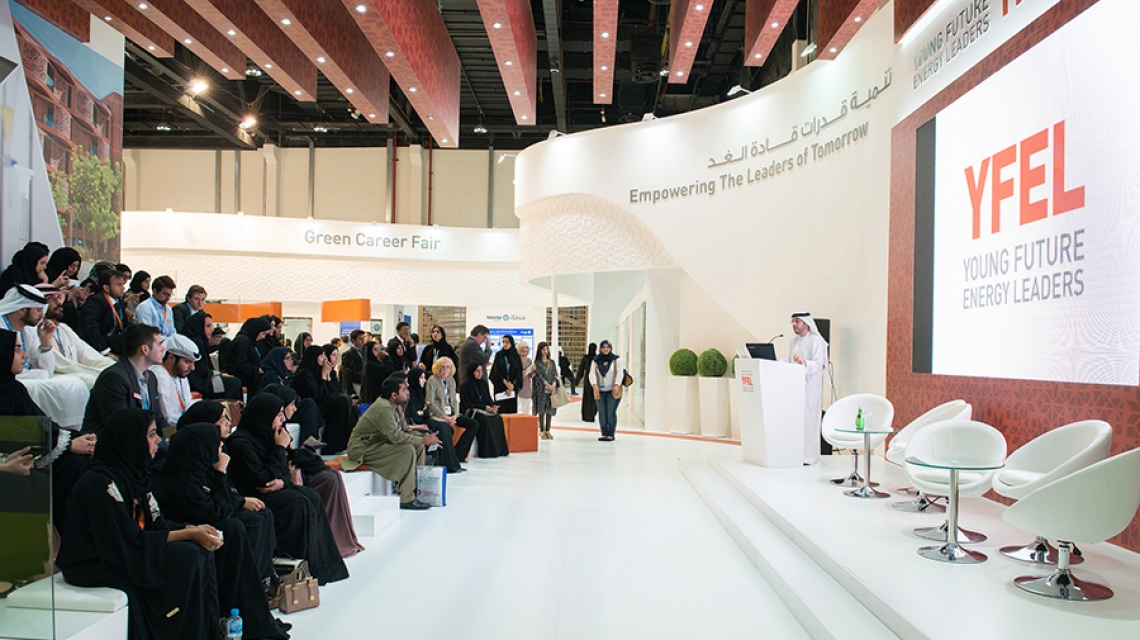
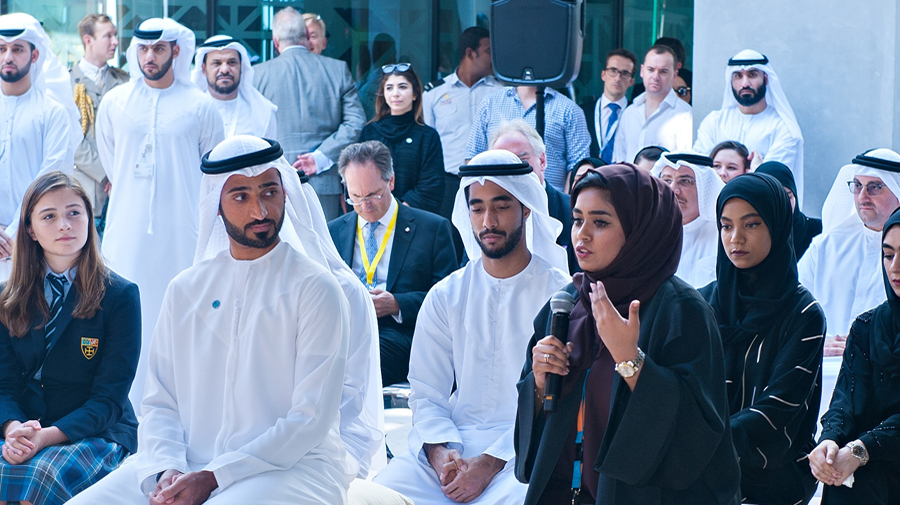
Mubadala has committed to support the YFEL program during Abu Dhabi Sustainability Week (ADSW) 2017 which will be held at the Abu Dhabi National Exhibition Center (ADNEC). The Masdar Institute outreach initiative aims to create capable future leaders, while supporting the UAE’s commitment to human capital development. Through its participation at the event, YFEL offers its members an opportunity to learn about international standards in developing technology and policy to support a sustainable future, while helping them to engage with global energy leaders.

The YFEL 2017 program will kick off at the World Future Energy Summit (WFES) 2017, part of ADSW. Several prominent global and regional sustainability leaders and professionals from the government, non-government and private sector stakeholders will interact with the YFEL members. They will include H.E. Dr. Ahmad Belhoul, UAE Minister of State for Higher Education, Maher Ezzeddine, CEO of Idanco, Chairman and President of Harvard Business School Aerospace Alumni Group, Sheikh Mishaal Bin Jabor Al Thani, Director of Energy Affairs Department, The Ministry of Energy and Industry of Qatar, and Laurene Powell Jobs, Executive and Founder of Emerson Collective.

The YFEL program at ADSW aims to offer its members the perfect opportunity to build on their skill base through interaction with global energy leaders and decision-makers, and to learn from their experience to become capable future energy leaders.

Saoud Ahmed Karmastaji, Assistant Manager, Mubadala, said: “Through our programs and partnerships, our aim is to not only empower young UAE nationals to realize opportunities in various business sectors which serve Abu Dhabi’s economic diversification, but to support the development of a well-rounded generation. Advancing sustainable energy solutions is integral to Abu Dhabi’s future, so it was only natural that we support Masdar Institute in its efforts to empower youth with the knowledge to succeed in this area.”

Zainab Al Ali, Program Manager, YFEL, said, “As a youth-oriented program, YFEL continues to contribute towards the UAE Vision 2021 by developing capabilities and nurturing critical minds capable of leading the energy sector into the future. Mubadala’s commitment to support the YFEL program demonstrates the importance of youth-related initiatives for the future progress of the UAE. We thank the country’s leadership for their continued commitment to developing future leaders through programs like YFEL”

YFEL offers participants exceptional and unmatched access to top global leaders, senior business executives and academics engaged in alternative energy and sustainability through events like WFES and others. Over the last several years, the YFEL members have also visited various countries in Asia and Europe, establishing their role as leaders in community development through sustainable energy initiatives in developing countries, while learning through experience from interacting with specialists in advanced countries such as Switzerland, Japan and South Korea in the areas of clean energy, and smart sustainable technology.

The YFEL members in collaboration with 10 students from the Universitas Sebelas Maret, Surakarta, in the Central Java province of Indonesia, were involved in highlighting the benefits of energy systems technology, community engagement, sustainability as well as bio and solar energy potential. The field visits and hands-on projects helped the members significantly in designing and presenting a sustainable energy enterprise. Engaging with villagers from the neighboring community and participating in interactive lectures and discussions, benefited the members in self-driven learning.

In November 2016, 10 YFEL members were selected to be part of the UAE delegation to the Conference of Parties (COP) 22, which took place in Marrakesh, Morocco. By participating in the conference, the members were provided the opportunity to further enhance their sustainable development knowledge and contribute to the international discussion on climate-related issues.

Launched at the WFES 2010 as a Masdar Institute-led initiative to engage the youth in advanced energy and sustainable technology, the YFEL program aims to prepare future leaders. Through networking with decision-makers and industry leaders at global events like ADSW, the YFEL program encourages members to discuss, share, and learn from them in order to gain insights and great social values.


Clarence Michael
News Writer
15 January 2017

Masdar Institute and Huawei Partner to Leverage the Internet-of-Things for Development of “Smart City” Applications

The Masdar Institute and Huawei, a leading global Information and Communications Technology (ICT) solutions provider, today announced that they have signed an agreement to jointly develop solutions to support public health in cities using Huawei’s internet-of-things (IoT) platform and Masdar Institute applications.

The project ultimately aims to provide real-time prediction and warnings for a variety of health risks for all city occupants, thereby improving their overall health. The applications are to be built on Huawei’s IoT Platform, which orchestrates data from multiple types of sensors. The data will come from commercial wearable sensors in the Masdar Institute campus that measure participants’ occupancy patterns and health data, like vital signs and body temperature, as well as wireless sensors that measure environmental data like humidity. The IoT solutions developed through this project will also play a critical role in transforming Masdar City, of which Masdar Institute is an anchor tenant, into a “smarter” and even more connected city.

Masdar Institute researchers will develop applications that can visualize the collected data and accurately predict a variety of health risks and provide recommendations for more healthy activities, based on environmental conditions and an individual participant’s physical health and location.

The two-year agreement was signed by David Wang, CEO of Huawei UAE, and Dr. Behjat Al Yousuf, Interim Provost, Masdar Institute. The agreement was signed at the Masdar Institute stand at the World Future Energy Summit (WFES) 2017, which is being organized as part of the Abu Dhabi Sustainability Week (ADSW) 2017 at the Abu Dhabi National Exhibition Center (ADNEC).

Dr. Al Yousuf of Masdar Institute said: “Environmental conditions, such as heat and dust, can increase the risk of medical conditions like respiratory disease. That is why leveraging advances in data analytics and IoT systems to aggregate, correlate and analyze this data to improve public health, seems an obvious and prudent solution to improve health and productivity. We are pleased to partner with one of the most innovative technology companies, Huawei, to achieve the important goals of improving our campus residents’ health and happiness, while also advancing health information systems for improved health for all people.”

The IoT platform provided by Huawei is well-suited for this project, as it provides a private cloud computing solution capable of dealing with large data streams, as well as device management capabilities.

“We are speeding into a future where billions of devices are going to communicate with each other, with people and organizations, so an open ICT architecture is fundamental to cope with the enormous amounts of data being generated,” said David Wang. “By deploying an open IoT ecosystem, Masdar City will be able to accelerate its digital transformation and take full advantage of IoT innovation by deploying smart city applications that can continue to support population growth and society as a whole.”

IoT systems are at the heart of a truly smart city. The IoT aims to transform data from sources that range from household appliances to business products to virtually anything in our surroundings, into value-added insights and intelligence for businesses and consumers.

Through the complete end-to-end IoT solution being developed for the Masdar Institute campus, the data collected on human health, occupancy patterns and environmental conditions will be converted into actionable insights that will ultimately empower Masdar City occupants to make better health decisions, leading to increased health, productivity and sustainability.

Associate Professor Dr. Mihai Sanduleanu and Assistant Professor Dr. Andreas Henschel, both from the Electrical Engineering and Computer Science Department, will be leading the project from Masdar Institute’s side.

“The main application is supposed to provide a real-time visualization and warning system capable of calculating probabilities for the health risks of all individual participants. A second application involves providing this data to health care providers and health authorities so that they may gain new insights about the interplay of health and environmental factors,” explained Dr. Sanduleanu.

In the second phase of the research project, the research team will employ Masdar Institute’s proprietary sensors to quantify human outdoor movements within Masdar City and correlate it with environmental data and city design. This data will help optimize human outdoor comfort.

Erica Solomon
News and Features Writer
18 January 2017

Innovative Projects Shortlisted for ‘Future Generation’ Competition at Middle East Electricity 2017

Masdar Institute today announced that three innovative research concepts submitted by students have been shortlisted in the post-graduate category for the Future Generation competition taking place as part of the Middle East Electricity 2017 exhibition.

Hosted by the UAE Ministry of Energy from 14-16 February 2017 at the Dubai International Convention and Exhibition Centre, the exhibition is the largest international trade event for the power industry, covering the generation, transmission and distribution of electricity, including the renewable and nuclear energy sectors and the lighting industry. The Future Generation competition is for graduate and undergraduate engineering students in the UAE and is organized as part of event’s focus on supporting the development of the energy industry. Masdar Institute also contributes to emerging talent in engineering through support of the undergraduate portion of the Future Generation competition.

Dr. Behjat Al Yousuf, Interim Provost, Masdar Institute, said: “As a key regional industry event, Middle East Electricity 2017 offers the perfect platform for Masdar Institute students to highlight their relevant projects and ideas.s. Being a leading research-oriented academic institution, we are delighted to support the Future Generation competition and look forward to closer collaboration with key industry stakeholders to advance our shared goals of developing efficient and affordable sustainable energy technologies.”

One of the Masdar Institute projects, submitted by MSc student Lamis Abu Ashour, analyzes the evolution of built landscapes and policies in government subsidized neighborhoods developed exclusively for UAE Nationals. The aim of the project is to create enhanced urban forms that will deliver greater environmental, social and economic coherence. Urban forms include the physical patterns, layouts, and structures that make up an urban area.

Students Anas Alkhazaleh, Jehad Abed, Mutasim Odeh and Oscar Bagoole submitted a project titled ‘Dust Particle Removal using Graphene-based Transparent Fork Electrodes (GTFE)’, which is about fabrication, characterization and testing of graphene-based transparent fork electrodes on top of glass surfaces for dust particle removal solution.

Another project submitted by Hamda Al Mazrouei relates to enhancing the cooling load efficiency of buildings and houses through allowing for higher set-point temperatures without loss of comfort level. Through the use of natural insulation material known as “Date Palm Fronds”, this project aims to maintain thermal comfort in buildings at higher set point temperatures, which can save energy.

This year the competition is focused on designing and developing an innovative energy solution around the theme of ‘Smart Cities’. It invites students to present their ideas for energy efficiency or alternative energy with the hope of winning an award from either a panel of judges or the ‘People’s Choice Award,’ as voted for by visitors to the exhibition. Dr. Vinod Khadkikar, Associate Professor, Electrical Power Engineering, Masdar Institute, will be one of the judges for the undergraduate segment of the competition. Shortlisted projects, including the three from Masdar Institute students, will be displayed as a prototype and/or poster during the event. The competition introduces a postgraduate category this year.

Students will have the opportunity to display their work in front of 20,000 international visitors and over 1,200 exhibitors, which also provides an opportunity engage with the potential employers and industry leaders.

Clarence Michael
News Writer
13 February 2017

Alumni Spotlight: Powering the UAE’s Sustainable Energy Transition with Positivity

It is said to be rare for university graduates to find employment that perfectly matches their qualifications, passions and personality, however, Class of 2013 MSc in Engineering Systems and Management alumna Meshayel Omran Lehssoni is proving the exception to the rule.

The young Emirati is currently using her lively disposition, background in engineering and her commitment to the UAE’s renewable energy goals in her role as Director of Future Energy and Security of Supply and Chief of Happiness and Positivity at the UAE’s Ministry of Energy.

“During my studies at Masdar Institute, I focused my thesis on carbon capture and storage (CCS) and when I joined the Ministry of Energy, I was able to work and contribute to climate change efforts. I feel I have been strengthened with the different tools and methodologies taught to me at Masdar Institute, and have added my own inputs to them to do exciting work for my country,” she shared.

Since joining the Ministry of Energy in 2013, Lehssoni has made significant contributions to the UAE’s negotiations in the United Nations Framework Convention on Climate Change and is supporting the UAE’s initiatives for Mission Innovation, a global initiative of 22 countries and the European Union to dramatically accelerate global clean energy innovation. In addition to this, she is also representing the UAE in a number of international fora including the Clean Energy Ministerial.

An important aspect of Lehssoni’s role at the Ministry is to ensure that the UAE is making sustained progress towards its key performance indicators to improve the position of the country worldwide in terms of reduction of carbon emissions by using carbon capture and storage technology and also increasing the renewable energy share of the UAE’s energy mix. She is also working towards having the UAE host the midyear Carbon Sequestration Leadership Forum meeting and is in the process of establishing a forum focused on research and development and innovation in the energy and water sectors.

Lehssoni is also responsible for strengthening relationships between the Ministry and other entities on national and international levels, while managing a team involved in a number of important strategic areas, including the UAE Transportation Strategy, sustainability reporting and monitoring of the UAE’s progress in relation to sustainable development goals.

Following the launch of the UAE National Programme for Happiness and Positivity in 2016 — which has a goal of establishing happiness as a lifestyle in the UAE — Lehssoni was also made responsible for enhancing the culture of happiness and positivity within the Ministry of Energy. She is now leading a project titled “Request with Happiness,” which aims to make services requested by employees in the Ministry simplified through the use of smartphones and computers, another activity that effectively pairs her technical and personal attributes.

“I am quite a cheerful and friendly person naturally. Ensuring we are happy is as important as ensuring we are sustainable. It’s part of a holistic balance that all progressive countries are striving to achieve, and I am very proud to be part of that effort,” she shared.

Explaining why someone so young has taken on so many responsibilities, Lehssoni said: “Masdar Institute graduates like myself have a major role to play in advancing the UAE’s carbon emission and climate change goals while simultaneously further developing ourselves as human capital for the country.”

And although Lehssoni left Masdar Institute in 2013, she continues to work in close quarters with the Institute, due a number of research collaborations between the Ministry and the Institute.

Lehssoni credits Masdar Institute with providing her with the knowledge, confidence and impetus to pursue her career goals in advanced energy, sustainability and carbon emissions reduction, particularly as a young Emirati female graduate.

“Originally, I was attracted to Masdar Institute because of its focus on sustainability, energy and climate change, but I was also excited by the opportunity that the Institute provided for young Emirati women to become more involved in science, technology, engineering and mathematics (STEM) related areas and to contribute to the strategic goals of the UAE,” she explained.

To further her contribution to the UAE’s strategic goals, Lehssoni hopes to complete her PhD and continue her career in research and development related to future energy and security of supply, with the aim of making the UAE known as one of the world’s leaders in sustainable development and advanced technologies. 

Ciara Sutton
News and Features Writer
23 February 2017

Masdar Institute’s YFEL Members Recall a Year of Enrichment and Innovation

From learning how to build a robot, to participating in international discussions around one of the most important challenges facing mankind – global climate change – members of Young Future Energy Leaders (YFEL) 2016 program, an outreach initiative of Masdar Institute and Science and Technology — say they have had the privilege and adventure of a lifetime in their year-long experience and cannot wait to apply the lessons they learned to their professional lives.

Each year YFEL chooses the best from its applicant pool of local and international students and young professionals to be part of its year-long immersive mentorship and training experience. These select young men and women are then given rare access to decision-makers and innovators in energy and sustainability while they enrich their understanding of the technical issues through specialized workshops and courses. All of this has one goal in mind – to develop YFEL members’ skills, confidence, and understanding to help them become future leaders in energy and sustainability.

Dr. Lamya N. Fawwaz, Vice-President for Institutional Advancement and Public Affairs, Masdar Institute, said: “The YFEL program inspires, engages and empowers bright young people to become future leaders in the fields of energy and sustainability, in line with the UAE government’s emphasis on youth development. Supporting such programs remains vital for the youth as they help nurture talented innovators. The YFEL members have engaged with global industry and government leaders, actively participated in international conferences, and attended leadership courses to enrich their knowledge. We congratulate this year’s graduates on the completion of their year-long program, and on the leadership skills they have developed through their experiences.”

“The most important thing I learned as a YFEL member is that personal and professional growth will happen when I dare to reach beyond my comfort zone,” shared YFEL 2016 member Saeed Kaddoura, who is also a Masdar Institute MSc student in Water and Environmental Engineering. “The YFEL program placed us in opportunities that challenged the limits of our comfort, and empowered us to succeed beyond them.”

Kaddoura was one of the winners of the YFEL Case Study Competition selected to be part of the UAE delegation to 22nd Conference of the Parties to the UN Framework Convention on Climate Change (COP22), which took place last November in Morocco. COP22 focused on how the strategies laid out in the 2015 Paris Agreement of COP21 can be applied. The Agreement is an international treaty within the United Nations Framework Convention on Climate Change that covers the mitigation greenhouse gas emissions, adaptation to climate change and finance for climate action. Delegates from around the world debated many of the agreement’s sticking points, which gave attending YFEL members insight into how science, policy, and government come together to tackle serious issues.

“At COP22 we were surrounded by the most advanced climate change and policy research. I also had the chance to engage with other young people from around the world through a youth panel titled ‘Shared Responsibility for a Shared Future’, which strengthened my confidence in the role young people will play in helping secure a better future. After my YFEL experience I can’t wait to become an active contributor to international energy and environmental policy,” Kaddoura said.

YFEL members are also gaining valuable experiences right here at home through opportunities to learn from local experts about the forefront of technology, including robotics and initiatives to help bring positive change to important sustainability challenges. This is the case wit YFEL member Abdulaziz Alhammadi, who is an engineer in Dubai’s Road and Transport Authority (RTA).

Alhammadi completed the ‘Building a Robot Course’, which taught attendees about the critical technologies that are at the heart of robotic systems, including microcontrollers, sensors, and systems integration. Led by Masdar Institute Assistant Professor of Mechanical Engineering Dr. Prashanth Marpu, the course explained the basics of the embedded systems that control a robot, so at the end of the day-long workshop Alhammadi and other participants were able to build and demonstrate their own functioning robots.

The young Emirati engineer says he is looking forward to applying the enhanced technical skills and mindset he acquired during his YFEL experience to his work at the RTA.

“YFEL has helped me to make better decisions in difficult situations, which is going to have a huge impact on my professional and personal development, and enhanced my design approach for street lighting projects to use environmentally-friendly energy-saving lights in my ongoing projects as one small contribution to the UAE’s green economy,” Alhammadi said.

But the most important lesson he says he learned during his YFEL experience was how crucial energy- and water-security are for overall sustainability.

“Going forward, I plan to contribute to the UAE’s visionary targets by focusing on environmental sustainability challenges and green energy resources, and I will employ technology to serve this vision. I want to combine my technical engineering background with the professional training and development I received through YFEL to increase the efficiency of current green energy technology sources such as solar energy systems, which can serve the UAE and wider world both economically and environmentally,” Alhammadi said.

Other times the most valued lessons learned by YFEL members have not been as technical. Nouf Al Ali, who is a strategic analyst associate at Dolphin Energy, cited ‘soft skills’ as being the most important takeaway from her YFEL experience.

“One lesson that will not be easily forgotten is that ‘differences do not usually create conflicts’. To elaborate, YFEL had members from many different educational and professional backgrounds. But instead of this being a source of confusion or difficulty, it created a great knowledge-sharing platform that resulted in greater group productivity, especially in the idea forming stages of our activities, resulting in innovative solutions,” she shared.

Al Ali highlighted the teamwork and leadership skills she developed during her YFEL experience as top among the program outcomes that will benefit her career going forward.

“YFEL helped me develop my interpersonal skills, such as communication and negotiation through debates on the future of energy. It also challenged me to effectively present the thoughts I develop through analysis and problem-solving, so I can be a better future leader,” she added.

Al Ali was one of the winners of the YFEL Case Study Competition, the prize for which was a seven-day YFEL-Japan Joint Government Initiative. She and other awardees experienced workshops, presentations, and immersive learning during their trip. They visited leading Japanese companies like Toyobo Japan and academic institutions including Tokyo University, and met high-level delegates. Al Ali said she in particular enjoyed the visit to Sophia University, where she learned about using treated wastewater for irrigation.

Fellow Case Study Competition winner Tawaddod Saif Alkindi also mentioned the Japanese water workshop as one of the most memorable of her YFEL experiences.

“The Japanese water quality and resources workshop was intense. Now I have good theoretical and practical overview of water resource management, which will help me to think of solutions related to this field,” she shared.

Alkindi, who is currently a Masdar Institute MSc in Materials Science and Engineering student, said that YFEL had inspired her to learn from the successes of others, like Japan’s leading innovators, and to be more open with her own ideas and opinions to help identify challenges to be able to produce the best solutions.

“Challenges are the ultimate motivation that drive me to think and invent. I am grateful to the YFEL program for preparing me to become a leader. The program developed my leadership and critical decision-making skills to enable me to find solutions for sustainability issues,” she shared.

Another YFEL member Hamda Lootah says she was privileged to launch and end her year-long experience with two events that strengthened her belief in her abilities and purpose.

“Our YFEL year started with the 2016 World Future Energy Summit and then later in the year I was selected to be part of the Youth Circle with His Royal Highness Prince Charles. These two events strengthened my self-confidence, which is a key element in being a successful leader, and they have opened the doors to many new opportunities I can seek for my future,” she shared.

The World Future Energy Summit is part of the Abu Dhabi Sustainability Week (ADSW) an annual event dedicated to advancing future energy, energy efficiency and clean technologies, which attracts over 26,000 attendees from 112 countries. The Youth Circle with Prince Charles was organized at Masdar Institute by the Emirates Youth Council. It was also attended by His Excellency Dr. Sultan Ahmed Al Jaber, UAE Minister of State and Chairman of Masdar, and Her Excellency Shamma bint Suhail Faris Al Mazrui, Minister of State for Youth.

Lootah, who is studying for her MSc in Sustainable Critical Infrastructure at Masdar Institute, best summed up the lifelong impact of the YFEL experience for herself and her fellow members.

“Our world needs to be sustained and we see that now it is our time to lead that.”

Clarence Micahel
News Writer
26 February 2017

Masdar Institute’s YFEL Members Celebrate Completion of Year-long Training and Development

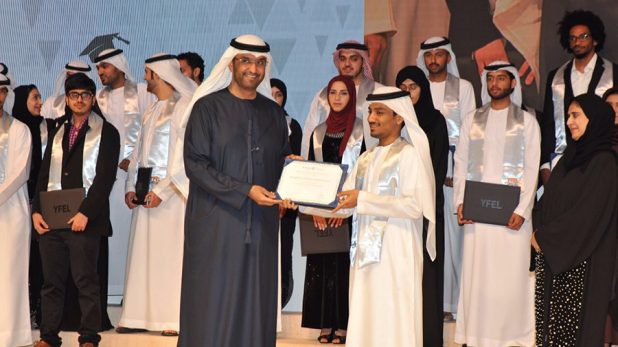
Members of the Young Future Energy Leaders (YFEL) 2016 program were honored for successful completion of their year-long activities during a gala event at Masdar Institute campus.

His Excellency Dr. Sultan Al Jaber, Minister of State, and Chairman of the executive committee for the board of trustees of Masdar Institute, awarded the graduation certificates to the 2016 YFEL members. YFEL is an outreach program of Masdar Institute, providing select young professionals and students from the UAE and abroad with valuable training, development and mentorship in the area of alternative energy and sustainability.

The ceremony was attended by His Excellency Dr. Thani Al Zeyoudi, Minister for Climate Change and Environment, YFEL sponsors, government stakeholders, Dr. Behjat Al Yousuf, Provost, Masdar Institute, other officials from Masdar Institute and members of the 2017 YFEL program. The Abu Dhabi National Oil Company (ADNOC) was the sponsor of the program from 2011-2016, supporting YFEL’s efforts to develop the energy leaders of tomorrow.

Dr. Lamya N. Fawwaz, Vice President of Institutional Advancement and Public Affairs, Masdar Institute, said: “Today’s young men and women will be the decision-makers of tomorrow. That is why it is so important that we invest in their knowledge and skills, particularly in sustainability and energy, which impact all our lives. We are proud of the 2016 group of YFEL members and are confident they, like their peers before them, will become leaders in sustainability and innovation.”

The annual YFEL experience includes specialized courses, workshops, training and participation in international energy conferences and discussions.

This year a select group of YFEL members engaged in a Youth Circle discussion with His Royal Highness Prince Charles, the Prince of Wales, during his visit to the Masdar Institute campus. UAE government leaders including His Excellency Dr. Sultan Ahmed Al Jaber, UAE Minister of State and Chairman of Masdar, and Her Excellency Shamma bint Suhail Faris Al Mazrui, UAE Minister of State for Youth Affairs, were also part of the Youth Circle.

A group of YFEL members also participated in the 22nd session of the Conference of the Parties (COP22) of the United Nations Framework Convention on Climate Change (UNFCCC), held in November in Morocco. There they learned how science, policy, and government come together to tackle serious issues and participated in youth panels, where members shared their insights and perspectives with a range of participants from multiple countries and backgrounds.

Earlier in the year another group of YFEL members visited Japan as part of the Japan International Cooperation Center’s (JICE) annual YFEL-Japan Joint Government Initiative. There they experienced workshops, presentations, and immersive learning, visiting leading Japanese companies like Toyobo Japan and academic institutions including Tokyo University, and meeting high-level delegates.

YFEL member Tawaddod Saif Alkindi recalled this about her Japan experience: “The Japanese water quality and resources workshop at Sophia University in particular was intense. Now I have good theoretical and practical overview of water resource management, which will help me to think of solutions related to this field.”

Another key part of the year-long experience for YFEL members was a schedule of mandatory courses on technology, policy and leadership. Some of the topics included ‘Batteries and Fuel Cells’ and ‘Building a Robot’.

YFEL member and engineer with Dubai’s Road and Transport Authority (RTA) Abdulaziz Alhammadi said the ‘Building a Robot’ course enriched his ability to do his job going forward. “The YFEL program enhanced my design approaches for street lighting projects to use friendly environment and energy saving lights all over the ongoing projects as my contribution to creating the green economy for the UAE,” he explained.

YFEL members also applied their boosted confidence and skills to a number of technical competitions during their year, resulting in a number of awards.

At the annual UAE Undergraduate Student Research Competition (UGSRC) YFEL members Sidra Siraj and Sumiyya Faheem Rabbani won the top prize in the biology category with their presentation on ‘Development of ceramic-polymer nano-composites with potential biomedical application’. At the Infiniti Engineering Academy 2016 Challenge fellow YFEL member Shihab Solaiman became the first-ever UAE winner of a career opportunity in Formula One racing. Solaiman said: “I am excited to be working at the forefront of innovation and owe it to the experience I in engaging in programs like YFEL, which helped me develop my passion and skills for engineering.”

Clarence Michael
News Writer
01 March 2017

Masdar Institute Master’s Student Wins YahSat Innovation Award 2017

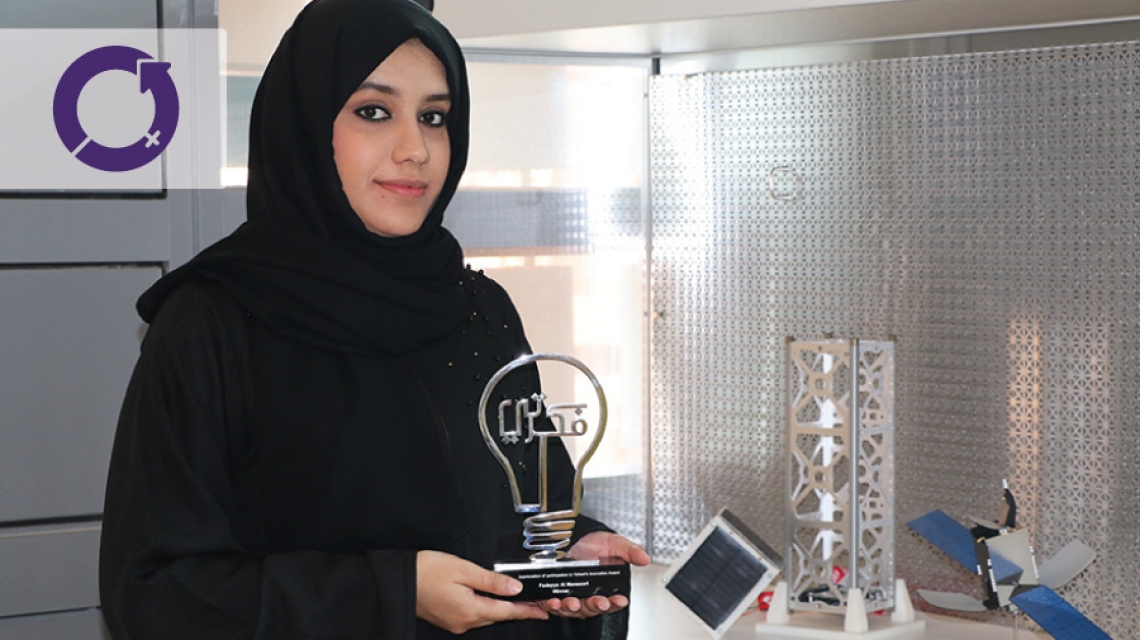
Masdar Institute’s Fedeyya Al Mansoori, Master’s student of Space Systems and Technology Concentration and Computing and Information Sciences, was awarded the YahSat Innovation Award – Fekrati – for her project titled ‘Real Space Environment Simulation’ that proposes a shared platform that can be fed existing data as well as data from new spacecraft to produce an accurate real-time simulation of the space environment.

Al Mansoori received the award presented by Masood M. Sharif Mahmood, Chief Executive Officer of the Al Yah Satellite Communication Company (YahSat), during the 2017 YahSat annual retreat at the New York University Abu Dhabi Campus on 13 February. The award aims to encourage students in the Interdisciplinary Space Program to share their innovative ideas and add further value to the UAE Space Industry.

Al Mansoori is specializing in space technologies as part of her MSc degree in Computing and Information Science. Her thesis is focused on improvements in data throughput and reliability of CubeSat satellites.

Al Mansoori’s faculty advisor, Dr. Zeyar Aung, Associate Professor, Department of Electrical Engineering and Computer Science, Masdar Institute, said: “I am proud of Fedeyya for winning this award and equally proud of Masdar Institute’s Master’s Concentration in Space Systems and Technology. This award confirms the importance of the Space Systems and Technology Master’s Concentration to the needs of the UAE’s space industry. The award was given to the best ‘research idea’ from more than 20 submitted entries in the area of space/satellite technologies.”

Al Mansoori’s award-winning project proposes the development of a shared mission data platform for existing satellites or spacecraft. Such a platform would enable more accurate real-time simulation of the space environment for future missions and thus reduce operational costs for satellite operators and companies.

Al Mansoori said: “I am so glad to win an award from YahSat, which is a leader in the UAE space industry.I am further grateful to the faculty members at Masdar Institute for their help and support. Masdar Institute offers a valuable opportunity to students like me to be surrounded by professional instructors and advanced equipment, which provides a stimulating environment to nurture creativity and conduct research.”

Al Mansoori is the first Masdar Institute student to receive the award that was launched in 2013. A total of 24 submissions were received for the 2016 award and the Innovation Committee judges included officials from Yahsat’s technical, business and corporate departments. The Fekrati initiative aims to acquire innovative ideas from employees that can add value to Yahsat’s capabilities and help deliver new business solutions.

Clarence Michael
News Writer
02 March 2017

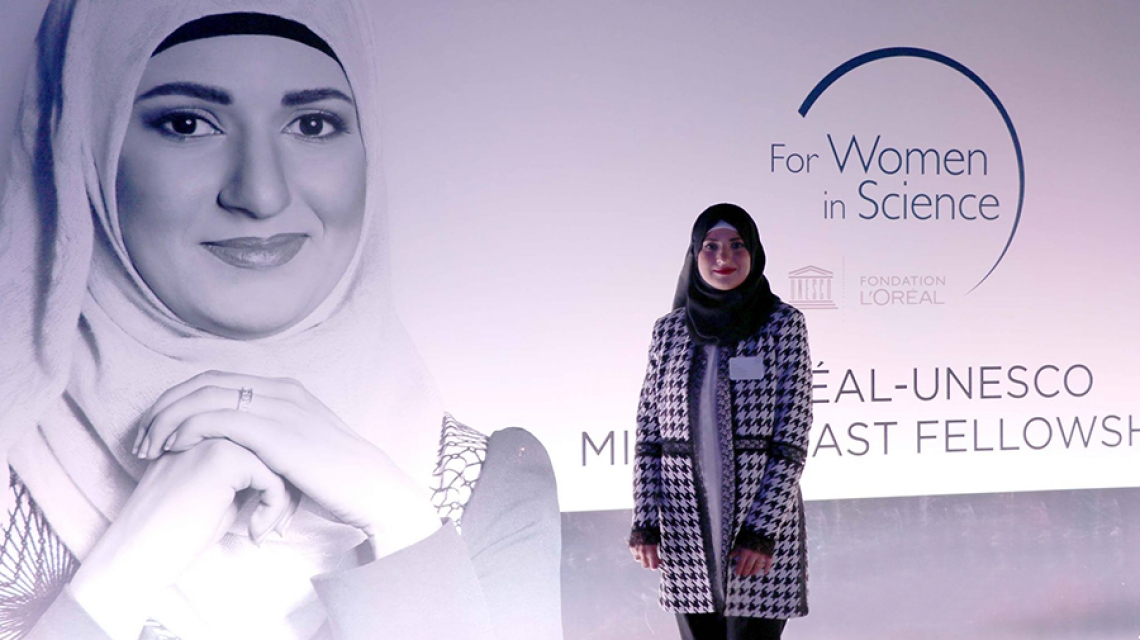
Masdar Institute PhD Student Wins 2017 L’Oréal-UNESCO for Women in Science Rising Talent Award for African and Arab Region

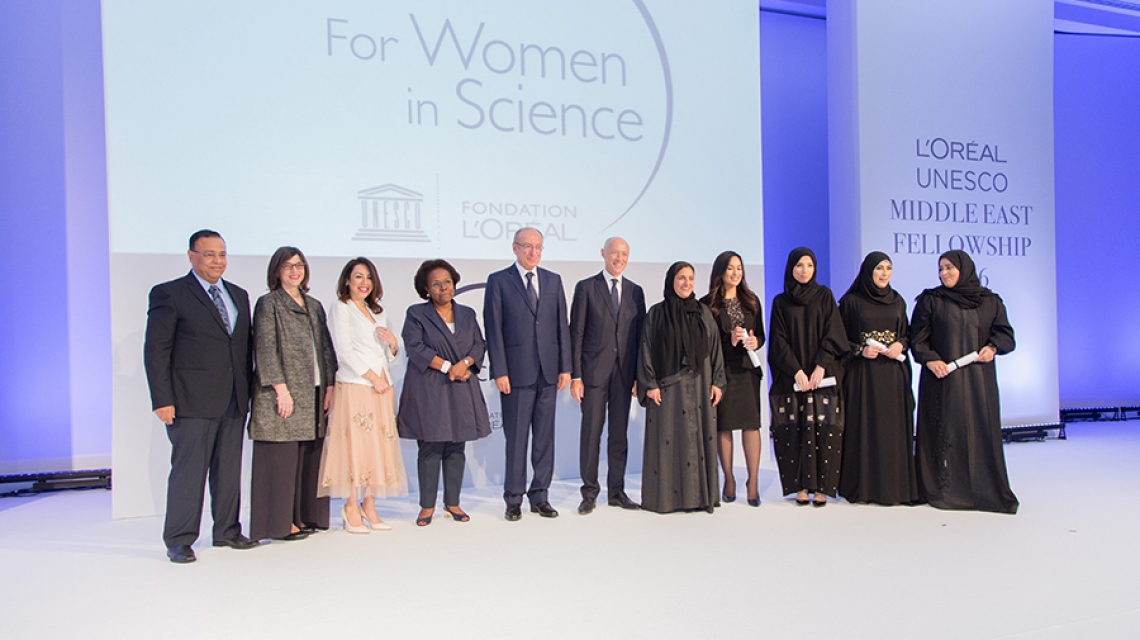
A Masdar Institute PhD student Nazek El-Atab has been selected for the 2017 L’Oréal-UNESCO For Women in Science (FWIS) Rising Talent Award for the African and Arab region.

The award will be presented to El-Atab at the International Rising Talent Gala, which will be held in Paris on 23 March 2017. The award citation states that El-Atab represents the future of science and recognizes her outstanding potential and contribution to the creation of innovative solutions in field of research. Her current research focuses on the fabrication of low-power, low-cost, high-speed nano-memory devices, which can be used in electronic equipment such as cell phones, laptops, medical devices, and military systems.

The L’Oréal-UNESCO FWIS International Rising Talents are chosen by an international selection committee formed of renowned scientists. Dedicated to both honoring distinguished women scientists as well as supporting promising young women researchers throughout their careers, the L’Oréal-UNESCO program established the International Rising Talent Grants to annually award 15 PhD students and post-doctoral fellows for their potential. Chosen from among the winners of the 250 fellowships awarded locally by L’Oréal subsidiaries and UNESCO around the world, these young researchers are considered the future of science.

Dr. Behjat Al Yousuf, Provost, Masdar Institute, said: “We congratulate Nazek for winning this recognition and bringing further pride and honor to the UAE. She is an example of the knowledge and expertise that Masdar Institute imparts to its students to explore new realms in science. We agree L’Oréal-UNESCO that Nazek represents ‘the future of science’ and we are confident she will achieve greater honors in her future endeavors.”

El-Atab’s faculty advisor Dr. Ammar Nayfeh, Associate Professor, Department of Electrical Engineering and Computer Science (EECS), Nano Electronics and Photonics (NEP) Lab, said: “I am proud of Nazek for winning the L’Oréal-UNESCO 2017 International Rising Talents award. With her hard work and dedication, she remains an emerging role model in the Arab world for women in science. She has published 11 papers in top journals and presented her work at many top international conferences and I am confident she is only beginning along list of future achievements.”

“Students like Nazek highlight the value of what Masdar Institute can provide while creating the next generation of scientists. I also thank Masdar Institute and the Government of Abu Dhabi for supporting such novel research by providing the cleanroom, testing and microscopy facilities where Nazek did her work. The shared lab system and collaborative nature at Masdar Institute allows students like Nazek to continue achieving milestones,” Dr. Nayfeh added.

El-Atab said: “I am extremely honored to be receiving the L’Oreal-UNESCO FWIS 2017 International Rising Talents award. It is truly rewarding to know that my hard work is being recognized for the second time. Being selected for this prestigious award at this age motivates me to continue striving for excellence in my academic and professional pursuits, particularly in the fields of nanotechnology and microsystems engineering. Masdar Institute’s high profile and experienced faculty, state-of-the-art laboratories and cleanroom, and the visionary management, all played a key role in my achievements. My deepest gratitude goes to my advisor Dr. Nayfeh, who was involved in every aspect of my research. His guidance and direction helped me immensely and he was an inspiration for me on many issues including how to run a research group.”

This is not the first time El Atab has won such honor. She was also one of the four recipients of the 2015 L’Oreal-UNESCO FWIS Middle East Fellowships, which included a €20,000 (AED78,500) grant towards her research. She believes that the 2015 Fellowship, plus the support of Dr. Nayfeh at Masdar Institute, helped her win the 2017 International Rising Talents award.

El-Atab explained: “I used the 2015 Middle East fellowship for a visiting researcher position at Stanford University, where I conducted high-impact research and learned from experts. At Stanford, I was able to grow Zirconia nano-islands using the atomic layer deposition system, and at Masdar Institute I fabricated memory devices with the grown Zirconia nano-islands.”

She also used part of the fellowship money to present her research at the IEEE Nanotechnology Conference in Japan in 2016.

With these achievements, El-Atab is looking forward to widening her research experience and learning more from experts in the fields of microsystems engineering and nanotechnology as a postdoctoral researcher in a top university.

The jury for the L’Oréal-UNESCO FWIS International Rising Talents included renowned experts including Prof. Aleksey Khokhlov, of Lomonosov Moscow State University, Prof. Ewa Lojkowska of MiÄ™dzyuczelniany WydziaÅ‚ Biotechnologii Uniwersytetu GdaÅ„skiego, Poland, Prof. Marcella Motta, of University Milan, Prof. Gloria Montenegro, of. Pontificia Universidad Católica de Chile. Prof. Yan Shen, from University of Victoria, BC, Canada, Prof. Maria D. Vargas, of Universidade Federal Fluminense, Brazil, Dr. H Krishnamurthy of the National Centre for Biological Sciences, India, Dr. Marie Abboud of Saint Joseph University, Lebanon, Prof. Abdelaziz Benjouad, of Université Internationale de Rabat, Rabat, Dr. Bruno Bernard, cell biologist, embryologist and biochemist and a Fellow at L’Oreal Recherche, Clichy, France, Prof. Nadia Ghazzali, Industrial Alliance Chair for Women in Science and Engineering in Quebec, Canada, and Ms Lucy Hoareau, UNESCO Program Specialist responsible for Life Sciences.

Clarence Michael
News Writer
14 March 2017

Masdar Institute Celebrates International Women’s Day by Recognizing Integral Role of Women in Science, Technology, Engineering and Mathematics (STEM)

The UAE aims to be among the top 25 nations worldwide excelling in the field of women’s empowerment, Sheikha Lubna Al Qasimi, Minister of State for Tolerance recently told a meeting of the United Nations Secretary General’s High-Level Panel on Women’s Economic Empowerment in the Middle East and North Africa (MENA) region.

Key to achieving that goal is high quality educational access to the country’s girls and women. And given the UAE’s focus on transforming the country into an innovative knowledge economy, education that integrates science, technology, engineering and mathematics (STEM) is of particular importance. That is why on the occasion of International Women’s Day, the Masdar Institute of Science and Technology, the region’s first graduate-level engineering university focused on advanced energy and sustainable technologies, reiterates its commitment to empowering women in innovative STEM fields while celebrating the achievements of its female faculty, students and staff.

“I am proud of the education we deliver at Masdar Institute, which is enabling the development of the country’s leading female scientists and engineers and in turn, bringing the UAE closer to achieving its knowledge economy transformation, and I am proud of the many women who have joined Masdar Institute and grown with us, professionally and academically,” said Dr. Behjat Al Yousuf, Provost of Masdar Institute.

At Masdar Institute, women account for 51% of students, which rises to 68% among UAE nationals – a significant figure compared to the US engineering program average of 23.1%. The Institute also has a high percentage of women in its upper management, and 39% of its faculty and staff are female. These numbers are a testament to the focus the university places on female student and professional outreach and support.

THE VALUE OF FEMALE INTEGRATION FOR THE UAE

Integration of women in STEM is critical to the UAE’s national development goal of transforming from an oil economy to a knowledge economy focused on high-value sectors that are STEM heavy, including renewable and clean energy, transportation, technology, education, health, water, and space. By many estimates Emirati women account for over half of the country’s graduates.

“Women are a valuable asset to all countries, but particularly in the UAE, where we see how passionate they are about education and success. They want to invent things, to contribute, and to lead. That is why it is crucial for women to be involved in and contribute to the creation of the innovations that underlie the knowledge-based sectors of the UAE,” explained Dr. Lamya N. Fawwaz, Vice President of Institutional Advancement and Public Affairs, Masdar Institute.

Additionally, Dr. Fawwaz said that the UAE’s strong female STEM graduate percentage could enhance the country’s competitiveness in the high-tech sectors in which it hopes to advance. Diversity in backgrounds and disciplines is known to be a source of creativity in problem-solving, while female representation in particular has been shown to improve outcomes; in 2012 Credit Suisse Research Institute examined 2,360 companies globally from 2005 to 2011 and found that those with one or more women on the board delivered higher average returns on equity, lower net debt to equity and better average growth.

“Having a STEM-based economy in the UAE that has a heavy female participation could produce very different products and services that make the UAE more competitive in traditionally male-dominated technology sectors. There is nowhere in the world right now where women dominate STEM, so our female-heavy STEM sectors would be unprecedented and I’m excited to see what we produce,” Dr. Fawwaz said.

STEM jobs are also among the highest-paying. The US Department of Commerce found that workers who hold STEM degrees enjoy higher earnings regardless of occupation, and women with STEM jobs in particular earned 33% more than women in non-STEM jobs. Thus, more women in STEM could bolster the UAE economy as it transitions away from fossil fuels and heavy reliance on public-sector employment, providing its people with high-value professional jobs that meet the high quality of life to which they have become accustomed.

HOW IS MASDAR INSTITUTE DOING IT?

Just two years after Masdar Institute opened its classrooms, then assistant professor Dr. Georgeta Vidican conducted a study of 2,520 female students in universities across the UAE to discover the barriers facing women in the UAE to science and engineering studies and professions.

The research had many insights, but particularly useful was its finding that having family support was a strong indicator of a successful STEM education and career for Emirati women, as well as mentorship or having a close relationship with an established Emirati female STEM professional.

With this information in mind, Masdar Institute embarked on an outreach program to educate the UAE public about the value of STEM professions, providing many local female faces in its advertising campaigns to reduce cultural perceptions that women are not suited to STEM. It also ensured that female students’ families were engaged in the enrollment process so they would provide support and encouragement. To help develop Masdar Institute’s female students into tomorrow’s STEM leaders, the Institute invites female alumni to mentor and guide the next group of female students, to inspire them and share their experiences. The Institute also rigorously recruits Emirati female faculty, to ensure that the many young Emirati women studying in its engineering programs can benefit from their successes and insights.

SUPPORTING THE ENTIRE STEM PIPELINE

And Masdar Institute is not just interested in educating women during their Master’s or PhD programs. Its approach to female empowerment looks at the entire pipeline, beginning with outreach to undergraduate students, through to employment of graduates in STEM fields.

To motivate and excite female undergraduate students to pursue STEM the Institute offers a number of outreach programs, providing student internships and immersive week-long research experiences to undergraduate students in the UAE. These programs routinely boast higher rates of female participation. This year, nearly 70% of the undergraduate interns at Masdar Institute are female.

And to ensure that the Institute’s female graduates are able to go on and find meaningful employment in the UAE’s STEM fields, the Institute set up a Career Services Office and provides professional internships to its students at attractive high-tech companies.

“The services and internships we provide our students and alumni help ensure they get relevant real-world experience to complement laboratory and classroom lessons that helps make them more desirable as hires, and also establishes the professional networks and connections that result in immediate degree-relevant placement upon graduation,” Dr. Fawwaz shared.

The result of this approach has been a steady increase in female student numbers, an equally steady increase in female student achievements, and a high level of alumni placement. An estimated 91% of Masdar Institute’s graduates are either employed or pursuing PhD programs in local and international universities

SUCCESSES

Masdar Institute has significantly increased the number of female STEM role models in the UAE through active support of its talented Emirati female faculty and cultivating a group of highly-skilled Emirati female engineering graduates.

For example, Dr. Hanifa Taher Al Blooshi, Assistant Professor of Chemical and Environmental Engineering, won the 2016 L’Oreal-UNESCO For Women in Science Middle East Fellowship Award for her research in designing a new novel system for enzymatic biodiesel production. She also co-authored a book on her work in 2015.

“I am grateful for the strong support I have received from Masdar Institute to pursue my research, teach and engage in meaningful collaborations. Masdar Institute’s efforts to retain, support and cultivate high-achieving female scientists is an important step towards increasing the population of female STEM professionals in the UAE and across the entire region,” she commented.

Masdar Institute’s female Emirati alumni are also inspiring young women in the UAE through their professional and academic successes. Among Masdar Institute’s notable alumni is Class of 2013 graduate Meshayel Lehsooni, who is currently the Director of Future Energy and Security of Supply and Chief of Happiness and Positivity at the UAE Ministry of Energy.

“Originally, I was attracted to Masdar Institute because of its focus on sustainability, energy and climate change, but I was also excited by the opportunity that the Institute provided for young Emirati women to become more involved in science, technology, engineering and mathematics related areas and to contribute to the strategic goals of the UAE,” Lehsooni explained.

Another trailblazing alumna is Class of 2014 MSc in Microsystems Engineering graduate Mejd Alsari Almheiri. A recipient of the Distinguished Student Scholarship from the UAE Ministry of Presidential Affairs, she is currently pursuing her PhD at Cambridge University and jointly established the first UAE Synchrotron Users Association to help researchers in the UAE access the world’s selective advanced research facilities.

With success stories like these, Masdar Institute is serving as a role model for female empowerment in STEM fields for the UAE and wider region.

CONCLUSION

Emirati women have played and will continue to play a critical role in the UAE’s strategic goals, including its plan to transform itself into a knowledge-based economy, especially as their numbers in the STEM sectors increase.

Masdar Institute is proud of its talented female administrators, faculty, students and alumni, who are serving as the country’s role models and helping to encourage more Emirati women into the STEM careers that are critical to the development of competitive technology-based industries in the UAE.

Zarina Khan, Senior Editor and Erica Solomon, News and Features Writer
15 March 2017

 

Alumni Spotlight: Seeking Challenges “Even Unto China”

Masdar Institute Class of 2012 graduate Maitha Al Kaabi has put her own spin on the traditional Arabic saying of “Seek knowledge even unto China” in her pursuit of professional and personal challenges that have taken her to the Far Eastern nation.

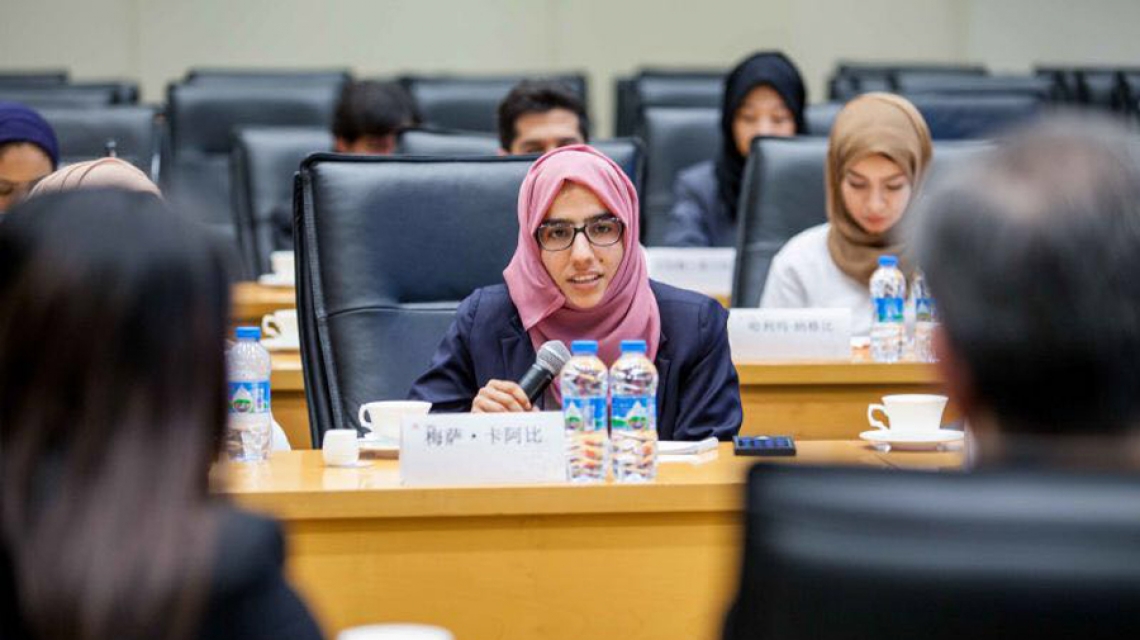
“The move to China, where I am the energy and climate change attaché at the UAE Embassy in Beijing, has been the most exciting experience I’ve had has since graduation. China is an extremely challenging place for foreigners to live, as the language, mindset and culture are very different. But I have been here since 2013 and have loved it. I feel so lucky,” Al Kaabi shared.

While the diplomatic posting has been a good fit for Al Kaabi, it was definitely not part of her original plan when she joined Masdar Institute in 2010 as a student in its MSc in Water and Environmental Engineering Program. At that time her research focus area was water treatment and desalination and she was interested in environmental conservation, but she sees her diplomatic work as a continuation of her desire to explore her abilities and opportunities in pursuit of excellence.

During her studies at Masdar Institute Al Kaabi was also a member of the 16-day International Antarctic Expedition (IAE) 2012 led by polar explorer Robert Swan, which culminated with her and fellow student Reem Al Junaibi planting the UAE and Masdar Institute flags at the South Pole. Al Kaabi also traveled to Brazil in 2012, where she represented the Young Future Energy Leaders (YFEL) program at the RIO+20 United Nations Conference on Sustainable Development Summit.

“I like to challenge myself and to experience new things in life. When the opportunity arose to work in the embassy to help strengthen the relationship between the UAE and China in the areas of energy and climate change, I saw that it offered me the chance to use my technical skills in a non-technical setting while allowing me to explore new and unfamiliar situations,” Al Kaabi shared.

And while Al Kaabi’s work as a diplomat may seem a far cry from her training as a water and environmental engineer, she explained that her technical background shapes and enriches the way she approaches her professional tasks. She also regularly uses the communication and negotiation skills that she developed during her time at Masdar Institute.

“As a student at MI, I was often put in the new position of having to explain my ideas or work with others from a wide variety of backgrounds and mindsets, whether when presenting my research to fellow students or professors, or explaining to visiting VIP delegations the importance our water research. As a diplomat, these communication skills have been an asset in my work, allowing me to quickly adapt to my role. They help me tailor my language depending on whether I am speaking to a technical expert from the energy industry or to a foreign or local political leader,” Al Kaabi shared.

In her work as attaché, she says she is most proud of helping to facilitate bilateral discussions between the UAE and China that led to a USD10 billion commitment by the UAE and China to invest in infrastructure and energy, including a significant allocation for clean energy.

“I believe I have contributed to changing the way China thinks of the UAE. Before, China may have seen the UAE only as a source of oil, but now, China also sees the UAE as a hub for clean energy advancement,” Al Kaabi said.

The UAE is reportedly China’s second largest trading partner and largest export market in the Middle East and North Africa region, with bilateral trade estimated to reach US$60 billion in 2016. In 2015 the countries signed a Memorandum of Understanding that covered collaboration in research and development focusing on renewable energy power generation.

For her future professional endeavors Al Kaabi says she wants to continue to contribute to the UAE, whether as a diplomat or in any other needed capacity, and hopes to help pave the way for young women in the UAE to achieve greater successes.

“I hope my work encourages more young females to represent the UAE in international settings. We need to trust more in females’ capabilities. I want people to remember that when a woman makes a mistake at work, it is because she is human and is susceptible to the same shortcomings that all humans are, and not because she is a woman,” she said.

Al Kaabi advises students and alumni to be bold and adventurous in choosing their professions, so they can continue to learn about themselves and the world around them. Trying new things can help them find out where they may be best suited to contribute to their community and goals.

“I suggest graduates to be open to the world of opportunities before them, to open their minds and hearts. It will take time to learn exactly what you want to dedicate yourself to, and whether male or female, you need to explore what this world has to offer to find where you fit into it,” she shared.

Zarina Khan
Senior Editor
29 March 2017