Students’ Microchip Innovations Shared With Semiconductor Experts

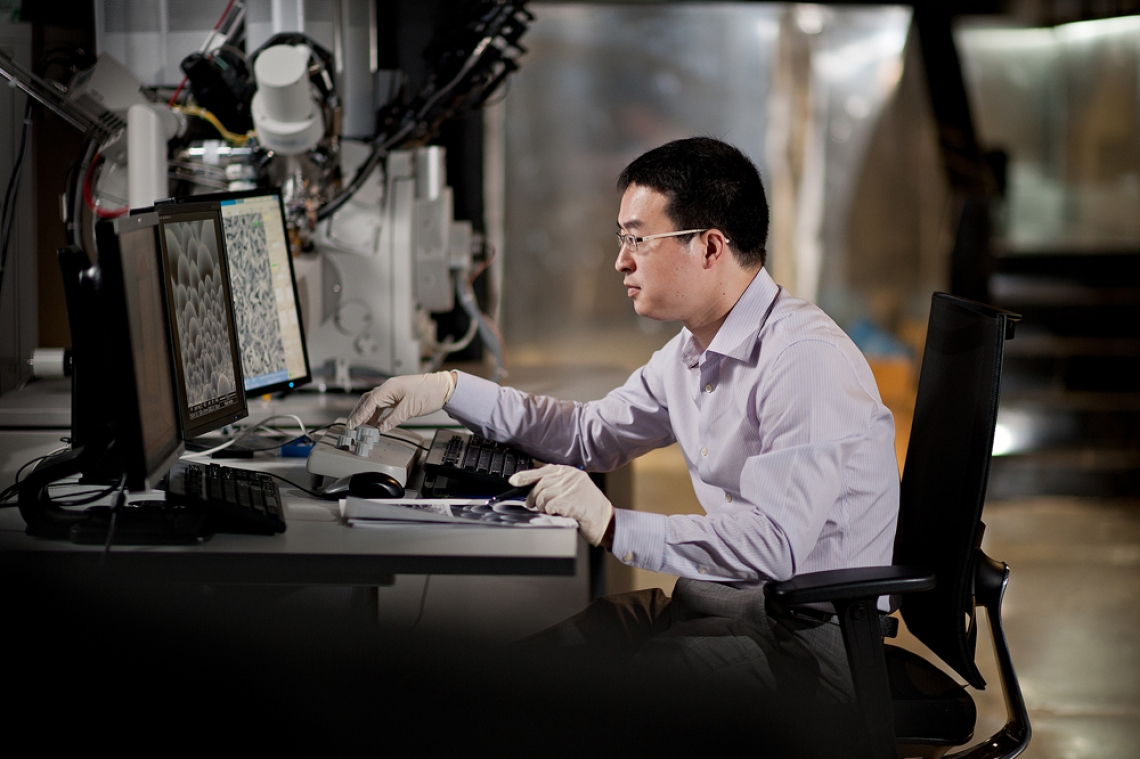
Two of Masdar Institute’s PhD students presented their promising microchip-related research at TECHCON, the world’s leading university-research technology conference for semiconducting technologies organized by the Semiconductor Research Corporation (SRC) in Austin, Texas, USA.
 
Shahzad Muzaffar and Rupesh Karn presented their research on innovative ways to enhance the performance of integrated circuits – the fingernail-sized microchips that power many gadgets today. The two were among only a total of five students from the UAE who were invited to present at TECHCON.
 
TECHCON conference brings together students and industry experts from the world’s top engineering universities semiconductor companies, making it a very illustrious platform for students to present their research.
 
“The SRC TECHCON is a very selective conference, where only the most pioneering researchers in the field of semiconductors are invited to present. I consider the participation of these students in TECHCON to be a significant achievement and I am very proud of them,” said their advisor Dr. Ibrahim Elfadel, Head of the Institute Center for Microsystems (iMicro) and Professor of Microsystems Engineering.
 
Muzaffar’s research focused on creating energy-efficient communication protocols for wired and wireless sensor networks that will help reduce the power demand on microchips used in web-enabled devices that collect, send and act on data they acquire, a concept known as the internet of things (IoT).
 
Karn developed a system to ensure that a microchip’s power level and temperature stays within a well-defined limit, resulting in a much more efficient and reliable microprocessor that does not overheat. System overheating is a common problem that can slow a microchip’s processing speed and capability, while also contributing to high power consumption levels.
 
Speaking about his research, Karn said, “My work can be extended to supercomputers, data centers, and server farms. These computing systems offer high-performance processing capabilities but also consume significant amounts of power, resulting in very high energy costs.  Thus, there is a growing demand for efficient power and thermal management solution for these computing systems. The ICT industry’s total carbon footprint contributes to global CO2 emissions. With UAE’s vision towards sustainability in mind, this research helps in reducing the carbon footprint of UAE’s IT systems.”
 
Muzaffar and Karn were grateful for the opportunity to present and represent Masdar Institute at the competitive conference. Muzaffar said, “TECHCON is a great platform to increase visibility of the innovative work we do here at Masdar Institute. Not only do faculty and students from around the world attend the event, but prestigious companies in the semiconductor field also come and share valuable information with the students.”
 
Their work was sponsored by the Abu Dhabi-SRC Center of Excellence for Energy-Efficient Electronic Systems (ACE4S). ACE4S is a multi-university center sponsored by SRC, directed jointly by Masdar Institute and the Khalifa University of Science, Technology and Research (KUSTAR). The center’s research is focused on energy-efficient wireless sensors, energy harvesting technologies and wireless communications circuits.
 
The center is part of Masdar Institute’s efforts to produce high-caliber human and intellectual capital to fuel the UAE’s semiconductor industry, which aims to become a regional leader in the US$336 billion global market.
 
Erica Solomon
News and Features Writer
12 November 2015

The Role of Research and Development in Building the UAE’s Knowledge Economy

Among the nations of the Middle East, the Gulf Cooperation Council (GCC) countries have historically relied on revenues from hydrocarbon exports to achieve increasing levels of economic prosperity. In order to sustain their current levels of prosperity, however, GCC countries have recognized that they must diversify their economies and create new jobs for their young and increasingly well-educated populations. Rapidly falling international oil prices in the past year have served to reinforce this need for economic diversification as government revenues across the region have fallen significantly.

During the past decade, GCC countries have been developing national strategies to accelerate their economic diversification agendas. The United Arab Emirates (UAE) is a GCC country with a diversification agenda that emphasizes the development of an internationally competitive and resilient economy. Each of the UAE’s seven Emirates, however, has a distinct economic structure and therefore requires its own approach to diversification. The Emirate of Dubai has for some time emphasized economic diversification focused on tourism, trading, services and finance. In contrast, the Emirate of Abu Dhabi is today relatively less diversified because it contains the majority of the UAE’s hydrocarbon resources and thus has an extremely prosperous economy from oil export revenues. However, Abu Dhabi has undertaken a number of strategic initiatives to diversify the economy away from natural resource dependence and towards the development of a knowledge-based economy that will provide continued economic and social prosperity in the coming decades.

The overarching framework for these initiatives is the Abu Dhabi Economic Vision 2030, which is a framework set forth by the government to diversify its economy into competitive regional and global industries. These industries include aviation, aerospace and defense; pharmaceuticals, biotechnology and life sciences; tourism; healthcare equipment and services; transportation, trade, and logistics; education; media; financial services; telecommunication services; energy; petrochemicals and metals. Based on history of successful economic transitions, Abu Dhabi has recognized that these sectors must become increasingly innovation-oriented and less reliant on the accumulation of labor and capital if they are to achieve long-term growth and competitiveness in international markets .  The importance of innovation, however, has become a central focus of the entire UAE and not just Abu Dhabi. As a testament to the UAE’s overarching emphasis on competition by innovation, the country launched in 2014 a National Innovation Strategy (NIS), which organizes the country’s areas of targeted economic advancement into renewable energy, transportation, education, health, technology, water and space. These sectors are inclusive of those defined in the Abu Dhabi Economic Vision and move the UAE further toward a sustainable economic future.

In the UAE and elsewhere, innovation is the result of iterative efforts by multiple stakeholders and is enhanced by their interactions as part of an overarching innovation system or, as is commonly stated, an innovation “ecosystem” where human capital, physical and financial capital and research and development (R&D) thrive within the context of government policies and regulations that are complement market forces in allowing innovation to develop and thrive. For technology-intensive sectors, such as the majority of those being developed in Abu Dhabi, R&D is particularly important to produce the fundamental knowledge and new technologies that are foundational for technology innovation. The Masdar Institute of Science and Technology, or Masdar Institute, is a key vehicle for Abu Dhabi to achieve these foundational elements of innovation required for an economic transformation.

The Masdar Institute was launched by the Abu Dhabi government in 2007 to play a key role in achieving the UAE’s economic diversification goals. Developed in collaboration with the Massachusetts Institute of Technology (MIT), the Institute’s vision is to be a world-class graduate-level research and educational institution that provides leaders in advanced energy and sustainability and positions Abu Dhabi as a knowledge hub for socioeconomic growth. Within the context of this vision, Masdar Institute responds to the growing global need for products, services and solutions relating to renewable energy, water, environment and the fundamental material and information technologies that underpin economic growth. Its graduates become highly sought after specialists in engineering and science, providing the UAE with a high-value cadre of professionals to power its economy, while the research its students and faculty pursue yields valuable intellectual capital in the form of publications, patents, solutions for companies, startup companies and other services of relevance to the local and global economy.

Research, thus, is at the core of Masdar Institute. All students and faculty are required to dedicate a significant portion of their time to research projects with global impact in domains of regional importance. The Institute particularly focuses on research that is use-inspired but fundamental in nature so that leading-edge, new knowledge is continually generated with a line of sight to practical applications. In 2014 Masdar Institute launched Institute Research Centers (iCenters) that serve as the permanent homes to its research activities and support the evolution of its research capabilities and priorities in vertical application domains — energy, water and environment, and sustainable systems at the micro and macro scales. The launch of iInnovation in 2014 has served to channel Masdar Institute’s research projects towards commercial applications, which is also being furthered through a number of programs, workshops, grants and collaborations. Through such initiatives Masdar Institute’s core research activities are linked with translational research and entrepreneurship education to better enhance the reach and impact of the Institute’s research activities on the UAE and its economic ambitions.  

Masdar Institute has also established a number of Sponsored Research Centers to provide large scale research programs in focused areas and meet the research needs of industry and government sponsors. The sponsored research centers provide the Institute with a way to achieve impact in focused topical areas of immediate importance to industry and government. Unlike the iCenters, sponsored research centers are not permanent but rather come and go as according to the needs of the sponsor, ensuring that Masdar Institute’s research activities stay relevant and responsive. To date, sponsored centers have been developed at Masdar Institute in the fields of sustainable bioenergy, renewable energy resource assessment and mapping and microelectronics.

These research centers – both iCenters and sponsored research centers – jointly provide increased visibility into the Institute’s areas of research strength to increase stakeholder engagement and attract further collaboration and funding. They link the Institute’s core research activities with translational research and innovation ecosystem development and serve to foster areas of research in core domains that are aligned with the UAE’s evolving research and human capital needs.

By integrating all elements of the innovation ecosystem into the UAE’s knowledge economy transition strategy, the country is aiming to not just become a knowledge economy, but a leading knowledge-economy in some of the world’s most dynamic industrial sectors. That is because innovation is one of the most potent drivers of economic growth – above and beyond R&D alone. In the US – one of the world’s most innovative economies – it has been estimated that innovation drives up to 90% of per-capita income growth. Specifically, innovation in science and technology not only produces jobs, but replaces lower paying jobs with higher-paying and higher-skilled jobs. Innovations are new or drastically improved products, services or systems that completely alter the landscape and result in a cascade of new economic activity across a range of sectors and services. They function as value multipliers, producing significant and lasting benefits for the institutions and nations that host them. Achieving that multiplier effect of innovation is the goal of the UAE and significant progress has been made in the establishing the underlying fundamentals for indigenous innovation as the country continues to evolve into a globally competitive, knowledge-based economy.

These trailblazing efforts by the UAE to develop an innovative knowledge economy with a strong R&D ecosystem will help set the stage for broader R&D expansion across the Middle East. They provide a model that many other governments can adapt and adopt according to their needs. The collaborations across industry, academia and government led by Masdar Institute will help strengthen the R&D foundation across the region while the intellectual and human capital it produces will stimulate innovative ripples across the wider Middle East.

Dr. Steve Griffiths is Vice President for Research at Masdar Institute of Science and Technology in Abu Dhabi.

Printed in TRENDS magazine in October 2015


Innovating the UAE’s Key Industries through Use-Inspired Research

Masdar Institute students and faculty have been producing a stream of innovations in key strategic areas since the university first opened its doors, six years ago. By continually strengthening, broadening and accelerating its research activities and academic offerings in response to the UAE’s national goals and strategic interests, Masdar Institute has demonstrated its steadfast commitment to the UAE’s knowledge-economy transformation.

“Recognizing the central role that innovation in three key areas – energy, water, and advanced materials – plays in a number of the UAE’s strategic goals and targeted industries, Masdar Institute has been working with an increased focus and devotion to achieving meaningful innovations,” revealed Dr. Behjat Al Yousuf, Masdar Institute Interim Provost.

“You can now clearly see how our commitment to these critical areas has been powering an innovation pipeline, with a chain of advancements revealing our growing expertise, relevance and value to not only the UAE, but the wider scientific and industrial community,” she added.

This year in particular Masdar Institute has worked to accelerate the pace of development of valuable intellectual capital most relevant to the UAE’s National Innovation Strategy (NIS) priority sectors of renewable energy, transport, education, health, technology, water and space.

A brief snapshot of the diverse and varied research projects taking place at Masdar Institute in the UAE’s key interest areas follows.

ENERGY
Masdar Institute has been focusing on research to help the UAE expand its energy mix since its launch, with an overarching goal of supporting diversification of the country’s hydrocarbon economy, contributing to renewable energy production and and supporting carbon emissions reduction through renewable energy, energy efficiency and carbon capture.

One major contribution to these goals came in 2012, when Masdar Institute’s Research Center for Renewable Energy Mapping Assessment (ReCREMA) developed the region’s first solar atlas. The atlas, which provides accurate information on the solar radiation at all locations in the UAE, showed that the country receives less direct sunlight than was previously estimated by satellite solar resource maps due to high levels of atmospheric dust and humidity, posing challenges to solar energy harvesting. ReCREMA’s solar resource maps now properly account for the presence of dust and humidity so that accurate solar resource assessments can be conducted in the UAE.

Responding to this regional solar energy harvesting challenge, Masdar Institute has since been pursuing a range of research activities through its Institute Center for Energy (iEnergy), including efficient solar panels with anti-soiling coatings and UAE-tailored solar and thermal energy storage systems, to increase the UAE’s  solar energy harvesting for power generation.

Photovoltaic (PV) technology to harness solar energy is a critical Masdar Institute research area that has seen progress over the past six years. The institute is involved in many research projects that seek to develop the country’s indigenous ability to produce efficient PV systems that are better suited for the country.

In 2013 Emirati Masdar Institute Master’s student Mejd Al Sari fabricated the first polymer-based Organic Photovoltaic solar cell (OPV) in the UAE as part of her thesis research focused on the development of emerging thin-film PV using nanoscale investigation. This year Masdar Institute PV innovations went even further, receiving international accolades when PhD Student Sabina Abdul Hadi won the Best Poster Award for her paper on a more efficient type of dual-junction solar cell at the 42nd IEEE Photovoltaic Specialists Conference held in the US.  

Another example of how Masdar Institute responds to the UAE’s energy needs is by helping its industries become more energy efficient, which in turn reduces their operating costs.

Masdar Institute Assistant Professor of Mechanical and Materials Engineering Dr. Mohamed Ibrahim Ali worked with Abu Dhabi aluminum giant the Emirates Aluminum Company (Emal) to solve an energy performance issue with Emal’s gas fired furnaces. His research found room for improvement, resulting in the opportunity for 22% savings in gas consumption, depending on furnace design and operation. The research also suggested an efficient cooling technique to save about 36% of cooling time for reduction pots used in aluminum production. The results of the project can be applied to fine-tuning of existing Emal plants and in the design of new plants. This kind of collaboration benefits Abu Dhabi by helping to improve the competitiveness of its industries while preserving precious energy resources.

WATER
Another precious resource that Masdar Institute looks to preserve is water. The UAE exists in one of the world’s most water-scarce regions, which is why research that monitors, preserves, produces and treats water has been a core research area at Masdar Institute since it began academic operations six years ago.

The UAE relies on energy-intensive desalination plants for more than 90% of its potable water. These natural gas-fired desalination plants contribute almost a third of the UAE’s greenhouse gas emissions. Thus, innovative research to produce freshwater more sustainably is critical to the country’s prosperity.

Responding to this need, Masdar Institute’s Center for Water and Environment (iWater) has been delivering results in the enhancement of existing desalination and wastewater technologies while also introducing novel approaches for more sustainable and affordable new technologies.

High economic and environmental costs of desalination have necessitated the pursuit of advanced desalination technologies as well as alternative freshwater production methods, including wastewater recovery. Masdar Institute has been involved in a range of wastewater treatment research projects, all aimed at supporting the UAE’s freshwater needs and achieving Abu Dhabi’s goal of recycling 100% of its wastewater.

Current wastewater treatment technologies are unable to remove a large number of contaminants that are classified by environmental regulatory agencies around the world as “emerging contaminants” or “micropollutants,” including common pharmaceuticals, preservatives, and nanomaterials that can have harmful effects, such as antibiotic resistance in residual bacteria and endocrine hormone disruption in animals.

In response to this, Dr. Farrukh Ahmad, Associate Professor of Chemical and Environmental
Engineering has designed a sustainable water treatment “polishing” technology that can remove pharmaceutical micropollutants from treated wastewater. The membrane has now been successfully tested on four common pharmaceuticals and a patent has been filed on this promising technology. Research will continue on improving the promising technology’s efficiency at removing pollutants.

Another research project that responds to Abu Dhabi’s water goals is taking place in collaboration with the Abu Dhabi Sewerage Company (ADSC), and seeks to help the emirate achieve its goal of 100% water recycling in the coming years.

This project, led by Dr. Shadi W. Hasan, Assistant Professor of Water and Environmental Engineering, is focused on the development of a UAE-specific all-in-one wastewater treatment system called a “submerged membrane bio-electro-reactor” (SMBER) to treat wastewater at high quality. Research so far has shown that the new system developed through this project can efficiently and effectively remove many types of waste, producing treated wastewater aimed at meeting the recycled water quality standards in Abu Dhabi.

Through water research projects like these Masdar Institute works to contribute to the UAE’s resilient water infrastructure, helping the country meet its growing freshwater demands sustainably.

ADVANCED MATERIALS
“Innovating across all seven of the NIS priority sectors can be achieved with innovations in advanced materials,” said Dr. Steve Griffiths, Vice President of Research at Masdar Institute.

“That is why advanced materials has become the Institute’s third major research thrust. In addition to being at the core of innovations in renewable energy and water, advanced materials will contribute to novel innovations in health, technology, education, space and transportation,” he added.

Masdar Institute has been rooted in advanced materials research since its launch, capitalizing on their potential to improve a material’s performance. Building on this growing research stream, the Institute is now further evolving and expanding its materials science research capabilities to accelerate the development of commercially-viable, materials-based innovations in the UAE’s strategic industries.

Among the Institute’s dynamic advanced materials-focused research projects are a number of projects that look to capitalize on carbon nanotubes and the graphene it is formed from, to achieve outcomes relating to desalination, smart sensors, photovoltaics and wastewater treatment. Graphene, which is made of a layer of carbon just one atom thick, is considered a ‘wonder material’ due to its excellent combined properties of very high strength, transparency, high electrical and thermal conductivity, extreme light weight, flexibility and hardness.

Dr. Irfan Saadat, Professor of Electrical Engineering and Dr. Amal Al Ghaferi, Assistant Professor of Materials Science and Engineering and Acting Dean of Students, are using graphene and carbon nanotubes to develop smart sensors for deployment in oil and gas pipelines. The research is part of a collaboration with ADNOC and the Petroleum Institute and aims to detect and monitor the build-up of scaling or impurities inside gas and oil pipelines.
Graphene and carbon nanotubes are being used to make the scale sensors that can help oil and gas plants operate at optimized levels and thus recover more oil from their pipelines. This will improve the operational efficiency of the UAE’s oil and gas industry, which is a vital pillar of the economy.

Dr. Sadaat has also brought his graphene and carbon nanotubes expertise to another project that responds to the UAE’s unique needs. He worked with Dr. Faisal Al Marzooqi, Masdar Institute’s first doctoral graduate and current assistant professor, to integrate carbon nanotubes with membrane synthesis in an innovative desalination technology. The resulting technology pairs membrane distillation (MD) desalination systems with capacitive deionization (CDI) for a less energy-intensive way to remove salt from saltwater than the standard reverse osmosis and distillation systems.

In further recognition of the potential of the advanced material of graphene to generate commercially-viable innovations in the UAE’s priority sectors, Masdar Institute has collaborated with the University of Manchester to facilitate research in graphene and other 2-dimensional materials that, like graphene, are just one atom thick and possess a range of novel properties.. This collaboration, in addition to a materials characterization laboratory due to come online at Masdar Institute this winter, will enable the Institute to hone and accelerate its advanced materials research, to generate relevant, valuable innovations for the UAE’s nascent high-tech industries.

Continuing Momentum
These projects and their achievements are just a sample of Masdar Institute’s varied portfolio of research. Capitalizing on this growing momentum in the UAE’s innovation pipeline, the Institute is working to drive and enhance its robust and dynamic research infrastructure to facilitate the development of relevant and valuable technology-based innovations for the UAE’s strategic industries.

In the coming year Masdar Institute will further advance these core competencies, accelerating the pursuit of strategic research opportunities that generate novel technologies with the greatest impact in NIS priority sectors, while continuing to attract the highest-caliber of faculty and producing a pool of highly-skilled human capital.

Erica Solomon, News and Features Writer and Zarina Khan, Senior Editor
22 November 2015

Pedestrian-Power to Support Abu Dhabi’s Sustainable City Goals

Intelligent design can help Abu Dhabi become more sustainable and healthy by supporting a pedestrian culture, Masdar Institute Assistant Professor of Sustainable Critical Infrastructure Dr. Khaled Al Awadi says.

While it is typically assumed that the UAE’s hot climate prevents many residents from using walking as a means of transportation, Dr. Al Awadi says his research reveals that in fact many residents rely on foot-power to get around.

“Such research supports the value of sustainable urban design and intelligent modifications to help motivate even more Abu Dhabi residents to walk instead of drive, especially for short distances, reducing carbon emissions and improving general public health,” he explained.

Dr. Al Awadi developed a walkability study of Abu Dhabi’s main island that he hopes will provide the primary data required to facilitate the development of policies, designs and systems that will support greater sustainability and walkability of the emirate’s urban center.

In modern urban planning, walkability – a measure of how safe and convenient it is to travel by foot through a city – is considered a critical infrastructure, which is essential to the health, safety, security and economic well-being of a city’s inhabitants.

Improving walkability of urban centers is one of Abu Dhabi’s strategic goals. The Department of Transport released the Walking and Cycling Plan last year to double its walkways, crossings for pedestrians and bike lanes by 2020 to drive a healthier life by encouraging more people to walk and cycle and enjoy the outdoor life.

“If we want to increase pedestrian traffic, we need to make changes to the built environment so that the city becomes more conducive to walking. The aim of this research project is to help policy makers and researchers identify how and where to make the most optimal changes to the built environment in order to achieve the greatest impact on the city’s walking environment,” Dr. Al Awadi said.

Previous studies of walking habits in the Gulf Cooperation Council (GCC) found that most people walk in shopping malls and for entertainment or fitness purposes, but Dr. Al Awadi’s research indicates that most people walk for more specific reasons, including to get to the bus stop, to go to work, or to run daily errands.

Joined by three students from Masdar Institute’s Sustainable Critical Infrastructure Program, Victoria Hernandez, Jiin Baek and Aysha Alhosani, Dr. Al Awadi studied the walking environment in six Abu Dhabi neighborhoods. Because walkability is strongly influenced by socio-economic status and the built environment – including land use, urban form, street systems and landscape design – the neighborhood were selected based on diversity in their built environment and demographic composition.

The team began spatial analysis of the sites by analyzing geographic information system (GIS) data provided by Abu Dhabi Systems and Information Center (ADSIC). They applied MIT’s software tool, called “Urban Network Analysis,” and the Space Syntax program, which was developed by the University College London to study the influence of street systems, location of buildings, and land use types on physical activity.

This analysis was followed by intense site observation and face-to-face interviews. The team divided the research area into 15 block segments to analyze the walking behavior on each block. They surveyed around 85 people per block between the months of April to November to find out why people walk, which type of people walk, and when they walk.

The team found that though many people do walk for fitness and leisure – roughly 49% – the majority of people actually walk for a particular purpose – 17% walk to the bus, 15% walk to work, 14% walk to a specific place, and 4% walk to visit neighbors. 

Another important finding of the study was an exact measure of when walking takes place. The majority of walking takes place in the evening – 57% walk between 6pm and 9pm – while the second most frequently walked time is early in the morning – 17% walk between 6am and 9am. However, another 17% are walking in the middle of the day, between 9am to 6pm. The majority of walkers spend less than 10 minutes on their walk.

“This study provides us with relevant data regarding the walking habits of the people of Abu Dhabi. Our findings indicate that many people walk for specific utilitarian reasons, yet limit their time to less than 10 minutes. Though most walk during the cooler times of the day, a significant number of people are walking midday, and perhaps this number would increase if measures were taken to make walking more pleasant during the hottest part of the day,” said Dr. Al Awadi.

He believes that the built environment directly supports people’s walking environment and their walking habits.

“We want to get more people walking in order to reduce reliance on cars, which will simultaneously decrease the city’s carbon emissions and promote healthier habits,” he explained.

Abu Dhabi Island is composed of dense, urban neighborhoods that exhibit proximity, diversity and connectivity, but the built environment requires improvement to encourage more walking. In a severely hot, desert climate like Abu Dhabi, cooling the air can significantly impact people’s walking habits. Techniques to increase shading, which affects the absorption of heat, coupled with techniques to increase wind movement between buildings can significantly help cool the air.

“For example, Masdar Institute’s campus feels cooler than the main Abu Dhabi Island because it is designed with these cooling techniques,” said Dr. Al Awadi. “Providing sufficient shade and reducing the temperature by at least 3 degrees Celsius would make a big difference, especially for short trips.”

The research team is now looking to conduct further studies of the sun angle in various locations throughout the city to facilitate landscaping and the construction of shading structures and retrofitted building facades that will provide ample shading and cooling. This study aims to enhance the microclimate of Abu Dhabi neighborhoods by utilizing shading structures, building form, and native trees.    

Dr. Al Awadi has presented his team’s findings to the Department of Municipal Affairs (DMA) and the Department of Transportation (DOT) already.

In January, Dr. Al Awadi will head to the Massachusetts Institute of Technology (MIT) where he will spend a year working in MIT’s Center for Advanced Urbanism on an extension of his urban planning projects. One major project is titled “Mapping Abu Dhabi’s Native-Born Neighborhoods: Scenario Planning and Design of New Sustainable Neighborhood Forms.”

This project seeks to develop a sustainable neighborhood model in Abu Dhabi, which will include sustainable building forms, housing typologies, street systems, energy efficiency, resiliency, and optimal urban planning designs and regulations.

Research projects, like Dr. Al Awadi’s walkability study, seek to accelerate the sustainable urban development of Abu Dhabi and the wider UAE. These projects advance the mission of Masdar Institute’s Sustainable Critical Infrastructure Program, which it launched in 2014 to help integrate sustainable urban infrastructure systems into urban planning and transportation systems.

Erica Solomon
News and Features Writer
17 December 2015


Capitalizing on UAE’s Natural Resources to Power and Cool with Renewable Energy

The UAE’s two most abundant natural resources include sunshine and hydrocarbons, and researchers at the Masdar Institute are capitalizing on these readily available resources for power generation and cooling in a sustainable way.

Masdar Institute’s Dr. TieJun Zhang, Assistant Professor of Mechanical Engineering, is collaborating with the Massachusetts Institute of Technology (MIT) to develop novel technologies for a solar thermal power and cooling system that uses liquid hydrocarbons, as opposed to the environmentally-unfriendly refrigerants commonly used for cooling.

RATIONALE

Keeping cool is an expensive and energy-intensive job. During the UAE’s hot summer months, cooling in Abu Dhabi consumes nearly 65% of the emirate’s generated power, contributing to the country’s large carbon footprint. Generating the power to run those air conditioners not only emits carbon dioxide by way of gas-fired power plants, but the refrigerant used in the air conditioners themselves are a source of greenhouse gases in the atmosphere.

According to the US Environmental Protection Agency (EPA), by 2050 up to a quarter of all global greenhouse gas emissions will be from refrigerants used in cooling technologies. Hydrofluorocarbons (HFC) are the high pollution-causing refrigerants widely used in air conditioners, refrigerators and chillers today.

Current levels of power consumption and greenhouse gas emissions are unsustainable, which is why Abu Dhabi has set the ambitious goal of generating 7% of its energy production capacity from renewables by 2020. Additionally, the launch of the UAE National Innovation Strategy, which supports innovation across seven priority sectors (including renewable energy), reflects the UAE’s strategic ambitions to live more sustainably.

Dr. Zhang’s team has been studying novel ways of providing electricity and cooling, in an integrated and sustainable way, leveraging the UAE’s two most abundant natural resources: the sun and hydrocarbons.

As a ‘sunbelt nation’ lying on the globe’s sun exposed middle region, the UAE has 10-15 hours of daylight almost 365 days a year. This means a lot of potential solar power to harness. In addition to an abundance of sunlight, the UAE is rich in fossil fuels. The UAE contains nearly 10% of the world’s total supply of crude oil and has played a leading role in global energy markets as a significant hydrocarbon producer. Dr. Zhang’s team is proposing to use the country’s liquid hydrocarbon as an alternative to the commonly used HFC refrigerants.

“While people tend to think of hydrocarbons as being the source of carbon emissions, this is only the case if they are burned and their latent carbon released. As a working fluid in cooling systems, hydrocarbons have two orders of magnitude lower global warming potential than HFCs, making them a relatively environmentally friendly refrigerant,” Dr. Zhang explained.

PROJECT BRIEF

The integrated closed-loop solar thermal power and cooling system designed by Dr. Zhang’s team uses low-concentration solar thermal technologies to harness the sun’s energy. Low-cost solar absorbers are used to convert the solar energy to heat for liquid hydrocarbon evaporation. The heated hydrocarbon gas turns an expander to generate electricity. This is the power component of the system.

Some of the generated vapor then travels into a vapor ejector. This nozzle-shaped vapor ejector is a key component in the cooling loop.

Dr. Zhang and his partner, Dr. Amal Al Ghaferi, Interim Dean of Students and Assistant Professor, Materials Science and Engineering, are now researching how scalable low-cost nanotechnologies can be used to boost the efficiency of the light absorption and thermal energy transport processes.

“The novel device we are developing relies on three key physical phenomena: light absorption, vapor generation and condensation. We are using nanomaterials to enhance these processes, because their role is significant in the efficiency of our solar-powered cooling system. The technology we are developing for this system has many applications and we are excited to see where these technologies will go,” Dr. Zhang said.

“For instance, we are using nanostructured surfaces to enhance the condensation heat transfer in an air-cooled condenser, creating a faster and more efficient means for collecting the liquid which is recycled and used again. From here, some of the liquid hydrocarbon is sent to be heated again by the sun for power generation, while the rest is sent through an expansion valve for cooling. This closed-loop solar thermal system can follow this course repeatedly, relying on minimal moving parts, for both power generation and cooling,” Dr. Zhang added.

APPLICATION/IMPACT

Dr. Zhang’s innovative research project is one of nine Masdar Institute-MIT active Flagship Research Projects, which are projects that bring together teams of faculty from both Masdar Institute and MIT to address key strategic research areas with the intent to build critical mass and make sizeable research impact for the UAE and the region.

Unsurprisingly, Dr. Zhang’s research has caught the attention of the UAE government as well as leaders in the cooling and power industries. He has closely related research supported by the UAE National Research Foundation and other local organizations are currently in the midst of developing additional projects with Masdar Institute based on the approaches developed in this collaboration with MIT.

The solar thermal technologies being developed by Dr. Zhang’s team can be applied to space exploration because the compact system is purely driven by solar energy and very little maintenance is required. The nanostructured surfaces that enhance condensation heat transfer could be used by many industries that rely on condensation processes, such as power generation, desalination and natural gas processing. The research relating to more efficient light absorption will also be invaluable to the world’s growing solar power industry. Concentrating Solar Plants such as Shams 1, one of the world’s largest such plants with an installed capacity of 100 megawatts, are targeted beneficiaries.

The research efforts of Dr. Zhang’s team underpins Masdar Institute’s goal to provide real-world solutions to issues of sustainability. By using the UAE’s ready supply of natural resources, including the sun and hydrocarbons, the task of providing clean and affordable electricity and cooling can more readily be achieved.

Erica Solomon
News and Features Writer
28 December 2015

This research was funded jointly by Masdar Institute and MIT. Further information can be found in:

G.Q. Li, M.H. Alhosani, S.J. Yuan, H.R. Liu, A. Al Ghaferi, T.J. Zhang, “Microscopic Droplet Formation and Energy Transport Analysis of Condensation on Scalable Superhydrophobic Nanostructured Copper Oxide Surfaces,” Langmuir – the ACS Journal of Surfaces and Colloids, vol.30, pp.14498-14511, 2014.

Masdar Institute Research Successfully Proves UAE Desert Sand Can Store Solar Energy up to 1000°C

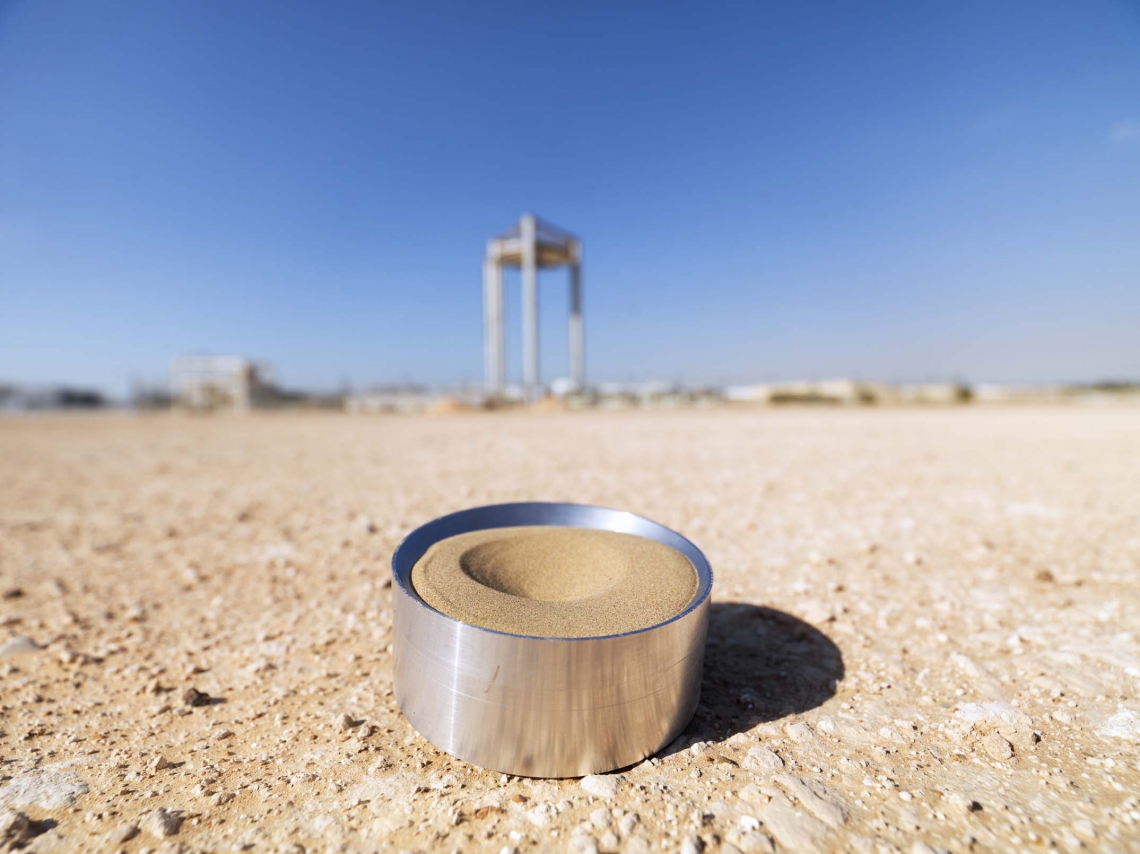
Masdar Institute researchers have successfully demonstrated that desert sand from the UAE could be used in concentrated solar power (CSP) facilities to store thermal energy up to 1000°C. The research project called ‘Sandstock’ has been seeking to develop a sustainable and low-cost gravity-fed solar receiver and storage system, using sand particles as the heat collector, heat transfer and thermal energy storage media.

Desert sand from the UAE can now be considered a possible thermal energy storage (TES) material. Its thermal stability, specific heat capacity, and tendency to agglomerate have been studied at high temperatures.

Dr. Behjat Al Yousuf, Interim Provost, Masdar Institute, said, “The research success of the Sandstock project illustrates the strength of our research and its local relevance. With the launch of the MISP in November, we have further broadened the scope of our solar energy research and we believe more success will follow in the months ahead.”

A research paper on the findings developed under the guidance of Dr. Nicolas Calvet, Assistant Professor, Department of Mechanical and Materials Engineering, was presented by PhD student Miguel Diago at the 21st Solar Power and Chemical Energy Systems (SolarPACES 2015) Conference in South Africa. The paper was co-authored by alumni Alberto Crespo Iniesta, Dr. Thomas Delclos, Dr. Tariq Shamim, Professor of Mechanical and Materials Engineering at Masdar Institute, and Dr. Audrey Soum-Glaude (French National Center for Scientific Research PROMES CNRS Laboratory).

Replacing the typical heat storage materials used in TES systems — synthetic oil and molten salts — with inexpensive sand can increase plant efficiency due to the increased working temperature of the storage material and therefore reduce costs. A TES system based on such a local and natural material like sand also represents a new sustainable energy approach that is relevant for the economic development of Abu Dhabi’s future energy systems.

The analyses showed that it is possible to use desert sand as a TES material up to 800-1000 °C. The sand chemical composition has been analyzed with the X-ray fluorescence (XRF) and X-ray diffraction (XRD) techniques, which reveal the dominance of quartz and carbonate materials. The sand’s radiant energy reflectiveness was also measured before and after a thermal cycle, as it may be possible to use the desert sand not only as a TES material but also as a direct solar absorber under concentrated solar flux.

Dr Nicolas Calvet said: “The availability of this material in desert environments such as the UAE allows for significant cost reductions in novel CSP plants, which may use it both as TES material and solar absorber. The success of the Sandstock project reflects that usability and practical benefits of the UAE desert sand.”

In parallel to sand characterization, a laboratory scale prototype was tested with a small solar furnace at the laboratory of PROMES CNRS 1 MW solar furnace in Odeillo, France. Masdar Institute alumnus Alberto Crespo Iniesta was in charge of the design, construction, and experiment.

The next step of the project is to test an improved prototype at the pre-commercial scale at the Masdar Institute Solar Platform (MISP) using the beam down concentrator, potentially in collaboration with an industrial partner.

Clarence Michael
News Writer
29 December 2015

Enriching Treated Wastewater Systems to Meet UAE’s Growing Irrigation Needs

By Dr. Farrukh Ahmad

In the not so distant past, water, food and energy were treated as separate, unrelated issues. Policy makers would attempt to increase energy output without considering the impacts on food and water. Or vice-versa – policy was put in place to increase water and agricultural production without thought to how this would adversely affect energy demand.

These realizations have prompted a more integrated outlook on the links between food, water and energy. The food-water-energy nexus perspective recognizes that any solution for one problem must consider direct and indirect impacts on the other two in the nexus.

A perfect example of the food-water-energy nexus lies at the beginning of the food production chain: irrigation of food crops, especially in arid climates, requires huge quantities of water, which in the UAE is either pumped from underground or produced through desalination – both of which involve a lot of energy. This food-water-energy chain highlights the interdependencies at the heart of the nexus approach.   

The UAE is one of the world’s most water-scarce nations, which is why it is especially important to find innovative ways to advance its agricultural systems without overburdening its limited freshwater sources. While up to roughly 60% of the treated municipal wastewater in Abu Dhabi is reutilized for landscape irrigation, the remaining is dumped back into the sea.

Our team at Masdar Institute wants to capitalize on that dumped wastewater, known as treated effluent, clean it up and recycle it back into our food production chain for edible crop irrigation. This could free-up Abu Dhabi’s limited freshwater for our drinking and washing needs while providing more water to meet our agricultural requirements – enhancing food security. Essentially, it could be a win-win situation.

In order to use treated municipal wastewater for crop irrigation, the water must be properly treated and pose no adverse health risks to the crops or consumers of the crops, namely us – the people who eat the crops.

The treated effluent we are targeting is wastewater that has been treated by an activated sludge process followed by chlorine disinfection – a process that removes much of the organic contaminants in wastewater. While activated sludge removes some contamination, it does not render the water safe for potable consumption or for edible crop irrigation.  Residual contaminants, such as harmful disease-causing pathogens and pharmaceutical compounds, can remain in the treated effluent.

Our team is developing a reliable system for ensuring that the treated wastewater is safe for food crop irrigation by developing new analysis methods for detecting disease-causing bacterial pathogens by employing the new technology of next-generation (DNA) sequencing; and detecting and characterizing the residual pharmaceutical micropollutants that can potentially accumulate in edible crops and can lead to problems such as antibiotic resistance. We have also developed and tested a quantitative risk assessment protocol to determine whether adverse health effects can result from consuming common high-volume food crops (lettuce, cabbage and cucumber) irrigated with this treated effluent.

With a rapidly growing world population, the United Nations predicts that we will need roughly 30% more water, 40% more food, and 30% more energy by 2030. To address this challenge, we must develop innovative, sustainable, and integrated solutions that make the most out of our water and energy resources, combining them whenever possible, to produce more food.

Our proposal to use treated municipal wastewater to irrigate edible crops is exactly the kind of integrated thinking we need in order to enhance food security while reducing water and energy consumption. We are working to provide some of the solutions necessary to sustainably meet the UAE’s growing demand for water and food.

Dr. Farrukh Ahmad is an associate professor of chemical and environmental engineering at the Masdar Institute of Science and Technology

11 January 2016

Board of Trustees Annual Meeting Reviews Masdar Institute’s Latest Achievements

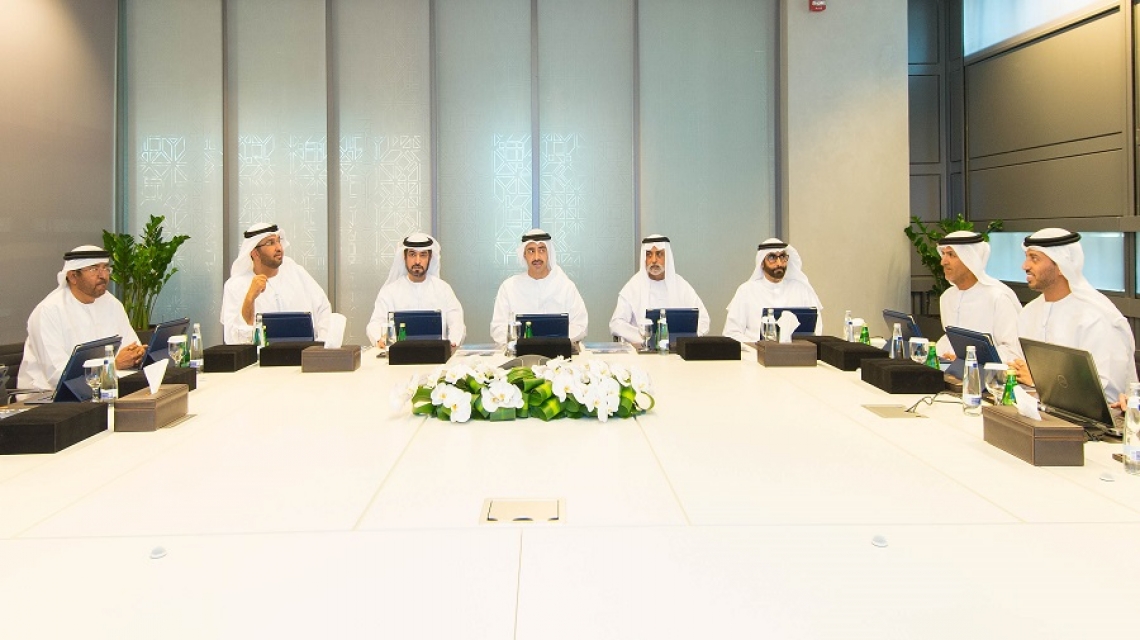
The Board of Trustees of the Masdar Institute of Science and Technology today reviewed the progress of the institution and approved its future growth strategy during their annual meeting.  

His Highness Sheikh Mohamed Bin Zayed Al Nahyan, Crown Prince of Abu Dhabi, Deputy Supreme Commander of the UAE Armed Forces, and Chairman of Abu Dhabi Executive Council, is the Chairman of the Board of Trustees of Masdar Institute.  

The members of the Board of Trustees include His Highness Sheikh Abdullah bin Zayed Al Nahyan, Minister of Foreign Affairs, His Highness Sheikh Nahyan bin Mubarak Al Nahyan, Minister of Culture, Youth and Community Development, HE Sheikh Hamdan bin Mubarak Al Nahyan, Minister of Higher Education and Scientific Research, HE Dr. Sultan Ahmed Al Jaber, Minister of State, and Chairman of Abu Dhabi Future Energy Company (Masdar), HE Mohammed Ahmed Al Bowardi, Under Secretary of the Defense Ministry and Vice-Chairman of Mubadala Development Company, HE Khaldoon Khalifa Al Mubarak, Chairman of the Abu Dhabi Executive Affairs Authority (EAA), and Managing Director and Group Chief Executive Officer of Mubadala Development Company, His Excellency Dr. Mugheer Khamis Al Khaili, Chairman of the Health Authority – Abu Dhabi (HAAD) and Acting Director General at the Abu Dhabi Education Council (ADEC), HE Abdulla Nasser Al Suwaidi, Director General of Abu Dhabi National Oil Company (ADNOC), HE Ahmed Ali Al Sayegh, Chairman of Abu Dhabi Global Market, Honorable Dr. Adnan Badran, President of Petra University, Dr. Martin Schmidt, Provost of the Massachusetts Institute of Technology (MIT) and Dr. Fred Moavenzadeh, James Mason Crafts Professor, Professor of Civil and Environmental Engineering and Engineering Systems, and Director of the Technology and Development Program, MIT.

HH Sheikh Abdullah bin Zayed said: “The UAE’s focus on innovative sectors ensures the country is able to compete and lead among world-ranking economies. In support of this, research-based academic institutions such as Masdar Institute play a critical role in developing intellectual and human capital that power such economic aims. Through gatherings like the Board of Trustees meeting, Masdar Institute is able to ensure that it is aligned with the strategic and evolving needs of the UAE. We are confident that with the continuing guidance of the UAE leadership, Masdar Institute will continue to play a critical role in producing the key inputs for the UAE’s future sustainable knowledge economy.”

Later, His Highness Sheikh Abdullah bin Zayed and some of the Board of Trustees members visited the Masdar Institute Center for Water and Environment’s (iWater) cutting-edge laboratory facilities. They interacted with the students and learned about the various ongoing water-related research projects in areas such as desalination, wastewater treatment, water re-use and recycling, and advanced materials for water applications. iWater focuses its research on clean water production and management, climate change and the environment, as well as water resource challenges faced by the UAE and the region.

Recognizing the important challenges facing the UAE in the realms of water and energy, the Institute has revealed an increased strategic focus on advanced research into technologies that address these challenges.  Additionally, it’s faculty and students will reinforce their commitment to areas of research that are complementary to addressing these challenges, including smart systems and advanced materials science.

Commenting on that progress Dr. Sultan Ahmed Al Jaber said: “We are pleased to see the progress Masdar Institute is making in its mission to develop the human and intellectual capital required to support the UAE’s knowledge economy transformation. The Institute’s research activities are generating innovative energy, water and climate solutions that will help ensure sustainable development, both for the UAE and the world.  This progress is a testament to the UAE leadership’s foresight and commitment cultivating the UAE’s innovation ecosystem focused on advanced sustainable technologies.”

In the academic arena, Masdar Institute witnessed the commencement of 106 new graduates, including 22 UAE nationals and 84 international students in June 2015, adding to its contributions to human capital development in the country. The university began its latest academic year with total student enrollment of 446, with 253 international and 193 UAE national students. Female students currently number 200, which is 45% of the total student body.

At present, out of a total of 155 PhD students, 37 are UAE nationals, who seek doctorate degrees in advanced technology areas.  

Also, starting from September 2015, a Space Systems and Technology concentration is being offered in seven out of the nine Master’s programs currently available, aligning Masdar Institute more with the country’s objectives towards achieving its space mission. A total of 14 Master’s students are enrolled in the space concentration as of fall 2015.  Earlier, Masdar Institute received approval for its ninth Master’s program from the Commission for Academic Accreditation of the Ministry of Higher Education and Scientific Research. The Sustainable Critical Infrastructure Program, launched in Fall 2014, offers learning in integrated sustainable infrastructure planning and development, with an initial focus on urban operations planning and transportation systems.  

Dr. Behjat Al Yousuf, Interim Provost, Masdar Institute, said, “Building on our performance every year since inception, our strategic objectives are in line with the directives of the leadership towards advanced energy and sustainable technology targets. Our strategic focus on water, energy, and advanced materials will continue to receive increased attention. We have consistently expanded research activities, widened the scope of academic programs, developed human capital, raised our profile locally through outreach programs, and regionally and globally through industry and institutional collaborations. With the support of the UAE leadership and our Board of Trustees and Masdar Institute will continue to set new benchmarks in our focus areas.”

Earlier, the US News & World Report ranked Masdar Institute top in the ‘research impact’ category for the  inaugural ‘Best Arab Region Universities’ listing of 91 institutions across 16 countries in. Masdar Institute was also ranked second in the ‘percentage of total publications in top 10 percent’ category, third in the ‘percentage of total publications in top 25 percent’ category and ranked 6th in the ‘energy’ subject area.  

Over the past five years, Masdar Institute has developed a culture of research excellence, innovation, and collaboration, with an emphasis on advancing high-impact research in the fields of clean energy and sustainable advanced technology and with relevance to the UAE’s economic priorities.  

At present, Masdar Institute has six issued US patents, with 65 active pending patent applications and 116 invention disclosures outstanding. To date, the faculty and students have published over 900 articles in peer-reviewed journals, in addition to over 500 conference proceedings.  

Masdar Institute achieved several distinctions over the year. Dr. Faisal Al Marzooqi, Masdar Institute’s first PhD graduate and now a member of the Institute’s faculty, was presented with the UAE Pioneer award to mark the occasion of the 44th UAE National Day. His award-winning research combined water desalination innovation and advancements in nanotechnology to produce a device envisioned to desalinate water in a more sustainable and energy efficient way.   Regional organizations are now relying heavily on the Institute’s regional environmental observatory (http://earth.masdar.ac.ae/), which is offering comprehensive information for monitoring coastal environments in the UAE and the region. The observatory was launched by Masdar Institute’s Environmental Remote Sensing and Modeling Laboratory during the year.  

A string of launches and new initiatives marked the UAE Innovation Week 2015. These included a collaboration agreement to develop a fog prediction and monitoring system with the national airline Etihad Airways, a new partnership to monitor air quality with the Ministry of Environment and Water (MoEW) and the launch of the Masdar Institute Solar Platform to test and develop concentrating solar power and thermal energy storage technologies.  

Other launches during the Innovation Week included the Triple Helix Initiative – a collaboration with Emirates Steel, and Ministry of Energy to convert the Electric Arc Furnace dust into suitable materials for construction and buildings in an economically viable manner, and the 543 KWp photovoltaic (PV) solar power project at Ras Al Khaima’s Rashid Abdullah Omran Hospital that was conceptualized, initiated, tested and delivered by members of the Masdar Institute’s Young Future Energy Leaders (YFEL) program, in collaboration with Masdar Special Projects and the UAE Ministry of Public Works. Also, a Masdar Institute PhD student was awarded the L’Oreal-United Nations Educational, Scientific and Cultural Organization (UNESCO) For Women in Science (FWIS) Middle East Fellowship.  

Dr. Behjat Al Yousuf concluded: “The Institute has witnessed significant progress in the last couple of years with a rapid increase in the creation of intellectual property and research outcomes. I expect our increasing patents, graduates, research funding and research achievements will continue to pick up momentum going forward, and we plan on playing a key role in providing real-world solutions to the sustainability needs of the UAE and the wider world,” she added.  

Clarence Michael
News Writer
12 January 2016


A ‘New’ Precious Resource to Support Sustainable Prosperity

By Dr. Lamya N. Fawwaz

The historic Paris Agreement and its requirement that all signatory nations work towards keeping climate change below 2°C has ushered the world into a new era. This groundbreaking accord, which is the result of over 20 years of negotiations, clearly acknowledges the threat of climate change, and the impact it has on all segments of society.

Being invited to speak at a panel on Women in Sustainability, Environment and Renewability (WiSER) during COP21 made me think of the importance of women’s participation and link to climate change for a sustainable future and the importance of women’s participation to the goals of COP21. Women make up 40% of the global labor force and over half of the world’s university students, but they are still not being utilized to their fullest.  This gap, and the policies and prejudices that cause it, are holding back countries from reaching their full-potential in sustainable economic development.

To give women the opportunity to reach their highest potential and allow their communities and economies to leverage them more fully as a resource, I believe there are three things the global community must pursue: increased access to education for women, increased access for women to science, technology, engineering and mathematics (STEM) fields, and increased involvement of women in decision-making.

Education has proven to be the most effective tool for female empowerment in modern times. Here in the UAE we know this first-hand, as our female education levels have been followed by an increase in women in both the labor force and in political participation. Additionally, education with a focus on STEM has further benefits, with women in STEM jobs estimated to earn as much as 33 percent more than women in non-STEM jobs. 

Women’s political and decision-making involvement is the third key component I believe to be critical for improving female empowerment for sustainable economic and social gains. Empowering women as economic, political, and social actors can change policy choices and make institutions more representative of a range of voices. The recent World Economic Forum Gender Gap Report shows that where the gender gap is smaller in a range of areas — including political participation — countries and economies are more competitive and prosperous. More women in leadership positions is known to increase female workforce participation both by creating role models for female workers and improving rates of recruitment for women. This is why I believe that by leveraging greater female education, female STEM integration and political empowerment, the global push for sustainable economic development and prosperity will receive a tremendous boost.

To get an idea of how countries have benefited by leveraging the potential of women, you need only compare the past and present of countries that have integrated women in their economies. The increase in employment of women during the past decade has added more to global growth than has the economic emergence of China, according to The Economist.

The UAE is leading efforts to capitalize on the strength of its women, in continuation of the vision of our late founding father, UAE President Sheikh Zayed, who believed that women had a significant role to play in the country. In recognition of the importance of policy support for female integration, the UAE leadership has established the Gender Balance Council to boost the country’s efforts to evolve and enhance women’s roles as key partners in building the future of the nation. This move followed a similar measure in 2014, whereby the UAE Cabinet agreed that there should be female members on the boards of directors of all governmental authorities, institutions and companies. The culmination of the UAE’s efforts can be seen in the UAE’s appointment of the first woman to be voted as president of the Federal National Council, representing the first female leader of a national assembly in the region.

These measures place the UAE firmly on the path to sustainable economic development, with UAE national women already representing 60% of the country’s university graduates and 43% of the citizen workforce. These talented and dedicated women will play a key role in the transformation of the country into a knowledge economy where innovative, high-tech industries powered by renewable energy and advanced technologies, fuel a competitive and prosperous economy.

With the UAE leadership’s clear focus and desire to develop and leverage the country’s precious human capital resources for sustainable prosperity, I am confident that the young women who are studying STEM in the UAE today will become tomorrow’s innovative leaders. We hope the UAE’s trailblazing efforts to capitalize on its female resource will inspire other nations to give their girls and women the same opportunities to succeed and contribute as their men, to help not only turn back the tide on global climate change, but also bring greater sustainability and prosperity to all.

Dr. Lamya N. Fawwaz is the Vice President of Public Affairs and Institutional Advancement at the Masdar Institute of Science and Technology in Abu Dhabi.

Printed in The National on 17 January 2016

Masdar Institute Joins Finnish Think-Tank Sitra and Other Partners at WFES 2016 for Middle East Launch of ‘Green to Scale’ Report

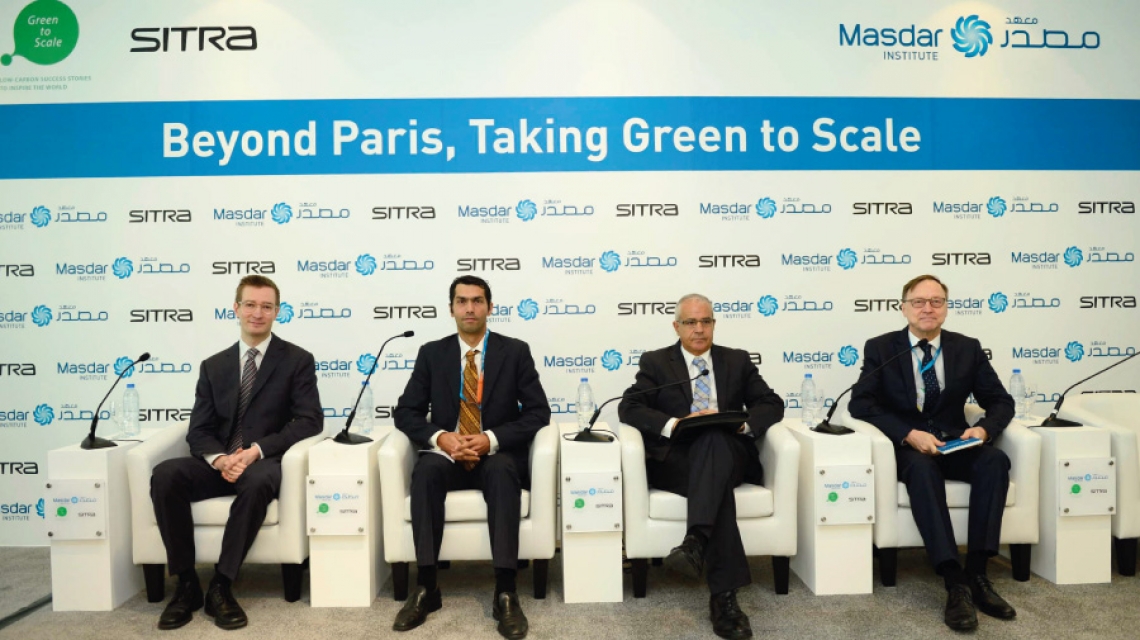
The Green to Scale report that assesses a number of high-impact climate change mitigating solutions from around the world and analyses the scope of their implementation in other countries was launched in the Middle East by Masdar Institute of Science and Technology, independent public Finnish think-tank Sitra, and other global stakeholders.

Masdar Institute participated in developing the report by contributing analysis, communications and outreach, including the provision of regional expertise, data, examples and information about existing low-carbon solutions. Dr. Steve Griffiths, Vice-President of Research, represents Masdar Institute as a member of the project’s steering group and Dr. Sgouris Sgouridis, Associate Professor of Engineering Systems and Management, is a deputy member of the steering group.

The report is significant as the Middle East launch follows the COP21 Paris conference in which countries across the globe agreed to reduce emissions. It highlights 17 tools some of which could help the countries achieve or even exceed their targeted emission reductions.

The ceremony was held on the sidelines of the World Future Energy Summit 2016, which is being organized as part of the Abu Dhabi Sustainable Week 2016 at the Abu Dhabi National Exhibition Center (ADNEC). Her Excellency Riitta Swan, Finnish Ambassador to the UAE, Ahmed Djoghlaf, Co-Chair of the Durban Platform for Enhanced Action (ADP), at the United Nations Framework Convention on Climate Change (UNFCCC), officials from Sitra, International Renewable Energy Agency (IRENA) and Masdar Institute management, as well as other partners, attended the event.

The Green to Scale analysis suggests 17 proven solutions to reduce greenhouse gas emissions that countries worldwide can implement best practice solutions for climate change. The report shows that the aggregate annual cost of deploying all the 17 solutions globally would be, at maximum, in the range of US$94 billion a year in 2030, yet could even provide net savings of up to US$171 billion per year. The report claims that if 17 climate solutions were adopted internationally, the world would eliminate approximately 12 billion tons of greenhouse gas emissions by 2030.

Dr. Behjat Al Yousuf said, “Masdar Institute is pleased to contribute to the Green to Scale report, and emphasizes the value of propagating tried and tested green energy solutions in the interest of greater sustainability and reduced global climate change. By providing the project with our insight and experience, Masdar Institute has ensured that it includes guidance of relevance to this part of the world, while also demonstrating the extent of our expertise in enabling the reduction of the effects and contributions of climate change. We hope more countries will eventually adopt the measures recommended in the report to help tackle global climate change.”

Mikko Kosonen, President, Finnish think-tank Sitra, said, “We already have climate solutions that are proven to work at the level of nations. How far can we go if we take these to a global scale? The joint Sitra and Masdar Institute report shows that these off-the-shelf solutions can make a big contribution to closing the emissions gap, without breaking the bank, and with no need for out-of-this-world inventions.”

The report has application to the Middle East’s industrial and commercial and residential building sectors through specific industry efficiency, building efficiency, appliance efficiency and solar water heating case studies. For the transportation sector, it suggests mass transit and vehicle fleet efficiency standards. The grid-connected photovoltaics-grid (PV) case study within the report reaffirms previous studies, such as the  International Renewable Energy Agency’s (IRENA) REMap 2030 work, showing the potential for solar energy to be a game changer in saving domestic gas and oil use for potentially more lucrative uses in the Middle East and globally.

Other organizations and institutions that were part of the Green to Scale analysis project include the Alberto Luiz Coimbra Institute for Graduate Studies and Research in Engineering, Brazil, the International Finance Corporation (IFC) of the World Bank Group, the Centro Mexicano de Derecho Ambiental (CEMDA) of Mexico, the Ethiopian Development Research Institute (EDRI), the Institute for Global Environmental Strategies (IGES) of Japan, the European Climate Foundation (ECF) based in the Netherlands, the Stockholm Environment Institute (SEI), the World Resources Institute (WRI) based in the US, the Renmin University of China, and the United Nations Environment Program’s (UNEP) DTU Partnership in Denmark.

The report suggests that the world could cut annual greenhouse gas emissions by about 12 gigatonnes in 2030, using only established and proven climate solutions with no new inventions or vast amounts of capital. It has taken 17 climate solutions that have already proven successful in 36 countries, and asked what would happen if these were scaled up internationally, using realistic projections through 2030. The findings indicate that the solutions could go a long way towards closing the “emissions gap,” the extra emissions reductions required to limit global average warming to less than 2 degrees Celsius by the end of the century, as calculated by the UNEP.

Clarence Michael
News Writer
18 January 2016

Agreement Signed to Develop Sustainability Indicators for Abu Dhabi’s Water and Energy Sectors

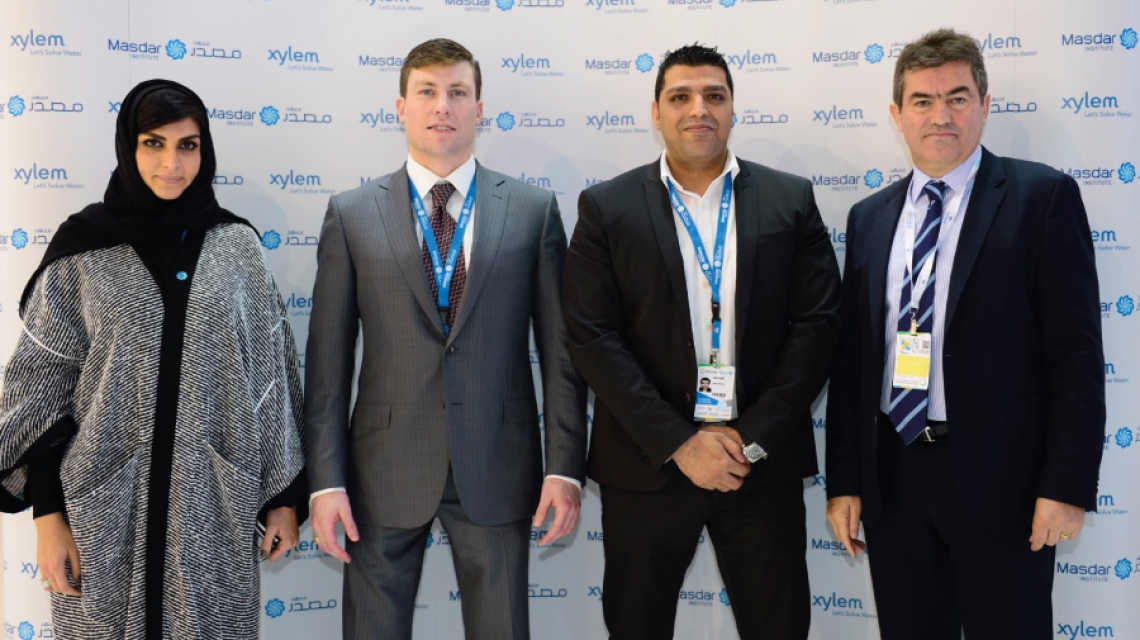
A research collaboration to establish sustainability indicators such as energy and cost performance of processes and equipment for water, wastewater and water transport and treatment facilities in Abu Dhabi was established between Masdar Institute of Science and Technology and leading global water technology provider Xylem Inc.

The key performance indicators (KPIs) will be established through a one-year study that aims to help policy-makers, regulators and those responsible for specifying and purchasing equipment and processes in the region to make informed decisions.

The report will also help achieve targets set through development of a marginal abatement cost curve (MACC) for wastewater transport and treatment technologies. The MACC is an established method for identifying and ranking the most cost-effective areas for mitigating greenhouse gas emissions in a variety of industries. It can be a useful visual tool to compare potential projects and prioritize them based on their economics for reducing carbon emissions. ‘Marginal abatement’ in the MACC refers to the cost to reduce or offset one unit of pollution and optimal technology choices have a negative or zero marginal abatement cost.

The agreement was signed by Vincent Jean Marie Chirouze, Regional Director, Middle East and Africa, Xylem Inc., and Dr. Behjat Al Yousuf, Interim Provost, Masdar Institute, on the sidelines of the World Future Energy Summit (WFES) 2016, which is being held as part of the Abu Dhabi Sustainability Week (ADSW) 2016 at the Abu Dhabi National Exhibition Center (ADNEC).   Dr. Steve Griffiths, Vice President of Research, Masdar Institute, said: “Our partnership with Xylem will result in an increased ability to identify areas for improvement in the water and wastewater transport and treatment sector. Masdar Institute has experience in developing abatement cost curves, and believes this collaboration is foundational to our expanded research efforts across the water sector.”

“Today’s announcement with Masdar Institute marks a pivotal milestone in our regional growth plan and represents a solid step in our journey as a leading water technology innovator and provider,” said Vincent Chirouze, Regional Director, Middle East and Africa, Xylem Inc.

“The partnership with Masdar Institute will enable us and government stakeholders to further understand areas of improvement for the UAE’s water and wastewater sector, in particular around energy efficiency, ultimately supporting the deployment of highly-efficient technologies and processes to help solve pressing water issues with sustainable solutions. Masdar Institute has demonstrated its expertise and ability to address issues critical to the UAE’s sustainable development, and we are proud to partner with them on this important project,” he added.

The principal investigator (PI) for the project will be Dr. Shadi Wajih Hasan, Assistant Professor of Chemical and Environmental Engineering at Masdar Institute, who has a wide experience in wastewater related research. Dr. Taha Ouarda, Professor of Chemical and Environmental Engineering at Masdar Institute, who has expertise in environmental sampling and data analysis, will be the co-PI.  A Master’s student will also be part of the team.

Xylem is already engaged in applying the MACC technique to wastewater transport and treatment in various regions. According to a Xylem report titled ‘Powering the Wastewater Renaissance: Energy Efficiency and Emissions Reduction in Wastewater Management,’ nearly half of the electricity-related emissions in global wastewater management can be abated at a negative or neutral cost. This translates to a potential global volume of 44 million metric tons of CO2e (carbon dioxide equivalent) that could be abated annually at zero or negative cost.

Xylem’s report also indicates almost 50% of electricity-related emissions from the wastewater sector in the US, Europe and China can be abated with existing technologies. Nearly 95% of this abatement can be achieved at zero or negative cost, where savings from energy efficiency would exceed spending on the abatement measure.

Clarence Michael
News Writer
19 January 2016

‘UAE Energy Subsidy Reforms Meaningful’, Says Brookings-Masdar Institute Joint Study Released at WFES 2016

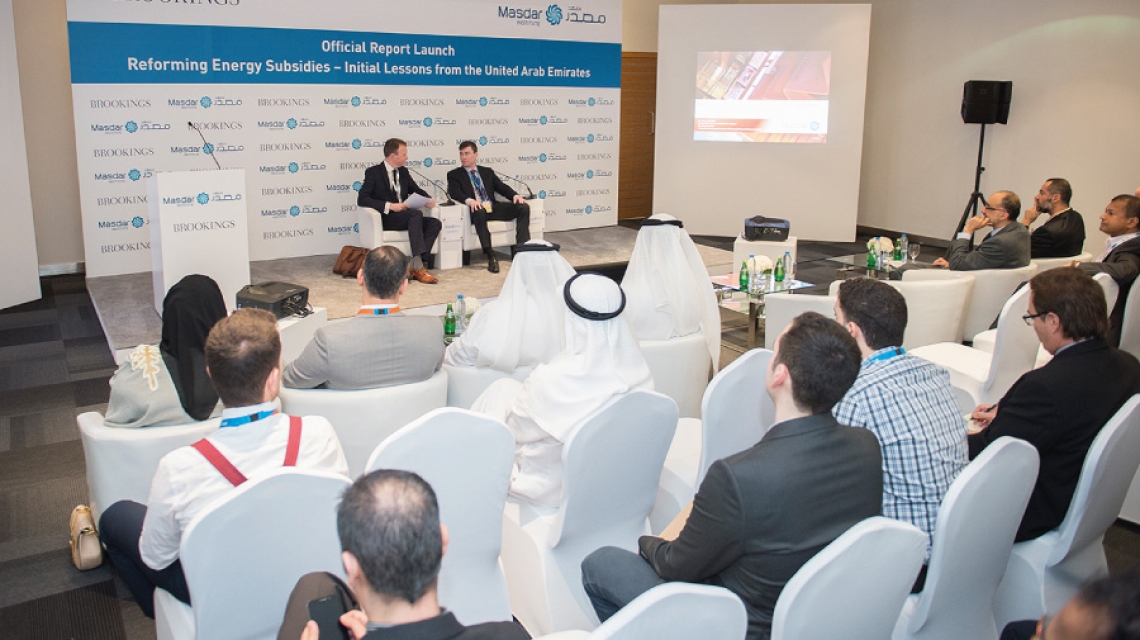
The UAE has taken very meaningful initial steps to reform existing energy subsidy schemes, says a joint study conducted by the Washington D.C.-based Brookings Institution and the Masdar Institute of Science and Technology.
 
Titled ‘Reforming Energy Subsidies – Initial Lessons from the United Arab Emirates,’ the report is authored by Dr. Tim Boersma, Fellow and Acting Director, Energy Security and Climate Initiative, Brookings Institution, with Dr. Steve Griffiths, Vice President for Research and Professor of Practice, Masdar Institute, acting as co-author of the report.
 
The Brookings-Masdar Institute study was released at an event held on the sidelines of the World Future Energy Summit (WFES), which is being organized as part of the Abu Dhabi Sustainable Week (ADSW) 2016 at the Abu Dhabi National Exhibition Center (ADNEC). In addition to guests, senior officials and faculty from the Brookings Institution and Masdar Institute attended the ceremony.
 
The study says that while modest electricity, water and fuel reforms are already underway in the UAE, the jury is still out on the long-term impact since many of the reform measures are relatively recent. However, it points out that there has not been much sign of social backlash to the reforms and the reforms implemented in Dubai in 2011 did seem to a have at least a short term impact on power and water consumption. The study further emphasizes that the example set by the UAE can provide important lessons regarding energy subsidy reforms in hydrocarbon-exporting countries and the wider Middle East and North Africa (MENA) region.
 
Subsidy reforms have become particularly topical following the fall in oil revenues witnessed in the UAE and other oil exporting countries. World oil prices are currently near an 11-year low as benchmark Brent crude has more than halved from over US$100 a barrel 18 months ago, pressured by a supply glut that exceeds two million barrels per day, according to figures from the Organization of Petroleum Exporting Countries (OPEC).
 
Dr. Tim Boersma said, “There are several good reasons why energy subsidies are undesirable. Of course reforms do not have to take place overnight, and the UAE authorities have, partially facilitated by its rather unique demographic structure, shown one way of successfully implementing new policies. Hopefully the leadership can continue efforts to reform in the coming years.”
 
Dr. Griffiths said, “Energy subsidy reform the GCC countries has long been discussed and the UAE has taken a very good approach to making this happen. The move toward reform was well communicated prior to implementation and the basis for transport fuel pricing follows international best practice in transparency. Although the recent fall in international oil prices has created a challenge for government revenues, the UAE’s leadership has turned the challenge into an opportunity by implementing subsidy reform measures that will have long-term benefits for the country with minimized short run impact on consumers”
 
Quoting ‘The Economist,’ which called 31 July 2015 a ‘day of reckoning for fuel prices in the Gulf,’ the Brookings-Masdar Institute study says reforms were incentivized by the significant burden that subsidies put on state coffers, estimated at US$7 billion in 2013 alone for petrol and diesel subsidies. In August 2015, the UAE became the first country in the Arabian Gulf region to remove transport fuel subsidies. The government now sets the prices based on international benchmarks and announces them on the 28th day of each month.
 
While highlighting the fact that the UAE’s subsidy reforms in the power and water sector provide an important market signal, the Brookings-Masdar Institute study emphasizes that prices remain low by international standards and therefore must be complemented by broader demand-side management strategies to significantly curtail consumption, particularly during times of peak demand. Nonetheless, the study welcomes the current “visible” initiatives undertaken in the UAE as an effort to move toward cost reflective pricing for power, water and fuel in the GCC.
 
“The UAE (reform) initiatives underline that hydrocarbon wealth must be exploited for optimal purposes and that excludes indefinite underpricing of hydrocarbon resource utilization,” concludes the Brookings-Masdar Institute study.
 
The Brookings-Masdar Institute analysis is based on analysis of UAE energy sector data as well as primary and secondary data derived from a series of interviews with a wide variety of stakeholders in both Abu Dhabi and Dubai, including industry representatives, regulatory authorities, policy makers, financial specialists, analysts, and representatives of NGOs.
 
The oil and gas sector contributed 34.3% to the UAE’s gross domestic product (GDP) in 2014 at current prices, according to the UAE National Bureau of Statistics. With lower oil prices, the UAE may have a fiscal budget deficit for the first time since 2009, an International Monetary Fund (IMF) report has predicted. Nonetheless, lower oil prices present the opportunity to adjust fuel prices to market levels since the impact on consumers is much less while they digest the reality of reforms.
 
The IMF and other observers of the region have been calling on GCC countries for years to reduce energy subsidies in order to safeguard the medium- to long-term sustainability of public finances, support diversification and remove misallocations and distortions in the economy. The UAE has taken positive steps in this direction.

Clarence Michael
News Writer
20 January 2016