

Experts at Masdar Institute Gathering Reveal Graphene’s Potential to Accelerate Innovations in Defense, Aerospace and Security Sectors


Abu Dhabi-UAE: 24 May, 2015 – The Masdar Institute of Science and Technology, The University of Manchester and the Defense Services Marketing Council (DSMC) are pleased to announce the successful gathering of defense and aerospace professionals to discuss cutting-edge research on promising new ‘super materials’.

The Partnering to Achieve Innovation in Defense & Aerospace (PAIDA) Working Group meeting also highlighted the emerging research collaboration between Masdar Institute and The University of Manchester on graphene and 2-dimensional (2D) materials.

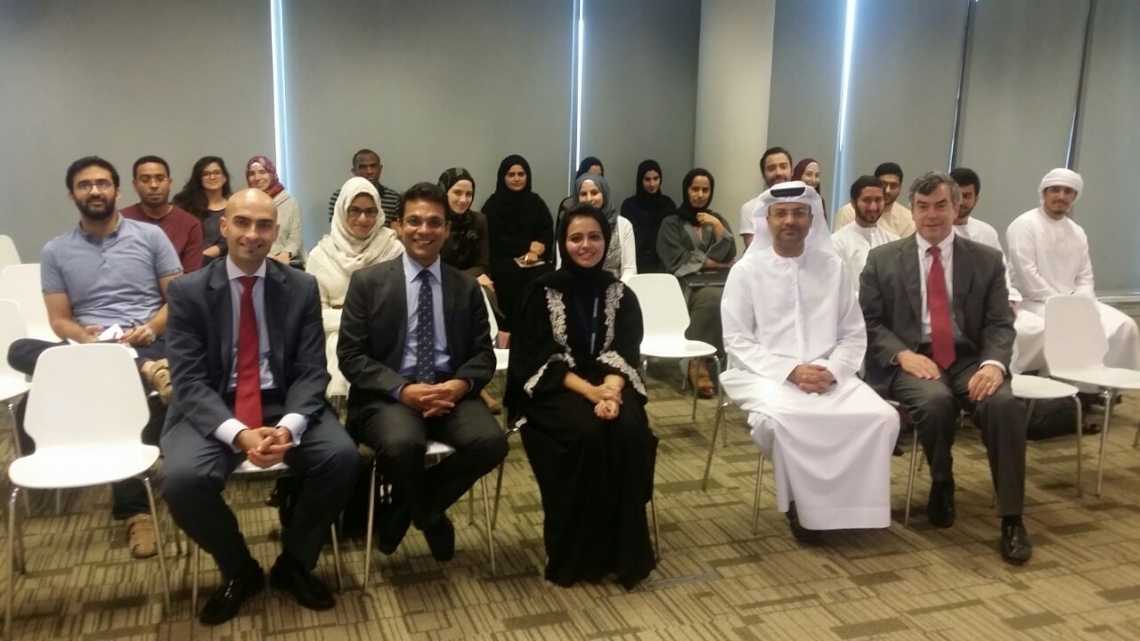
The PAIDA Working Group meeting, titled ‘Graphene: UAE’s Masdar Institute and University of Manchester Advanced Materials Center of Excellence for Energy and Aerospace and Defense Applications,’ was held on 20 May at the Masdar Institute campus.

The event provided industry and government stakeholders the unique opportunity to discuss the graphene and 2D materials research collaboration being established between the two institutions and explore opportunities to engage in the development of these exciting technologies.

The new generation of 2D materials has the potential to revolutionize future technologies in the defense and aerospace sectors. Graphene, which is considered a ‘super material’, is 200 times stronger than steel, yet incredibly lightweight and flexible with excellent thermal and electrical conductivity. It may find commercial application in the aviation, energy and defense industries, as well as water purification and treatment and more efficient desalination.

Market intelligence firm IDTechEx Research predicts graphene markets will grow from around US$20 million in 2014 to more than US$390 million in 2024 at the material level.

Speaking at the event, Dr. Steve Griffiths, Executive Director, Office of Institute Initiatives, Masdar Institute, said, “Masdar Institute is privileged to attract this esteemed array of experts to Abu Dhabi with the support of stakeholders including The University of Manchester and the DSMC. Graphene and similar materials have enormous potential to disrupt manufacturing in large sectors of the economy and we hope this working group meeting will lead to big things in the future.”

As a headline speaker at the event, Dr. Abdelqader Abusafieh, Head of R&D, Mubadala Aerospace, provided a top-level perspective of how graphene can improve electrical, thermal and mechanical applications in aerospace, expressing particular interest in the potential impact that graphene could have on protecting aircrafts from lightning strikes.

He also touched on the challenges facing the commercialization of graphene and other 2D materials, and emphasized the important role industry-university collaborations play in getting these applications to the market.

“In order to speed up the commercialization of these graphene-based products, we need to think about specific graphene applications, and align research and development efforts towards these products, keeping the university-industry relationship strong from conception through to manufacturing,” Dr. Abusafieh said.

Abusafieh is responsible for aerospace R&D strategy and technology collaboration initiatives with original equipment manufacturers (OEMs) and academia.

Another headline speaker, James Baker, Business Director, Graphene, The University of Manchester, repeated the significance of collaboration as a catalyst for innovation. Baker said, “We are pleased to work with Masdar Institute from the academic side, and we are continuously looking for industries that we can partner with in order to produce commercially valuable applications of graphene and advanced 2D materials.”

Baker boasts 25 years industry experience and was previously Vice-President of Technology Collaboration Programmes and Managing Director of the Advanced Technology Centres for BAE Systems in the UK.

John Devine, First Secretary (Defence & Security), British Embassy Abu Dhabi, remarked today: “We are pleased to see the continued collaboration at this working group level between the UAE and UK in advanced R&D with Masdar Institute and The University of Manchester on the cutting edge of the defence and aerospace sectors with this graphene super material.”

Dr. Aravind Vijayaraghavan, Lecturer in Nanomaterials and Nano-functional Materials Group Leader at The University of Manchester, also addressed the gathering.

In September 2014, Masdar Institute and The University of Manchester signed a collaboration agreement to build the AED345 million (£60 million) Graphene Engineering Innovation Centre (GEIC) in Manchester. The GEIC focuses on the pilot production and characterization, together with application development in composites, energy, solution formulations and coatings, electronics and membranes.

The two institutions have already identified joint graphene application research, which will focus on industrial applications of graphene for the energy and aerospace and defense sectors. The partners will be able to commence commercializing the results of this research immediately upon the opening of the GEIC in 2017.

DSMC is a marketing incubator organization that brings innovative, value-added programs to its members, who are leading defense, space and security experts, in order to accelerate development in defense, space and security industries in the Middle East.
Masdar Institute UAE National PhD Student Becomes Country’s First to Defend Thesis in “Big Data”

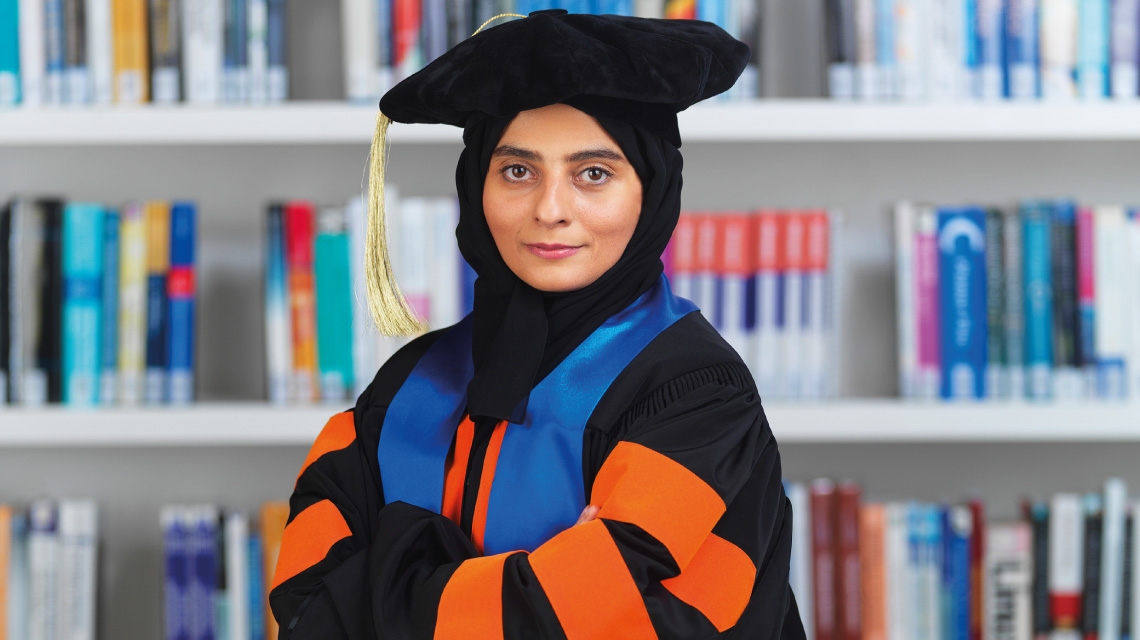
Abu Dhabi-UAE: 02 June, 2015 – The Masdar Institute of Science and Technology, an independent, research-driven graduate-level university focused on advanced energy and sustainable technologies, today announced that one of its UAE national PhD students has become the first in the country to defend a thesis in the field of data science and computational social science.
 
PhD student Aamena Ali Alshamsi’s thesis titled ‘The good life in the network: How social networks shape our personality and emotions’ covers some of the highly technical aspects of ‘Big Data.’ During her thesis defense, she elaborated on the possibilities of using social media and mobile phones to understand what makes society happy. Alshamsi received her doctorate degree at the Masdar Institute commencement ceremony that was held on 26 May.
 
Alshamsi will also be presenting her paper at the International Conference on Network Science (NetSci) that is being held from 1 – 5 June in Zaragoza, Spain. She has already presented her work in a variety of international conferences and her papers have been accepted after rigorous peer review in top journals in the field of ‘Data Science.’
 
The three-member PhD committee that reviewed Alshami’s thesis resaerch included Dr. Iyad Rahwan and Dr. Jacob Crandall, both Associate Professors, Computing and Information Science, Masdar Institute, as well as Dr. Alex Pentland, Professor of Media Arts and Sciences, and Director of the Media Lab Entrepreneurship Program, Massachusetts Institute of Technology (MIT) Media Lab. Dr. Pentland, who was recently named by the Forbes magazine as one of the world’s seven most powerful data scientists, described Alshamsi’s thesis as a ‘substantial contribution to the literature and a first-class work.’
 
Since Alshamsi’s interdisciplinary research required support from social scientists, she and her advisors also collaborated with Dr. Fabio Pianesi, Vice-Director for Research at Trento Research, Innovation and Education System (Trento RISE), and Vice-President of European Institute of Innovation & Technology Information and Communication Technologies (EIT ICT) Labs, Italy, and Bruno Lepri, who leads the Mobile and Social Computing Lab (MobS Lab) at Bruno Kessler Foundation, Trento, Italy.
 
Dr. Rahwan said “Aamena is a pioneer and a role model to young Emiratis who want to use Big Data to study how society functions. This is the first time a UAE national PhD student has defended a thesis in the fields of data science and computational social science. She was also the lead student on my lab’s team when we participated in the Telecom Italia Big Data Challenge in 2014.”
 
The entry from Masdar Institute’s Social Computing and Artificial Intelligence Lab led by Dr. Rahwan subsequently became one of the 10 finalists chosen from among more than 600 participating teams. Alshamsi traveled to Trento, Italy, to represent the team at the Big Data Jam.
 
Dr. Crandall said, “Aamena was able to complete a good PhD thesis because of her persistence. Her ability to keep trying even when things do not seem to be going her way is one of her greatest strengths.”
 
Alshamsi believes her research findings can be used for the well-being of people through tuning the structures of people’s social networks.
 
She said, “Although my thesis focused on specific topics in social sciences, I believe the application of the methodologies and the findings of my thesis can go beyond the boundaries of social sciences. I believe that the methodologies could be extended to provide real-time analytics about individuals and collectives for timely interventions by decision-makers. The findings could also be leveraged to build productive teams and design informed strategies to achieve desirable goals in many areas, including sustainability”.
 
She added, “My research supervisory committee was so supportive and provided me with useful feedback. Furthermore, the collaboration between Masdar Institute and MIT enabled me to conduct a world-standard research, offering me a chance to work with prominent scientists on the latest topics. With its unique learning environment, Masdar Institute has enriched my experience. The diverse on-campus community facilitated an exchange of cultures, ideas and knowledge. I gained invaluable knowledge and experience when I was interacting with my multicultural colleagues and discussing various subjects.”
 
A proud recipient of the UAE National Research Foundation’s (NRF) ‘Young Emirati Researcher’ Award 2012, Alshamsi believes her achievements were possible because of her passion for knowledge and scientific research. She was also ranked 4th in the Activity Recognition Challenge at the ‘Workshop on Robust machine learning techniques for human activity recognition’ during the IEEE Conference on Systems, Man and Cybernetics 2011 in Anchorage, Alaska.

Masdar Institute Faculty Win National Research Foundation Grants to Advance UAE’s Innovation Goals

Abu Dhabi-UAE: 03 June, 2015 – The Masdar Institute of Science and Technology, an independent, research-driven graduate-level university focused on advanced energy and sustainable technologies, announced that two of its faculty members have received the University-Industry Research Collaboration Award (U-IRCA) from the National Research Foundation (NRF).

The one-year research grants of AED175,000 will support the advancement of UAE’s National Innovation Goals – specifically in the targeted areas of renewable energy, technology and water – and affirm the positive impact that industry-university research collaborations have on developing both the UAE’s commercial and knowledge-based economies.

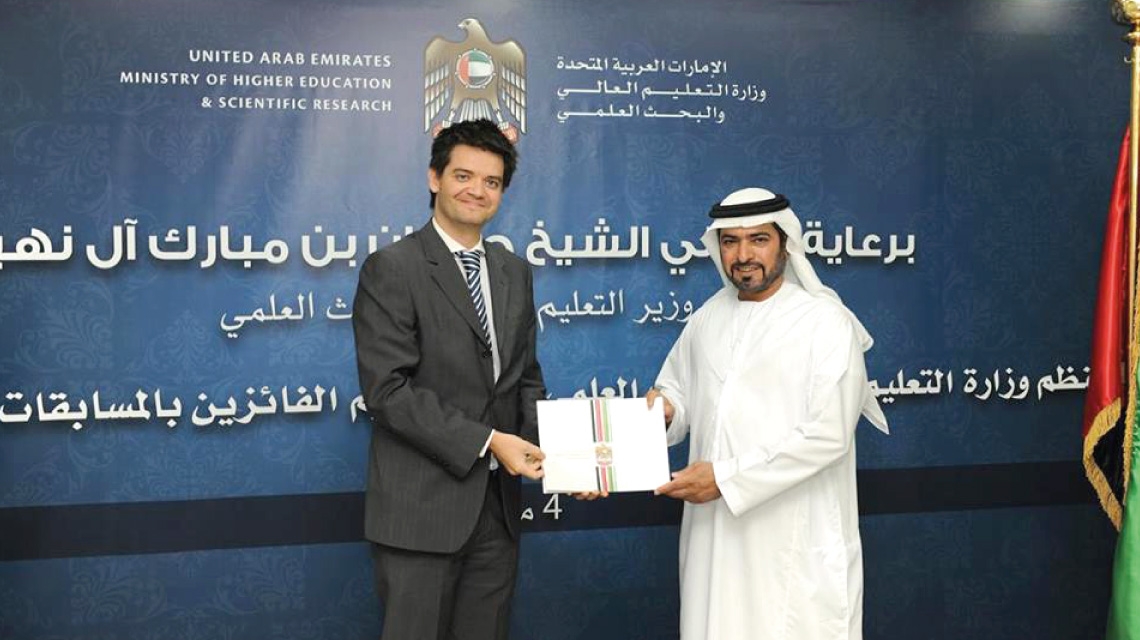
The Masdar Institute faculty are Dr. TieJun (TJ) Zhang, Assistant Professor of Mechanical and Materials Engineering and Dr. Jorge Rodriguez, Assistant Professor, Chemical and Environmental Engineering, who were recently honored at the Grant Awarding Ceremonies, which were held under the patronage of His Excellency Sheikh Hamdan Bin Mubarak Al Nahyan, Minister of Higher Education & Scientific Research at the Ministry of Higher Education and Scientific Research in Abu Dhabi.

Dr. Zhang’s grant supports innovative research aiming to increase the solar power generation efficiency of Shams 1 – the Middle East’s largest concentrating solar power (CSP) plant – which could lead to increased solar power utilization across the country. His project focuses on enhancing solar power production by improving the sunlight harnessing capabilities in harsh desert environments and optimizing the operation of key solar energy conversion processes.

Dr. Zhang’s research team includes Abdulaziz Al Obaidli, Senior Project Manager at Masdar Clean Energy, Alexander Higgo, Process Engineer at Shams Power Company and Masdar Institute MSc Alumnus, and Ali Al Masabai, PhD Student at Masdar Institute.

“It’s our great honor and mission to support the UAE’s solar industry and continue in meeting Abu Dhabi’s goal of producing 7% of its power from renewable energy,” Dr. Zhang said. “This NRF grant is not only a catalyst for university-industry collaboration, but it also supports the development of human capital for the UAE National Innovation Strategy’s priority sectors. I believe the new knowledge we are discovering together is beneficial to people in hot and arid regions all over the world.”

Shams 1 is located in the Western Region of Abu Dhabi and has the capacity to generate enough electricity to power 20,000 homes in the UAE.

Dr. Rodriguez’s grant supports the development of energy-efficient ways to treat Abu Dhabi’s wastewater in order to meet growing freshwater demands. Dr. Rodriguez will be partnering with VeBes O&M, an Operating and Maintenance Company of two wastewater treatment plants in Abu Dhabi. Two Masdar Institute students – Kulthoum Ismail and Félix Ayllón – are also involved with the project.

Dr. Rodriguez’s project aims to support the development of nitrogen removal from Abu Dhabi’s high temperature and saline wastewater while simultaneously reducing the carbon footprint and operational costs and improving effluent quality of Abu Dhabi’s wastewater treatment plants.

“Traditional methods of removing organic pollution and nitrogen from wastewater can account for between 30%-60% of operation costs of wastewater treatment plants. We are seeking to enhance operational modes in order to treat wastewater in a less energy-intensive way, so that Abu Dhabi can use a greater proportion of treated wastewater to fulfill its freshwater needs, without draining its energy,” Dr. Rodriguez said.

As one of the world’s largest energy consumers with severely limited freshwater, the UAE is seeking innovative solutions to lower its dependency on hydrocarbons while increasing its supply of clean energy and freshwater in a sustainable way. These Masdar Institute faculty-led research projects awarded by the U-IRCA could help the UAE develop such crucial solutions.

Establishing partnerships between regional industries and universities is a key criterion for winning the U-IRCA, and is clearly demonstrated by Dr. Zhang’s and Dr. Rodriguez’s projects. Both projects help establish relationships between Masdar Institute and industry partners, bringing mutual benefits to all parties – they provide Masdar Institute’s students with real-world industrial research problems and deliver innovative and valuable solutions to Shams 1 and VeBes O&M.

The National Research Foundation (NRF) was established in 2008 to provide research leadership and funding support on a competitive basis to researchers in the UAE, in order to contribute the development of the UAE’s knowledge economy.

New Masdar Institute Analytical Chemistry and Biochemistry Lab Enhancing UAE’s R&D Infrastructure

Abu Dhabi-UAE: 22 April, 2015  ̶  Masdar Institute of Science and Technology,  an independent, research-driven graduate-level university focused on advanced energy and sustainable technologies, is launching its new Analytical Chemistry and Biochemistry (ACBC) Laboratory as part of its continuing contribution to the UAE’s indigenous research infrastructure and capacity.

“The new ACBC Laboratory and all of the core labs at Masdar Institute are advanced research and training facilities. Our main focus is to increase advance research and increase the number of researchers in the UAE with the skills to operate and understand the results provided by the equipment. These core labs serve as research support, which significantly frees up the time of Masdar Institute’s faculty and student researchers to concentrate on what they do best — come up with great ideas and figure out how to make them work,” said Mike Tiner, Director of Labs at Masdar Institute.

Having this indigenous facility allows Masdar Institute’s researchers to do rapid process modification and development, enhancing and accelerating important research taking place in Abu Dhabi related to water, environment, food, energy, and industry.

The lab also provides training on its instruments for faculty, researchers and students to ensure they are able to best take advantage of its advanced analytical chemistry and biochemistry instruments. So far approximately 50 users have been trained on various pieces of equipment, which are relevant to many of the water, environment, and energy research projects being pursued at the institute.
 
The in-house facility also avoids potential intellectual property issues that arise when working with external labs, as prior to the establishment of the ACBC, researchers would send samples abroad for necessary tests. Masdar Institute’s students also benefit from the increased research capacity provided by the ACBC, learning analytical techniques and enhancing their thesis research by utilizing its equipment.

“The biochemistry section of the lab will be used for the in-house characterization of the biodiversity under study at Masdar Institute,” explained Dr. Hector Hernandez, assistant professor of chemical and environmental engineering at Masdar Institute.

“This is of high importance as the UAE is home to very unique microbial biodiversity which has the potential to be of use in for nutritionals, pharmaceuticals, water regeneration, high-value chemicals, and soil regeneration. This facility will also be used to drive the search for biological enzymes that can be used in industry to better degrade and process biological materials for use as energy sources, such as methane, jet fuel, and precursors for bioplastics,” he added.

The new analytical chemistry section of the lab aims to help in characterizing products that are made from biological-based systems. This equipment will aid the Chemical Engineering Department in the development of new industrial processes for the production of high value and high demand chemicals. These processes can then be scaled up for use in industry. The information this section provides will help develop commercial applications.

More advanced lab facilities are scheduled to come online at Masdar Institute in the coming months, advancing the institute’s ability to contribute to the UAE’s economic goals. The institute has partnered with Masdar – the Abu Dhabi Future Energy Company to create the Masdar Solar Hub, which has recently launched.
 
“We will also be investing significantly in a water-technology lab and an electrochemistry lab with capabilities to advance research in energy storage and water, two areas of importance to Abu Dhabi and the UAE,” Tiner revealed.

Enhancing the UAE’s R&D and technology infrastructure is among the goals of the UAE National Innovation Strategy. The first track of the strategy focuses on shaping specialized entities such as innovation incubators as well as technological infrastructure to fuel innovation in all sectors. Developing and enhancing research laboratory facilities like the ACBC lab at Masdar Institute contributes to that goal, while the labs’ focus on training responds to the country’s need for high-value human capital to power its knowledge economy.

Student’s Bi-Level Solar Cell Wins Big

A poster on the innovative solar cell research of Masdar Institute PhD student Sabina Abdul Hadi has won the Best Poster Award in the “Light Management and Avant Garde Concepts” category at the preeminent conference dedicated to science of solar cells – the 42nd IEEE Photovoltaic Specialist Conference (PVSC-42), which took place last week in New Orleans.

The poster highlighted Abdul Hadi’s unique “step-cell” design that makes solar cells more efficient, which is part of her doctorate thesis research being conducted under the Institute Center for Microsystems (iMicro). With support from her supervisor, Dr. Ammar Nayfeh, Associate Professor of Electrical Engineering and Computer Science, Abdul Hadi’s research found a way to make tandem solar cells more efficient, with efficiencies reaching 32% for dual junction silicon based tandem cell.

The main reason behind a solar cell’s inefficiency is its inability to harness all of the sun’s energy in the form of light. The best performing crystalline silicon solar cells are around 25% efficient – meaning, they capture and convert 25% of the sun’s light into electricity. Tandem solar cells combine a top and a bottom cell of different materials, enabling them to convert more of the sun’s light into electricity because they make better use of the solar spectrum. The top cell absorbs light with higher energy (blue light) while the bottom cell absorbs light with lower energy (red light), thus providing an opportunity to develop solar cells with higher efficiencies.

However, one of that factors that has limited the efficiencies of tandem solar cells is that the top cell often absorbs sunlight intended for the bottom cell. To overcome this, the step-cell designed by Dr. Nayfeh and Abdul Hadi increases electric current in the bottom cell, thus increasing overall solar cell efficiency.

“Our design exposes the bottom cell’s silicon to direct sunlight,” explained Abdul Hadi. “The design is especially useful when there are buffer layers between the top and bottom cells which often absorb more of the lower energy sunlight intended for the bottom cell.”

Their results show that tandem step-cell design allows for more flexible cell material selection, which can reduce production costs without significant loss in overall efficiency.

Dr. Nayfeh said, “We are very thankful to receive the Best Poster Award at the 2015 IEEE PSVC. This is a great achievement for Masdar Institute and for PhD student Sabina Abdul Hadi. We are very excited and confident that our step-cell technology will provide a potential solution for low-cost, high-efficiency solar cell technologies.”  

The PVSC-42 attracted over 1,500 participants and hosted a dynamic exhibition for companies and research labs to showcase their latest products and innovations ranging from characterization of solar cells to manufacturing, bringing scientists, technologists and students together with leading PV industries and organizations.

Erica Solomon
News and Features Writer
27 June 2015

Masdar Institute Student’s Bi-Level Solar Cell Wins Big

A poster on the innovative solar cell research of Masdar Institute PhD student Sabina Abdul Hadi has won the Best Poster Award in the “Light Management and Avant Garde Concepts” category at the preeminent conference dedicated to science of solar cells – the 42nd IEEE Photovoltaic Specialist Conference (PVSC-42), which took place last week in New Orleans.

The poster highlighted Abdul Hadi’s unique “step-cell” design that makes solar cells more efficient, which is part of her doctorate thesis research being conducted under the Institute Center for Microsystems (iMicro). With support from her supervisor, Dr. Ammar Nayfeh, Associate Professor of Electrical Engineering and Computer Science, Abdul Hadi’s research found a way to make tandem solar cells more efficient, with efficiencies reaching 32% for dual junction silicon based tandem cell.

The main reason behind a solar cell’s inefficiency is its inability to harness all of the sun’s energy in the form of light. The best performing crystalline silicon solar cells are around 25% efficient – meaning, they capture and convert 25% of the sun’s light into electricity. Tandem solar cells combine a top and a bottom cell of different materials, enabling them to convert more of the sun’s light into electricity because they make better use of the solar spectrum. The top cell absorbs light with higher energy (blue light) while the bottom cell absorbs light with lower energy (red light), thus providing an opportunity to develop solar cells with higher efficiencies.

However, one of that factors that has limited the efficiencies of tandem solar cells is that the top cell often absorbs sunlight intended for the bottom cell. To overcome this, the step-cell designed by Dr. Nayfeh and Abdul Hadi increases electric current in the bottom cell, thus increasing overall solar cell efficiency.

“Our design exposes the bottom cell’s silicon to direct sunlight,” explained Abdul Hadi. “The design is especially useful when there are buffer layers between the top and bottom cells which often absorb more of the lower energy sunlight intended for the bottom cell.”

Their results show that tandem step-cell design allows for more flexible cell material selection, which can reduce production costs without significant loss in overall efficiency.

Dr. Nayfeh said, “We are very thankful to receive the Best Poster Award at the 2015 IEEE PSVC. This is a great achievement for Masdar Institute and for PhD student Sabina Abdul Hadi. We are very excited and confident that our step-cell technology will provide a potential solution for low-cost, high-efficiency solar cell technologies.”

The PVSC-42 attracted over 1,500 participants and hosted a dynamic exhibition for companies and research labs to showcase their latest products and innovations ranging from characterization of solar cells to manufacturing, bringing scientists, technologists and students together with leading PV industries and organizations.

The UAE’s Next Generation of Innovators

Seven months into the UAE’s Year of Innovation, Masdar Institute of Science and Technology students have gained significant grounds in their efforts to support the development of the country’s knowledge capital, with groundbreaking research, academic awards and even patented inventions. 

Ahmed Al Harethi, a Masdar Institute PhD student, is part of a team of researchers exploring the microalgae strains native to the UAE for their use in tackling food and energy challenges faced in the region by leveraging the UAE’s existing saltwater resources. Their work led to the detection of a new strain of microalgae that thrives in the harsh UAE climate and can be grown for biofuel, pharmaceutical products and food additives. A patent application was made for the discovered microalgae strain and the method of conditioning it to high salinities.

“I believe that algae hold a great potential for the UAE. It is the only biomass that we can mass produce in the UAE without fresh water or arable lands. It has applications that have direct relevance to the challenges of water, food, and energy security. I hope that this award will attract more students and researchers to our field and lab,” Al Harethi says.

Last year the UAE leadership announced that 2015 would be the UAE’s Year of Innovation, and targeted seven sectors where it will stimulate innovation to achieve this goal: renewable energy, transport, education, health, technology, water and space. The strategy and targeted sectors complement Masdar Institute’s foundational vision and mission to support the UAE’s knowledge-economy transformation by applying R&D to advance key national interests.

The research Al Harethi has been involved in responds to the goals of the National Innovation Strategy, with its application to the water and energy sectors, and additionally can help enhance the country’s overall sustainability and food, energy and water security by providing it with a potential biofuel and food crop that can be irrigated with saltwater. 

Discussing plans for his research going forward, Al Harethi said, “Our next goal in this research project is to build a test pilot plant and to start producing and testing our strains at ambient temperatures and in larger quantities. My long-term goal is to commercialize microalgae technologies to bring to the market within the next five years.” 

Al Harethi’s research has the potential for many positive outcomes regarding food, energy and water provision, and he has been recognized as ‘the first UAE national to invent a mechanism for generation of biofuels with industrial quantities using genetically modified algae.’ For his contribution to the UAE’s innovation ecosystem, Al Harethi was awarded with the Medal of Top Emiratis by the UAE cabinet on the occasion of the 43rd UAE National Day, signifying the importance of his research to the sustainable development of the UAE. 

Another student who is pursuing breakthroughs of relevance to his home country is Saeed Al Nofeli, an MSc student from Masdar Institute’s Engineering Systems and Management Program. He was one of the two inaugural recipients of the BP Innovation Scholarships, which is a two-year, fully-funded merit scholarship awarded to graduate students in any one of Masdar Institute’s nine engineering concentrations. He was awarded the scholarship based on his thesis research on systems optimization of a training platform that can be used to improve camel training and racing.

Finding a solution to issues related to UAE specific culture was of particular importance to Al Nofeli and this objective was used as a starting point for his research. After identifying issues and problems with the existing technology in camel racing, he developed a robot camel jockey device that provides a sustainable and innovative solution to the existing technology of this traditional sport. Further to this, Al Nofeli has also developed a training and tracking device which will provide biological data to owners about their camels. 

According to Al Nofeli, “The benefits of these devices to the UAE and other camel racing nations is two-fold; the devices are targeted to solving the challenges of camel racing in the UAE, by bringing new and innovative technology to the market. Secondly, the devices ensure that owners can find out more about their camels and therefore can identify areas for improvement.” 

Al Nofeli has also been the recipient of a number of grants and competitions including the Khalifa Fund-Innovation 360 Ibtikari grant (April 2014) and the Khalifa Fund Techno-preneur competition (May 2014). These awards have helped ensure that Al Nofeli’s ideas have evolved and been developed into prototypes with the help of incubators. Currently the biggest markets for these two devices are the UAE and Qatar, however in the future Al Nofeli hopes to extend and optimize the training and tracking device for use in other racing sports such as horse racing and greyhound racing. 

Joining him in his pursuit of innovative research that resonates with the UAE is Alya Altunaiji, a PhD student in the Water and Environmental Engineering Program. Her work uses microbes found in the digestive systems of camels to develop a new kind of system to break down waste into useful products through anaerobic digestion. 

Altunaiji’s research aims to identify the best microbes in camel’s digestive systems for use in bio-refineries that utilize anaerobic digestion processes to break down waste into useful products like biogas and fertilizer. Currently, cow microbes are the standard in such bio-refineries, but camel microbes are hardier and able to survive harsher environments, requiring less water and providing a wider range of options for use. Abu Dhabi could capitalize on this discovery by exporting camel microbes as a cheaper, faster and water-conserving alternative to countries that currently depend on cow-microbe anaerobic generators to provide energy.

Altunaiji found her experience at Masdar Institute to be a challenging and rewarding one, allowing her to expand her knowledge in her chosen field by collaborating with students that attend the Institute from all over the world. Altunaiji explains, “Masdar Institute has enabled me to expand my knowledge and expertise in my field by encouraging collaborations with students who attend the Institute from all over the world. The mix of students and their varying backgrounds has fostered an environment that allows for creativity and innovation while solving important issues of sustainability.”

These pioneering young Masdar Institute students are just the first of many talented young men and women who are responding to the call of the UAE leadership for innovation and excellence. Their novel research and inventions will help secure the competitive advantage and culture of innovation that the UAE’s prosperous knowledge economy must be built upon. These young Emirati innovators hope to inspire others to be part of the UAE’s prosperous, successful and sustainable future. 


Masdar Institute Working to Bolster UAE’s Agriculture Sector through Soil Enhancement Research

A novel innovation that can help address the country’s food, water and energy security concerns is being developed by Masdar Institute student Fatima Al Jallaf. Her soil fertility-enhancing biodegradable “microbeads” have the potential to improve the UAE’s ability to support farming.

In her research, which is being conducted through the Masdar Institute Center for Water and Environment (iWater), specific microbes will be attached to the microbeads, and once inserted in the ground, the microbes will spread through the soil and improve its ability to sustainably support crops.

“Microbial communities, like the ones we want to bring to UAE soils, need an environment to live in. This is the role of the microbead – like a housing community, it will contain all of the ‘amenities’ required for the microbes to thrive. When in the soil, the microbes will propagate in the beads and release important nutrients, which will diffuse out to the soil,” explained Dr. Hector Hernandez, Assistant Professor of Chemical Engineering and Advisor to Al Jallaf.

Fertility-enhancing microbeads have been developed before and have successfully been used in places like the state of Washington in the USA. However, that type of bead is not suitable for the UAE’s hot soils – they dry up and shrink within hours after being released into the soil.

“Healthy soil is teeming with millions of microorganisms who perform a variety of functions, such as removing toxins and storing carbon. The problem with the UAE’s desert soils is that they are largely devoid of carbon sources and these helpful microorganisms. We are trying to bring these growth-promoting bacteria into the soil with this microbead research,” Al Jallaf said.

The UAE has a long-standing focus on increasing its agricultural output for improved food security and economic diversity. But the country’s soil is not naturally conducive to agriculture, with its high sand and low nutrient content, making crop growth challenging and water-intensive. More than 70% of the UAE’s water use goes towards irrigation for agriculture although food imports still amount to between 85% and 90% of the UAE’s food consumption each year.

To help make the UAE’s soil far more supportive of agriculture, Al Jallaf is engineering specialized ‘“microbeads” that can slowly release nutrients into the extremely arid soils of the UAE. A microbead is a tiny plastic sphere – usually about 1 millimeter in size – that is commonly used in grooming products, like facial scrubs and toothpastes. Al Jallaf is looking to evolve the scope of microbeads by integrating them with fertility-boosting microbes. Microbes are an integral part of soils – serving to break down waste, aerate soil, enhance the water-use efficiency of crops and improve nutrient uptake.

“Soil plays a significant role in the food-water-energy nexus. The UAE’s soil requires a lot of water, which it gets through irrigation. And irrigation pumping consumes a lot of energy. By enhancing the soil’s ability to retain water and grow more crops through these microbeads, the country could potentially save a lot of water and energy and increase its domestic food production,” Al Jallaf added.

Al Jallaf and Dr. Hernandez are currently collaborating with Dr. Pance Naumov from NYU Abu Dhabi and his postdoctoral associate Dr. Lidon Zhang on identifying the base material best suited for the UAE’s harsh climate, and their research is promising. This collaborative effort has led to the development of a microbead based on the microbeads used in the US. This compound, sodium alginate – an organic substance with a thick consistency – is added to calcium chloride. It solidifies on contact to produce a round gel microbead. Al Jallaf and Dr. Zhang are in the process of fine-tuning the microbead formula to find the ideal microbead composition. They are hopeful that they will be able to develop a microbead that can stand up to the hot and dry UAE climate, so it can be dispersed in cropland to provide improved fertility and water conservation.

Al Jallaf believes that promoting healthier soils in this way can help the UAE produce more food, while significantly cutting water and energy consumption, leading to a stronger, sustainable and more profitable agricultural industry.

Although agricultural production in the UAE has increased considerably in recent years, it is currently a small component of the total GDP, representing only 3%. However, agriculture has been identified by the government as a key sector for the country’s economy. Additionally, with a stronger agricultural industry, the UAE will be able to rely less on food imports for certain products that can be grown efficiently in the UAE thus enhancing the UAE’s overall food security. With new technologies that support soil productivity, the UAE will be able to increase its crop production and enhance self-sufficiency.

Through its pursuit of cutting-edge innovations to enhance the UAE’s soil fertility, Masdar Institute demonstrates its commitment to finding real-world solutions to issues of sustainability relevant to the UAE. As can be seen by the innovative work of Al Jallaf, Masdar Institute continues to develop UAE’s local human and knowledge capital, ultimately contributing to the UAE’s burgeoning competitive, knowledge economy.

Erica Solomon
News and Features Writer
16 August 2015

Leveraging KBSI’s Nanotechnology Expertise, Student Develops Innovative Energy Storage Device

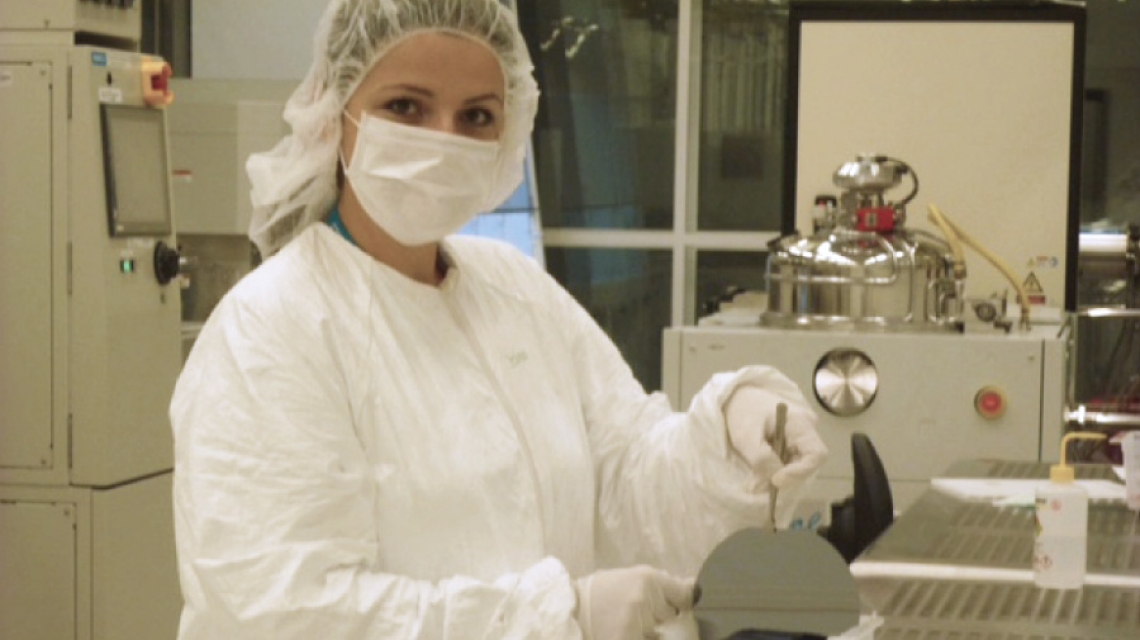
Masdar Institute mechanical engineering Master’s student Ivan Lopez has returned from the Korea Basic Science Institute (KBSI), where he spent a month at the leading Korean science and technology institute developing advanced supercapacitors – a type of energy storage device that can be charged and discharged very quickly, making them particularly attractive for energy storage applications.

Lopez traveled to Korea with a focus on studying supercapacitors, while leveraging KBSI’s expertise in nanoparticles. During his experience, he ultimately developed a novel nanoparticle-coated electrode material that improves supercapacitors’ energy storage capacity, while also learning how to fabricate flexible supercapacitors, test their performance, and analyze their results.

Leveraging the research expertise of scientists at KBSI who were developing wearable electronics, Lopez gained keen insights that he applied towards producing practical, wearable supercapacitors.

“Many of KBSI’s researchers were studying wearable materials for electronic devices, which presented me with a unique opportunity; we decided to develop wearable and flexible supercapacitors using the same carbon-based nanomaterials that KBSI researchers were using in their wearable materials,” Lopez said.

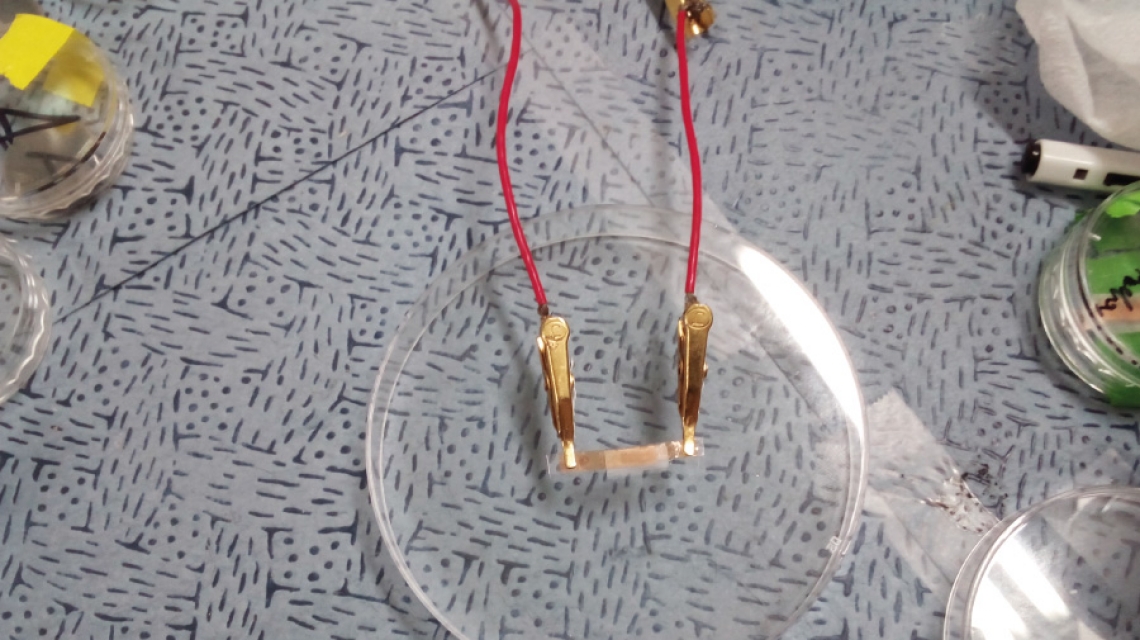
Lopez modified the nanomaterials engineered by KBSI researchers, which lead to a novel process for developing carbon-based electrodes coated with an even distribution of metal-oxide nanoparticles. These electrodes were used in the wearable supercapacitors he developed.

He also analyzed and characterized the modified material with a scanning electron microscope (SEM) – a type of electron microscope that produces images by scanning it with a beam of electrons – and performed an x-ray diffraction (XRD) analysis to investigate crystalline material structure. Ultimately, the coating showed positive results of improved performance of the supercapacitor.

While at KBSI, Lopez was also introduced to Dr. Ho Seok Park, Professor of Chemical Engineering at Sungkyunkwan University, who shared his supercapacitor expertise and lab with Lopez.  There, Lopez learned how to assemble flexible supercapacitors, including how to make electrolyte materials, test the supercapacitor, and analyze the results.

“Dr. Park’s PhD students were experts in the assembly and test of supercapacitors. With them, I learned everything I needed to develop supercapacitors by myself. With this knowledge, I developed six supercapacitors with different configurations and architectures,” Lopez said.

The research Lopez started at KBSI will significantly support his Master’s thesis work at Masdar Institute and may lead to research publications in the future.

Lopez credits the robust collaborative environment at KBSI with advancing his ability to develop novel supercapacitor electrode materials and fabricate supercapacitors of his own.

“The expertise that the scientists at KBSI and Dr. Park’s lab shared with me were critical to the successful development of my supercapacitors,” Lopez shared.

He also added: “This experience was just a scratch at the surface; it opened my eyes to the fact that there is a lot more work to do and a lot left to be studied to get closer to creating a more efficient supercapacitor. This experience was just training for me to be able to study supercapacitors with higher power and energy densities at Masdar Institute.”

Lopez’s research experience followed on the research collaboration agreement that Masdar Institute and KBSI established earlier this year to jointly study cutting-edge research in energy storage systems and nanotechnology.

As academia and industry work to develop more affordable and effective ways to store energy, the energy storage industry is expected to grow leaps and bounds in the coming years. Recognizing nanotechnology’s potential to significantly improve the performance of energy storage systems, the collaboration between Masdar Institute and KBSI aims to leverage expertise from both institutes to develop next-generation energy storage devices using the latest advancements in nanotechnology.

“Research collaborations like the one Masdar Institute has embarked upon with KBSI is not only crucial to developments in the field of advanced energy storage technologies – an industry expected to reach US$50 billion in five years – but it also fosters human capital development, directly supporting Abu Dhabi’s goal to build a knowledge-based economy,” said Dr. Saif AlMheiri, Assistant Professor of Mechanical and Materials Engineering, Masdar Institute.

Dr. AlMheiri co-advises Lopez with Associate Professor of Mechanical and Materials Engineering, Dr. Rashid Abu Al-Rub, and is Masdar Institute’s principal contact for the collaboration. Together with Dr. Hae Jin Kim, Principal Researcher and KBSI’s principal contact for the collaboration, Dr. AlMheiri organized the month-long research experience.

Erica Solomon
News and Features Writer
15 September 2015

Senior US and UAE Energy Officials Seek More Women’s Leadership in Energy

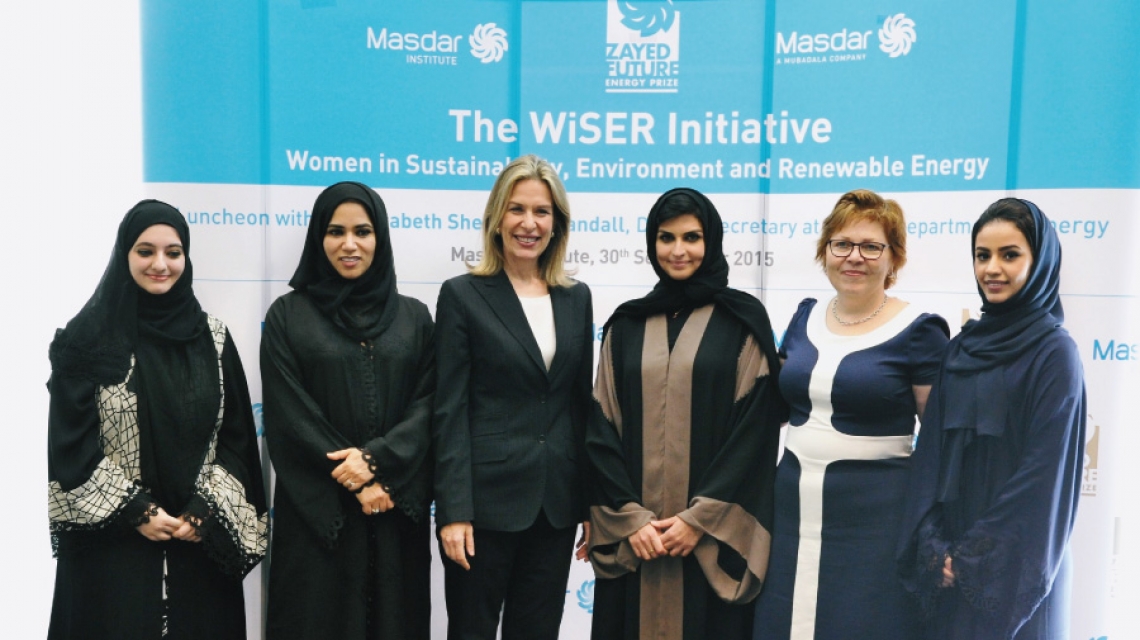
Senior energy officials from the US and the UAE convened in Masdar Institute to encourage more women to become active energy leaders as part of a luncheon seminar hosted to mark the formal launch of the Women in Sustainability, Environment and Renewable Energy (WiSER) initiative at the United Nations.

The US and UAE delegations were led by Dr. Elizabeth Sherwood-Randall, Deputy Secretary at the United States Department of Energy (DOE), and Her Excellency Fatima Al-Foora Al Shamsi, Assistant Undersecretary for Electricity Clean Energy and Desalination of Water, UAE Ministry of Energy, respectively. Her Excellency Barbara A. Leaf, US Ambassador to the UAE, accompanied the delegation.
 
HE Al Shamsi and Dr. Sherwood-Randall shared their unique perspectives on renewable energy with Masdar Institute students and faculty and other invited guests. Both women are champions of the Clean Energy Education and Empowerment (C3E) Initiative that aims to encourage the entry of more women in the science, technology, engineering, and mathematics (STEM) field.

Dr. Lamya Fawwaz, Vice-President, Institutional Advancement and Public Affairs at Masdar Institute, welcomed the guests, offering them an insight into the vital role women play in advancing the UAE’s research into new sustainable technologies that are addressing some of the world’s most pressing issues such as improved access to food, energy, and water.
 
Commenting on the WiSER initiative, HE Al Shamsi, who serves as the UAE’s C3E International Ambassador, said, “This UAE-led initiative has a critical role to play in catalyzing more women to take leadership roles in the fields of sustainability and renewable energy. It was my pleasure to share the stage with my colleagues from the US Department of Energy and to have the opportunity to share my personal experiences with this group of extremely talented students and professionals from all over the world.”

C3E was launched at the first Clean Energy Ministerial (CEM) in July 2010 with participation from eight governments, including the UAE, and 30 distinguished women from the clean energy field. The initiative is of particular importance to Masdar Institute, the world’s first graduate university focused on advanced energy and sustainable technologies, which currently has 44% female representation in its student body.
 
Dr. Sherwood-Randall, a leading official in the Obama Administration, said, “Masdar Institute represents the forward-looking spirit of the UAE and is an important partner for us in developing and deploying advanced, renewable, and sustainable energy technologies. I am impressed by the innovative research these young women are doing to tackle energy and climate-related challenges. They are on the path toward becoming the energy leaders of the future.”
 
Dr. Behjat Al Yousuf, Masdar Institute’s Interim Provost, said, “Our engagements with global, regional and national entities include the US DOE and UAE Ministry of Energy. These alliances have helped us to create a thriving talent pool of local scientists and engineers, especially women. We are also proud to mention that women represent a sizeable portion of such talent at Masdar Institute. In line with the country’s mandate, Masdar Institute will continue with these robust partnerships for further empowering women.”

Following the event, the visiting officials met with Masdar Institute’s senior management team and discussed collaboration in research and advanced technologies for sustainable future energy. Officials present on the occasion include Dr. Lamya Fawwaz, Dr. Steve Griffiths, Vice-President for Research and Interim Associate Provost, Dr. Mohammed Sassi, Interim Dean of Faculty, and Dr. Youssef Shatilla, Dean of Academic Programs.

Masdar Institute currently has a collaboration with the US National Energy Technology Laboratory (NETL) for a carbon capture and storage (CCS) project that is led by RTI International, an independent non-profit research institute in the US. The project is jointly funded by US DOE and Masdar.
 
The delegations later toured Masdar City, which houses a number of strategic cooperation initiatives between the US and the UAE, such as the GE Ecomagination Garages and the MIT-Masdar Institute Cooperative Program. The guests also visited some of the key sustainable features on the Masdar Institute campus and Masdar City including the Wind Tower, 10MW solar photovoltaic plant, and the personal rapid transport (PRT) system.

Clarence Michael
News Writer
04 October 2015

Abu Dhabi’s Innovative Bioenergy Project Highlighted at Leading Bioenergy Conference

The UAE’s pioneering project to tap into the energy of salt-loving plants to produce a sustainable green fuel was highlighted at the Bioenergy and Development conference held last week in Berlin, Germany, which was co-organized by the World Agroforestry Centre (ICRAF) and the Institute for Advanced Sustainability Studies (IASS).

Dr. Alejandro Rios Galvan, Director of the Sustainable Bioenergy Research Consortium (SBRC) and Professor of Practice, Engineering Systems and Management, Masdar Institute, shared with the conference audience the importance of developing biofuels that do not jeopardize food security or cause social, economic and environmental consequences.

“The SBRC’s innovative biomass-to-energy research project seeks to sustainably produce bioenergy without using fresh water or arable land, thus avoiding the ethical issue of producing fuel from crops which could otherwise be used as a source of food,” he explained.

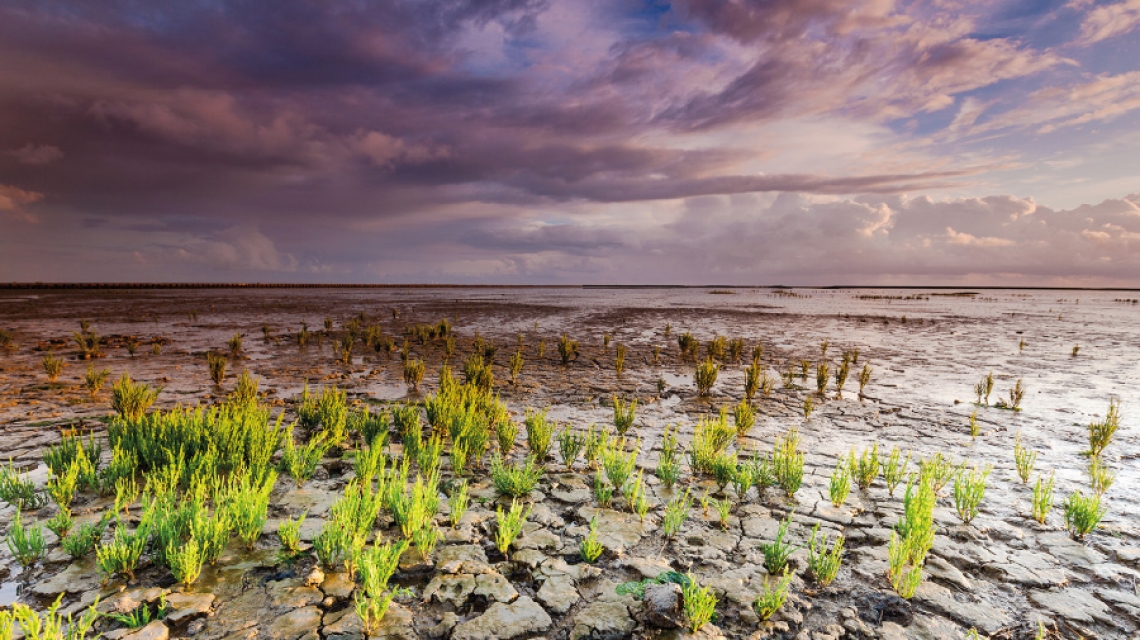
The SBRC has begun construction of the pilot facility of its integrated Seawater Energy and Agriculture System (SEAS) in Masdar City, which aims to convert salt-tolerant halophyte plants, known as salicornia, into aviation biofuels and other valuable chemicals.

The integrated system is the flagship project of the SBRC – a non-profit consortium focused on research and advancement of sustainable aviation biofuels with members Masdar Institute, Boeing, Etihad Airways, GE, Safran and Takreer – and is expected to be completed by the end of the year.

Presenting under the session titled, “Sustainable Biofuels: Avoiding the food vs. fuel trap with alternative feedstocks,” Dr. Rios Galvan explained how SBRC’s integrated system produces bioenergy and food, sustainably.

“Our project avoids the use of fresh water and large swaths of arable land required by traditional methods of biomass production. Instead we use seawater and desert land to convert salt-tolerant plants into biofuel and valuable chemicals, providing a harmonious and sustainable solution to the biomass-to-energy controversy,” he added.

The integrated system will also raise shrimp and fish, which are good sources of protein for human consumption, and help grow mangroves, which absorb carbon dioxide from the atmosphere. The integrated system may prove to be an excellent model that directly challenges the food vs. fuel trap, turning the debate into a food and fuel conversation.

Dr. Rios Galvan said, “Many of the conference participants had never heard of the SBRC and its integrated bioenergy system. The presentation was well-received and I think it fueled greater interest in what we are doing at the SBRC. I expect that this project will set a precedent for large-scale sustainable bioenergy production.”

Biomass could soon make up a larger share of the world’s clean energy mix, but if the renewable energy source is not cultivated and governed appropriately, the production and consumption of biomass could exacerbate challenges associated with land competition, resource scarcity, soil degradation, biodiversity loss, and climate change.

Identifying promising pathways and technologies to develop bioenergy, such as SBRC’s integrated system, was the main initiative of the conference, which was stated in the “Statement of the Conference Co-Chairs,” available online at http://bioenergy-development2015.org/media.

Finding innovative ways to produce bioenergy that do not jeopardize food security or cause social, economic and environmental consequences is critical to the large-scale development of bioenergy. Dr. Rios Galvan believes the SBRC’s integrated bioenergy system may be the key to producing bioenergy without sacrificing socio-economic and ecological development.

Erica Solomon
News and Features Writer
30 October 2015