
- Admissions
- Academics
- Research Office
- Student Life
- News & Events
- Outreach
- About

Dr. Moh'd Rezeq is an Associate Professor in the Department of Physics at Khalifa University (KU). He has extensive experience in nanotechnology, with more than 80 peer-reviewed journal and conference papers and 5 US patents. He has established the nanofabrication and nanoprobe lab at KU, capable of fabricating and characterizing nanomaterials at the sub-1 nm scale. His research focuses on low-power, energy-efficient nanodevices and nanomaterials. He is a PI on several internally and externally funded research projects. He is a founding member of the System-on-Chip research lab. He has supervised several graduate and senior undergraduate students, as well as more than 6 postdoctoral research fellows. He is a recipient of the KU’s “Excellence in Research Award”. Prior to joining KU, Dr. Rezeq worked at several world-class research institutes, including the National Institute of Nanotechnology (NINT) in Canada and the Institute of Materials Research and Engineering (IMRE) in Singapore.
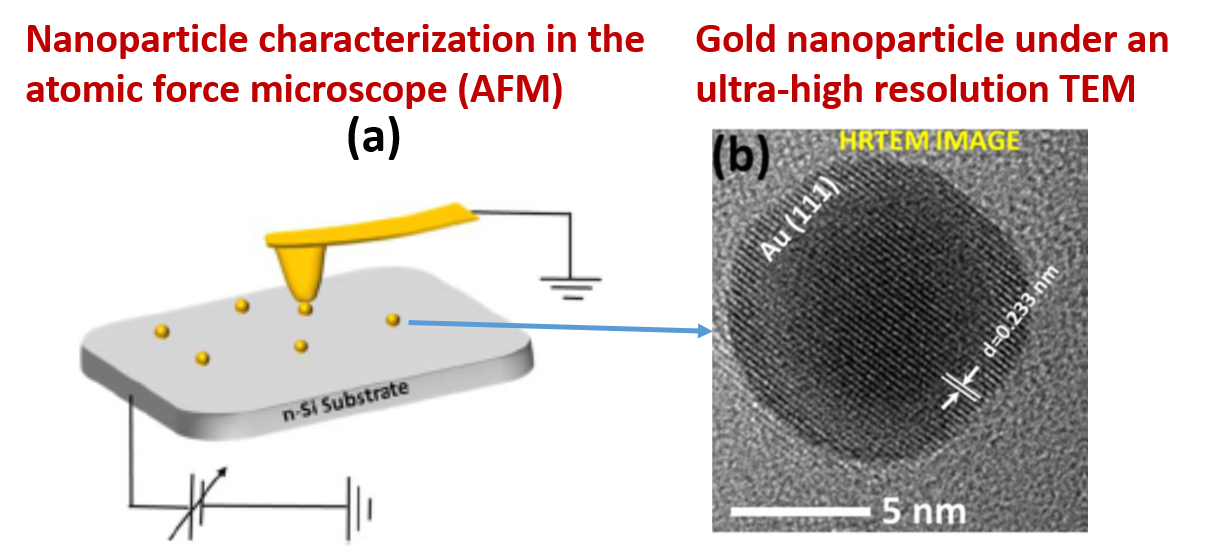
Nanoparticles based nano-memory devices
We build nano-memory devices using individual metal (like gold or silver) nanoparticles coated with a thin layer of oxide as unit nano-memory cells.
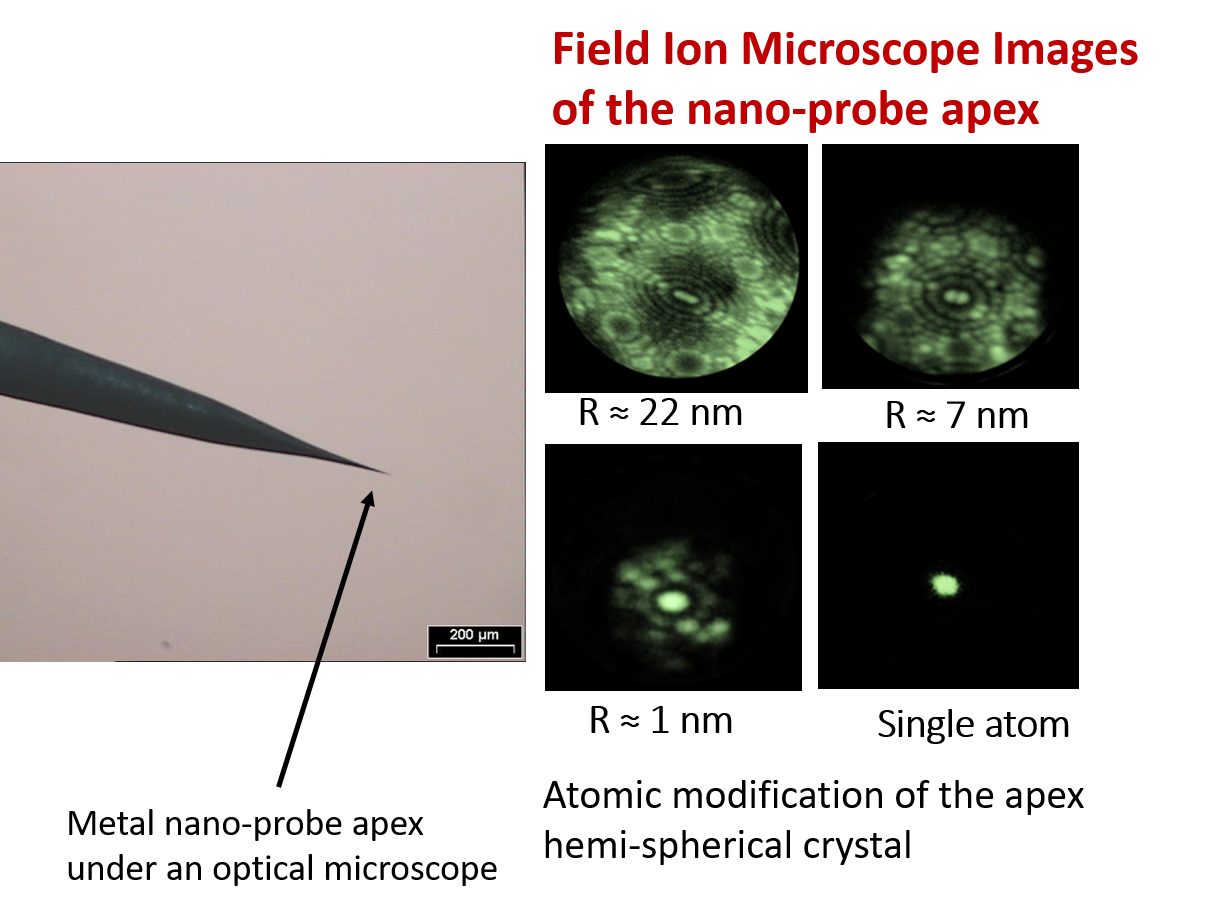
Nano-probe fabrication for nano-characterization
We fabricate nano-probes with sub-1 nm apex for nano-devices and fabrication and characterization of nanomaterials.
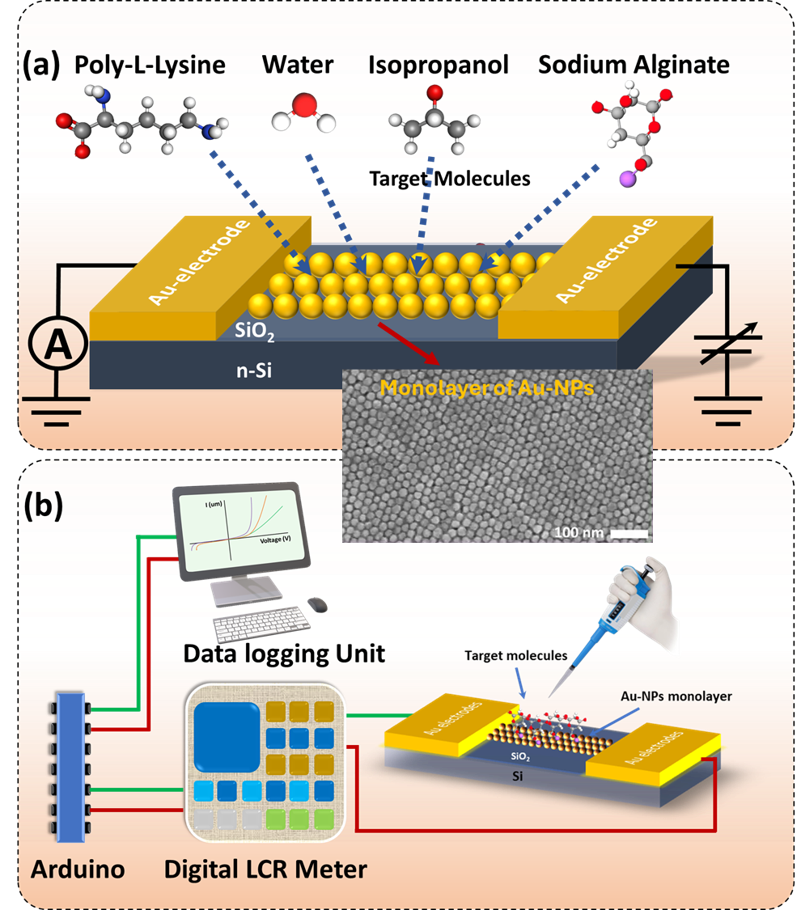
Nanoparticle-based nano-sensors
We fabricate nanoparticle-based nano-sensors for molecular sensing, especially for biomolecules.
Example: Gold Nanoparticles Monolayer Based Field-Effect Molecular Sensor
We have developed a novel and sensitive nano-sensor device for molecular characterization. This field-effect nano-sensor device is based on a well-arranged monolayer of gold nanoparticles on a thin film of SiO2. The device exhibited a very sensitive response to the exposure of charged and polar molecules.
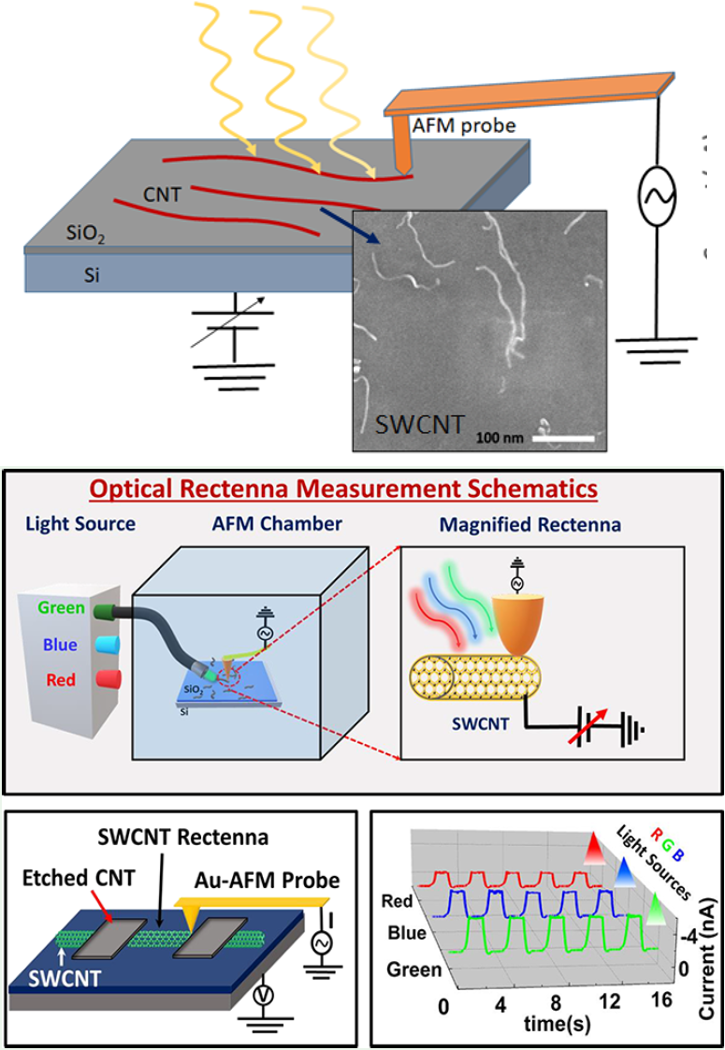
Carbon nanotubes (CNTs) rectennas for photo-sensing and energy harvesting
We use carbon nanotubes as nano-rectennas for infrared and optical light detection and solar energy harvesting
Designing and engineering nano-antennas using Focused Ion Beams
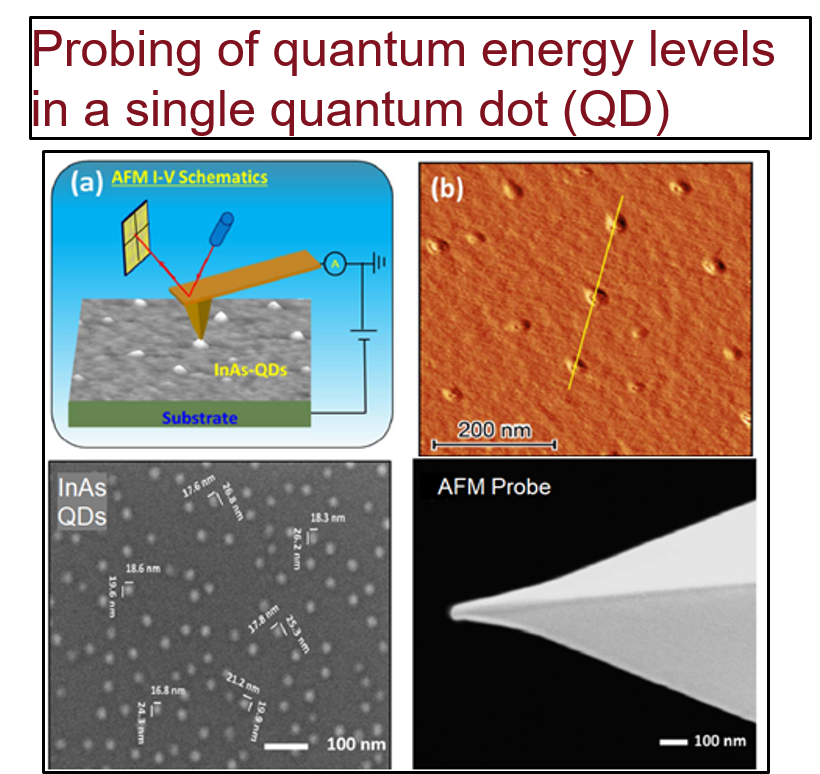
Quantum dots (QDs) based memory devices
We characterize individual quantum dots using a conductive mode atomic force microscope (C-AFM) for developing multi-level quantum memory devices.
1- A PhD candidate/ Physics Department to work on a project about carbon nanotubes (CNTs) based nano-sensors
2- A PhD candidate/ Physics Department to work on a project about nanoprobes for nano-device fabrication.
3- A PhD candidate/ Physics Department to work on a project about nanoparticle-based photosensors.