
Communicating with the Mind: Senior Design Project Developed to Help Disabled People Express Their Thoughts


To support people suffering from paralysis, undergraduate students at Khalifa University have explored how to translate brain waves into speech by using AI, specifically deep learning techniques.

Paralysis is a serious medical condition threatening the livelihoods of approximately 5.4 million people around the world. For those suffering from full body paralysis, even speaking is an impossible task to perform, severely limiting independence.

One way to overcome this inability to communicate is by tapping into a person’s brain wave signals and translating those signals into speech. Undergraduate students at Khalifa University have explored how to translate brain waves into speech by using AI, specifically deep learning techniques.

Students in the Khalifa University Department of Electrical Engineering and Computer Science, developed an electroencephalogram (EEG) control system for disabled people to communicate with others as their Senior Design Project. The students, Ahmed Alkhateri, Mohamed Alnuaimi, Saif Alshehhi and Ahmed Alzaabi, are supervised by Dr. Kin Poon, Chief Researcher at Emirates ICT Innovation Center (EBTIC), and Dr. Leontios Hadjileontiadis, Professor of Electrical and Computer Engineering and also Acting Chair of the Department of Biomedical Engineering,

“Every day is a challenge for patients that suffer from full-body paralysis and we hope this project will ease their lives,” explained Alzaabi. “Our project uses EEG signals to implement a brain-computer interface (BCI) to help paralyzed patients communicate with other people freely.”
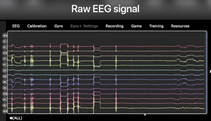
Fig. 1. Headset
Fig. 2. Raw EEG Data
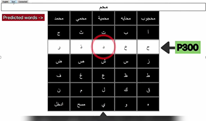
Fig. 3. A Grid of Letters

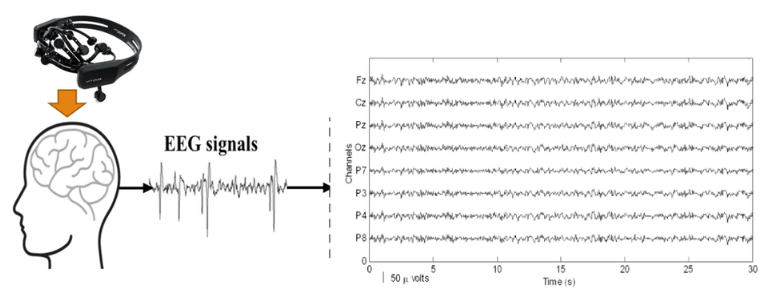
EEG represents the electrical activities of the brain with the signals captured when an individual starts thinking whilst wearing an EEG headset, which comprises multiple dry electrodes. The captured signals are then analyzed using deep learning algorithms called multi-layered Artificial Neural Networks (ANNs). In this project, the ANNs used are Convolutional Neural Networks (CNNs), a class of neural networks often used in image recognition because of their excellent compatibility with the processing of image pixel data.

For the CNN to process the data, the information extracted using the headset (in Fig. 1) is first converted into an image. EEG signals present particular wave forms (in Fig. 2) when recorded, which can be converted into a spectrogram. In this project, the person wearing the headset is presented with a grid of letters (in Fig. 3).

The grid flashes at random and a specific wave form called the P300 is recorded by the headset when the letter desired by the wearer is illuminated. A P300 shows a peak compared to baseline EEG signals and occurs approximately 300 milliseconds after the presentation of an infrequent stimulus—in this case, the flashing grid.

“Through our research, we quickly found that this idea has already been implemented, so we questioned how we could improve on it,” explained Alnuaimi. “We plan to improve by implementing a unique interface that will be more user-friendly when using the Arabic alphabet rather than English and also provide a predicted words functionality.”

The students designed a grid where every second one of the rows or columns flashes randomly. When the row or column containing the desired letter is illuminated, the P300 signal is generated. The rows and columns continue to flash until the second desired letter with the second P300 signal is generated. In this way, the algorithm can begin predicting the desired word.

The signals are converted into a spectrogram, with one spectrogram formed every second, and these images are then fed into the CNN, which can process the data it receives and determine the letter selected by the user.

“One of the main requirements of this project is to have the system work in real-time,” explained Alshehhi. “Once a letter is chosen, the program suggests some words that fit the chosen letters to ease the completion of the desired word.”

Deep learning is one of the hot topics in artificial intelligence research because it has many successful applications. Its application in recognizing brain wave signals is an up-and-coming area of research, but not without its difficulties.

“The main limitation we faced is the data size. In order to get more accurate results, we need to train the algorithm with more data,” explained Alkhateri. “For a CNN to work at an acceptable accuracy, a lot of data is required to train the system, which is time consuming. Furthermore, the device we are using has an accuracy rate of 65 percent, which, while good for its price, is still a limiting factor. Other minor limitations include the sample size we used and the processing power we have access to.”

“There are things we can do to further enhance this project,” added Alkhateri, who hopes to pursue his MSc with KU to further develop the project. “We could use a cloud service with better computational power to reduce processing time and improve performance. Users can create their own profiles online, find all their previous data and add predicted words to suit their use cases.

We could also improve the interface by allowing users to customize the interface to their needs.”

Jade Sterling
Science Writer
22 July 2020

Khalifa University Student Team win UAE Hackathon Grand Challenge for Professional Bus Idea  

A team of students from Khalifa University have won two of the ten challenges at this year’s UAE Hackathon 3.0 – Data for Happiness and Wellbeing competition. The students won the Grand Challenge and the WSIS (World Summit on the Information Society) Challenge for their innovative solution called “Hafla” – a type of professional bus aimed at transporting professionals to work in a comfortable and efficient way, while also letting them login to work as soon as they get on.
The innovative ride-sharing solution aims to reduce road congestion and traffic, and in turn increase happiness and wellbeing. As a winner, the team will now undergo three months of a training camp, provided by the Telecommunications Regulatory Authority (TRA), where they will further develop their winning idea. The team will also represent the UAE in Expo 2020 as well as in the World Summit at Switzerland.
“Traffic congestion is one of the most prevalent problems in our country, which negatively affects many areas, including the happiness index. This is confirmed by what His Highness Sheikh Hamdan bin Mohammed bin Rashid Al Maktoum stated at the World Government Summit 2019, that the average time taken by an employee from home to the workplace ranges between 60 – 120 minutes, which in turn causes a low level of happiness and productivity of employees,” explained Fatima Alhammadi, recent BSc in Industrial and Systems Engineering graduate.
Alhammadi’s team members include rising seniors Salama Almansoori and Zamzam Alhammadi, also from the Industrial and Systems Engineering program, and Maitha Alhajeri and Alyazyah Alhefeti, from the Biomedical Engineering program.
The ‘professional bus’ addresses the issue of increasing road congestion by reducing the number of cars on the road in a way that focuses on professionalism and on raising the happiness of employees at the same time.
“Our idea is based on the employers providing innovative, customized, integrated and qualified buses with all the needs to transport their employees from their homes to the workplace. This will contribute to reducing the area of ​​parking spaces designated for this category in the country, which constitutes a large part of the area that can be used for more investments and greater sustainability, such as construction, farms, factories and many others, and this bus will help to reduce carbon emissions by a large percentage,” Alhammadi shared.
When designing their professional bus, the KU team surveyed over ten employees, asking them why they don’t use buses. Using this data, they then investigated the best characteristics that they believed would make buses more appealing to employees. Considerations like a higher level of privacy and a greater feeling of luxury were found to be important.
“Our bus will embrace innovative features that allow the employee to register his fingerprint as he enters the bus and start his morning work on the professional bus. On the bus, employees will sit in the most luxurious seats with a moving desk in front of them, allowing them to work comfortably. The bus will be equipped with internet, coffee and other treats to make the ride enjoyable,” Alhammadi said.
Now, the team will undergo three months of training camp, where they will further refine their professional bus idea into a commercially-viable product with the support and guidance from TRA and its UAE Hackathon partners. The training will conclude with a final meeting in which the team will pitch their project to a committee of investors, entrepreneurs, and business incubators.
 A second team of students from KU, Team Shams, also won first place in the Abu Dhabi competition of the UAE Hackathon 3.0 event, for an app they developed that monitors and tracks a fleet of solar smart cars that users can book.
Khalifa University students are encouraged to seek creative solutions to complex, 21st century problems. With two student teams from KU among the winners of this year’s UAE Hackathon – which saw a total of 350 teams compete across the county –  Khalifa University is supporting the development of young professionals capable of furnishing the innovative solutions and smart ideas needed to raise happiness levels of the many communities within the UAE, and achieve the country’s knowledge-economy transformation goals.
Erica Solomon
Senior Editor
20 July 2020

KU Researcher to Edit Special Issue of Prestigious Journalism Journal 

Dr. Sadia Jamil, a postdoctoral fellow in the Department of Humanities and Social Sciences at Khalifa University, has been invited to guest-edit a special issue of Routledge’s influential journal, Journalism Practice – a Q1 ranked journal within the field of Journalism & Media Studies. 
Journalism Practice’s special issue will be published online in Summer 2021. It aims to include a range of research papers to address several of the United Nations’ Sustainable Development Goals (SDGs), including gender equality (SDG goal 6), inequalities (SDG goal 10) and issues that relate to human wellbeing, societal peace, justice and strong institutions (SDG goal 16). She will be co-editing the special issue with Dr. Jessica Retis (University of Arizona) and Dr. Paul Murschetz (Austrian Academy of Sciences & University of Digital Sciences). Details can be accessed at: https://think.taylorandfrancis.com/special_issues/media-discourse/
Dr. Jamil is part of a team of 15 faculty members and researchers from KU’s Department of Humanities and Social Sciences that belongs to the United Nations’ Sustainable Development Solutions Network (SDSN). Researchers from Masdar Institute, KU’s flagship research institute in the area of clean energy and sustainable technologies, are also members of the UN’s SDSN. As members of this network, the researchers aim to contribute impactful research in areas relevant to human development.
Dr. Jamil investigates challenges to fundamental human rights, social equality and justice — including a recent project that explores the digital divide in Abu Dhabi – and addresses many of the United Nations’ SDGs through her researchmedia representation of marginalized communities, addressing issues related to minority rights, gender equality, inequalities and justice. 
Dr. Jamil earned her PhD in Journalism at the University of Queensland, Australia in July 2015, and holds postgraduate degrees in Media Management and Mass Communication from the University of Stirling, Scotland, and the University of Karachi, respectively. She is currently Vice-Chair of the Journalism Research and Education Section at the International Association of Media and Communication Research (IAMCR). IAMCR is the preeminent worldwide professional organization in the field of media and communication research. Its members promote global inclusiveness and excellence within the best traditions of critical scholarship in the field. IAMCR aims to support and develop media and communication research throughout the world. It particularly encourages the participation of emerging scholars, women and those from economically disadvantaged regions. The organization is supported by the voluntary contributions of many people, including more than 80 Section and Working Group chairs and deputies, 30 members of its International Council, a five-member Executive, many members of various committees and task forces, and more than 2,500 active members of the association.

Currently, Dr. Jamil is a co-investigator on KU’s research project: “Cultural Determinants of Digital Skill Levels among Internet Users in Abu Dhabi.” The project, led by Dr. Glenn Muschert, Professor of Humanities and Social Sciences and an expert in digital inequalities, is the first-ever #DigitalDivide study conducted in the UAE, and one of very few in the MENA region. The study is designed to be a state-of-the-art investigation in the field of digital divide studies, and is poised to establish a new avant-garde in the rapidly-growing area of digital inequality studies.  Conceptually, this study is on the cutting-edge because it utilizes the newest concepts in digital inequality, along with the newest measures of such concepts.
Dr. Jamil has published on freedom of expression, media freedom, safety of journalists, data journalism, ethnic media, artificial intelligence in the news industry, and digital divides. Her most recent books include ‘the Handbook of Research on Combating Threats to Media Freedom and Journalists’ Safety’ (IGI Global, 2019), ‘Ethnic Journalism in the Global South (forthcoming, Palgrave MacMillan) co-edited with Dr. Anna Gladkova, and ‘Discrimination, Gender Equality and Safety Risks in Journalism’ (forthcoming, IGI Global) co-edited with Dr. Baris Coban, Dr. Bora Ataman and Dr. Gifty Appiah-Adeji. Recently, Journalism Practice has published Dr. Jamil’s research in the area of artificial intelligence and journalism practice, which is a groundbreaking academic research into artificial intelligence and the news industry in Pakistan. The article can be accessed at: https://www.tandfonline.com/doi/full/10.1080/17512786.2020.1788412
Dr. Jamil has received a number of international awards and scholarships, including The University of Queensland’s Centennial Award (2010), UQ’s International Postgraduate Research Support Award (2010), the Norwegian UNESCO Commissions’ and Oslo Metropolitan University’s conference grants (2015-2018), IAMCR’s travel grant award (2019), Union Insurance’s Cairo Air Crash Journalists Victim Memorial Gold Medal (2007) and Daily Jang’s and The News’ Sardar Ali Sabri Memorial Gold Medal (2007).
Erica Solomon
Senior Editor
19 July 2020

Two Student Teams from Khalifa University Among ‘Top 10’ in Prestigious International Engineering Competition

6th and 10th Ranks in ‘Overall’ Category and 3rd Place in ‘Verbal Design Report’ Category in 2020 Society of Automotive Engineers Supermileage Competition Keep Khalifa University Ahead of Any Institution from Arab World


Khalifa University of Science and Technology today announced that two of its student teams have achieved the distinction of being among the Top 10 globally in the prestigious 2020 Society of Automotive Engineers (SAE) Supermileage Competition, pitting against teams from top international universities and becoming the only teams from the Arab world to showcase such a stellar performance.


The first Khalifa University team achieved 6th rank in the Overall category and was among the Top 3 in the Verbal Design Report; category, while the other team won the 10th place in the Overall category. Because of the COVID-19 pandemic, the Collegiate Design Series had shifted the 2020 SAE Supermileage event onto a virtual platform.


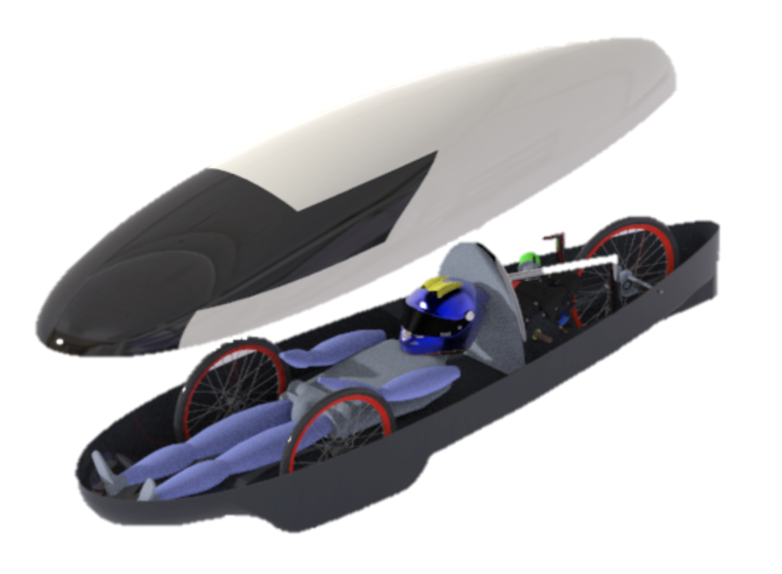
The engineering design goal for SAE Supermileage is to conceive, design, and fabricate a single-person, three-wheel, extremely high fuel-economy vehicle with a single cylinder engine that complies with the Supermileage specifications. On a specified route, the vehicle obtaining the highest combined kilometers-per-gallon rating, in addition to ‘design segment’ points, wins the competition.


Dr. Arif Sultan Al Hammadi, Executive Vice-President, Khalifa University of Science and Technology, said: “It is truly an honor for Khalifa University to take part in the SAE Supermileage international competition, a tough international challenge in which most of the highly-ranked international universities participate with their teams every year. It is also a privilege for our university that the two teams have remained ahead of any other academic institution from the Arab world in engineering excellence. Such top performance in an international competition was possible only because of our faculty experts who steered the students, continuously honing their innovation skills, and encouraging them. Congratulations to members of both the teams and all who supported them for this proud moment.


The first team included Abdulla A. Alameri, Abdulla F. Alrahma, Fares H. Alawwa, Karim Ahmad Younes, Khadeeja K. Aljaberi, Maryam A. Naqi, Mohammed A. Albastaki, Nawar F. Allabban, Shama Almazrouei, Suhail A. Alamri, and Sultan Al Hassanieh.
The second team members include Abdulla Alhammadi, Adonay Iker, Dhabia Alhammadi, Fatema Alzaabi, Kenan Al-Aqeel, Maryam Anuaimi, Natnael Haile, Saif El-Khasawneh, and Sumaya Alhebsi.


Both teams were assisted by Dr. Bashar El-Khasawneh, Associate Professor, and Dr. Andreas Schiffer, Assistant Professor, Mechanical Engineering. Dr. Reyad El-Khazali, Associate Professor, Electrical Engineering and Computer Science, and Dr. Ramzy Obaid, Adjunct Professor from King Abdulaziz University, Saudi Arabia.


Halcon System, part of advanced technology group EDGE, has been the sole sponsor of Khalifa University SAE Supermileage team for the last three years. 


Team members admitted that the most challenging part of the virtual event was the fact that they had to convince the judges with their work and the functionality of the vehicle, without exhibiting an actual prototype. Yet, the team did a good job in presenting the validity of their models through demonstrating their deep understanding of all the aspects of the project and showing different kinds of analyses and simulations, starting from the fundamental ones right up to the more advanced.


Abdulla A. Alameri said: “The team was ecstatic when we realized that Khalifa University is the only Arab university among the Top 10. We worked very long and very hard for this, and in the end, our hard work paid off. Knowing that our efforts placed Khalifa University’s and the UAE’s name amongst some of the best, highest ranked universities in the world is a huge honor to every single team member, and we couldn’t be prouder of our achievement.”


Saif said: “As a team making it into the top 10, communication was key, and most importantly, we valued each opinion and idea from all team members equally. This allowed us to progress as a team with fluidity.”


Last year, the Khalifa University student team had won 8th place in the SAE Supermileage Competition. The SAE Competition rules stipulate that the vehicle must be fabricated by the team members without direct involvement from professional engineers, faculty and technical staff in the college/school or professionals in the automotive/motorsports community.


Clarence Michael
News Writer
8 July 2020

KU APEC Director Honored as One of the 2020 Mission Innovation Champions 

Dr. Ehab El-Saadany, Professor of Electrical Engineering and Computer Science and Director of the Advanced Power and Energy Center (APEC) at Khalifa University, has been named as one of the Mission Innovation (MI) Champions for 2020. A virtual awards ceremony for the 2nd cohort of MI Champions was held on 12 June as part of the webinar on “Promoting Clean Energy Innovation in a Post-COVID World.” Dr. El-Saadany is also a researcher in KU’s flagship research institute, Masdar Institute.


Mission Innovation is a global initiative of 24 member countries and the European Commission (on behalf of the European Union) that was launched during the Paris Climate Conference in 2015. It aims to accelerate global clean energy with the objective of making clean energy widely affordable. The MI Champions program celebrates and supports exceptional researchers and innovators from member countries who are developing ways of making energy cleaner, cheaper, and more reliable. This year, 21 leaders in clean energy innovation were recognized as MI Champions. 


“Being chosen as one of the Mission Innovation Champions is a privilege and honor that comes as a reward to more than 420 international publications, 50 graduate student supervisions and over 19,000 citations. This award not only rewards my previous 25 years of research and innovation work, but also it will give me the opportunity to further boost my findings and research contributions to better serve the profession and the community at large,” Dr. El-Saadany commented. 


Dr. El-Saadany’s work is focused on two different areas. The first is directed on the investigation on how to create seamless protocols and controllers to integrate more renewable energy to the modern smart grids while minimizing the impacts on the grid operation practices and efficiency. The second direction is to develop new mechanisms that can ensure that our smart grids are more resilient and immune to cyber-physical attacks that can hinder their safe, resilient and efficient operation.


Within those two areas, Dr. El-Saadany is currently working on several projects that deal with the different operational issues focusing on renewable intermittency, system stability enhancement, hybrid AC/DC system development self-healing and restoration protocols among other important projects. Aside from these, he is also working to develop innovative AI-based techniques that assure the capability of identifying and mitigating different cyber-physical intrusion directed to several key system components such as protection systems, automatic generation control (AGC), and voltage regulators.    


“In an energy-hungry society, the dream that we all have is to develop sustainable, clean and affordable communities where everyone can have access to cheap electricity. This ultimate goal can only be attained through devotion and collaboration of different individuals, utilities, and governmental entities,” Dr. El-Saadany commented. 


“Being the Director of APEC at Khalifa University is already a privilege and a great recognition that is set to address the current and future energy needs. Being a Mission Innovation Champion, I’ll have a continued obligation to make this dream a reality. Starting by the continuation of my current research direction that is focusing on facilitating renewable resources integration, passing through the collaboration with different utilities and energy-centered bodies, and ending up with providing informative recommendations to governmental entities, these goals can be achieved. I will be utilizing my networking capabilities along with my advisory assignment (I’m currently the Chair of the Engineering Advisory Board for Mohamed Bin Rashid Academy of Scientist) to achieve these set of goals. 


“This award will add another domain to my work allowing me to capture more interest on the vital role that renewable energy plays in shaping the future of energy systems worldwide. Also, this recognition will facilitate more international collaborations that will enrich the research environment at APEC, Khalifa University and the UAE at large.” 


Ara Cruz
News Writer
7 July 2020

Solar Smart Car Fleet System Wins 1st Prize in Hackathon 3.0 – Abu Dhabi 2020

A team of KU Mechanical Engineering students has won this year’s Hackathon 3.0 – Abu Dhabi. Hackathon 3.0 is a series of events/hackathons that took place in the seven emirates of the UAE from February to March 2020. This event was organized and sponsored by the Dubai Telecommunications Regulatory Authority (TRA) with the goal to spread the culture of digital transformation in the country. It provides an opportunity for different sectors of the community, such as universities, entrepreneurs, and IT experts, to use open data to come up with solutions based on specific themes and challenges. 


Team Shams of Khalifa University won 1st place during the Abu Dhabi leg of the Hackathon. The team is composed of Muhammad Taha Ansari, Mariam Saeed Aljneibi, and Sham Mousa Antakieh and they were supervised by Dr. Firas Salah Jarrar, Assistant Professor of Mechanical Engineering.  


The team developed an app that monitors and tracks a fleet of solar smart cars that users can book, much like how you book a taxi. The smart cars are designed to be used by university faculty, students, and employees, and stationed in different areas within campuses. 


The app shows all the smart cars available near the user’s location and the user can then book the car nearest to them. Users will be able to access the vehicle through an auto-generated QR code or using their university ID cards. After completing the ride, users must park the cars at the designated parking spots.


The app provides a convenient online booking system for users. The concept also meets the UAE Green Agenda 2030 of providing a safe and sustainable alternative mode of transportation. Since the cars are solar powered, they are both environmentally friendly and economical, and would offer users a more affordable transportation alternative. The fleet of cars would need to be  recharged less frequently because they run on 100% solar energy. 


The winners of Hackathon 3.0 were announced at a digital ceremony on 4 March 2020, wherein H.E. Ohood bint Khalfan Al Roumi, Minister of State for Happiness and Wellbeing and the Director General of the Prime Minister’s Office and H.E. Hamad Obaid Al Mansoori, TRA Director General participated in the event. 


Ara Cruz
News Writer
5 July 2020

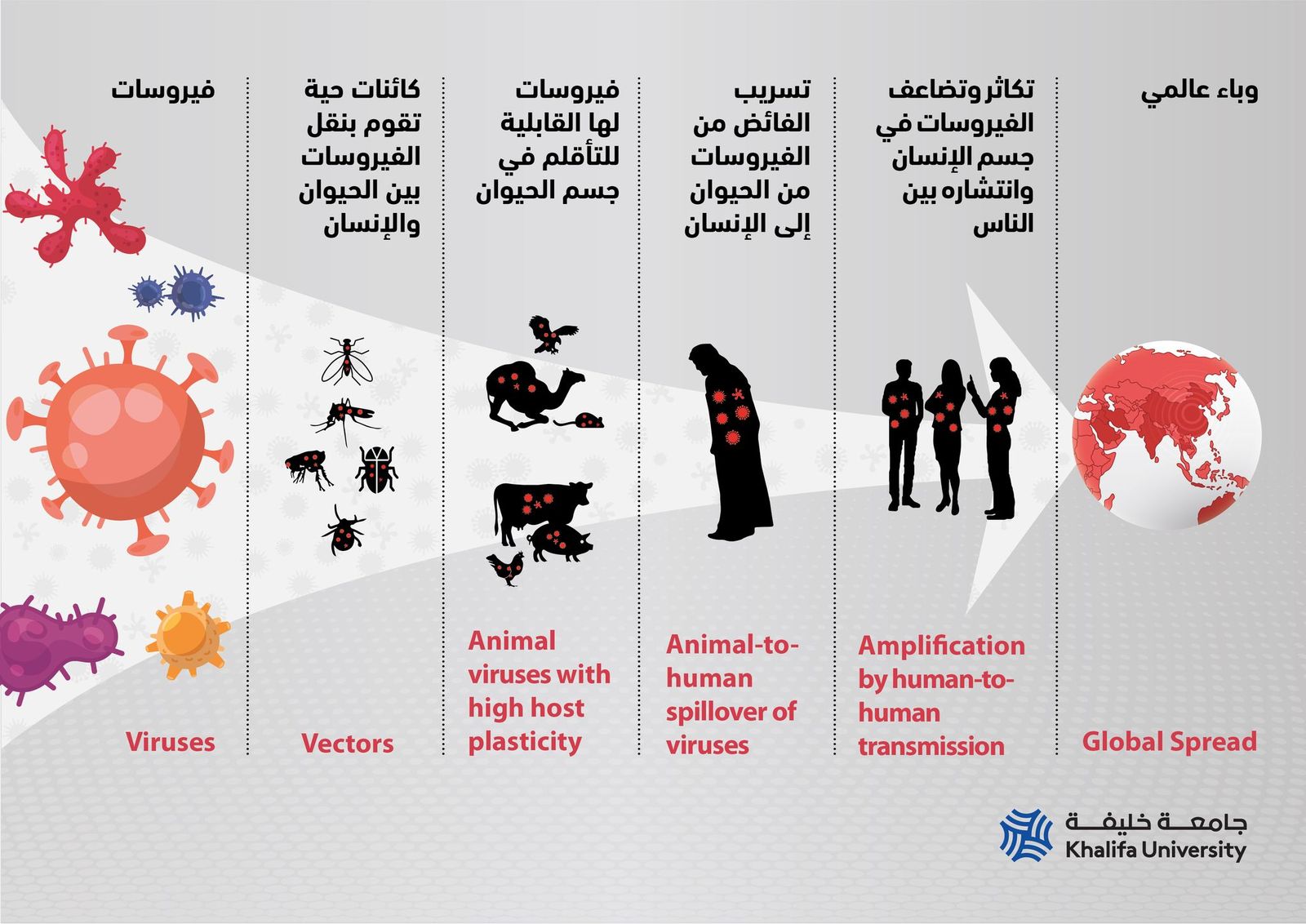
Team of Khalifa University and International Researchers Studying How COVID-19 Virus Jumps from Animals to Humans

Led by Khalifa University, Project Will Help Understand What Mammals Have in Common that Facilitate Virus to Enter the Host

Khalifa University of Science and Technology today announced it is leading a team of researchers to work with universities across the globe to investigate how the COVID-19 virus, usually found in animals such as bats, has made the jump to humans.

This research falls under Khalifa University’s ‘COVID-19 Research and Development Task Force’ initiative, which includes multidisciplinary researchers from across the world including from the UAE, the US, China, Singapore and Australia. Collaborators from across the Middle East, North America, Europe, South East and North East Asia, as well as Australia will collect animal samples for the study.

According to Dr. Habiba Alsafar, Director of the Center for Biotechnology (BTC) at Khalifa University and the Principal Investigator of the project, the current COVID-19 outbreak is an example of zoonosis, which refers to diseases that can be transmitted to humans from animals. The disease is caused by a coronavirus (CoV) that is believed to have originated in bats and transmitted to humans. There have been two major coronavirus outbreaks in recent history – the 2002 epidemic that was caused by the SARS-CoV, and the 2012 MERS-CoV outbreak. All three coronaviruses share a common entry point into the cells of humans and other animals, through a receptor known as ACE2, with the assistance of another protein known as TMPRSS2.

Dr. Alsafar, added: “These are what the virus sees on the surface of the cell and understanding their similarity across different animals will provide clues on how the virus is transmitted. Other international groups including researchers from other countries have already expressed interest in joining the effort on studying the human and viral elements of the disease. We cannot beat the virus without cooperation as it knows no geographical boundaries.”

Originally conceived by Khalifa University faculty members, the project titled ‘The identification of conserved groves in the host cell receptors that bind and facilitate coronavirus (CoV) entry into mammalian cells’, is already under way. Leading the project will help understand what mammals have in common; from the point of view of cellular receptors that allow or facilitate the virus to enter the host.

Dr. Steve Griffiths, Senior Vice-President, Research and Development, Khalifa University, said “The project to identify the cause of COVID-19 transmission from animals to humans showcases our commitment to collectively find a solution to this global healthcare threat. Coming under the framework of Khalifa University’s COVID-19 Research and Development Task Force, this cross-border collaboration brings together the required expertise from renowned academic institutions to directly address scientific uncertainties that surround COVID-19. We believe this research project will provide answers regarding the transmission of coronavirus between humans and animals e while also providing insights that may help limit the transmission of COVID-19.”

Dr. Alsafar leads a multidisciplinary team from Khalifa University which includes Dr. Wael Osman, Assistant Professor, Chemistry, Dr. Samuel Feng, Assistant Professor, Mathematics, and Dr. Herbert Jelinek, Associate Professor, Biomedical Engineering.  The project collaborators include Dr. Khaled Amiri, Al Ain University, and Dr. Khaled Hazzouri, UAE University. To date, international collaborators include researchers from the University of Florida, Chinese Academy of Agricultural Science, Murdoch University in Australia and Singapore, as well as the University of Western Australia.

The team members have expertise in medicine, molecular genetics, bioinformatics, veterinary science, and epidemiology, which will be relevant to this project. These skills will be essential as the study will encompass epidemiology, comparative genome science, protein modelling and simulation to identify the traits that mammals share  that allow the virus to transfer from one species to another.

The molecular techniques and analytical tools for the comparative study of mammals are already well established at Khalifa University, which is pursuing related research on multiple fronts.  The comparative analysis of ACE2 and TMPRSS2 genes from animals from around the globe is another example of the university’s multidisciplinary approach to problem solving.

Clarence Michael
News Writer
17 July 2020

APEC Hosts Online-Seminar on High-Power Electromagnetics

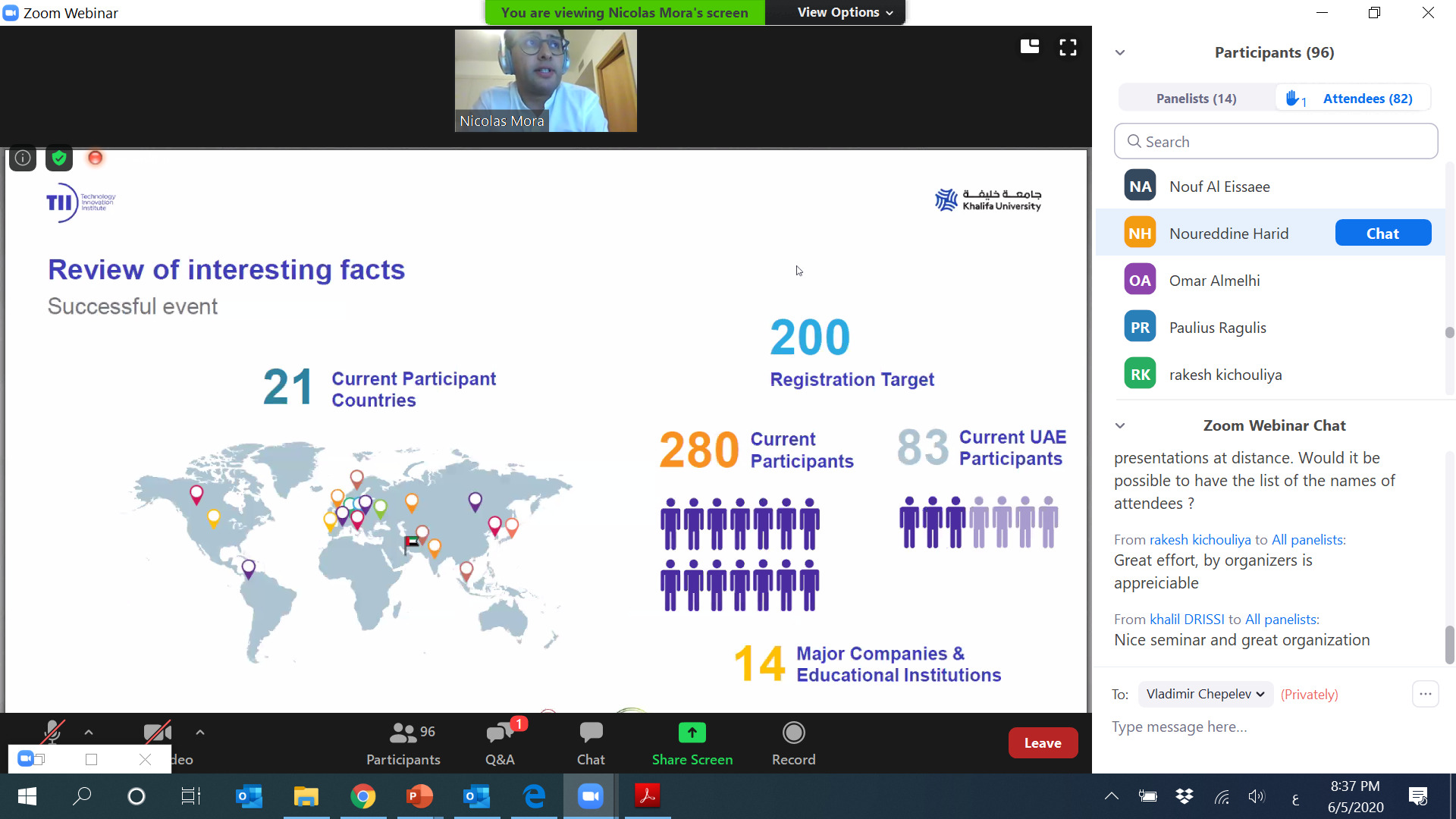
The Technology Innovation Institute through its Directed Energy Research Center and Khalifa University through its Advanced Power and Energy Center organized a two-day online-seminar on high-power electromagnetics. Twelve leading international scientists presented their research to around 280 participants from all over the world. The seminar is the first of a series of four seminars preparing for the ASIAEM 2021, which is scheduled to be hosted and organized in Abu Dhabi.


Khalifa University Professor Publishes New Book on Nanomaterials in Memory Devices

Rising consumer demand for faster, more efficient and smaller electronic devices has generated a need for scalable and reliable memory devices with low power consumption. The computer’s memory has a critical role: It is responsible for storing and retrieving data quickly. Traditional memory devices are not improving as quickly as other computer components, however, prompting researchers to turn to nanomaterials find new ways to improve a computer’s memory performance and efficiency.
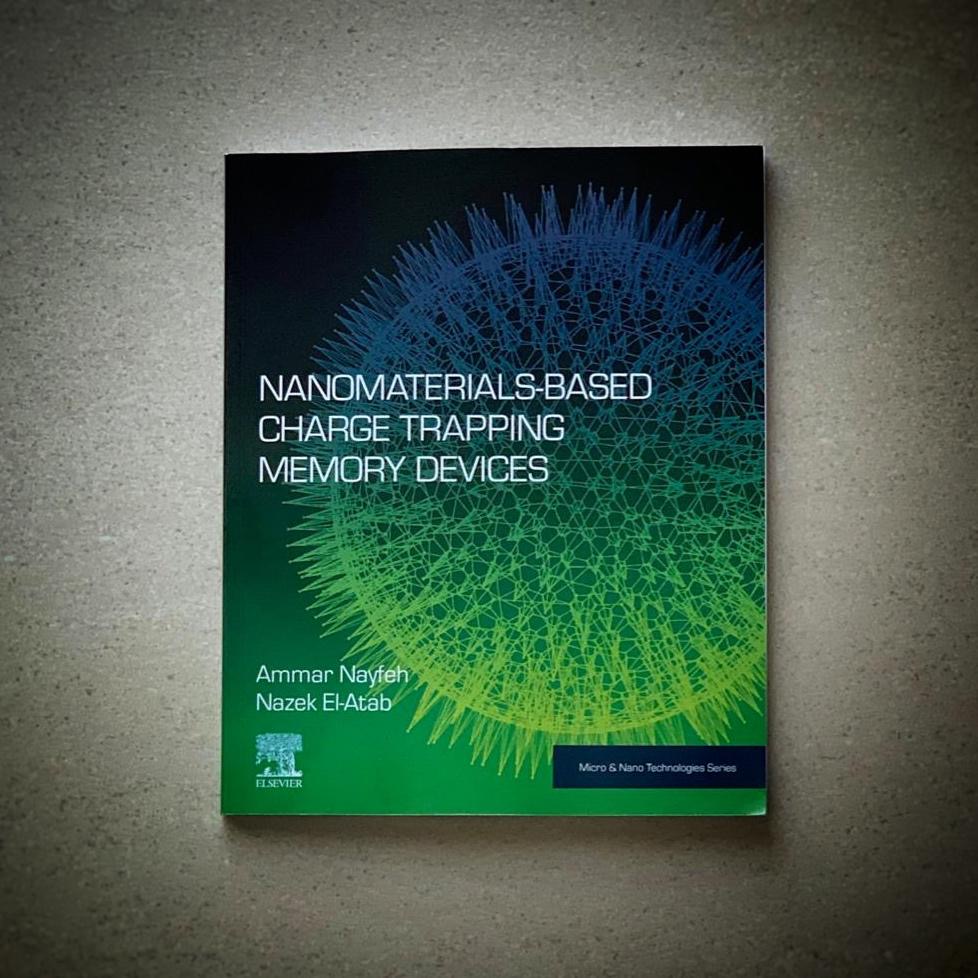
Dr. Ammar Nayfeh, Associate Professor of Electrical Engineering and Computer Science at Khalifa University, and Dr. Nazek El-Atab, Postdoctoral Research Fellow at King Abdullah University of Science and Technology and KU alumna and Dr. Nayfeh’s former student, published their work in Nanomaterials-Based Charge Trapping Memory Devices, a book providing a detailed explanation of memory device operation and an in-depth analysis of the requirements of future scalable and low-powered memory devices in terms of new materials properties. 
“It is clear that nanotechnology is very relevant now and a key to the future,” said Dr. Nayfeh in the preface to their book. “Specifically in the area of electronics, nanotechnology will play a vital role in the ability to increase device performance.”
Dr. Nayfeh and Dr. El-Atab published this book as a culmination of their work that started with Dr. El-Atab as a PhD student at KU, supervised by Dr. Nayfeh. Calling on their considerable research on nanomaterials and structures and nano-memory, their new book offers everything students and researchers need to know relating to low-power memory devices.
“A marriage between nanotechnology and traditional electrical semiconductor-based devices is vital for future progress,” wrote Dr. Nayfeh. “Currently, nanotechnology is no longer a pipe dream, or a catchy phrase, but now has real-life applications in the mainstream. In 2019, you could buy a TV with quantum dot displays or buy makeup with nanomaterials.”
Dr Nayfeh also added “A majority of research carried out in this book was done in the UAE at Khalifa University using UAE’s only cleanroom facility. We are grateful for the constant support given to make this possible and helping to make the UAE a leader in nanotechnology research moving forward.”
This book is an important reference for materials scientists and electrical engineers looking to develop low-powered solutions to meet the growing demand for consumer electronic products and devices.
“It is important that current and future graduate students are educated in the area of nanomaterials as this will be a key tool for them,” wrote Dr. Nayfeh. 
Jade Sterling
News and Features Writer
30 June 2020

Uncovering the Obesity Gene in Emiratis


The UAE ranks among the highest nations in the world for obesity. The obesity rate among Emiratis is particularly high, with a recent study finding nearly 70 percent of Emirati men under 30 to be obese. Researchers at Khalifa University are exploring a way to stop the high rate of obesity among Emiratis, by looking directly at the genes that may be causing it, and finding a way to ‘switch them off.’


Dr. Abdulrahim Sajini, Assistant Professor of Biomedical Engineering, Dr. Habiba Alsafar, Associate Professor of Genetics and Molecular Biology and Director of the KU Center for Biotechnology (BTC), and PhD student Sarah Azzam are investigating the way Emirati-specific RNA may code for obesity and how this can be mitigated. They are creating a model that will help identify RNA modifications that cause the over-production of the cells that store fat (adipocytes).


View this post on Instagram


. يقوم الباحثون في ‎#جامعة_خليفة في الوقت الحالي بالكشف عن طريقة تحد من معدل السمنة لدى الأفراد في دولة الإمارات، وذلك من خلال فحص الجينات التي قد تسبب تلك السمنة وإيجاد الطريقة المناسبة لإيقاف عملها. لذلك، قام كل من الدكتور عبد الرحيم سجيني، الأستاذ المساعد في الهندسة الطبية الحيوية وسارة عزام، الطالبة في برنامج الدكتوراه بالبحث عن الأسباب التي تجعل مادة الـ (آر إن إيه)، لدى الإماراتيين تحديداً عاملاً يساهم في ظاهرة البدانة وكيفية الحد من ذلك ‏حيث يقوم الباحثون بإنشاء نموذج قادر على التعرف على تعديلات الـ (آر إن إيه) التي تسبب زيادة مفرطة في إنتاج الخلايا الشحمية وبالتالي الاحتفاظ بالدهون داخل الجسم مسببة البدانة. Researchers at #KhalifaUniversity are exploring a way to stop the high rate of obesity among Emiratis, by looking directly at the genes that may be causing it, and finding a way to ‘switch them off.’

A post shared by جامعة خليفة (@khalifa_university) on


RNA is responsible for coding, decoding, regulating and expressing the genes held within DNA. Recently, it was discovered that RNA interacts with various modifiers within the body’s cells that can affect whether a gene is expressed or not. This is known as the ‘epitranscriptome,’ which can be thought of as an extra layer of instructions for the RNA.


Research into how the epitranscriptome affects and influences the way genes are expressed has been gaining traction. This influence is particularly important in adipogenesis—the production of fat cells—where different types of adipocytes can be produced according to cell-type specific gene expression. Therefore, transcription factors are crucial for adipogenesis, making it a target for the KU research project.


Their research involves using somatic cells—any biological cell of a living organism other than reproductive cells—and converting them to induced pluripotent stem (iPS) cells. iPS cells can be derived directly from adult tissues, meaning they can be made in a patient-matched manner, with each individual able to access unlimited supplies.


“We’re looking at contributing towards better understanding the genetic cause of obesity, via reprogramming Emirati-specific cells into iPS cells for disease modelling. Human iPS cells are similar to embryonic stem cells in that they can give rise to most if not all types of cells in a human, like neurons, muscles and skin,” explained Azzam. “The idea of the project is to reprogram obesity-specific somatic cells into iPS cells and remodel adipogenesis in the lab using Emirati genetic backgrounds.”


With these cells, the KU researchers can study various ways they could remodel adipogenesis in people susceptible to obesity. Once it is established that a phenotype—the set of observable characteristics of an individual—can be associated directly with RNA modifications, the challenge is in understanding which of the modified sites underlies the phenotype.


But there are tens of thousands of methylated sites in the human transcriptome – the areas that indicate that a gene is expressed and active, or silent and inactive – and deciphering which of them is causally linked to a phenotype is an immense challenge.


The epitranscriptome has ‘writers’ and ‘erasers’ that mark RNA, with ‘readers’ translating these marks into a variety  of functions. Small molecules are small chemical entities that bind to their recognition sites on proteins to block the activity of that protein.


“We hope that small molecules could be engineered to mitigate the risk of obesity among Emirati people,” said Dr. Sajini. “So far, we have been successful in reprogramming somatic cells into iPS cells. We now need to decode the epitranscriptome role in obesity.”


This pioneering research project will help advance current understanding of the role of the epitranscriptome in obesity, and may bring researchers a step closer towards finding the ‘fat’ cure in Emiratis.


Jade Sterling
Science Writer
29 June 2020

Emiratis recall historic internship at NASA 10 years ago

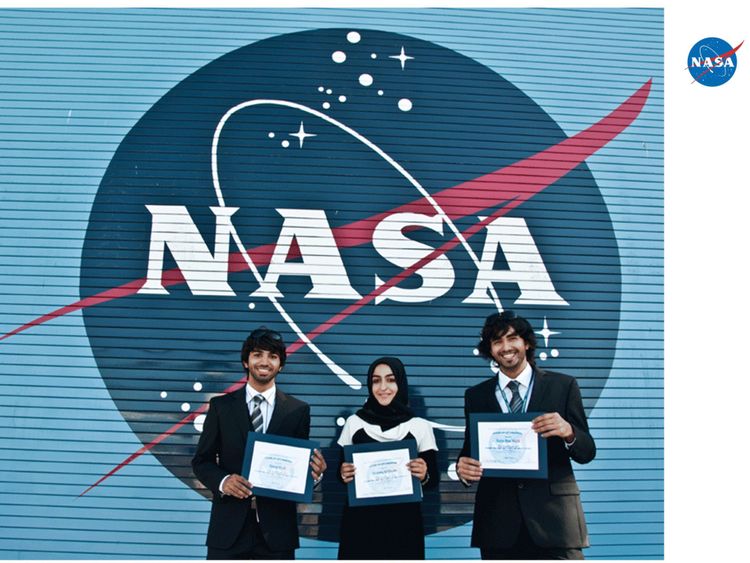
It has been 10 years since three Emiratis landed in California’s Silicon Valley to become the first non-Americans to officially intern at the US National Aeronautics and Space Administration (NASA) Ames Research Centre.

The young Emiratis went on to study at Massachusetts Institute of Technology, Harvard University and Masdar Institute. They have also worked on innovative projects in the UAE’s diversified water, power, and nuclear sectors the past decade.

Read full story here: https://gulfnews.com/uae/science/emiratis-recall-historic-internship-at-nasa-10-years-ago-1.72244628

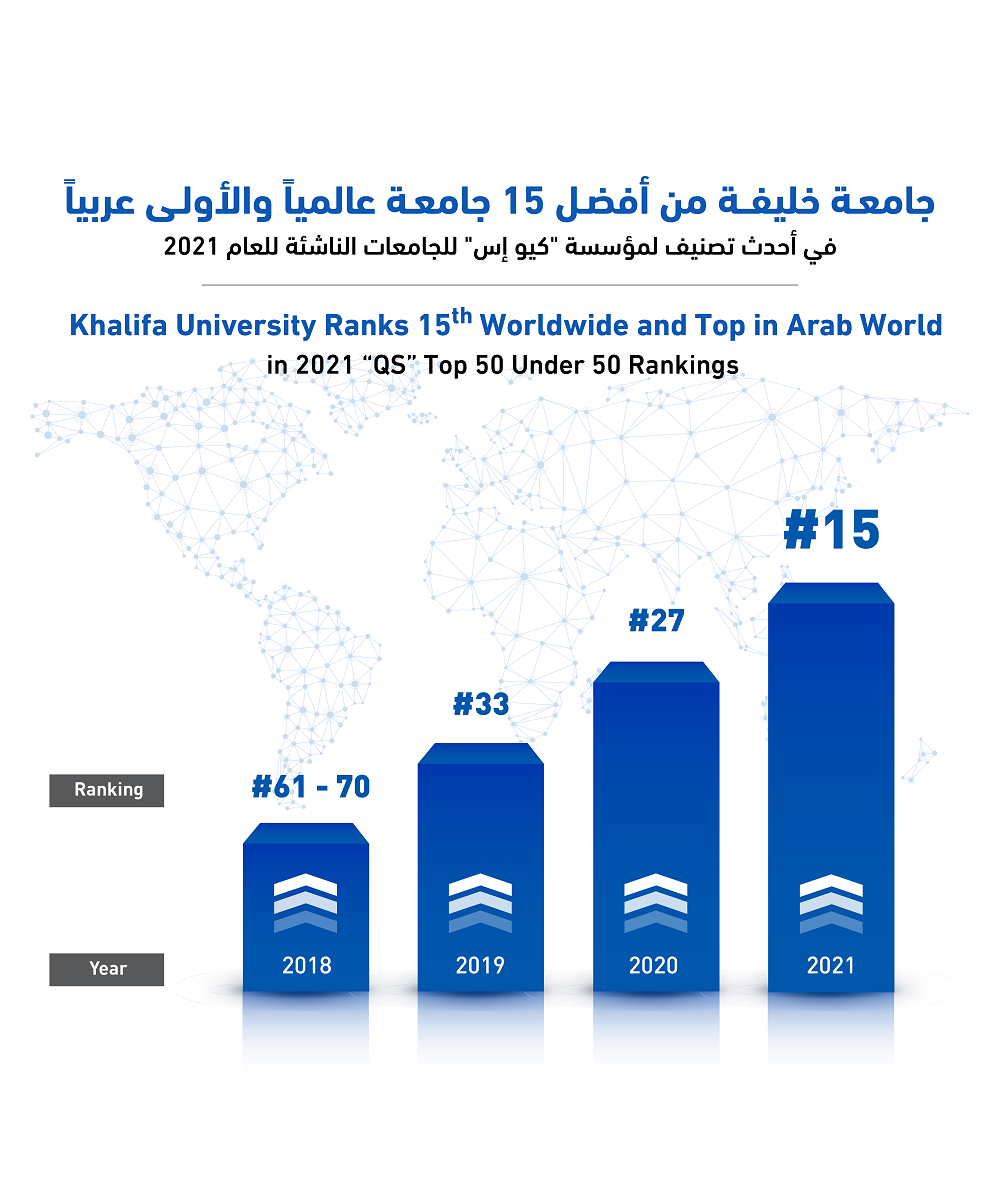
Khalifa University Ranks 15th Worldwide and Top in Arab World in 2021 QS Top 50 Under 50 Rankings

Khalifa University of Science and Technology today announced that it is ranked 15th in the 2021 QS (Quacquarelli Symonds) Top 50 Under 50 rankings. Khalifa University is also ahead of any other institution in the Arab world to achieve this remarkable distinction in the QS ranking.
The QS Top 50 Under 50 listing highlights the world’s top 50 universities established within the last 50 years, based on the most recent edition of the QS World University Rankings. The exclusive QS table for the world’s younger academic institutions aims to recognize a university’s reputation, resources, and world-class outcomes that are typically built over time.
Dr. Arif Sultan Al Hammadi, Executive Vice-President, Khalifa University of Science and Technology, said: “Another honor has come our way as Khalifa University has become the only institution to stay ahead of other universities in the Arab world with this distinction in the QS Top 50 Under 50 rankings. We are ranked 15th among the top universities in the world, which reflects our steady progress and the sincere efforts of our faculty, staff and students, especially in the research and academic arena. We believe our global recognitions and achievements are in line with our mission to be at the forefront in contributing to the UAE’s knowledge economy drive.”
Only recently, Khalifa University was ranked 211 in the QS World University Rankings 2021, a massive jump of 57 notches, reiterating the university’s increasingly impactful status as a research-based institution, leading in the creation of knowledge and human capital.
Khalifa University is already ranked top in the UAE and 114th globally in ‘Engineering’ subject in the US News & World Report’s, 2020 Best Global Universities rankings that was published in November 2019. The university is also ranked second in the Middle East and North Africa (MENA) region and among the top 200 globally in the Times Higher Education (THE) World University Rankings 2020 by Subject: Engineering and Technology.
Clarence Michael
News Writer
25 June 2020