

Proving that solar power can help meet the UAE’s energy needs

By Alaeddine Mokri

In order to reach Abu Dhabi’s goal of getting 7 per cent of its electricity from renewable resources by 2020, we first need to understand how much renewable energy is available – and how best to harvest it.

To provide a part of that critical information, researchers at Masdar Institute are working to assess the potential of solar energy as an essential future source in the UAE.

We are conducting detailed quantitative analysis of the solar- energy resource, electricity production and consumption trends, and the status of solar-energy projects and initiatives in the UAE.

We have already provided some unique insights. One of the key findings has been that the UAE’s current energy needs could be met by covering a mere 1.9 per cent of the country in thin-film and silicon modules.

The UAE lies in what is known as the “sun-belt”, the middle region of the globe that is most exposed to the sun. It should be no surprise then that Abu Dhabi city, Al Ain and Sharjah were found to have among the highest yearly solar- energy input out of 207 regions in the Middle East and North Africa region.

The country gets between 10 and 15 hours of sunshine almost every day – enough for existing energy-storage technologies to operate round the clock.

There is very little seasonal variation in the amount of solar power available, so solar plants in the UAE will be able to operate near full capacity year-round. And the sun is strong here, strong enough for solar-concentrating technologies such as concentrated PV or concentrated solar thermal to operate efficiently.

Our project also looked at how the UAE’s existing solar projects will contribute to the overall goals of sustainable energy. Currently the UAE has 20 megawatts of solar energy capacity. By the end of next year that is expected to grow to 140MW.
Going by announced plans for further solar-energy developments, the report forecasts that at least 800MW will come on stream by 2020, and another 900MW before 2030.

In terms of existing installations, the research counted 36 solar installations that generate 10MW of electricity and hot water, in addition to the first grid-connected 10MW solar-power plant in Masdar City. Together they have been combined into the UAE’s first solar installations map.
Among the installations, four are used for heating water in four iconic buildings: Burj Khalifa, Palm Jumeirah, Aloft Hotel and Masdar Institute. Two are deployed in remote islands to avoid transporting fuel to them.

One cools buildings in Masdar City, and another is being used to desalinate water. Some, in street lighting, have been in use for decades, as far back as the early 1980s. With these findings, we were able to also provide some suggestions for further measures that could improve the uptake, economic viability and use of solar energy technologies.

We found some mathematical methods for accurately estimating how much solar radiation is received on the ground.
This is very important for predicting how much power a solar installation will generate, and therefore whether it will be financially viable.
We also found that the general belief that solar modules perform less well at high temperatures and humidity is not necessarily true.Indeed, some solar panel technologies, such as organic solar modules, work best under such conditions.
We also found that solar energy could be a much better source of power for desalinating water thannatural gas, both financially and environmentally.

This could make a huge difference, given that the UAE is the world’s second biggest desalinator, and that its production of desalinated water is rising by 6 per cent a year.

We are confident that between them, these findings will help the UAE and Abu Dhabi to reach its goals of sustainability and renewable energy. The quantitative information this report provides will surely help ensure solar-technology development in the UAE continues, effectively and efficiently.

Alaeddine Mokri is a research assistant at the Masdar Institute of Science and Technology.
http://www.thenational.ae/news/uae-news/technology/proving-that-solar-power-can-help-meet-the-uaes-energy-needs
 

Climatic Conditions Make Abu Dhabi Ideal for Commercial Production of Biofuels from Algae

Masdar Institute Faculty Gathers Interdisciplinary Team to Conduct Research in Biomass-Derived Fuels

Abu Dhabi-UAE: 30 October, 2012 – Abu Dhabi’s abundant sunshine and climate make it a near-ideal location for growing algae for commercial production of biofuels. Such unique geographic and climatic conditions further enhance the opportunity for the Emirate to become a leading developer of clean and sustainable technologies.

An interdisciplinary research team assembled by Dr Hector H. Hernandez, Assistant Professor, Chemical Engineering, Masdar Institute of Science and Technology, is currently undertaking an algae research project. The team uses a holistic approach to the development of a research program that covers all the individual pieces of the algae research project. These include isolation and characterization of the algae, genetic engineering of the algae for specific products, large scale growth facilities design and implementation, bio-refinery design for fuel and other valuable products, as well as technoeconomic analysis of the whole process chain.

Says Dr. Hernandez: “Masdar Institute is unique in the algae research project in that it comprises both experienced faculty and students in the project team. Currently we have six students and the team will grow over the next year up to 12 – 13 students, both at the Master’s and higher levels. We are actively searching for local and international entities who are interested in the development of the algae research projects and to support the incoming graduate students.”

With a strategic objective to become one of the world’s leaders in renewable energy research, development and implementation, Abu Dhabi is leveraging its substantial resources and experience in global energy markets into the technologies of the future. The Masdar Initiative was launched to provide a platform for research and development, seeking solutions to some of mankind’s most pressing issues – sustainable energy resources, climate change and human capital building. Serving as a key pillar of innovation and human capital, Masdar Institute remains fundamental to the multifaceted renewable energy company Masdar’s core objectives of developing Abu Dhabi’s knowledge economy and finding solutions to humanity’s toughest challenges such as climate change. Development of sustainable sources of energy from renewable resources – including biofuels derived from renewable biomass – is a cornerstone of this energy strategy.

The scenario looks promising, considering the advantages. For example, non-arable lands, which are abundant in the UAE, can be used for growing algae to obtain bio-fuelsIn addition, native algae can use non-potable sources of water, such as brackish groundwater, wastewater, or seawater for growth. Even in the scale-up process, these unique strains will not require fresh potable water.

While there is no possibility for a ‘food-vs.-fuel’ competition, there is adequate potential for integrating algae growth with aquaculture and water treatment facilities for waste-water remediation. Also, algae can be a significant carbon-neutral source for ‘green’ fuels including green diesel, jet fuel, biogas and ethanol.In addition, algae has the potential to produce valuable nutraceutical and pharmaceutical materials as co-products. Moreover, there is the capacity to use the left-over algae fraction that is not used in biofuels production as nutritional supplements and organic fertilizer for the agricultural sector. Algae also have an untapped market in cosmetics with sustainable products from algae providing significant components of natural cosmetics.

It is no wonder then that there is not much skepticism about their commercial viability. Dr. Hernandez insists that there is commercial scope for the outcome of such a project. And of course, his conviction is based on statistics.

There is a large international market that is looking for biomass-derived fuels to help meet their renewable energy goals. Take for example Europe. Germany has set a target of 45% for energy to be obtained from renewable sources. With the recent abandoning of nuclear energy as part of the renewable energy mix, this move has opened a large market for energy from biomass. The European Union (EU) has also declared that it is looking for energy products derived from biomass that do not compete with food crops. There is a growing market for aviation biofuels within the UAE due to the newly-implemented ‘carbon tax’ on jetliners landing in Europe that carry jet fuel derived from petroleum.

Recently, China announced a US$100 million business deal with an algae company in Australia to provide them with the knowhow for producing biofuels from algae. According to new SBI Energy research, private sector investments, regulatory support and strategic partnerships are driving commercial production of biofuels derived from algae that will expand to US$1.6 billion by 2015. Such prospects induce researchers to focus on algae.

There are additional benefits as well. Biologically derived fuels can supplement fossil fuels and other fossil fuel-derived materials. Not only is there benefit to the energy market, but there is also potential to provide the building blocks needed for plastics, nutritional, and pharmaceutical markets. More importantly, fuels produced from the algae biomass can be used in the current fuel infrastructure as a direct substitute for diesel or jet fuel. That sounds promising to some of the diesel fuel markets in the largest emerging economies such as India and China.

Adds Dr. Hernandez: “At Masdar Institute, we are developing novel strategies for the use of algae-derived biomass for energy and other commercially relevant molecules. We have an internationally recognized team of scientists, such as Dr. Robert M. Baldwin and Dr. Jens Ejbye Schmidt, Professors in the Chemical Engineering Program, working to develop new chemical processes for industrial scale up and treating of the algae biomass. Their contributions to the field will place Masdar Institute at the forefront of industrial biomass processing.”

There has been great progress made in the first year of the algae research project at Masdar Institute. The current students presented two posters at international conferences earlier during summer and they are scheduled to present two more posters by the end of this year. This is quite an accomplishment for such a young research program.

Indications are that biofuels will be widely used in the near future.

For more information on the algae research project, visit http://algae.labs.masdar.ac.ae

Harnessing the power of the Sun

By Dr TieJun Zhang

Sunlight is free, plentiful and a ready source of energy to harvest.

But while a number of technologies exist today to provide solar energy for a range of needs, other technologies have yet to be fully developed.

One that has good potential for the UAE is high-concentrating photovoltaics (HCPV) – producing electricity by using mirrors and lenses to concentrate light from the sun on to super-efficient cells.

HCPV takes up far less land space than standard photovoltaic arrays and panel fields, and can be far more efficient.

This is because it usually uses advanced multi-junction PV (photovoltaic) cells.

Each junction absorbs part of the solar spectrum, and multiple junctions can between them absorb a broad spectrum.

For instance, Boeing Spectrolab has made HCPVs that are a centimetre squares, 1,000th the size of other cells and yet able, because the energy is concentrated, to produce the same amount of power.

These cells can capture up to 43 per cent of solar energy, more than twice as much as commercial silicon PV cells.

In addition, HCPV is much less sensitive to temperature than common silicon cells, a great advantage in hot countries such as in UAE.

HCPV has a price advantage, too, as it uses only small PV panels (which are expensive), and relatively cheap concentrating optics.

Now the challenge for scientists at the Masdar Institute is to make use of the remaining 57 per cent of energy that current HCPV arrays do not capture, which is currently wasted as heat.

Working with researchers at the Massachusetts Institute of Technology, our aim is to use that thermal energy directly for power generation, cooling, desalination or other crucial functions.

We intend to do this by using tiny heat exchangers to collect the energy, and then an expander and pump to turn it into electricity.

Because HCPV takes up less space, it can be used in places where there isn’t much – such as the UAE’s many islands in the Arabian Gulf, remote stations or even on “urban islands”, which are buildings and facilities that may be kept off the electrical grid within a city.

And with HCPV arrays being as small as a tree, they can also be mobile, providing energy like a portable generator.

We are looking into whether one could power car air conditioners or even an in-car refrigerator.

Additionally, the waste heat can be used to drive mechanical systems within the array, for desalinating water through reverse osmosis, or providing cooling with vapour-compression refrigeration. That would give us a more holistic product – one that not only provides power, but potentially water, cooling and other functions.

One aim now is to further improve the reliability and efficiency of these systems, using cutting-edge automation technology.

We want to produce arrays that can operate smoothly and without management from technicians, making them easier and more attractive for potential customers.

They need to handle the natural variation in solar energy, getting the maximum power output whatever the time of day or season with minimal effort from array owners.

It is our hope that this research will yield for Abu Dhabi a useful part of the overall sustainability puzzle that will contribute to the emirate’s goal of getting 7 per cent of its energy from renewable sources by 2030.

And with the global HCPV market expected to reach US$1.6 billion (Dh5.87bn) by 2017, we also hope to provide the UAE with a revenue stream through the intellectual property and potential exports of this unique technology, which will surely find applications around the world.

–    Dr TieJun Zhang is an assistant professor of mechanical engineering at the Masdar Institute of Science and Technology.
 

Masdar Institute Faculty to Lead Panel Discussions at Asia Future Energy Forum 2012 in Singapore

Sessions to Highlight Innovation and Smart Technologies in Asia

Abu Dhabi-UAE: 20 October, 2012 – Masdar Institute of Science and Technology, an independent, research-driven graduate-level university focused on advanced energy and sustainable technologies, today announced its faculty will lead two key sessions to mark participation in the Asia Future Energy Forum & Exhibition (AFEF) 2012 in Singapore.

A leading global energy event in the Asian region, AFEF will be held from 22-24 October at the Sands Expo & Convention Center, Marina Bay Sands, in Singapore. The event offers a world-class platform, in one of the most dynamic regions in the world, for the promotion of leading-edge sustainable energy governance, business, investment, finance, and technology that enable the smart delivery of clean energy solutions.

AFEF, organized in association with Masdar, is part of a collaborative initiative to bring the World Future Energy Summit (WFES) experience internationally to Asia. The future energy forum is an international event that began in Europe and now comes for the first time to Singapore in Asia.

Dr Fred Moavenzadeh, President, Masdar Institute, said: “AFEF 2012 serves as the most appropriate forum for Masdar Institute to showcase our research highlights. The research path has helped Masdar Institute to lead in innovation and generate IPs in clean energy. In the UAE, we lead in patent filings that cover six research areas such as health, wind, solar, smart grid smart building (SGSB), telecommunications and microsystems. We thank the UAE leadership for their support that facilitated our substantial achievements. During the event in Singapore, our faculty will effectively lead discussions at various panels to highlight our role in human capital and knowledge development.”

Reiterating the status as thought leaders and knowledge-builders in the core areas of solar energy, carbon capture and storage (CCS), energy efficiency, water, waste management and sustainable building, Masdar Institute will showcase its role in human resource development, especially through R&D and in developing future technologies. Moreover, Dr. Steve Griffiths, Executive Director, Institute Initiatives, and Professor of Practice, and Dr. Scott Kennedy, Dean of Research, will drive discussions at the forum.

Dr. Steve Griffiths will be offering an overview of sustainable energy innovation opportunities in the clean energy and advanced technology areas on 24 October at AFEF Innovation Panel-‘Impact of Innovation in Asia’ that will be moderated by Dr. Nawal Al-Hosany, Director, Zayed Future Energy Prize, and Director-Sustainability, Masdar. Dr. Scott Kennedy will be part of the panel on ‘Bioenergy – Success and Outlook in Asia’ that is scheduled for 23 October. The panel will be moderated by Per Dahlen, Chair, Globalization Committee, Sustainable Energy Association, Singapore.

Dr. Griffiths earned his Ph.D. in Chemical Engineering from MIT and his MBA from the MIT Sloan School of Management. Prior to joining Masdar Institute, Dr. Griffiths was the Executive Director of the MIT Technology and Development Program’s MIT/Abu Dhabi Program and the founding Executive Vice-President of Light Pharma Inc. Consistent with his current role at Masdar Institute, Dr. Griffiths additionally serves on research and innovation committees outside of Masdar Institute, including the Emirates Solar Industry Association (ESIA) Executive Committee as Research Director, Abu Dhabi Science, Technology and Innovation R&D Taskforce, and the Zayed Future Energy Prize Selection Committee.

Dr. Scott Kennedy, Dean of Research is additionally an Associate Professor in the Engineering Systems and Management program at Masdar Institute. He received his Doctorate in Engineering Science, as well as his S.M. in Applied Math, from Harvard University. He received the John and Fannie Hertz Fellow award in 1998.

Dr. Kennedy’s research and teaching interests cover the use of quantitative and qualitative system analysis techniques to investigate complex sociotechnical systems.  He has a strong interest in understanding links between energy, natural resources, technology, and poverty; and in creating systems/conditions/policies for reducing poverty through improved access to energy and technology. 

Established as an on-going collaboration with the Massachusetts Institute of Technology (MIT), Masdar Institute integrates theory and practice to incubate a culture of innovation and entrepreneurship, working to develop the critical thinkers and leaders of tomorrow.  With its world-class faculty and top-tier students, the Institute is committed to finding solutions to the challenges of clean energy and climate change through education and research.


Nuclear Desalination Best Step Forward for UAE, Says Masdar Institute Faculty

Prestigious International Journal Names Dr Youssef Shatilla of Masdar Institute Guest Editor for Special Edition on ‘Nuclear Desalination’

Abu Dhabi-UAE: 17 October, 2012 – The UAE’s water and energy security will receive a major boost if the desalination plants can be linked to nuclear power. Nuclear desalination is a well-known technology and the number of plants currently operating across the world strongly indicates the advantage, according to Dr. Youssef Shatilla, Dean of Academic Programs, and Professor – Mechanical Engineering, Masdar Institute of Science and Technology.

The remarks followed the announcement by the editorial board of the prestigious international journal Desalination, naming Dr Youssef Shatilla and Dr. Ibrahim Khamis, Nuclear Power Technology Development Section, International Atomic Energy Agency (IAEA), as co-Guest Editors for a special issue dedicated to ‘Nuclear Desalination’. Dr. Nidal Hilal, Editor-in-Chief of Desalination, has announced that both luminaries have accepted the offer for the special edition that will be published in March 2014. This special issue will be open by the journal on 1 November 2012.

Dr. Shatilla said: “Since the creation of modern UAE, most of the water needs have been met through seawater desalination. The UAE is no stranger to the world of desalination as some of the largest desalination plants in the world are right here in our own backyard. Nuclear desalination is basically the same as conventional desalination, except for the source of energy, which comes from a nuclear power plant. Nuclear desalination plants have been deployed in various parts of the world ranging from developed to developing countries with commanding success. This gives confidence that such an undertaking, if implemented, will definitely be a huge addition to UAE’s water and energy security.”

Dr. Nidal Hilal, who is also Professor in Nano-membranology and Water Technologies at Masdar Institute, said: “Energy plays important role in both thermal and RO desalination technologies and looking into the future for providing alternative energies to provide sustainable clean water to places where it is needed. Therefore Desalination journal will publish a special issue on nuclear desalination in 2014 and has chosen Dr. Khamis from the Department of Nuclear Energy at the IAEA and Dr Shatilla from Masdar Institute, who has a doctorate of Science in Nuclear Engineering from MIT and well known in this field.

“The editorial board of Desalination is always looking into disseminating state-of-the-art research findings in very important water and desalination technologies to scientists and engineers around the world. The journal has recently completed a number of special issues, to be published early 2013, including, New Directions in Desalination, Membrane Distillation, Forward Osmosis, Radioactive Decontamination, Boron Removal and Nano-filtration.”

 Dr. Youssef Shatilla has a DSc in Nuclear engineering from MIT, and has been a Visiting Professor at the Department of Nuclear Science and Engineering at MIT since Spring 2007. From Fall 2002, he spent five years as an Associate Professor at the Department of Nuclear Engineering at King Abdulaziz University, Saudi Arabia. Dr. Shatilla was also a Faculty Fellow at the Idaho National Laboratory for two consecutive years in 2004 and 2005. Before that, for about 10 years Dr. Shatilla was a Principal Engineer in the Core Engineering Department of the Westinghouse Electric Company, where he developed methods and software for nuclear reactor design applications.

Holder of a PhD in Chemical Engineering and a DSc in Nanotechnology and membrane separation from the University of Wales in the UK, Dr Nidal Hilal, has additional responsibility of working with the faculty to establish a Centre of Excellence for Water Technologies at Masdar Institute. Dr. Hilal has recently co-authored two major handbooks titled ‘Atomic Force Microscopy in Process Engineering: An Introduction to AFM for Improved Processes and Products’ and ‘Membrane Modification: Technology and Application’.

Established as an on-going collaboration with the Massachusetts Institute of Technology (MIT), Masdar Institute integrates theory and practice to incubate a culture of innovation and entrepreneurship, working to develop the critical thinkers and leaders of tomorrow.  With its world-class faculty and top-tier students, the Institute is committed to finding solutions to the challenges of clean energy and climate change through education and research.


Masdar Institute to Highlight Academic, Research and Outreach Initiatives at Najah Career Fair and Exhibition 2012

Pavilion to Offer Information on Employment Options for UAE Nationals, Scholarships and Campus Facilities

>Abu Dhabi-UAE: 15 October, 2012 – Masdar Institute of Science and Technology, an independent, research-driven graduate-level university focused on advanced energy and sustainable technologies, today announced it will showcase its UAE national-centric academic and research offerings at Najah Career Fair and Exhibition 2012, one of the most comprehensive education, training and careers events in the UAE.

Organized under the patronage of His Highness Sheikh Nahyan Bin Mubarak Al Nahyan, UAE Minister for Higher Education and Scientific Research, the sixth edition of Najah is scheduled to be held from 16–18 October at the Abu Dhabi National Exhibition Center (ADNEC). Masdar Institute will join various government departments and private organizations to seek talented UAE national graduates and emerging professionals as part of its commitment to building indigenous human capital.

The Theater at Masdar Institute pavilion in Najah 2012 exhibition will host recruitment presentations, faculty presentations and outreach activities. A reception area will focus on recruiting graduate students by offering them brochures and academic program-related materials, while the Human Resources department will respond to queries and interact with UAE nationals interested in a career with Masdar Institute. The Outreach and Young Future Energy Leaders (YFEL) section will aim to raise awareness and highlight Masdar Institute’s outreach programs and activities.

Dr. Fred Moavenzadeh, President of Masdar Institute, said: “As an institution that is mandated to develop the R&D capabilities and the indigenous human capital, Masdar Institute considers Najah the right platform to showcase its academic, research and outreach offerings to attract local talent. As directed by the country’s leadership, our efforts will remain focused on strengthening the knowledge sector, which serves as a key economic pillar for the UAE’s progress. We are confident our participation will adequately attract qualified individuals for employment, as well as students who seek to pursue their academic interests in the sustainability sector.”

In order to offer the right channel for the growth of promising UAE nationals, Masdar Institute offers summer training that focuses on developing capabilities and skills of local manpower. The research-based academic institution aims to equip the UAE youth with the knowledge and expertise they require, making them eligible to hold higher positions in any organization in the UAE.

Dr Lamya N. Fawwaz, Executive Director, Public Affairs, Masdar Institute, said: “Information on academic programs, scholarship options and research offerings as well as job placement opportunities at Masdar Institute will be provided at our pavilion. Further information about our outreach programs and activities, including the Young Future Energy Leaders (YFEL) and the Ektashif programs, as well as the summer internships, will also be available to visitors. Najah is a crucial platform for seeking talented and qualified students capable of becoming future energy leaders who can contribute to the clean energy industry.”

Through various employment initiatives and a commitment to enhance the UAE’s human capital, Masdar Institute plays an important role in the development of a sustainable knowledge-based economy in the UAE. The Human Resources Department at Masdar Institute has developed several Emiratization strategies among which is a one-year Fresh Graduate Program that targets students with high GPAs in various disciplines. Such students get an opportunity to develop professional skills and gain valuable work experience at Masdar Institute.

In coordination with local colleges and universities, summer internships are also offered for undergraduate students to develop skills and gain first-hand experience at one of the administrative departments. Additionally, work placement internships are offered in collaboration with local universities to provide hands-on professional experience and help them gain practical insight into the workplace ahead of graduation.

Established as an on-going collaboration with the Massachusetts Institute of Technology (MIT), Masdar Institute integrates theory and practice to incubate a culture of innovation and entrepreneurship, working to develop the critical thinkers and leaders of tomorrow.  With its world-class faculty and top-tier students, the Institute is committed to finding solutions to the challenges of clean energy and climate change through education and research.


GLOBALFOUNDRIES Drives Advanced Nanotechnology Research at Abu Dhabi Universities

Semiconductor foundry granting access to leading-edge technology platform for researchers and students from Masdar Institute

Abu Dhabi, UAE: GLOBALFOUNDRIES today announced an innovative partnership with Masdar Institute to help spur the continued development of Abu Dhabi as a center for semiconductor R&D and manufacturing excellence. As the world’s second largest foundry, GLOBALFOUNDRIES provides a unique combination of advanced technology and manufacturing to more than 150 customers and employing more than 12,000 people worldwide.

This broad international talent base provides the company with substantial competitive advantages, combining leading-edge technology knowledge, foundry experience and a strong graduate base from universities and research institutes. GLOBALFOUNDRIES Abu Dhabi is building on and extending the excellent track record of university relations by providing a unique approach to offering access to researchers and students of Masdar Institute in Abu Dhabi.
 
In September 2012, GLOBALFOUNDRIES granted a number of students and professors from Masdar privileged access to the company’s technology development platform from the GLOBALFOUNDRIES Abu Dhabi office, located in the HQ building, Al Raha. The laboratory-like environment includes powerful production servers, engineering work stations and a high-speed data network enabling remote access to one of the world’s most advanced nanotechnology engineering systems based at GLOBALFOUNDRIES’ leading-edge Fab 1 in Dresden, Germany. The environment will provide university researchers and students with wide access to process design kits (PDKs) for advanced semiconductor technology nodes, including the latest High-K Metal Gate (HKMG) transistor technology.

"We are very proud to be a part of Abu Dhabi’s Vision 2030," said Geoffrey Akiki, general manager of GLOBALFOUNDRIES Abu Dhabi. "By introducing our world-class technology to the best talent of Abu Dhabi and investing in supporting these research efforts, we are contributing to develop a highly skilled, highly productive workforce. The worldwide engineering base of GLOBALFOUNDRIES design engineers is adding valuable know-how to this unique proposition."

A group of seven students and faculty will be taking part in the first phase of this program at GLOBALFOUNDRIES. This unprecedented experience in the region will enable the Masdar team to conduct detailed research work in modeling and designing the chips of the future. GLOBALFOUNDRIES has appointed a team of highly skilled engineers based in Abu Dhabi and around the world to lead and support this exciting initiative.

"The Dresden Design Enablement team is happy to support all activities enabling young talent to become familiar with leading-edge technology," said Gerd Teepe, Director Design Enablement, GLOBALFOUNDRIES Fab 1. "By providing support for our entire 28nm tool suite we are completing a highly innovative approach for technology education with focus on the latest generation of design enablement."

 "Masdar Institute will be among the first academic institutions worldwide to receive access to 65nm technology," said Dr. Steven Griffiths, Executive Director, Institute Initiatives, and Professor of Practice, Masdar Institute. "The three different knowledge exchange initiatives will help our students gain exciting first-hand experience with leading-edge technologies. We acknowledge the contribution by GLOBALFOUNDRIES towards human capital development in Abu Dhabi and the UAE and believe the programs will further enhance the capabilities of our students. "

 Graduate students preparing for their research project will also have the opportunity to apply for a three to six month internship at one of GLOBALFOUNDRIES sites worldwide. The first three young students from Masdar Institute will start their internship program in October in Dresden, Germany designing systems-on-a-chip (SOC) and validation in silicon hardware.

ABOUTGLOBALFOUNDRIES
GLOBALFOUNDRIES is the world’s first full-service semiconductor foundry with a truly global footprint. Launched in March 2009, the company has quickly achieved scale as the second largest foundry in the world, providing a unique combination of advanced technology and manufacturing to more than 160 customers. With operations in Singapore, Germany and the United States, GLOBALFOUNDRIES is the only foundry that offers the flexibility and security of manufacturing centers spanning three continents. The company’s three 300mm fabs and five 200mm fabs provide the full range of process technologies from mainstream to the leading edge. This global manufacturing footprint is supported by major facilities for research, development and design enablement located near hubs of semiconductor activity in the United States, Europe and Asia. GLOBALFOUNDRIES is owned by the Advanced Technology Investment Company (ATIC). For more information, visit http://www.globalfoundries.com.


Masdar to Host Renewable Energy Challenge at Abu Dhabi Science Festival

Masdar is committed to encouraging UAE students to pursue careers in the new-energy economy, which will require a strong science foundation

Abu Dhabi-UAE: 08 October, 2012 – In support of the Abu Dhabi Science Festival, Masdar in collaboration with the Masdar Institute of Science and Technology, today announced it will host an interactive challenge – focused on science and the emerging field of renewable energy – aimed at inspiring students to pursue knowledge-based, advanced careers. From October 10-20 at the Abu Dhabi National Exhibition Centre, students are encouraged to visit the Masdar booth and participate in the touchscreen challenge for a chance to win a ride in a driverless, automated electric vehicle and take a personal tour of Masdar City – Abu Dhabi’s cutting-edge clean technology cluster and sustainable development.

“The spirit of innovation and breakthrough ideas can come at any age,” said Dr. Sultan Ahmed Al Jaber, CEO and Managing Director of Masdar, Abu Dhabi’s multifaceted renewable energy company. “We are committed to sparking the curiosity of students to become interested in emerging fields, such as renewable energy and sustainable development. Interactive, hands-on challenges are a good way to motivate students to take an active role in science-based careers – and hopefully become passionate leaders who will continue to advance our social and economic prosperity.”

The Masdar City tour will also include a site visit to the Masdar Institute of Science and Technology, the company’s pilot projects and a 10MW photovoltaic power plant that provides clean energy for the entire development.

“The tour of Masdar City is an opportunity for students to see how big ideas can become a reality,” added Dr. Al Jaber. “Education remains a top priority for our visionary leadership, who recognise the importance of promoting science education to support the transition into a knowledge and innovation-led economy. Masdar is committed to encouraging and introducing students to emerging industries, like renewable energy, that will support our economic growth in the future.”

In conjunction, Masdar is also launching an online competition on Facebook and Twitter for students who cannot attend the science festival. Masdar will post a series of online questions, challenging students in science and renewable energy. Students who answer the questions correctly will be entered into a raffle for a chance to win a tour of Shams 1 – the largest concentrated solar power plant in the Middle East and North Africa currently under construction. Students will see firsthand how Shams 1, an engineering marvel, generates 100 MW of electricity from the sun, enough to power more than 20,000 homes.
The Shams 1 online challenge will run for the duration of the science festival. Answers to the questions must be submitted by email to youth@masdar.ae. Winners of the Shams 1 tour will be announced October 25.

Dr Lamya N. Fawwaz, Executive Director, Masdar Institute, said: “Knowledge-building and human capital development in the renewable energy sector are the primary aspects that will characterise our activities at the Abu Dhabi Science Festival. The presence of so many students makes the event an ideal platform to showcase our initiatives and inspire them to adopt a sustainable lifestyle. We will continue with our efforts to instil the importance of clean energy technology among these students who will eventually become leaders of the future energy industry. We are confident with support from the country’s leadership our initiatives will generate adequate interest among the students and increase their participation in clean energy-related activities.”

More than 100,000 visitors are expected to attend the Abu Dhabi Science Festival, which will also feature other interactive activities, such as simulations of surgical procedures and a crime-scene investigation workshop.

For more information about the Abu Dhabi Science Festival, please visit: http://www.abudhabisciencefestival.ae/


Reed beds can weed out the waste to return clean water

By Rashed Al Gaoud

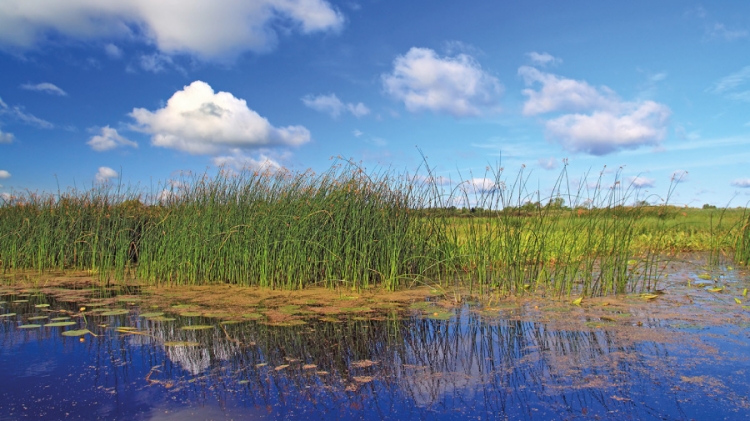
Imagine a field of tall, green reeds, rustling lightly in the wind. Dragonflies flit between the stalks, attracting migratory birds to rest, eat and rehydrate. Now imagine if that beautiful scene were also a water-treatment facility. It could be.

Constructed wetlands are an established method to treat water safely and with minimal energy requirements.
They consist of reed plants cultivated in a sandy filter where natural microbial, chemical and mechanical processes in the roots of the plants and the sandy filter transform sewage into clean water, gases, minerals and fertiliser.

The system is essentially a type of water filtration and treatment plant, making efficient use of natural processes. It mimics the way natural wetlands break down waste in water, filter out sediment and remove heavy metals.
By using filtration layers, plant roots and microbial processes, wastewater or sewage is pumped in, and after undergoing a passive and nature-based process, the now clean water is pumped out.

As a water treatment system and conservation method, constructed wetlands are often deployed in Europe and North America. In the UAE, however, it has been tried only on a small scale. There has been no conclusive work to adapt the system for the unique climatic needs here. Without such knowledge, this uniquely beneficial method cannot reach its potential in our country. That’s a shame, as it holds much promise.
To meet that promise, a team of researchers at the Masdar Institute, led by my adviser Dr Jorge Rodriguez, are developing optimised design guidelines for constructed wetlands for the UAE.

As a UAE national and a civil engineer by training, it is my hope we can develop this technology to treat water in a way that requires nearly no energy, contributes to clean air with the carbon-absorbing capabilities of the reeds, provides habitat for wildlife and, of course, provides treated water that would otherwise have to be expensively desalinated.

Because the constructed reed bed can be easily operated and is decentralised, it can serve remote small communities that would require an expensive pipeline infrastructure or carbon-intensive tanker lorries to transport sewage to distant treatment plants.
But because previous reed bed research has been conducted in climates dissimilar to that of the UAE, the findings are not completely aligned with the climate in this part of the world. The heat here leads to higher evaporation rates, a more rapid rate of growth for plants, and a heightened water temperature for the microbes.

The structure and diversity of the microbes themselves are also very important. They conduct a significant portion of the water-cleaning process by breaking down waste.

To ensure the microbes are able to function optimally, I am focusing my component of the research on using the molecular tools to investigate the microbial community found in reed-bed basins, characterising how it develops with time and throughout the depth of the basin.

Eventually, we hope to provide Abu Dhabi with another part of the overall sustainability puzzle that will reduce the ecological footprint through carbon and energy reduction, while saving precious water resources and money that could be better used elsewhere. Not only that, constructed wetlands can add to the beauty and biodiversity of my country.

Rashed Al Gaoud is a water and environmental engineering student at the Masdar Institute of Science and Technology
http://www.thenational.ae/news/uae-news/technology/reed-beds-can-weed-out-the-waste-to-return-clean-water


ADWEA and Masdar Institute Sign Agreement for Research and Scientific Cooperation on Development of Sustainable Technologies

Agreement Covers Education and Support of Research and Development in Energy and Sustainable Growth

Abu Dhabi-UAE: 6 October, 2012 – Masdar Institute of Science and Technology, an independent, research-driven graduate-level university focused on advanced energy and sustainable technologies, and the Abu Dhabi Water and Electricity Authority (ADWEA) today jointly announced they have signed a collaborative agreement to identify proposed education and scientific research, and support development of energy and sustainable technologies.

In the presence of His Excellency Ahmed Ali Al Sayegh, Chairman, Masdar, The agreement was signed by Dr Sultan Ahmed Al Jaber, Chairman of the Executive Committee of the Board of Trustees of Masdar Institute, and Chief Executive Officer of Masdar, and His Excellency Abdulla Saif Al Nuaimi, Director-General, Chairman’s Office, ADWEA. The signing ceremony at the ADWEA headquarters was attended by top officials from both organizations including Dr. Fred Moavenzadeh, President, Masdar Institute, and His Excellency Faris Obaid Al Dhaheri, Business Support Director of ADWEA.

According to the terms of the agreement, Masdar Institute will work closely with various ADWEA affiliates including the National Energy and Water Research Center (NEWRC), ADWEA Academy and ADWEA Scholarship Program. NEWRC plays a key role in ADWEA’s efforts to secure environmentally and economically sustainable energy and water for the future of the Emirate of Abu Dhabi. ADWEA and Masdar Institute have agreed to identify opportunities for exchange of scientific and technological information through research collaborations. The agreement will cover sustainable energy, water and environmental issues.

The agreement outlines several areas of potential joint research, including technologies for processing of water, developing the next generation of desalination technology including renewable energy technology; desalination through membranes, including the development of new membranes; advanced and non-traditional water processing technologies; developing current desalination technologies such as heat and membrane, as well as and environmental matters in desalination.

Dr Sultan Ahmed Al Jaber said: “In line with the vision of our leadership and from our belief in the importance of collaboration efforts that enhance partnerships, Masdar emphasizes on the intense cooperation in different areas that contribute to driving the growth of renewable energy and sustainable sector. As a research-oriented institution, Masdar Institute’s partnership with ADWEA reflects its interests to engage with industry stakeholders and enhance knowledge development in the UAE and Abu Dhabi. Access to live data and information sharing between the two organizations will enable researchers to conduct studies on production and consumption patterns aimed at improving water and energy efficiency. We are confident that ADWEA will play a valuable role in enhancing Masdar Institute’s research activities and in our mutual effort to achieve sustainable development.”

His Excellency Abdulla Saif Al Nuaimi said: “ADWEA is committed to achieving the long-term objective and vision of the Emirate of Abu Dhabi in creating a knowledge-based economy. Partnerships and collaboration initiatives lay a strong foundation to facilitate this process. We welcome the collaborative agreement between ADWEA and Masdar Institute and believe it will bring overall benefits to the UAE and Abu Dhabi. ADWEA deploys cutting-edge research as the foundation to remain a successful and performance-driven organization. Our programs and initiatives focus on sustainability and plan for growth, whilst ensuring economic and environmental balance. We are confident the collaborative programs and knowledge exchange with Masdar Institute will bring benefit to the community in general.”

Dr Fred Moavenzadeh said: “Masdar Institute remains committed to collaborating with industry and government organizations to implement sustainable technologies. The agreement with ADWEA reflects our core principles that emphasize our focus on collaborations for research and innovation in energy, water and environment to bring long-term benefits for Abu Dhabi and the UAE. As directed by the country’s leadership, we will continue our efforts to collaborate with public and private organizations to bring sustainable energy technology closer to the community.”

Both organizations look to work together to find opportunities for development of short courses and seminars for the benefit of internal and external stakeholders. On its part, ADWEA will identify areas where its respective personnel can offer support and assistance to students on graduate courses at Masdar Institute in their experimental research thesis work.

The agreement will also pave way for the joint offering of educational courses for internal and external stakeholders. Moreover, it will cover potential programs of internships and exchange of personnel. Sharing of facilities is also covered under the agreement.

A joint steering committee comprising representatives from ADWEA and Masdar Institute will be set up to oversee the implementation of the measures agreed under the agreement. 

Founded in 1998, ADWEA works closely with its stakeholders and customers to deliver safe, reliable and cost effective power and water, and researches and develops ways to achieve more efficient power and water production, distribution, and consumption. A key focus for ADWEA is sustainability-planning for growth while creating social, economic, and environmental balance.

Established as an on-going collaboration with the Massachusetts Institute of Technology (MIT), Masdar Institute integrates theory and practice to incubate a culture of innovation and entrepreneurship, working to develop the critical thinkers and leaders of tomorrow.  With its world-class faculty and top-tier students, the Institute is committed to finding solutions to the challenges of clean energy and climate change through education and research.
 

Masdar Institute Library Website Offers Print and Online Tools for Academic Excellence

Library Serves as Source of Knowledge for Students and Faculty

Abu Dhabi-UAE: 02 October, 2012 – Masdar Institute of Science and Technology, an independent, research-driven graduate-level university focused on advanced energy and sustainable technologies, today announced the library has launched a highly functional user-friendly website for the benefit of the research students and faculty in Abu Dhabi.

The website http://library.masdar.ac.ae/ offers a wide range of services and resources including research help, study spaces, print and electronic books/journals and all other academic-related services.

The easy-to-browse website incorporates several convenient features such as resources, services, e-forms and news (new arrivals). Clicking on these tabs leads the user to the intended web page, facilitating the accessing of information that is suitable to students and faculty.

Dr. Abdullah Al Hefeiti, Director of Library, Masdar Institute, said: “Our library is equipped with advanced information and communication technology-based facilities to offer excellent Internet connectivity and efficient online access to rich e-resources and digital content. We also remain committed to obtaining access to rarely requested documents from suppliers and through inter-library document delivery. Our objective, as directed by the UAE’s leadership, is to empower students and faculty by providing them the best intellectual e-resources and e-services that would help improve their academic performance.”

Being the hub for knowledge at Masdar Institute and the students’ source for academic excellence in Abu Dhabi, the library is also termed as the ‘Knowledge Center’. It holds a hybrid collection of printed course-related book materials, and other e-resources such as e-journals, e-books, electronic theses & dissertations (ETD), technical reports of research organizations, and bibliographic databases.

Representing such a knowledge center, the website incorporates tabs such as Resources, Services and E-forms that provide key services to students and faculty. The ‘E-forms’ serve as channel for accessing services such as ‘Ask a Librarian’, ‘Document Delivery’, ‘Library Instruction Request’, ‘Request a Title for Purchase’, ‘Request a Title for Course Reserve’, as well as the feedback area ‘Comment and Suggestions’.

In order to enhance its offerings, Masdar Institute library recently announced the availability of electronic information ‘resources trials’, accessible through its website. These include Frost & Sullivan that provides in-depth research coverage of several industries, Oxford Journals Database, a division of Oxford University Press at Oxford University that offers over 230 academic and research journals covering a broad range of subject areas, Cambridge University Press E-journals, a major academic and educational publisher, Taylor and Francis that publishes over 1,600 scholarly journals and offers books through the CRCNetBASE e-book platform, as well as Engineering Village, a web-based discovery platform that has become the globally accepted source of choice for engineers, engineering students, researchers and information professionals.

Other services the library offers include the catalog, one-search, Electronic Information Resources and E-forms.

To further raise the level of its services, the Masdar Institute Library website provides an update tab that shows the newly arrived resources, as well as e-services to facilitate the requests and enquiries process. The library has also provided a guide that simplifies navigation and effective use of the resources and services.

Equipped with advanced information and communication technology-based facilities, the Masdar Institute Library offers excellent Internet connectivity and efficient online access to rich e-resources and digital contents. The services and collections at the library are entirely dedicated to support the Masdar Institute community of faculty, researchers, students, and administrators. The library’s collections and facilities are also selectively offered to external researchers and postgraduates.

Established as an on-going collaboration with the Massachusetts Institute of Technology (MIT), Masdar Institute integrates theory and practice to incubate a culture of innovation and entrepreneurship, working to develop the critical thinkers and leaders of tomorrow.  With its world-class faculty and top-tier students, the Institute is committed to finding solutions to the challenges of clean energy and climate change through education and research.
 

Large-Scale Solar Thermal Desalination Plants Will Benefit UAE, Says Masdar Institute Faculty

Dr Hassan Fath Delivers Presentation at Fulbright Academy’s Seventh Annual Conference in Abu Dhabi
Abu Dhabi-UAE: 2 October, 2012 – The UAE and the GCC region will enormously benefit from large-scale solar thermal desalination plants as the thermal desalination (MSF/MED) and hybrid (integrated MSF/MED and RO) are still the most suitable technologies, according to Dr Hassan E. S. Fath, Professor of Practice – Water and Environmental Engineering, at Masdar Institute of Science and Technology.

Dr Hassan E. S. Fath was delivering a presentation on ‘Novel Integrated Green Complex for the Sustainable Living of Small Communities in Remote Areas’ at the Fulbright Academy’s Seventh Annual Conference titled ‘Sustainable Cities – Sustainable Development’. It addresses a green solution to the rising scarcity of life necessities such as water, food, and energy, as well as lack of job opportunities and lack of development of arid and remote areas.

Organized under the Patronage of His Excellency Sheikh Nahayan Mabarak Al Nahayan, UAE Minister of Higher Education and Scientific Research, and Chancellor of the Higher Colleges of Technology, the event is being held from 30 September – 3 October in Abu Dhabi and Sharjah. A Fulbright Academy delegation is scheduled to visit Masdar Institute during the event.

The Conference has brought together international sustainability experts, Emirati and key government leaders, as well as global pioneers in business, banking, science, education and non-profit organizations. The conference is expected to serve as a catalyst to influence how cities and communities of the future are studied, planned and managed. Some of the session topics will include ‘Natural Resources’, ‘Water’, ‘Public Policy’, ‘Education’, ‘Energy’, ‘Building & Urban Design’.

Dr Fath said: “Abu Dhabi needs, now, to build its own solar-driven water production facilities for the UAE to lead the region in green water production as it did for nuclear and solar power generation. Abu Dhabi’s multifaceted renewable energy company Masdar has already built solar power plants – Shams-I (100 MW thermal) and is building Noor-I (100 MW PV). What we are looking for is new solar thermal desalination plant such as Salsabeel-I with 100,000-m3/day capacity. We have the expertise capable of building such a leading solar desalination plant.”

The use of the solar driven-desalination with patented integrated MSF/MED technology targets 30% reduction of water cost through ‘sustainable energy production, as well as ‘efficient energy delivery and/or use’. Because of the high availability of solar energy intensity in the UAE, the proposed system has the capacity to produce sustainable electrical and thermal energy from solar energy sources, in addition to partially storing it for cloudy conditions for post-sunset operations.

In addition, the proposed high performance system optimizes the use of available solar energy and minimizes the specific thermal / electrical energy consumption for water production application. Since solar desalination system produces fresh water in a clean environment, it reduces the UAE’s carbon emission and footprint, while the MSF/MED technology also enables low water production cost.

Dr Fath added: “For the GCC region thermal desalination (MSF/MED) is and will continue as the leading technology. The reason is the well-known ‘four Hs’ of the Gulf water – high temperature, high salinity, high turbidity and high marine life. In addition, the presence of radioactive material because of warships and nuclear power plants, still needs to be addressed. Moreover, the toxic boron level comes out of RO requires another stage of product water treatment, which further adds to the cost. Also, the presence of ‘red tide’ in the Gulf waters forces the membrane plants to shut down, reducing the plant availability and production, leading to higher water cost.”

Dr Fath concluded: “Thermal desalination (MSF/MED) represents nearly 75% of the water produced in GCC countries with many of the recent plants in the UAE and GCC using this route. Membrane technologies such as RO are recently added to represent only 30% of the plant capacity for water blending to replace the post-treatment plant. RO may suit the clean and clear seawater of Red Sea, Arabian Sea and the Indian Ocean, but not the Gulf waters. One cannot also ignore the reliable operation of MSF/MED and the operational and maintenance (O&M) expertise developed in the region for over 60 years.”

The Masdar Institute professor pointed out that new technologies such as Forward Osmosis (FO), Membrane Distillation (MD) are still in the R&D stage or at pilot-scale and cannot compete with existing time-tested technologies.

In addition, there are many other applications where desalination can be directly used including the development of agriculture greenhouses self-sufficient in energy and irrigating water. Such a project will help the UAE address the food security challenges as the country currently imports 80% of its requirements. Integrating the latest in solar energy, desalination, and engineering systems and management will also help design a greenhouse that does not take electricity or water from the UAE’s utilities, he remarked.

An expert with wide academic and industrial experience in desalination and energy technologies as well as author of two filed patents in MSF/MED desalination technologies, Dr Hassan Fath has published a book titled ‘Desalination Technology’. He is also the co-author of the Encyclopedia of Desalination & Water Reuse (DESWARE). In addition, he has published over 150 papers in desalination and energy technologies. Holder of a Master’s degree in Mechanical Engineering, from McMaster University in Hamilton, Ontario, Canada, Dr Fath earned his doctorate from the same university.

A new analysis titled ‘Assessment of the Water and Wastewater Sector in the United Arab Emirates’ by from Frost & Sullivan finds that the market earned revenues of US$2.75 billion in 2011, which are estimated to reach US$5.61 billion in 2015. According to the report, the total installed capacity for desalination in the UAE is 8.9 million m3 per day, which is set to expand at a higher rate with many of the emirates turning towards privatization. The government is looking for 100% water connectivity to all the UAE residents; hence, investments in water distribution are anticipated to increase, says the report.

Established as an on-going collaboration with the Massachusetts Institute of Technology (MIT), Masdar Institute integrates theory and practice to incubate a culture of innovation and entrepreneurship, working to develop the critical thinkers and leaders of tomorrow.  With its world-class faculty and top-tier students, the Institute is committed to finding solutions to the challenges of clean energy and climate change through education and research.