

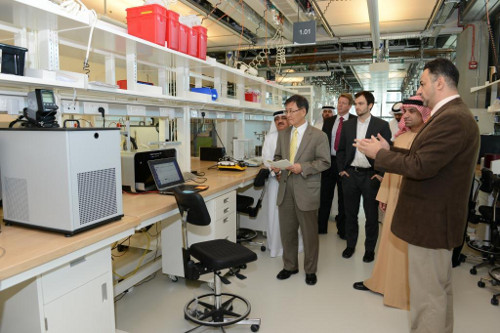
Masdar Institute Sets Up 13-Member External Advisory Board to Further Incentivize Growth

Panel Lauds Masdar Institute’s Overall Growth after Campus Tour and First-Ever Review

Abu Dhabi-UAE: 29 December, 2013 – Masdar Institute of Science and Technology, an independent, research-driven graduate-level university focused on advanced energy and sustainable technologies, today announced it has established a 13-member External Advisory Board to evaluate current performance and help chart future growth strategy.

The panel of independent experts is mandated to act as a sounding board on issues related to planning, development of research, new programs, evaluation of existing programs and other activities that will further facilitate Masdar Institute in achieving its objectives. It will offer advice and provide recommendations on a broad range of issues relevant to research activities, curriculum development, academic standards and faculty development.

Furthermore, the External Advisory Board will produce a report at the end of their annual meetings that will be considered by the Executive Council on the Board of Trustees to formulate action plans.

Dr Fred Moavenzadeh, President, Masdar Institute, said: “Globally, external advisory boards help universities establish links with the industry and fine-tune their academic offerings by making them more responsive to market needs. With the support of the UAE’s leadership, Masdar Institute has consistently registered milestones and the setting up of the External Advisory Board will further incentivize our growth. We foresee a significantly more enhanced all-round performance in the coming years.”

The team of officials headed by Dr. Steve Kang, was recently welcomed at the campus by Dr. Moavenzadeh for a first such review and a campus tour. Following the visit, the 13-member group offered its recommendations while acknowledging Masdar Institute’s overall growth achieved since its inception.

Dr. Kang, President, Korea Advanced Institute of Science & Technology, and Chairman, External Advisory Board, said: “Within a short span of four years since it was established, Masdar Institute has made a substantial impact in the clean energy and advance technologies areas through research collaborations and academic advancements. Like every institution, tweaking strategies and planning effectively for the future will further ensure success. We have offered our recommendations and we hope to see Masdar Institute accomplish even more milestones in the coming years.”

The members of the External Advisory Board include Dr. Mohamed Yousif Baniyas, Vice-Chancellor, Emirates College for Advanced Education; Dr. Thomas J. Hochsettler; Acting Chancellor, American University of Sharjah; Dr. Sung-Mo “Steve” Kang, President, Korea Advanced Institute of Science & Technology; Dr. Thomas Magnanti, President, Singapore University of Technology  and Design; Dr. Saif AI Sayari, Executive Officer and Head of Energy Solutions, Abu Dhabi National Energy Company  (TAQA Global); Mr. David Scott, Executive Director of Economic Affairs, Executive Affairs Authority (of Abu Dhabi); Dr. Faris AI Dhaheri, Director  of Business Support, Abu Dhabi Water and Electricity Authority; Mr. Saif AI Nasseri, Director  of Business Support, Abu Dhabi National Oil Company; Mr. Matar AI Romaithi, COO Industrial Development Unit, Tawazun; Dr. Nawal AI Hosany, Director of Sustainability, Masdar; Mi. John Sitler, Clean Tech Venture Capital, Masdar; Ms. llham Talab, Junior Project Officer, IRENA; and Ms. Hanan Shemaili, Senior Analyst, Mubadala Development Company.

Dr Youssef Shatilla, Dean of Academic Programs, Masdar Institute, said: “The visit by the External Advisory Board provided the faculty members an opportunity to present the progress achieved so far by various programs. We express our gratitude to the panel members and hope the coming years will witness performance that far outweighs the previous years.”

Advisory boards play an instrumental role in shaping the strategies of an academic institution, helping them to grow effectively. Such independent bodies also help foster links that promote research and development and facilitate scientific innovations.

Serving as a key pillar of innovation and human capital, Masdar Institute remains fundamental to Masdar’s core objectives of developing Abu Dhabi’s knowledge economy and finding solutions to humanity’s toughest challenges such as climate change.

Established as an on-going collaboration with the Massachusetts Institute of Technology (MIT), Masdar Institute integrates theory and practice to incubate a culture of innovation and entrepreneurship, working to develop the critical thinkers and leaders of tomorrow.  With its world-class faculty and top-tier students, the Institute is committed to finding solutions to the challenges of clean energy and climate change through education and research.

Masdar Institute Honors Members of Young Future Energy Leaders 2012 Program

 
Certificates Awarded to YFEL Members for Successful Completion of Year-long Program 
 
Abu Dhabi-UAE: 17 January, 2013 – Masdar Institute of Science and Technology, an independent, research-driven graduate-level university focused on advanced energy and sustainable technologies, honored members of the Young Future Energy Leaders 2012 program for successful completion of their year-long events.
 
More than 60 YFEL members received their certificates during a ceremony that was held in Yas Island, Abu Dhabi
 
His Excellency Sultan bin Rashed Dhaheri, Member of the Federal National Council and the Chairman of the Committee on Finance and Economic Council, who has reiterated his support to the YFEL program with a contribution of US$1 million for the second consecutive year, was present on the occasion. His Excellency Dr. Adnan Badran, President of Petra University, former Prime Minister and Education Minister of Jordan; Deputy Director-General of UNESCO, Member of the Board of Trustees of Masdar Institute, and Dr Fred Moavenzadeh, President, Masdar Institute, attended the ceremony.
 
Dr Fred Moavenzadeh, President, Masdar Institute, said: “The process of learning continues at every stage, from an academic institution to a professional organization, wherever an individual seeks to acquire additional skills. The achievement of these YFEL members reflects not only their commitment to learning but the support and guidance of the UAE leadership for capacity building. We wish these youth success in every assignment they take up in their career and we are confident they will effectively contribute to the advancement of the renewable energy and sustainable advanced technology sectors.”
 
Dr Lamya N. Fawwaz, Executive Director, Public Affairs, said: “The dynamic outreach program has successfully developed another group of young leaders to contribute to future energy sector. We congratulate them for their commitment. These YFEL members have participated in key local and international forums on sustainable energy and advanced technology and interacted with government and industry leaders. They have acquired expertise through the year-long YFEL program and are now prepared to take on challenges in the clean energy sector.”
 
Following a video presentation that highlighted the accomplishments of the YFEL 2012 program, certificates were awarded by Dr Fred Moavenzadeh. The event was also an opportunity for new YFEL members to interact with the senior members and learn about the annual schedule that helped them become more effective professionals and individuals. For the new YFEL members, the event marked the beginning of their year-long program that will help them develop into productive energy industry leaders of the future.
 
Various educational courses, networking activities and events marked the YFEL 2012 program. The annual schedule included participation in international new energy and advanced technology forums such as the Asian Future Energy Forum 2012 in Singapore, IEEE Technology Time Machine 2012 in Dresden, Germany, World Energy Forum 2012 in Dubai, and Abu Dhabi Science Festival 2012.
 
Inspired by the ‘Sustainability for All’ initiative floated by the UN Secretary-General Ban Ki-moon, a 10-member YFEL group has proposed an exciting off-grid solar power project designed to bring electricity to healthcare facilities in remote areas of the UAE. The proposal envisions three power-generating options, including a self-contained PV system, a hybrid system integrating PV with other available renewable energy, such as biomass, and wind, or a hybrid system using PV combined with a fossil-fuel engine generator.
 
During the year, YFEL members also participated in competitions and programs in North and South America, Europe and Asia. They include participation in the seventh edition of the “Total Summer School,” a Université Total corporate education and social responsibility initiative, and a six-week internship at the University of Edinburgh that focused on the implementation of CO2 capture processes on a Natural Gas Combined Cycle (NGCC) power plants.
 
Two YFEL members were also part of a group of five students to attend internships with Mitsubishi Heavy Industries and at JGC Corporation in Japan. Two other members were part of a delegation that participated in the Rio+20 Summit. Five members attended a course on hands-on renewable energy knowledge in Falera, a small remote village in the Swiss Alps, while another member participated in the International Hesselbein Student Leadership Summit 2012 in Pittsburgh, US, and the Helsinki Summer School for Transportation 2012 at Aalto University in Finland.
 
Nearly all the YFEL 2013 participants interacted with the 2012 YFEL graduates at the event, learning about their year-long experience that has earned them the distinction.
 
An outreach program by Masdar Institute, YFEL aims to develop tomorrow’s leaders in the fields of advanced energy and sustainability with various initiatives that educate, inspire and empower students and young professionals to become future leaders capable of tackling the world’s most pressing challenges.


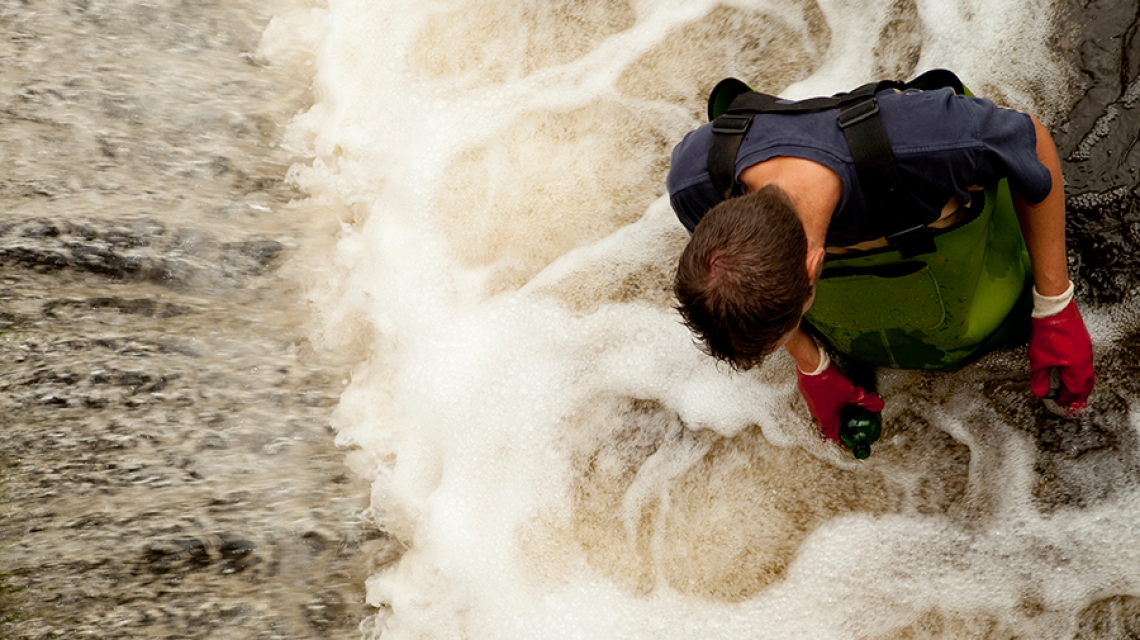
Recycling and Judicious Reuse of Treated Wastewater Help Develop Arid Regions, says Masdar Institute Faculty at WFES 2013

New Wastewater Treatment Technologies to Assist in Mitigating Energy, Carbon, and Environmental Footprint

Abu Dhabi-UAE: 15 January, 2013: Recycling and judicious reuse of treated wastewater offer a chance to meet development goals of arid regions such as the UAE while reducing energy, carbon, and environmental footprint, according to Dr Farrukh Ahmad, Associate Professor, Water & Environmental Engineering, Masdar Institute.  Dr Farrukh Ahmad was speaking at a workshop titled “The role of Water Recycling and Water Re-Use in Arid Regions for Mitigating Water Scarcity” at the World Future Energy Summit 2013 that is being held from 15-17 January at the Abu Dhabi national Exhibition Center (ADNEC). The event is part of the Abu Dhabi Sustainability Week 2013 that is being organized under the patronage of His Highness General Sheikh Mohammed bin Zayed Al Nahyan, Crown Prince of Abu Dhabi and Deputy Supreme Commander of the UAE Armed Forces.
 
Several industry leaders, researchers and students in the areas of clean energy technology attended the workshop that aimed to raise public awareness on key regional issues related to treated wastewater reuse.
 
Highlighting the pioneering role being played by faculty researchers and students at Masdar Institute, Dr Farrukh Ahmad said: “Water reuse is a topic of critical importance to arid regions such as the UAE and the GCC, where there is little freshwater supply. Most of the water is reclaimed from the sea through desalination processes at a high energy, carbon, and environmental penalty.
 
Better techniques for monitoring reuse water quality can ensure the health of the local population. At the same time, better technologies for producing high quality water from wastewater treatment can bring intellectual capital to the region.”
 
Over the past year, Dr Farrukh Ahmad’s research group has worked with the Abu Dhabi Sewerage Services Company’s (ADSSC) Mafraq Waste Water (Sewage) Treatment Plant to conduct a year-round disinfection byproduct (DBP) characterization of their treated effluent and its risk evaluation in landscaping irrigation reuse. The study is already accepted for publication in the Journal of Water Reuse and Desalination, a peer-reviewed journal from IWA Publishing. It is scheduled for publication this year.
 
In addition, researchers from Masdar Institute are working with Mafraq WWTP to develop DNA-based pathogen detection methods and test them side-by-side with conventional microbiological methods utilized by the treatment plant. A third research project in the water reuse area focuses on developing technologies to remove micro-pollutants from treated wastewater.
 
Masdar Institute has already filed a technology disclosure in the US for new carbon nanotube – photocatalyst membranes that can bind organic micropollutants. These membranes can then be regenerated/renewed using photocatalytic activity. 
 
Apart from the workshop on water recycling and re-use, a dedicated Masdar Institute stand is displaying the key water-related research projects, underscoring the importance of the first inaugural International Water Summit at ADSW 2013. As an independent, research-driven graduate-level university focused on advanced energy and sustainable technologies, Masdar Institute continues its endeavor for obtaining technology breakthroughs in various research areas including water, environment and health.
 
Serving as a key pillar of innovation and human capital, Masdar Institute remains fundamental to Masdar’s core objectives of developing Abu Dhabi’s knowledge economy and finding solutions to humanity’s toughest challenges such as climate change.
 
Established as an on-going collaboration with the Massachusetts Institute of Technology (MIT), Masdar Institute integrates theory and practice to incubate a culture of innovation and entrepreneurship, working to develop the critical thinkers and leaders of tomorrow.  With its world-class faculty and top-tier students, the Institute is committed to finding solutions to the challenges of clean energy and climate change through education and research.


10 YFEL Members Launch Innovative Off-grid Solar Power Project in UAE

 
YFEL Stand at WFES 2013 Hosts Panel Discussion, Addresses by IEA and European Commission Officials and CEOs Plenary Session
 
Abu Dhabi-UAE: 16 January, 2013 – Inspired by the call from UN Secretary-General Ban Ki-moon, a group of 10 members the Young Future Energy Leaders (YFEL) program has proposed an innovative off-grid solar power project that seeks to bring electricity to healthcare facilities in remote areas of the UAE and sub-Saharan Africa.
 
The project was launched at the YFEL stand on the second day of the World Future Energy Summit (WFES) 2013. In addition to the launch, a panel discussion on sustainability by Dr Ken Volk, Outreach Manager, Masdar Institute of Science and Technology, addresses by top officials from the International Energy Agency (IEA) and the European Commission, as well as a CEOs plenary session marked the other activities organized by the YFEL program at WFES 2013.  Nearly 30,000 delegates have convened for the WFES 2013 that opened on 15 January at the Abu Dhabi National Exhibition Center (ADNEC). The event, organized under the patronage of His Highness General Sheikh Mohammed bin Zayed Al Nahyan, Crown Prince of Abu Dhabi and the Deputy Supreme Commander of the UAE Armed Forces, concludes on 17 January.
 
Maria van der Hoeven, Executive Director of the International Energy Agency, addressed the gathering on “Sustainability, renewable energy and climate change” at the YFEL stand, while Connie Hedegaard, European Commissioner for Climate Action, spoke on “Climate and energy policies: Key future challenges”.
 
Energy industry leaders including Roy Adair, CEO, Hydro Tasmania, Australia, Bader Al Lamki Director, Clean Energy Masdar, UAE, Santiago Seage, Chairman & CEO Abengoa Solar, Spain, Tulsi R Tanti, Chairman and Managing Director, Suzlon Group, India, and Jean-Pascal Tricoire, President and CEO, Schneider Electric, France, offered their views at the plenary session titled ‘The view from Industry – CEOs of Renewable Energy Companies’. 
 
The off-grid solar power project launched by the YFEL members aims to implement a system that would provide a continuous, reliable and sustainable supply of energy to an entire hospital. The proposal envisions three power-generating options, including a self-contained PV system, a hybrid system integrating PV with other available renewable energy, such as biomass, and wind, or a hybrid system using PV combined with a fossil-fuel engine generator.
 
Muna Al Amoodi, Project Leader and a Senior Environment Officer at Dubai Aluminum Company (DUBAL), said: “Through this project, team members will be able to implement the principles of advanced energy and sustainability that they have learned about and put them into practice.” 
 
She added that team members also will learn about business challenges particularly concerning renewable-energy projects in developing countries as a result of their exposure and interaction with professionals that they consult to support the project.
 
Eventually, one or two hospitals will be identified for the rooftop solar project, and while the focus for this year is hospital facilities, in future, schools and households may be considered.
 
The off-grid solar power project will consist of two phases – phase 1 includes a feasibility study addressing technical and economic issues regarding the proposed sites and the possible system designs. The phase-2 will involve the purchase, installation, commissioning and handover of the project, as well as maintenance and operational training, performance observations and a final project presentation.
 
Moderating the debate titled ‘Should countries implement actions that address population issues impacting worldwide sustainability?’, Dr Ken Volk posed questions to each team after their opening comments on issues relating to energy, environment or sustainability. Teams used their debating skills and presented convincing arguments, which may or may not actually reflect their own personal beliefs.
 
The debate was part of the YFEL program’s initiatives that aim to encourage students to be proactive champions of energy and environmental solutions. Such activities offer an opportunity for YFEL members to practice their skills in formulating and presenting ideas clearly, thus preparing them for their roles as future energy leaders.
 
Part of the Masdar Institute’s Outreach program, YFEL offers young professionals and students from the UAE and abroad an opportunity to become more engaged in finding solutions to the world’s biggest challenges – achieving energy efficiency and tackling climate change. It also aims to bring young professionals closer to government representatives, business leaders and other organizations active in the area of alternative energy and sustainability.


Experts Focus on R&D Infrastructure, Role of Women in Future Energy and Tackling Water Scarcity

 
Masdar Institute Officials and Faculty Lead Three Panel Discussions at WFES 2013
 
Abu Dhabi-UAE: 17 January, 2013 – Three panel discussions focusing on R&D infrastructure, role of women in future energy and tackling water scarcity through renewable energy sources marked the third day’s participation of Masdar Institute of Science and Technology in the World Future Energy Summit 2013.
 
Dr Fred Moavenzadeh, President, Masdar Institute, moderated a roundtable titled ‘Building a robust R&D Infrastructure in Abu Dhabi’, while Dr Lamya N. Fawwaz, Executive Director, Public Affairs, led discussions during a panel discussion on ‘The role of Women in Future Energy: Breaking down the Barriers’. Dr. Hassan E. S. Fath, Professor of Practice – Water and Environmental Engineering, offer his views at a panel discussion on ‘Optimization of Water Production, Technology and Process to Positively Impact Environment’.
 
The three panels marked the multifaceted participation of Masdar Institute that highlighted the integral role of the research-based institution’s contribution to drive key issues in clean energy and sustainable technologies at WFES 2013. Part of the Abu Dhabi Sustainability Week (ADSW) 2013 hosted by Masdar and supported by the International Renewable Energy Agency (IRENA), WFES was held from 15-17 at the Abu Dhabi National Exhibition Center (ADNEC).
 
Moderating the round-table, Dr Fred Moavenzadeh said: “As emerging economies move towards high technology, the reliance on a suitable R&D infrastructure will increase manifold. Physical infrastructure in the form of universities, labs and facilities, with policy regulation and financing, as well as organizational infrastructure together need to jointly contribute towards creating the right environment for developing this set-up.
 
“Since R&D remains the backbone of innovation, which in turn helps drive economic expansion, all three areas need to be adequately addressed to develop an appropriate mechanism. Such a mechanism alone will be able to generate the kind of productive outcome required to build a knowledge-based society.” 
 
The panel analyzed topics including the importance of a research based higher education systems, the role of R&D and the need for innovation and entrepreneurship. Building and fostering R&D capacity as well as disseminating the findings into the economy were also deliberated upon by the panelists.
 
The panel of eminent experts included Prof. Adnan Badran, President of Petra University in Jordan, Dr Mohammed Baniyas, Provost, UAE University, Dr Larry Wilson, Provost, Zayed University and Dr Tod Laursen, President, Khalifa University.
 
Masdar Institute also contributed to the panel on ‘Optimisation of Water Production, Technology and Processes to Positively Impact Environment’ at the International Water Summit (IWS) 2013. Experts took a strategic perspective on ways to bridge the water scarcity gap from a production point of view to better understand the challenges. Integration of renewable energy sources to reduce environmental impact and incentives to stimulate commercial opportunity in clean technology were also discussed by the panel members.
 
Speaking at the panel, Dr. Hassan Fath said: “The newly developed novel integrated Multi Stage Flash/ Multi Effect Distillation (MSF/MED) technology combines the positive advantages of both technologies, targeting high performance. Since this technology also suits the integration with solar and renewable energies, water security could be achieved. We aim for the construction of the first 5000 – 10,000 m3/day solar thermal desalination pilot plant of integrated MSF/MED technologies in the future.”
 
Linda Macpherson, Vice-President, CH2M HILL, moderated the panel. Other speakers included Carlos Cosin, CEO, Befesa Agua, and Dr. Mohamed A. Dawoud, Water Resources Advisor, Environment Quality Sector, Environment Agency Abu Dhabi (EAD).
 
Serving as a key pillar of innovation and human capital, Masdar Institute remains fundamental to Masdar’s core objectives of developing Abu Dhabi’s knowledge economy and finding solutions to humanity’s toughest challenges such as climate change.
 
Established as an on-going collaboration with the Massachusetts Institute of Technology (MIT), Masdar Institute integrates theory and practice to incubate a culture of innovation and entrepreneurship, working to develop the critical thinkers and leaders of tomorrow.  With its world-class faculty and top-tier students, the Institute is committed to finding solutions to the challenges of clean energy and climate change through education and research.


GCC and EU Furthering Energy Cooperation during High-level Meeting at WFES 2013

 
EU-GCC ENERGY COOPERATION CONFERENCE 2013
 
Abu Dhabi-UAE: 19 January, 2013 – Fruitful discussions have taken place during the annual EU-GCC Energy Cooperation Conference that was held from 16 – 17 January, as a side event of the World Future Energy Summit-WFES 2013. The meeting organized by the EU-GCC Clean Energy Network in co-operation with the SHARAKA EU funded project and Masdar Institute of Science and Technology aims to advance the common interest between the EU and the GCC for strategic energy cooperation.
It also seeks to promote EU-GCC cooperation in the field of clean energy, and enhance inter-regional knowledge dissemination and information exchange on energy topics, including research, technology and policy aspects.
 
The opening ceremony was honored by the presence of distinguished EU and GCC officials including Connie Hedegaard, European Commissioner for Climate Action, Adam Kulach, EU Ambassador, Delegation of the European Union to Bahrain, Kuwait, Oman, Qatar, Saudi Arabia and the UAE, Philippe de Fontaine Vive, Vice-President of European Investment Bank (EIB), and Hamza Kazim, Vice-President, Operations & Finance, Masdar Institute and Representative of UAE and the GCC in EU-GCC Clean Energy Network.
 
In her opening speech, Connie Hedegaardhighlighted the importance that the EU places on international clean energy cooperation instruments to mitigate the climate change effects towards a sustainable energy future. The GCC region is a strategic partner for the EU towards this direction.
 
Philippe de Fontaine Viveaddressed in his speech the financing priorities and mechanisms for supporting clean energy initiatives and invited the GCC and the EU energy stakeholders to develop relevant cooperation projects.
 
Hamza Kazimsaid that the GCC already possesses the resources and a high degree of renewable energy expertise as can be gathered from the number of the new projects and initiatives being implemented at present. The annual EU-GCC Clean Energy Network conference at the WFES 2013 provided a platform for the region’s industry to come together for knowledge sharing and exchange of views. Kazim added that the region’s commitment and enthusiasm to adopt renewable sources is overwhelming and the events at WFES will provide a fresh stimulus to implementing additional green measures across the GCC member states.
 
The presentation by the high-level team of attendees from the GCC and Europe highlighted the achievements in areas of mutual interest for the two regions including renewables, energy efficiency and demand side management, electricity interconnections, carbon capture and storage, as well as natural gas.
 
Following the opening ceremony, the agenda of the first day included a workshop on GCC – EU renewable energy cooperation that discussed ‘Challenges and opportunities in EU-GCC renewables energy cooperation’. Experts elaborated on a recent initiative – the GCC Renewable Energy Readiness Assessment Report being developed with Network partners across the GCC.
 
Distinguished GCC experts who participated in the sessions included Hamza Kazim- Masdar Institute, Dr. Ibrahim Abdel Gelil Said Abdula – Arabian Gulf University (AGU), Dr. Hussam Khonkar – King Abdulaziz City for Science and Technology (KACST), Dr. Saad Jandal – Kuwait Institute for Scientific Research (KISR), Dr. Sgouris Sgouridis, Associate Professor, Engineering Systems and Management – Masdar Institute, Dr. Abdullah Al Badi – Sultan Qaboos University, Dr. Rabi Mohtar, Qatar Environment and Energy Research Institute (QEERI), Dr. Scott Kennedy, Dean of Research, Masdar Institute, and Dr Rabia Ferroukhi – IRENA.
 
John Psarras, Director of the EU-GCC Clean Energy Network, underlined the fact that climate change is a key driver for the promotion of both clean energy and international cooperation. The EU-GCC Clean Energy Network can thus be an important asset towards the achievement of these objectives.
 
Experts from Europe included John Psarras, Institute of Communication and Computer Systems – National Technical University of Athens (ICCS-NTUA), Project Director – EU, Emanuela Menichetti – Observatoire Méditerranéen de l’Energie (OME), Silvia Colombo – Istituto Affari Internazionali (IAI), Juergen Kern – DLR, Koukouzas Nikolaos CERTH/ CPERI, Giacomo Luciani – Gulf Research Centre Foundation, Marcelino Sanchez- CENER, Mohsen Assadi – University of Stavanger, Dr. J. Scowcroft, Global CCS Institute, Frank Ellingsen, Director, Technology Center Mongstad.
 
Some of the concrete outcomes that were summarized during the sessions include publications, research work/papers, established partnerships between the GCC and EU, co-operation project ideas, targeted working meetings and training workshops.
 
Events on the second day included round–table discussion sessions and papers presentations on enhancing GCC-EU cooperation in the fields of EU-GCC energy cooperation; technical paper presentation, co-ordinated by the SHARAKA project; Maritime Transport/security; technical paper presentation, co-ordinated by the SHARAKA project; and Discussion Groups (DGs) on Clean Natural Gas Technologies and Carbon Capture and Storage; co-ordinated by the EU-GCC Clean Energy Network as well as a technical site visit at Masdar City.

Masdar Institute Highlights Water-Related Research Projects and Leads Knowledge Exchange at WFES 2013

 
Experts and Students Participate in Sessions on Innovation and Entrepreneurship, Human Capital Development and Creation of IP
 
Abu Dhabi-UAE: 21 January, 2013 – Masdar Institute of Science and Technology, an independent, research-driven graduate-level university focused on advanced energy and sustainable technologies, today announced experts and faculty members marked their participation in the sixth edition of the World Future Energy Summit (WFES) through effectively leading various knowledge sharing sessions.
 
Panel discussions, debates and workshops at WFES 2013 witnessed experts and students from Masdar Institute sharing their expertise in human capital development, creation of intellectual property and spreading a culture of Innovation and entrepreneurship in the UAE and the region. At the same time, a dedicated display of key water-related research initiatives at the International Water Summit (IWS) 2013, another component of WFES, reiterated Masdar Institute’s role in obtaining innovative solutions for the region and worldwide.
 
The participation in WFES 2013 brought under spotlight the special expertise Masdar Institute has acquired and developed under three themes that drive its research activities. The themes include ‘Water, Environment and Health’, ‘Advanced Energy Systems’ and ‘Microsystems and Advanced Materials’.
 
Organized under the patronage of His Highness Sheikh Mohammed bin Zayed Al Nahyan, Crown Prince of Abu Dhabi and the Deputy Supreme Commander of the UAE Armed Forces, WFES 2013 was held from 15-17 January at the Abu Dhabi National Exhibition Center (ADNEC). The Summit gathered nearly 30,000 participants from 150 countries including heads of states, as well as key decision-makers from the government and the global energy industry.
 
Dr Fred Moavenzadeh, President Masdar Institute led the panel discussion on human capital development on ‘Innovation and Entrepreneurship’. The panelists included His Excellency Dr. Adnan Badran, President of Petra University, Deputy Director-General of UNESCO, and Member of the Board of Trustees of Masdar Institute, Dr Mohammed Baniyas, Provost, UAE University, Dr Larry Wilson, Provost, Zayed University and Dr Tod Laursen, President, Khalifa University.
 
In his opening address at the annual EU-GCC Clean Energy Network Conference that was held concurrently with WFES 2013, Hamza Kazim, Vice-President, Operations & Finance, highlighted the capabilities already existing in the GCC region and pointed out that the Abu Dhabi summit proved to be a valuable forum for intra-regional and international knowledge sharing. Masdar Institute is the lead institution for the GCC region at the Network.
 
Dr Lamya N. Fawwaz, Executive Director, Public Affairs, participated in a panel discussion on ‘The role of Women in Future Energy: Breaking down the Barriers’, highlighting the vital role of Masdar Institute and the UAE in empowering women. Dr Fawwaz additionally pointed out various factors that might help facilitate the entry of more women in the clean sustainable energy and advanced technology sectors. Three Masdar Institute students – Reem Al Junaibi, Reem Ketait and Catherine Wilcox – also shared the platform with the dignitaries and women leaders in energy industry.
 
At the International Water Summit 2013, a dedicated Masdar Institute stand displayed key water-related research projects that included initiatives undertaken by Dr. Nidal Hilal, Professor in Nano-membranology and Water Technologies, and other faculty members.
 
Dr. Farrukh Ahmad, Associate Professor Water and Environmental Engineering, Masdar Institute participated in a workshop titled ‘The role of Water Recycling and Water Re-Use in Arid Regions for Mitigating Water Scarcity’ at the World Future Energy Summit 2013. The workshop, facilitated by Walid Saleh, Regional Coordinator, MENA The United Nations University – Institute for Water, Environment, & Heath (UNU-INWEH, focused on understanding the importance of water re-use in arid regions is of vital importance to ensure community self-sufficiency.
 
Dr. Hassan E. S. Fath, Professor of Practice – Water and Environmental Engineering, participated in a panel on‘Optimization of Water Production, Technology and Process to Positively Impact Environment’ that aimed to highlight the integration of renewable energy sources in reducing water supply gap to reduce environmental impact and introduction of incentives to stimulate commercial opportunity in clean technology. The session was moderated by Bert Diphoorn, Senior Advisor, Urban Basic Services, UN-Habitat.
 
Hosted by Masdar, Abu Dhabi’s renewable energy company, WFES was part of the Abu Dhabi Sustainability Week 2013. The week-long events served as a global platform not only to highlight the activities of participating governments, businesses and organizations, but also to strengthen cooperation in driving sustainable development, focusing on the interconnected challenges of energy and water.
 
Serving as a key pillar of innovation and human capital, Masdar Institute remains fundamental to Masdar’s core objectives of developing Abu Dhabi’s knowledge economy and finding solutions to humanity’s toughest challenges such as climate change.
 
Established as an on-going collaboration with the Massachusetts Institute of Technology (MIT), Masdar Institute integrates theory and practice to incubate a culture of innovation and entrepreneurship, working to develop the critical thinkers and leaders of tomorrow.  With its world-class faculty and top-tier students, the Institute is committed to finding solutions to the challenges of clean energy and climate change through education and research.
 

Electricity grids of the future will need to be a two-way street

By Dr Khaled Elbassioni
While today’s electricity grids operate on a fairly simple producer- receiver model, renewable energy powered grids of the future will need to be far smarter.
Instead of relying on utility providers alone for electricity, many homes and offices will have their own renewable energy sources, such as rooftop solar panels or backyard wind turbines.
That requires a grid that can handle energy flows back and forth, supply and demand variation, quality fluctuations, and many more technical challenges.
 And not only will such a system, where energy consumers are also providers, and where supplies – of solar energy, for example – are intermittent – require a whole new way of distributing power, it will need a new way of selling it, too.
 There will need to be an energy market, where excess renewable energy can be bought and sold. That way, those who produce more than they need can sell the excess to those who consume more.
Such a market would incentivize energy conservation – by giving those who save energy the opportunity to make money on their excess – while also ensuring a more efficient overall energy supply system.
But exactly how that market would work remains a big unknown. Many existing models suffer from inefficiency and pricing mechanism sensitivities.
 One problem is the risk of energy buyers and sellers manipulating the market for their own gains, through artificially inflated prices or sale or buy orders.
An example of this is a seller attempting to take advantage of the need of consumers by demanding an unreasonably high price, or a buyer putting an order out for more energy than they really need to try to draw down prices.
Scientists at the Masdar Institute are exploring market mechanisms that could reduce the risk of price manipulation, and ensure the market prices reflect as closely as possible the real values of demand and supply of energy.
While several such mechanisms had been proposed by other scientists, applying them in energy markets is quite challenging. They typically need a lot of computational power – and more as the size of the market increases.
 Once we have a computationally efficient way of making the renewable energy market reflect the true supply, demand and value of energy, we can then work to optimise the whole system.
The more competitive the market, the greater the incentive will be for buyers and sellers to cut waste – especially in the transmission and storage of power. That will further reduce costs, and increase the system’s uptake and popularity.
 With this research, we hope to contribute to the UAE’s goals for renewable energy production and sustainability by making renewable energy sourced electricity competitive, efficient and secure.
 Dr Khaled Elbassioni is an associate professor of computing and information science at the Masdar Institute of Science and Technology.

Searching the mangrove and the desert for a native biofuel

 
Humankind has much to learn from nature. Even the simplest of organisms are as complex and potentially useful in their own way as the latest computer chip. And the more we learn, the more puzzles there are.
 
Figuring out the natural processes at work in those organisms could turn out to be a much easier way of doing some things than inventing our own methods from scratch.
 
This is especially true for biofuel production. As fossil fuels continue to play havoc with our environment, the need to secure renewable and environmentally friendly energy sources is only growing.
 
The UAE, recognising the potential of biofuel, is now looking to discover its own plant-based sources of energy. And it is trying to mitigate some of the challenges posed by the first generation of biofuels – namely agricultural land use.
Researchers at the Masdar Insititue are scouring the UAE’s deserts, coasts, marshes, mangroves and salt flats for plants that contain a good amount of sugar or oil that can be turned into fuel and which thrive in its extreme environment.
 
A number of species of algae with good biofuel potential have already been found. But extracting their energy is not always easy. Unlocking the energy from cellulose – a subtance found in plant cell walls that can be converted into sugar – is not always simple, affordable or efficient.
The cellulose in many plants is not able to withstand the extreme conditions of the biorefining process, making extraction costly and inefficient. So we are looking for better ways to produce renewable energy from plant species.
 
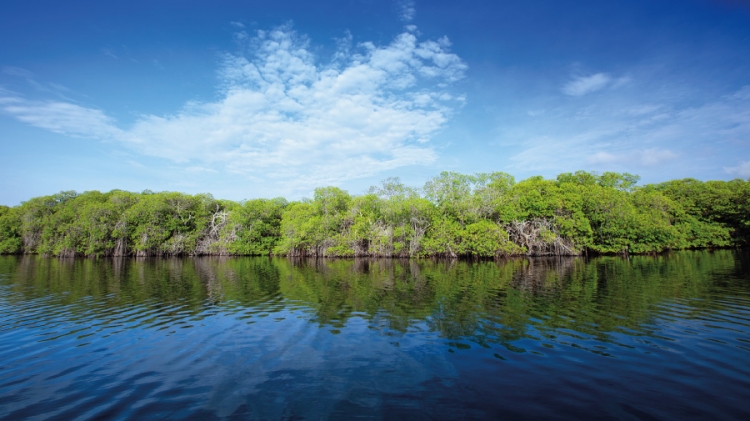
And we may have found just that lurking in roots of the UAE’s mangrove trees, which are are home to a host of microbes that can help break down cellulose into sugar.
These microbes consume the plant waste that falls into the water, extracting for their own use the plant the sugars they need to survive. And because the environment in which mangroves thrive is hot, saline, and intense, the microbes that can survive there may be more able to withstand the biorefining process.
 
The challenge is finding the ideal microbe – or, more likely, the microbe community – for this job, and extracting the enzyme it produces.
 
Our team is screening mangrove root sediments in the UAE for novel enzymes to break down cellulose waste. This process will be aided by the rapidly developing field of bioinformatics.
 
First, we need to map the microbes’ DNA, using the Masdar Institute’s state-of-the-art sequencing facility. Then we can crunch that data using bioinformatics algorithms to find out why exactly one microbe community is better at breaking down cellulose than another.
 
That information can then be used to more efficiently search for and pinpoint the enzyme best suited for our purposes.
 
With this interdisciplinary research, we hope to help the UAE discover the most promising biofuel plant species, the best microbes to help refine them, and perhaps a guideline for the engineering of the ideal cellulose-refining, enzyme-producing microbe.
 
Additionally, the bioinformatics portion of this research, which involves student training and research, will help Abu Dhabi develop indigenous expertise. And in a field expected to be worth US$8.3billion by 2014, it could be a lucrative contribution to the UAE’s knowledge economy.

Dr Andreas Henschel is assistant professor of computing and information science at the Masdar Institute of Science and Technology

Algae from UAE desert saltflats could be biofuel of the future

The desert may seem a bleak and inhospitable place. Only the hardiest plants, animals and people survive it, defying the odds and in some cases the limits of our understanding of biology.

In particular, desert species’ sources of water and energy, and how they are extracted, is a mystery that has the potential to provide benefits to modern man and society.

As resources dwindle and the population grows, the attraction of reaping the desert’s bounty is obvious.

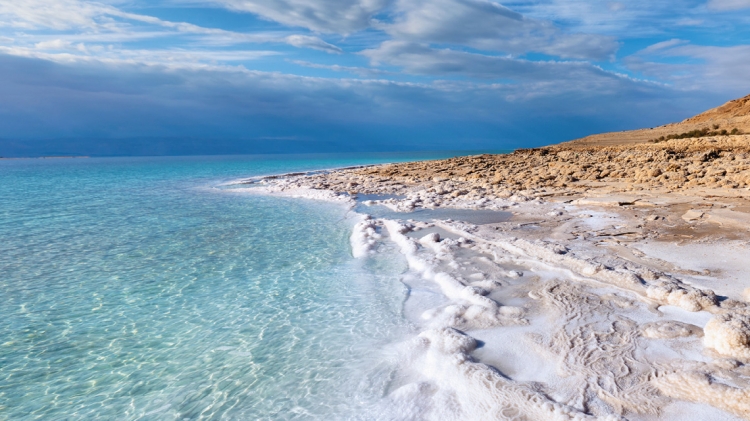
One area of particular interest is the energy potential of algae that live in the desert’s saltflats – known as sabkha.

Algae is one of the many forms of plant life that can be used as an alternative source of energy to drive growing economies without contributing to global warming.

Biofuel can be used in place of petrol, diesel and jet fuel without the need to develop a new energy infrastructure, as it acts and looks very similar to the petroleum-derived fuels it replaces.

The big challenge of plant-based biofuel has been where to grow it and how. In the United States for instance, using farmland to grow corn for biofuel has been controversial, particularly given global food shortages.

For biofuel to be truly sustainable, it must not take away other important resources – making desert algae particularly appealing.

Algae that grows in the harsh environments of the UAE’s deserts does not need to take up farmland. It already manages to thrive in a landscape where food cannot grow.

Also, the UAE’s desert algae is very tolerant of saltwater, as it lives in highly saline saltflats. This means it does not require freshwater to grow – a resource as precious and scarce in the UAE as fuel is to other nations.

But which of the UAE’s possibly thousands of algae strains is best suited for cultivation and energy extraction?

It must grow well along coastlines, where the soil salinity is elevated due to tidal flows and thus making the land unusable for agricultural ventures.

It must also withstand large changes in water salinity driven by evaporation from raceway ponds.

Answering these questions requires a lot of work, as no one has really ever gone out and collected all the algae found in the UAE deserts, nor have their individual qualities been explored.

My research team at the Masdar Institute is working to do exactly that. We now have many strains being cultivated in our lab, where we are testing to find out which can be the biofuel producer we need.

In time, we hope to cultivate the selected algae in large-scale raceway ponds, where it can be harvested for biofuel.

We hope that this work will eventually lead to a fuel that can be used in place of petrol, diesel and jet fuel.

That will not only be better for the environment, through reduced carbon emissions, but will also free up fossil-fuel resources for more lucrative export sale.

It may also pinpoint which strains can be used for pharmaceutical purposes, providing the Emirates with another source of revenue.

And it will help produce localised expertise in biofuels, which is one of the world’s most exciting and rapidly growing sectors.

One of our Emirati students, Ahmed Al Harethi, has already filed an invention disclosure on his research findings. Two others will also work on this project as part of a summer internship programme, for which applications are still being accepted.

We hope that in time, the UAE can become a biofuel leader, with its desert and people serving as important resources in its knowledge economy transformation.

Dr Hector Hernandez is an assistant professor of chemical engineering at the Masdar Institute of Science and Technology. More information on the algae project is available at algae.labs.masdar.ac.ae

Masdar Institute to Showcase Academic and Research Offerings to Students in France

Event on 16 February in Paris to Highlight Advantages of Pursuing Graduate Studies in Abu Dhabi’s Research-Based Institution

Paris/Abu Dhabi: 15 February, 2013 – A team of faculty and students from Masdar Institute of Science and Technology, an independent, research-driven graduate-level university focused on advanced energy and sustainable technologies, will participate in Spring 2013 QS World Grad School Tour Fair & Seminars on 16 February in Paris to highlight the advantages of pursuing graduate studies at the Abu Dhabi-based institution.

A large number of students from across universities in France are expected to attend the event from 2.00pm-5.00pm at Hotel Concorde la Fayette, on Place du Général Koenig in Paris. Pre-fair presentations and panels are scheduled from 1.00pm-2.00pm. Dr. Taha B.M.J. Ouarda, Professor – Water and Environmental Engineering, with student Farah Ahmed and other representatives from the research-based Abu Dhabi institution, will showcase his project on ‘Predicting rainfall and floods for better water security’ and present information about the ‘Solar and the Wind atlases’ part of Global Atlas, an online resource-mapping tool on solar and wind potential developed in collaboration with the International Renewable Energy Agency (IRENA) and other stakeholders.

Developed in cooperation with Massachusetts Institute of Technology (MIT), Masdar Institute’s graduate programs integrate education, research and scholarly activities. With admission criteria similar to MIT, Masdar Institute helps students to become innovators, creative scientists, researchers and critical thinkers in technology development, systems integration and policy.

Dr. Fred Moavenzadeh, President, Masdar Institute, said: “Since inception, we have achieved breakthroughs in research and innovation, contributing to developing the region’s human capital and R&D infrastructure. Our patents, research accomplishments and academic success serve as an inspiration for graduate students seeking to enroll and acquire clean energy knowledge. This roadshow offers us an opportunity to interact with students across Europe and apprise them of the learning options at the sustainable campus. We welcome them to take advantage of our educational and research offerings.”

Dr. Taha Ouarda said that his research represents a critical piece of the water puzzle and can contribute to resolving the water crisis in the MENA region. He added it will help create a comprehensive supply/demand-led, people-centered approach for water management in a way that balances social and economic needs, while ensuring the protection of ecosystems for future generations.

Masdar Institute provides such niche research options to participate in the creation of intellectual property rights and patents as well as job placements opportunities in local and internationally-recognized organizations.

Masdar Institute has one patent already issued and 16 active patent applications pending at present. With publications of papers in 311 peer-reviewed journals, 330 conference papers, two full books and 38 invention disclosures, it has already notched up success in academic and research fields. With 73 faculty members from 32 countries, students are benefited from a unique range of insights and experiences.

In addition to providing full scholarship to qualified applicants, Masdar Institute has collaboration agreements with several organizations including the International Renewable Energy Agency (IRENA) for up to 20 scholarships, and Toyota Motor Corporation for one student every year to work in sustainable transportation.

For the September 2012 intake, the total number of enrolled students across the eight academic programs reached 336. The student body is expected to grow to 600-800 over the next few years. Two batches of Master’s students have already graduated from Masdar Institute.

Admissions for Fall 2013 are now open. Online application forms can be accessed from www.masdar.ac.ae/Admission.html. A minimum CGPA of 3.0 on a scale of 4.0 and a minimum GRE Quantitative scope of 700 (or 155 on the new scale) are mandatory for applicants. Talented applicants, who may not meet the GRE and TOEFL/IELTS requirements but are otherwise qualified to enroll, may be admitted. They will, however, be required to pass two placement exams or complete additional technical and math coursework.

Dr. Taha B.M.J. Ouarda specializes in hydrometeorology, environmental and public health modeling, and risk analysis.  Earlier, Dr. Ouarda was Chairman of the Canada Research Chair on the Estimation of Hydro-meteorological Variables, and Chairman of the Industrial Chair in Statistical Hydrology, where his research team represented one of the largest Canadian teams in hydrology. He has also served as President of the National Canadian Committee on Statistical Hydrology.

Dr. Ouarda holds a PhD in Civil Engineering from Colorado State University. He has developed several approaches for the estimation of extreme hydro-meteorological events on local and regional scales, developed several methodologies for the modeling of hydro-meteorological variables under changing environments, and developed many softwares that deal with a range of problems in water resources and environmental engineering.

Serving as a key pillar of innovation and human capital, Masdar Institute remains fundamental to Masdar’s core objectives of developing Abu Dhabi’s knowledge economy and finding solutions to humanity’s toughest challenges such as climate change.

Established as an on-going collaboration with (MIT), Masdar Institute integrates theory and practice to incubate a culture of innovation and entrepreneurship, working to develop the critical thinkers and leaders of tomorrow.  With its world-class faculty and top-tier students, the Institute is committed to finding solutions to the challenges of clean energy and climate change through education and research.
 

Masdar Institute to Showcase Academic and Research Offerings to Students in Spain

Event on 20 February in Barcelona to Highlight Advantages of Pursuing Graduate Studies in Abu Dhabi’s Research-Based Institution

Barcelona-Spain/Abu Dhabi-UAE: 18 February, 2013 – A team of faculty and students from Masdar Institute of Science and Technology, an independent, research-driven graduate-level university focused on advanced energy and sustainable technologies, will be participating in the Spring 2013 QS World Grad School Tour Fair & Seminars on 20 February in Barcelona to highlight the advantages of pursuing graduate studies at the Abu Dhabi-based institution.

A large number of students from across universities in Spain are expected to gather for the event from 5.00pm-8.00pm at Melia Barcelona, Avinguda de Sarrià, Barcelona. Pre-fair presentations and panels are scheduled from 4.00pm-5.00pm. Dr. Jorge Rodriguez, Professor, Water and Environmental Engineering / Chemical Engineering, with student Alberto Gómez and other Masdar Institute representatives will showcase research projects on integrated sea water agriculture systems and engineering a new ecosystem for the production of valuable chemicals/biofuels from organic residues.

Developed in cooperation with Massachusetts Institute of Technology (MIT), Masdar Institute’s graduate programs integrate education, research and scholarly activities. With admission criteria similar to MIT, Masdar Institute helps students to become innovators, creative scientists, researchers and critical thinkers in technology development, systems integration and policy.

Masdar Institute is part of Abu Dhabi’s Masdar Initiative that aims to diversify the economy and extend its leadership in the energy sector. Already a familiar brand in Spain, Masdar last year commissioned the 19.9MW Gemasolar concentrated solar power (CSP) project in collaboration with Torresol Energy, a joint venture with SENER of Spain. The plant in Seville provides electricity 24-hours a day. Valle 1 & 2 of 50MW each, another project in Cadiz, is now fully operational.

Dr. Fred Moavenzadeh, President, Masdar Institute, said: “Since inception, we have achieved breakthroughs in research and innovation, contributing to developing the region’s human capital and R&D infrastructure. Our patents, research accomplishments and academic success serve as an inspiration for graduate students seeking to enroll and acquire clean energy knowledge. This roadshow offers us an opportunity to interact with students across Europe and apprise them of the learning options at the sustainable campus. We welcome them to take advantage of our educational and research offerings.”

Dr. Jorge Rodriguez said that his team is working to develop model-based strategies to engineer open anaerobic fermentative microbial ecosystems that can be directed towards low cost production of valuable chemicals/biofuels such as acetate and hydrogen from organic residues. Anaerobic fermentation is 100% natural process and is carried out on micro-organisms. Dr Rodriguez is also working on a project that looks at a key technology for recovering nutrient and energy from integrated seawater agriculture systems (ISAS).

Masdar Institute provides such niche research options to participate in the creation of intellectual property rights and patents.

Masdar Institute has one patent already issued and 16 active patent applications pending at present. Other achievements include publication of papers in 311 peer-reviewed journals, 330 conference papers, two full books and 38 invention disclosures.

In addition to full scholarships to qualified applicants, Masdar Institute has collaboration agreements with several organizations including the International Renewable Energy Agency (IRENA) for up to 20 scholarships and with Toyota Motor Corporation for one student every year to work in sustainable transportation.

For the September 2012 intake, the total number of enrolled students reached 336. The student body is expected to grow to 600-800 over the next few years. Two batches of Master’s students have already graduated from Masdar Institute.

Admissions for Fall 2013 are now open. Application forms can be downloaded from www.masdar.ac.ae/Admission.html. A minimum CGPA of 3.0 on a scale of 4.0 and a minimum GRE Quantitative scope of 700 (or 155 on the new scale) are mandatory for applicants. Talented applicants, who may not meet the GRE and TOEFL/IELTS requirements but are otherwise qualified to enroll, may be admitted. They will, however, be required to pass two placement exams or complete additional technical and math coursework.

Dr Jorge Rodriguez heads the Environmental Bioprocess Modelling (EnvBioProM) Laboratory at Masdar Institute including a team of half a dozen researchers and students. He is Associate Editor of the journal Water Science and Technology and Newsletter Editor for the IWA anaerobic digestion specialist group.

Holder of a PhD in Chemical and Environmental Engineering, Dr Jorge Rodriguez also has an MSc in Chemical Engineering and BEng Industrial Chemistry from the University of Santiago de Compostela (USC) in Spain. He is a Fellow of UK's Higher Education Academy holding a PG Certificate in Learning and Teaching (HE) by the University of Glamorgan (UK).

Serving as a key pillar of innovation and human capital, Masdar Institute remains fundamental to Masdar’s core objectives of developing Abu Dhabi’s knowledge economy and finding solutions to humanity’s toughest challenges such as climate change.

Established as an on-going collaboration with the Massachusetts Institute of Technology (MIT), Masdar Institute integrates theory and practice to incubate a culture of innovation and entrepreneurship, working to develop the critical thinkers and leaders of tomorrow.  With its world-class faculty and top-tier students, the Institute is committed to finding solutions to the challenges of clean energy and climate change through education and research.