
Relevant Human and Intellectual Capital Development Key to Achieving a Low-Carbon Future

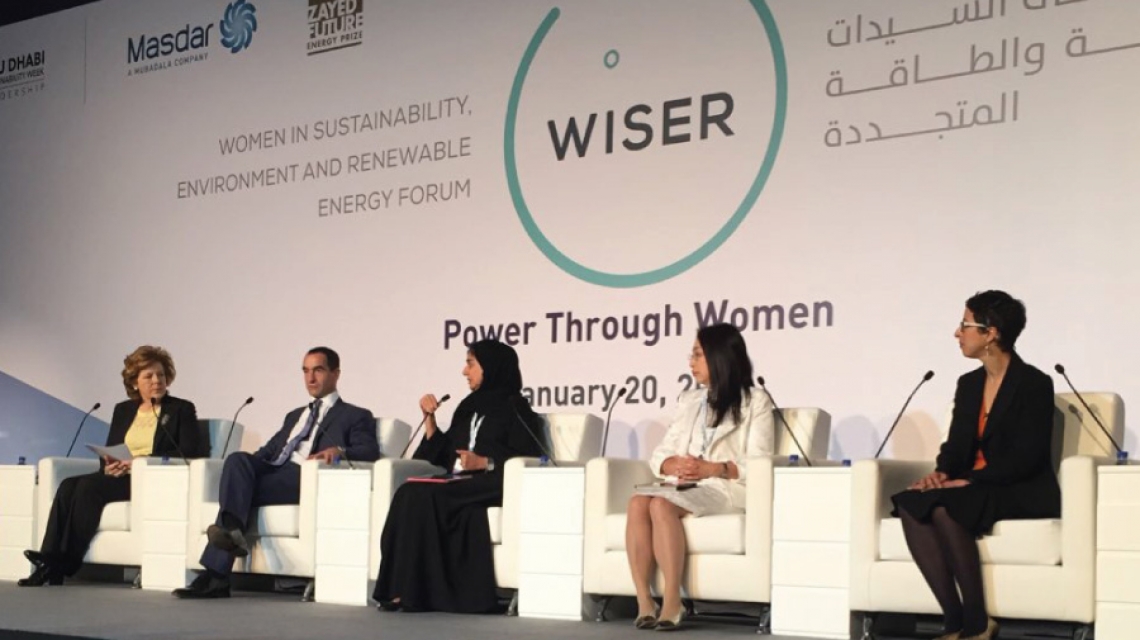
An important part of reducing carbon emissions to ‘decarbonize’ the world is developing the human and intellectual capital needed to develop and implement carbon-reducing innovations, Dr. Behjat Al Yousuf, Interim Provost of Masdar Institute, said at the Women in Sustainability, Environment and Renewable Energy (WiSER) Forum held last week during the Abu Dhabi Sustainability Week (ADSW).

Dr. Al Yousuf spoke on the “Towards De-Carbonization and Climate Resilience” panel at the event that brought together researchers, policymakers, industry leaders and others in the energy and environment sector to discuss the integral role research, human capital building and innovation can play in limiting global warming to below 2°Celsius above pre-industrial temperatures – the stated goal of the 2015 Paris Climate Conference (COP21).

She focused on how Masdar Institute is contributing to the UAE’s reduced carbon emissions and increased clean energy production targets through conducting cross-sector, multidisciplinary research projects and building a new generation of energy leaders.

“From the innovative, multidisciplinary research projects conducted by our faculty and students that produce novel, technological innovations in the critically needed areas of carbon capture and renewable energy production and storage, to the specialized training that produces high-caliber professionals with the skills needed to drive the UAE’s transformation into a low-carbon economy, Masdar Institute is providing the UAE with the tools needed to achieve greater sustainability and climate resilience,” Dr. A Yousuf shared.

Dr. Al Yousuf stated that increasing investment in the research areas of clean energy, carbon capture, energy efficient electronics, water and sustainable infrastructure is required if the world is going to reduce reliance on fossil fuels and decrease global carbon emissions. She emphasized that investment in both basic and applied research are needed to innovate in these critical sectors.

She also highlighted how Masdar Institute has partnered with Masdar and others to explore ways to create renewable energy-powered seawater desalination plants.

“The UAE’s energy-intensive natural gas-fueled water and energy cogeneration plants account for a third of the country’s carbon emissions. Thus, developing innovative water technologies that help to reduce emissions from the country’s desalination plants is critically needed to achieve a lower carbon footprint,” Dr. Al Yousuf said.

In addition to clean energy technologies, Masdar Institute’s leading official highlighted two other critical research areas that are needed to achieve global climate resilience: carbon capture utilization and storage (CCUS) and energy-efficiency in electronics and buildings.

Because fossil fuels will continue to play an integral role in the world’s economy and energy security, carbon capture technologies may play a pivotal role in the fight against climate change, which is why Masdar Institute is developing novel CCUS systems.

“Masdar Institute researchers are developing innovative carbon capture technologies that can capture carbon dioxide (CO2) that would otherwise be released into the atmosphere from fossil fuel-fired power plants and convert it into valuable, environmentally benign chemicals,” Dr. Al Yousuf explained. “This is just one example of how Masdar Institute is developing systems to make carbon capture technology more sustainable, energy-efficient and low-cost.”

A third research area Dr. Al Yousuf focused on was energy efficiency. Developing energy-efficient buildings and energy-efficiency in the electronics used by people that inhabit those buildings, will lead to significant reductions in energy use and carbon emissions around the world, the provost explained.

“At Masdar Institute, our faculty and students are working to develop sustainable infrastructure and energy efficient air-conditioning systems that could lead to massive reduction in electricity consumption. Air conditioning consumes up to 75% of the UAE’s electricity during peak hours in the summer, which places a heavy toll on the national power grid as well as the environment.”

Additionally, Masdar Institute researchers are working to make the electronic systems that run the world’s computers, phones, and high-tech industries, much more efficient, so that less energy is consumed by the machines that power our modern world.

Masdar Institute is engaged in over 50 cross-sector collaborative projects in the areas of clean energy, energy efficiency, CCUS, water, and other areas of strategic interest to the UAE. Through its several collaborative and use-inspired research projects, Masdar Institute is molding a new generation of highly-skilled energy leaders, Dr. Al Yousuf explained. “The human knowledge and human capacity Masdar Institute is building is the most important contribution we are making towards achieving the global goal of a low-carbon future.”

“Fostering the development of human capital is a key goal of Masdar Institute, and will enable UAE to transform its economy into a low-carbon, knowledge-based one,” Dr. Al Yousuf added.

Other panel members included Dayae Oudghiri, Management Board Member, Morocco Agency for Solar Energy; Michael Liebriech, Chairman, Bloomberg New Energy Finance (BNEF); and Yukari Niwa Yamashita, Board Member, The Institute of Energy Economics, Japan (IEEJ).

Erica Solomon
News and Features Writer
27 January 2016


Masdar Institute PhD Student Teaches Sustainable Cities Workshop at MIT

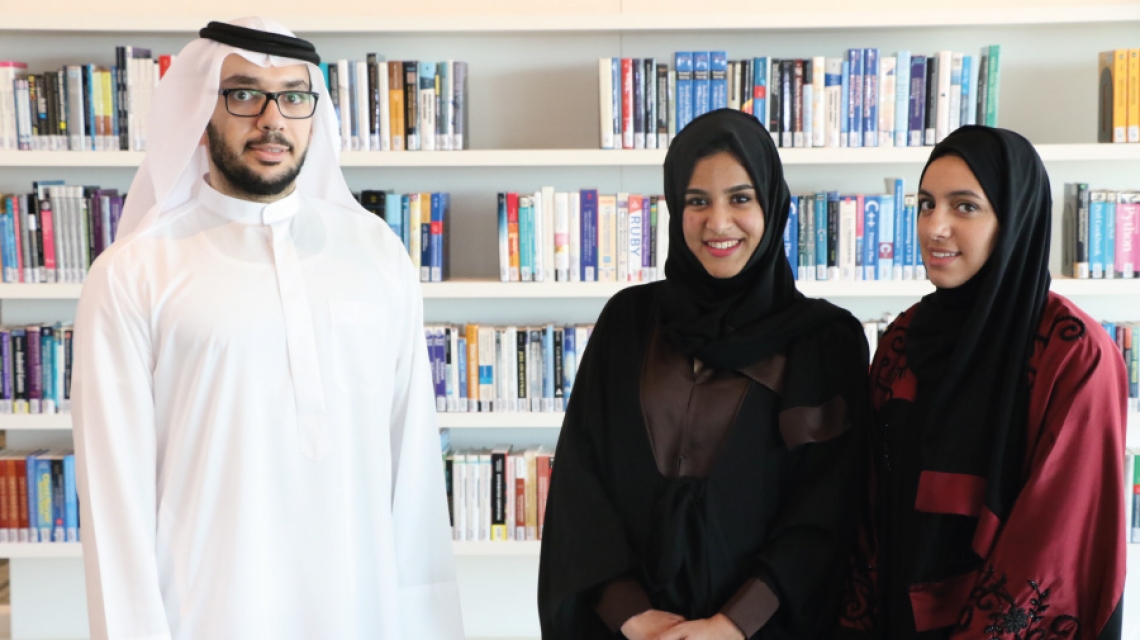
Masdar Institute PhD student Ahmad Alozn has returned from teaching a workshop on solar chimneys at the Massachusetts Institute of Technology (MIT), making him the first Masdar Institute student to teach a for-credit course at the world renowned university.

The workshop was taught during MIT’s annual Independent Activities Period (IAP) – a special four-week term held each January at MIT where students can participate in a variety of activities including lectures, non-credit activities and for-credit courses.

The two-week course, titled “Electric Cities,” was designed in collaboration with researchers from the Singapore University of Technology and Design (SUTD) and Dr. Reinhard Goethert, MIT’s Principal Research Associate in Architecture and Director of the Special Interest Group in Urban Settlement (SIGUS).

MIT is Masdar Institute’s leading academic partner and has played a key role in its establishment and development. Through the MIT and Masdar Institute Cooperative Program, the two institutes conduct joint research in areas that include water, energy, climate and sustainable infrastructure. The Cooperative Program also sends a select number of Masdar Institute PhD students to MIT each semester through the Masdar Institute-MIT Student Exchange Program.

Alozn participated in the student exchange program during the 2015 spring term, where he completed a course taught by Dr. Goethert on Urban Settlement. The experience inspired him to develop a workshop on the issue of sustainable buildings, which he did with the support of Dr. Goethert and Dr. Amal Al Ghaferi, Interim Dean of Students and Assistant Professor of Mechanical and Materials Engineering at Masdar Institute.

Alozn’s leading role in the MIT workshop reflects a key accomplishment of the Masdar Institute-MIT partnership, which aims to cultivate high-caliber human capital in both institutes through the sharing and exchange of research and ideas. The workshop demonstrates how the partnership between Masdar Institute and MIT is continuously expanding and evolving to strengthen the core values that underlie both institutions.

“Masdar Institute’s participation in developing and teaching this rigorous workshop serves to demonstrate the strong academic collaboration between MIT and Masdar Institute,” Alozn shared. “It shows that MIT recognizes the high-caliber of Masdar Institute students and faculty and believes that Masdar Institute can add value to their education process.”

Alozn was joined by two Masdar Institute Master’s students – Fatma Al Showab from Engineering Systems and Management and Meera Al Mheiri from Mechanical and Materials Engineering – who served as mentors during the workshop and worked closely with the students to monitor their progress and assist them in their learning.

The workshop was divided into two streams, both of which focused on transforming buildings into energy generators and re-designing urban areas into sustainable cities. The first stream, which was led by Dr. Martin Scoppa, Post-Doctoral Fellow at SUTD, and Dr. Goethert, was focused on urban design of cities with buildings that are able to generate electricity; while the second stream, which was led by Alozn, was more technical in nature, and focused on testing airflow characteristics from different solar tower configurations using scale models.

Each stream was attended by four students from MIT and SUTD. Al Showab mentored students in the first stream, while Al Mheiri mentored students in the second stream.

The session taught by Alozn included lectures and hands-on experiments on the topic of solar chimneys – a type of clean energy-generating system that can be integrated into urban structures, which if implemented on a city-wide scale, could transform cities from the energy drains they are today into self-sufficient clean energy producers.

Alozn instructed the students on how to build and test solar chimney models. Together, the class explored various ways to maximize the solar chimneys’ power generation capabilities.

During the workshop, Alozn and his students examined the possibility of converting an existing old chimney in West Concord, Massachusetts, USA, into a solar chimney, and issued a technical proposal to the owner of the structure for potential future collaboration.

“The students possessed different academic backgrounds, so I took a multidisciplinary approach to deliver the technical information needed to perform the workshop – a skill that we have developed very well at Masdar Institute,” Alozn said.

“Upon completion of the workshop, the students not only gained knowledge about solar updraft and prototype building, but they also gained critical thinking and problem solving skills, which are handy tools in any other area,” he added.

The partnership between Masdar Institute and MIT will continue to provide valuable exchanges, including research and learning opportunities, for both institutes, while contributing to the development of human and intellectual capital in the area of advanced energy and sustainable technologies.

Erica Solomon
News and Features Writer
28 January 2016


Innovative Banking Application Could Make ATM Transactions Faster and Safer

A Masdar Institute Master’s student from the Engineering Systems and Management Program won 1st place at a university challenge hosted by Emirates NBD for his innovative “one-click-to-go” mobile application idea that has the potential to make banking transactions faster, easier and more efficient.

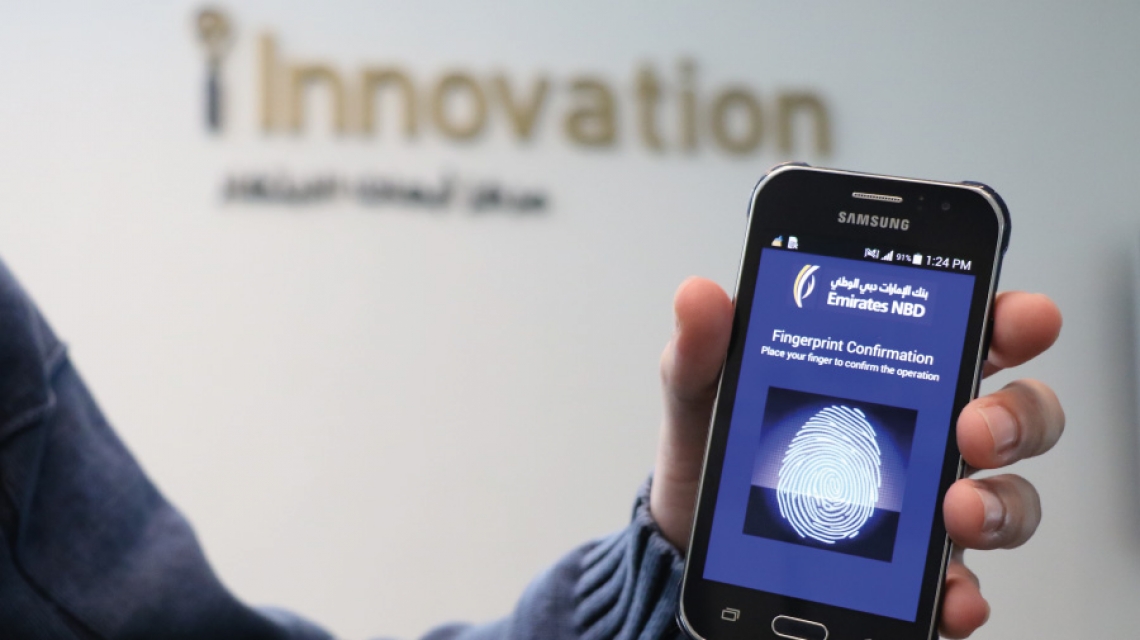
The “one-click-to-go” application would allow users to program the transaction they wish to perform at the ATM ahead of time on their smartphones, significantly reducing the amount of time spent at the ATM.

“The idea came to me after observing the long queues at the ATM machine. Even though most people are there just to withdraw money, it takes a long time to complete this simple transaction. I started thinking about innovative ways to speed up this process,” explained Jean Phelippe Ramos de Oliveira, who presented his winning idea during Emirates NBD’s Annual Innovation Day, which took place during the UAE’s National Innovation Week celebrations held in November of last year.

Ramos de Oliveira believes this idea can also be extended beyond the ATM to inside the bank itself, where “one-click-to-go” banking could make all types of transactions, including cash deposits and money transfers, more efficient. 

UAE-based bank Emirates NBD has shown serious interest in the “one-click-to-go” app, and a team from Emirates NBD’s IT Innovation Group is holding discussions internally to explore the next steps.

Emirates NBD’s “Future Intelligence University Challenge” attracted participants from three universities across the UAE. The theme of this competition was “Biometrics in Banking”, focusing on the new technology that is increasingly being employed by banks and finance institutions around the world. Biometric-based technologies have the potential to enable banks to deliver financial services in an affordable and secure way. According to a report by Goode Intelligence, it is estimated that by 2020, companies that develop biometric systems to the banking industry will increase their revenues by US$5.5 billion.

Ramos de Oliveira’s app incorporates biometrics by requiring fingerprint identification to complete the pre-programmed ATM transaction.

Emirates NBD hosted the university challenge as part of its business strategy on innovation to collect the most innovative ideas from the country’s talented and inventive students, and remain at the forefront of providing unique offerings to its customers.

“We knew that we would receive some truly innovative ideas from Masdar Institute,” said Manal Al Ansari, Innovation Manager, Group IT, Emirates NBD. “We held our first competition at Masdar Institute last March and were impressed with the novel banking ideas developed by their high caliber students.”

Min Lin, a Masdar Institute Master’s student also from the Engineering Systems and Management Program, jointly presented the idea with Ramos de Oliveira at the university challenge. Lin received first place during the first Emirates NBD challenge held at Masdar Institute last March.

As a reward for their participation and exemplary banking ideas, Ramos de Oliveira, Lin and Olim Alimov, a Master’s student in Engineering Systems and Management who participated in both competitions, were offered internship opportunities at Emirates NBD over the summer.

With some 23 local and 34 foreign banks, the UAE’s banking sector has benefited from being in a very sound and robust position. In fact, the UAE’s banking assets outpaced the growth of the country’s gross national product (GDP) by 70%. However, with a strong banking sector comes steep competition, which is why Emirates NBD is searching for innovative banking solutions that will place them ahead of the curve in terms of customer satisfaction and ease of banking.

Dr. Karim Karam, Assistant Professor of Engineering Systems and Management, Masdar Institute, and advisor to Ramos de Oliveira, was extremely supportive of his student’s ideas and encouraged his participation in the competition. Commenting on Ramos de Oliveira’s entrepreneurial spirit, he said, “Jean has the type of innovative spirit that we love to see in our students. His enthusiasm and entrepreneurial ambitions are truly contagious.”

Masdar Institute’s main function is to conduct cutting-edge research in advanced energy and sustainable technologies and information science is a key enabling field. Efforts to support innovation and entrepreneurship in information science and encourage students to embark on entrepreneurial endeavors directly supports the Institute’s goal of developing high-caliber professionals with the skills needed to drive the UAE’s knowledge-economy transformation.

Erica Solomon
News and Features Writer
28 January 2016


MIT Expert Expands Student Skills in Complex Dynamic Systems through Intensive Short Course

Visiting faculty from the Massachusetts Institute of Technology (MIT) led an intensive course for nearly 50 Masdar Institute students focused on developing their practical implementation skills for complex dynamical systems.

The course, which took place from 4-6 January 2016, aimed to assist students with research projects involving analysis, design and optimization problems in a variety of different engineering and science disciplines dealing with complex systems. It was taught by Dr. Luca Daniel, Professor, Department of Electrical Engineering and Computer Science at MIT.

“Coming to Masdar Institute to teach this short interdisciplinary course on modeling and simulation of complex dynamical systems has been a truly fantastic experience. I was able to experience first-hand how passionate, knowledgeable, smart, creative and motivated Masdar Institute students are” said Dr. Daniel.

“I was lucky to have a considerable attendance and active participation of 46 students from almost all departments, showing the great interest in an interdisciplinary approach to science and technology and showing that students love working together in teams with people from different backgrounds,” he added.

Students across all disciplines and programs at Masdar Institute were invited to attend to learn different ways of thinking and ideas in interdisciplinary research related to the modeling and simulation of a complex system. The course was organized to provide students with the interdisciplinary skills needed to allow them to develop their knowledge and expertise in a wide range of areas while working with students from other program specialities.

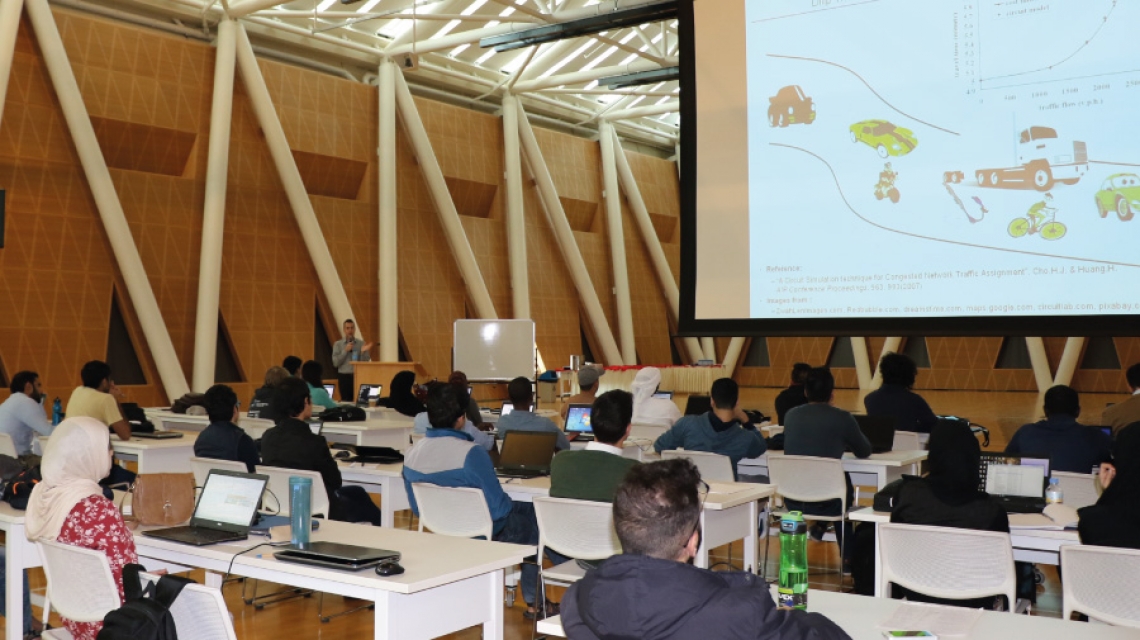
Dr. Ibrahim Elfadel, Professor of Microsystems Engineering at Masdar Institute, who organized the course said: “The student turnout for this course was heartening and is also evidence of the need for the development of more Institute-wide multidisciplinary courses in support of our academic and research programs. I am looking forward to our students gaining further cutting-edge knowledge and hands-on experience in the formulation and software implementation of the large-scale, complex mathematical equations that describe the behavior of real-world engineering components and systems, be they electrical, mechanical, chemical, biological, or environmental.”

Complex systems are large-scale natural or engineered systems whose descriptions require highly sophisticated mathematical and computer models. The study of complex systems involves the analysis of individual system components, how they interact together to function and how they interact with their surrounding environment. Some examples of complex systems include microprocessors, power distribution grids, transportation networks, the human cardiovascular system and the geophysical network of water reservoirs.

Ciara Sutton
News and Features Writer
28 January 2016

Semiconductor Expertise and Training Shared

Speakers from GLOBALFOUNDRIES, the semiconductor foundry that is wholly-owned by Abu Dhabi’s Mubadala Development Company – shared innovative semiconductor technologies with microsystems experts at the GLOBALFOUNDRIES Colloquium, held recently at Masdar Institute.

The day-long seminar, which was sponsored by the Abu Dhabi Education Council (ADEC) and hosted by Masdar Institute, featured presentations on six areas of semiconductor technology and a tour of Masdar Institute’s research labs and cleanroom fabrication facility.

“It is very significant that the Masdar Institute has been selected to host such a colloquium on the future trends and technology roadmap in the semiconductor industry,” said Dr. Ibrahim (Abe) Elfadel, Professor of Electrical Engineering and Computer Science.

“Masdar Institute has the largest semiconductor and microsystems program in the UAE with more than 90% of its research funded by external sources. Holding this forward-looking colloquium at Masdar Institute is a testimony to the reputation and visibility that the institute has already achieved in the highly-competitive semiconductor and microsystems research area. The distinguished speakers from GLOBALFOUNDRIES shared with the Masdar Institute faculty, staff and students their unique perspectives on several technology and integrated-circuit areas that are at the forefront of global semiconductor research,” Dr. Elfadel added.

The GLOBALFOUNDRIES representatives presented research in the areas of fully-depleted silicon on insulator (FD-SOI), radio frequency microelectromechanical systems (RF MEMS), power devices, integrated photonics and ferroelectrics.

For two days following the colloquium, focused technical workshops were held on campus with participants from GLOBALFOUNDRIES, Masdar Institute, Khalifa University, UAE University, Abu Dhabi University, and New York University – Abu Dhabi.

The colloquium and subsequent workshops served to bring highly-skilled research teams from around Abu Dhabi together, to share expertise and discuss research opportunities to help facilitate industry-relevant collaborative research projects in the area of microsystems. Such collaborations could significantly bolster the UAE’s nascent semiconductor industry.

“Aside from the extensive networking and deep technical discussions that this colloquium has generated, we hope that specific collaboration opportunities will materialize for our faculty that will associate them with their counterparts at GLOBALFOUNDRIES in industry-relevant, cutting-edge research and development projects. Such academia-industry collaboration has been one of the hallmarks of Masdar Institute’s microsystems program, and I certainly hope that it will continue be so for the foreseeable future,” Dr. Elfadel shared.

Erica Solomon
News and Features Writer
27 January 2016
IT Director Receives Chief Information Officer Award

Masdar Institute’s Director of Information and Communications Technology (ICT) was among 100 IT leaders honored for demonstrating excellence and achievement in shaping the regional IT landscape.

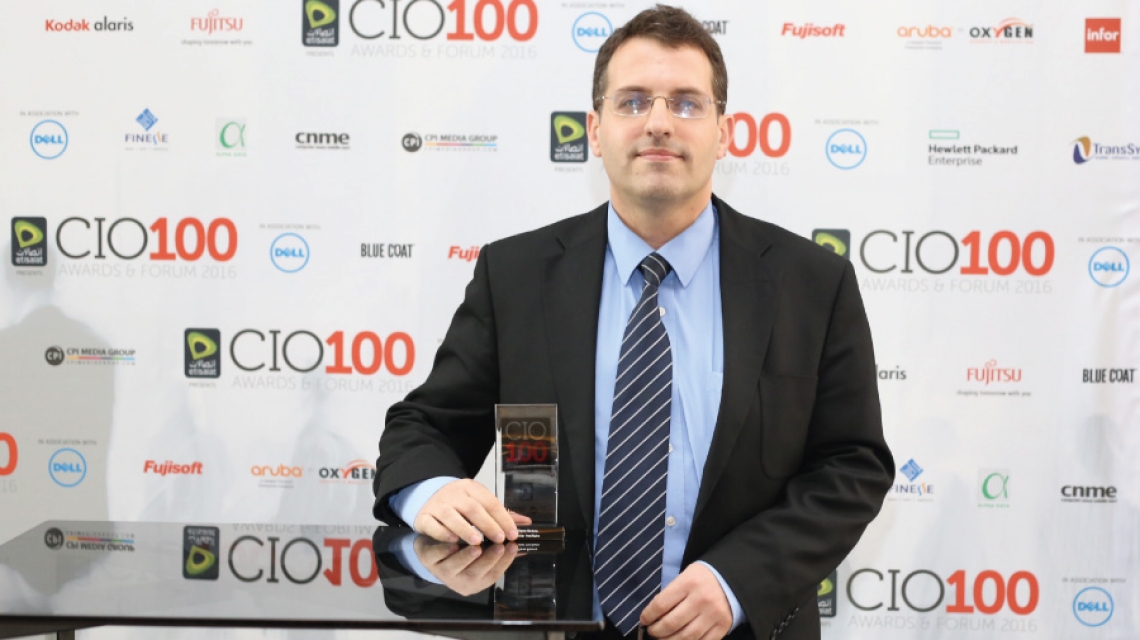
Masdar Institute ICT Director Sofiane Benna was nominated by American technology giant Dell to receive the Chief Information Officers (CIO) 100 Award 2016, which took place in Dubai in January. He was awarded for his role in providing a critical interface between the institution’s operations and ICT, combining a keen understanding and perspective of academic-related requirements with the experience and knowledge in mobilizing ICT to meet such requirements.

The award ceremony was preceded by a forum which featured keynote presentations from CIOs, who shared their experiences and insights on transforming business processes within their organizations through IT.

Organized by Computer News Middle East (CNME), the CIO 100 Award is endorsed by International Data Group (IDG), a leading technology, media, events and market research company.

Clarence Michael
News Reporter
28 January 2016

Innovative Research on Heat Transfer Technologies Shared

Three papers highlighting the innovative heat transfer research of Masdar Institute Assistant Professor of Mechanical and Materials Engineering Dr. TieJun Zhang, PhD student Hongxia Li and Master’s student Abulimiti Aili, were presented during the 5th Micro/Nanoscale Heat & Mass Transfer (MNHMT) International Conference held last month in Biopolis, Singapore.

The papers reveal the team’s research efforts aimed at improving the heat transfer processes used in solar thermal power and cooling applications – applications that generate clean electricity and cooling with heat from the sun.

Their research is being conducted under the Masdar Institute-Massachusetts Institute of Technology (MIT) active Flagship Research Project, titled “High-Performance Compact Solar Thermal Power and Cooling System,” and brings together teams of faculty from both Masdar Institute and MIT to develop a renewable energy-fired power plant and cooling system.

“The students gave excellent presentations of their research work and received praise from several of the world-renowned scholars who attended the conference,” Dr. Zhang shared. This year was the first time students from Masdar Institute presented at the MNHMT conference.

“The presentations gave us an opportunity to share some exciting findings from the groundbreaking research Masdar Institute is conducting in the critically important area of heat transfer, which we believe could be further developed to help bolster the UAE’s solar thermal energy generation capabilities,” he added.

The three papers examined various methods for improving the efficiency of boiling, evaporation and condensation processes – processes that play a crucial role in power generation and cooling.

In evaporators, the liquid absorbs heat from an energy source (like the sun) and turns it into vapor. This vapor is used to drive a turbine, which in turn generates electricity. Condensers help convert the vapor back to liquid for recirculation. Improving these evaporators and condensers could help power systems – and in this case, solar thermal-powered power systems – generate electricity more efficiently.

Li presented two papers, titled “Effect of Surface Wettability and Gas/Liquid Velocity Ratio on Microscale Two-Phase Flow Patterns” and “Prediction of Refrigerant Flow Boiling Hysteresis with an Augmented Separated-Flow Model.”

The first paper studies the flow of liquids and vapors through a microchannel, which is essentially a tiny tube with a diameter below one millimeter. Li’s research aims to increase the efficiency of evaporation by examining the flow pattern of the liquid vapor mixture at the micro-scale.

Li’s second paper looks at improving the efficiency of boiling of the working fluids used in low-concentration solar thermal plants that both generates electricity and provides cooling.

Aili’s paper, which was selected as an “invited paper” for its novelty, is titled “Characteristics of Jumping Droplet-Enhanced Condensation on Nanostructured Micromesh Surface.” This research aims to improve condensation efficiency – the process by which water droplets form on a surface – by adding a microporous structure to the condenser surface.

“The research demonstrates a new droplet jumping phenomenon, termed ‘self-jumping without coalescence’, which has never been reported yet,” Aili explained. These “self-jumping droplets” created by the micro-mesh covered surface greatly improve the efficiency of condensation. 

Dr. Zhang gave a fourth presentation on a research paper that is currently in the process of being published. In his presentation, titled “Design of Broadband Ultrathin Film Nanoporous Solar Absorber,” Dr. Zhang shared his team’s research on the development of a nano-porous broad-band solar absorber that, when placed on top of nano-porous substrate, is able to absorb the sunlight in a wide wavelength range.

Understanding radiative heat transfer between extremely small and close objects has been a challenge for scientists. However, Dr. Zhang and his team have developed an innovative way to leverage thermal radiation heat transfer to improve the efficiency of a solar thermal power plant, which he highlighted during his presentation.

“Using the principles of thermal radiation heat transfer, this nano-porous solar absorber can absorb more of the sun’s energy, which could help increase energy to electricity efficiencies in solar thermal power plants,” Dr. Zhang explained.

Dr. Zhang also chaired three of the conference’s technical sessions, including “Boiling, Quenching, and Condensation in Heat Transfer,” “Boltzmann Transport Approaches to Micro/Nanoscale Problems,” and “Condensation on Micro/Nano-Engineered Surfaces.”

The MNHMT conference is sponsored by the American Society of Mechanical Engineers (AMSE) – a not-for-profit professional organization that enables collaboration, knowledge sharing and skill development across all engineering disciplines, while promoting the vital role of the engineer in society. With over 300 global attendees, 150 peer-reviewed papers, 100 presentations, 30 posters and 12 plenary speeches, the MNHMT conference provides a forum for researchers, educators and practitioners around the world to exchange ideas on the state-of-the-art research and development and identify future research needs in this interdisciplinary emerging field.

Erica Solomon
News and Features Writer
15 February 2016

Tadweer and Masdar Institute Launch Waste Cooking Oil Collection and Recycling Campaign

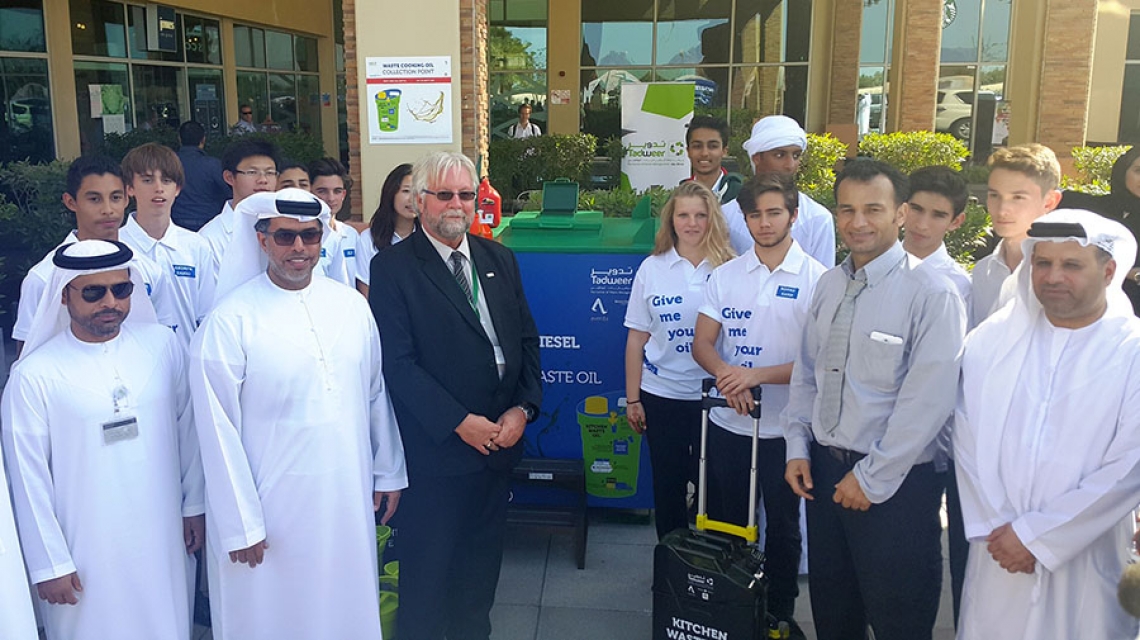
Tadweer, the Center of Waste Management, Abu Dhabi, launched an initiative for turning waste cooking oil into clean energy in collaboration with the Masdar Institute of Science and Technology, an independent, research-driven graduate-level university focused on advanced energy and sustainable technologies.

Working with Masdar Institute, the facilities services company Khidmah and Averda Waste Management, Tadweer began the pilot phase of the project at Al Raha Gardens community in Abu Dhabi on 9 February 2016. 

H.E. Eisa Saif Al Qubaisi, General Manager of Tadweer said, “We are always keen to continuously leverage our strategic partnerships in order to achieve the directives of the wise leadership. In this initiative we’ve collaborated with Masdar Institute on research related to improving the conversion of used cooking oil into biodiesel. This will help greatly in promoting the implementation of our strategy, which aims to transform waste into resources that can be utilized environmentally and economically. We are dedicated to exploring and providing the most appropriate solutions for residents to dispose their waste and use the best practices in this field in an advanced and efficient manner.”

The waste cooking oil was collected at two collection points in the Al Raha Gardens and by students and volunteers from the Al Raha International School through a door-to-door campaign. The collected waste oil will then be processed by Masdar Institute to transform it into biodiesel, which will be used to power the Averda waste collection fleet, contributing to a healthier environment through reduced waste production and carbon emissions.

Dr. Behjat Al Yousuf, Interim Provost, Masdar Institute, said: “We are delighted to partner with Tadweer, Khidmah, and Averda to collect waste cooking oil for conversion into biodiesel as part of this welcome initiative. We believe the project will not only raise awareness about the value of reusing waste, but will also show the viability of such waste oil collection campaigns for wider expansion across Abu Dhabi and the UAE.”   The waste oil to biodiesel transformation will take place in the Institute’s Waste-to-Energy Lab, led by Associate Professor of Mechanical Engineering Dr. Isam Janajreh. In 2014 Masdar Institute and Tadweer embarked on a two-year research agreement focused on improving the process for the production of biodiesel from waste cooking oil using novel ultrasound reactor that was developed at the institute.

Oussama Al Natour, Director City Cleaning GCC at Averda International Company said: “We believe in giving back to the community and environment we work and live in. Biofuel recovery is another technological advancement that Averda is proud to introduce to Abu Dhabi alongside our prestigious partner Tadweer. This initiative is the result of a strategic collaboration between the environmental experts of Abu Dhabi and we are proud to be leading on this project with our strategic partners Tadweer, Masdar Institute and Khidmah. The initiative will not only lead to a better environment but it is also designed to integrate the different layers of the society and encourage them to take part in the waste oil recycling initiative and be part of a significant change.”

Processing and reusing waste cooking oil as fuel is an environmentally friendly sustainable energy solution that can contribute to targets for renewable energy uptake within the UAE and abroad. Biodiesel provides a low carbon alternative to conventional diesel fuels while helping the UAE mitigate challenges with waste disposal.

Adel Kamali, Chief Operating Officer at Khidmah, commented: “Khidmah is committed to supporting the UAE’s sustainability goals, and we were very excited to take part in this unique project, which will be tested for the first time in the Al Raha Gardens community. This initiative will eventually promote eco-friendly practices across the community and the Emirate. We will continue to partake in environmental initiatives wherever possible, and we are proud that our residents are also very supportive of this cause.”

10 February 2016

Origin and Progress of GCC’s First Space Concentration Shared at Workshop

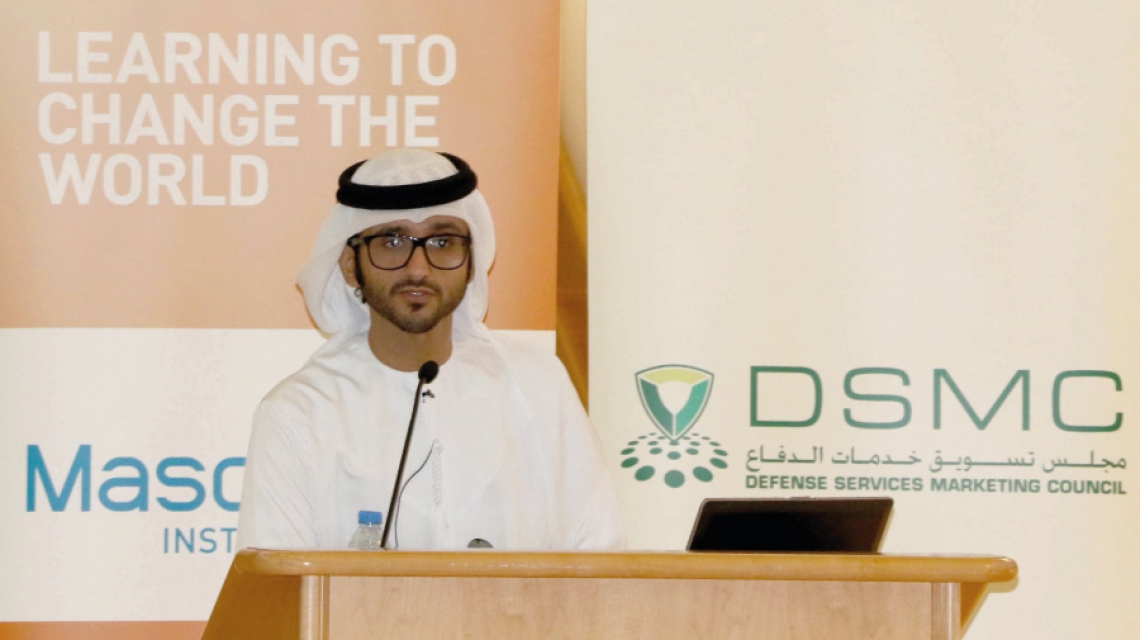
Innovation is often the result of the dynamic synergies that emerge when academia and industry work in partnership toward a shared goal, which is exactly what took place when Masdar Institute partnered with YahSat and Orbital ATK, explained Dr. Saif Al Mheiri, Assistant Professor of Mechanical and Materials Engineering at Masdar Institute, at the recent Partnering to Achieve Innovation in Defense and Aerospace (PAIDA) Working Group.

The innovation that emerged from the strategic collaboration between the research institute, the satellite company and the aerospace manufacturer is the development of Masdar Institute’s new Space Systems and Technology concentration.

The PAIDA event – which was organized by the Defense Services Marketing Council (DSMC) and was the fourth in a series of focused discussions around innovative defense and aerospace technologies and their potential applications in the UAE – provided Dr. Al Mheiri an opportunity to present a summary of the Gulf Cooperation Council’s (GCC) first-ever space concentration to the working group members and interested Masdar Institute students.

“Partnering with industry experts like YahSat and Orbital ATK ensures that the concentration will develop valuable technologies of direct relevance to the space industry, as well as the highly skilled human capital required to power the UAE’s nascent space sector,” Dr. Al Mheiri said.

The assistant professor is one of four Masdar Institute faculty responsible for developing the concentration, which leads students through the design, construction, and testing of a CubeSat, or mini satellite. He is joined by Dr. Mohamed Sassi, Dean of Faculty, Dr. Prashanth Marpu, Assistant Professor of Chemical and Environmental Engineering, and Dr. Daniel Choi, Associate Professor of Mechanical and Materials Engineering.

“We have developed an interdisciplinary concentration that spans seven engineering programs to facilitate the education of space systems and technology across the engineering spectrum,” Dr. Al Mheiri explained.

Through YahSat and Orbital ATK’s support, Dr. Al Mheiri shared the milestones he expects to reach within the first two years of the space concentration.

The first milestone, set for June 2016, is to complete an orbit analysis, a design for a ground station, and the basic designs for the CubeSat subsystems. The second milestone, set for December of 2016, includes the breadboard model of the CubeSat, which is the stage just before the prototype is constructed. The third milestone, set for December of 2017, includes the construction of the CubeSat and the required compliance checks.

“The local human and intellectual capital the program produces can provide the country with valuable products and services to power its knowledge economy, particularly in the space sector, but also in other high-tech sectors as well,” Dr. Al Mheiri concluded. He believes the technological systems and intellectual property developed through the concentration will lead to advances in other key UAE sectors, including defense and energy.

Since the Fall 2015 term, when the concentration first launched, 12 students from seven of Masdar Institute’s Master’s programs – including Mechanical Engineering, Materials Science and Engineering, Computing and Information Sciences, Electrical Engineering, Engineering Systems and Management, Microsystems Engineering and Water and Environmental Engineering – have added a concentration in Space Systems and Technology to their degree.

YahSat is funding the program, which includes a lab with all of the required machinery needed to construct and test the CubeSats. The lab is expected to be completed by the end of the first quarter of 2017. The satellite company also provided an Initiation Program before the first semester began, which offered 16 hours of seminars to introduce new students to concepts related to satellite business, engineering and operations. The satellite manufacturing company will continue to mentor the students and faculty involved in the concentration to ensure the program’s quality and ability to develop the highly-skilled human capital needed to advance the UAE’s nascent space industry.

Orbital ATK assisted in the development and launch of the space concentration and will continue to play an advisory role through regular analysis of coursework and curriculum recommendations. They will also provide the required testing facilities for the CubeSats that are developed by Masdar Institute students, and will subsequently launch the CubeSats into space.

Erica Solomon
News and Features Writer
16 February 2016

Steering Board Meeting of UAE-Japan Strategic R&D and Higher Education Partnership to be Hosted on Campus

The fourth board meeting of the UAE-Japan Strategic Research and Development and Higher Education Partnership Steering Committee will be hosted in collaboration with the University of Tokyo at the Masdar Institute campus.

The partnership group aims to promote capacity-building programs under industry–academia collaboration. The UAE members of the group include Masdar Institute of Science and Technology, the Higher Colleges of Technology-UAE, Khalifa University of Science, Technology and Research, United Arab Emirates University, and the Petroleum Institute. On the Japanese side, the members include the University of Tokyo, the Japan International Cooperation Center (JICE), Japanese oil company INPEX Corporation, Mitsubishi Electric, Mitsubishi Heavy Industries, the National Graduate Institute for Policy Studies of Japan, and the Institute of Energy Economics of Japan.  

The meeting on 22 February will discuss new proposals for this year and review the activities organized by the group partners during 2015. It will also ratify inclusion of new participants to the UAE-Japan Strategic Research and Development and Higher Education Partnership.

Dr. Behjat Al Yousuf said: “Masdar Institute is honored to host this high-profile meeting that highlights the cooperation and interaction between stakeholders from both countries. Both the UAE and Japan benefit from this partnership, which facilitates collaborations in higher education and research and development. We believe this meeting will provide an impetus to take our efforts forward in this regard.”

The meeting will be attended by His Excellency Kanji Fujiki, Ambassador, Embassy of Japan in the UAE, Dr. Behjat Al Yousuf, Interim Provost, Masdar Institute, Mr. Masakazu Toyoda, Deputy Chairman of the Steering Committee, and Chairman and CEO of the Institute of Energy Economics, University of Tokyo, Dr. Kiyoshi Kurokawa, Adjunct Professor, National Graduate Institute for Policy Studies, and other officials, Dr. Yoshiaki Nakano, Professor, Graduate School of Engineering, the University of Tokyo and Dr. Mikiyasu Nakayama, Professor, Graduate School of Frontier Sciences, the University of Tokyo.  

Mr. Masakazu Toyoda said: “This Steering Board Meeting is a very unique forum, attempting to identify the current situation of existing cooperative projects between academia and industries under the UAE-Japan Partnership and to further enhance such cooperation to promote technological development and higher education to strengthen industrial competitiveness and improve our quality of life.”

Others expected to attend the meeting include Dr. Abdullatif Al Shamsi, Vice Chancellor, Higher Colleges of Technology, UAE, Dr. Tod Laursen, President, Khalifa University, Dr. Thomas Hochstettler, President, the Petroleum Institute, UAE, Dr. Mohamed Abdullah Albaili Al Hammadi, Deputy Vice Chancellor for Academic Affairs, United Arab Emirates University, Ms. Masako Kishimoto, Vice President, JICE, Mr. Yosuke Ueda, Director & General Manager, Abu Dhabi branch of Japan Oil Development Co., Ltd, Dr. Isao Otsuka, Senior Manager, Mitsubishi Electric Corp., and Mr. Akihiko Tsuchida, General Manager, Mitsubishi Heavy Industries, LTD.  

Dr. Kiyoshi Kurokawa, said: “I commend this unique collaboration between two leading research institutions of Japan and UAE to further the research area of sustainable future by unique collaboration and human capital development programs.”  

Dr. Yoshiaki Nakano, Professor at University of Tokyo, said, “ I am glad to report that the student exchange between Masdar Institute and University of Tokyo has significantly increased over the past one year period, providing benefits to students on both sides. Larger scale collaboration through joint research projects is expected in 2016.”  

Dr. Mikiyasu Nakayama, Professor at University of Tokyo, said, “I am satisfied to have observed the very rapid progress of the collaboration between Masdar Institute and University of Tokyo, which originated from my very first visit to the Masdar Institute of March 2012.”   Discussions will also cover activities that support collaboration among the private and government organization, especially clean and smart technologies.

One of the activities facilitated by the partnership includes an annual six-week internship program for UAE Nationals in Japan, organized by JICE. The program provides advanced learning opportunities in the latest research and development in clean technologies. Some of the steering committee members host interns as part of the internship program, offering them a closer understanding of the social and work culture in Japan, one of the world’s most technologically innovative countries.  

Clarence Michael
News Writer 
21 February 2016

Innovations in Aerospace, Aviation, Defense and Space Sectors at the Fore at Global Aerospace Summit 2016

Innovations and involvement in the aerospace, aviation, defense and space sectors will be some of the key aspects of participation at the upcoming Global Aerospace Summit 2016, hosted by Mubadala Development Company.

The Summit, part of the Abu Dhabi Aviation and Aerospace Week, will be held from 7-8 March 2016 at the Abu Dhabi National Exhibition Center (ADNEC) under the patronage of His Highness General Sheikh Mohamed Bin Zayed Al Nahyan, Crown Prince of Abu Dhabi and Deputy Supreme Commander of the UAE Armed Forces.

Dr. Behjat Al Yousuf, Interim Provost, Masdar Institute, said: “Masdar Institute’s innovations to support a sustainable aerospace ecosystem, particularly through advanced energy and materials science research, are the result of diligent collaboration with partners and thought leaders in this field. The Institute’s advancement of innovation dialogue at the Global Aerospace Summit 2016 will continue this effort to nurture new ideas and transfer knowledge throughout the community.”

Representing Masdar Institute, Dr. Steve Griffiths, Vice President for Research and Interim Associate Provost, will moderate a panel discussion titled ‘Introducing the next generation of environmental technologies into commercial aviation’ on the first day of the event. The discussion will explore future aviation energy sources and the technologies and practices that the aerospace industry can employ to reduce the carbon footprint of commercial aviation and meet industry sustainability targets and environmental regulations.

The panelists include David Hess, Executive Vice President and Chief Customer Officer for Aerospace, UTC, John Swift, Director, NATS Middle East, and Darrin Morgan, Director, Sustainable Aviation Fuels Strategy, Boeing Commercial Airplanes, and Linden Coppell, Head of Sustainability, Etihad Airways.
The Institute has been involved in several research projects in the aerospace, aviation, defense and space sectors, including a collaboration with Mubadala

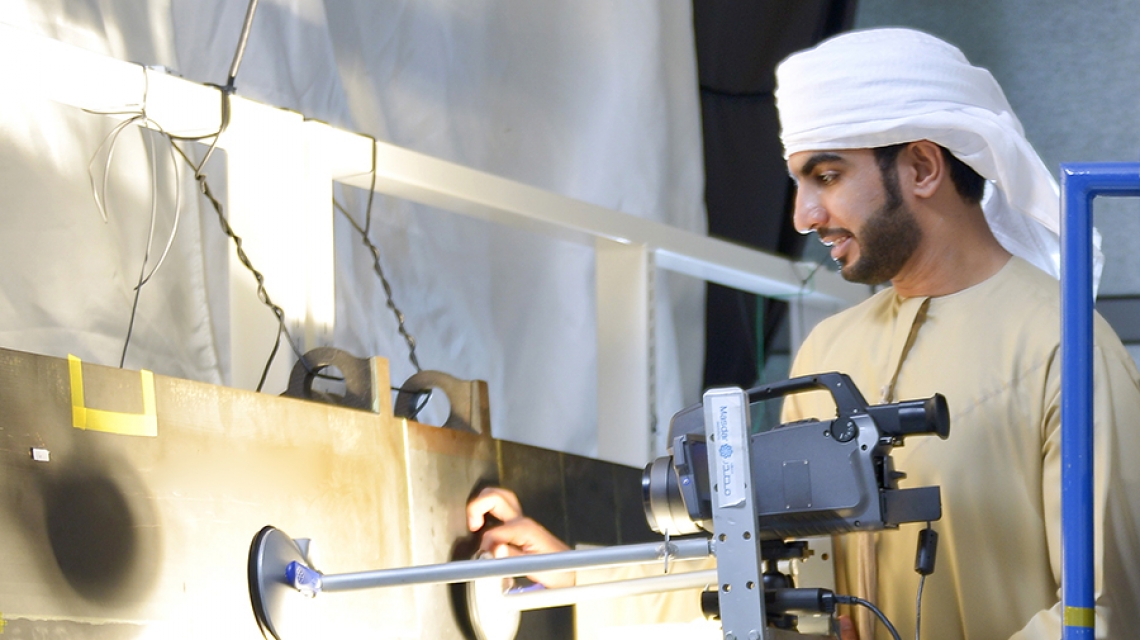
Aerospace’s Strata Manufacturing to design a defect-detection system for aerospace structures that use a non-destructive testing (NDT) approach and ensures faster more efficient inspection rates.

Additionally, a research partnership with global aerospace and security leader Lockheed Martin involves nano-structures and materials that have unique properties due to their strength, electrical conductivity and other factors. These nanomaterials could potentially be suitable for use in aircraft fuselage design, plastics and water-desalination programs among others.

Today, due to operational and technological innovations in commercial aviation, a normal flight generates around 50% less CO2 per km compared to a flight of the same distance in 1990. The industry is using a four-pillar strategy to further increase its fuel efficiency by another 17% over the first decade. This includes technology innovation, operational improvements, infrastructure efficiencies, and smart economic measures. The panel discussion will highlight key operational and technological advances that will be required for the implementation of this strategy, including advances in commercial propulsion systems and aviation biofuels.

The Global Aerospace Summit 2016 is an exclusive invitation-only forum for C-level executives, senior decision makers, government and military officials involved in the aerospace, aviation, defense and space industry sectors.

Clarence Michael
News Writer
1 March 2016

Masdar Institute Group Presents Four Papers at TMS 2016 in US

Four papers on innovative materials research were presented by Masdar Institute researchers  at The Minerals, Metals & Materials Society (TMS) 2016 Annual Meeting and Exhibition in the US. The papers focus tackling challenges in achieving energy-efficiency, energy harvesting, and efficient cooling systems.

More than 60 symposia covering a broad range of topics related to materials science and engineering were organized at the 145th meeting of TMS in Nashville, Tennessee, which brought together more than 4,000 business leaders, engineers, scientists, other professionals and students from around the world in the minerals, metals, and materials fields. The event offered students invaluable opportunities to network with professionals, and learn more about the minerals, metals, and materials science and engineering professions.

Masdar Institute is evolving and expanding its materials science research capabilities and activities, in response to the increasing importance of materials science and engineering to the UAE’s national and economic ambitions. The Institute currently has a strong materials science academic and research program, with 31 students, of which 10 are in the PhD program, and nine faculty. Advanced materials and nanotechnology are at the core of the research being done across all of the Masdar Institute Research Centers (iCenters).

The Masdar Institute delegation to TMS 2016 was headed by Dr. Mohamed Ibrahim Hassan Ali, Assistant Professor, Department of Mechanical and Materials Engineering. He also hosted the Cast Shop Technology Symposium at the event. The Masdar Institute researchers who presented papers at TMS 2016 included Dr. Daniel Choi, Associate Professor, Research Engineer Ayoola Brimmo, PhD student Adesola Olukunmi Ajayi, and Post-Doctoral Researcher Mouhamadou Aziz Diop.

The paper titled ‘Furnace Modelling for Efficient Combustion Gas Circulation’ was presented by Ayoola Brimmo and Dr. Ali, who also presented the paper about ‘On the Cast House Energy Management’. The paper on ‘Process under External Static Magnetic Field on Flow Pattern in Slab Mold’ was presented by Mouhamadou Diop and Dr. Ali. The last paper on ‘Thermo-Mechanical Properties of Wrought Aluminum Alloys produced from Scrap Mixing’ was presented by Adesola Ajayi, Dr. Ali; and Dr. Choi.

The research presented has been conducted within Masdar Institute’s Interdisciplinary Computational Engineering Laboratory (ICE Lab), which is focused on developing interdisciplinary models for solving complex engineering problems towards sustainable energy and energy efficient processes. Its special projects include collaboration with Emirates Global Aluminum (EGA) for energy-efficiency in aluminum production, energy harvesting with GlobalFoundries (GF) and efficient cooling systems with Masdar City.

Organized from 14-18 February 2016, the symposium promoted networking, technical exchange, and camaraderie leading to collaborations, innovation, and solutions in the workplace and in society.

Included among TMS’ nearly 13,000 professional and student members are metallurgical and materials engineers, scientists, researchers, educators, and administrators from more than 70 countries on six continents. TMS is dedicated to fostering the exchange of learning and ideas across the entire range of materials science and engineering, from minerals processing and primary metals production, to basic research and the advanced applications of materials.


Clarence Michael
News Writer
15 March 2016