Aspiring Students Invited to Attend Open Day to Explore Academic, Research and Scholarship Offerings at MI

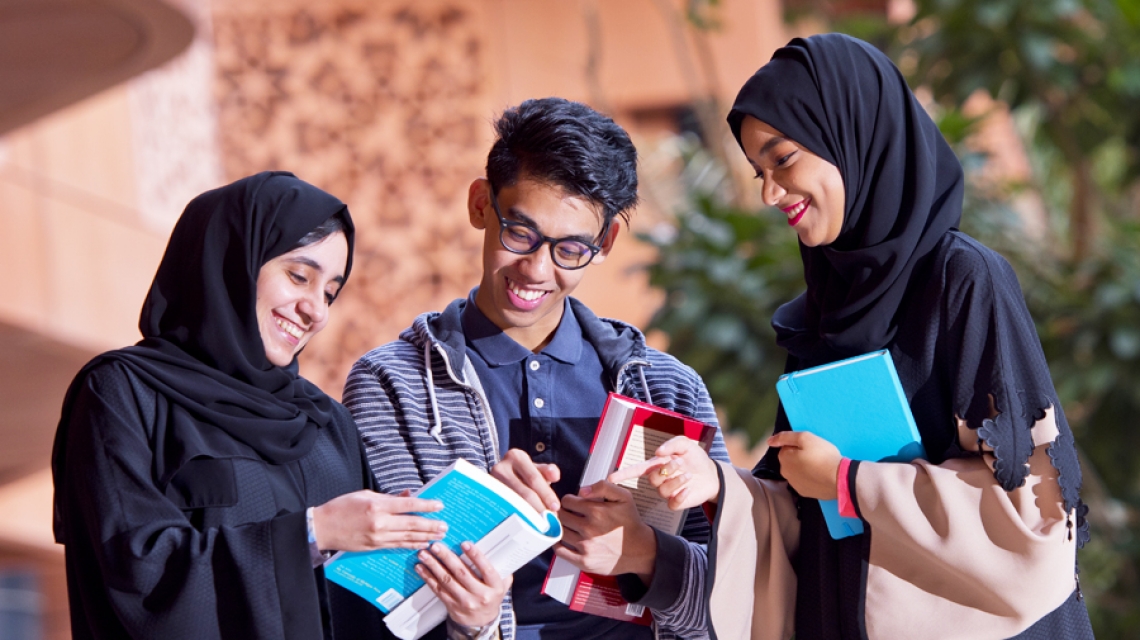
Masdar Institute is inviting aspiring future innovators to explore its academic, research and scholarship opportunities during its Open Day on 18 February 2017.

To be held from 11.00am-5.00pm, the Open Day at Masdar Institute campus in Masdar City will have dedicated booths for each of its nine Master’s programs and the PhD in Interdisciplinary Engineering. The event will offer visiting university students an opportunity to learn about the research-focused academic programs that can transform them into world-class researchers and innovators. It will also help them understand how the academic programs at Masdar Institute respond to the UAE’s need for technology and innovation in clean energy, water, microelectronics, advanced materials, space and engineering systems. Additionally, they will learn about the scholarship opportunities, the outreach programs, various student clubs and other activities that offer students an enriching campus life.

Dr. Behjat Al Yousuf, Interim Provost, Masdar Institute, said: “Open Day is an opportunity for our faculty and students to share their research, knowledge and experiences with visitors to our campus. We are proud of Masdar Institute’s achievements locally and globally, and we welcome talented young men and women to join us as we help the country transform into a world-class knowledge economy.”

Part of the Open Day’s special focus areas will be an Innovation Zone that highlights key research projects currently being undertaken at Masdar Institute. In addition, campus tours will be organized throughout the day for those interested in discovering more about the Institute’s cutting-edge research laboratories and facilities that are driving some of the most advanced research initiatives in the UAE.

Students and faculty from the Institute’s academic programs will be on hand to share their experience and advise undergraduates on why they should choose Masdar Institute for their Master’s studies. Masdar Institute Master’s degree programs cover Engineering Systems and Management, Computing and Information Science, Materials Science and Engineering, Mechanical Engineering, Water and Environmental Engineering, Microsystems Engineering, Electrical Power Engineering, Chemical Engineering, and Sustainable Critical Infrastructure. The Institute also offers the region’s first Master’s concentration in space systems and technology.

Open Day will also provide an opportunity for visitors to engage with currently enrolled students to learn first-hand about their academic experiences and life in one of the world’s most sustainable campuses. They can also learn about various activities that foster the social and cultural development of the students.

The Masdar Institute Admissions Department team will be available offer details about the broad range of scholarships on offer for all Masdar Institute students and the impact of the strong partnerships Masdar Institute has established with overseas universities, institutions and industry leaders.

The Outreach Department will also be present to explain other avenues of learning such as the Young Future Energy Leaders (YFEL) program and Ektashif program, which offer internships, training, and leadership experiences.

The activities zone will offer visitors ‘Biking and Lighting the City’, an interactive and motivating activity that playfully challenges participants to generate energy by riding a bicycle. The ‘Giant Chess’ will engage visitors to be part of the game, while the ‘Virtual Reality 360-Degree Videos’ will offer VR clips displaying a spherical scenario of recorded environment in all angles.

Clarence Michael
News Writer
14 February 2017

Enthusiastic Undergraduate Students Explore Advanced Research and Academic Programs on Masdar Institute Open Day

Students from universities across the UAE had an opportunity to learn about Masdar Institute’s research-focused Master’s and PhD programs, scholarship opportunities and on-campus life during the 2017 Masdar Institute Open Day.

The event witnessed large crowds of potential students seeking information from faculty and current students about the academic programs and outreach activities offered at Masdar Institute, while touring the research-based institution’s cutting-edge laboratories and research facilities. Competitions, games, and an Innovation Zone featuring several dynamic research projects were a big draw for visitors.

Clarence Michael
News Writer
18 February 2017

Alumna Shares Insights on Critical Role of Data for Preservation and Management of Marine Ecosystems

Masdar Institute alumna Dr. Haifa Ben Romdhane served as the Marine Data Infrastructure GCC Summit 2017 chairwoman, presenter and panelist last month, contributing key insights on the role of marine data for managing and preserving the region’s precious marine ecosystems during the second annual event.

The two-day conference held on 30-31 January in Dubai provided a platform for marine stakeholders and experts to discuss how to maximize access to marine data in order to develop innovative marine projects and better conserve marine ecosystems.

“When studying oceans and the marine environment, researchers depend on an exchange of data and information from all available sources. There is tremendous economic and environmental benefit in obtaining data by exchange, and it was the purpose of this summit to encourage such exchanges,” Dr. Ben Romdhane explained.

Dr. Ben Romdhane chaired the first day of the conference, while her colleague Peter Pissierssens, Head of the Intergovernmental Oceanographic Commission (IOC), chaired the second day.

On the first day, Dr. Ben Romdhane delivered a presentation on “Data and Infrastructure in Marine Environment for Efficient Management and Sustainability.” During the presentation, she discussed the important role that relevant and robust marine data plays in influencing and managing decision making processes for a sustainable environment. She also brought attention to the critical need for more relevant data collection and analysis on coastlines, water, tide, bathymetry, and hydrography, and highlighted some of the latest technologies and innovations available on the market used for accessing relevant data.

On the second day of the conference, Dr. Ben Romdhane served as a panelist on a panel titled “Infrastructures and Data Access Systems Regarding Water.” The panel focused on efficient ways to acquire data on water to help decision-makers establish development strategies for water quality management. Panel participants included Remote Sensing Expert Dr. Wahid M. Moufaddal of the Regional Organization for the Protection of the Marine Environment (ROPME), Associate Director Dr. Juan Recio of AECOM, Marine Conservation Project Manager Daniel Mateos of the Emirates Wildlife Society – WWF, and Sales Director of Middle East and Africa Hassan Al Salem of Xylem.

Dr. Ben Romdhane is currently working as a researcher at the Masdar Institute’s Earth Observation and Hydro-Climatology Laboratory. She graduated from Masdar Institute in December 2016 with a PhD in Interdisciplinary Engineering. She received her MSc degree from the Ocean Research Institute of the University of Tokyo and her B.Eng. degree in Marine Sciences from the National Agronomic Institute of Tunisia.

Dr. Ben Romdhane’s PhD thesis focused on utilizing remote sensing – a technology that uses sensors on aircraft or satellites to collect data from objects on Earth by detecting the energy they reflect – as well as numerical modelling to better understand and protect the UAE’s coral reefs, which are regarded as some of the most diverse and valuable ecosystems on Earth.

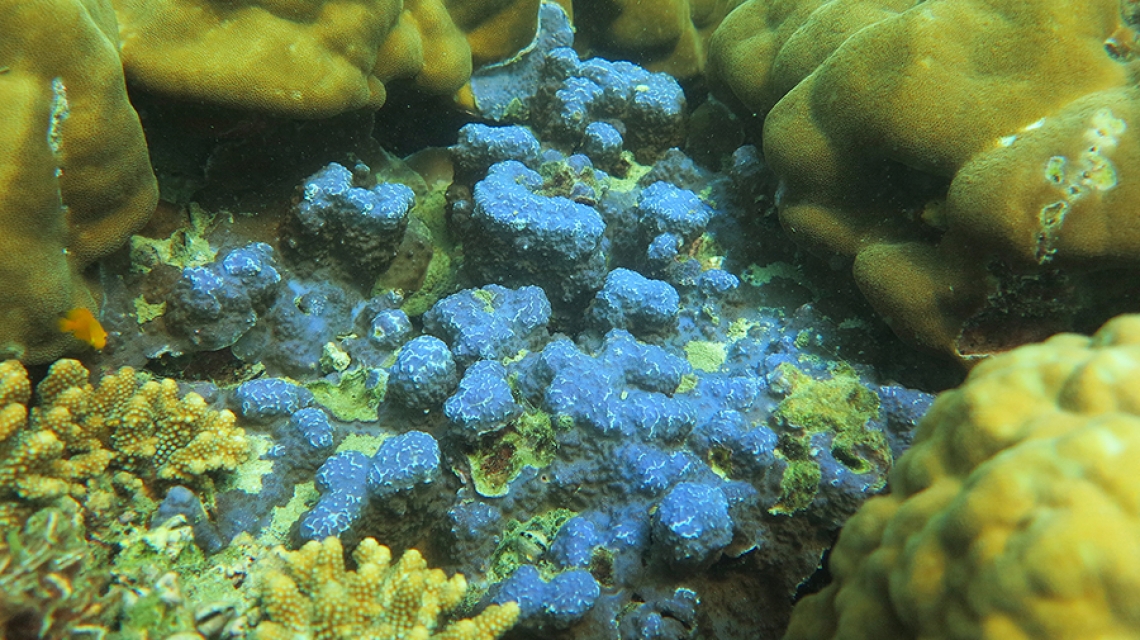
Last year, while conducting research for her PhD, Dr. Ben Romdhane discovered an unmapped coral reef off the coast of Dalma Island in Abu Dhabi.

The new reef discovery is a strong example of the importance of collaboration and data collection and analysis in the Gulf waters.

“My research underscores the need to improve water data collection and analysis for better water quality management, which will ensure greater safety for water navigators and improve preservation of the region’s marine ecosystems,” Dr. Ben Romdhane commented.

“The Marine Data Infrastructure GCC conference is an important and unique platform that seeks to bring together marine experts to discuss the critical technologies and innovations needed to better understand the GCC’s marine ecosystems and coral reefs; information which could in turn help policy makers and decision makers properly manage, monitor and conserve our precious marine ecosystems,” she added.

For the second year in a row, Dr. Ben Romdhane has played an active role in the Marine Data Infrastructure GCC summit. She is becoming widely recognized in her field for her expert know-how of satellite-based mapping methodologies and modelling techniques, and truly embodies the innovative spirit of Masdar Institute – continuously seeking sustainable solutions to address the world’s most pressing challenges through in-depth research and dynamic collaborations.

Erica Solomon
News and Features Writer
23 February 2017

YFEL Team Wins Top Award for Innovative Learning Concept at Mohamed Bin Zayed Majlis for Future Generations

A four-member team from the Young Future Energy Leaders (YFEL) 2017 program, a Masdar Institute outreach initiative, won first place and a AED20,000 prize for their ‘Learning, Innovation, Fun and Technology’ (LIFT) concept during the Mohamed Bin Zayed Majlis for Future Generations, which was held on 7-8 March in Abu Dhabi.

The majlis was held at the Abu Dhabi National Exhibition Center, where around 3,000 Emirati university students participated in discussions, breakout sessions, and competitive workshops around topics such as cyber security, smart cities, urban development, and entrepreneurship.

The YFEL team was composed of University of Sharjah students Hessa Alzaabi, Aysha Alrumaithi, and Ameera Almarzouqi, and Petroleum Institute student Bodor Alkendi. They competed against five other teams in the ‘Minds on a Mission’ workshop to win first place and a cash prize of AED20,000.

Dr. Lamya N. Fawwaz, Vice President of Institutional Advancement and Public Affairs, Masdar Institute, said: “The success of the YFEL team at the MBZ Majlis for Future Generations shows the talent and creativity of the youth Masdar Institute mentors and develops through YFEL. We are proud of these young women for presenting an innovative concept that utilizes cutting-edge technologies, like artificial intelligence, to make the classroom environment more engaging and exciting. I congratulate the team and hope to hear of more creative solutions from this group of young female innovators.”

The ‘Minds on a Mission’ workshop was organized in collaboration with Cognitive Technology Solutions, which is a joint project with the Mubadala Development Company and IBM to bring IBM’s Watson artificial intelligence (AI) computing system to companies in the Middle East and North Africa (MENA). As such, the workshop was aimed at encouraging participants to develop new and innovative solutions to challenges facing the UAE in the transport and education sectors.

The LIFT concept presented by the YFEL team sought to enrich the learning experience in a conventional mathematics class to make it more personalized and exciting. They suggested a system where students would first be tested using Watson AI technology to determine their preferred learning method — seeing, doing or listening. The students would then be placed in groups where they would be taught according to the best methods for the individual learning preferences. The classroom would also integrate visual activities using advanced technologies, like touchscreens, thereby proving the effectiveness of ‘learning, innovation, fun and technology’.

YFEL member Alzaabi said: “We are extremely proud of our accomplishment, as it shows the benefit of teamwork and innovation. Conventional educational tools are very theoretical in nature and as such, do not fully engage kids in the classroom environment, which can lead to low student performance. My team members were able to conceptualize an idea to respond to this challenge, which we developed over the course of two days of hard work.”

The YFEL team’s project was assessed for several criteria including teamwork, collaboration, innovation in identifying solutions to tackle the challenge from its root, use of advance technology, and economic feasibility to serve the market.

Clarence Michael
News Writer
9 March 2017

Masdar Institute Launches Happiness Club to Mark International Day of Happiness

The Student Affairs Office (SAO) at Masdar Institute joined the student body to launch the new Happiness Club to coincide with United Nation’s International Day of Happiness on 20 March 2017.

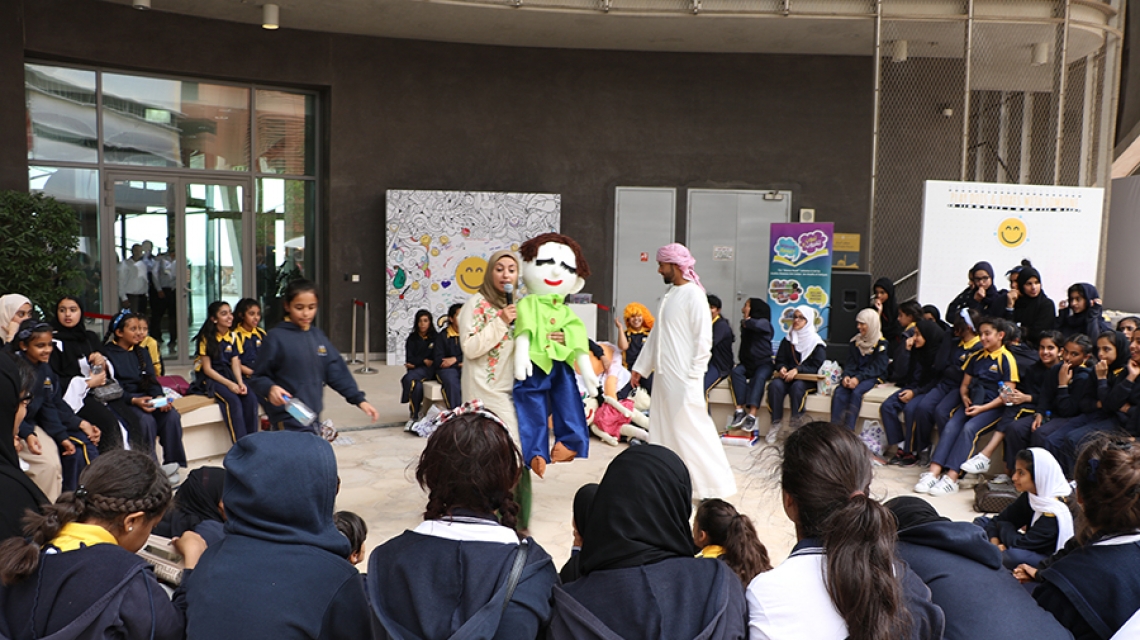
The Masdar Institute campus community marked the event with special storytelling sessions and musical performances at the courtyard opposite the Knowledge Center, where the Masdar Institute community gathered to share the spirit of the day. Book and toy stalls offered visitors an opportunity to buy and donate.

The Masdar Institute Happiness Club was also launched on the day to help promote positivity and satisfaction on campus.

Club co-president Lamis Abu Ashour explained: “The main aim of the Happiness Club is to work in line with the plans of the UAE Government to promote happiness among individuals. At Masdar Institute, we are trying to demonstrate the meaning of happiness and how it can be spread through actions such as giving, sharing, and appreciation. Through these actions, we will be able to not only promote happiness, but also raise good values among our fellow students. In addition, by promoting happiness, students will be encouraged to become more productive and we hope the club will truly bear fruits for the institute.”

Students celebrated the day by sending faculty members personalized greeting cards to thank them for their efforts. The Student Affairs Office also organized an appreciation lunch for the construction workers, security, cleaning and office support staff, together with the students.

For the evening the SAO and the Happiness Club organized a movie, open mic night, music, games and refreshments, to further spread happiness across the campus community.

Happiness Club Co-President Abeer Anes Wahdain said: “Our club plans to take advantage of all special occasions – both personal and public – to put a smile on everybody’s face and make people feel special. It’s important that we take the opportunity to help members of the Masdar Institute community ‘de-stress’ and remind them that they are appreciated for their hard work.”

She added: “Plans in the coming months will include special activities for the graduating students and field trips for all. Our objective is to bring cheer among the Masdar Institute community and we hope to continue the momentum already building up following the Club’s inaugural activities.”

PhD Student Abdulla Mohammed Alshimmari, Vice President, Happiness Club, said: “I believe the Club can offer happiness by being part of various activities organized by Masdar Institute. We can also bring happiness in a sustainable manner by providing, for example, PV panels as a source of clean energy to those starved of power. Our overall objective would be to follow the directives of the UAE leadership andpossibly bring happiness to everyone in the community.”

Since 2013, the United Nations has celebrated the International Day of Happiness as a way to recognize the importance of happiness in the lives of people around the world. Last year the UAE launched its National Happiness and Positivity Charter, which stipulated the government’s commitment to provide a nurturing environment for the happiness of the person, family and community, instill positivity as a core value in them so that they are able to achieve their goals and ambitions.

Clarence Michael
News Writer
28 March 2017

Sustainable Suburban Development Methods for Abu Dhabi Presented

Guiding the growth of sustainable neighborhoods in the UAE requires a deep understanding of how neighborhoods evolve in the first place, in order to properly manage the development of suburban areas, Masdar Institute MSc in Sustainable Critical Infrastructure student Lamis Abu Ashour highlighted in her presentation at the International Seminar on Urban Form – Italian Network (ISUFitaly) International Congress last month in Rome, Italy.

Abu Ashour is part of a collaborative research team studying sustainable neighborhood development in the UAE, which includes her advisor, Dr. Khaled Al Awadi, Assistant Professor of Engineering Systems and Management.

Abu Ashour presented her team’s study, titled “Measuring Urban Form in Abu Dhabi: An Exploratory Study Comparing Two Evolving Communities in Abu Dhabi, Similar in Use and Layout Yet Performing Differently in Terms of Environmental Sustainability,” at the 3rd ISUFitaly International Congress, which was held under the theme of Learning from Rome: Historical Cities and Contemporary Design.

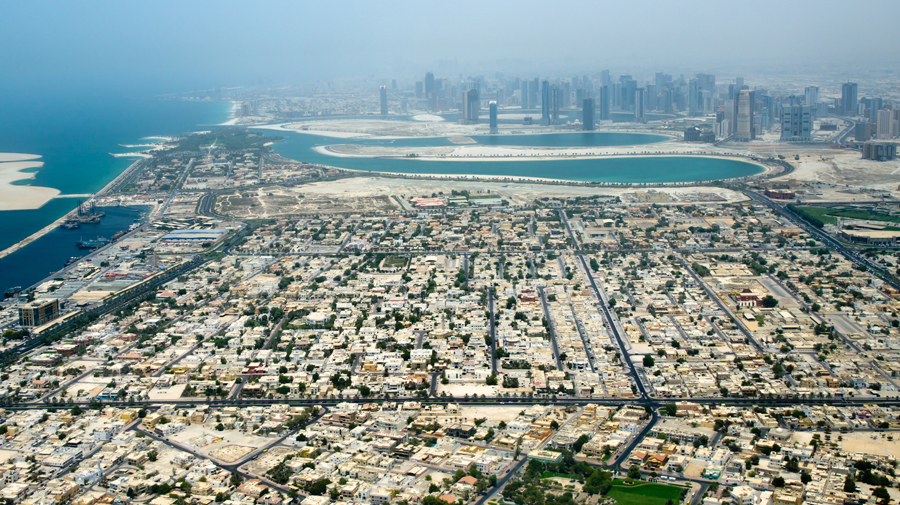
The team has analyzed the different elements of urban form – including density, size of super blocks, and street configuration – in two distinct UAE neighborhoods; one urban neighborhood on the island and another suburban neighborhood on the mainland. Their research aims to understand how the design and development of suburban areas can be improved so that suburbs can become healthier and more environmentally-friendly places to live.

Suburbs currently pose a major challenge and opportunity for urban planners, policy makers and city managers. As over two-thirds of the world’s population is expected to reside in urban areas by the middle of the century, suburban development will experience tremendous growth – a phenomenon known as suburban sprawl. Because suburbs sprawl outward for kilometers, residents drive much more often in suburbs, releasing large amounts of greenhouse gases into the atmosphere. And because suburbs offer residents larger homes for less money than in urban centers, suburban residents often spend significant amounts of energy cooling and powering their larger homes.

Thus, developing solutions to mitigate the negative impacts of suburban sprawl is critical and timely. In the UAE, these solutions are even more urgent, as more than 70% of the population is already located in the country’s urban areas, and according to Dr. Al Awadi, a general suburban sprawl trend is evident in the Abu Dhabi mainland and more recently developed neighborhoods in the emirate.

“While both neighborhoods compared share a similar land use structure and have a very similar size and street layout, their overall net density, connectivity, and functionality differ significantly. We analyzed performance shifts – measured as the amount of solar gain and increase in heat in each neighborhood – in response to changes in density and building intensity, and measured consequential changes in built form and livability,” Abu Ashour explained.

Abu Ashour and her team examined the relationship between major urban form elements, including city blocks, plots, streets, constructed space, and open space, in both neighborhoods. These elements were then analyzed using common metrics, such as block, plot, and network density, number and type of road intersections, and floor-area ratios. A swap analysis between certain urban form parameters between the urban neighborhood on the island and the suburban neighborhood on the mainland was conducted to further diagnose the differences and investigate the parameters driving urban sprawl in the city.

Results from the comparison were applied to a third partially developed neighborhood on the mainland to investigate the potential of mitigating suburban sprawl and its negative impacts on current planning frameworks being implemented in the mainland.

“From the comparison analysis between Abu Dhabi Island neighborhoods and the mainland neighborhoods, we concluded that 70% of the consumed land for suburban neighborhoods could have been conserved if the planning followed the same density patterns that were applied on the island. Our work suggests that increasing density and building intensity on partially developed neighborhoods on the mainland has positive results in mitigating sprawl. A redevelopment of the undeveloped land in Shakhbout City could increase its density from a very low level of 1,500 people per square kilometer, to an intermediate density level of 3,700 people per square kilometer, which increases the potential to obtain compact settlements that are widely proven to be the most sustainable urban forms,” Abu Ashour explained.

The research conducted by Abu Ashour and her team could play an important role in the development of design guidelines that will lead to suburban neighborhoods that are more environmentally sustainable.

A city’s design and structure can be very influential to people’s quality of life and in turn to the country’s prosperity. As Abu Dhabi continuously strives to transform itself into a knowledge economy, the city must be able to attract and retain high-caliber knowledge workers while conserving and preserving its vital natural resources, particularly its land.

This project is one of many being conducted through MI’s MSc in Sustainable Critical Infrastructure program aimed at transforming UAE’s urban centers into sustainable and environmentally friendly areas that promote better health and socioeconomic well-being. This research is being conducted as part of a one-to-one joint collaborative research project between Masdar Institute and MIT, titled “Mapping Abu Dhabi’s Native-Born Neighborhoods: Scenario Planning and Design of New Sustainable Neighborhood Forms.”

Erica Solomon 
News and Features Writer
29 March 2017

Assistant Professor Leads Creative Lab at DubaiPlan 2021 FutureXChanges

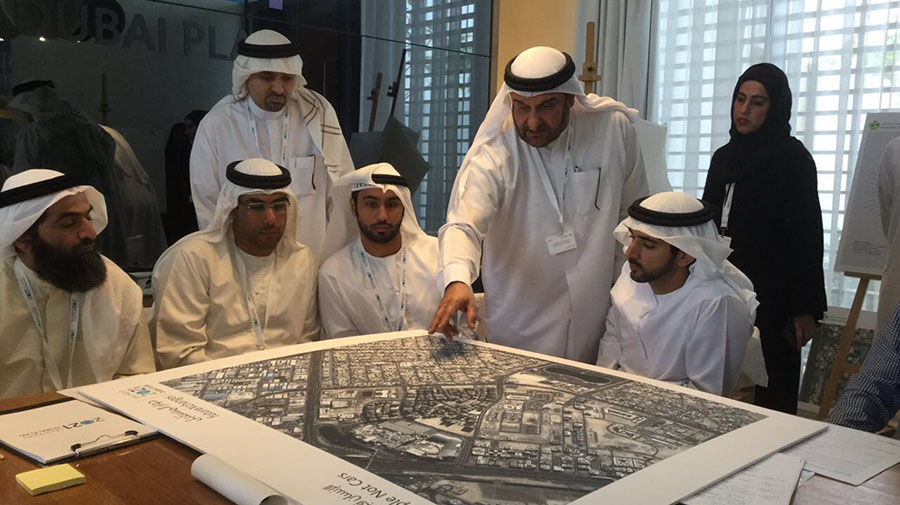
The UAE’s streets must be planned and designed to serve communities, ease mobility and enhance economic productivity as well as social engagement, Masdar Institute Assistant Professor of Engineering Systems and Management Dr. Khaled Al Awadi highlighted during a session he led at the DubaiPlan 2021 Creative Lab, titled “FutureXChanges,” which was held last week in Dubai.

Dr. Al Awadi’s session, titled “People Not Cars,” was one of eight strategic creative labs conducted during the two-day event. The labs were aimed at developing solutions to help accelerate the implementation of the DubaiPlan 2021, which is an initiative to support sustainable development of the emirate in a way that boosts residents’ happiness and productivity while strengthening its economy and preserving its environment.

During the “People Not Cars” session, Dr. Al Awadi and PhD student Ahmed Alumulla and MSc student Maryam Almheiri, moderated a series of discussions, workshops and other activities that helped participants understand how strategic urban design principles could be leveraged to enhance the livability and walkability of streets in suburban neighborhoods in Dubai.

“People Not Cars” received active participation from H.H. Sheikh Hamdan bin Mohammed bin Rashid Al Maktoum, Crown Prince of Dubai, and Chairman of the Executive Council. The lab also involved insightful contributions from several other high-ranking government officials.

“Development today resembles a state of endless and unbounded suburbia. With the growth, and swelling social and economic reliance on suburbs, participants of this creative lab explored how suburbs may be improved and become more walkable through better design and planning,” Dr. Al Awadi explained.

During the two-day creative lab, constructive arguments were made to improve suburbs’ public realm, including streets, through better design and planning to encourage greater walkability – which is a measure of how safe and convenient it is to travel by foot through a city.

“Intelligent and sustainable urban design of residential neighborhoods must incorporate convenient and safe pedestrian facilities and infrastructure. Planting and landscape must be strategically used to enhance thermal comfort and the pedestrian walking experience,” Dr. Al Awadi remarked.

However, challenges to achieving this type of sustainable, walkable design through landscape are present at the infrastructure level of existing neighborhoods.

“The challenge remains in the service lines below the ground with the existing horizontal distribution of infrastructure lines (for communication networks, drainage system, power and water lines, irrigation channels, etc.), limiting the opportunity for designing shaded walkways with trees, as trees may damage the service lines below the ground,” Dr. Al Awadi shared.

Other challenges that impede sustainable urban design that would enhance people’s walking experience include the extreme climate and the physical design of existing neighborhoods, which facilitate car movement rather than pedestrian movement. Many claim that the region’s hot and arid environment make walking unpleasant. This is in fact a general perception, as the climate is really pleasant for approximately five months each year, and encouraging people to walk during this period, especially for short distances, has great implications on the environment and people’s physical and mental wellbeing.

“Cars are prioritized and pedestrians are sidelined. Neighborhoods tend to be low-density and large in scale, therefore walking to any destination becomes extremely inconvenient,” Dr. Al Awadi said. “We need to shift our priority to pedestrians as early as the planning phase in order to improve environmental sustainability and people’s health.”

Participants in Dr. Al Awadi’s lab performed a comprehensive urban analysis on a selected area in Al Barsha, a suburban Dubai neighborhood. The analysis incorporated design elements such as existing urban furniture and landscape, shading and cooling, building and land use mixture, and street network system. Through a series of workshops, the participants reviewed the street design process to include walkability and livability elements, which were defined throughout the lab.

Dr. Al Awadi encouraged participants to consider what new land use systems, design tenets, and planning policies are needed to ensure that suburbs become more sensitive climatically and socially, providing a sustainable and healthy living environment so that people, not cars, are prioritized.

Erica Solomon
News and Features Writer
4 April 2017

Graphene-Enhanced Solar Cell Research Shared

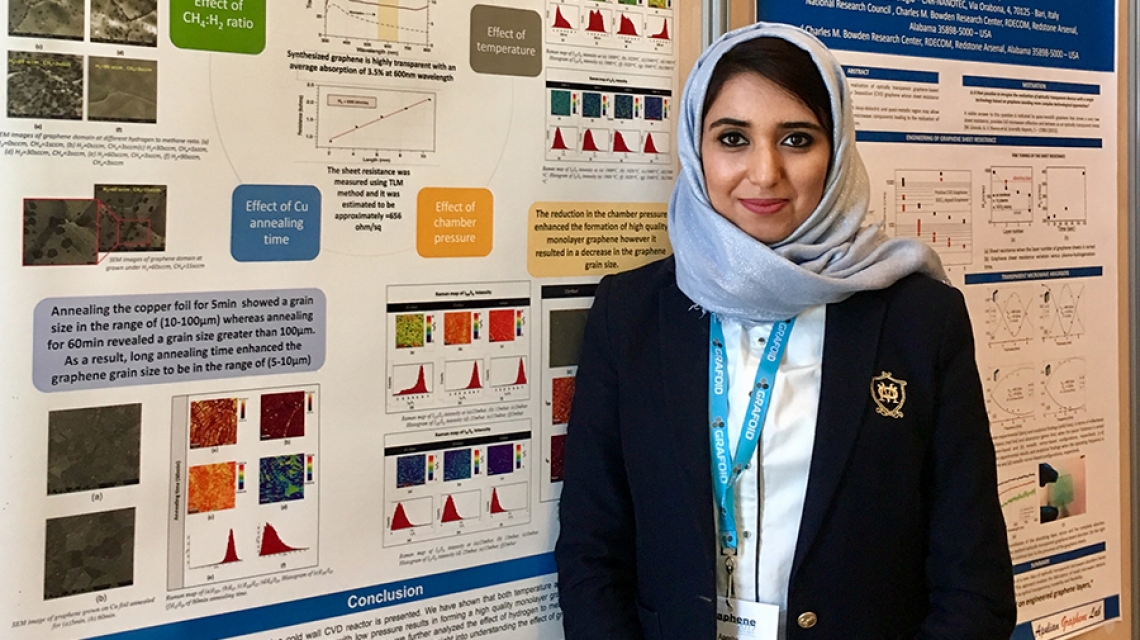
Masdar Institute PhD student Aaesha Alnuaimi has presented her innovative research on the development of low-cost and highly-efficient solar cells at the 2017 Graphene Conference, which was held from 28-31 March in Barcelona, Spain.

Alnuaimi presented a poster on her research, which she co-authored with advisors Dr. Ammar Nayfeh and Dr. Ibraheem Almansouri, titled “Effect of Deposition Parameters for Fast Graphene Growth Using a Cold Wall CVD Reactor.”

Her work explores how to optimize the production of high-quality graphene using chemical vapor deposition (CVD), which is a chemical process used to create a very thin film of graphene. This high-quality graphene would in turn be used as a transparent electrode material in a type of solar cell known as a graphene-on-silicon Schottky junction solar cell, to improve their sunlight-to-electricity conversion efficiencies. The produced graphene could also have potential applications in electronic and optoelectronic devices due to its excellent optical and electrical properties.

Graphene is a one-atom thick sheet of carbon considered as the lightest, strongest, thinnest, and best heat- and electricity-conducting single material ever discovered. It was first isolated in 2004 by researchers at the University of Manchester, and became the world’s first 2D material. Since its discovery, researchers around the globe have been exploring and capitalizing on the wonder material’s unique properties.

“Graphene is a key enabling technology with great potential to support a higher sunlight-to-electricity conversion rate in graphene-on-silicon Schottky junction solar cells,” Alnuaimi shared. “However, the interaction between graphene and silicon at the electrode’s interface must be better understood in order to improve the conversion efficiency and the stability of graphene silicon Schottky junction solar cells.”

Key to her research is finding a way to optimize the growth of high quality graphene, which Alnuaimi has achieved in the state-of-the-art cleanroom facility at Masdar Institute.

The UAE national student discovered that optimizing several parameters of the CVD process, including temperature, chamber pressure, annealing time and hydrogen/methane ratio, has a major impact on the graphene quality.

“The growth of graphene is highly dependent on the deposition parameters. During graphene synthesis, I analyzed the effect of certain deposition parameters, including growth temperature, pressure, methane to hydrogen ratio, and substrate annealing time prior the growth, to produce a high quality monolayer of graphene using the CVD cold wall system in our cleanroom. Our study provides an insight into the effect of growth parameters toward achieving synthesis of high quality monolayer graphene in cold wall CVD reactors,” Alnuaimi explained.

Improving the efficiency of solar cells while significantly reducing the cost of fabricating these high efficiency devices will contribute to making photovoltaic technology more competitive with conventional sources of electricity production, thereby helping to promote the widespread use of photovoltaics in the UAE and beyond.

“Aaesha has conducted a very meticulous and scientific study on the growth of high quality graphene using CVD at the Masdar Institute cleanroom. Her detailed materials analysis and characterization were vital in this achievement. We are very excited that she was able to present this work at one of the preeminent conferences on graphene. Her participation there highlights the Institute’s deep involvement in and commitment to advancing scientific understanding of this important 2D material and its future applications in the energy sector,” said Dr. Nayfeh.

Today there are thousands of research projects being conducted to improve graphene production processes and to discover new applications. The annual Graphene Conference serves as a critical platform for these researchers, who convene once a year to discuss their findings and share important insights. This year marked the seventh edition of the largest European event in graphene and 2D materials and attracted over one thousand attendees.

Alnuaimi enjoyed networking and exchanging information with other researchers and industry experts throughout the four-day conference. While she informed their colleagues about Masdar Institute’s novel graphene-related research activities, she also gained valuable knowledge about other pioneering processes and discoveries taking place across the world – knowledge that will help to further strengthen Masdar Institute’s graphene and advanced materials research.

Erica Solomon
News and Features Writer
5 April 2017

Enriching the Field of Materials Science through Open Access Tutorials

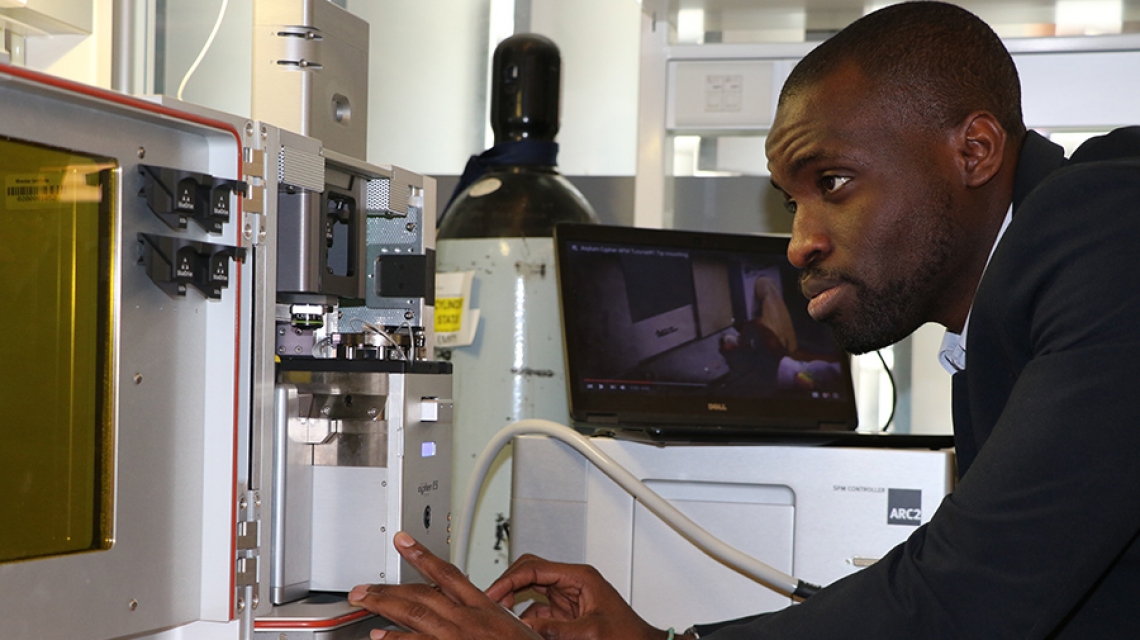
A Masdar Institute PhD student is advancing the ability of students and scientists in materials science to capitalize on atomic force microscopy (AFM) to image and characterize materials at the nanometer scale by developing specialized video content and tutorials that are being offered on an open access channel.

Tuza Olukan has developed an AFM YouTube channel to serve as a virtual classroom and reference that researchers anywhere in the world can refer to when calibrating their experiments. There, users can access a variety of videos Olukan has developed that guide AFM users through various research techniques and standards.

Working in nanotechnology requires a deep understanding of the chemical composition and structure of any given material at the nanoscale – a scale that is approximately one hundred thousand times smaller than the width of a single strand of human hair. AFM is an ideal tool for the required imaging, analysis and characterization of materials at the nanoscale, which it does by feeling the atomic forces between the microscope’s sharp tip and the material’s surface, creating contrast maps of the material’s surface topography. However, the expert-level use of AFM required for this type of research takes considerable time and commitment to develop, which is why Olukan developed the channel.

“A key difference between AFM and other microscopy tools is its ability to image and possibly analyze a material’s chemical components with high spatial resolution at the same, enabling researchers to characterize a material immediately. However, many researchers don’t know how to leverage AFM’s analytical measuring capabilities and rely on it for imaging alone. The YouTube channel is a tool for AFM users that will allow them to focus more on using AFM for research rather than on how to use it. The channel is available to anyone who’s interested in understanding how to use AFM, anywhere in the world,” explained Olukan.

The inspiration for the open access research resource came to Olukan through his work with the research group of Dr. Matteo Chiesa, Professor of Materials Science and Engineering at Masdar Institute.

“I realized a lot of valuable lab time was being used in learning how to use AFM, rather than to conduct the meaningful AFM experiments for our research. In response to this, I started developing video content for materials science students, where some of the unique techniques we utilize could be shared,” he revealed.

The AFM YouTube channel, which is called the Laboratory for Energy and Nano Science (LENS) AFM Tutorials, provides tool-specific tutorials that enable AFM users to correctly calibrate experiments and navigate the complexity of advanced AFM experimental equipment. The videos are intended to disseminate some of the most recent AFM operating methods.

In addition to educating interested AFM users on how to operate the scanning probe microscope and optimize experiments, a major impetus driving the development of the YouTube channel is a strong desire to facilitate a globally accepted standardization of AFM methods across the scientific community.

“Such standardization could accelerate the development of advanced materials across the world by increasing the number of force curve profiles for a range of materials, which would help researchers easily recognize new materials,” explained Dr. Chiesa.

Dr. Chiesa believes that many of the AFM experiments and studies reported in the scientific literature can’t be reproduced quantitatively, as the experiments are too complicated or too little information on how the experiment was conducted is provided.

“This is one of the reasons why researchers primarily use AFM to qualitatively observe differences in materials. The next step and ultimate goal is to obtain quantitative data that are highly reproducible,” Dr. Chiesa said. It is the lack of reproducible quantitative data that necessitates a standardization in the way scientists perform experiments.

To overcome this obstacle, Dr. Chiesa and his team have developed a range of AFM methods and techniques – which they have made available through their open access channel – that can be used to determine a material’s force curve profile, which is a material’s unique signature. The force curve profile contains a huge amount of information that can be leveraged to recognize a material’s unique characteristics. The force curve profiles, if obtained by following standard operation procedures, can then be compiled and shared in an open-source database.

“If we can get scientists from around the world to conduct their AFM experiments in a standard way, then we can compile the data obtained from their experiments into a large database on materials aided by computer algorithms, which would accelerate the pace of new material development and significantly optimize material scientists’ research,” Dr. Chiesa explained.

Dr. Chiesa’s group is already working to compile a comprehensive database of different materials’ force curve profiles, in an effort called the Mendeleev-Meyer force project (TMMFP). TMMFP aims to tabulate all materials and substances in a fashion similar to the periodic table with the added ability to automate the process of material identification.

Dr. Chiesa, Olukan and the rest of the research group are creating a platform for high quality AFM research in order to advance the field of materials science and in turn, the development of new materials that could lead to innovations in clean energy, health and other key economic sectors.

Zarina Khan, Senior Editor and Erica Solomon, News and Features Writer
2 May 2017


UAE-China Energy Cooperation Highlighted at United Nations Workshop

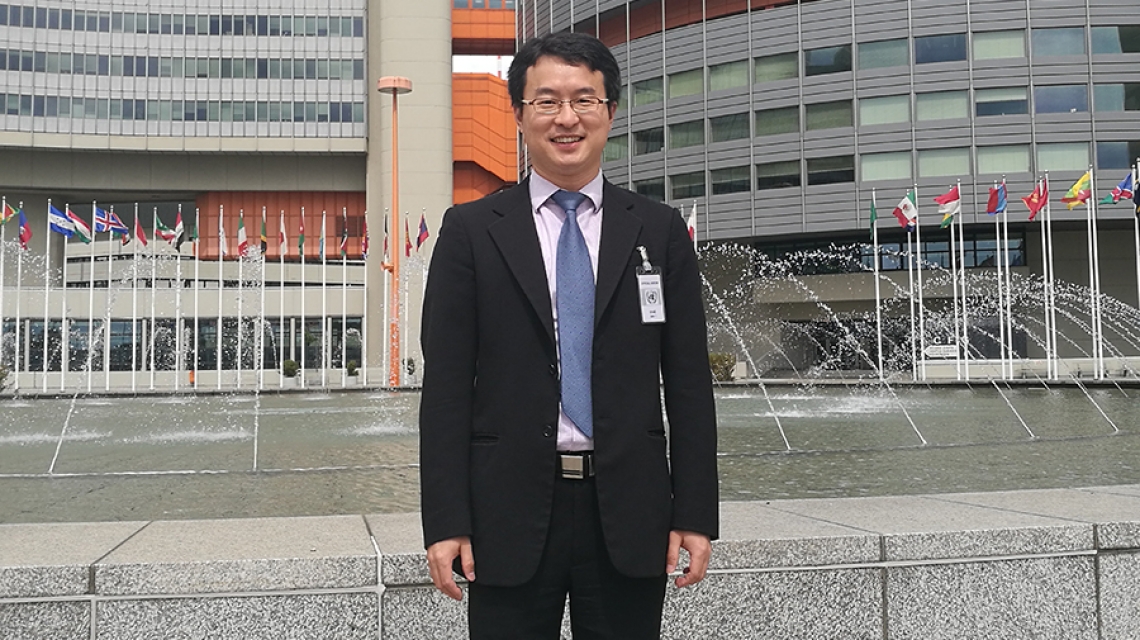
Dr. TieJun Zhang, a faculty member of the Mechanical and Materials Engineering Department at Masdar Institute, has returned from an official visit to the United Nations Industrial Development Organization (UNIDO) headquarters in Vienna on 15 May, where he was invited to lead a workshop that explored ongoing areas of energy cooperation between China and the UAE.

Dr. Zhang delivered a presentation titled, “South-South Energy Cooperation along the Silk Road: A China-UAE Case Study,” highlighting some of the strategic China-UAE collaborations that have significantly bolstered the UAE’s sustainable and diversified energy development over the past decade. The presentation also explored how the two nations could build on their mutually-cooperative relationship for more dynamic partnerships and research opportunities that will lead to the development of innovative solutions needed to keep the UAE on track towards achieving its sustainable energy goals – which include generating 44% of its energy from clean sources by 2050 – and the UN on track towards achieving its Sustainable Development Goals (SDGs) – which are a universal set of goals, targets and indicators that UN member states are expected to use to frame their agendas and political policies over the next 15 years and include goals such as securing affordable, reliable, sustainable and modern energy for all, and building resilient infrastructure.

Dr. Zhang’s workshop was the second in a series of workshops, titled “South-South and Triangular Industrial Cooperation (SSTIC) Mainstream Workshop Series,” designed to facilitate the mainstreaming of SSTIC, which was established under UNIDO as a form of technical cooperation between and among Southern countries to promote their sustainable industrial development. The workshop was attended by many UN officials from UNIDO, including Philippe Scholtès, UNIDO Managing Director of Programme Development and Technical Cooperation (PTC), who expressed great interest in Masdar Institute’s role in supporting clean energy cooperation across all developing countries.

“The cutting-edge technology and human capital developed at Masdar Institute have practical applications in the UAE and in China, and are of great interest to UNIDO. As UNIDO operates in over 100 emerging and developing countries, we can extract the relevant lessons learnt from the active cooperation between Masdar Institute and China to empower all of our member states,” Scholtès shared.

“Dr. Zhang’s workshop has contributed to a growing stream of successful cooperation between the UAE and UNIDO, including through the Global Manufacturing and Industrialization Summit, which was held in Abu Dhabi from 27-30 March 2017, and my own recent discussion with Dr. Nawal Al Hosany, Executive Director, Sustainability & Brand of Masdar Company at the Sustainable Energy for All Forum in New York in early April 2017,” he added.

Dr. Zhang spent his early life in China, where he witnessed first-hand the benefits of international cooperation. Now, as a professor and five-year resident of Abu Dhabi, he is eager to promote stronger international cooperation between the two nations he calls home.

“Energy cooperation between the UAE and China will enhance both countries’ abilities to achieve sustainable industrial development, which will in turn in bring greater prosperity and economic growth to China, UAE and the whole Arab region,” Dr. Zhang said.

Looking to China and UAE’s traditional oil and gas cooperation, which have resulted in notable partnerships on energy trading and technological products, Dr. Zhang makes the case for promoting stronger clean energy cooperation through collaborations between the two nations in cost-effective solar power technologies, high-efficiency communications technologies, clean water production, and carbon capture and utilization, among other potential collaboration areas.

“This case study sheds light on a new pathway of south-south energy cooperation for achieving global sustainable development goals,” Dr. Zhang explained. He compares the national innovation and reform strategies of the two countries, revealing the potential opportunities and challenges of China-UAE clean energy cooperation.

One partnership Dr. Zhang highlighted that demonstrates the two countries’ existing clean energy cooperation is between China’s JinkoSolar and Abu Dhabi Water and Electricity Authority (ADWEA). JinkoSolar is a key partner selected to build the world’s largest single-site solar facility in Abu Dhabi, which will generate 1.17 GW of solar power and is expected to be complete by April 2019. JinkoSolar secured this tender by submitting a bid to supply the electrical power at a record-low 2.42 US cents per kilowatt hour, demonstrating the game-changing and disruptive potential of China’s clean energy generation technologies.

In the area of clean transportation, China-based BYD, the world’s largest manufacturer of electric vehicles, launched a strategic partnership with Abu Dhabi’s Clean Energy Company Masdar in 2016 to commercialize clean transport and battery storage systems in Abu Dhabi’s Masdar City. BYD also won the ‘Large Corporation’ category of the UAE-based Zayed Future Energy Prize.
Dr. Zhang also highlighted some pioneering research collaborations between Masdar Institute and world-class research institutes in China, including the Chinese Academy of Sciences, to enhance sustainability and efficiency of critical clean energy and cooling related technologies that have significant industrial relevance to the UAE.

Finally, Dr. Zhang noted the strategic collaborations being undertaken between China and the UAE to strengthen cooperation on education and human resources development, citing the agreement signed in 2015 between Masdar Institute and Tsinghua University for a faculty and student exchange program to support transformative sustainability research and enrich student learning experiences.

“The agreements aimed at supporting the development of the most valuable source of capital there is – human capital – will be instrumental in advancing the technology-based solutions and policies needed for the sustainable development of the UAE, China and the wider world,” Dr. Zhang said.

Citing the ancient Arab proverb that instructs people to “seek knowledge even unto China,” Dr. Zhang believes that China, which is perhaps the most rapidly developing nation in regard to innovation, has much to offer the UAE in its mission to become one of the most innovative nations in the world. And similarly, the UAE, which has already been ranked the most innovative Arab nation in the 2016 Global Innovation Index, will continue to be a strategic partner for China, especially in the clean energy sector. By working together, China and UAE will not only benefit themselves, but set a formidable example for other Southern nations aiming to collaborate for resilient and sustainable industrial development.

Overcoming the challenges to a more robust China-UAE cooperation, which are environmental, financial and social in nature, is just a small speedbump on this prosperous and promising collaborative journey, Dr. Zhang believes.

“The emerging energy cooperation between the two countries has set a great example for south-south cooperation, and has set the perfect stage for even stronger cooperation in the future. I hope that my cast study has made that clear,” Dr. Zhang said.

Erica Solomon
News and Features Writer
23 May 2017

Students Learn About Japanese Innovative ‘Kaizen’ Through ADOC-Cosmo-JCCP Internship

A team of nine Khalifa University students gained insight into Japan’s culture of progressive improvement – known as ‘kaizen’ in Japanese – when they visited the Asian economic powerhouse as part of the ADCO-Cosmo-JCCP Internship Program during the summer.

As part of the internship, the students visited various places in Japan including Waseda University, a private, independent research university in central Tokyo, the 100,000-barrel-per-day (bpd) Cosmo Sakai refinery, Toyota facility in Nagoya, the JFE Steel’s Chita Works, and the Hamaoka nuclear power plant. Kaizen is often attributed to Japan’s continual innovative success.

For intern Taryam Al Katheeri, the visit to Waseda University was moving. He said: “It was inspiring to hear them talk about their research and how they aspire to be petroleum engineers in order to find more efficient ways to produce oil in the Middle East region, which then impacts Japan in an indirect way.”

Khalifa University students participated in a collaborative seminar at Wesada University, where they discussed themes related to oil and gas.

Intern Yaser Yousuf Mohammad Saleh felt language was not a barrier for interaction. He said: “The ability to interact and with work other students helped us realize that it is possible to work with people of different cultures, and the language was not a huge barrier because we were working to achieve a common goal.”

Visiting the Cosmo Sakai refinery in Osaka, which produces naphtha, jet fuel, and diesel fuel, Saleh remarked that it was interesting to see how Japan produces energy by processing gas. He added, “We were able to see the facilities, the control room and even the plant up close.”

For Al Katheeri, the visit to the Toyota manufacturing facility was an eye-opener. He said, “It was astonishing to see how humans and machines work in harmony with such high precision and accuracy within a certain time frame.”

The massive 1.8-million square meter JFE Steel Chita Works offered an amazing experience, according to Saleh. The facility specializes in the production of steel pipes and tubes and boasts the largest selection of steel pipes produced at any single plant in the world. It continues to develop innovative, advanced technologies for pipe making.

The students later visited Hamaoka Nuclear Power Plant, located in the city of Omaezaki in Shizuoka Prefecture on Japan’s east coast, 200km south-west of Tokyo, where they viewed the safety measures and strategies the company has implemented after the tsunami and earthquake.

Regarding their visit to the world-ranked University of Tokyo, Al Katheeri said it was an honor. He added: “The visit enabled us to exchange our research topics with one of the prestigious and top ranking academic institutions in Japan. It was really interesting to see how they approach their research problems and build up their hypothesis.”

The internship program aims to give the UAE’s future engineers the opportunity to visit leading Japanese companies in oil, energy and manufacturing sectors to teach them about their operations, as well as visit renowned Japanese universities. The program also aims to teach students about Japanese culture and history through visits importance sites in Japan. This is the first time students visit was organized under the merged Khalifa University banner, though the Abu Dhabi Oil Co Ltd (Japan) – ADOC- Cosmo-JCCP program has been in operation for the past four years.

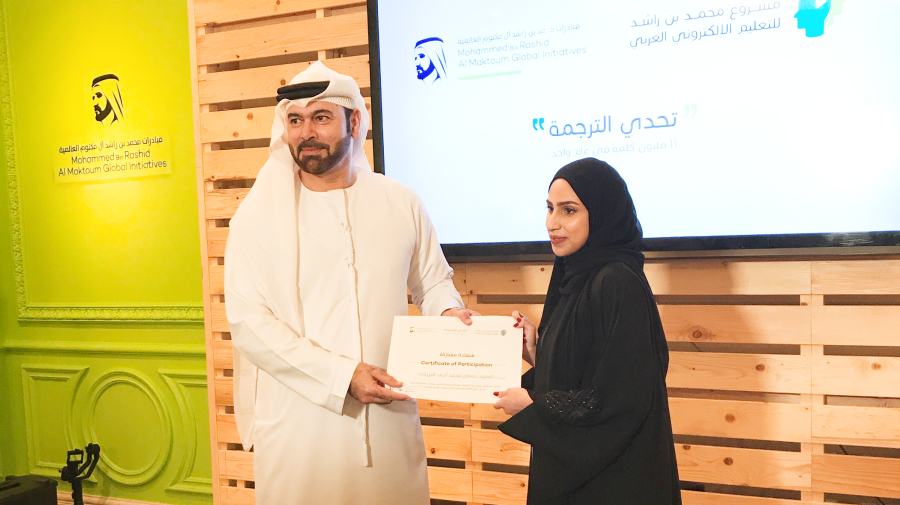
Student Honored for Contribution to Madrasa E-learning Platform

AlAnood Jumaan Mohamed Ahmed AlBreiki Volunteered to do Voiceovers for Videos on Math, Science, Chemistry and Biology

Not many would think to drive from Abu Dhabi to Dubai, thrice a week, for over a year, just to spend three hours in a recording booth, even if it is to contribute to a challenging and noble task. But AlAnood Jumaan Mohamed Ahmed AlBreiki, a Bachelors of Chemical Engineering student at Khalifa University, has proudly done that.

AlBreiki volunteered to do Arabic voiceovers for educational videos on Math, Science, Chemistry and Biology as part of the Madrasa project, the largest free e-learning platform in the Arab world, under the umbrella of the Mohammed Bin Rashid Al Maktoum Global Initiatives (MBRGI). The project was launched recently by His Highness Sheikh Mohammed bin Rashid Al Maktoum, Vice-President and Prime Minister of the UAE, and Ruler of Dubai.

AlBreiki appears in a video that was posted by HH Sheikh Mohammed on his Twitter account. She was recently honored with a certificate of appreciation by HE Mohammed AlGergawi, Minister of Cabinet Affairs and the Future of the United Arab Emirates, and the Chairman of the Executive Office of Sheikh Mohammed bin Rashid Al Maktoum, in the Government of Dubai.

“The main reason I chose to be a part of this project was that when I was in high school, I couldn’t find educational videos on the internet in Arabic, especially in Biology and Math. This was a problem for students like me, who were studying in Arabic at school and wanted to use videos to help themselves study further at home. So when I heard about this project, I wanted to volunteer because I liked the idea and wanted to help the youth in the Middle East,” AlBreiki explained.

Though AlBreiki is a busy student, and is currently studying for Bachelor’s degree in Chemical Engineering at Khalifa Univerity, she found the time and energy to make the 1.5-hour drive from Abu Dhabi to the Dubai Design District, and do her recordings for three hours, because she was energized by the knowledge of the impact the Madrasa project would have.

“All the hard work we did will now reach millions of students. It will also reduce the pressure on parents to get and pay huge amounts for private tutors for their children, because now their children can learn online for free through the new platform,” she explained.

The Madrasa e-learning platform offers 5,000 Arabic educational videos on subjects including science and mathematics and targets all levels of school students from kindergarten to Grade 12. The project provides educational materials in Arabic online at no charge to over 50 million Arab students around the world.

AlBreiki added: “It’s an honor to be part of educating a child who can contribute to the region’s future. I feel so delighted that I contributed to this portal.”

Madrasa is the culmination of hundreds of thousands of hours of hard work put in by translators, proofreaders, designers, technicians, and voice-over artists who volunteered for the Translation Challenge.

Clarence Michael
News Writer
22 October 2018