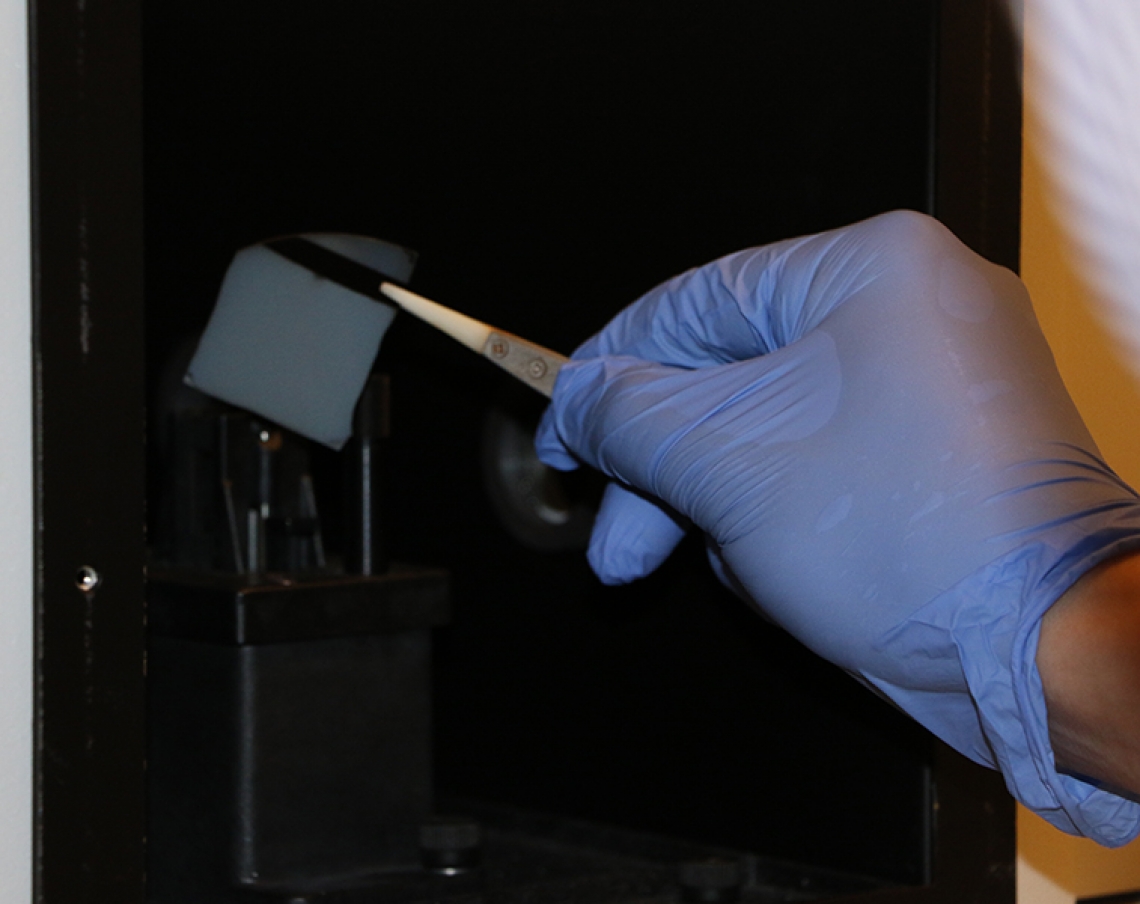
A team of researchers at MIT and the Masdar Institute of Science and Technology has discovered a low-cost way to significantly increase the amount of solar energy that can be converted into heat, via a device called a solar absorber. This advance …
Khalifa University Holds Fourth GNEII Symposium
Symposium Discussed Nuclear Safety Security and Safeguards
Khalifa University’s Gulf Nuclear Energy Infrastructure Institute (GNEII) hosted the fourth annual GNEII Symposium at its Abu Dhabi Campus on May 18th 2014 and will hold a graduation ceremony for its 12 Fellows on May 19th as part its two-day symposium on nuclear safety security and safeguards.
The fellows come from the Federal Authority of Nuclear Regulation (FANR) Emirates Nuclear Energy Corporation (ENEC) and the Critical Infrastructure and Coastal Protection Authority (CICPA) in the UAE and underwent over 400 hours of training as part of the course. Twelve specialized nuclear instructors who ran the program were also in attendance at the graduation. The instructors came from Khalifa University Texas A&M University Sandia National Laboratories and the World Institute for Nuclear Security.
The symposium was opened in the attendance of H.E. Ambassador Michael H. Corbin The United States of America Ambassador to the UAE and there was a special keynote address from H.E. Ambassador Hamad Al Kaabi Permanent Representative of the UAE to the IAEA. The event was attended by representatives from US Department of Energy US Department of State Texas A&M University and Sandia National Labs. Dr. Tod Laursen President of Khalifa University also attended the event on behalf of the University.
H.E. Al Kaabi said in his address: “I would like to highlight the importance of human resources development for the nuclear sector. Education and training is an important aspect of the nuclear power development that needs to be given top priority in order to reach sustainability which is the main principle of a successful nuclear program.”
The event also attracted representatives from local entities such as the Emirates Nuclear Energy Corporation (ENEC) the Federal Authority for Nuclear Regulation (FANR) and Critical Infrastructure and Coastal Protection Authority (CICPA).
Seven Capstone projects were presented by the GNEII fellows at the symposium as well. The Capstone projects represent the culmination of the 14 week GNEII course for the fellows and discussed a wide range of topics including: a survey of the current spent nuclear fuel storage technologies and an assessment of the safety approaches of existing systems for Barakah nuclear power plant (BNPP) effective enhancements for integrated safety and security control systems at BNPP development of recommendations for a nuclear security culture in the UAE an initial radiation baseline study of the urban environment in Abu Dhabi and an evaluation of security measures for nuclear material transportation in the UAE.
Dr. Arif Al Hammadi Khalifa University’s Executive Vice President said “Khalifa University wishes to congratulate the graduating fellows and to thank our esteemed guests for attending the graduation and the symposium. Programs like GNEII are vital to furthering the region’s quest to develop a peaceful nuclear program as well as become an intellectual and academic hub in the Gulf area.”
He continued “GNEII’s mission is to develop a responsible nuclear energy culture and institutionalize key safety security safeguards and nonproliferation norms in the future decision-makers of the Gulf region nuclear energy programs by providing professional development and training events like this one.”
GNEII is the result of a partnership between Khalifa University Sandia National Laboratories (Sandia) and Texas A&M University’s Nuclear Security Science and Policy Institute (NSSPI). It was designed to give future nuclear energy leaders the necessary knowledge to support them in future decision making processes by providing an enhanced understanding of the safety safeguards and security aspects of nuclear energy as well as offering the international community a model for an educational institute that addresses the integrated 3S (safety safeguards and security) methodology.
Prof. George K. Karagiannidis, Named as a Thomson Reuters Highly Cited Researcher
Khalifa University Professor George K. Karagiannidis a member of the Department of Electrical and Computer Engineering has been named as one of Thomson Reuters Highly Cited Researchers for 2015. Thomson Reuters is the world’s leading source of intelligent information for businesses and professionals combing industry expertise with innovative technology. This enables the delivery of critical information to leading decision makers in the financial and risk legal tax and accounting intellectual property and science and media markets powered by one of the world’s most trusted news organizations.
The list of “Highly Cited Researchers 2015” represents some of world’s most influential scientists. About three thousand researchers have earned this distinction by writing the greatest number of reports officially designated by Essential Science Indicators as Highly Cited Papers — ranking among the top 1% most cited for their subject field and year of publication earning them the mark of exceptional impact.
Prof. Karagiannidis’s area of expertise is in the area of Computers Information and Communications and he is one of only 108 researchers from this field to be included on the list. In addition he is the first and so far the only researcher from the UAE (in all scientific disciplines) to be included on this list.
‘Smart’ technology to help mosques cut down on energy bills – The National
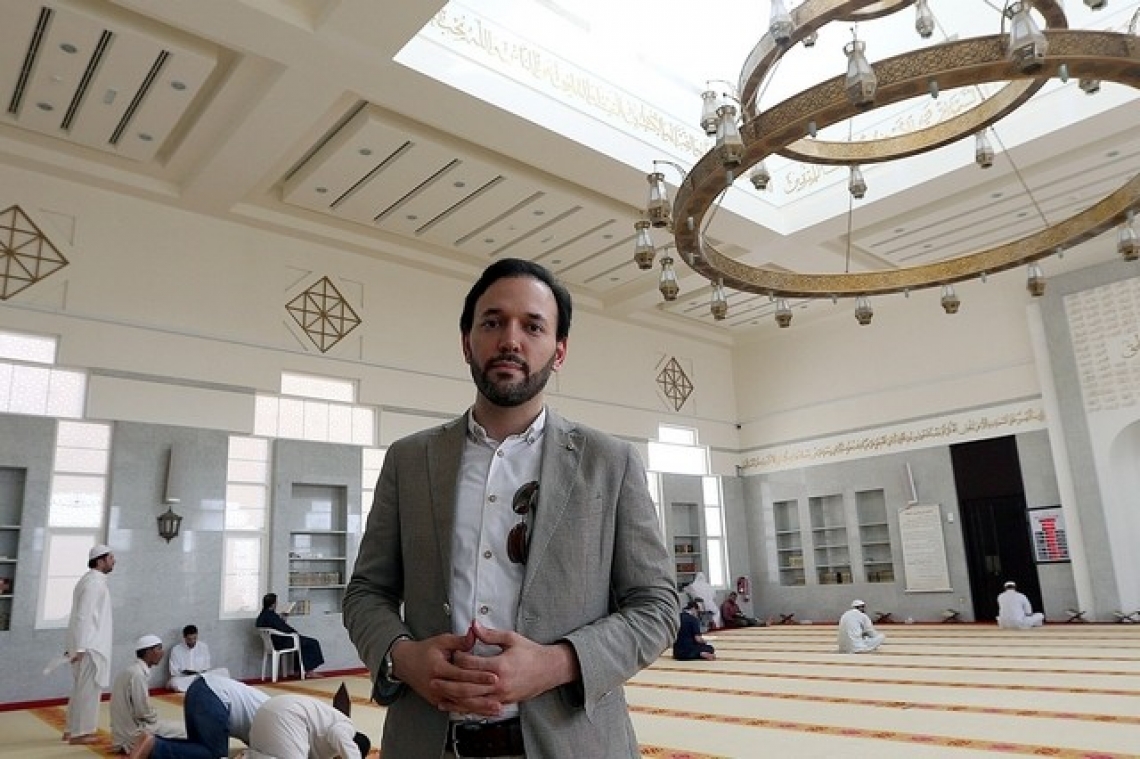
The Masdar Institute of Science and Technology’s new “smart mosque” project aims to save money and energy by controlling air-conditioning systems and monitoring occupancy rates at places of worship so the devout can pick and chose where they want to …
Prof. Ernesto Damiani, Awarded Bill and Melinda Gates Foundation Grant
Khalifa University faculty member Prof. Ernesto Damiani leader of EBTIC’s Big Data initiative and Director of the University’s Information Security Research Center has recently received a Bill and Melinda Gates Foundation Grant totaling $100 000 USD in order to support his project aimed at improving secure payment systems in developing countries.
The project called “Pay with a Selfie” uses personal pictures or ‘selfies’ as a form of safe exchange of money in places that may not possess other viable technologies for custom such as debit or credit machines and where cash may be difficult to obtain due to a lack of banks or ATMs.
The system requires both purchaser and merchant to carry a simple phone and to visually identify themselves and details of the purchase in a photo for example they can hold a card or price tag that can be captured in a single photograph. Dr. Damiani and his fellow researchers made up of EBTIC researchers fellow Khalifa University faculty members and students will build software that uses visual cryptography to divide the photograph into two parts or shares one sent to each phone. When a network connection is encountered the shares are transmitted to a third party who runs a point-of-service and reconstructs the image thereby validating the transaction before transferring payment. This method enables transactions between individuals in low network connectivity areas and can even help those who may be illiterate.
Dr. Damiani and his team will be working closely with the Institut de Mathématiques et de Sciences Physiques (IMSP) of Abomey-Calavi University in Benin to test the system by making students at the university “champions of the technology.” The plan is to allow students to first test it on campus and then to introduce it to their home towns and villages.
Masdar Institute, Emirates Steel announce tri lateral partnership – MENAFN.COM
The first Triple Helix based tri-lateral agreement was co-signed between Emirates Steel, Masdar Institute of Science and Technology, and the Ministry of Energy. The project seeks to convert the Electric Arc Furnace dust generated at Emirates Steel into …and more »
Duane Boning named LeBel Professor – MIT News
Since 2011, he has served as the director for the MIT/Masdar Institute Cooperative Program, fostering many joint activities between MIT and Masdar Institute. From 2011 through 2013, he served as founding faculty lead in the MIT Skoltech Initiative …
Hamed Bin Zayed witnesses the signing of ICT Fund sponsorship to Mohamed Bin Zayed International Robotics Challenge
His Highness Sheikh Hamed Bin Zayed Al Nahyan Chairman of Abu Dhabi Crown Prince’s Court and Chairman of the Board of Trustees of Khalifa University witnessed the signing of an agreement that sees ICT Fund pledge 1.5 million USD to the Mohamed Bin Zayed International Robotics Challenge (MBZIRC) at Khalifa University’s Abu Dhabi campus on November 22 2015. The agreement sees ICT Fund become Strategic Partners in the Khalifa University managed event where teams from around the world will compete for 5 million USD in prizes in 2017.
H.E. Dr. Abdulqader Al Khayat ICT Fund Chairman said “Financing this competition is an embodiment of our wise leadership’s vision of making UAE a pioneer in innovation during the coming seven years. It is also in line with the National Innovation Strategy which is considered an essential tool for development and a key enabler for the achievement of 2021 goals. We support UAE in acquiring a leading international position in innovation which is considered an indispensable requirement for elevating its competitiveness.”

H.E. Saeed Al Suwaidi TRA Deputy Director General for Support Services Sector: “We aim through our support to the competition to empower UAE to achieve more qualitative leaps in technology advancement. Supporting this competition also comes in line with ICT Fund’s strategy that aims at fostering innovation and UAE knowledge capital through financing scientific research. As participation in the competition requires conducting research and finding innovative solutions which will stimulate participants to unleash their creativity enrich their knowledge and broaden their horizon”
To date MBZIRC has received 143 applications from 35 countries with most of the applications coming from leading robotics laboratories at top universities.
Some of the international universities represented are major institutions from the United States such as Carnegie Mellon University Georgia Tech Virginia Tech and Cal Tech and more as well as European universities such as the University of Seville the Sant’Anna School of Advanced Studies ETH Zurich and the University of Edinburgh. Asian universities represented include the Korean Advanced Institute of Science and Technology Tokyo University and the King Abdullah University of Science and Technology.
MBZIRC has attracted a great deal of interest from around the world. Other countries represented in the applications include Greece Tunisia Austria Thailand Croatia Poland Bangladesh Mexico Canada and China.
“I would like to thank ICT Fund for their continued support for this international project and would also like to welcome them as a strategic partner to the challenge.” Said Dr. Arif Sultan Al Hammadi Khalifa University’s Executive Vice President. “This sponsorship demonstrates the strong support given by the government to promote innovation in the UAE and their commitment to turning the UAE into a global center for innovation and research. MBZIRC will bring together world leaders in the field of robotics in Abu Dhabi. The high level of attention the MBZIRC has received shows the great demand for cutting-edge technologies and innovation especially since challenges like this stimulate technological progress.”
He also said: “There will undoubtedly be strategies and developments made during the course of this challenge that will have long lasting impact on the field of robotics and collaborations that will lead to groundbreaking invention. We are pleased to welcome ICT Fund as a strategic partner and thank them for their support.”
Dr. Mohammed Ibrahim Al Mualla Senior Vice President for Research and Graduate Studies at Khalifa University said: “The a large number of applications submitted to the MBZIRC by top robotic labs from all over the world is a testament to the reputation this Challenge has acquired as one of the most important international challenges in this area. This puts MBZIRC on track to achieve its mission which is to contribute effectively to shaping the future of robotics in the world. We would like to thank ICT Fund for supporting MBZIRC which will have a significant impact on the confirmation of the UAE’s leading position in the field of science technology and innovation. “
The inaugural competition for MBZIRC will consist of three Challenges and a triathlon type “Grand Challenge”. It will take place in an outdoor open arena the approximate size of a football pitch. Challenge 1 requires an unmanned aerial vehicle (UAV) to locate track and land on top of a moving ground vehicle. Challenge 2 requires an unmanned ground vehicle (UGV) to locate and reach a second ground vehicle and locate and physically operate a valve on a side of the vehicle. Challenge 3 requires a team of UAVs to collaborate to search locate track pick and place a set of static and moving objects. The Grand Challenge requires a team of robots (UAVs and UGVs) to compete in an event that combines Challenges 1 2 and 3.
The applications will be under review until the end of 2015 with finalists announced in 2016.

World’s 1st Desert Facility Growing Food, Fuel Opens In Abu Dhabi … – Live Trading News
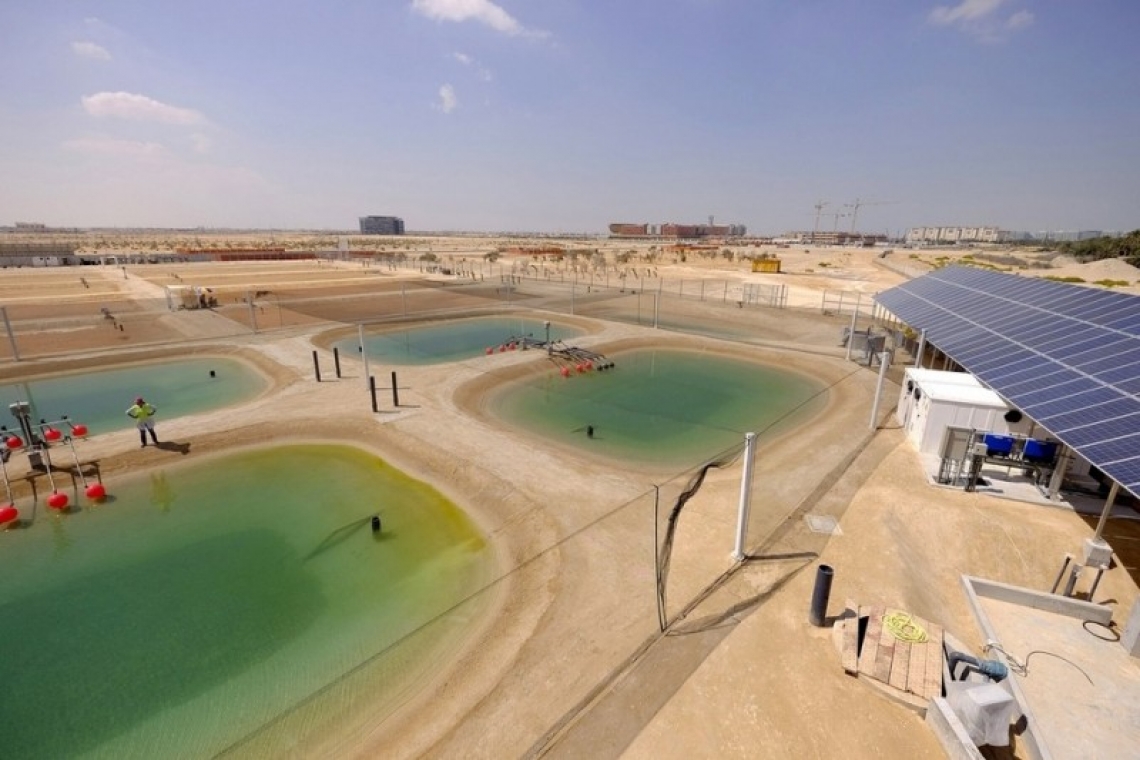
Grow both food and fuel using desert land irrigated by seawater began operations Sunday in Abu Dhabi.and more »
Super-strong and airy 3D-printed supermaterials inch closer to reality – Gizmag
Masdar Institute’s Dr. Rashid Abu Al-Rub, Associate Professor of Mechanical and Materials Engineering, demonstrates how aerospace components, like armrests, can be made lighter with “architecture foams” (Credit: Tahra Al Hammadi/Masdar Institute …
Khalifa University Celebrates UAEs 44th National Day
Khalifa University held its 44th National Day Celebrations at its Abu Dhabi campus. The event focused on innovation through the ages from traditional handicrafts and performances to state-of-the-art technology projects by students faculty and the University’s research centers.

In addition to the Innovation Expedition students put together an exciting game called “Escapology ” which tested participant’s knowledge about the UAE. Other attractions included a demonstration of poetry and traditional dances and a short movie and a play created by students. There was also the awarding of the winners of the University’s “i-Pledge” competition. This special competition began in September and asked students to submit artworks that represented their commitment to Academic Integrity.

“National Day is always an exciting day at Khalifa University because our students have the opportunity to display their creativity and innovation in areas beyond the academic ” said Dr. Arif Sultan Al Hammadi Executive Vice President of Khalifa University. “Our students are very proud of their country and highly respect and love its wise leadership and our President His Highness Sheikh Khalifa bin Zayed Al Nahyan which is why there was also a great focus on loyalty pride and the importance of supporting their country at all costs. Our students wanted to express their gratitude to the fallen martyrs and to the UAE’s Armed Forces and tell them that they will always support them and help them in every way they can be it through advancements in technology or personally. We are grateful for the continued support of the leadership of the UAE and proud to be a part of this exciting pioneering country.”
Masdar Institute files patent for 3D-printed materials – Zawya (registration)
Abu Dhabi: Masdar Institute of Science and Technology has filed a patent for materials that it has designed and produced through 3D printing, the institution announced on Sunday. Using 3D printing technology, researchers from the institute were able to …