
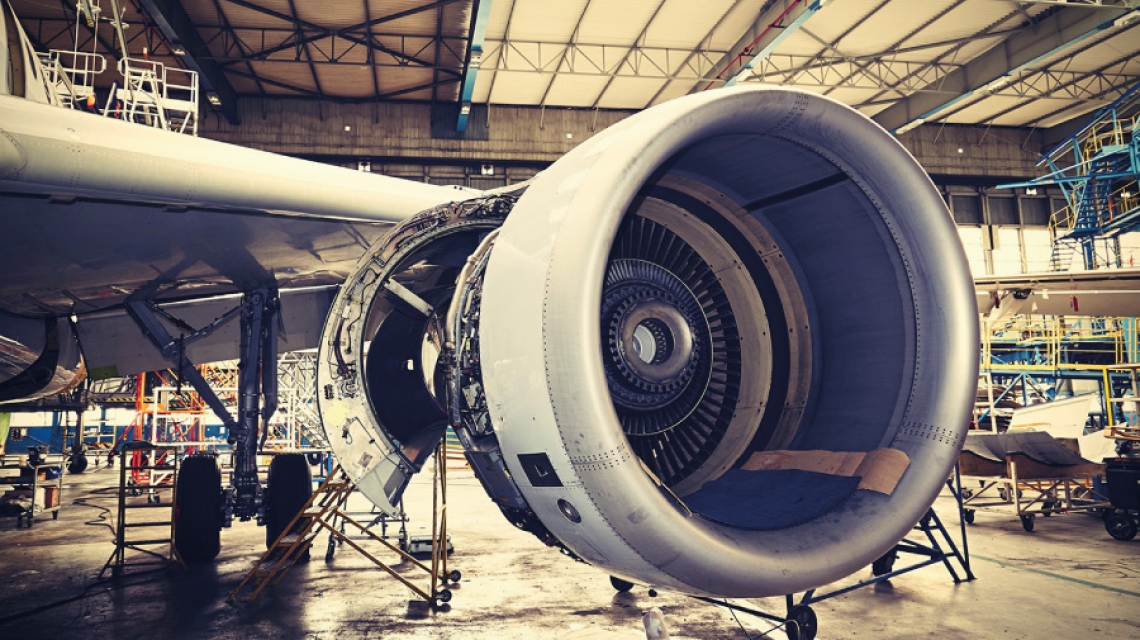
Masdar Institute and Strata in Research Tie-Up to Develop Tougher Aerospace Structures in UAE

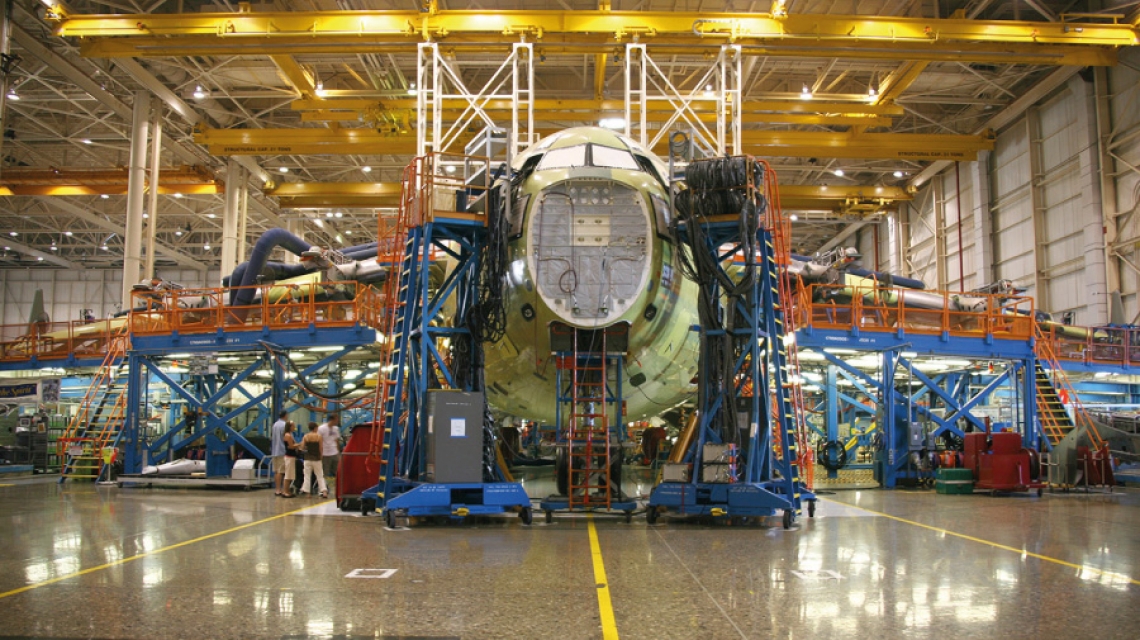
Abu Dhabi-UAE: 10 November, 2014 – Masdar Institute of Science and Technology, an independent, research-driven graduate-level university focused on advanced energy and sustainable technologies, and Strata Manufacturing, an advanced composite aero-structures manufacturing facility fully owned by Mubadala Development Company, today announced a research collaboration focusing on developing novel and advanced testing systems and methods for aerospace structures.
 
The collaborative research will develop a new infrared testing system capable of inspecting carbon fiber reinforced plastics in real-time, using controlled pulses of high intensity light. It will accommodate the online settings of current production lines and provide quantification of the tested samples’ structural integrity while contributing to quality assurance at Strata’s facilities.
 
The research team comprises two UAE national students with one research engineer and includes Dr. Mohammed Atif Omar, Head of the Masdar Institute Center for Smart and Sustainable Systems (iSmart), and Associate Professor, Engineering Systems and Management. The team will also be developing local competence in developing several variations of this technology to fit the specific needs of Strata.
 
This cooperation research project with Masdar Institute will explore the possibilities of using infrared thermography to provide alternate methods for non-destructive testing inspection.

Badr Al-Olama, Chief Executive, Strata Manufacturing, said: “As directed by the country’s leadership, such collaborations also provide the framework for future cooperation between the academia and industry that is vital for the development of the aerospace sector in the UAE. We are looking forward to benefitting from this collaboration.”
 
Infrared thermography technology systems assist in accurate quality control of light and robust composite materials and other lightweight construction processes in the aerospace industry.
 
Dr. Fred Moavenzadeh, President, Masdar Institute, said: “The research collaboration further consolidates Masdar Institute’s contribution to capacity building in a high-technology intensive area such as aerospace. With the support of the UAE leadership, we continue to build new capabilities and expand our collaborative research framework. We believe this research project will lead to new solutions, while supporting local knowledge-intensive industries and contributing to the country’s diversified economic base.”
 
The novelty of this well-researched infrared thermography technology system stems from the fact that it is a new way of testing and is supported by a team at Masdar Institute who possess a unique set of expertise and credentials in this application. In addition, the system(s) and subsystems used in this project will be built at on-campus facilities at Masdar Institute and all the processing algorithms will also be coded in-house.
 
The collaboration highlights best practices in industry-university cooperative research to obtain immediate benefits for industry. Additionally, it will help in developing streamlined production lines, while nurturing and developing the culture of in-house research and competencies in advanced technologies.
 
Through the Strata collaboration, Masdar Institute will develop local credentials in the aerospace research arena while building a dedicated UAE National team capable of sustaining the research thrust even after graduation.

Innovation to Capture CO2 Using Desalination Brine Featured in Masdar Institute-ENGSL Minerals Collaboration

Abu Dhabi-UAE: 21 December, 2014 – Masdar Institute of Science and Technology, an independent, research-driven graduate-level university focused on advanced energy and sustainable technologies, and the UAE-based Engineering Solutions (ENGSL) Minerals, leaders in engineering technologies solutions, today announced they have signed a collaboration agreement to work closely on testing and evaluating energy-efficient technologies for carbon dioxide capture and conversion.

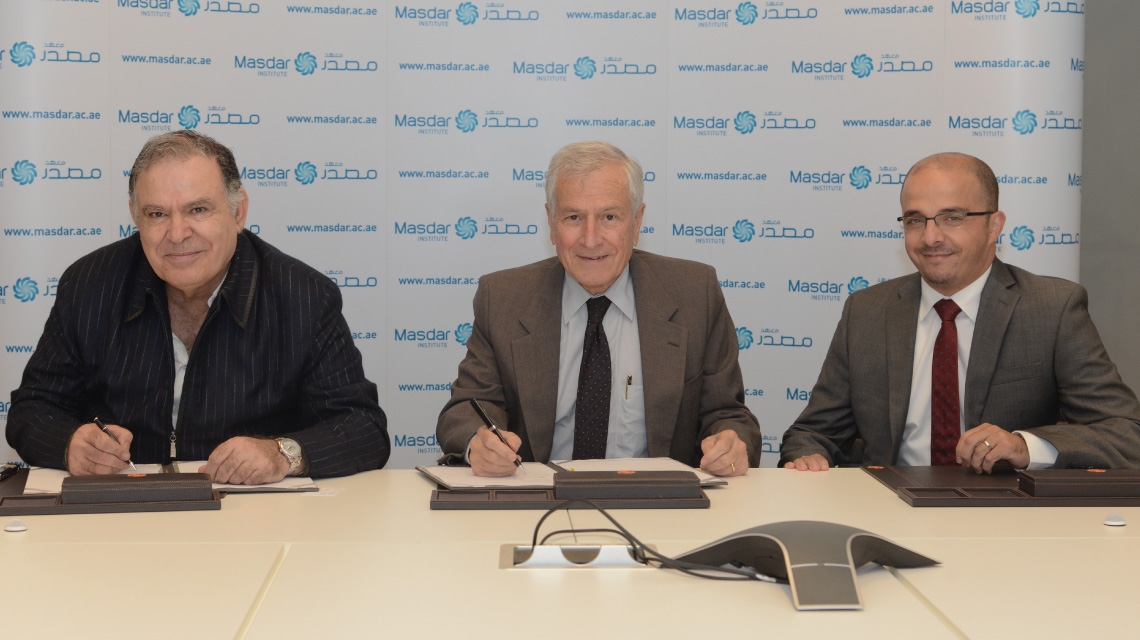
The agreement was signed by Dr. Fred Moavenzadeh, President, Masdar Institute, and Badri Ghais, Chairman ESL FZC, parent company of ENGSL. The ceremony at the Masdar Institute campus was attended by Hamza Kazim, Vice-President, Operations and Finance; Dr Steven Griffiths, Executive Director, Institute Initiatives; Dr. Mohammad Abu Zahra, Associate Professor, Chemical Engineering, Masdar Institute; and Olfi Mohammed, Managing Director, ENGSL.

According to the agreement, the 30-month project will test and evaluate the possible application of fly ash and modified fly ash for the capture and utilization of CO2 from flue gas.  For the UAE and the GCC region, this technology could be an alternative to the conventional CO2 capture technologies with the option to utilize part of the CO2 for enhanced oil recovery purposes.
In addition, the integration between this technology and desalination plants is feasible through the use of reject brine, which will be further developed and investigated by this project. Furthermore, the economic feasibility of this technological route for CO2 capture and utilization will be carried out, according to the agreement.

Dr. Fred Moavenzadeh said: “The agreement with ENGSL Minerals reflects our commitment to focus our research on innovation in areas relevant to the UAE and the region, especially in the energy sector. We are grateful for the support of the country’s leadership that has encouraged us in all our research activities, especially those that aim to achieve sustainable solutions. We believe this agreement will pave the way for achieving energy-efficient technologies.”

Badri Ghais said: “The agreement with Masdar Institute bears testimony to our credentials as a company that has patented technologies in the carbon capture area. This will pave way for ESL to seek more sustainable solutions through working with our partners. We hope the project with the research-based institution will help achieve more efficient technologies that will benefit the wider global community.”

Two faculty, a post-doc, a PhD student and two MSc students will be involved with this project that will be led by Dr. Abu Zahra. ENGSL currently holds two patents on this technology and is currently operating a large-scale pilot plant in Norway, funded jointly with the Norwegian government. The company, which has developed, tested and patented its technologies for carbon capture and its transformation into soda chemicals, is also trying to establish large-scale production using this technology in the UAE. The technology development and testing will be carried out at Masdar Institute, which has established the needed laboratory instruments for such a project with a generous support from ENGSL. In addition, ENGSL will construct a pilot scrubber test column at their facilities to test this technology jointly with Masdar Institute within the scope of the current project.

Masdar Institute is intensely involved in energy-related research activities that bring multiple benefits to the UAE and the region. Carbon capture, transport, utilization and storage activities contribute to the overall vision of Abu Dhabi to reduce greenhouse gas (GHG) emissions. For the UAE, carbon capture, utilization, and storage (CCUS) has the potential to serve as the right medium for enhanced oil recovery (EoR).

Facility to Test New Solar Technologies in Harsh Desert Climate Announced by Masdar, Masdar Institute and ABB

Abu Dhabi-UAE: 20 January, 2015 – Masdar (Abu Dhabi Future Energy Company), The Masdar Institute of Science and Technology, an independent, research-driven graduate-level university focused on advanced energy and sustainable technologies, and ABB, a leading power and automation technology group today announced a collaboration agreement to jointly develop a photovoltaic (PV) testing facility located within the Masdar City premises.

As a previous winner of the Zayed Future Energy Prize, ABB continues to be an ambassador for sustainability, innovation, clean power and energy efficiency.

ABB will provide expertise and specialized testing equipment to allow accurate outdoor measurement of PV systems. The design of the facility will allow PV module manufacturers to assess their equipment in a system environment, where the overall performance can be tested including DC to AC conversion with ABB’s solar inverter. Masdar will develop a flexible testing set-up with ABB’s technology and expertise and be able to offer its clients services to prove their module performance in a full system, simulating a PV power plant in the desert environment as present in the Middle East.

Carlos Poñe, Managing Director, UAE, ABB said, “The UAE is a vibrant economy keen to grow and develop renewable energy in the country. ABB is proud to be associated with Masdar, pioneers of clean energy in the country and sign this strategic agreement. We look forward to working with Masdar and Masdar Institute to help develop the solar industry in the emirate and the Middle East region through the learnings and results from the test facility. We are certain that with ABB’s technologies, which are proven in more than 40 GW of installed inverters/converters in renewables globally, module manufacturers will benefit with testing their products in Masdar City and be able to benchmark the products in desert conditions.”

Steve Griffiths, Executive Director, Office of Institute Initiatives, of Masdar Institute said, “As a research-based institution, Masdar Institute is excited to contribute to the testing and certification process for PV systems, especially in desert conditions. Our collaboration with Masdar and ABB also reflects our commitment to assist in the development of advanced and sustainable technologies. We believe this testing facility will prove to be an excellent platform for demonstrating PV module performance in Abu Dhabi’s challenging climate and thereby supporting the deployment of solar PV in the regional market.”

Additionally, ABB will consider collaborations on R&D projects related to PV and inverter technologies. Such collaborations may involve visits of faculty, students, and personnel of Masdar, Masdar Institute and ABB.

New UAE Technology Accelerator to Target Innovators

Abu Dhabi-UAE: 21 January, 2015 – Masdar Institute of Science and Technology, an independent, research-driven graduate-level university focused on advanced energy and sustainable technologies, and global energy giant BP today announced plans for the launch of a technology innovation accelerator focused on emerging energy, water and other sustainable technologies.

The new BP and Masdar Institute Technology Accelerator will support the creation of start-up companies through sponsoring technical research, providing commercial input, and supplying mentoring and business plan support. The accelerator will also work with local stakeholders in the development of technology incubators and seed funds to extend the innovation ecosystem and substantially increase the chances of success for new companies.

“By developing this technology innovation accelerator with BP, we will provide UAE innovators with opportunities to realize the full potential of their ideas, directly in line with the UAE National Innovation Strategy,” said Dr. Fred Moavenzadeh, President, Masdar Institute.  “As an institution based on sustainable research, we focus on engaging the right stakeholders for the benefit of the wider regional and global community. We thank the country’s leadership for their support that continues to enable us to seek productive collaborations, relevant to the future of the UAE and the world.”

BP Ventures will play a key role in connecting local start-ups with global investors and potential acquirers. A Round Table discussion of the new technology innovation accelerator among UAE innovation stakeholders was held at the World Future Energy Summit 2015.

Mr. AbdulKarim AlMazmi, BP’s General Manager and Chief Representative in Abu Dhabi, said, “As an organization that revolves around technology innovation, BP is delighted to further expand the collaboration with Masdar Institute in support of the UAE National Innovation Strategy. This concept is specially tailored to suit the requirements of the youth in the UAE and the region. We hope the agreement demonstrates our commitment to developing local capability as a key theme for BP in the UAE.”

The programs included in the accelerator were developed in part by benchmarking against other notably successful business accelerators and global corporate and sovereign innovation accelerators. It will be specially designed to contribute significantly to the strategic vision of the UAE’s National Innovation Strategy and to the needs of the UAE innovation ecosystem, while building on the strengths of Masdar Institute, BP and other UAE innovation stakeholders.

Masdar Institute and BP have been strengthening their partnership since signing a collaboration agreement in 2014. A UAE national student, Saeed Al Nofeli from the Engineering Systems and Management Department, and Eanna R. Farrell from the Water and Environmental Engineering Department, were recently declared the BP Innovation Scholars for 2014.

Dr. Bruce W. Ferguson, Professor of Practice and head of the Masdar Institute Center for Innovation and Entrepreneurship (iInnovation), said, “We foresee our collaboration gaining further strength in the months ahead. iInnovation will be working closely with BP to ensure that the new accelerator meets the needs of Masdar Institute and of other UAE innovation stakeholders. Moreover, there are other collaborations being proposed in the coming months. This will bring overall benefits to the community, especially the innovation ecosystem.”

BP Ventures will be mentoring and linking local ecosystems.

Dr. Issam Dairanieh, Managing Director, BP Ventures, said, “BP is bringing its demonstrated skills in nucleating and developing entrepreneurship to the UAE. BP Ventures will continue to be involved in designing programs, training and mentoring local talent as well as assist in connecting the local ecosystems with others in the US and the UK.”

Future of Energy Storage through Nanomaterials to be Explored by Masdar Institute and the Korea Basic Science Institute

Abu Dhabi-UAE: 04 March, 2015 – The Masdar Institute of Science and Technology, an independent, research-driven graduate-level university focused on advanced energy and sustainable technologies, and The Korea Basic Science Institute (KBSI) today announced they have signed a memorandum of understanding (MoU) to collaborate on research in the field of energy storage devices and nano materials.

“Innovations for energy storage are critically important to the practical implementation of sustainable energy solutions in the UAE,” said Dr. Fred Moavenzadeh, President, Masdar Institute. “Research into nanomaterials plays a crucial role in delivering the next generation of energy storage technology, and this collaboration with the Korea Basic Science Institute will help to propel this field of research forward.”
 
The two institutions will drive innovations in these two areas and will organize joint knowledge sharing sessions, joint studies, research projects and training activities, to bring technical expertise and human capital to the UAE and the region.

“As a scientific institute that aims to strengthen world-class exploration of this field, we are delighted to work with another research-driven institution such as Masdar Institute. This MoU adds to our global collaboration network with overseas advanced research institutes in accelerating the generation of world-class research results. We firmly believe our combined research assets will result in breakthrough inventions that will benefit the global community,” said Dr. Kwang Hwa Chung, President, KBSI.

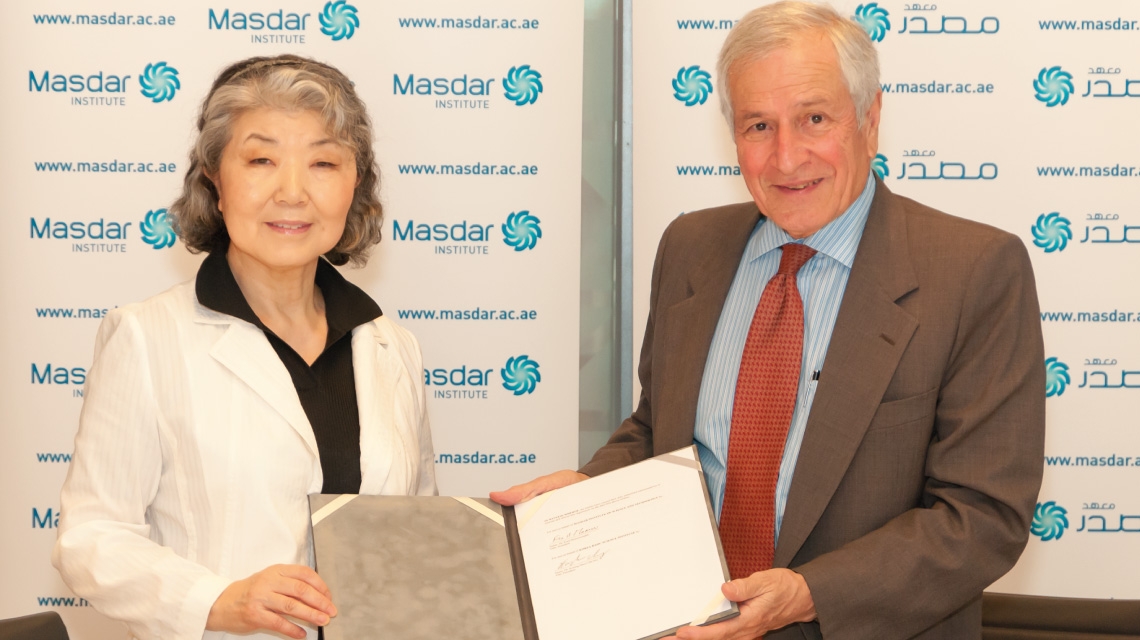
The MoU was signed by Dr. Kwang Hwa Chung, and Dr. Fred Moavenzadeh, at the Masdar Institute campus. Representatives from the governments of the UAE and South Korea as well as officials and faculty members from both institutions including Dr. Steve Griffiths, Executive Director, Office of Institute Initiatives, and Professor of Practice, Masdar Institute, Kim Sun Pyo, Minister of the Korean Embassy at UAE, Jong Im Lee, Director of International and Public Relations (KBSI), and Min Soon Park (KBSI), were present on the occasion.
 
Dr. Hae Jin Kim, Principal Researcher of KBSI and Dr. Saif Al Mheiri Assistant Professor, Mechanical and Materials Engineering, Masdar Institute, will be the principal contacts to lead the collaboration.
 
Some areas the MoU will cover include collaboration on synthesizing and studying in detail nanostructured novel energy storage materials, functionalizing nanostructured materials and electrochemical characterization of energy storage devices, and fabricating graphene/graphene oxide for energy storage. It will also cover developing of new technologies for nanostructured materials production using novel fabrication techniques, developing surface and interface analysis of low dimensional nano-materials, physical and chemical properties characterization of functional nanostructured materials, and developing new technologies for imaging nanomaterials with high-resolution electron microscopes.
 
According to the MoU, both institutions will exchange scientific materials, publications and information, while promoting the development of joint studies, research and training activities. At the same time, each institution will also exchange researchers for giving lectures, organizing symposiums, and engaging in workshops and conducting scientific research.
 
The KBSI leads in nano science research in the fields of energy storage devices, memory devices, and the recovery of rare earth metals such as the lithium through the identification of physical properties, as well as research into the structures of advanced new material at a nano-level and research of three-dimensional structures and solid substances.
 
Through a dynamic system of Institute Research Centers (iCenters) and sponsored research centers, Masdar Institute has been able to obtain six registered patents, with 52 pending patents and 82 invention disclosures. With its human capital development in clean energy and advanced technology areas, Masdar Institute is contributing to creating a UAE innovation ecosystem that positively impacts the country’s economy.

Masdar Institute Ensuring the Safety of Crops Grown with Treated Wastewater in the UAE


Abu Dhabi-UAE: 31 March, 2015 – Desalination was the first major technological innovation that allowed the UAE to overcome its freshwater resource scarcity to achieve greater quality of life. The next innovative breakthrough that will dynamically improve the UAE’s water security will be in the form of wastewater treatment, says a team from the Masdar Institute of Science and Technology.

While desalination has and will continue to provide the majority of the UAE’s freshwater for domestic use, it is a costly and energy-intensive process, necessitating the need for alternative water sources. Treating wastewater for limited use – like agriculture and cooling – in place of desalinated water could provide energy and cost savings. Already, Abu Dhabi recycles some of its municipal wastewater, with roughly 60 percent of the treated municipal wastewater being reutilized for landscape irrigation. But due to limited irrigation distribution networks, the remainder is discharged to the Gulf.

The Masdar Institute scientists want to capitalize on unused treated wastewater, known as treated effluent, so it can be utilized to help the country meet its various water needs, sustainably and cost-effectively.

“Agriculture accounts for nearly 60 percent of Abu Dhabi’s water consumption. The use of treated effluent for irrigation could free-up Abu Dhabi’s limited freshwater for our drinking and washing needs while providing more water for agriculture – enhancing both food and water security. Essentially, it could be a win-win situation,” Dr. Farrukh Ahmad, Associate Professor, Water and Environmental Engineering and project lead, explained.

He is joined in the project by Dr. Andreas Henschel, Assistant Professor, Computing and Information Science; Dr. Jorge Rodriguez, Assistant Professor, Chemical and Environmental Engineering; and Yamrot Amha, Research Engineer and Masdar Institute Alumna.

Their research is focused on determining the wastewater quality – in terms of microbiological safety – so it can be decided whether it needs additional cleanup before it can be recycled back into our food production chain through edible crop irrigation.

“The treated effluent we are targeting is the wastewater that has undergone a conventional treatment process followed by chlorine disinfection – a process that removes much of the organic and biological contaminants in wastewater. While conventional treatment and chlorine remove most biological contamination, they do not necessarily render the water safe for potable consumption or for edible crop irrigation,” Dr. Ahmad explained.

In order to use treated effluent for crop irrigation, the water must be properly treated such that it does not pose adverse health risks to the crops’ consumers, namely us – the people who eat the crops.

“When considering the use of treated wastewater for agricultural use, reliable methods need to be in place for determining the quality of that treated water – so we know what is in it before we use it to grow our food – and the effectiveness of its treatment – so we know whether our treatment method works,” Dr. Ahmad added.

Dr. Ahmad’s team is developing reliable methods for detecting disease-causing bacteria, or pathogens, in the treated effluent using next-generation DNA sequencing (NGS) technology.

“NGS allows us to extract genetic information from the bacteria, sequence large stretches of its DNA and analyze it in a timely manner. Based on the NGS technology, our team has developed novel protocols to isolate specific regions of the bacteria’s genome, enabling us to better identify bacterial pathogens based on the evolutionary changes in their DNA. Our study is one of only two in the world that has applied and developed new protocols for NGS in wastewater treatment and recycling,” Dr. Rodriguez explained.
The water was tested for pathogens at three different stages of the treatment plant and after chlorine disinfection. The team discovered that some classes of bacteria, which contain human pathogens, may be resistant to chlorine disinfection.

A risk assessment was administered to determine whether adverse health effects, specifically outbreaks of the bacteria Salmonella, can result from consuming food irrigated with this treated effluent. The health-risk evaluation model studied whether three vegetables frequently consumed uncooked – lettuce, cabbage and cucumber – would potentially cause a disease in the person eating it, if treated wastewater was used for their cultivation.

Of the three vegetables considered, lettuce showed the highest risk of infection, suggesting that further investigations and advanced treatment might be required prior to the use of treated effluent for edible crop agriculture.

The use of treated municipal wastewater to irrigate edible crops that this research is looking to promote is an example of the integrated thinking needed in the UAE to enhance food and water security while reducing energy consumption. This research provides an innovative solution to help meet the UAE’s growing demand for water and food sustainably, while also reducing the country’s energy and carbon emission load.

UAE Groundwater Levels Falling by .5cm Per Year, According to New Masdar Institute Research

Abu Dhabi-UAE: 29 April, 2015 – New research from the Masdar Institute of Science and Technology reveals accurate measurements of the UAE’s groundwater reserves and the rate at which they are depleting, providing the government with crucial information needed for optimal management of the country’s freshwater reserves.

Masdar Institute graduate student Maria del Rocio Gonzalez Sanchez created the UAE’s first ‘water budget’ – a term that reflects the relationship between all inputs and outputs of water through an area – and discovered that the UAE’s groundwater is being pumped out for irrigation at a rate of about 860 billion liters per year, and is depleting at a rate of 0.5 centimeters a year. This is significant, considering that the UAE relies on its groundwater reserves to provide over 50% of the country’s freshwater.

“Long-term planning of water related activities requires a good understanding of the various components of the water budget. It’s just like managing your finances – you need to know how much money you have in savings, how much your income is, and what your expenses are, so you can manage it all efficiently,” said Dr. Taha B.M.J. Ouarda, Professor of Water and Environmental Engineering and Head of the Institute Center for Water and Environment (iWater). He and Dr. Prashanth R. Marpu, Assistant Professor of Water and Environmental Engineering are faculty supervisors to Sanchez.

In a water budget, the ‘income’ is the amount of usable water that flows into the country through precipitation, or is produced through desalination and wastewater treatment; the ‘savings’ are the amount of groundwater being stored in underground aquifers; and the ‘expenses’ include the amount of water that leaves the groundwater through evapotranspiration and human activities.

Sanchez’s research provided the first accurate measure of the UAE’s water budget ‘expenses’ of evapotranspiration – which refers to soil evaporation and plant transpiration – and groundwater depletion. She found that despite the UAE’s slight rise in rainfall over the past 15 years, evapotranspiration has been taking water out of the ground at approximately the same rate that rainfall has been adding it. This means that there is no real net gain to the UAE’s groundwater reserves from rain presently.

While groundwater provides over half of the country’s freshwater needs, most of it goes towards the agricultural sector for irrigation. Desalination provides around 37% of the UAE’s water demand, which is used mostly for industrial and domestic consumption. The remaining portion, around 12%, is reclaimed water, which is used for landscaping irrigation. Since most of the UAE’s water comes from groundwater, it is essential to know exactly how much groundwater the UAE currently has and can expect to have in the future.

“This effort to determine all components of the water budget has not been completely done in the past. With this research, we can know accurately the amount of rainfall the UAE is getting, the amount of groundwater we’re losing, and desalinated water we’re producing, allowing the UAE to develop efficient and optimal water management plans,” Dr. Ouarda added.

Gathering all the comprehensive and quantitative data needed to carry out a detailed water budget is not an easy task. To overcome these challenges, Sanchez used remote sensing and satellite-based measurements to determine variables that would be difficult to obtain by other methods. For instance, she used data from NASA’s Gravity Recovery and Climate Experiment (GRACE) to determine UAE groundwater levels and the rate at which water is lost through evapotranspiration.

Through research projects like these, Masdar Institute applies cutting edge science and research methods to provide tools to help the UAE meet its economic and environmental goals in tandem – ensuring both prosperity and sustainability for the country and its people.

Next-Generation Steel to Make More Fuel-Efficient Cars and Reduce Carbon Emissions

Abu Dhabi-UAE: 04 May, 2015 – Researchers at the Masdar Institute of Science and Technology are designing a new kind of steel, known as next generation steel, to improve the fuel efficiency of cars and reduce the carbon emissions they produce.

Dr. Rashid Abu Al-Rub, Associate Professor of Mechanical Engineering at Masdar Institute, is one of nine scientists commissioned by the US Department of Energy to lead the design of the next generation of advanced high strength steel that meets the light-weight, strength, flexibility, and safety requirements of the auto industry and is equivalent in price to traditional steel.

Dr. Abu Al-Rub and his graduate student Najmul Hasan Abid have developed a computational tool that can virtually design the microstructure of steel – which is what makes steel strong and flexible. By designing and examining steel at this microstructural level, they were able to predict the overall strength and formability of the proposed steel.

“This simulation tool is a highly efficient alternative to the way high-strength steels are currently being produced and tested. The tool will make it quick, easy and affordable for car manufacturers and scientists to create and test their desired steel,” Dr. Abu Al-Rub said.

Steel is the material of choice for automobiles; it is very strong as well as malleable, and its cost is relatively low compared to many other metals. But steel is heavy; over two-thirds of a car’s weight comes from steel, which has a substantial impact on the car’s fuel efficiency, which in turn has a big impact on the amount of carbon emissions released into the atmosphere. In the US alone, about 1.7 billion tons of greenhouse gases are released into the atmosphere each year from highway vehicles, accounting for nearly 32% of annual carbon dioxide emissions. Here in the UAE, carbon emissions are considered a challenge to the country’s air quality and overall sustainability, and the government has targeted their reduction in the Abu Dhabi Environment Policy Agenda.

Reducing a car’s weight by 10% can improve fuel efficiency by 6% to 8%, and since steel is the heaviest part of the car, it has a big role to play in making the car lighter.

After designing the microstructure of the steel, Dr. Abu Al-Rub and Abid ran several ‘what-if’ scenarios to assess the steel’s flexibility and durability in different situations and environments. After many design trials, they found that adding nanoparticles significantly enhances the steel’s flexibility without compromising the strength. By adding a small fraction of nanoparticles, the steel’s flexibility increased 40-50%.

“Rather than repeatedly building and testing the steel in a lab until coming up with the best steel – a process that takes many trial and errors, high manufacturing costs, and several months to complete – our design tool will allow users to tweak the steel’s microstructure and combine various amounts of nanoparticles and other phases in order to achieve specific levels of strength and flexibility before manufacturing the steel. Once the design and combinations are finalized, then the manufacturing of the steel can commence,” Dr. Abu Al-Rub added.

The novel steel has many other potential applications outside of the auto industry; the aerospace and construction industries as well as the oil and gas industry could greatly benefit from such a flexible and, light-weight metal.

“Our next step is to engage the UAE’s steel industry and share with them the type of steels we have discovered. We hope that the innovative, high-grade and light-weight steel we are now validating will serve to advance and further diversify the UAE’s economy and contribute to the transport sector, which is one of the seven sectors targeted in the new UAE Innovation Strategy,” Dr. Abu Al-Rab added.

Masdar Institute Converts Industrial Waste to Thermal Energy Storage Device, Leading Cost Savings and Efficiency in Future CSP Plants

Abu Dhabi-UAE: 16 May, 2015 – Researchers at the Masdar Institute of Science and Technology are developing novel thermal energy storage (TES) materials from industrial waste that can store heat up to 1000°C, which can result in more efficient and reliable solar power generation in the UAE and all over the world.

Dr. Nicolas Calvet, Assistant Professor of Mechanical and Materials Engineering, Thermal Energy Storage Research Group Leader and lead faculty member in charge of the Masdar Institute Solar Platform, along with Kholoud Al Naimi, a Master’s student from Masdar Institute’s Materials Science and Engineering Program, is turning the waste produced during aluminum and steel manufacturing, known as aluminum dross and steel slags, into a low-cost, high-temperature thermal storage media capable of storing solar thermal energy for 24/7 power generation. The proposed storage media has targeted use in concentrating solar power (CSP) plants, which use energy from the sun to drive traditional steam turbines that generate electricity.

“In the UAE, landfilling aluminum and steel waste is forbidden. We have been working with Emirates Global Aluminum and Emirates Steel to collect this waste from them, taking the waste off their hands to create a useful, inexpensive device that can store thermal energy at very high temperatures. We can use it up to 1000°C without any problem of degradation or cracks,” said Dr. Calvet.

The 1000°C temperature aluminum waste is able to reach 400°C higher than the material traditionally used for thermal energy storage – molten salts.

“Currently, the only kind of material that can go to this high-temperature is very expensive. So we’re very excited about having a free material that can get this hot and how it will impact efficiency and cost of CSP plants in the future,” Al Naimi said.

Dr. Calvet and Al Naimi have successfully identified the ability of aluminum dross and steel slags to store heat at 1000°C, and they are now working on shaping this material so that it can effectively hold and transfer heat when needed. Once this work is done, they will begin developing a prototype at the Masdar Institute Solar Platform and Dr. Calvet plans to apply for a patent.

“During the production of aluminum and steel, their waste byproducts are obtained in molten form and can be easily poured into another container and cooled down without any additional treatment. We will modify this step and pour it into the mold of the heat exchanger we develop,” Dr. Calvet said.

Dr. Calvet and Al Naimi believe that improved TES materials that can reach higher temperatures will increase the operating temperature of a CSP plant, thus increasing its efficiency and reducing its costs.

“Developing efficient and inexpensive thermal energy storage devices is necessary if the UAE is going to see a greater uptake in solar energy. Right now there is a big focus on solar panels, but electricity generated by solar panels is still very expensive to store, especially at high power levels,” Al Naimi added.

While solar photovoltaic technology is currently the most popular form of solar energy technology, it has limitations, namely in energy storage. CSP is currently able to store solar thermal energy more affordably than PV – which relies on relatively expensive batteries – making it an attractive option for large scale power production. Moreover, CSP with TES produces constant power suitable for grid management.

In a CSP plant, excess heat is diverted to a storage material, which is usually molten salts, but it could be aluminum dross or steel slags, as proposed by Dr. Calvet and Al Naimi. When electricity is required after sunset, the stored heat is released into the steam cycle and the solar plant can continue to generate electricity all night long.

All CSP plants with TES have some ability to store heat energy for short and long periods of time, giving them a “buffering” capability that allows them to provide electricity production smoothly and eliminates the short-term variations other solar technologies exhibit during cloudy days.

Many researchers are looking at making TES systems more efficient and affordable, and by using a free waste byproduct that can reach higher temperatures, Dr. Calvet and Al Naimi may be leading in the development of next generation CSP technologies made in the UAE.

Strata and Masdar Institute Showcase Breakthrough Prototype to Rapidly Test Aerospace Structures

19 May, 2015, Abu Dhabi, UAE – The Masdar Institute of Science and Technology, an independent, research-driven graduate-level university focused on advanced energy and sustainable technologies, has unveiled a new prototype defect detection system designed for aerospace structures that uses a non-destructive testing (NDT) approach and ensures faster more efficient inspection rates.

Masdar unveiled the prototype to a delegation from research project sponsors, Mubadala Development Company (Mubadala) and Strata Manufacturing PJSC (Strata); including H.E. Mr. Homaid Al Shemmari, CEO of Aerospace & Engineering Services at Mubadala.

Commenting on the collaboration, Mr. Al Shemmari, said: “As the aerospace industry continues to experience rapid growth here in the UAE, we are constantly seeking R&D collaborations that result in the delivery of high quality products with increased reliability. Our work with the Masdar Institute of Science and Technology, in collaboration with Strata, directly supports our strategy of partnering with academic institutions to advance innovation across the sector and help further the UAE’s knowledge based economy. The development of this new state-of-the-art system is evidence of the talent and drive the UAE has to advance our position in the global aerospace industry.”

Badr Al Olama, CEO of Strata, said: “We are immensely proud of this new technological development that will strengthen Strata’s global competitiveness as well as offer reliable and repeatable manufacturing solutions that benefits our customers. We have set a vision to become one of the top three aerostructure companies globally, and this requires a pragmatic and practical approach to R&D that is essential to compete and sustain the continuous technological development of the aerospace sector. Our partnership with the Masdar Institute of Technology, and this new technological breakthrough, is a clear testament to our joint commitment to industry.”

Dr. Fred Moavenzadeh, President, Masdar Institute, said, “This is a very good example of collaboration between academia, industry and government with direct relevance to UAE enterprises. Masdar Institute is not only aiding the sustainable development of the aerospace industry through the creation of this highly innovative prototype, but we are also ensuring that the next generation of our workforce is provided with advanced, highly technical aerospace and engineering skillsets.”

The prototype that we have developed uses advanced thermal imaging to detect stresses, fractures and cavities on and inside aerospace structures. After a comprehensive analysis to develop in-house coding, the current prototype can complete the detection process for a variety of defects in few seconds. It also provides real-time data and images allowing for further inspection of the structure.”

Completely developed in-house by faculty and students of the Masdar Institute, the first successful testing phase is now complete. The collaborative research project will now see final prototypes and inspection programs transferred to Strata’s advanced manufacturing facility in Al Ain for automation, inspection for industry use, real-time coding optimization and image stitching – a feature to align the acquired images during the inspection process resulting in the compilation of images showing defects for the complete structure.

This next phase will also see the research team build a quantification program that will determine the depth, size and acceptance or threshold of aerospace structures during inspection. All aspects of phase two will be completed in compliance with the aerospace standards implemented by the world’s leading aerostructure manufacturers.

New Hydro-Climate Models Calculate Weather Extremes in the UAE

New models that can accurately predict the UAE’s key climatic variables like temperature, precipitation and soil moisture, which enable better planning and policy development relating to climate and weather, were developed by a team of researchers at the Masdar Institute.

The new hydro-climate models have found that the UAE’s weather is getting hotter and drier – with a significant increase in temperature and decrease in precipitation and soil moisture, particularly over Abu Dhabi.

“The UAE’s socio-economic development is closely linked to its climate and weather, underpinning the need for improved weather and climate prediction in the country,” said Dr. Behjat AlYousuf, Interim Provost, Masdar Institute. “The development of the UAE’s hydro-climate models underpins Masdar Institute’s mission of providing sustainable, high-tech solutions to the issues of climate change affecting the country. These hydro-climate models can be used to ensure proper water resource management, agricultural development, renewable energy deployment, and public health and safety – all of which are key to the country’s prosperity.”

Advanced climate models are important for the proper management of key economic sectors affected by climate, such as health, agriculture, aviation and renewable energy. A reliable hydro-climate model will help the country prepare for weather extremes, thus mitigating any environmental effects and giving the opportunity to reduce any impact on human and economic activity , while also helping the country effectively manage its natural resources, including its marine ecosystem, groundwater, and solar and wind resources.

“Our model predictions will provide the UAE with the crucial information needed to support decision making processes in a number of fields, including water resources management, public health planning and renewable energy development, thus bringing Abu Dhabi closer to its goals of increased welfare, security and sustainability for its people and their future,” said Dr. Taha B.M.J. Ouarda, Professor of Water and Environmental Engineering and head of the Institute Center for Water and Environment (iWater).

Dr. Ouarda is the principal investigator of this project. The research of his PhD student, UAE national Mohamed AlZaabi – whose thesis research is focused on water resource modelling in the UAE – as well as Aishah Al Yammahi, UAE national and recent Master’s graduate – whose thesis research focused on wind modelling in the UAE – has also contributed to the development of the new hydro-climate models.

“Climate modelling is an important tool in understanding the linkage between climate and hydrology especially in dry areas like the UAE. Any climate change will have a big impact, whether positive or negative, since the UAE is very sensitive to any change in rainfall, which is very important to the country’s groundwater recharge system. Groundwater is the main supply of irrigation for the country and it is already over-pumped, depleted and saline,” said AlZaabi.

Dr. Ouarda is also joined by Dr. Annalisa Molini, Assistant Professor of Water and Environmental Engineering, Dr. Hosni Ghedira, Professor of Practice and Director of the UAE Research Center for Renewable Energy Mapping and Assessment, Dr. Inas Khayal, Assistant Professor of Engineering and Systems Management, and researchers from the Massachusetts Institute of Technology (MIT). This project is one of nine Masdar Institute-MIT active Flagship Research projects, which are projects that bring together teams of faculty from both Masdar Institute and MIT to address key strategic research areas with the intent to build critical mass and make sizeable research impact for the UAE and the region.

“We are not just modeling the climate, which includes temperature, wind, solar irradiation, air pressure and humidity – we’re also modeling the UAE’s hydrologic cycle, including precipitation, soil moisture, evapotranspiration, and groundwater, which together produce the country’s first hydro-climate models,” explained Dr. Ouarda.

The model has shown that the moisture supplied to the UAE’s soil from rain is offset by evaporation, and thus groundwater recharge is minimal. At the same time, data suggests that climate extremes in the UAE, such as long periods without rain, extremely high temperatures, dust storms and flash floods, are going to increase in intensity and frequency.

“The bottom line is that we need both a good understanding of local hydro-climate and large-scale climate variability to better predict extremes in this region,” said Dr. Molini.

Climate extremes can have significant impacts on people’s health, the marine and coastal ecosystems, and the operation of many industries, severely affecting the country’s economic growth. It is believed that these climate extremes are the result of climate change caused by greenhouse gases in the atmosphere. The results of this research can help the UAE government prepare for, manage and adapt to these climate extremes.

“One of the aims of this project is to be able to plan for rare and extreme weather events,” Dr. Ouarda added. “The UAE needs plans for a wide range of climatic phenomena  under changing climatic conditions in order to prevent disruption or damage in the case of natural disasters.”
Forecasts of climate variables such as solar radiation, wind and temperature can also be used to estimate the future potential of wind and solar energy in different areas of the country. This can contribute to the most efficient and effective deployment of renewable energy technologies. Additionally, the model’s forecasts regarding soil moisture and precipitation can be used to determine important agricultural factors, like where to plant a crop for optimal crop growth.

The model is based on a mixed statistical and physical approach and integrates data from different sources, including remote sensing.

Erica Solomon
News and Features Writer
7 July 2015

Cheaper Magnets to Run Our Clean Energy-Powered Future

The high-tech magnets used in generators to produce electricity and motors to power computers, mobiles and virtually all household appliances are made of expensive rare-earth metals, which are manufactured almost exclusively in China. Recognizing the need to diversify the supply of high-tech magnets, scientists from the Masdar Institute are developing low-cost magnets that do not rely on rare-earth metals. The novel magnets have improved magnetic properties that can withstand higher temperatures, making them ideal for use in automotive, aerospace, military and energy industries.

Dr. Behjat AlYousuf, Interim Provost, Masdar Institute, said, “The novel magnetic materials that Masdar Institute researchers are discovering could support the development of next-generation clean energy technologies, including wind turbines, and have the potential to impact many other key economic industries that rely heavily on strong permanent magnets, including aerospace and defense.”

“Currently, each megawatt of power generated by a wind turbine requires up to one ton of rare-earth magnets. Our research aims to develop alternative, low-cost magnets that can reduce the cost of wind turbines,” said Dr. Mamoun Medraj, Professor, Materials Science and Engineering, Masdar Institute. Dr. Medraj and Post-Doctoral Researcher Dr. Ahmad Mostafa are leading this research.

Dr. Medraj believes the magnets they are developing will be significantly cheaper and have greater thermal stability than neodymium based magnets – which are the strongest rare-earth magnet used today – making them well-suited for demanding, high-temperature applications like the power and automotive industries. They also can provide the UAE with a potentially high-value product in the form of cheaper magnets.

“The problem with neodymium magnets is that they are only good up to 150° Celsius. After that, they demagnetize. While our magnets might not have the same amount of magnetic energy as neodymium magnets, it is more thermally stable and cheaper in price,” Dr. Medraj explained.

The two major types of rare-earth magnets – which are made by combining certain metal alloys with a rare-earth element – are neodymium-iron-boron and samarium-cobalt.  Despite their name, rare-earth elements are not actually “rare” geologically but rather from a supply perspective. Neodymium demand, for instance, is expected to increase by 700% over the next 25 years and future supply of this strategic element may not be sufficient to meet demand, signaling the need for alternative magnet resources.

“Rare-earth metals are used in many applications requiring strong permanent magnets, such as electronics, motors, wind turbines and many other high-tech applications,” explained Dr. Medraj. “While the entire world has become dependent on these high-tech magnets, over 95% of the global production of rare earth materials currently occurs in China. This creates a supply risk for many reasons.”

Determined to diversify the supply of high-tech magnets, Dr. Medraj began his pursuit of cheaper, high-tech magnets that do not rely on expensive rare-earth metals while at Concordia University in Canada, where he worked for 13 years. He brought his innovative research to Masdar Institute one year ago and has been rapidly discovering new magnetic materials since.

In order to discover new combinations of various elements that produce magnetic phases, scientists would try to combine and test different amounts of various elements. This method, however, is extremely slow and can take several years, as potential combinations are unlimited. Dr. Medraj’s method speeds the process up to a couple of months.

“We have successfully discovered new magnetic phases within different systems and are now in the process of characterizing their magnetic properties,” Dr. Medraj said.

The high throughput screening process developed by Dr. Medraj combines thermodynamic modeling and continuous diffusion – experiments in which two or more elements are continuously diffused, or combined, at varying amounts. The continuous spectrum formed, which represents the various element combinations, is analyzed and a magnetic force microscope is used to determine if any magnetic phases exist.

The newly discovered magnets, along with the innovative method used to develop them, could result in significantly cheaper and more efficient sustainable technologies needed to support the growth of UAE’s high-tech industries.

Erica Solomon
News and Features Writer
29 September 2015