It cannot be business as usual to achieve green goals

By Dr. Alejandro Rios

Innovative solutions are part and parcel of a genuine green economy.

The impact of environmental degradation brought forth by human actions done in the name of progress over decades has given rise to a new socio-economic development paradigm that highlights the need to equally promote social equality, environmental sustainability, and economic stability – all of which are closely intertwined with each other. This paradigm, called green economy, did not come from a vacuum but rather as a result of the mounting need to adopt a new strategic approach that drives significant growth but with careful regard to the environment and sustainable use of our finite natural resources.

The UN’s Sustainable Development Goals (SDGs) advocate for a green economy transition. One-third of the agenda’s 169 targets relate to the green economy concept as per the United Nations Development Programme (UNDP).

While this is easy to say, there is nothing simple about leaving behind the old ways of doing things to make a landmark shift to this form of economic framework. The transformation, like any other change, is replete with challenges.

Opposition arises when it becomes clear that the transition entails getting rid of the business-as-usual behaviour. Some of the deeply-entrenched business processes and practices, including those adopted by energy companies that for the most part are not paying for the externalities they cause, have to go if we are to successfully arrive at our target sustainability destination.

Another challenge, apart from the threat of questionable business models, deals with green investments and funding. Ambitious projects and initiatives needed to build a green economy do not come cheap. Establishing key infrastructure and facilities as well as deploying technologies usually require heavy investments and commitment from both the public and private sectors. In this regard, governments and businesses are enjoined to earmark substantial capital funding to help fuel and sustain the green economy movement.

Boosting investments in bankable smart environmental projects, for instance, is the key to accelerate our sustainability journey.

It helps that more than 9,500 companies, up from 8,000 companies in 2018, are already part of the UN Global Compact, the world’s largest corporate sustainability initiative. Under this initiative, the member organisations have voluntarily pledged to adopt and report on the implementation of sustainable and socially responsible policies. With this pledge, we hope to see a significant increase in the needed green investments and funding today and in the years to come.

Pushing for sustainability that goes beyond conventional factors, including cost-saving and risk management, also remains a challenging task. Going ‘beyond’ means continuously developing and improving our capacity to generate innovative solutions to the world’s urgent sustainability issues. It also entails companies adopting and embracing green technologies.

Innovative solutions are part and parcel of a genuine green economy. In particular, we need innovative solutions and unique practices that inspire change and deliver, not just promise, concrete actions. In the UAE, several institutions, especially in the academic sector, encourage innovative research, which is helping to bring tangible solutions to some of our most pressing challenges, including water, energy and food security. This helps build human capital, advance the scientific understanding, and contributes to the development of a sustainable green economy in the UAE.

Dr. Alejandro Rios is Director of KU’s Sustainable Bioenergy Research Consortium (SBRC)

This article originally appeared on Khaleej Times on  22 October 2019.

Where are we going: The Future of Healthcare in the 21st century

Dr. Georg Petroianu discusses issues of early diagnosis,  longevity, and continuous monitoring in the following keynote address delivered at the Healthcare Engineering and Innovation Group’s 1st International Workshop on 25 November 2019.

I was asked to talk about the future of healthcare in the 21st century to open the 1st International Workshop at the Khalifa University Healthcare Engineering Innovation Group and was asked to try and answer the question: “Where are we going?”

I decided to first try and come up with a brief history of medicine, and then figure out from there exactly where we are going.

The long story of medicine starts with shamans burning some plants and mushrooms and trying to influence the psyche. Then we make a huge jump ahead in surgery due to the various wars which were the perfect opportunity to practice all sorts of surgical techniques. Then we saw the introduction of modern anesthesia in the 1800s, followed by the discovery of bacteria and antibiotics, and most recently, DNA and the promise of personalized medicine.

So where are we going now that we know where we are coming from?

Extrapolating our next steps from here is a difficult science. There are many problems associated with extrapolation; it’s a very dangerous science and it’s not really helpful or useful in making predictions (or educated guesses) as to what is the next big thing. Just to alleviate the pain of this inability, I’ll remind you of the famous sayings from Alice in Wonderland, where “if you don’t know where you’re going, any road will take you there,” or the other one, “if you don’t know where you’re going, you might wind up someplace else.”

The only reliable method of predicting the future is my crystal ball. The disclaimer here is that the contents of this opinion come only from my crystal ball and do not represent the opinions of the rest of Khalifa University or the school of medicine. To take from The Wizard of Oz, this is the yellow brick road. Let’s follow it and ask, “where are we going?”

This is pretty easy to answer, unless overnight the fountain of youth was discovered—which I rather doubt—the destination is pretty clear. Life is the only experiment with a 100 percent predictable outcome: we are all going to die. The question is not so much “where are we going,” and not even “how long is it going to take to get there?” If you live in an affluent country, the mean life expectancy is somewhere between 75 and 85 years, depending on your gender and other minor factors. We cannot change the destination, so let’s ask instead: “Can we extend the journey?”

Yes, we can.

We can prolong our journey. Let me start with a number of platitudes which you’ll be familiar with on how to extend the journey and then we’ll get into the more specialized approaches. Of course, you know that if you drink water, that’s better than drinking carbonated, sugary sodas. You know that an apple is probably better than a hamburger, and that if you don’t smoke, that’s much better. You know that if you’re not obese, that’s better, and you know that if you practice some sort of sport—even yoga—it helps.

What you also intuitively know—maybe you don’t admit—is that living in a solid, harmonious relationship extends your life. Married people live a tad longer than singles, contingent on the assumption that the relationship is stable and happy. I have to disappoint here: adding to the number of husbands or wives doesn’t provide an additive advantage. You will not live four times longer if you have four consecutive or parallel marriages. One is probably enough if you’re just looking for that longevity boost.

For those of you who are quite skeptical about marriage, you could also live longer if you have a pet. One study suggests you could live up to 24 percent longer—a number I very much doubt but it adds to your life expectancy if you have a pet and apparently, dogs are better than cats, parrots, and other reptiles.

Getting back to my actual area of expertise, can you take pharmacology drugs to extend your life? The surprising answer to that is a clear yes.

I would like to introduce you to one of the most fascinating publications in the last ten years, at least for me, and it comes from the University of Cardiff. It’s a pretty bland study but the results were absolutely amazing: British researchers reviewed the records of 90,000 diabetic patients, with one half taking metformin (a plain vanilla WHO listed essential medication to lower blood sugar), and the other half taking a sulfonylurea (a blood sugar lowering agent). These were compared with a control group of 90,000 subjects without diabetes who were therefore not taking any metformin or sulfonylurea.

The results showed that if you had diabetes and you were taking metformin, you lived longer than if you had diabetes and you were taking sulfonylurea—this is nothing new or exciting and certainly, nothing to write home about. The observed survival time was 38 percent longer in patients taking metformin compared to patients taking sulfonylurea which was consistent with clinical experience.

The real surprise was that diabetic patients taking metformin lived longer than the matched control subjects who were not diabetic and not taking any drug. So, taking metformin would make you live longer despite your diabetes as compared with healthy people. Is metformin the fountain of youth in the form of a tablet?

How does metformin contribute to longevity? In addition to impairing sugar production in the liver (impairing gluconeogenesis) as a therapy for diabetes, it also has a mild indirect inhibitory effect on TSE12 which then inhibits an enzyme called mTOR, the mammalian target of rapamycin. In blocking mTOR, which regulates cell growth, protein synthesis and cell proliferation, it controls cell multiplication. For a cell to reproduce, it needs an active mTOR; taking metformin means the cells reproduce less and the likelihood of mistakes in DNA replication is reduced, so the likelihood of developing cancer is reduced.
Doctors in the United States are already prescribing anti-aging cocktails including metformin. The answer is yes; we can pharmacologically prolong your life.

It’s not all about living longer; it’s also about enjoying living longer. It matters how you live longer. We want to live longer, but we want to live longer under certain conditions and in order to maintain quality of life and guarantee longer life expectancy, the point in time a diagnosis is made is essential. Normally, people develop symptoms, find a doctor, and after the examination, a diagnosis is made and treatment initiated.

All our efforts in the last 20 or so years, with help from biomedical engineering and other disciplines, was to bring that point in time where a diagnosis is made as far to the beginning of the disease is possible. Early diagnosis is the key to longevity but all our super, fabulous, fancy diagnostic methods still are not sufficient: we want the diagnosis to be made long before any symptoms arise.

The earlier the diagnosis, the higher the likelihood of preserving quality of life and extending life expectancy. We can do this via artificial intelligence and continuous monitoring of disease markers by implanted technology, wearable sensors, and smart tattoos. That’s where we’re going. How do I know? Because the car insurance business is already doing this and showing us the right direction.

In the past, your car insurance rate depended on a number of factors, including your gender and your previous motoring history. Now, companies can monitor your driving style continuously as the Internet of Things transforms the automotive insurance industry. Imagine a system of things in your vehicle that is able to report on every detail from speed to fuel volume, tire pressure and so on. Age, gender, and all the traditional factors used to determine the cost of your insurance are just proxy to the information that can be generated from telematics. It can capture driving behaviors such as sharp turning, hard braking or traffic violations, and your insurance price can be derived from all this data.

Health insurance is going this way too. Targeting or pricing the insurance based on continuous monitoring of your health parameters. Essentially, it’s a bit Orwellian, because they have the ability to know when your lipids go up (because you’re not sticking to your diet), when your blood oxygen saturation levels go down (because you had a sneaky cigarette) and many other things. Continuous monitoring is built into the cost of health insurance.

Another aspect is compliance.

It is estimated that billions of dollars are lost annually because patients do not take their medications as prescribed. Now, we have smart pills, which, when ingested and reach the acidic environment of the stomach, send an electric signal which is registered by a sensor. A tracking program can confirm you swallowed a tablet. Tablets can have different signals to differentiate each one between the six to ten medications the average American takes every day. Your phone can pick these up and track your compliance to your medication.

Your breath can also give you away. It contains much more than CO2, such as all the substances that provide a wealth of information about your health. By having microsensors in your nose or mouth, your metabolism can be measured. Google is working on smart contact lenses able to measure the sugar in your lacrimal fluid and therefore your compliance with your diet. Heart rate and ECG are very easy to monitor continuously, your C-reactive protein interlink can be assessed to check for inflammation, and many other things, all with the intention of reducing costs.

So where are we going? The future is one where medicine ceases to be an art and becomes more and more scientific. Artificial intelligence beats humans not only at chess but also at diagnosing a multitude of diseases. Thanks to collaboration with physics, mathematics, engineering, material sciences and chemistry, microsensors will be available all over our skin and in our body—on everything—to record a constant flow of information. We will be as transparent as possible.

Continuous monitoring is the future. Not only is it the most economically effective way of prolonging life, it’s also the most effective way of bringing diagnosis forward to the point of intercepting a disease before any symptoms can raise their heads.

That’s what my crystal ball says, anyway.

Dr. Georg Petroianu, Associate Dean of Research, College of Medicine and Health Sciences, Khalifa University


The tricky task of harvesting the sun

As an alternative to fossil fuels, solar energy is promising – it is readily available, abundant and free. But to harvest it, a range of technology types will be needed.

Each has its own advantages, but also its challenges and trade-offs. The most common is photovoltaic (PV), currently used in the UAE as rigid panels on the likes of speed radar cameras and bus stations. But for other applications, new technologies are being developed.

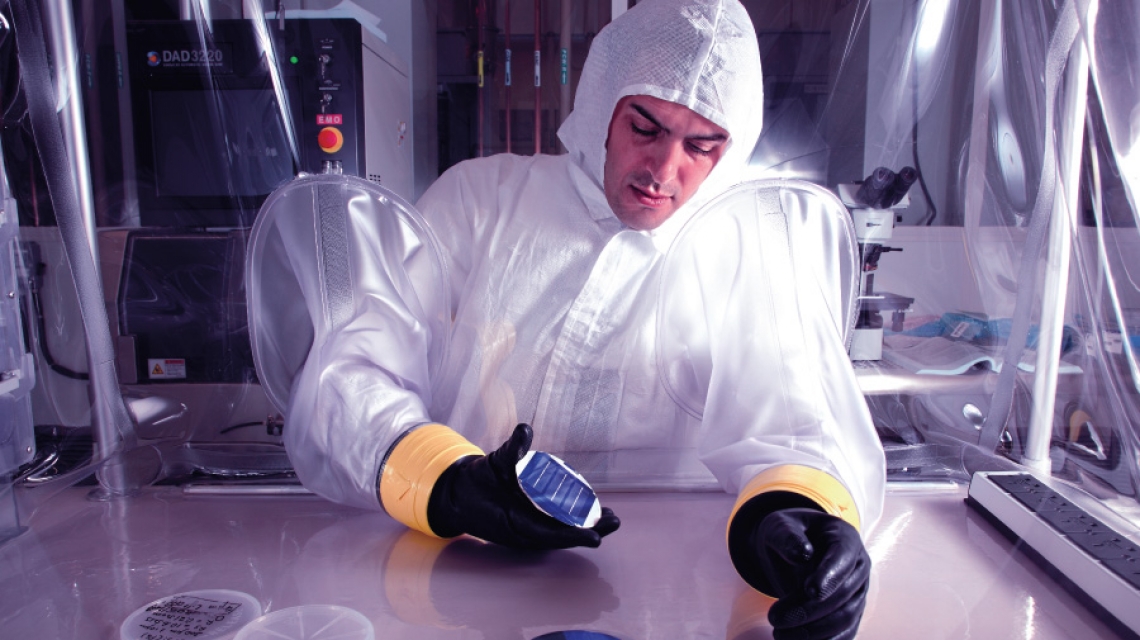
One of these is thin-film photovoltaics. Like their rigid counterparts, thin solar cells work by using sunlight to dislodge electrons to create an electrical current.

Where they differ is in the design and materials used. Thin-films are made by depositing one or more thin layers of photovoltaic material on glass layers that can be between a few nanometres to tens of micrometres thick. Because the layers are so thin, they can be deposited on a much larger area of glass than conventional solar panels made out of small cells connected together within the panel.

Until now, thin- film PV has been less efficient at harvesting solar energy than conventional PV. Improving this, while keeping the cost low, could put solar energy technologies within reach of more users.

At the Masdar Institute, we are working with Masdar PV to help do just that. We are developing new anti-reflective coatings for the thin-film cells that will allow the cells to trap more light. This coating is also a metallic conductor, making it easier to get the current generated out of the cell.

The material we’re working with is promising, having both good optical properties – letting in plenty of light – and good metallic conduction – helping get the energy out to the grid.

Beyond researching better materials, we are also exploring the benefit of patterning the layer for capturing even more solar energy.

When a thin-film cell layer is completely flat, some light is reflected back into the sky and is lost. But with patterning, the film is laid out at various angles that allow the reflected light rays to hit another angled surface, returning it to the cell. This can greatly improve the cell’s energy yield.

But there are several challenges. Not only do we need to find the most efficient thickness and pattern for the antireflective/conductive layer, we need one that is attractive to industry. It can’t just work in the lab; it needs to be scaled up to industrial production in a way that is cost effective.

It is our aim that, with this collaborative research, we will be able to increase the efficiency of thin-film solar cells. From currently converting around 9-10 per cent of the solar input power to electrical output, we hope to achieve 11-12 per cent while retaining the attraction of being nearly half the cost of conventional PV.

This could help not only in providing Abu Dhabi with a greater range of options to help it reach its goal of seven per cent of its energy from alternative sources by 2020, but it could also provide valuable intellectual property and an important product for the Emirate’s economy.

Dr Adel Gougam is assistant professor of materials science and engineering at the Masdar Institute of Science and Technology.
 
http://www.thenational.ae/news/uae-news/technology/tricky-task-of-harvesting-the-sun

Lessons from Abu Dhabi’s Urban Heat Island Effect

Mankind likes to change the world around him. He has altered the course of rivers, built islands, planted artificial forests and dried out wetlands.

But nowhere is the impact of humanity more apparent than in our urban centres – the sprawling, dense, heavily engineered towns and cities where we group ourselves together.

And while the environmental effects of developments like dam building or deforestation are fairly obvious, the effect that urban development has on the environment and climate is not as well documented, especially in arid and desert climates like ours.

Until now.

A project at the Earth Observation and Environmental Remote Sensing Laboratory at the Masdar Institute has, for the first time, begun mapping the climate of parts of Abu Dhabi to see how various types of developments affect its microclimates.

We are exploring the urban heat-island effect – the tendency of metropolitan areas to be significantly warmer than surrounding rural areas.

In cities in the West, downtown areas have been found to be 5°C to 10°C higher than the outskirts of a city. That difference can carry considerable cooling costs.

Looking at 25 years of Nasa satellite data on Abu Dhabi, we have found some surprising results.

Our initial research suggests the microclimate trends seen in the West – hotter downtown areas and cooler suburban areas – are reversed in Abu Dhabi, where the suburbs were warmer than the city centre. This turns the conventional understanding of urban microclimate on its head.

The causes are several. The moisture in vegetation reduces surface air temperature, while wind-conscious layout of buildings can create “urban canyons” that channel the wind and reduce the “feels-like” temperature. The presence of tall buildings also increases the total shaded areas from direct solar radiation, which also contribute in reducing downtown temperatures.

Additionally, certain building materials, like marble and stone, are more reflective than others like red brick and asphalt, meaning they trap less heat. These factors combine to reduce the inner-city temperature by about 4°C to 6°C.

By the same token, Abu Dhabi’s suburban areas tend to have less vegetation and low-rise buildings. They often have wider roads, and therefore more heat-trapping asphalt. All of these combine to raise the temperature.

Of all the areas we assessed, the coolest were mangrove forests, which had average summer temperatures 5°C cooler than that of the built-up areas. The obtained results have shown that the close presence of mangroves to urban areas contributes to the reduced overall temperature in downtown Abu Dhabi.

This further strengthens the value and importance of mangroves, which also are the nurseries for fish and a haven for migrating birds. Appreciating the roles that construction, landscaping, road networks, and urban planning can play in a neighbourhood’s microclimate should help Abu Dhabi make its future development more energy efficient and climate savvy. The study, which will run for another one year, can feed into guidelines for urban planning, legislation for construction material, and strengthen the case for more green areas.

Future urban developments made with these parameters in mind could bring significant energy savings by cutting the need to cool buildings. That alone could cut the city’s electricity use by 5 to 10 per cent – saving a huge amount of money, not to mention reducing its ecological footprint. Projects like this one are a first step towards local climate-specific improved urban planning, and we are glad to be a part of that.

Dr Hosni Ghedira is the director of the Earth Observation and Environmental Remote Sensing Laboratory at Masdar Institute

‘Dumbphones’ offer smart solutions

Mobile phones have changed all our lives – but one of the areas where they have had the biggest impact was both unexpected and unintended.

In many developing countries, they have been a boon to small business owners, allowing some of them to run their businesses from bicycles for example.

And there is a direct relationship between phones and a country’s wealth. Economic studies have found that for every 10 per cent increase in mobile phone penetration, gross domestic product rises by 1 per cent.

On its own this is no panacea. But it does earn mobile phones a place in the development equation. Now scientists at the Masdar Institute are working to make the most of these unintended consequences, as part of its effort to contribute to global development.

Programs like the Laboratory for Energy and Poverty Solutions (Leaps) at the Masdar Institute and the Centre for Technology and Economic Development (CTED) at New York University Abu Dhabi look beyond borders and bottom lines in pursuit of creative solutions relevant to a large part of the world’s populations.

For example, a team at Leaps is studying ways of making cooking in rural India cleaner. There, a woman cooking using a traditional biomass fire inhales the equivalent of two to five packs of cigarettes every day from the resulting smoke. It is estimated that biomass smoke contributes to over 1.45 million deaths every year.

The Leaps investigation has not only provided insights into fuel options that are much cleaner than gasified char briquettes and on par with liquid petroleum gas, it has identified options that are viable within the local context.

The Leaps lab is also exploring how small hydro-powered microgrids can address the energy problem of poor remote communities in eastern Malaysia.

Something as simple as developing a mobile phone that charges through a microgrid or solar power can make mobile technology possible for many millions of people without access to grid electricity.

More than 300 million low-end mobile phones are sold each year. But as voice-only “dumbphones”, they deny their users the wealth of information on the internet.

This prompted researchers at NYU’s CTED to design and implement an SMS-based search system that gives users short but relevant responses to a wide range of internet searches.

They are currently testing the system on a Kenyan pilot group of 40 people, from slum residents to college students.

Similar efforts to spread the benefits of technology to the world’s poorest nations are going on in many places.

The MIT-led One Laptop Per Child project, for example, has reached millions of children worldwide.

These efforts help, but the needs are so great that we need many more projects to chip away at every level.

If we look at these efforts collectively, sustainability might just be found at the crossroad of intellect and compassion.What we need to do next is to create many more points of intersection.

Dr Ayman Shabra is an assistant professor of microsystems engineering at Masdar Institute of Science and Technology.

A good solar model for the gulf

Buildings account for around two-thirds of the Gulf’s energy consumption. And the region’s cities grow, the need to reduce this figure is ever more pressing.

One answer to that is to integrate of solar cells into buildings. That is particularly advantageous for the UAE and wider Gulf, where a good chunk of the population live reside in areas where it is not economically feasible to provide electricity through the national grid.

Building-integrated photovoltaics (BIPV) not only generate energy, but also contribute to buildings’ architecture, as roofs, façades, skylights and glass cladding. If you use a solar panel for your roof, you may not need to spend so much on the roof itself.

So why is it still rare in the Gulf? One reason is that the atmospheric conditions here are quite different from other regions – the air, for one thing, is much dustier. That means many of the lessons learnt and technologies fine-tuned elsewhere are not wholly transferable.

So we need to look at different solar panel technologies. For each, we need to assess cost, efficiency, climate, flexibility, use of diffuse sunlight, long-term stability, sensitivity to the angle of inclination, transparency, aesthetics, and long-term operation costs.

Cost has long been the biggest barrier to large-scale use of solar cell technologies. We need to work out how to make them more cheaply, and put in place a system of feed-in tariffs to make the pay-off of installing them worth it.

In a solar plant out in the desert, efficiency is less important – you can happily have thousands upon thousands of low-yield cells that sprawl over many square kilometres and add up to a large total production. But in cities space is limited, so the technology has to be compact and collect as much energy available as possible.

That is where climate – namely temperature – becomes a problem.

Some photovoltaic technologies work dramatically less well when it’s hot, making them unsuitable for the Gulf. We need to look at technologies that do not suffer this temperature drop-off.

Flexibility is important, too. Buildings are not always simple flat structures; they can be nearly any shape, making a flexible PV module more useful than a rigid one.

Even square buildings are an awkward shape for solar panels. They are often tall, with lots of vertical but few horizontal surfaces. And they are of course immobile, so the amount of power received by any one panel changes as the sun moves.

So they need to be as tolerant as possible to various angles of inclination, giving a similar power output when installed on either the façade or the roof.

And they need to be able to efficiently harvest energy both from full direct sunlight, and more diffuse light – perhaps reflected from another surface. Transparency is useful – a transparent cell can be used as a window, dramatically increasing the area on which it can be used. And if not transparent, they at least need to look good, or architects are unlikely to want to use them.

They need to last, too. If incorporated into buildings, solar cells need to last as long as possible without losing power over time.
And while operation and maintenance costs for photovoltaics tend not to be very high, they still contribute to the overall cost. Their maintenance requirements must be manageable for the Gulf market.

All these parameters need to be assessed together to meet the local needs. To this end the solar energy materials and devices laboratory, which I head at the Masdar Institute, has received funding from a foreign institutions to test flexible solar cell technologies in the built environment within our campus and under the real outdoor conditions.

This joint project is allowing us to investigate the performance and other key features of these flexible solar cells for integration into the built environment.

Abu Dhabi is a very good model for a coastal Gulf city, so our results could be used as reference for applications throughout this region – as well as feeding into the Abu Dhabi solar rooftop plan, which aims to install 500 megawatts of photovoltaic panels on the emirate’s buildings over the next 20 years.

Dr. Mahieddine Emziane is Associate Professor in Materials Science and Engineering and heads the Solar Energy Materials and Devices Laboratory at the Masdar Institute of Science and Technology.

Pressing the crowd for data

With Facebook on the verge of making an initial public offering worth tens of billions of dollars, the value and power of social networking has never been more apparent.

But how can we capitalise on today’s wireless world to do more than just create online static? How can we harness the strength of its vast numbers – Facebook alone has more than 800 million active users each month – to do useful work?

These are questions that are likely to continue to produce new answers as technology develops.

For now, we in the computing and information sciences are curious about using crowd-sourcing – the practice of enlisting many people to engage on a specific task or problem – to tackle challenges and gather information.

To test some of the theories on social-network mobilisation, a team that includes several scientists at the Masdar Institute is lending its expertise to the MyHeartMap Challenge launched by the University of Pennsylvania.

The competition is simple: to track down as many automated external defibrillators (AEDs), the electronic devices that can treat heart problems, in the city of Philadelphia as we can.

The team that locates the most AEDs between January 31 and March 13 wins.

On our team are some winners of the pioneering Red Balloon Challenge, a previous crowd-sourcing contest in which researchers from the Massachusetts Institute of Technology used social networks to locate 10 weather balloons scattered around the US.

By harnessing the power of the masses, the challenge was cracked in just a few hours.

For this challenge, our team is spread around the world, with members in Abu Dhabi, San Diego, and Southampton, England – but none in Philadelphia. We will be testing the bounds of remote crowd mobilisation and data verification.

We will use social networks to pass the message on, to encourage people to report the location of AEDs and to verify other reports. If we win, the US$10,000 grand prize will be split among the people who helped. Give us a correct location, and you get a share. Pass the message on to someone else who gives us a valid tip, and you get a share.

We hope that incentive will help us to recruit as many people as possible to our cause and test some of our theoretical research on social-network mobilisation and incentivisation, as well as verification.

Verification is particularly tricky. One thing we learnt from the Red Balloon Challenge was that people lie or get things wrong. So the question is whether giving incentives for correct information can reduce this.

Finding ways to verify crowd-sourced information is crucial. If you are asking people to report the worst-affected areas in a forest fire, for example, you need to be sure the reports are accurate. And while contests such as MyHeartMap and Red Balloon challenges may seem purely academic and even frivolous, they can actually help save lives.

Having a map like the one that will result from the MyHeartMap Challenge, of most if not all of the AEDs in Philadelphia County, will be invaluable when people suffer heart attacks.

It, and projects like it, could easily save the lives of some of the 300,000 people who die in the US every year from sudden, out-of-hospital cardiac arrests. And that is hardly frivolous.

Dr. Iyad Rahwan is an associate professor of computing and information science at the Masdar Institute of Science and Technology.

http://www.thenational.ae/thenationalconversation/news-comment/pressing-the-crowd-for-data

How to engineer better decisions

Decisions are taking place everywhere you look. From something as simple as a traffic signal going red, to turning valves at the local water plant, to production schedules of critical infrastructure like power grids, decisions are being made every second. And in our ever-faster world, those decisions need to be faster, too.

Coordinating and optimising these decisions often requires information to be gathered from places that are far apart. And the human mind can only process so much information in the short time available. Growing costs, and environmental and regulatory pressures make it all the harder.

So we turn to automation and information technology – from controllers on a single digital board, to fully integrated enterprise resource planning systems.

But these are only as good as the algorithms they are programmed with and the degree to which they are integrated together.

Scientists at the Masdar Institute are working on systems that make complex, timely and effective decisions as effortless as possible.

One area we are working in is renewable energy power grids, which more countries are expected to adopt in response to global climate change concerns.

Power grids in general are complex and interactive, which makes them difficult to manage – as the 440 million people affected by five major blackouts from 2003-2011 can testify.

And renewable energy is tricky to handle, as the grid has to accommodate power fluxes from the variable renewable energy sources, most commonly solar and wind.

Power grids can be viewed as having three layers of operation. At the top, there are optimised dispatching algorithms that determine who is going to consume how much, where and when.

In the middle, there are operators at a control level managing and ensuring that the grid stays reliable. Should anything go wrong, they are in control.

The final layer is the physical grid, which has dynamics based on physics and electrical engineering.

For the first time, we are looking at how these three layers fit together, monitoring function and efficiency when large influxes of solar or wind power are added to the grid.

We are asking human operators to look at large sections of geography to make decisions and to make those decisions faster. The question is whether they can be supported to make those decisions effectively without being under too much pressure?

At its most basic level, this should help us find the sweet spot between requirements like efficiency, reliability, cost, carbon neutrality and improved energy savings. When a decision needs to factor in all of those elements together, not just the bottom line, you need to have a plan on how to achieve that.

At the Masdar Institute, we are trying not just to come up with that plan but also a methodology of how it can be accomplished with the various control, automation, and information technology tools available.

We hope to apply what we learn from this to many other problems in the UAE and abroad – cutting supermarkets’ power bills, or helping a metals producer reduce waste through smarter manufacturing. In fact, all heavy industries and infrastructure entities could benefit from such interdisciplinary research.

The key is better communication between academia and industry. Industry must ask what academia can do with their analytical problems that the fast-paced nature of day-to-day business does not allow time to address.

And academics should take the time to visit industrial and infrastructure entities, to offer their creative and analytical problem-solving abilities. This dialogue must grow.

When it does, Abu Dhabi and its push towards sustainability can only further benefit as cost, energy needs, and waste are all reduced.

Dr Amro Farid is assistant professor of engineering systems and management at the Masdar Institute of Science and Technology.

http://www.thenational.ae/news/uae-news/technology/how-to-engineer-better-decisions

Water summit a testament to Abu Dhabi’s commitment

Never has water been a more critical resource for the UAE than it is today, as the country’s population and growth swell further.

The announcement last week that Abu Dhabi would host an annual International Water Summit further testifies to this fact.

Sheikh Mohammed bin Zayed, the Crown Prince of Abu Dhabi and Deputy Supreme Commander of the Armed Forces, even said recently that “water is more important than oil in the United Arab Emirates”.

The UAE is among the world’s most water-scarce nations, while being among the highest per capita water consumers in the world.

Abu Dhabi’s consumption of water resources is 24 times greater than its natural recharge capacity.

To bridge the gap, the UAE has long relied on desalination – for about 90 per cent of its water, according to estimates. But this comes with a very high energy cost, which is tricky when the UAE is trying to cut carbon emissions.

It’s time for the UAE to reduce the environmental footprint of its water treatment sector, which we hope to do in part through the establishment of a new Centre of Excellence for Water Technologies, being launched by the Masdar Institute of Science and Technology. Work on the facility begins next month.

When it opens, the centre should be the UAE and the Gulf region’s first international-quality provider of localised solutions to water technology needs.

It will bring some of the best minds in chemical, mechanical and environmental engineering to bear on the need for cost-effective, reliable and energy-efficient technologies to keep the UAE’s society and economy as verdant as its oases.

It will work with the Masdar Institute’s other departments to further research in water, environment and health, focusing on addressing the challenges behind ensuring sufficient, cost-effective and equitable access to water, while maintaining the integrity of natural water supplies and minimising their environmental impact.

One area we will focus on is membrane technologies, a newer way of removing salt and impurities from seawater. It is estimated to use about 90 per cent less energy than standard thermal desalination plants.

We will look to create membranes more suited to the region’s water treatment needs with even greater energy savings. The centre also aims to help reuse the UAE’s water waste, reducing the need to create desalinated water from the Gulf and thus saving on carbon emissions.

Waste water has particular potential for use in agriculture and industry, which can account for nearly 90 per cent of a country’s water use.

The centre’s research will focus on meeting local needs, while giving the country’s young people an opportunity to experience solution-oriented water technology engineering.

It should allow us to help the UAE reach the levels of energy efficiency, water savings and water security that are needed to ensure an even brighter future. As I always like to say: “Whoever has the water has the future!”

Dr. Nidal Hilal will join the Masdar Institute as a professor and will establish a Centre of Excellence for Water Technologies

High voltage: the current debate about AC-DC

For some 100 years, using alternating current (AC) – where electricity flow surges rapidly back and forth in a circuit — has been the best way to transmit electricity from source to end users. With the help of transformers and high-voltage transmission lines, large amounts of energy could economically be sent to far-flung consumers without the voltage loss that was seen in the original direct current (DC) system. When the AC current reached a point near to the end user, another transformer would be used to decrease the voltage to bring it to the levels needed for individual use.

In today’s world, however, that once simple system has undergone further complication by the fact that many of our modern electrical uses – computers, televisions, electronics, appliances, LED lights, air-conditioning and electric vehicle chargers – run on DC rather than AC. That means that the AC current has to be converted to DC before it can be used in many of our daily applications. In fact, there are often two conversions that must take place – from AC to DC, and then from DC to a lower voltage DC that is required by the loads, such as computers and LED lights. What is problematic in this situation is that each stage of conversion has an energy loss cost. It is estimated that average efficiency of power supply is only between 70-85 percent due to these conversions. On the other hand, power generated by PV or other renewable sources has to face two conversion states,  DC/AC and AC/DC, for growing applications of DC loads.

The post global climate change reality we live in requires every energy loss to be looked at and taken seriously. Not only is electricity by and large produced through carbon emitting processes but it also has become more costly to produce due to the rising cost of carbon-based natural resources. Consequently saving electricity has become important to most individuals, businesses and governments due to financial and environmental concerns.

Additionally, the rapidly developing world has a massive demand for electrification of rural communities. Populous nations like India and China are faced with the significant challenge of getting the electricity that will help raise the quality of life of their citizens to towns and villages hundreds if not thousands of kilometers away from the power source. For AC electricity supply, that would mean laying thousands of kilometers of power lines. And the more distance between power source and user, the greater the line losses. That significant cost and effort to provide electricity to remote locations has thus far been a serious obstacle in the way of development.

A solution to these challenges that is being explored by academia and industry is the return to DC based supply and onsite generation, with the benefit of today’s technological developments. For cities and towns removed from the electricity grid, one potential solution is a renewable energy micro-grid. Such a grid would be powered by more locally available renewable energy, like solar, which also happen to produce DC energy. Not only then is the source of solar energy in essence free, but also because the energy output is on the DC system, it would avoid the usual conversion losses that are seen across the AC grid, making DC even more cost effective. 

The challenge right now is the fact that this DC renewable grid idea, while sound, has not been widely tested and demonstrated in all the various circumstances it may need to operate. Governments and utility authorities need to see how such a system functions before they can commit to the sizeable investment needed to build its infrastructure. Scientists and engineers like myself need to show how today’s cutting edge technologies can be worked into a complex energy system that is better suited for individual communities, in terms of cost, reliability and security.

As faculty at Abu Dhabi’s Masdar Institute of Science and Technology, I am involved in a small-scale project that aims to do just that. We will be setting up a DC power system demonstration at the field station that is under construction at Masdar City. In that controllable environment, we will be able to show the entire DC power systems – starting with the solar photovoltaic-based energy production, to energy storage, to transmission and of course, finally the energy use. With a unique parallel operating structure that I have developed, I believe we can even show that the modular and redundant DC system is less likely to have outages than the traditional AC distribution system, as if one power module fails, than another can back it up without a breakdown in the system.

While the idea of DC based systems are not unique – a number of trials and preliminary studies of them have been completed following which Japan, USA and Europe have planned DC based data centers – in this part of the world it is still a fairly new concept. Masdar will power a full suite of common end uses—from lighting to office equipment, refrigerators to A/C compressors, pumps and fans— for the first time.   What we are hoping to do through the DC demonstration is test our improved system structure while giving people a real life example of not only how viable but also how beneficial renewable energy powered DC systems can be.

The system that we create and fine tune at the Masdar City field station would not only give the Gulf region’s utility providers a green and affordable alternative to AC-based energy systems, but it could also be of value to governments around the world. It is estimated that the high voltage DC market could be worth $10 billion in the next five years. That potential is already attracting industrial interest and it is only right that Abu Dhabi’s research institution focused on innovative technological solutions should be a part of making renewable energy-based DC systems a reality.

Dr. Weidong Michael Xiao is an assistant professor of Electrical Power Engineering at the Masdar Institute of Science and Technology in Abu Dhabi.

Keeping smart power grids safe from hackers

The next generation of electricity power systems will see the widespread use of “smart grids”, actively managing the flow of power between energy providers and consumers.

They will use millions of smart meters to monitor and report the pattern of power supply and usage.

In a world likely to be ever-more reliant on renewable energy, the quality of that power needs to be monitored all the more carefully. Not only are renewable systems more complex, with many small sources of power – think rooftop solar cells – but they are more unpredictable, and irregular.

That requires the grid to be integrated with a data communication network, so every part of the grid can be monitored and analysed, in real time, and continuously adjusted to provide steady and efficient power.

Such constant, critical communication across a complex system is not without risk. Not only is it vulnerable to the quirks of any computer system, the communication systems provide greater openings for cyber attacks and human error.

So it needs to be secure. Research to that end is being undertaken across the worldand at Abu Dhabi’s Masdar Institute of Science and Technology. It is estimated that smart-grid security will draw about Dh77bn in investment over the next five years.

Researchers in the institute’s computing and information sciences department are working to bring us closer to being able to securely measure coherent smart-metering data, monitor local states, assess the components of the system and design efficient protocols.

This stronger security is needed to protect the grid against electricity thieves, hackers, business spies or even terrorists. Our study aims not only to spot vulnerabilities, but to design and develop a safe and reliable way of maintaining security.

That requires an efficient way of ensuring all messages within the system – metering data, power commands and status alarms – can be verified as genuine, and strongly encrypted so outsiders cannot abuse the data.

Privacy matters, too. Smart grids collect data about consumers’ electricity use, monitoring it every 15 minutes. Researchers at Munster University of Applied Sciences have found that smart-meter monitoring systems can even detect which television programmes are being watched, by matching power consumption with the signal for each television channel.

So we are using applied cryptography to guard consumers’ consumption habits. Utility providers know how much energy a group of users is consuming overall, but not exactly where or by whom that energy was consumed.

All of this should help Abu Dhabi meet its goal of sourcing seven per cent of its power from renewable sources by 2020. We are glad to be contributing to the technology and systems necessary to make that goal a secure and defensible reality.

Dr Depeng Li is a postdoctoral research fellow in theMasdar Institute of Science and Technology Department of Electrical Engineering and Computer Science and Dr. Zeyar Aung is an assistant professor in the same department.

http://www.thenational.ae/news/uae-news/technology/masdar-institute-working-to-keep-smart-power-grids-safe-from-hackers

As 2012 dawns, the UAE is on a path to discovery

The UAE has set itself on a clear course of economic diversification, shifting away from a heavy reliance on fossil fuel production to an economy based on knowledge-intensive manufacturing and services; aspiring to achieve the oft cited goal of creating a “knowledge-based economy”.

As a university professor, I spend much of my time worrying about the development of my students and not entire economies, but in the case of a knowledge-based transition, there may be a fitting analogy; especially with that particular breed of student intent on discovering new knowledge – the graduate student.

When a new student enters university, fresh with enthusiasm to solve the world’s problems, they often pass through four common stages of intellectual development: absorption, reproduction, adaptation and, eventually, discovery.

The first stage is absorption. Students must first master the ability to absorb knowledge – namely facts, figures and procedures. The next stage is to learn how to reproduce and replicate all those facts, figures and procedures, at least in time for an exam. These abilities can take students far in their first years of university, but they are not sufficient for excelling at research.

The third stage is the ability to adapt knowledge to a new situation or context. Think of those “extra credit” problems on an exam that left you scratching your head and wearing down your eraser. The trick is often that a bit of information was left out, or something not needed was added in. Students who learn the ability to fill in missing gaps and isolate the important aspects of a problem are well on their way to conducting good research.

But there is still one hurdle left, and that is the stage of discovery – the process of creating something new. This skill is harder to teach and typically can only be gained through experience.

To help a student excel in that final stage, they need a few more helpful qualities. The first is a solid grounding in the fundamentals of their discipline. For technology focused research, advanced math, science and engineering courses are a must. These are the “hard” skills, for which there are no shortcuts.

Then there are the less obvious “soft” skills. First, one needs courage to ask the hard questions. Courage is not the same as confidence. Confidently claiming you will discover a new vaccine for tuberculosis is hubris, whereas dedicating your career to this task is courageous. Second, one needs to be creative – not simply “think out of the box” creative, but a type of creativity supported by an openness to experimentation, a tolerance for failure and a persistence to keep trying.

Finally, one needs to recognise the limitations of one’s skills and find collaborators to leverage a broader set of expertise.

Those key qualities again are: skills, courage, creativity and collaboration.

Could this path of intellectual development provide any models for a nation like the UAE that is seeking to transform into a knowledge-based economy?

The stages of absorbing, reproducing, adapting and discovering could be interpreted at a national level. An economy reliant on importing its knowledge through people, technologies and services would be stuck in the stage of absorption, even if it were considered as a knowledge-based economy.

Moving to the next stage, there would be an ability to replicate business models, manufacturing processes and other institutional models, but without the ability to adapt, there is a risk.

Some ideas and models may not fit the local geographic, cultural and economic context.

In some of our work at Masdar Institute, for example, we found that techniques used to estimate the solar resource in Europe that were applied in the UAE gave erroneous results as they failed to consider the light-scattering impact of fine dust particles suspended in the environment. Modifying and improving upon imported knowledge is achieved in the adaptation stage.

To reach the final stage, where knowledge discovery becomes a defining characteristic of the nation, the same enabling elements for a student embarking on a research career are equally relevant for a nation.

The skill base of the nation must be strong, which requires sustained support for the continuous improvement of the education system. From preschool to postgraduate studies, students must have the chance to challenge themselves and receive in-depth instruction.

Courage is also needed. Courage to commit resources and support at a national level for advanced research.

Creativity can be best cultivated when visions are ambitious and long-term, leaving time and space for experimentation.

Finally, the nation’s efforts are strengthened by continuing to support collaboration with regional and global partners, bringing the best minds together in an environment where the creation of new knowledge truly becomes a guiding principle.

As we welcome the new year, I hope the UAE will keep spearheading efforts to transform itself into a knowledge-based economy and a nation focused on knowledge discovery.

With the coordinated efforts and support of the government, industry and academia, it is definitely achievable.

Dr. Scott Kennedy is the Masdar Institute of Technology associate dean of research.