
Future Technological Innovation Hinges on Convergence of IoT, Smart Transportation and Energy Systems

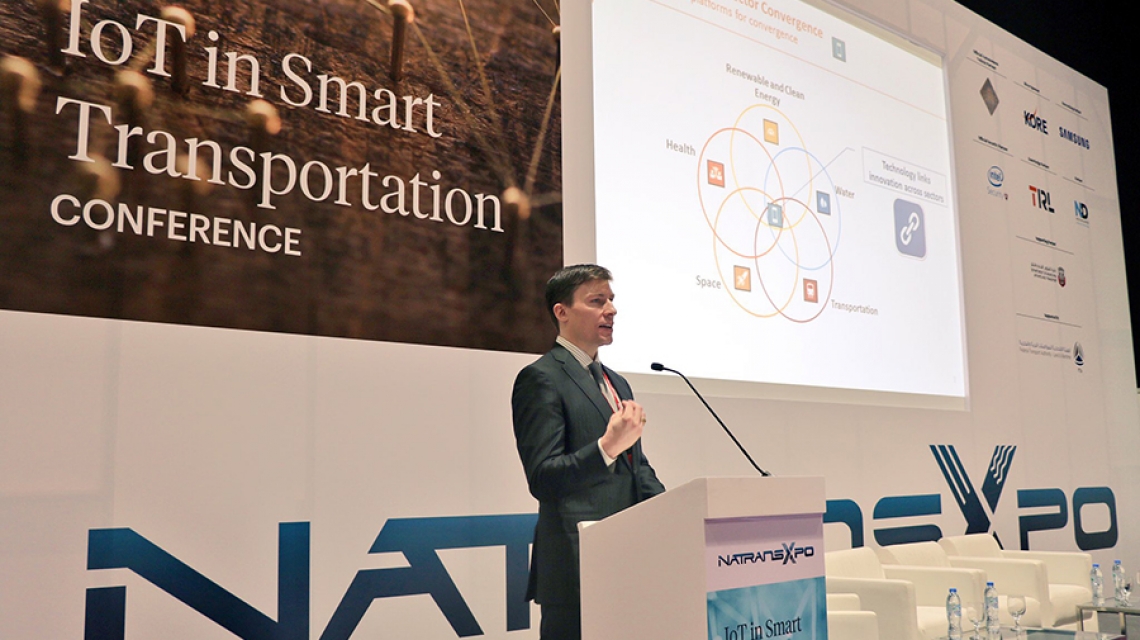
The convergence of Internet of Things (IoT), smart transportation and energy system innovation is part of a bigger trend at the core of future technological innovation and Masdar Institute of Science and Technology has developed its research strategy so that it can remain at the forefront, said Dr. Steve Griffiths, Vice President for Research, and Professor of Practice, Masdar Institute.  

The convergence of IoT, smart transportation and energy system to achieve innovation across sectors requires use-inspired research and this is exactly Masdar Institute’s focus, added Dr. Griffiths in his keynote address titled ‘The convergence of IoT, Smart Transportation and Energy System Innovation’, at the NATRANS Expo, held from 25-26 October at the Abu Dhabi National Exhibition Center (ADNEC). Masdar Institute is one of the partners for the event, which was the UAE’s first dedicated IoT transportation platform designed to showcase the power of network connectivity to collect and exchange data.  

Research at Masdar Institute revolves around four research platforms – energy, water, advanced materials and smart systems – that serve as engines to drive innovation in advanced sustainable technologies and clean energy. The Institute’s research centers based on these themes have yielded results, gaining Masdar Institute 14 issued US patents, 73 filed US patent applications, 134 Invention disclosures and more than 960 published articles in peer reviewed journals as of September 2016.  

Dr. Griffiths said: “Our research platform at Masdar Institute focuses on linking innovation with R&D and has all the elements required to push IoT and autonomous vehicles to their full potential. Specifically, we work towards the convergence of energy systems with advanced materials and microelectronics, as well as artificial intelligence and data analytics. This is done in partnership with multiple industry and government partners that help drive R&D to commercial realization.”  

He added: “IoT is of particular interest because it connects the physical world of materials, machines and living things to a world of information. Big data and analytics allow us to collect information about people, machines, buildings and other physical items and not only understand current state, but also predict and influence future states.”  

Such capability is extremely relevant to transportation Dr. Griffiths pointed out and added that the data that can be collected in the transportation sector is vast and uses the potential uses of this information include optimization of routes, reducing friction between modes of transportation, and ultimately, autonomous transportation. He further stated that this convergence of IoT and transportation, collectively known as “smart transportation”, can lead to increased utilization of transport infrastructure, better transport system efficiency as well as increased personal wellness and productivity.  

As part of its efforts to develop human capital in these areas, Masdar Institute currently offers Master’s Degree programs in Computing and Information Sciences, Microsystems Engineering, Engineering Systems and Management and Sustainable Critical Infrastructure, all of which related to smart transportation.  

Smart transportation and energy innovation are closely linked, as the transportation sector accounts for 30% of global energy consumption and road transportation accounts for approximately 70% of transportation energy consumption. Furthermore, road transportation accounts for approximately 50% of total global oil consumption. “Such statistics indicate a strong case for smart transportation to impact energy systems,” Dr. Griffiths added.

Industry research shows that autonomous vehicles can support eco-driving, mass transport adoption, optimal allocation of vehicle-capacity-to-passenger count and other measures that could, in the best case, lead to up to 40% reduction in road transport energy demand.  

However, IoT platforms and autonomous vehicles that allow for this transformation are projected to require further R&D to realize their full potential. According to research firm Gartner, IoT platforms and 5-10 years away from reaching their “plateau of productivity” and autonomous vehicles more than 10 years. Hence, the use-inspired research being done at Masdar Institute is critical the smart transportation systems realizing their full potential in the UAE and globally.


Clarence Michael
News Writer
26 October 2016
Masdar Institute Links up with QinetiQ and Sand-X Motors to Develop Automated Unmanned Rover System (URS)

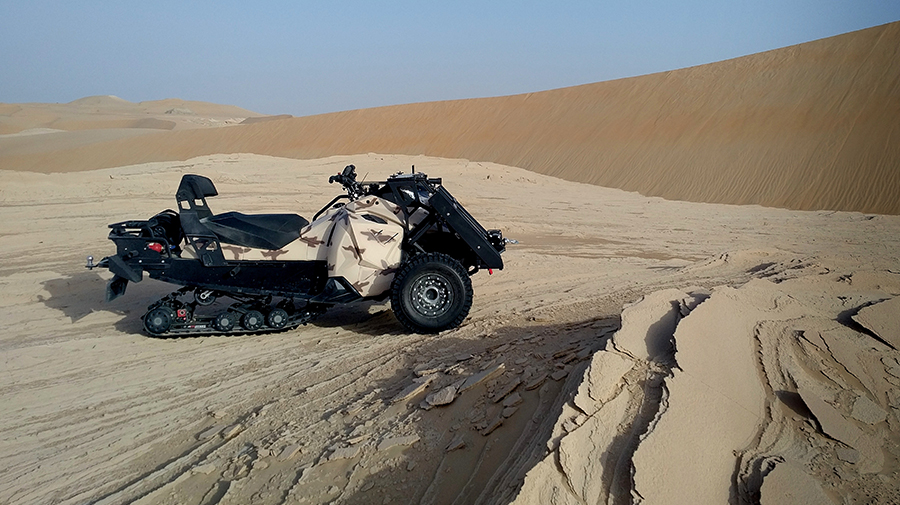
Masdar Institute is partnering with Swiss-based all-terrain vehicle (ATV) developer Sand-X Motors and UK-based technology development and engineering company QinetiQ to develop an Unmanned Rover System (URS) able to thrive in the UAE’s harsh desert environment.

The collaborative project will integrate Sand-X’s all-terrain vehicle technology with artificial intelligence (AI) and automation to develop a purpose-built ground vehicle to meet the UAE’s URS needs. The URS program is expected to lead to the development of a UAE-manufactured unmanned tactical vehicle that will provide logistical solutions, such as route clearance and the provision of relief aid to the front lines and refugee camps safely and securely.

The collaboration was announced at the URS award kick-off meeting, which was hosted by the Defense Services Marketing Council (DSMC). The URS development program was conceived as part of Masdar Institute and DSMC’s Partnering to Achieve Innovation in Defense & Aerospace (PAIDA) Working Group.

The collaborators will enter the URS Capability Demonstrator in the AED1-million UAE Drones for Good Award and the AED1-million UAE AI & Robotics for Good Award. Award winners will be announced on 11 February, 2017.

Dr. Steve Griffiths, Vice President for Research and Interim Associate Provost, Masdar Institute, said: “We are excited to leverage our state-of-the-art research facilities and highly-skilled researchers to support the development of the URS Capability Demonstrator, along with our collaborators, who are global leaders in robotic and autonomous systems, military technologies, and ATVs. We believe that the URS program will ultimately lead to the development of disruptive technologies that will enable greater vehicle expeditionary mobility without sacrificing survivability. The collaboration builds on Masdar Institute’s ambition to develop strong platform capabilities in intelligent systems that are revolutionizing multiple sectors.”

Some of the capabilities of the URS ground vehicle will include remote control operation, which will allow direct human input to drive the vehicle remotely; a “follow-me” system, which enables the vehicle to follow the driver once he dismounts the vehicle; “return home” capabilities, which enables the vehicle to return by fastest means to a fixed point without driver intervention; shuttle abilities, which allow the vehicle to shuttle supplies between bases; and waypoint-follow, which enables the driver to send the vehicle ahead to the waypoint and then return to a preselected destination.
Sand-X will provide the land systems to the URS Program, including all current background intellectual property (IP) and hardware with data packages required by QinetiQ and Masdar Institute to integrate to the existing Sand-X T-ATV 1200 Tracked All-Terrain Vehicle.

Urs Eiselin, CEO, Sand-X Motors, said: “We are pleased to work with the DSMC, Masdar Institute and QinetiQ, and to leverage the SAND-X T-ATV 1200 all-terrain vehicle as a platform for further development of highly sophisticated and efficient ground URS vehicles.”

QinetiQ was selected to be the chief industrial partner by PAIDA on the technology development front following four months of data-gathering.  The UK-based company was chosen based on its extensive experience developing and manufacturing cutting-edge autonomous robotic military systems, such as the QinetiQ Raider II, which has capabilities – like obstacle detection, obstacle avoidance, follow-me, waypoint navigation and return to base – that are achievable on the proposed URS ground vehicle.

Iain Farley, Managing Director International, QinetiQ, said: “QinetiQ is privileged to have been selected to work with the Masdar Institute and SAND-X Motors on the URS Program. Development of novel autonomous systems that optimize military platforms for operations is a core capability within QinetiQ. We are confident that this collaborative project will build on our previous successes, and support the objectives of the autonomous ground URS program.”


Erica Solomon
News and Features Writer
29 October 2016

Sustainable Bioenergy Research Consortium to Host Seawater Energy and Agriculture Forum 2016 in Abu Dhabi

The Sustainable Bioenergy Research Consortium (SBRC) – a non-profit consortium supported by founding members Etihad Airways, and Boeing [NYSE: BA], as well as Takreer, SAFRAN and General Electric [NYSE: GE] – today announced it is organizing the first International Seawater Energy and Agriculture Forum 2016 in Abu Dhabi.  

To be held from 1 – 2 November 2016 at the Masdar Institute Multi-Use Hall, the event will include the forum and a workshop on aquaculture and halophytes, to be organized in collaboration with the University of Arizona. The forum will seek to create a knowledge-sharing platform for experts in aquaculture, halophyte agriculture and silviculture/agroforestry, and the integrated approach for the production of energy and biomass.  

During the forum the SBRC will present the work it has been doing over the past few years, especially on its flagship project – the Seawater Energy and Agriculture System (SEAS). The forum will aim to strengthen the collaboration among public, private, and non-profit organizations in the field of bioenergy.  

Dr Behjat Al Yousuf, Interim Provost, Masdar Institute, said: “The Seawater Energy and Agriculture Forum is an excellent platform to discuss the Masdar Institute’s contribution to the UAE’s efforts on renewable energy and in helping address the need for local food production. With the first research facility of its kind in the world, we are addressing energy, water and food-related issues through solutions from our own environment. We believe the SBRC will continue to carry out ground-breaking research work in the coming months.”

James Hogan, Etihad Aviation Group President and Chief Executive Officer said, “Our goal is to support and help drive the commercialisation of sustainable aviation fuel in Abu Dhabi. The SBRC has made some important first steps in developing this innovative system for producing sustainable feedstock and we are pleased to support this important knowledge driven forum.”  

The University of Arizona has been assisting Masdar Institute in the development of the Salicornia accessions, which the SBRC is currently using for the project.

The US university has also been supporting Masdar Institute with knowledge transfer in halophyte agriculture. The SBRC’s SEAS initiative seeks to address the food security issues of the UAE through the development of an innovative practice of cultivating seafood and biomass for fuel using desert lands irrigated by seawater.

The launch of operations of the SEAS pilot farm is another strong step in the evolution of Masdar Institute. The world’s first research facility to grow both food and biomass for fuel, using desert lands irrigated by seawater, began operations in March 2016 on a two-hectare site in Masdar City.


Clarence Michael
News Writer
31 October 2016

4th Arab-American Frontiers of Science, Engineering and Medicine Symposium Opened by HE Dr. Ahmad Belhoul

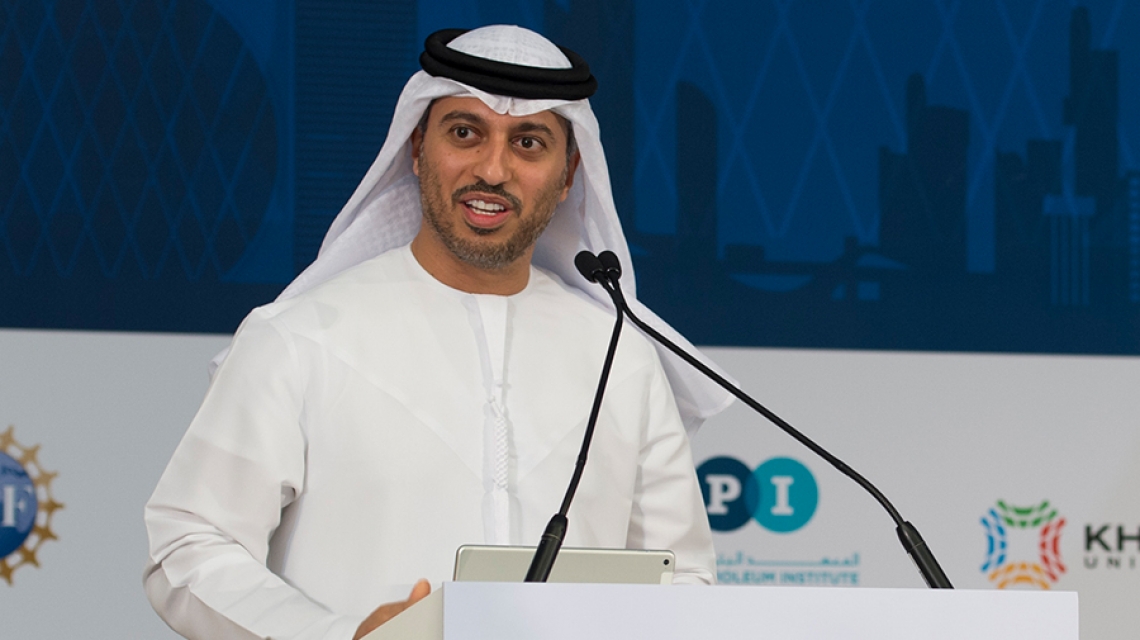
His Excellency Dr. Ahmad bin Abdulla Humaid Belhoul Al Falasi, UAE Minister of State for Higher Education, today inaugurated the Fourth Arab-American Frontiers of Science, Engineering and Medicine Symposium at the Masdar Institute of Science and Technology’s campus in Abu Dhabi.  

The symposium runs until 7 November and is hosted by Masdar Institute and the US National Academies of Sciences (NAS) in partnership with Petroleum Institute, Khalifa University of Science Technology and Research, and New York University Abu Dhabi. The event’s US sponsors include the National Science Foundation and the US National Aeronautics and Space Administration (NASA).  

Nearly 100 scientists, engineers, and medical professionals from the US and 21 countries in the Arab League are taking part in the symposium. This is the first time that Arab-American Frontiers Symposium has technical sessions dedicated to space technology and brain science.  

HE Dr. Belhoul said: “There is immense opportunity to advance research and development through greater scientific exchange and exploration. As Minister of State for Higher Education, I am personally committed to fostering an environment where the private sector, public sector and academic institutions can work together with the aim of contributing towards a knowledge economy. The Annual Arab-American Frontiers of Science, Engineering and Medicine Symposium is an important platform to achieve this goal—facilitating global partnerships and collaborations, amplifying collective efforts and creating a brighter future for all of us.”  

Dr. Dalal Najib, Senior Program Officer, National Academy of Sciences, welcomed the gathering following the opening. Dr. Steve Griffiths, Vice President for Research and Interim Associate Provost, Masdar Institute, followed with an overview of the region-relevant research activities being undertaken by Masdar Institute. Dr. John Boright, Executive Director of International Affairs, National Academy of Sciences, Engineering and Medicine, was also present at the event.

Dr. Dalal Najib said: “This symposium provides a rare platform for a high level scientific exchange across disciplines. It is also an opportunity for US and Arab researchers to connect at an early stage of their career, learn from one another and explore how they can work together to develop innovative solutions to pressing global issues. In addition, this symposium is particularly unique since we are partnering with four outstanding Abu-Dhabi based institutions, each one of them contributing to the technical program through the participation of their respective faculty members as organizers, speakers and/or general participants.”

Dr. Behjat Al Yousuf, Interim Provost, Masdar Institute, said: “This Fourth Arab-American Frontiers of Science, Engineering and Medicine Symposium has brought together the most innovative minds in various science and technology sectors. The discussions at the symposium reflect the stature of scientific research-related events that are hosted in the UAE, especially by Masdar Institute and its partners. We believe this event will pave way for collaborations, resulting in new discoveries in these areas.”

Dr. Tod Laursen, Khalifa University’s President: “Khalifa University is proud to be involved with this symposium and the opportunity it provides to young Arab and American scientists and researchers. We were also pleased to welcome these innovative researchers to our campus, and show them some of the facilities at our disposal and the atmosphere of creativity our campus has. This symposium is a great opportunity for young scientists because it encourages one to one conversations and informal group discussions, the symposium is creating an environment that encourages the sharing of ideas about key areas of science and engineering, which can lead to further innovation and even useful collaborations. These young researchers will undoubtedly benefit from these conversations for years to come, and join a global conversation about the future of science and technology.”

NYU Abu Dhabi Provost Fabio Piano said: “By combining our collective expertise and bringing together some of the world’s leading scientific minds, we are opening new pathways of discovery and pushing the boundaries of exploration. This partnership supports our shared vision of advancing the development of new knowledge and harnessing the potential to improve lives, while deepening our connections and understanding of science, engineering, and medicine on a local and global level.”

This years’ Arab-American Frontiers symposium is centered on five critical themes including solar energy and water for sustainable living; nanotechnology for next generation electronics and photonics; exploring the brain; advances in petroleum geosciences, oil and gas exploration; and new spacecraft technologies for earth and space exploration.   The Arab-American Frontiers Program is based on the long-standing Frontiers of Science and Engineering Programs managed by the US National Academies over the past 20 years. The Arab-American Frontiers program is designed to enhance the scientific exchange and dialogue among young researchers in Arab countries and the US.


Clarence Michael
News Writer
06 November 2016

Masdar Institute and Khalifa University Launch Cutting-Edge R&D Program for Next Generation of Telecommunications Standards

Two of Abu Dhabi’s leading R&D institutions, Masdar Institute of Science and Technology and Khalifa University, have entered into a partnership with the Semiconductor Research Corporation (SRC) and GLOBALFOUNDRIES to develop the next generation of light-based data transmission (photonics) and wireless network standards (5G).

The partnership is part of an innovative three-year program that will see the launch of a Center of Excellence on Integrated Photonics, which leverages each institution’s strengths in research, materials science, and product development.

The research initiative is designed to support the further development of GLOBALFOUNDRIES’ technology and create commercial solutions for the telecommunications and electronics markets. The program will be funded by a grant from Mubadala Development Company and will be based at both Masdar Institute and Khalifa University. The Semiconductor Research Corporation, known for its extensive experience in fostering quality academic research, will help manage the program and ensure global research standards are met.

The launch event was attended by Dr. Steve Griffiths, Vice President for Research and Interim Associate Provost, Masdar Institute, Dr. Rafic Makki, GLOBALFOUNDRIES Executive Fellow and Senior Vice President, and Dr. Arif Sultan Al Hammadi, Executive Vice President, Khalifa University.

Dr. Griffiths of Masdar Institute said: “This strategic partnership and the leading role of Masdar Institute faculty members illustrates our commitment to advancing research and human capital development in photonics and 5G communications. We believe this partnership with Khalifa University, SRC and GLOBALFOUNDRIES will create a wide range of positive outcomes for the UAE in terms of developing innovations and capacity building in the semiconductors sector, which is critical to the country’s innovative knowledge economy transition.”

Dr. Arif Sultan Al Hammadi, said: “Khalifa University is dedicated to supporting the UAE’s vision to create a successful knowledge based economy, and one of the ways we do this is by partnering with other leading institutions and organizations in order to spur research and development in key areas. Photonics and wireless networks are essential to the development of next generation technologies, and advancements in them are vital if we want technology to continue to advance. We look forward to the developments this partnership brings.”

“We have been very impressed with the quality of research delivered by Mubadala funded SRC university programs in Abu Dhabi,” said George Gomba, Vice President, Technology Research at GLOBALFOUNDRIES.

“GLOBALFOUNDRIES is committed to an aggressive research roadmap that continually pushes the limits of semiconductor technology. We see great value in close collaboration with leading Abu Dhabi universities to drive future technological breakthroughs in connectivity solutions and educate the next generation of innovators.”

According to the agreement, the program will feature close collaboration between the UAE faculties and GLOBALFOUNDRIES researchers, with built-in industry internships for students at Masdar Institute and Khalifa University.


Clarence Michael
News Writer
15 November 2016

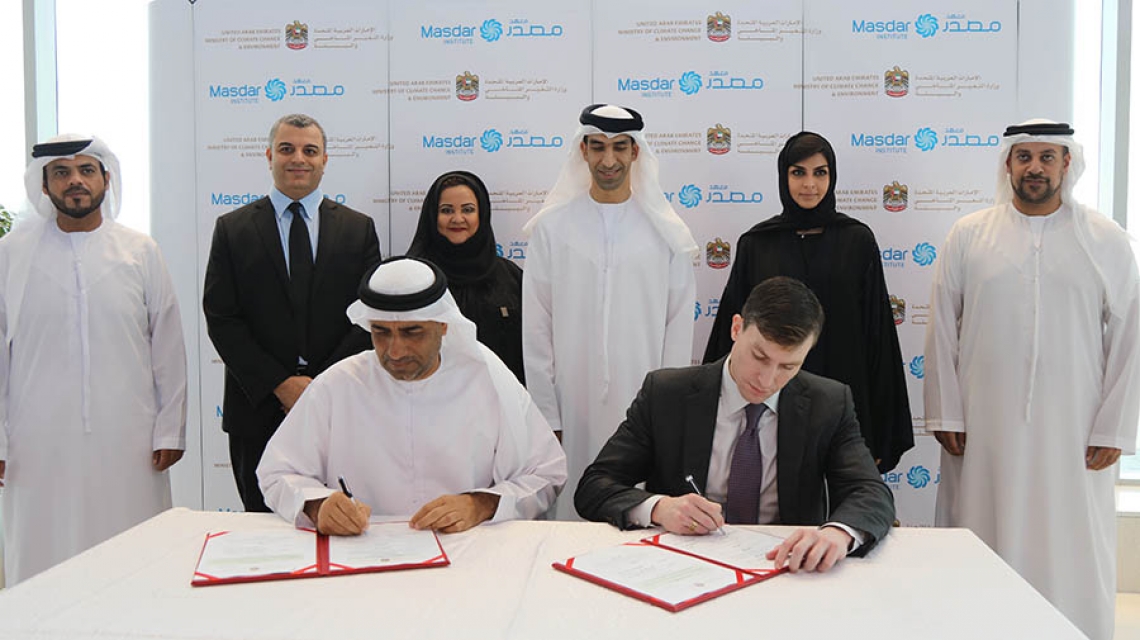
Masdar Institute and UAE Ministry of Climate Change and Environment Sign Agreement for Phase-2 of Air Quality Monitoring Project

The UAE Ministry of Climate Change and Environment and the Masdar Institute of Science and Technology, an independent, research-driven graduate-level university focused on advanced energy, and sustainable technologies, signed a contract for the second phase of an air quality monitoring project in the UAE.

The three-year contract was signed at Sharjah Center for Astronomy & Space Sciences, following the success of Phase-1 of the project that involved Masdar Institute establishing the air quality monitoring system in the UAE. The signing ceremony also marked one of the key initiatives that Masdar Institute was part of during the UAE Innovation Week 2016 activities.

In the presence of His Excellency Dr. Thani Ahmed Al Zeyoudi, UAE Minister of Climate Change and Environment, the agreement was signed by Sultan Abdulla Sultan AlHebsi, Assistant Deputy Minister of the Regions, and Dr. Steve Griffiths, Vice-President for Research, Masdar Institute. Dr Lamya Fawwaz. Vice-President for Institutional Advancement and Public Affairs, Masdar Institute, Dr. Marouane Temimi, Associate Professor, Water and Environmental Engineering program, and Head of Coastal and Environmental Remote Sensing and Modeling Lab, Masdar Institute, and other officials were present on the occasion.

Phase-2 of the air quality monitoring by satellite project involves the utilization of ground-level and satellite data to measure PM2.5 levels in the air and the use of the air quality network to calculate air quality index and facilitate air quality control programs and initiatives. It will also use satellite imagery, numerical models, and ground observations to understand the variability of air quality across the UAE and identify sources and nature of trans-boundary pollutants.

Dr. Behjat Al Yousuf, Interim Provost, Masdar Institute. said: “We are privileged to partner with the UAE Ministry of Climate Change and Environment once again for the second phase of the air quality monitoring project. This partnership represents the strength of Masdar Institute, applying our innovative research to advance the goals of the UAE leadership. Through this agreement we are proud to collaborate with the Ministry to contribute toward developing a prompt and accurate method of monitoring air quality throughout the UAE, which will help us to recognize the environmental goals in the country’s 2021 vision.”

H.E. Dr. Al Zeyoudi said: “Air quality is one of the priorities in the UAE because of its health, economic and environmental impacts, where the National Agenda aims at raising the rate of air quality in the UAE from around 70% at present to 90% by 2021. This joint venture to remotely monitor air quality via satellites, underlines our belief that state of the art technology and innovative practices and tools are an important and essential part of the spectrum of solutions. We have to deal with the growing challenges that we face in our quest to achieve our national aspirations, which include improving air quality. We are relying heavily on employing the latest available technologies and developing innovative solutions that contribute to strengthening our capabilities in this area.”

Phase-1 had already demonstrated the capabilities of using remote sensing satellite techniques to monitor air quality in the UAE, which led to recommending PM2.5 standard for the country. Phase-2 builds upon the previous achievements of the team in weather modeling and remote sensing and expands the same lines of work to ultimately establish a comprehensive and robust system for the monitoring of air quality conditions in the UAE that is based on satellite imagery, numerical models, and in situ observations.

Dr. Marouane Temimi, Associate Professor, Water and Environmental Engineering program, and Head of Coastal and Environmental Remote Sensing and Modeling Lab, Masdar Institute, is leading a team of scientists and graduate students involved in phase 1 and phase 2 of the air quality project. Dr. Temimi also chaired a session at 2016 Air Quality and Noise Control GCC Conference held from 23-24 November 2016 in Abu Dhabi, and discussed a paper titled ‘Measuring and monitoring PM2.5 for continuous public health protection’. His talk covered the utilization of ground-level and satellite data to measure PM2.5 levels in the air and the use of the air quality network to calculate air quality index and facilitate air quality control programs and initiatives.

Dr. Temimi said: “We will use satellite imagery, numerical models, and ground observations to understand the variability of air quality in the UAE. The scope of Phase-2 goes beyond the monitoring goals to achieve a strong capacity building component within the MoCCE air quality department through regular training sessions. The thorough scope of the project also justifies the necessity to establish a long-term project to ensure achieving its interrelated parts.”

The project will provide MoCCE with the necessary tools to continuously assess air quality variability across the country. The aerosol characterization effort will help distinguish between manmade and natural emissions. Satellite imagery will ensure the daily and continuous monitoring of air quality across the country and identify sources and nature of trans-boundary pollutants.

Clarence Michael
News Writer
24 November 2016

Research and Innovations Highlighted During UAE Innovation Week 2016

The Masdar Institute of Science and Technology marked UAE Innovation Week 2016 with a number of dynamic initiatives, including presenting innovative research findings at external events and on campus, academic knowledge sharing with research collaboration partners, and entering into new partnerships for future innovation.

Organized from 20-26 November 2016 by the government, Innovation Week was a concerted effort by the government, private sector and individuals to advance the culture of innovation in the UAE. As a research-based graduate level academic institution focusing on clean energy and advanced technologies, Masdar Institute marked the occasion by showcasing and furthering its contributions to the UAE’s innovation goals.

Dr. Behjat Al Yousuf, Interim Provost, Masdar Institute, said: “Masdar Institute was established by the visionary UAE leadership with the express purpose of supporting and accelerating innovation in the UAE, which is why Innovation Week is such an important event for us. We are proud to share our achievements and expand our collaborative research to help achieve the country’s prosperous and sustainable future.”

As a central event in its celebration of innovation this week, Masdar Institute was a strategic partner for the Innovation Live! Summit 2016, an official anchor platform during the UAE Innovation Week 2016 that gathered over 1,000 senior executives from government and businesses to discuss and further shape innovation in the UAE.

To highlight the role of academic institutions in developing the critical intellectual and human capital required for the UAE’s innovative future, Dr. Al Yousuf was a keynote speaker at the Arab Knowledge Forum organized by the UAE University Leadership Council. There, she discussed the importance of competitive science, technology, engineering and mathematics education in developing the country’s men and women into future innovators.

Additionally, Masdar Institute participated in activities hosted by one of its collaborators, Etihad Airways. Various research projects were chosen for display at the Etihad Innovation Center including an aviation weather decision support system to assist the national airline of the UAE during fog events. Another project focused on developing novel types of lightweight, strong, and damage-tolerant 3D printable materials and composites with applications for aircraft while the third project highlighted advanced urban microclimate energy modeling that could help to understand how urban design, including building retrofits, can contribute to reduced energy demand and provide knowledge applicable to aircraft hangar bays.

Further demonstrating its focus on cutting-edge technologies, Masdar Institute also organized the 8th Joint TwinLab Workshop of the TwinLab 3D Stacked Chip (3DSC) Center. The workshop, which was held in partnership with the Technische Universität Dresden (TU Dresden), provided a platform for knowledge sharing among faculty and students on the topic of 3D chip stacking.

Through its participation at the ‘Innovation Exhibition’ hosted by the Abu Dhabi Police General Headquarters, Masdar Institute contributed to a celebration of the role of innovation in improving daily life in the UAE, as demonstrated by two of its innovative projects relevant to smart cities and security technology, displayed at the event.

Masdar Institute further built on its track record of innovative research this week, as it embarked on the next stage of an air quality monitoring project with the UAE Ministry for Climate Change and Environment that will use satellite imagery and advanced monitoring technologies to provide accurate and prompt air quality information across the country. This project is the next step in the process to ultimately establish a comprehensive and robust system for the monitoring of air quality conditions in the UAE.

Throughout the week, Masdar Institute’s faculty participated in speaking opportunities throughout Abu Dhabi, Dubai and Sharjah, discussing the Institute’s innovative research in areas of strategic relevance to the UAE, including water, renewable and clean energy, and space. During the week, Masdar Institute celebrated the UAE’s progress towards becoming one of the world’s most innovative nations, and the role it continues to play in developing a generation of sustainability professionals who will lead the UAE’s knowledge economy into the future.


Clarence Michael
News Writer
24 November 2016

US Patent Issued for Innovative MI Technology that Secures Electrical Grid during Power Disturbances

A new fault ride through (FRT) transient management system, which can support the electric power grid during grid faults, developed by a team of Masdar Institute researchers has been issued a patent by the United States Patent and Trademark Office.

The patented fault ride-through (FRT) system and transient management scheme, developed by Dr. Mohamed El Moursi, Associate Professor of Electrical Engineering and Computer Science, Dr. Weidong Xiao, Associate Professor of Electrical Engineering and Computer Science and Po Hsu Huang, Electrical Power Engineering MSc alumnus, responds to the need to maintain uninterrupted electrical power supply. Maintaining a constant supply of electrical power is critical to modern day life. Even a temporary stoppage of power can lead to monetary setbacks, health risks, and lost data, which is why maintaining grid performance and reliability is a priority worldwide.

The patented technology was designed in particular to enable grid-connected wind farms to effectively ride through all types of grid faults. However the technology also has potential applications beyond wind energy systems, including as a high-voltage direct-current transmission (HVDC) system based on voltage source converter, which helps to achieve smooth power delivery to grids during grid faults. Consequently, it prevents bottlenecks and overloads in power grids and improves the FRT capability, resulting in greater system reliability and stability of the electric grid.

“The issuance of this US patent reflects Masdar Institute’s commitment to bringing use-inspired research of direct relevance to the UAE’s energy sector through the innovation pipeline, from the research and development stage to inventions and innovations that ultimately are commercialized,” said Dr. Steve Griffiths, Vice President for Research and Interim Associate Provost, Masdar Institute.

“The development of novel FRT systems capable of securing our increasingly complex electrical power grid could ultimately bolster the region’s power sector and further support an increased share of renewable energy across the region,” he added.

The new technology employs a simple configuration, avoiding the need to use multiple components, achieving superior FRT performance response with a smaller physical footprint.

“The new configuration significantly improves the transient response for all types of grid faults, and enables smooth power evacuation from the wind turbine during grid faults, resulting in reduced stress on the mechanical system of the wind turbine and greater system reliability,” explained Dr. El Moursi.

In its potential applications, Dr. El Moursi thinks the technology will be instrumental in helping off-shore operations, including off-shore oil and gas rigs connected to the AC grid, stay connected during AC grid faults with higher system reliability and stability.

Dr. El Moursi and Dr. Xiao have managed a number of successful industrial projects that required deep knowledge and practical understanding of control systems, power electronics and power system operations. They received the Masdar Institute Excellence in Collaborative Research Award in 2012-2013. Their research team has a significant number of publications in top quality journals in the areas of HVDC systems, Flexible Alternating Current Transmission System (FACT) technologies and grid interface schemes of renewable energy systems. In recognition of their international research contributions, Dr. El Moursi was appointed to Editor of IEEE Transactions on Power Delivery, Associate Editor of IEEE Transactions on Power Electronics, Guest Editor of IEEE Transactions on Energy Conversion, Regional Editor of IET Renewable Power Generation and Associate Editor of IET Power Electronics. Dr. Xiao served as Associate Editor of IEEE Transactions on Industrial Electronics.

The associate professors look forward to collaborating with wind turbine manufacturers and HVDC manufacturers to apply their novel configuration and control strategies for practical system implementation.

As of September 2016, the innovative research conducted by Masdar Institute students and faculty has resulted in 14 issued US patents, 73 filed US patent applications, 134 Invention disclosures and more than 960 published articles in peer reviewed journals.


Erica Solomon
News and Features Writer
30 November 2016

MI Faculty and Alumna Seek to Improve Access to Advanced Research Facilities Around the World

A Masdar Institute of Science and Technology faculty member and alumna are working to advance the UAE’s pursuit of scientific breakthroughs by leveraging the massive research potential of some of the world’s most advanced and precious scientific facilities.

Dr. Faisal Al Marzooqi, Masdar Institute Assistant Professor of Chemical and Environmental Engineering and PhD graduate, and Mejd Alsari Almheiri, a Masdar Institute Class of 2014 MSc in Microsystems Engineering graduate and current PhD student at Cambridge University, have established the first UAE Synchrotron Users Association.

A synchrotron is a massive cyclic scientific facility, often larger than a football pitch, where particles are accelerated to produce intense beams of X-rays. These beams can be as much as 100 billion times brighter than the sun, allowing for study of samples in incredible detail, making them extremely valuable research facilities.

“Access to synchrotron facilities has been limited by the fact that the UAE is not associated or holding membership to any synchrotron at the moment. Emirati researchers have previously only been able to access synchrotrons for research when the main investigator of the project is from a contributing or an associate member of a synchrotron facility,” Dr. Al Marzooqi shared.

There are less than 100 synchrotron facilities in the world, and access and use of them is often highly restricted. Gaining access to a synchrotron requires costly membership or rental fees that only the largest technology companies can afford, or competitive selection of a scientific proposal. As such, researchers in developing countries often find it difficult to get their proposals accepted, making paid synchrotron access the only other option available to them.

“Establishing the UAE Synchrotron Users Association is a valuable contribution to the country’s research and innovation ecosystem, as it will give scientists and researchers in the country access to some of science’s most powerful research tools. We are proud of Mejd and Dr. Faisal for their continuing efforts to blaze the trail for science and innovators in the UAE,” said Dr. Steve Griffiths, Vice President for Research and Interim Associate Provost of Masdar Institute.

The purpose of the group is to bring together the UAE’s scientists and synchrotron experts to explore how fields of relevance to the UAE can be advanced through synchrotron science and to develop the synchrotron memberships and associations that will provide access to the limited and highly restricted research facilities. The first meeting of the association, which is being sponsored by nanomaterial characterization technique provider XENOCS, will be held on 6 December at the Dubai Chamber, through the logistical support of the Emirates Science Club.

“We have been pursuing the establishment of this association for nearly two years and it is our hope that this group will enable direct access to synchrotron facilities for UAE scientists, which will aid the country’s pursuit of scientific and industrial excellence,” Al Sari explained.

The meeting aims to identify the needs of UAE scientists for synchrotron research, enumerating the various research techniques and types of synchrotron facilities to which access is needed. The next step for the group is to understand the best synchrotron options in terms of costs and benefits for the UAE.

Synchrotron light is used to advance research and development in many fields, including biosciences, medical research, environmental sciences, agriculture, mineral exploration, advanced materials, engineering, and forensics. It is believed organized synchrotron access would help accelerate the pace of innovation in the seven primary national sectors identified by the UAE National Innovation Strategy — renewable and clean energy, transportation, technology, education, health, water, and space.

Both Dr. Al Marzooqi and Almheiri are experienced in blazing trails in science. Dr. Al Marzooqi became the first UAE national to disclose an invention for a novel technology to enhance desalination techniques using nanotechnology during his doctorate studies at Masdar Institute and won the UAE Pioneers Award 2015 for his invention. AlSari fabricated the first polymer-based Organic Photovoltaic solar cell (OPV) in the UAE during her graduate studies at Masdar Institute, interned at the NASA Ames Research Center in the US during her Bachelor studies, and is a recipient of the President of the UAE’s Distinguished Student Scholarship Program for her current doctoral studies at the University of Cambridge. She was also a contributor to a research project that was conducted using the European Synchrotron Radiation Facility.

The establishment of the UAE Synchrotron Users Association is the latest contribution to the UAE’s research and innovation ecosystem from Masdar Institute and the activities of its faculty, alumni, students and researchers. The Institute has also trained over 250 external researchers in scanning electron microscopy at its Microscopy Suite to support and advance the country’s scientific community. It also launched the UAE Forum on Innovation and Entrepreneurship to connect innovation stakeholders and help improve the innovation ecosystem in the UAE. Masdar Institute was also a founding member of the University Leadership Council (ULC), established to act as a platform for academic leadership to share creative ideas, foster common interests, and spearhead new initiatives for innovation and technology transfer in the region.


Zarina Khan
Senior Editor
07 December 2016

Masdar Institute to Reveal Advanced Technology Innovations at ADSW 2017

Ongoing research initiatives, new project launches, and collaboration ventures, in addition to knowledge sharing sessions in clean energy, water, advanced materials and space systems technology will be the focus of Masdar Institute’s participation in the Abu Dhabi Sustainability Week (ADSW) 2017.

The week-long event is organized under the patronage of His Highness Sheikh Mohammed bin Zayed Al Nahyan, Crown Prince of Abu Dhabi and the Deputy Supreme Commander of the UAE Armed Forces. Anchored by the World Future Energy Summit (WFES), the ADSW 2017 program will feature a series of complementary events, conferences and exhibitions, including the International Water Summit (IWS); the Zayed Future Energy Prize award ceremony; the International Renewable Energy Agency (IRENA) meetings, and EcoWASTE Exhibition.

Dr. Behjat Al Yousuf, Interim Provost, Masdar Institute, said: “Our professors, students and researchers have continued to apply advanced science to solve real-world challenges in the UAE and the world, to great success. We are proud to showcase some of the practical applications of these efforts at ADSW 2017 in areas of strategic importance like water desalination, space technology, aerospace, and energy storage, and we will be announcing agreements to embark on further collaborations to produce more exciting R&D to support a sustainable future.”

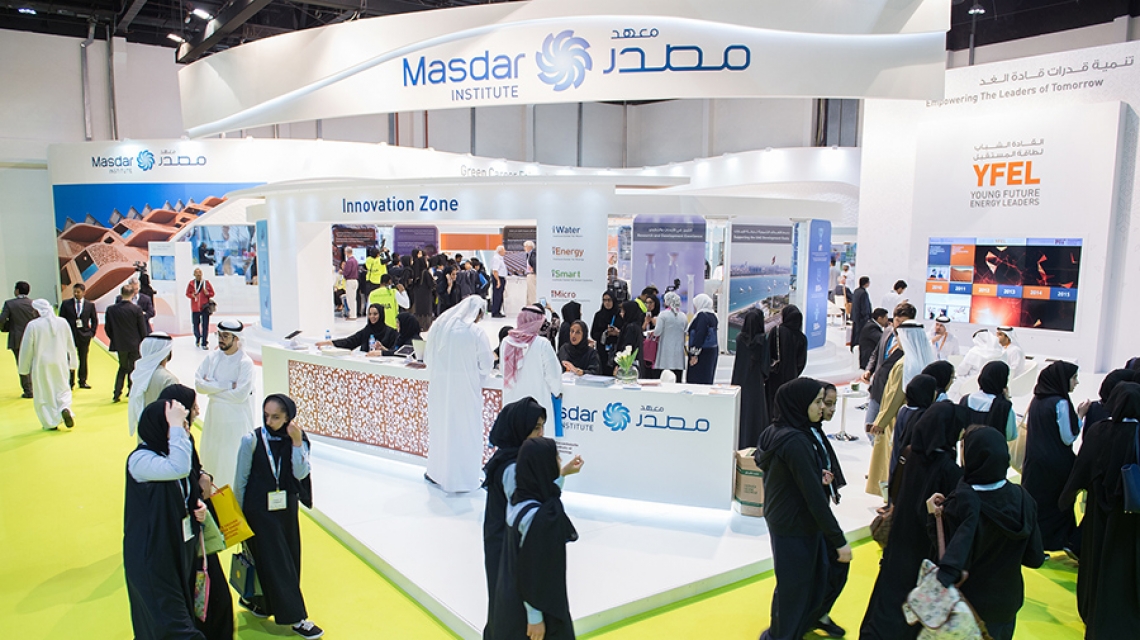
The Masdar Institute stand will comprise the Young Future Energy Leaders (YFEL) ‘theater’ and an Innovation Zone with thematic centers focusing on energy, water, microsystems and smart technologies.

Several Masdar Institute research projects will be showcased at the Innovation Zone. The thematic area on energy will highlight a project using a novel system for molten salt storage of solar energy, which is a joint project with the Massachusetts Institute of Technology (MIT), a second joint project with MIT focused on developing a rechargeable flow battery, and a collaborative project with the UAE Ministry of Energy and SKM Air Conditioning that is focused on efficient cooling. A project leveraging graphene to improve water desalination membranes, a collaborative project with Emirates Steel and the UAE Ministry of Energy to convert steel waste into higher value products, and a project to develop ultra-lightweight foams with aerospace applications will be part of the iWater thematic area.

Projects to be featured at the microsystems area will include a collaborative undertaking with the UAE Ministry of Climate Change and Environment to monitor air quality, a project focused on developing devices for low power sensing and energy harvesting, a collaboration with Takreer to develop smart sensors for achieving greater efficiency in oil refinery reactors. The smart systems area will highlight a project focused on reducing Abu Dhabi’s heat island effect through modeling and simulation studies, a project aimed at joint-optimization of productivity, well-being and energy efficiency into smart building and smart city design and a collaborative project with Huawei focused on leveraging an Internet-of-Things (IoT) platform for smart city applications to demonstrated in Masdar City.

The YFEL theater will host global and regional professionals in energy and sustainability who will seek to encourage the students and youth to ensure the leadership of the future remains rooted in values that reflect a sustainable lifestyle. Masdar Institute faculty will also lead a number of knowledge exchange sessions including workshop[s and panel discussions on energy-efficient buildings, cloud-seeding materials, and Weather Research and Forecasting (WRF) over the UAE.

ADSW visitors and guests also have the opportunity to visit the sustainable Masdar Institute campus, where they can learn about several key research platforms, like the Masdar Institute Solar Platform (MISP) and the Masdar Institute Sustainable Bioenergy Research Consortium’s (SBRC’s) Seawater and Energy Agricultural System (SEAS). The SEAS initiative seeks to address the food security issues of the UAE through cultivating seafood and biomass for fuel using desert lands irrigated by seawater.

Visitors can also learn about the green construction elements of the Masdar Institute campus, including key architectural elements, and an in-depth insight into the master planning, technology and sustainability features of the campus buildings.


Clarence Michael
News Writer
10 January 2017

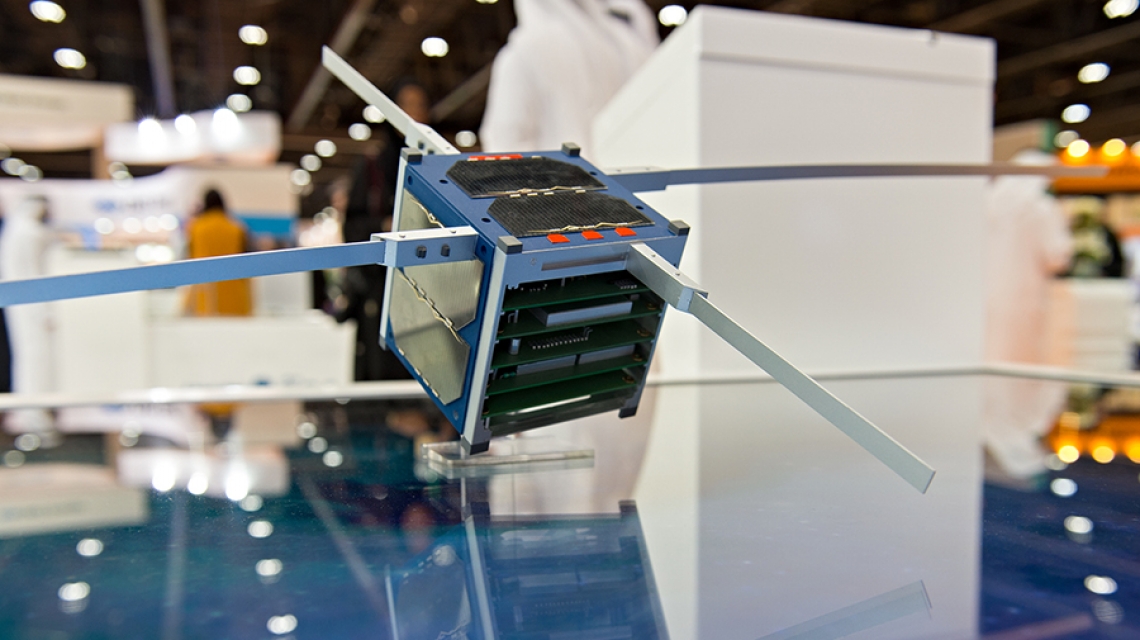
Preliminary Design Review of MI CubeSat Program Completed

Masdar Institute has announced that its CubeSat development program has completed the preliminary design review (PDR), marking a critical milestone for the Institute’s Space Systems and Technology program, which was designed by Masdar Institute faculty with support from Al Yah Satellite Communications Company (Yahsat) and global aerospace manufacturer and defense industry leader Orbital ATK.

Masdar Institute’s first CubeSat program now has only one more phase to clear before full-scale fabrication of the CubeSat can begin. This final stage, the critical design review (CDR), is scheduled for June 2017.

The development of the Masdar Institute CubeSat program, called MYSAT-1, commenced with the first batch of enrolled students in the Masdar Institute Space Systems and Technology concentration in September 2015. MYSAT-1 will be a one Unit (1U), or 10cmx10cmx10cm, CubeSat built with the main objective of training students on the various aspects of designing, building and operating small satellites. The payloads that will be included in MYSAT-1 are a camera to take pictures of the earth and a battery designed and developed at Masdar Institute. MYSAT-1 is expected to be launched into space in 2018.

Dr. Behjat Al Yousuf, Interim Provost, Masdar Institute, said: “The successful completion of the PDR indicates that the MYSAT-1 Program is on track for orbital launch as scheduled. As the first master’s level concentration in Space Systems and Technology in the Gulf region, the program is setting a precedent for future space systems and technology development in the UAE, and represents a first major contribution of Emirati scientists to the country’s indigenous space technology development.”

Mona Al Muhairi, Chief Human Capital Officer at Yahsat said, “The Preliminary Design Review is an industry standard process where engineers review and confirm the overall architecture of the student’s Cubesat design. The program underpins Yahsat’s legacy by developing future talent, evolving the UAE’s space advancement and heightens our role in the industry. Our ultimate goal is to foster the advanced research areas in space science and technology needed to support the UAE national space program with human resources, technical advancements and infrastructure.”

The PDR demonstrates that the overall program preliminary design meets all requirements with acceptable risk and within the cost and schedule constraints and establishes the basis for proceeding with detailed design. After successfully completing the PDR, students are now able to procure the first set of components needed to build a breadboard model, or initial demonstration, of a mini-satellite and finalize the design.

Building a satellite, even that of the scale of a CubeSat, is challenging, which is why project reviews like the PDR and CDR are in place to ensure that the satellite designs will be able to achieve the mission goals. The MYSAT-1 review panels consist of experienced space professionals from YahSat, Orbital ATK, UAE Space Agency, Mubadala and AGI, who provide a critical review of the students’ work and provide constructive feedback.

“It was important to get the students involved in the review process, as the main goal of MYSAT-1 is to train students on understanding the general system engineering practices in space projects,” said Dr. Prashant Marpu, Assistant Professor of Chemical and Environmental Engineering, who contributed to the development of the Space Systems and Technology program. “Now, these students, who are due to graduate in May 2017, will have the engineering and leadership skills needed to advance the UAE’s satellite and space sector.”

Masdar Institute MSc in Computing and Information Science student Mahool Al Hammadi, who is among the first batch of students enrolled in the Space Systems and Technology concentration scheduled to graduate this May, said: “Joining this program gave me an opportunity to gain real-world knowledge about the space industry. I believe that my participation in the MYSAT-1 project improved my management and engineering skills, which will make me a better computer scientist who can contribute in UAE’s future space missions.”


Erica Solomon
News and Features Writer
16 January 2017

Masdar Institute Signs MoU with Thales and MINES ParisTech to Develop Applications for Innovative Airship

Masdar Institute has signed a memorandum of understanding with French company Thales/Thales Alenia Space and French engineering university MINES ParisTech to develop applications for the StratobusTM drone-satellite hybrid airship.

In the presence of the French ambassador to the UAE His Excellency Michel Miraillet, the collaborative agreement was signed by Dr. Behjat Al Yousuf, Interim Provost of Masdar Institute, Cathy Noguez, Director International Affairs, Thales Alenia Space, Olivier Cousergue, Key Account Manager, Air Force/ Air Defense, Thales, and Prof. Thierry Ranchin, Director of the Center Observation, Impacts, and Energy, MINES ParisTech, at the World Future Energy Summit (WFES) 2017, which is being held from 16-19 January at the Abu Dhabi National Exhibition Center (ADNEC) as part of the Abu Dhabi Sustainability Week 2017.

StratobusTM is a type of aircraft currently being developed by Thales Alenia Space together with French and European partners. Functioning effectively as a hybrid between a drone and a satellite, StratobusTMwill be positioned at an altitude of about 20 kilometers over its theater of operations, in the lower layer of the stratosphere, where the air is sufficiently dense to lift the airship balloon and the winds are low. With its involvement in StratobusTM project, Masdar Institute will advance its role in driving cutting-edge innovation in earth observation technologies to bring sustainable benefits, locally, regionally and globally.

The innovative airship will carry technical equipment that allows it to perform surveillance of borders or land or sea sites (video surveillance of offshore platforms, etc.), environmental monitoring (aerosols, pollution, water monitoring, etc.), climate change impacts (desertification process, plantations, aerosols, pollution, water monitoring, etc.) and provide telecommunications services (Internet, 5G). To be fully autonomous, StratobusTM will incorporate innovative technologies such as high efficiency flexible solar cells supplying a strong electrical power on board. Thales Alenia Space and partners plan to launch the first qualification and certification flight in 2020.

Masdar Institute is actively engaged in several ongoing remote sensing research and development projects, and has successfully completed many others. The Institute is presently working on a diverse range of research projects with a special focus on deserts and arid climate such as urban heat island studies; monitoring oil spills, algal blooms, solar resources, and dust storms; national-level water budget; land-atmosphere interactions; modelling of hydro-meteorological variables; and climate change studies.

Jean-Philippe Chessel, StratobusTM Business Line Product manager explained: “Masdar Institute has unique expertise in environmental monitoring research that we believe to be of value in developing the environment applications of StratobusTM to deliver its innovative services, which is why we are excited to work together to discover and develop locally relevant environmental applications for our technology. We believe our partnership with Masdar Institute will result in the development of many useful applications, breakthrough technologies and new knowledge in the field of environmental monitoring.”

Dr. Behjat Al Yousuf, Interim Provost of Masdar Institute, said: “Accurate and timely environmental monitoring is key to ensuring the wellbeing of the UAE and its people. In particular, our ability to observe and measure what is happening in the Arabian Gulf is critical, as it is a major source of our water, trade, tourism and food. StratobusTM represents an innovative way to enhance the UAE’s environmental monitoring ability and Masdar Institute is keen to be part of this exciting new interface of aerospace, communication, and environmental monitoring technologies.”

Masdar Institute has established itself as a leading organization in the region in the field of earth observation, satellite image processing, and atmospheric modeling, and is particularly recognized for its expertise in desert and arid environments.

Thierry Ranchin, Professor and Director of the Observation Center, Impacts and Energy, MINES ParisTech said: “This high-level scientific collaborative research, combining the unique expertise of Masdar Institute, MINES ParisTech and Thales Alenia Space, will prepare the floor for the use of a major innovation for environmental monitoring in UAE and around the world and possibly support most effectively the Climate Risk and Early Warning System (CREWS) climate initiative objectives. The embedded UAE’s users of StratobusTM will benefit from the unique expertise of the team and will be ensured that their needs and requirements will be covered by this new Earth observation means. MINES ParisTech is proud to reinforce its productive collaboration with Masdar Institute in this exciting project.”

As per the agreement Masdar Institute will work to develop the environmental applications of StratobusTM for the UAE. This first six-month phase of the project will focus on defining the needs of the UAE users of StratobusTM. In the second phase, Masdar Institute will be tasked with interfacing with the various UAE users to define their environmental application needs, developing the detailed specifications and technical processes, and defining and developing the specific software algorithms to be included in the StratobusTM control centers, participating in the overall validation of the missions for the benefit of the UAE users.

Zarina Khan
Senior Editor
17 January 2017