
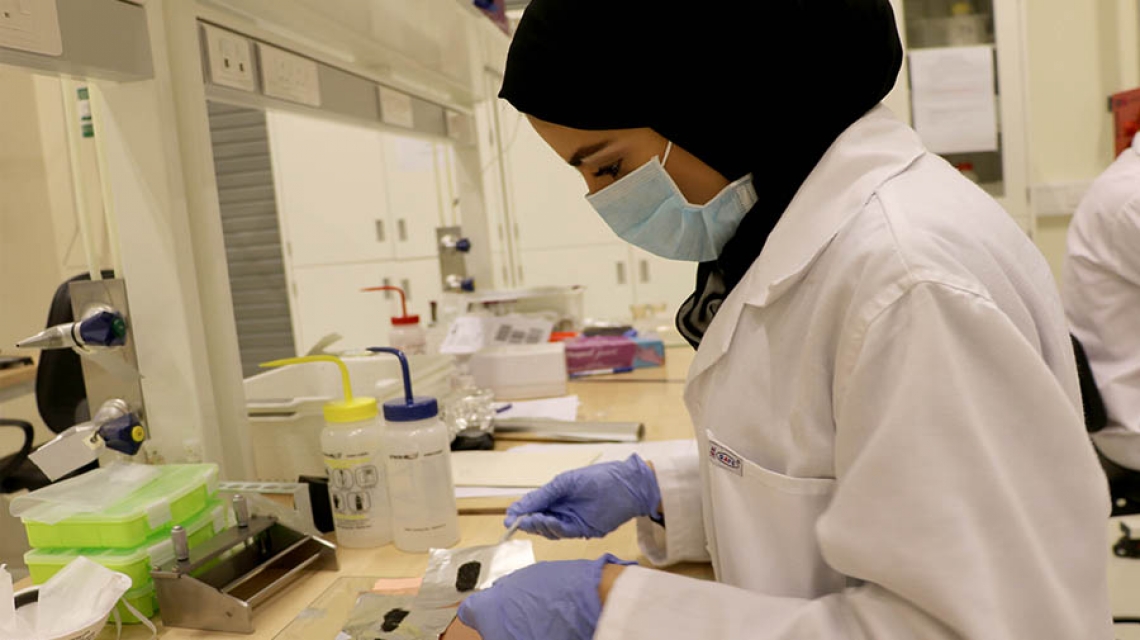
Undergraduate Interns from UAE and Abroad Experience Research and Academic Culture at MI

More than 30 undergraduate students, over half of them UAE nationals, are currently interning with Masdar Institute as part of the annual Summer Research Internship.
 
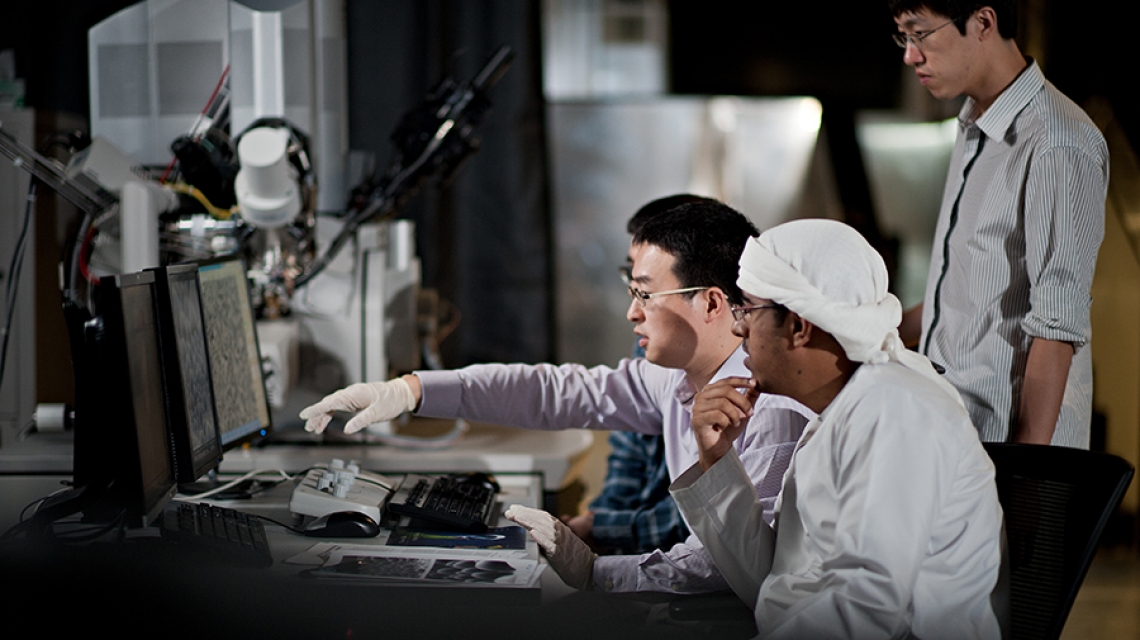
The students are spending their internship participating in research projects in a range of topics including clean energy storage, advanced materials, drinking water characterization, energy and water transport processes in vegetation, and exchange of CO2 and water between vegetation and atmosphere within Abu Dhabi’s Mangrove ecosystem. The six-to-eight week research internship program is offered throughout summer to undergraduate students majoring in science, engineering or computer science at varying dates to enable them have the most beneficial learning experience.
 
Dr. Lamya N. Fawwaz, Vice President for Institutional Advancement and Public Affairs, Masdar Institute, said: “The summer research internship program offers undergraduate students an opportunity to gain hands-on research experience ahead of their graduate studies. It also provides an insight into Masdar Institute’s world class laboratory environment and our faculty experts. We hope the interns take home valuable insight that will help them decide on their next stage of higher studies.”
 
Each year, Masdar Institute faculty organize research experiences for the internship program, coordinated by Dr Kenneth Volk, Outreach Manager, Masdar Institute.  This year’s interns include students from Paris-Sorbonne University Abu Dhabi, New York University Abu Dhabi, Khalifa University for Science, Technology and Research, and UAE University, as well as international universities like Pennsylvania State University. The interns are working on projects under the supervision of Dr. Saif Almheiri, Assistant Professor, Mechanical and Materials Engineering, Dr. Annalisa Molini, Assistant Professor, Department of Chemical and Environmental Engineering, and Dr. TieJun (TJ) Zhang, Assistant Professor, Mechanical Engineering program, and Analytical Chemical Instructor Dr. Grzegorz Brudecki.
 
UAE national intern Sara Ishaq Al Khoori, mechanical engineering student from Khalifa University, is involved in a research project under Dr. Almheiri. The project aims to fabricate electrodes for lithium ion batteries using materials that offer better performance, such as nanostructured silicon (Si).
 
Al Khoori said: “My research project, which is relevant to my major, will help develop higher-performance lithium ion batteries with applications in electronic devices such as smartphones. I am sure the benefits will not only be restricted to the UAE, but extended to the whole world. The faculty and students at Masdar Institute are kind and supportive. I feel privileged to intern here and I am pretty sure I won’t hesitate to join Masdar Institute for graduate studies in the future.”
 
University of Sharjah student Abrar Mohammad Ali M. Abdool Lenjawi, who is majoring in sustainable and renewable energy engineering, is doing her internship at the Analytical Chemistry and Biochemistry ab at Masdar Institute. Under the supervision of Dr. Brudecki, Lenjawi is working on a project focused on local drinking water characterization from 12 June to 4 August. Her research has already produced basic results on composition of water samples collected from three different locations.
 
Lenjawi said: “The internship at Masdar institute’s Analytical Chemistry and Biochemistry (ACBC)  Lab has expanded my knowledge and improved my skills with different lab apparatus. Working in a shared lab also gave me an opportunity to meet students who work in the same apparatus that I am using. I am really thankful to work in such a supportive environment, surrounded by encouraging faculty, lab support staff and students. This experience has given me a clear idea about my next stage after university.”
 
Three Emirati students – one from Pennsylvania State University in the US, and two from University of Sharjah – are currently interning with Dr. Zhang. They are working on different aspects of water and energy transport physics in plant leaves to understand how trees survive a range of climatic and geographic conditions – from the desert or coastal areas.
 
Mouza Alblooshi, an Emirati student from Pennsylvania State University, said: “The summer internship at Masdar Institute proved to be an exciting experience. It fascinated me even more to focus on nanotechnology and gave me in-depth insights into material science in energy and water applications. Working with Dr. TJ Zhang, I was introduced to many new scientific instruments, learned new processes, and had a wonderful opportunity to conduct research. My internship experience in my hometown was incomparable, because as a true hub with state-of-the-art facilities for scientific research, Masdar Institute welcomes talented students from any region.”

Another intern Olla Hassan, a student from University of Sharjah, said: “My summer internship at Masdar Institute was useful. I understood new concepts in physics, learned how to work in chemistry labs safely and accurately, became more creative in solving problems, practiced how to conduct experiments with sensitive samples, and learned how to use new useful devices. I am grateful to with Dr. TJ Zhang for his support during this opportunity.”
 
Paris Sorbonne Abu Dhabi student and member of the Young Future Energy Leaders (YFEL) program Mariam El-Yahyaei interned with Dr. Molini in the Department of Chemical and Environmental Engineering. During her internship El-Yahyaei helped with the installation of an eddy covariance (EC) micro-meteorological station at the Mangrove National Park in Abu Dhabi.
 
The project aims to measure the instantaneous exchange of CO2 and water between vegetation and the atmosphere, and is conducted in collaboration with Environment Agency Abu Dhabi. The atmospheric measurements collected by the Eddy-Covariance station helps to explore possible strategies of carbon storage in natural vegetation across hyper-arid regions like the UAE. Other applications include bio-saline agriculture, as well as climate modeling.

El-Yahyaei said: “The internship at Masdar Institute was a unique experience as it combined field work with laboratory research. I am grateful to Dr. Annalisa Molini, who agreed to be my advisor and made me feel part of her team, always listening to my ideas and discussing them with me. I also thank Masdar Institute PhD student Saverio Perri, who helped me during the internship. Moreover, being a member of the Young Future Energy Leaders (YFEL) program, a Masdar Institute initiative, enabled me to become better in public-speaking, which gave me the confidence to present my work to my professors and Dr. Molini. I feel enriched by this valuable experience.”
 
Each summer, a number of research internships are offered at Masdar Institute for talented undergraduate students. Students interested in applying for a summer research internship must apply for a specific project. Each project has a list of tasks and a recommended academic major required for the intern.

By Clarence Michael
News Writer
03/08/2016
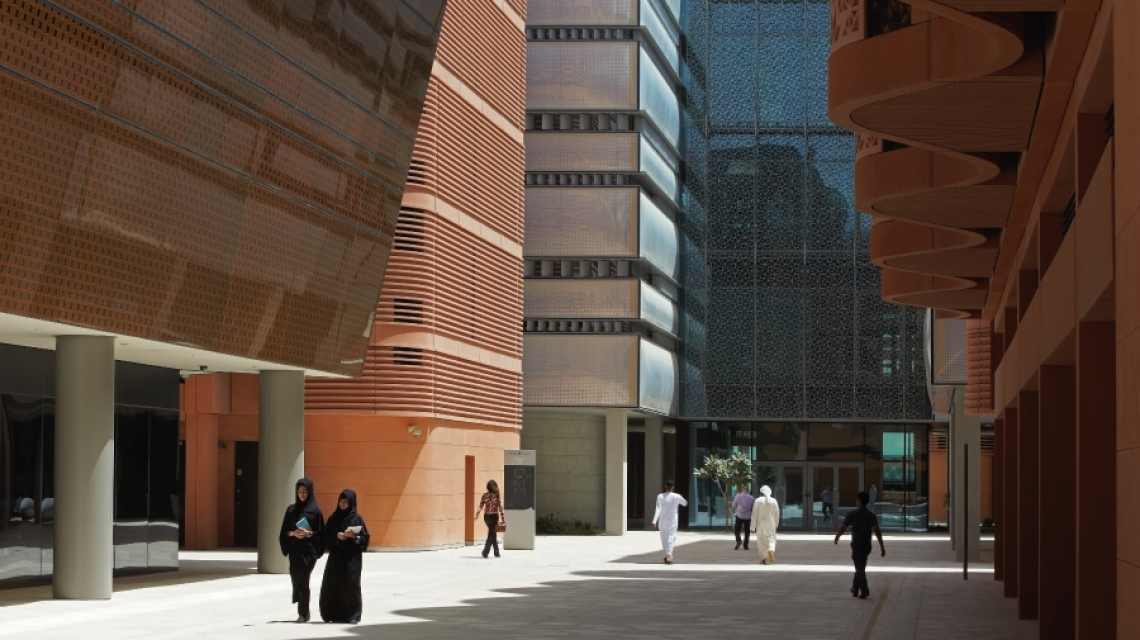
Masdar Institute Ranks First in UAE and Among Top 20 Western Asian Academic Institutions in 2016 Nature Index

The Masdar Institute of Science and Technology has been ranked first in the UAE and 20th among Western Asian academic institutions in the Springer Nature Index 2016 annual rankings.
 
Masdar Institute is also the only academic institution from the UAE to be ranked within the Top 50 institutions in the Nature Index 2016 Western Asia list, demonstrating its high quality research outputs.

Dr. Steve Griffiths, Vice President for Research and Associate Provost, Masdar Institute, said: “The Nature Index 2016 rankings reaffirm our status as one of the pioneering institutions for scientific research in the region. As the ranking indicates, Masdar Institute’s research findings are increasingly found in the world’s leading scientific journals. The Nature Index recognizes the world’s best scientific research and this is what Masdar Institute strives to produce.”
 
The Nature Index is a database of author-affiliation information collated from research articles published in an independently selected group of 68 high-quality science journals. The Index, which tracks the research of more than 8,000 global institutions and 150 countries, provides a close to real-time proxy for high-quality research output at the institutional, national and regional level. Responses from over 2,800 individuals to a large scale survey were used to validate the selections. These 68 journals account for nearly 30% of total citations to natural science journals, according to Springer Nature, a leading global research, educational and professional publisher that owns Nature Research.
 
The 2016 list is based on Nature Index’s database of research articles from 1 January 2015 to 31 December 2015. The Nature Index ranking is based on a university’s overall contribution to scientific publications in the 68 leading scientific journals that are part of the index. Rapid advancement in the overall index ranking has led to Masdar Institute additionally being ranked 8th in the 2016 Nature Index ranking of Rising Stars institutions from the Middle East & West Asia. Notably, Masdar Institute was the only university from the UAE to receive this distinction.

This year Masdar Institute also made a significant jump in the 2016 US News and World Report Best Arab Region Universities Rankings, from 23rd place to 14th place. The research-based institution has also edged up to fifth spot in the ‘Energy’ field, eighth in Chemistry, and ninth in Engineering, while being ranked 10th in ‘Environmental Science’ and ‘Materials Science’. In the ‘Academic reputation’ category, Masdar Institute is ranked eighth by US News and World Report.
 
Clarence Michael
News Writer
08 August, 2016


Masdar Institute Contribution to Human and Intellectual Capital Development Highlighted at UN World Youth Day Event

Developing the UAE’s young people into critical thinkers and future leaders who respond to the country’s need for intellectual and human capital in clean energy, water and environment, advanced materials and other sustainable technology-related sectors is a key focus of the Masdar Institute of Science and Technology

The Institute’s highly-focused social, economic and scientific development focused activities are also aimed at helping the UAE achieve the Millennium Development Goals (MDGs) as specified by the United Nations, said Hamza Kazim, Vice President for Operations and Finance, Masdar Institute.

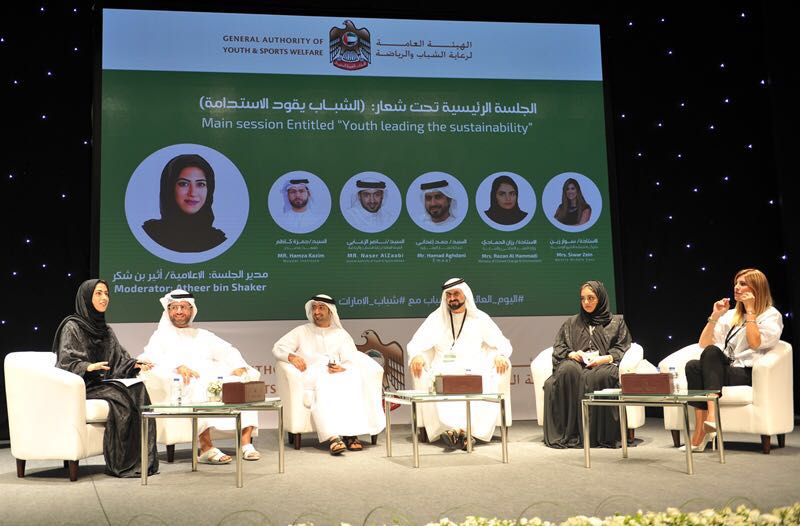
Kazim shared this messaged at a panel titled ‘Youth Leading the Sustainability’, organized by the UAE General Authority for Youth and Sports Welfare in Dubai to commemorate the 2016 UN World Youth Day celebrations on 10 August.

Her Excellency Shamma bint Sohail Faris AlMazrui, Minister of State for Youth Affairs, was also present at the event, which was themed “The road to 2030 to eradicate poverty and achieve sustainable development”. Envoys from the UN Secretary General, the Secretary General of Youth and Sport in the UAE, the Resident Representative of the UNDP, and several other officials were also in attendance.

World Youth Day celebrations in the UAE were organized in partnership with the envoy of the Secretary General of the UN, the Office of the Youth Program at the United Nations Development Program (UNDP) and a number of other stakeholders. World Youth Day is an important international event to highlight the aspirations and hopes of the world’s young men and women and facilitate discussion on how youth can be better integrated and empowered to support the development of their communities.

Kazim spoke about the recent visit of His Highness Sheikh Mohammed bin Rashid Al Maktoum, Vice President and Prime Minister of the UAE and Ruler of Dubai, to the Masdar Institute, where a number of UAE national students presented their research projects of relevance to the UAE’s strategic goals and development needs, particularly relating to water, energy and advanced materials.

The projects included 3D printing research, microbeads for soil enhancement, microalgae for use in nutritionals and high value chemical production, bioenergy, as well as fog, dust and solar monitoring by Masdar Institute’s Research Center for Renewable Energy Mapping Assessment (ReCREMA). A special presentation also highlighted Masdar Institute’s Master’s Degree Concentration in Space Systems and Technology.

These projects are the result of Masdar Institute’s collaborative ventures with leading local organizations such as the  Environment Agency – Abu Dhabi (EAD), Dubai Supreme Council of Energy (DSCE),  Mubadala’s Strata Manufacturing, Etihad Airways, as well as global companies such as The Boeing Company, TAKREER, Safran and GE.

Kazim shared various youth development initiatives that Masdar Institute has supported. In January 2011 the UN Secretary General Ban Ki-Moon addressed members of the Young Future Energy Leaders (YFEL) program, an outreach initiative led by Masdar Institute to raise the awareness of students and young professionals in the fields of renewable energy and sustainability.

Kazim said: “Masdar Institute was established as an ongoing collaboration with the Massachusetts Institute of Technology (MIT), to serve as a ‘knowledge-hub’ for the region and works towards creating indigenous R&D capabilities, while addressing regionally-relevant issues. Since inception, we have collaborated with local and international organizations including the UN for sustainable technology research and innovation, achieving outcomes that are relevant to the UAE and the region.”

The Institute’s efficacy as a knowledge hub was validated by its advancement to the 14th spot overall in the 2016 US News and World Report Best Arab Region Universities Rankings, up from the 23rd position last year. The list covers 124 universities spread across 18 countries. Masdar Institute has also been ranked first in the UAE and 20th among Western Asian academic institutions in the Springer Nature Index 2016 annual rankings, which is a ranking systems based on contribution to publications in leading scientific journals.

Kazim concluded: “With such key contributions towards youth and community development, Masdar Institute remains one of the leading academic institutions that supports the UAE’s drive towards creating a knowledge-based economy.”

Clarence Michael
News Writer
10 August 2016


Masdar Institute Hosts Student Orientation for Fall 2016 Enrollees

The Masdar Institute of Science and Technology, an independent, research-driven graduate-level university focused on advanced energy and sustainable technologies, today announced that it organized an orientation program for 172 new local and international students for the fall 2016 semester.

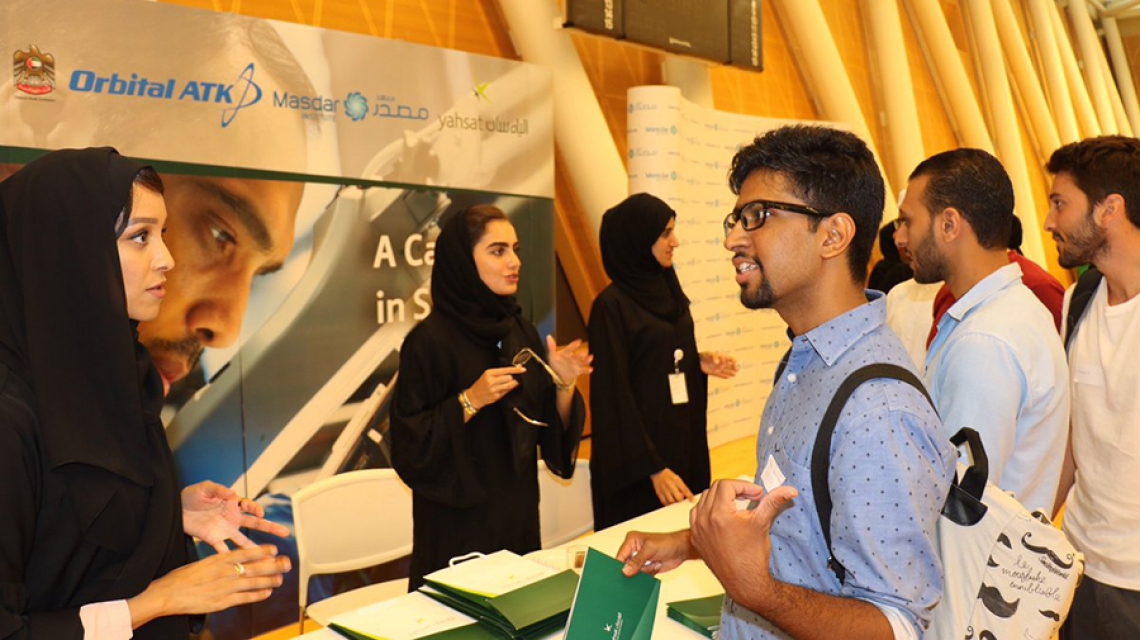
The three-day program, held from 22 August to 24 August 2016, provided the new students an opportunity to learn about Masdar Institute’s academic and campus offerings. UAE satellite operator Yahsat was also on hand to promote Masdar Institute’s Master’s Concentration in Advanced Space Systems and Technology. Yahsat is a sponsor of the concentration and provides expertise for its CubeSat miniature satellite development program.

This year 172 new students — 118 UAE National and 54 international students representing 23 countries — have accepted the offer to attend Masdar Institute. This brings the institute’s expected total enrollment to 468 students, increasing the expected percentage of UAE Nationals attending the Institute from 43% in 2015-2016 to approximately 50% in 2016-2017

Dr. Behjat Al Yousuf, Interim Provost, welcomed the new students in Masdar Institute’s nine master’s and interdisciplinary doctoral program.

Dr. Abdullah Al Hefeiti, Acting Dean of Students and Dean of Library, addressed the new students at the event, and said: “By enrolling with Masdar Institute you are contributing to not only your own bright future, but a brighter and more sustainable future for all. I urge you to make the most of your time with us through studies, research, and community activities.”

Other Masdar Institute senior management, including Vice President for Research and Interim Associate Provost Dr. Steve Griffiths, and Dean of Academic Programs Dr. Youssef Shatilla, gave the students an insight into the functions and services provided by their various offices.

The Student Affairs Office, which organized the event, discussed campus life, extracurricular activities, a newly-opened athletics office, and other aspects of student life. The Research Development Office and Technology Transfer Office also presented information on invention, innovation and development at Masdar Institute. This year Masdar Institute’s four academic departments joined the orientation program to present an overview of their degree offerings and research themes, which culminated with an open question and answer panel session.  

The new student entrants were also informed about internship opportunities, the Young Future Energy Leaders (YFEL) Program, the Ambassadors Program, and other personal and intellectual development offerings available to them. Six UAE national students also presented about their internship experiences in Japan and at the Massachusetts Institute of Technology.  

The Masdar Institute orientation program is held twice a year to welcome and inform new students about their new home and how best they can take advantage of their institute experience. The three-day program closed with placement exams for the students, to determine their classes for the coming year.  

Masdar Institute offers full scholarships to admitted students who come with high academic credentials. The institution’s academic programs and research offerings respond to the needs of the UAE, the region and the wider global community.

Zarina Khan
Senior Editor
29 August 2016


Masdar Institute Develops Novel Biodiesel Chemical Reactor

A team of researchers from the Masdar Institute of Science and Technology, in collaboration with Tadweer – Abu Dhabi’s Center of Waste Management, are testing an integrated chemical reactor they have designed that produces high-quality biodiesel from fats, including waste cooking oil, in less time and with less energy and potentially lower cost than traditional biodiesel reactors. 

Masdar Institute’s Dr. Isam Janajreh, Associate Professor of Mechanical and Materials Engineering, heads the Tadweer-sponsored project that also includes MSc in Mechanical Engineering student Mohammed Hussain and Masdar Institute MSc alumna Tala El Samad.

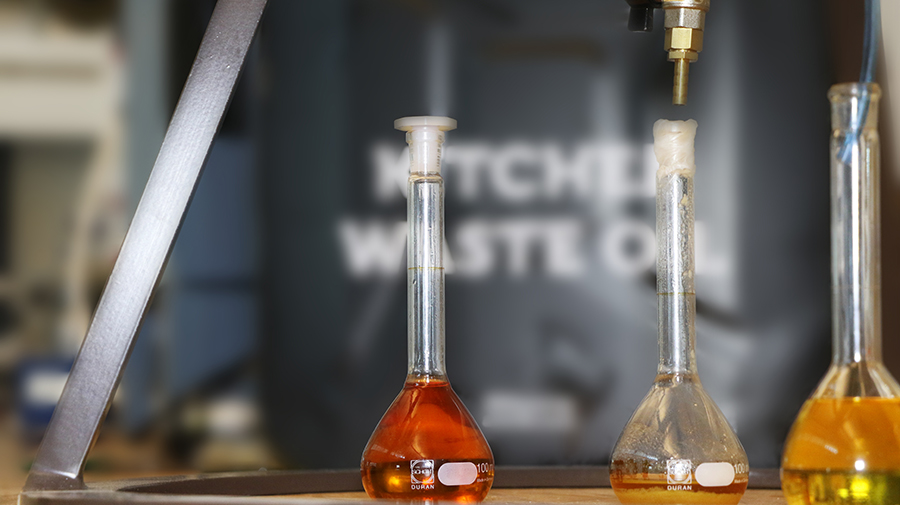
The biodiesel reactor developed by the Masdar Institute team integrates mixing by soundwave agitation, flow mixing by a static mixer, and separation, recovery, and purification for efficient conversion of waste cooking oil into its two main components — biodiesel and glycerol. This process yields much less of the unwanted glycerol and more biodiesel than the high-power mixing method employed by previous reactors and conventional industrial methods.

“The ultrasound method makes biodiesel quickly in a continuous process. Our reactor can produce just as much biodiesel as the large conventional chemical reactors, but at a much smaller spatial footprint,” Hussain explained. Hussain and El Samad co-authored two papers on the optimized biodiesel reactor that were published in the journal of Applied Energy and the International Journal of Thermal & Environmental Engineering, along with three papers that were presented at international conferences.

The biodiesel reactor can produce 50 liters of biodiesel per hour continuously, while a typical industrial-sized reactor may produce 500 liters every 10 hours in a batch process, which is a slower type of manufacturing process that produces products in groups instead of in a continuous flow. Although the production quantities possible are similar, the Masdar Institute reactor has a much smaller physical footprint (occupying 85% less area than conventional reactors) and very importantly can produce a high quality biodiesel.

“We determined the biodiesel’s quality by running it through qualitative tests, then followed with engine performance testing. We found that the biodiesel produced by our reactor generated less soot, nitric oxide, carbon dioxide and sulfur dioxide when compared to the biofuel produced by conventional reactors and petroleum-derived diesel with no compromises in power,” Dr. Janajreh said.

Because of the reactor’s small and compact size, the production capacity is suitable for a large number of organizations that have an interest in sustainable waste transformation. Furthermore, volume can be easily scaled up by linking several reactors together in series to produce the desired quantity of biodiesel.

“Maintaining the size and compactness of the reactor is important, as smaller reactors find more applications,” explained Dr. Janajreh. “This reactor is also fit to convert algal oil, non-edible vegetable oil and tallow from meat processing facilities. We have a long-sighted vision of this innovative reactor where it finds significant international application,” he added.

Biodiesel is a renewable, non-toxic and biodegradable fuel that does not contain sulfur or related compounds that have negative environmental and health impacts. That is why biodiesel has been targetted to play a role in reducing carbon emissions worldwide. The potential of biodiesel for the UAE is particularly good given that the country produces an estimated 20 liters of waste cooking oil per person per year that could be transformed into biodiesel.

Currently, the Masdar Institute team is leveraging their novel chemical reactor to convert the waste cooking oil collected through a community initiative in Abu Dhabi’s Al Raha Gardens into biodiesel.

The next step for Hussain and Dr. Janajreh is to expand their waste cooking oil collection efforts to other communities across Abu Dhabi. Such efforts, the research team believes, could be pivotal to helping the UAE achieve its sustainable energy goals.


Erica Solomon
News and Features Writer
31 August 2016


Masdar Institute to be Sustainable Energy Partner for “Innovation Live!”

Masdar Institute has become the Official Sustainable Energy Partner of “Innovation Live!”, an initiative aligned with the UAE National Innovation Strategy and Vision 2021.  

Facilitated by MEED, “Innovation Live!” responds to the vision of H.H. Sheikh Mohammed bin Rashid Al Maktoum, UAE Vice President, Prime Minister and Ruler of Dubai, for an innovative and efficient future.  

Masdar Institute Vice President for Research and Interim Associate Provost Dr. Steve Griffiths said: “As one of the UAE’s leading research and innovation-focused universities, with a particular commitment to developing clean energy and sustainable technologies, Masdar Institute is pleased to be a part of “Innovation Live!”. We believe innovation is a critical component to not only the UAE’s knowledge economy transformation, but also to achieving sustainability globally. We look forward to participating in “Innovation Live!” and the new ideas and initiatives that it inspires.”  

Nisha Ramisetty, Director of Innovation Live, said: “MEED is pleased to partner with Masdar Institute on this exciting initiative focused on bringing government and business together to enable innovation and ultimately drive economic growth. We continue to collaboratively develop the initiative with government and private sector leaders to bring an interconnected innovation ecosystem to life, with sustainable energy as a crucial piece of the puzzle.”  

“Innovation Live!” is to feature two main offerings – the Watercooler Challenges and the “Innovation Live! Summit”. The Watercooler Challenges are brainstorming sessions designed to identify and solve specific sector based challenges that create barriers to innovation across the government and private sector while the summit, scheduled for 21 November at the Jumeriah Beach Hotel in Dubai, is intended to be an anchor event of the UAE Innovation Week and is designed to align government and private sector to address challenges and facilitate change. It is estimated that 600 selected senior representatives will be attending the summit.

UAE Innovation Week, which takes place this year on 20-26 November, is a nationwide celebration of innovation to help create a culture of innovation and strengthen the UAE’s position as a global hub for innovation. This year the week is to feature more than 850 activities and initiatives across the UAE.  

As part of the MoU, Dr. Griffiths will act as plenary speaker at the “Innovation Live! Summit”. Masdar Institute will also host a number of the Sustainable Energy watercooler challenge sessions, and lead general engagement and outreach for the two main features.  

The Watercooler Challenges kicked off this month, and will be held monthly through November 2016. They will feature independent groups composed of senior government and private sector experts who meet monthly to develop critical solutions which will ultimately shape policy. Each Watercooler Challenge will have one or more relevant government patrons committed to ensuring that the discussions are implementation focused.  

The first Watercooler Challenge, hosted at Masdar Institute’s Innovation Center on 21 August, was on the topic of Sustainable Energy. It was attended by Regulation and Supervision Bureau Executive Director Graeme Lindsay Sims; Ministry of Energy Regulation and Supervision Department Director Hind Almutawa; Masdar Institute Vice President for Research Dr. Steve Griffiths; Environment Agency Abu Dhabi Abu Dhabi Sustainability Group Director Huda Al Houqani; EY Clean Energy and Sustainability Services (MENA) Partner Gus Schellekens; Dubai Energy and Water Authority Innovation and Future Manager Luciana Soledad; Atkins Head of Middle East Power & Renewables Callum McLaurin; PriceWaterhouseCoopers Partner Hannes Reinisch; and Eversheds Head of Projects and Partner Gurmeet Kaur.  

The UAE Vision 2021 was launched in 2010 with four key goals for the UAE’s future: ‘An ambitious and confident nation grounded in its heritage’, ‘A strong union bonded by a common destiny’, ‘A competitive economy driven by knowledgeable and innovative Emiratis’, and ‘A nurturing and sustainable environment for quality living’.  

The National Innovation Strategy was announced in 2014 with a goal of stimulating innovation in seven sectors in the UAE where innovation is key to excellence: renewable energy, transport, education, health, technology, water and space. These are sectors that Masdar Institute directly and indirectly responds to through its academic and research efforts.

Zarina Khan
Senior Editor
06 September 2016


Convergence Anticipated between Energy Sector and Intelligent Systems

The convergence of energy systems with connected, intelligent information systems is opening up a range of opportunities for new energy sector business models and value propositions, said Dr. Steve Griffiths, Vice President for Research, Masdar Institute.  

Dr. Griffiths shared this message at a panel discussion titled ‘Megatrends That are Driving Today’s Innovation and Redefining Business Models’ during the Global Innovation Summit 2016, which was held on 21 September in Dubai.

The panel was moderated by Kazi Monirul Kabir, Chief Innovation Officer, Spider Digital Innovations. Other panelists included Nadine Samra, Chief Technology Officer, Zee Group; Akshay Lamba, Chief Information Officer, Deloitte Middle East; Siddharth Wadhera, Innovations Lead, Aster DM Healthcare; and Tim Jones, Professor, University of Cambridge, UK. The invitation-only conference focused on the business impact of disruptive information and communication technology innovations that are transforming leading businesses.  

Dr. Griffiths said: “The energy sector has historically been one of the least innovative due to an emphasis on leveraging proven technologies to supply energy reliably and at least cost. Now, however, things are changing quickly due to a few key trends such as diversification of energy resources, localized energy production with energy consumers now in the mix, intensive focus on  efficiency improvements in both energy supply and energy demand, as well as R&D advances in complementary technologies, particularly information technology, materials science and biological science.”  

He added: “In the information sciences, it is really advancements in sensing technologies, communication networks, data storage and computational power that is creating a bridge between the world of physical objects and the world of information to drive innovation in the energy sector. As a specific example, the oil and gas sector is being transformed by digital technologies collectively referred to as the digital oilfield.”  

Digital oilfield technology helps oil and gas sector maximize recovery rates, reduce or eliminate non-productive systems and improve efficiency across workflows. Growth in the oil and gas sector is now strongly supported by autonomous systems, big data analytics, augmented reality systems and other such technologies.  

Speaking about the current ‘digital excitement’ in clean energy related to intelligent buildings and autonomous transportation, Dr. Griffiths remarked that the evolution of smart cities is essential for the Gulf Cooperation Council (GCC) countries because the rate of urbanization in the region is extremely high. That requires buildings and transportation to fit into a holistic smart city approach.  

Dr. Griffiths cited the example of the Dubai Autonomous Transportation strategy that targets 25% of all personal transport trips to be via autonomous vehicles by 2030, with particular focus on public transport and last mile journeys. Hence, he predicted, that Dubai and the broader UAE would be at the forefront of integrating intelligent transportation systems and buildings into the fabric of smart cities.


Clarence Michael
News Writer
21 September 2016


Masdar Institute to Co-Host 22nd SolarPACES Conference in Abu Dhabi

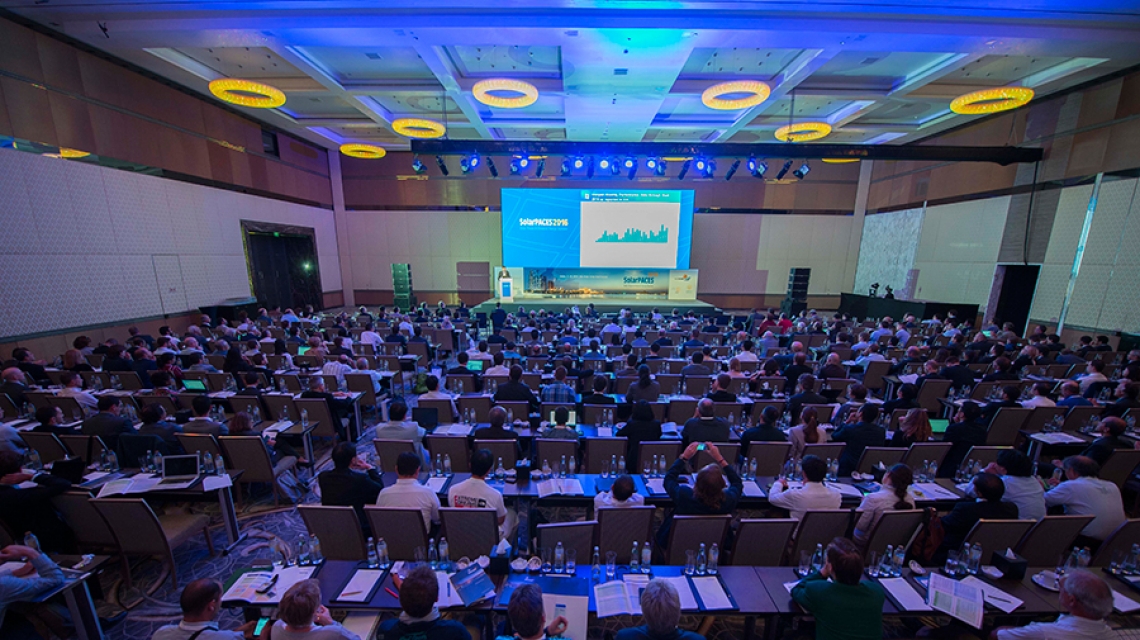
More than 500 stakeholders from the academia, industry and government will be gathering to network and exchange information at the 22nd Solar Power and Chemical Energy Systems (SolarPACES) Conference that will be co-hosted by Masdar Institute in Abu Dhabi.

Masdar Institute shares the role of national host for the conference with the UAE Ministry of Energy. The event, to be held from 11-14 October 2016 at the Jumeirah at Etihad Towers, will include around 300 technical contributions (oral and poster) and 30 plenary talks by leading experts. It will be a forum for industry, research, political and financing stakeholders to discuss the future of concentrating solar energy, while offering an insight into new developments in technology, and the market presented by top experts in the field.

The conference is organized annually by SolarPACES, an international cooperative network that brings together experts from around the world and focuses on the development and marketing of concentrating solar power systems. It is one of a number of technology collaboration programs (TCPs) managed under the umbrella of the International Energy Agency to help find solutions to worldwide energy problems.

This year, Masdar Institute faculty and students are scheduled to present 17 abstracts. A total of 500 abstracts have already been submitted for the event according to the conference organizers, of which about 180 will be presented as oral presentations and about 200 as posters.

Dr. Steve Griffiths, Vice President for Research, Masdar Institute, said: “As the joint national host with the UAE Ministry of Energy, we are privileged to bring this key CSP conference to Abu Dhabi, which has become a key hub for clean and renewable energy. Solar power is the primary renewable energy resource for the Arabian Gulf region and will play an increasingly important role in meeting regional energy demand. This conference is central to knowledge exchange about solar energy and supports in continued innovation in the sector.”

The event will include the SolarPACES 2016 Technology Innovation Award that will acknowledge innovations relevant to rapid deployment of concentrated solar power (CSP) technology, and the SolarPACES 2016 Lifetime Achievement Award, which will honor the personal contributions of an individual throughout a major phase of his/her life to the successful development and implementation of CSP systems. A technical tour will include a visit to the 100MW Shams-1 CSP plant and the Masdar Institute Solar Platform (MISP).

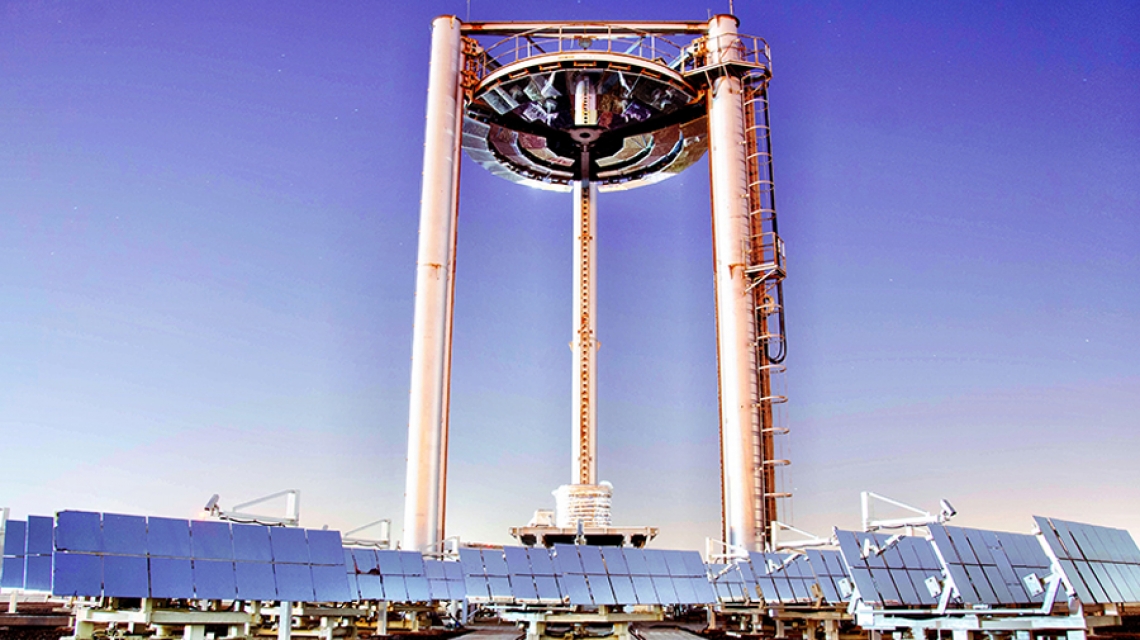
Masdar Institute continues its research initiatives in CSP technology through the MISP. A team of seven engineers and technicians currently working at the thermal energy storage (TES) pilot facility to demonstrate its performance over many charge/discharge cycles.

Dr. Nicolas Calvet, Assistant Professor, Thermal Energy Storage Research Group Leader and Chair of MISP, said: “With our research collaborator EnergyNest, we are testing a new kind of high temperature concrete TES. Currently, we are operating the plant 24 hours a day to cumulate a certain number of cycles of charge and discharge between 290°C and 390°C. Up to now, we have reached more than 100 cycles. The goal is to demonstrate the durability of the system on a long term basis.”

Last year, Masdar Institute faculty and students presented 14 abstracts – nine oral presentations and five posters – at the 21st SolarPACES Conference in South Africa. A 15th abstract was also submitted by Masdar Institute in collaboration with Shams Power Company, builder and operator of one of the world’s largest concentrated solar power plants, in the UAE.


Clarence Michael
News Writer
02 October 2016

Masdar Institute Showcasing Sustainable Energy Innovations at WETEX 2016

Key Masdar Institute research projects in waste conversion, solar cells, and thermal energy storage and systems are being showcased at the Water, Energy Technology and Environment Exhibition (WETEX) 2016 in Dubai.

The 18th edition of WETEX is being held from 4-6 October at the Dubai International Convention and Exhibition Center under the patronage of His Highness Sheikh Hamdan bin Rashid Al Maktoum, Deputy Ruler of Dubai, UAE Minister of Finance, and President of the Dubai Electricity and Water Authority.

Masdar Institute is showcasing key research projects and presenting two seminars as part of the conference’s Innovation Platform. The projects include a novel biodiesel reactor that converts waste cooking oil into high-grade biodiesel at a much lower cost than conventional reactors, an innovative multi-junction solar cell that leverages a unique “step-cell” design to harness more sunlight, which in turn, can produce more energy, and a novel thermal energy storage system developed by researchers at Masdar Institute and Massachusetts Institute of Technology (MIT) to absorb and store thermal energy using molten salt in a single tank system.

Dr. Ammar Nayfeh, Associate Professor, Department of Electrical Engineering and Computer Science, is presenting a seminar on ‘Ultimate Multi-Junction Solar Step-Cell,’ while Dr. Isam Janajreh, Associate Professor, Department of Mechanical and Materials Engineering, will be speaking on ‘Waste Cooking Oil to Biodiesel in Al-Raha Community: Social, Technical &  Economics’. Dr. Nicolas Calvet, Assistant Professor, Department of Mechanical & Materials Engineering, Chair of the Masdar Institute Solar Platform, and his team are showcasing two projects at the Innovation Hall. Master’s student Mohammed Hussain and Post-Doctoral researcher Dr. Sabina Abdul Hadi will be present with Dr. Ammar and Dr. Janajreh, respectively.

Dr. Behjat Al Yousuf, Interim Provost, Masdar Institute, said: “Sustainable solutions have become essential in today’s world as the global community seeks to overcome climate change. Our participation in WETEX 2016 will not only highlight our research outcomes but will also offer an opportunity for industry stakeholders to learn about the collaborative R&D expertise we offer to local industries. We believe the resulting knowledge exchange will benefit those in the UAE’s strategic sectors exploring sustainable solutions.”  

As a sustainability and research-oriented institution, Masdar Institute continues to pioneer research of relevance to the UAE and the region. As of September 2016 the research-based institution has filed 73 patent applications and been issued 14 patents from the outcomes of its research projects.  

In line with the UAE’s focus on developing strategically important sectors, Masdar Institute drives its research in strategic areas including clean energy production, sustainable energy and water desalination, climate and the environment, microelectronics and advanced materials.

WETEX brings together solutions providers, investors, decision makers in government departments, consumers, and business partners from private and public sectors, providing a platform to discuss and review all topics relevant to sustainability, environment and natural resources preservation.


Clarence Michael
News Writer
04 October 2016

22nd SolarPACES Conference Opens in Abu Dhabi

The 22nd Solar Power and Chemical Energy Systems (SolarPACES) Conference, co-hosted by Masdar Institute of Science and Technology and the UAE Ministry of Energy, opened today in Abu Dhabi.  

The delegates were welcomed by His Excellency Ahmed Mohamed AlKaabi, Assistant Undersecretary for Petroleum, Gas and Mineral Wealth, UAE Ministry of Energy. Dr. Lamya N. Fawwaz, Vice President for Institutional Advancement and Public Affairs, Masdar Institute, addressed the gathering. In the opening session, the keynote address was given by Fahad Al Hammadi, Director of Climate Change, UAE Ministry of Climate Change and Environment. More than 400 stakeholders from the academia, industry and government have gathered for the event that runs from 11-14 October 2016 at the Jumeirah at Etihad Towers.

Dr. Manuel Blanco, Chairman of SolarPACES, and Dr. Luis Crespo, President of the European Solar Thermal Electricity Association (ESTELA), also welcomed the delegates. Dr Crespo later headed the plenary session on ‘Concentrated solar power (CSP) Market Trends’. Masdar Institute faculty and students are scheduled to present 17 abstracts. A total of 500 abstracts have already been submitted, while about 180 abstracts are scheduled to be presented as oral presentations and about 200 as posters.

The event highlights the UAE’s role in ensuring that the most innovative solar technologies with the desired economic and environmental impact are being developed. It further emphasizes Masdar Institute’s collaborative research activities, especially the Institute Center for Energy (iEnergy) and the Masdar Institute Solar Platform (MISP) which continue to contribute to the development of solar technologies that respond to the region’s challenges.


Clarence Michael
News Writer
11 October 2016

New Strata Lab at Masdar Institute to Intensify Advanced Materials Manufacturing Research in Aerospace Production Lines

Masdar Institute and Strata Manufacturing PJSC (STRATA), a composite aero-structures manufacturing facility based in Al Ain, have announced they have intensified their collaboration efforts by establishing the Strata Lab at Masdar Institute.  

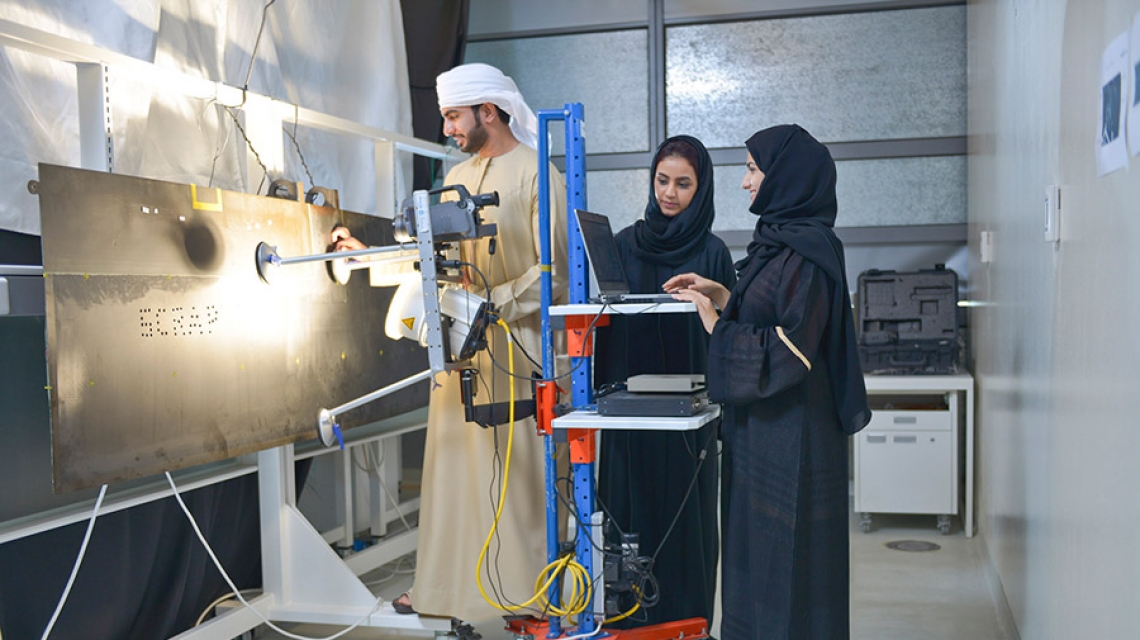
The lab’s purpose is to accelerate advancement in manufacturing, automation, and materials research into aerospace production lines. Additionally, it will also act as a collaborative space to engage third party companies and research laboratories, including aircraft manufacturers, either as research collaborators or as users of the technologies to be developed.  

Ismail Ali Abdulla, Deputy Chief Executive Officer, Strata, said:  “We are committed to research and development and know that through our collaboration with the Masdar Institute of Science and Technology, we will be providing a shared space offering full access to the research capabilities of both organizations. This lab will play a key role in advancing aerostructure manufacturing solutions to the benefit of our customers and the industry.”

Dr Steve Griffiths, Vice-President for Research, Masdar Institute, said: “The establishment of the Strata Lab at Masdar Institute strengthens not only the research and collaboration capabilities of our two entities, but also enriches the UAE as a whole by facilitating the development of expertise and innovation in advanced materials. We look forward to seeing the industry-relevant outcomes of the new Strata Lab.”  

Three Masdar Institute faculty members under Dr. Mohammed Omar, Professor, Engineering Systems and Management, and Head of Institute Center for Smart and Sustainable Systems (iSmart), and two post-doc researchers are fully engaged in active research in the lab. Three UAE national students are also engaging in thesis research through the lab, which is set to attract more students and researchers in the coming months. Additionally, five Strata engineers and researchers are already engaged in activities at the lab.  

Dr. Omar said: “The lab at Masdar Institute currently features a variety of testing systems such as novel thermography-based imagers, ultrasound based sensors and instruments, robotic manipulators and precise laser scanners and trackers. More robotics manipulators will be added along with full-size composite aerospace structures in the near future. These systems will further help Strata to expand their product base and develop technologically advanced materials for the customers.”  

In May 2015, Masdar Institute and Strata unveiled a new prototype aerospace structure defect detection system, which has now reached the industrialization phase. More advanced functions are being added to the system. This system will be the first to be deployed in verifying composite based aerospace structures at Strata’s Al Ain manufacturing facility.

Clarence Michael
News Writer
18 October 2016

Masdar Institute and Partners to Host 4th Arab-American Frontiers of Science, Engineering and Medicine Symposium in Abu Dhabi

Nearly 100 scientists, engineers, and medical professionals from the US and 21 countries of the Arab League will be gathering for the Fourth Arab-American Frontiers of Science, Engineering and Medicine Symposium that will be held in Abu Dhabi.

The symposium, scheduled to be held from 5-7 November 2016, will be jointly hosted by Masdar Institute of Science and Technology and the US National Academy of Sciences (NAS) in partnership with Petroleum Institute, Khalifa University of Science Technology and Research, and New York University Abu Dhabi. The event’s US sponsors include the National Science Foundation and the US National Aeronautics and Space Administration (NASA). The symposium will discuss major scientific advances on a wide array of topics, and aims to contribute to building sustainable partnerships with high-level individuals and academic institutions in the Arab region.

The goal of these meetings is to enhance scientific exchange and dialogue among young researchers in Arab countries and the US, including the Arab science diaspora, and facilitate research collaboration within and beyond the region.

Dr. Behjat Al Yousuf, Interim Provost, Masdar Institute, said: “Our decision to join with our partners to host the Arab-American Frontiers of Science, Engineering and Medicine Symposium signifies our belief in bringing together the best scientific minds in the region and the world to inspire innovation. The symposium will help us to further build on the impact of our academic and research achievements as well as our growing reputation as a research-oriented institution. We believe the knowledge exchange resulting from this prestigious conference will substantially raise awareness about the relevance of collaborative research among scientists and engineers from across the Arab and American communities.”

Dr. Dalal Najib, senior program officer at the U.S. National Academy of Sciences and director of the Arab-American Frontiers program said: “The program provides a platform to engage, connect and empower brilliant young researchers and highlights that they can be at the forefront of scientific and technological development. The symposium is participant-driven and is therefore an excellent opportunity for both organizing committee members and general participants to strengthen their leadership, communication and organizational skills and expand their professional network. In addition, by convening a group of participants that is diverse not only in research fields, but also geographically, the Arab American Frontiers symposia is building bridges and fostering mutual understanding between countries.”

The conference will address topics including ‘Solar Energy and Water for Sustainable Living’, ‘Nanotechnology for Next Generation Electronics and Photonics’, ‘Exploring the Brain’, ‘Advances in Petroleum Geosciences, Oil and Gas Exploration’, and ‘New Spacecraft Technologies for Earth and Space Exploration’. The organizing committee, which includes specialists from U.S. and regional institutions, finalized the topics at a recent meeting at Masdar Institute. The co-chairs of the committee are Dr. Nader Behdad from the University of Wisconsin and Dr. TieJun Zhang, Masdar Institute.

The Arab-American Frontiers Program is based on the long-standing Frontiers of Science and Engineering Programs managed by the US National Academies over the past 20 years. The Arab-American Frontiers program is designed to enhance the scientific exchange and dialogue among young researchers in Arab countries and the US.


Clarence Michael
News Writer
23 October 2016