
HE Sultan Al Dhaheri Pledges US$1-million as Second Successive Commitment to Masdar Institute’s YFEL Program

Gesture Marks UAE National’s Support to Community Programs that Aim to Develop Future Leaders

Abu Dhabi-UAE: 24 December, 2012– Masdar Institute of Science of Technology, an independent, research-driven graduate-level university focused on advanced energy and sustainable technologies, today announced His Excellency Sultan bin Rashed Al Dhaheri, member of the Federal National Council and the Chairman of the Committee on Finance and Economic Council, has once again reiterated his support to the Young Future Energy Leaders (YFEL) program with a contribution of one million US dollars.

An agreement was signed by His Excellency Sultan bin Rashed Al Dhaheri and Dr. Sultan Ahmed Al Jaber, CEO of Masdar, and Chairman of the Executive Committee of the Board of Trustees of Masdar Institute.  Dr Lamya N Fawwaz, Executive Director, Public Affairs, Hamza Kazim, Vice-President, Operations & Finance, also attended the signing ceremony. Zainab Al Ali, Senior Outreach Officer and YFEL Program Coordinator at Masdar Institute, was present on the occasion.

His Excellency Sultan Al Dhaheri’s contribution to YFEL 2013 marks the second such commitment for a similar amount that will go towards developing future leaders in sustainable energy. It also demonstrates the UAE national’s commitment to community-oriented programs. In January this year, His Excellency Al Dhaheri donated US$1 million towards YFEL 2012 program.

His Excellency Sultan bin Rashed Al Dhaheri said: “Individual professional development needs to go hand in hand with higher education. These two aspects are crucial components for developing capable future leaders. In my opinion, the YFEL program combines these aspects and offers one of the most effective avenues for the overall development of youth. Our contribution to the YFEL program for the second time bears testimony to the success of the YFEL program and Masdar Institute’s outreach initiatives. We hope YFEL 2013 will further contribute to enhancing the skill sets of young Emiratis and help them develop into future leaders.”

Dr. Sultan Ahmed Al Jaber said: “YFEL is a global platform that provides our youth with unparalleled career and networking opportunities, especially through activities such as the World Future Energy Summit and the Abu Dhabi Sustainability Week. The YFEL program was derived from the leadership’s vision to incubate and enhance our human capital. Such initiatives help shape tomorrow’s leaders as they navigate a growing and competitive economy.

“His Excellency Sultan Al Dhaheri’s second contribution underscores the UAE community’s dedication to cultivating our youth and the belief in Masdar’s capacity building initiatives. Efforts will help nurture human capital and future energy industry leaders. We are thankful for His Excellency Al Dhaheri’s philanthropic and noble gesture which will contribute to expanding the reach of our YFEL program.”

Dr. Fred Moavenzadeh, President, Masdar Institute, said: “The second successive commitment from His Excellency Sultan Al Dhaheri illustrates the close involvement of accomplished UAE citizens in developing human capital. Such support holds key to achieving Abu Dhabi’s knowledge economy objectives. It also concurs with the directive of the UAE leadership to support programs that aim to build academic, workplace and professional capabilities. The support from UAE leaders has helped YFEL to register manifold growth and we are confident YFEL 2013 will immensely benefit from such private individual contributions.”

A prominent businessman in the UAE, His Excellency Sultan bin Rashed Al Dhaheri has helped establish some of the key government and private institutions in the country. His Excellency Al Dhaheri, one of the Founder Members of the National Bank of Abu Dhabi (NBAD) and the Abu Dhabi National Insurance Company (ADNIC), continues to be on the board of both these institutions.

Since 1971, as a Board member of the Abu Dhabi Chamber of Commerce, His Excellency Al Dhaheri continues to contribute towards establishing and strengthening Abu Dhabi’s trade links with other countries. He is also the Chairman of Sultan Bin Rashed Company (Sultaco), a nationally-owned trading company based in Abu Dhabi with branches in Dubai, Sharjah and Al Ain. Established in 1968, Sultaco has an exhaustive list of illustrious projects and achievements.

With 163 UAE national and international youth, YFEL 2012 has successfully crossed several milestones during the year. Select members participated in global events such as the Asian Future Energy Forum 2012 in Singapore and the IEEE Technology Time Machine (TTM) 2012 in Dresden, Germany. The events in Singapore and Germany offered YFEL members an opportunity to visit key institutions and organizations, while enabling them to interact with skilled and accomplished professionals in sustainable future energy and advanced technology.

Part of the Masdar Institute’s Outreach program, YFEL offers young professionals and students from the UAE and abroad an opportunity to become more engaged in finding solutions to the world’s biggest challenges – achieving energy efficiency and tackling climate change. It also aims to bring young professionals closer to government representatives, business leaders and other organizations active in the area of alternative energy and sustainability. 

Cheaper and cleaner ways to desalinate the UAE’s water

By Dr. Hassan Arafa

Desalination is a major industry in this part of the world. Across the Gulf, turning sea water into fresh water is a lifeline to countries with limited freshwater supplies.

Here in the UAE in particular, almost all drinking water is desalinated.

But desalination is not a low energy process, nor is it cheap, especially as the price of gas and oil rises. Abu Dhabi alone spends nearly Dh12bn a year on desalination.
Additionally, like all industrial processes, it has an impact on the environment, upsetting marine life and contributing to global warming. 

Mitigating those costs money, while failing to do so can hurt fishing and ecotourism.
Reducing the energy demand, environmental impact and cost of desalination is therefore vital, and the benefit from such efforts will only increase as the UAE’s water consumption continues to grow.
To that end, researchers at the Masdar Institute – in collaboration with others at the Massachusetts Institute of Technology – are working to develop a new area of desalination technology: multistage membrane distillation (MD).

MD systems have unique benefits. They operate under low pressure and so do not require energy-intensive high-pressure pumps.

And although they require heat, they can use the waste heat from other processes, such as thermal desalination plants and power plants. That allows them to produce fresh water with just low-grade thermal energy, and salt or brackish water.

But while MD is a promising technology, its cost – estimated at $3  or more per 1,000 liters, as compared to about $1-1.5 per 1000 liters using reverse osmosis technology (RO) – has held it back from commercial adoption.

Our team is working on ways to help reduce the cost of MD while meeting the sustainability requirements of governments like that of Abu Dhabi.
On a second track, we are working to develop biodegradable membranes made from sustainable materials sourced from nature.

These membranes are made of polylactic acid, a natural plastic made from lactic acid, which can potentially be used to recover potable water from seawater.
Because the membranes are made from natural products, their production and disposal has less impact on the environment, both in production and disposal.

We are also working to reduce fouling – the unwanted build-up of salt and bio-material on desalination membranes. Fouling can be costly, making plants less efficient and requiring stoppage for treatment and cleaning. And conventional anti-fouling treatments  can be environmentally hazardous.
So we are working on an anti-fouling coating that would repel pollutants and keep the membrane clear.
We are also undertaking life-cycle analyses of desalination systems to reduce their environmental impact. The Arabian Gulf is not just the source of much of our water, but also of fish for our diets and waters that we swim in.
Comprehensive analysis of the various components of a desalination system will allow us to better account for and mitigate impacts.

Our last area of research is process optimization, looking at the design and operation of desalination technologies from both economic and thermodynamic viewpoints.

We have published a number of papers on how the MD process for example can be tailored to minimize its operational costs, including the design of the membrane itself.

Right now we are working on the first thorough thermodynamic analysis of the MD process, coupled with cost analysis, to try to make this technology commercially viable.

The multistage MD plant we envisage would be ideal for remote and smaller scale applications, such as on islands, ships or oil rigs, where there are not enough resources or space to run the larger reverse osmosis — a membrane-technology filtration method that cleans water by applying pressure to the solution when it is on one side of a selective membrane — and thermal desalination plants.
This system would only need access to solar energy, low-grade thermal energy, and salt or brackish water, to produce fresh water.

In this form, and as a complementary process along with RO or thermal desalination, we hope that in the in future MD will become integral to the UAE’s desalination system, providing a cheap and efficient solution to the needs of remote users.

Dr. Hassan Arafat is associate professor of water and environmental engineering at the Masdar Institute of Science and Technology.
 

Masdar Institute Library Hosts Roundtable for Serials Solutions’ Gulf Chapter User Group

More than 30 Institutions Participate in Sessions on Latest Products and Solutions for Accessing e-Resources

Abu Dhabi-UAE: 20 December, 2012 – Masdar Institute of Science and Technology, an independent, research-driven graduate-level university focused on advanced energy and sustainable technologies, today announced it hosted the inaugural Serials Solutions Gulf chapter user group roundtable at the campus.

Held on 11 December, the roundtable was part of Masdar Institute Library’s efforts to contribute to knowledge sharing and obtaining latest solutions in library resources for users in the region.

Serials Solutions is the global leaders in essential discovery and e-resource management solutions led the discussions on effective use of resources. A product update and suggestions on upgrading to the library resources safely to the 21st century solutions were also part of the agenda.

The meeting brought together users of Serials Solutions products as well as for institutions interested in purchasing them to meet and exchange experiences while gaining information on latest technologies. Masdar Institute Library is hosting the event at the campus as part of its contributions to knowledge sharing and obtaining latest solutions in library resources for users in the region.

Dr. Abdullah Al Hefeiti, Library Director, Masdar Institute, said: “Offering the right database and providing adequate information on ways to access e-resources remain the crucial services offered by digital day libraries. With the support of the UAE’s leadership, we have continuously expanded our knowledge resources to benefit faculty and students. By hosting the Serials Solutions user group roundtable, we help exchange information on collectively tackling some of the challenges libraries face today. The meeting provided us an opportunity to learn from Serials Solutions some of the region-specific solutions we can access for the benefit of the student community.”

Abdullah Al-Sayyed Regional Sales Manager, MEA Region, Serials Solutions, said: “We are grateful to Masdar Institute for hosting the event at the campus. With our products and solutions, we aim to provide easier access to librarians who can guide the students in their higher education. Our products are designed to improve access to and use of collections, ease librarian workloads and ultimately reduce operating costs. We believe the users group benefited from the roundtable at Masdar Institute.”

Serials Solutions® provides industry-leading technology solutions for libraries worldwide. The company’s Serials Solutions’ suite of discovery and management solutions include the world-class Summon™ web-scale discovery service that provides instant access to the full breadth of the library’s collection through a single search.

Other products from Serials Solutions® include AquaBrowser® discovery layer that makes navigation more accessible; 360 that is the only integrated e-resource access and management solution; KnowledgeWorks that is the authoritative e-resource knowledgebase and foundation for Serials Solutions 360; and Ulrich’s™, the world’s most authoritative source of bibliographic and publisher information for serials and the most comprehensive source of print and electronic serials data available.

The Masdar Institute Library is equipped with advanced information technologies that offer excellent Internet connectivity and efficient online access to rich e-resources and digital contents. The services and collections at the library are entirely dedicated to support the Masdar Institute community of faculty, researchers, students, and administrators. The library also offers out-campus researchers and postgraduates access to its collections and facilities.

Established as an on-going collaboration with the Massachusetts Institute of Technology (MIT), Masdar Institute integrates theory and practice to incubate a culture of innovation and entrepreneurship, working to develop the critical thinkers and leaders of tomorrow. With its world-class faculty and top-tier students, the Institute is committed to finding solutions to the challenges of clean energy and climate change through education and research. 

Honoring Late Sheikh Zayed’s Ideals of Sustainability and Education on UAE’s 41st National Day

On-Campus Display of Books and Images of Late Sheikh Zayed, Heritage and Traditional Craft Reflect National Pride

Abu Dhabi-UAE: 29 November, 2012 – A massive national flag of the UAE made from recycled material wrapped the Wind Tower, the modern interpretation of the region’s most iconic traditional architecture, as Masdar Institute of Science and Technology hosted the 41st National Day celebrations to commemorate the establishment of the Federation.

Another flag displaying the portrait of the UAE President His Highness Sheikh Khalifa bin Zayed Al Nahyan covered the ramp of the sustainable campus that wore a traditional festive look. The timeline of the UAE’s progress into a modern state depicted by illustrations with images and videos in a specially designated area brought forth the spirit of the union.

The festivities began with the Police Band playing the UAE National Anthem, setting the tone for the day’s activities. The traditional Al Harbeya dance was next on the agenda.

Images of the Late Shaikh Zayed bin Sultan Al Nahyan, Founding Father of the UAE, who was instrumental in bringing together the emirates, were on display, emphasizing his contribution to the country’s remarkable and sustainable progress. A dedicated section on Late Shaikh Zayed offered books written about the great leader.

Reflecting the ‘sustainability’ theme of the campus for preserving nature, Masdar Institute students used recycled materials to create the figures of an Emirati male and female. ‘Watani Ana’, renowned for creating the UAE National Flag with fingerprints, encouraged visitors to come forward and contribute to coloring the flag. Giveaways were also distributed to visitors.

Dr Nidal Hilal, Professor in Nano-membranology and Water Technologies, said: “Wise and strong leadership, intuitive planning and objective organization have created a cosmopolitan, prosperous, developed country with an infrastructure built virtually from scratch. UAE is a modern country respecting its roots and preserving natural and cultural heritage emerging as a global cultural hub. Congratulations on the 41st anniversary of the establishment of UAE.”

Dr. Michael Perrott, Professor – Microsystems Engineering, congratulated the leadership and said: “May you continue to transform the desert of your fathers into a green land for your children.”

Vintage was back in vogue as a 1953 Chevrolet pick-up was on display, much to the amusement of the digital-day ‘netizens’. Radio, gramophone, and antique telephones – some items from the bygone era – brought back memories of the days that witnessed the onset of modern technology in the 20th century.

Camel and falcons, integral components of a sustainable desert life in the past, were part of the celebrations. Underlining the concept of sustaining wild life as recommended by the Late Sheikh Zayed, one of the students offered falconry for those interested in the art. Proudly holding a young falcon, he explained the key features of the art of becoming friendly with the falcon.

Traditional sweets and candies that brought back childhood memories were on offer at the old souq, along with souvenirs. Reflecting the UAE’s heritage, traditional games added to the spirit of the day’s festivities. A quiz competition tested their memories of the assembled on the UAE’s heritage and history.

‘Areesh’ woven with palm fronds and other tents exhibited traditional handicraft and Emirati artifacts, while stalls offered local food items such as Rqaaq, Chebab and Lqeemat, prepared on the spot, along with special ‘henna’ painting. Students offered tips on the old art of making incense. Several student groups engaged guests and visitors, underscoring the spirit of Arab hospitality that has welcomed a multitude of nationalities to the UAE. Songs about the UAE continued to echo around the campus, further enlivening the day’s events.

Ameirah Al Dahmani, an Engineering Systems and Management student, said: “The UAE National Day Serving as a key pillar of innovation and human capital, Masdar Institute remains fundamental to Masdar’s core objectives of developing Abu Dhabi’s knowledge economy and finding solutions to humanity’s toughest challenges such as climate change.
signifies our unity as one nation, one heart, and one spirit. To me, the National Day means Late Sheikh Zayed bin Sultan Al Nahyan. He was the first statesman to call for a union. A father who had taught us the importance of unity, and who believed in unity as a dynamic mechanism that brings about world peace and harmony. In celebration of UAE’s 41st National Day, I quote the Late Sheikh Zayed Bin Sultan Al Nahyan “The Union shall forever remain”.

Students Khaled Al Attar and Hamad Al Khateri of the Engineering Systems and Management program recited traditional Arabic poetry to bring an intellectual element to the festivities. Other students engaged the visitors, explaining the key features at the campus and Masdar Institute’s contribution to sustainable development in the UAE.

Khaled Al Attar said: “The UAE represents a union of pride. The coming together of seven emirates reflects unity that is built on sacrifice and respect for one another. Of course, this union was possible only because of Late Sheikh Zayed and the country continues to march ahead under the leadership of the President His Highness Sheikh Khalifa.”

Abeer Al Maazmi, another ESM student said: “On the occasion of the 41st UAE National Day, I wish many more years of peace and prosperity for my beloved country. I pray that the UAE remains blessed, staying on the road to sustainable development. We are fortunate that our forefathers have laid a path that has brought remarkable success to this great nation.”

Established as an on-going collaboration with the Massachusetts Institute of Technology (MIT), Masdar Institute integrates theory and practice to incubate a culture of innovation and entrepreneurship, working to develop the critical thinkers and leaders of tomorrow. With its world-class faculty and top-tier students, the Institute is committed to finding solutions to the challenges of clean energy and climate change through education and research.

Masdar Institute ‘Open Day’ on 8 December

Day-Long Event to Include Presentations on Academic and Research Offerings, Opportunity to Explore Prospects, Engage Faculty and Students, as well as Campus Tours

Abu Dhabi-UAE: 5 December, 2012 – Masdar Institute of Science and Technology, an independent, research-driven graduate-level university focused on advanced energy and sustainable technologies, today announced it will host this year’s ‘Open Day’ on 8 December, welcoming prospective students from various universities of higher education across the UAE.

To be held from 10.00am-04.00pm at the sustainable campus, the ‘Open Day’ will offer an opportunity for prospective students and their families to interact with renowned faculty members and currently enrolled students. They will learn about the various academic programs, outreach initiatives, scholarships opportunities and research areas in clean energy and advanced technology.

Faculty members and student representatives of the eight Master’s programs will offer information, detailing the objectives of each program, notable progress including patent filings, as well as academic and individual achievements. Visitors will also be provided information on the relevance of Masdar Institute’s research projects to Abu Dhabi and the UAE in developing human capital while contributing to advancing the renewable energy sector and achieving a knowledge-based economy.

Experts from the enrollment team will attend to queries about academic programs and student facilities. Eligible students can also register their names and contact details. Representatives from Student Affairs and Career Office will also be present to lend their expertise to students. Visitors will also get information about student life at Masdar Institute and various student clubs that offer an avenue for extra-curricular activities and overall development.

A campus tour will also be organized every hour for those interested to view the cutting-edge facilities. Masdar Institute Student Ambassadors and Visitor Center staff will accompany them on the tour, offering information on the advanced equipment and the various clean energy research projects. Families will experience one of the world’s most energy-efficient buildings within the campus, while gaining a greater understanding of the wide range of student amenities.

Dr Fred Moavenzadeh, President, Masdar Institute, said: “The research accomplishments and academic success of our faculty and students over the past years serve as an inspiration for young graduate students seeking to acquire knowledge in clean energy. The Open Day is an occasion for such students to engage us to learn about the special academic experience at the sustainable campus. With the support of the UAE’s leadership, we have gradually increased our contribution to human capital development, R&D and innovation efforts in the region. We are confident this Open Day will help us to effectively share our educational and research offerings.”

A special Masdar stand will offer information about the Abu Dhabi Sustainability week that will be held from 13 – 17 January, 2013. The event aims to build on Abu Dhabi’s global leadership as a catalyst for addressing the pressing challenges of sustainability, including challenges directly impacting the UAE and Abu Dhabi.

Information about the Young Future Energy Leaders (YFEL) program, an outreach initiative from Masdar Institute, will also be provided to prospective students. Current student YFEL members will speak to interested graduates about their personal experience and participation in various global forums.

Dr. Lamya N. Fawwaz, Executive Director, Public Affairs, Masdar Institute, said: “The Open Day aims to welcome science and engineering graduates seeking to pursue their Master’s studies in sustainable clean energy and advanced technology. With the support of the UAE’s leadership, the institution has witnessed manifold growth and our program offerings are designed to develop students into full-fledged professionals, capable of tackling challenges of the future. We hope graduates from all universities in the UAE will utilize this opportunity to learn more about our academic programs and research subjects for choosing a suitable career-oriented learning stream.”

Serving as a key pillar of innovation and human capital, Masdar Institute remains fundamental to Masdar’s core objectives of developing Abu Dhabi’s knowledge economy and finding solutions to humanity’s toughest challenges such as climate change.

Established as an on-going collaboration with the Massachusetts Institute of Technology (MIT), Masdar Institute integrates theory and practice to incubate a culture of innovation and entrepreneurship, working to develop the critical thinkers and leaders of tomorrow.  With its world-class faculty and top-tier students, the Institute is committed to finding solutions to the challenges of clean energy and climate change through education and research.

Masdar Institute Research Assistant Wins ESIA’s ‘Solar Entrepreneur of the Year’ award

Alaeddine Mokri is Youngest and Only Student to Receive Award

Abu Dhabi-UAE: 20 November, 2012 – Masdar Institute of Science and Technology, an independent, research-driven graduate-level university focused on advanced energy and sustainable technologies, today announced one of its research assistants has won the ‘Solar Entrepreneur of the Year’ award presented by  Emirates Solar Industry Association (ESIA).

Alaeddine Mokri, a Research Assistant at Masdar Institute, won the award for his pioneering research on designing novel solar power systems and the best ways to overcome challenges in operating and implementing solar power projects in the UAE. The award was presented to Mokri by Vahid Fotuhi, President, ESIA, at a gala ceremony in Dubai recently.

The Masdar Institute research assistant also earned the distinction of being the youngest and only student among all nominees. In addition, his nomination, the only one from an academic institution against other nominations that came from the industry, was based on the set of findings generated from several studies.

Nominees for the ‘Solar Entrepreneur of the Year’ need to be entrepreneurs involved in startups. However, Mokri was selected because his research adequately highlights the business opportunities in this sector, offering special insights to investors and entrepreneurs about the challenges of installing, operating and financing solar power systems in the UAE.

The ESIA Solar Awards aim to recognize outstanding achievements by local businesses, government entities and individuals. The achievements and nominations are selected after feedback from more than 1,000 members of ESIA. The awards acknowledge outstanding contributions towards the development of solar energy in the UAE.

Dr Fred Moavenzadeh, President, Masdar Institute, said: “We congratulate Alaeddine Mokri on winning the ESIA’s Solar Entrepreneur of the Year award. Such industry recognitions highlight the extent of advanced research that is being undertaken at Masdar Institute. In general, students at our campus spend most part of their time on research, underlining the importance given to obtaining innovative solutions in clean energy. We thank the country’s leadership for their support that continues to keep Masdar Institute in the forefront of research and development in the renewables sector.”

Mokri’s research at Masdar Institute focuses on developing new methods for harvesting the power of the sun, and his contributions include: conducting detailed quantitative analysis of the solar-energy resource, studying the importance of solar energy to power generation, benefits for desalination and transportation sectors, tracking the status of solar-energy projects and initiatives in the UAE, and designing several solar power systems.

Dr Mahieddine Emziane, Associate Professor – Materials Science and Engineering, and Mokri’s academic advisor, said: “The relevance of Alaeddine Mokri’s research to the industry has brought him the recognition from ESIA. Most of the research findings and related outcome could be conveniently deployed for implementing various solar power projects. We congratulate Mokri for his outstanding achievement that has brought honor to Masdar Institute. We wish him more success in all his future research endeavors.”

Alaeddine Mokri said: “It is a privilege to be recognized by people from the industry. The ESIA award testifies that our research findings are recognized at the industry level, and are being analyzed for use. Being successful in conveying a message to the industry is actually the best award a researcher can ever get. I am delighted that the industry does recognize the importance of our research and we will be motivated even more to work on delivering additional results to assist the growth of the solar industry in the UAE. The award also accords more credibility to the solar energy research being conducted at Masdar Institute.”

Earlier this year, ESIA awarded Alaeddine Mokri the Honorary Membership along with nine top industry executives in the UAE. The membership was given in recognition of his research findings on the current status of solar energy in the UAE, his contributions to the team that developed the UAE’s first solar installations map that tracks all solar installations in the country, the technologies most suitable for deployment in the UAE and for designing novel systems which can operate efficiently in areas with climate conditions similar to the UAE.

The UAE currently has 20MW of solar energy capacity, which is expected to grow to 140MW by the end of next year. Global investment in renewable energy projects (excluding hydro) is expected to rise from US$195 billion in 2010 to US$395 billion in 2020 and to US$460 billion by 2030, according to Bloomberg New Energy Finance analysis. Over the next 20 years, this growth will require nearly US$7 trillion of new capital, it says and adds that annual investment in solar power assets will go up from US$86 billion in 2010 to US$150 billion in 2020. It may remain constant at US$150 billion a year between 2020 and 2030, the report points out.

Serving as a key pillar of innovation and human capital, Masdar Institute remains fundamental to Masdar’s core objectives of developing Abu Dhabi’s knowledge economy and finding solutions to humanity’s toughest challenges such as climate change.

Established as an on-going collaboration with the Massachusetts Institute of Technology (MIT), Masdar Institute integrates theory and practice to incubate a culture of innovation and entrepreneurship, working to develop the critical thinkers and leaders of tomorrow.  With its world-class faculty and top-tier students, the Institute is committed to finding solutions to the challenges of clean energy and climate change through education and research. 

Logging sleep patterns during fasting an why it matters

By Dr. Inas Khayal and Dr. Taha B.M.J. Ouarda

Every year, a huge portion of the UAE embarks on 30 days of fasting from sunrise until sunset. The practice is part of the Holy Month of Ramadan, where the faithful use fasting to improve the condition of their souls. But how that fasting affects their detailed sleep, along with health and activities, has never been studied before. Until now, that is.

Masdar Institute has launched a research project called FIRST@Masdar, which stands for Fasting in Ramadan Sleep study. The overall objective of this study is to help people identify the proper and healthy way to fast, to harvest the benefits of fasting rather than suffer the negative consequences of bad fasting habits. Recognising that sleep is the foundation of good health, this project has the goal of exploring how it is affected by fasting. Sleep not only contributes to better mood and alertness but it can also help keep disease at bay. Given the UAE’s epidemic levels of diabetes and heart disease, understanding the impact of poor sleep patterns and mitigating them could be of significant benefit to the country.

As part of the study, Masdar Institute student volunteers wore a device known as Zeo Inc, starting one week before Ramadan and extending into the month. The device captured the electrical signals of the brain during various sleep phases. The study also captured daily survey information through individuals’ mobile phones and computers. The data was then automatically uploaded and saved through Masdar’s in-house database system. Participants wore the monitoring device not only as they slept at night but also during daytime naps. This data can show the impact of napping during Ramadan so we can better understand the sleep variation during a night and over a number of days. It will also help us understand what impact waking up for suhoor has on sleep by comparing those that do wake up and those that do not. This is the first Masdar Institute experiment to be run in the “wild” – capturing data from individuals living their lives outside the lab.

The collection of data has now been completed and the processing of that data is ongoing. We are exploring the links between sleep, eating habits/hunger and sociability. We are also studying these variables and the individuals’ living environment (living alone, living with family etc). The impact of fasting on an individual’s perception of their sleep quality is also being studied.

The complex and multivariate nature of the collected data requires us to use sophisticated data mining procedures to understand the relationships between these factors and build predictive models. With these models, we can help see how activities such as fasting and how it is done can impact issues like how regularly fasting heart patients take their medication, how often diabetics check in with their doctors, how sociability is impacted, which in turn can impact depression, etc. This study allows for future exploration of eating habits, sleep and sociability for specific health conditions such as diabetes and may aid physicians in customizing the patient’s health plan.

We look forward to pursuing these research efforts with individuals from governmental agencies to look into how fasting is performed and how it impacts people’s lives.

Research projects like this can contribute to Abu Dhabi’s overall health standards by providing medical and public-health authorities with knowledge about how health is being affected by fasting patterns and how it can be improved. Safeguarding public health is part of Abu Dhabi’s strategy for progress and sustainability. The emirate’s goal of sustainable living includes provision of the highest quality of life that meets Abu Dhabi’s ecological, societal and economic needs. Additionally, having an unhealthy population is a huge drain on the emirate’s resources, whether that’s money, energy or human capital-productivity.

This project is also contributing to Abu Dhabi’s knowledge economy transformation through the training and experience of Masdar Institute’s graduate students working on all stages of this study, from designing the experiment to acquiring ethics approval, carrying out the study, gathering the results and analyzing the data. These students will be the professionals of tomorrow, working to help bring the best in health management and research analytics to the emirate.
Dr. Inas Khayal is assistant professor of Engineering Systems and Management and Dr. Taha B.M.J. Ouarda is professor of Water and Environmental Engineering at Masdar Institute of Science and Technology.
http://www.thenational.ae/news/uae-news/groundbreaking-ramadan-sleep-study-to-offer-fasting-insight


Seven Emirati ‘Green’ Entrepreneurs Develop Inexpensive Clean Energy Project

YFEL Launches New Project Concepts, Hosts Ministerial Panel and Debate at WFES 2013
Abu Dhabi-UAE: 15 January, 2013 – A high-level ministerial panel on sustainable energy, launch of the first small-scale pilot project to generate electricity for off-grid operations in the UAE, an overview of ‘Masdar Energy Challenge’, and a debate on key industry issues marked the first day’s participation of the Young Future Energy Leaders (YFEL) program, a key element of the World Future Energy Summit (WFES) 2013 and an outreach initiative of Masdar Institute of Science and Technology.
 
An elite group of select YFEL members interacted with government heads, energy industry leaders and innovators at WFES 2013 that opened on 15 January at the Abu Dhabi National Exhibition Center (ADNEC). The three-day event is being organized under the patronage of His Highness General Sheikh Mohammed bin Zayed Al Nahyan, Crown Prince onf Abu Dhabi and the Deputy Supreme Commander of the UAE Armed Forces. Nearly 30,000 participants from 150 countries have convened for the Middle East’s largest event on sustainability that is part of the Abu Dhabi Sustainability Week 2013.
 
Helen Clark, Administrator, United Nations Development Program (UNDP), Achim Steiner, Executive Director, United Nations Environment Program (UNEP), and Adnan Amin, Director-General, International Renewable Energy Agency (IRENA), addressed the gathering at the YFEL stand. Panelists endorsed the ‘Sustainable Energy for All’ initiative launched by the United Nations Secretary-General Ban ki-Moon and guided by his High Level Group that brings all key actors to make sustainable energy for all a reality by 2030.
 
A team of seven Emirati ‘green’ entrepreneurs has developed a project to bring clean-energy rice-husk gasifiers to farms and ranches across the UAE, with initial support from the YFEL. Titled ‘Moving toward a Sustainable Environment: Replacing Diesel-based Generators with Eco-friendly Rice-Husk Gasifiers’, the project was inspired by their visit to rural areas in northern India, where villagers were generating electricity through clean, inexpensive rice-husk gasification, rather than diesel-powered generators.
 
The ‘green’ seven – Mohamed Al-Sharhan, Abdulla Al Shamsi, Iman Ustadi, Ameirah Aldahmani, Jasem Al Hammadi, Walid Shakari, and Sultan Al Awadhi – have selected the Awafi area of Ras Al Khaimah for the first-phase of implementation. This region, which is home to ranches, Ghaf trees and mild weather in winter, will witness the first small-scale pilot project. If the technology and system prove successful, the team will establish a company to install rice-husk gasifier systems in farms and ranches across the UAE.
 
The pilot will provide customers across Awafi with cheap and eco-friendly electricity that meets energy requirements in a way that can replace their current use of diesel generators. With zero emissions, no government formalities, easy operation without the need for technical expertise, lowest-cost electricity and low-cost maintenance, the project supports Abu Dhabi’s move towards a low-carbon economy in the UAE as outlined in the Vision 2030 plan.
 
Earlier in the day, YFEL members had an opportunity to offer a three-minute presentation on their project proposals.
 
Dr Steven Griffith, Executive Director of Institute Initiatives and Professor of Practice, Masdar Institute, moderated the first debate that was titled ‘Should China, India and the U.S. be required to immediately place legally binding limits on their greenhouse gas emissions?’
 
Dr Steven Griffith said: “China, US and India are the world’s largest greenhouse gas emitting countries and therefore will need to provide leadership in the curtailment of global emissions if we are to achieve our global climate objectives and prevent global warming from reaching severely damaging levels. At the same time, China and India are developing economies and immediate commitment to aggressive and binding commitments to GHG emission limitations may impact their development. If this holds for India and China, the US is less inclined to impose emissions reduction requirements that could reduce the country’s competitiveness. This creates a dilemma because delay in imposing significant and legally binding emission reduction targets makes achieving our global climate objectives increasingly costly and improbable.”
 
Part of the Masdar Institute’s Outreach program, YFEL offers young professionals and students from the UAE and abroad an opportunity to become more engaged in finding solutions to the world’s biggest challenges – achieving energy efficiency and tackling climate change. It also aims to bring young professionals closer to government representatives, business leaders and other organizations active in the area of alternative energy and sustainability.


ADNOC Contributes AED1 Million to Masdar Institute’s YFEL 2013 Program for Third Successive Year

ADNOC’s Support Reflects Commitment to Support Social Responsibility and Community Initiatives in UAE

Abu Dhabi-UAE: 14 January, 2013 – In line with its continuing commitment to social responsibility, the Abu Dhabi National Oil Company (ADNOC) has contributed AED1 million for the third consecutive year to the Young Future Energy Leaders (YFEL) program, an outreach initiative of Masdar Institute of Science and Technology, a research-driven graduate-level university focused on advanced energy and sustainable technologies.

ADNOC, which has remained a platinum sponsor for the past two years, also becomes a key supporter of the YFEL program during 2013 with this contribution. An agreement was signed by officials from ADNOC and Masdar Institute at a ceremony held at the Masdar Institute campus recently.

ADNOC already supports and contributes initiatives launched by other local entities in the Emirate of Abu Dhabi and across the UAE to encourage more youth towards innovation and excellence on future energy and sustainable development. The support to YFEL reflects ADNOC’s intent to encourage the spirit of competition among the talented youth and guide them towards excellence. 

Mohammed S. Al Qubaisi, ADNOC Human Resources Director, said: “As a leading contributor to the UAE’s economic growth and welfare of the world community, ADNOC is keen to encourage youth, the leaders of tomorrow. YFEL provides today’s youth with a unique space to innovate ideas, compete constructively, collectively present solutions, life-style habits and way of thinking.
 
“Today’s youth will be tomorrow’s leaders. However, the kind of challenges along the fast-pace development in technology and telecommunications make the present day youth different in terms of the kind of leaders they can become for a cleaner and more sustainable planet. YFEL is the place for such youth. We are always eager to join hands with leading Abu Dhabi-based companies on sustainable development to position the UAE on the global stage.”
 
Al Qubaisi also added that the YFEL program further strengthens the status of the annual World Future Energy Summit (WFES) on the world stage, not just as a forum for today’s leaders to meet and discuss, but today’s youth to innovate and develop into capable leaders to deliver a more eco-friendly tomorrow. As a result, this will make a substantial difference in the lives of students and young professionals, he pointed out.
 
Dr. Fred Moavenzadeh, President, Masdar Institute, said: “YFEL’s commitment to develop future leaders in advanced energy and sustainability is the key to its success. The program is qualitatively and quantitatively developing and progressing with the support of government organizations and private individuals.
 
“We are grateful to ADNOC for their continued support that helps us to motivate talented youngsters to excel in future energy and advanced technologies. With the support of the country’s leadership, YFEL members will steadily raise their profiles at international forums and we hope ADNOC’s gesture will open more opportunities for youth to gain knowledge.”
 
As a major player in the global oil & gas industry, ADNOC considers believes in social responsibility is key to sustainable development. In 2009, ADNOC launched the ‘The ADNOC Sustainability Performance Initiative’ to assure a homogeneous balance between the community’s needs and earth’s resources. A ‘Sustainable Development’ category has been added to the list of categories of excellence in the ADNOC HSE Awards. ADNOC also joined the Abu Dhabi Sustainability Group (Estidama), becoming an active member with Mubadala of which Masdar is a subsidiary, and contributing to the efforts of other leading Abu Dhabi-based companies’ on sustainable development.
 
Currently, YFEL 2012 program has a total of 167 students and young professionals, including 103 UAE nationals. Among them 122 are from UAE universities and 20 from international universities. There are also 25 young professionals.
 
In addition to an annual calendar of dedicated activities and courses, YFEL offers participants exceptional and unmatched access to top global leaders, senior business executives and academics in alternative energy and sustainability. Field visits and special lectures by globally renowned clean energy experts help YFEL members to further their widen knowledge.
 
YFEL offers participants exceptional and unmatched access to top global leaders, senior business executives and academics engaged in alternative energy and sustainability through events such as World Future Energy Summit (WFES) in Abu Dhabi and other major events held globally. It is mandated to educate, inspire and empower students and young professionals to become future leaders capable of solving the world’s most pressing challenges in advanced energy and sustainability.

Launch of New Collaborations and Joint Sustainability Reports Mark Masdar Institute’s Participation at ADSW 2016

New collaborations, high-profile launches, release of reports and unveiling of a design for an energy-efficient cargo dolly were some of the key features of Masdar Institute’s participation in the World Future Energy Summit (WFES) and International Water Summit (IWS), held as part of the Abu Dhabi Sustainability Week (ADSW) 2016.  

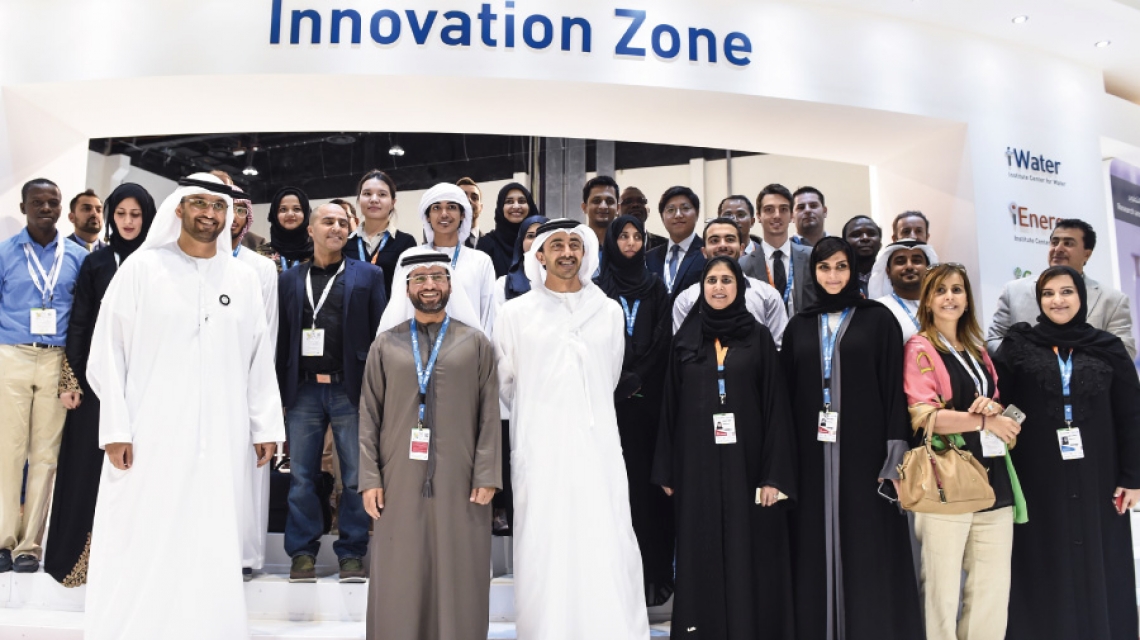
His Highness Sheikh Abdulla bin Zayed Al Nahyan, UAE Foreign Minister, visited the Masdar Institute pavilion during the event. Faculty and students showed His Highness Sheikh Abdulla their research projects on display at the pavilion, emphasizing the impact that each has on the core challenges facing the UAE for a sustainable future, particularly in the fields of water and energy. He was accompanied by Dr. Sultan Ahmed Al Jaber, Minister of State and Chairman of Masdar, Dr. Ahmed Belhoul, CEO of Masdar, and other officials. Special guests from the Embassy of Japan in the UAE also visited the Masdar Institute pavilion during the summit.  

The week-long event provided an opportunity for Masdar Institute to showcase its cutting-edge research projects being accomplished through the four institute research centers (iCenters) at the Innovation Zone, where faculty members interacted with interested visitors. Special sessions at the Masdar Institute Theater provided career advice to young professionals, and the venue also served as the stage for the launch of the PV simulator tool by the Research Center for Renewable Energy Mapping and Assessment (ReCREMA). The innovative tool can be used to identify the ideal locations for solar facilities in the UAE through simulations based on both land and satellite data.  

Dr. Behjat Al Yousuf, Interim Provost, Masdar Institute, said: “For Masdar Institute, Abu Dhabi Sustainability Week goes even beyond the showcasing of our research prowess, technology expertise and breakthrough innovations. This year’s event marked the unveiling of new sustainability innovations, collaborations and research reports that help to inform our stakeholder community, and we have an even more ambitious year ahead.”

ADSW events that raised Masdar Institute’s profile, both regionally and globally, included the release of a report jointly developed by Masdar Institute with the Washington D.C.-based Brookings Institution on energy reforms introduced by the UAE. The joint study commends the UAE on the pioneering reforms and welcomes further measures in the coming months.

The Green to Scale Report jointly developed in collaboration with the Finnish think-tank Sitra, also generated significant interest, as it contained a number of tried and tested solutions and strategies to reduce carbon emissions.

Among collaborations, the launch of a new design for a smart, temperature-controlled, sustainable and energy-efficient cargo dolly system developed in collaboration with Etihad Airways Cargo was one of the highlights of the summit. The innovative dolly will optimize the transport of temperature-sensitive cargo that arrives at Abu Dhabi International Airport, thus giving Etihad Cargo and the Abu Dhabi airport a unique competitive edge over other destinations.  

Masdar Institute and The University of Manchester launched a research collaboration for graphene and related 2D materials at the event beginning a new chapter in the UAE’s drive towards developing sustainable solutions. Three joint research projects were launched to initiate the collaboration.   Reiterating continuing collaboration in the strategic water sector, Masdar Institute entered into a research agreement with Xylem Inc., a leading global water technology provider. The project aims to establish sustainability indicators and cost performance of processes and equipment for wastewater treatment facilities in Abu Dhabi.

ADSW also provided a platform for the launch of the Seawater Energy and Agriculture System’s (SEAS) pilot project by the Sustainable Bioenergy Research Consortium (SBRC) at Masdar Institute, which aims to produce both aquaculture and bio-energy without using arable land or freshwater.  

Masdar Institute also contributed to thought-leadership at ADSW and WFES, through the participation of its senior administration and faculty in discussions, panels, and question and answer sessions, where they shared knowledge and expertise in their areas of specialty.  

One of the notable moments of ADSW 2016 was the recognition of a winning proposal from Masdar Institute for the inaugural UAE Research Program for Rain Enhancement Science 2016 grant program. Dr. Linda Zou, Professor of Chemical and Environmental Engineering, received the award in recognition of her project proposal that focuses on the use of nanotechnology to improve the formation of rain droplets. Dr, Zou is collaborating with faculty from the National University of Singapore and the University of Belgrade on the project.  

Among other features at the pavilion, the Oculus Rift virtual reality head-mounted display unit attracted several visitors. The device offered visitors an opportunity to virtually peer into the Masdar Institute campus’ sustainable features and tour some of the research facilities.  

Masdar Institute’s ‘Digital Wall’ demonstrated the research-based institution’s connection between research and social media, with Instagram, Twitter and Facebook posts appearing live.  

The annual Green Career Fair 2016 organized by Masdar Institute also offered talented youth an avenue to explore new opportunities in the renewable energy and sustainable industries by bringing them into contact with industry professionals. Officials from various leading clean energy industry companies such as GE, KEO International Consultants, Action Energy Partners, Monster Gulf, Green Recruitment Solutions, UAE Ministry of Energy, Schneider Electric and AECOM, offered an overview of their corporate activities and the attracting options that await them should they choose to join one of the companies.  

Part of ADSW 2016, which was held from 16-21 January 2016, WFES is an annual platform to exchange ideas, explore the latest developments, and address challenges in the future energy arena. The event attracted more than 30,000 attendees from 170 countries, and 650 exhibiting companies from more than 40 countries.  

Clarence Michael
News Writer
02 February 2016

Masdar Institute to Strengthen Focus on Supporting UAE’s Diversified Knowledge Economy Transformation

The Masdar Institute of Science and Technology has become even more relevant to the local, regional and global economy in these challenging economic times. That is why Masdar Institute has stepped up its efforts to support the UAE’s economic diversification with a heightened focus on achieving real world impact through human and intellectual capital-development activities, which look to produce the ideas, goods and high-worth professionals needed for the UAE’s high-tech industries,” said Dr. Behjat Al Yousuf, Interim Provost of Masdar Institute.

The UAE has been working towards a knowledge economy transformation as key to its diversified economy for the past few decades, with a focus on high-tech sectors including renewable and clean energy, transport, education, health, technology, water and space. Achieving this transformation requires three critical components – human capital development, commercialization of research and developing competitive high-tech industries – all of which Masdar Institute works to support.

HUMAN CAPITAL DEVELOPMENT

A UAE government ministerial retreat was recently held in line with the UAE’s policy to further ensure its sustainable and diverse economic development goals.

Sheikh Mohammed bin Zayed, Crown Prince of Abu Dhabi and Deputy Supreme Commander of the Armed Forces, recently declared: “Shifting towards the post-oil era is a major transformation in our history as Emiratis: success is the only option. We want the UAE to be a success story in shifting our economy from relying on natural resources to relying on Emiratis’ skills and knowledge.”

Developing the skills and knowledge of the UAE’s people is part of Masdar Institute’s core focus. The institute has produced over 450 graduates since inception, 96% of which have found employment or enrollment into PhD programs. Many of the Institute’s alumni are now working at leading organizations including Microsoft, GE, YahSat, Mubadala, Siemens, and Nestle or studying at world-class universities including the Massachusetts Institute of Technology (MIT), New York University (NYU), University of California- Berkeley, and Imperial College, London.

RESEARCH, DEVELOPMENT AND COMMERCIALIZATION

Masdar Institute is also supporting the development of strong economic diversification in the UAE through a strategy that focuses on energy and water as key areas, underpinned by advanced materials and information science. In energy and water, the Institute is pursuing targeted research for the UAE’s most pressing needs, which include a strategically balanced energy system with renewables playing a key role, advanced cooling, power demand side management, desalination and water recycling and reuse.

Advanced materials and information science are increasingly becoming essential research and development platforms for the key energy and water thrusts as well as other  knowledge-intensive sectors that the UAE is targeting, such as aerospace, transportation, telecommunications and healthcare. R&D in these strategic areas is supported by partnerships with leading UAE companies and government organizations, which are striving to increase their competitiveness, and also leads to the development of technologies and knowledge that are platforms for new businesses that support the UAE’s economic diversification.

One research project that will impact an entire national sector and also potentially reduce operation costs for many businesses in the UAE is Masdar Institute’s collaboration with the Executive Affairs Authority (EAA), which seeks to establish new standards for air conditioners for the region. The optimized chiller control approaches and optimized chiller designs developed by this project could save 10% of all domestic energy consumption in the UAE. Air conditioning contributes to almost 70% of Abu Dhabi’s electricity consumption and represents sizeable portion of business facility running costs.

The Institute also aims to make  a significant contribution to the UAE’s economic diversification with applied research and development efforts, such as the opening of its Sustainable Bioenergy Research Consortium’s (SBRC) Seawater Energy and Agriculture System (SEAS) research facility next month. The collaborative and innovative undertaking uses desert land – irrigated by seawater – to produce both valuable food, energy, and bio-chemical products, which would be a precursor to commercializing the resulting products. The importance of SBRC to the UAE’s efforts in low-carbon aviation is also evident from role that both Etihad Airways and Takreer are playing as members of the consortium.

“The opening of the SEAS research facility will mark a significant milestone in the UAE’s efforts to develop sustainable new ways to utilize some of its underutilized resources, like desert land and seawater, to produce valuable products for its knowledge economy while preserving fresh water resources. Engagement with our local as well as international consortium partners is essential to achieving the intended economic impacts from the SEAS program,” said Dr. Steve Griffiths, Vice President for Research at Masdar Institute.

Protecting novel ideas that result from research requires intellectual property protection. Such intellectual property protection is often in the form of  patents, which give the patent-holder the exclusive rights to commercialize an invention over a period of time. In recognition of the economic potential of intellectual property, Masdar Institute has achieved six issued United States patents, more than 60 patent applications and over 100 invention disclosures.

“Patents provide important protection for commercialization of technologies. Working with our Technology Transfer Office, Masdar Institute faculty and students are becoming increasingly focused on commercializing their research. We already see the potential for a handful of patent to serve as the foundation for UAE-based startup with applications ranging from skin treatment to solar resource assessment to medical diagnostics. Such diversity is central to the pursuit of innovation, where we find the best commercial applications for novel technologies developed while pursuing our core research thrusts,” Dr. Griffiths explained.

INDUSTRIAL COMPETITIVENESS

A key part of the UAE’s knowledge-economy transformation is achieving leadership in competitive high-tech sectors. In support of that need, Masdar Institute recently announced a raft of collaborations and agreements with local industry that builds upon numerous existing collaborations.

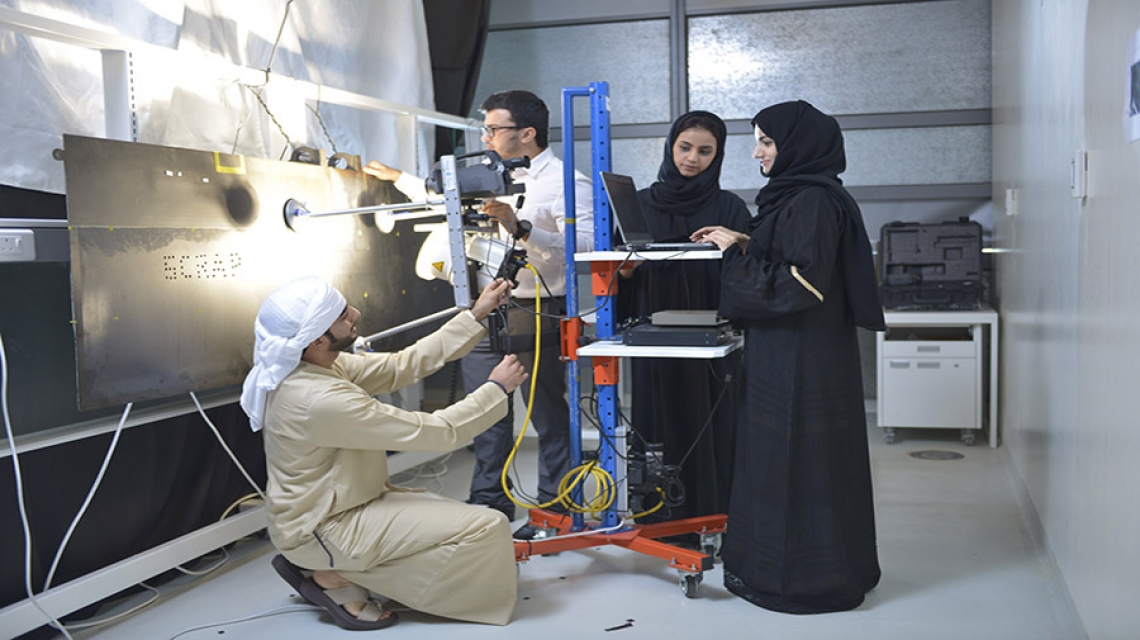
Aligned with its advanced materials platform, Masdar Institute  is collaborating with Strata Manufacturing, an advanced composite aerostructures manufacturing facility owned by Mubadala Development Company, to develop novel and advanced testing systems and methods for aerospace structures. This project has developed a fast and non-destructive way to test the parts of aircraft made from carbon fiber reinforced plastics (CFRP) that are integral to large aircraft, resulting in saved cost and reduced down-time for airplanes.

The resulting technique will be used and tested on the production lines of Strata Aerospace factories in Al Ain, which will also result in technology transfer and knowledge sharing between Masdar Institute and Strata. The team involved in this project, which includes two UAE National students, has filed four US patents. It is believed this collaboration will be of great relevance to the global advanced materials industry and help the UAE develop its aerospace sector to be regional and even global leader. The collaboration with Strata on non-destructive testing has led to recently launched collaborative work with Strata on intelligent systems for composite aerostructure component assembly. The new component of the collaboration leverages the Institute’s growing information science and smart systems platform.

Another Masdar Institute initiative aimed at producing outcomes of benefit to its knowledge economy industries is its Masdar Institute Solar Platform (MISP). The platform acts as a high-performance concentrated solar power (CSP) research and demonstration facility, facilitating new product development, cooperation with local and international companies and academic organizations, and the creation of human capital highly trained in CSP and thermal energy storage (TES) systems.

The innovative CSP research conducted through the platform could lead to more affordable and efficient solar technologies, which could give a critical boost to the UAE’s solar power generation capacity while also providing technologies and expertise for customers across the region. Importantly, the research is aimed at developing capabilities to upgrade local waste streams for higher value energy storage products. This work complements the recent agreement between Masdar Institute, the UAE Ministry of Energy and Emirates Steel aimed at identifying new ways to create commercial value from steel manufacturing electric arc furnace waste.

CONCLUSION

The UAE is expecting to receive strengthened directives to support economic diversification activities in the country when the outcomes of the UAE Ministerial Retreat are released in the coming days. Four working groups were established at the retreat to propose ideas and discuss initiative relating to human capital, economy, government policies and community. The economy group, presided over by Sheikh Mansour Bin Zayed Al Nahyan, was particularly focused on transforming the UAE into a knowledge-based economy built on national capacity building, R&D, innovation and modern technologies.

“Masdar Institute looks forward to greater collaboration and support for the UAE’s economic diversification and knowledge economy transformation-focused activities, which we hope will result from the UAE Ministerial Retreat outcomes. We invite the country’s industrial, academic and government entities to join us in our efforts to develop the UAE into one of the world’s most advanced and prosperous knowledge economies. With their increased support and collaboration, we can produce more relevant graduates and intellectual property for the UAE’s advanced sectors,” Dr. Al Yousuf added.

Zarina Khan
Senior Editor
21 February 2016


Masdar Institute and Korea’s Global MVP Host International Desalination Workshop 2016 in Abu Dhabi

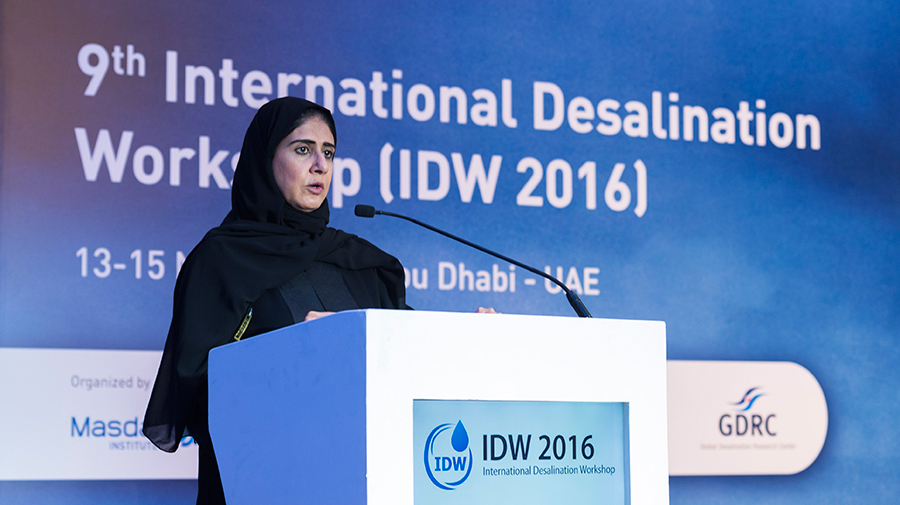
Masdar Institute and Global MVP, the R&D group supported by South Korea’s Ministry of Land, Infrastructure and Transportation (MoLIT) and the Korea Agency for Infrastructure Technology Advancement (KAIA), hosted the 9th International Desalination Workshop (IDW2016) in Abu Dhabi.

The International Desalination Workshop 2016, which ran from 13-15 November, brought together water technology research scientists and engineers from around the world who are working in both academia and industry. Focusing on all aspects of water desalination, water treatment and reuse, the gathering gave attendees the opportunity to share ideas and hold discussions about their various research projects. South Korea’s Forward Osmosis and Reverse Osmosis Hybrid Center (FOHC) and the Global Desalination Research Center (GDRC) were co-organizers for the event.

Dr. Hassan Arafat, Professor, Chemical and Environmental Engineering Department, Masdar Institute, and Prof. Seung-Hyun Kim, Professor, Civil Engineering Department, Kyungnam University in South Korea, were the conference chairs.

In addition to six keynote talks by global leaders in the desalination field, 67 scientific papers focusing on desalination-related subjects were accepted from across the global academic and research community. The shortlisted entries were presented under the categories of desalination and renewables, desalination and energy, novel processes, membrane distillation, forward osmosis, novel membranes, and fouling, as well as a special GCC-Korea session.

Dr. Behjat Al Yousuf, Interim Provost, Masdar Institute, said: “We are privileged to collaborate with our partners to bring the 9th edition of the International Desalination Workshop to Abu Dhabi. Desalination remains relevant to the UAE and all arid regions across the world. Our researchers are already engaged in exploring new innovations for achieving an efficient water desalination process through the use of renewable energy and reduce the cost of desalination. We believe this globally-important event will lead to productive knowledge exchange and result in the deployment of more efficient desalination technologies.”

Prof. Seung-Hyun Kim of Global MVP said: “I am very pleased to host the International Desalination Workshop in Abu Dhabi. The IDW has been successful for the past eight years attracting desalination researchers around the world to South Korea. This year, we’ve decided to move this event to the GCC region at which desalination efficiency is required more than any other regions. I hope this event leads to fruitful collaboration among researchers in the GCC and other regions.”

Among the keynote addresses, Prof. J. Lienhard, Massachusetts Institute of Technology (MIT), spoke about ‘Water scarcity, desalination, and climate change: how can we respond?’, while Prof. E. Drioli, University of Calabria, Italy, discussed ‘A process intensification strategy in desalination and water reuse’. Prof. R. Wang, Nanyang Technological University, Singapore, delivered a talk on ‘Development of Aquaporin-based Biomimetic Membranes for Water Reuse and Desalination’ and Prof. I. S. Kim, from Gwangju Institute of Science and Technology, Korea, spoke on the topic of ‘Economic feasibility of pressure-assisted forward osmosis as a pretreatment for reverse osmosis’. Prof. Hans Vrouwenvelder, King Abdullah University of Science and Technology, Saudi Arabia, also gave a keynote address.

The conference also featured a special plenary session on ‘Low Energy Desalination’ to address the most recent developments aiming to reduce the energy footprint of desalination.

In addition, a two-day intensive professional training course on membrane-based desalination processes (Desal-Pro) was held on 12-13 November at Masdar Institute as part of the workshop. The course delivered a comprehensive understanding of membrane-based desalination technologies from theory to applications, and will cover reverse osmosis (RO), forward osmosis (FO), pressure retarded osmosis (PRO), membrane distillation (MD), and its integrated processes. It was co-organized with Gwangju Institute of Science and Technology, Korea, the University of Hong Kong, and the University of Technology Sydney, Australia.

The partner organizations for the 9th International Desalination Workshop 2016 include Masdar, the International Desalination Association (IDA), European Desalination Society (EDS), Texas A&M University-Qatar, K-Water of Korea, Korea Desalination Plant Association (KDPA), Saudi Saline Water Conversion Corporation (SWCC), and the Middle East Desalination Research Center.


Clarence Michael
News Writer
15 November 2016